Revoking CGTN’s Licence is Attack on Freedom of Speech, Part of Broader UK-China Row
By Ekaterina Blinova – Sputnik – 06.02.2021
On 4 February, the Office of Communications, the UK government-approved regulatory body commonly known as Ofcom, announced that it had withdrawn the licence for China Global Television Network (CGTN) to broadcast in the UK.
China Global Television Network has been banned by Ofcom in the UK on the pretext that Star China Media Limited (SCML), the licence-holder for the broadcaster, did not have editorial responsibility for the latter’s output; and that an entity called China Global Television Network Corporation (CGTNC), which exercises general control over the broadcaster, cannot hold the licence since it is controlled by the Chinese government.
On 5 February, the Information Department of the Chinese Ministry of Foreign Affairs accused the British Broadcasting Corporation (BBC) of pushing “fake news” in its 29 January coverage of the People’s Republic’s tackling the pandemic. According to the ministry’s statement, the BBC video linked COVID-19 with politics and hyped up topics concerning the origins of the virus. Beijing urged the BBC to offer public apologies to China, adding that it “reserves the right to take further measures“. In response, the BBC said it stood by the story, rejecting the accusations of “fake news or ideological bias”.
Freedom of Speech is Under Attack
The revocation of licence for CGTN seems surprising given that the regulator did not mention any complaint regarding the content provided by the broadcaster, according to Earl Rasmussen, executive vice-president of Eurasia Centre. When it comes to CGTN’s links to the Chinese Communist Party, one should bear in mind that the BBC has an obvious connection with the British government, the scholar adds.
Indeed, according to the BBC website, four of the non-executive members are specifically appointed as members for each of the nations of the UK, and “the chairman and the non-executive members for the nations are appointed by HM The Queen on the recommendation of ministers while the other members of the Board are appointed by the BBC through the Board’s Nominations Committee”.
So, when one talks about one’s editorial independence, one can hardly say that the BBC is “independent” in this respect, says Andy Vermaut, a Belgian human rights activist and political commentator. He suggests that the UK is “preparing a new cold war, where China and the Chinese voice in society is cut short and another dimensional voice is not allowed”, adding that “this is diametrically opposed to the British model which supposedly promotes freedom of the press”.
“What channel and country will be next?” Vermaut asks.Although London could regard CGTN’s narrative as “pretty unpleasant” it’s unclear why the UK decided to ban it “because after all, this was a satellite station”, according to Andrew Tettenborn, professor of Law at Swansea University.
“I believe this is politically motivated and a move to steer the narrative that is presented to the public, essentially a form of censorship to silence dissident or countering voices,” Rasmussen says. “In a free and open society it is important that we are able to obtain differing perspectives and to promote a diversity of thought. However, the UK has now lost the perspective and voice of the world’s largest economy and one of the most globally influential countries. It is a sad day for the freedom of the press, freedom of speech and democracy.”The trend of limiting “the spectrum of conversation” goes beyond Ofcom’s actions, warns Gordon Dimmack, an independent media reporter: “Media freedoms in the UK and worldwide have been constricted ever more so over the past few years, and I expect that to continue”, he adds in an apparent reference to the US Big Tech wiping out accounts of former President Donald Trump and his ardent supporters in the wake of the Capitol Hill riots, and suppression earlier of The New York Post’s reporting of the supposed foreign business dealings of Joe Biden’s son, Hunter.
Revocation of CGTN’s Licence is Part of a Broader Trend
Ofcom’s move is yet another sign of deteriorating relations between London and Beijing, deems Kerry Brown, professor of Chinese studies and director of the Lau China Institute at King’s College, London.
“I think the UK is aligned with America on a relatively soft target because it’s kind of saying that it’s going to do something like America did with Xinhua and other news agencies about 18 months ago,” the professor says. “This is not a kind of huge move because the CGTN wasn’t a big player. It’s not important for Britain. It’s a way that Britain wants to show solidarity with America. And also the ruling Conservative Party in Britain shows that they’re trying to be tough on China without any hugely consequential outcomes at the moment”.Although the Johnson government previously indicated that it was willing to enhance UK-China ties in the post-Brexit era, tensions between the two countries have escalated over the past few years. Thus, No 10 abruptly reversed its plans to use 5G Huawei equipment in its next-generation wireless networks because of pressure from Washington. The UK also joined the US-led chorus of nations who pinned the blame for the pandemic spread on Beijing and questioned the coronavirus’s origins.
To complicate matters even further, in 2020 the UK offered a path to citizenship for around 3 million Hong Kongers with British National (Overseas) status, accusing the People’s Republic of breaking the terms of the 1984 Sino-British Joint Declaration after Beijing formally adopted a new security law in Hong Kong. Once the British scheme came into force in January 2021, China declared that it would no longer recognise the passports of British national overseas citizens as a travel or ID document, and “reserves the right to take further actions”.
China is Facing Growing Challenges from Western & Indo-Pacific States
Beijing is unlikely to ignore Ofcom’s insult and may take it out on the BBC, believes Jeff J. Brown, editor of China Rising Radio Sinoland: “Beijing could possibly react by reducing the number of its staff in-country, but would be unlikely to kick them out”, he suggests.
Citing the Chinese Foreign Ministry statement accusing the BBC of political bias, Kerry Brown suggests that this move could be seen as a backlash for stripping CGTN of its broadcasting licence.
“One way China will hit back is by basically attacking the credibility of the BBC,” he says. “The BBC has been a big problem for China for many decades. I think they’re basically escalating their kind of language towards the BBC. One of the issues is that obviously China is very sensitive about this responsibility for the beginning of the COVID-19 outbreak and has said that it’s been unfairly blamed and it was kind of not willing to share information”.Though it would appear that Beijing sees the UK now “as easier to attack because it’s not in the EU” and “a more isolated target”, China is now facing a growing challenge from a number of states, aside from the EU, including the US, Australia and others, according to the professor.
On 22 November, the UK’s influential conservative think tank Policy Exchange issued a report calling upon British allies and partners to team up in order to confront China’s rise and advocating the British naval build up in the South China Sea along with the US forces. According to the think tank, the report “reflects a broad consensus of views on Britain’s role in the Indo-Pacific region” voiced by former political and military leaders of the UK, Canada, the US, Australia, New Zealand, Japan, South Korea, India, Sri Lanka, and Indonesia.
“I don’t think that [China’s] argument with the UK is necessarily going to escalate, but I don’t think it’s going to improve”, Brown says. “I think that the relationship is now in a period of long-term negativity. And I don’t think that that’s going to change for some while. I think this is the new normal”.
Western pundits believed post-Maidan Ukraine would serve as an ‘example’ for Russia – in reality, it’s become a cautionary tale
By Paul Robinson | RT | February 6, 2021
Many Russian liberals and foreign pundits saw Ukraine’s 2014 ‘Maidan’ as an event that would inspire change in Moscow. Today, as an increasingly dysfunctional Kiev clamps down on free speech, it looks more like a cautionary tale.
In May 2014, newly elected Ukrainian President Petro Poroshenko promised that he would rapidly bring peace to his country. “The anti-terrorist operation cannot and should not last two or three months. It should and will last hours,” he said.
Nearly 60,000 hours later, the war into which the badly named “anti-terrorist operation” morphed is still going on. Poroshenko’s successor Volodymyr Zelensky similarly promised to bring the fighting to an end. “My main goal… is that I want to end the war. This is my mission within these five years,” he told journalists. But he has been equally unsuccessful.
Zelensky resoundingly defeated Poroshenko in the 2019 presidential election, in which the incumbent won a plurality of votes only in the far west of the country. By portraying himself as a candidate not only of peace, but also of national unity, Zelensky was able to attract the votes of a large number of Russian-speaking Ukrainians in the south and east of the country who had been alienated by Poroshenko’s increasingly nationalistic tone.
Unfortunately, since then Zelensky has betrayed those voters time after time.
Not only has he failed to take any of the steps required to bring the war to an end – most notably, the concessions demanded in the 2015 Minsk II agreements – but his government has also further suppressed the language rights of Ukrainians and is now clamping down on the opposition media.
In January 2020, liberal Russian pundits lined up to praise Zelensky’s new year’s speech. Zelensky was said to have promoted an image of national unity, seeking to overcome linguistic and other differences which had been accentuated by his predecessor’s nationalist policies. “It doesn’t matter what your street is called as long as it is clean and asphalted,” said Zelensky, in a line which seemed to suggest that his government would bring an end to the habit of changing street names from those of communist heroes to those of nationalist icons like Stepan Bandera.
In fact, it hasn’t. Not only has Zelensky failed to provide clean and asphalted streets, but it’s since become clear that what he really meant was not that he would bring an end to forcible Ukrainization, but that Russian speakers should just shut up and stop complaining about it, since, after all, none of that stuff actually “matters.”
Thus, Zelensky has done nothing to reverse the 2019 law on official languages, which sharply restricts the use of Russian. Most notably, on January 16 a new rule came into effect which obliges all service providers (shops, restaurants, etc.) to offer their services in Ukrainian by default. Meanwhile, censorship in Ukraine has reached new levels of silliness, prohibiting for instance a book about the Vikings by an American author because it referred to ancient Kievan Rus’ as “Russia.”
Now Zelensky has gone even further, banning three television stations owned by opposition politician Taras Kozak, on the grounds that they are spreading Russian disinformation. Zelensky claims that he supports freedom of speech but not “propaganda financed by the aggressors.” “These media have become one of the tools in the war against Ukraine, so they are blocked in order to protect national security,” said Zelensky’s spokesperson Yuliia Mendel.
The fact that the ban comes at a moment when Zelensky’s popularity is plummeting, and when Kozak’s party Opposition Platform – For Life is leading in national opinion polls may be entirely coincidental. But then again it may not. The move smacks of political desperation.
It is also, of course, deeply undemocratic in character. Had former president Viktor Yanukovich, who was overthrown in the February 2014 Maidan revolution, ever attempted such a thing, Ukrainian liberals and their Western allies would have cried huge screams of outrage. Now, however, they are silent, or even supportive. The US Embassy in Kiev, for instance, issued a statement that it backed the measure as designed “to counter Russia’s malign influence.”
The US response reveals the shallowness of Western assertions that in backing the Maidan revolution and subsequent governments they are supporting democracy, human rights, and a liberal order. In reality, geopolitics seems to be the primary concern. As long as Ukraine remains resolutely anti-Russia, a blind eye will be turned to nearly any and all abuses of democratic principles.
And here’s where the situation becomes rather sad. In the immediate aftermath of the Maidan revolution, it was said that Vladimir Putin’s response was driven by fears that Western-style democracy in Ukraine would provide a positive model which would incite a similar revolution in Russia.
A typical analysis was that of Paul D’Anieri, professor of public policy at the University of California, Riverside, who wrote in 2015 that “the prospect was that Ukraine would, with the aid of the EU, begin turning itself around. If so, it could become an attractive model for Russians, and a very different model than the one Putin has been insisting is the only one available.”
This line continues to find supporters. For instance, in a gushing article for Al Jazeera, journalist Leonid Ragozin remarked that Zelensky’s 2020 new year’s speech showed that “Ukraine may finally be moving towards fulfilling the Kremlin‘s biggest nightmare – becoming a role model for progressive politics and democracy for Russians to look up to.”
Ragozin has it back to front, for the very opposite would appear to be the case. Commenting on recent protests in Moscow, Ollie Carroll, Moscow correspondent of the British newspaper, the Independent, asked why Russians weren’t reacting with the same sense of indignation as Ukrainians had when Yanukovich’s police attacked demonstrators in Kiev six-and-a-half years ago. Carroll implied that this meant that there was something defective about Russians’ moral values.
In reality, the answer could simply be that they’ve looked at Ukraine and decided that it isn’t a good example to follow.
Paul Robinson is a professor at the University of Ottawa. He writes about Russian and Soviet history, military history, and military ethics, and is author of the Irrussianality blog.
Bank Of America Secretly Handed Customer Data To FBI Investigators
By Richie Allen | February 5, 2021
Bank of America customers are closing their accounts and taking their business elsewhere after it was revealed that the bank snooped through hundreds of innocent people’s accounts at the request of the federal government. The FBI wanted the information as part of its investigation into the Capitol riot. Anyone who made a transaction in DC on January 6th had their data handed to the feds. FOX News host Tucker Carlson broke the story last night.
After being contacted by the government, Bank of America handed over the information of 211 people. Of the 211 accounts that were turned over, none led to so much as an arrest, although one man was questioned and released without charge. The bank has so far refused to divulge how many accounts it trawled through before producing the 211 names. It has not revealed whether it was compelled by a subpoena or search warrant to hand over the data either.
Civil Rights groups in the US are calling for a boycott of the bank and want to know if other banks have done the same. This morning Bank of America told dailymail.com :
“We don’t comment on our communications with law enforcement. All banks have responsibilities under federal law to cooperate with law enforcement inquiries in full compliance with the law.”
Fox presenter Tucker Carlson said last night:
“These were the private records of Americans who had committed no crime; people who, as far as we know, had absolutely nothing to do with what happened at the Capitol. But at the request of federal investigators, Bank of America searched its databases looking for people who fit a specific profile.”
Referring to the man who was questioned Carlson said:
“The FBI hauls you in for questioning in a terror investigation, not because you’ve done anything suspicious, but because you bought plane tickets and visited your country’s capital. Now they’re sweating you because your bank, which you trust with your most private information, has ratted you out without your knowledge. Because Bank of America did that, you are being treated like a member of Al Qaeda.”
Banks are the most criminally corrupt cartels on Planet Earth. We call them banksters for a reason. To be shocked that they violated the rights of their customers is to be naïve in the extreme. Sometime in the next few years, maybe sooner, your government will declare itself broke, having borrowed trillions in imaginary money to pay for the pandemic hoax. At that point, the idea of a wealth tax or a bail-in will be mooted. Those are code words for daylight robbery. They will take your money without your consent and your bank will be only happy to help them. What Bank of America has done should be a timely reminder of what banks really are. Your bank is not your friend.
Reinventing the company town? Nevada offers self-governing ‘Innovation Zones’ with own TAXES & COURTS
Nevada Governor Steve Sisolak is trying to lure high-tech firms into his state with an offer to allow them to effectively form independent governments at the county level, capable of levying taxes and even forming courts.
Companies with an “innovative technology” are being offered a chance to try their hand as miniature sovereign states, according to new state legislation seen by the Las Vegas Review-Journal on Wednesday. While Sisolak hinted at the idea during his State of the State address last month, few details have been made public until now.
These so-called “Innovation Zones” are being marketed to lure tech companies – perhaps those struggling with the high taxes and lockdown fetishism of Silicon Valley – with wide open spaces and the freedom to do whatever they like on their own land.
“The Board may establish a justice court,” the legislation draft obtained by LVRJ stipulates. In addition, with a few exceptions for real estate, fuel and tangible personal property, “the Board may impose any taxes or fees authorized to be imposed by a county.”
That’s not an exaggeration, either – companies that pull up stakes and move to Nevada will be able to form their own local governments with the equivalent authority of a county. They will be able to levy taxes, form courts and school districts, provide government services, and essentially act as sovereign entities. The zones will be overseen by three-member supervisory boards similar to county commissioners, and the company owners would maintain the balance of power over who sits on the board.
“The exercise of any power or duty by the Board supersedes the exercise of that power or duty by the county in which the Innovation Zone is situated.”
The proposal deems the traditional government model to be “inadequate” for attracting big-time tenants, and the state has a very particular type of company in mind for the new program. Companies would have to own at least 78 square miles of undeveloped and uninhabited land, falling within a single county without overlapping any currently-owned area. Applicants would require $250 million in assets and plan to invest at least $1 billion in their new site over the next decade.
Blockchains LLC, located in Sparks, is one company planning to take advantage of the package and has reportedly committed to building a “smart city” east of Reno. Other blockchain companies, autonomous technology and AI, internet of things, robotics, wireless, biometrics and renewable energy are some of the industries for which Sisolak is rolling out the welcome mat.
While the ‘company town’ model might call to mind the abusive labor practices of the late 19th and early 20th century – with workers paid in company ‘scrip’ unusable outside the town and sometimes even fenced in, supposedly for their protection – companies like Facebook (Menlo Park) and Google (Mountain View) appear to be hard at work renovating the company town’s image.
Nevada has been having relatively good luck poaching California megacorporations, becoming the site of Tesla’s giant Gigafactory 1 to manufacture the electric cars’ lithium ion batteries. The company even obtained the rights to mine its own lithium in the state. CEO Elon Musk is also opening a factory outside Austin, Texas, after quibbling with the state of California over its lockdown mandates (and presumably its high taxes, which Texas does not have). While Tesla received a $1.3 billion tax break to open its factory in Nevada, Sisolak appears to be counting on sovereignty as a superior incentive for expanding tech companies.
CDC: Over 500 Deaths Following mRNA Experimental Injections thru 1/29/21
By Brian Shilhavy – Health Impact News – February 7, 2021
The CDC has done another data dump into the Vaccine Adverse Event Reporting System (VAERS), a U.S. Government funded database that tracks injuries and deaths caused by vaccines.
The data goes through January 29, 2021, with 11,249 recorded adverse events, including 501 deaths following injections of the experimental COVID mRNA shots by Pfizer and Moderna.

Besides the recorded 501 deaths, there were 2443 visits to Emergency Room doctors, 156 permanent disabilities, and 1066 hospitalizations.

Almost 70% of the recorded deaths were among people over the age of 65.
As we have previously reported, because the VAERS reporting system is voluntary, studies show that less than 1% of all vaccine injuries and deaths are recorded.
A 2011 report by Harvard Pilgrim Health Care, Inc. for the U.S. Department of Health and Human Services (HHS) stated that fewer than one percent of all vaccine adverse events are reported to the government:
Although 25% of ambulatory patients experience an adverse drug event, less than 0.3% of all adverse drug events and 1-13% of serious events are reported to the Food and Drug Administration (FDA).
Likewise, fewer than 1% of vaccine adverse events are reported. Low reporting rates preclude or slow the identification of “problem” drugs and vaccines that endanger public health. New surveillance methods for drug and vaccine adverse effects are needed. (Source.)
When reading the accompanying notes from these cases that were reported to VAERS, it is clear that many healthcare professionals are reluctant to report these cases, probably fearing repercussions for doing so.
In some cases, family members filed the report because the healthcare facility refused to do so.
Some examples:
(VAERS ID # 913733) My grandmother died a few hours after receiving the moderna covid vaccine booster 1. While I don’t expect that the events are related, the treating hospital did not acknowledge this and I wanted to be sure a report was made.
(VAERS ID # 914621) Resident in our long term care facility who received first dose of Moderna COVID-19 Vaccine on 12/22/2020, only documented side effect was mild fatigue after receiving. She passed away on 12/27/2020 of natural causes per report. Has previously been in & out of hospice care, resided in nursing home for 9+ years, elderly with dementia. Due to proximity of vaccination we felt we should report the death, even though it is not believed to be related.
(VAERS ID # 914895) Injection given on 12/28/20 – no adverse events and no issues yesterday; Death today, 12/30/20, approx.. 2am today (unknown if related – Administrator marked as natural causes)
It is important to note that the official CDC’s position on these recorded injuries and deaths in the VAERS database is that NONE of them are related to the COVID mRNA injections.
The CDC does not even have a category for “vaccine deaths,” and hence, there has never been a recorded incident on a death certificate of a vaccine death. … Full article
Refuse A Vaccine? You’re Likely To Be Visited By A “Persuader”
By Richie Allen | February 5, 2021
Vaccine Minister Nadhim Zahawi said yesterday, that folks who haven’t taken up the offer of a vaccine, could get a knock on the door from council staff to “persuade” them to have it. He told MPs that he wanted to use local authority’s to find those who had refused the jab and determine what might then convince them. If that sounds sinister, it’s because it is. Very.
Zahawi went on to say that the NHS was already trying to “identify to individual level the people that we need to reach” to ensure that all over-70s had a chance to be vaccinated by February 15th. During a phone-in last Thursday, The Richie Allen Show spoke to 79 year old Ron, who said that he had received a phone call inviting him to come and be jabbed. When he politely said “no thanks”, he was told that he would be put on “the decline list.” Now that’s creepy. Why the need for a decline list unless you planned to use it to sanction those who have refused the vaccine? What might sanctions look like?
Zahawi’s comments came on the same day that Conservative MP Mark Harper, a member of The Covid Recovery Group, said that health care workers who refused the jab should not be allowed to work with vulnerable people. You are undoubtedly going to hear more of this in the days and weeks to come. “No Jab, No Job” is a catchphrase that rolls off the tongue. It’s everywhere now. And according to The Times this morning:
British officials have started work on a “vaccine passport” as Greece prepares to waive quarantine rules for tourists who can prove that they have been inoculated against coronavirus. A certification system is being planned, The Times has learnt. The Foreign Office, Department for Transport and Department of Health and Social Care are working on options for travellers to countries that may demand it as a condition of entry.
The gloves are off now and things are moving very quickly. We’re at peak lockdown fatigue. People have had enough and are beyond desperate to return to some semblance of a normal life. The government is dangling the vaccines and the health passports. It’s classic carrot and stick. No amount of money on earth could persuade me to have one of their vaccines. I’ll take my pleasure where I can find it and look forward to the knock on the door from “the persuaders.” That’ll be fun.
Richie Allen is the host of The Richie Allen Radio show, Europe’s most listened to independent radio show and is a passionate supporter of free speech.
Russian Foreign Ministry Is Concerned About Political Persecution in the United States
The Saker | February 4, 2021
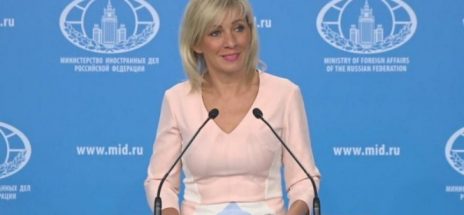
Moscow intends to hold a ‘serious conversation’ with Washington about the stars and stripes allegations of unauthorized actions in Russia.
The official representative of the Russian Foreign Ministry Maria Zakharova spoke about this at a briefing.
The American authorities, according to their words, will not be able to “divert public views, public opinion from their own problems” with their unbridled attacks on the Russian Federation: “We mean to keep this topic in sight and have a serious conversation with Washington. I assure you, the news won’t keep you waiting.”
“I would like to appeal to Washington. I predict: their protest will not dissipate by itself. Discontent will not work under the carpet. the authorities and the media obedient to them declare, a direct quote: ‘domestic terrorists.’ Doubts about the objectivity of the US law enforcement agencies are also raised by the fact that they are essentially acting in accordance with the political order and guidelines of the current administration, which declared the events of January 6 as a mutiny, and all who were near the congress that day are almost depicted as marauders. However, most of them are ordinary US citizens who are worried about the situation in their own country. And you know how many there are? 74 million voters. They voted for their president, as they believed necessary, they defended their beliefs,” – Zakharova emphasized.
“The United States has already announced so much lately that I want to remind them of what is happening in their country … An endless, unceasing increase in the degree of violence. This is what our partners need to pay attention to, the situation in their own countries, and not try to help rock the situation in our country,” she added.
An official representative of the Russian Foreign Ministry stated that human rights with the United States “are constantly and very hypocritically taken care of in relation to other countries, but they do not hesitate to ignore them at home.”
Zakharova is sure the United States will continue at attempts to interfere in the affairs of Russia. “But if the United States of America chooses the tactics of constant intervention in our internal affairs, which we are talking about and bringing facts, and these facts are not hard to find, they are on the surface, – we will be interested to see how they end up doing.”
Maria Zakharova – on the criminal prosecution of participants in the storming of the Capitol:
“It is of serious concern of the ongoing campaign in the United States of persecution of the participants in the so-called storming of the Capitol on January 6 and, in general, all those who disagree with the results of the last presidential elections, which the authorities and the media obedient to them, have declared ‘domestic terrorists.’
According to available informaiton, the FBI has opened over 400 criminal cases, requested more than 500 permits in the courts to search and summon suspects, and also brought charges and has already arrested about 200 people. Severe pressure is carried out, including the treatment of relatives, acquaintances, coercion to give the necessary testimony. Moreover, people who have not even been formally charged are fired from their jobs, expelled from social networks, blocked or harassed.”
Kremlin Expresses Regret Over Biden’s Aggressive Statements on Russia
By Evgeny Mikhaylov – Sputnik – 05.02.2021
Russian presidential spokesman Dmitry Peskov has slammed [proclaimed] US President Joe Biden’s demand to free Russian opposition figure Alexei Navalny, saying that some kind of ultimatums are unacceptable.
“This is very aggressive and unconstructive rhetoric, to our regret… We have already said that we will not heed such statements, which are some kind of mentoring lectures”, he said
The official also expressed hope that the US has enough “political willpower” to continue constructive interaction with Moscow.
The American president previously declared that the US “will not hesitate to raise the cost on Russia”, saying the days of “the United States rolling over in the face of Russia’s aggressive actions are over”.
After Biden’s inauguration, the new US president had a phone call with President Vladimir Putin. According to the White House, Biden raised problematic issues between the two countries, such as recent cyberattacks against American companies and government bodies (which Washington still blames on Russia despite a lack of evidence), Moscow’s purported election meddling, the arrest of Navalny, and many others.
At the same time, the presidents managed to find common ground on New START (Strategic Arms Reduction Treaty) that resulted in the accord being extended.
Featured Video
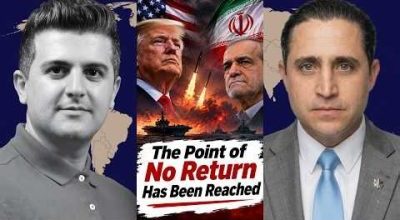
Anthony Aguilar: The Point of No Return Has Been Reached
or go to
Aletho News Archives – Video-Images
New Documentary
“Inside Gaza” wins best documentary at Montreal’s Cinemania film festival
Palestine Information Center – November 16, 2026
MONTREAL – The documentary “Inside Gaza,” which chronicles the experiences of Palestinian journalists working with Agence France-Presse (AFP) while covering the Israeli war on the Gaza Strip, won the Best Documentary Award at the 32nd Cinemania International Francophone Film Festival held in Montreal, Canada.
Directed by Helene Lam Trong, the 72-minute film follows the daily lives of four AFP journalists who bear witness to the difficulties of reporting in a war-torn territory largely closed off to international media.
The film is compiled from material produced by the team on the ground, as well as from interviews conducted after they left.
The film also won the People’s Choice Award at the festival on Saturday. … continue
Blog Roll
 Aletho News
- Villains of Judea: David Wurmser
- Anthony Aguilar: The Point of No Return Has Been Reached
- Iran accuses NYT report of paving way for attacks on dams
- Brand ‘rape’ case just doesn’t add up. Was he framed?
- How The Jensen Huang Chinese Spy Hoax Is Russiagate 2.0
- Austria seeks to strip former foreign minister of citizenship over Russia ties
- “Inside Gaza” wins best documentary at Montreal’s Cinemania film festival
- Activists block German munitions plant over arms exports to ‘Israel’
- The Nasser Hospital attack and Israel’s relentless lies
- Could it be satan? No, Huckabee, just the Americans you work for
- If Americans Knew
- An error has occurred; the feed is probably down. Try again later.
- No Tricks Zone
- Argentina’s Perito Moreno Glacier Joins Antarctica and Arctic In Defying Doomsday Melt Claims
- New Study: Barents Sea Temperatures Were Warmer And Sea Ice Less Extensive In The 1700s Than Today
- German Authorities Start Initiative To Evaluate Public Register For Climate “Disinformation” Spreaders!
- Zonal Asymmetry of Temperature Change in the Antarctic Circumpolar Current
- New Study: The Net Fossil Fuel Contribution To Rising Atmospheric CO2 Has Been Zero For 500 Years
- Germany’s Green Energy Transition Becoming Increasingly Expensive…Another 6 Trillion Euros!
- Sudden Stratospheric Warming, Powerful El Niño Combination May Lead To Extreme Europe Cold, Energy Crisis!
- Two New Studies Find Thwaites Glacier Melt Cannot Be Driven By Human Activity Or A Warming Ocean
- E-Cars Reduce CO2 Emissions By Only 41% Compared To Internal Combustion Engine Vehicles
- Predictions Made By Renowned Climate Professor Over Past Decades Have Been Proven To Be Poor

