Trudeau government extends ban on unvaccinated foreigners
By Thomas Lambert | The Counter Signal | June 29, 2022
The Trudeau government just announced they would be extending the ban on unvaccinated foreigners until September 30 (the start of flu season).
“Today, the Government of Canada announced it is extending current border measures for travellers entering Canada. Requirements for travellers arriving to Canada are expected to remain in effect until at least September 30, 2022,” a Public Health Agency of Canada news release reads.
It should be noted that while unvaccinated Canadians can (at least in the short term) board a plane to travel abroad, the ban on the unvaccinated remains on both sides of the Canada-US border, an apparent unspoken agreement by both countries to not budge on the unvaccinated travel ban until the other does.
Moreover, the latest announcement states that unvaccinated Canadians will still be forced to quarantine for 14 days upon their return to Canada.
Additionally, the government says that the ArriveCan app — which has led to delays so bad it has become an international embarrassment — will remain in place.
As for good news, mandatory random COVID tests at airports are now paused — but only for the vaccinated. This is Transport Minister Omar Alghabra’s half-hearted attempt to keep Canada’s airports “strong, efficient, and resilient” after being disgraced by former NHL player Ryan Whitney.
“In addition, the pause of mandatory random testing will continue at all airports until mid-July for travellers who qualify as fully vaccinated… Mandatory random testing continues at land border points of entry, with no changes. Travellers who do not qualify as fully vaccinated, unless exempt, will continue to test on Day 1 and Day 8 of their 14-day quarantine,” the news release reads.
Guardian Pushes for Return of Masks, Mass Testing and Quarantine
BY WILL JONES | THE DAILY SCEPTIC | JUNE 28 2022
Here we go again. It’s the middle of summer and the leading opinion piece in the Guardian today calls for the return of restrictions in response to rising infections and hospitalisations. In a piece introduced with, “a few small changes would make a big difference to millions of vulnerable people”, journalist Frances Ryan writes:
If you’re reading this in the U.K., odds are that by now you’ve had coronavirus: seven in 10 of us have watched the dreaded red line appear. You may have been stuck in bed with it twice or even three times by now; by April 2022, England alone had recorded almost 900,000 reinfections. When the public asked to “return to normal”, I’m not sure a regular hacking cough was what they had in mind.
Almost 900,000 reinfections? How will 1.6% of the population have coped with getting another cold?
Ryan continues:
It is an odd situation. Last week, Covid infections were reported to have soared by 43%, while hospitalisation from the virus rose by 23%. An estimated 1.7 million people in the U.K. tested positive over those seven days. Two million of us now have long Covid, with about two in five of those – or 826,000 people – having symptoms for at least a year.
What Ryan fails to mention is that Long Covid studies frequently find small to negligible numbers of additional symptoms compared to a control group, meaning the quoted figure is unlikely to be an accurate picture of the real impact of COVID-19.
Ryan again:
Back in February, Johnson said the Government had created a plan to start “living with Covid”, but what it really did was form a plan to catch and spread Covid. After all coronavirus prevention measures were dropped on April 1st – from the legal obligation to isolate if you had Covid, to the end of most free testing – the public were left wide open to mass infection. Even hospitals were told by ministers to ditch mask mandates, though some worried trusts have defied the rules and kept them. That all precautions were pulled back just when most people’s vaccine immunity was beginning to fade, and the virus was evolving to be more transmissible, gives a hint at how little logic ministers applied.
Since Ryan accepts that vaccine protection wanes, she evidently intends restrictions, sorry, precautions to continue indefinitely. Indeed, the plummeting of the infection fatality rate makes no difference to her argument, as “excessive focus” has been placed on deaths, she says.
One of the biggest problems facing Britain’s attempts to quell the virus is that this Government doesn’t really want to. There is hope – the number of people dying from Covid has reduced since its peak – but excessive focus on this has long hidden the fact that loss of life has never been the only thing that matters: how many people are infected with the virus matters too. A strategy that lets the virus rip through the population increases the risk we all face, be it from surges, new dangerous variants, or in developing long Covid. Fundamentally, it means accepting a reality where it is deemed normal for many of us to be (possibly severely) sick, from a virus whose long-term effects – and the effects of repeated reinfection – we still know little about.
Once again, the plight of the vulnerable is deployed to justify indefinite restrictions on everyone – a logic which would destroy most freedoms given the opportunity, as we have seen in the last two and a half years.
There will be few greater casualties though than the 3.7 million clinically extremely vulnerable people, especially the 500,000 who are immunocompromised and can’t get much or any benefit from a booster jab. Trying to avoid the virus in a country that has forgone all safety measures means risking your life when you pop to the shops. Ministers who are content for repeated coronavirus infection to just become part of British life are content for isolation to be part of clinically vulnerable people’s.
What does Ryan propose? The reinstatement of free lateral flow tests – as though there isn’t an economic crisis on, and we haven’t spent enough over-testing ourselves for colds; the return of the legal requirement to isolate for those with a positive test – a measure extremely disruptive to education, employment, health care and everything else; and financial help such as sick pay for those isolating – more magical money. Plus more of the vaccines she has acknowledged don’t work for long.
And, inevitably, masks: “Wearing masks in busy and enclosed spaces again is the right thing to do; just under half of Britons (48%) reported wearing a face covering when outside their home last month, down from about 95% during the January Omicron wave.”
From a sceptical point of view, it’s depressing that nearly half of people still say they’re wearing a mask – though since far fewer than half the people I see out and about are actually wearing a mask, this poll probably reveals more about the biases of polls (and what people say to them) than the reality on the ground.
Then Ryan lays it on thick:
Unless we wish to sign up to getting repeatedly sick for the foreseeable future, and to the risk of long-term disability from long Covid, we are going to have to bring back low-effort protective measures to curb it. A recent public health campaign in Ireland, which encourages people to think of clinically vulnerable people in their daily interactions, shows how easy it is to do things differently.
Former Deputy Chief Medical Officer Jonathan Van-Tam recently said the rise in infections was nothing to worry about and that even he had stopped wearing his face mask. But will he think again now, if respectable opinion starts to shift in the direction Frances Ryan and others would like?
Let’s hope this is just an anomalous op-ed and not the start of a trend. After all, if this is what they’re saying in June, what will they be saying in December?
France to Extend Vaccine Passport Entry Requirement Until March 2023
BY WILL JONES | THE DAILY SCEPTIC | JUNE 29 2022
France is planning to extend its vaccine passport scheme obliging travellers to present proof of vaccination, proof of recovery or negative test results upon arrival at the borders of France until at least the end of March 2023. Schengen Visa News has more.
A leaked draft law published by the French media Atlantico, the authenticity of which has later been confirmed by the French Ministry of Health, shows that the country is planning to set up a border scheme through which travellers over the age of 12 reaching the territory of France, Corsica and overseas territories would have to show proof they are immune [sic] to COVID-19.
The same document also foresees the extension of the SI-DEP computer files results of screening tests and Contact Covid (infected people and contact cases) until March 31st, next year.
According to the Ministry of Health, the preliminary draft bill “will be the subject of discussions, before its presentation to the Council of Ministers, with the political forces”.
The bill comes at a time when the country is experiencing an increase in the number of cases, with a total of 342,504 new cases registered in the last seven days alone and 270 deaths within the same period, data from the World Health Organisation (WHO) show.
The spike in the number of cases has occurred in spite of the vaccination rates in the country. According to the European Centre for Disease Prevention and Control (ECDC), 80.4% of the French population are vaccinated with at least the first dose, 78.1% with the second dose, and 59.2% with a booster or additional COVID-19 vaccination dose.
The bill comes following a vote in the European Parliament last week to approve an EU Commission proposal to renew the EU Digital Covid Certificate for another year.
The EU countries which, like France, still have COVID-19 travel restrictions are Spain, Malta, the Netherlands, Portugal and Slovakia.
Have none of them noticed that vaccination does not prevent infection or transmission? Why are they hobbling their economy and undermining freedom by restricting visitor entry for a policy which has not been shown to achieve any benefit at all?
German journalist in Donbass could face prison at home
Samizdat | June 29, 2022
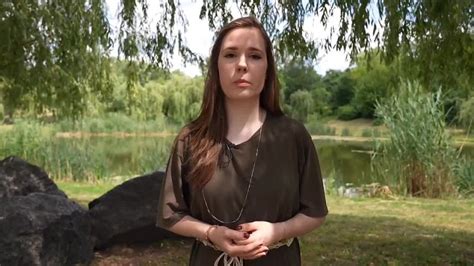
Alina Lipp, an independent German journalist and blogger is facing a criminal probe at home over her “endorsement” of Russia’s “illegal aggressive war” against Ukraine. Lipp has told Russian media she only does what any journalist would do – document what is happening around her.
If found guilty, she could face a fine or up to three years behind bars.
On Saturday, RT DE interviewed Lipp about her professional work and the ongoing investigation.
The journalist contended that she is “doing interviews with people in Donetsk and merely translating them into German.”
“I am simply filming everything I see around,” Lipp added.
She inquired rhetorically “what is it that’s illegal in that, or dangerous?” The journalist insisted that none of her materials had been staged, and that there is no one telling her what to cover.
Lipp dismissed the German authorities’ investigation as “completely insane.”
When asked by the RT DE journalist whether Russian President Vladimir Putin was secretly commissioning her reports from Donbass, Lipp replied in the negative, adding jokingly “still not.”
The woman also lamented that a number of conspiracy theories have been spread about her.
One of those, according to Lipp, dates back to November 2021, when she sold three of her minute-long videos to “some Russian TV channel” that did not have its own correspondent on the ground. Lipp insisted that this was common practice among independent journalists who “sell their material to various buyers.”
This alone does not automatically prove that such a person takes orders from someone or “works for a Russian propaganda channel,” Lipp argued.
According to the German news website t-online, Germany’s law enforcement believes Lipp has been “constantly showing her solidarity with Russia’s war against Ukraine,” as well as fomenting a split in German society.
Her reporting was described by the authorities as “distorted, partially false.” She is also accused of spreading other outlets’ “completely fabricated” stories.
The probe was originally launched by the German public prosecutor’s office in Luneburg following multiple complaints, which have been filed since February. However, the prosecutor’s office in Gottingen, which specializes in internet hate crimes, has reportedly since taken over Lipp’s case.
According to t-online, Lipp, who was born to a German mother and a Russian father, has been living in Donetsk and Crimea since last fall. She runs a German-language news blog called ‘News from Russia,’ as well as a Telegram channel with over 174,000 followers and a video channel on PeerTube.
Since the start of the investigation, Germany’s DKV-Bank has seized the donations Lipp has received, with €1,600 ($1,679) said to be frozen from her account, according to t-online.
PayPal, too, has blocked her account, as well as that of her father, Lipp revealed in one of her earlier interviews.
Climate Lockdowns Are Here
By Patrick Macfarlane | The Libertarian Institute | June 28, 2022
In a development that has been widely broadcast for decades (to those tuned to the correct frequency), Western countries have begun implementing the next step in the government-by-emergency manual.
Indeed, once the public allows government to immolate its rights to freedom of association and freedom of movement, those rights are never again absolute.
Last week, local officials in Bordeaux, France banned outdoor events due to heat advisories, citing public “health risk.” The new regulations forbid “[c]oncerts and large public gatherings… until the end of the heat wave.” But not to worry! “Private celebrations, such as weddings, will still be allowed.” (Emphasis added).
The BBC notes that these heat advisories are the product of man-made global warming. It advises:
Climate change is causing global temperatures to rise. Greenhouse gases, like carbon dioxide, released into Earth’s atmosphere in large volumes are trapping the sun’s heat, causing the planet to warm. This has brought more extreme weather, including record-breaking high temperatures across the world.
In recent weeks, the global heatwave has allegedly caused everything from wildfires to water and energy shortages. Amid “Putin’s price hike,” the warm weather has caused countries to ration energy via fuel and electricity limitations.
For instance, Breitbart reports that Ireland is planning COVID-style lockdowns in the event heat waves increase demand amid an attempted rejection of Russian energy.
Americans are not exempt. In December 2020, President Biden called climate change “a crisis” saying, “[w]e need a unified national response to climate change we need to meet the moment with the urgency it demands, as you would during any national emergency.”
In a January 2021 interview with CBS, Biden’s climate change tsar, Gina McCarthy framed her administration’s approach to this “crisis.” Her carefully-constructed word choice should be familiar to anyone who has studied the technocratic class’ COVID agenda:
This is a whole of government approach… we have to pay attention to science and facts. It’s a future that says we’re going to base our decisions based on real evidence, and that we recognize that climate change is a catastrophe.
In a perfect example of how government and the new media work together to advance a common agenda, the CBS interviewer helped Ms. McCarthy frame the issues:
People don’t often think about climate change as an opportunity. But it is an opportunity to reshape our future into a better future, economic, health-wise, our society in general. What are some of the biggest initiatives you’ve planned to move forward?
Ms. McCarthy’s responses to this prompting included predictable policy that will dramatically lower the standard of living of people everywhere. This includes a transition from fossil fuels to “clean energy,” massive government spending, government intervention in the economy, and elimination of systemic racism in a policy referred to as “climate justice.”
Whether the day’s hobgoblin be climate change, the Hitlerian Vladimir Putin, or the common cold, one thing is certain: government-by-emergency is bringing us closer to a waking dystopia.
Patrick MacFarlane is the Justin Raimondo Fellow at the Libertarian Institute where he advocates a noninterventionist foreign policy. He is a Wisconsin attorney in private practice. He is the host of the Liberty Weekly Podcast at http://www.libertyweekly.net, where he seeks to expose establishment narratives with well researched documentary-style content and insightful guest interviews. His work has appeared on antiwar.com and Zerohedge. He may be reached at patrick.macfarlane@libertyweekly.net
Bobbie Anne Flower-Cox | Session 108: fiat iustitia
ATTORNEY AT LAW BOBBIE ANNE FLOWER-COX INTERVIEWED BY REINER FUELLMICH AND VIVIANE FISCHER (June 10, 2022)
Guest:
Bobbie Anne Flower-Cox – Attorney at Law, New York with focus on representing New Yorkers on
matters pertaining to over-reaching government agencies or departments.
About:
As an attorney in NY and during this year she has been in a lawsuit against Governor Kathy Hochul and the NY Dept of
Health over their illegal “isolation and quarantine camp” regulation.
This regulation allows the government to take someone out of their home, quarantine them just because they assume
they have been exposed to a disease, and they don’t even have to prove that the person really has a disease.
They can even remove just one person from a family unit!
The Corona Committee was founded on the initiative of attorney and economist Viviane Fischer and attorney Dr. Reiner Fuellmich. It is conducting a review of evidence on the Corona crisis and measures.
Learn more about the committee:
https://corona-investigative-committee.com
Anonymous tips to the Corona Committee:
https://securewhistleblower.com
Dr. Reiner Fuellmichs english Telegram channel:
https://t.me/s/ReinerFuellmichEnglish
Tor:
http://2hfjtvg32qm6kjo2esoqu3djhc6xctn2wofnkrpc4vjez47a5wei44qd.onion
Only through your donation the work of the Committee is possible:
https://corona-investigative-committee.com/donate/
The Long Arm of the Covid Saga
By Gabrielle Bauer | Brownstone Institute | June 28, 2022
With the emergency phase of the pandemic behind us, the Covid alarmists don’t have much material left to work with—but doomsaying abhors a vacuum.
Enter long Covid, the perfect object of fear because it can never be disproved. You can hold it responsible for any symptom you develop after the acute phase of the illness, whether weeks or years down the road. Tired? Long Covid. Forgot where you put your keys? Long Covid. Breathless after climbing a flight of stairs? Long Covid, no doubt. It’s an unfalsifiable diagnosis, a fearmonger’s wet dream.
If I sound flippant, it’s because the past two and a half years have left me just a tiny bit wary of the human propensity for panic. As we’ve all discovered, a panicked populace will accept—or rather, demand—any and all restrictions on basic rights and freedoms. If we allow long Covid to become the new panic button, these restrictions could stretch into an indefinite future.
For the record, I’m not suggesting that long Covid doesn’t exist. I don’t wish to dismiss the suffering of affected people. My beef isn’t with individuals, it’s with public health messaging that keeps pumping fear into an exhausted and confused populace that has lost the capacity for rational risk assessment. I’m suggesting that we put long Covid in perspective so it doesn’t become the next pretext for putting our lives on hold.
Media Magnification
We certainly can’t count on a balanced perspective from legacy media and the experts they enlist: fear generates clicks, retweets, and ad revenue. “There’s no one who is too young and healthy to not go on and get post-acute COVID syndrome,” says New York rehabilitation therapist David Putrino in Parade magazine, doing his part to ensure everyone stays scared.
In a New York Times article titled “This is really scary: kids’ struggle with long Covid,” National Institutes of Health researcher Avindra Nath warns of the impact of long Covid on children’s development. “They’re in their formative years,” he says. “Once you start falling behind, it’s very hard because the kids lose their own self-confidence too. It’s a downward spiral.”
One can’t help contrast this solicitude with the lack of media concern about the effect of school closures and long masking on child development. Just saying.
Long Covid alarmists also compete for airspace in the Twitterverse, with professional fearmonger Eric Feigl-Ding predictably leading the charge. From his May 20 tweet: “Let this sink in. A billion people could suffer long Covid in the next 3 years.” True to form, he can’t resist inserting some chest-beating into his scare story. “The burden of long Covid will likely be much higher than anyone imagined. And yet very few care enough to mitigate transmission. And that makes me sad.”
It’s not just health professionals who spit out such tweets. Software developer Megan Ruthven exhorts us to reactivate the stop-the-spread program of 2020, this time to “prevent hospital collapse due to long Covid.” For exactly how long? According to a dude called Xabier Oxale, as long as it takes. “Let’s look at Long Covid, and then, only then, you can assure that a strain is less severe. For that, you need months, even years. As they don’t know, cautionary principle must prevail. Covid Zero!” That’s right, folks. Covid Zero is back.
Then there’s Charlos, who decries the government’s inaction in the face of long Covid, which he dubs “the greatest mass disabling event in human history.” The ampersand-loving Mx. Charis Hill, meanwhile, points the guilt screws right at you and me. “You may be personally willing to risk an infection & Long Covid & the loss in financial stability that will cause. But what if you get Covid, give it to your spouse/child/parent/sibling, & they become permanently disabled? Because of you?”
If these Tweets don’t strike terror in your heart, you have only to read the June 7 blog post by the People’s Pharmacy. “Long Covid is common and scary!” reads the headline, followed by “long Covid is nasty!” in the subhead. Further along in the article, we learn that the “brain and body both react to Covid!” Not one to give up on exclamation marks, the author warns us again that “the body is also impacted!”
It’s time to slow the spin, I say. Let’s start with some numbers.
All over the map
Studies on the prevalence of long Covid have yielded wildly discrepant results, which alone should cast doubt on the scariest numbers. Some researchers estimate that fewer than 10% of Covid infections progress to long Covid, while others peg the rate at more than half. In children and adolescents, the reported prevalence swings even more widely—between 4% and 66%, according to a review of 14 studies. To make things still more confusing, long Covid symptoms can also occur after influenza, though with less frequency.
So what and whom are we to believe? When in doubt, it never hurts to look at large, well-controlled studies, which by design carry the greatest statistical weight. A UK analysis of over 50,000 subjects, both with and without a history of Covid infection, suggests that long Covid may not live up to its cataclysmic media portrayal. In its report on the study, the UK’s Office of National Statistics states that 5% of previously infected subjects reported at least one common long Covid symptom 12 to 16 weeks later. The twist: “[The] prevalence was 3.4% in a control group of participants without a positive test for COVID-19, demonstrating the relative commonness of these symptoms in the population at any given time.”
There it is, straight from the ONS: at any point in time, more than 3% of random people on the street experience the nonspecific symptoms that characterize long Covid, such as fatigue, headaches, and poor concentration. A similar picture emerged from a controlled Danish study of pediatric long Covid, involving over 44,000 subjects and published in The Lancet Child & Adolescent Health.
A substantial minority of previously infected children reported long Covid symptoms—but so did their non-infected counterparts, at a lower rate deemed “statistically significant but not clinically relevant.” While this doesn’t disprove the existence of long Covid, it does invite skepticism about the sky-high prevalence figures reported in some studies.
Symptoms attributed to long Covid are also all over the map, from hallucinations and hair loss to menstrual changes and penile shrinkage. Allergic reactions, peeling skin, joint pain… the list goes on. But here’s the thing: we can’t conclusively pin any of these symptoms on long Covid. As a McGill University report on long Covid symptoms concedes, “Noticing something after getting sick with a virus does not automatically imply that it was caused by the virus.” In a nutshell, long Covid remains a slippery eel, adept at eluding our grasp.
What we don’t know
There’s something else we don’t know, and it’s the hottest of hot potatoes: whether situational or psychological factors could explain some long Covid symptoms. Relax, people. I’m not suggesting it’s all in the head. All I’m saying is that a symptom can spring from more than one source, and experts agree.
A Johns Hopkins expert report on the origin of long Covid symptoms allows that mental health problems can arise from “unresolved pain or fatigue, or from post-traumatic stress disorder (PTSD) after treatment in the intensive care unit.”
Along similar lines, a Globe and Mail article notes the challenge of untangling “which [post-Covid symptoms] can be attributed to long COVID and which are the result of hospitalization, since a lengthy stay can itself cause a host of physical and mental health problems.”
I repeat: I am not negating the existence of long Covid. I am not denying it can cause pain and suffering. I support research and public investment into the phenomenon. I’m simply saying that we need to drop the sky-is-falling pronouncements and replace them with more balanced and hopeful messaging.
Above all, we need to avoid turning long Covid into the new Scary Thing, the monster in the closet that leads a frightened public to demand longer and harsher restrictions on living. No level of protection is worth going through that exercise again.
Gabrielle divides her time between writing books, articles, and clinical materials for health professionals. She has received six national awards for her health journalism.
California bill 2273 would require websites and apps to verify visitors’ ID
By Didi Rankovic | Reclaim The Net | June 28, 2022
California’s bill CA AB 2273, designed to enact the Age-Appropriate Design Code (AADC) is just one among the bills raising concerns in terms of how they might negatively affect the web going forward.
Like their counterparts in the EU, legislators in California, according to their critics, present online child safety as their only goal – and a stated desire to improve this is hard to argue with, even when arguments are valid – such as that the proposed bills may in fact do nothing to better protect children, while eroding the rights of every internet user.
Among other things, AB 2273 aims to require sites and apps to authenticate the age of all their users before allowing access. Attempts to introduce mandatory age authentication have also cropped up in other jurisdictions before, but have proven controversial, technically difficult to implement, with a high potential to compromise user data collected in this way, and intrusive to people’s privacy.
In California, the situation doesn’t look much different as critics of this bill say that authentication will require site operators and businesses to deal with personal data collection from every user, and worry about using and storing it securely.
We obtained a copy of the bill for you here.
In addition, some kind of government-issued ID – or surrendering biometric data such as that collected through facial recognition – is necessary to prove one’s age in the first place; and this is where forcing sites and services to require this information would effectively mean the end of anonymity online.
As ever, this is a threat that is disproportionately felt by vulnerable categories of internet users such as various dissidents, contrarians, minorities, as well as whistleblowers and activists. And, the right to remain anonymous online also ties in with First Amendment protections in the US.
Anonymity is under threat considering that age authentication would be imposed on all internet users, and it also means that the way people use the internet today would change for good from the user experience point of view, with “age authentication walls” raised by websites. On top of that, the verification would have to be persistent (or require users to repeat the process each time they access a site or service), further aggravating privacy and data security concerns.
2022 is the year of US (midterm) elections, so focusing on this type of “feelgood” legislation, such as making children safe, is a way politicians are expected to pander to their constituencies, regardless of all the “unintended consequences” or even the low likelihood that the scheme could be efficiently implemented, purely from the technical point of view.
In other words, these proposals are not properly thought through or debated, and aren’t even based on particularly successful attempts to square the same circle elsewhere in the world. The AADC is said to be inspired by UK’s Children’s Code, aka, Age Appropriate Design Code, which is a set of standards.
With the California proposal, the scope of issues covered by the bill is of particular concern to its critics. Privacy and safety of children are only one direct component, with others reaching as far as content moderation and consumer protection in general.
This raises fears among those critical of the bill that broad regulation of the internet could be introduced thanks to a seemingly innocuous act, in effect giving California Privacy Protection Agency (CPPA) new powers that would allow it to start acting as the state’s overall internet regulator.
And the CPPA is seen as an agency that is neither interested nor competent enough to strike the right balance between a number of sensitive issues that would be covered by the new law, while at the same time getting the chance to usher in more censorship.
US federal legislation that deals with the same issue, Children’s Online Privacy Protection Rule (COPPA) kicks in when online services are aware that their users are younger than 13; with the CPPA, these services are expected to assess when it is “reasonable to expect” a child – under 18- might be accessing them.
The plan is currently for the act to become law and be enforced to enact the AADC starting July 1, 2024, but the current wording of the draft leaves it unclear who exactly, and how it would be enforced.
Critics warn that among those considered in California this year, AB 2273 is a bill of particular concern, given the possible consequences.
Reporter who exposed Kiev’s lies about mass rapes branded state enemy
Samizdat | June 28, 2022
Ukrainian journalist Sonya Lukashova ended up on the notorious Mirotvorets (‘Peacemaker’) website after penning an article claiming that a vast majority of Russian military rape allegations produced by the country’s now former human rights chief, Lyudmila Denisova, were false. The Mirotvorets, widely believed to be run by Ukraine’s Security Service (SBU), lists individuals deemed to be “enemies of Ukraine.”
The bombshell expose was published by the Ukrainskaya Pravda (Ukrainian Truth) newspaper on Monday. According to the piece, citing various official sources, a vast majority of allegations of “sexual atrocities,” purportedly committed by Russian troops amid the ongoing conflict, were false. The allegations have been spread by human rights chief Denisova, who got ousted in late May after a no-confidence vote over her failure to organize humanitarian corridors and prisoner exchanges as well as “inexplicably focusing” on spreading unverified and unsubstantiated claims.
According to the report, Ukrainian law enforcement officials tried to investigate Denisova’s claims but found no evidence to back them up. After interrogating Denisova several times, officials discovered she had been getting all her explosive revelations from her daughter, Alexandra Kvitko, “over tea.” The latter ran a ‘psychological hotline’ for victims of wartime violence, established in collaboration between Denisova’s office and UNICEF.
The hotline lacked transparency, and while Kvitko reportedly told investigators it received over 1,000 calls in only a month and a half, with some 450 of them detailing the rape of minors, the hotline’s logs suggested it got only 92 calls. The exact nature of the calls remained unclear as well, since Kvitko failed to provide investigators with any details on the alleged victims, according to the report.
Multiple Ukrainian public figures condemned the expose, insisting that reporting on the activities of the disgraced human rights chief and her daughter helps Russia. Political commentator and prominent supporter of ex-president Petro Poroshenko, Taras Berezovets, for instance, bluntly accused the reporter of producing prime material for “Russian propaganda.”
“The author of the Denisova investigation, Sonya Lukashova, who accused the former human rights chief of creating numerous fakes about the rape of Ukrainian children, ended up on the Mirotvorets database. Lukashova’s material has been very heavily cited by Russian propaganda,” Berezovets said in a social media post.
The Mirotvorets listing for Lukashova states that the reporter’s activities are somehow “incompatible with journalist ethics.” The journalist stands accused of actively participating “in special information operations of the Russian aggression against Ukraine,” as well as of “manipulating publicly significant information.” The report published by the newspaper amounts to “concealing evidence of crimes” allegedly perpetrated by the Russian military, according to Mirotvorets.
The Mirotvorets website was created in 2014 as a public database of “pro-Russian terrorists, separatists, mercenaries, war criminals, and murderers.” The website provides links to social media accounts and personal information, such as home addresses, phones, and emails. Over the years, numerous high-profile public figures and politicians have ended up on the Mirotvorets list over actions deemed to be “anti-Ukrainian.” Hungary’s PM Viktor Orban and former US Secretary of State Henry Kissinger are among the latest additions to the database.
Uvalde Mother Who Rushed Into the Besieged School to Save Her Children Says Police Are Harassing Her

© AP Photo / Eric Gay
Samizdat – 27.06.2022
On May 24, Salvador Ramos entered Robb Elementary School in Uvalde, TX, with an assault-style rifle. He murdered 19 children and two teachers. Law enforcement waited 77 minutes before confronting Ramos, leading to intense criticism.
The mother who rushed into Robb Elementary School in Uvalde, TX, to save her children while a gunman rampaged and police stood by, now says she is being harassed by law enforcement.
Angeli Rose Gomez rushed to the school that her two young boys attend the moment she heard there was an active shooter. While police waited outside, gunshots and the screams of children could be heard by the growing crowd of concerned parents.
Police waited 77 minutes after their arrival before confronting and eventually killing the shooter. During that time, Gomez and other parents pleaded with law enforcement to save their children. Gomez was eventually cuffed by police, who told her to cooperate and calm down. She eventually convinced the police to uncuff her and then she ran to the school, hopping a fence and running to the door window of her eldest son’s classroom. She was eventually able to get him and the other students in the class out, but her youngest child was still inside.
Ignoring the danger to her safety and the threats of law enforcement, she then frantically searched the school for her other child, eventually finding and freeing him. 19 third and fourth graders, along with two teachers, were killed in the shooting.
Gomez, who says cops tackled parents trying to do the same thing as her, became a national sensation after telling her story, but now she says law enforcement officers are harassing her and her family.
“The other night we were exercising and we had a cop parked at the corner like, flickering us with his headlights,” she told the local Fox affiliate. The situation has gotten so bad that Gomez has sent her boys away so they don’t have to witness the harassment. “Just so my sons don’t feel like they have to watch cops passing by, stopping, parking.”
Gomez also recently attended a Uvalde city council meeting, where she and other community members held signs demanding that School District Police Chief Pete Arredondo be fired. On Wednesday, Arredondo was placed on administrative leave, but that is not enough for Gomez and others in the Uvalde community; they want Arredondo gone permanently and without pay.
Earlier this year, Arredondo was elected to the Uvalde city council. He was sworn in days after the shooting in a ceremony that was closed to the public. Since that time, Arredondo missed his first two council meetings and his request for a leave of absence was denied. If Arredondo misses another meeting, the council could vote to remove him.
As for Gomez, she says her next plan is to sue the city. She has retained the services of attorney Mark Di Carlo, who says he is representing 15 parents in Uvalde. The lawsuit has not yet been filed and Di Carlo says he wants to wait until they gather as much evidence as possible before bringing it to court.
“The fact that [Arredondo] wasn’t fired immediately based upon whatever it is, hours of video, from testimonies such as Angeli’s, is an indication that there is some sort of what, corruption or wrong-doing,” Carlo explained.
Featured Video

Dan Dicks with James Corbett on Solutions Watch
or go to
Aletho News Archives – Video-Images
From the Archives
MMR (Measles, Mumps and Rubella) – Vaccine Risk Statement
MMR Vaccine (Measles, Mumps, and Rubella) Is It Safer Than Measles, Mumps and Rubella?
Physicians for Informed Consent | December 2024
… It has not been proven that the MMR vaccine is safer than measles, mumps, and rubella. The vaccine package insert raises questions about safety testing for cancer, genetic mutations, and impaired fertility. Although VAERS tracks some adverse events, it is too inaccurate to measure against the risk of measles, mumps, and rubella. Clinical trials do not have the ability to detect less common adverse reactions, and epidemiological studies are limited by the effects of chance and possible confounders. Safety studies of the MMR vaccine are particularly lacking in statistical power. A review of more than 60 MMR vaccine studies conducted for the Cochrane Library states, “The design and reporting of safety outcomes in MMR vaccine studies, both pre- and post-marketing, are largely inadequate.”19 Because permanent sequelae (aftereffects) from measles, mumps, and rubella are so rare (especially in children with normal levels of vitamin A and infected after birth),6,15-17 the level of accuracy of the research studies available is insufficient to rule out the possibility that the MMR vaccine causes greater death or permanent disability than measles, mumps, and rubella. – Read full article
Blog Roll
 Aletho News
- Moscow issues warning to NATO over Russian exclave
- Yes, the Iran war has destroyed Trump’s presidency
- The fallacy of US delusions about Iran’s economic collapse
- Hezbollah denies Syria cell link, warns of Israeli plan to sow discord
- The legacy of US sanctions, war, and occupation in Iraq
- Iraqi resistance group rejects disarmament, vows to maintain support for Lebanon
- Sheikh al-Asadi warns of Iraqi government compliance with US demands
- How to MAKE THE CONSPIRATORS PAY for their crimes! Dan Dicks with James Corbett on Solutions Watch
- There’s a drought in academia: A drought in honest research on the subject of drought and other weather extremes
- Department of War Awards $20.7 Billion Contract to Raytheon for Air-to-Air Missiles
- If Americans Knew
- An error has occurred; the feed is probably down. Try again later.
- No Tricks Zone
- Green Energy Debacle: German Expert Professor Fritz Vahrenholt Warns Of Severe Economic And Social Consequences
- Two More Paleo Reconstructions Affirm Meters-Higher Sea Levels Across Ireland, Brazil 7000-6000 Years Ago
- New Study: Earth And Venus Surface Warmth Largely Explained By Convection And Lapse Rate, Not CO2 Or Radiation
- 2025 Nature Paper Claiming Worsening Global Drought Gets RETRACTED …Heavily Flawed
- New Study: ‘Global Drought Shows No Detectable Recent Acceleration Under Climate Warming’
- Economic Masterminds: German Socialists Suggest Taxing Productivity Gains Stemming From Using AI
- The South China Sea Has Not Been Cooperating With The Climate Change Narrative
- Energy Crisis: Germany Enters Heating Season With Historically Low Gas Reserve Fill Levels
- New Study: The Antarctic Ice Sheet Gained Mass From 2020-2024 Due To Staggering Snow And Ice Accumulation
- Study: Ocean Heating Rates From Thousands Of Years Ago ‘Dwarf’ Modern Ocean Heating Rates