Is Biden any different from Trump on Palestine?

Prime Minister of Israel Naftali Bennett meets U.S. President Joe Biden at the White House on August 27, 2021 in Washington, DC, United States [GPO – Anadolu Agency]
By Ramzy Baroud | MEMO | October 26, 2021
When Joe Biden was declared the winner in the US presidential election last November, expectations in Ramallah were high. A Biden administration, compared with the brazenly pro-Israel Donald Trump administration, would surely be much fairer to Palestinians. That was the conventional wisdom at the time.
Unsurprisingly, Palestinian Authority President Mahmoud Abbas was among the first world leaders to congratulate Biden enthusiastically. “I look forward to working with the president-elect and his administration to strengthen Palestinian-American relations and to achieve freedom, independence, justice and dignity for our people,” said Abbas immediately after the election result was finally confirmed.
In contrast, the then Israeli Prime Minister, Benjamin Netanyahu, waited for a relatively long time to offer his congratulations in the hope, perhaps, that his close friend and staunch political ally Trump would succeed in reversing the election outcome.
Nearly a year later, however, it is hard to understand the Palestinian euphoria that prevailed in late 2020. And how do we explain the absence of criticism of the Biden administration for failing to reverse most of Trump’s pro-Israel decisions? These include the recognition of Jerusalem as Israel’s “undivided” capital and the relocation of the US Embassy from Tel Aviv to the holy city in violation of international law and even America’s own declared policies.
Why does the PA leadership remain largely silent on the fact that Biden and his team, despite their rhetoric about peace and dialogue, maintain the same degree of commitment to Israel as Trump? The short answer is money.
The only tangible step with regard to Palestine that the Biden administration has taken in the past year has been the restoration of funds that Trump had cut from Palestinian aid in 2018, reversing at a stroke nearly three decades of America, along with other “donor countries”, bankrolling the PA.
In April, the White House declared its intention to restore some, though not all, of such funds given to the Palestinian Authority. An amount of $235 million was to be paid as $75m in economic and developmental assistance; $10m in “peacebuilding” programmes to be provided by USAID agency; and the remainder in humanitarian assistance to the UN agency for Palestine refugees, UNRWA.
The latter, however, did not come without caveats. On 14 July, UNRWA reached an agreement with Washington regarding the use of this money. The so-called Framework for Cooperation stipulated that, “The US will not make any contributions to UNRWA, except on the condition that UNRWA takes all feasible measures to ensure that no part of the US contribution is used to assist any refugee receiving military training” from any Palestinian resistance group. Under the agreement, which was strongly criticised by the Palestinians, UNRWA will receive an additional $135m from the US.
On the political front, however, there is little else to report. The Palestine Liberation Organisation (PLO) office in Washington, although expected to be reopened by Biden after its abrupt closure by Trump in September 2018, remains closed. Moreover, the US Consulate in Israeli-occupied East Jerusalem, which was also shut down by Biden’s predecessor, remains “a major point of contention” between Israel and the US, according to Axios.
As soon as the Biden administration declared its intention to reopen its mission in occupied Palestinian East Jerusalem, top Israeli officials poured into Washington to prevent even this symbolic Palestinian gain from taking place. Israeli Prime Minister Naftali Bennett raised the issue with Biden during their White House meeting in August, requesting the president to refrain from carrying out such a move. According to the Times of Israel, Bennett asked the Americans to open the consulate in Ramallah rather than Jerusalem.
In September, Israeli Foreign Minister Yair Lapid warned Washington that reinstating the US mission in East Jerusalem was a “bad idea”, suggesting that such a move could force the collapse of Israel’s fragile coalition government.
The subject also topped the agenda of Lapid’s meeting with US Secretary of State Antony Blinken in Washington earlier this month. Israeli officials revealed that Lapid told Blinken, “I don’t know how to hold this coalition together if you reopen the consulate.” This too was reported by Axios.
To avoid a confrontation and to buy time for the Israeli government, Blinken proposed the establishment of a joint committee to “discuss the issue with maximum discretion.” The Israeli government is thus using the current fractious ruling coalition as a pretence to defer the US decision on the consulate. It is hinting that if the US reopens the consulate before the government budget passes in November, the coalition will dissolve, with the ominous possibility of Netanyahu’s return.
It is expected that the committee will not be formed until the budget vote. Even then, it is unclear if Washington will succeed in persuading Israel to respect Biden’s consulate decision.
Notably, while the matter of the consulate should concern Palestinians the most, no Palestinian official will be included in the exclusive and secretive Blinken-Lapid committee. More bizarrely, the PA does not seem to mind this snub. There has been no public outcry by Abbas and his officials. This, of course, is typical of the PA, and will remain the case for as long as US funds are finding their way into PA coffers. All other issues appear to have little or no urgency. It’s all about the money.
If a political compromise is found, and the US Consulate is finally reopened, will it alter the reality on the ground? Since 1994, the consulate has played a largely symbolic role, one that mattered most to the PA. It hardly changed the political equation in favour of the Palestinians. In a telling and surreal reference to the consulate, Noga Tarnopolsky wrote in the Los Angeles Times in 2019: “The consulate was known for hosting one of the liveliest parties on Jerusalem’s annual schedule, a 4 July gala held on the front lawn.”
A stone’s throw away from the city’s “liveliest parties”, hundreds of Palestinian families are either being evicted from their homes or face the risk of eviction by the US-funded Israeli police and army. A little further away is Israel’s apartheid wall that continues to segment occupied Palestine according to race, ethnicity and religion. We are justified, then, in not being too optimistic that the reopening of the US mission will change the horrific status quo in any way whatsoever.
The Joe Biden administration is proving to be nothing but a soft facade for the same policies enacted by Donald Trump. The only apparent difference is that, this time, Mahmoud Abbas and the Palestinian Authority, for self-serving reasons, do not seem to mind.
Direct Flight from Saudi Arabia Lands in Zionist Entity Monday Evening: Report

Al-Manar | October 25, 2021
A direct flight from Riyadh, Saudi Arabia will land at Zionist entity’s Ben Gurion Airport on Monday evening, Israeli media reported.
“The flight will be a VIP class Boeing 737-700 aircraft with registration A6-AIN owned by the Emirati Royal Jet airline,” Kan pubcaster said.
The Riyadh-Tel Aviv flight comes after a report that White House National Security Adviser Jake Sullivan raised the possibility of Saudi Arabia joining the so-called Abraham Accords during a meeting last month in Riyadh with Saudi Crown Prince Mohammed bin Salman (MBS), according to three US and Arab sources involved in the talks.
The sources said that during the conversation, MBS did not immediately reject the proposal to establish diplomatic ties with the Zionist entity, listing the steps needed to make the move, including improving the relations between the United States and Saudi Arabia.
Is it Time for a Special Counsel on the Hunter Biden Scandal?
By Jonathan Turley | October 14, 2021
“Come on H this is linked to Celtic’s account.” Those nine words from a retired Secret Service agent to Hunter Biden in recently released emails may prove a nasty complication for some in Washington who have struggled to contain the blowback from the still-unfolding scandal linked to Hunter Biden’s infamous laptop.
“Celtic” was the Secret Service code name for Joe Biden, and recent disclosures may puncture the media’s cone-of-silence around the scandal. The emails link President Biden to his son’s accounts and indicate a commingling of funds with money coming from controversial foreign sources. Even more embarrassing, the shared account may have been used to pay a Russian prostitute named “Yanna.”
The commingling of funds is the latest contraction of President Biden’s repeated claims that he was unaware and uninvolved in past dealings by his son. Given these links, there are legitimate questions of why the Justice Department has not sought a special counsel in the ongoing investigation of alleged money-laundering and tax violations linked to the president’s son. More importantly, even if there are no criminal charges, there is now a compelling need for an independent report on the alleged influence peddling operation by Hunter, his uncle James Biden, and potentially his father, President Biden.
In the latest disclosures from the laptop, a former secret service agent reportedly texted Hunter on May 24, 2018, when he was holed up with a Russian prostitute in an expensive room at The Jeremy Hotel in Los Angeles. Hunter wired the woman $25,000. That alone was nothing out of the ordinary for Hunter who, while his father served as vice president, seemed to divide his time equally between influence-peddling and personal debaucheries.
Hunter clearly only had influence and access to sell. We know now that foreign interests gave Hunter millions at a time that he admits that he was a crack addict and alcoholic — in his words, “Drinking a quart of vodka a day by yourself in a room is absolutely, completely debilitating,” as well as “smoking crack around the clock.”
However, the tranche of emails raises a new and disturbing element: the possible mixing of accounts and funds between Hunter and his father. If true, President Biden could be directly implicated in ongoing investigations into his son’s money transfers and dealings.
Most notable are the new emails from Eric Schwerin, his business partner at the Rosemont Seneca consultancy, referencing the payment of household bills for both Joe Biden and Hunter Biden. He also notes that he was transferring money from Joe Biden. If true, the communications indicate that some of President Biden’s personal expenses were paid out of shared accounts with Hunter, including accounts that may have been used to pay for prostitutes. Rosemont Seneca is directly involved in the alleged influence peddling schemes and questionable money transfers from Chinese and Russian sources.
Schwerin also was involved in President Biden’s taxes and discussions of a book deal for the then-vice president; he popped up in the donation of Biden’s official papers to the University of Delaware, with restrictions on access.
President Biden has long insisted that that his son did “nothing wrong.” That is obviously untrue. One can argue over whether Hunter committed any crime, but few would say that there is nothing wrong with raw influence peddling worth millions with foreign entities. The public has a legitimate reason to know whether the President or his family ran an influence peddling operation worth millions.
Given this record, there is little reason for the public to trust what it is reading about the scandal. The media has long refused to investigate the allegations or even report on emails contradicting the President. This was most evident when social media like Twitter actually blocked postings on the laptop or its content before the election. Powerful figures then issued false statements about the scandal to the public. Committee Chairman Adam Schiff who assured “this whole smear on Joe Biden comes from the Kremlin.” Some 50 former intelligence officials, including Obama’s CIA directors John Brennan and Leon Panetta, also insisted the laptop story was likely the work of Russian intelligence. The laptop is now recognized as genuine.
This is not the first contradiction for President Biden in his repeated denials of knowing anything about his son’s business dealings. Hunter himself contradicted his father’s repeated denial. Likewise, a key business associate of Hunter Biden, Anthony Bobulinski, confirmed the authenticity of the emails and accused Joe Biden of lying about his involvement. Bobulinski has detailed a meeting with Joe Biden in a hotel to go over the dealings.
Past emails included discussions of offering access to then-Vice President Biden. They also include alleged payments to Joe Biden. In one email, there is a discussion of a proposed equity split of “20” for “H” and “10 held by H for the big guy?” Bobulinski confirmed that “H” was used for Hunter Biden and that his father was routinely called “the big guy” in these discussions.
Just to make things more concerning is Hunter Biden’s recent acknowledgement that one of his laptops may have been stolen by Russian agents and was likely being used for blackmail purposes. The fact that the president’s son admitted that Russians may have intentionally seized one of his laptops during a drug binge, in order to blackmail him, raises serious potential national security concerns — especially if any of the emails include compromising information about the president directly benefiting from the very same accounts used by his son.
That creates a rather nasty problem at the Justice Department. Federal regulations allow the appointment of a special counsel when it is in the public interest and an “investigation or prosecution of that person or matter by a United States Attorney’s Office or litigating Division of the Department of Justice would present a conflict of interest for the Department or other extraordinary circumstances.”
I do not see direct evidence of criminal conduct by President Biden even if he lied about his past knowledge of his son’s conduct. Indeed, influence peddling is not a per se crime even for Hunter. However, one value of a special counsel is the expectation of a report that can address whether the family engaged in influence peddling with foreign powers and whether foreign powers may have acquired compromising material from these laptop files.
In 2017, Democratic members and activists were adamant that the Justice Department should carry out an investigation involving President Trump and his family. Then-Senate Minority Leader Chuck Schumer (D-N.Y.) insisted that, without a special counsel, “every American will rightfully suspect … a coverup.”
There is already a federal criminal investigation into these matters involving Hunter Biden, and the latest emails now link President Biden receiving money and benefits from related accounts as well as key players. Even if one questions a direct conflict of interest, it is hard to deny the towering appearance of a conflict in the ongoing investigation.
“The Big Guy” is now president and his administration is handling an investigation that could have political as well as legal implications for him and his family. It may be time for a special counsel.
Moderna: A Company “In Need Of A Hail Mary”

BY WHITNEY WEBB |
UNLIMITED HANGOUT| OCTOBER 7, 2021
Before COVID-19, Moderna was in danger of hemorrhaging investors, as persistent safety concerns and other doubts about its mRNA delivery system threatened its entire product pipeline. Fear caused by the pandemic crisis made those concerns largely evaporate, even though there is no proof that they were ever resolved.
Those analyzing the COVID-19 crisis and its effects have mostly focused on how its disruptive nature has led to major shifts and recalibrations throughout society and the economy. Such disruption has also lent itself to a variety of agendas that had required an event of “reset” potential in order to be realized. In the case of the vaccine industry, COVID-19 has led to dramatic changes in how federal agencies manage the approval of medical countermeasures during a declared crisis, how trials for vaccine candidates are conducted, how the public perceives vaccination, and even how the term “vaccine” is defined.
Such shifts, though obvious, have provoked praise from some and sharp criticism from others, with the latter category being largely censored from public discourse on television, in print, and online. However, in objectively analyzing such seismic changes, it’s clear that most of these shifts in vaccine development and vaccine policy dramatically favor speed and the implementation of new and experimental technology at the expense of safety and thorough study. In the case of vaccines, it can be argued that no one benefitted more from these changes than the developers of the COVID-19 vaccines themselves, particularly the pharmaceutical and biotechnology company Moderna.
Not only did the COVID-19 crisis obliterate hurdles that had previously prevented Moderna from taking a single product to market, it also dramatically reversed the company’s fortunes. Indeed, from 2016 right up until the emergence of COVID-19, Moderna could barely hold it together, as it was shedding key executives, top talent, and major investors at an alarming rate. Essentially, Moderna’s promise of “revolutionizing” medicine and the remarkable salesmanship and fund-raising capabilities of the company’s top executive, Stéphane Bancel, were the main forces keeping it afloat. In the years leading up to the COVID-19 crisis, Moderna’s promises—despite Bancel’s efforts—rang increasingly hollow, as the company’s long-standing penchant for extreme secrecy meant that—despite nearly a decade in business—it had never been able to definitively prove that it could deliver the “revolution” it had continually assured investors was right around the corner.
This was compounded by major issues with patents held by a hostile competitor that threatened Moderna’s ability to turn a profit on anything it might manage to take to market, as well as major issues with its mRNA delivery system that led them to abandon any treatment that would require more than one dose because of toxicity concerns. The latter issue, though largely forgotten and/or ignored by media today, should be a major topic in the COVID-19 booster debate, given that there is still no evidence that Moderna ever resolved the toxicity issue that arose in multi-dose products.
In this first installment of a two-part series, the dire situation in which Moderna found itself immediately prior to the emergence of COVID-19 is discussed in detail, revealing that Moderna—very much like the now disgraced company Theranos—had long been a house of cards with sky-high valuations completely disconnected from reality. Part 2 will explore how that reality would have come crashing down sometime in 2020 or 2021 were it not for the advent of the COVID-19 crisis and Moderna’s subsequent partnership with the US government and the highly unusual processes involving its vaccine’s development and approval. Despite the emergence of real-world data challenging the claims that Moderna’s COVID-19 vaccine is safe and effective, Moderna’s booster is being rushed through by some governments, while others have recently banned the vaccine’s use in young adults and teens due to safety concerns.
As this two-part series will show, safety concerns about Moderna were known well before the COVID crisis, yet they have been ignored by health authorities and the media during the crisis itself. In addition, in order to stave off collapse, Moderna must keep selling its COVID-19 vaccine for years to come. In other words, without the approval of its booster, which has caused great controversy even among the country’s top vaccine officials, Moderna faces a massive financial reckoning. While the COVID-19 crisis threw the company a lifeboat, the administration of its COVID-19 vaccine, in which the US government has now invested nearly $6 billion, must continue into the foreseeable future for the bailout to be truly successful. Otherwise, a company now worth $126.7 billion, with major investments from the US government, US military, and ties to the world’s wealthiest individuals, will crumble in short order.
A New Theranos?
In September 2016, Damian Garde, the national biotech reporter for the medical media company STAT, wrote a lengthy exposé of the “ego, ambition, and turmoil” plaguing “one of biotech’s most secretive startups.” The article focused on the company Moderna, which had been founded in 2010 to commercialize the research of Boston Children’s Hospital cell biologist Derrick Rossi. The effort to turn a profit by creating Moderna, which intimately involved controversial scientist and close Bill Gates associate Bob Langer as well as Cambridge, Massachusetts–based Flagship Ventures (now Flagship Pioneering), began soon after Rossi published a report on the ability of modified RNA to turn skin cells into different types of tissue.
Between the time of Moderna’s founding and Garde’s 2016 investigation, the buzz around Rossi’s research and its potential to create medical breakthroughs had waned, as had the buzz around its potential to make its investors very wealthy. Despite teaming up with pharmaceutical giants like AstraZeneca and raising record amounts of funding, Moderna still had no product on the market six years after its founding, and, as STAT revealed, the “company’s caustic work environment” had led to a persistent hemorrhaging of top talent, though little of its internal conflicts was publicly known due to “its obsession with secrecy.” Most troubling for the company that year, however, was that Moderna appeared to have “run into roadblocks with its most ambitious projects.”
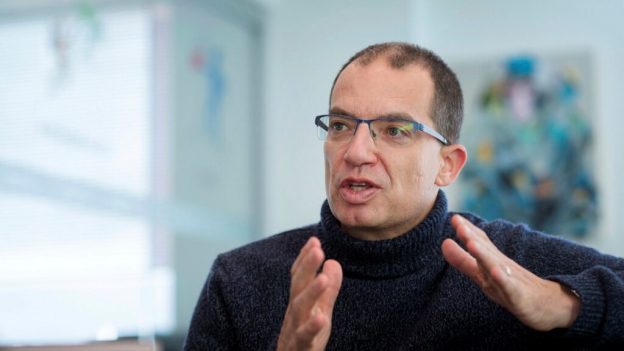
Moderna CEO Stéphane Bancel
Aside from the scientific obstacles that Moderna had encountered, one major “roadblock” for the company, per Garde, was none other than Stéphane Bancel, Moderna’s top executive, who still heads the company. According to Garde, Bancel was squarely at the center of many of the company’s controversies due, in part, to his “unwavering belief that Moderna’s science will work—and that employees who don’t ‘live the mission’ have no place in the company.” Between 2012 and 2016, Bancel was allegedly a key factor in the resignation of at least a dozen “highly placed executives,” including those who directed Moderna’s product pipeline as well as its vaccine projects.
Bancel, prior to joining Moderna, had spent much of his career in sales and operations, not science, making a name for himself at pharmaceutical giant Eli Lilly before heading a French diagnostics firm called bioMérieux. His performance there, as well as his ambition, caught the attention of Flagship Ventures, a Moderna cofounder and top investor, which then connected him with the company he would go on to lead.
Although lacking a background in mRNA and the science behind its use as a therapeutic, Bancel has made up for it by becoming Moderna’s salesman par excellence. Under his leadership, Moderna became “loath to publish its work in Science or Nature, but enthusiastic to herald its potential on CNBC and CNN.” In other words, under Bancel, the company came to promote its science through media publicity and public relations rather than by publishing actual data or scientific evidence. When two of its vaccine candidates entered phase 1 human trials in 2016 (trials that ultimately went nowhere), the company declined to list them on the public federal registry ClinicalTrials.gov. The decision not to list, which deviates from common practice by Moderna’s competitors and other more traditional vaccine companies, meant that the information on the safety of these vaccine candidates would likely never be publicly available after the trial’s conclusion. Moderna also refused to publicly comment on what diseases these vaccines were meant to target.
Such secrecy became commonplace at Moderna after Bancel took the helm, with the company having published no data “supporting its vaunted technology” by the time STAT’s 2016 exposé was published. Insiders as well as investors that had committed millions to the company were only granted “a peek” at the company’s data. According to former Moderna scientists who spoke to STAT, the company was “a case of the emperor’s new clothes.” Former employees further charged that Bancel was actually “running an investment firm” and “then hop[ing] it also develops a drug that’s successful.”
Perhaps this is why Bancel was deemed the best executive to steer Moderna. As an ambitious salesman running a highly overvalued company, he would prioritize the company’s image and its finances regardless of any issues with the science underpinning it all. Perhaps it was for that reason that Bancel, per former employees, “made it clear [from the beginning] that Moderna’s science simply had to work. And that anyone who couldn’t make it work didn’t belong.”
As STAT noted in 2016, the people who were tasked with making “the science work” were those who most frequently resigned, which led to Moderna losing two heads of chemistry within a single year, followed shortly by losing its chief scientific officer and its head of manufacturing. Many top executives, including the heads of its cancer research and rare disease research branches, ended up lasting fewer than eighteen months in their respective positions. The abrupt resignations weren’t exclusive to Moderna’s science-focused executive positions either, as the chief information officer and top financial executive role were also affected. Bancel ultimately sought advice from the human resources departments of Facebook, Google, and Netflix on employee retention.
Particularly telling was the abrupt and mysterious resignation of Moderna’s head of research and development, Joseph Bolen, after about two years at the company. A company insider at the time told STAT that the only reason Bolen would have resigned was if “there was something wrong with the science or the personnel.” In other words, Bolen either left because the science underpinning Moderna’s massive valuation did not live up to the hype or Bancel had forced him out, with the additional possibility that both were key in Bolen’s resignation.
Speculation at the time pointed the finger at Bancel, though it’s not clear why the rift between the two men emerged. Bancel asserted that he tried to convince Bolen to stay, though there were contrasting assertions from anonymous employees, and that Bolen had “voted himself off the island.”
Whatever the exact cause of the resignation of the head of R & D, it only added to the mystique around Moderna’s inner workings and its ability to deliver on its promise to “revolutionize” medicine. It also reveals more than a few similarities between Moderna and the now-disgraced company Theranos. Theranos, whose former top executive, Elizabeth Holmes, is now on trial for fraud, was known for its extreme culture of secrecy that kept investors and business partners in the dark, forced nondisclosure agreements on everyone who came in contact with the company, and kept employees “siloed” through an extremely strict need-to-know policy. Like Moderna, Theranos had been praised as revolutionary and poised to “change the medical industry forever.” Similarly, its top executive had no professional health-care or science experience, yet both fired or forced the resignations of employees who disagreed with their perspective or were unable to provide “positive” results. Both companies also failed to publish any evidence in peer-reviewed journals that the science behind their multibillion-dollar valued companies was more than just fantasy and a well-devised sales pitch.
Arguably, the most critical difference between Moderna and Theranos is that Moderna, whose numerous issues and challenges only came to light after the collapse of Theranos had begun, has never faced the same degree of scrutiny from the US government or mainstream investigative journalists. There are many possible reasons for this, including Moderna’s close relationship with the US Department of Defense through the Defense Advanced Research Projects Agency (DARPA), or concern that its exposure post-Theranos would bring scrutiny to any company existing at the intersection of Silicon Valley and the health-care industry. However, such a reckoning would likely have been inevitable for Moderna had it not been for the COVID-19 crisis, which could not have come at a more convenient time for the company.
Moderna’s “Software” Encounters Bugs
Many of the problems with Moderna that Garde identified in 2016 continued to plague the company right up until the beginning of the COVID-19 crisis. Chief among these was Moderna’s struggle to prove that its technology worked and that it was safe. Concerns about the safety and efficacy of the company’s products, which were publicly reported beginning in 2017, evaporated in the wave of panic surrounding COVID-19 and the simultaneous “Warp Speed” race for a vaccine that would “end the pandemic.” Yet, there is little, if any, evidence that these once-well-recognized concerns were addressed prior to the US government’s emergency use authorization of Moderna’s COVID-19 vaccine and its now widespread use in many countries around the world. To the contrary, there is evidence that these concerns were covered up both prior to and during the development of its vaccine.

Moderna’s office in Cambridge, Massachusetts
The reports that emerged in January 2017 noted that Moderna had “run into troubling safety problems with its most ambitious therapy” and that the company was “now banking on a mysterious new technology to keep afloat.” The “ambitious therapy” in question was meant to treat Crigler-Najjar syndrome and “was to be the first therapy using audacious new technology that Bancel promised would yield dozens of drugs in the coming decade.” Bancel had specifically used the Crigler-Najjar therapy as a major selling point to investors, particularly in 2016 when he touted it at the JP Morgan Healthcare Conference.
Yet, employees of Alexion, the company co-developing the drug with Moderna, blew the whistle on the project in 2017, revealing that it “never proved safe enough to test in humans” and that the failure of this therapy and the technology platform it sought to use had been responsible for prompting Moderna to abandon the class of drug therapies that, for years, had justified its sky-high valuation and attracted hundreds of millions in investor cash.
As a result of the problem with the Crigler-Najjar drug, media outlets asserted that Moderna was now “in need of a Hail Mary” that would keep its valuation from imploding and its investors from fleeing. The persistence of problems first noted in the 2016 STAT investigation, such as Moderna’s failure to publish meaningful data supporting its mRNA technology, were only exacerbating the company’s increasingly precarious position. Indeed, not long before the indefinite delay of the Crigler-Najjar therapy, Bancel had dismissed questions about Moderna’s promise by painting mRNA as an easy way to quickly develop novel treatments for a variety of diseases. He stated that “mRNA is like software: You can just turn the crank and get a lot of products going into development.” If that were the case, why did the company have no products on the market after nearly seven years, and why had its most touted project experienced such obstacles? Clearly, in keeping with Bancel’s “software” metaphor, Moderna’s technology had encountered bugs, bugs that were potentially ineradicable.
It turns out that the Crigler-Najjar drug therapy that Moderna had bet on so heavily had failed because of the lipid nanoparticle delivery system it used to transport mRNA into cells. Crigler-Najjar had been chosen as a target condition because Moderna scientists deemed it to be “the lowest-hanging fruit.” First, the syndrome is caused by one specific genetic defect; second, the affected organ, the liver, is among the easiest to target with nanoparticles; and third and most important for the company, treating the disease with mRNA would require frequent doses, ensuring a steady stream of income for the company. Thus, given the first two motives behind the company’s focus on Crigler-Najjar, if Moderna couldn’t develop a therapy for that condition, it meant they wouldn’t be able to develop a therapy for other conditions that, for example, were caused by multiple genetic defects or affected multiple organs or those more resistant to nanoparticle-based treatments. In other words, that “Moderna could not make its therapy [for Crigler-Najjar] work” meant that it was unlikely to make therapies of that entire class work either.
Indeed, media reports on the indefinite delay of this particular therapy noted that “the indefinite delay on the [Moderna] Crigler-Najjar project signals persistent and troubling safety concerns for any mRNA treatment that needs to be delivered in multiple doses.” This issue would soon lead Moderna to only pursue treatments that could be delivered as a single dose—that is, until the emergence of COVID-19 and the advent of the COVID-19 vaccine booster debate. It is also worth mentioning that, due to the extreme rarity of Crigler-Najjar syndrome, even if the therapy had been successfully taken to market by Moderna, it would have been unlikely to bring in enough money to sustain the company.
The specific problem Moderna encountered with the Crigler-Najjar treatment was related to the lipid nanoparticle delivery system it was using. According to former Moderna employees and their collaborators at Alexion, “The safe dose was too weak, and repeat injections of a dose strong enough to be effective had troubling effects on the liver [the target organ of this particular therapy] in animal studies.” This was an issue Moderna had apparently run into with its nanoparticle delivery system in other cases too, according to reports published at the time. Per STAT, the delivery system employed by Moderna had consistently “created a daunting challenge: Dose too little, and you don’t get enough enzyme to affect the disease; dose too much, and the drug is too toxic for patients.”
Moderna attempted to offset the bad press over having to delay the Crigler-Najjar drug with claims that they had developed a new nanoparticle delivery system called V1GL that “will more safely deliver mRNA.” The claims came a month after Bancel had touted another delivery system called N1GL to Forbes. In that interview, Bancel told Forbes that the delivery system they had been using, licensed to them by Acuitas, “was not very good” and that Moderna had “stopped using Acuitas tech for new drugs.” However, as will be explored in detail in this report as well as Part II of this series, it appears that Moderna continued to rely on the Acuitas-licensed technology in subsequent vaccines and other projects, including its COVID-19 vaccine.
Former Moderna employees and those close to their product development were doubtful at the time that these new and supposedly safer nanoparticle delivery systems were of any consequence. According to three former employees and collaborators close to the process who spoke anonymously to STAT, Moderna had long been “toiling away on new delivery technologies in hopes of hitting on something safer than what it had.” All of those interviewed believed that “N1GL and V1GL are either very recent discoveries, just in the earliest stages of testing—or else new names slapped on technologies Moderna has owned for years.” All spoke anonymously due to having signed nondisclosure agreements with the company, agreements that are aggressively enforced.
One former employee, commenting on the alleged promise of N1GL and V1GL, stated that these platforms “would have to be a miraculous, Hail Mary sort of save for them to get to where they need to be on their timelines. . . . Either [Bancel] is extremely confident that it’s going to work, or he’s getting kind of jittery that, with a lack of progress, he needs to put something out there.”

Stephen Hoge, Moderna’s president, and Melissa Moore, Moderna’s CSO for Platform Research Source: Moderna
It seems that those former employees who believed that N1GL and V1GL were new names put on existing technology and that Bancel was overselling their promise were correct, as Moderna appears to have returned to the troubled lipid nanoparticle delivery system it had licensed from Acuitas for subsequent therapies, including its COVID-19 vaccine. As will be explored in this report and Part II of this series, there is no evidence that Moderna ever got their “Hail Mary” save when it came to acquiring the rights for or developing a safe mRNA delivery system.
On top of the much-touted promises of N1GL and V1GL as safer treatments, Moderna additionally vowed to create “new and better formulations” for the Crigler-Najjar therapy that could potentially make it to human trials at a later time. This helped to stave off more bad press, but only for a few weeks. One month after the troubles with the Crigler-Najjar therapy were publicly reported, the head of Moderna’s oncology division, Stephen Kesley, left the company. This was just as Moderna was moving toward its first human trials for its cancer treatment, which forced “a senior leadership team with little experience in developing drugs to sort out the company’s future in the field.” Just weeks before Kesley’s departure, Bancel had boldly claimed in a bid to woo new investors at the JP Morgan Healthcare Conference, held in January 2017 in San Francisco, that oncology was Moderna’s “next big opportunity after vaccines.”
The same month as Kesley’s departure, Moderna was able to draw media attention elsewhere, as for the very first time they published data in a peer-reviewed journal. In Cell, its scientists published data on an animal trial for its Zika vaccine candidate that positively demonstrated both efficacy and safety in mice. While animal trial results do not necessarily translate into equivalent results in humans, the results were deemed to “bode well” for Moderna’s planned clinical trial of that vaccine candidate in humans. In addition, the results were like the animal trial results published by Moderna competitor BioNTech for their mRNA vaccine candidate for Zika a month earlier.
However, for Moderna, the positive news was muted by a negative ruling on a legal dispute that threatened Moderna’s ability to ever turn a profit on the Zika vaccine or any other mRNA vaccine it developed, a threat that Moderna’s competitors, such as BioNTech, didn’t have to contend with. That ruling, discussed in greater detail later in this report, greatly restricted Moderna’s use of the lipid nanoparticle delivery system licensed to it through Acuitas and directly threatened the company’s ability to create a for-profit product using intellectual property tied to the relevant patents. It would also kick off a years-long legal dispute that has suggested at various times that the promises of V1GL and N1GL were either completely invented or greatly exaggerated, as former Moderna employees and collaborators had stated.
Not long afterward, in July 2017, Moderna was hit with yet another wave of bad press as their partner in the Crigler-Najjar venture, Alexion, cut ties with the company completely. Moderna downplayed Alexion’s decision and claimed it had acquired “extensive knowledge” that would allow it to continue to develop the troubled therapy on its own. Nonetheless, Alexion’s decision came at an inopportune time for the company, as one of Moderna’s top investors had just two weeks earlier slashed its valuation of the company by almost $2 billion, allegedly because Moderna had “struggled to live up to its own hype.” Reports began to circulate claiming that “Moderna’s investors might be losing faith in the company’s future.”
Indeed, the Crigler-Najjar syndrome drug was not the only one that, at that point, had proven “too weak or too dangerous to test in clinical trials,” according to former employees and partners. The persistent issue, which again lay with the nanoparticle delivery system Moderna had licensed from Acuitas, had forced the company, beginning with the delay of the Crigler-Najjar therapy, to “prioritize vaccines, which can be dosed just once and thus avoid the safety problems that have plagued more ambitious projects.”
Yet, these single-dose “vaccines” or therapies were considered not as lucrative as the drug therapies Moderna had long promised and that underpinned its multibillion-dollar valuation, thereby forcing the company to “bet big on a loss-leader.” Also problematic was that Moderna lagged behind its mRNA vaccine competitors and that the supposed promise of its technology to produce viable vaccines was only “proven” at that point by a single, small trial. That trial, as noted by the Boston Business Journal, was an “early-stage human trial that was primarily meant to assess the safety of an avian flu vaccine.” Moderna had claimed, despite the trial being designed to assess safety, that it had “provided evidence that the vaccine is effective, with no major side effects” as well. Furthermore, as will be discussed in a later section of this report, the legal dispute over the Acuitas-licensed lipid nanoparticle system threatened Moderna’s ability to ever turn on a profit on any mRNA vaccine it managed to get through trials and the federal approval process, making the company’s future appear quite grim.
Despite Positive Press, Lingering Questions Remained
In September 2017, at a closed-door investor event meant to prevent more major investors from devaluing the company or jumping ship, Moderna provided more insight into a recently published press release on the trial results of a therapy meant to regrow heart tissue by boosting production of a protein known as VEGF. The press release, which generated positive media headlines, noted that the therapy had been proven safe in a study with a sample size of 44 patients. However, neither the press release nor the data Moderna disclosed to investors at the closed-door meeting revealed how much protein the therapy caused patients to produce, leaving its efficacy a mystery. Indeed, media reports on the investor meeting noted that “since Moderna did not release that crucial data point, outsiders can’t judge how much therapeutic potential there may be.”
The results, though they seemed to mitigate the concerns over the safety of Moderna’s technology, failed to inspire confidence in many attendees. Several attendees later told reporters that they “were not overly impressed” with Moderna’s presentation, which only “underlined lingering questions about whether it can live up to its own hype.”
One of the issues here, yet again, is that Moderna’s valuation was and is underpinned by its promise to produce products for rare diseases that require repeated injections over a patient’s lifetime. The VEGF therapy promoted by Moderna at this meeting was meant to be a one-time-only injection, and, thus, evidence of its safety did not resolve the problem of none of Moderna’s multi-dose products having proven safe enough to test on humans. The closed-door investor event made it clear that Moderna was aiming to avoid that persistent problem by prioritizing single-dose vaccines.
As STAT noted at the time:
The presentation to investors also made clear that Moderna is prioritizing vaccines. They are easier to develop from mRNA because patients need just one dose, which eliminates some of the safety issues that have plagued more ambitious projects such as therapies for rare diseases.
The pivot to vaccines remained a sore point with many investors, however, as vaccines are viewed as “low-margin product[s] that can’t generate anywhere near the profits seen in more lucrative fields like rare diseases and oncology.” These, as previously mentioned, are the very fields on which Moderna’s massive valuation had been based but for which it had been unable to produce safe and effective therapies. Moderna was clearly aware of these concerns among its current and potential investor base and attempted to speak promisingly of its oncology-related efforts at this same event. However, it was silent on trial timing and other key data points, maintaining the company’s long-standing reputation for secrecy towards both insiders and the general public. It is certainly telling that Moderna remained so secretive about key data at an event not only closed to the public and the press, but meant to reassure existing investors and to entice new ones. If Moderna declined to show important data to investors at a time when it was desperately seeking to keep them onboard, it implies that the company either had something to hide or nothing to show.
Moderna’s increasingly troubled internal situation, despite its consistently rosy PR, escalated a month later when reports emerged of the abrupt resignations of its head of chemistry, the leader of its cardiovascular division, and the head of its rare diseases division. These resignations, which occurred toward the end of 2017, followed the high-profile resignations the company suffered that were mentioned in the 2016 STAT exposé by Damian Garde.
A few months later, in March 2018, the chief scientific officer of Moderna’s vaccine business, Giuseppe Ciaramella, also left. This resignation signaled further internal troubles at the company, even more because Moderna had recently and very publicly pivoted to vaccines; and Ciaramella, in addition to leading vaccine development at this critical juncture, had been the first Moderna executive to suggest that the company’s technology could be useful in developing vaccines, a suggestion that the company was now betting everything on. One can’t help but wonder if Bancel’s tendency to force out employees and executives who “couldn’t make the science work” was a factor in any of these high-profile resignations, including that of Ciaramella.
A Years-Long Legal Snafu
Thus far, this report has largely focused on how Moderna’s extreme secrecy appears to have been used to obfuscate and mitigate major issues with its technology and product pipeline and how those issues were reaching a climax following the company’s IPO and immediately prior to the COVID crisis. However, the challenge of creating products that work and can be proven to work in clinical settings is but one of at least two major issues facing Moderna as a company. Indeed, during the same timetable explored above, Moderna was embroiled in aggressive disputes related to intellectual property and patents. Notably, these same legal issues deal with the lipid nanoparticle system that was also reportedly at the root of Moderna’s safety and product-pipeline issues.
As mentioned earlier, the lipid nanoparticle delivery system used in many Moderna therapies was licensed to them by Acuitas. Acuitas, however, had licensed that system from a separate company, Arbutus, which sued in 2016 claiming that Acuitas’s sublicense to Moderna was illegal. Arbutus won the case, which lead to a temporary injunction in 2017 that stopped Acuitas from further sublicensing the lipid nanoparticle technology. A settlement reached between Acuitas and Arbutus in 2018 terminated Acuitas’s license and restricted Moderna’s use of the technology to four vaccine candidates that targeted already identified viruses.
Moderna’s Bancel told Forbes in 2017 that the Acuitas/Arbutus system was barely mediocre and that Moderna was developing its own improved delivery system that would not infringe on Arbutus’s intellectual property (the aforementioned N1GL and V1GL systems). However, soon after Bancel made those claims, Arbutus’s leadership challenged them, stating that the company had reviewed all of Moderna’s patents, publications, and presentations regarding these “new” delivery systems and had found nothing that didn’t involve their own intellectual property. Even former Moderna employees, as mentioned previously, were very doubtful that N1GL and V1GL were any different than the Acuitas/Arbutus system, meaning that—despite Bancel’s claims—Moderna had unresolved legal woes related to these nanoparticles that, along with the toxicity issues, was stalling Moderna product candidates.
It is important to note at this point that, while only Moderna has been locked in a legal battle with Acuitas/Arbutus for years over LNP intellectual property, the other main producers of mRNA COVID-19 vaccines, Pfizer/BioNTech and CureVac, also use major aspects of the same Arbutus-derived technology. However, BioNTech licensed the LNPs in such a way as to avoid the issues that have entangled Moderna for years.
Moderna’s legal dispute, in addition to the already discussed safety issues, greatly threatened Moderna’s ability to survive as a company. Having already been forced to settle on the vaccines market and reject the more lucrative and “revolutionary” mRNA therapies it had long promised, Moderna was steadily moving toward a position where it had “no right to sell” vaccine products that depended on the Arbutus-patented and Acuitas-sublicensed technology. This situation has placed pressure on Moderna to negotiate a new license with Arbutus directly, negotiations in which the company would have very little leverage.
Since the first legal case in 2016, Moderna and Arbutus have remained locked in disputes about the nanoparticles and who owns them. Moderna challenged three Arbutus patents with the US Patent and Trademark Office, with mixed results. Yet, simultaneously, Moderna also claimed that its tech was “not covered by the Arbutus patents,” which prompted numerous observers and reporters to ask questions such as—“In that case, why did [Moderna] initiate the legal action against Arbutus to begin with?”
Moderna answered that query by claiming that it targeted Arbutus only because of Arbutus’s past “aggression” against them. However, despite such claims, the effort and cost inherent in the legal challenge reveals that, at the very least, Moderna takes the threat of Arbutus’s intellectual property claims very seriously. The actual answer seems to lie in Moderna being willing to publicly claim that their LNP technology is different enough from the Arbutus-derived system covered by the patents but unwilling to release any proof—whether in court, to its own investors, or to the public—that it is in fact different. The more recent twists and turns of this protracted legal battle, including a pivotal 2020 decision that was very unfavorable for Moderna, are discussed in Part II of this series.
Anything to Aid a Slumping Stock Price

Nasdaq building on the day of Moderna’s 2018 IPO. Source: Nasdaq
Just previous to Ciaramella’s resignation, Moderna had claimed to have “solved the scientific issues that made its earlier mRNA treatments too toxic for clinical trials,” according to media reports. Those reports also claimed that, as a result, “Moderna believes it has steered back on course,” though the company did not provide evidence to support that claim. Nevertheless, the promise allowed the company to complete a new round of financing, during which it raised an additional $500 million from “an investor syndicate uncommon in biotech” that included the governments of Singapore and the United Arab Emirates. Some observers were puzzled as to how Moderna had managed to raise so much money despite the outstanding questions about the science underpinning its high valuation.
The answer came with the publication of Moderna’s confidential investor slide deck by STAT’s Damian Garde, which showed that the company had predicted that drugs that they had only been tested in mice would soon be worth billions and that its vaccine revenue would amount to $15 billion annually. The slide deck, deemed “pretty absurd” and “geared at hopeful generalists that can dream big” per one skeptical investor, made it clear why the company’s last funding round had appealed to “unconventional” biotech investors rather than veteran investors focused on the industry. A veteran biotech investor, who spoke anonymously due to the slide deck’s confidentiality, stated that “it’s a deck designed to tell the ‘we’re going to be huge’ story to a group of rather unsophisticated investors—and it does that beautifully. . . Just enough science and platform stuff to convey the ‘We know what we’re doing’ sentiment, but not enough to engender technical questions.”
Per those who sat through Moderna’s pitch, the company was “very generous on the market-size assumptions for their programs,” with one former Moderna collaborator placing the real-world value of a treatment the company had claimed was worth billions annually at closer to “$100 million to 250 million.” Of course, that revenue estimate comes with the caveat that the treatment, tested thus far only in mice, would someday prove to work in humans. A former Moderna employee in its rare diseases division stated at the time that Moderna “continue[s] to rush forward and over-promise the potential for broad use of mRNA prior to any evidence beyond vaccines or very early experiments in mice.”
Despite Moderna’s ability to convince “unsophisticated” and/or “unconventional” investors to back its early 2018 funding round, it appears that one of its most important promises used to attract investors—that it had solved the nanolipid particle toxicity issue—was not true.
In a filing with the Securities and Exchange Commission dated November 2018, months after Moderna had claimed to have fixed the issues with its lipid nanoparticle delivery system, the company made several claims that appear to contradict its purported development of a new, safer nanoparticle technology.
For example, the filing states on page 33:
Most of our investigational medicines are formulated and administered in an LNP [lipid nanoparticle] which may lead to systemic side effects related to the components of the LNP which may not have ever been tested in humans. While we have continued to optimize our LNPs, there can be no assurance that our LNPs will not have undesired effects. Our LNPs could contribute, in whole or in part, to one or more of the following: immune reactions, infusion reactions, complement reactions, opsonation [sic] reactions, antibody reactions including IgA, IgM, IgE or IgG or some combination thereof, or reactions to the PEG from some lipids or PEG otherwise associated with the LNP.
Certain aspects of our investigational medicines may induce immune reactions from either the mRNA or the lipid as well as adverse reactions within liver pathways or degradation of the mRNA or the LNP, any of which could lead to significant adverse events in one or more of our clinical trials. Many of these types of side effects have been seen for legacy LNPs. There may be resulting uncertainty as to the underlying cause of any such adverse event, which would make it difficult to accurately predict side effects in future clinical trials and would result in significant delays in our programs. (emphasis added)
Based on these statements, Moderna appeared to be uncertain as to whether its current lipid nanoparticle delivery system was any safer than that which led to the indefinite delay of its Crigler-Najjar therapy. In addition, the reference to “adverse reactions within liver pathways,” one of the main issues that triggered the specific delay of the Crigler-Najjar therapy, suggests a continued reliance on technology sublicensed from Acuitas. As will be noted in Part II, the Moderna COVID-19 vaccine also appears to use the controversial Acuitas technology that had prompted significant safety, legal, and financial concerns for Moderna for years.
The November 2018 SEC filing makes other statements regarding its supposedly fixed lipid nanoparticle delivery system that are worth noting:
If significant adverse events or other side effects are observed in any of our current or future clinical trials, we may have difficulty recruiting trial participants to any of our clinical trials, trial participants may withdraw from trials, or we may be required to abandon the trials or our development efforts of one or more development candidates or investigational medicines altogether. . . .
Even if the side effects do not preclude the drug from obtaining or maintaining marketing approval, unfavorable benefit risk ratio may inhibit market acceptance of the approved product due to its tolerability versus other therapies. Any of these developments could materially harm our business, financial condition, and prospects.
These statements are significant in that they openly suggest at least one reason for Moderna’s long-standing tendency toward secrecy in publishing data about its treatments, as public knowledge of its technology’s persistent challenges would threaten its ability to attract trial participants, investors, and, later, consumers.
About a month after these troubling admissions were made in fine print, Moderna succeeded in pulling off a record-setting initial public offering (IPO) in December 2018. For that IPO, Moderna had retained the services of eleven investment banks, which is reportedly around “twice the number normally seen in biotech offerings.” However, its stock value tumbled just hours afterward, “a sign the company and its underwriters might have over-estimated demand for the richly valued company.” A month after the IPO, Moderna’s stock continued its downward slide, “doing exactly the opposite of what private investors look for in an IPO.” Those who had predicted this post-IPO outcome before Moderna went public had also warned that this downward trend would likely continue through early 2020 if not longer. Skeptics such as STAT’s Damian Garde had warned right before Moderna’s IPO that that the company’s sliding stock value would likely continue throughout 2019 due to “a seeming lack of impending news,” given that “momentum in biotech, positive or negative, is driven by catalysts” and “Moderna is in for a fairly quiet 2019.”
Meanwhile, media reports warned, as they had for years, that Moderna “is still in the early days of proving [their] technology’s potential,” despite being a nine-year-old company. Such reports also noted that Moderna’s inability to prove its technology’s worth after nearly a decade in business was hampered by its “struggl[e] in its initial efforts to turn mRNA into drugs that can be repeatedly dosed, leading it to pivot to vaccines, which can be administered just once or twice.” Investors at the 2019 JP Morgan health-care conference spoke of concerns that “Moderna [has] yet to rule out the lingering risks tied to mRNA, and, even at its depressed valuation, the company is simply too expensive.” Others confided in reporters that they would be “sitting on the sidelines until Moderna either changes the narrative with promising human data or gets substantially cheaper.”
A few weeks later, Moderna’s Bancel attended the World Economic Forum’s 2019 annual meeting alongside Johnson & Johnson executive Paul Stoffels and other pharmaceutical and biotech leaders in order to “rub elbows with world leaders and one-percenters—and talk about the future of healthcare.” Other health-care figures in attendance included head of the World Health Organization, Tedros Adhanom Ghebreyesus, and “global health philanthropist” Bill Gates, whose foundation entered into “a global health project framework” with Moderna in 2016 to “advance mRNA-based development projects for various infectious diseases.” The Bill & Melinda Gates Foundation is the only foundation listed as a “strategic collaborator” on the Moderna website. Other “strategic collaborators” include the US government’s Biomedical Advanced Research and Development Authority (BARDA), the US military’s DARPA, and pharmaceutical giants AstraZeneca and Merck.
Moderna first teamed up with the WEF just a few years after its founding back in 2013, when it was named to the Forum’s community of Global Growth Companies (GGC). That year, Moderna was one of just three North American health companies to receive the honor and was additionally recognized by the Forum as “an industry leader in innovative mRNA therapeutics.” “We are honored to be recognized for our efforts to advance our platform and ensure its potential is realized on a global scale, and we look forward to being a member of the World Economic Forum community,” Bancel said at the time.
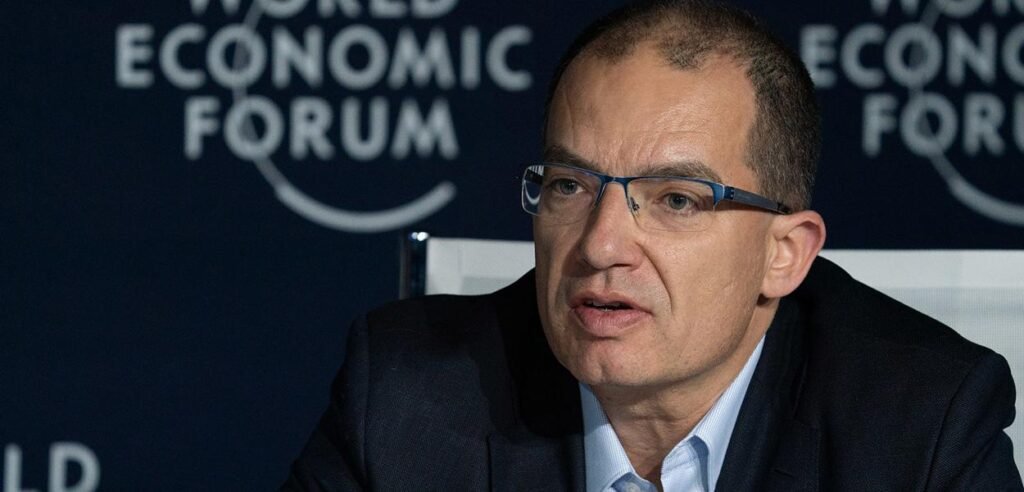
Stéphane Bancel at the World Economic Forum Annual Meeting, January 2020. Source: WEF
As a WEF Global Growth Company, Moderna has closely and regularly engaged with the Forum since 2013 at both the Chinese-hosted Annual Meeting of the New Champions and the WEF’s regional meetings, while also having access to the WEF’s exclusive networking platform that provides the company privileged access to the world’s most powerful business and government leaders. Additionally, such carefully selected companies are given opportunities by the Forum “to shape global, regional and industry agendas and engage in meaningful exchanges about ways to continue on a sustainable and responsible path of growth.” Essentially, the roster of such companies constitutes a consortium of corporations that are promoted and guided by the Forum because of their commitment to “improving the state of the world,” that is, their commitment to supporting the Forum’s long-term agendas for the global economy and for global governance.
In April 2019, Moderna published some information on modifications to its lipid nanoparticles (discussed in more detail in Part II). A month later, in May 2019, Moderna published positive results in the journal Vaccine for phase 1 data on mRNA vaccine candidates for “two potential pandemic influenza strains” administered as two doses three weeks apart. The company’s press release on the study stated that “future development of Moderna’s pandemic influenza program is contingent on government or other grant funding,” suggesting that it would use the trial results to lobby the government for funds for a continuation of this particular program.
Notably, at the same time as these results were published, the US Department of Health and Human Services Office of the Assistant Secretary for Preparedness and Response, then filled by Robert Kadlec, was in the midst of conducting Crimson Contagion, a multimonth simulation of a global pandemic involving an influenza strain that originates in China and spreads globally through air travel. The strain at the center of the simulation, called H7N9, is one of the very strains used in the Moderna study. Moderna published those results on May 10, just four days before the Crimson Contagion simulation hosted its federal interagency seminar. BARDA, which the ASPR office oversees, is a major strategic ally of Moderna and was co-developing these “potential pandemic influenza” vaccines that are mentioned in this timely press release, that is, for H10N8 and H7N9 influenza infections.
Crimson Contagion is notable for several reasons, most significantly for Kadlec’s own history with the Dark Winter simulations that preceded and eerily predicted the 2001 anthrax attacks. As has been discussed in detail in a previous TLAV – Unlimited Hangout investigation, the 2001 anthrax attacks conveniently rescued anthrax vaccine manufacturer BioPort, now Emergent Biosolutions, from certain ruin, much like the way the COVID crisis did for Moderna.
A month later, in June 2019, Moderna again managed to generate positive headlines on making its debut at the American Society of Clinical Oncology annual meeting, where it sought to promote its ability to produce the personalized cancer treatments that had been key to wooing investors both before and after its record-setting IPO. It was the first time the company had publicly presented data on a cancer treatment, and this particular treatment was being co-developed with Merck. The data showed positive results in preventing relapses in cancer patients whose solid tumors had been removed via surgery, but the trial failed to show any definitive effect in cancer patients whose tumors had not been removed. Thus, the early data seemed to indicate that Moderna’s treatment would only help cancer patients stay in remission after other medical interventions had been performed. Though the news allowed Moderna to bask in some much-needed positive press and to promote its oncology products in development, some reports rightly noted that it was “still too early for any definitive judgment” on the cancer treatment’s clinical benefit.
Despite this apparent advance, by September 2019, Moderna’s stock price continued to decline, leading to a loss of about $2 billion in market value from the company’s $7.5 billion valuation at the time of its record-setting IPO. The main factors for this were the same persistent problems the company had been facing for years—lack of progress, including lack of products on the market; persistent safety problems with its mRNA technology; and the lack of data showing that advances were being made to make that technology commercially feasible.
In mid-September 2019, Moderna gathered investors together to showcase scientific evidence it claimed would finally prove that its mRNA technology could “turn the body’s own cells into medicine-making factories” and hopefully “turn skeptical investors into believers.” This data, which was derived from a very preliminary study that involved only four healthy participants, had complications. Three of the four participants had side effects that prompted Moderna to state at the meeting that they would need to reformulate the mRNA treatment to include steroids, while one of the participants suffered heart-related side effects, including a rapid heart rate and an irregular heartbeat. Moderna, which asserted that none of the heart-related side effects was serious, could not “definitively pinpoint the cause of the heart symptoms.” Yet, as previously mentioned, it was likely related to the safety issues that had been plaguing its experimental products for years.
The company’s preliminary data, which was promoted in yet another bid to keep investors from leaving, also included the caveat that Moderna had decided to pause trials for this particular product, which was a single-injection mRNA treatment for the chikungunya virus. That treatment was being developed in partnership with the Pentagon’s DARPA. Other more positive data from a preliminary trial were also released at this meeting. That trial, however, was for an mRNA treatment for cytomegalovirus, “a common virus that is usually kept in check by the body’s immune system and rarely causes problems in healthy people,” meaning its mRNA vaccine for that condition was unlikely to ever be lucrative.
Not long after this lackluster investors meeting, on September 26, 2019, the once highly secretive Moderna announced it would collaborate with researchers at Harvard University “in hopes that the research will spur new drugs,” as its product pipeline appeared to have stalled. Moderna president Stephen Hoge described the collaboration as select Harvard researchers receiving “a package of stuff that we put our blood, sweat, and tears in, and then someone’s going to do something with it. We’ll find out afterward how that went.” For a company long known for its extreme secrecy in an already secretive industry, Moderna’s arrangement with Harvard, which it admitted was “unusual,” came across as somewhat desperate.
A month later, at the 2019 Milken Institute Future of Health Summit, there was a panel discussion on universal flu vaccines and how a “disruptive” event would be needed to upset the long-existing bureaucratic vaccine-approval process to facilitate wider adoption of “nontraditional” vaccines, such as those produced by Moderna. Panel speakers including former FDA commissioner Margaret Hamburg, a veteran of the 2001 Dark Winter exercise and scientific advisor to the Gates foundation, as well as Anthony Fauci of the National Institutes of Health’s National Institute of Allergy and Infectious Diseases (NIAID) and Rick Bright of BARDA, who previously worked for the Gates-funded PATH. The panel discussion notably took place shortly after the controversial coronavirus pandemic simulation called Event 201, whose moderators and sponsors had been intimately involved in 2001’s Dark Winter.
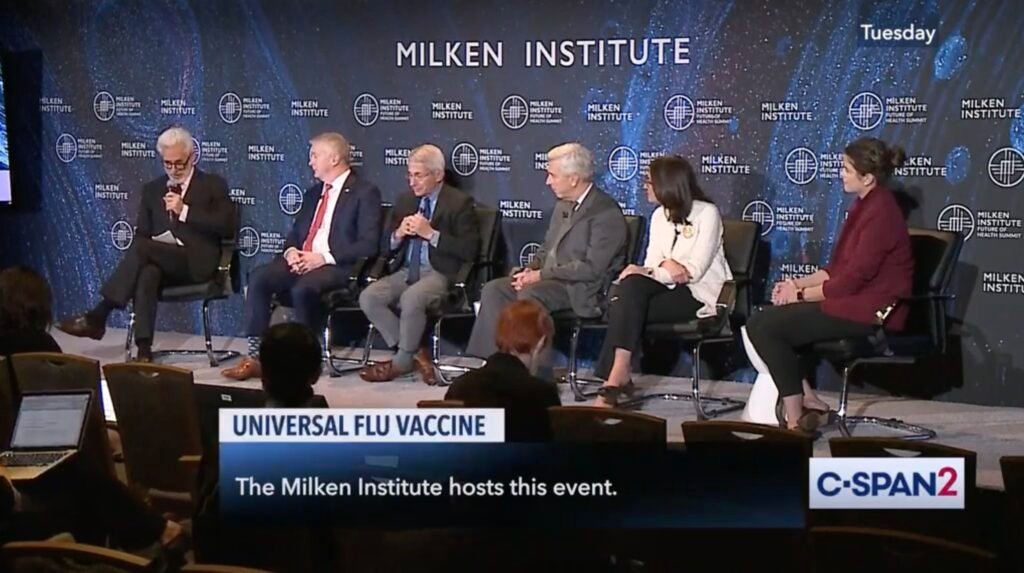
Screengrab from the 2019 Milken Institute Universal Flu Vaccine panel. Full video available here.
During the panel, the moderator—Michael Specter of the New Yorker—asked the question: “Why don’t we blow the system up? Obviously, we just can’t turn off the spigot on the system we have and then say ‘Hey! everyone in the world should get this new vaccine we haven’t given to anyone yet,’ but there must be some way.” Specter then mentioned how vaccine production is antiquated and asked how sufficient “disruption” could occur to prompt the modernization of the existing vaccination development and approval process. Hamburg responded first, saying that as a society we are behind where we need to be when it comes to moving toward a new, more technological approach and that it is now “time to act” to make that a reality.
Several minutes later, Anthony Fauci stated that the superior method of vaccine production involves “not growing the virus at all, but getting sequences, getting the appropriate protein and it sticking in on self-assembling nanoparticles,” essentially referring to mRNA vaccines. Fauci then stated: “The critical challenge . . . is that in order to make the transition from getting out of the tried and true egg-growing [method] . . . to something that has to be much better, you have to prove that this works and then you have got to go through all of the critical trials—phase 1, phase 2, phase 3—and show that this particular product is going to be good over a period of years. That alone, if it works perfectly, is going to take a decade.” Fauci later stated that there is a need to alter the public’s perception that the flu is not a serious disease in order to increase urgency and that it would be “difficult” to alter that perception along with the existing vaccine development and approval process unless the existing system takes the posture that “I don’t care what your perception is, we’re going to address the problem in a disruptive way and an iterative way.”
During the panel, Bright stated that “we need to move as quickly as possible and urgently as possible to get these technologies that address speed and effectiveness of the vaccine” before discussing how the White House Council of Economic Advisers had just issued a report emphasizing that prioritizing “fast” vaccines was paramount. Bright then added that a “mediocre and fast” vaccine was better than a “mediocre and slow” vaccine. He then said that we can make “better vaccines and make them faster” and that urgency and disruption were necessary to produce the targeted and accelerated development of one such vaccine. Later in the panel, Bright said the best way to “disrupt” the vaccine field in favor of “faster” vaccines would be the emergence of “an entity of excitement out there that’s completely disruptive, that’s not beholden to bureaucratic strings and processes.” He later very directly said that by “faster” vaccines he meant mRNA vaccines.
The Bright-led BARDA and the Fauci-led NIAID in just a few months’ time became the biggest backers of the Moderna COVID-19 vaccine, investing billions and co-developing the vaccine with the company, respectively. As will be explained in Part II of this series, the partnership between Moderna and the NIH to co-develop what would soon become Moderna’s COVID-19 vaccine was being forged as early as January 7, 2020, long before the official declaration of the COVID-19 crisis as a pandemic and before a vaccine was proclaimed as necessary by officials and other individuals. Not only did the COVID-19 vaccine quickly become the answer to nearly all Moderna’s woes but it also provided the disruptive scenario necessary to alter the public’s perceptions of what a vaccine is and eliminate existing safeguards and bureaucracy in vaccine approval. (Watch the 2019 Universal Flu Vaccine event here.)
As Part II of this series will show, it was an alleged mix of “serendipity and foresight” from Moderna’s Stéphane Bancel and the NIH’s Barney Graham that propelled Moderna to the front of the “Warp Speed” race for a COVID-19 vaccine. That partnership, along with the disruptive effect of the COVID-19 crisis, created the very “Hail Mary” for which Moderna had been desperately waiting since at least 2017 while also turning most of Moderna’s executive team into billionaires and multi-millionaires in a matter of months.
However, Moderna’s “Hail Mary” won’t last – that is, unless the mass administration of its COVID-19 vaccine becomes an annual affair for millions of people worldwide. Even though real-world data since its administration began challenges the need for as well as the safety and efficacy of its vaccine, Moderna – and its stakeholders – cannot afford to let this opportunity slip through fingers. To do so would mean the end of Moderna’s carefully constructed house of cards.
Author’s Note: Dr. Michael Palmer, Dr. Meryl Nass and Catherine Austin Fitts contributed much-appreciated feedback and guidance on this article. Special thanks to Katy M. for copy-editing help.
The Amen Corner Strikes Again
Congress is in Israel’s pocket
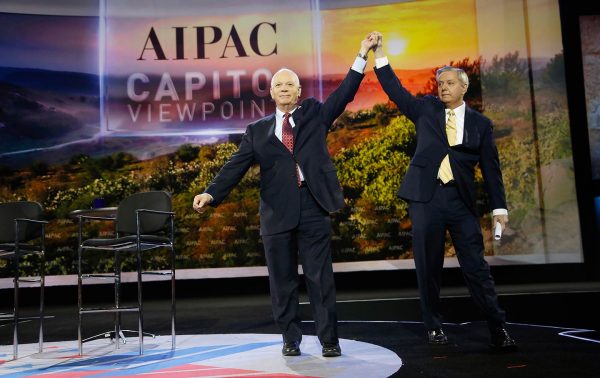
BY PHILIP GIRALDI • UNZ REVIEW • OCTOBER 5, 2021
Once upon a time the Israel Lobby destroyed critics of the Jewish state and its behavior by stealth. If a Congressman or Senator were speaking honestly about the lopsided relationship with Israel which required suppressing, it was done by making sure that individual was not reelected. This was normally accomplished by vetting an attractive opposition primary candidate who would do Israel’s bidding, funding him or her generously and providing unfavorable press coverage of the incumbent.
One great victory for Israel using that technique was the 1992 defeat of George H. W. Bush by Bill Clinton. Bush had dared to withhold guarantees on loans sought to fund Israel’s expansion of its settlements, clearly a genuine American interest as the settlements were a violation of international law. Going into the election, he appeared to be the much stronger candidate, but then the captive media starting to write about how the economy was in bad shape, which was not true, and switched over to deeply negative coverage of his campaign. The Lobby also heavily contributed financially to the Clinton campaign. George H.W. subsequently privately blamed the Israel Lobby for his defeat, a lesson his son George W. clearly absorbed in that he took pains to never anger Israel. He went rather the other way, surrounding himself with Jewish neocons as his national security policy team, which in turn produced Afghanistan and, quite plausibly, was the driving force behind the catastrophic attack on Iraq.
Legislators who have been dethroned by Israel using the same technique are Senators Chuck Percy and William Fulbright as well as congressmen Paul Findley, Pete McCloskey, Cynthia McKinney and James Traficant. They all faced credible, well-funded opponents and lost their seats. And the Israel Lobby, behind it all, never even had to complain about their views on Israel. In fact, it was believed to be better to not raise that issue directly.
Well, with great power frequently comes what the Greeks called hubris, and Israel has undoubtedly the most powerful foreign policy lobby in Washington. And that power is unique in that it also extends to many states and even local jurisdictions. As Lord Acton put it, “All power corrupts and absolute power corrupts absolutely,” meaning inter alia that the power wielded by Israel has corrupted our entire political system. What Israel wants, Israel gets, as became clear two weeks ago in the near unanimous vote for $1 billion dollars in extra Iron Dome expenses by the US Congress.
The critical difference is that now the Israelis have become so disdainful of their United States benefactor that the gloves are off when it comes to making their demands clear and insisting on positive responses. Those who do not go along are no longer brought down in semi-clandestine fashion. They are instead openly and explicitly denounced as anti-Semites and holocaust-deniers. Anti-Semitism has become the hot wire in American political discourse. Or, as one of Israel’s many proxies in Congress, House Majority Leader Steny Hoyer put it, all who support the “American way” cherish the relationship with “the Democratic state of Israel.” Surely there is a double entendre in the use of “democratic,” though Hoyer, who was acting on a demand made by Israeli Foreign Minister Yair Lapid, appears to have somehow confused democracy with apartheid.
The Israel Lobby has for several years now been vexed by the group of recently elected congressional progressives who have not been particularly shy about criticizing the Jewish state, though they have frequently had to backtrack of statements under intense pressure from the party leadership. The pushback from other Congressmen and from the media frequently accuses them of being flat out anti-Semites or often inclined to use anti-Semitic “tropes.” A favorite point of attack is to deny that Jewish groups and billionaires use money to advance their political objectives, prominently among which is uncritical support of Israel.
Congresswoman Ilhan Omar notoriously once responded to a question raised by journalist Glen Greenwald, who had posted his observation that “It’s stunning how much time US political leaders spend defending a foreign nation even if it means attacking free speech rights of Americans.” Omar tweeted in a curt response to Greenwald: “It’s all about the Benjamins baby.” Benjamins means one-hundred-dollar bills, which bear the image of Founding Father Benjamin Franklin. The entire Democratic Party leadership and every media pundit immediately voiced outrage at the antisemitic “trope.” Apparently, linking Jewish groups and money as part of America’s political corruption, which even the casual observer can hardly miss, had been elevated to something like a hate crime within the Democratic Party.
Sometimes the pressure is more subtle in the old-fashioned way. In the voting two weeks ago on Iron Dome one progressive Congresswoman Alexandria Ocasio Cortez surprisingly voted “present” instead of “no.” It turns out that her own party is preparing to gerrymander her congressional district to put more Jewish voters in it and hopefully remove her by running a well-funded candidate against her. One might suggest that she put ambition ahead of ethical behavior in her voting, but as the Lobby is out to get her one tiny gesture will hardly prove to be her salvation.
Only one Republican voted against the Iron Dome money, Representative Thomas Massie of Kentucky. He pointed out that most foreign aid comes down to the effectiveness of the foreign influence exerted on US politicians at home. It is a perfect pithy explanation of how the Israel Lobby operates. For his pains, Massie is being subjected to the hardball treatment. The American Israel Political Action Committee (AIPAC), which is the most active player in the Lobby, published a Facebook ad that included a picture of Massie and a text stating “Efforts to cut, add conditions, or restrict America’s strong, bipartisan commitment to Israel will only harm America’s national interests.” A caption claimed that “when Israel faced rocket attacks, Tom Massie voted against Iron Dome.” The ad attracted numerous comments asserting that Massie is an anti-Semite.
Massie opposed nearly all foreign aid based on principle, saying that “My position of ‘no foreign aid’ might sound extreme to some, but I think it’s extreme to bankrupt our country and put future generations of Americans in hock to our debtors.” He responded to the AIPAC ad with “How is THIS not foreign interference in our elections?” and AIPAC answered Massie’s tweet with one of its own, saying it “will not be deterred in any way by ill-informed and illegitimate attacks on this important work. We are proud that we are engaged in the democratic process to strengthen the US-Israel relationship. Our bipartisan efforts are reflective of American values and interests.”
The Anti-Defamation League (ADL) is also hunting Republicans who are not toeing the line. It has focused on Tucker Carlson in particular. It has demanded that Fox News fire Tucker for promoting the “great replacement” theory as well as other white-nationalist talking points. “To use his platform as a megaphone to spread the toxic, antisemitic, and xenophobic ‘great replacement theory’ is a repugnant and dangerous abuse of his platform,” said ADL CEO Jonathan Greenblatt. Under-fire Republican Representative Matt Gaetz also became involved in the argument, saying that Tucker Carlson is correct about white nationalist ‘replacement’ conspiracy theory and he called the ADL racist.
AIPAC has also been active in denigrating the progressive Democrats of the so-called “Squad.” In August, Congresswoman Ilhan Omar accused the pro-Israel lobby of deliberately putting herself at risk with an ad campaign that featured her photo and was headlined, “Stand with America. Stand against Terrorists.” The ad included: “For Ilhan Omar, there is no difference between America and the Taliban; between Israel and Hamas; between democracies and terrorists; tell Rep. Omar: Condemn terrorists, not America.”
Israel’s ability to influence developments in the US is such that it also believes itself to be empowered to interfere in American education, promoting mandatory holocaust courses at all levels and stifling any serious study of what is going on in the Middle East. In August, Israeli Consul General to the Southeastern United States Anat Sultan-Dadon demanded a meeting with a dean at the University of North Carolina at Chapel Hill to discuss a graduate student teaching a course on the Israeli-Palestinian conflict. The Israeli claimed the PhD student Kylie Broderick was an anti-Semite and said she was unfit to teach the course.
The intervention by an Israeli government official came after a pressure campaign by right-wing pro-Israel websites and advocacy groups to remove the student from teaching a history department course called “The Conflict Over Israel/Palestine.” Now, Ted Budd, a Congressional Representative from North Carolina has joined the fray, including writing a letter to the president of UNC:
“President Hans: I write to express my concern over repeated antisemitic activity at the University of North Carolina at Chapel Hill (UNC). Kylie Broderick, a graduate student, is scheduled to teach a course titled ‘The Conflict over Israel/Palestine.’ Ms Broderick has a troubling history of public antisemitic statements. In her public tweets she has lamented how hard it is for her to pretend that there are two sides to the Israeli-Palestinian conflict in the classroom, noting that ‘there is only 1 legitimate side – the oppressed – versus imperialist propaganda. I don’t ever want to encourage them to believe there is reason to take on good faith the oppressive ideologies of American and Western imperialism, Zionists, & autocrats.’ Among other things, she has also falsely and unapologetically accused Israel of ethnic cleansing and denied Israel’s right to exist.”
Other pro-Israel groups have joined in, even claiming that Broderick was engaging activity that is illegal under both local and federal law! Indeed, one might suggest that what Israel and its friends are seeking is a world in which even thinking about the war crimes and crimes against humanity committed by the Jewish state will be strictly illegal. The Ukraine, which has been heavily Israel-ized since its pro-Russian government was removed through US interference in 2014, has, in fact, just passed a law banning anti-Semitic sentiment. Sentiment means what is inside one’s head. In other European countries anti-Semitic acts, which include criticism of Israel and expressions disparaging Jews, are illegal, but this is a first step to criminalize anti-Israeli or anti-Semitic thoughts. Could something similar be coming to the United States? Judging from the resistance that an occupied Congress is likely to put up, which is zero, it is more than likely that we will be heading in the same direction.
Philip M. Giraldi, Ph.D., is Executive Director of the Council for the National Interest, a 501(c)3 tax deductible educational foundation (Federal ID Number #52-1739023) that seeks a more interests-based U.S. foreign policy in the Middle East. Website is https://councilforthenationalinterest.org address is P.O. Box 2157, Purcellville VA 20134 and its email is inform@cnionline.org
Could the CIA be behind the leak of the Pandora Papers, given their curious lack of focus on US nationals?
By Kit Klarenberg | RT | October 4, 2021
Hailed as shedding new light on the global elite’s complex financial arrangements, the Pandora Papers pose many questions – not least where are the Americans? Are the authors unwilling to bite the hidden hand that fed them?
On October 3, the Washington, DC-based International Consortium of Investigative Journalists (ICIJ) announced the leak of almost three terabytes of incriminating data on the use of offshore financial arrangements by celebrities, fraudsters, drug dealers, royal family members, and religious leaders the world over.
The ICIJ led what it called “the world’s largest-ever journalistic collaboration,” involving over 600 journalists from 150 media outlets in 117 countries, to comb through the trove of 12 million documents, dubbed the ‘Pandora Papers’.
Among other things, the data reveals the use of tax and financial secrecy havens “to purchase real estate, yachts, jets and life insurance; their use to make investments and to move money between bank accounts; estate planning and other inheritance issues; and the avoidance of taxes through complex financial schemes.” Some documents are also said to be tied to “financial crimes, including money laundering.”
While the publication of articles related to the documents’ bombshell contents is only in its early stages, the Consortium promises that the records contain “an unprecedented amount of information on so-called beneficial owners of entities registered in the British Virgin Islands, Seychelles, Hong Kong, Belize, Panama, South Dakota and other secrecy jurisdictions,” with over 330 politicians and 130 Forbes billionaires named.
Despite the voluminous haul, many critics have pointed out that ICIJ maps of where these “elites and crooks” hail from and/or reside are heavily weighted towards Russia and Latin America – for example, not a single corrupt politician named is based in the US. The organization itself notes that the most significantly represented nations in the files are Argentina, Brazil, China, Russia and the UK – which seems odd, when one considers the Consortium identified over $1 billion held in US-based trusts, key instruments for tax avoidance, evasion, and money laundering.
Then again, past blockbuster releases by the ICIJ, and the Organized Crime and Corruption Reporting Project (OCCRP), its chief collaborator, have contained similarly incongruous omissions. For instance, in March 2019, the latter exposed the ‘Troika Laundromat’, through which Russian politicians, oligarchs, and criminals allegedly funnelled billions of dollars.
The OCCRP published numerous reports on the connivance, and detailed information on the many millions laundered via major Western financial institutions in the process, including Deutsche Bank and JPMorgan Chase. However, not once was HSBC ever mentioned – despite the Troika having openly advertised the bank as its “agent partner,” and then-OCCRP data team head Friedrich Lindberg publicly conceding that HSBC was “incredibly prominent” in “all” of the Troika’s corrupt schemes.
The reason for this extraordinary oversight has never been adequately explained, although one possible answer could be that the OCCRP’s reporting partners on the story were the BBC and The Guardian. The former was headed by Rona Fairhead from 2014 to 2017, who also served as non-executive director of HSBC between 2004 and 2016. Meanwhile, the latter has long enjoyed a lucrative commercial relationship with the bank, which is surely vital to keeping the struggling publication’s lights on.
The April 2016 Panama Papers investigation, jointly led by the ICIJ and OCCRP, revealed how the services of Panamanian offshore law firm Mossack Fonseca had been exploited by wealthy individuals and public officials for fraud, tax evasion, and to circumvent international sanctions. The pair’s reporting, and resultant media coverage, focused heavily on high-profile individuals such as then-UK prime minister David Cameron, who profited from a Panama-based trust established by his father.
A key promoter of the Papers’ most lurid contents was billionaire Bill Browder. What the convicted fraudster, and indeed a vast number of news outlets that featured his comments about the leak, have consistently failed to acknowledge was that he himself is named in Mossack Fonseca’s papers, linked to a large number of shell companies in Cyprus used to insulate his clients from tax on vast profits he amassed for them while investing in Russia during the tumultuous 1990s, and disguise ownership of lavish properties he owns abroad.
As Browder has testified, he enjoys an intimate relationship with the OCCRP, having engaged them in his global crusade against Russia since his unceremonious ban from entering the country in 2005. Furthermore, many other mainstream outlets, including Bloomberg and the Financial Times, which he has likewise used as pawns in his Russophobic propaganda blitz, have reportedly declined to publish stories about his dubious financial dealings.
Such evident reluctance to bite the hand that feeds could well explain why the Pandora Papers appear largely silent on the offshore dealings of wealthy US nationals and US-based individuals.
Take for instance the fortunes of eBay founder Pierre Omidyar and investor George Soros, which reportedly total at least $11.6 billion and $7.5 billion respectively – no information implicating them in any questionable scheme has yet been unearthed. It may not be a coincidence that both provide funding to the ICIJ and OCCRP via their highly controversial Luminate and Open Society ‘philanthropic’ enterprises.
The OCCRP’s roll call of financiers offers other reasons for concern – nestled among them are the National Endowment for Democracy and United States Agency for International Development, both of which avowedly serve to further US national security interests, and have been embroiled in numerous military and intelligence operations to destabilize and displace foreign “enemy” governments since their very inception. Moreover, though, there are disturbing indications that the OCCRP itself was created by Washington for this very purpose.
In June, a White House press conference was convened on the subject of “the fight against corruption.” Over the course of proceedings, a nameless “senior administration official” announced that the US government would place “the anti-corruption plight at the center of its foreign policy,” and wished to “prioritize this work across the board.”
They went on to state the precise dimensions of this anti-corruption push “[remained] to be seen,” but it was expected that “components of the intelligence community,” including the director of National Intelligence and the Central Intelligence Agency, would be key players therein.
Their activities would supplement existing, ongoing US efforts to “identify corruption where it’s happening and take appropriate policy responses,” by “[bolstering] other actors” such as “investigative journalists and investigative NGOs” already receiving support from Washington.
“We’ll be looking at what more we can do on that front… There are lines of assistance that have jump-started [investigative] journalism organizations,” they stated. “What comes to my mind most immediately is OCCRP, as well as foreign assistance that goes to NGOs.”
These illuminating words, completely ignored at the time by Western news outlets, have gained an even eerier resonance in light of recent developments. Indeed, they seem to establish a blueprint for precisely what has transpired, courtesy of the OCCRP, the very organization it “jump-started” and financially supports to this day.
For its part, the media merely state that the ICIJ “obtained” the documents, their ultimate source unspecified. As such, it’s only reasonable to ask – is the CIA behind the release of the Pandora Papers?
Kit Klarenberg is an investigative journalist exploring the role of intelligence services in shaping politics and perceptions.
436 Randomly Generated ‘Peer Reviewed’ Papers Published by Springer Nature
By Mike Hearn • The Daily Sceptic • October 3, 2021
The publisher Springer Nature has released an “expression of concern” for more than four hundred papers they published in the Arabian Journal of Geosciences. All these papers supposedly passed through both peer review and editorial control, yet no expertise in geoscience is required to notice the problem:
The paper can’t decide if it’s about organic pollutants or the beauty of Latin dancing, and switches instantly from one to the other half way through the abstract.
The publisher claims this went through about two months of review, during which time the editors proved their value by assigning it helpful keywords:

If you’re intrigued by this fusion of environmental science and fun hobbies, you’ll be overjoyed to learn that the full article will only cost you about £30 and there are many more available if that one doesn’t take your fancy, e.g.
- Distribution of earthquake activity in mountain area based on embedded system and physical fitness detection of basketball
- Detection of rare earth elements in groundwater based on SAR imaging algorithm and fatigue intervention of dance training
- Detection of PM2.5 in mountain air based on fuzzy multi-attribute and construction of folk sports activities
- Characteristics of heavy metal pollutants in groundwater based on fuzzy decision making and the effect of aerobic exercise on teenagers
Background
Peer-reviewed science is the type of evidence policymakers respect most. Nonetheless, a frequent topic on this site is scientific reports containing errors so basic that any layman can spot them immediately, leading to the question of whether anyone actually read the papers before publication. An example is the recent article by Imperial College London, published in Nature Scientific Reports, in which the first sentence was a factually false claim about public statistics.
Evidence is now accruing that it’s indeed possible for “peer reviewed” scientific papers to be published which have not only never been reviewed by anybody at all, but might not have even been written by anybody, and that these papers can be published by well known firms like Springer Nature and Elsevier. In August we wrote about the phenomenon of nonsensical “tortured phrases” that indicate the usage of thesaurus-driven paper rewriting programs, probably the work of professional science forging operations called “paper mills”. Thousands of papers have been spotted using this technique; the true extent of the problem is unknown. In July, I reported on the prevalence of Photoshopped images and Chinese paper-forging efforts in the medical literature. Papers are often found that are entirely unintelligible, for example this paper, or this one whose abstract ends by saying, “Clean the information for the preparation set for finding valuable highlights to speak to the information by relying upon the objective of the undertaking.” – a random stream of words that means nothing.
Where does this kind of text come from?
The most plausible explanation is that these papers are being auto-generated using something called a context-free grammar. The goal is probably to create the appearance of interest in the authors they cite. In academia promotions are linked to publications and citations, creating a financial incentive to engage in this sort of metric gaming. The signs are all there: inexplicable topic switches half way through sentences or paragraphs, rampant grammatical errors, the repetitive title structure, citations of real papers and so on. Another sign is the explanation the journal supplied for how it occurred: the editor claims that his email address was hacked.
In this case, something probably went wrong during the production process that caused different databases of pre-canned phrases to be mixed together incorrectly. The people generating these papers are doing it on an industrial scale, so they didn’t notice because they don’t bother reading their own output. The buyers didn’t notice – perhaps they can’t actually read English, or don’t exist. Then the journal didn’t notice because, apparently, it’s enough for just one person to get “hacked” for the journal to publish entire editions filled with nonsense. And finally none of the journal’s readers noticed either, leading to the suspicion that maybe there aren’t any.
The volunteers spotting these papers are uncovering an entire science-laundering ecosystem, hiding in plain sight.
We know randomly generated papers can get published because it’s happened hundreds of times before. Perhaps the most famous example is SCIgen, “a program that generates random Computer Science research papers, including graphs, figures, and citations” using context-free grammars. It was created in 2005 by MIT grad students as a joke, with the aim to “maximize amusement, rather than coherence“. SCIgen papers are buzzword salads that might be convincing to someone unfamiliar with computer science, albeit only if they aren’t paying attention.
Despite this origin, in 2014 over 120 SCIgen papers were withdrawn by leading publishers like the IEEE after outsiders noticed them. In 2020 two professors of computer science observed that the problem was still occurring and wrote an automatic SCIgen detector. Although it’s only about 80% reliable, it nonetheless spotted hundreds more. Their detector is now being run across a subset of new publications and finds new papers on a regular basis.
Root cause analysis
On its face, this phenomenon is extraordinary. Why can’t journals stop themselves publishing machine-generated gibberish? It’s impossible to imagine any normal newspaper or magazine publishing thousands of pages of literally random text and then blaming IT problems for it, yet this is happening repeatedly in the world of academic publishing.
The surface level problem is that many scientific journals appear to be almost or entirely automated, including journals that have been around for decades. Once papers are submitted, the reviewing, editorial and publishing process becomes handled by computers. If the system stops working properly editors can seem oblivious – they routinely discover they published nonsense only because people who don’t even subscribe to their journal complained about it.
Strong evidence for this comes from the “fixes” journals present when put under pressure. As an explanation for why the 436 “expressions of concern” wouldn’t be repeated the publisher said:
The dedicated Research Integrity team at Springer Nature is constantly searching for any irregularities in the publication process, supported by a range of tools, including an in-house-developed detection tool.
The same firm also proudly trumpeted in a press release that:
Springer announces the release of SciDetect, a new software program that automatically checks for fake scientific papers. The open source software discovers text that has been generated with the SCIgen computer program and other fake-paper generators like Mathgen and Physgen. Springer uses the software in its production workflow to provide additional, fail-safe checking.
A different journal proposed an even more ridiculous solution: ban people from submitting papers from webmail accounts. The more obvious solution of paying people to read the articles before they get published is apparently unthinkable – the problem of fake auto-generated papers is so prevalent, and the scientific peer review process so useless, that they are resorting to these feeble attempts to automate the editing process.
Diving below the surface, the problem may be that journals face functional irrelevance in the era of search engines. Clearly nobody can be reading the Arabian Journal of Geosciences, including its own editors, yet according to an interesting essay by Prof Igor Pak “publisher’s contracts with [university] libraries require them to deliver a certain number of pages each year“. What’s in those pages? The editors don’t care because the libraries pay regardless. The librarians don’t care because the universities pay. The universities don’t care because the students and granting bodies pay. The students and granting bodies don’t care because the government pays. The government doesn’t care because the citizens pay, and the citizens DO care – when they find out about this stuff – but generally can’t do anything about it because they’re forced to pay through taxes, student loan laws and a (socially engineered) culture in which people are told they must have a degree or else they won’t be able to get a professional job.
This seems to be zombie-fying scientific publishing. Non-top tier journals live on as third party proof that some work was done, which in a centrally planned economy has value for justifying funding requests to committees. But in any sort of actual market-based economy many of them would have disappeared a long time ago.
India’s Covid-19 Task Force & “Experts” Exposed : Conflicts of Interest in Public Health System
By Yohan Tengra | Awaken India Movement | September 27, 2021
Introduction
Who is India’s Anthony Fauci? The mainstream media does not even know the names of the members who sit in India’s National task force, but in this article I, Yohan Tengra, have exposed not just the names of those who are sitting in this task force, but also how they are financially connected to the pharmaceutical industry and vaccine mafia.
This task force has been responsible for the aggressive push to lockdown, mandatory mask requirements, forced testing of asymptomatics, dropping ivermectin and hcq from the national protocol, suppressing vaccine adverse events, and a lot more!
Along with the task force, I have also exposed how India’s prominent public health personalities, who regularly appear in the media and TV, like Srinath Reddy, NK Arora, VK Paul, Gagandeep Kang, Vijayraghavan, Balram Bhargava, Randeep Guleria, are connected to the Gates Foundation, Rockefeller Foundation, Wellcome Trust, USAID, the World Bank, and other aspects of the global deep state.
Other topics covered in this piece :
– How task force members get the science on Covid-19 totally wrong, which proves that their conflicts influence their recommendations
– India’s illegal HPV vaccine trials, ICMRs role in it, and how a similar incident repeated with the Covaxin Phase 3 trials
– How Gates foundations baby PHFI gets funding from the vaccine mafia, and holds deep influence in controlling India’s health policies
– How this research is the basis on which a legal notice has been sent to the Health Minister, calling for prosecution and removal of all the people who are exposed to have conflicts of interest
– When the accused have been confronted about conflicts of interest in the past, how have they responded?
– How the accused have lied on record about not having conflicts of interest
This piece is the culmination of my research into India’s medical deep state that I’ve been conducting since the last 2 years. Journalists reading this, who regularly bring these cast of characters on to discuss the medical aspects of the covid-19 pandemic must confront them with hard questions and facts which are explored in this article.
Disclaimer
If you are new to the arena of researching global conspiracies, and don’t understand what the New World Order/Great Reset/ Agenda 2030 Sustainable development really is, and/or don’t understand the players/forces behind it and how they work, I’d recommend you first view/read the material I’ve posted below, before proceeding with the article, so that you can get full value out of it.
1) Documentary series & articles exposing Bill Gates and his role in hijacking the public health system, among other areas: https://www.corbettreport.com/gates/
https://childrenshealthdefense.org/defender/foundations-investments-influence-covid-research/
http://www.newdemocracyworld.org/culture/gates.html
2) Bill Gates’ Influence & Activities in India
https://www.rupe-india.org/57/primer.html
https://www.tribuneindia.com/news/archive/comment/dangers-of-keeping-the-gates-wide-open-871226
https://thediplomat.com/2021/06/why-are-indians-so-angry-at-bill-gates/
2) Documentary series which explores the forces behind the New World Order (like the Rockefellers which you will see referenced below a lot), their eugenics origins and agenda of wanting to reduce the number of “inferior” people in the world, Agenda 2030 Sustainable development, the Climate Change Scam, and other related subjects : https://www.corbettreport.com/bigoil/
3) Exposing the role of organizations like USAID in advancing the globalist agenda – https://www.corbettreport.com/beware-americans-bearing-gifts-ngos-as-trojan-horses/
https://www.youtube.com/watch?v=CGqdo9jHllc
4) Real role and purpose of the World Bank – https://www.corbettreport.com/so-what-does-the-world-bank-do-exactly/
5) Wellcome Trust Exposed – https://childrenshealthdefense.org/defender/foundations-investments-influence-covid-research/
https://unlimitedhangout.com/2021/06/investigative-reports/a-leap-toward-humanitys-destruction/
6) The Global Fund for AIDS, TB & Malaria Exposed – https://www.coreysdigs.com/downloads/is-u-s-aids-90b-taxpayer-dollars-a-global-slush-fund-chpt-2-the-global-fund-bookshop/
7) How India’s billionaires (who will be referenced below) are connected to the global deep state – https://www.youtube.com/watch?v=V1YuQZ0CTWk (Hindi)
8) Agenda 21/2030 explained in an Indian context – https://www.youtube.com/watch?v=6QO6dyBIlSU (English)
https://www.youtube.com/watch?v=IJ-wtKm04DU&t=1530s (Hindi)
9) How the Rockefeller Foundation, USAID, Ford Foundation, and others were behind pushing covert eugenics operations in India, in the name of family planning and population control – https://www.youtube.com/watch?v=jlPAL7sHU8w
10) How all major political parties in India are connected to the global deep state – https://www.youtube.com/watch?v=FBPUv7j8gKU&t=468s
Public Health Foundation of India (PHFI)
Former PM Manmohan Singh with the Founding Chairperson of PHFI, Rajat Gupta
PHFI, a public private partnership started by Ex Prime Minister Manmohan Singh, Rajat Gupta, Bill & Melinda Gates Foundation & Srinath Reddy, has received millions of dollars of funding from pharmaceutical companies, vaccine manufacturers, & dubious philanthropic organizations, which use philanthropy as a front to push hidden agendas which profit vested interests. It was started with initial funding of 65cr given by the Gates Foundation, and 65cr given by the Indian Government, along with a later grant of 35 crores.
This so called PPP has received funding over the years from the Bill & Melinda Gates Foundation, Pfizer, Johnson & Johnson, Rockefeller Foundation, World Bank, PATH, Diamond Jubilee Trust of the Queen of England, USAID, Wellcome Trust, Abbott, Mckinsey, Eli Lily, Glaxosmithkline, Bayer, NIH, & Google!
https://phfi.org/about/financial-information/
Check under “Intimation of Quarterly Receipt of Foreign Contributions” Section
Despite receiving nearly 100 crores from taxpayer money, & having top government bureaucrats sitting on the PHFI governing board, PHFI did not submit itself to the RTI Act, 2005 for the first 6 years of its existence. When it was taken up to the Central Information Commission by a person named Kishan Lal in 2012, the CIC Chief Shailesh Gandhi ruled that it was a public authority under the RTI Act, and hence it must submit itself to the RTI act.
https://ciconline.nic.in/cic_decisions/CIC_SG_C_2011_001273_17356_M_76524.pdf
When Journalist Kapil Bajaj filed an RTI to know the composition of the PHFI board when it was created (2006), the President of PHFI, Srinath Reddy, actually sent him an evidently forged document, which is a punishable offense under the RTI Act. The document is dated 2006, but the designations of some of the members on the board are clearly written many years after 2006. You can find a copy of this document here :
https://drive.google.com/file/d/1bRHsJbkS4XwEifnMiYtvDBZ4IBBJSC8a/view?usp=sharing
In the year 2013-2014, PHFI lost 82 crores to a bank FD scam, which included the taxpayer money it received from the Government of India, and the organization also found itself ensnared in another controversy when a complaint was made against it to the CBI for lobbying and conflict of interest in getting one of its courses accredited from Sree Chitra Tirunal Institute. Despite having lost so much of our taxpayer money, it has still not submitted itself to a CAG audit, and did not take action against those under whos watch the funds were embezzled.
A summary of this can be found in an article written by journalist Kapil Bajaj here – https://dragada.com/kbforyou/2018/02/17/phfis-rs-100-crore-scam-and-ensnaring-of-sree-chitra-tirunal-institute-in-a-corrupt-deal-impostors-club-hurtles-from-fraud-to-fraud-updated/
PHFI has claimed since inception that top Government bureaucrats have sat on its board, including Secretaries of the Ministry of Health and Family Welfare, Director Generals of ICMR, and Director General of Health Services, MOHFW. However, whenever RTI’s have been sent by activists to these Government Departments, they always mention that no permission or order has been issued to allow these government servants to sit on the PHFI board.
It is not clear as to whether Government bureaucrats sitting in the PHFI board are getting paid by PHFI (RTI’s have been filed to uncover this), but the President, Srinath Reddy, who used to work in AIIMS before he became PHFI president, is reportedly drawing in a salary of 1 crore per annum from the PHFI! If it is revealed in the future that Government bureaucrats on the PHFI board are getting salaries from the funders of PHFI (i.e. pharmaceutical companies, vaccine manufacturers, & fraud philanthropists like Gates, Rockefellers,etc) then that would amount to a serious conflict of interest of such government representatives.
PHFI was mainly created with the motive to start public health universities in India, create a public health cadre in India, and suggest health related policies to the Government. PHFI has created many Indian Institutes of Public Health (IIPH’s) all over the country. Land from many states has been allotted to PHFI and grants from various state governments have also been given, but after PHFI lost so much money to the FD scam, it has not been able to build many of the universities that it was originally supposed to, and a lot of its universities are currently running on rented premises.
Many government members as well as heads of billionaire business houses, fake philanthropic bodies & pharmaceutical companies have sat on the PHFI Governing Body in the past, and some continue to sit on the Governing body of PHFI. Those who are sitting in the PHFI board as of March 2020 have been highlighted below in bold letters. Members who are sitting on the PHFI Governing Body as well as Executive committee for the year ending March 2021 have still not been published on the website, despite many months having passed. List of members is referenced below:
– K Srinath Reddy (President of PHFI since 2006)
– S Ramadorai (Former Vice Chairman ,TCS )
– Mr Lav Agarwal, Joint Secretary of MOHFW
– JVR Prasada Rao (UN Secretary General Special Envoy for AIDS)
– Balram Bhargava (DG – ICMR)
– Prof Dr. Sunil Kumar (DGHS, MOHFW)
– David Fleming (Ex Director of Global Health Strategies at the Gates Foundation)
– Rajat Gupta (Former Partner, Mckinsey & Co., sat on the boards of Gates Foundation & Rockefeller Foundation in the past)
– Dr Sanjay Tyagi (Ex Director General of Health Services, MOHFW)
– Dr. Soumya Swaminathan (Ex Director General, ICMR)
– Prof K Vijayraghavan (Ex Secretary, Department of Biotechnology)
– Prasanna Hota (Ex Secretary MOHFW)
– Nirmal Ganguly (Ex DG, ICMR)
– Ranjit Pandit (Ex Senior Director, Mckinsey)
– K Sujatha Rao (Former Secretary, MOHFW)
– RK Srivastava (Ex DGHS, MOHFW)
– Y Venugopal Reddy (Former Governor of RBI)
– Vishwa Katoch (Ex Director General ICMR)
– TKA Nair (Former Advisor to PMO)
– RA Mashelkar (Chairman Reliance Innovation Council, CSIR Chief)
– Rati Godrej (Industrialist)
– Mr KRS Jamwal (Executive Director of TATA Industries)
– Harpal Singh (Fortis)
– Uday Khemka (SUN Group)
– Amartya Sen (Married into the Rothschild Family)
– Dr. Montek Singh Ahluwallia (Former Deputy Chair of Planning Commission)
– Timothy Evans (Ex Director for Health, Nutrition, & Population, World Bank)
– Shiv Nadar (HCL)
– Mr Bhanu Pratap Sharma (Ex Secretary, MOHFW)
– Dr Jagdish Prasad (Ex DGHS, MOHFW)
– Ashok Alexander (Former Director BMGF)
– Narayan Murthy (Infosys, member of Gates’ Giving Pledge)
– Rohini Nilekani (Member of Gates’ Giving Pledge, partner with Gates & Rockefeller Foundation in many projects)
– A K Shivakumar (UNICEF)
– Gary Darmstatd (Ex Director of Gates Foundation)
– Anand Mahindra (Mahindra Group)
– Mukesh Ambani (Reliance)
– Prashant Vasu (Mckinsey)
– David Lynn (Director, Wellcome Trust)
– Mr Gautam Kumra (Director at Mckinsey)
– PK Pradhan (Ex secretary MOHFW)
https://phfi.org/about/financial-information/ – Check Progress Reports Section
Members from PHFI which have been influencing all Covid-19 & Covid-19 vaccine related policies in India
Prof. K Srinath Reddy President, President of PHFI
He continues to provide technical expertise during Covid-19. Prof. Reddy is a member of the following national and international committees:
1) National COVID Technical Taskforce convened by ICMR. https://www.icmr.gov.in/pdf/covid/rrt/ICMR_COVID_Response_Teams_08072021_v12.pdf
2) Founding Board Member of IHME (Institute of Health Metrics & Evaluation), alongside Tedros Ghebreyesus (IHME – an organization to which the Gates Foundation gave a massive founding grant, and huge subsequent funding) http://www.healthdata.org/about/IHME-founding-board-members
3) Professional Organization Representative in NTAGI https://main.mohfw.gov.in/sites/default/files/MoM%20NTAGI%202020.pdf
4) Honorary Advisor on Health to the Governments of Odisha and Andhra Pradesh with Cabinet Rank in both states.
5) Member of Leadership Council of the Sustainable Development Solutions Network https://www.unsdsn.org/leadership-council
6) Chair/Member of Several WHO Panels
7) Physician to 2 prime ministers of India
– Chaired High Level Expert Group on Universal Health Coverage, setup by Planning Commission & funded by Rockefeller foundation http://uhc-india.org/reports/executive_summary.pdf)
8) Queen Elizabeth Medal Recipient
9) Part of Post-COVID strategy paper for the health system, by the National Security Council Secretariat.
10) Part of the Executive Group of the Steering Committee of WHOs SOLIDARITY Trial https://pubmed.ncbi.nlm.nih.gov/33264556/
11) Member, Group of Experts for COVID-19 Response under the CM of Punjab
12) Technical Expert, Government of Haryana https://phfi.org/member/profksrinathreddy/
13) Speaker at events hosted by Nudge & the Rockefeller Foundation http://www.pharmabiz.com/NewsDetails.aspx?aid=141833&sid=2
14) Member of Lancet Covid-19 Commission’s India Regional Task Force, who’s founding donor is the Rockefeller Foundation https://covid19commission.org/regional-task-force-india
15) His father was a politician from the Congress Party
- Subhash Salunke, Director of IIPH Bhubhaneshwar (Indian Institute of Public Health started by PHFI) and Senior Advisor, PHFI
1) Technical COVID Support to Government of Odisha
2) Technical support to Government of Maharashtra
3) The technical team at the Indian Institute of Public Health, Bhubaneswar is assisting efforts of the Government of Odisha
- Prof Sanjay Zodpey, Director of IIPH Delhi
1) Prof. Sanjay Zodpey, is a part of the National Task Force for COVID-19 at ICMR of the Epidemiology and Surveillance research group.
2) He is the Technical Advisor for COVID-19 related activities for Nagpur Division. He is suggesting appropriate measures to be taken to contain the pandemic in the Division.
3) He is a member of the working group which is working on execution of specific tasks related to population based studies and prophylaxis studies to generate evidences of AYUSH interventions in dealing with the COVID 19 crisis, which will be initiated by Ministry of AYUSH and will be implemented by RCs, academic institutes and other partners in different parts of the country.
- Prof GVS Murthy, Director of IIPH Hyderabad
1) Technical Support to the Government of Telangana
- Dr Jayaram, Registrar at IIPH Hyderabad
1) Technical Support to the Government of Telangana. The technical team at the Indian Institute of Public Health, Hyderabad is assisting efforts of the Government of Odisha. The students are activitely engaged and have been recruited as epidemiologists at the district level.
Dr. Dileep Malavankar, Director of IIPH Gujarat
1) The technical team at IIPHG led by Dr Dileep Mavalankar is supporting efforts of the Government of Gujarat.
- Dr Sandra Albert, Director of IIPH Shillong
1) Member of the Working group on Epidemiology Survey and Documentation constituted by the Interdisciplinary AYUSH Research and Development Task Force on Covid-19. Notification No. A.17020/1/2020-E.1 of Ministry of AYUSH
2) Prof Sandra Albert is a member of the State Level Medical Expert Committee constituted by the Government of Meghalaya
3) Technical team members at IIPH Shillong Dr Rajiv Sarkar, Badondor Shylla and Uniqueky Mawrie are members of the technical support group of the State response team for COVID-19, Government of Meghalaya.
- Dr Giridhara Babu, Head – Life Course Epidemiology, PHFI, IIPH – Bangalore Campus
1) Member, Lancet Covid -19 Commission India Task Force
2) Member Karnataka State Government State Vision Group
3) Co-Chair, BBMP Task force on COVID-19 Public Health Response, Bruhat Bengaluru Mahanagara Palike, Bengaluru.
4) National level: Member of Epidemiology, Surveillance, & Research group constituted by ICMR National Task Force for COVID-I9
5) Member, Karnataka State Government Technial Analysis Committe: COVID19
6) Member, Karnataka State Government Expert Committee for COVID19
7) Member, Bruhat Bengaluru Mahanagara Palike, Expert Committee for COVID19
8) Consultation to state Governments of Andhra Pradesh, Uttar Pradesh, Maharashtra, Punjab & Telengana
9) Member of Lancet Covid-19 Commission’s India Regional Task Force, who’s founding donor is the Rockefeller Foundation https://covid19commission.org/regional-task-force-india
- JVR Prasada Rao
1) Member of National Covid-19 Task Force
2) UN Secretary General Special Envoy for AIDS
3) Ex Governing Board Member of PHFI
Source for all of the above : https://phfi.org/covid19/technical-support-to-central-and-state-governments/
To read up on more controversies and problems that have plagued PHFI, do read the following articles :
– https://www.moneylife.in/article/with-phfi-falsification-is-the-truth/28389.html
– https://www.moneylife.in/article/phfi-more-wool-over-public-eyes-part-2/28401.html
My video with Kapil Bajaj exposing PHFI in great detail :
https://www.youtube.com/watch?v=412Us3uVnug – English
https://www.youtube.com/watch?v=qA0xfREIsEU&t=1655s – Hindi
Illegal HPV Vaccine Trials – History Repeats?
Many years ago, a parliamentary standing committee in India produced a scathing report regarding illegal trials which were conducted by the NGO PATH, that were funded by the Gates Foundation. There were serious lapses in the trial which amounted to a gross violation of the human rights of the subjects involved.
Back then, it accused the ICMR of gross misconduct and conflict of interest. Here is an excerpt from the report :
“It was unwise on the part of ICMR to go in the PPP mode with PATH, as such an involvement gives rise to grave Conflict of Interest. The Committee takes a serious view of the role of ICMR in the entire episode and is constrained to observe that ICMR should have been more responsible in the matter. The Committee strongly recommends that the Ministry may review the activities of ICMR functionaries involved in PATH project.
The Committee from its examination has found that DHR/ICMR have completely failed to perform their mandated role and responsibility as the apex body for medical research in the Country. Rather, in their over-enthusiasm to act as a willing facilitator to the machinations of PATH they have even transgressed into the domain of other bodies/ agencies which deserves the strongest condemnation and strictest action against them”
The Supreme Court of India also ruled in 2018 that this parliamentary committee report could be used as evidence in court.
Years later, today PATH and the Gates Foundation are still freely operating in the country, and going around funding various public and private projects. No action was taken against the ICMR employees who got into a PPP with PATH, as recommended by the standing committee.
What the standing committee failed to notice at the time is that the ICMR and other Government departments, got into a so called PPP with the pharmaceutical companies, industrialists & fraudulent philanthropic organizations that use philanthrophy as a front to push their hidden agendas. This arrangement is known as PHFI.
Back then, the conflict of interest of ICMR was only limited to the trials that were being conducted. Today, the conflict of interest of the ICMR is enormous, as ICMR Director Balaram Bhargava, and past Directors such as Soumya Swaminathan and Vishwa Mohan Katoch sat on the board of PHFI along with leaders from pharmaceutical companies, the Gates Foundation, industrialists, etc. On behalf of these vested interests, the ICMR is controlling the entire response to the Covid-19 pandemic today, as it setup the task force which directly recommends the Central Government about what measures to take in response to the pandemic.
This issue has come up in the past as well, and was reported in the Indian mainstream media. You can read up on that here :
The ICMR also got into a deal with Bharat Biotech, and gets 5% royalty on the sale of the vaccine. The ICMR has inked other deals along with the Gates Foundation as well. These conflicts of interest need to be cut-off, as they are not just influencing the outcome of a clinical trial, but the fine detail of all 135 crore peoples lives today! ICMR guidelines are followed like a religious book all over our country today.
Years later, it seems like history repeats! This time with the phase 3 trial of Covaxin in Bhopal.
Multiple news reports have also highlighted the irregularities in the clinical trial phase of the Covaxin in India, particularly in Bhopal. In an article titled “India’s COVID-19 Vaccine Trial Participants Claim They Were Misled” published on an online portal IndiaSpend
on 12.02.2021, it is reported that individuals were lured to participate in the trial after paying Rs. 750. Death of one person who took the vaccine was also reported. The persons who took the vaccine said that they were not informed that they were part of the clinical trial. The report states asunder:
“A truck came to this locality in December and announced
on a loudspeaker that anyone who wanted the COVID-19
vaccine and wanted Rs 750 for taking the vaccine, could
go to the nearby People’s University Hospital and take it.
I needed the money,” said Parihar. Nearly a dozen people
interviewed by IndiaSpend in Gareeb Nagar and Oriya
Basti in north Bhopal recounted this same sequence of
events.”
“After reports of irregularities in the trials, this reporter
visited Bhopal to investigate the allegations made by
people living in low-income areas of the city. Many said
they did not know they were part of a clinical trial and
instead believed they had been given the actual COVID-
19 vaccine. For most, the money was the reason they had
agreed to take the jab. Many of them said they were
illiterate and could not read the forms they had signed.
Residents also alleged that they had not been informed
about the potential side-effects, or that they could be
compensated for serious fallouts such as death or
disability. Although Bharat Biotech has issued a press
statement claiming that all reported adverse events have
been duly recorded, many in the trial did not have mobile
phones on which their health conditions could be inquired
about. They said they had not been contacted by any
other means, either.”
It seems like ICMR has a habit of working with parties that love to break the rules of clinical trials in India and hence violate the rights of the participants who are involved. The parliamentary committee called for strict action against ICMR more than a decade ago, and since no action was taken then, this incident has repeated today. When will justice be served?
Famous Names in India’s Public Health Space
There are other people who are not directly working for PHFI, and don’t sit in the main ICMR Covid-19 task force either, but are influencing Government policies & media messaging on Covid 19 in a big way, and are connected to Bill Gates, Rockefeller Foundation, vaccine & pharmaceutical companies, etc. These include :
1) Dr. Narendra Kumar Arora
– Teaching Faculty at PHFI since 2014
– Member of National Technical Advisory Group on Immunization
– Chairperson, Operational Research Group of National Covid-19 Task Force
– Chairperson of Scientific Advisory Committee of qHPV program between India’s Dept of Biotechnology & Gates Foundation
– WHO Strategic Group Member
– Part of SAGE Group
– Adviser to Bill Gates’ Projects on Immunization
– Member, GACVS
– Adviser to National AEFI Committee in 2017
– Chairperson of National AEFI Committee from 2008-2017
– Member of Scientific Advisory Board, ICMR (2007)
– Rockefeller INCLEN fellowship, 1993
– Contributor to WHO’s Covid19 Vaccine Safety Surveillance Manual
Source for the above : http://inclentrust.org/inclen/wp-content/uploads/N-K-Arora.pdf
– His research is directly sponsored by the Gates Foundation https://main.icmr.nic.in/sites/default/files/upload_documents/Vol_III_1.pdf
– Contributor to India State level Disease Burden Initiative, funded by Gates Foundation. https://phfi.org/downloads/171110_India_Health_of_Nation_states_Report_2017.pdf
– Involved in the drafting of the revised AEFI causality assessment guidelines, which make it impossible to attribute deaths and new serious adverse events to vaccines. https://www.who.int/vaccine_safety/publications/CausalityAssessmentAEFI_EN.pdf
2) Dr. Cherry Gagandeep Kang
– Professor at CMC Vellore (Which receives a lot of grants from the Gates Foundation, Wellcome Trust, Rockefeller Foundation, Ford Foundation, etc) https://www.gatesfoundation.org/about/committed-grants/2019/10/inv00119
https://vellorecmc.org/about/partners-in-philanthropy/friends-of-cmc/
https://www.cmch-vellore.edu/sites/research/International%20Funding%20Agencies.html
– Head of Wellcome Trust Research Lab at CMC https://www.cmcwtrl.in/gagandeep-kang.php
– Member of Global Health Scientific Advisory Committee in the Gates Foundation
https://www.gatesfoundation.org/about/leadership/scientific-advisory-committee
– Vice chair of the board of CEPI (body created & funded by Bill Gates, World Economic Forum, Wellcome Trust, etc) https://cepi.net/about/whoweare/
– First Indian to be elected as fellow of the Royal Society https://www.facebook.com/gatesfoundation/posts/congratulations-to-dr-gagan-for-being-the-first-indian-woman-to-become-a-fellow-/10157701125213072/
– Core Member, NTAGI https://main.mohfw.gov.in/sites/default/files/MoM%20NTAGI%202020.pdf
– Developed an oral rotavirus vaccine, that was sold by Bharat Biotech, who’s MD was funded by Bill Gates. https://www.bharatbiotech.com/images/press/Rotavirus-Vaccine-Developed-in-India-Demonstrates-Strong-Efficacy-(ENGLISH)-May-14-2013.pdf
– Adviser, WHO GACVS https://www.who.int/vaccine_safety/committee/current_members_GACVS.pdf
– Chair, WHO SEAR Regional Immunization Technical Advisory https://apps.who.int/iris/bitstream/handle/10665/335831/SEA-Immun-119-eng.pdf?sequence=1&isAllowed=y
– Most if not all of her research directly funded by the Gates Foundation https://orcid.org/0000-0002-3656-564X Check funding section
– Conducted a panel discussion with Dr. Santosh Matthew, Country lead for Public Policy and Finance at the Gates Foundation India https://ciihive.in/Flyer/PUBHEALTH2.pdf
– Involved in the drafting of the revised AEFI causality assessment guidelines, which make it impossible to attribute deaths and new serious adverse events to vaccines. https://www.who.int/vaccine_safety/publications/CausalityAssessmentAEFI_EN.pdf
3) K Vijayraghavan
– Principal Scientific Advisor to Government of India :
Gates said Bill and Melinda Gates Foundation is also a “partner with the government, particularly with the department of biotechnology, the Indian Council of Medical Research (ICMR) and the office of the principal scientific advisor provide advice and help about getting these tools going”. https://www.livemint.com/news/india/india-is-capable-of-producing-covid-19-vaccine-for-the-entire-world-bill-gates-11594901608618.html
– Member of Covid-19 Task Force Vaccine setup to encourage R&D for vaccine manufacturers. https://theprint.in/india/governance/this-is-the-team-advising-pm-modi-in-indias-battle-against-coronavirus/388607/
– Chairperson of CEPI’s interim board (Organization Created & Funded by Bill Gates, Wellcome Trust, World economic forum, etc) https://dst.gov.in/pressrelease/dr-harsh-vardhan-inaugurates-second-meeting-interim-board-cepi
– Ex Governing Board Member of PHFI https://phfi.org/wp-content/uploads/2017/02/annual_report2014.pdf
– Authored Report along with the Rockefeller Foundation on scaling up Covid-19 testing in India https://www.rockefellerfoundation.org/news/psa-to-goi-rockefeller-foundation-release-recommendations-for-equitable-cost-effective-covid-testing-and-tracing/
– Launched “Navigating the New Normal”Campaign created by Bill & Melinda Gates Foundation to create behavior change in people. https://pib.gov.in/PressReleasePage.aspx?PRID=1634328
– Speaker at events hosted by Nudge & the Rockefeller Foundation. https://www.dailypioneer.com/2021/state-editions/the-nudge-foundation-convenes-charcha-2021-from-aug-13-15.html
ITSU (Immunization Technical Support Unit)
ITSU was Setup by PHFI in 2012 by a 6.9 million $ grant from Gates Foundation. The Gates Foundation had funded an activity called ‘evidence to policy’ at the Immunisation Technical Support Unit (ITSU), which in turn acted as secretariat of another key body called the National Technical Advisory Group on Immunisation (NTAGI). This was a crucial panel that examines scientific evidence on the effectiveness of new vaccines and recommends their inclusion in the national vaccination programmes.
The Senior Management Team of the ITSU’s key areas of focus consist of the AEFI Secretariat, Implementation of India’s Immunization Program, & the Communications Strategy of the Covid-19 Vaccine Communication Program. Other Partners in deciding the communication strategy of the Covid-19 vaccine program include UNICEF & the Bill & Melinda Gates Foundation.
The funding of the BMGF to the ITSU Secretariat was withdrawn after controversy over influence of vaccine manufacturers in India’s Universal Immunization Programme, but funding to other parts of the ITSU by the BMGF still continues, according to WHO Chief Scientist Soumya Swaminathan.
https://www.reuters.com/article/us-india-health-bmgf-idUSKBN15N13K
PHFI’s FCRA license was also removed by the Ministry of Home Affairs for sometime due to various reasons, including misappropriation of funds, not disclosing FDs, remitting funds abroad, etc.
After this, then PHFI Chairman Narayan Murthy wrote a letter to the PM, Narendra Modi, asking him to restore PHFI’s license as the withdrawal was putting many of the public health programs which PHFI started at risk. Interesting thing to note is that in the article where Murthy’s letter is referenced, the author also reports that the license was cancelled based on input from Intelligence Bureau.
“The Union health ministry is also said to have taken up the matter with Gauba. His predecessor, Rajiv Mehrishi, who was part of the decision to crack down on PHFI, had refused a review after both the Intelligence Bureau and the foreigners division of the home ministry said they had made a watertight case against PHFI. Intelligence Bureau officers said they would not buckle under pressure, for the charges hold ground.“
In his letter, Murthy reminds Narendra Modi of his early support to PHFI : “With the generous support extended by you as the chief minister of Gujarat in 2007, PHFI established the Indian Institute of Public Health-Gandhinagar, aided by the land and financial assistance provided by the Gujarat government. With your blessings, we have now set up a permanent campus at Gandhinagar next to IIT-Gandhinagar. This beautiful campus on the banks of Sabarmati was inaugurated by Gujarat Chief Minister Vijaybhai Rupani in 2016 at the site chosen by you for the bhoomi pooja.”
Srinath Reddy, the President of PHFI had also written to Modi on June 30 2017, calling himself a “foot solider” who was appealing to “his commander in chief to save him from the friendly fire which is misdirected”. “We request you to protect PHFI as it is gravely endangered, and guide it in its future journey with your clear directions,” he wrote. “We were hoping the matter will be resolved soon, especially since the Union health minister and health secretary conveyed their trust and support for the relevance and values of PHFI’s work in public health.”
Source : https://www.theweek.in/theweek/current/foreign-bug.html
Also during this period, a journalist interviewed Gates Foundation India’s Director Nachiket Mor. When he was asked to clarify allegations surrounding Gates Foundations role in influencing India’s Immunization Programme, he said :
“The question to ask whoever is making these allegations is, why is there so much insecurity about your own competence? Ultimately, Indians are taking decisions in India’s best interests. If anybody alleges that they are acting under the influence of foreigners, I’d ask them to take a good look in the mirror. Consider some of the people driving these decisions in India. Dr. Soumya Swaminathan, Dr. MK Bhan, Dr. Vijayaraghavan — these are fantastic people. By making such an allegation, you are saying you don’t think these people are competent.”
So basically he wants us to think that the scientists who are being funded by or have great relations with the Gates foundation, are fantastic people! And if we doubt them, then we are doubting our own competence – that will be a cruel joke to you if you make it to the end of this article.
After the above taking place, the license was restored later with the rider that PHFI would have to take prior approval from the ministry before receiving funds, among other checks.
Members of Senior Management Team of ITSU include :
1) Pritu Dhalaria , Director of ITSU. Ex Director of PATH’s Immunization Portfolio, Ex-Member of NTAGI, worked at PATH, WHO & Bill & Melinda Gates Foundation in the past.
2) Apurva Rastogi, Project Manager at ITSU, Ex Researcher at PHFI
3) Kishore Kumar Bajaj, Senior Operations Manager at ITSU. Has worked at PHFI & PATH in the past.
4) Dr. GK Soni , Team Lead of program implementation at ITSU. Has worked at PHFI in the past
https://itsu.org.in/about-itsu/
According to PHFI’s own website :
Improving Immunisation Coverage rate among children
Through Immunisation Technical Support Unit (ITSU), PHFI is helping MoHFW in the expansion of immunisation coverage, improvement of quality, and introduction of new vaccines. PHFI has extended support to ‘Mission Indradhanush’ for targeted increase from 65% to 90% rate of coverage of full immunization among children.
https://phfi.org/about/what-do-we-do/
Everything to do with the adverse events of the Covid-19 vaccines is handled by the ITSU, right from the drafting of the guidelines which decide which death will be considered to be caused by a vaccine and which will not, to coordinating between various AEFI committees, collecting and organizing data for the groups, etc. Talk about conflict of interest?
https://itsu.org.in/aefi/
After the PHFI & Gates Foundation controversy resulted in Gates foundations direct funding of ITSU’s secretariat being withdrawn, the scientists who have been referenced in this report that have grave conflicts of interest were quick to give statements in the media covering up for the vaccine industry.
Excerpt from the article :
“Conflict of interest generally refers to when someone participating in a decision-making process seeks to have a decision made that enhances their best interests in some way, usually a financial benefit,” says K. Vijayraghavan, scientist and secretary, Department of Biotechnology, health ministry.
“At the NTAGI subcommittee, we ask all members to declare their conflicts of interest and this is done. The policy we follow is similar to that of WHO.”
The Big Money, Big Pharma, Big Corruption plot just doesn’t work, adds Dr Soumya Swaminathan, secretary, Department of Health Research, health ministry.
To begin with, the NTAGI is not a ‘body’, but a committee of some of the best scientists, public health experts and civil servants in the country, who take decisions in their independent capacity.
The BMGF may have “big money”, but it is not represented in the NTAGI. And as the largest vaccine manufacturers in the world, India itself is ‘big pharma’. “If our strategy can be influenced, what does it say about our expertise, intelligence or integrity?” asks Dr Soumya.
And, Gates, as an international donor, is key in fulfilling that requirement. “Conspiracy theories, without any evidence, can greatly harm the immunisation programme,” adds Dr K. Srinath Reddy, president of the Public Health Foundation of India in Delhi.
Journalist Kapil Bajaj had sent a list of questions to Ex PHFI Chairman, Narayan Murthy, one of them was regarding how PHFI intends to resolve the conflicts of interest which exist within its governing body. This was Narayan Murthy’s response :
” I do not see any conflict of interest. This institution is about training, research and policy to improve public health delivery in India. The institution has highly-respected and accomplished people to guide it to achieve its objectives. The individuals on the board have demonstrated leadership in excellence. Some have expertise in public health delivery, some have managed non-profits, some have been excellent academicians, some have been top quality government bureaucrats, and, in addition, some have contributed to the endowment for the institution. These people spend their precious time to make this institution a world-class institution. The students who pass out from this institution can join any institution they like and there is no way they will be influenced to join any company founded or financed by any of the board members. For example, just because I am the chairman of IIITB, no student from there was ever influenced by me to join Infosys. Similarly, all over the world, high quality educational institutions invite well-known people to be on their board to leverage their expertise. On the issue of policy research, this institute only recommends policies and it is for the governments to accept or reject it. Further, I have been involved in lots of policy making bodies in my field in India and never once have I put the interest of my company ahead of the country. “
In other words, all of them are basically asking us to ignore their conflicts, and trust them!
Connections of India’s Covid-19 Task Force to the Vaccine Mafia
Names of all Task Force Members can be found here: https://www.icmr.gov.in/pdf/covid/rrt/ICMR_COVID_Response_Teams_08072021_v12.pdf
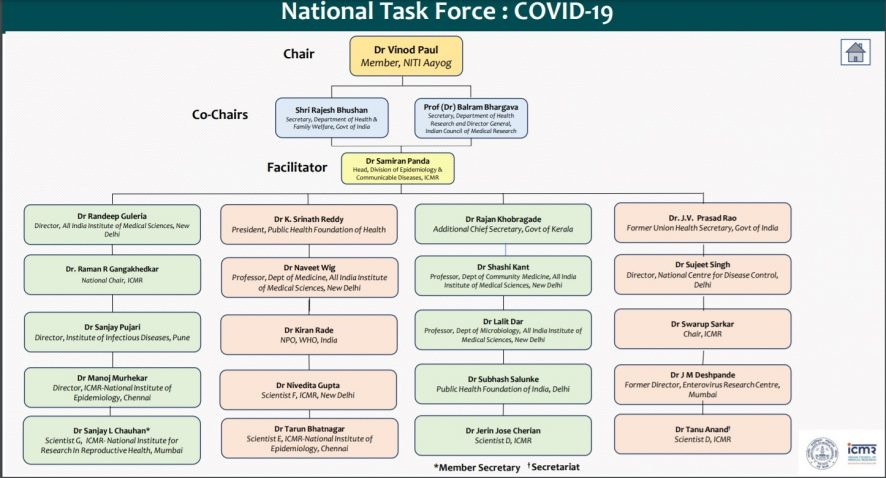
Chairperson
1) Dr. Vinod K Paul:
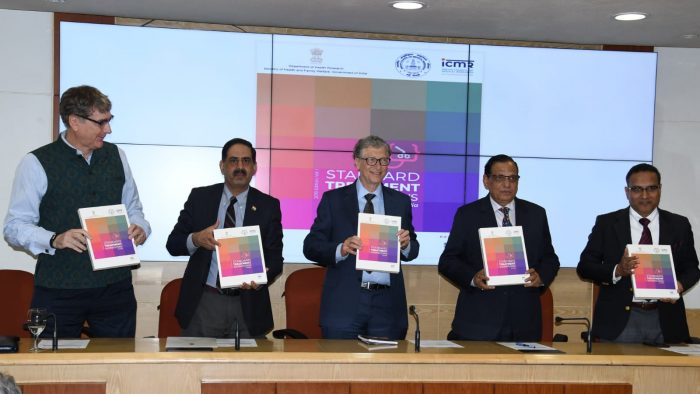
VK Paul, Member of NITI Aayog along with Bill Gates
– Visiting Professor, PHFI, & Chief Guest at PHFI functions (https://www.who.int/docs/default-source/documents/about-us/vinod-paul.pdf?sfvrsn=d0771d4c_2)
– Part of Union Govts Core Team for Covid 19 Pandemic Response.
– Chairs Empowered Group on Medical Infrastructure & Covid Management Plan
– Chairs National Expert Group on Vaccine Administration for Covid-19
– Reports to PM Modi directly
– Worked as Member of High Level Expert Group on Universal Health Coverage, setup by Planning Commission & funded by Rockefeller Foundation, under the chairmanship of PHFI President Srinath Reddy. This would lay the groundwork for what eventually became the Ayushman Bharat Scheme. (http://uhc-india.org/reports/executive_summary.pdf)
– Launched “Navigating the New Normal”Campaign created by Bill & Melinda Gates Foundation to create behavior change in people.
https://pib.gov.in/PressReleasePage.aspx?PRID=1634328
https://ashoka.edu.in/page/COVID19-centres-445
– Part of Panel on Stigmatization head along with PHFI Governing board member Lav Agarwal & Gates Foundation India Head Hari Menon. https://twitter.com/nitiaayog/status/1253628777084510214?lang=en
– Part of a panel discussion on Holistic long term medicare system in the case of covid 19 alongside PHFI President Srinath Reddy. https://iicdelhi.in/programmes/towards-holistic-long-term-medi-care-system-case-covid-19
– Released “Health System for a New India” Report with Bill Gates, was a major contributor to Aayushman Bharat Scheme Praised by Bill Gates.
https://economictimes.indiatimes.com/news/politics-and-nation/bill-gates-congratulates-indian-government-for-ayushman-bharat-scheme/articleshow/67574481.cms?from=mdr
https://pib.gov.in/PressReleasePage.aspx?PRID=1591934
– Part of Advisory panel on Covid-19 Vaccine communication strategy,who’s core partners include ITSU, BMGF & UNICEF. https://www.mohfw.gov.in/pdf/Covid19CommunicationStrategy2020.pdf
– His research is directly funded by Wellcome Trust https://main.icmr.nic.in/sites/default/files/upload_documents/Vol_IV_1.pdf
– Contributor to India State level disease burden initiative, funded by Gates Foundation. https://phfi.org/downloads/171110_India_Health_of_Nation_states_Report_2017.pdf
– Drafted Uttar Pradesh Govermnents State Health policy along with representatives of WHO-India, PHFI, Bill & Melinda Gates Foundation, World Bank, etc https://phfi.org/wp-content/uploads/2018/11/Annual_Report_2017-18.pdf
Ex- co chair
2) Preeti Sudan :
– Ex Governing Body Member of PHFI https://phfi.org/wp-content/uploads/2018/11/Annual_Report_2017-18.pdf
– Post Graduate in Social Policy & Planning from London School of Economics
– Ex-consultant for the World Bank
https://www.who.int/pmnch/about/governance/board/chairs/india/en/
– Member of the Independent Panel for Pandemic Preparedness Setup by the WHO https://theindependentpanel.org/panel-members/
– Accused by Andhra Pradesh Government of misusing public position for personal benefit https://www.thehindu.com/news/national/andhra-pradesh/disciplinary-proceedings-against-ias-officer-preeti-sudan-begin/article33917426.ece
– Key functionary in planning and execution of Aayushman Bharat Scheme https://en.wikipedia.org/wiki/Preeti_Sudan
– Board Member of the Partnership for Maternal, New born & childhood health, who’s funders and other board members include the Gates Foundation, USAID, World Bank, WHO,Pfizer, Novartis, Johnson&Johnson, GAVI https://pmnch.who.int/about-pmnch
– Speaker at events hosted by Nudge & the Rockefeller Foundation https://www.theweek.in/wire-updates/business/2020/08/12/pwr17-thenudge-foundation.html
Present Co-chairs :
3) Health Secretary Rajesh Bhushan
– On the advisory panel of India’s Covid19 vaccine communication strategy, who’s core partners include Gates Foundation, ITSU & UNICEF https://www.mohfw.gov.in/pdf/Covid19CommunicationStrategy2020.pdf
– Appreciated collaboration between Gates Foundation & Ministry of Rural Development https://indiaeducationdiary.in/govt-signs-mou-with-bill-and-melinda-gates-foundation-under-deendayal-antyodaya-yojana-national-rural-livelihoods-mission-day-nrlm/
– Co-chair of NEGVAC https://theprint.in/india/governance/too-many-cooks-15-committees-dozens-of-experts-behind-indias-fumbling-covid-response/658487/
– Expressed full support for behavior change campaign started by Gates Foundation focused on mask wearing by all & social distancing. The mask-wearing campaign is designed by Bill and Melinda Gates Foundation in partnership with McCann Worldgroup. https://pib.gov.in/PressReleseDetail.aspx?PRID=1634328
4) Dr. Balram Bhargava
– Director General, ICMR
– Co-chairperson, NTAGI https://main.mohfw.gov.in/sites/default/files/MoM%20NTAGI%202020.pdf
– Member of NEGVAC https://www.thehindubusinessline.com/news/expert-group-on-covid-19-vaccine-expert-group-to-meet-vaccine-makers-on-tuesday/article32350975.ece
– Governing Body Member of PHFI
– Chief Guest at PHFI events https://www.facebook.com/thePHFI/posts/snapshots-of-iiphgs-convocation-chief-guest-prof-balram-bhargava-secretary-to-th/1898769443499609/
– Personally handed awards along with Bill Gates to Cyrus Poonawalla and Kiran Mazumdar Shaw https://twitter.com/profbhargava/status/1196117377882046464?lang=en
– Hosted Bill Gates at ICMR https://twitter.com/profbhargava/status/1196115482585128960
– Entered a collaborative deal by signing a DOI with Gates Foundation and NIH, right before the Covid-19 pandemic began https://main.icmr.nic.in/sites/default/files/press_realease_files/PressRelease_17Nov2019.pdf
– Speaker at Grand challenges annual meeting, hosted by Wellcome Trust, Gates Foundation & USAID.
– Launched National Data Quality Forum along with Rockefeller created Population Council, WHO, & the Gates Foundation ( https://www.expresshealthcare.in/news/icmr-nims-launch-national-data-quality-forum-to-improve-quality-of-data-that-feeds-into-evidence-based-decision-making/412980/?SuperSocializerAuth=LiveJournal
– Lauded the partnership to create Covid-19 vaccine between Serum Institute, Gates Foundation, and GAVI https://swachhindia.ndtv.com/serum-institute-of-india-partners-with-the-gates-foundation-for-manufacturing-100-million-doses-of-covid-19-vaccine-48084/
– When one trial participant developed a neurological condition in Serum Institutes indian vaccine trial, Balram bhargava mentioned why the trial was not halted like it was halted abroad when the same thing happened. He said: “Initial causality assessment findings did not necessitate stoppage,” https://www.science.org/news/2020/12/malicious-and-misconceived-indian-vaccine-producer-hits-back-complaint-trial-volunteer
– Balram Bhargava started the School of International Biodesign, with the help of Stanford Uni and IIT. According to him : ““We have had funding from various agencies, including national governments and international agencies, the Gates Foundation, the Grand Challenges Canada and the Pfizer Foundation, not to mention private investment from angel investors and others” https://news.rcpsg.ac.uk/engagement/professor-balram-bhargava-awarded-the-presidents-medal/
– Sits on the Board of the International vaccine institute https://www.ivi.int/who-we-are/leadership/board-of-trustees/ which accelerates vaccine research and development worldwide, and is funded by the Gates Foundation, Wellcome Trust, CEPI, etc.”
– Author of clinical trials of Bharat Biotech’s Covaxin https://indianexpress.com/article/india/what-rate-card-does-not-show-govt-help-in-developing-covaxin-7291708/
Members of the Task Force
5) Dr. Samiran Panda :
– According to him, ICMR funded trials of the Covishield vaccine https://www.thehindu.com/sci-tech/science/reneging-on-the-no-profit-pledge-to-supply-oxford-vaccine/article33705151.ece
– Has received grants for his research from the WHO (who’s second largest funder is Bill Gates)
– Study coordinator in a project supported by the Rockefeller created Population Council. Study coordinator in a project supported by the Ford Foundation & World Bank.
https://www.nari-icmr.res.in/nari/StaffDetails/39f3e134-43ce-9d51-eac6-3ceaf48a3b01
– Part of panel discussion hosted by infamous NGO PATH & Rockefeller Foundation on Sarscov2 surveillance in India https://finddx.zoom.us/webinar/register/WN_Lkc4oC30TbCBWsqBcPtSVw
6) Dr. Randeep Guleria
L-R : Balram Bhargava, Randeep Guleria, Srinath Reddy, VP PHFI, & VK Paul
– Presided over an event organised for Trevor Mundel, President of Global Health at the Gates foundation. https://dbtindia.gov.in/sites/default/files/Leadership_Dialogue_Series_2nd_lecture.pdf
According to Mundel, the Department of Biotechnology, Government of India, AIIMS and the Indian Council of Medical Research (ICMR) are key partners of the Gates Foundation in India https://www.expresspharma.in/dbt-birac-and-aiims-organise-leadership-dialogue-series/?SuperSocializerAuth=LiveJournal
– Author of clinical trials conducted on Bharat Biotech’s Covaxin https://indianexpress.com/article/india/what-rate-card-does-not-show-govt-help-in-developing-covaxin-7291708/
7) Dr. Jagdish M Deshpande
– Studies he’s been part of have been funded by Gates Foundation & WHO https://www.ncbi.nlm.nih.gov/pmc/articles/PMC5289926/
https://europepmc.org/article/med/25146288
– Participant of WHO/SEAR Technical Consultive Group on Polio Eradication
– Director at the Enterovirus Research Center in Mumbai, where training programs are held along with foreign agencies like the CDC https://economictimes.indiatimes.com/icmr-to-jointly-embark-study-on-norovirus-with-us-entity/articleshow/2532644.cms?from=mdr
– Coordinator of the national task force on laboratory containment of the wild polio virus. http://archive.indianexpress.com/news/to-contain-polio-a-nationwide-search-and-seal-operation/916411/0
– Co-chair of India expert advisory group on polio eradication, who’s core partners include Gates Foundation, WHO, CDC, World Bank, etc. https://iple.unicef.in/files/ckuploads/files/24th_IEAG.pdf
– Authored a paper along with Jay Wenger, Gates Foundation Global Development MD https://www.researchgate.net/publication/6686398_New_Strategies_for_the_Elimination_of_Polio_from_India
8) Dr Swarup Sarkar
– Director of Communicable Disease at WHO-SEARO, Asia Pacific Regional https://gaffi.org/professor-swarup-sarkar-joins-gaffi-as-a-senior-advisor/
– Chair at ICMR
– Director of the Asia pacific region of the Global Fund (started by Gates), who’s Ex director used to be Rajat Gupta
– Head of Asia Pacific Region of UNAIDS,
– Awarded by WHO Director General Tedros https://timesofindia.indiatimes.com/india/who-felicitates-dr-swarup-sarkar-for-his-contribution-to-public-health/articleshow/67203097.cms
– Board member of India State level disease burden initiative, undertaken by PHFI, ICMR & IHME, & funded by Gates Foundation. https://phfi.org/downloads/171110_India_Health_of_Nation_states_Report_2017.pdf
9) JVR Prasada Rao
– Used to be Co-chair of the India AIDS Initiative that was started by the Gates Foundation, along with fellow co-chair Rajat Gupta, and Director of Gates Foundation India, Ashok Alexander. https://www.gatesfoundation.org/ideas/media-center/press-releases/2003/10/india-aids-initiative India AIDS Initiative (aka Avahan) was funded to the tune of 200 million dollars over the years!
– Special Advisor to UNAIDS
– Ex Director at NACO.
– NACO received funding of 23 million dollars from the Gates Foundation. https://www.gatesfoundation.org/ideas/media-center/press-releases/2006/10/indias-national-aids-control-organization-naco-receives-23-million-commitment
– Later Gates Foundation sent a grant for NACO through PHFI, which JVR Prasada Rao is now a board member of https://www.gatesfoundation.org/about/committed-grants/2015/08/opp1131140
– NACO’s partners include UNAIDS, the Gates Foundation, the Clinton foundation, USAID, the Global Fund, the World Bank, and WHO. http://naco.gov.in/bilateral-and-multilateral-partners-0
– NACO then went on to merge with the Health Ministry https://timesofindia.indiatimes.com/india/naco-no-more-an-independent-wing/articleshow/41747087.cms
– Governing Body Member of PHFI
– Secretary of Health and Family welfare from 2002-2004
– Member of Transitional Working Group, which decided the Operational Mechanism for the Global Fund to Fight AIDS TB & Malaria, who’s chairman used to be fraud Rajat Gupta, & the body itself was started by a donor grant from Bill Gates.
– Member of High Level Forum started by the World Bank, WHO, etc.-Board member of India State level disease burden initiative, funded by Gates Foundation. https://phfi.org/downloads/171110_India_Health_of_Nation_states_Report_2017.pdf
10) Dr. Sanjay Zodpey
– Projects undertaken by him at PHFI are directly funded by Gates Foundation.
– Contributor to India State level disease burden initiative, funded by Gates Foundation. https://phfi.org/downloads/171110_India_Health_of_Nation_states_Report_2017.pdf
11) Dr. Sanjay Pujari
– On the Advisory board of, and taking speaker fees from Cipla, Mylan, Emcure pharmaceuticals & Hetero https://www.eacsociety.org/media/hivss2018_s._pujari_oi.pdf
– His research has been funded by the NIH
– Participant of a meeting held on AIDS, TB & Malaria, alongside people from pharmaceutical companies, Gates foundation, etc http://digicollection.org/hss/en/d/Js6172e/14.html
12) Dr. Raman Gangakhedkar :
– Member of Lancet Covid-19 Commission’s India Regional Task Force, who’s founding donor is the Rockefeller Foundation https://covid19commission.org/regional-task-force-india
– His research is directly funded by the NIH, WHO, & the Gates Foundation
https://main.icmr.nic.in/sites/default/files/upload_documents/Vol_II_1.pdf
https://journals.sagepub.com/doi/full/10.1177/0956462420983992
– Ex Director of National AIDS Research Institute
13) Rajan Khobragade
– Principal Secretary of Health & Family Welfare of the Govt of Kerala
– Member of Lancet Covid-19 Commission’s India Regional Task Force, who’s founding donor is the Rockefeller Foundation https://covid19commission.org/regional-task-force-india
– Gave the Welcome Note at Kerala Health – Making SDG a reality conference, who’s partners inclued World Bank and the WHO. https://keralahealthconference.in/
– Part of the NGO PATH’s webinar on Covid 19 testing in India (the same NGO that conducted illegal vaccine trials in India in the past and still no action has been taken against it https://zoom.us/webinar/register/WN_NMMJnj6CTcKGfAEro0HfkQ
14) Dr. Naveet Wig :
– Researcher on a report headed by NK Arora, and funded by Wellcome Trust http://inclentrust.org/inclen/wp-content/uploads/Report_Leadership_6thApril_-1.pdf
– Research done by him is funded by the Gates foundation https://core.ac.uk/download/pdf/82085185.pdf
– Speaker at the American Society of Tropical medicine and hygiene, which is funded by various pharma and vaccine companies like Sanofi, GSK, etc. https://www.astmh.org/ASTMH/media/Documents/ASTMH_06_FP.pdf
15) Dr Shashi Kant :
– His Research is funded by pharmaceutical company GlaxoSmithKline https://main.icmr.nic.in/sites/default/files/upload_documents/List_of_HMSC_approved_projects_August_2017_December_2019_New.pdf
– Was part of the core group at NACO, whos connections to vested interests are described above. He has been providing NACO advice since 1998
http://www.naco.gov.in/sites/default/files/Strategic%20Information%20and%20Surveillance.pdf
16) Dr Sujeet Singh :
– Director of National Center for Disease Control, which houses the IDSP, that was launched along with the World Bank. https://idsp.nic.in/index1.php?lang=1&level=1&sublinkid=5768&lid=3697
– Done a lot of joint collaborative work along with PHFI and its president Srinath Reddy
https://idsp.nic.in/WriteReadData/IHIP/Report_repriortization%20Diseases.pdf
https://phfi.org/wp-content/uploads/2021/03/Annual-Report_2019-20.pdf
17) Dr. Kirankumar Rade
– Associated with WHO Country Office for India as a medical consultant since 2005
– Speaker at USAID organized TBII https://healthtech4tb.org/
– Studies he has worked on have been funded by the Gates Foundation https://journals.plos.org/plosone/article?id=10.1371/journal.pone.0214928
– Contributor to a document funded by USAID, Gates foundation, The Global fund, etc http://www.stoptb.org/assets/documents/global/plan/globalplantoendtb_theparadigmshift_2016-2020_stoptbpartnership.pdf
– Contributing author to India State level disease burden initiative, conducted by PHFI, ICMR & IHME, & funded by the Gates Foundation https://phfi.org/downloads/171110_India_Health_of_Nation_states_Report_2017.pdf
18) Dr Lalit Dar :
– Heads the Virology Laboratory at AIIMS, which collaborates on various projects with foreign universities, as well as NIH and CDC. https://www.aiims.edu/hi/about-us/102-microbiology-h/2296-dr-l-dar.html
– Member of Technical resource group for NACO (background mentioned above)
– Part of PHFI hosted Webinars https://twitter.com/thephfi/status/1282538049927176192?lang=en
19) Dr Manoj Murhekar
– His research is directly funded by the CDC & the Medical Research Council of UK https://main.icmr.nic.in/sites/default/files/upload_documents/Vol_IV_1.pdf
– Dr. Murhekar also worked with the World Health Organization (WHO) Western Pacific Regional Office as a consultant and professional staff member in Papua New Guinea and the Philippines.
– Contributing author to India State level disease burden initiative, conducted by PHFI, ICMR & IHME, & funded by the Gates Foundation https://phfi.org/downloads/171110_India_Health_of_Nation_states_Report_2017.pdf
– Studies conducted by him have been directly funded by the Gates foundation https://www.medrxiv.org/content/10.1101/2021.02.27.21252424v1
20) Dr Nivedita Gupta
– Responsible for creating Covid-19 testing & treatment protocols in India https://www.vogue.in/culture-and-living/content/vogue-warriors-dr-nivedita-gupta-scientist-covid-19-testing-treatment-protocols-in-india
– She was also the primary scientist involved in the investigations and containment of the Nipah virus outbreak in Kerala last year.
– Directly funded by the Gates foundation & John Hopkins University for her research https://main.icmr.nic.in/sites/default/files/upload_documents/List_of_HMSC_approved_projects_August_2017_December_2019_New.pdf
– Part of the NGO PATH’s webinar on Covid 19 testing in India (the same NGO that conducted illegal vaccine trials in India in the past and still no action has been taken against it) https://zoom.us/webinar/register/WN_NMMJnj6CTcKGfAEro0HfkQ
21) Dr Subhash Salunke
– Senior Adviser to the President of PHFI
– His 30 years’ experience in the Public Health Department spans from Position of Deputy Director to Director General in the Health Services of Maharashtra State
– His stint with the WHO SEARO spanned from being Regional Advisor in 2005 to Assistant Regional Director in 2009, including three years as WHO-Representative to Indonesia
– He was actively involved in formulating projects like “Health System Development” for Maharashtra State that was supported by the World Bank.
– He has shown leadership in designing the HIV/AIDS Control special programme (AVERT) with the assistance of USAID for Maharashtra State
– He was one of the members of designing National AIDS Control Programme Phase II during 1999-2000
https://phfi.org/member/dr-subhash-r-salunke-md-dph-dih/
– Involved in the steering committee of a study which was funded by big pharmaceutical companies and the Gates Foundation https://academic.oup.com/cid/article/73/Supplement_3/S238/6362481
22)Dr Sanjay L Chauhan
Scientist at the National Institute for Research in Reproductive Health. NIRRH has been involved in conducting studies along with the Gates Foundation and Rockefeller created and funded Population Council. https://bmcwomenshealth.biomedcentral.com/articles/10.1186/s12905-018-0636-7
23) Dr Tarun Bhatnagar :
– He was the recipient of an NIH Fogarty fellowship for his PhD in epidemiology under the AIDS International Training and Research Program at the University of California Los Angeles from 2004-2011. https://www.tephinet.org/tarun-bhatnagar
– Authored analysis along with Giridhar Babu of PHFI to increase testing in India https://www.hindustantimes.com/india-news/india-has-low-testing-rate-needs-to-scale-up-surveillance-analysis/story-yRQDOQlTlHOq0sLDHU63IM.html
– Part of NACO subgroup http://www.naco.gov.in/sites/default/files/Strategic%20Information%20and%20Surveillance.pdf
– He was working at NIE as Project Manager in the Bill and Melinda Gates Foundation multi-centric project on Integrated Behavioural and Biological Assessment of HIV since November 2007. http://14.139.190.203/staff-more.php?mid=Mg==&divid=MQ==&id=NQ==
– Studies he’s authored have been directly funded by the Gates Foundation https://jech.bmj.com/content/66/Suppl_2/ii55
24) Dr. Jerin Jose Cherian
– Part of expert panel in Global-Bio India 2021, who’s partners include Serum Institute of India, Biocon, CII, & many other pharma companies https://www.globalbioindia.com/images/Bio-India-2021-Agenda.pdf
– Member of Health Tech Assessment board meeting, chaired by VK Paul & Balram Bhargava https://htain.icmr.org.i
n/images/pdf/2nd_Board_Meeting_Minutes_3rd_May_2019.pdf
– Contributes as a member of the national team developing Standard Treatment Workflows for the National Healthcare Program AB-PMJAY (background to which is referenced earlier)
– Authored paper with Balram Bhargava & Swarup Sarkar on making India an independent manufacturer of pharmaceutical ingredients https://www.researchgate.net/publication/351478239_India’s_Road_to_Independence_in_Manufacturing_Active_Pharmaceutical_Ingredients_Focus_on_Essential_Medicines
25) Dr Tanu Anand :
– Part of team at IAPSM, along with members of Gates Foundation, PHFI, and others. https://www.iapsmyc2021.com/mentors
Many of the members listed above, lied about not having any conflict of interest in the NTAGI committee meeting
NTAGI (National Technical advisory Group on Immunization) is the expert group in India which approves vaccines that eventually make their way into India’s vaccine schedule. This group is also convening on the Covid-19 vaccines and going through data on their efficacy as well as adverse events.
That in a letter dated 20.01.2021 the Ministry of Health & Family Welfare of Government of India Immunization Division regarding Minutes of the meeting National Technical Advisory Group on Immunization (NTAGI) held on 10th December, 2020 had mentioned about declaration by members regarding their conflict of interest.
It reads thus; “All participating NTAGI members and invited attendees had duly filled and signed the confidentially agreement, and declared conflict of interest (if any), and shared these with the NTAGI Secretariat. No conflict of interest was noted.”
The falsity of above declaration is clear from the very fact that the following members are having conflict of interest:
1. Dr. Sunil Kumar Director General of Health Service
2. Dr. Gagandeep Kang Professor, CMC Vellore
3. Dr. K. Srinath Reddy President, Public Health Foundation of India 4. Dr. Samiran Panda Scientist ‘G’ ICMR, New Delhi
5. Dr. Nivedita Gupta Scientist ‘F’ ICMR, New Delhi
6. Dr. N. K. Arora Chair COVID – 19 Working Group, Executive Director, INCLEN International
7. Dr. Balram Bhargava Secretary, Department on Health Research & DG-ICMR
Source: https://main.mohfw.gov.in/sites/default/files/MoM%20NTAGI%202020.pdf
Important Questions that ICMR must Answer
Given all of this, how can the ICMR be involved in the task force, or setting up of the task force? It has a past of colluding with PATH and present of inking many deals with the Gates foundation. Many of ICMRs researchers and scientists are getting funding from the pharmaceutical companies and international “philanthropic” bodies.
ICMR is also involved in funding the trials of both Covaxin as well as Covishield. The ICMR, previously in reply to an RTI query from a news magazine, said the estimated cost incurred by ICMR towards development of Covaxin was `35 crore. However, sources said the figure put out by ICMR was a conservative estimate and the actual cost – when calculated properly in terms of NIV’s human resources, intellectual investment, time and establishment costs – would be much more. It gets 5% percent royaltiesfrom the sale of Bharat Biotech vaccines.
https://www.thehindu.com/news/national/icmr-to-get-royalty-from-covaxin-sale/article34474504.ece
Mainstream Media Reporting on the Covid-19 Task Force
These are some of the minutes of what has been going on inside the Task force : https://www.icmr.gov.in/pdf/covid/techdoc/ICMR_NTF_Meetings_v1.pdf
Journalists have been trying to uncover what has been going on inside the task force. Some have tried to pin blame or put responsibility on its members for the decisions taken by the Modi Government, or the lackthereof, but because they could not manage to find the list of the task force members, they could not pin individual responsibility on anyone. However now you, the reader, can go through these articles, and then put them into context with everything that we’ve discussed above. Important excerpts from these articles are highlighted below:
https://indianexpress.com/article/india/coronavirus-transmission-covid-19-task-force-national-lockdown-7298468/
“Some members of the Covid-19 task force, a technical expert body that advises the Central Government, are “pushing hard” for a national lockdown, The Sunday Express has learnt. The task force includes experts from premier health institutions, including AIIMS and ICMR, and has met many times during the recent surge. The deliberations of these experts are of significance since the chairperson of the task force, V K Paul, reports to Prime Minister Narendra Modi.”
“The Covid-19 task force is trying to say this very aggressively for the last few weeks. That we should tell the people at the top that we should have a lockdown,” a member said. “A nationwide lockdown rather than what we are doing now, in bits and pieces across states, because of the simple fact that it is spreading all over,” a member said.”
“The fact that India does not know the names of the 21 members of its National Task Force for COVID-19 is emblematic of the colossal failure of both the task force—whose only job seems to be to endorse the decisions of its political masters—and the government to prepare for or take steps to mitigate the inevitable second wave of the pandemic. Should such a task force not be taken to task for its laxity and negligence?”
“WHO is the Indian equivalent of Anthony Fauci, the chief medical adviser to the President of the United States? One would be hard-pressed to answer this question.”
“In keeping with the government’s penchant for not sharing information, the names of the other members of the NTF have not been made public. If at all there is any government body, if not an individual like Fauci, to advise the government on the pandemic, it would be the NTF.”
“Right from the beginning of the pandemic, the NTF has been found grossly wanting in discharging its responsibilities with the scientific integrity required of such a panel. That the higher executive arm of the government wanted it to say only the things it wanted to hear became clear in March 2020 when the government announced the countrywide lockdown. It was done without consulting the NTF even as its members apparently held contrary views given that at that time the caseload in India was only around 500 and a more calibrated region-wise response based on epidemiological data would have been more prudent, but none of them spoke out. The NTF’s silence on the matter would imply that it implicitly endorsed the decision.”
“The NTF’s scientific integrity was also called into question when it did not voice dissent over the unethical Emergency Use Authorisation (EUA) given to Covaxin in January in the so-called “clinical trial mode” even as the Phase 3 trials of the vaccine were ongoing and there was not even interim data on its efficacy. And after the vaccine campaign got under way in January, the NTF also does not seem to have advised the Health Ministry to be transparent with regard to the data on adverse events following immunisation (AEFI) or implications thereof on the ongoing vaccination drive.”
“What is highly at once surprising and disconcerting is the fact that, as The Caravan magazine has revealed, even as a second wave loomed large and as the number of cases was surging, the NTF did not meet at all in February or March.”
“However, the Health Ministry’s document, on which all treatment protocols in hospitals across the country are based, was not updated until April 2021. If only the NTF had ensured that an updated document was sent out early on, all the chaos, clamour and the mad scramble for remdesivir, the smuggling, hoarding and black-marketing of the drug and the all-round desperation of hospitals and hospitalised patients could have been prevented. Belatedly, on April 21, three doctors, including Randeep Guleria, Director, All India Institute of Medical Sciences, New Delhi, had to clarify that remdesivir had very limited therapeutic potential for patients. Only after this, on April 22, did the Health Ministry update its treatment protocol, which now (“based on limited evidence”) advises use of remdesivir in special circumstances in moderate to severe cases (requiring supplementary oxygen) within 10 days of onset of symptoms.”
How Members with Conflict of Interest also get the Science Wrong
One might be innocent enough to think that these ties which the above listed members have wouldn’t interfere with their decisions and recommendations on public health matters, assuming that the members would have the integrity to put people over money and influence. But such people would be terribly wrong in making such assumptions, as can be seen by the outlandish and scientifically incorrect positions taken by many task force members in the public.
After 1.5 years of the pandemic having passed, these facts have been clearly established :
– Lockdowns are not effective, and have many negative consequences
– Asymptomatic people don’t spread disease
– Natural immunity is many times better than vaccine-conferred immunity
– Vaccinations won’t end the pandemic or prevent future waves, as many countries that have reached over 80 percent vaccination rates are continuing to go for more lockdowns/restrictions and boosters.
– The Covid-19 vaccines are not safe as many serious adverse events and deaths have taken place post- vaccination, and their efficacy is based on weak evidence.
– Masks are not effective in stopping virus transmission, and have many negative health consequences.
– The RT-PCR and RAT tests have a high rate of false positives, and the RT-PCR test is not the Gold Standard for diagnosing infectious diseases.
– India has reached herd immunity and can go back to normal, as the last nationwide sero-survey has showed that around 70% people have developed antibodies either after natural infection, or vaccination.
– Effective and safe prevention options as well as cures exist for Covid-19, like Vitamin D, 3 step flu diet, Ivermectin, HCQ+Zinc, MATH+ Protocol, etc.
Scientific evidence for this can be found in this paper authored by me – https://drive.google.com/file/d/1hBH2jNK-XpOn-lWlm1jKa78cnJQ4sntw/view
Now lets see how most of our fellow task force members and other “experts” go against these facts, and continue to promote the agenda of vested interests and the pharmaceutical companies.
Srinath Reddy : stated that banking on the concept of herd immunity would prove costly and deadly.
https://www.newindianexpress.com/states/telangana/2021/aug/13/herd-immunity-not-a-magic-wand-public-health-foundation-of-india-2344083.html
Gagandeep Kang : No need to worrry about reports of blood clots linked to Covishield vaccine
https://www.indiatoday.in/coronavirus-outbreak/story/virologist-gagandeep-kang-sii-oxford-astrazeneca-covid-vaccine-covishield-blood-clots-1788904-2021-04-09
K Vijayraghavan : No safety concerns of Covid-19 vaccines
https://www.thehindubusinessline.com/news/no-safety-concerns-of-covid-19-vaccines-scientific-advisor/article33686019.ece
NK Arora – ZyCovD vaccine safe and effective for adolescents https://www.thehindu.com/news/national/zycov-d-vaccine-safe-and-effective-for-adolescents-says-expert/article36155457.ece
VK Paul – Time has come to wear mask at home
https://www.indiatoday.in/coronavirus-outbreak/video/time-has-come-to-wear-mask-at-home-dr-vk-paul-1795202-2021-04-26
Samiran Panda – I will suggest the public follow Covid appropriate behaviour and get the vaccine shot. There is no time for showing hesitancy against vaccines
https://theprint.in/health/dont-blame-mutant-strains-for-covid-surge-its-public-carelessness-say-top-health-experts/627816/
Naveet Wig – Can’t make India Covid free unless everyone is vaccinated
https://m.economictimes.com/news/india/cant-make-india-covid-free-unless-everybody-gets-vaccinated-aiims-dr-naveet-wig/videoshow/85717557.cms
JVR Prasada Rao – RT-PCR test confirmation should be main feature of any test carried out in India
https://health.economictimes.indiatimes.com/news/industry/rt-pcr-confirmation-should-be-the-main-feature-of-any-test-carried-out-in-india-jvr-prasada-rao-director-unaids-asia-pacific/79164073
Swarup Sarkar – said the country was dealing with the consequences of not adopting an aggressive vaccination strategy.
https://www.ft.com/content/2585ea9c-1b67-42eb-9c06-7fa711f45095
Randeep Guleria – A vaccine is important if we want to go back to normal
https://www.thehindu.com/news/national/a-vaccine-is-important-if-we-want-to-get-back-to-normal-aiims-director/article33660673.ece
Balram Bhargava – Covid-19 vaccine should be given to pregnant women
https://www.indiatoday.in/coronavirus-outbreak/story/covid-vaccine-should-be-given-to-pregnant-women-it-s-useful-for-them-icmr-1819398-2021-06-25
Sanjay Pujari – Until more data is available, individuals who have recovered (from Covid-19) need to adhere to Covid appropriate behaviour and get vaccinated in due time
https://timesofindia.indiatimes.com/city/pune/reinfection-rare-immunity-lasting-in-those-who-contracted-covid-19-finds-city-study/articleshow/84250238.cms
Rajan Khobragade – Advocated for masks, increased testing, ban on gatherings, social distancing, etc in this report
https://alethonews.com/wp-content/uploads/2021/10/d5c8a-indiatfpolicybriefapril2021.pdf
Sanjay Zodpey – Citizens are equal stakeholders in the disease control efforts along with the government. They should adhere to covid appropriate behavior. All the available vaccines are safe and effective
https://timesofindia.indiatimes.com/city/nagpur/covid-appropriate-behaviour-enhanced-vaccine-drive-will-delay-or-diminish-impact-of-3rd-wave/articleshow/83073891.cms
Nivedita Gupta – The people don’t look serious and alert any more. COVID-19 appropriate behavior is missing as also social distancing
https://gulfnews.com/world/asia/india/why-are-covid-19-cases-rising-in-india-1.1617727123173
Raman Gangakhedkar – Wearing masks, following Covid rules enough to fight pandemic https://www.indiatoday.in/coronavirus-outbreak/story/coronavirus-masks-lockdown-former-icmr-chief-raman-gangakhedkar-1744138-2020-11-26
Subhash Salunke – People must follow the ‘SMS’ strategy, which means Sanitiser, Mask, and Social distancing. All non-essential services should be controlled and all large gatherings should be discouraged
https://www.news18.com/news/india/maharashtra-health-experts-prepare-7-point-strategy-to-contain-covid-focus-on-testing-across-hotspots-3517082.html
Tarun Bhatnagar – We need to be on our toes in terms of preventing crowding and increasing vaccination. Those are the only two ways.
https://www.wbur.org/npr/1038395212/indias-vaccination-drive-has-gathered-speed-but-theres-still-a-ways-to-go
*Important Update*
The entire task force recently removed two really effective drugs from the national protocol, that have a tremendous amount of scientific data behind them – Ivermectin & HCQ! They completely dropped these drugs, but have still allowed remdesivir to be used in certain conditions, even though it has none to little efficacy in cutting down hospitalization time or deaths, and a huge risk of side effects (mainly kidney failure).
https://www.thehindubusinessline.com/news/national-task-force-drops-ivermectin-hydroxychloroquine-from-clinical-guidance-for-covid-management/article36638643.ece
To understand the data as well as politics surrounding Ivermectins use in India, read this article and its previous parts too :
Legal Notice Sent to Our Health Minister, Mansukh Mandaviya
Based on the above evidence, and other scientific research that we have been collecting, Advocate Nilesh Ojha & Dipali Ojha, who head the Indian Bar Association, have sent a legal notice to our health minister, asking him to remove all the members who have conflict of interest from the Covid-19 task force, and all other bodies which influence policy making in the health space in India. He has also asked for prosecution of those who have these conflicts, under various sections of the IPC & Indian Law. If no action is taken on this legal notice, Adv. Nilesh Ojha will file a case in the Supreme Court.
Link to the legal notice : https://drive.google.com/file/d/1IfAoqzG9KWlsoGDuvswmevnK3_UhAhfH/view
Conclusion
The capture of our pubic health agencies by fake philanthropists like Bill Gates, the Rockefellers & their frontmen, and the pharmaceutical/vaccine mafia started in India along time ago, in the year 2006. Since then, incidents like illegal HPV vaccine trial coming to light have put pressure on the perpetrators of the crimes (namely PATH and the Gates Foundation), but due to their tremendous infiltration and capture by these forces of the mainstream media, public health “experts”, government bureaucrats, etc the criminals are still able to conduct themselves in India without any barriers.
It is time to make these task force members and celebrity scientists feel the heat for all their decisions and recommendations that have destroyed the lives of millions of people, pushed millions into abject poverty, and decimated the fundamental right to travel, operate a business, speak freely, breathe & bodily autonomy of all Indians! Tag them personally on twitter, highlight each connection that is made here to the public, send legal notices, file court cases, etc. If you encounter them in person, record a video of them and confront them with these questions. Do whatever is necessary to make this plandemic end, as all the evidence to make it end has been provided to you in this document.
The Covid-19 plandemic is a well planned orchestrated medical fraud, executed by the same vested interests referenced in detail in this article, to usher in a technocratic orwellian global dictatorship, which will be accompanied by a resource grab executed by the elites. As Klaus Schwab, CEO of the World Economic Forum says : “You will own nothing, and you will be happy”. This criminal capture and sabotage of our public health agencies is what has enabled this, as the mafia wants to push mandatory testing, masks, vaccines and lockdowns on the world in order to pursue their New World Order/ Great Reset Agenda, and since they control almost everyone in key positions of power (as shown above), they have been able to do so very easily.
But now that all of this has been put in one place for you, you and Indians at large are hopefully able to see the puppeteering behind the scenes, atleast in the public health sector. Its high time we have throw out and imprison all these corrupt hijacked officials who are putting our health and livelihoods in grave danger, on behalf of the puppet masters who pull their strings. It is time to choose, between freedom or fascism, and act on the facts that we have learnt in this expose, so that we can stop the globalists from achieving their end goal, and are able to cement our goal forever – freedom and respect for the inalienable god given and constitutionally protected rights of every human being.
Let’s Arm the Gazans!
Victims of aggression need America’s help!

BY PHILIP GIRALDI • UNZ REVIEW • SEPTEMBER 28, 2021
Well, here we go again. The Israelis, in collusion with no less than 420 criminals in the US Congress, have again ripped off the US taxpayer. I stop short of calling the congresscritters “traitors” because the US Constitution, which defines the word, requires that one actually be cooperating with a declared enemy of the United States to be so described. Israel is not yet an enemy as defined by a declaration of war from that same Congress, which is instead intent on showering our goods and even our freedoms on the Jewish state. Indeed, Israel has so corrupted our political system that it receives far more in benefits from the federal treasury than does any American state. And it is all done with a wink and a nod from the Jewish dominated media and through the agency of a grossly disproportionate number of Zionist Jews in high office and government aided and abetted by a host of pigshit ignorant Christian Zionists who are incapable of seeing or understanding what is best for their own country.
To be sure, many of those in Congress who pander to Israel as a top priority are not Jewish. But they know that that the Jewish state can be a harsh master if they deviate in any way from providing their enthusiastic support for the Greater Zionist project outlined in the Yinon Plan of 1982. This has led to America’s own interests being sacrificed and a continuous cash flow of many billions of dollars from Washington to Jerusalem, even though Israel is one of the ten wealthiest countries in the world per capita and its citizens enjoy free top level medical and educational benefits that many Americans cannot afford.
This is what happened last week, revealing yet again the US government’s total subjugation by Israel: Congress was preparing to vote on a multi-billion stopgap bill to pay for continuing government functions through December since a comprehensive budget has not yet been agreed to. Democratic Party friends of Israel had inserted an amendment into the bill only days before, consisting of a $1 billion gift to Israel so it could rearm its Iron Dome defense system, which ran low on missiles during the recent “Operation Guardian of the Walls” slaughter of Gazans, as well as for the purchase of other munitions. Senator Richard Shelby of Alabama defended the arrangement, saying “Importantly, our legislation includes funding for the Iron Dome, making good on our commitment to a historic and significant ally.” He explained that the money would “bolster Israel’s defense capacity and protect against Hamas attacks.”
Hamas attacks? Inserting freebies for Israel in such a fashion is routine in Congress as it allows money to flow without any debate or context, but this time there was a problem. A number of Democratic Party progressives in Congress objected and made an issue of it, in part because procedurally the move was an obvious attempt to hide what was being done, so the amendment was withdrawn. The Israel friendly media, tv talking heads from both parties, and leading congressmen all immediately went to bat for poor little defenseless Israel and a new bill was quickly drafted up to give the Jewish state the money without delay. Representative Josh Gottheimer complained in a tweet how “The Iron Dome protects innocent civilians in Israel from terrorist attacks and some of my colleagues have now blocked funding it. We must stand by our historic ally – the only democracy in the Middle East.”
One might suggest that Gottheimer go to live in Israel as he appears to like it so much and he might well fact-check his comment. It is not possible to be an apartheid state and occupying power as well as a nation where only one religion constitutes full citizenship if one aspires to be a democracy.
In spite of continued objections by “the squad” progressives, including this by Congresswoman Rashida Tlaib, daughter of Palestinian immigrant parents, who said “I will not support an effort to enable and support war crimes, human rights abuses and violence. The Israeli government is an apartheid regime,” the new bill passed by 420 votes to 9. It did not mention that Israel had previously used its US-provided weapons to kill more than 250 Palestinian civilians, including 60 children. The nine brave Congressmen, who will now be targeted for non-re-election by Israel and all its friends, consisted of Thomas Massie (R-KY), Rashida Tlaib (D-MI), Ilhan Omar (D-MN.), Raúl Grijalva (D-AZ), André Carson (D-IN), Marie Newman (D-IL), Ayanna Pressley (D-MA), Cori Bush (D-MO) and Chuy Garcia (D-IL). Massie was the only Republican, who tweeted that “Foreign aid is the result of foreign influence exerted on US politicians at home.”
It is interesting to note some of the media comments that surfaced supportive of giving the Israelis another billion dollars on top of the $11 billion or so it already gets annually in direct military assistance, trade agreements and support for its illegal settlements coming from fake charities. The conservative Washington Times described Iron Dome, somewhat bizarrely, as “relied on against Islamist efforts to kill its [Israel’s] civilians.” A New York Daily News editorial last Thursday reads in part “A small claque of far-left House Democrats thought on Tuesday that they had torpedoed a $1 billion replenishment for Israel’s Iron Dome missile defense system by threatening to vote down a larger package, forcing the Israeli assistance to be stripped out of it. On Thursday it all backfired, when 210 Democrats joined with 210 Republicans to approve the money in a brand new, standalone bill, the Iron Dome Supplemental Appropriations Act of 2022. Exposed and alone, no shield to protect them, just eight Dems voted no, along with an always cantankerous Republican… So that’s the vote, on the record: almost unanimous support in the House for the Jewish state’s right to defend itself from Hamas and Hezbollah rockets.”
Bret Stephens, over at the New York Times, has this to say about anyone who would dare oppose funding Israel’s war machine: “It would behoove Democrats in the honorable majority to start treating their Israel-hating members not as parliamentary nuisances or social media embarrassments but as the ill-intended bigots they well and truly are.” Sure Bret, it all comes down to anti-Semitism, like always, doesn’t it? Bret is of course Jewish and reliably Zionist. He lived in Israel where he was editor of the Jerusalem Post.
The Republicans inevitably had accused the Democrats of having gone wobbly on Israel, with House Minority Leader Kevin McCarthy tweeting “While Dems capitulate to the antisemitic influence of their radical members, Republicans will always stand with Israel.” House Republican Conference Chairwoman Elise Stefanik also tweeted that Democrats “do NOT support Israel. Instead they choose to side with the Hamas Caucus wing of their Party.”
Representative Rosa DeLauro of Connecticut, the Democratic chairman of the House Appropriations Committee, provided pushback as she enthused after the vote: “This bill demonstrates Congress’s commitment to our friend and ally Israel is bipartisan and ironclad.” What she should have said was the Israel’s grip on the US Congress and theft of taxpayer money is shameful, but somehow she must have misspoke. And the Daily News piece is, of course, bullshit unless one actually believes that snipers shooting children and warplanes blowing up apartment buildings is defense against home-made rockets and balloons.
And there was also plenty going on behind the scenes between Capitol Hill and Jerusalem. House Majority Leader Steny Hoyer of Maryland, possibly the most rabidly pro-Israel partisan in Congress, said “There are some few that won’t support [the new bill], but the overwhelming majority of this Congress — not in a partisan way but in an American way — will support defending the Democratic state of Israel.”
Hoyer seems to be saying that all good Americans must support Israel. He should know as he was negotiating with the Israelis on the deal to bring about a quick vote to approve the Iron Dome funding. His maneuvering was in response to Israeli officials, including Foreign Minister Yair Lapid, who had watched developments in Washington with alarm and telephoned Hoyer who, in turn, assured Lapid that what had occurred was no more than a “technical delay.” He quickly moved to bring the new bill to a vote. Of course, one might also note that Lapid had not hesitated to contact Hoyer and state clearly Israel’s demand that something be done. He felt himself empowered to put pressure on a foreign legislative body to take action that would result in considerable benefit to his own country precisely because he knew that Hoyer would be on his side. One wonders if bottom dwellers like Hoyer might be indicted under the Foreign Agents Registration Act (FARA) since he is clearly no longer working for the United States, nor defending its Constitution as he is required by oath to do.
So it is a done deal once again. Israel has its money, as always, and has bent American politicians to its will. Unfortunately, the denizens of Congress were all too willing to be bent. The stooges on Capitol Hill and in the media are largely to blame for this shameful behavior, to be sure, but Alison Weir of If Americans Knew has proposed that those who object to the use of US taxes to support a rogue state might well begin to put pressure on their congresscritters to encourage the wealthy Israelis to pay for their own missiles. Beyond that, as it is the Gazans, West Bank Palestinians and Lebanese who have borne the brunt of Israel aggression, the US can finally seize the high ground on a major human rights issue by ponying up another billion to improve their defensive capabilities for the next time the Jewish state comes calling. It is a wonderful idea and it just might convince Israel that there are consequences for bad behavior. And, by the way, it would be an antidote to some very bad behavior by the United States of America, which has been funding and encouraging Israel and emboldening its apologists ever since the Suez Crisis in 1956, which was the last time a US President actually successfully defied Israel.
Philip M. Giraldi, Ph.D., is Executive Director of the Council for the National Interest, a 501(c)3 tax deductible educational foundation (Federal ID Number #52-1739023) that seeks a more interests-based U.S. foreign policy in the Middle East. Website is https://councilforthenationalinterest.org address is P.O. Box 2157, Purcellville VA 20134 and its email is inform@cnionline.org
Mainstream Media’s Massive Government Payoff
By Dr. Joseph Mercola | September 26, 2021
There’s one piece of the U.S. federal government’s $3.5 trillion spending plan you’re not hearing about on mainstream news, and one reason for that may be because it’s the media themselves who are the beneficiaries.
Dubbed the Local Journalism Sustainability Act, the legislation, if passed, could mean upward of $1 million in payroll tax credits for larger news organizations like The Philadelphia Inquirer. Specifically, it bails out failing news agencies by helping to pay reporters’ salaries with tax credits and other perks.
Several newspapers have already taken advantage of bailouts previously offered during the pandemic, with The Seattle Times getting $9.9 million while The Tampa Tribune walked off with $8.5 million.
“Every American should tell their member of Congress to oppose this idea,” The Daily Signal says. “And even more importantly, they should tell their local news outlets the same thing. No journalist subsidized with tax dollars should ever be taken seriously in this country.
“Most Americans distrust the media. They were rightfully outraged when journalists entirely ignored the Hunter Biden scandals in the final weeks of the 2020 election. But now it looks like their allies in Washington, D.C., are going to reward them for their loyalty. It will be a dark day in our nation when ‘journalists’ become beneficiaries from the federal spoils system.”
SOURCES:
Featured Video
Seyed M. Marandi: Toward Total War in the Middle East
or go to
Aletho News Archives – Video-Images
From the Archives
The Geopolitics behind the War in Yemen (I)
By Mahdi Darius NAZEMROAYA | Strategic Culture Foundation | 30.03.2015
The United States and the Kingdom of Saudi Arabia became very uneasy when the Yemenese or Yemenite movement of the Houthi or Ansarallah (meaning the supporters of God in Arabic) gained control of Yemen’s capital, Sanaa/Sana, in September 2014. The US-supported Yemenite President Abd-Rabbuh Manṣour Al-Hadi was humiliatingly forced to share power with the Houthis and the coalition of northern Yemenese tribes that had helped them enter Sana. Al-Hadi declared that negotiations for a Yemeni national unity government would take place and his allies the US and Saudi Arabia tried to use a new national dialogue and mediated talks to co-opt and pacify the Houthis.
The truth has been turned on its head about the war in Yemen. The war and ousting of President Abd-Rabbuh Manṣour Al-Hadi in Yemen are not the results of «Houthi coup» in Yemen. It is the opposite. Al-Hadi was ousted, because with Saudi and US support he tried to backtrack on the power sharing agreements he had made and return Yemen to authoritarian rule. The ousting of President Al-Hadi by the Houthis and their political allies was an unexpected reaction to the takeover Al-Hadi was planning with Washington and the House of Saudi. … continue
Blog Roll
 Aletho News
- Finland’s Stubb tells European leaders to calm down
- Defeating Russia on battlefield impossible – Fico
- Finland’s Gender Clinic Reversal
- Massachusetts Wants Mental Health Visits, Why Does Government Use ‘Health’ to Enter Our Homes & Families?
- US lawmaker admits American people footing bill for Trump’s failed aggression against Iran
- Pfizer Gave $500,000 to Groups That Lobbied to End Religious Exemption in Massachusetts
- HE SAVED LIVES. NOW HE FACES PRISON.
- Israeli lobby seeks to bind US fate to ‘Israel’: Araghchi
- Pakistan-Iran talks secure LNG shipment to Islamabad through Hormuz
- Black Sea grain crisis puts global wheat supplies under pressure
- If Americans Knew
- Gaza desperately needs tents, wheelchairs, fuel… and everything else (Israel blocks it all) – Daily Update
- Israeli Attacks in Gaza Kill at Least Seven Palestinians Over Three Days, including Woman and Child
- Trump’s militarization of Washington DC as he pursues Israel’s war against Iran
- Why Israel Fears This Searing New Documentary
- Huckabee aide solicited cash gifts from Israelis
- This isn’t sci-fi, AI is already killing people
- ‘The Most Brutal Thing’: Investigation Reveals Execution of Elderly Woman in Rafah
- Inside Israel’s ‘soft’ ethnic cleansing plan for Gaza through the eyes of its victims
- New online database tracks pro-Israel political donations in the United States
- Israeli president pardons soldier convicted for killing wounded Palestinian
- No Tricks Zone
- 2025 Nature Paper Claiming Worsening Global Drought Gets RETRACTED …Heavily Flawed
- New Study: ‘Global Drought Shows No Detectable Recent Acceleration Under Climate Warming’
- Economic Masterminds: German Socialists Suggest Taxing Productivity Gains Stemming From Using AI
- The South China Sea Has Not Been Cooperating With The Climate Change Narrative
- Energy Crisis: Germany Enters Heating Season With Historically Low Gas Reserve Fill Levels
- New Study: The Antarctic Ice Sheet Gained Mass From 2020-2024 Due To Staggering Snow And Ice Accumulation
- Study: Ocean Heating Rates From Thousands Of Years Ago ‘Dwarf’ Modern Ocean Heating Rates
- Climate Extremists Target, Attack Large-Scale Power Grid Infrastructure In Germany!
- New Study: Antarctic Ice Melt Has Contributed Less Than 1 Centimeter To Sea Level Rise In The Last 30 Years
- Fear Of Debate: Alarmist German Climate Scientist Calls On Mainstream Media To Discredit Skeptic Voices
 Aletho News