Israel drops case against soldiers who killed Palestinian doctor
MEMO | April 14, 2023
Israel’s State Prosecutor yesterday closed the case into two Israeli soldiers who shot dead a Palestinian man at one of the entrances to Al-Aqsa Mosque in the occupied city earlier this month.
According to Haaretz, the State Prosecutor, Amit Aisman, accepted the claims of the Israeli Justice Ministry’s police misconduct unit and the deputy state prosecutor for criminal affairs. Following “solid and clear evidence,” the State Prosecutor’s Office announced that the victim, Mohammad Al-Osaibi, shot two bullets while attempting to grab the weapon of one of the officers before he was shot dead and therefore, no offence was imposed by the Israeli forces.
Moreover, further investigation, according to Aisman, concluded that the area where the attack took place was not recorded by the cameras in the area and the Israeli officers failed to switch on their body cameras due to lack of time.
Rights groups have, however, questioned the lack of video footage of the event.
Al-Osaibi’s family deny the police’s version of events, saying the 26-year-old doctor from Houra, a Bedouin Arab village in southern Israel, was shot when he intervened to help a Palestinian girl.
His uncle, Ahmed Alasibi, told Haaretz : “From what we understand, he encountered the police who were harassing a young Palestinian woman, and apparently there was an argument. They shot him to death for no reason, the whole talk about an attack and taking their weapon is a lie.”
Tensions have been running high across the occupied West Bank, including East Jerusalem, in recent months amid repeated Israeli raids into Palestinian towns and Al-Aqsa Mosque.
Over 90 Palestinians have been killed by Israeli fire since the start of the year, according to Palestinian figures. Fourteen Israelis have also been killed over the same period.
The Indoctrinators, Part 3: Bill Gates
This is the third in our series about four well-known men whose purposeful social engineering over the years has undermined national democracies and economies, and created fertile ground for the final realisation of their post democracy dream of a global socialist/fascist world, controlled by supranational organisations such as the United Nations (UN), the World Health Organisation (WHO) and of course, themselves. They are George Soros (you can read Tuesday’s article here), Klaus Schwab (yesterday’s article is here), Bill Gates (today) and David Attenborough.
By Karen Harradine | TCW Defending Freedom | April 13, 2023
BILL Gates has a messiah complex. His obsession with ‘climate change’, vaccines and people control is proving dangerous for the world. Only a few weeks ago he gave voice to his latest megalomaniac plan for a global pandemic prison state. And as the past proves, what Gates wants he usually gets.
Together with his fellow Indoctrinators, George Soros and Klaus Schwab, 67-year-old Gates has not missed the opportunity provided by the Covid-19 crisis (which he helped to engineer) to further his revolutionist ‘global development’ green agenda. Following their precedent, he too created a foundation through which to impose his ghastly visions on an unfortunate world.
Since its inception in 2000, the Bill & Melinda Gates Foundation (BMGF), under its philanthropic guise, has found plenty of useful idiots across world governments willing to fund and support it. Successive witless British Prime Ministers, up to and including Boris Johnson and Rishi Sunak, have fallen under his spell with Gates hugely benefiting from this priceless endorsement and publicity. Given his malign agenda, Western taxpayers have literally been paying for their own demise.
Gates is an enthusiastic partner of the World Economic Forum (WEF) and attendee at their gatherings in Davos, which he typically uses to announce his latest plans to drain the West of its resources to fund his vaccine and climate change lunacy. In 1999, he formed the Global Alliance for Vaccines and Immunization (GAVI), which he cleverly partnered with the United Nations (UN), BMGF, foreign aid agencies and pharmaceutical companies. It was to become, together with the BMGF, the second biggest source of funding to the World Health Organisation (WHO).
More than 80 per cent of the WHO’s budget comes from voluntary contributions by member states and donors. In 2021, the BMGF was the second largest contributor with $375million, and GAVI the fourth with $245million. Both have a long history of influencing the WHO (the BMGF’s first donation was in1998). Uniquely the BMGF became its official partner in 2017, further focusing the WHO’s public health priorities on to vaccines. An enabler of and publicist for the toxic Covid-19 vaccine, his close connection with the WHO has reaped him huge profits.
The WHO’s deeply disturbing proposed Pandemic Treaty effectively puts into action Gates’s planned grasp for global control as he detailed in his 2022 book, ‘How to Prevent the Next Pandemic’. It has been long in the planning.
In 2003, on a Davos panel called ‘Science for the Global Good’, Gates announced his foundation’s gift of $200million to the US National Institutes of Health to set up the Grand Challenges in Global Health, a vehicle for shifting US tax money into the developing world in pursuit of Gates’s own interests.
In 2010, Gates and his wife heralded a ‘decade of vaccines’ at Davos, pledging $10billion to fund vaccines in ‘poor countries’, a vaccine zealotry which has had some appalling outcomes for which Gates has expressed no remorse. In one example, nearly half a million children in India were paralysed after taking BMGF-funded polio vaccine. Despite such appalling consequences, Gates, with an honorary knighthood in the bag from the Queen, is still widely regarded as a benign philanthropist. There’s no doubt that money buys reputation.
Like Soros, Gates has a prominent platform on the WEF website to promote green investments worth billions of dollars. A devotee of the UN’s Agenda 2030, Gates is co-chair of the Global Commission on Adaptation.
Today, thanks to our unprincipled politicians, Gates has a hotline to Downing Street and Britain finds itself in the clutches of a megalomaniac. His tentacles reach far and wide, from shaping energy policies and dominating scientific organisations and academic research, to financing the mainstream media.
In 1997, Tony Blair invited him into Downing Street to sell his flawed computer system, going on to host him several times, implementing policies based on his dictates and in his financial interests. It was an association Blair was to prosper from, later getting $3.2million for his Global Africa initiative and more than $25.2million for his Institute of Global Change.
In 2010, Gates and his wife visited the Department for International Development (DFID) to hector ministers on supporting foreign aid while promoting his Living Proof project, funded also by Soros’s Open Society Foundations and the Rockefeller Foundation.
Billionaires persuading politicians to plunder public resources to fund their own megalomaniac ambitions is not just deeply distasteful but wrong. Yet between 2011 and 2019, Gates got DFID to give over £60million for BMGF development projects.
In 2016, George Osborne pledged £2.5billion to another BMGF association, the Ross Fund. Three years later, the BMGF and World Bank ‘partnered’ with DFID to shovel more taxpayers’ money to foreign despots in the name of ‘education systems’.
In November 2020, after Johnson played his part in the hysteria over Covid-19, Gates met him and pharmaceutical companies and plotted how to prevent ‘pandemics’. Johnson then gave £800million to the BMGF’s vaccine initiative, COVAX.
A year later, Johnson reunited with Gates and promised a further £400million to fund his green investments.
In Sunak Gates has a willing apprentice. In February, the pair met to discuss wasting more money on Gates’s terrifying ‘climate change’ goals.
The BMGF and its subsidiaries like the Global Fund, which promotes the ominous sounding ‘health security’, has, since its inception in 2002, managed to extract an astonishing £4.5billion from the UK government, with another £1billion earmarked for the next two years. When did British taxpayers vote for that?
Millions today in this country can no longer afford both food and energy costs, they are medically neglected and live in substandard housing. Questions must be asked why politicians are funding this Indoctrinator to dictate policies that are provenly detrimental to British citizens and are only to the benefit of one man. The multi- billionaire land owner, Bill Gates. If a vampire is invited into a home, best be prepared for a bloodbath.
The last in this series will focus on green evangelist Sir David Attenborough.
CDC Hired Ad Firm to Write ‘News’ Articles Promoting Flu Shots for Kids, Elderly, Documents Reveal
By Brenda Baletti, Ph.D. | The Defender | April 14, 2023
The Centers for Disease Control and Prevention (CDC) hired a marketing firm to write what looked like news articles but were actually ad placements created to persuade parents of young children and elderly people to get flu shots, according to documents obtained by Children’s Health Defense (CHD).
The documents, obtained through a Freedom of Information Act request, show the CDC in September 2020 hired Weber Shandwick, a marketing firm, to create and place unattributed articles on news sites.
The campaign was part of a multi-year, $32 million dollar contract between Weber Shandwick and the CDC’s National Center for Immunization and Respiratory Diseases (NCIRD) to promote influenza vaccination and strengthen NCIRD’s immunization program.
The FOIA-requested contract specifies the ad agency will develop a wide variety of media strategies to deliver the CDC/NCIRD’s message on flu vaccines — but not always in its name — including writing unbranded articles for media distribution, spokesperson training, celebrity outreach, social media blitzes, social listening and monitoring, podcasting and more.
The contract could be renewed for a total award of $55.2 million, according to USAspending.gov, a federal grants database.
The broader campaign, described in the documents obtained by CHD, is dedicated to implementing “strategic health communication to provide a full range of communication support to change attitudes and behaviors to prevent diseases of interest to NCIRD.”
Every year the CDC launches a flu vaccination campaign — seeking to vaccinate every person in the U.S. ages 6 months and older.
Past campaign strategies have been largely fear-based, with the CDC’s in-house marketing team explicitly encouraging television personalities and public health experts and others to “state concern and alarm (and predict dire outcomes)” for flu season and to represent each flu season in ways that will “motivate behavior (e.g., as ‘very severe,’ ‘more severe than last or in past years,’ ‘deadly’).”
The CDC recently incorporated another strategy that researchers call “native advertising,” which involves training and/or paying trusted, non-governmental actors to promote vetted ideas in conversation, community spaces and social media in ways that don’t appear to the targeted individual to be linked to official government campaigns.
Starting in 2021, the CDC spent hundreds of millions of dollars using these same advertising strategies to push the COVID-19 vaccines among communities of color.
‘Leveraging content with third-party credibility’
The FOIA documents — which only partially fulfilled CHD’s request and came heavily redacted — show Weber Shandwick subcontracted with Brandpoint, another public relations firm with expertise in “MAT release,” to create the articles related to flu shots.
MAT release means developing “branded, consumer-facing” articles that look like news articles, but are actually ads. Brandpoint specializes in making such ads and distributing them to a wide network of print and online publishers.
According to Brandpoint’s website, “These articles allow brands to leverage their own content and the credibility of third-party media companies while reaching consumers on the local news and media sites they frequent daily.”
In other words, the articles and announcements encouraging flu vaccination appear to be news, posted in English and Spanish on websites and radio stations that people know and trust, such as the San Antonio Express-News, the Houston Chronicle, WJCL in Savannah, Georgia, and KSBW in Salinas, California, according to the documents.
For example, Brandpoint has a Los Angeles Times content page that links to several of its articles. The print ads sometimes, but not always, carry a small label that marks them as a “paid post” but does not indicate who paid for them.

Figure 1: Sample Brandpoint Copy

Figure 2: Sample Brandpoint Image
For the flu vaccination campaign, Brandpoint developed article-like content, which included images of children, and paid to place them on different news sites. The CDC approved the ads, and most of them focus on childhood vaccination.
Some of the stories outlined CDC recommendations, but they don’t appear to be written by the CDC. Instead, the listed author is Brandpoint — often written as “(BPT)” — and the articles follow journalistic style conventions, so there is no way for the reader to know the CDC bankrolled the information.
Brandpoint committed to running ad articles on at least 800 online locations, flooding people’s media landscape with CDC-sponsored content. Many of Brandpoint’s story links from this campaign no longer work.
CHD is working to obtain records not yet provided by the CDC related to the agency’s contract with Weber Shandwick.
CDC supported ‘intentionally unbranded’ messaging to avoid appearance of ‘top-down’ advice
Since 2021, the CDC has spent hundreds of millions of dollars in grants to create “culturally tailored” pro-vaccine materials and train “influential messengers” to promote COVID-19 and flu vaccines in communities of color in every state across the country.
The CDC’s strategy included training clergy members, teachers, neighborhood businesses, community organizations and others to promote its COVID-19 and flu vaccine messaging so it would appear those messages came from within people’s existing communities, rather than from the federal government.
FOIA documents show this “native marketing” strategy began at least as early as 2020. In this case, the strategy focused on placing “organic” messages in third-party and social media — places the marketing agencies identified would be most likely to influence the target audiences.
Peer-reviewed research published in Plos One in 2020 found that messaging on social media that was unbranded — not visibly associated with the CDC or other government agencies — was more likely than a “top-down” approach to yield “positive attitudes toward the flu vaccine,” particularly among African American and Latino people.
The research, funded by healthcare giant Kaiser Permanente, paid micro-influencers to select vetted messages and use them to create their own original content promoting flu vaccination on their social media pages.
Payment, which varied according to each influencer’s reach and influence, ranged from $84 to $360 per influencer.
Content was “intentionally unbranded to ensure that it aligned with the look and feel of their [influencer’s] pages.”
The “native advertising” strategy is used commonly in advertising, but prior to this study, it was untested in public health. It’s based on research demonstrating people are more likely to engage with — and change their behavior based on — content they don’t think is tied to a campaign or to advertising.
When people in the study’s target region, particularly among “at-risk groups,” were exposed to messaging from people with whom they “had trusting relationships,” they were in fact more likely to change their attitudes and behaviors regarding the flu vaccine than when the message came from the “top-down.”
But unbeknownst to them, the messages were created by researchers to include “pre-selected” and “vetted facts,” including messages like “everyone needs a flu shot,” side effects are minimal, the flu vaccine is “safe and effective,” etc.
Influencers also were instructed not to use the word “vaccine” but rather “shot” because of negative associations with the word vaccine.
A $10 billion market by 2030
The flu vaccine market is booming, according to market analysts who estimate the global flu vaccine market will grow to $10 billion by 2030, up from $5 billion in 2020.
Allied Market Research makes this projection based on the fact that “Healthcare organizations all over the world like Centers for Disease Control and Prevention (CDC) have suggested vaccines” for the treatment of influenza.
Several major pharmaceutical companies produce flu vaccines available in the U.S., including AstraZeneca, GlaxoSmithKline, Mylan, Novartis, Sanofi-Aventis, Sanofi Pasteur and Seqiris.
The CDC says private vaccine producers projected they will produce 173.5 million to 183.5 million doses of quadrivalent influenza vaccines for the 2022-2023 season in the U.S.
Since the start of the COVID-19 pandemic, the CDC has advocated that people get the flu and COVID-19 vaccines and CDC vaccine promotion funding targeted the two vaccines together.
The CDC’s Advisory Committee on Immunization Practices in 2021 unanimously voted 14-0 to co-administer the COVID-19 and flu vaccine to adults and children, with no scientific evidence to back the decision.
When the U.S. Food and Drug Administration (FDA) vaccine advisory committee met in January, representatives from the CDC and FDA reported they thought instances of stroke following receipt of Pfizer’s new booster in the elderly may be connected to the flu vaccine and said they would conduct research to determine if this was the case.
When asked by a committee member if it would be prudent to separate the flu and COVID-19 vaccines for elderly people, the CDC’s Dr. Tom Shimabukuro, responded:
“I think talking about spacing the vaccine is premature and I’ll just reinforce that the CDC’s recommendation for COVID vaccination and for flu vaccination have not changed.”
The Allied Market Research report confirms that pairing the two vaccines is good for the flu vaccine markets.
It states, “The COVID-19 outbreak is anticipated to have a positive impact on growth of the global influenza vaccine market. As the number of the population affected with COVID-19 virus increases, the demand for influenza vaccine surges.”
Government efforts — which by the CDC have amounted to hundreds of millions of dollars for flu and COVID-19 — help Big Pharma’s profits soar.
“Increase in government support and surveillance regarding vaccination against influenza on the national and global levels to monitor the supply, distribution, and administration of flu vaccines is one of the crucial factors driving the market growth,” the report states.
Flu vaccine comes with risks, no evidence it’s effective
Although the CDC reports 36,000 to 80,000 deaths per year from flu, data from the U.S. Department of Health and Human Services — available on the National Center for Health Statistics (NCHS) website — show that CDC’s annual estimates are off by orders of magnitude, according to Robert F. Kennedy, Jr., CHD chairman on leave, who outlined the existing scientific data on flu in a May 2020 letter to Sanjay Gupta.
NCHS data report the average number of mortalities attributable to influenza on death certificates is little more than 1,000, but the CDC is able to inflate the data by conflating flu and pneumonia deaths, BMJ Senior Editor Peter Doshi reported.
Doshi charged the CDC with deliberately lying about annual flu deaths to “[work] in manufacturers’ interest by conducting campaigns to increase flu vaccination.” He warned that “by arbitrarily linking flu with pneumonia, current data are statistically biased.”
Even its promoters concede the flu vaccine has low efficacy. The Mayo Clinic reports the flu vaccine is, at best, 50% effective for reducing the risk of illness among healthy adults ages 18 to 64 (a group with already low flu risk) and the CDC reports it is 40-60% effective at reducing risk.
Two Cochrane reviews found the scientific data provides “no evidence for the utilization of vaccination against influenza in healthy adults as a routine public health measure” and no evidence that the vaccine reduces transmission.
The Cochrane researchers accused the CDC of deliberately misrepresenting the science in order to support their universal influenza vaccination recommendation.
Even the National Institutes of Health reported there is no evidence that flu vaccination in elderly adults reduces mortality from flu.
Evidence shows the vaccine carries serious risks. Roughly two-thirds of the claims compensated in the National Vaccine Injury Compensation Program (5,297 claims) have been for influenza vaccine injuries. In 2021, the total compensation to date — paid by U.S. taxpayers — was almost $4.5 billion, CHD reported.
And there is a lack of safety studies for two of the most targeted demographics for the flu shot — children and pregnant women, Kennedy wrote. In fact, studies have linked flu vaccination to miscarriages and birth defects.
Brenda Baletti Ph.D. is a reporter for The Defender. She wrote and taught about capitalism and politics for 10 years in the writing program at Duke University. She holds a Ph.D. in human geography from the University of North Carolina at Chapel Hill and a master’s from the University of Texas at Austin.
This article was originally published by The Defender — Children’s Health Defense’s News & Views Website under Creative Commons license CC BY-NC-ND 4.0. Please consider subscribing to The Defender or donating to Children’s Health Defense.
Doubled Pregnancy Loss Rate, Raised Foetal Abnormality Rate and Concentration of Lipid Nanoparticles in Ovaries – How Could They Call This Vaccine ‘Safe’?
BY ALEX KRIEL AND DR DAVID BELL | THE DAILY SCEPTIC | APRIL 14, 2023
The mRNA vaccines were released globally in early 2021 with the slogan ‘safe and effective’. Unusually for a new class of medicine, they were soon recommended by public health authorities for pregnant women. By late 2021, working age women, including those who were pregnant, were being thrown out of employment for not agreeing to be injected. Those who took the mRNA vaccines did so based on trust in health authorities – the assumption being that they would not have been approved if the evidence was not absolutely clear. The role of regulatory agencies was to protect the public and, therefore, if they were approved, the drugs were safe.
Recently, a lengthy vaccine evaluation report sponsored by Pfizer and submitted to the Australian regulator, the Therapeutic Goods Administration (TGA) dated January 2021 was released under a Freedom of Information request. The report contains significant new information that had been supressed by the TGA and by Pfizer itself. Much of this relates directly to the issues of safety in pregnancy and impacts on the fertility of women of child-bearing age. The whole report is important, but four key data points stand out:
- The rapid decline in antibody and T cells in monkeys following a second dose;
- Biodistribution studies (previously released in 2021 through an FOI request in Japan);
- Data on the impact of fertility outcomes for rats;
- Data on foetal abnormalities in rats.
We focus on the last three items as, for the first point, it is enough to quote the report itself: “Antibodies and T cells in monkeys declined quickly over five weeks after the second dose of [Pfizer Covid vaccine] BNT162b2 (V9), raising concerns over long term immunity.” This point indicates that the regulators should have anticipated the rapid decline in efficacy and must have known at the outset that the initial two dose course was unlikely to confer lasting immunity and would, therefore, require multiple repeat doses. This expectation of failure was recently highlighted by Dr. Anthony Fauci, former director at the U.S. NIH.
The three remaining items should be a major cause for concern with the pharmaceutical regulatory system. The first, as revealed in 2021, involved biodistribution studies of the lipid nanoparticle carrier in rats, using a luciferase enzyme to substitute for the mRNA vaccine. The study demonstrated that the vaccine will travel throughout the body after injection and is found not only at the injection site but in all organs tested, with high concentration in the ovaries, liver, adrenal glands and spleen. Authorities who assured vaccinated people in early 2021 that the vaccine stays in the arm were, as we have known for two years, not being honest.
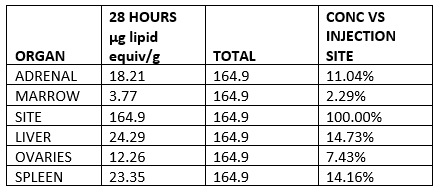
Lipid concentration per gram, recalculated as percentage of injection site.
In terms of the impact on fertility and foetal abnormalities, the report includes a study of 44 rats and describes two main metrics, the pre-implantation loss rate and the number of abnormalities per foetus (also expressed per litter). In both cases the metrics were significantly higher for vaccinated rats than for unvaccinated rats.
Roughly speaking, the pre-implantation loss ratio compares the estimated number of fertilised ova and the ova implanted in the uterus. The table below is taken from the report itself and clearly shows the loss rate for vaccinated (BNT162b2) is more than double the unvaccinated control group.

In a case control study, a doubling of pregnancy loss in the intervention group would represent a serious safety signal. Rather than take this seriously, the authors of the report then compared the outcomes to historical data on other rat populations – 27 studies of 568 rats – and ignored the outcome because other populations had recorded higher overall losses. This range is shown in the right hand column as 2.6% to 13.8%. This analysis is alarming as remaining below the highest previously recorded pregnancy loss levels in populations elsewhere is not a safe outcome when the intervention is also associated with double the harm of the control group.
A similar pattern is observed for foetal malformations with higher abnormality rate in each of the 12 categories studied. Of the 11 categories where Pfizer confirmed the data are correct, there are only two total abnormalities in the control group, versus 28 with the mRNA vaccine (BNT162b2). In the category which Pfizer labelled as unreliable (supernumerary lumbar ribs), there were three abnormalities in the control group and 12 in the vaccinated group.
As with the increased pregnancy losses, Pfizer simply ignored the trend and compared the results with historical data from other rat populations. This is very significant as it is seen across every malformation category. The case control nature of the study design is again ignored, in order to apparently hide the negative outcomes demonstrated.
These data indicate that there is no basis for saying the vaccine is safe in pregnancy. Concentration of lipid nanoparticles in ovaries, a doubled pregnancy loss rate and raised foetal abnormality rate across all measured categories indicates that designating a safe-in-pregnancy label (B1 category in Australia) was contrary to available evidence. The data imply that not only was the Government’s ‘safe and effective’ sloganeering not accurate, it was totally misleading with respect to the safety data available.
Despite the negative nature of these outcomes, the classification of this medicine as a ‘vaccine’ appears to have precluded further animal trials. Historically, new medicines, especially in classes never used in humans before, would require a very rigorous assessment. Vaccines, however, have a lower burden of proof requirement than ordinary medicines. By classifying mRNA injections as ‘vaccines’, this ensured regulatory approval with significantly less stringent safety requirements, as the TGA itself notes. In fact, these mRNA gene therapy products (to use the proper term) function more like medicines than vaccines in that they modify the internal functioning of cells, rather than stimulating an immune response to presence of an antigen. Labelling these gene therapy products as ‘vaccines’ means that, as far as we are aware, even today no genotoxicity or carcinogenicity studies have been carried out.
This report, which was only released after a FOI request, is extremely disturbing as it shows that authorities knew of major risks with mRNA COVID-19 vaccination while simultaneously assuring populations that it was safe. The fact that mainstream media have (as far as we are aware) completely ignored the newly released data should reinforce the need for caution when listening to the advice of public health messaging regarding COVID-19 vaccination.
Firstly, it is clear that regulators, drug companies and the Government would have known that vaccine induced immunity tails off very rapidly, with this being subsequently observed in real world data with efficacy against infection falling to zero. Accordingly, the single point in time figures of 95% and 62% efficacy against symptomatic PCR-positive infection quoted for Pfizer and AstraZeneca respectively meant almost nothing since a rapid decline was to be expected. Similarly, the concept of a two dose course was inaccurate as endless boosters would likely have been required given the rapid decline in antibodies and T-cells observed in the monkeys.
Most importantly, the data do not in any way support the ‘safe’ conclusion with respect to pregnancy; ‘dangerous’ would be much more accurate. The assurances of safety were, therefore, completely misleading given the data disclosures in the recent freedom of information release. Regulatory authorities knew that animal studies showed major red flags regarding both pregnancy loss and foetal abnormalities, consistent with the systemic distribution of the mRNA they had been hiding from the public. Even in March 2023, it is impossible to give these assurances, given the fact that important studies have not, to the best of our knowledge, been done. Pfizer elected not to follow up the vast majority of pregnancies in the original human trials, despite high miscarriage rates in the minority they did follow. Given all of the problems with efficacy and safety, the administration of these products to women of childbearing age and administration to healthy pregnant women is high risk and not justified.
Alex Kriel is by training a physicist and was one of the first people to highlight the flawed nature of the Imperial Covid model; he is a founder of the Thinking Coalition which comprises a group of citizens who are concerned about Government overreach. David Bell is a public health physician with a PhD in population health and formerly worked as a scientific and medical officer at the World Health Organisation.
“Joe Biden Is A Criminal” Says Ex-Obama Whistleblower Alleging Family “Kickback Scheme”
By Tyler Durden | Zero Hedge | April 14, 2023
A former staffer who worked in the Obama administration is blowing the whistle on the Bidens – and has accused President Biden of being involved in a “kickback scheme” directly related to his son Hunter’s overseas business dealings.
Mike McCormick, a stenographer in the White House for 15 years who worked with Biden from 2011 to 2017, told Fox & Friends First that the FBI has completely ignored him despite his willingness to testify under oath before the grand jury investigating Hunter.
“In February, I went to the FBI and filed one of their tips on their website. If you do that, and you’re lying to them, you go to jail. I’m not lying. I’m telling the truth, and I’m not going to jail,” McCormick said on Thursday. “Joe Biden is a criminal. He was conducting malfeasance in office to enrich his family. Jake Sullivan is a conspirator in that, and there’s more… Obama officials involved in it, I believe.”
McCormick specifically noted a key dialogue involving then-VP Biden, aide Jake Sullivan and the press on Air Force Two before an April 21, 2014 trip to Kyiv, Ukraine, in which Sullivan – now Biden’s national security adviser – outlined a US investment in the Ukrainian energy sector just days after Hunter joined the board of Burisma.
Months after the trip, Congress allocated $50 million to Ukraine’s energy market.
“I’m sitting back there with a tape recorder. Jake Sullivan comes back and somebody asks about fracking. His answer is, well, we’re bringing a lot of American assistance over for fracking. Burisma was the direct beneficiary of that fracking, and that’s what I recorded, and that’s in a White House transcript,” said McCormick, adding: “In the transcript, you don’t know who Jake Sullivan is. It’s a senior administration official. I’m the witness that says Jake Sullivan is the guy who said it and he should be investigated because at the time Hunter Biden was on the board of Burisma and Joe Biden is bringing American taxpayer money to enrich that company and himself and his family.”
Hunter joined the board of the Ukrainian natural gas firm on April 18, just three days before Biden and his team traveled to Kyiv. But that critical piece of the puzzle was not made public until May 12.
McCormick argued the timeline of the events suggests that Biden funneled American money overseas to “enrich” himself and his family, and used his own influence to aid his son’s rookie energy career.
The former stenographer made it clear he wants to present the information under oath before the grand jury in Delaware probing Hunter’s business dealings, which is led by U.S. Attorney David Weiss. –Fox News
A federal probe into Hunter Biden’s suspected tax and foreign lobbying violations began in 2018, after banks filed dozens of suspicious activity reports (SARs) regarding foreign transactions that were flagged. Some of the SARs involved money funneled from “China and other foreign nations,” sources close to the probe tell Fox.
“If David Weiss can’t have me in front of his grand jury explaining what I know as a witness, that’s a fraudulent grand jury,” said McCormick. “It’s a fraudulent use of the American judicial system to cover for Barack Obama and Joe Biden’s crimes in office.”
McCormick says the information he has incriminates Biden – and likely other officials, in connection with the alleged influence peddling scandal.
“If I went in there, I would tell them to have Barack Obama called in as a witness because he’s part of the conspiracy. He’s an ex-president. He has to answer who was in charge of this, putting Joe Biden into this role? Did Barack Obama know about it?” he continued.
“There’s evidence I’ve seen and put in my Substack on April 16th, so two days before Hunter joins Joe Biden is with Hunter in the West Wing. They have a meeting, and then later that day in the evening, Joe Biden spends a day in the limousine in the back of Barack Obama’s limousine in western Pennsylvania.”
Pentagon Leak: Disinfo Op to Expand Control of Internet & Get Rid of Biden
By Ekaterina Blinova – Sputnik – 14.04.2023
The Pentagon “leak” could have been deliberately orchestrated to force the removal of US President Joe Biden and/or to expand the power of the US government to regulate anything posted on the Internet, Larry Johnson, retired CIA intelligence officer and ex-State Department official, told Sputnik.
Twenty-one-year-old Airman 1st Class Jack Teixeira was arrested on Thursday over the much-discussed Pentagon “leaks”. He was charged with unauthorized retention and transmission of national defense information and unauthorized removal and retention of classified documents.
In an affidavit accompanying the charges, an FBI special agent revealed that Teixeira had security clearance for the highest level of classification, “top secret/sensitive compartmented information” (TS/SCI).
“It’s not normal. It’s not typical. It’s not easy, particularly for a member of the National Guard [to gain this level of clearance],” Larry Johnson, a veteran of the CIA and the State Department’s Office of Counter Terrorism, who provided training to the US Military’s Special Operations task force for 24 years, told Sputnik. “So, this is very unusual and strange. The thing that captures my attention is that the individual was part of the Air Force unit that’s involved with information warfare. At that age and at that low rank the possibilities that he would have unlimited access to highly classified material is just extremely unlikely.”
The trove of documents was initially released on the Discord platform, popular with gamers, weeks ago. Later, the alleged Pentagon files found their way to major social media platforms and eventually were picked by the US mainstream media.
A Deliberate Leak and Here’s Why
Johnson believes that it was a controlled leak, even though initially the former CIA analyst had been inclined to think that the leaked documents were the work of a frustrated whistleblower. What struck Johnson was a document labeled “CIA Operations Center Intelligence Update” in the trove.
“The one document that did capture my attention as far as being highly unlikely that he would ever have access to it was the report from the CIA Operations Center,” Johnson explained. “That document is prepared for internal use only within the CIA. It’s not the kind of document that’s prepared and circulated within the other agencies that are considered part of the intelligence community.”
One might ask why the leak was needed. According to the CIA veteran, those who he claimed tricked Teixeira may have sought to kill several birds with one stone: to smear MAGA conservatives, justify new Internet restrictions and remove Joe Biden from the Oval Office. Thus, Teixeira was immediately described as a right winger, as an anti-Semite, as a racist, a gun lover and a religious extremist: he “checks all the boxes” routinely smeared by the US mainstream press. As Johnson wittingly remarked in his blog earlier in the day, “the only thing lacking is that the fellow, Jack Texeira, was not wearing a MAGA cap.”
“There’s current legislation being proposed that would not only ban Tik-Tok, but would expand the power of the US government to regulate anything posted on the Internet,” So this could be an act designed to help create political support for that kind of authoritarian crackdown on information, a complete violation of the First Amendment.”
“Another possibility is that disclosure of these documents is designed to embarrass the Biden administration, ultimately forcing the removal of Joe Biden,” the CIA veteran suggested.
Another thing that set alarm bells ringing for Johnson was Bellingcat, which is characterized by the former State Department official as “an Open Source Intelligence outfit that has been funded by US and British intelligence.” It was Bellingcat that allegedly managed to trace the “leak” to a Discord server called “WowMao,” which seemed to have been sourced from the Thug Shaker Central channel.
The story about “leaked Pentagon files” was also picked up by the New York Times and the Washington Post which are largely criticized for being in cahoots with the US federal government and its intelligence agencies.
“That’s why I think it’s a disinformation operation,” Johnson said. “Bellingcat has been funded by both MI6 and the CIA and has worked really as what they call an open source intelligence operation. And it has been used as an intelligence entity. And several of the reporters who were involved, both writing for The New York Times, had previously worked with Bellingcat. The timing of this is just very unusual, that all of a sudden it’s just discovered and the documents that are being leaked are very precisely focused on Ukraine, the conflict with Ukraine and Russia’s activities in Ukraine.”
Convenient Scapegoat
The 21-year old appears to be more of a convenient scapegoat rather than a “hero”, according to Johnson. The former CIA analyst does not rule out that Teixeira will be punished alone – akin to William Calley in the My Lai Massacre case – while his chain of command will be let off the hook.
“I don’t think he had any clear purpose for what he was doing,” said the CIA veteran. “And it’s not clear why he started doing this. And these things are getting posted to this gamer board. Ostensibly, again, that’s the story we’re being told. I don’t know what to believe anymore from the US government. The lies that have been told are so extensive and so massive. I just don’t know what to believe.”
If convicted, Teixeira faces up to 15 years in prison. And if it was indeed a controlled leak, it would send an alarming signal about the extent to which the US government agencies are eager to violate Constitutional rights of a US citizen to reach their objectives. Remarkably, the US mainstream press has not raised the question if Teixeira should be treated as a “whistleblower.”
“The government violating constitutional rights wouldn’t shock me at all,” remarked Johnson. “That’s why I said he’s a convenient scapegoat. They’re using him in this way. He was not working for some foreign intelligence service. He would not have been able just on his own to get access to those documents. I know how really difficult it is, even electronically, when you log into these systems to find some of that information and then to turn it off, then take it out and then decide to photograph and then post it. The story doesn’t add up.”
Touching upon the timing of the “leak” the CIA veteran suggested that “elements in the intelligence community” have eventually “recognized that the prospects for Ukraine in the war with Russia are bleak and hurting and getting more dismal by the day so that Russia is going to prevail and Ukraine is going to lose.”
“And that has really created some great consternation within elements of the intelligence community,” he concluded.
Did Russian Officials Sting Evan Gershkovich?
By Jacob G. Hornberger | FFF | April 14, 2023
Ever since the arrest by Russian officials of Wall Street Journal reporter Evan Gershkovich on charges of espionage, U.S. officials have been vehemently denying that he is a spy. But as I wrote in my article “Evan Gershkovich: U.S. Spy or Simply Naive?” those denials mean nothing because U.S. officials would deny it even if he was a spy.
It is not difficult to imagine the CIA approaching Gershkovich and asking him to acquire secret information while he was reporting inside Russia. The CIA and the rest of the U.S. national-security establishment have been obsessed with Russia since at least 1947. Moreover, the CIA would know that as a reporter for the prestigious Wall Street Journal, Gershkovich would have a perfect cover, one that naturally would involve having the Journal and other mainstream newspapers unwittingly coming to his defense.
It is also not difficult to imagine a young, right-wing, idealistic journalist jumping at the chance to be working secretly for the CIA. He would consider it a wonderful opportunity to “serve his country.”
After all, that was what Operation Mockingbird was all about during the Cold War racket. Countless American journalists leaped at the opportunity to become CIA spies or informants in the “patriotic” quest to defeat the Reds and prevent them from taking over America.
According to Wikipedia,
Without identifying individuals by name, the Church Committee stated that it found fifty journalists who had official, but secret, relationships with the CIA. In a 1977 Rolling Stone magazine article, “The CIA and the Media,” reporter Carl Bernstein expanded upon the Church Committee’s report and wrote that more than 400 US press members had secretly carried out assignments for the CIA….
A much more likely possibility, however, is a Russian sting operation, one in which a Russian “friend” of Gershkovich or a trusted source gave him secret information in violation of Russia’s espionage laws. If that’s what happened, then that conversation or transaction was undoubtedly secretly videotaped or recorded. If Gershkovich was the victim of that type of sting operation, he would have a difficult time defending himself against a charge of espionage.
U.S. officials would undoubtedly cry “entrapment” until they were blue in the face. But there would be a big problem with their cry — Viktor Bout, the Russian arms dealer who received a 25-year jail sentence here in the U.S. arising from a sting operation orchestrated by the U.S. Drug Enforcement Administration.
As I detailed in my article “Time to Revisit the Viktor Bout Case,” in order to get Bout, the DEA came up with a concocted, made-up, fictitious crime that DEA officials induced Bout to commit — in Thailand! Working closely with Thai officials, U.S. officials then used that fake crime as the basis for extraditing, prosecuting, convicting, and incarcerating Bout here in the United States. Using their “sting” operation, U.S. officials proudly and gleefully took more than 10 years out of Bout’s life, until he was traded for Brittney Griner, the American basketball star who was convicted of violating Russia’s war on drugs.
It certainly wouldn’t surprise me if Russian officials decided to copy the modus that U.S. officials used to get Bout and employed it against Gershkovich. The Russians might well subscribe to the adage that what’s good for the goose is good for the gander.
What are the Russians saying about the intelligence leak in the USA?
By Gilbert Doctorow | April 13, 2023
The Russians took an immediate interest in the intelligence leak scandal in the USA because so many of the documents deal with the readiness of their own and Ukrainian military forces for the long awaited “counterattack” by Kiev which may be decisive in the outcome of the war. They were instantly asking whether there was not some intrigue here, an attempt to loll them into overconfidence given that the situation of the Ukrainian side was portrayed in these documents as unpromising to dire, especially as regards air defense and supply of munitions. However, on close examination, the intelligence experts who have appeared on Russian state television now are saying they have no doubt the documents are genuine and there was no reason to believe they were issued as disinformation for Moscow. Now they have redirected their attention to other aspects of the leak.
The first among these questions being asked in Moscow is: what was the intent of the leakers who are assumed by consensus to be Americans from within the 1,000 or so persons who had access to these top secret documents online, on specially programmed computers. In this matter, I was particularly impressed by one explanation that was set out at length by a panelist on yesterday’s Evening with Vladimir Solovyov show. The leak is viewed as an attempt to discredit Joe Biden. To discredit the biological Joe Biden and also what the Russians are calling the “collective Joe Biden,” meaning the team of assistants who do the thinking for Joe and feed him his lines to read.
The documents leaked show that the Biden Administration, through Lloyd Austin, through Antony Blinken is lying day after day about the real situation of the Ukrainian military. Even yesterday Austin spoke on camera after talking to his Ukrainian counterpart Reznikov and insisted that everything is just fine in Ukraine, that they have received the assistance they need and are ready to proceed with the counter-offensive.
The next level of analysis of the documents that I hear from the Russian intelligence experts and also from their counterpart in Israel Yakov Kedmi, who appears regularly on the Solovyov show, is that the documents demonstrate the vast flow of information coming in to the CIA every day from their illegal espionage, wiretapping and the like. They also demonstrate the low level of analytical competence of the CIA and other US intelligence analysts who are poring over this information flow. This comes out from the uncritical acceptance by the American intelligence reports of casualty figures and other highly relevant statistics they are receiving solely from one source, Kiev, and are passing on to the top leadership at face value.
The normal, historical and universal problem with intelligence is that the sources and summaries are good but they are wasted on incompetent political leaders who pay no attention or do not comprehend what they are being told by their subordinates responsible for intelligence. The American situation seems still more damaging: not only are the political bosses who are receiving the intelligence dimwits but the information being handed to them is of poor quality.
The Russians are not at all pleased with this situation. It strengthens the argument on their side by those who say that insanity rules in the USA, that you have to be prepared for every eventuality in escalation of the war.
©Gilbert Doctorow, 2023
Pentagon ‘leak’ theatrics continue as US finds scapegoat

By Drago Bosnic | April 14, 2023
The pseudo-WikiLeaks 2.0 has just been stepped up a notch as the FBI arrested the perpetrator who shared the “secret docs” through a Discord server. The 21-year-old Airman First Class Jack Douglas Teixeira of the Massachusetts Air National Guard was apprehended on April 13 for his involvement with the “top-secret leak”. The controversial “Pentagon docs” contain what the US mainstream propaganda machine claims is “an array of national security secrets, including the breadth of surveillance the United States is able to conduct on Russia”.
Apparently, Teixeira posted the “classified documents” in an invitation-only Discord (mainly gaming-focused platform) chat group called “Thug Shaker Central”. According to the Washington Post, which reportedly talked to other members of the group, “classified Pentagon documents containing intelligence collected by the US and several other countries were posted by a man claiming to be a ‘military base’ worker”. The chat room apparently had no more than 20 members, mostly young men, who discussed video games, memes, movies and politics. It also included users from both Russia and Ukraine.
At some point during 2022, a user known as OG posted “a message laden with strange acronyms and jargon” and claimed to “know secrets that the government withheld from ordinary people”. One of the unnamed members of the chat group told the Washington Post that “at the time, few people read the note” and added that “OG claimed he spent at least some of his day inside a secure facility of a ‘military base’ that prohibited cell phones and other electronic devices and copied the classified documents”, but insisted OG wasn’t hostile to the US or working for any foreign government.
The Washington Post report also presented OG as somewhat of an anarchist, since he supposedly “thought US law enforcement and intelligence were a sinister force that sought to suppress citizens and keep them in the dark” and complained about “government overreach”. The claim could very well be an attempt to portray OG as “a disgruntled serviceman who simply wanted to share dirty state secrets with the American people”. This would reinforce the idea that OG was supposedly acting on his own, further covering up the role of US intelligence in the so-called “leak”.
The Washington Post report never mentioned OG’s real name, but other media later revealed that he was indeed Jack Teixeira. Despite their own claims that he wasn’t involved with foreign intelligence, the US propaganda machine, never the ones to let a perfect opportunity for Russophobia slip by, were quick to blame Russia for the “leak”. Reuters insists that three “anonymous” US officials “confirmed that Russia or pro-Russian groups could be behind the leak”. Expectedly, no evidence whatsoever was presented to back up such claims. But then again, why worry? Who could possibly even contemplate the idea that any US official would ever lie about anything?
The New York Times also reported extensively on Teixeira’s case. According to NYT, Airman Teixeira was trained as a cyber transport systems specialist, a job that could also entail keeping his unit’s communication networks running. He was assigned to the 102nd Intelligence Wing at Otis Air National Guard Base. The NYT report admits that “military officials refused to disclose information on what in Airman Teixeira’s duties would necessitate him having access to daily slides about Ukraine, much less the daily deluge of intelligence reports from the CIA, NSA and the Office of the Director of National Intelligence”.
Some US officials told NYT that Teixeira could also have gained access to “secret docs” through daily emails on a classified computer network, where those emails might’ve been automatically forwarded to other people. On the other hand, members of the Discord group chat told NYT that the aforementioned documents were “purely informative”, but started to get wider attention only when one of the teenage members of “Thug Shaker Central” took them and posted a few dozen “secret documents” to a public online forum where they were picked up by several Russian-language Telegram channels.
In short, the US propaganda machine wants us to believe that a 21-year-old intelligence technician who just graduated and held the rank of airman (equivalent of private in the US Army) was privy to top-secret intelligence on the Kiev regime’s offensive plans, Russia, South Korea, China and other global hotspots. NYT itself also reluctantly admitted that “the arrest raised questions about why such a junior enlisted airman had access to such an array of potentially damaging secrets, why adequate safeguards had not been put in place after earlier leaks and why a young man would risk his freedom to share intelligence about the war in Ukraine with a group of friends he knew from a video game social media site”.
US media claim that the Pentagon was completely unaware of the “leak” and learned of it only after the documents began surfacing on Telegram and Twitter. Apparently, the Pentagon even tried to hack and delete some of the posts about the documents, “but was ultimately unsuccessful”. Again, it’s quite bemusing that an institution wasting well over $850 billion every year is incapable of removing such “crucial information” from several Telegram channels almost exclusively run by civilian enthusiasts with no budget. The sheer amount of logical disparities indicates that this particular case is highly controversial (at best), while there’s an extremely strong possibility it’s all an elaborate counterintelligence operation.
Apart from the more obvious geopolitical benefits such as pressuring countries like Egypt to distance themselves from Russia or further disrupting Moscow’s relations with the traditionally pro-Russian Serbia (once again accused of weapons shipments to Kiev), there is a very strong domestic incentive to push the “leak” narrative. For instance, the infamous CNN argues that “the leak spotlights major ongoing US intelligence vulnerabilities“, which can hardly be interpreted as anything else but an attempt to strengthen government control in the US. The “leak” could also be used to accelerate the adoption of the truly totalitarian RESTRICT act that the disillusioned former Democrat Tulsi Gabbard described as PATRIOT Act 2.0, only worse.
Drago Bosnic is an independent geopolitical and military analyst.
Washington Post’s disinformation on Egypt causes confusion over Pentagon document leaks
By Ahmed Adel |April 13, 2023
The Washington Post, citing leaked US intelligence documents, created a frenzy in the media by suggesting that Egypt was planning to secretly send up to 40,000 missiles to Russia. This claim could be separate from the other leaked US intelligence documents as the report was not only denied by Cairo and Moscow, but White House National Security Council spokesman John Kirby also said he had no information about this.
Russian Presidential Press Secretary, Dmitry Peskov, told reporters that what appeared to be an Egyptian plan to “secretly” supply thousands of missiles to Russia were like other fake news related to the state of the Russian military and the war in Ukraine.
In fact, the claims are ridiculous considering that Russia does not need missile supplies, whether from Egypt or any other country, because as far as Russia’s own military-technological development is concerned, it does not need assistance and help. Rather, the disinformation spread by the Washington Post is a clear example of demagogy to try and cause greater problems.
The broadcasting of such news aims to drag Egypt into global conflicts and incite hostility without reason. This could be because Cairo has announced its intentions to join BRICS, something which deeply concerns Washington. In this way, the Washington Post is conjuring disinformation in a vain attempt to deter Cairo from deepening its ties with Moscow.
For their part, a senior Egyptian official denied supplying Russia with 40,000 rockets for use against Ukraine and described the Washington Post report as “informational tampering that has no basis in truth.” He added that Egypt follows a balanced foreign policy determined by peace, stability, and development.
Kirby told reporters on April 11 that Washington has “seen no indication that Egypt is providing lethal weaponry capabilities to Russia”, adding that the Arab counrty is a “significant security partner” and that the relationship between the two goes back decades.
With official denials from Cairo and Moscow, with Washington indicating that it has no information, it appears that this is likely a fake news story by the Washington Post, perhaps in an attempt to create doubts over the authenticity of the leak reports. The supposed document that discusses Egypt is being reported as part of a trove of leaked Pentagon reports. However, there is no evidence for this.
The batch of recently leaked documents have been circulating on social media channels for weeks, possibly months, even if it was only exposed days ago. Many of the leaked documents included secret information on the war in Ukraine, such as scepticism on the success of the expected Ukrainian spring offensive, while other documents appear to show sensitive analyses of US allies, including Israel and South Korea.
Pentagon spokesman Chris Meagher said on April 10 that the documents could pose “a very serious risk to national security” and lead to the spread of disinformation. It appears that the spread of disinformation already began with the claim that Cairo is supplying 40,000 missiles to Russia.
The Washington Post reported that, according to leaked US intelligence documents, Egyptian President Abdel Fattah el-Sisi approved of the production but ordered officials to keep it a secret “to avoid problems with the West”. Yet, no other media agency or social media account has seen the documents, and thus all this information comes from this single dubious source.
Although Egypt has avoided taking sides in the war, Cairo and Moscow have a long and fruitful relationship expanding many decades, including in economy, energy, and security.
In one example, Egypt became the world’s largest importer of wheat in 2021 after imports reached $4.53 billion, according to the Observatory of Economic Complexity. Egypt mostly imported its wheat from Russia and Ukraine, but since the war, Cairo is also turning to India to secure alternative supplies. None-the-less, Russia is still one of its most important suppliers.
It is recalled that Egyptian Foreign Minister Sameh Shoukry said on January 31 that wheat imports are a cornerstone in Cairo-Moscow relations, adding that trade between the two countries hit $6 billion in 2022.
More importantly, the Russian Central Bank added the Egyptian pound to its official exchange rate list in January. According to Cairo-based economist Hanan Ramses: “Using the ruble for settlement away from US currency will help ease pressure on demand for the greenback in Egypt. This is better for Egypt’s international trade.” She added that “Egypt may become Russia’s gateway to African markets in the long run.”
Given that Egypt is an African entry point for Russia, in addition to Russia being an important source of wheat for Egypt, it is very evident that the Washington Post is attempting to disrupt this relationship. What is surprising though is that Kirby expressed his lack of knowledge on the claim, suggesting that even this disinformation campaign is one step too far for the State Department as they attempt to woo Egypt away from Russia.
Ahmed Adel is a Cairo-based geopolitics and political economy researcher.
US professor quits after allegedly faking racism stats – media
RT | April 12, 2023
Florida State University criminology professor Eric Stewart has quietly resigned after a month-long absence amid an inquiry into whether he faked data in multiple studies to inflate the prevalence of racism in the US, the Florida Standard reported last week.
A fellow of the American Society of Criminology, Stewart was first publicly accused of falsifying data in 2019 by the co-author of one of his studies, University of Albany criminology professor Justin Pickett, who claimed Stewart had made several misleading changes to the numbers in their 2011 paper ‘Ethnic threat and social control: Examining public support for judicial use of ethnicity in punishment’ immediately before publication.
The published study claimed that public desire for harsher sentences for black and Hispanic offenders increased in proportion with the size of the minority populations in a community. However, the study data showed no such relationship existed, and that the opposite might even be true. Pickett revealed that his colleague had doubled the sample size while leaving out nearly three quarters of the counties polled, mangling the data to the point of incoherence, and said Stewart refused to turn over the raw data so that Pickett could re-run the calculations himself.
That study and four more were subsequently retracted, but when Pickett tried to bring the matter to the university’s attention, he claims he was met with four months of stonewalling. When the school did eventually mount an inquiry, the three-person panel in charge included two people who had co-authored studies with Stewart, violating Florida State’s conflict of interest policy. Perhaps unsurprisingly, that inquiry claimed it had not found enough evidence for fraud and advised against continuing the investigation.
Pickett told the Florida Standard that coverups by colleagues are common in the field, explaining “there’s a huge monetary incentive to falsify data and there’s no accountability. If you do this, the probability you’ll get caught is so, so low.”
Stewart, who is black, complained to the university that Pickett – who is white – had “essentially lynched [him] and [his] academic career.”
In 2020, a sixth paper authored by Stewart was retracted – though not before being cited by 186 other papers. Another investigation found enough merit in the fraud claims to pursue them, apparently imperiling Stewart’s $190,000 per year position. Florida State declined to discuss the matter with the Florida Standard, and Stewart’s profile is still live on the university’s website.
Featured Video

Trita Parsi: Middle East Unraveling — Are We on the Path to World War?
or go to
Aletho News Archives – Video-Images
New Book
Trans agenda is ‘normalization of sadism’ – US author

RT | September 23, 2026
The US Democratic Party has embraced a transgender agenda that amounts to “the normalization of sadism,” author A.J. Rice has said, warning that radical trans policies would return if the party is allowed to regain power.
Speaking to RT’s America First host Scotty Nell Hughes about his new book, ‘The Curse of the Bearded Lady: How the Trans Mafia Whacked American Sanity’, Rice argued that activists have gained significant influence in schools, medicine, and corporate America while people who questioned the agenda have faced pressure to stay silent.
The author described the “trans mafia” as the sprawling network of people and institutions that have helped the movement gain influence. He singled out parts of academia, wealthy backers, and corporations, and stated that providers of transition-related treatment also have a financial incentive to keep young people in their care indefinitely.
Rice argued that the consequences of these policies ultimately fall on children who are being drawn toward gender-affirming medical treatments and on girls who are expected to share locker rooms or compete in sports with biological males.
He noted that while voters rejected the Democrats’ approach to gender in 2024, the party, which has been “captured by madness,” has since only doubled down and is seeking what is effectively “the normalization of sadism.” … Full report
Blog Roll
 Aletho News
- ‘We don’t seek permission to defend our country’: Snippets from President Pezeshkian’s UNGA address
- NATO chief wants Europeans to fight American wars [for Israel]
- German chemicals giant reveals details of downsizing
- Refaat Al-Areer Was The Canary In The Coal Mine In Israel’s War On The Truth
- Israeli election committee bars candidate from Knesset race over Gaza war opposition
- French-Lebanese man files war crimes complaint over Israeli attacks
- Mahan Air Flight Lands in China Despite US Threat against Iranian Airlines
- US eyes $10bn fund to rebuild war-battered Gulf infrastructure
- Trump meets Rodríguez near Maduro’s prison as Venezuela’s oil flows to US
- Trita Parsi: Middle East Unraveling — Are We on the Path to World War?
- If Americans Knew
- Caught on Tape: AIPAC CEO Boasted of Controlling Trump’s National Security Officials
- Why Hamas Attacked Israel in October 2023 – Israeli professor Ilan Pappé
- They see them, then kill them: Israeli quadcopters track, deliberately target civilians in Gaza
- Winter could turn Gaza’s treacherous, war-damaged buildings into deathtraps
- Majority of Democratic Voters Want to Prosecute Both Biden and Trump Administration Officials Over Gaza
- As Gaza languishes, world leaders gather at the UN – Daily Update
- Sanctions are collective punishment: immoral and self-defeating
- Phosphorus Munitions Fired by Israel Burn Groves, Orchards in Southern Lebanon
- Israel Carries Out New Ceasefire Violations Across Gaza
- AI – Emphasis on the ‘I’: Israel Is Funding AI Chatbot Propaganda
- No Tricks Zone
- New Study: Earth And Venus Surface Warmth Largely Explained By Convection And Lapse Rate, Not CO2 Or Radiation
- 2025 Nature Paper Claiming Worsening Global Drought Gets RETRACTED …Heavily Flawed
- New Study: ‘Global Drought Shows No Detectable Recent Acceleration Under Climate Warming’
- Economic Masterminds: German Socialists Suggest Taxing Productivity Gains Stemming From Using AI
- The South China Sea Has Not Been Cooperating With The Climate Change Narrative
- Energy Crisis: Germany Enters Heating Season With Historically Low Gas Reserve Fill Levels
- New Study: The Antarctic Ice Sheet Gained Mass From 2020-2024 Due To Staggering Snow And Ice Accumulation
- Study: Ocean Heating Rates From Thousands Of Years Ago ‘Dwarf’ Modern Ocean Heating Rates
- Climate Extremists Target, Attack Large-Scale Power Grid Infrastructure In Germany!
- New Study: Antarctic Ice Melt Has Contributed Less Than 1 Centimeter To Sea Level Rise In The Last 30 Years

