Citing Terrorism Concerns, John Kerry Supports Saudi Bloodbath in Yemen
Sputnik – 25.01.2016
US Secretary of State John Kerry has expressed his support for Saudi Arabia’s military campaign in Yemen, a conflict that has killed over 2,400 civilians. As justification, the secretary reiterated false claims that Riyadh is battling al-Qaeda.
Over the weekend, the White House stated its concern over the rising civilian death toll in the Yemen conflict.
“We are deeply concerned about recent reports of escalating violence in Yemen and resulting deaths of civilians…” White House National Security Council spokesperson Ned Price said in statement on Saturday.
But while the Obama administration is ostensibly worried about the amount of violence, it also fully supports the Saudi campaign that is creating the chaos. One day after the release of Price’s statement, US Secretary of State John Kerry reiterated his full support for Riyadh’s actions.
“Let me assure everybody that the relationship between the United States and the GCC nations ([Persian] Gulf Cooperation Council) is one that is built on mutual interest, on mutual defense and I think there is no doubt whatsoever in the minds of the countries that make up the GCC that the United States will stand with them against any external threat,” Kerry told reporters.
Kerry claimed that the war was necessary since it is partially aimed at targeting “al-Qaeda operatives.” Those motivations are highly suspect, however, given that Riyadh failed to go after al-Qaeda in the Arabian Peninsula (AQAP) during the first nine months of fighting.
In April, the Saudi government also looked the other way as AQAP seized the port city of al Mukalla. By gaining control of the central bank, the terrorist group gained over $17 billion from the city’s capture.
In addition, Kerry cited the need to combat Iranian “interference.”
“The United States remains concerned about some of the activities that Iran is engaged in other countries,” he told reporters.
Riyadh has provided little evidence to suggest that Tehran is providing any assistance to Houthi rebels in Yemen.
Riyadh’s intervention began last March, and the Saudi naval blockade of Yemen has left approximately 1 million people internally displaced, and as many as 20 million people in need of food, water, and medical supplies.
The United Nations estimates that as many as 2,400 Yemeni civilians have been killed by coalition bombing. Most airstrikes have utilized cluster munitions sold by the United States. Worth an estimated $1.2 billion, this could partially explain Kerry’s support, but it also implicates Washington in Yemen’s civilian deaths.
“We should be culpable for the crime of killing civilians as well, as we produce and sell the weapons when we know the use they will be put to,” retired US Army Major Todd Pierce told Sputnik.
“Our indivisibility with our ‘allies’ inculpates us in their crimes…”
PBS Newshour Lies about Single-Payer Health Care
By Ben Schreiner | Dissident Voice | January 25, 2016
The fact that a majority of Americans support a single-payer, or Medicare for all, health care system is not news. Or at least it ought not to be news, especially to veteran political journalists.
But enter the vaunted PBS Newshour, which bills itself as “one of the most trusted news programs on television.” (In fairness, that’s a medium not eliciting much in the way of stiff competition.)
On Friday’s broadcast, during the program’s weekly left/right debate segment, featuring New York Times columnist David Brooks on the right and Washington Post columnist Ruth Marcus (seen burnishing her “progressive” credentials here) on the “left,” the topic of discussion turned to the differing health care proposals of Hillary Clinton and Bernie Sanders.
Sanders supports a Medicare for all system, while Clinton supports maintaining the status quo of the 2010 Affordable Care Act. But with Sanders now surging in both Iowa and New Hampshire, the health care schism between the Democratic front-runners has taken center stage in the campaign, with Clinton camp surrogates attacking Sanders by going so far as to incredulously assert that Sanders, by seeking to expand health care to all Americans, is really threatening to strip health coverage from millions.
Taking up this debate between the two Democratic candidates, Brooks commented Friday on the Newshour that, “They also had an interesting debate about health care reform. And that was her [Clinton] making an incremental argument, we have got to make our changes gradually, and him [Sanders] making a radical argument. And so it was interesting. That was a substantive, real argument about how you change any system.”
Newshour co-anchor Judy Woodruff then interjected to clarify, “… essentially, the argument is whether you just wipe away… what we have done and you go to a single-payer health care system, which most Americans say they don’t want… [emphasis added]”
Wait, what? Most Americans say they don’t want a single-payer health care system? Where did Woodruff pull that one from?
According to a 2014 Program for Consultation study analyzing public polling occurring between 2008 and 2013, majorities in both “red” (Republican-dominated) and “blue” (Democratic-dominated) congressional districts prefer government to play a greater role in health care.
When presented with the statement, “Healthcare is a right, not a privilege,” 62.3% of respondents in red districts agreed, compared to 62.9% of respondents in blue districts.
When presented with the statement, “Government should be responsible for ensuring health care needs of its citizens,” 55.6% of respondents in red districts agreed, compared to 64.1% of respondents in blue districts.
The Program for Consultation study even found 47.8% of respondents from red districts to agree that they, “Favor government paying for all necessary medical care for everyone.” That compared to 54.9% of respondents in blue districts.
Meanwhile, a 2015 Progressive Change Institute poll found over 50% of Americans support a single-payer health care system like that proposed by Sanders, including 80% of Democrats.
Given all this, a Newshour viewer may have reasonably hoped that at the very least Marcus, the segment’s “left” perspective, would have interjected to correct Woodruff with any of the above. But, alas, Woodruff’s complete distortion of reality, whether a result of a confounding ignorance or ideological blindness, passed without comment.
It seems that not even a “trusted news program” on an ostensibly public channel is capable of conceding the progressive views of the American public.
Ben Schreiner is the author of A People’s Dictionary to the ‘Exceptional Nation’. He lives in Oregon and may be reached at: bnschreiner@gmail.com.
Media More Outraged by Possible Murder by Putin Than Definite Murder by Obama
By Matt Peppe | Just the Facts | January 24, 2016
The British government, whose foreign policy is overtly hostile to their Russian counterpart, declared last week that their investigation into the killing of a former Russian intelligence agent in London nearly a decade ago concluded there is a “strong probability” the Russian FSB security agency was responsible for poisoning Alexander Litivenko with plutonium. They further declared that Russian President Vladimir Putin “probably approved” of the act. The British investigation, which was likely politically motivated, seemingly raised more questions than it answered. But American corporate media were quick to use the accusations against Putin to demonize him, casting him as a pariah brazenly flaunting his disregard for international conventions.
The Washington Post (1/23/16) editorial board wrote that “Robert Owen, a retired British judge, has carefully and comprehensively documented what can only be called an assassination… Mr. Owen found (Andrei) Lugovoi was acting ‘under the direction’ of the FSB in an operation to kill Mr. Litivenko – one that was ‘probably approved’ by the director of the FSB and by Mr. Putin.”
Actually, Owen did not find that former KGB operative Lugovoi was acting under the direction of the FSB to kill Litivenko. He found there was a “strong probability” this was the case. This means that even in Owens’s view, there is not near certainty, which would meet the legal standard of reasonable doubt that would preclude a guilty judgement. There is even more doubt that even if it were the case the FSB ordered the murder, they did so on Putin’s orders.
The New York Times editorial board (1/21/16) finds the investigation’s results “shocking.” For the Times, this confirms a pattern of Putin’s rogue behavior. They claim Putin’s “deserved reputation as an autocrat willing to flirt with lawlessness in his global ventures has taken on a startling new aspect.”
Both of the prestigious and influential American newspapers argue that the British findings impugn Putin’s respectability in international affairs. The Times says:
Mr. Putin has built a sordid record on justice and human rights, which naturally reinforces suspicion that he could easily have been involved in the murder. At the very least, the London inquiry, however much it is denied at the Kremlin, should serve as a caution to the Russian leader to repair his reputation for notorious intrigues abroad.
The more hawkish Post says: “This raises a serious question for President Obama and other world leaders whose governments do not traffic in contract murder. Should they continue to meet with Mr. Putin as if he is just another head of state?”
Putin’s alleged “sordid record on justice and human rights,” which is taken for granted without providing any examples, is seen as bolstering the case for his guilt in the case of the poisoning death of Litivenko. This, in turn, adds to his “notorious” reputation as a violator of human rights.
The Post draws a line between the lawless Putin and the respectable Western heads of state, such as Obama. Though they frame their call to treat Putin as an outcast as a question, it is clearly intended as a rhetorical question.
It is curious that The Post draws a contrast between Putin and Obama, whose government is supposedly above such criminality. The newspaper does not mention the U.S. government’s drone assassination program, which as of last year had killed nearly 2,500 people in at least three countries outside of declared military battlefields. Estimates have shown that at least 90 percent of those killed were not intended targets. None of those killed have been charged with any crimes. And at least two – Anwar al-Awlaki and his 16-year-old son Abdul Rahman – were Americans.
Obama himself is personally responsible for those killed by missiles launched from unmanned aircraft over the skies of sovereign countries. Several news reports have indicated that Obama is presented in meetings each week by military and national security officials with a list of potential targets for assassination. Obama must personally approve each target, at which point they are added to the state-sanctioned “kill list.”
The British government has also assumed for itself the power to assassinate its own citizens outside a declared battlefield. Last fall, Prime Minister David Cameron ordered the deaths of two British citizens in Syria, who were subsequently disposed of in a lethal drone strike.
The Washington Post editorial board (3/24/12) claimed that Obama was justified in carrying out lethal drone strokes that kill American citizens “to protect the country against attack.” Their lone criticism was that “an extra level of review of some sort is warranted.”
After it was revealed that an American hostage was inadvertently killed in a drone strike in Pakistan, The Post (5/1/15) said that the issue of whether the American government continues to conduct drone strikes should not be up for debate. “(T)here is little question that drones are the least costly means of eliminating militants whose first aim is to kill Americans,” they wrote.
While they tacitly accept the legal rationale for Obama’s assassination program, the New York Times editorial board at least demonstrated some skepticism. In “A Thin Rationale for Drone Killings” (6/23/14), they called the memo “a slapdash pastiche of legal theories – some based on obscure interpretations of British and Israeli law – that was clearly tailored to the desired result.” They say that “the rationale provides little confidence that the lethal action was taken with real care.”
Yet they do not chastise Obama for his “intrigues abroad” nor do they condemn this as an example of his “sordid record on justice and human rights,” language they used for Putin. The idea that relying on what are transparently inadequate legal justifications for killing an American citizen without due process would merit prosecution is clearly beyond the limits of discussion for the Times.
Recently Faheem Qureshi, a victim of the first drone strike ordered by Obama in 2009 (three days after his induction as President), who lost multiple family members and his own eye, told The Guardian that Obama’s actions in his native lands are “an act of tyranny. If there is a list of tyrants in the world, to me, Obama will be put on that list by his drone program.”
Surely both The New York Times and Washington Post disagree with Qureshi, because they believe the U.S. government is inherently benevolent and its motives are beyond reproach. But based on their editorials about the British investigation of the Litivenko poisoning, if Putin was responsible and was described by Qureshi in the same way, they would wholeheartedly agree.
The U.S. government and its allies in NATO, like Great Britain, have a clear agenda in vilifying Russia and its President. The US-NATO alliance supported the government that came to power in Ukraine in 2014 through a coup. After provinces in Eastern Ukraine – the vast majority of whose population is ethnically Russian and Russian-speaking – refused to recognize the NATO-backed coup government in Kiev, the Russian government supported them.
It should be easy to see how, from Russia’s perspective, the Ukranian conflict can be understood as an extension of NATO encroachment towards Russia’s borders that has continued unabated since James Baker told Mikhail Gorbachev in 1991 NATO would move “not an inch east.”
“We’re in a new Cold War,” Stephen Cohen, professor of Russian studies and politics, told Salon. “The epicenter is not in Berlin this time but in Ukraine, on Russia’s borders, within its own civilization: That’s dangerous. Over the 40-year history of the old Cold War, rules of behavior and recognition of red lines, in addition to the red hotline, were worked out. Now there are no rules.”
Additionally, Russia’s support for Syrian President Bashar al-Assad since 2011 throughout that country’s civil war, and more recently its direct military intervention in the conflict that has turned the tide against US-backed rebels, has strongly rankled Washington.
The language used by top government officials to describe Russia has been astoundingly combative. Defense Secretary Ash Carter, the man in charge of the entire US military, claimed Russia is responsible for aggression and is “endangering world order.”
The U.S. government’s hyping of the Russian “threat” has been used to justify massive spending on the U.S. space program and other military expenditures, such as the $1 trillion to upgrade nuclear weapons,
One could even argue that the narrative of an aggressive and belligerent Russia is the principal justification for the continued existence of the NATO itself, two and a half decades after the breakup of the Soviet Union. The alliance allows the US military to be stationed in hundreds of bases throughout Europe under the guise of a purely defensive organization.
The U.S.’s most prominent media organizations should demonstrate the strongest skepticism towards the policies and actions of their own government. At the very least, they should hold their own country’s leaders to the same standards as they do others. But time and again, the media choose to act as a mouthpiece to echo and amplify Washington’s propaganda. They do the government’s bidding, creating an enemy and rallying the public towards a confrontation they would otherwise have no interest in, while allowing the government to avoid accountability for its own misdeeds.
Why the US anti-terror coalition is failing
By Finian Cunningham | American Herald Tribune | January 21 ,2016
There was an underwhelming sense when Pentagon boss Ashton Carter met this week in Paris with other members of the US-led military coalition supposedly fighting the ISIL terror group.
The US-led coalition was set up at the end of 2014 and in theory comprises 60 nations. The main military operation of the alliance is an aerial bombing campaign against terrorist units of IS (also known as ISIL, ISIS or Daesh).
At the Paris meeting this week, Secretary of Defense Carter was joined by counterparts from just six countries: France, Britain, Germany, Italy, Netherlands and Australia. Where were the other 54 nations of the coalition?
Carter and French defense minister Jean-Yves Le Drian patted themselves on the back about “momentum”in their campaign against the terrorist network. However, platitudes aside, there was a noticeable crestfallen atmosphere at the meeting of the shrunken US-led coalition.
One telling point was Carter exhorting Arab countries to contribute more. As a headline in the Financial Times put it: “US urges Arab nations to boost ISIS fight”.
Carter didn’t mention specific names but it was clear he was referring to Saudi Arabia and the other oil-rich Persian Gulf Arab states, including Kuwait, Qatar, United Arab Emirates and Bahrain.
When the US initiated the anti-IS coalition in 2014, fighter jets from the Sunni Arab states participated in the aerial campaign. They quickly fell away from the operation and instead directed their military forces to Yemen, where the Saudi-led Arab coalition has been bombing that country non-stop since March 2015 to thwart an uprising by Houthi revolutionaries.
But there is an even deeper, more disturbing reason for the lack of Arab support for the US-led coalition in Iraq and Syria. That is because Saudi Arabia and the other Sunni monarchies are implicated in funding and arming the very terrorists that Washington’s coalition is supposedly combating.
Several senior US officials have at various times admitted this. Democrat presidential hopeful Hillary Clinton labelled Saudi Arabia as the main sponsor of “Sunni extremist groups”in diplomatic cables when she was Secretary of State back in 2009, as disclosed by Wikileaks.
Vice President Joe Biden, while addressing a Harvard University forum in late 2014, also spilled the beans on the Persian Gulf states and Turkey being behind the rise of terror groups in the Middle East.
So there is substantial reason why the US-led anti-terror coalition in Iraq and Syria has not delivered decisive results. It is the same reason why Carter was joined by only six other countries in Paris this week and why there was a glaring absence of Saudi Arabia and other Arab members. These despotic regimes –whom Washington claims as “allies”–are part of the terrorist problem.
Not that the US or its Western allies are blameless. Far from it. It was Washington after all that master-minded the regime-change operations in Iraq and Syria, which spawned the terror groups.
In fact, we can go further and point to evidence, such as the testimony of Lt General Michael Flynn of the Defense Intelligence Agency, which shows that the US enlisted the terror brigades as proxies to do its dirty work in Syria for regime change.
The US and its Western allies conceal this collusion by claiming that they are supporting “moderate rebels”–not extremists. But the so-called moderates have ended up joining the terrorists and sharing their US-supplied weapons. The distinction between these groups is thus meaningless, leaving the baleful conclusion that Washington, London and Paris are simply colluding with terrorism.
US Republican presidential contenders and media pundits berate the Obama administration for not doing enough militarily to defeat IS. Or as Donald Trump’s backer Sarah Palin would say to “kick ass”.
The unsettling truth is that the US cannot do more to defeat terrorism in the Middle East because Washington and its allies are the source of terrorism in the region. Through their meddling and machinations, Washington and its cohorts have created a veritable Frankenstein monster.
The “coalition”that is actually inflicting serious damage to IS and its various terror franchises is that of Russia working in strategic cooperation with the Syrian Arab Army of President Bashar al-Assad. Since Russia began its aerial bombing campaign nearly four months ago, we have seen a near collapse of the terror network’s oil and weapons smuggling rackets and hundreds of their bases destroyed.
Yet Ashton Carter this week accused Russia of impeding the fight against terrorism in Syria because of its support for the Assad government. Talk about double think!
If we strip away the false rhetoric and mainstream media misinformation, Washington’s “anti-terror”coalition can be seen as not merely incompetently leading from behind.
The US, its Western allies and regional client regimes are in the front ranks of the terror problem.
Turkish PM Tries to Frame Syrian Kurds for Istanbul Bombing
By Joris Leverink | teleSUR | January 23, 2016
On Tuesday, Jan. 12 a big explosion took place in the heart of Istanbul’s tourist district of Sultanahmet. The explosion was caused by a suicide bomber who blew himself up next to a group of mainly German tourists, instantly killing ten and injuring 15 others. Soon, the bomber was identified as a Saudi born Syrian man who had recently entered Turkey and had registered himself as a refugee only days prior to his suicide mission.
According to the Turkish authorities the man was linked to the Islamic State group (IS, or ISIS/ISIL), making this the terrorist group’s fourth deadly suicide bombing in Turkey in one year. Previous attacks that have been ascribed to – but haven’t been claimed by – IS occurred in Diyarbakir in June, Suruc in July and Ankara in October, with a total death toll of around 140.
What set this latest attack apart from the others, however, is the explicit targeting of foreign nationals holidaying in Turkey. Previous attacks were all directed against Kurdish groups and their supporters, indicating a spillover from the wars in Syria and Iraq where Kurdish forces are seen as some of the most effective and reliable opponents of IS.
The Kurdish groups and organizations targeted by the Islamic State group were at the same time actively opposing the ruling Justice and Development Party (AKP). This sparked rumors of the terror group being in cahoots with the Turkish government. Accusations ranged from the two parties actively cooperating with each other to the government’s willful neglect of the safety of its Kurdish citizens.
That the Turkish government considers the Kurds at home and abroad as a bigger threat to the national security than IS has never been a secret. Moreover, the fact that IS is fighting against two of Turkey’s key enemies in Syria – the Assad government and local Kurdish forces – means that Turkey has always been hesitant about seriously and directly confronting the jihadists.
Questions and irregularities
It is in this context that the attack in Istanbul seems out of place. Why would the Islamic State group risk antagonizing one of the few parties in the region with which it has at least some shared goals? What is there to be gained from dealing a blow to Turkey’s already hampered tourist industry and forcing the country’s hand in taking a firm stance against the terrorist group?
There are a number of questions and irregularities that come up when looking at the facts that have thus far come out.
The first matter is the timing of the attack. If the aim of the attack is to hit Turkey by targeting its US$30 billion tourist industry, the bomber couldn’t possibly have chosen a worse time than a cold Tuesday morning in mid-January. The site of the attack is the exact location where during the holiday season thousands of tourists line up every day to visit the Blue Mosque. The number of victims would undoubtedly have been many times higher if the attack would have taken place a few months later, with an absolutely devastating effect on Turkey’s tourist industry.
Then there is the matter of the bomber’s identity. Mere hours after the attack the identity of the man who blew himself to pieces was already known and released. Nabil Fadli was a 28-year-old, Saudi-born Syrian man who had joined IS’ ranks after the terror group had occupied his hometown of Manbij, north of Aleppo.
According to unnamed Turkish officials Fadli had been part of a plot to attack the New Year’s celebrations in Ankara, but this mission had to be aborted after two of his collaborators were exposed and arrested. Fadli moved to Istanbul where he registered himself as a refugee, in the process giving away his fingerprints that would eventually lead to his identification as the bomber one week later.
The curious thing is, why would a member of the Islamic State group who has come to Turkey with the intention of committing a suicide bomb attack make himself known to the authorities – especially after two of his companions have just been arrested? Why have your picture and fingerprints taken and give away the address where you’re staying – which he did, according to the official reports – instead of laying low for a few days before executing the plan for the attack?
Finally, there is the curious issue of IS never actually having claimed responsibility for the attack. Nor for any of the other attacks mentioned above, which all have been attributed to the terrorist group by the Turkish government. The past year has seen a sting of terror attacks committed by the Islamic State group outside of the territories that are under its control – from Jakarta to Paris, Tunis to Beirut – and each and everyone of them has been claimed by the terror group. Oddly enough, not a single attack in Turkey that has been ascribed to IS has actually been claimed by them.
Raising these questions and irregularities is not done for the purpose of pointing fingers at one party or another. They simply serve as a mental exercise to remind one that, especially when entering the realm of terror and counterterrorism, the reality is rarely how it is presented to the public.
Shifting the blame
The day after the attack, Turkish prime minister Ahmet Davutoglu suggested that “certain powers could be using Daesh,” while referring to the Islamic State group by its Arab acronym. Which“certain powers” he had in mind became clear when anonymous government sources told Reuters that Fadli might have been “coerced by the PYD or by Syrian intelligence into the Istanbul bombing.”
These baseless allegations serve no other purpose but to frame the party of the Syrian Kurds, the Democratic Unions Party, or PYD, as the terrorist organization Turkish authorities claim it to be. Immediately after the Ankara bombings in October, similar attempts at spreading false propaganda were made. Prime minister Davutoglu coined the term “cocktail terrorism” and claimed on national television that the attack was the work of a coalition between the PYD, the Islamic State group, Syrian secret services and the PKK.
The Istanbul attack, regardless of who did it, will be used as propaganda by all the parties involved. For Turkey, which had come under increasing international pressure for failing to step up against IS, the attack firmly places them once again at the heart of the anti-terror coalition dominated by the US and Europe. Reports about retaliation attacks against IS in which supposedly 200 terrorists were killed in cross border artillery fire – an incredible (literally) high number – are meant to erase all doubts that Turkey is now seriously confronting IS.
The attack has also provided Turkey with the necessary pretext to launch attacks further into Syria, at the town of Manbij – the bomber’s hometown – to be precise. This is a highly strategic target because it’s location in the heart of the proposed “security zone” Turkey has wanted to establish for a long time. Coincidentally, Manbij is also the next stop for a coalition of Kurdish forces and their allies who have been gaining significant ground at the cost of the Islamic State group after a recent string of important victories.
Judging from the news, the Istanbul attack has certainly led to renewed efforts by the Turkish government to confront and attack IS. Targets in Syria have been hit, and dozens of alleged IS members have been arrested in the country. However, the fact that part of the blame has been tried to be placed on the Syrian Kurds shows that, besides a deeply tragic event, the suicide attack is at the same time a good opportunity to frame the public perception and pursue a very specific political agenda.
Joris Leverink is an Istanbul-based political analyst and writer with an MSc in Political Economy. He is an editor for ROAR Magazine. You can follow him on Twitter via @Le_Frique.
Red lines and dollar signs: the business of the Syrian War
The Rant Foundry | January 23, 2016
A damning report on the conflict of interests in the Syrian Crisis debate identified numerous corporate and defense industry ties of experts and think tanks who commented on potential military intervention. Much of the debate over Syria got underway in 2013, when not only were the conflicts-of-interest and military-industrial complex ties of these “consultants” and “experts” rarely disclosed, but the ideas they expressed were mere permutations of an ideologically narrow spectrum of U.S. and Western neo-conservative interventionism.
As US official sources are now claiming that ISIS is developing chemical weapons those same experts and think tanks are back with a vengeance.
The conflict-of-interest report by the Public Accountability Initiative (http://public-accountability.org) offers a new look at an issue raised by David Barstow’s 2008 Pulitzer Prize-winning New York Times series on the role military analysts played in promoting the Bush Administration’s narrative on Iraq. In addition to exposing coordination with the Pentagon, Barstow found that many cable news analysts had industry ties that were not disclosed on air.
During the public debate around the question of whether to attack Syria, Stephen Hadley, former national security adviser to George W. Bush, made a series of high-profile media appearances. Hadley argued strenuously for military intervention in appearances on CNN, MSNBC, Fox News, and Bloomberg TV, and authored a Washington Post op-ed headlined “To stop Iran, Obama must enforce red lines with Assad.” The phrase “red line” has been used numerous times in reference to Syria and its President Bashar al-Assad, particularly in attempt to establish the legal intervention of Russian forces in Syria as a crossing of those lines. It was also used in 2014 by those in favor of forcible ‘regime change’ in Syria when rockets with sarin filled warheads landed in rebel-held residential areas in Ghouta, Syria, killing hundreds and injuring thousands. Each side naturally blamed the other, with western intelligence agencies providing evidence supporting the opposition, and Russian intelligence supporting the regime. Both sides issued biased reports with cherry-picked evidence, only adding to the confusion. An analysis of all evidence relating to the August 21st chemical attack indicate it was carried out by opposition forces. According to the most likely scenario, they used looted incendiary rockets, refilled them with sarin they manufactured themselves, and launched them from a rebel-held territory 2 km north of Zamalka.
Stephen Hadley’s television audiences were never informed that he serves as a director of Raytheon, the weapons manufacturer that makes the Tomahawk cruise missiles that were widely cited as a weapon of choice in a potential strike against Syria. Hadley earns $128,500 in annual cash compensation from the company and chairs its public affairs committee. He also owns 11,477 shares of Raytheon stock, which traded at all-time highs during the Syria debate ($77.65 on August 23, making Hadley’s share’s worth $891,189). Despite this critically important financial stake, Hadley was presented to his audience as an experienced, independent national security expert.
Though Hadley’s undisclosed conflict is particularly egregious, it is not unique. The following report documents the industry ties of Hadley, 21 other media commentators, and seven think tanks that participated in the media debate around Syria. Like Hadley, these individuals and organizations have strong ties to defense contractors and other defense- and foreign policy-focused firms with a vested interest in the Syria debate, but they were presented to their audiences with a veneer of expertise and independence, as former military officials, retired diplomats, and independent think tanks.

A pentagonal network: think tank-defense industry ties [image via public-accountability.org]
If the recent debate around Syria is any guide, media outlets have done very little to address the gaps in disclosure and abuses of the public trust that Barstow exposed. Some analysts have stayed the same, others are new, and the issues and range of opinion are different. But the media continues to present former military and government officials as venerated experts without informing the public of their industry ties – the personal financial interests that may be shaping their opinions of what is in the national interest. This report details these ties, in addition to documenting the industry backing of think tanks that played a prominent role in the Syria debate. It reveals the extent to which the public discourse around Syria was corrupted by the pervasive influence of the defense industry, to the point where many of the so-called experts appearing on American television screens were actually representatives of companies that profit from heightened US military activity abroad. The threat of war with Syria may or may not have passed, but the threat that these conflicts of interest pose to public discourse – and democracy – is still very real.
Kerry Pressed for MH-17 Evidence
By Robert Parry | Consortium News | January 21, 2016
The father of Quinn Schansman, the only American citizen to die in the 2014 shoot-down of Malaysia Airlines Flight 17 over eastern Ukraine, has asked Secretary of State John Kerry to release the U.S. data that Kerry cited in claiming precise knowledge of where the suspected anti-aircraft missile was fired.
One of the mysteries of the MH-17 case has become why the United States – after asserting that it possessed information implicating ethnic Russian rebels and the Russian government – has failed to make the data public or apparently even share it with Dutch investigators who are leading the inquiry into how the plane was shot down and who was responsible.
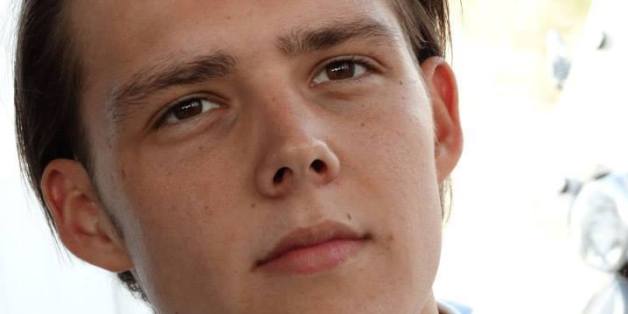
Quinn Schansman (Photo from Facebook)
Quinn Schansman, who had dual U.S.-Dutch citizenship, boarded MH-17 along with 297 other people for a flight from Amsterdam to Kuala Lumpur on July 17, 2014. The 19-year-old was planning to join his family for a vacation in Malaysia.
In a letter to Kerry dated Jan. 5, 2016, Thomas J. Schansman, Quinn’s father, noted Kerry’s remarks at a press conference on Aug. 12, 2014, when the Secretary of State said about the Buk anti-aircraft missile suspected of downing the plane: “We saw the take-off. We saw the trajectory. We saw the hit. We saw this aeroplane disappear from the radar screens. So there is really no mystery about where it came from and where these weapons have come from.”
Yet, where the missile launch occurred has remained a mystery in the MH-17 investigation. Last October, when the Dutch Safety Board issued its final report on the crash, it could only place the launch site within a 320-square-kilometer area in eastern Ukraine, covering territory then controlled by both Ukrainian and rebel forces. (The safety board did not seek to identify which side fired the fateful missile).
Meanwhile, Almaz-Antey, the Russian arms manufacturer of the Buk systems, conducted its own experiments to determine the likely firing location and placed it in a much smaller area near the village of Zaroshchenskoye, about 20 kilometers west of the Dutch Safety Board’s zone and in an area under Ukrainian government control.
In the days immediately after the shoot-down, Kerry and other senior U.S. officials pointed the finger of blame at ethnic Russian rebels who were resisting a military offensive by the U.S.-backed regime in Kiev. The Russian government was faulted for supposedly giving the rebels a powerful Buk anti-aircraft system capable of downing a civilian airliner flying at 33,000 feet.
But – in more than 18 months since the tragedy – the U.S. government has never made public its alleged evidence, while Russia has denied supplying the rebels a Buk system and the rebels have asserted that they did not possess functioning Buk missiles.
An Anguished Father
Thomas Schansman, who lives in The Netherlands, wrote to Kerry, noting that “celebrating Christmas and New Year without my son Quinn Schansman, was difficult for my family and myself” and then pressing the Secretary of State to release U.S. information about the case.
“It is my understanding, that neither the Dutch government nor the Dutch Safety Board [DSB] have officially received the radar information from the US that you referred to. It is not included in the [DSB] report and it is not in the public domain,” Schansman wrote.
“On behalf of the bereaved parents and to assist in the pursuit of justice, I would like to request that the United States provides the DSB with the radar data you referred to at the press conference and all other available and relevant information (like satellite data and infrared satellite data) that is in your government’s possession.
“I would be most grateful if the United States either directly or through NATO would publicly hand over to the Dutch Safety Board radar and satellite data of the minutes before and after the crash. … This would enable the DSB to reopen the investigation and include a chapter with this information, which is essential for a successful criminal prosecution. I count on the support of the government of the United States to find and prosecute those responsible for my son and your citizen’s death.”
Kerry has yet to reply although a U.S. consular official, Pamela J. Hack, sent Schansman a letter dated Jan. 14, expressing condolences for his son’s death and saying “We expect that you will receive a separate response … from Washington.”
A Rush to Judgment
In the days after the shoot-down, Kerry took the lead in accusing the ethnic Russian rebels (and implicitly their supporters in Moscow) of shooting down MH-17. Just three days after the tragedy, Kerry made the rounds of the Sunday talk shows to leave little doubt that the rebels and Russians were at fault.
After mentioning information gleaned from “social media,” Kerry said on NBC’s “Meet the Press”: “But even more importantly, we picked up the imagery of this launch. We know the trajectory. We know where it came from. We know the timing. And it was exactly at the time that this aircraft disappeared from the radar.”
Two days later, on July 22, 2014, the Office of the Director of National Intelligence released a “Government Assessment,” also citing “social media” seeming to implicate the rebels. Then, this white paper listed military equipment allegedly supplied by Russia to the rebels. But the list did not include a Buk missile battery or other high-powered anti-aircraft missiles.
The DNI also had U.S. intelligence analysts brief a few select mainstream reporters, but the analysts conveyed much less conviction than their superiors may have wished, indicating that there was still great uncertainty about who was responsible.
The Los Angeles Times article said: “U.S. intelligence agencies have so far been unable to determine the nationalities or identities of the crew that launched the missile. U.S. officials said it was possible the SA-11 [the designation for a Russian-made anti-aircraft Buk missile] was launched by a defector from the Ukrainian military who was trained to use similar missile systems.”
The analysts’ uncertainty meshed somewhat with what I had been told by a source who had been briefed by U.S. intelligence analysts shortly after the shoot-down about what they had seen in high-resolution satellite photos, which they said showed what looked like Ukrainian military personnel manning the battery believed to have fired the missile.
The source who spoke to me several times after receiving additional briefings about advances in the investigation said that as the U.S. analysts gained more insights into the MH-17 shoot-down from technical and other sources, they came to believe the attack was carried out by a rogue element of the Ukrainian military with ties to a hard-line Ukrainian oligarch. [See, for instance, Consortiumnews.com’s “Flight 17 Shoot-Down Scenario Shifts” and “The Danger of an MH-17 Cold Case.”]
Creating a Pariah
But, officially, the U.S. government never retracted or refined its initial claims. It simply went silent, leaving in place the widespread belief that the ethnic Russian rebels were responsible for the atrocity and that the Russian government had been highly irresponsible in supplying a powerful Buk system to the rebels.
That Western conventional wisdom convinced the European Union to join the U.S. government in imposing economic sanctions on Russia and treating President Vladimir Putin as an international pariah.
As the U.S. government clammed up and hid the evidence that it claimed to possess, it became clear that U.S. intelligence agencies lacked evidence to support Kerry’s initial rush to judgment blaming the rebels and the Russians.
Despite intensive overhead surveillance of eastern Ukraine in summer 2014, U.S. and other Western intelligence services could find no proof that Russia had ever given a Buk system to the rebels or introduced one into the area. Satellite intelligence – reviewed both before and after the shoot-down – only detected Ukrainian miltary Buk missile systems in the conflict zone.
One could infer this finding from the fact that the DNI on July 22, 2014, did not allege that Buks were among the weapons systems that Russia had provided. If Russian-supplied Buks had been spotted – and the batteries of four 16-foot-long missiles hauled around by trucks are hard to miss – their presence surely would have been noted.
But one doesn’t need to infer this lack of evidence. It was spelled out in a little-noticed Dutch intelligence report from last October citing information from the Netherlands’ Military Intelligence and Security Service (MIVD). Dutch intelligence, which as part of NATO would have access to sensitive overhead surveillance and other relevant data, reported that the only anti-aircraft weapons in eastern Ukraine – capable of bringing down MH-17 at 33,000 feet – belonged to the Ukrainian government.
MIVD made that assessment in the context of explaining why commercial aircraft continued to fly over the eastern Ukrainian battle zone in summer 2014. MIVD said that based on “state secret” information, it was known that Ukraine possessed some older but “powerful anti-aircraft systems” and “a number of these systems were located in the eastern part of the country.”
But the intelligence agency added that the rebels lacked that capacity, having only short-range anti-aircraft missiles and a few inoperable Buk missiles that had been captured from a Ukrainian military base. “During the course of July, several reliable sources indicated that the systems that were at the military base were not operational,” MIVD said. “Therefore, they could not be used by the Separatists.”
Ukrainian Motives
In other words, it is fair to say – based on the affirmative comments from the Dutch MIVD and the omissions from the U.S. “Government Assessment” – that the Western powers had no evidence that the ethnic Russian rebels or their Russian allies had operational Buk missiles in eastern Ukraine, but the Ukrainian government did have several batteries of such missiles.
It also would have made sense that Ukraine would be moving additional anti-aircraft systems close to the border because of a feared Russian invasion as the Ukrainian military pressed its “anti-terrorism operation” against ethnic Russians fighters, who were resisting the U.S.-backed coup of Feb. 22, 2014, which had ousted elected President Viktor Yanukovych, whose political base was in the east.
According to the Dutch Safety Board report, a Ukrainian warplane had been shot down by a suspected air-to-air missile (presumably from a Russian fighter) on July 16, 2014, meaning that Ukrainian defenses were probably on high alert. The Russian military also claimed that Ukraine had activated a radar system that is used to guide Buk missiles.
I was told by the intelligence source that U.S. analysts looked seriously at the possibility that the intended target was President Putin’s official plane returning from a state visit to South America. His aircraft and MH-17 had similar red-white-and-blue markings, but Putin took a more northerly route and arrived safely in Moscow.
Other possible scenarios were that a poorly trained and undisciplined Ukrainian squad mistook MH-17 for a Russian plane that had penetrated Ukrainian airspace or that the attack was willful provocation designed to be blamed on the Russians.
Whoever the culprits and whatever their motive, one point that should not have remained in doubt was where the missile launch occurred. Kerry said repeatedly in the days after the tragedy that U.S. intelligence had detected the launch and knew where it came from.
So, why did the Dutch Safety Board have to scratch its head about the missile coming from somewhere in a 320-square-kilometer area, with the Russian manufacturer placing the launch site about 20 kilometers further west? With the firing location a key point in dispute, why would the U.S. government withhold from a NATO ally (and investigators into a major airline disaster) the launch point for the missile?
Presumably, if the Obama administration had solid evidence showing that the launch came from rebel territory, which was Kerry’s insinuation, U.S. officials would have been only too happy to provide the data. That data also could be the only precise radar evidence available. Ukraine claimed that its principal radar systems were down at the time of the attack, and the Russians — while they asserted that their radar screens showed another plane closing on MH-17 — did not save the raw data.
Thomas Schansman noted in his letter to Kerry: “the DSB [Dutch Safety Board] stated that it did not receive the (raw) primary radar data from any State. …. The UN Security Council Resolution 2166 explicit[ly] requested Member States to provide any requested assistance and cooperate fully with the investigation. The (raw) primary radar data is crucial for determining cause, and for identifying and prosecuting those responsible for this heinous act.”
Conventional Wisdom
Despite the strange evidentiary gaps and the U.S. failure to present the proof that it claims to possess, the West’s “conventional wisdom” remains that either the ethnic Russian rebels or the Russians themselves shot down MH-17 and have sought to cover up their guilt. Some of this certainty comes from the simpleminded game of repeating that Buk missiles are “Russian-made,” which is true but irrelevant to the issue of who fired the missiles, since the Ukrainian military possesses Russian-made Buks.
Despite the lack of U.S. cooperation in the investigation – and the failure of Western intelligence to detect Russians or ethnic Russian rebels with a Buk battery in eastern Ukraine – the Dutch criminal prosecutors who are working closely with the Ukrainian government say they are taking seriously allegations by bloggers at a British Web site called Bellingcat who have identified Russian soldiers assigned to a Buk missile battery as prime suspects in the shoot-down.
So, the possibility remains that this Dutch-led investigation – in coordination with the Ukrainian government – will indict some Russian soldiers even as the U.S. government withholds its data that could resolve such key questions as where the fateful missile was fired.
An indictment of Russian soldiers would make for more useful anti-Putin propaganda and would be sure to produce another chorus of denunciations against Moscow from the mainstream Western media. But such a development might do little to resolve the mystery of who really shot down MH-17, killing Quinn Schansman and 297 other people aboard MH-17.
Investigative reporter Robert Parry broke many of the Iran-Contra stories for The Associated Press and Newsweek in the 1980s. You can buy his latest book, America’s Stolen Narrative, either in print here or as an e-book (from Amazon and barnesandnoble.com).
Feds framed my client, ISIS suspect’s lawyer says
RT | January 20, 2016
The attorney for one Virginia resident accused of backing ISIS says the plot was manufactured by three government informants. He claims federal agents are targeting Muslim Americans for fake terror plots, so they could take credit for stopping them.
“They had three informants in this case that were looking for people to get in trouble,” Ashraf Nubani told reporters on Tuesday, after the preliminary court hearing for Mahmoud Amin Mohamed Elhassan, arrested Friday on charges of aiding and abetting terrorism.
Elhassan, 25, is a US permanent resident of Sudanese origin. The government charges him of aiding Joseph Hassan Farrokh, 28, who allegedly wanted to join Islamic State (IS, formerly ISIS/ISIL). The federal complaint against the men says that Farrokh planned to travel via Richmond International Airport, to Jordan and then to Syria.
Nubani argued that the entire plot was cooked up by federal law enforcement, eager to present itself as doing something to stop terrorism.
“They create cases, and then they prevent them from happening,” Nubani said.
According to the complaint against Farrokh and Elhassan, three government informants were involved in the plot. One of them, identified only as CHS#3, is a convicted felon who received a reduced sentence in exchange for his cooperation. He has worked for the FBI since 2012, receiving over $10,000 in compensation.
Another informant, CHS#1, posed as an “ISIL facilitator” who told Farrokh he could help him join the terror group overseas. The third informant, identified as CHS#2, was introduced as a trusted “brother,” member of the terror group.
At a meeting in November, the informants told Farrokh he would need to swear an oath of allegiance, known as the Bay’ah, to the self-proclaimed Caliphate. It was CHS#1 who read out the oath, with Farrokh repeating after him.
Farrokh was arrested on January 15 at the Richmond International Airport, and charged with providing material support to a terrorist organization. Elhassan, a taxi driver who took Farrokh to a nearby shopping center – from which Farrokh took another cab to the airport – was arrested in Woodbridge, Virginia later in the day. Federal agents said he lied to them about Farrokh’s intentions, and charged him with aiding and abetting, as well as lying to the government.
Elhassan came from a “regular family,” Nubani said, according to the Washington Post, adding that “some people are Islamophobic, and they’re whipping up fear against Muslims.”
Investigative reporters have been pointing out for years that the majority of alleged terrorist plots foiled by the FBI involve FBI’s own informants acting as masterminds, catalysts and facilitators, leading along or entrapping suspects who are often mentally ill or socially inept.
Read more:
FBI entrapped suspects in almost all high-profile terrorism cases in US
Featured Video

Seyed M. Marandi: US-Iran War Inevitable: Kuwait and Bahrain May Fall
or go to
Aletho News Archives – Video-Images
From the Archives
Oil and the Israel Lobby
Reknowned economist M. Shahid Alam offers this excellent critique of Noam Chomsky’s defective analysis of the relative influence of Oil versus the Israel lobby over US foreign policy: … continue
Blog Roll
 Aletho News
- ICC ignored ‘very well-documented’ NATO crimes – ex-Libyan minister
- SNSC secretary dismisses US response to Iran’s conditions as ‘inadequate’
- Sanaa says Taiz roads open, secure for residents, warns Saudi forces
- Iraqi resistance group urges Saudi leadership to admit defeat, lift Yemen siege
- Trump’s Retreat: How Al-Aqsa Flood Took Down the US Empire
- Israel’s Military Actions in Lebanon Grossly Violate International Law — Lavrov
- Seyed M. Marandi: US-Iran War Inevitable: Kuwait and Bahrain May Fall
- Leaders Condemn Ansarallah Attack on Saudi Arabia While Ignoring Illegal War Against Yemen
- Leaked: Britain’s Covert Iraqi Psyops Network
- Yemeni Armed Forces Warn Airlines Against Using Saudi Airports, Exempt Mecca and Medina
- If Americans Knew
- After Oct 7, IDF policy allowed civilian casualties for even the lowest-ranking targets
- Israel’s Destruction of Southern Lebanon Intensified After the Cease-Fire
- The Last-Minute Decision That Gave Israel Its Name
- The American Conservative: How Trump Made the World Go Nuclear
- Meet the US generals and admirals advancing Israeli policy
- Opinion: Why news organizations should boycott Israel
- The Israeli witch hunt of Sami Abu Shehadeh exposes the lie of the ‘Jewish and democratic’ state
- No state has a ‘right’ to exist – least of all Israel
- Testimonies about Gaza’s civilian death toll expose Israel’s atrocities – Daily Update
- How Israel Conquered the Latin American Right
- No Tricks Zone
- New Study Suggests Large Regions Of The Pacific Ocean Have Been Cooling For The Last 80 Years
- Germany’s Green Energy Debacle: High Energy Costs Force Kahla Porzellan to Close After 182 Years!
- New Study: 50 Years Of The Most Aggressive ‘Net Zero’ Policies Can Only Affect The Global Climate By 0.03°C
- US September “Heat” Was No Record…Many Records Set Decades Ago
- Latest European Green Energy Debacle; Portugal’s Largest Flagship Solar Park Insolvent!
- Green Energy Debacle: German Expert Professor Fritz Vahrenholt Warns Of Severe Economic And Social Consequences
- Two More Paleo Reconstructions Affirm Meters-Higher Sea Levels Across Ireland, Brazil 7000-6000 Years Ago
- New Study: Earth And Venus Surface Warmth Largely Explained By Convection And Lapse Rate, Not CO2 Or Radiation
- 2025 Nature Paper Claiming Worsening Global Drought Gets RETRACTED …Heavily Flawed
- New Study: ‘Global Drought Shows No Detectable Recent Acceleration Under Climate Warming’

