Head of Crimean Tatars public organization criticizes Ukraine’s policy
TASS | September 19, 2015
The Crimean Tatar people got an opportunity to restore their usurped rights only after the March 2014 referendum when Crimea reunified with Russia, chairman of Crimean public organization Milli Firka (People’s Party) Vasvi Abduraimov said Friday in the UN Office in Geneva.
Speaking at an information meeting of nongovernmental organizations on the topic of rights and freedoms violations in Ukraine, which took place on the sidelines of the 30th session of the UN Human Rights Council, Abduraimov recalled that in early 1990s Russia adopted laws on exoneration of repressed peoples and victims of political repressions.
But during the 23-year-stay as part of Ukraine, Crimean Tatars “were unable to use opportunities granted by Russian laws.” “And only after March 2014, we got all opportunities for restoration of all usurped rights as an ethnic community,” he said.
“Ukraine officially declared itself a unitary state and in all possible ways neutralized and universalized ethnic and religious communities for its so-called ‘Ukrainianness’,” Abduraimov said.
“The apotheosis of that policy was the statement by President Viktor Yushchenko that the state doctrine is to build one country, one nation with one language and one faith,” he said. “Now everyone sees what that mindless policy of universalization, when fundamental human rights are infringed upon, has led to.”
“Kiev-style universalization, with total corruption of officials at all levels, when not law and the people rule but 20 oligarchs, could not but lead to a disaster, and it happened,” Abduraimov said.
He added that “the Ukrainian state currently only exists de jure, and not de facto.”
The Milli Firka chairman underscored that in 1954 Crimea was handed from the Russian Soviet Federative Socialist Republic to the Ukrainian Soviet Socialist Republic “absolutely illegally”, as Crimean Tatars in that period “were rightless in exile.” “And no one then asked us or Crimean residents whether they want Crimea to be handed to Ukraine,” he said.
Abduraimov said the rights of all Crimean residents are now violated by Western countries who imposed restrictions for the peninsula which in particular relate to business, foreign trips and tourism.
Due to those restrictions, Crimeans “are unable to conduct economic activity in a normal way.” In a conversation with a TASS correspondent, Abduraimov assessed Western sanctions as “the clearest manifestation of a double standards policy.” “Declaring sanctions against the policy of the Russian Federation, they actually tie the hands and feet of ordinary people, preventing them from moving freely and doing business,” he said.
The Republic of Crimea and Sevastopol, a city with a special status on the Crimean Peninsula, where most residents are Russians, refused to recognize the legitimacy of authorities brought to power amid riots during a coup in Ukraine in February 2014.
Crimea and Sevastopol adopted declarations of independence on March 11, 2014. They held a referendum on March 16, 2014, in which 96.77% of Crimeans and 95.6% of Sevastopol voters chose to secede from Ukraine and join the Russian Federation. Russian President Vladimir Putin signed the reunification deals March 18, 2014.
Despite Moscow’s repeated statements that the Crimean referendum on secession from Ukraine was in line with international law and the UN Charter and in conformity with the precedent set by Kosovo’s secession from Serbia in 2008, the West and Kiev have refused to recognize the legality of Crimea’s reunification with Russia.
Crimea had joined the Russian Empire in 1783, when it was conquered by Russian Empress Catherine the Great.
In the Soviet Union, Crimea used to be part of Russia until 1954, when Nikita Khrushchev, the first secretary of the USSR’s Communist Party, transferred it to Ukraine’s jurisdiction as a gift.
With the collapse of the Soviet Union in 1991, Crimea became part of newly independent Ukraine and remained in that capacity until March 2014, when it reunified with Russia after some 60 years as part of Ukraine.
According to the Crimean and Ukrainian statistics bodies, as of early 2014, Crimea had a population of 1,959,000 people; Sevastopol has a population of 384,000 people.
Work to integrate the Crimean Peninsula into Russia’s economic, financial, credit, legal, state power, military conscription and infrastructure systems has been actively underway since Crimea acceded to the Russian Federation.
Israeli forces targeting Palestinian children in al-Khalil (Hebron)
International Solidarity Movement | September 20, 2015
Everyday, Palestinian families get attacked by Israeli forces in their own homes. Sometimes they bang on the door in the middle of the night, scaring children and adults, ransacking the house. On some of these raids, both during the night and in daytime, Israeli forces randomly arrest family members and take them to an unknown destination without any reason.
Last night, Israeli forces entered the Palestinian market in the Old City of al-Khalil (Hebron) and entered a Palestinian family home where they kidnapped an 8-year old girl and arrested 3 more young men. All of them were walked towards the military base in Shuhada street, but then kept behind a fence and military gate for more than 15 minutes before being released. No reason was given for the random arrest.
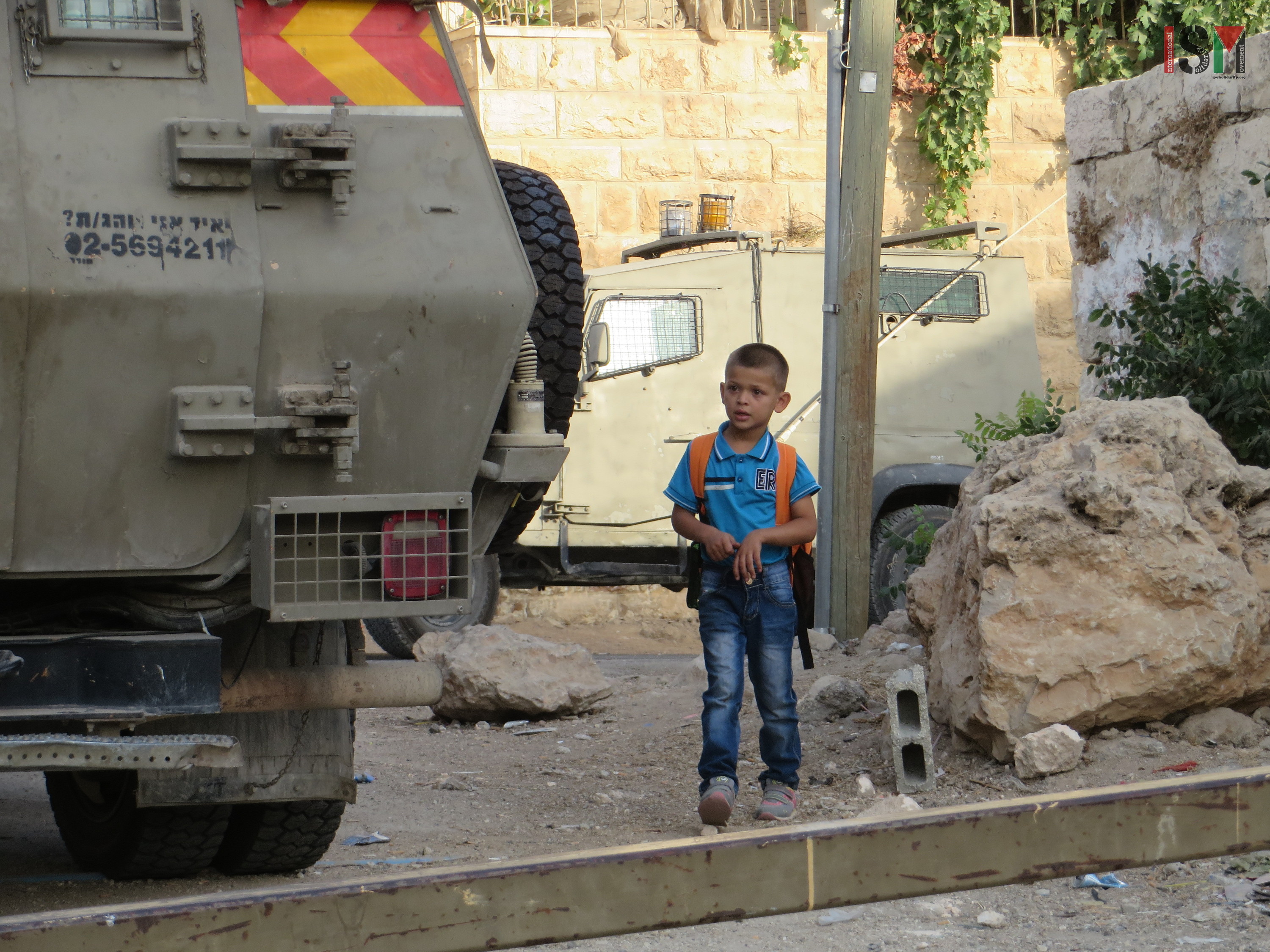
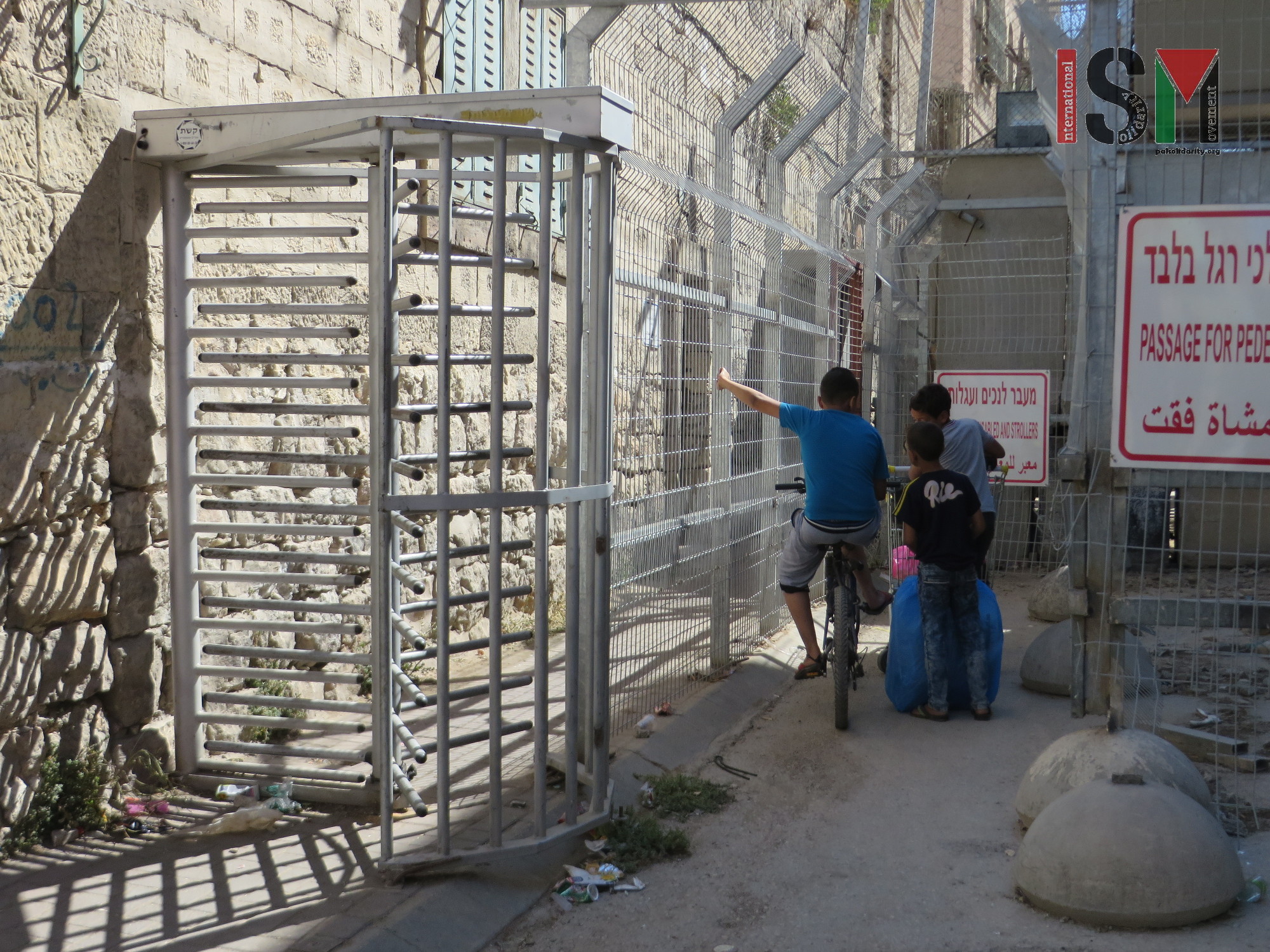
Even the way to school can be a dangerous and perilous journey for children in al-Khalil (Hebron). Having to pass through sometimes multiple checkpoints to get to school, children as young as 4 years old have to pass by heavily armed Israeli soldiers. As if the ubiquitous military presence weren’t scary enough, children are subjected to bag-searches, frisking, detainment and arrests. With Israeli forces using tear gas on children on their way to school and back home after a long school-day, children also have to duck away from tear-gas grenades shot towards them and navigate past clouds of tear-gas lingering on in the alleys.
Arresting children under the age of 11 is illegal even under Israeli law, as it is considered to be too traumatizing and detrimental to a child’s well-being, regardless of the accusations brought forward against a child. However, Palestinian children are detained, frisked, body-searched and arrested by Israeli forces on an every-day basis. As this illegal practice does not result in any consequences for the soldiers or policemen at all, Palestinian children are constantly at risk of maltreatment, abuse and denial of their most basic human rights.
David Hirsh vs. Jeremy Corbyn
David Hirsh (left) and Jeremy Corbyn (right)
By Gilad Atzmon | September 19, 2015
In an open letter published in the Jewish Chronicle, notorious hard core Zionist David Hirsh advises the opposition leader what to do if he seeks ‘the trust of Jewish voters.’ As usual, Hirsh has produced an obscure document that reveals little other than the delusional level of Judeo-centrism symptomatic of Hirsh and his ilk.
Hirsh lists Corbyn’s ‘crimes:’ “You worked for Press TV, the Iranian regime’s propaganda channel and you recommend Russia Today, Putin’s version. You appear in cosy pictures with Hugo Chavez, with Hamas, with Gerry Adams (days after the Brighton bombing) and with Hezbollah. You said that Nato is the aggressor in Ukraine and that Daesh is no worse than the USA. You were the national chair of Stop the War even when it appeared to endorse the killing of British soldiers. You celebrated the anniversary of the Iranian revolution.”
Yet, despite this roster, Corbyn won the Labour leadership in a landslide victory that left the Blairites and the usual Sabbos Goyim far behind, isolated and humiliated. How did this happen? Simple, for the vast majority of Labour members, Corbyn’s ‘crimes’ were not a problem, quite the opposite. Labour party members made Corbyn their leader because they agree with the rationale behind his arguments and affiliations. They chose Corbyn as their leader because they are not happy with the Jewish Lobby hijacking their country’s politics.
Hirsh cites Fascism as a prime concern; but you would expect a Jewish academic to know what Fascism was and is. “You don’t have to be for starting a war with Daesh and Assad; but you do have to make it clear that in principle you side with those struggling against fascism and for democracy.” To this Jewish academic both Asad and Daesh are ‘Fascists.’ I guess that within the solipsistic kosher universe, Fascism is basically everything that Jews hate. But the true definition of Fascism is slightly more nuanced. Fascism is a pretty clear worldview. It is secular, nationalist, socialist and led by a strong government that is often authoritarian. Daesh, or any other Islamic system of government, can never be Fascist by definition.
The fact that Hirsh doesn’t understand Fascism is a little surprising, but let us see what anti Semitism means to the Jewish academic. “There has always been a temptation to imagine Jews as powerful, selling the oppressed to the exploiters for silver. The image of Jews as enablers of injustice, twisters of words and doers of evil runs deep.”
I don’t see how Corbyn is involved with any of the above, and, from an intellectual perspective, I can’t understand why is it more ‘conspiratorial’ to say that Jews are ‘too powerful’ than to claim that Jews are not powerful at all. The question of whether Jews are powerful can easily be measured statistically and demographically. However, if Jewish power is defined as the power to prevent us from looking into Jewish power then the ‘anti Semitism slur’ is the means used to effectuate such power.
“Antisemitism” Hirsh continues, “mobilises around vile myth instead of around rational critique.” I am puzzled again, is it really ‘irrational’ to examine or criticize the politics and culture of the most powerful people in our society? Was Max Weber’s search into the role of Protestants in capitalism irrational? Would examination of the cultural and ideological roots of the British aristocracy be irrational? Zionism was a promise to make Jews like all other people. At a minimum, Zionist Jews should insist that Jewish culture and politics be subject to the same criticism and scrutiny as other cultures.
Hirsh wants Corbyn to show that he understands “the distinction between criticism of Israel and antisemitism.” But this is a false distinction. The Jewish Chronicle that published Hirsh’s letter and rallied against Corbyn for two months claimed to speak in the name of the “majority of British Jews.” But the Jewish Chronicle is not exactly an Israeli paper, it is actually a Jewish paper. The BOD that also claims to represent British Jewry and was highly critical of Corbyn is not an Israeli body either, it is a British Jewish institution. Hirsh’s false distinction ignores the fact that Israel actually defines itself as the Jewish State and it seems that the vast majority of Jewish institutions support Israel and its existence as the Jews only State. The distinction between Jews and their state is far from obvious. In fact, the only person to offer a useful tool to address the topic by making categorical distinctions among Jews, Judaism and Jewishness is yours truly (The Wandering Who?, Zero Books).
Hirsh’s missive seems to express the wish that Corbyn becomes a Zionist Jew like Hirsh: “you say you hate antisemitism. So support those who fight for peace, not Hamas and Hezbollah who fight for victory over the Jews rather than peace with Israel.”
Corbyn won the Labour leadership in spite of a vile Jewish campaign against him run by the Jewish Chronicle and other Jewish outlets. Corbyn won the Labour leadership in part because he sees friends in Hamas and Hezbollah.
Seemingly, Hirsh wants to reinstate to role of the Jews in the party. “At the moment, lots of Jews feel locked out of the party; both the Labour Party and also the carnival of joy and optimism. Your new Labour Party does not feel like a safe place for Jews.”
I suppose that Hirsh may be correct in his observation. But Corbyn has nothing to do with it. The Jewish sense of rejection is clearly self-inflicted and a direct outcome of the usual pre-traumatic stress syndrome (Pre-TSD). British Jewish community leaders may want to look in the mirror and admit to themselves that once again they have managed to corner themselves.
Hirsh writes to Corbyn “you can bring lots of us back,” but he knows that this is a lie. Corbyn cannot bring anyone back. The Jewish hate fest against Corbyn and Labour is not going to stop or fade. However, Corbyn’s victory does indicate a sharp decline of Jewish power. Jewish history teaches us that when Jewish power declines, it happens very fast and the consequences are often tragic. Let us hope that this time things will be different, but for that to happen Jews must learn to self reflect. Instead of telling Corbyn what to do in order to appease the Jews, Hirsh and Jewish community leaders ought to ask themselves why the opposition to Jews is growing. If Jewish community leaders fail to find the answers, I would be happy to make my way to Golders Green and give them a brief lecture in exchange for a bag of shekels.
Is Europe Complicit in the Plundering of Western Sahara?
By Johannes Hautaviita | teleSUR | September 17, 2015
Western Sahara, formerly a Spanish colony, has been occupied by Morocco since 1975. Although the decolonization of Western Sahara has been on the U.N.’s agenda for 40 years, Morocco (together with its allies) has managed to freeze this process, while further entrenching its hold of the occupied territory.
One of the reasons behind Morocco’s aggression and annexation was Western Sahara’s abundance of natural resources, and ever since the occupation began, Morocco has plundered these resources for economic profit. Western Sahara has one of the largest phosphate reserves in the world and is famous for its rich fishing waters, perhaps the richest along the African coast. Furthermore, the prospects for locating oil and gas deposits has attracted exploration in the territory.
In a recent development, which is all too familiar, an Irish oil company San Leon Energy began drilling south of Morocco’s border, on the north-western coast of occupied Western Sahara. For the oil drilling – and other resource extraction – to have legal validity, however, it ought to be carried out with the consent and in the interest of the occupied population. But not only has the local population of Western Sahara not been consulted, the Sahrawi people have explicitly stated their opposition to San Leon’s activities.
In a letter to the U.N. Secretary-General Ban Ki-moon, the President of the Sahrawi Arab Democratic Republic (SADR) Mohamed Abdelaziz stated, “We urgently request that the Secretary-General condemn these activities, which are in clear violation of international law, and call on Morocco and complicit foreign companies to stop the illegal exploitation of the natural resources of Western Sahara.”
The SADR’s position echoes that of the U.N. and the international community. In 2002, the Under-Secretary-General for Legal Affairs Hans Corell wrote, that if the exploitation of natural resources “were to proceed in disregard of the interests and wishes of the people of Western Sahara, they would be in violation of the international law principles applicable to mineral resource activities in Non-Self-Governing Territories.”
Contradicting countless U.N. resolutions and the clearly stated position of the SADR, San Leon claims that its “operations are in keeping with our obligations under international law and work for the betterment of all persons in the Southern Provinces of Morocco.” “Southern Provinces” is the term that the Moroccan government uses for Western Sahara.
San Leon is far from the only foreign actor engaged in legally dubious economic activity in occupied Western Sahara. The most profitable economic activity for Morocco in the occupied territory is the phosphate industry. A recent study by the watchdog organization Western Sahara Resource Watch identified nine companies that imported phosphate originating in Western Sahara in 2014 alone. The major importers were companies based in Canada and Lithuania.
Perhaps the most controversial act of the EU with regard to Western Sahara was the re-signing of a fisheries agreement with Morocco in 2013. In 2011, the European Parliament had suspended the agreement. In his speech before the parliament, professor of international law Pål Wrange stated, that were the fisheries agreement extended “it will make the EU and its member states further liable for a violation of international law, namely as a recognition of and assistance to serious breaches of international law by Morocco.”
Under the renewed fisheries agreement Morocco, in return for an annual payment of US$62 million (€40 million), European fishing vessels are granted licenses to fish in its waters, including in Western Sahara. This is legally questionable – as noted by Wrange – because it indirectly accepts Morocco’s sovereignty over Western Sahara. In 2014, the representatives of the Sahrawi people demanded an annulment of the fisheries agreement and took their case to the European Court of Justice.
A somewhat similar dynamic is at play with regard to Israel’s settlement enterprise in the Occupied Palestinian Territory. While taking the position that Israel’s settlement construction in the West Bank is “illegal under international law, constitutes an obstacle to peace and threatens to make a two-state solution impossible”, the EU’s continued trade in settlement produce supports the sustenance of the settlements. Palestinian human rights organization Al Haq even maintains that, “Without the economic support generated by trade with international stakeholders, the very existence of settlements, in particular in the Jordan Valley area, would be seriously threatened.”
It seems that the EU continues to prioritize its economic and strategic interests over international law in its bilateral relations with Morocco. The EU’s and Morocco’s annual trade amounts to nearly US$46 billion (€30 billion), accounting for more than 50 percent of Moroccan trade altogether. In fact, the EU is the biggest trading partner of both Morocco and Israel. In both cases, the EU’s economic leverage is exceptional, and its ability to exert pressure on the occupying parties, if it so wanted, is considerable.
Nearly 2,000 Palestinian children killed since 2000: Rights group
Press TV – September 17, 2015
An independent non-governmental organization (NGO) says nearly 2,000 Palestinian children have lost their lives at the hands of Israeli military forces and illegal settlers over the past 15 years.
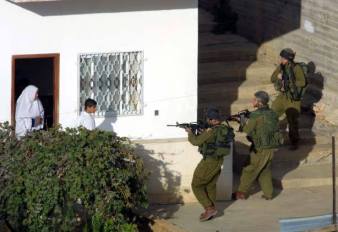 Defense for Children International-Palestine (DCIP), in a report released on Thursday, criticized the Israeli regime’s policy of land expropriation and consistent development of illegal settlements in the occupied East al-Quds (Jerusalem) and West Bank, warning that such practices are placing Palestinian children and their families against “expanding and often violent Israeli settler communities.”
The Geneva-based NGO further noted that Israel’s ongoing settlement expansion activities are increasingly creating a “hyper-militarized environment” for Palestinian children, where they are highly exposed to disproportionate violence from both Israeli forces and settlers.
The DCIP said Israeli soldiers killed 12 Palestinian children in East al-Quds and West Bank in 2014, and the majority of the fatalities were caused by ammunition.
It highlighted that there is “no evidence that any of the children killed in the West Bank posed a direct threat to Israeli troops or settlers.”
The rights group also revealed that 553 of the Palestinian children killed since 2000 died as a direct result of the Israeli military’s onslaught against the impoverished Gaza Strip in summer 2014, noting that around 68 percent of the victims were under the age of 12.
Israel started its military campaign against the impoverished Gaza Strip in early July 2014. The offensive ended on August 26, 2014. Nearly 2,200 Palestinians, including 577 children, lost their lives in the Israeli war. Over 11,100 others – including 3,374 children, 2,088 women and 410 elderly people – also sustained injuries.
More than half a million Israelis live in over 120 illegal settlements built since Israel’s occupation of the Palestinian territories in 1967.
Palestinians are seeking to create an independent state on the territories of the West Bank, East al-Quds, and the besieged Gaza Strip and are demanding that Israel withdraw from the occupied Palestinian territories.
Polls Show Syrians Overwhelmingly Blame U.S. for ISIS
By Eric Zuesse | Global Research | September 18, 2015
The British polling organization ORB International, an affiliate of WIN/Gallup International, repeatedly finds in Syria that, throughout the country, Syrians oppose ISIS by about 80%, and (in the latest such poll) also finds that 82% of Syrians blame the U.S. for ISIS.
The Washington Post summarized on September 15th the latest poll. They did not headline it with the poll’s anti-U.S. finding, such as “82% of Syrians Blame U.S. for ISIS.” That would have been newsworthy. Instead, their report’s headline was “One in five Syrians say Islamic State is a good thing, poll says.” However, the accompanying graphic wasn’t focused on the few Syrians who support ISIS (and, at only one in five, that’s obviously not much.) It instead (for anyone who would read beyond that so-what headline) provided a summary of what Syrians actually do support. This is is what their graphic highlighted from the poll’s findings:
82% agree “IS [Islamic State] is US and foreign made group.”
79% agree “Foreign fighters made war worse.”
70% agree “Oppose division of country.”
65% agree “Syrians can live together again.”
64% agree “Diplomatic solution possible.”
57% agree “Situation is worsening.”
51% agree “Political solution best answer.”
49% agree “Oppose US coalition air strikes.”
22% agree “IS is a positive influence.”
21% agree “Prefer life now than under Assad.”
Here are the more detailed findings in this poll, a poll that was taken of 1,365 Syrians from all 14 governates within Syria.
The finding that 22% agree that “IS is a positive influence” means that 78% do not agree with that statement. Since 82% do agree that “IS is US and foreign made group,” Syrians are clearly anti-American, by overwhelming majorities: they blame the U.S. for something that they clearly (by 78%) consider to be not “a positive influence.”
Here is the unfortunately amateurish (even undated) press release from ORB International, reporting their findings, and it links directly to the full pdf of their poll-results, “Syria Public Opinion – July 2015”. Though their press-operation is amateurish, their polling itself definitely is not. WIN/Gallup is, instead, the best polling-operation that functions in Syria, which is obviously an extremely difficult environment.
WIN/Gallup and ORB International had previously released a poll of Syria, on 8 July 2014, which reported that, at that time, “three in five (60%) of the population would support ‘international military involvement in Syria’. In government controlled regions this drops to 11% (Tartus), 36% (Damascus) and rises in those areas currently largely controlled by the opposition – Al Raqqah (82%), Aleppo (61%), Idlib (88%).” In other words: The regions that were controlled by Islamic jihadists (Sunnis who are backed by Saudi Arabia, Qatar, and the United States) were, a year ago, overwhelmingly wanting “international military involvement in Syria.” They wanted to be saved from ISIS. Government-controlled regions didn’t feel the need for international involvement. Syrians were, apparently, at that time expecting “international military involvement” to be anti-jihadist, not pro-jihadist, as it turned out to be (which is the reason why the current poll is finding rampant anti-Americanism there).
This earlier poll further found that, “There is also evidence to suggest that Bashar al-Assad’s position is strengthened from a year ago.”
So, apparently, the more that the war has continued, the more opposed to the U.S. the Syrian people have become, and the more that they are supporting Bashar al-Assad, whom the Syrian people know that the U.S. is trying to bring down.
Investigative historian Eric Zuesse is the author, most recently, of They’re Not Even Close: The Democratic vs. Republican Economic Records, 1910-2010, and of CHRIST’S VENTRILOQUISTS: The Event that Created Christianity.
Copyright © Eric Zuesse, Global Research, 2015
How did Rawabi get its water?
By Jan Selby | MEMO | September 17, 2015
In February this year, the new Palestinian town of Rawabi at last managed to secure a water supply, after several years of acrimonious negotiations with the Israeli and Palestinian authorities. With the greatest obstacle to populating Rawabi overcome, the first 200 families of this planned “shining city on a hill” have now finally started moving in.
Rawabi’s water woes have received extensive coverage in the Israeli, Palestinian and international media, not least owing to a campaign instigated by the town’s owners, the Bayti Real Estate Investment Company. But why did Rawabi encounter such problems? And how did they eventually get resolved? For all the media coverage, the reasons are not well known.
When I meet Amir Dajani, Deputy Manager Director of Bayti in his Rawabi office, he reserves most of his anger for the Palestinian Authority. “No one did anything to support Rawabi,” he says of the PA. He recognises, of course, that Israel’s occupation poses huge challenges to a billion-dollar investment project, but about these he is pragmatic. The contrast between his visceral anger at the PA and his cool realism about the occupation is striking.
For all that, it is Israeli demands and an Israeli-drafted document which were the ultimate reasons for the hold-up. Under Article 40 of the 1995 Oslo II Agreement – which Palestinian negotiators were simply handed and accepted when they should have known better – all new water facilities in the West Bank require prior approval from a Joint Water Committee, meaning that Israel has complete veto rights over Palestinian water developments in the occupied West Bank.
Worse still, while Article 40 did not directly mention water projects for Israeli settlements, it did not preclude them from being brought to the Committee either. Israel exploited this ambiguity by making its approval of Palestinian water projects conditional on Palestinian approval of settlement water infrastructures. For fifteen years, the PA’s pragmatic policy response – pursued with the full knowledge of Presidents Abbas and Arafat – was to consent, however unhappily, to this blackmail and approve every single water facility proposed by Israel for its settlements.
This changed only in 2010, when the Palestinian Water Authority and later the PLO Executive Committee decided that they would no longer approve settlement water infrastructures. The result has been five years of deadlock within the Committee; the PA refuses to approve settlement water projects, and Israel in turn refuses to approve new wells and pipelines for Palestinian communities.
Until February, this included Rawabi. But then, following a media campaign plus a series of high-profile interventions – including from Israeli President Rivlin – and a very public disagreement between the Coordinator of Government Activities in the Territories (COGAT) head, Major-General Yoav Mordechai and Infrastructure Minister Silvan Shalom, the issue was finally decided by Benjamin Netanyahu. Rawabi became an exception, the site of the only new West Bank Palestinian water infrastructure to have been formally approved by Israel since August 2010.
Contrary to reports, however, this was neither a “goodwill gesture” nor a function of a new era of Israeli “water generosity”; simultaneous to approving Rawabi’s connection, Mordechai and Netanyahu also unilaterally approved a handful of settlement water projects (one source has told me “four or five”, another says “six or seven”). These projects included, for instance, a new water supply line for Tekoa in the Gush Etzion settlement bloc, supposedly needed because of declining groundwater levels in the Herodian area from which Tekoa is currently supplied.
Rather than an act of generosity, approval for Rawabi’s water was an internal Israeli quid pro quo. The Israeli government bowed to domestic and international pressure to provide the new Palestinian town with water, but could only square this with itself by simultaneously accommodating – nay, supporting – the country’s illegal settlements, by providing them with even more.
When I discuss this with Baruch Nagar of Israel’s Water Authority, he offers two justifications: that these settlement projects were “emergencies”; and that the Palestinian Water Authority, by refusing to approve settlement facilities, is acting unreasonably and is disrespecting Article 40. “We can’t understand why they stopped,” he says, as if the PA was just behaving irrationally. “We respect the water agreement,” he claims, “the Palestinians do not.”
This, though, is specious. Israel’s unilateral approval of settlement water facilities is a clear violation of Article 40, and invoking the false label of “emergency” does not alter this. There are scores of Palestinian communities across the West Bank which have no water in their pipes for days, weeks, even months on end each summer, and plenty of others which are not connected at all or whose small water collection systems are routinely demolished by the Israel Defence Forces. If “emergency” is the standard, then the PA would have every right – but not of course the power – to implement water projects unilaterally across the West Bank.
Moreover, no amount of deadlock within the Water Committee gives Israel the right to decide which new water facilities should be allowed to go ahead, and which not. However, this typifies Israel’s approach to the vestiges of the Oslo agreements, which can be summed up as bilateral “cooperation” when possible (i.e. when the Palestinians are compliant), unilateral violations whenever deemed necessary.
At least, though, Rawabi got its water supply, at least for now. For the other far-from-minor detail about this case is that Rawabi’s new water connection is only temporary; it will only supply 300 cubic metres of water per day, sufficient for the town’s first 5,000 residents and the next eighteen months. Thereafter, Rawabi will need another source, which is still being negotiated with Israel and the PA. Expect another raft of headlines about Rawabi’s water problems in a year or so.
Jan Selby is Professor of International Relations at the University of Sussex, UK
Burning cane and planting corn to reclaim territory in southwestern Colombia
By Lisa Taylor – NACLA – 09/15/2015
Sunlight filters through the trees and whiffs of vegetable beef stew float through the air as dozens of women, men and youths of the Nasa indigenous people congregate together in the southwestern Colombian province of Cauca once a month for a “minga.” During the minga – a type of communal work found throughout the Andes – approximately one thousand people clear hundreds of hectares of sugarcane with machetes and controlled fires.
Replacing the “green desert” of monoculture sugarcane with their own crops is part of the “Liberation of Mother Earth” movement initiated in 2005 by the Nasa. Cauca is one of the most militarized provinces in the country, and indigenous communities have been heavily affected by violence from armed groups including state security forces, paramilitaries and guerrillas. After suffering displacement and the exploitation of their lands by multinational corporations, the Nasa are reclaiming their ancestral territory, sowing subsistence crops including corn, beans, plantains and yucca.
“The Liberation of Mother Earth is a strategy for the defense of life; it’s the protection of life. It’s for our community well-being and so, convinced by this ancient struggle, we are here today,” said one representative attending the July minga from the indigenous reservation of Jambaló.*
The newest phase of the Liberation movement began last December when over 3000 Nasa began peacefully occupying seven sugarcane farms in three different municipalities (Corinto, Caloto and Santander de Quilichao) in northern Cauca. On these farms, they discovered various indigenous artifacts buried in the land, relics from previous generations of Nasa who had been displaced over the last century by armed groups and corporate interests. Statistics from the United Nations indicate that 3.1 million internally displaced persons in Colombia have abandoned an estimated 4 million hectares since 1985.
Under a 2000 ruling by the Inter-American Commission on Human Rights (IACHR), certain lands currently occupied by sugarcane farms are legally owed to the Nasa people after the 1991 El Nilo massacre, when 20 indigenous people were assassinated by members of the national police and other unknown armed actors.
The Colombian state agreed to title 15,663 hectares to the Nasa people as part of a collective reparations deal negotiated by the Inter-American Commission on Human Rights (IACHR). After a delay of more than ten years, the government turned over most of the land, but more than half of it is either infertile or located in protected forest reserves. The government argues that as the price of fertile land in the region has tripled in the intervening ten years, the national budget cannot cover purchasing land currently dedicated to sugarcane for reparations owed the Nasa.
When the government failed to fulfill the reparations agreement and guarantee their security – after El Nilo, three similar massacres occurred in 2001 nearby in the River Naya, Gualanday and San Pedro – the Nasa decided to take back their lands independently. They demand at least 20,000 hectares of land for their survival, adequate agrarian policy reform and special economic and social development programs tailored for indigenous peoples, as called for by Colombian government Decree 982 issued in 1999.
“We’re here because it is our right, but also because of necessity,” a representative from the Regional Indigenous Council of Cauca (CRIC) said. “We don’t have anywhere to sow. . .We’re not going to wait for the government to say, ‘here, have this,’ so bit by bit we’re going to go about achieving our own goals and liberating Mother Earth, liberating her from all monoculture crops.”
According to the Association of Indigenous Councils of Northern Cauca (ACIN), 56 percent of children in the region suffer from hunger or malnutrition and 6,000 of 25,000 local families have inadequate land for survival. Meanwhile, less than one percent of Colombia’s population owns 62 percent of all land, and eight sugar company giants possess over 330,000 hectares (about 1274 square miles) of local land which is planted horizon to horizon with sugarcane, used principally to produce foodstuffs, ethanol and molasses for both domestic consumption and export.
The Nasa have concentrated their occupation on the fields owned by INCAUCA, the multinational sugar company owned by Colombian billionaire Carlos Ardila Lülle. They contend his company represents a “transnational model of plunder and agribusiness.” The Nasa criticize this as an unsustainable model of development that depends upon the cultivation of monoculture crops (sugar, bananas, palm oil and flowers) for export.
“The story of capital and of those who accumulate capital is a project of death that ends up destroying all nature, including the lives of human beings. For us, the land is our mother and they are committing a crime against her,” wrote the ACIN in a 2010 statement.
Artisanal sugarcane production arrived in Cauca in 1538 after the Spanish invasion, and by the beginning of the 19th century, the first modern sugar mill was installed by the company Manuelita. Later railway expansion and mechanization led to a production boom in the 1930s and 1940s – a boom that corresponds with the first waves of indigenous displacement.
Although the Nasa’s recent land occupation is peaceful, since last December at least 143 indigenous people have been injured, 37 seriously, by firearms, tear gas, rubber bullets and confrontations with state security forces. On April 10, 19-year old indigenous guard Guillermo Pavi was killed after he was reportedly shot by the Colombian riot police (ESMAD) and the army. With the road blocked, his injuries proved fatal because his companions could not get him to a hospital.
On May 28, riot police attempted to evict people with tanks, tractors and tear gas, announcing over a megaphone that “this one will be worse than El Nilo.” State security forces have also repeatedly burned and destroyed newly planted crops, recently decimating 580 hectares of corn, beans, yucca and plantains in mid-June and returning for a second round of destruction in July.
The Nasa have received threatening letters, phone calls and text messages from neo-paramilitary groups such as the Aguilas Negras that falsely accuse them of being affiliated with guerrilla groups, which still have a strong presence in the region.
“The Aguilas Negras intelligence has a hundred names of people who are doing harm on the farms . . . who support the narco-terrorists [the FARC . . .] It won’t be a surprise when dismembered bodies appear among those Indian sons-of-bitches,” read one written threat.
Despite the attacks, the Nasa remain committed. Maintaining a constant presence and planting crops, they reclaim their territory day by day, hectare by hectare, advocating against the imposition of monoculture agriculture and extractive economic models, arguing that these do not lead to real development but rather the exploitation of the earth and people that can only be ended with the Liberation of Mother Earth.
“The truth is that today nature ought to be quite content because she has begun to feel our presence again,” said a CRIC representative. “Hopefully as soon as possible, we won’t see all of this sugarcane but rather we’ll see fruit, shade, water . . . This is the challenge each one of us has. It’s not easy but it’s not impossible.”
*Interviewees are unnamed at their request to emphasize the movement’s collective nature and because of concerns for their safety.
Lisa Taylor works for Witness for Peace in Colombia.
Al Aqsa Under Attack: The NY Times Blames Its Youthful Defenders
By Barbara Erickson | TimesWarp | September 14, 2015
Tensions are running high at Jerusalem’s Al Aqsa Mosque, and The New York Times can tell us where to place the blame: It’s not the fault of extremists who plan to destroy the landmark, according to the Times, nor is it recent Israeli moves to restrict Muslim access to the site; it is the fault of hot-headed Palestinian youth.
In a story today and in a similar article last July Isabel Kershner points directly to these young people as the source of trouble in clashes with police. This is how the police have framed the issue, and Kershner gives prominence to their claims.
The Times story contrasts with reports from international media and Palestinian sources. From these accounts we learn that the youths were volunteer guards helping defend the holy site against Israeli incursions and that police stormed the mosque while Muslims were inside, beating and injuring worshippers and damaging prayer rugs and other articles. We also learn that these actions prompted even Arab nations on good terms with Israel to speak out in protest.
Kershner quotes Palestinian Liberation Organization secretary Saeb Erekat and a Hamas spokesman who condemn the Israel invasion of the mosque, but she fails to tell readers that both Jordan and Egypt, two nations friendly to Israel, also protested, along with the Arab League and the United Nations representative for peace talks.
The Al Aqsa Mosque has stood at its site in Jerusalem for a thousand years and is revered by Muslims everywhere, but Jews also consider the area as holy ground, where the Second Temple once stood. Extremists openly call for the destruction of both Al Aqsa and the even more ancient Dome of the Rock, which dominates the Jerusalem skyline. They plan to raze the edifices and replace them with a Third Temple.
The Times story fails to acknowledge these real threats that cause anguish among the followers of Islam. It has also neglected to report on Israel’s numerous efforts to restrict Muslim prayer at the mosque and the increasing presence of Jewish worshippers, who are protected by troops when they visit the compound.
Muslims know that another holy site, the Ibrahimi Mosque in Hebron, has been divided between a Muslim and a Jewish section, and that Israeli officials often choose to ban Muslims from entering altogether. This month, worshippers have been excluded from the Hebron mosque for six entire days.
Kershner reports that Muslims charge Israel with plans to divide the Al Aqsa compound, but she says that this is “an assertion vehemently denied by Israel.” Missing from her article is the history of Hebron and the restrictions Israeli authorities frequently impose on Muslim worshippers in both sites.
In recent weeks, for instance, Israel has prevented women from entering the Al Aqsa area, retained the identify cards of worshippers, allowed Jewish extremists to enter the mosque compound for “tours,” restricted the entry of students attending schools in the Al Aqsa compound and confiscated land in an Islamic cemetery next to the mosque.
After the latest incursion, the director of the mosque compound, Sheikh Omar al-Kiswani, said that Israel occupation authorities “have imposed their sovereignty over [the mosque compound] by power of force.” Israel controls who enters and exists, he said, and officials use force against anyone who challenges them.
This is a cry of alarm from a site revered by millions of Muslims throughout the world, but it found no mention in the Times. Instead, we receive the Israeli spin on this tragic saga as the newspaper glosses over the expansionist aims of a Zionist state.
‘Israel’s goal – expulsion of Palestinians and non-Jews’
RT | September 14, 2015
Israel is moving gradually to try to displace and expel Palestinians and every trace of Palestinians from wherever it can, says Paul Larudee from the Free Palestine movement.
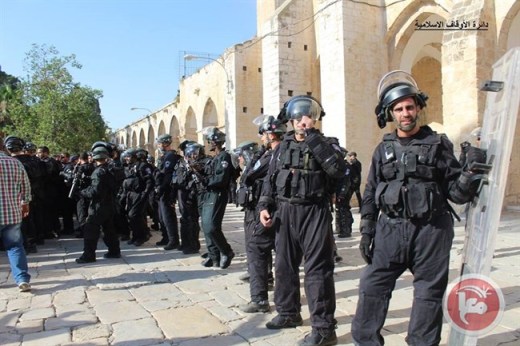
Israeli forces have conducted a raid on the Al-Aqsa Mosque in Jerusalem. Police say they were acting to restore order – after rioters attacked them with rocks and fireworks. The raid sparked widespread anger among Palestinians with rallies held in East Jerusalem and in Gaza.
RT: The Israeli authorities claim they were responding to an attack. Does it look like they used disproportionate force?
Paul Larudee: All forces [are] disproportionate; there should be no force at all in the area occupied by the Al-Aqsa Mosque. These forces don’t belong there. If they are not there they will not have stones thrown at them and they won’t have to react. The best way not to react and to not have this problem is not to be there.
RT: The Al-Aqsa Mosque and Temple Mount on which it stands – is a sacred site for both Muslims and Jews. Do you think it is legitimate to ban some Muslim groups from entering the compound as happened last week?
PL: No, clearly Israel is practicing encroachment, it’s trying to keep Muslims away and it’s trying to keep Palestinians away. It’s very difficult for anyone living in the West Bank and almost impossible for anyone in Gaza to go to the Al-Aqsa Mosque. Israel is doing this in preparation for the disappearance of the Al-Aqsa Mosque as it has supported the settlers who are anxious to build a new temple there and other things. There are a lot of non-religious Israelis who would like to see it gone even though they don’t want another temple there. But this is the way that Israel operates. It’s like a tree with its roots spreading out. The roots are perfectly capable of destroying very big objects in their way like sidewalks and streets and even the foundations of homes, but they move very gradually. That’s what Israel is doing – it’s moving very gradually to try to displace and expel Palestinians and every trace of Palestinians from wherever it can.
RT: Do you think this raid is somehow connected with the Jewish New Year which started on Sunday evening?
PL: That’s anybody’s guess if they feel that it will help their case and cause some of the more right-wing and fanatic settlers to push them even farther. They all have the same goal – which is the expulsion of the Palestinians and non-Jews in the area.
RT: There have been rallies in Jerusalem and Gaza against this raid. Do you think Sunday’s incident can provoke any further violence?
PL: Israel loves violence. They would like Palestinians to attempt as much violence as possible, because that gives them the opportunity to expel some more, to be punitive and so forth. This is how they make their greatest inroads into Palestinian territory and the confiscation of Palestinian land and the immiseration of the Palestinian population.
Israel Rejects Compensation For Burnt Historic Christian Church
IMEMC News | September 13, 2015
 The Israeli Tax Authority has rejected a claim for compensation by officials of the Catholic Church demanding compensation for the Church of Multiplication of Loaves and Fishes, which was burnt in an Israeli terrorist arson attack, last June.
Israeli Channel 2 has reported, Wednesday, that tax officials, who visited the burnt historic Christian church, where according to Christianity Jesus Christ multiplied loaves and fishes, have decided that the assault “was not a terrorist attack.”
Rejecting to label the attack on the Christian church in the Galilee as a terrorist attack means that the Israeli government has no obligation to pay any compensation, as Israel only pays compensation to victims of attacks it deems as terrorist.
The decision of the Tax Authority even ignores statements by senior Israeli officials, including Prime Minister Benjamin Netanyahu and Defense Minister Moshe Ya’alon, who both labeled it as a terrorist attack.
Israel apprehended and charged three Israeli Jewish extremists, believed to be responsible for the attack, and for writing racist graffiti saying, “Idols will be cast out.”
The church filed a request for compensation for damages, but their appeal was denied.
The Times Of Israel quoted Amir Cohen, a tax authority official, saying that he was not convinced the attack on the church was politically motivated.
Cohen said, “the charges filed against the three Israeli suspects state that their attack carried a religious motivation,” and “was based on religious hatred of Christians.”
In light of these “findings,” and statements, the Tax Authority absolved itself of any financial responsibility, as the law only requires the state to pay compensation for victims of war and terrorism. It said the attackers believe that the expulsion of Christians is a commandment, as they consider them “idolators.” … Full article
Featured Video

Genocide-linked firm handles Britons’ NHS data
or go to
Aletho News Archives – Video-Images
Book Review
Book review: Boiling Point, How America Brought War to Ukraine
By Tim Kirby | Strategic Culture Foundation | November 14, 2026
Did Vladimir Putin just wake up one day on the wrong side of the bed and decide to invade Ukraine in February of 2022 or is there a lot more to this single decision that has been reshaping the 21st century geopolitical landscape?
Obviously, from the way that I just posed the question you can see that I am on the side that views the causes for the war in Ukraine to be very deep, long-term, historical and consciously nefarious, and most importantly, not from within the halls of the Kremlin. So it was a pleasure to take a look at the book “Boiling Point, How America Brought War to Ukraine” by author Stephen Kinzer, who like myself, also believes that the real reasons behind military conflicts around the world are not what CNN and the BBC have been telling you. The main thesis of this book was stated clearly by its creator; the war “may have been illegal, but it was definitely not unprovoked.” … continue
Blog Roll
 Aletho News
- The 10 Disease Renamings That Rescued the Vaccine
- NATO cancels 2027 leaders’ summit
- IAEA’s politicized use of safeguards undermines its impartiality: Russian envoy
- UK must be ready to strike Russian Arctic – ex-PM
- Fico’s Two Red Lines: Russian Energy and the Next Ukraine Loan
- Thousands rally for banned NATO-skeptic presidential candidate
- Ukraine Settlement and New European Security Architecture Must Go Hand in Hand – Kremlin
- Book review: Boiling Point, How America Brought War to Ukraine
- Israel Revives The ‘Iranian Assassination Threat Against Trump’ Deception In A Desperate Bid To Restart The War
- US rewrites history to dodge blame for illegal war on Iran: Foreign Ministry spokesperson
- If Americans Knew
- An error has occurred; the feed is probably down. Try again later.
- No Tricks Zone
- New Study: Barents Sea Temperatures Were Warmer And Sea Ice Less Extensive In The 1700s Than Today
- German Authorities Start Initiative To Evaluate Public Register For Climate “Disinformation” Spreaders!
- Zonal Asymmetry of Temperature Change in the Antarctic Circumpolar Current
- New Study: The Net Fossil Fuel Contribution To Rising Atmospheric CO2 Has Been Zero For 500 Years
- Germany’s Green Energy Transition Becoming Increasingly Expensive…Another 6 Trillion Euros!
- Sudden Stratospheric Warming, Powerful El Niño Combination May Lead To Extreme Europe Cold, Energy Crisis!
- Two New Studies Find Thwaites Glacier Melt Cannot Be Driven By Human Activity Or A Warming Ocean
- E-Cars Reduce CO2 Emissions By Only 41% Compared To Internal Combustion Engine Vehicles
- Predictions Made By Renowned Climate Professor Over Past Decades Have Been Proven To Be Poor
- New Study Suggests Large Regions Of The Pacific Ocean Have Been Cooling For The Last 80 Years

