Israel mulls closing Al Jazeera bureau in Jerusalem al-Quds: Report
Press TV – June 13, 2017
A report says Israeli Prime Minister Benjamin Netanyahu is considering shutting down the Jerusalem al-Quds bureau of the Qatar-based Al Jazeera broadcaster, as a diplomatic rift escalates between a Saudi-led bloc of countries with Qatar.
Israeli daily Yedioth Ahronoth reported on Tuesday that Netanyahu had met with members of the foreign ministry, ministry of military affairs, and other institutions on Monday and discussed preliminary steps for closing the Al Jazeera office in Jerusalem al-Quds.
Saudi Arabia, the UAE, Bahrain, and Egypt have already blocked several Qatari media outlets, including Al Jazeera. The four countries cut their diplomatic and transport ties with Qatar on June 5, accusing Doha of destabilizing the region with its support for terrorism, an accusation rejected by the Qatari government.
In a relevant development on Monday, Avigdor Lieberman, Israel’s minister for military affairs, compared Al Jazeera to the Nazi- and Soviet-era propaganda apparatuses.
“Some [Arab countries’] interests overlap with Israeli interests, including the issue with Al Jazeera,” Liberman said. “Al-Jazeera is not media… It’s an incitement machine. It is pure propaganda, of the worst variety, in the style of Nazi Germany or Soviet Russia.”
Lieberman also accused Al Jazeera of supporting Iran, saying, “I’ve been tracking Al Jazeera for many years. You’ll never see a single article against Iran.”
The potential move to close the Al Jazeera office in Jerusalem al-Quds and the unprecedented remarks by Lieberman are indicative of how the Israeli and Saudi regimes may be increasingly tilting toward one another. There have already been signs that the ties between Israel and certain Arab regimes — traditionally putative adversaries — have been covertly expanding in recent years.
Netanyahu has on several occasions talked of the development of ties between Israel and certain Arab countries. So have other Israeli officials. Moshe Ya’alon, Israel’s former minister of military affairs, in February 2016 pointed to open channels between the regime and some Arab states.
Back in January 2016, Netanyahu said during an interview with CNN that Saudi Arabia now saw Tel Aviv “as an ally rather as an enemy.”
Russian Senator Vows Response Over Potential US’ Restrictions on Russian Media
Sputnik – 09.06.2017
MOSCOW – Russia’s Federation Council may suggest reciprocal measures for the US press in Russia, if Russian media in the United States face any limitations, the first deputy chairman of the Russian parliament’s upper house International Affairs Committee told Sputnik on Friday.
On June 7, US Congressmen David Cicilline and Matthew Gaetz introduced legislation, called The Foreign Agents Registration Modernization and Enforcement Act, which would provide the US Department of Justice with “the increased investigative authority to identify and prosecute entities that seek to unlawfully influence the political process.” The legislation is specifically targeting such media outlets, as RT broadcaster, obliging them to register as foreign agents and report their activity to the Department of Justice.
Cecilline called the RT broadcaster the Kremlin’s “propaganda” arm “dressed up as a legitimate news outlet,” and said that the new bill will help to prevent “spread of fake news” among the US nationals.
“There are attempts to prevent the Russian media in the United States from delivering objective information, different from the made-to-order [information] which they spread themselves. At the same time, Voice of America [broadcaster] and other organizations, unfriendly to us, have been spreading anti-Russian propaganda for decades and they continue to work, with no worries. The commission of the Federation Council [on countering foreign interference in Russian internal affairs], which will be established on June 14 will look into issues like this one. Possibly, we will begin working on reciprocal measures to respond to such actions,” Vladimir Dzhabarov said.
In accordance with the new legislation, the US Justice Department will be able to compel the production of documents from any person or entity while investigating any case, which is within the Foreign Agents Registration Act (FARA) compliance. As of now, the authority to compel the production of such documents appears only after initiation of civil or criminal proceeding.
Russian media outlets broadcasting in Europe and the United States have been facing a barrage of accusations by Western officials about allegedly spreading fake news and attempting to influence public life. In the United States, the intelligence community has claimed Russia used its media outlets to swing the outcome of the US presidential election in favor of Donald Trump, but have not provided any evidence to back their claims.
Russian President Vladimir Putin, Foreign Minister Sergei Lavrov and other senior officials have repeatedly stated that Moscow refrains from meddling in internal affairs of foreign countries.
Israel issued 50,000 administrative detention orders since 1967
MEMO | June 9, 2017
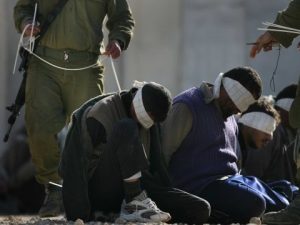 Israeli occupation forces have issued 50,000 administrative detention orders against Palestinians since the occupation of the West Bank and Gaza Strip in 1967, the Commission for Detainees and Ex-Detainees Affairs revealed on Wednesday.
Head of the research and documentation department in the researcher in the Commission for Detainees and Ex-Detainees Affairs, Abdel Nasser Farawneh, said that the administrative detention orders have increased since the outbreak of the Second Intifada, as the occupation authorities issued nearly 27,000 orders since September 2000.
He noted that of the total number of orders, nearly 1,704 were issued in 2016, a 50 per cent increase compared to 2015. While, since the beginning of 2017, over 4,000 orders were issued, including new orders and extensions.
Farawneh added that the increased number of detention orders and the increase in administrative orders issued against the Palestinians has led to a noticeable rise in the total number of administrative prisoners. As of today, nearly 5,000 administrative prisoners are held in Israeli prisons and detention centres without any charges against them or trials.
Bahrain to jail Qatar sympathisers
Middle East Online | June 8, 2017
MANAMA – Bahrain Thursday followed the United Arab Emirates in announcing that expressing sympathy for Qatar over sanctions imposed by its Gulf neighbours was an offence punishable by a lengthy jail term.
Saudi Arabia, the UAE, Bahrain and Egypt on Monday cut diplomatic ties with Qatar over accusations that the emirate is a champion of extremist groups in the region.
Qatar firmly denies the allegations.
“Any expression of sympathy with the government of Qatar or opposition to the measures taken by the government of Bahrain, whether through social media, Twitter or any other form of communication, is a criminal offence punishable by up to five years in prison and a fine,” a Bahraini interior ministry statement said.
The UAE on Wednesday announced a similar decision, warning that offenders could face between three and 15 years in prison and a fine of 500,000 dirhams ($136,125, 120,715 euros) should they criticise the decision to boycott Qatar.
Bahrain, home to the US Navy’s Fifth Fleet, has been rocked by unrest since security forces crushed Shiite-led protests in 2011 demanding a constitutional monarchy and an elected prime minister.
The authorities accuse Iran of backing the protesters and aiming to incite unrest in Shiite-majority Bahrain, a charge Tehran denies.
Sunni-ruled Bahrain’s strict cyber crime law prohibits the expression of dissent online, including via social media.
Nabeel Rajab, one of the country’s most high-profile activists, is currently on trial for a series of tweets criticising a Saudi-led Arab military campaign in Yemen.
Question Deleted
By Rima Najjar | CounterPunch | June 5, 2017
For some time now, the discourse on Israel has been shifting from a place where Israeli “hasbara” disinformation had the upper hand no matter where one turned, to a place where Israeli criminal policies are more frankly discussed and the Boycott Divestment and Sanctions Movement (BDS), is now championed by some academic associations, church groups and labor unions in the United States and elsewhere.
Jewish Voice for Peace and other activist groups have come out with statements not only advocating BDS, but also criticizing Zionism and its definition of Jewish nationalism as practiced by the Jewish state. In a letter protesting the cancellation of a hiring search for the ‘Edward Said Professor of Middle East Studies’ professorship at CSU Fresno, Jewish Voice for Peace states: “The Jewish people are not a monolith on this or any other issue.”
In response to these advances in the struggle for Palestinian liberation, one area remains taboo and that is to question (and thereby delegitimize) Israel by opposing its heart of darkness – i.e., its “right to exist” as a Jewish state (a partition of Mandate Palestine) belonging, not to its indigenous population, but to the “Jewish people” worldwide. This right to exist as a Zionist entity presupposes that Jewish communities around the world are a monolith Zionist “nation” in the way Israel defines Jewish identity, which in its corollary, denies the self-determination of Palestinian Arabs in their own homeland.
What’s appalling is that not only is it taboo to discuss the legality and legitimacy of Jewish self-determination, it is also taboo to even ask the question. The following is my answer to a question asked on the social media Q/A service called Quora, which was promptly thrown into the trash bin along with my answer and that of others posted there.
Because Israel’s creation is based on force of arms, Zionist terror and pre-planned ethnic cleansing, that is to say, the near-eradication of Arab Palestine, as well as violations of international law and is therefore an easy target of delegitimazation, it has relied heavily on the Balfour Declaration (1917), which supports the establishment in Palestine of a “Jewish national home” for the “Jewish people” to legitimize itself.
The Balfour Declaration was incorporated by the League of Nations in 1922 into the British Mandate of Palestine (with the caveat that the rights of the absurdly-phrased “non-Jewish communities,” then 90% of Palestine’s population, would be maintained). That document, however, does not translate into “self determination in the form of a Jewish state,” nor was it meant as such, despite its deceptive language .
Jewish identity politics and literature are rife with contradiction, controversy and confusion. But Israel, while denying the legal existence of Palestinian Arabs as “a people,” defines Jewishness through descent – supposedly unbroken bloodlines from antiquity to the present.
The following is quoted from the UNESCO document on Israel and Apartheid found here.
“The State of Israel enshrined the central importance of descent in its Law of Return of 1950 (amended in 1970), which states that: ‘For the purposes of this Law, ‘Jew’ means a person who was born of a Jewish mother or has become converted to Judaism and who is not a member of another religion.”
Descent is crucial to Jewish identity discourse in Israel because direct lineal descent from antiquity is the main reason given by political-Zionist philosophers for why Jews today hold the right to self-determination in the land of Palestine. In this view, all Jews retain a special relationship and rights to the land of Palestine, granted by covenant with God: some schools of Zionism hold that Israel is the successor State to the Jewish kingdoms of Saul, David and Solomon. That claim is expressed, inter alia, in the Declaration of Independence of Israel, which affirms that Jews today trace their ancestry to an earlier national life in the geography of Palestine and therefore have an inalienable right to “return”, which is given precedence over positive law…. That claim to unbroken lineal descent from antiquity attributes collective rights to the “land of Israel” to an entire group on the basis of its (supposed) bloodlines. The incompatible claim that Jewishness is multiracial, by virtue of its character as a religion to which others have converted, is simply absent from this formula.
So where does that leave the Palestinians, the indigenous people of Palestine? Keep in mind that indigeneity is defined as:
… populations composed of the existing descendants of the peoples who inhabited the present territory of a country wholly or partially at the time when persons of a different culture or ethnic origin arrived there from other parts of the world, overcame them, by conquest, settlement or other means, reduced them to a non-dominant or colonial condition; who today live more in conformity with their particular social, economic and cultural customs and traditions than with the institutions of the country of which they now form part, under a state structure which incorporates mainly national, social and cultural characteristics of other segments of the population which are predominant.
(a) they are the descendants of groups, which were in the territory at the time when other groups of different cultures or ethnic origin arrived there;
(b) precisely because of their isolation from other segments of the country’s population they have almost preserved intact the customs and traditions of their ancestors which are similar to those characterised as indigenous;
(c) they are, even if only formally, placed under a state structure which incorporates national, social and cultural characteristics alien to their own.
In 1986, the following rather important line was added;
any individual who identified himself or herself as indigenous and was accepted by the group or the community as one of its members was to be regarded as an indigenous person.
Today, Israel pursues its claim to legitimacy primarily through discrediting Palestinians, the indigenous people, in a relentless, public relations, diplomatic and lawfare campaign, so successful, it has rendered the international community impotent in upholding international law as it applies to the Palestinian people, including the right of self-determination. Lawfare efforts, for example, are currently focused on criminalizing Boycott (BDS) activism.
The European Union Parliament Working Group on Antisemitism has accordingly included in its working definition of anti-Semitism as: “Denying the Jewish people their right to self-determination, e.g., by claiming that the existence of the State of Israel is a racist endeavour”.
In 2016, the United States passed the Anti-Semitism Awareness Act, in which the definition of anti-Semitism is that set forth by the Special Envoy to Monitor and Combat Anti-Semitism of the Department of State in a fact sheet of June 8, 2010. Examples of anti-Semitism listed therein include: “Denying the Jewish people their right to self-determination, and denying Israel the right to exist”.
In my opinion, Israel will be legitimized only when it stops obstructing the exercise of Palestinian right to self-determination, a right “authoritatively” recognized by international law:
“The status of the Palestinians as a people entitled to exercise the right of self-determination has been legally settled, most authoritatively by the International Court of Justice (ICJ) in its 2004 advisory opinion on Legal Consequences of the Construction of a Wall in the Occupied Palestinian Territory”.
The counterarguments advanced by Israel and supporters to rationalize and legitimize policies that deny Palestinian rights and affirm the rights of “the Jewish people” include claims that the determination of Israel to remain a Jewish State is consistent with practices of other States, such as France; Israel does not owe Palestinian non-citizens equal treatment with Jews precisely because they are not citizens; and Israeli treatment of the Palestinians reflects no “purpose” or “intent” to dominate, but rather is a temporary state of affairs imposed on Israel by the realities of ongoing conflict and security requirements. … A further claim that Israel cannot be considered culpable for crimes of apartheid because Palestinian citizens of Israel have voting rights rests on two errors of legal interpretation: an overly literal comparison with South African apartheid policy and detachment of the question of voting rights from other laws, especially provisions of the Basic Law that prohibit political parties from challenging the Jewish, and hence racial, character of the State.
Yes, Palestine does exist and will continue to exist, because of Palestinians’ incredible steadfastness.
As Rabbi Brant Rosen expressed it:
“The choice we ultimately face is one between a Jewish state vs. international law, justice and human rights for all.”
Rima Najjar is a Palestinian whose father’s side of the family comes from the forcibly depopulated village of Lifta on the western outskirts of Jerusalem. She is an activist, researcher and retired professor of English literature, Al-Quds University, occupied West Bank.
Cancelled Left Forum Panels to Appear Instead at “Left Out Forum” Protest Event on Left Forum Conference’s Last Day
By Dave Lindorff | ThisCantBeHappening! | June 2, 2017
Beginning today, June 2, the Left Forum (formerly the Socialist Scholars’ Conference), will conduct a three-day event featuring panel discussions on all manner of topics. As the organization states on its website: “Continuing a tradition begun in the 1960s, we bring together intellectuals and organizers to share perspectives, strategies, experience and vision.”
Unfortunately, this year the board, or at least a majority of the board, of the Left Forum has caved in to pressure from a Zionist individual and a group in Germany to cancel panels that include two individuals whom these critics condemn as being “anti-Semitic” or “holocaust deniers.” All four of the cancelled panels were part of a group of five panels organized to discuss issues involving the so-called Deep State and its impact on US and global affairs. The two individuals who were the target of the complaints are Islamic studies scholar and Veterans Today editor Kevin Barrett, and Anthony Hall, a tenured professor of the University of Lethbridge in Alberta, whose position was attacked by the Canadian B’nai B’rith organization.
According to the organizers of the banned panels, the first decision to ban three of the five planned Deep State events was announced by the LF board on May 8, in a brief email message that offered no explanation for the decision, and that was reached without first offering either the panel organizers or the individuals defamed a chance to respond to the unacknowledged charges. Here’s the note that was sent out by the board on May 8 (less than four weeks before the start of the Left Forum event):
Unfortunately, we are writing to inform you that your panels
A) Panel Title: 9/11 Truth: Ground Zero for a Resistance Movement
B) Panel Title: False Flags: Staged, Scripted, Mass Psy-Op Events
C) Panel Title: “Terrorism”: Fake Enemies, Fraudulent Wars
have not been selected as a part of this year’s Left Forum program. We do not take for granted the time and effort organizers put in to the proposal process and understand that this news may come as a disappointment.
We do however want to express our appreciation for your interest in making a programmatic-contribution to the 2017 conference.We wish you all the best with your work and in the future.
Registration fees already made for speakers can be refunded.Thank you very much.
Note that no mention is made in this message of any reason for the “non-selection” (actually cancellation) of the panels, depriving the panel organizers and defamed individuals of any ability to challenge the decision.

In response to a written request later that day for an explanation for the cancellation of the three panels, Left Forum Co-Director Marcus Graetsch only offered the following in a return email:
Regarding the reasons:
Panels on which there is no immediate consensus are put to a vote by the board. If a majority votes in favor of the panel, it will be accepted. If not, the panel will be rejected.
I am not part of the voting procedure. I can ask maybe later (May 20th or something or even later to ask why. I am to(sic) busy for that right now.
Panel organizers say that they initially learned about criticism of two of their panelists on April 4, and say that they “vigorously responded” to the charges that the two were anti-Semitic. It was only on May 8 that they learned of the cancellations of three of the planned panels.
Later, on May 29, just days before the Left Forum conference was set to begin, the Left Forum board cancelled a fourth already approved and scheduled Deep State panel, ironically titled “Political Correctness: The Dangers of Thought Crime Police.” This time, Graetsch offered a limited explanation of sorts in an email stating:
A big German organization that Left Forum has worked together with many years said they will withdraw panels etc. when Anthony Hall speaks at Left Forum, he is a Holocaust denier.
Again, no opportunity was given by the board to either the panel organizers or to the defamed panelists Barrett and Hall to challenge the accusation and the decision to cancel entire panels. Even the organization lodging a protest against Hall was kept anonymous by Graetsch and the Board.
These panel bannings have reportedly caused considerable dismay and protest among many participants of the Left Forum, with one activist saying, “Our organization always opposes this kind of censorship on principle.”
The Deep State Panels organizers, the two defamed panelists and those other panelists who were not personally defamed but who are now unable to present their work at the Left Forum, have responded to the Left Forum board’s outrageous censorship and lack of democratic process and intellectual integrity by organizing what they are calling a “Left Out Forum” to present all four banned panels at a venue within easy walking distance from the Left Forum event itself at John Jay Criminal College, 899 10th Avenue (between 58th and 59th St) New York City, NY 10019. The counter-forum event will be held simultaneously with the last day of the Left Forum conference on June 4 (see below for details).
The Left Out Forum panels will be live video-streamed on the Internet courtesy of No Lies Radio. Due to a demonstrated history of efforts by Zionist advocates to shut down free speech, the exact location of the Left Out Forum is only being posted at http://noliesradio.org/leftforum/secret [2] at 9 am June 4, the day of the event, instead of earlier, out of concern that the same individuals and groups that have successfully pressured the Left Forum board to cancel the four panels could try to pressure the provider of the alternative venue to back out of its offer.
Left Out Forum Schedule:
• Political Correctness: The Dangers of Thought Crime Police 10:00-11:50am Speakers: Dr. Anthony Hall, Jeremy Rothe-Kushel • Moderator: Cheryl Curtiss
• Terrorism”: Fake Enemies, Fraudulent Wars Noon-1:50pm Speakers: Michael Springmann, Dr. Anthony Hall, Dr. Kevin Barrett • Moderator: Tom Kiely
• False Flags: Staged, Scripted, Mass Psy-Op Events 2-3:50pm Speakers: Dr. Kevin Barrett, Dave Lindorff, Ole Dammegard • Moderator: Dr. Lucy Morgan Edwards
• 9/11 Truth: Ground Zero for a Resistance Movement 4-5:50pm Speakers: Dr. Kevin Barrett, Barbara Honegger, Richard Gage • Moderator: Dr. Lucy Morgan Edwards
Note: A Deep State panel that was not cancelled by the Left Forum Board is still scheduled for June 4 at the Left Forum Venue:
* Co-Opting the Left: Infiltration by the Corporate State to Neutralize Resistance Noon-1:50pm Speakers: Kevin Zeese, Glen Ford • Moderator: Cheryl Curtiss • Room 1.91, John Jay Criminal College
Full disclosure: The author, DAVE LINDORF is one of the panelists on the banned panel titled: “False Flags: Staged, Scripted, Mass Psy-Op Events” where he plans to talk about his published investigation into the Boston Marathon Bombing, and about the many questions that remain about who was really behind that horrific act of terror and the ensuing panic and martial law display that shut down the city of Boston, confining the metropolitan region’s population to their homes for over 24 hours.
European Parliament calls on members to adopt Israel-related definition of antisemitism
If Americans Knew | June 2, 2017
The European Jewish Press reports that the European Parliament has adopted a resolution calling on all member states to adopt a definition of anti-Semitism that contains Israel-centric items.
The resolution was adopted at its plenary session in Brussels and officially endorses the International Holocaust Remembrance Association’s (IHRA) working definition of antisemitism. The definition consists of a synopsis followed by guidelines that include Israel related items originally created by an Israeli governmental minister in 2003. This formulation has since been disseminated around the world.
For more information see: International campaign is criminalizing criticism of Israel as ‘antisemitism’
Left Forum caves to pressure: bans panels amid claims speakers are Holocaust deniers, anti-Semites
By Craig McKee | Truth and Shadows | May 28, 2017
Ironically, this year’s Left Forum is called “The Resistance.” But it seems that what America’s largest leftist conference is resistant to is free speech. And integrity.
This article was going to be about three “Deep State” panels, focusing in particular on 9/11 and false flag terrorism, being banned earlier this month because of just two letters of “complaint” that targeted individual speakers with ad hominem attacks, alleging the speakers to be “anti-Semitic,” “Holocaust deniers,” and (the real kiss of death) “conspiracy theorists.”
But just as I was about to post the article, and just four days before the event is to start (it runs June 2-4 at John Jay College in New York City), the Left Forum informed these same organizers that a fourth of their panels, ironically the one on the topic of “thought crimes,” has also been given the boot based on a threat by an unidentified German organization to pull out of the conference if Professor Anthony Hall of Lethbridge, Alberta, Canada is allowed to speak. (Hall was the subject of a previous post on Truth and Shadows here, which also addresses other examples of Zionist attacks on academic freedom and free speech.)
Others who are scheduled to be part of the panel include Joy Karega, an assistant professor of rhetoric and composition who was fired from Oberlin College in Ohio for posts she made on Facebook charging that Israel and Zionists were behind 9/11 and the Charlie Hebdo event; and activist Jeremy Rothe-Kushel, who was arrested at an event in Kansas City after attempting to ask a second question to author and diplomat Dennis Ross about the use of state-sponsored terrorism by the U.S. and Israel.
The organizers of the four banned panels, and a fifth that was accepted by the Forum, have decided to create their own event, appropriately called the “Left Out Forum” that will allow them to go ahead with their panels on Sunday, June 4 at an as yet undisclosed location (organizers are afraid that pressure will be brought to bear on the owners of the alternative venue to cancel that event if the location is released too early). To find out where the venue is in New York, check http://noliesradio.org/archives/130703 on June 2. These panels will be live streamed by No Lies Radio.

The Left Forum is offering the wrong kind of “resistance”
Left Forum co-director Marcus Graetsch informed the organizers of the banned panels that the German organization is accusing Hall of being a Holocaust denier. (These organizers have asked that their names not be included in this article to avoid the harassment by Zionist “activists” that others have been subjected to.) Hall, who is currently fighting his suspension by the University of Lethbridge, is not a Holocaust denier. He believes, quite correctly, that any historical subject should be open for discussion and debate.
Graetsch wrote: “a big german [sic] organization Left Forum has worked together with many years said they will withdraw panels etc. when Anthony Hall speaks at Left Forum, he is a Holocaust denier. The board and the staff of Left Forum will act now and cancel the panel ‘Political Correctness: The Dangers of Thought Crime Police’”
The other co-director, Ashley Abbott, followed this email with one of her own:
“And to elaborate, hundreds of people contacted us. This prompted us to do further research and upon doing so, we (the board and staff) agree that a panel featuring Anthony Hall should not occur at Left Forum.”
It took just two letters to get three panels banned initially, but the fourth resulted from “hundreds” of complaints about Hall. Of course we only have their word for this. I find it virtually impossible to believe that “hundreds” of complaints could be received unless all were co-ordinated by the same organization. Interestingly, it is the panel that has been banned, not the speaker. So, organizers don’t even have the option of bringing in a different speaker.
Both Graetsch and Abbott did not respond to interview requests. Neither did five members of the Left Forum board of directors who I contacted by email.
Here are the four panels being censored:
- “9/11 Truth: Ground Zero for a Resistance Movement,” with speakers Kevin Barrett, Richard Gage, and Barbara Honegger. Moderated by Dr. Lucy Morgan Edwards.
- “Terrorism”: Fake Enemies, Fraudulent Wars,” with speakers Michael Springmann, Anthony Hall, and Patrick Henningsen. Moderated by Tom Kiely.
- “False Flags: Staged, Scripted, Mass Psy-Op Events,” with speakers Kevin Barrett, Dave Lindorff, and Ole Dammegard. Moderated by Dr. Lucy Morgan Edwards.
- “Political Correctness: The Dangers of Thought Crime Police,” with speakers Anthony Hall, Joy Karega, and Jeremy Rothe-Kushel. Moderated by Cheryl Curtiss.
This is the only one of the five panels that has been approved:
- “Co-Opting the Left: Infiltration by the Corporate State to Neutralize Resistance,” with speakers Kevin Zeese and Glen Ford. Moderated by Cheryl Curtiss. (June 4 from 12-1:50 p.m. in room 1.91)
The issue arose initially when someone named Stewart Sunshine wrote to the Left Forum on April 3, claiming to be writing “on behalf of a group of New York activists,” although he provided no names other than his own. In his letter he leveled accusations that speakers involved in some of the panels are anti-Semites. He provided a list of profiles of individuals who he objected to in the 2016 conference, although just one was actually among the speakers that had been invited to participate in any of the five panels this year. Sunshine wrote:
“I am writing to you, on behalf of a group of NYC activists, to express our objection to a number of antisemitic conspiracy theorists and Holocaust deniers who appeared on the ‘Deep State track’ last year. The most well-known of these speakers, Kevin Barrett, bragged on the Far Right website Veterans Today that they had tricked the Left Forum into hosting their speakers…”
Barrett, who hosts the weekly podcast False Flag Weekly News with Anthony Hall, actually called Sunshine to confront him about his accusations, and you can listen to that very entertaining call here. You can also read Barrett’s detailed refutation of Sunshine’s accusations here.
One of the panel organizers responded to the Sunshine letter, writing this:
“Sunshine and his anonymous group target an ever-expanding kitchen sink of activists who challenge their orthodox dogma. Their most radioactive tactic is to smear dissenters with unfair and unaccountable hateful epithets such as ‘neo-Nazi,’ ‘anti-Semite,’ ‘Jew hater’ — gross inflammatory trigger words.”
A second letter of complaint to the Left Forum followed on April 11 from Kai Kieferle of Calgary, Alberta, who wrote this: “I am writing to suggest Kevin Barrett, Anthony Hall, and others of their ilk should not be allowed to participate in the ‘Left Forum’ this year. Hall and Barrett are well understood to be conspiracy theorists relying on deeply anti-Semitic material. Their intellectual credibility is suspect given their nonsensical writings about 9/11, what they call the ‘Zio-American Empire’, and many other topics where they consistently find Jewish people to be responsible for it all.”
Barrett responded in writing to the Left Forum after having the letters forwarded to him: “Kai Kieferle has been stalking and harassing me for years using many false names. He has repeatedly refused to stop contacting me despite my repeated requests. He made a brief, creepy, aggressive, threatening appearance at my talk in Calgary in summer 2015 — spent a few minutes unsuccessfully trying to intimidate me, identifying himself as “Count One,” then fled. I didn’t learn his real name until much later.”
Regrettably, none of this is new for people like Barrett and Hall. In recent years, we have seen many examples of universities—where freedom of speech and critical thinking are supposed to be in great supply — being successfully pressured by Zionists and ardent supporters of Israel. So, we should not be surprised that this conference of “progressive” thinkers would be just as timid and weak-willed that it would ban and censor academics and intellectuals based on intimidation and baseless attacks.
It confirms for us once again that you might get away with discussing 9/11 and false flag operations at a conference like the Left Forum, but if you dare to criticize Zionism and the State of Israel in the process, you’ll find yourself on the outside looking in.
Israel arrests hundreds of Palestinians over Facebook posts
MEMO | May 30, 2017
The Israeli occupation authorities have arrested and prosecuted hundreds of Palestinians since 2015 after analysing data on their Facebook pages and judging that they are potential terrorists, Haaretz revealed on Monday.
An investigation by the Israeli journalists Orr Hirschauge and Hagar Shezaf found that Israel has violated its own and international laws regarding the detention of Palestinian youths. The domestic intelligence agency Shabak, apparently, has decided that Palestinians are terrorists if they mention the world “martyr” on Facebook.
They cited the example of a 29-year-old Palestinian woman from Hebron, whose husband was killed in a car accident in Israel in 2010. She was arrested on 2 December, 2015 and said that the Israeli interrogators handed her a screenshot of a Facebook post in which there is a picture of her husband with a caption written by her, “May God unite us in heaven”.
The woman also said that she mentioned the word shahada — “martyrdom” — on Facebook, noting that this worried her interrogators. “I told them it is a word we use regularly,” she said. “The fact that I wrote it on Facebook does not mean I will do anything. Even when someone dies in a car accident we call him shahid (martyr).”
It seems that this was an unacceptable explanation for the Israelis as she was imprisoned under administrative detention for four months with neither charge nor trial. When this term ended, it was renewed. According to the Israeli journalists, when such interrogators fail to obtain the confessions they want from Palestinians over their Facebook posts, they keep them under administrative detention or turn them over to the military courts to be sentenced.
Prior to the launch of Facebook, Israel used to arrest Palestinians on other pretexts, such as contacting organisations hostile to Israel, without specifying the identities of the organisations in question. The Haaretz investigation noted that this woman was arrested in 2008 and spent time in prison over charges of contacting an organisation hostile to Israel.
Featured Video

The American Retreat from Vietnam
or go to
Aletho News Archives – Video-Images
From the Archives
Secret document reveals plans for civil war in Lebanon, Israeli false flags, and invasion
By Randi Nord | Geopolitics Alert | April 5, 2019
Beirut – During his visit with US Secretary of State, Mike Pompeo, Lebanese President Michael Aoun reportedly received a US-Israeli document detailing plans for creating a civil war in Lebanon with covert false flag operations and possible Israeli invasion.
Although the source of the document is Israeli and created in partnership with Washington, no one knows who presented it to Aoun. The Lebanese TV station, Al-Jadeed, initially reported the document on Lebanese TV and a video on its website. Geopolitics Alert translated the report for this article. … continue
Blog Roll
 Aletho News
- ‘Distance yourselves from Israel’: IRGC urges US population to question govt policies
- America’s Greenland deal has a radioactive backstory
- The RAF Fairford ‘terror plot’: Unpacking escalation in the UK echo-chamber
- EU Council Advances Chat Control 2.0 Scanning Proposal
- Ex-Greek MEP files complaint against Israeli spyware firm over alleged Pegasus surveillance
- Troubling ideas throughout the Torah, Talmud, Mishneh Torah and Tanya
- ‘Grave, alarming’: Iran mission on Trump’s UNGA ‘annihilation’ threats
- Najaf airport to reopen to Iranian flights within 24 hours: Ambassador
- From ‘How Will This End For Iran’ to ‘When America Walks Away’: A tale of two Economist covers
- Tehran blasts ‘baseless’ speculation linking Iran to alleged bomb plot at UK air base
- If Americans Knew
- Ex-Biden officials are desperate for a Gaza scapegoat
- Israeli “settlers” Invade Al-Aqsa; Pour Boiling Water on 75-Year-Old
- Israel Has Kidnapped Another American Teenager
- US arms sales to Israel worth $21.6 billion in 20 months
- Three Palestinians Killed in Israeli Attacks on Gaza
- Revealed: German “Anti-Semitism Expert” Driving Crackdown on Palestine Solidarity is Former Israeli Spy
- Egypt’s Warning to Israel Before Oct 7
- Israel’s siege signals another cruel winter for 1.8 million Gazans – Daily Update
- Netanyahu Asked UAE Leader to Deny Report on Oct. 7 Warning in Secret Visit, Sources Say
- CNN Chief Int’l Correspondent Clarissa Ward on Journalists in Gaza
- No Tricks Zone
- New Study: Earth And Venus Surface Warmth Largely Explained By Convection And Lapse Rate, Not CO2 Or Radiation
- 2025 Nature Paper Claiming Worsening Global Drought Gets RETRACTED …Heavily Flawed
- New Study: ‘Global Drought Shows No Detectable Recent Acceleration Under Climate Warming’
- Economic Masterminds: German Socialists Suggest Taxing Productivity Gains Stemming From Using AI
- The South China Sea Has Not Been Cooperating With The Climate Change Narrative
- Energy Crisis: Germany Enters Heating Season With Historically Low Gas Reserve Fill Levels
- New Study: The Antarctic Ice Sheet Gained Mass From 2020-2024 Due To Staggering Snow And Ice Accumulation
- Study: Ocean Heating Rates From Thousands Of Years Ago ‘Dwarf’ Modern Ocean Heating Rates
- Climate Extremists Target, Attack Large-Scale Power Grid Infrastructure In Germany!
- New Study: Antarctic Ice Melt Has Contributed Less Than 1 Centimeter To Sea Level Rise In The Last 30 Years

