MSM Begs For Trust After Buzzfeed Debacle
By Caitlin Johnstone | January 20, 2019
Following what the Washington Post has described as “the highest-profile misstep yet for a news organization during a period of heightened and intense scrutiny of the press,” mass media representatives are now flailing desperately for an argument as to why people should continue to place their trust in mainstream news outlets.
On Thursday Buzzfeed News delivered the latest “bombshell” Russiagate report to fizzle within 24 hours of its publication, a pattern that is now so consistent that I’ve personally made a practice of declining to comment on such stories until a day or two after their release. “BOOM!” tweets were issued by #Resistance pundits on Twitter, “If true this means X, Y and Z” bloviations were made on mass media punditry panels, and for about 20 hours Russiagaters everywhere were riding the high of their lives, giddy with the news that President Trump had committed an impeachable felony by ordering Michael Cohen to lie to Congress about a proposed Trump office tower in Moscow, a proposal which died within weeks and the Kremlin never touched.
There was reason enough already for any reasonable person to refrain from frenzied celebration, including the fact that the story’s two authors, Jason Leopold and Anthony Cormier, were giving the press two very different accounts of the information they’d based it on, with Cormier telling CNN that he had not personally seen the evidence underlying his report and Leopold telling MSNBC that he had. Both Leopold and Cormier, for the record, have already previously suffered a Russiagate faceplant with the clickbait viral story that Russia had financed the 2016 election, burying the fact that it was a Russian election.
UPDATE: A spokesperson for the special counsel is disputing BuzzFeed News’ report. https://t.co/BEoMKiDypn pic.twitter.com/GWWfGtyhaE
— BuzzFeed News (@BuzzFeedNews) January 19, 2019
Then the entire story came crashing down when Mueller’s office took the extremely rare step of issuing an unequivocal statement that the Buzzfeed story was wrong, writing simply, “BuzzFeed’s description of specific statements to the special counsel’s office, and characterization of documents and testimony obtained by this office, regarding Michael Cohen’s congressional testimony are not accurate.”
According to journalist and economic analyst Doug Henwood, the print New York Times covered the Buzzfeed report on its front page when the story broke, but the report on Mueller’s correction the next day was shoved back to page 11. This appalling journalistic malpractice makes it very funny that NYT’s Wajahat Ali had the gall to tweet, “Unlike the Trump administration, journalists are fact checking and willing to correct the record if the Buzzfeed story is found inaccurate. Not really the actions of a deep state and enemy of the people, right?”
This is the behavior of a media class that is interested in selling narratives, not reporting truth. And yet the mass media talking heads are all telling us today that we must continue to trust them.
“Those trying to tar all media today aren’t interested in improving journalism but protecting themselves,” tweeted NBC’s Chuck Todd. “There’s a lot more accountability in media these days than in our politics. We know we live in a glass house, we hope the folks we cover are as self aware.”
More accountability in media than in politics, Chuck? Really? Accountability to whom? Your advertisers? Your plutocratic owners? Certainly not to the people whose minds you are paid exorbitant sums to influence; there are no public elections for the leadership of the mass media.
“Mueller didn’t do the media any favors tonight, and he did do the president one,” griped the odious Chris Cuomo on CNN. “Because as you saw with Rudy Giuliani and as I’m sure you’ll see with the president himself, this allows them to say ‘You can’t believe it! You can’t believe what you read, you can’t believe what you hear! You can only believe us. Even the Special Counsel says that the media doesn’t get it right.’”
“The larger message that a lot of people are going to take from this story is that the news media are a bunch of leftist liars who are dying to get the president, and they’re willing to lie to do it, and I don’t think that’s true” said Jeffrey Toobin on a CNN panel, adding “I just think this is a bad day for us.”
“It does reinforce bad stereotypes about the news media,” said Brian Stelter on the same CNN panel. “I am desperate as a media reporter to always say to the audience, judge folks individually and judge brands individually. Don’t fall for what these politicians out there want you to do. They want you to think we’re all crooked. We’re not. But Buzzfeed now, now the onus is on Buzzfeed.”
CNN, for the record, has been guilty of an arguably even more embarrassing Russiagate flub than Buzzfeed‘s when they wrongly reported that Donald Trump Jr had had access to WikiLeaks’ DNC email archives prior to their 2016 publication, an error that was hilariously due to to the simple misreading of an email date by multiple people.
CNN is leading the way in bashing BuzzFeed but it’s worth remembering CNN had a humiliation at least as big & bad: when they yelled that Trump Jr. had advanced access to the WL archive (!): all based on a wrong date. They removed all the segments from YouTube, but this remains: pic.twitter.com/0jiA50aIku
— Glenn Greenwald (@ggreenwald) January 19, 2019
The mass media, including pro-Trump mass media like Fox News, absolutely deserves to be distrusted. It has earned that distrust. It had earned that distrust already with its constant promotion of imperialist wars and an oligarch-friendly status quo, and it has earned it even more with its frenzied promotion of a narrative engineered to manufacture consent for a preexisting agenda to shove Russia off the world stage.
The mainstream media absolutely is the enemy of the people; just because Trump says it doesn’t mean it’s not true. The only reason people don’t rise up and use the power of their numbers to force the much-needed changes that need to happen in our world is because they are being propagandized to accept the status quo day in and day out by the mass media’s endless cultural engineering project. They are the reason why wars go unopposed, why third parties never gain traction, why people consent to money hemorrhaging upward to the wealthiest of the wealthy while everyone else struggles to survive. The sooner people wake up from the perverse narrative matrix of the plutocratic media, the better.
Buzzfeed, Question Time & the purpose of Fake News
Image source
By Kit Knightly | OffGuardian | January 19, 2019
Two days ago BuzzFeed published a front page story, under a “BREAKING” banner, headlined: President Trump Directed His Attorney Michael Cohen To Lie To Congress About The Moscow Tower Project
In the article, Buzzfeed reporters Jason Leopold and Anthony Cormier claim to have been told, by two anonymous sources, that Robert Mueller’s “Russiagate” investigation had evidence Donald Trump had instructed his lawyer to lie to Congress. That would be a felony, and obviously an impeachable offence.
The reaction of the news media and associated twitterati was as quick as it was predictable. MSNCBC, CNN, the BBC, The Guardian… the usual suspects. They were all over it within hours.
But then, less than a day later, Robert Mueller’s spokesperson Peter Carr issued this statement:
BuzzFeed’s description of specific statements to the special counsel’s office, and characterization of documents and testimony obtained by this office, regarding Michael Cohen’s congressional testimony are not accurate,”
Despite this, BuzzFeed is sticking to its guns. Insisting that Mueller’s statement is vague, and therefore does not undercut the heart of their story.
The rest of the mainstream media are sensing the tone though and jumping ship. The Washington Post – not known for their pro-Trump slant – ran an editorial pointing out the scarcity of Mueller’s public comment (this the first statement Mueller has ever issued concerning evidence or claims in the press), and arguing that the rush to refute the BuzzFeed article means it is probably completely false.
Nevertheless, BuzzFeed has not retracted or altered their story in any way – except for putting in one small paragraph reporting that Mueller’s office disputes their story. There is no note of the update, and the rest of the story remains unchanged.
There is a striking parallel here, with a story Luke Harding contributed to The Guardian in late November last year: “Manafort held secret talks with Assange in Ecuadorian embassy”
The article claimed Trump’s campaign manager Paul Manafort had met with Julian Assange at least three times prior to the 2016 Presidential Election. No evidence was produced, save the word of “unnamed intelligence officials”, “secret Ecuadorian documents” and the like. While the predictable news outlets picked up the story and ran with it with the eagerness of a 6-month-old Golden Retriever, we in the alternative media were quick to point out the logical and factual deficiencies in the story.
Within hours, The Guardian had edited its language to be rather more circumspect, and include the denials made by both accused parties. The edits made to the article were not noted or highlighted in any way, we only know they exist because of internet archives. The next day The Guardian released a brief, terse, defensive statement. That statement was itself refuted by both Manafort and WikiLeaks. As of today, WikiLeaks is actively pursuing legal action in this case.
Later, it was revealed that a key contributor to the story had been previously been convicted of forgery.
No apology has been made, and no retraction issued, no explanation given. Both the editor, Katherine Viner, and Luke Harding have been totally silent on the topic.
So, in the last 2 months both Buzzfeed and The Guardian have issued “BREAKING NEWS” stories that made bold claims, but were not backed up with any evidence. Both these stories were shown to be untrue in less than 24 hours.
Anonymous sources are a common area here – both stories rely exclusively on the word of “unnamed sources” from either “the intelligence services” or “government agencies”. Anonymous sources are the batarangs on the propagandist’s utility belt. Flexible, simple, timeless.
Anonymity allows government agencies to leak misinformation on purpose, without hurting their credibility. It allows newspapers to control public opinion without having any actual facts on hand. It allows intelligence agencies to plant narratives they may want to revisit, or to give targets of blackmail operations a warning. And, most obviously, it allows journalists to simply make stuff up.
I don’t know which specific class these two stories fall into – but I do know it’s one or all of them.
So we come to the question of motive: BuzzFeed and The Guardian must have known there was no evidence to back up their assertions (yet, anyway). They must know the “significant minority” of the population who believe “conspiracy theories about their own government” will research and refute these claims.
So why publish them?
Well, in the Guardian’s case, every story demonising Assange discredits WikiLeaks’ future output, whilst also softening public sympathy for Assange in preparation for potential extradition of to the US. All the mainstream press have turned on WikiLeaks, but The Guardian – for some reason – has a particularly strong institutional axe to grind with WikiLeaks, and specifically Julian Assange.
Similarly, every “Russia bad!” story primes the public to accept increased defence spending, increased control of the internet by the government and increased social media censorship. It is very much the gift that keeps on giving in that regard.
In BuzzFeed’s case, it has been apparent for a while now that the Mueller investigation is likely to fizzle. Articles and interviews from various media sources have been prepping the public for a “let down” for a few weeks. At this point, there is no case for impeaching Trump. But the Deep State still needs to keep him over a barrel.
Trump has been a disappointment to his base and is yet to implement half the policies he discussed on the campaign trail, but he’s not fully and totally being controlled by the warhawking Deep State yet, either. His policy of peace with North Korea and decisions to pull out of Syria and Afghanistan show that there is a tug-of-war ongoing inside the administration. It’s probably no coincidence that this latest of many “bombshells” comes so quickly on the heels of Trump’s announcement of the Syria withdrawal.
Careful “leaks”, planted stories and social media witch-hunts remind Trump how precarious his position is, whilst simultaneously distracting the public – both pro-Trump and anti-Trump – from real issues.
The case-specific “why?” doesn’t matter so much as the general aim of this type of manipulation. The important question is: Why does the media tell lies if they know they will be revealed as such?
Clearly, the lies serve a purpose, regardless of their retraction or qualification.
Telling a lie loudly and then taking it back quietly is an old propaganda trick – it allows the paper to maintain a facade of “accountability”. The point of this practice is to propagate lies into the public consciousness. It’s a method that can be used to distract and disseminate and divide.
The accuracy of the statement is immaterial. The point is, once it has been said it cannot be unsaid. There are countless examples: “Assange was working for Russia”, “Trump ordered Cohen to lie to Congress”, “Russia hacked the US election”, “Donald Trump worked for the KGB”, “Assad gassed his own people”, “Jeremy Corbyn is an antisemite”.
The list goes on and on and on. None these have been proven. All were asserted without evidence, fiercely defended as facts, and then discretely qualified.
That is the purpose of “fake news”, to forge the Empire’s “created reality”, and force us all to live in it. These are world-shaping, policy-informing, news-dominating narratives… and are nothing but feathers in the wind.
A perfect examplar of this occurred just two days ago on the BBC’s flagship Political debate show Question Time.
The (notionally impartial) host not only sided with right-wing author Isabel Oakeshott in criticising Labour’s polling, but then joined in mocking the Labour MP Diane Abbott for attempting to correct the record.
Both Oakeshott and Fiona Bruce, the host, were factually incorrect – as shown a hundred times over since. But that doesn’t matter. The lie was told, the audience laughed, the reality was created. “Labour are behind in the polls, anybody who says otherwise is a laughingstock”.
The lie goes around the world while the truth is still putting its boots on.
That’s why fake news is so important to them, and so dangerous us.
Kit Knightly is co-editor of OffGuardian. The Guardian banned him from commenting. Twice. He used to write for fun, but now he’s forced to out of a near-permanent sense of outrage.
Narrative Control Firm Targeting Alternative Media
By Caitlin Johnstone | Consortium News | January 18, 2019
The frenzied, hysterical Russia narrative being promoted day in and day out by Western mass media has had two of its major stories ripped to shreds in the last three days.
A report seeded throughout the mainstream media by anonymous intelligence officials back in September claimed that U.S. government workers in Cuba had suffered concussion-like brain damage after hearing strange noises in homes and hotels with the most likely culprit being “sophisticated microwaves or another type of electromagnetic weapon” from Russia. A recording of one such highly sophisticated attack was analyzed by scientists and turned out to be the mating call of the male indies short-tailed cricket. Neurologists and other brain specialists have challenged the claim that any U.S. government workers suffered any neurological damage of any kind, saying test results on the alleged victims were misinterpreted. The actual story, when stripped of hyperventilating Russia panic, is that some government workers heard some crickets in Cuba.
Another report which dominated news for a day recently claimed that former Trump campaign manager Paul Manafort (the same Paul Manafort who the Guardian falsely claimed met with Julian Assange in the Ecuadorian embassy) had shared polling data with a Russian associate and asked him to pass it along to Oleg Deripaska, who is often labeled a “Russian oligarch” by western media. The polling data was mostly public already, and the rest was just more polling information shared in the spring of 2016, but Deripaska’s involvement had Russiagaters burning the midnight oil with breathless excitement. Talking Points Memo‘s Josh Marshall went so far as to publish an article titled “The ‘Collusion’ Debate Ended Last Night,” substantiating his click-generating headline with the claim that “What’s crystal clear is that the transfer to Kilimnik came with explicit instructions to give the information to Deripaska. And that’s enough.”
Except Manafort didn’t give any explicit instructions to share the polling data with Deripaska, but with two Ukrainian oligarchs (who are denying it). The New York Times was forced to print this embarrassing correction to the story it broke, adding in the process that Manafort’s motivation was likely not collusion, but money.
Aw, shucks. Well at least the new names are also complicated and Slavic, so readers can still draw their preferred sinister inferences https://t.co/1NPNC5EN4m pic.twitter.com/P2dhAN8eQg
— Michael Tracey (@mtracey) January 9, 2019
These are just the latest debacles as reporters eager to demonstrate their fealty to the U.S.-centralized empire fall all over themselves to report any story that makes Russia look bad without practicing due diligence. The only voices who have been questioning the establishment Russia narrative that is being fed to mass media outlets by secretive government agencies have been those which the mass media refuses to platform. Alternative media outlets are the only major platforms for dissent from the authorized narratives of the plutocrat-owned political/media class.
Imagine, then, how disastrous it would be if these last strongholds of skepticism and holding power to account were removed from the media landscape. Well, that’s exactly what a shady organization called NewsGuard is trying to do, with some success already.
A report by journalist Whitney Webb for MintPress News details how NewsGuard is working to hide and demonetize alternative media outlets like MintPress, marketing itself directly to tech companies, social media platforms, libraries and schools. NewsGuard is led by some of the most virulently pro-imperialist individuals in America, and its agenda to shore up narrative control for the ruling power establishment is clear.
EXCLUSIVE: As Newsguard’s project advances, it will soon become almost impossible to avoid this neocon-approved news site’s ranking systems on any technological device sold in the United States. @_whitneywebbhttps://t.co/ftH6QnVlDn
— MintPress News (@MintPressNews) January 9, 2019
The product that NewsGuard markets to the general public is a browser plugin which advises online media consumers whether a news media outlet is trustworthy or untrustworthy based on a formula with a very pro-establishment bias which sees outlets like Fox News and the U.S. propaganda outlet Voice of America getting trustworthy ratings while outlets like RT get very low ratings for trustworthiness. This plugin dominates the bulk of what comes up when you start researching NewsGuard, but circulating a plugin that individual internet users can voluntarily download to help their rulers control their minds is not one of the more nefarious agendas being pursued by this company. The full MintPress article gives a thorough breakdown of NewsGuard’s activities, but here’s a summary of five of its more disturbing revelations:
No. 1 The company has created a service called BrandGuard, billed as a “brand safety tool aimed at helping advertisers keep their brands off of unreliable news and information sites while giving them the assurance they need to support thousands of Green-rated [i.e., Newsguard-approved] news and information sites, big and small.” Popularizing the use of this service will attack the advertising revenue of unapproved alternative media outlets which run ads. NewsGuard is aggressively marketing this service to “ad tech firms, leading agencies, and major advertisers”.
No. 2 NewsGuard’s advisory board reads like the fellowships list of a neocon think tank, and indeed one of its CEOs, Louis Gordon Crovitz, is a Council on Foreign Relations member who has worked with the American Enterprise Institute and Heritage Foundation. Members of the advisory board include George W Bush’s Secretary of Homeland Security Tom Ridge, deep intelligence community insider Michael Hayden, and the Obama administration’s Richard Stengel, who once publicly supported propaganda in the U.S. (see the Tweet below for a direct quote.) All of these men have appeared in influential think tanks geared toward putting a public smiley face on sociopathic warmongering agendas.
At a Council on Foreign Relations forum about “fake news,” former Editor at Time Magazine Richard Stengel directly states that he supports the use of propaganda on American citizens – then shuts the session down when challenged about how propaganda is used against the third world pic.twitter.com/ClAT5POv7G
— William Craddick (@williamcraddick) May 11, 2018
No. 3 Despite one of its criteria for trustworthy sources being whether or not they are transparent about their funding, the specifics of NewsGuard’s financing is kept secret.
No. 4 NewsGuard is also planning to get its news-ranking system integrated into social media outlets like Facebook and Twitter, pursuing a partnership which will make pro-establishment media consumption a part of your experience at those sites regardless of whether or not you download a NewsGuard app or plugin.
Really excited to see NewsGuard now built into the latest beta of Edge on iOS ??. Smart service. There’s also an extension for Edge on Windows 10. pic.twitter.com/Pqq9diNR8F
— Daniel Rubino (@Daniel_Rubino) January 4, 2019
No. 5 NewsGuard markets itself to state governments in order to get its plugin installed in all of that state’s public schools and libraries to keep internet users from consuming unauthorized narratives. It has already succeeded in accomplishing this in the state of Hawaii, with all of its library branches now running the NewsGuard plugin.
Really excited to see NewsGuard now built into the latest beta of Edge on iOS ??. Smart service. There’s also an extension for Edge on Windows 10. pic.twitter.com/Pqq9diNR8F
— Daniel Rubino (@Daniel_Rubino) January 4, 2019
We may be certain that NewsGuard will continue giving a positive, trustworthy ranking to the New York Times no matter how many spectacular flubs it makes in its coverage of the establishment Russia narrative, because the agenda to popularize anti-Russia narratives lines up perfectly with the neoconservative, government agency-serving agendas of the powers behind NewsGuard. Any attempt to advance the hegemony of the U.S.-centralized power establishment will be rewarded by its lackeys, and any skepticism of it will be punished.
We need to use every inch of our ability to communicate with each other to make these manipulations clearly understood.
Caitlin Johnstone is a rogue journalist, poet, and utopia prepper who publishes regularly at Medium.
US media intensify pretext for ousting Trump
By Finian Cunningham | RT | January 16, 2019
It’s no secret that since his election in 2016, powerful elements in the US political and media establishment have been running a non-stop campaign to remove Trump from the White House. Lately, the stakes have been raised.
Spearheading the media effort to defenestrate Trump are the New York Times and Washington Post. Both have been prominent purveyors of the “Russiagate” narrative over the past two years, claiming that Republican candidate colluded with Russian state intelligence, or at least was a beneficiary of alleged Russian interference, to win the presidency against Democratic rival Hillary Clinton.
Congressional investigations and a probe by a Special Counsel Robert Mueller, along with relentless media innuendo, have failed to produce any evidence to support the Russiagate narrative.
Now, the anti-Trump media in alliance with the Democratic leadership, the foreign policy establishment and senior ranks of the state intelligence agencies appear to have come up with a new angle on President Trump – he is a national security risk.
Ingeniously, the latest media effort lessens the burden of proof required against Trump. No longer has it to be proven that he deliberately collaborated with Russian President Vladimir Putin. Trump could have done it “unwittingly,” the media are now claiming, because he is a buffoon and reckless. But the upshot, for them, is he’s still a national security risk. The only conclusion, therefore, is that he should be removed from office. In short, a coup.
Over the past couple of weeks, the supposed media bastions have been full of it against Trump. An op-ed in the New York Times on January 5 by David Leonhardt could not have made more plain the absolute disdain. “He is demonstrably unfit for office. What are we waiting for?”
Follow-up editorials and reports have piled on the pressure. The Times reported how the Federal Bureau of Investigation – the state’s internal security agency – opened a counterintelligence file on Trump back in 2017 out of concern that he was “working for Russia against US interests.”
That unprecedented move was prompted partly because of Trump’s comments during the election campaign in 2016 when he jokingly called on Russia to release Hillary Clinton’s incriminating emails. Never mind the fact that Russian hackers were not the culprits for Clinton’s email breach.
Then the Washington Post reported former US officials were concerned about what they said was Trump’s “extraordinary lengths” to keep secret his private conversations with Russia’s Putin when the pair met on the sidelines of conferences or during their one-on-one summit in Helsinki last July.
The Post claimed that Trump confiscated the notes of his interpreter after one meeting with Putin, allegedly admonishing the aide to not tell other officials in the administration about the notes being sequestered. The inference is Trump was allegedly in cahoots with the Kremlin.
This week, in response to the media speculation, Trump was obliged to strenuously deny such claims, saying: “I have never worked for Russia… it’s a big fat hoax.”
What’s going on here is a staggering abuse of power by the US’ top internal state intelligence agency to fatally undermine a sitting president based on the flimsiest of pretexts. Moreover, the nation’s most prominent news media outlets – supposedly the Fourth Estate defenders of democracy – are complacently giving their assent, indeed encouragement, to this abuse of power.
The Times in the above report admitted, in a buried one-line disclaimer, that there was no evidence linking Trump to Russia.
Nevertheless, the media campaign doubled down to paint Trump as a national security risk.
The Times reported on January 14 about deep “concerns” among Pentagon officials over Trump’s repeated threats to withdraw the US from the North Atlantic Treaty Organization (NATO). The reporting portrays Trump as incompetent, ignorant of policy details and habitually rude to American allies. His capricious temper tantrums could result in the US walking away from NATO at any time, the newspaper contends.
Such a move would collapse the transatlantic partnership between the US and Europe which has “deterred Soviet and Russian aggression for 70 years,” claimed the Times.
The paper quotes US Admiral James Stavridis, the former supreme allied commander of NATO, calling Trump’s withdrawal whims “a geopolitical mistake of epic proportion.”
“Even discussing the idea of leaving NATO — let alone actually doing so — would be the gift of the century for Putin,” added Stavridis.
The Times goes on to divulge the media campaign coordination when it editorialized: “Now, the president’s repeatedly stated desire to withdraw from NATO is raising new worries among national security officials amid growing concern about Mr Trump’s efforts to keep his meetings with Mr Putin secret from even his own aides, and an FBI investigation into the administration’s Russia ties.”
Still another Times report this week reinforced the theme of Trump being a national security risk when it claimed that the president’s Middle East policy of pulling troops out of Syria was “losing leverage” in the region. It again quoted Pentagon officials “voicing deepening fears” that Trump and his hawkish National Security Advisor John Bolton “could precipitate a conflict with Iran”.
That’s a bit hard to stomach: the Pentagon being presented as a voice of sanity and peace, keeping vigilance over a wrecking-ball president and his administration.
But the New York Times, Washington Post and other anti-Trump corporate media have long been extolling the military generals who were formerly in the administration as “the adults in the room.”
Generals H.R. McMaster, the former national security adviser, John Kelly, Trump’s ex-chief of staff, and James Mattis, the former defense secretary until he was elbowed out last month by the president, were continually valorized in the US media as being a constraining force on Trump’s infantile and impetuous behavior.
The absence of “the adults” seems to have prompted the US media to intensify their efforts to delegitimize Trump’s presidency.
A new House of Representatives controlled by the Democratic Party has also invigorated calls for impeachment of Trump over a range of unsubstantiated accusations, Russian collusion being prime among them. But any impeachment process promises to be long and uncertain of success, according to several US legal and political authorities.
Such a tactic is fraught with risk of failing, no doubt due to the lack of evidence against Trump’s alleged wrongdoing. A failed impeachment effort could backfire politically, increase his popularity, and return him to the White House in 2020.
Given the uncertainty of impeaching Trump, his political enemies, including large sections of the media establishment, seem to be opting for the tactic of characterizing him as a danger to national security, primarily regarding Russia. Trump doesn’t have to be a proven agent of the Kremlin – a preposterous idea. Repeated portrayal of him as an incompetent unwitting president is calculated to be sufficient grounds for his ouster.
When the Washington Post editorial board urges a state of emergency to be invoked because of “Russian meddling in US elections”, then the national mood is being fomented to accept a coup against Trump. The media’s fawning over the Pentagon and state intelligence agencies as some kind of virtuous bastion of democracy is a sinister signal for a military-police state.
Russia-gate Evidence, Please
By Ray McGovern | Consortium News | January 15, 2019
For those interested in evidence — or the lack of it— regarding collusion between Russia and the presidential campaign of Donald Trump, we can thank the usual Russia-gate promoters at The New York Times and CNN for inadvertently filling in some gaps in recent days.
Stooping to a new low, Friday’s Times headline screamed: “F.B.I. Opened Inquiry Into Whether Trump Was Secretly Working on Behalf of Russia.” The second paragraph noted that FBI agents “sought to determine whether Mr. Trump was knowingly working for Russia or had unwittingly fallen under Moscow’s influence.”
Trump had been calling for better relations with Russia during his presidential campaign. As journalist Michael Tracy tweeted on Sunday, the Times report made it “not a stretch to say: the FBI criminally investigating Trump on the basis of the ‘national security threat’ he allegedly poses, with the ‘threat’ being his perceived policy preferences re: Russia, could constitute literal criminalization of deviation from foreign policy consensus.”
On Monday night CNN talking heads, like former House Intelligence Committee chair Mike Rogers, were expressing wistful hope that the FBI had more tangible evidence than Trump’s public statements to justify such an investigation. Meanwhile, they would withhold judgment regarding the Bureau’s highly unusual step.
Evidence?
NYT readers had to get down to paragraph 9 to read: “No evidence has emerged publicly that Mr. Trump was secretly in contact with or took direction from Russian government officials.” Four paragraphs later, the Times’ writers noted that, “A vigorous debate has taken shape among former law enforcement officials … over whether FBI investigators overreacted.”
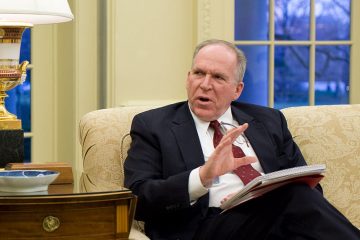
Brennan: “I don’t do evidence.” (White House photo)
That was what Republican Rep. Trey Gowdy was wondering when he grilled former CIA director John Brennan on May 23, 2017 on what evidence he had provided to the FBI to catalyze its investigation of Trump-Russia collusion.
Brennan replied: “I don’t do evidence.”
The best Brennan could do was repeat the substance of a clearly well-rehearsed statement: “I encountered and am aware of information and intelligence that revealed contacts and interactions between Russian officials and U.S. persons involved in the Trump campaign … that required further investigation by the Bureau to determine whether or not U.S. persons were actively conspiring, colluding with Russian officials.”
That was it.
CNN joined the piling on Monday, quoting former FBI General Counsel James Baker in closed-door Congressional testimony to the effect that FBI officials were weighing “whether Trump was acting at the behest of [the Russians] and somehow following directions, somehow executing their will.” The problem is CNN also noted that Lisa Page, counsel to then FBI Acting Director Andrew McCabe, testified that there had been “indecision in the Bureau as to whether there was sufficient predication to open [the investigation].’ “Predication” is another word for evidence.
Within hours of Comey’s firing on May 9, 2017, Page’s boyfriend and a top FBI counterintelligence official, Peter Strzok texted her: “We need to open the case we’ve been waiting on now while Andy [McCabe] is acting [director].” After all, if Trump were bold enough, he could have appointed a new FBI director and who knew what might happen then. When Page appeared before Congress, she was reportedly asked what McCabe meant. She confirmed that his text was related to the Russia investigation into potential collusion.
Comey v. Trump Goes Back to Jan. 6, 2017
The Times and CNN, however unintentionally, have shed light on what ensued after Trump finally fired Comey. Apparently, it finally dawned on Trump that, on Jan. 6, 2017, Comey had treated him to the time-honored initiation-rite-for-presidents-elect — with rubrics designed by former FBI Director J. Edgar Hoover.
It seems then-FBI Director James Comey rendered a good impersonation of Hoover that day when he briefed President-elect Trump on the scurrilous “Steele dossier” that the FBI had assembled on Trump. Excerpts from an interview Trump gave to the Times (below) after the firing throw light on what Trump says was at least part of his motivation to dump Comey.
To dramatize the sensitivity of the dossier, Comey asked then-National Intelligence Director James Clapper and the heads of the CIA and NSA to depart the room at the Trump Tower, leaving Comey alone with the President-elect. The Gang of Four had already briefed Trump on the evidence-impoverished “Intelligence Community Assessment.” That “assessment” alleged that Putin himself ordered his minions to help Trump win. The dossier had been leaked to the media, which withheld it but Buzzfeed published it on Jan. 10.?
‘This Russia Thing’
Evidently, it took Trump four months to fully realize he was being played, and that he couldn’t expect the “loyalty” he is said to have asked of Comey. So Trump fired Comey on May 9. Two days later he told NBC’s Lester Holt:
“When I decided to just do it, I said to myself, I said, ‘You know, this Russia thing with Trump and Russia is a made-up story, it’s an excuse by the Democrats for having lost an election that they should’ve won.’”
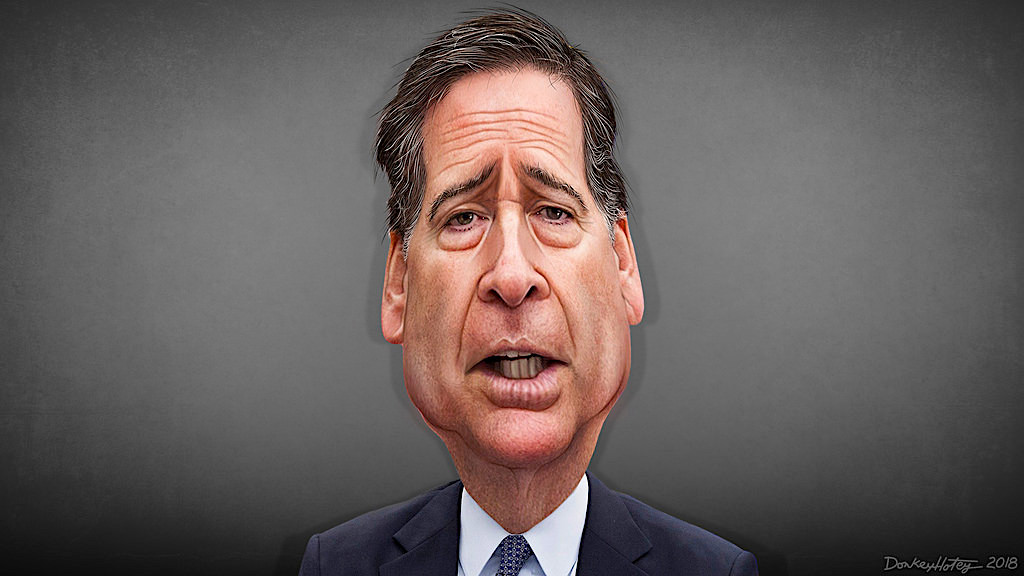
Comey: Pulled a Hoover on Trump? (Carciature by DonkeyHotey)
The mainstream media and other Russia-gater aficionados immediately seized on “this Russian thing” as proof that Trump was trying to obstruct the investigation of alleged Russian collusion with the Trump campaign. However, in the Holt interview Trump appeared to be reflecting on Comey’s J. Edgar Hoover-style, one-on-one gambit alone in the room with Trump.
Would Comey really do a thing like that? Was the former FBI director protesting too much in his June 2017 testimony to the Senate Intelligence Committee when he insisted he’d tried to make it clear to Trump that briefing him on the unverified but scurrilous information in the dossier wasn’t intended to be threatening. It took a few months but it seems Trump figured out what he thought Comey was up to.
Trump to NYT: ‘Leverage’ (aka Blackmail)
In a long Oval Office interview with the Times on July 19, 2017, Trump said he thought Comey was trying to hold the dossier over his head.
“… Look what they did to me with Russia, and it was totally phony stuff. … the dossier … Now, that was totally made-up stuff,” Trump said. “I went there [to Moscow] for one day for the Miss Universe contest, I turned around, I went back. It was so disgraceful. It was so disgraceful.
“When he [James B. Comey] brought it [the dossier] to me, I said this is really made-up junk. I didn’t think about anything. I just thought about, man, this is such a phony deal. … I said, this is — honestly, it was so wrong, and they didn’t know I was just there for a very short period of time. It was so wrong, and I was with groups of people. It was so wrong that I really didn’t, I didn’t think about motive. I didn’t know what to think other than, this is really phony stuff.”
The dossier, paid for by the Democratic National Committee and the Clinton campaign and compiled by former British spy Christopher Steele, relates a tale of Trump allegedly cavorting with prostitutes, who supposedly urinated on each other before the same bed the Obamas had slept in at the Moscow Ritz-Carlton hotel. [On February 6, 2018, The Washington Post reported that that part of the dossier was written Cody Shearer, a long-time Clinton operative and passed it along to Steele. Shearer ignored a request for comment from Consortium News. [Shearer had been a Consortium advisory board member who was asked to resign and left the board.]
Trump told the Times: “I think [Comey] shared it so that I would — because the other three people [Clapper, Brennan, and Rogers] left, and he showed it to me. … So anyway, in my opinion, he shared it so that I would think he had it out there. … As leverage.
“Yeah, I think so. In retrospect. In retrospect. You know, when he wrote me the letter, he said, ‘You have every right to fire me,’ blah blah blah. Right? He said, ‘You have every right to fire me.’ I said, that’s a very strange — you know, over the years, I’ve hired a lot of people, I’ve fired a lot of people. Nobody has ever written me a letter back that you have every right to fire me.”
McGovern lays out more details during a 12-minute interview on Jan. 10 with Tyrel Ventura of “Watching the Hawks.”
Ray McGovern works with Tell the Word, a publishing arm of the ecumenical Church of the Saviour in inner-city Washington. A CIA analyst for 27 years and Washington area resident for 56 years, he has been attuned to these machinations. He is co-founder of Veteran Intelligence Professionals for Sanity (VIPS).
Real Crickets, Fake News
By Patrick ARMSTRONG | Strategic Culture Foundation | 14.01.2019
You’re an American diplomat. Posted to Cuba. You compose yourself for peaceful slumber, as an innocent American dip should… What’s that noise? Whine, buzz. Get up. Lights on. Look. Nothing. Head on pillow. Whine, buzz. We’ve all been kept up nights by some unidentifiable sound. You promise yourself you won’t listen to it. Aha, it’s stopped… no, there it is again. Another night of tossing and turning. Very understandable. The next morning you tell a colleague, heard it too, another hadn’t but can’t help listening. Soon everybody is awake listening to this irritating noise. Doctors come, check people out and find this and that (as ageing apes we all have something. Is there any before and after take on these injuries?) This is happening in Cuba, a country richly furnished with noisy insects. At some point, this irritating sound, that could be insects, morphs into something more sinister: “‘microwave hearing,’ also known as the Frey effect” for example.
The US Embassy in Havana re-opened in July 2015. About a year later, it was reported that some American diplomats complained about strange noises. The Guardian reported the story using numerous variations on the word “attack”. Crickets are mentioned, but only to be dismissed; “But this is Cuba”, wink, wink, nudge, nudge; Russia peeps above the horizon:
In fact, almost nothing about what went down in Havana is clear. Investigators have tested several theories about an intentional attack: by Cuba’s government, a rogue faction of its security forces, a third country like Russia or some combination thereof. Yet they’ve left open the possibility an advanced espionage operation went horribly awry, or that some other, less nefarious explanation is to blame.
Attacks – the story builds. A recording is produced (verrry irritating; keep anybody awake). “High pitched cricket sound”. That’s because they are insects say the Cubans. The phrasing of the AP report that covered the Cuban findings has to be read to be believed: it’s written in the sneering tone that tells you to ignore them:
Cuba on Thursday presented its most detailed defense to date against U.S. Accusations… Cuban officials attempted to undermine the Trump administration’s assertion… alleged was a lack of evidence for the U.S. Accusations… an exhaustive investigation ordered by “the highest government authorities,” a clear reference to President Raul Castro… Thursday night’s special did not present an alternate explanation for the facts presented by U.S. officials, with one significant exception…
What a dishonest way to cover a report by Cuban specialists saying we compared the recordings with cicada sounds and there was a good fit. Fortunately, as we shall see, honest people did follow that lead.
American tourists are solemnly warned “Exercise increased caution in Cuba due to attacks targeting U.S. Embassy”. Washington expels Cuban diplomats and the Guardian helpfully tells us:
Cuba employs a massive state security apparatus that keeps hundreds and possibly thousands of people under constant surveillance. US diplomats are among the most closely monitored people on the island. It’s virtually impossible for anyone to take action against an American diplomat without an element of the Cuban state being aware.
So the state of play as of the end of 2017 is this. Facts: noises, medical findings, investigations, expulsions. Speculation, they’re “attacks”, the Cuban authorities control everything and the insect explanation should be laughed at. Next year it’s China’s turn.
But at last, in September 2018, the Russian sun rises over the horizon.
The suspicion that Russia is likely behind the alleged attacks is backed up by evidence from communications intercepts, known in the spy world as signals intelligence, amassed during a lengthy and ongoing investigation involving the FBI, the CIA and other U.S. agencies. The officials declined to elaborate on the nature of the intelligence… If Russia did use a futuristic weapon to damage the brains of U.S. personnel, it would mark a stunning escalation in Russian aggression toward Western nations, compounded recently by the use of a military-grade nerve agent to poison an ex-spy and his daughter in Britain.
Love the juxtaposition of “suspicion”, “likely” and “alleged”: how many degrees of uncertainty is that? You have to wonder whether an Integrity-challenged Initiative clusteroid gave that little gem to NBC – the “signals intelligence” will probably turn out to be a five-year-old RT report about insomnia. Also note that the US military “has been working to reverse-engineer the weapon or weapons used to harm the diplomats”.
Ensorcelled by this “un-elaborated” “intelligence”, the Gadarene media swine rush straight for the cliff:
- Did Russia Attack U.S. Officials in Cuba? U.S.S.R. Used Microwaves Against American Diplomats During Cold War (Newsweek)
- Russia Is No. 1 Suspect in Mystery Brain Attacks in Cuba and China: Report (Daily Beast)
- Russia Might Be Behind Those Sonic Attacks on U.S. Government Workers in Cuba and China (Fortune)
- The U.S. Now Believes RUSSIA May Be Behind Sonic Attacks On Americans In Cuba And China (Daily Wire)
- So the Russians were ‘sonic-ing’ down in Cuba? (American Thinker)
- Russia main suspect behind illnesses of US staff in Cuba and China – report (Guardian)
- Russia suspected in Cuba mystery ‘attacks’ against US diplomats (NBC)
- Report: Experts Suspect Cuba May Have Had Russian Help in ‘Sonic’ Diplomat Attacks (Breitbart)
Altogether a perfect illustration of how fake news is built.
► Step One. Something that could be lots of things but we’ll call it an attack.
► Step Two. Attacks have attackers, so who is it? (I find it interesting that they weren’t quite ready to blame Havana, although they expelled a few Cuban diplomats: “‘I still believe that the Cuban government, someone within the Cuban government can bring this to an end,’ Tillerson added.”)
► Step Three. Drum roll… Putindunnit!
It’s surprising, actually, that it took so long; after all, Putin has weaponised Soviet history, Syrian refugees, Photoshop, humour, Pokemon, and Russophobia, why would you think he’d have forgotten crickets? Nothing is beyond or beneath him: “14-legged killer squid found TWO MILES beneath Antarctica being weaponised by Putin?“.
This happy complacency was interrupted…
by…
a loud…
POP!
The Sounds That Haunted U.S. Diplomats in Cuba? Lovelorn Crickets, Scientists Say.
And, because they’re Western scientists, not Castro’s Cuban Collaborators, we have to believe them. Two honest scientists – remember their names: Alexander Stubbs of the University of California, Berkeley, and Fernando Montealegre-Zapata of the University of Lincoln in England – on their own it seems, applied human reason to the problem and solved it. Here’s a summary of their paper.
+++++++++++++++++++++++++++++
So that’s it; the story’s dead (although the NYT does its best to keep it alive: “That’s not to say that the diplomats weren’t attacked, the scientists added”). Would be nice, though, if State took its warning down. In time the details will fade away leaving a vague sense that Cuba’s a bad and dangerous place and nasty Russians do nasty things for the fun of it. But that’s the purpose of propaganda: to leave an impression when the details are forgotten.
So what really happened? Irritating cricket sounds produced a kind of dancing mania among US diplomats and the presstitutes sank to the occasion – even though the Cuban evidence was out there – and blamed Russia.
PS. My neighbours often ask me from where I get my news when I tell them something they’ve never heard of. Well not from the Guardian or the NYT or NBC or the others that boomed this fake story: I learned from Moon of Alabama that it was crickets waaaay back in October 2017 when he (a one-man operation who does more reporting than the entire NYT building) beat the NYT by 14 months. You should read him too so you too can get next year’s NYT headlines today.
WaPo recycles old Russiagate memes in latest gossip piece about Trump-Putin secret collusion
RT | January 13, 2019
Donald Trump’s reluctance to provide unfettered access to his conversations with Vladimir Putin has upset nameless American officials, the Washington Post has revealed. The US president dismissed the story as absurd and offensive.
According to the revered paper, Trump has “gone to extraordinary lengths to conceal details” of his face-to-face conversations with Putin. During a meeting with the Russian leader in Hamburg in 2017, Trump even purportedly confiscated the notes of his own interpreter, who was then instructed not to discuss what had transpired with other administration officials.
Various (and of course nameless) US officials have now apparently complained to the Washington Post about how they’ve been left in the dark about five conversations that Trump had with the Russian leader, colorfully described by the newspaper as “one of the United States’ main adversaries.”
The story’s thinly veiled assumption is of course that Donald Trump has used his handful of private meetings with Putin to receive secret instructions from Moscow – impose new sanctions on Russia, bomb Syria, send lethal weapons to Ukraine, shred the Iran deal and missile treaties, and so forth.
The creatively framed story suffers from a few other inconvenient plot holes. The super-secret meeting with Putin in Hamburg was also attended by then-secretary of state Rex Tillerson. Does this mean that Tillerson is also a deep-cover KGB agent? Tillerson even released a readout after the meeting – following completely standard, but apparently unsatisfactory protocol.
The self-contradictory report goes on to explain how, as part of Trump’s obsession with ultra-secret Putin pow-wows, the president “generally has allowed aides to listen to his phone conversations” with the Russian leader.
Trump “allies” interviewed by the Post said that the president’s caution when it comes to meeting with Putin may be “driven by embarrassing leaks that occurred early in his presidency.” This theory is of course way less fun than the airtight idea that Trump is actually a Russian agent – that’s why WaPo only gave it one sentence.
Responding to the report, Trump told Fox News that there was nothing scandalous about his talks with the Russian leader. When Fox News host Jeanine Pirro asked if he is or has ever been working on behalf of the Kremlin, Trump responded: “I think it’s the most insulting thing I’ve ever been asked.” Among hardcore Russiagaters, his answer was naturally interpreted as an explosive non-denial.
“Credit to Jeannine Pirro for asking Trump if he’s a Russian Agent. The President, notably, never actually answered that question,” Colby Hall, founding editor of Mediaite, tweeted.
Rehashing months-old Russiagate news, the Washington Post also disclosed that Democratic lawmakers are still demanding details about Trump’s meeting with Putin in Helsinki last summer. House Democrats reportedly plan to form a subcommittee which aims to obtain State Department records of Trump’s various encounters with the Russian president.
Another Climate Propaganda Story Promoting the Normal as Abnormal
By Dr. Tim Ball | Watts Up With That? | January 8, 2019
Almost every day there are stories in the media about weather or climate events that create the impression that they are new and outside of the normal pattern. None of them are. The objective is to sensationalize the story, even if it means using a meaningless period. A simple trick is to pick a period in which your claim is valid. This practice of cherry-picking the period of study is not exclusive to the media. It was a clear sign of corruption of climatology brought to a head with Roseanne D’Arrigo’s infamous comment to the 2006 National Academy of Science (NAS) panel that “if you are going to make a cherry pie, you have to pick cherries.”
That doesn’t condone the media use of the technique. All it does is illustrate why it was a convenient technique for creating a deception about what is normal. For example, a 2017 BBC headline said “Hottest June day since summer of 1976 in heatwave.” That is 41 years, which is statistically significant but not climatologically significant. A Youtube story reports “Sydney has wettest November day since 1984.” CBS Pittsburgh reported “NWS: 2018 is the 2nd Wettest Year on Record in Pittsburgh.” The record began in 1871 or 147 years ago, but even that is not climatologically significant. The ones I like are this one from North Carolina, that says, “A Look Back at the Coldest day Ever in North Carolina.” “Ever” is approximately 4.5 billion years.
Other stories focus on a pattern or change in a pattern again with the idea that it is new or abnormal. Headlines like this one from 2012, “Why have there been more tornadoes than usual this year?” Often, they are suggestive such as this 2017 New York Times story. “The 2017 Hurricane Season Really Is More Intense Than Normal.” When you read the story, you find, as is usually the case, that the caveats at the end indicate it is not unusual. The problem is the headline already set the pattern in the public mind.
The headline says, “Forget El Nino, StormFest Is about To Hit The West Coast.” The author is talking about a series of storms tracking on to the west coast of North America. The story told us
Things often calm down after January 1 during El Nino years… but not this year… with the U.S. West Coast from central California to Washington State about to be pummeled by a series of storms. Rain, snow, wind? Plenty for everyone. A view of the latest infrared satellite imagery shows an amazing line-up of one storm after another stretching way into the Pacific. A traffic jam of storms.
The terms, “pummeled” and “traffic jam” are evocative and imply the pattern is unusual. In fact, it is perfectly normal to the point that there is a descriptive term for it, the Pineapple Express. This refers to the establishment of the Polar Front along the northwest coast of North America after it migrates south from its summer position off the coast of Alaska and northern British Columbia. Low pressure systems known as anti-cyclones develop along the Front all year round. The areas affected by these systems changes as the Front migrates between its more northerly summer position and more southerly winter position. The term Pineapple Express refers to the situation in the winter when these anti-cyclones generate in the region of Hawaii and track along the Front hitting the northwest coast in a series of storms. The pattern does not stop in an El Nino year but takes a different path.
These anti-cyclone systems are also the focus of exploitation of normal weather events as abnormal, in Europe. The southerly shift of the Polar Front in the Northern Hemisphere occurs around the globe. Two major factors influence the weather pattern, sea surface temperatures that fluctuate with ocean circulation, and the Rossby Wave pattern in the Circumpolar Vortex. This pattern of anti-cyclones hitting western Europe in the winter was added to the propaganda list when they started naming the storms. It linked them to hurricanes in the public mind, and it implied they were a recent phenomenon.
They are not recent, new, or of greater intensity.

A significant part of professor Hubert Lamb’s ground-breaking and monumental work on historical climatology was a long-term reconstruction of the pattern of these anti-cyclones. It fit with his claim about why he established the Climatic Research Unit (CRU) at the University of East Anglia.
“… it was clear that the first and greatest need was to establish the facts of the past record of the natural climate in times before any side effects of human activities could well be important.”
Once he created a long-term record of these anti-cyclonic systems, there was a better chance of determining the underlying mechanisms. From this, he could achieve his final objective of better forecasting. The ability to forecast defines science. If that is not the final objective the work is mostly irrelevant.
Consider the destructive and history-altering impact of storms like the one that hit the Spanish Armada that attempted to invade England in 1588. Ironically, Phil Jones, who ran the CRU reputation into the ground while under his direction, wrote a good synopsis of Lamb’s work. There is also the storm of 1703 reported in great detail in the book “The Storm” by the famous author Daniel Defoe.
Marcel Leroux was an early major skeptic of the claim of anthropogenic global warming (AGW). His 2005 book “Global Warming: Myth or Reality” was impactful because Leroux was well qualified. As one review of his book notes,
In the global-warming debate, definitive answers to questions about ultimate causes and effects remain elusive. In Global Warming: Myth or Reality? Marcel Leroux seeks to separate fact from fiction in this critical debate from a climatological perspective. Beginning with a review of the dire hypotheses for climate trends, the author describes the history of the 1998 Intergovernmental Panel on Climate Change (IPCC) and many subsequent conferences. He discusses the main conclusions of the three IPCC reports and the predicted impact on global temperatures, rainfall, weather and climate, while highlighting the mounting confusion and sensationalism of reports in the media.
The comment about sensationalism in the media is relevant to this article because Leroux, like Lamb, also worked on a reconstruction of the anti-cyclonic systems in the North Atlantic. Leroux also worked on another later exploitation of the normal by John Holdren, Obama’s Science Advisor, the so-called “Polar Vortex.” Leroux’s 1993 work on the impact of the “The Mobile Polar High: a new concept explaining present mechanisms of meridional air-mass and energy exchanges and global propagation of palaeoclimatic changes” showed how these outbreaks of cold Polar air are a normal weather event that enter the climate record because of their regular but variable appearance and impact.
We are confronted by the unholy alliance between the political use of science by the Intergovernmental Panel on Climate Change, the spin doctors or, as I prefer, the professional liars, and the mainstream media, that create fake news by making the normal appear abnormal. As the Yiddish proverb observes, “Truth never dies but lives a wretched existence,” especially under such a deliberate onslaught.
Back to the USSR: How to Read Western News
By Patrick ARMSTRONG | Strategic Culture Foundation | 08.01.2019
The heroes of Dickens’ Pickwick Papers visit the fictional borough of Eatanswill to observe an election between the candidates of the Blue Party and the Buff Party. The town is passionately divided, on all possible issues, between the two parties. Each party has its own newspaper: the Eatanswill Gazette is Blue and entirely devoted to praising the noble Blues and excoriating the perfidious and wicked Buffs; the Eatanswill Independent is equally passionate on the opposite side of every question. No Buff would dream of reading “that vile and slanderous calumniator, the Gazette“, nor Blue ”that false and scurrilous print, the Independent“.
As usual with Dickens it is both exaggerated and accurate. Newspapers used to be screamingly partisan before “journalism” was invented. Soon followed journalism schools, journalism ethics and journalism objectivity: “real journalism” as they like to call it (RT isn’t of course). “Journalism” became a profession gilded with academical folderol; no longer the refuge of dropouts, boozers, failures, budding novelists and magnates like Lord Copper who know what they want and pay for it. But, despite the pretence of objectivity and standards, there were still Lord Coppers and a lot of Eatanswill. Nonetheless, there were more or less serious efforts to get the facts and balance the story. And Lord Coppers came and went: great newspaper empires rose and fell and there was actually quite a variety of ownership and news outlets. There was sufficient variance that a reader, who was neither Blue nor Buff, could triangulate and form a sense of what was going on.
In the Soviet Union news was controlled; there was no “free press”; there was one owner and the flavours were only slightly varied: the army paper, the party paper, the government paper, papers for people interested in literature or sports. But they all said the same thing about the big subjects. The two principal newspapers were Pravda (“truth”) and Izvestiya (“news”). This swiftly led to the joke that there was no truth in Pravda and no news in Izvestiya. It was all pretty heavy handed stuff: lots of fat capitalists in top hats and money bags; Uncle Sam’s clothing dripping with bombs; no problems over here, nothing but problems over there. And it wasn’t very successful propaganda: most of their audience came to believe that the Soviet media was lying both about the USSR and about the West.
But time moves on and while thirty years ago 50 corporations controlled 90% of the US news media, today it’s a not very diverse six. As a result, on many subjects there is a monoview: has any Western news outlet reported, say, these ten true statements?
- People in Crimea are pretty happy to be in Russia.
- The US and its minions have given an enormous amount of weapons to jihadists.
- Elections in Russia reflect popular opinion polling.
- There really are a frightening number of well-armed nazis in Ukraine.
- Assad is pretty popular in Syria.
- The US and its minions smashed Raqqa to bits.
- The official Skripal story makes very little sense.
- Ukraine is much worse off, by any measurement, now than before Maidan.
- Russia actually had several thousand troops in Crimea before Maidan.
- There’s a documentary that exposes Browder that he keeps people from seeing.
I typed these out as they occurred to me. I could come up with another ten pretty easily. There’s some tiny coverage, far in the back pages, so that objectivity can be pretended, but most Western media consumers would answer they aren’t; didn’t; don’t; aren’t; isn’t; where?; does; not; what?; never heard of it.
Many subjects are covered in Western media outlets with a single voice. Every now and again there’s a scandal that reveals that “journalists” are richly rewarded for writing stories that fit. But after revelations, admissions of bias, pretending it never happened, the media ship calmly sails on (shedding passengers as it goes, though). Coverage of certain subjects are almost 100% false: Putin, Russia, Syria and Ukraine stand out. But much of the coverage of China and Iran also. Many things about Israel are not permitted. The Russia collusion story is (privately) admitted to be fake by an outlet that covers it non stop. Anything Trump is so heavily flavoured that it’s inedible. And it’s not getting any better: PC is shutting doors everywhere and the Russian-centred “fake news” meme is shutting more. Science is settled but genders are not and we must be vigilant against the “Russian disinformation war“. Every day brings us a step closer to a mono media of the One Correct Opinion. All for the Best Possible Motives, of course.
It’s all rather Soviet in fact.
So, in a world where the Integrity Initiative is spending our tax dollars (pounds actually) to make sure that we never have a doubleplusungood thought or are tempted into crimethink, (and maybe they created the entire Skripal story – more revelations by the minute), what are we to make of our Free Media™? Well, that all depends on what you’re interested in. If it’s sports (not Russian athletes – druggies every one unlike brave Western asthmatics) or “beach-ready bodies” (not Russian drug takers of course, only wholesome Americans) – the reporting is pretty reasonable. Weather reports, for example (Siberian blasts excepted) or movie reviews (but all those Russian villains). But the rest is some weird merger of the Eatonswill Gazette and Independent : Blues/Buffs good! others, especially Russians, bad!
So, as they say in Russia, что делать? What to do? Well, I suggest we learn from the Soviet experience. After all, most Soviet citizens were much more sceptical about their home media outlets than any of my neighbours, friends or relatives are about theirs.
My suggestions are three:
- Read between the lines. A difficult art this and it needs to be learned and practised. Dissidents may be sending us hints from the bowels of Minitrue. For example, it’s impossible to imagine anyone seriously saying “How Putin’s Russia turned humour into a weapon“; it must have been written to subversively mock the official Russia panic. I have speculated elsewhere that the writers may have inserted clues that the “intelligence reports” on Russian interference were nonsense.
- Notice what they’re not telling you. For example: remember when Aleppo was a huge story two years ago? But there’s nothing about it now. One should wonder why there isn’t; a quick search will find videos like this (oops! Russian! not real journalism!) here’s one from Euronews. Clearly none of this fits the “last hospitals destroyed” and brutal Assad memes of two years ago; that’s why the subject has disappeared from Western media outlets. It is always a good rule to wonder why the Biggest Story Ever suddenly disappears: that’s a strong clue it was a lie or nonsense.
- Most of the time, you’d be correct to believe the opposite. Especially, when all the outlets are telling you the same thing. It’s always good to ask yourself cui bono: who’s getting what benefit out of making you believe something? It’s quite depressing how successful the big uniform lie is: even though the much-demonised Milosevic was eventually found innocent, even though Qaddafi was not “bombing his own people”, similar lies are believed about Assad and other Western enemies-of-the-moment. Believe the opposite unless there’s very good reason not to.
In the Cold War there was a notion going around that the Soviet and Western systems were converging and that they would meet in the middle, so to speak. Well, perhaps they did meet but kept on moving past each other. And so, the once reasonably free and varied Western media comes to resemble the controlled and uniform Soviet media and we in the West must start using Soviet methods to understand.
Always remember that the Soviet rulers claimed their media was free too; free from “fake news” that is.
Featured Video

Trita Parsi: Israel Set a Trap for Total War in the Region
or go to
Aletho News Archives – Video-Images
Book Review
Why the War on Conspiracy Theories Is Bad Public Policy
By Kevin Barrett • Unz Review • February 1, 2019
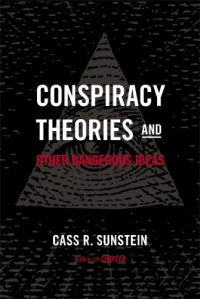 A Review of Conspiracy Theories and Other Dangerous Ideas by Cass Sunstein (based on an earlier paper co-authored with Adrian Vermeule); In Defense of Troublemakers: The Power of Dissent in Life and Business by Charlan Nemeth; and Conspiracy Theories and the People Who Believe Them, edited by Joseph E. Uscinski
On January 25 2018 YouTube unleashed the latest salvo in the war on conspiracy theories, saying “we’ll begin reducing recommendations of borderline content and content that could misinform users in harmful ways—such as videos promoting a phony miracle cure for a serious illness, claiming the earth is flat, or making blatantly false claims about historic events like 9/11.”
At first glance that sounds reasonable. Nobody wants YouTube or anyone else to recommend bad information. And almost everyone agrees that phony miracle cures, flat earthism, and blatantly false claims about 9/11 and other historical events are undesirable.
But if we stop and seriously consider those words, we notice a couple of problems. First, the word “recommend” is not just misleading but mendacious. YouTube obviously doesn’t really recommend anything. When it says it does, it is lying. … continue
Blog Roll
 Aletho News
- Easy fix for Europe’s chaos? Stop fueling war against Russia
- Putin’s key remarks on peace talks and Europe’s ‘schizophrenia’
- Trita Parsi: Israel Set a Trap for Total War in the Region
- Trump’s Iran war is on an Israeli leash
- Saudi oil boss issues global supply warning
- Riyadh Says Its Oil System Is Intact. The Numbers Say Otherwise.
- Trump and Netanyahu Want to “Finish the Job” on Iran
- US ‘one-sided dictation’ not Iran’s beliefs makes rational talks impossible: Baghaei
- Iran’s Next Strike May Not Explode. It Could Shut You Down /Col Doug Macgregor
- Iran: US political targets legitimate if assassinations return
- If Americans Knew
- DAILY UPDATE: Latest essential news on Palestine, Israel, & region
- The Israel Lobby’s Changing Fortunes
- AIPAC has become such a political liability that it’s shifting to a more “nimble” approach to buying politicians
- At least 160 Israeli settler attacks in 2 weeks
- Will Gaza’s Ancient Christian Community Disappear Forever?
- Israel’s vision of regional security rests on keeping Arab states weak
- Heidi Levine recounts how Palestinian youths helped save her in settler attack
- DAILY UPDATE: Latest essential news on Palestine, Israel, & region
- Trump’s Intensifying Sabotage of the ICC, for Israel’s Sake
- Israeli military detain US and UK volunteers in West Bank including Democratic NY politician Brad Lander
- No Tricks Zone
- E-Cars Reduce CO2 Emissions By Only 41% Compared To Internal Combustion Engine Vehicles
- Predictions Made By Renowned Climate Professor Over Past Decades Have Been Proven To Be Poor
- New Study Suggests Large Regions Of The Pacific Ocean Have Been Cooling For The Last 80 Years
- Germany’s Green Energy Debacle: High Energy Costs Force Kahla Porzellan to Close After 182 Years!
- New Study: 50 Years Of The Most Aggressive ‘Net Zero’ Policies Can Only Affect The Global Climate By 0.03°C
- US September “Heat” Was No Record…Many Records Set Decades Ago
- Latest European Green Energy Debacle; Portugal’s Largest Flagship Solar Park Insolvent!
- Green Energy Debacle: German Expert Professor Fritz Vahrenholt Warns Of Severe Economic And Social Consequences
- Two More Paleo Reconstructions Affirm Meters-Higher Sea Levels Across Ireland, Brazil 7000-6000 Years Ago
- New Study: Earth And Venus Surface Warmth Largely Explained By Convection And Lapse Rate, Not CO2 Or Radiation

