US sends more weapons to Ukraine
Samizdat | July 22, 2022
The White House on Friday announced another $270 million worth of US “security assistance” to Ukraine. The newest batch of supplies will include four HIMARS rocket artillery launchers, a large quantity of ammunition, as well as hundreds of ‘Phoenix Ghost’ suicide drones, AP reported citing National Security Council spokesman John Kirby.
In addition to four more High Mobility Artillery Rocket Systems (HIMARS) and an unspecified number of GLMRS rockets for them, the aid package includes up to 580 drones and 36,000 rounds of artillery ammunition for the M777 towed howitzers already supplied to Kiev by the Pentagon.
President Joe Biden “has been clear that we’re going to continue to support the government of Ukraine and its people for as long as it takes,” Kirby told AP. Biden is currently being treated for Covid-19 and isolating at the White House.
With this latest batch of weapons and equipment, the Biden administration will have spent a total of $8.2 billion on arming Ukraine. The funds are drawn from the $40 billion package approved by Congress in May.
The US has previously sent Ukraine about 120 of the drones, which had been “rapidly developed by the Air Force in response specifically to Ukrainian requirements,” the Pentagon said back in April. The decision to send more follows claims by Biden’s national security adviser, Jake Sullivan, that Iran was preparing to sell “several hundred” attack drones to Russia. Despite rampant speculation in the media, no evidence of such a deal has since materialized.
According to Kirby, the Ukrainian troops have used the dozen previously supplied HIMARS launchers and Phoenix Ghost drones to hold off “larger and more heavily equipped” Russian troops.
Four HIMARS launchers and one ammunition transport vehicle were destroyed by precision missile strikes between July 5-20, the Russian Ministry of Defense said on Friday.
Earlier this week, three suicide drones targeted the Zaporozhye Nuclear Power Plant in Energodar, damaging the complex. It was not clear whether they were Phoenix Ghosts or some other model in the Ukrainian arsenal, such as the US-made Switchblades. Europe’s largest atomic power plant is in territory controlled by Russian forces.
US military and intelligence officials continue to insist that Russia is not making much progress in Donbass and taking heavy casualties due to the weapons supplied to Ukraine by the West. However, both US and UK military think-tanks have recently voiced concerns over the sheer diversity of weapons systems sent to Ukraine by the variety of NATO allies.
Washington maintains that the US is not a party to the conflict because no US troops have set foot in Ukraine, but it has openly provided Kiev with weapons, ammunition, intelligence and even satellite targeting data.
US “Iran Nuclear Deal” Ploy Coming Full Circle
By Brian Berletic – New Eastern Outlook – 22.07.2022
Hopes for the Joint Comprehensive Plan of Action (JCPOA) simply known as the Iran Nuclear Deal seemed to fade further during US President Joe Biden’s recent trip to Israel where the US and Israeli governments signed a pledge to use force against Iran should it pursue nuclear weapons (weapons both the US and Israel possess).
US-based ABC News in its article, “Biden left with few options on Iran as nuclear talks stall,” would claim:
President Joe Biden made a clear promise on Iran, declaring that the country would never become a nuclear power under his watch. But during his time in the White House, the path towards upholding that promise has only become murkier.
During his trip to the Middle East, the president said he would consider using force against Iran only as a “last resort,” although Israel, the US.’s most ardent ally in the region, has pushed for the administration to issue a “credible military threat” against Tehran.
The article would mention the Iran Nuclear Deal specifically, claiming:
… while the administration initially hope to cut a “longer and stronger” deal with Iran, over a year and half of indirect negotiations has produced little movement towards restoring even the original terms of the agreement.
After a monthslong stalemate, a 9th round of talks took place in Doha, Qatar, at the end of June. A State Department spokesperson did not sugarcoat the outcome, saying “no progress was made.”
The 2018 unilateral withdrawal of America from the deal by the administration of US President Donald Trump is blamed for the deal’s failure. Yet the Trump administration’s withdrawal was predicted long before President Trump took office, and in fact, long before US President Barack Obama even signed the deal in the first place. President Biden’s recent activities are only wrapping up what was always a diplomatic ploy meant to trap Iran.
The Nuclear Deal Was Always a Trap
When President Obama signed the Iran Nuclear Deal, it was celebrated as a breakthrough in US diplomacy and a departure from the previous Bush administration’s expanding wars of aggression spanning Iraq and Afghanistan while threatening Iran next.
Signed by the United States and Iran along with other participating nations (the UK, EU, Germany, Russia, China, and France) in 2015, NBC News in their article, “What is the Iran nuclear deal?” would explain:
The Iran nuclear deal, formally known as the Joint Comprehensive Plan of Action, offered Tehran billions of dollars in sanctions relief in exchange for agreeing to curb its nuclear program.
The agreement was aimed at ensuring that “Iran’s nuclear program will be exclusively peaceful.” In return, it lifted UN Security Council and other sanctions, including in areas covering trade, technology, finance and energy.
At face value, the United States imposing sanctions on Iran to impede its development of nuclear weapons was problematic. The United States is the only nation in human history to use nuclear weapons against another nation, twice. Following the 2001 US invasion and occupation of Afghanistan and the 2003 US invasion and occupation of Iraq, the United States had military forces to Iran’s west and east. US hostilities toward Iran stretch back decades and the US State Department, regardless of administration, has made little secret that Washington seeks regime change in Tehran just as it did in Afghanistan and Iraq.
Worse still, US policymakers as early as 2009 had articulated a ploy by which the US would offer Iran a “deal” before deliberately sabotaging it and using its failure as a pretext for the long sought-after regime change war the US has wanted against Iran.
The Washington DC-based Brookings Institution, funded by the largest corporate-financier interests in the Western world as well as Western governments themselves including the US through the US State Department published the 2009 paper (PDF), “Which Path to Persia? Options for a New American Strategy Toward Iran.” In it, the Brookings Institution’s policymakers explicitly articulated options the US could pursue to achieve regime change in Iran.
These options were broken down into sections and chapters within the 170-page report and ranged from “An Offer Iran Shouldn’t Refuse: Persuasion,” to “Toppling Tehran: Regime Change,” to “Going All the Way: Invasion,” and “The Velvet Revolution: Supporting a Popular Uprising.” Everything from setting diplomatic traps to arming designated terrorist organzations were not only discussed, but in the years that followed the paper’s publication, they were implemented one after the other without success. The remaining options on the long list are military in nature involving either the US or Israel (or both) waging war directly and openly against Iran.
All that is required before doing so is a pretext, including the “offer” the US made, but Iran “refused.”
“An Offer Iran Shouldn’t Refuse”
Under “Chapter 1” titled, “An Offer Iran Shouldn’t Refuse: Persuasion,” Brookings policymakers would explain (emphasis added):
… any military operation against Iran will likely be very unpopular around the world and require the proper international context—both to ensure the logistical support the operation would require and to minimize the blowback from it.
The paper then laid out how the US could appear to the world as a peacemaker and depict Iran’s betrayal of a “very good deal” as the pretext for an otherwise reluctant US military response (emphasis added):
The best way to minimize international opprobrium and maximize support (however, grudging or covert) is to strike only when there is a widespread conviction that the Iranians were given but then rejected a superb offer—one so good that only a regime determined to acquire nuclear weapons and acquire them for the wrong reasons would turn it down. Under those circumstances, the United States (or Israel) could portray its operations as taken in sorrow, not anger, and at least some in the international community would conclude that the Iranians “brought it on themselves” by refusing a very good deal.
The Iran Nuclear Deal was doomed before it was ever signed. It was conceived wholly as a pretext for war, not as a diplomatic solution to avoid it.
False Hope Spanning Multiple US Presidencies
In many ways, Iran would be foolish not to create a sufficient military deterrence against US aggression, including the development of nuclear weapons if necessary. However, Iran nonetheless agreed to the nuclear deal’s terms and until the US unilaterally abandoned the deal in 2018, abided by it.
In fact, following the US withdrawal from the deal, Iran continued abiding by many of its conditions alongside its other signatories in the vain hope that under a new US administration it could be salvaged.
When US President Joe Biden took office, the obvious first step by Washington should have been to unconditionally rejoin the deal by removing sanctions, followed by Iran’s renewed and full compliance to the deal’s conditions. Yet the US demanded Iranian compliance first before even agreeing to negotiate Washington’s return to the deal.
It was clear long before President Obama’s signature was inked on the deal’s documents that the US would sabotage it, blame Iran, then pursue renewed and expanded aggression against Iran directly, by proxy, or both. President Trump in 2018 took advantage of America’s domestic politics and the perceived notion that US “Republicans” seek a harder line versus Iran in order to abandon the deal. Because of President Trump’s perceived trait as an “outsider” both to his own party and wider US politics, the US could shift the blame squarely on his administration. Yet the continuity of this ploy across presidential administrations is evident by the fact that upon coming into office, President Biden did not immediately and unconditionally return the US to the deal’s framework.
Instead, President Biden’s administration prevented America’s return to the deal by creating unreasonable preconditions placed entirely upon Iran. With President Biden’s statement in Israel coupled with a recent claim made by US National Security Adviser Jake Sullivan that Iran is preparing to supply Russia with drones, the US is closing the door on the deal indefinitely.
Further evidence of continuity between US administrations can be seen throughout the US-led destabilization, invasion, and occupation of Syria. The campaign was meant as one of several prerequisites laid out by the Brookings Institution’s experts in 2009 before attempting regime change against Iran directly. Ironically, as the Obama administration appeared reconciliatory toward Iran by signing the Iran Nuclear Deal, the same administration presided over the devastating proxy war targeting Iran’s key ally in the region, Syria.
Support of US aggression in Syria transcended presidencies, from the Bush administration who set the stage for it, to the Obama administration who presided over the opening phases of hostilities and occupation, to the Trump and now Biden administrations who have perpetuated a US military presence in Syria along with a policy of denying Syria its key fuel and food production regions in the east to block reconstruction. US foreign policy toward Syria and Iran should not be interpreted separately. The fate of both nations is entwined and illustrates the wider agenda the US is pursuing in the region and has been for decades regardless of US administration.
Barring a fundamental reordering of both American foreign policy objectives and a reordering of the special interests driving them, the Iran Nuclear Deal’s prospects of success will only fade further in the distance. While Tehran’s patience is admirable, Iran and its allies must prepare for the inevitable hostilities that will follow US blame against Tehran for “undermining” a deal the US never had any intention of honoring in the first place.
Brian Berletic is a Bangkok-based geopolitical researcher and writer.
South American trade bloc snubs Zelensky
Samizdat | July 21, 2022
South America’s Mercosur trade bloc has declined a request by Ukrainian President Vladimir Zelensky to speak at its summit, host nation Paraguay said on Wednesday, according to the AFP news agency.
Mercosur members Argentina, Brazil, Uruguay and Paraguay failed to reach an agreement on whether to invite the Ukrainian leader, Deputy Foreign Minister, Raul Cano said, albeit refusing to name the countries that opposed the move.
“There was no consensus on such communication, that’s why the Ukrainian counterpart has already been informed that under current circumstances there are no conditions allowing to speak with the president of Ukraine in the Mercosur format,” the minister explained.
Earlier this month, Julio Cesar Arriola, Paraguay’s foreign minister, said that Zelensky had talked with Mario Abdo Benitez, the nation’s president, on the phone and asked for the opportunity to address the upcoming Mercosur summit. According to Arriola, Benitez promised to discuss the matter with his colleagues in the bloc.
Mercosur is an economic and political organization that was established in 1991 to create a common market and incentivize development in South America.
After Russia attacked Ukraine in late February, Zelensky has addressed a slew of national parliaments and major international forums, including NATO, the G7 and the UN in an effort to rally countries to Kiev’s cause and help it fight off Moscow’s offensive.
However, in late June, when the Ukrainian president took part in a virtual meeting with the African Union, only a handful of leaders reportedly tuned in to listen to his speech. Following the conference call, the President of Senegal and African Union Chairperson, Macky Sall, indicated that Africa’s position of neutrality over the conflict in Ukraine remained unchanged.
UK pumping more arms into Ukraine
Samizdat | July 21, 2022
The UK will send Ukraine anti-tank weapons, drones, artillery guns and tens of thousands of rounds of ammunition, Defense Secretary Ben Wallace told Parliament on Thursday. Ukraine will receive more than 20 M109 and 26 L119 artillery guns, as well as counter-battery radar systems and more than 50,000 rounds of ammunition for its existing Soviet-era artillery systems.
The UK will also send 1,600 anti-tank weapons as well as drones, including hundreds of “loitering aerial munitions,” more commonly known as “suicide drones.”
The arms will be sent to Ukraine in the coming weeks, and Wallace’s announcement comes several weeks after outgoing Prime Minister Boris Johnson pledged an additional £1 billion ($1.2bn) in military support to Vladimir Zelensky’s government. In total, the UK has spent £2.3 billion on weapons and training for Kiev’s military since Russia’s military operation in Ukraine began in February.
This money has already paid for nearly 7,000 NLAW, Javelin and other anti-tank missiles, 16,000 artillery rounds, six mobile anti-air missile launchers, as well as a number of M270 rocket artillery systems and 120 armored vehicles.
The impact of these shipments on the battlefield, however, has been debatable. Captured Ukrainian troops have described the Javelin missile launchers – sent by both the UK and the US – as “completely useless” in urban combat, while soldiers are reportedly encountering battery issues with the NLAW “making it impossible to use.” Russia’s military doctrine also favors heavy artillery bombardment of enemy positions from far beyond the NLAW’s 600 meter range.
Both sides have leaned heavily on artillery as fighting rages on in eastern Ukraine and the Republics of Donetsk and Lugansk. Utilizing superior firepower, Russian and allied troops recently brought the entirety of the Lugansk People’s Republic under their control and seized operational control of Seversk, which is within striking distance of the major cities of Slavyansk and Kramatorsk.
Ukraine has received a dozen M142 HIMARS rocket artillery systems from the US. While US Defense Secretary Lloyd Austin described these weapons as making “such a difference on the battlefield,” Ukrainian Defense Minister Alexey Reznikov claimed this week that his forces need at least 50 of the systems to hold back Russia’s advances and 100 – around a third of the US’ entire stockpile – to conduct a counteroffensive.
In terms of conventional artillery, the 50,000 shells promised by Wallace is enough to keep Ukraine’s guns firing for roughly eight days. As of last month, Ukraine’s deputy head of military intelligence estimated that his forces were expending 6,000 shells per day, and that Ukraine has one artillery gun for every 15 fielded by Russia.
Meanwhile, a report by the Royal United Services Institute, a British think tank, claims that Russia is firing approximately 20,000 artillery shells per day.
US and UK want ‘real war’ between Russia and EU – Lavrov
Samizdat | July 20, 2022
The US and UK want to escalate the Russia-Ukraine conflict into a larger confrontation between Moscow and members of the European Union, Russian Foreign Minister Sergey Lavrov said on Wednesday in an interview with RT and Sputnik.
“Our American counterparts, British counterparts… with active support from Germans, the Polish and the Baltic states, they really want to turn this war into a real war and start a confrontation between Russia and European states,” Lavrov told RT’s editor-in-chief, Margarita Simonyan.
The Western governments are “keeping Ukraine from any constructive steps” towards a peace settlement, Lavrov argued. “[Ukraine is] not just [being] pumped with weapons. They are forced to use these weapons in an increasingly riskier way.”
Russia launched its military operation in the neighboring country in late February. Many countries, including NATO members, imposed sweeping sanctions on Moscow and have been supplying Kiev with heavy weapons. The latest deliveries include US-made M142 HIMARS multiple rocket launchers and M777 howitzers.
Lavrov claimed that the US and Britain were acting to their own advantage in the conflict between Russia and the EU because the economies of the bloc’s members are bearing the brunt of the sanctions. He added that the US has been acting “irresponsibly” by stoking tensions with Russia.
They are playing a very dangerous game. I don’t think they understand it themselves. But then, in Europe, a lot of people are starting to understand that.
US President Joe Biden said last week that Russia must suffer “a strategic failure” in Ukraine and vowed more support for Kiev.
Russia sent troops into Ukraine on February 24, citing Kiev’s failure to implement the Minsk agreements, designed to give the regions of Donetsk and Lugansk special status within the Ukrainian state. The protocols, brokered by Germany and France, were first signed in 2014. Former Ukrainian President Pyotr Poroshenko has since admitted that Kiev’s main goal was to use the ceasefire to buy time and “create powerful armed forces.”
In February 2022, the Kremlin recognized the Donbass republics as independent states and demanded that Ukraine officially declare itself a neutral country that will never join any Western military bloc. Kiev insists the Russian offensive was completely unprovoked.
Hotter than the Sun: Finally, a Book Worth Reading

The top seller on Amazon for books devoted to war and peace as of this writing, Scott Horton’s newest offering, Hotter than the Sun: Time to Abolish Nuclear Weapons, is a timely must read. As Washington barrels heedlessly along into Cold War II, the American public badly needs educating on the current risks, past close calls, and the utter insanity of an entire for-profit industry built on the flawed concept of thousands of thermonuclear bombs as “weapons” that keep us safe.
With major papers like the Wall Street Journal and New York Times now regularly running pieces arguing everything from the need to show the Russians we aren’t afraid to fight a nuclear war—that we can even “win” one—to the idea that a “small” nuclear war can help mitigate climate change, Scott’s book is a vital weapon in the hands of the sane, convincingly making the case that it really is time to get rid of the thousands of nuclear and thermonuclear bombs in existence.
Because the truth about thousands of nuclear and thermonuclear bombs, the overwhelming majority of which are possessed by the United States and Russia, is immutable. Just as Ronald Reagan said forty years ago, a nuclear war cannot be won and can never be fought.
And forget even about launching a life-ending nuclear exchange on purpose, as Hotter than the Sun notes there have been plenty of accidents that could have resulted in exactly the same outcome. From the Air Force accidentally dropping a nuke over North Carolina to absent-minded technicians dropping wrenches down armed missile silos, careless scientists playing with plutonium rods to the Norwegians launching a satellite, the game theoretical strategic calculations that form the basis of US and Russian nuclear postures mean that an apparent threat or actual detonation on their soil would mean an almost immediate escalation to a full-on nuclear exchange.
Apart from documenting such accidents that nearly resulted in the deaths of potentially millions or billions of people, if not every single one of us, over the course of the ensuing nuclear winter, the book revisits past insanities. From the decision to test the first bomb, despite its creators’ real concerns that it would immediately ignite atmosphere and oceans, instantly killing everyone on earth, to deciding to drop the first bombs on Japan only in order to justify their expense, ensure continued funding for making more, and intimidating the Soviets, Scott’s book takes the reader right up to the present day, where Washington, having started an unnecessary new arms race by unilaterally ripping up important arms control agreements in the name of pursuing a first-strike capability and enriching Lockheed Martin and Northrop Grumman execs, is now in full panic mode because it is apparently losing.
But it is important to note, as Scott does, that “losing” in Washington’s mind is not being able to potentially threaten with virtual impunity anyone it wants: that is hardly a concern most American voters express, if any.
Important as the topic of nuclear arms is, the over fifteen thousand nuclear and thermonuclear bombs in existence being the number one short-term threat to humanity’s continued existence, Scott’s title frankly sells the book’s contents rather short. At over four hundred pages, consisting of several dozen interviews conducted over a period of nearly two decades, Hotter than the Sun is a critical primer on everything from diplomatic history to US Middle East policy to the military-industrial complex, corporate lobbying, and a range of other issues.
From corporate lobbying for North Atlantic Treaty Organization expansion to Israeli misinformation about the fake Iranian nuclear threat to how the decision to invade Iraq was made to why any random Pakistani colonel on the border with India could end all life on earth, Scott and his guests never fail to inform, surprise, disgust, and alarm, with Washington’s misguided, corporatist, imperialist, or just plain idiotic policies usually at or near the root of virtually every serious problem facing humanity today.
Featuring interviews with Daniel Ellsberg, Seymour Hersh, Gar Alperovitz, Chas Freeman, Ray McGovern, Doug Bandow, and many others, Hotter than the Sun is a book worthy of your time and money. And this at a moment when any trip to your local bookstore or Barnes and Noble outlet is sure to leave you much poorer and much more badly informed about the world than you otherwise would have been had you not bought anything to read at all.
Joseph Solis-Mullen is a graduate of Spring Arbor University and the University of Illinois, Joseph Solis-Mullen is a political scientist and graduate student in the economics department at the University of Missouri.
EU approves another 500 million euros in military aid to Ukraine
Press TV – July 19, 2022
The European Union has approved another 500 million euros to supply arms to Ukraine, taking the bloc’s total financial support for Kiev to 2.5 billion euros.
The money will be disbursed via the so-called European Peace Facility, as EU rules prevent the bloc from using its seven-year budget to fund military operations.
The EU approved its first tranche of aid to Ukraine just after Russia launched its special military operation in the country’s eastern Donbas region in late February.
The new pledge comes despite the fact that half of the seven-year facility has been already given to Ukraine in just five months since the conflict started.
Apart from supplying financial aid, the EU has also imposed a wide range of sanctions on Moscow in support of Kiev.
The bans, however, have so far backfired, with inflation across the continent hitting record highs on top of an unprecedented devaluation of the euro.
There is growing disquiet in the EU regarding the negative impact that the sanctions against Russia are having on the European Union’s economy.
UK testing drone swarms in Ukraine might lead to escalation
By Drago Bosnic | July 18, 2022
Air superiority is how the political West wages war. US and UK air power has been instrumental in all wars waged by the two leading Western imperialist thalassocracies since the Second World War to this day, although it existed doctrinally since at least the 1920s. This is so ingrained in their concept of warfare that it’s considered nearly impossible for them to lead a successful military campaign without it. This stands in stark contrast to most other comparable military doctrines, particularly the Russian one.
The Nazi onslaught destroying much of their air force before it got the chance to take off forever changed the way Russians see air power. Realizing (over)reliance on it can have a detrimental effect, coupled with the devastating consequences of American and British firebombing of German cities, which in some cases had an effect no less destructive than nuclear weapons (minus the radiation), Russia’s post-WWII military doctrine adopted a distinct and (up until recently) unique focus on advanced air defenses. Since then, Russia has been developing top-notch SAM (surface-to-air missile) systems, some of which are so advanced they effectively nullify the entire Western air dominance concept. And although Western state-run mass media love to downplay this, the very fact US legislation directly and very specifically targets these systems with sanctions speaks volumes.
The proliferation of these systems is a strategic nightmare for aggressive Western planners, who can’t simply bypass them without incurring “unacceptable losses”. In order to counter Russian SAMs, Western Military-Industrial Complexes have been working on a plethora of new systems. Some prominent examples include advanced drones, particularly miniature ones, which are also planned to operate in swarms, saturating hostile air defenses and paving the way for the more traditional aviation to bomb its way through enemy ground forces.
RAF (Royal Air Force) experiments with drone swarms show “they can overwhelm enemy defenses” and the concept would be ready for action in a war, according to the UK military service’s Chief of Staff. Air Chief Marshall Sir Mike Wigston told the Global Air and Space Chiefs’ Conference 2022 in London last week that the RAF’s 216 Test and Evaluation Squadron and the Rapid Capabilities Office trialed five drone types in 13 experiments with various payloads and equipment over three years. According to Wigston, this yielded enough insights for the service to declare an “operationally useful and relevant capability,” using its current fleet of drones.
“We are exploring new models of capability delivery and accelerated production ‘when we need them’ rather than ‘in case we need them,’ from the twin jet 3D-printed Pizookie, to commercially available large drones fitted with novel payloads, to large quadcopters,” Wigston stated.
“The problem of overcoming air defenses is a key obstacle to employing [air] power. Planning for air operations increasingly entails ensuring that planes can fly safely in the first place, putting at risk untold amounts of money that militaries have pumped into beefing up their fleets to fourth- and fifth-generation technology. That conundrum is on display in Ukraine, where Ukrainian and Russian air-defense capabilities are effectively canceling out the other side’s air power arsenal,” according to Justin Bronk, a defense analyst with the London-based Royal United Services Institute.
“The fact air power has been mutually denied, relatively speaking, in Ukraine by both sides has far more serious implications for us than for either [Russians or Ukrainians]. That’s because both militaries are ultimately dependent on massive land manpower and artillery, whereas joint forces of the UK and other Western powers are critically dependent on having air access and air superiority,” Bonk said at the London conference on July 13.
“Swarming, which means throwing enough expendable drones at a defensive radar and interceptor position so as to overwhelm them, can be effective, but only to a point. The idea of small and cheap drones attacking air defenses by way of swarming may not be feasible because those drones lack the requisite range and speed. If you want things to go fast and far, they’re going to be jet-propelled and they’re going to cost a fair bit. Getting drone swarms close enough to sophisticated air defenses with a range of hundreds of kilometers requires risky and potentially pricy insertion tactics that negate the widely cited cost benefit of cheap, small drones,” he added.
Western strategists are closely following their latest proxy war against Russia, trying to devise new strategies to fight the Eurasian giant. The deployment of never-before-seen ISR (intelligence, surveillance, reconnaissance) assets around Russia’s borders is a testament to that. In addition, increasing reliance on unmanned systems isn’t just the result of Western militaries trying to adopt new technologies. With NATO having severe manpower problems, drones might be the only way for members to have functional militaries in the near future. The UK itself is faced with this issue, having a very limited ground force with barely a few combat-ready brigades, to say nothing of other micro-satellites carved up after the dismantling of post-socialist federal states.
What’s truly dangerous at this point is the possible deployment of these systems to Ukraine. Most NATO weapons deliveries happened weeks or months before they were officially announced. Thus, it’s highly likely the same is true in this case. How Russia might react is up for debate, but it most certainly won’t take it kindly, which opens up new possibilities for escalation, particularly in the context of the latest controversial statements coming from the UK.
Drago Bosnic is an independent geopolitical and military analyst.
Hamas: “Jerusalem Declaration” will not give Israel legitimacy
MEMO | July 15, 2022
Palestinian factions have categorically rejected the Jerusalem Declaration signed by US President Joe Biden and Israeli Prime Minister Yair Lapid, saying it represents “an aggression” against Palestinian people and their rights.
In its statement after Biden and Lapid signed the declaration on the strategic partnership between the two sides, Hamas explained that the agreement comes to further “consolidate Washington’s approach of siding with and supporting the occupation’s aggression against our Palestinian people and their Islamic and Christian lands and holy sites and a continuation of the US’ suspicious attempts to liquidate the Palestinian cause by integrating this Zionist entity into our Arab and Islamic Ummah [nation].”
“This declaration expresses the blatant and unacceptable bias of the US administration toward the Zionist entity and its occupying agendas. It makes the US administration a partner in the Israeli occupation’s aggression and terrorism against our Palestinian land, people, and sanctities,” it added.
In turn, the Popular Front for the Liberation of Palestine considered the deal a continuation of the aggression against the Palestinian people and their national rights and said it gives Israel more freedom to expand and deepen its colonial project in Palestine and its expansion abroad.
It called for “the escalation of all forms of resistance” against the “aggressive colonial and Zionist policies.”
For its part, the Democratic Front for the Liberation of Palestine said the Jerusalem Declaration is an open invitation to ignite regional wars and to reinforce Israel’s aggressive role at the expense of the interests of the peoples of the region under the pretext of Israel’s “right to defend itself”.
It warned of the repercussions of the plans of the United States and Israel to drown the region in “seas of blood and many problems such as impoverishment, starvation, waste of wealth and mass destruction”.
The four-page Jerusalem Declaration includes an American commitment to Israel’s security and its military superiority in the region.
Emirati official: We oppose anti-Iran coalition in region

Anwar Gargash, the UAE president’s diplomatic adviser
Press TV – July 15, 2022
An Emirati official has dismissed the idea of forming a NATO-like military alliance in the region, saying the United Arab Emirates does not intend to form a regional coalition against any country, in particular Iran.
Speaking to reporters on Friday, the UAE president’s diplomatic adviser said a Middle East NATO was merely a “theoretical” concept and that confrontation was not an option for Abu Dhabi.
“We are open to cooperation, but not cooperation targeting any other country in the region and I specifically mention Iran,” Anwar Gargash said. “The UAE is not going to be a party to any group of countries that sees confrontation as a direction.”
He also said that the UAE was in the process of sending an ambassador to the Islamic Republic of Iran.
“Our conversation is ongoing … we are in the process of sending an ambassador to Tehran. All these areas of rebuilding bridges are ongoing,” Gargash maintained.
“We have an open eye. We are very clear if something is defending the UAE and its civilians, of course we are open to these ideas, but not to the idea of creating any axes against this or that country,” he added.
In recent months, Iran and the UAE have intensified their efforts to rebuild relations affected by the years-long war in Yemen and other regional issues.
Last August, Iran’s President Ebrahim Raeisi said that the Islamic Republic is determined and open to the expansion of relations with the UAE, stressing that Tehran sees no boundaries to the promotion of such ties, particularly trade and economic ones.
Iranian Foreign Minister Hossein Amir-Abdollahian said after a May visit to the UAE that warm relations among neighbors disappoint the enemies.
“A new page was opened in the relations between the Islamic Republic of Iran and the UAE,” the top Iranian diplomat tweeted after meeting Mohammed bin Zayed Al Nahyan, the newly-appointed president of the UAE, in Abu Dhabi on May 16.
“We warmly shake hands with our neighbors. The warmth of the neighbors’ relations disappoints the enemies of the region,” he added.
“Made in America” Mini-nukes to be used in a “Nuclear First Strike” coming soon to Italy, Belgium, Germany, Netherlands.
By Manlio Dinucci – byoblu – July 15, 2022
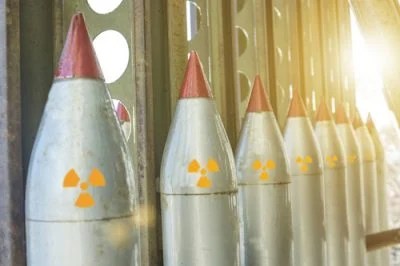
“Production of the B61-12 nuclear bomb begins,” Sandia National Laboratories announced from the United States. The B61-12, which replaces the previous B61 deployed by the U.S. at Aviano and Ghedi and other European bases, is a new type of weapon. It has a nuclear warhead with four power options, selectable depending on the target to be destroyed. It is not dropped vertically, but at a distance from the target on which it is directed guided by a satellite system. It can penetrate underground, exploding deep to destroy command center bunkers in a nuclear first strike.
The B61-12s, classified as “non-strategic nuclear weapons,” are deployed in Europe — in Italy, Germany, Belgium, the Netherlands, Britain and probably other countries — at distances far enough to strike Russia. They thus have offensive capabilities similar to those of strategic weapons.
Another nuclear weapon system, which the United States is preparing to install in Europe against Russia, is ground-based intermediate-range missiles. They can also be launched from “anti-missile shield” installations, deployed by the U.S. at bases in Deveselu in Romania and Redzikowo in Poland, and aboard five warships cruising in the Mediterranean, Black Sea and Baltic Sea close to Russia.
That such installations have offensive capabilities is confirmed by Lockheed Martin itself. Outlining the characteristics of the Mk 41 vertical launch system, used in both land and naval installations, it specifies that it is capable of launching “missiles for all missions, both defense and long-range attack, including Tomahawk cruise missiles.” These can be armed with nuclear warheads.
Europe is thus being turned by the U.S. into the front line of a nuclear confrontation with Russia, even more dangerous than that of the Cold War.
Featured Video
Why the U.S. Should Pull Back From the First Island Chain
or go to
Aletho News Archives – Video-Images
Book Review
‘Why Fauci Must Rot in Prison’: A Tale of Two Diaries
By Jill Erzen | The Defender | October 13, 2026
Dr. Anthony Fauci’s private diary reveals a “mind-numbing” contradiction between what the former top U.S. infectious disease official knew about COVID-19 and what he told the public, senior White House adviser Peter Navarro, Ph.D., said last week on “American Thought Leaders.”
In his new book, “Why Fauci Must Rot in Prison,” due out Oct. 20, Navarro compares Fauci’s private entries to his own pandemic-era diary, and uses what he calls “a tale of two diaries” to argue that Fauci should face criminal prosecution.
“I show, actually, how a prosecution can and should happen … at the state level, most likely,” Navarro said. “He should wind up in prison, and we’ve got the receipts in this book to put him there.”
Navarro said Fauci repeatedly acknowledged important facts in private, then publicly pursued policies that contradicted those facts — with devastating consequences.
“What he says many times privately in his diary is so at odds with both his public behavior and public statements that it’s mind-numbing,” Navarro said.
Navarro examines the lasting damage caused by lockdowns and other pandemic policies, and the ongoing toll of long COVID.
His book also addresses questions about vaccine safety, including why healthy young people faced COVID-19 vaccination mandates despite concerns about myocarditis, and why women were not warned about miscarriage risks linked to the shots. … continue
Blog Roll
 Aletho News
- Jennifer Kavanagh: Why the U.S. Should Pull Back From the First Island Chain
- Yemen denounces international community’s silence on Saudi aggression, siege
- UAE and Saudi Arabia move toward renewed coordination against Sanaa
- How Iran’s two-week retaliatory strikes exposed cracks in US military architecture in Persian Gulf
- The mother of all propaganda: Why the hype over US MOAB strike against Iran is nothing but theater
- Iran says it possesses technology behind US 14-ton GBU bunker-buster
- Trump asks Iran not to retaliate after he strikes Pickaxe Mountain – w/ Prof. Marandi
- Vice President J.D. Vance’s Deceptive ‘Antiwar’ Campaign Speech
- Iran: Palestinians’ rights must not be compromised in Gaza’s future; US, Israel to blame for Hormuz situation
- Ongoing tales of Syrian chemical weapons
- If Americans Knew
- Israeli rabbi permits occupiers to steal Palestinian olive harvest in West Bank
- Netanyahu’s spin on latest settler attack is laughable – Daily Update
- Israeli soldiers debunk Israel’s talking points
- In West Bank, Israeli settlers are totally out of control – Daily Update
- NPR investigation finds evidence of widespread fraud at mall kiosks tied to Israeli skincare brand
- Tucker Carlson exposes Israeli Lies about the Oct 7th attack, Charlie Kirk, and the U.S.
- Israel has detained thousands of Palestinian children since Oct 7th – over half spent time in solitary, many uncharged
- Israeli Analysis: Is Netanyahu Planning an ‘October Surprise’ Attack Before Israel’s Election?
- Israeli settlers brutally attack Palestinians and Washington Post female photographer, 65
- Words Have Changed, Occupation Continues: The Reality of the Gaza Ceasefire
- No Tricks Zone
- Predictions Made By Renowned Climate Proifessor Over Past Decades Have Been Proven To Be Poor
- New Study Suggests Large Regions Of The Pacific Ocean Have Been Cooling For The Last 80 Years
- Germany’s Green Energy Debacle: High Energy Costs Force Kahla Porzellan to Close After 182 Years!
- New Study: 50 Years Of The Most Aggressive ‘Net Zero’ Policies Can Only Affect The Global Climate By 0.03°C
- US September “Heat” Was No Record…Many Records Set Decades Ago
- Latest European Green Energy Debacle; Portugal’s Largest Flagship Solar Park Insolvent!
- Green Energy Debacle: German Expert Professor Fritz Vahrenholt Warns Of Severe Economic And Social Consequences
- Two More Paleo Reconstructions Affirm Meters-Higher Sea Levels Across Ireland, Brazil 7000-6000 Years Ago
- New Study: Earth And Venus Surface Warmth Largely Explained By Convection And Lapse Rate, Not CO2 Or Radiation
- 2025 Nature Paper Claiming Worsening Global Drought Gets RETRACTED …Heavily Flawed

