“Patriotic” Church Ministers
By Jacob G. Hornberger | FFF | May 23, 2022
Pope Francis is taking the leader of the Russian Orthodox Church to task for supporting Russia’s invasion of Ukraine. Francis told Patriarch Kirill not to be “Putin’s altar boy.”
If only that same message had been received and understood by Catholic priests here in the United States when it was the Pentagon and the CIA that were the invaders of Afghanistan and Iraq. During those two invasions, there were priests who were exhorting their congregations to “support the troops.”
At Sunday Mass in my own church during those invasions and subsequent occupations, we were asked to pray for the troops, “especially those in harm’s way.” Periodically I would send an email to my priest asking why we were never asked to pray for the victims of the troops — that is, the people in Afghanistan and Iraq who were being killed or injured or having their homes, businesses, or countries being destroyed by the U.S. invasions and occupations.
I never received a response to my emails, but I have no doubts that my priest was totally befuddled over why I would be sending him such emails. After all, I’m an American, just as he is. Isn’t it our moral duty as Americans to support the troops when they head off into war?
I recall reading an article regarding a Catholic priest in the mainstream press in the days preceding the invasion of Iraq. It involved a Catholic soldier who was having a deep crisis of conscience. He was suffering over whether killing an Iraqi soldier would be consistent with God’s laws. A Catholic priest who was serving as an active-duty soldier counseled him by telling him that he could faithfully follow the president’s orders to invade the country without violating God’s laws.
That priest was absolutely in the wrong. Oh sure, I’m confident that he believed he was counseling the right thing — the patriotic thing — but he was dead wrong in his counsel to that soldier. What he should have said to him instead was: “The president has no legal or moral authority to order an invasion of a country that has not attacked the United States. This will be a pure act of aggression. As a Catholic soldier, you have no moral right to kill any Iraqi soldier. You need to follow the dictates of your conscience and refuse to deploy.”
Not all Catholic priests performed their “patriotic” duty by “supporting the troops.” I had a good friend in Denver who was a Catholic priest. He was also a libertarian. I asked him point blank: If the Pentagon forced me to go to Iraq as a U.S. soldier and placed me in a position of kill-or-be-killed, could I legitimately, under God’s laws, kill an Iraqi soldier under principles of self-defense?
His answer was direct and unequivocal: No. You would have no right under God’s laws to kill any Iraqi soldier. If you were not able to escape, you would have to simply let yourself be killed. You could not legitimately fire any shots at any Iraqi soldier, even if he was trying to kill you. His answer was the right one, at least from a religious standpoint.
Of course, it wasn’t just Catholic priests who felt that they were doing their “patriotic” duty by rallying to the Pentagon and the CIA and coming to the support of the troops in their invasions of Afghanistan and Iraq. There were plenty of Protestant ministers who were also exhorting their congregations to thank the troops for their service for their invasions and occupations of both countries. I have no doubts that there were also lots of Jewish rabbis doing the same thing.
In fact, many Americans were also supportive of the Pentagon and the troops. I recall one person saying, “Once the debate and protests over whether to invade are over and the president has made the decision, it is incumbent on every American to support the troops.” In other words, once the invasion is underway, the exercise of individual conscience needs to go away.
Perhaps one redeeming value of Russia’s invasion of Ukraine is that it might cause many Americans to reflect on their support of the Pentagon’s and the CIA’s invasions of Afghanistan and Iraq. Today, virtually all of the condemnations that the Pentagon, the CIA, and other U.S. officials are leveling against Russia apply to the U.S. invasions of Afghanistan and Iraq as well. What is fascinating to me is that they don’t seem to realize that.
As I point out in my new book An Encounter with Evil: The Abraham Zapruder Story, it is always easy to identify and condemn evil in foreign regimes. It is much more difficult to identify and confront evil within one’s own regime. The condemnation of Russia’s invasion of Ukraine while, at the same time, thanking the troops for their service in Iraq and Afghanistan is a perfect example of this phenomenon.
So are such things as state-sponsored assassinations, indefinite detention, torture, and extra-judicial executions of prisoners. It’s easy to identify and condemn them when they were committed by foreign regimes, especially communist ones. It’s not so easy to identify and condemn them when committed by one’s own regime. In fact, many people don’t even want to know about evil acts committed by the Pentagon and the CIA, especially when it comes to assassination of political leaders on grounds of “national security.”
Pope Francis is right. Patriarch Kirill should not serve as Vladimir Putin’s altar boy by blindly supporting the Russian invasion of Ukraine, But neither should Catholic priests or any other Americans become altar boys for the Pentagon and the CIA where they are the invaders and aggressors. As I point out in my new book, the best thing the American people could ever do for themselves, as well as for the people of the world, is to rid their own regime of evil.
Former head of the ruling Social Democrats, Oskar Lafontaine, blames NATO for Ukraine conflict
Samizdat | May 22, 2022
A veteran top German politician has said the West’s refusal to listen to Moscow’s concerns is one of the main causes of the current conflict in Ukraine. Oskar Lafontaine, who from 1995 until 1999 served as chair of the Social Democrats, accused the West of ignoring Russia’s security interests for years.
In an interview with left-wing newspaper Junge Welt published on Saturday, Lafontaine argued that “for a long time, we have been in a situation where Russia and China have been militarily encircled by the US.” The former SPD leader said Moscow had made it clear to NATO for 20 years that Ukraine should not become part of the military alliance – a scenario, which, according to Lafontaine, would mean US missiles deployed on the Ukraine-Russia border.
“These security interests were consistently ignored,” the politician said. And this was “one of the key reasons for the outbreak of the Ukraine war.”
Speaking of Ukraine’s NATO aspirations, the former SPD chair dismissed the argument that every country is free to decide what alliance to join.
“Everyone knows that the US would never accept Cuba’s accession to a military alliance with Russia, nor the deployment of Russian missiles on the US border with Mexico or Canada,” Lafontaine argued.
According to the German politician, Russia’s key concern in Ukraine is not NATO accession per se, but the prospect of missiles appearing on the border with minimal warning time.
Lafontaine broke down the Ukraine crisis into three key phases: firstly, NATO’s relentless eastern expansion, despite warnings from within the US that the strategy risked a conflict with Russia; secondly, President Putin’s “decision to invade Ukraine”; and thirdly, Joe Biden’s “war of attrition.”
The politician said America’s $40 billion dollar aid package for Ukraine, consisting mostly of weapons, is further “proof that the US does not want peace.”
“They want to weaken their rival Russia and say so quite openly,” he added.
Lafontaine, however, clarified that he condemns the war, “just like I condemn without any qualification all other wars that violate international law.”
The politician argued that further arms to Ukraine will prolong the war, meaning “yet more people will die.” He accused politicians in the West of thinking purely in the categories of ‘victory’ and ‘defeat,’ while ignoring the “most important” aspect, which is saving people’s lives.
According to Lafontaine, “those, who do not want more people to die, must be against any prolongation of the war, and consequently also against any weapons delivery.”
He criticized the argument that by providing military support to Kiev, the West is helping Ukraine defend itself, questioning why no one called for supporting “countries attacked by the US with deliveries of German weapons” in the past.
Speaking of Russia sanctions, Lafontaine claimed that they “are increasingly hurting people here at home – especially those with lower incomes, who can no longer pay their energy bills.”
“We are shooting ourselves in the knee. The US is probably laughing at us, because they are hardly affected by the sanctions, they can sell their liquefied natural gas in Europe in bigger quantities and their defense industry is getting a lot of business.”
The former SPD chair believes the current German leadership is in no position to work in the country’s own best interest, being nothing more than a “loyal vassal of the US.”
Lafontaine noted that the Green Party, which is part of the ruling coalition, has firmly entrenched itself in the role of the “extended arm of the US in the Bundestag” since the Yugoslav war. The party “supports every US decision when it comes to wars,” the politician said, adding that the Greens only pay attention to human rights violations when those happen in Russia or China.
The party’s current stance illustrates a radical transformation from a pacifist political force it once was. The Social Democratic Party, which the current Chancellor Olaf Scholz is a member of, too, has changed dramatically, according to its former chair, drifting away from its principles of peace, disarmament and social improvements.
Lafontaine reserved special criticism for the German press, which “is blind to the US war crimes” while offering a platform for warmongers.
The veteran German politician said that many in Germany feared that the “war will spread,” calling on the public to take to the streets in keeping with the tradition of the “peace movement of the 1980’s.”
Ukraine eyes law to deprive people of citizenship
Samizdat | May 20, 2022
Ukrainian lawmakers have introduced a bill that seeks to deprive conscripts of citizenship if they left the country during martial law.
In a bill registered in the Verkhovna Rada – Ukraine’s parliament – on Tuesday, lawmakers proposed several amendments to legislation defining the legal regime under martial law intended to “strengthen the economy and defensive capabilities of the country.”
One of the proposals suggests that anyone liable for military service may be deprived of Ukrainian citizenship if they left the country and failed to return within 30 days.
The measure would apply to those who left and did not return without a valid reason, such as a ban on leaving the host country, natural disasters, accidents, business trips, official work abroad, hospitalization or other circumstances preventing the individual from returning back home.
The bill also states that the measures would extend to individuals who have left for the Russian Federation amid the ongoing military conflict between Moscow and Kiev and those who have submitted a written refusal to mobilize.
On Wednesday, Ukrainian President Volodymyr Zelensky signed a decree on the extension of martial law and the terms of general mobilization in the country by 90 days, which is now awaiting approval by the Supreme Council of Ukraine.
Under Ukraine’s martial law, men between the ages of 18 and 60 are prohibited from leaving the country and all citizens liable for military service are required to participate in the general mobilization of all reserve forces.
Ukraine imposed martial law on February 24, after Russia attacked the neighboring state following Kiev’s failure to implement the terms of the Minsk agreements, first signed in 2014, and Moscow’s eventual recognition of the Donbass republics of Donetsk and Lugansk. The German- and French-brokered Minsk Protocol was designed to give the breakaway regions special status within the Ukrainian state.
The Kremlin has since demanded that Ukraine officially declare itself a neutral country that will never join the US-led NATO military bloc. Kiev insists the Russian offensive was completely unprovoked and has denied claims it was planning to retake the two republics by force.
US setting up military bases in eastern Yemen cashing in on UN-brokered truce: Ansarullah
Press TV – May 20, 2022
The leader of Yemen’s popular Ansarullah resistance movement says the United States, with the help of its allied Takfiri militant groups, is building several military bases in the country’s eastern provinces of Hadhramaut and al-Mahrah as well as on the Red Sea coast.
Addressing a delegation of tribal leaders from the western Yemeni province of Ibb on Thursday evening, Abdul-Malik al-Houthi said Washington is setting up military installations in eastern Yemen and the country’s southern coastal city of Aden.
He asserted that the Yemeni nation cannot accept Washington’s diktats, warning that the enemies are hell-bent on sowing the seeds of discord and division among people by hook or by crook.
“We must work for security and social stability in Ibb province through compromise and cooperation among local authorities,” the top Yemeni resistance leader told the delegation.
He said the “enemies” have begun to mobilize military reinforcements by taking advantage of the UN-brokered ceasefire, which clearly shows their orientation towards the next stage of the war, and bears testimony to their failure in the previous phase.
“Enemies, having become fairly frustrated with attempts to impose their diktats through ousted Yemeni president Abdrabbuh Mansur Hadi, have decided to remove him in a humiliating matter,” Houthi said.
“They brought a bunch of criminals, traitors, and thieves to power, and declared them as the leaders of the Yemeni nation. They are actually the picks of outsiders, not Yemenis.”
The leader of the Ansarullah movement further asserted that the Yemeni nation will never accept being under the ominous specter of the United States.
“It is the traitors and mercenaries who would like to prove their servitude to Saudi or Emirati officers,” he said, calling for an immediate end to foreign domination of the Arab country.
Normalization deals with Israel
In other remarks, Houthi pointed to the controversial normalization agreements between the Israeli regime and some Arab countries, describing the process as an opening for the Tel Aviv regime to flex its clout in the Middle East region.
“The parties displaying animosity and military aggression against our nation are the ones that are pushing for the normalization of ties with the Israeli enemy. The enemies’ main goal is to shatter the Yemeni nation’s unity and solidarity, and easily dominate it,” the Ansarullah leader said.
“Yemeni people will continue to tread the path of independence and freedom, and will prevent foreigners from interfering in their domestic affairs.”
Saudi Arabia launched the devastating war on Yemen in March 2015 in collaboration with its Arab allies and with arms and logistics support from the US and other Western states.
The objective was to reinstall the Riyadh-friendly regime of Abd Rabbuh Mansur Hadi and crush the Ansarullah resistance movement, which has been running state affairs in the absence of a functional government in Yemen.
While the Saudi-led coalition has failed to meet any of its objectives, the war has killed hundreds of thousands of Yemenis and spawned the world’s worst humanitarian crisis.
$65 billion in Western ‘aid for Ukraine’ is neither aid nor is it for Ukraine
By Drago Bosnic | May 20, 2022
In recent weeks, much has been said about the political West’s (primarily US) “aid” to the embattled Kiev regime. The US Congress has so far approved or is in the process of approving at least $54 billion to Ukraine. In addition, various reports put the amount of EU “aid” at up to €10 billion thus far, although the actual number is most likely orders of magnitude greater. When put together, this pushes the publicly acknowledged figure to a staggering $65 billion, which is equivalent to Russia’s annual military spending in nominal USD exchange rates.
The number seems rather impressive and may give an outlook that Ukraine will be able to defeat Russian forces. However, the situation on the ground says otherwise. With the political West’s postindustrial economy, their ability to mass-produce affordable and easily replaceable military hardware has increasingly been called into question. Thus, most of the “aid” from the US/EU is essentially a half measure. Throwing money at a problem is highly unlikely to resolve it, as actual situations require genuine, not monetary action.
The amount of hardware Ukraine lost so far is difficult to determine, as both sides provide diametrically opposing data, while independent confirmation from the ground is virtually impossible due to ongoing military operations. However, war footage taken by civilians, alternative media embedded with frontline troops, and soldiers themselves, clearly shows that Ukraine’s losses in manpower and equipment have been massive.
To replace lost hardware, the Kiev regime will require enormous resources. However, this will be quite challenging, as the country’s Military-Industrial Complex has been virtually annihilated by Russia’s long-range strikes. Thus, the regime will need to acquire additional military hardware elsewhere. The political West is the go-to address for this purpose, as Ukraine has been getting NATO weapons for years. Still, this hardware has had a limited impact on the battlefield. To change that, NATO powers decided to ramp up the so-called “lethal aid”.
However, in reality, the prospect of Ukraine getting the promised “aid” is rather grim. An obvious question arises, what will happen to nearly $65 billion? The first go-to address for such a question should be the US Congress. With the lawmaking body trying to fast track the deal, some US congressmen have voiced concerns that corrupt officials would be able to steal the “aid”, as was the case for decades during numerous US invasions across the globe. However, corruption and embezzlement, which geopolitical expert Paul Antonopoulos recently covered in a superb analysis, is the lesser problem in this situation.
Mainstream media have been portraying the political West as if it will be sending actual, physical money to the Kiev regime. However, nothing could be further from the truth. The funds will essentially stay in the “donor” countries. The largest share of those funds will officially be allocated to arming, or rather, rearming the Kiev regime forces. But who exactly, or more precisely, which companies will be producing weapons for the Ukrainian military? It’s safe to assume we all know the answer – the US Military-Industrial Complex, the largest and most powerful arms manufacturing cartel on the planet. Household names such as Lockheed Martin, Raytheon, Boeing, BAE Systems, General Dynamics, Northrop Grumman, to name a few, will be getting the vast majority of those funds.
For instance, the “Phoenix Ghost” drones, manufactured by the California-based Aevex Aerospace and “Switchblade” drones, manufactured by AeroVironment, both designed to strike tanks and other armored vehicles, as well as infantry units. M113 armored vehicle is also being sent and while old, largely obsolete and not in production since 2007, it’s quite numerous, and getting rid of it will make way for the acquisition of its immediate successor, the AMPV (Armored Multi-Purpose Vehicle), a turretless variant of the Bradley Fighting Vehicle, produced by the BAE Systems.
Another BAE Systems product is the M777 howitzer, a towed 155 mm artillery piece designed for direct fire support. Ukrainian troops are already using them, while recent videos released by the Russian military show some have already been destroyed in battle. Interestingly, the howitzers delivered to Ukraine lack digital fire-control systems.
The much-touted “Stinger” MANPADS (produced by Raytheon) and “Javelin” ATGMs (co-produced by Lockheed Martin and Raytheon) have been sent in the thousands. However, their effectiveness has been questionable at best, despite Western media trying to portray them as supposed “game-changers”. Russian tanks have been filmed surviving up to 7 “Javelin” hits, even continuing to fight, much to the frustration of Ukrainian forces, which have recently been ordered to stop publicly complaining about the lackluster performance of Western weapons.
Raytheon’s AN/MPQ-64 “Sentinel”, an X-band range-gated, pulse-Doppler radar used to alert and cue short-range air defense systems has also been sent. In addition, 40 million rounds of small arms ammunition, 5,000 assault and battle rifles, 1,000 pistols, 400 machine guns and 400 shotguns have been sent to Ukraine, along with more than 1 million grenades, mortars and 200,000 artillery rounds. These deliveries have been completed by early May. The actual number is most certainly much higher as of this writing.
The weapons in question are not changing the strategic balance between Russia and the Kiev regime, but are prolonging the fight, resulting in even higher military and civilian casualties. Also, logistics-wise, having so many different types of weapons creates a lot of problems for the Ukrainian military, which is barely holding together as it is. There are also issues of training and doctrinal incompatibility.
M777 howitzers are immobile when deployed and are designed with air dominance in mind. US troops are supposed to use them from a safe distance, serving as fire support by striking very specific targets during overseas operations, which is completely opposite to what is going on in Ukraine, where the other side (Russia) enjoys air dominance and uses massed artillery to punch holes in Ukrainian lines, followed by massive and well-coordinated armor assaults. Thus, US weapons not only fail in providing an effective counter to Russian troops, but are even getting Ukrainian forces killed, as they are still not accustomed to using them.
And last, but not least, the “aid” provided (and soon to be provided) by NATO countries are essentially long-term loans which will have to be repaid in the following decades. The WWII-era Lend-Lease program for the USSR, estimated at $160 billion in present-day USD, was repaid in full only in 2006. Thus, we can assume Ukraine will be paying off the current $65 billion “aid” for the rest of this century. That is, provided there will be a viable Ukrainian state to do so after the conflict ends.
Drago Bosnic is an independent geopolitical and military analyst.
Twitter Introduces Policy to Prevent Spreading of Misinformation During Crises
Samizdat | May 19, 2022
Twitter announced on Thursday that it has introduced a new global policy to address the spread of misinformation during crisis situations.
“Today, we’re introducing our crisis misinformation policy – a global policy that will guide our efforts to elevate credible, authoritative information, and will help to ensure viral misinformation isn’t amplified or recommended by us during crises,” Twitter said.
The new approach will help to slow the spread of the most visible, misleading content, particularly that which could lead to severe harms, Twitter said.
The social media company explained it may add warning notices to posts, including those that contain: false reporting that mischaracterizes conditions on the ground of a conflict; false allegations regarding use of force or incursions on territorial sovereignty; false allegations of war crimes or mass atrocities against specific populations; and false information regarding international community response, sanctions, defensive actions, or humanitarian operations.
Strong commentary, efforts to debunk or fact check and personal anecdotes or first person accounts will not fall within the new policy’s scope, Twitter also said.
Tweets that violate the policy will be placed behind a warning notice that informs the reader that the material could be false or misleading, Twitter added.
Adding warning notices to highly visible tweets, such as those state-affiliated media or official government accounts, will be a company priority, according to Twitter.
George W. Bush Inadvertently Condemns “Unjustified and Brutal Invasion of Iraq”
By Paul Joseph Watson | Summit News | May 19, 2022
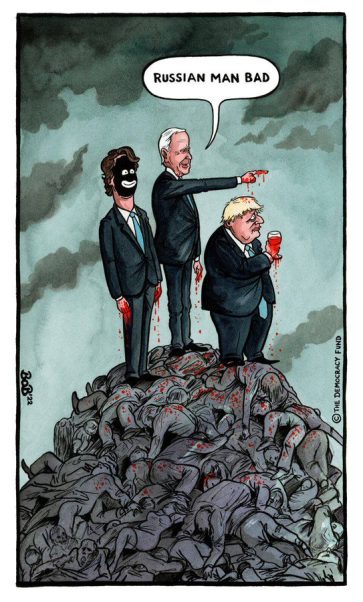 Former President George W. Bush endured an awkward moment during a speech when he meant to refer to Ukraine but instead condemned “the decision of one man to launch a wholly unjustified and brutal invasion of Iraq.”
Whoops.
Bush made the error during a speech where he compared Ukrainian President Zelensky to Winston Churchill.
“The decision of one man to launch a wholly unjustified and brutal invasion of Iraq. I mean of Ukraine,” said Bush.
Freudian slip, much?
Bush blamed his age for the gaffe, joking, “I’m 75,” but his entire presidency was replete with similar such moments.
Bush’s reference to Russia eliminating political opponents from participating in the electoral process can equally be applied to Ukraine.
President Zelensky recently signed a law banning political opposition parties if they are deemed to be “pro-Russian,” a vague smear that could be applied broadly.
He also nationalized all television networks in the country, freezing out any possibility of dissent.
A YouTuber who criticized Zelensky was also recently detained on an international arrest warrant in Spain and faces possible extradition at the behest of the Ukrainian government.
Last month, footage was released of Associated Press accompanying armed men from the Ukraine Security Service as they kidnapped and arrested dissidents from their own homes.
But yeah, Putin bad!
Western military strategy for Ukraine changes for conciliatory tone
By Uriel Araujo | May 18, 2022
According to Western authorities and media reports Ukraine has been winning the war, but, notwithstanding all the weapon’s shipments from the West, this narrative can only be described as propaganda, for a number of reasons. Amid this triumphalist rhetoric, the US-led West seems to have chosen the path of full-spectrum conflict with Moscow, as one can see in the recent G7 joint statement.
And yet, strangely, French President Emmanuel Macron’s own remarks during Europe Day contained a conciliatory tone about not “humiliating” Moscow should Kiev win. The US Secretary of Defense, Lloyd Austin, in turn has asked May13 for a conversation with his counterpart, Russian Minister of Defense Sergei Shoigu, to talk about “an immediate ceasefire”. This was the very first talk the two officials had since the beginning of the Russian military operations in February. Thus, we are seeing contradictory signs.
Moreover, Austin also showed he is interested in keeping lines of communication open with the Kremlin. The one-hour long phone call was requested by Washington. This is the same Lloyd Austin who, in April 26, stated he believed Kiev would win the war, with American help.
Echoing Austin’s change of tone, Macron reportedly has asked Ukraine to make some “concessions”, to which President Volodymir Zelensky replied in a May 13 interview with Italian TV channel RAI that “we won’t help Putin save face by paying with our territory”. This has generated some embarrassment and has prompted a reply from the French presidency, stating that Macron in fact has never “asked President Zelenskyy for any concession.” The same day the G7 announced its intentions to further contain and isolate Moscow, Macron stated, during his address to the European Parliament, on May 9, that “we are not at war with Russia”, adding that Europe’s duty is to “stand with Ukraine to achieve a ceasefire, then build peace.”
Macron and Austin are not alone. German Chancellor Olaf Scholz during a long talk with Russian President Vladimir Putin on May 13 over the telephone, according to a recent Twitter publication of his, stated that there must be a “ceasefire” in Ukraine “as quickly as possible”. Interestingly there was no talk of Russia immediately retreating, which would be a strange thing if it were true that Kiev is “winning” the war.
Italian Prime Minister Mario Draghi in turn has also echoed the same theme about a ceasefire. The fact that the speeches of leaders from the three EU largest countries are thus aligned is a clear sign that something is changing. This reflects popular opinion also: according to a recent survey across 27 Western countries (conducted by polling company Ipsos), support for diplomatic talks with Russia has increased precisely in France, Germany and Italy.
These are certainly not the only problems that should worry the US. Turkish President Recep Tayyip Erdoğan, for example, has threatened to block Sweden and Finland NATO bids. With Turkey being such a relevant NATO member, this is yet another sign of the contradictions within the alliance.
In spite of the aforementioned Austin statements, the American take on this is still somewhat more complicated, though. According to the Politico website, a high-ranking Washington official has admitted the US worries about a “fracture”, considering these recent European developments. Within American society itself, however, concerned voices, even in the conservative camp, are increasingly more skeptical about the current US policy regarding the Russo-Ukrainian war. As inflation rises, the 40 billion-dollar package to help Kiev, which is being discussed in Congress, is under a lot of criticism.
While Western officials are starting to change their tone and are apparently willing to start some dialogue with Moscow, the Ukrainian President in turn is maintaining his triumphalist uncompromising tone. Kiev, however, is largely dependent on the West, and in the long run would have no choice, but to play along.
The problem is that any “appeasement” endeavors will face a harsh internal reaction from the very extremist forces the West has been supporting. One should recall Dmytro Yarosh’s 2019 threatening remarks about Zelensky “losing his life” and ending up “hanging on a tree on Khreshchatyk (in the Kiev’s center)” if he “betrayed” Ukrainian nationalists. Yarosh, a far-right activist, is nowadays an adviser to Valerii Zaluzhny, the Commander-in-Chief of the Armed Forces of Ukraine.
This also explains why countries such as Germany are increasingly reluctant to further arm Kiev – the risk of weapons ending up in the hands of unpredictable extremist groups is too high.
By now, it has become abundantly clear that today’s conflict in Ukraine is a proxy Western war against Russia. The attitude of the United States and EU leaders regarding the crisis has been one of open confrontation without compromise – and of fueling tensions. However, as we can see, there are signs that this approach could be starting to decline.
In early May, referring to the former US President, Noam Chomsky, stated, in an interview, that only one “Western statesman” is advocating “a diplomatic solution to the war in Ukraine, instead of looking for ways to encourage and prolong it”, namely “Donald Trump”. Chomsky’s remark seemed accurate back then, but this might be changing now.
US recruits ISIS terrorists to fight in Ukraine: Russian Intelligence
Samizdat | May 17, 2022
The US has been “actively recruiting” terrorists to fight in Ukraine, Russia’s Foreign Intelligence Service (SVR) claimed on Tuesday, saying that it illustrates Washington’s readiness “to use any means to achieve its geopolitical goals.”
The SVR revealed in a statement that, according to the intelligence it is receiving, “the United States is actively recruiting even members of international terrorist organizations, including the Islamic State (ISIS) group banned in the Russian Federation, as mercenaries to participate in hostilities in Ukraine.”
The Russian intelligence service points to the American military base in Syria called al-Tanf, which is located close to the borders with Jordan and Iraq. According to its sources, this base and the surrounding area have turned into a kind of terrorist “hub,” where up to 500 ISIS and other jihadists can be “retrained” simultaneously. SVR claimed that last month 60 ISIS militants, who had been released from prisons controlled by the Syrian Kurds, were transferred to al-Tanf “with a view to subsequent transfer to Ukrainian territory.”
The SVR specified that during a training course at al-Tanf the militants are instructed on how to use anti-tank missile systems, reconnaissance and strike drones, advanced communications and surveillance equipment.
In the SVR’s opinion, this data confirms that “the United States is ready to use any means to achieve its geopolitical goals, not excluding sponsoring international terrorist groups.”
The intelligence service concluded by saying that the American administration does not consider the consequences of such actions, “even when it comes to threats to the security of European allies and even to the lives of the Americans.”
Washington has insisted that “there are no US soldiers in Ukraine.”
Meanwhile, the presence of American troops on Syrian territory at al-Tanf base, which the SVR mentions in its statement, has long been considered by both Moscow and Damascus as illegal. The previous US administration pledged that American forces would leave northeastern Syria but only after ISIS militants are defeated and the Kurds protected.
Then-National Security Advisor John Bolton made it clear that another task of the US forces at al-Tanf was to counter Iranian influence in the region.
In October 2021, there were reports that, according to Israeli defense sources, about 350 military members and civilians were still using al-Tanf, including some British and French forces that were described as “intelligence experts.”
Why Did Rand Paul Delay Washington’s $40 Billion Ukraine Giveaway?
By Ron Paul | May 16, 2022
Even by Washington standards, the Biden Administration’s recent request for $33 billion for military aid to Ukraine was shocking. Surely a coalition of antiwar progressives and budget-hawk Republicans would oppose the dangerous and expensive involvement of the US in the Russia/Ukraine conflict? No! Not only did Congress not object: they added nearly seven billion MORE dollars to the package!
In the end, not a single House Democrat voted against further US involvement in the war, and just 57 Republicans said “no” to funding yet another undeclared war.
On the Senate side, Majority Leader Chuck Schumer (D-NY) and Minority Leader Mitch McConnell (R-KY) both demanded immediate passage of the huge giveaway to Ukraine. That’s Washington’s bipartisanship for you.
Then the junior Senator from Kentucky came to the Senate Floor and did the unthinkable in Washington: he delayed the vote.
“My oath of office is to the national security of the United States of America,” Sen. Rand Paul said. “We cannot save Ukraine by dooming the US economy.” He went on to point out that the US has spent nearly as much on Ukraine’s military as the entire military budget of Russia and that the US government has sent more military money to Ukraine than it spent in the entire first year of the US war in Afghanistan.
Sen. Paul put the package into perspective: this massive giveaway to Ukraine equals nearly the entire yearly budget of the US State Department and is larger than the budget of the Department of Homeland Security!
Schumer was furious with Paul, accusing him of “preventing swift passage of Ukraine aid because he wants to add at the last minute his own changes directly into the bill.”
What was he trying to add to the bill? In his own words, “All I requested is an amendment to be included in the final bill that allows for the Inspector General to oversee how funds are spent.”
He wanted at least a bit of oversight on the nearly $50 billion in total that Washington has sent to what Transparency International deems one of the most corrupt countries on earth. Is that really too much to ask?
For Washington, the answer is “yes.” The Special Inspector General for Afghanistan Reconstruction (SIGAR) was an endless thorn in Washington’s side, because he actually did his job and reported on the billions of dollars that were stolen in Afghanistan.
In its final report on the 20 year Afghanistan war, SIGAR reviewed approximately $63 billion of the total $134 billion appropriated to Afghanistan and found that nearly $19 billion of the amount was lost to waste, fraud, and abuse. Nearly one third of the funds they reviewed were outright wasted or stolen by corrupt Afghan officials. Does anyone think it would be any different in Ukraine?
Maybe that’s why they were so furious that Sen. Paul proposed that we perhaps keep track of this $40 billion to make sure it’s not wasted: Washington doesn’t want to know. And, more importantly, Washington doesn’t want us to know.
The temporary pause is important. It gives Americans a little time to let their Senators know that they do not support this ridiculous and wasteful giveaway to Ukraine. Inflation is ripping through the country. Gas prices are through the roof. Our infrastructure is crumbling. The dollar is teetering. And we’re giving money away?
The vote appears set for Wednesday. Time to let your Senators know what you think about it!
Copyright © 2022 by RonPaul Institute
15,000 NATO troops from 14 nations, including the US, Sweden, Finland and Ukraine, start drills near Russia
Samizdat | May 16, 2022
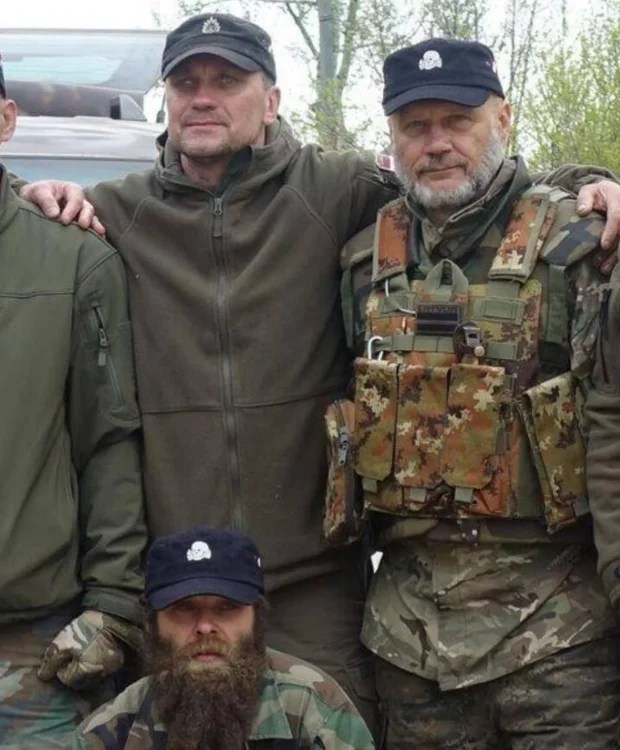
Large-scale NATO military drills started in Estonia on Monday. The exercise dubbed ‘Hedgehog 2022’ is one of the largest in the Baltic nation’s history, according to the military bloc. The drills will involve some 15,000 troops from 14 nations, including both military bloc members and their partners.
Soldiers from Finland, Sweden, Georgia and Ukraine are among those that will take part in the exercise, Finnish public broadcaster Yle reported. The drills will include all branches of the armed forces and will involve air, sea and land exercises, as well as cyber warfare training, according to the broadcaster.
According to a NATO statement, the drills will also see the US Navy Wasp-class landing ship ‘Kearsarge’ take part in the exercises. Both the military bloc and Estonian Defense Forces deputy commander, Major General Veiko-Vello Palm, have denied that the drills just over 60km from the Russian border have anything to do with Moscow’s ongoing military action in Ukraine.
The drills started just a day after Finland and Sweden officially announced their plans to join NATO, and were planned long before the conflict in Ukraine broke out, Western officials have said.
The exercises in Estonia are, however, just one part of NATO’s large-scale military activities near the Russian border. Another Baltic state, Lithuania, is hosting the ‘Iron Wolf’ exercise, which involves 3,000 NATO troops and 1,000 pieces of military equipment, including Germany’s Leopard 2 tanks.
Two of NATO’s biggest exercises – ‘Defender Europe’ and ‘Swift Response’ – are taking place in Poland and eight other countries, involving 18,000 troops from 20 nations, according to NATO’s statement on Friday.
“Exercises like these show that NATO stands strong and ready to protect our nations and defend against any threat,” the military bloc’s spokesperson, Oana Lungescu, said, adding that the drills “help to remove any room for miscalculation or misunderstanding about our resolve to protect and defend every inch of allied territory.”
The NATO Response Force is currently taking part in the 7,500-strong ‘Wettiner Heide’ drills in Germany. The Mediterranean Sea is about to witness ‘Neptune series’ naval drills involving the USS ‘Harry S. Truman’ carrier strike group that will be placed under NATO command. This will only be the second time since the end of the Cold War that a US carrier group has been transferred under the military bloc’s command, NATO has said.
In June, the Baltic States and Poland will host what NATO describes as “Europe’s largest integrated air and missile defense exercise,” which would involve 23 nations.
In late April, Finland hosted NATO naval drills. Now, it is also hosting a joint land exercise, in which troops from the US, the UK, Estonia and Latvia are participating.
The massive military wargames are taking place amid heightened tensions between Russia, NATO and some of the military bloc’s partners. Finland, which shares a long border with Russia, and Sweden decided to reconsider their long-standing policy of non-alignment following a major change in public opinion after the launch of Russia’s attack on Ukraine.
The development sparked a wave of criticism from Moscow, which warned that it would have to respond if Finland and Sweden join NATO. Moscow also maintains that it considers NATO’s expansion as a direct threat to its own security.
‘Finns & Swedes won’t benefit from NATO’
Samizdat | May 16, 2022
NATO membership won’t make Finland and Sweden more secure, but would likely see them fighting somebody else’s wars and hosting American bases, Dr. Jan Oberg, director of the Transnational Foundation for Peace and Future Research, has told RT.
“It’s a disastrous decision,” Oberg said on Sunday, following an official declaration by the Finnish government that it is planning to join the US-led military bloc. Hours later, a similar announcement was made by the ruling party in Sweden. The two Nordic nations stayed out of NATO during the Cold War, but their governments said Russia’s military operation in Ukraine has become a game-changer.
Finland and Sweden have failed to carry out “long-term consequence analysis,” he added. “Nobody seems to ask whether NATO is the right thing to join. After all these years since 1945, NATO has proven that it’s not able to deliver what taxpayers are paying for, namely stability, peace and security… and then Finland and Sweden say: ‘We’ll join this failed organization,’” he remarked.
“We have to ask ourselves: ‘Who caused the conflict [between Moscow and Kiev]?’ Everybody talks about the Russian invasion, which I deplore too, but underlying that is the conflict, which has to do with the NATO expansion,” the peace researcher said.
Making sure Ukraine becomes a neutral country that will never join NATO has been cited by Moscow as one of the main reasons for its ongoing military operation.
Oberg said he understood Russia’s concerns about the expansion of the bloc towards its borders. “If I was sitting in Moscow, I would feel that this was threatening,” he observed, referring to Finland and Sweden’s possible membership. “When you move troops up to the very border on both sides you increase tension; you decrease reaction time; you do all the things you shouldn’t do strategically if peace was your goal. Peace is not the goal of these people.”
The military-industrial complex – “those who sell weapons and profit from wars” – will gain from NATO adding two new members, he said. “The Swedish people and the Finnish people will not benefit from this. It’ll be completely new for them that they are now supposed to participate… in somebody else’s wars.”
With the US pushing for bases in Denmark and Norway, “are we to believe that there will not be American bases or American troops or something, you know, more permanent in Sweden and Finland?” he wondered.
NATO membership would also be “opening these countries for potential nuclearism that should never have been done in this particular area,” the peace researcher added.
Oberg said it was “appalling” that the governments in Helsinki and Stockholm didn’t put the issue to a referendum. “This is unheard of with such an important decision as joining NATO.”
While opinion polls have shown an overwhelming support for NATO membership in Finland, in Sweden the idea was backed by less than 50% of the public, he noted. “I’m amazed that there’s so little public discussion, so little uproar in terms of huge demonstrations in large cities in Sweden,” the scholar said.
He blamed the media, of which “80% to 90% is pro-NATO,” for this situation. “It’s very difficult to get into the media today with an alternative view… There’s no democracy and free media practice in this,” Oberg insisted.
Jan Oberg is a Danish-Swedish peace researcher, who received his doctorate from Lund University in Sweden. He taught courses in several countries, including Japan, Austria and Switzerland.
In 1986, the scholar co-founded the Transnational Foundation for Peace and Futures Research (TFF), an independent think tank aimed at promoting conflict-mitigation and achieving peace through peaceful means around the globe. He assisted on-the-ground work in ex-Yugoslavia, Georgia, Burundi, Iraq, Iran and Syria. In 2013, Oberg and TTF were nominated for the Nobel Peace Prize for their activities.
Featured Video
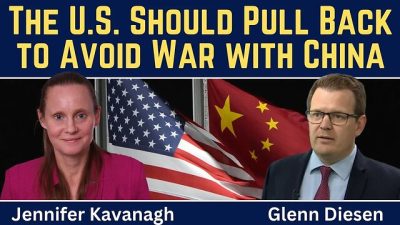
Why the U.S. Should Pull Back From the First Island Chain
or go to
Aletho News Archives – Video-Images
From the Archives
Only 19.7% of Americans agree with US State Dept on Israeli settlements
… Most American adults of voting age don’t appear willing to reject the applicability of international law to Israel’s ongoing colonization of occupied territories in East Jerusalem, the West Bank and Golan Heights. … Full article
Blog Roll
 Aletho News
- Tokyo protests demand Takaichi’s resignation over support for ‘Israel’
- Jennifer Kavanagh: Why the U.S. Should Pull Back From the First Island Chain
- Yemen denounces international community’s silence on Saudi aggression, siege
- UAE and Saudi Arabia move toward renewed coordination against Sanaa
- How Iran’s two-week retaliatory strikes exposed cracks in US military architecture in Persian Gulf
- The mother of all propaganda: Why the hype over US MOAB strike against Iran is nothing but theater
- Iran says it possesses technology behind US 14-ton GBU bunker-buster
- Trump asks Iran not to retaliate after he strikes Pickaxe Mountain – w/ Prof. Marandi
- Vice President J.D. Vance’s Deceptive ‘Antiwar’ Campaign Speech
- Iran: Palestinians’ rights must not be compromised in Gaza’s future; US, Israel to blame for Hormuz situation
- If Americans Knew
- Israeli rabbi permits occupiers to steal Palestinian olive harvest in West Bank
- Netanyahu’s spin on latest settler attack is laughable – Daily Update
- Israeli soldiers debunk Israel’s talking points
- In West Bank, Israeli settlers are totally out of control – Daily Update
- NPR investigation finds evidence of widespread fraud at mall kiosks tied to Israeli skincare brand
- Tucker Carlson exposes Israeli Lies about the Oct 7th attack, Charlie Kirk, and the U.S.
- Israel has detained thousands of Palestinian children since Oct 7th – over half spent time in solitary, many uncharged
- Israeli Analysis: Is Netanyahu Planning an ‘October Surprise’ Attack Before Israel’s Election?
- Israeli settlers brutally attack Palestinians and Washington Post female photographer, 65
- Words Have Changed, Occupation Continues: The Reality of the Gaza Ceasefire
- No Tricks Zone
- Predictions Made By Renowned Climate Proifessor Over Past Decades Have Been Proven To Be Poor
- New Study Suggests Large Regions Of The Pacific Ocean Have Been Cooling For The Last 80 Years
- Germany’s Green Energy Debacle: High Energy Costs Force Kahla Porzellan to Close After 182 Years!
- New Study: 50 Years Of The Most Aggressive ‘Net Zero’ Policies Can Only Affect The Global Climate By 0.03°C
- US September “Heat” Was No Record…Many Records Set Decades Ago
- Latest European Green Energy Debacle; Portugal’s Largest Flagship Solar Park Insolvent!
- Green Energy Debacle: German Expert Professor Fritz Vahrenholt Warns Of Severe Economic And Social Consequences
- Two More Paleo Reconstructions Affirm Meters-Higher Sea Levels Across Ireland, Brazil 7000-6000 Years Ago
- New Study: Earth And Venus Surface Warmth Largely Explained By Convection And Lapse Rate, Not CO2 Or Radiation
- 2025 Nature Paper Claiming Worsening Global Drought Gets RETRACTED …Heavily Flawed

