Multiple wars ravage the Middle East. Turkey has inserted itself into the middle of most of these regional conflicts and ended up a loser.
Under President Recep Tayyip Erdoğan, Turkey has intervened and formed alliances with a rogue’s gallery of imperial warlords, terrorists-mercenaries, Zionist expansionists, feudal potentates and obscure tribal chiefs, with disastrous economic, political and military consequences for the Turkish nation. In this paper we will discuss Turkey’s domestic and foreign policies and behavior over the past decade. We will conclude with lessons for middle range powers, which might help in future decisions.
President Erdogan’s Domestic Disasters
Throughout the early decade of the 21st century, Erdoğan made a strategic alliance with an influential semi-clandestine organization led by a cult-leading cleric, Fethullah Gülen, who was conveniently self-exiled in the US and under the protection of the US intelligence apparatus. This marriage of convenience was formed in order to weaken the leftist, secular and Ataturk nationalist influenced opposition. Armed with the Gülenists’ treasure trove of forged documents, Erdoğan purged the military of its Ataturk nationalist leadership. He proceeded to marginalize the secular Republican Party and repressed leftist trade union, social movements and prominent academics, journalists, writers and student activists. With support from the Gülenists movement, ‘Hizmet’, Erdoğan celebrated his successes and won multiple election and re-election victories!
Initially, Erdoğan failed to recognize that the Gülenists/Hizmet operated as a subversive political organization, which permeated the state apparatus through a dense network of bureaucratic, military, judicial, police, and civil society organizations, with ties to the US military/CIA and friendly relations with Israeli policy makers.
By 2013, Erdoğan felt intense pressure from the Gülenists/Hizmet which sought to discredit and oust his regime by revealing multi-million dollar corrupt practices involving him and his family in a ‘Turquoise Color Revolution’ – remake of other ‘regime changes’.
Having discovered his internal vulnerability, Erdoğan moved to curtail the power and reach of the Gülenists/Hizmet controlled media. He was not yet prepared to deal with the immense scope and depth of the elite links to Gülenists/Hizmet. A Gülenists-led military coup was launched in July 2016, with the tacit support of the US military stationed in Turkey. This was foiled by a major popular mobilization with the support of the armed forces.
Erdoğan then moved to thoroughly purge the followers of Hizmet from the military, public administration, schools, business, the press and public and private institutions. He extended his purge to include secular and nationalist political leaders who had always opposed the Gülenists and their attempted coup d’état.
As a result of the coup attempt and the subsequent purge, Erdoğan weakened and fractured every aspect of the state and civil society. Erdoğan ended up securing control of a weakened state with a degraded business, educational and cultural world.
The Gülenists coup was authored and led by its supremo Fethullah Gülen, ensconced in his ‘secret’ private estate in the United States. Clearly the US was implicated in the coup and they rejected Erdoğan’s demands to extradite him.
Erdoğan’s subservience to the US/NATO leadership has undermined his attempts to strike at the roots of the coup and its internal and external power structure. The US/NATO military bases still operate in Turkey and retain influence over its military.
In the aftermath of the coup, the decline of Gülenist influence in the economy contributed to economic reversals in investments and growth. The purge of the military and civil society reduced Turkey’s military preparedness and alienated the democratic electorate. Erdoğan had already nearly lost his bid to the presidency after his earlier purges in 2014.
Erdoğan’s Foreign Policy Disasters
Perversity is when a ruler weakens its military and represses its citizens and launches a series of risky foreign adventures: This is exactly what Erdoğan has done over the past several years.
First Erdoğan backed a terrorist uprising in Syria, providing arms, recruiting overseas ‘volunteers’ and providing them with unrestricted passage across the Turkish border. Many of the terrorists proceeded to join forces with Syrian, Iraqi and Turkish Kurds in establishing military bases on Ankara’s borders.
Secondly, Erdoğan ran a scurrilous electoral campaign among the millions of ethnic Turks living in Germany – violating that powerful nation’s sovereignty. As a result, Erdoğan increased tensions and animosity with what had been its closest ally in its quest for EU membership – effectively terminating the process.
Thirdly, Erdoğan backed NATO’s invasion and bombing of Libya, killing President Gadhafi, who had been an independent voice, capable of serving as a possible ally against imperial intervention in North Africa.
Fourthly, Erdoğan backed the brief government of Mohammed Morsi and the Muslim Brotherhood after its electoral victory in 2012 following the ‘Arab Spring’ uprising in Egypt of 2011. He backed a formula similar to his own Turkish policy of excluding the secular, democratic opposition. This led to a bloody US-backed military coup led by General Abdel Sisi in July 2013 – a lesson not lost on Erdoğan.
Fifth, Erdoğan’s de facto friendly relations with Israel – despite verbal criticism – in the face of Tel Aviv’s assassination of nine non-violent Turkish protestors trying to break the starvation blockade of Gaza – undermined relations with the pro-Palestine Arab world and nationalists in Turkey.
Sixth, Erdoğan developed lucrative ties with Iraqi Kurd dictator-warlord, Masoud Barzani, facilitating the flow of oil to Israel. Erdoğan’s own illicit oil deals with Barzani strengthened the cause of Kurdish separatism and exposed the widespread corruption of Erdoğan’s family dealings.
Seventh, Erdoğan provoked military tensions with Russia by shooting down a warplane in Syria. This led to an economic boycott, which reduced export earnings, devastated the tourism sector and added Moscow to his list of adversaries, (Iraq, Syria, Palestine, Saudi Arabia, US, Germany, Hezbollah and Iran).
Eighth, Erdoğan backed the tiny oil-state of Qatar, sending supplies and soldiers to oppose a threat from Saudi Arabia, the other royal oil statelets and Egypt, US allies and followers.
Despite his many disastrous domestic and foreign policies, Erdoğan learned nothing and forgot nothing. When the Israelis backed the Iraqi Kurds in organizing an independence ‘referendum’ aiming to ultimately annex the rich oil fields of Northern Iraq, Erdoğan took no action despite this threat to Turkish national security. He merely made verbal threats to cut off the Kurd’s access to Ankara’s oil pipelines. He took no concrete steps. Erdoğan preferred to pocket transit taxes from the oil, antagonizing Iraq and Syria and strengthening the links between Kurdish Iraq and its secessionist counterparts in Syria and Turkey.
Because of Erdoğan’s failure to close down the US military base following its support of the Gülenist-led coup, the Turkish army is still heavily under US influence, opening the possibility of another uprising.
Erdoğan’s lip-service to ‘nationalism’ has served mainly as a political tool to repress domestic democratic political parties and trade unions and the Kurdish and Alevi communities.
Erdoğan’s initial support and subsequent opposition to the jihadi terrorist groups seeking to oust the secular-nationalist government in Damascus has caused ‘blowback’ – with ISIS terrorist cells bombing civilian targets Istanbul and Ankara with mass casualties.
Conclusion
Erdoğan’s unprincipled, opportunistic and pro-imperialist NATO alliance demonstrates the inability of an aspiring regional power to find a niche in the US Empire.
Erdoğan believed that being a loyal ‘ally’ of the US would protect Turkey from a coup d’état. He failed to realize that he had become a disposable pawn in US plans to install more servile rulers (like the Gülenists) in the Middle East.
Erdoğan’s believed that Turkey’s collaboration with the US to overthrow Syria’s President Bashar Assad would lead to a successful territorial grab of Northern Syria: instead Erdoğan ended up serving the US-backed Syrian Kurds tied to the Turkish Kurds . By working to break up Syria and destroy its state and government, Erdoğan strengthened Kurdish cross border expansionism.
Erdoğan failed to recognize the most basic rule of imperial policy: There are no permanent allies there are only permanent interests. Erdoğan thought Turkey would be ‘rewarded’ by acting as a US surrogate with a share of power, wealth and territory in the Middle East. Instead, as a ‘normal’ imperial power, the US used Turkey when it was convenient and would then dispose of Erdoğan – like a used condom.
Anti-imperialism is not just an ideal and moral/ethical principle – it is a realistic approach to safeguarding sovereignty, democratic politics and meaningful alliances.
-###-
James Petras latest book is The Politics of Empire: The US, Israel and the Middle East claritypress@usa.net. James Petras is a Bartle Professor (Emeritus) of Sociology at Binghamton University, New York.
The United States, Israel and Saudi Arabia have yet to demonstrate that they have the “courage” to attack Iran directly and it is still conventional wisdom among most observers that none of Iran’s self-defined adversaries will ever develop an appetite for a hot war on Iranian soil any time soon.
One of the reasons for this reticence to attack Iran directly, especially where more moderate members of the Pentagon are concerned, is that such an operation would be suicide from a military-strategic point of view. Ultimately, the US would likely lose any war on Iranian soil that was not a nuclear war. The latter option would of course be a cataclysmic disaster for the planet.
This is one of the reasons that the US continues to construct a totally nonfactual narrative about “Iranian terrorism”. Because no such thing exists (on the contrary Iran both fights and is a victim of Takrifi jihadism), the US along with Israel continues to peddle the narrative that the Lebanese party Hezbollah is an ‘Iranian terrorist group’, even though Hezbollah’s latest accomplishment has been destroying ISIS and al-Qaeda in Lebanon while continuing to help the secular Syrian government fight jihadists.
While many pundits highlight the fact that if a US politician articulates the name of any group with an Arabic or Farsi name, it is easy to pass off such a group as a terrorist organisation, this simplistic explanation for Washington’s continued attacks on Hezbollah as an “Iranian terrorist group”, in spite of the fact that Hezbollah is a Lebanese political party and security force, actually bears a far more sinister explanation.
Because many in the US and Israel are in fact afraid of taking on Iran directly, they are actively working to undermine Iran by attacking its smaller allies. The continual demonisation of Hezbollah is clearly defined by the US as an attempt to weaken the appeal of Hezbollah in Lebanon, in order to convince Lebanese Shi’a Muslims to withdraw electoral and moral support for the party, thus eliminating the power of an Iran friendly group in the heart of the Levant.
This is not speculation or conjecture, but a reference to an important US policy document, drafted as a ‘gift’ for Israeli leader Benjamin Netanyahu in 1996. The document known as “A Clean Break” was authored by the future Chairman of the Defense Policy Board Advisory Committee in the Bush administration, Richard Perle. The document was meant to provide guidance for the future of US-Israeli policies in the Middle East.
At the time, it was reportedly dismissed by Neyanyahu as being too extreme, even by Israeli standards, but since 9/11, many of the proposals have either been executed or attempted, including regime change in Iraq and Syria, aggression against Shi’a factions in Lebanon and an increasingly militant approach to Palestine.
Perle’s proposals for Hezbollah make for a reading that is one part frightening and another part laughable. Perle suggests a full-scale campaign to weaken and demonise Hezbollah, something which has clearly failed as Hezbollah’s popularity, even among Christians and Sunnis has only risen since the 1990s, as many Lebanese see Hezbollah as an insurance policy against both Israeli aggression as well as against jihadist terrorism of the ISIS and al-Qaeda variety. The laughable part is when Perle suggests that the Sunni Hashemite Jordanian regime could somehow fill the void left by a would-be weakened Hezbollah, because of alleged latent sentimental attachments among Levantine Shi’as towards the Hashemite dynasty. Such an enlargement would have been far flung even in the 1920s and in 2017, the following segment from “A Clean Break” reads like a bad script to a would-be sequel to Lawrence of Arabia.
“Israel can shape its strategic environment, in cooperation with Turkey and Jordan, by weakening, containing, and even rolling back Syria. This effort can focus on removing Saddam Hussein from power in Iraq — an important Israeli strategic objective in its own right — as a means of foiling Syria’s regional ambitions. Jordan has challenged Syria’s regional ambitions recently by suggesting the restoration of the Hashemites in Iraq. This has triggered a Jordanian-Syrian rivalry to which Asad has responded by stepping up efforts to destabilize the Hashemite Kingdom, including using infiltrations. Syria recently signaled that it and Iran might prefer a weak, but barely surviving Saddam, if only to undermine and humiliate Jordan in its efforts to remove Saddam.
But Syria enters this conflict with potential weaknesses: Damascus is too preoccupied with dealing with the threatened new regional equation to permit distractions of the Lebanese flank. And Damascus fears that the ‘natural axis’ with Israel on one side, central Iraq and Turkey on the other, and Jordan, in the center would squeeze and detach Syria from the Saudi Peninsula. For Syria, this could be the prelude to a redrawing of the map of the Middle East which would threaten Syria’s territorial integrity.
Since Iraq’s future could affect the strategic balance in the Middle East profoundly, it would be understandable that Israel has an interest in supporting the Hashemites in their efforts to redefine Iraq, including such measures as: visiting Jordan as the first official state visit, even before a visit to the United States, of the new Netanyahu government; supporting King Hussein by providing him with some tangible security measures to protect his regime against Syrian subversion; encouraging — through influence in the U.S. business community — investment in Jordan to structurally shift Jordan’s economy away from dependence on Iraq; and diverting Syria’s attention by using Lebanese opposition elements to destabilize Syrian control of Lebanon.
Most important, it is understandable that Israel has an interest supporting diplomatically, militarily and operationally Turkey’s and Jordan’s actions against Syria, such as securing tribal alliances with Arab tribes that cross into Syrian territory and are hostile to the Syrian ruling elite.
King Hussein may have ideas for Israel in bringing its Lebanon problem under control. The predominantly Shia population of southern Lebanon has been tied for centuries to the Shia leadership in Najf, Iraq rather than Iran. Were the Hashemites to control Iraq, they could use their influence over Najf to help Israel wean the south Lebanese Shia away from Hizballah (sic), Iran, and Syria. Shia retain strong ties to the Hashemites: the Shia venerate foremost the Prophet’s family, the direct descendants of which — and in whose veins the blood of the Prophet flows — is King Hussein”.
Of the many things an overzealous Richard Perle got wrong. The most staggering are as follows:
–Underestimating the non-sectarian popularity of the Ba’athist government in Syria
–Not accounting for the Shi’a majority in Iraq who would be politically unleashed in a post-Saddam society
–Overestimating the appeal of the hereditary Jordanian regime to Arabs living in republican states
–Overestimating Jordan’s desire to be anything more than a parking lot for western military hardware
Of course, failing to realise Turkey’s contemporary pivot away from NATO could not have reasonably been foreseen in 1996, but the statements on Turkey still make for perplexing reading with the benefit of hindsight.
Fast forward to the present day when jihad has failed in Syria and Iraq, Hezbollah is more popular than ever in Lebanon (while its opponents are in many ways weaker than ever) and where Iraq has a Shi’a dominated government with openly warm relations with Iran.
Iraq’s present geo-political position is that of the only country in the world where the two most influential countries inside its borders are the United States and Iran. To put this in perspective, imagine a country where the two most influential powers, each with its own troops working with various factions of such a state’s army, were Japan and North Korea.
But this is the awkward reality of modern Iraq, a country whose armed forces coordinate airstrikes with the USA and where in other parts of the country, on the same day, members of Iran’s Islamic Revolutionary Guard Corps, train Iraqi troops and Popular Mobilization Units to fight terrorism. What’s more is that Iraq has recently approached Iran to sign a wide ranging military security pact. All the while, the US maintains multiple military bases in Iraq, in addition to an embassy in Baghdad that is better described as a military fortress.
If the US was intent on ‘containing’ Iran at all costs or even maintaining a power in the Middle East with a track record of not being afraid of Iran, the US could have simply continued to fund and arm Saddam Hussein. In rejecting Saddam and engaging in illegal regime change, the US severely underestimated the potential of a post-Ba’athist Iraq not to devolve into a battle ground of identity politics, one in which sheer mathematics would dictate more pro-Iranian factions than any other.
Now, the US is stuck in the rut that is contemporary Iraq. On the one hand, Iraq has been a major material investment for the US. This is one of the leading explanations for why the US condemned the recent Kurdish secession referendum in northern Iraq. Where Iraqi Kurds were once the go-to faction in Iraq for the US to undermine the old Ba’athist government and since 2003, a faction that the US exploited to promote a so-called ‘Iraqi success story’, today, the US wants to have its Kurdish cake and eat it too. In other words, while the US does not intend to publicly defame Iraqi Kurds, they also seek to preserve the unity of their investment called Iraq.
At least, this is what the US says in public, but privately, this may have already changed. Kurdish secessionists in Iraq decided to include the oil rich Iraqi city of Kirkuk on the map of a would-be Kurdish state, as part of the widely condemned secession referendum process. This has infuriated the Arab and Turkomen population of Kirkuk who see Kurds as attempting to annex a city which is not part of the existing autonomous Kurdish region of Iraq.
Over the last 24 hours reports from Kirkuk detailing intense fighting between the Iraqi military and the Kurdish Peshmerga militia have been flowing in, albeit under the radar due to the media focusing more acutely on Donald Trump’s anti-Iran speech. While most Arab sources describe the battles as being fought between Iraqi Troops and Peshmerga, Kurdish outlets speak of clashes between a “foreign backed Iraqi army” along with Shi’a forces versus Peshmerga.
Thus one sees that generally pro-western and clearly pro-Israel Kurdish writers are proliferating a narrative where a foreign power, meaning Iran, is backing Shi’a Iraqis in a fight against Kurds.
The clear intention is to send the world a false message that the current fight in Kirkuk is an Iranian proxy battle against ‘wholesome Iraqi Kurds’. In reality, when reading between the lines, even in Kurdish propaganda outlets, one realises that the majority Shi’a Iraq army, the Sunni Arabs and Sunni Turkomen of Kirkuk, are all united behind the Iraqi flag against the Kurdish flag. In this sense, a battle which Kurds are trying to paint as a proxy sectarian war, is actually a rare example of Iraqi unity between Arabs and Turkomen, Shi’a and Sunni.
Thus, one sees the blueprint as well as the folly of the US and Israel’s real proxy war against Iran. Having failed in Syria and Lebanon, Iraq is the place where anti-Iranian forces will continue and likely ramp up their long-term anti-Tehran proxy war.
Whereas ISIS failed to destroy Iraq and also failed to limit Iranian influence on Iraq, the Kurds in Iraq will likely be the next proxy force used to attempt and draw Iran into a new conflict in Iraq. In the coming weeks and months, the headlines in fake news outlets warning of an ‘Iran/Hezbollah plot to take over Syria’, will likely be replaced with stories of ‘Iranian terrorists committing atrocities against Iraqi Kurds’. Of course, the more this strategy fails on the battle field, the more absurd the fake news stories will get, just as fake stories about Syrian chemical weapons tend to appear every time Damascus scores a substantial victory against al-Qaeda and ISIS.
The problem with the new plan for more proxy wars with Iran in Iraq, is that in the process, many Iraqi Arabs, as well as Iraqi Turkomen, may revive a pan-Iraqi identity in the process. Furthermore, if pro-Iranian Popular Mobilization Units in Iraq begin fighting for the rights of Sunni Arabs and Turkomen against Kurds, it could actually help to reconcile Iraqi Sunnis with Iraqi Shi’as.
This is the real game-plan against Iran and while it is a dangerous one, it ultimately will not be an effective one. In many ways, it may even be less effective than the attempt to use ISIS and other Takfiri groups to draw Iran into a losing war in the Arab world. Here, the opposite has happened, Iran has worked with legal state partners to cooperate and ultimately secure victory against Takfiri jihadists.
When and if the conflicts in Iraq finally end, the only question remaining will be: What to do with the deeply unpopular US bases in Iraq? There are only two options:
1. Perpetual stalemate
2. A 1975 Vietnam style withdrawal
The United States plans to end Iranian power in Iraq, but it is becoming increasingly likely that Iraq will instead be the graveyard of US hegemony. In many ways, it already is.
I won’t even bother discussing the substance of what Trump had to say today because what he said deserves no such attention. I will quickly mention that yesterday Trump pulled the US out of UNESCO on behalf of Israeli interests. Today he basically announced a tepid, possibly hot, war on Iran. I am tempted to say “so what else is new?”. In fact, nothing, nothing at all.
Take a guess: where would the Empire’s puppeteers meet to finalize and coordinate their plans to attack Iran?
Washington? New York? London? NATO HQ in Brussels? Davos?
Nope.
In Herzilia. Never heard of that place?
The Israeli city of Herzliya is named after Theodor Herzl, the father of modern Zionism, and it has hosted a meeting of the Empire’s Who’s Who over the past several days at the yearly conference of the Herzilia Institute for Policy and Stragegy. For a while, Herzilia truly became the see of the Empire’s inner core of heavy hitters.
(Non-Israeli) speakers included:
Jose Maria Aznar Former Prime Minister of Spain, Matthew Bronfman, Chair of the Budget and Finance Commission, World Jewish Congress, and member of the World Jewish Congress Steering Committee, Amb. Nicholas Burns US Under Secretary of State for Political Affairs, Prof. Alan Dershowitz Felix Frankfurter Professor of Law at Harvard Law School, Senator John Edwards Head of the One America Committee and candidate for the 2008 Democratic presidential nomination, Gordon England US Deputy Secretary of Defense, Dr. Marvin C. Feuer Director of Policy and Government Affairs, AIPAC, Newt Gingrich Former U.S. Speaker of the House of Representatives, Rudolph Giuliani, Former Mayor of New York City and candidate for the 2008 Republican presidential nomination, General the Lord Charles Guthrie of Craigiebank GCB LVO OBE. Former Chief of the Defense Staff and Chief of the General Staff of the British Army, Amb. Dr. Richard Haass President of the Council on Foreign Relations, Stephen E. Herbits Secretary-General of the World Jewish Congress, Amb. Dr. Robert Hunter President of the Atlantic Treaty Association and Former U.S. Permanent Representative to NATO. Senior Advisor at the RAND Corporation in Washington (also serves as Chairman of the Council for a Community of Democracies, Senior International Consultant to Lockheed Martin Overseas Corporation), Amb. Dr. Richard H. Jones United States Ambassador to Israel (also served as the Secretary of State’s Senior Advisor and Coordinator for Iraq Policy), Col. (res.) Dr. Eran Lerman Director, Israel and Middle East Office, American Jewish Committee (also served in the IDF Intelligence Directorate for over 25 years), Christian Leffler Deputy Chief of Staff of the European Commissioner for External Relations and Director for Middle East and Southern Mediterranean, European Commission, The Hon. Peter Mackay Canadian Minister of Foreign Affairs, Senator John McCain U.S. Senator (R) from Arizona and candidate for the 2008 Democratic presidential nomination, Dr. Edward L. Morse Chief Energy Economist, Lehman Brothers, Dr. Rolf Mützenich Member of the German Federal Parliament (SPD) and member of the Committee on Foreign Policy of the Bundestag (and Board Member of the “Germany-Iran Society”), Torkel L. Patterson President of Raytheon International, Inc., Richard Perle Resident Fellow at the American Enterprise Institute (previously served as Chairman of the Defense Policy Board and Assistant Secretary of Defense for International Security Policy), Amb. Thomas R. Pickering Former U.S. Under Secretary of State for Political Affairs (previously served as Senior Vice President of Boeing), Jack Rosen Chairman of the American Jewish Congress (and member of the Executive Committee of AIPAC and of the Council on Foreign Relations), Stanley O. Roth Vice President for Asia, International Relations of the Boeing Company (member of the Council on Foreign Relations), James Woolsey Former Director of the Central Intelligence Agency, and many others.
Pretty much the entire Israeli “Defence” establishment (why does nobody call it “Aggression establishment?) was present too.
Not bad for a “conference”?!
Of course, the main topic at the conference was the upcoming war with Iran. Richard Perle, the “Prince of Darkness”, delivered the keynote and conclusion: “If the Israeli government comes to the conclusion that it has no choice but to take action, the reaction of the U.S. will be the belief in the vitality that this action must succeed, even if the U.S. needs to act with Israel in the current American administration”.
Noticed anything funny in his words? It’s the “world only superpower” which will have the “belief” (?) in the action of a local country and, if needed, act with it. Not the other way around. Makes one wonder which of the two is the world only superpower, does it not?
Anyway – if anyone has ANY doubts left that the Empire will totally ignore the will of the American people as expressed in the last election and strike at Iran, this conference should settle the issue.
Also – there are other indicators and warnings. Besides the two aircraft carrier battle groups at Iran’s shores, AWACs planes and military equipment is being shipped to Turkey, and air bridge of C-17 heavy transport aircraft are delivering weapons to Siniora’s government in Lebanon, and forces are being deployed to Iraq to defend the dug-in US forces from Shia retaliation.
What about the Democratic majority in Congress? Nancy Pelosi, Speaker of the House, settled any doubts whether they would act when she declared at the 2006 AIPAC conference:
“The greatest threat to Israel’s right to exist, with the prospect of devastating violence, now comes from Iran. For too long, leaders of both political parties in the United States have not done nearly enough to confront the Russians and the Chinese, who have supplied Iran as it has plowed ahead with its nuclear and missile technology. Proliferation represents a clear threat to Israel and to America. It must be confronted by an international coalition against proliferation, with a commitment and a coalition every bit as strong as our commitment to the war against terror.”
BTW – Hillary Clinton, the party’s leading contender for the presidential nomination, out-neocons many Republicans when it comes to Iran:
“Let’s be clear about the threat we face now: A nuclear Iran is a danger to Israel, to its neighbors and beyond. The regime’s pro-terrorist, anti-American and anti-Israel rhetoric only underscores the urgency of the threat it poses. U.S. policy must be clear and unequivocal. We cannot and should not – must not – permit Iran to build or acquire nuclear weapons. In order to prevent that from occurring, we must have more support vigorously and publicly expressed by China and Russia, and we must move as quickly as feasible for sanctions in the United Nations. And we cannot take any option off the table in sending a clear message to the current leadership of Iran – that they will not be permitted to acquire nuclear weapons.”
So much for the will of the American people. As Justin Raimondo exclaimed in his recent article about the upcoming war on antiwar.com – isn’t democracy wonderful?!
So count with yet another imperial war of aggression, a barrel of crude at over 100$ and oil shortages, rocketing inflation, job losses, a stagnant real estate market and stock exchange, and a national debt and government deficit which would make even Reagan proud. And plenty of dead Americans (nevermind the Iranians, right?).
But don’t worry: there will still be a huge supply of Chinese-made US flags to wave!
And now here we are, 10 years later. For 10 years I have considered that my prediction of a US attack on Iran was the biggest analytical failure in my career. I now hope and pray that it will remain so and that I will not be proven right. But it sure looks like my prediction will be vindicated.
A couple of months after posting my warning about a risk of a US aggression against Iran I posted another article in which I tried to show that Iran had so many “asymmetrical options” that it could not win a war against Iran. This article is now dated, but those interested can find it here. Let me just repost my conclusions:
In conclusion we can see that Iran would not have to proactively do anything to make the Empire pay for an short and limited attack. Riding out the attack and letting the Neocons pay the political price for their folly would be the most likely Iranian response. In case of a long term major Imperial war against Iran, the Iranians would have a broad variety of “asymmetrical” options from which to choose, none of which would involve shutting down the Strait of Hormuz or chasing US aircraft carriers in the Persian Gulf.
In any scenario, time would always be on the Iranian side while the Empire would very rapidly run out of options to try force an acceptable outcome.
This lack of a viable “exit strategy” would rapidly force the time-pressed Imperial High Command to consider the use of nuclear weapons to avoid getting bogged down in a rapidly worsening situation. Any actual use of nuclear weapons would result into a general collapse of the entire Neocon empire of a magnitude similar to the collapse of the Soviet Union in 1991. In other words, there are no possible winning strategies for an Imperial aggression against Iran.
As I mentioned, this article is dated. It is dated because since 2007 Iran has only become stronger, while the USA has become much, much weaker: not only has the USA been defeated in Syria, but the election of Trump has resulted in such a crisis inside the USA that at this point in time the USA does not even have a foreign policy of any kind and that the various branches of the US government are basically doing whatever the hell they want. As for Trump, he has become AIPAC’s “punk-ass bitch” (sorry for the rude expression, but in this case I cannot think of any combination of words which could more accurately illustrate Trump’s status).
So, the big question is obvious: is that just hot air or will a war happen?
At the risk of deepening what still might be my mistaken prognosis of 2007 I will say that yes, the USA will probably attack Iran. Since there is exactly ZERO chance of Iran caving in to the latest US-Israeli threats, not attacking Iran will now represent a major loss of face and humiliation for Trump and his Neocon masters. So the USA will go to war yet again, not for any rational reason, but solely because Bibi Netanyahu “owns” Trump and Israel “owns” the USA. Yes my dear Americans, far from being “the land of the free and the home of the brave” the USA is a subservient colony of a tiny state in the Middle-East which also happens to be the last officially racist state on our planet. Which makes you neither brave, nor free. Sorry.
The only good news is that once the Neocons fail, there will be political hell to pay for them. Oh sure, their plan is not even to win. What they want is inflict as much damage as possible on Iran (like they did in Lebanon and Gaza), kill as many Iranians as possible, destroy as much of the Iranian infrastructure as they can, before dumping Trump and blaming it all on him. Their hope is that the US Ziomedia will then lynch Trump for starting an unwinnable war against Iran while they, the Neocons, quietly slip away and let Trump face the music. Trump will be impeached, possibly jailed, while Bibi Netanyahu will either get reelected personally, or appoint the next guy in charge. Let the goyim kill each other while we reap the benefits from it all.
Tob shebbe goyim harog, right?
Will that work?
Maybe. I will never commit the mistake of underestimating the stupidity and ignorance of brainwashed people our society is so good at generating, but I will add that this plan also involves a huge risk: if, in the age of the still-not-quite-Big-Brother-controlled Internet the American people finally connect the dots and find out that they fought and lost many wars on behalf of a small cabal of racist Zionists who despise them, then there is a real possibility of a huge blowback against the (aptly-named) Zionist Occupation Government (aka ZOG) which, in turn, might open a Pandora’s box of questions, including what really happened on 9/11.
But that is still a distant possibility at most.
Right now what we are looking at is a slow but steady move towards a US attack on Iran.
As for the Iranians, my heart goes out to them, but I take comfort in the fact that they, being religious, understand that how you live and what you fight for is far more important than how long you live. I saw that President Rouhani serenely declared Trump’s speech as “expletives and a pile of delusional allegations“. He is right.
No country is ever ready for war. Unless it is the aggressor, of course. But Iran is today in much, much better shape than 10 years ago, not only in social, political, economic and military terms, but also in strategic terms: the USA just lost Syria and nobody in the Middle-East believes in the myth of the “invincible superpower” any more than they believe in the myth of “invincible Tsahal”.
As for Hassan Nasrallah, he recommended that the Jews who recently moved to Israel to get the hell out before the next war begin. He is also right. The Iranians are not stupid, they know that the upcoming US attack on Iran was ordered by Israel. This is hardly a secret, the Israelis have been begging for it for years now. An Iranian retaliatory counter-attack on Israel is, therefore, only logical.
The inevitable US defeat against Iran will make the defeats in Syria, Afghanistan and Iraq look like minor disappointments. … Full article
Declassified records from the Reagan presidential library show how the U.S. government enlisted civilian agencies in psychological operations designed to exploit information as a way to manipulate the behavior of targeted foreign audiences and, at least indirectly, American citizens.
A just-declassified sign-in sheet for a meeting of an inter-agency “psyops” committee on Oct. 24, 1986, shows representatives from the Agency for International Development (USAID), the State Department, and the U.S. Information Agency (USIA) joining officials from the Central Intelligence Agency and the Defense Department.
Some of the names of officials from the CIA and Pentagon remain classified more than three decades later. But the significance of the document is that it reveals how agencies that were traditionally assigned to global development (USAID) or international information (USIA) were incorporated into the U.S. government’s strategies for peacetime psyops, a military technique for breaking the will of a wartime enemy by spreading lies, confusion and terror.
Essentially, psyops play on the cultural weaknesses of a target population so they could be more easily controlled or defeated, but the Reagan administration was taking the concept outside the traditional bounds of warfare and applying psyops to any time when the U.S. government could claim some threat to America.
This disclosure – bolstered by other documents released earlier this year by archivists at the Reagan library in Simi Valley, California – is relevant to today’s frenzy over alleged “fake news” and accusations of “Russian disinformation” by reminding everyone that the U.S. government was active in those same areas.
The U.S. government’s use of disinformation and propaganda is, of course, nothing new. For instance, during the 1950s and 1960s, the USIA regularly published articles in friendly newspapers and magazines that appeared under fake names such as Guy Sims Fitch.
However, in the 1970s, the bloody Vietnam War and the Pentagon Papers’ revelations about U.S. government deceptions to justify that war created a crisis for American propagandists, their loss of credibility with the American people. Some of the traditional sources of U.S. disinformation, such as the CIA, also fell into profound disrepute.
This so-called “Vietnam Syndrome” – a skeptical citizenry dubious toward U.S. government claims about foreign conflicts – undermined President Reagan’s efforts to sell his plans for intervention in the civil wars then underway in Central America, Africa and elsewhere.
Reagan depicted Central America as a “Soviet beachhead,” but many Americans saw haughty Central American oligarchs and their brutal security forces slaughtering priests, nuns, labor activists, students, peasants and indigenous populations.
Reagan and his advisers realized that they had to turn those perceptions around if they hoped to get sustained funding for the militaries of El Salvador, Guatemala and Honduras as well as for the Nicaraguan Contra rebels, the CIA-organized paramilitary force marauding around leftist-ruled Nicaragua.
Perception Management
So, it became a high priority to reshape public perceptions inside those targeted countries but even more importantly among the American people. That challenge led the Reagan administration to revitalize and reorganize methods for distributing propaganda and funding friendly foreign operatives, such as creation of the National Endowment for Democracy under neoconservative president Carl Gershman in 1983.
Another entity in this process was the Psychological Operations Committee formed in 1986 under Reagan’s National Security Council. In the years since, the U.S. administrations, both Republican and Democratic, have applied many of these same psyops principles, cherry-picking or manufacturing evidence to undermine adversaries and to solidify U.S. public support for Washington’s policies.
This reality – about the U.S. government creating its own faux reality to manipulate the American people and international audiences – should compel journalists in the West to treat all claims from Washington with a large grain of salt.
However, instead, we have seen a pattern of leading news outlets simply amplifying whatever U.S. agencies assert about foreign adversaries while denouncing skeptics as purveyors of “fake news” or enemy “propaganda.” In effect, the success of the U.S. psyops strategy can be measured by how Western mainstream media has stepped forward as the enforcement mechanism to assure conformity to the U.S. government’s various information themes and narratives.
For instance, any questioning of the U.S. government’s narratives on, say, the current Syrian conflict, or the Ukraine coup of 2014, or Russian “hacking” of the 2016 U.S. election, or Iran’s status as “the leading sponsor of terrorism” is treated by the major Western news outlets as evidence that you are a “useful fool” at best, if not a willful enemy “propagandist” with loyalty to a foreign power, i.e., a traitor.
Leading mainstream media outlets and establishment-approved Web sites are now teaming up with Google, Facebook and other technology companies to develop algorithms to bury or remove content from the Internet that doesn’t march in lockstep with what is deemed to be true, which often simply follows what U.S. government agencies say is true.
Yet, the documentary evidence is now clear that the U.S. government undertook a well-defined strategy of waging psyops around the world with regular blowback of this propaganda and disinformation onto the American people via Western news agencies covering events in the affected countries.
During more recent administrations, euphemisms have been used to cloak the more pejorative phrase, “psychological operations” – such as “public diplomacy,” “strategic communications,” “perception management,” and “smart power.” But the serious push to expand this propaganda capability of the U.S. government can be traced back to the Reagan presidency.
The Puppet Master
Over the years, I’ve obtained scores of documents related to the psyops and related programs via “mandatory declassification reviews” of files belonging to Walter Raymond Jr., a senior CIA covert operations specialist who was transferred to Reagan’s National Security Council staff in 1982 to rebuild capacities for psyops, propaganda and disinformation.
Raymond, who has been compared to a character from a John LeCarré novel slipping easily into the woodwork, spent his years inside Reagan’s White House as a shadowy puppet master who tried his best to avoid public attention or – it seems – even having his picture taken.
From the tens of thousands of photographs from meetings at Reagan’s White House, I found only a couple showing Raymond – and he is seated in groups, partially concealed by other officials.
But Raymond appears to have grasped his true importance. In his NSC files, I found a doodle of an organizational chart that had Raymond at the top holding what looks like the crossed handles used by puppeteers to control the puppets below them. The drawing fits the reality of Raymond as the behind-the-curtains operative who was controlling the various inter-agency task forces that were responsible for implementing psyops and other propaganda strategies.
In Raymond’s files, I found an influential November 1983 paper, written by Col. Alfred R. Paddock Jr. and entitled “Military Psychological Operations and US Strategy,” which stated: “the planned use of communications to influence attitudes or behavior should, if properly used, precede, accompany, and follow all applications of force. Put another way, psychological operations is the one weapons system which has an important role to play in peacetime, throughout the spectrum of conflict, and during the aftermath of conflict.”
Paddock continued, “Military psychological operations are an important part of the ‘PSYOP Totality,’ both in peace and war. … We need a program of psychological operations as an integral part of our national security policies and programs. … The continuity of a standing interagency board or committee to provide the necessary coordinating mechanism for development of a coherent, worldwide psychological operations strategy is badly needed.”
One declassified “top secret” document in Raymond’s file – dated Feb. 4, 1985, from Secretary of Defense Caspar Weinberger – urged the fuller implementation of President Reagan’s National Security Decision Directive 130, which was signed on March 6, 1984, and which authorized peacetime psyops by expanding psyops beyond its traditional boundaries of active military operations into peacetime situations in which the U.S. government could claim some threat to national interests.
“This approval can provide the impetus to the rebuilding of a necessary strategic capability, focus attention on psychological operations as a national – not solely military – instrument, and ensure that psychological operations are fully coordinated with public diplomacy and other international information activities,” Weinberger’s document said.
An Inter-Agency Committee
This broader commitment to psyops led to the creation of a Psychological Operations Committee (POC) that was to be chaired by a representative of Reagan’s National Security Council with a vice chairman from the Pentagon and with representatives from CIA, the State Department and USIA.
“This group will be responsible for planning, coordinating and implementing psychological operations activities in support of United States policies and interests relative to national security,” according to a “secret” addendum to a memo, dated March 25, 1986, from Col. Paddock, the psyops advocate who had become the U.S. Army’s Director for Psychological Operations.
“The committee will provide the focal point for interagency coordination of detailed contingency planning for the management of national information assets during war, and for the transition from peace to war,” the addendum added. “The POC shall seek to ensure that in wartime or during crises (which may be defined as periods of acute tension involving a threat to the lives of American citizens or the imminence of war between the U.S. and other nations), U.S. international information elements are ready to initiate special procedures to ensure policy consistency, timely response and rapid feedback from the intended audience.”
In other words, the U.S. government could engage in psyops virtually anytime because there are always “periods of acute tension involving a threat to the lives of American citizens.”
The Psychological Operations Committee took formal shape with a “secret” memo from Reagan’s National Security Advisor John Poindexter on July 31, 1986. Its first meeting was called on Sept. 2, 1986, with an agenda that focused on Central America and “How can other POC agencies support and complement DOD programs in El Salvador, Guatemala, Honduras, Costa Rica and Panama.” The POC was also tasked with “Developing National PSYOPS Guidelines” for “formulating and implementing a national PSYOPS program.” (Underlining in original)
Raymond was named a co-chair of the POC along with CIA officer Vincent Cannistraro, who was then Deputy Director for Intelligence Programs on the NSC staff, according to a “secret” memo from Deputy Under Secretary of Defense Craig Alderman Jr.
The memo also noted that future POC meetings would be briefed on psyops projects for the Philippines and Nicaragua, with the latter project codenamed “Niagara Falls.” The memo also references a “Project Touchstone,” but it is unclear where that psyops program was targeted.
Another “secret” memo dated Oct. 1, 1986, co-authored by Raymond, reported on the POC’s first meeting on Sept. 10, 1986, and noted that “The POC will, at each meeting, focus on an area of operations (e.g., Central America, Afghanistan, Philippines).”
The POC’s second meeting on Oct. 24, 1986 – for which the sign-in sheet was just released – concentrated on the Philippines, according to a Nov. 4, 1986 memo also co-authored by Raymond.
But the Reagan administration’s primary attention continued to go back to Central America, including “Project Niagara Falls,” the psyops program aimed at Nicaragua. A “secret” Pentagon memo from Deputy Under Secretary Alderman on Nov. 20, 1986, outlined the work of the 4th Psychological Operations Group on this psyops plan “to help bring about democratization of Nicaragua,” by which the Reagan administration meant a “regime change.” The precise details of “Project Niagara Falls” were not disclosed in the declassified documents but the choice of codename suggested a cascade of psyops.
Key Operatives
Other documents from Raymond’s NSC file shed light on who other key operatives in the psyops and propaganda programs were. For instance, in undated notes on efforts to influence the Socialist International, including securing support for U.S. foreign policies from Socialist and Social Democratic parties in Europe, Raymond cited the efforts of “Ledeen, Gershman,” a reference to neoconservative operative Michael Ledeen and Carl Gershman, another neocon who has served as president of the U.S.-government-funded National Endowment for Democracy (NED), from 1983 to the present. (Underlining in original.)
Although NED is technically independent of the U.S. government, it receives the bulk of its funding (now about $100 million a year) from Congress. Documents from the Reagan archives also make clear that NED was organized as a way to replace some of the CIA’s political and propaganda covert operations, which had fallen into disrepute in the 1970s. Earlier released documents from Raymond’s file show CIA Director William Casey pushing for NED’s creation and Raymond, Casey’s handpicked man on the NSC, giving frequent advice and direction to Gershman. [See Consortiumnews.com’s “CIA’s Hidden Hand in ‘Democracy’ Groups”]
While the initials USAID conjure up images of well-meaning Americans helping to drill wells, teach school and set up health clinics in impoverished nations, USAID also has kept its hand in financing friendly journalists around the globe.
Last year, USAID issued a fact sheet summarizing its work financing “journalism education, media business development, capacity building for supportive institutions, and strengthening legal-regulatory environments for free media.” USAID estimated its budget for “media strengthening programs in over 30 countries” at $40 million annually, including aiding “independent media organizations and bloggers in over a dozen countries,”
In Ukraine before the 2014 coup, USAID offered training in “mobile phone and website security,” which sounds a bit like an operation to thwart the local government’s intelligence gathering, an ironic position for the U.S. with its surveillance obsession, including prosecuting whistleblowers based on evidence that they talked to journalists.
USAID, working with billionaire George Soros’s Open Society, also funded the Organized Crime and Corruption Reporting Project (OCCRP), which engages in “investigative journalism” that usually goes after governments that have fallen into disfavor with the United States and then are singled out for accusations of corruption.
The USAID-funded OCCRP also collaborates with Bellingcat, an online investigative website founded by blogger Eliot Higgins, who is now a senior non-resident fellow of the Atlantic Council, a pro-NATO think tank that receives funding from the U.S. and allied governments.
Despite his dubious record of accuracy, Higgins has gained mainstream acclaim, in part, because his “findings” always match up with the propaganda theme that the U.S. government and its Western allies are peddling. Though most genuinely independent bloggers are ignored by the mainstream media, Higgins has found his work touted by both The New York Times and The Washington Post, and Google has included Bellingcat on its First Draft coalition, which will determine which news will be deemed real and which fake.
In other words, the U.S. government has a robust strategy for deploying direct and indirect agents of influence who are now influencing how the titans of the Internet will structure their algorithms to play up favored information and disappear disfavored information.
A Heritage of Lies
During the first Cold War, the CIA and the U.S. Information Agency refined the art of “information warfare,” including pioneering some of its current features like having ostensibly “independent” entities and cut-outs present U.S. propaganda to a cynical public that would reject much of what it hears from government but may trust “citizen journalists” and “bloggers.”
USIA, which was founded in 1953 and gained new life in the 1980s under its Reagan-appointed director Charles Wick, was abolished in 1999, but its propaganda functions were largely folded into the new office of Under Secretary of State for Public Diplomacy and Public Affairs, which became a new fount of disinformation.
For instance, in 2014, President Obama’s Under Secretary for Public Diplomacy Richard Stengel engaged in a series of falsehoods and misrepresentations regarding Russia’s RT network. In one instance, he claimed that the RT had made the “ludicrous assertion” that the U.S. had invested $5 billion in the regime change project in Ukraine. But that was an obvious reference to a public speech by U.S. Assistant Secretary of State for European Affairs Victoria Nuland on Dec. 13, 2013, in which she said “we have invested more than $5 billion” to help Ukraine to achieve its “European aspirations.”
Nuland also was a leading proponent of the Ukraine coup, personally cheering on the anti-government rioters. In an intercepted phone call with U.S. Ambassador to Ukraine Geoffrey Pyatt, Nuland discussed how “to glue” or “midwife this thing” and who the new leaders would be. She picked Arseniy Yatsenyuk – “Yats is the guy” – who ended up as Prime Minister after elected President Viktor Yanukovych was overthrown.
Despite all the evidence of a U.S.-backed coup, The New York Times simply ignored the evidence, including the Nuland-Pyatt phone call, to announce that there never was a coup. The Times’ obeisance to the State Department’s false narrative is a good example of how the legacy of Walter Raymond, who died in 2003, extends to the present.
Over several decades, even as the White House changed hands from Republicans to Democrats, the momentum created by Raymond continued to push the peacetime psyops strategy forward.
In more recent years, the wording of the program may have changed to more pleasing euphemisms. But the idea is the same: how you can use psyops, propaganda and disinformation to sell U.S. government policies abroad and at home.
Investigative reporter Robert Parry broke many of the Iran-Contra stories for The Associated Press and Newsweek in the 1980s.
A September 2017 report published by the Federal Reserve shows that social inequality in the US has grown to record levels over the last decade. From 2004 to 2016, the wealth of the bottom 90 percent of the population drastically declined while the top 1 percent saw a sharp increase. (See “The social and economic roots of the attack on democratic rights”)
The data also show that the growth in social inequality is most acute within racial minorities. Over the course of the last 10 years, affluent African-Americans and Latinos have seen their wealth skyrocket at the expense of the working class of all races.
This large shift of wealth has had a dramatic impact on the social anatomy of the population, placing wind behind the sails of sections of the affluent upper-middle class whose racialist political outlook has come to play a dominant role in bourgeois politics.
Matt Bruening of the People’s Policy Project analyzed data from the Federal Reserve report and showed the extreme degree of inequality within racial minority groups.
Among both African-American and Latino populations, roughly 65 percent own zero percent of the total wealth owned by their respective racial groups. The richest 10 percent of African-Americans own 75.3 percent of all wealth owned by African-Americans; the richest 10 percent of Latinos own 77.9 percent of all Latino wealth; and 74.6 percent of the wealth owned by whites is owned by the top 10 percent of whites.
Top one percent share of wealth by race, Credit: People’s Policy Project
The level of inequality within racial groups has skyrocketed since the coming to power of Barack Obama. Over the course of his presidency, from 2007 to 2016, the top 1 percent of African-Americans increased its share from 19.4 percent to 40.5 percent. Among Latinos, the top 1 percent increased its share from 30.7 to 44.7. The figure also increased among whites, but less dramatically, from 31.9 to 36.5.
In another dataset, Bruening shows that during the Obama administration, wealth for the top 1 percent of African-Americans and Latinos skyrocketed, while declining for the bottom 99 percent within those groups.
Bruening also explains that due to higher levels of poverty among African-Americans and Latinos, only the top 2 percent within each racial group has sufficient wealth to enter the overall top 10 percent among all racial groups. In other words, the years 2007 to 2016 further devastated Latino and black working people while greatly enriching the minority members of the wealthiest 10 percent.
Black wealth distribution by decile, Credit: People’s Policy Project
The Federal Reserve data show that the wealth of Latinos in the overall top 10 percent increased by $298,161 from 2007 to 2016, and by $275,414 for African-Americans in this group. The wealth of those whites who comprise the top 10 percent overall also increased under Obama.
Bruening’s analysis also shows that sections of the Latino and African-American working class which had previously been more economically stable—those in the 60th to 95th percentile in their respective groups, and situated in the 40th to 80th percentile overall—were particularly devastated from 2007 to 2016, as compared to the poorer halves of their racial groups who also lost wealth but had less to lose. These sections of the minority working class, which would have had relatively well-paying jobs with benefits in earlier decades, lost between $100,000 and $350,000 over the past decade.
Latino wealth distribution by decile, Credit: People’s Policy Project
This massive transfer of wealth exposes the sham of Obama’s presidency. Hailed by the corporate media and pseudo-left as a “transformative figure” on account of his race, his administration oversaw the bank bailout, the bankruptcy of Detroit, the poisoning of the water in Flint, the deportation of 2.7 million immigrants, the expansion of NSA surveillance and a permanent state of war, and major cuts to social programs, education and food stamps.
The Democratic Party consciously used Obama’s skin color to give a political cover to social counterrevolution. The super-rich were primary beneficiaries, but the affluent middle class, including sections of African-Americans and Latinos, were among the greatest beneficiaries of this policy of intensified class exploitation. This created the conditions for the victory of Trump, who benefited from a decline in the vote for the candidate of Wall Street, Hillary Clinton, among all workers, including minority workers.
The Federal Reserve report shows that workers of all racial groups face declining wealth and stagnant incomes, and that growing economic hardship is prevalent across different strata of the working class. In other words, workers of different races and at differing income and wealth levels are objectively being drawn closer together by the impact of the ruling class’s social counterrevolutionary policies.
American society is increasingly polarized—not between races, but between classes. In this context, the class basis of the upper-middle class’s obsession with racial and identity politics becomes clearer. This is the reactionary political essence of groups like Black Lives Matter, authors like Ta-Nehisi Coates, and academics like Keeyanga-Yamahtta Taylor, who push racial politics to better fleece the working class members of their “own” racial groups, and the working class overall.
Their claims of a unitary “black community” or “Latino community” are fraudulent attempts to hide the immense class divisions that exist within these groups. At the same time, the affluent sections of these racial groups seek to manipulate discontent to advance their own claims to a greater share of wealth and privilege within the top 10 percent.
Identity politics has become a key mechanism through which the next 9 percent situated below the top 1 percent advances its grievances within the political establishment, fighting for “space” in the universities, trade unions, political parties, state apparatus, and corporate media. This layer, which forms a principal social base for the Democratic Party, is generally pro-war and supportive of the right-wing policies that have produced a soaring stock market.
Socialists fight not for a redistribution of wealth within the top 10 percent, but for a complete restructuring of society to abolish social inequality and end the domination of the corporate and financial elite over social and economic life. The social basis for the building of a revolutionary socialist movement lies in the bottom 90 percent, the working class, which will attract the support of the most socially-conscious and humane elements among the next 9 percent.
The social interests of all nationalities, races and social strata of workers are being drawn together by the impact of the social counterrevolutionary policies of the two parties. The task of socialists is to fight to give political expression to this objective process, breaking the barriers of racial chauvinism, linking workers across the world in a common revolutionary fight for social equality and socialism.
The key defense attorney of the man alleged to be behind the USS ‘Cole’ bombing has quit, citing an ethical conflict which he’s not allowed to reveal. The suspect, Abd al Rahim al Nashiri, is in detention at the US Guantanamo military base.
Death-penalty counsel Rick Kammen, along with two members of his legal team, quit Friday, saying that they cannot disclose the reason because it is classified.
Nashiri, 52, is accused of orchestrating Al-Qaeda’s suicide bombing of the US warship off the coast of Yemen on October 12, 2000, which killed 17 American sailors.
“We have mixed emotions about this,” Kammen said in a statement Friday afternoon. “We are angry about being placed in an ethically untenable position, disappointed in not being able to see the case through, and devastated to leave Mr. Nashiri, whom we genuinely like and who deserves a real chance for justice.”
By law, a capital trial cannot go forward without a seasoned death-penalty counsel, which will likely cause a delay in what was on track to be the first death-penalty trial held at America’s Guantanamo prison in Cuba.
The attorneys withdrew on the belief that the government was listening in on their legal meetings, creating an ethical conflict, McClatchy reported.
“We’re in a position where we cannot meet with our client, and we cannot tell him why we can’t meet with him,” Kammen said, referring to an order by a military judge. “That’s an ethically untenable position to be in,” he added.
Nashiri’s Pentagon lawyers filed a complaint at the US Supreme Court over the case.
Throughout nearly six years of pretrial hearings at the military court, the government and Nashiri’s civilian defense attorneys had been litigating over what evidence Nashiri or his lawyers can see, how to substitute for destroyed CIA evidence, and how much damage Nashiri suffered while in CIA custody from 2002 to 2006.
Unclassified documents show he was waterboarded, abused rectally, confined to a coffin-sized box and subjected to other “enhanced interrogation techniques” to break him during interrogation, McClatchy reported.
The Saudi national is one of 41 captives who remain at Guantanamo.
Following the September 11 terrorist attacks, the US had detained around 800 individuals suspected of ties to Al-Qaeda, but instead of trying them at US courts, held the suspects for years without trial at Guantanamo. Most inmates were subsequently cleared for release. The UN ruled that the practices at Guantánamo, including arbitrary detention without trial, blatantly violated international law.
President Donald Trump has vowed to keep the infamous prison open and “load it up with some bad dudes.” However, no detainees have been transferred in or out since he took office.
The New York Times recently published an op-ed titled “The Phony Peace Between the Labour Party and Jews” by Howard Jacobson. A novelist and op-ed contributor to the Independent in the UK, Jacobson is relatively unknown. Yet the Times found his allegation of anti-Semitism within the United Kingdom’s Labour Party worthy of the pages of the “newspaper of record.”
Essentially, Jacobson alleges that Labour entertains anti-Semitic ideas and whitewashes its willingness to entertain such ideas with reports that are “a brief and shoddy shuffling of superficies;” he then condemns Labour’s position on Israel as a cover for anti-Semitism.
Mr. Jacobson even pulls out a reverse racism card by noting “condemnation of Zionism was as febrile as ever and any Jew — particularly any Israeli Jew — willing to join in could count on a standing ovation.” In other words, if an Israeli Jew spoke about Israel’s crimes, his opinion must be invalid because of Labour’s hunger for his statement. So instead of challenging the Jewish Israeli speaker’s statement, he infers anti-Semitism is the only possible motive. The condemnation of Labour is then self-fulfilling. Thus Jacobson never has to challenge any content in the anti-Zionist position, which he then fails to do in the entire op-ed.
Apparently not shy of casting aspersions without support, Jacobson uses the Jewish dog whistle of “blood lust” too. He writes, without a single reference or link for support, “Labour Party delegates are hardly crusaders, but the whiff of blood lust rises even from Brighton.” Jacobson even name-dropped Josef Stalin, writing “How Labour changed roles with the Conservatives as the enemy of the Jews is a tale that cannot be told briefly, but like some of Mr. Corbyn’s closest advisers, it goes all the way back to Stalin.” Yet the connection to Stalin is never mentioned again beyond this unsubstantiated statement.
Perhaps the most fantastic allegation is that an amorphous group of Jews have made some kind of bargain. If Labour “desist[s] from overtly anti-Semitic discourse — invoking the malignancy of our appearance and ambitions — we [the Jews] will allow you [Labour] your anti-Zionism.” To Jacobson, even if this supposed trade did exist, it is simply impossible to fulfill, “for the truth is you cannot keep the Jews out of Zionism.”
Jacobson and I are both Jewish and don’t go to shul. I will go a step further and admit I am not a fan of organized religions, yet I support others in their right and desire to the free exercise of their faith. Personally, I sense there is a common spirit among mankind. I do appreciate what Jewish culture has provided me, such as critical thinking and an emphasis on education. Yet there is no place for any sense of Jewish supremacy, whether it concerns the placing of anti-Semitism at the same level of concern as far more pervasive crimes or the primacy of Israeli Jews as they oppress an entire nation of Palestinians in the identical lands of Israel and Palestine.
Suggesting that Corbyn’s declaration that “Labour opposes all racism and discrimination” is somehow flawed, Jacobson continues:
The ‘all’ is important. Burying anti-Semitism among offenses such as bullying and sexual harassment is a dodge to equalize things that are not equal and in the process ensure that anti-Semitism is rarely privileged with a mention of its own.”
While it is not exactly clear, the most generous interpretation of Jacobson’s statement is that Corbyn intended to drown out anti-Semitism with far more pervasive and serious crimes, even if Corbyn said no such thing. In essence, Jacobson is implying that while the beating or emotional breakdown of a child by a larger one or a group of children, or the use of power to obtain sexual favors or inflict feelings of inferior status, are critical issues, anti-Semitism is somehow a “privileged” offense that deserves equal time. This despite the fact that actual acts of anti-Semitism are much fewer and farther between today than are the far more pervasive acts of bullying and sexual harassment.
While suggesting Labour’s criticism of Israel is really anti-Semitism, Jacobson’s summation of anti-Zionism is just one short paragraph representing complete denial of the history of Israel. The paragraph begins, “A willful historical ignorance sustains anti-Zionism. In some accounts the Israelis drop out of a clear blue sky in 1967 and occupy the West Bank; in others, Zionism is a recent ideology always contested within Jewish society itself.”
Thus Jacobson believes that “some accounts” is a good representation of anti-Zionists like myself. Yet I’ve never before heard of anything like the reference to Israelis falling from “a clear blue sky,” nor does it even make sense to me now. The comment is a journalistically disingenuous trick to falsely describe those he opposes. Still, I blame the Times more for publishing this than Jacobson for penning such an outlandish description.
So let’s briefly discuss what anti-Zionism is about. Israeli professors — that is, professors who themselves are Israeli, such as Benny Morris, Ilan Pappe, Avi Shlaim and others — have established that Israel ethnically cleansed over 700,000 Palestinians who lived within what is today considered Israel’s internationally recognized borders. Anti-Zionism acknowledges this event and calls for the Right of Return of these Palestinians and their offspring. After all, doesn’t Zionism claim a Right of Return from 1,400 years ago or more? Then how can it deny that right from just 70 years ago? Especially of people whom Israel itself drove out.
Furthermore, in 1967, Israel launched what it called a preemptive strike against the Egyptian military, thereafter engaging Jordan and Syria. Again historians now agree that, based upon Israel’s own documentation, this was not a defensive strike, but rather an opportunity to crush the Egyptians. Thereafter, the Israelis took the West Bank and the Golan Heights by war. Even if one were to discount that Israel’s war was an offensive one, Article 49 of the Fourth Geneva Convention is explicitly clear: The Occupying Power shall not deport or transfer parts of its own civilian population into the territory it occupies.” There is no exception for whether the territory was gained through a defensive or offensive war. Thus anti-Zionism stands against the imposition of Military Law upon Palestinians for 50 years and running, and the illegal transfer of colonial settlers who now number over 600,000.
So when Jacobson continues the above-quoted paragraph, “What is elided is the 2,000-year history of Jews returning to the country from which they had been exiled, whether in response to longings for a homeland, to pray where they had once prayed, or to find a place of safety,” he appears to imply anti-Zionists deny this history. Actually, it has nothing to do with the anti-Zionist position. Or maybe a better way to say this is that anti-Zionists focus on the Palestinian “exile” and their “longing for a homeland, to pray where they had once prayed, [and] to find a place of safety.” For the anti-Zionist focus is on what Israel has done and continues to do to Palestinians for the benefit of Israeli Jews.
Perhaps the most ironic statement of the entire op-ed is a standard allegation made by Zionism’s defenders:
That Jews invoke anti-Semitism primarily to silence critics of Israel is a tired canard, but it continues to be pressed into service.”
Yet, except for one bizarre reference to an allegedly anti-Zionist view of one point in time of Israel’s history, Jacobson failed to mention anything about Labour’s position on Palestine. Therefore, all Jacobson did was allege Labour’s anti-Semitism to silence its position on Israel.
As for the Gray Lady, the question remains: How and why, with all the brilliant submissions it receives daily, did The New York Times choose this empty hit piece on the Labour Party that includes the most insidious of allegations, anti-Semitism?
The Western media has been awash in speculation as to why, about a year ago, North Korea’s “crazy” leadership suddenly launched a crash program to vastly improve its ballistic missile capabilities. That question has now been answered.
North Korean leader Kim Jong Un.
In September 2016, North Korean cyber-defense forces hacked into South Korean military computers and downloaded 235 gigabytes of documents. The BBC has revealed that the documents included detailed U.S. plans to assassinate North Korea’s president, Kim Jong Un, and launch an all-out war on North Korea. The BBC’s main source for this story is Rhee Cheol-Hee, a member of the Defense Committee of the South Korean National Assembly.
These plans for aggressive war have actually been long in the making. In 2003, the U.S. scrapped an agreement signed in 1994 under which North Korea suspended its nuclear program and the U.S. agreed to build two light water reactors in North Korea. The two countries also agreed to a step-by-step normalization of relations.Even after the U.S. scrapped the 1994 Agreed Framework in 2003, North Korea did not restart work on the two reactors frozen under that agreement, which could by now be producing enough plutonium to make several nuclear weapons every year.
However, since 2002-03, when President George W. Bush included North Korea in his “axis of evil,” withdrew from the Agreed Framework, and launched an invasion of Iraq over bogus WMD claims, North Korea once again began enriching uranium andmaking steady progress toward developing nuclear weapons and ballistic missiles to deliver them.
By 2016, the North Koreans also were keenly aware of the horrific fate of Iraq and Libya and their leaders after the countries did surrender their unconventional weapons. Not only did the U.S. lead bloody “regime change” invasions but the nations’ leaders were brutally murdered, Saddam Hussein by hanging and Muammar Gaddafi sodomized with a knife and then summarily shot in the head.
So, the discovery of the U.S. war plan in 2016 sounded alarm bells in Pyongyang and triggered an unprecedented crash program to quickly expand North Korea’s ballistic missile program. Its nuclear weapons tests established that it can produce a small number of first-generation nuclear weapons, but it needed a viable delivery system before it could be sure that its nuclear deterrent would be credible enough to deter a U.S. attack.
In other words, North Korea’s main goal has been to close the gap between its existing delivery systems and the missile technology it would need to actually launch a retaliatory nuclear strike against the United States. North Korea’s leaders see this as their only chance to escape the same kind of mass destruction visited on North Korea in the first Korean War, when U.S.-led air forces destroyed every city, town and industrial area and General Curtis LeMay boasted that the attacks had killed 20 percent of the population.
Through 2015 and early 2016, North Korea only tested one new missile, the Pukkuksong-1 submarine-launched missile. The missile launched from a submerged submarine and flew 300 miles on its final, successful test, which coincided with the annual U.S.-South Korean military exercises in August 2016.
North Korea also launched its largest satellite to date in February 2016, but the launch vehicle seemed to be the same type as the Unha-3 used to launch a smaller satellite in 2012.
However, since the discovery of the U.S.-South Korean war plans a year ago, North Korea has vastly accelerated its missile development program, conducting at least 27 more tests of a wide range of new missiles and bringing it much closer to a credible nuclear deterrent. Here is a timeline of the tests:
–Two failed tests of Hwasong-10 medium-range ballistic missiles in October 2016.
–Two successful tests of Pukguksong-2 medium-range ballistic missiles, in February and May 2017. The missiles followed identical trajectories, rising to a height of 340 miles and landing in the sea 300 miles away. South Korean analysts believe this missile’s full range is at least 2,000 miles, and North Korea said the tests confirmed it is ready for mass production.
–Four medium-range ballistic missiles that flew an average of 620 miles from the Tongchang-ri space center in March 2017.
–Two apparently failed missile tests from Sinpo submarine base in April 2017.
–Six tests of Hwasong-12 medium-range ballistic missiles (range: 2,300 to 3,700 miles) since April 2017.
–A failed test of a missile believed to be a “KN-17” from Pukchang airbase in April 2017.
–Test of a Scud-type anti-ship missile that flew 300 miles and landed in the Sea of Japan, and two other tests in May 2017.
–Several cruise missiles fired from the East coast in June 2017.
–A test of a powerful new rocket engine, maybe for an ICBM, in June 2017.
–North Korea tested two Hwasong-14 “near-ICBMs” in July 2017. Based on these tests, the Hwasong-14 may be capable of hitting city-sized targets in Alaska or Hawaii with a single nuclear warhead, but cannot yet reach the U.S. West Coast.
–Four more missiles tested in August 2017, including a Hwasong-12 that flew over Japan and travelled 1,700 miles before breaking up, maybe as a result of a failure in a “Post Boost Vehicle” added to improve range and accuracy.
–Another ballistic missile flew 2,300 miles over the Pacific on September 15, 2017.
An analysis of the two tests of the Hwasong-14 in July by the Bulletin of the Atomic Scientists (BAS) concluded that these missiles are not yet capable of carrying a 500 kg payload as far as Seattle or other U.S. West Coast cities. BAS notes that a first generation nuclear weapon based on the Pakistani model that North Korea is believed to be following could not weigh less than 500 kg, once the weight of the warhead casing and a heat shield to survive reentry into the Earth’s atmosphere are taken into account.
Global Reaction
Awareness of the role of the U.S. war plan in spurring the dramatic escalation of North Korea’s missile program should be a game changer in the world’s response to the crisis over Korea, since it demonstrates that the current acceleration of the North Korean missile program is a defensive response to a serious and potentially existential threat from the United States.
If the United Nations Security Council was not diplomatically and militarily intimidated by the United States, this knowledge should trigger urgent action in the Security Council to require all sides to make a firm commitment to peaceful and binding diplomacy to formally end the Korean War and remove the threat of war from all the people of Korea. And the whole world would unite politically and diplomatically to prevent the U.S. from using its veto to avoid accountability for its leading role in this crisis. Only a unified global response to potential U.S. aggression could possibly convince North Korea that it would have some protection if it eventually halted its nuclear weapons program.
But such unity in the face of a threat of U.S. aggression would be unprecedented. Most U.N. delegates quietly sat and listened on Sept. 19 when President Donald Trump delivered explicit threats of war and aggression against North Korea, Iran and Venezuela, while boasting about his missile strike against Syria on April 6 over dubious and disputed claims about a chemical weapons incident.
For the past 20 years or more, the United States has swaggered about as the “last remaining superpower” and the “indispensable nation,” a global law unto itself, using the dangers of terrorism and weapons proliferation and highly selective outrage over “dictators” as propaganda narratives to justify illegal wars, CIA-backed terrorism, its own weapons proliferation, and support for its favored dictators like the brutal rulers of Saudi Arabia and other Arab monarchies.
For even longer, the United States has been two-faced about international law, citing it when some adversary can be accused of a violation but ignoring it when the U.S. or its allies are trampling on the rights of some disfavored country. When the International Court of Justice convicted the United States of aggression (including acts of terrorism) against Nicaragua in 1986, the U.S. withdrew from the ICJ’s binding jurisdiction.
July 1950 U.S. Army file photograph once classified “top secret”. S. Korean soldiers walk among thousands of political prisoners shot at Taejon, S. Korea.
(AP Photo/National Archives, Major Abbott/U.S. Army, File)
Since then, the U.S. has thumbed its nose at the entire structure of international law, confident in the political power of its propaganda or “information warfare” to cast itself as the guardian of law and order in the world, even as it systematically violates the most basic rules spelled out in the U.N. Charter and the Geneva Conventions.
U.S. propaganda treats the U.N. Charter and the Geneva Conventions, the world’s “Never again” to war, torture and the killing of millions of civilians in the Second World War, as relics of another time that it would be naive to take seriously.
But the results of the U.S. alternative — its lawless “might makes right” war policy — are now plain for all to see. In the past 16 years, America’s post-9/11 wars have already killed at least two million people, maybe many more, with no end in sight to the slaughter as the U.S.’s policy of illegal war keeps plunging country after country into intractable violence and chaos.
An Ally’s Fears
Just as North Korea’s missile programs are a rational defense strategy in the face of the threat Pyongyang faces from the U.S., the exposure of the U.S.’s war plan by American allies in South Korea is also a rational act of self-preservation, since they too are threatened by the possibility of war on the Korean peninsula.
Now maybe other U.S. allies, the wealthy countries that have provided political and diplomatic cover for the U.S.’s 20-year campaign of illegal war, will finally reassert their humanity, their sovereignty and their own obligations under international law, and start to rethink their roles as junior partners in U.S. aggression.
Countries like the U.K., France and Australia will sooner or later have to choose between forward-looking roles in a sustainable, peaceful multi-polar world and a slavish loyalty to the ever-more desperate death throes of U.S. hegemony. Now might be a good moment to make that choice, before they are dragged into new U.S. wars in Korea, Iran or Venezuela.
Even Sen. Bob Corker, R-Tennessee, chairman of the Senate Foreign Relations Committee, is afraid that Donald Trump will lead humanity into World War III. But it might come as a surprise to people in Iraq, Afghanistan, Syria, Yemen, Somalia, Libya and parts of a dozen other countries already engulfed by U.S.-driven wars to learn that they are not already in the midst of World War III.
Perhaps what really worries the Senator is that he and his colleagues may no longer be able to sweep these endless atrocities under the plush carpets of the halls of Congress without a genteel Barack Obama in the White House to sweet-talk U.S. allies around the world and keep the millions being killed in U.S. wars off U.S. TVs and computer screens, out of sight and out of mind.
If politicians in the U.S. and around the world need the ugliness of Donald Trump as a mirror for their own greed, ignorance and temerity, to shame them into changing their ways, so be it – whatever it takes. But it should not escape anyone anywhere that the signature on this diabolical war plan that now threatens to kill millions of Koreans was not Donald Trump’s but Barack Obama’s.
George Orwell might well have been describing the partisan blindness of the West’s self-satisfied, so easily deluded, neoliberal society when he wrote this in 1945,
“Actions are held to be good or bad, not on their own merits, but according to who does them, and there is almost no kind of outrage – torture, the use of hostages, forced labor, mass deportations, imprisonment without trial, forgery, assassination, the bombing of civilians – which does not change its color when it is committed by our side… The Nationalist not only does not disapprove of atrocities committed by his own side, but he has a remarkable capacity for not even hearing about them.”
Here’s the bottom line: The United States has been planning to assassinate Kim Jong Un and to launch an all-out war on North Korea. There. You’ve heard it. Now, can you still be manipulated into believing that Kim Jong Un is simply “crazy” and North Korea is the gravest threat to world peace?
Or do you now understand that the United States is the real threat to peace in Korea, just as it was in Iraq, Libya and many other countries where the leaders were deemed “crazy” and U.S. officials (and the Western mainstream media) promoted war as the only “rational” alternative?
Nicolas J S Davies is the author of Blood On Our Hands: the American Invasion and Destruction of Iraq. He also wrote the chapters on “Obama at War” in Grading the 44th President: a Report Card on Barack Obama’s First Term as a Progressive Leader.
The US anti-missile system is designed to provide Washington with a “prompt global strike” capability without fear of retaliation. This in turn pushes other countries into building up and upgrading their own weaponry, the Russian Defense Ministry said.
“The US missile defense serves as a stimulus for the enhancement of missile capabilities in the world, thus effectively provoking a new arms race,” said the ministry’s spokesman, Colonel Aleksandr Emelyanov. The colonel was speaking during a joint Russian-Chinese military briefing, held on the sidelines of a UN General Assembly committee meeting on monitoring international security issues and disarmament.
The missile defense system is in fact a crucial part of Washington’s planned “prompt global strike” contingency, which could target any US adversary in the world, potentially including Russia or China, the colonel explained.
Thus the “unlimited deployment” of the elements of the US global missile defense system around the world poses a “threat to humanity” and is a “major challenge” to global security.
“A link between the deployment of the missile defense elements and the development of the prompt global strike system is evident,” said Emelyanov, adding that such a concept could involve launching a “disarming strike” against Russia’s or China’s strategic nuclear forces, the missile defense system being subsequently used to protect the US from any retaliatory move.
The development of such a system is just “further evidence proving that Washington is seeking to disrupt the existing balance of power and achieve global strategic dominance,” the colonel added. He also warned that further expansion of the US missile defense system poses a grave danger to international security, as it would significantly lower the threshold of a potential use of nuclear weapons by the US and its allies.
The US is in fact building up its missile defense capabilities in an effort to build a capacity to use nuclear weapons with “minimal costs,” Emelyanov stated.
“The global missile defense system lowers the threshold of the use of nuclear weapons as it creates an illusion of impunity in case of a surprise [US] attack, using strategic offensive weapons under the ‘missile defense umbrella’,” he said.
Emelyanov warned that the US continues to misinform the international community about its true capabilities, even though the sheer number of the US ABM interceptor missiles is expected to exceed the number of warheads mounted on the Russian ballistic intercontinental missiles at some point.
“The US specialists use explicitly unrealistic scenarios and basic data” in their assessment of the missile defense systems’ capabilities, thus providing misleading information about their true potential, he said.
Meanwhile the deployment of US missile defense does little to protect the countries where its elements are stationed, but on the contrary puts them at risk instead as it makes them targets for potential strikes while still defending primarily the US territory and its interests, Emelyanov stressed.
“It is Washington that will decide, whom these systems will protect,” Emelyanov said, adding that the countries hosting the elements of the US ABM in fact become “hostages” of the US policies.
When you think of a CIA agent, you probably think of the Hollywood stereotypes: a tall, athletic man in a black suit with dark sunglasses, walking around with one hand on his gun and the other on his ear piece.
But that’s stupid. Spies are meant to blend in, not stick out, and the best spies are the ones you’re least likely to expect. So I bet you never knew these people were secretly working for the CIA…
Mikhail Gorbachev has warned that the treaty signed between the US and the Soviet Union on the elimination of nuclear and conventional missiles is “in jeopardy,” stressing that scrapping the 1987 deal could end in “disastrous” consequences.
“This December will mark the 30th anniversary of the signing of the treaty between the Soviet Union and United States on the elimination of intermediate- and shorter-range missiles…” the former Soviet leader wrote in an opinion piece for The Washington Post, referring to the Intermediate-Range Nuclear Forces (INF) Treaty.
He went on to note the merits of the deal, citing the fact that Russia and the US reported in 2015 that 80 percent of the nuclear warheads accumulated during the Cold War had been decommissioned or destroyed.
However, Gorbachev – who led the Soviet Union from 1985 to 1991 – said the agreement is now “in jeopardy.”
“It has proved to be the most vulnerable link in the system of limiting and reducing weapons of mass destruction. There have been calls on both sides for scrapping the agreement,” he wrote.
Gorbachev stated that both Russia and the US have “raised issues of compliance, accusing the other of violating or circumventing the Treaty’s key provisions…”
“Relations between the two nations are in a severe crisis,” he said, noting the importance of establishing “a dialogue based on mutual respect.”
The former Soviet leader said that it is up to US President Donald Trump and his Russian counterpart Vladimir Putin to “take action,” and called on both countries to hold a summit to focus on “the problems of reducing nuclear weapons and strengthening strategic stability.”
Once again noting the importance of the INF Treaty, Gorbachev warned that scrapping the deal could result in a collapse of the “system of nuclear arms control,” which would lead to “disastrous” consequences.
Gorbachev referred to today’s “troubled world” and said it was “disturbing” that US-Russia relations have “become a serious source of tensions and a hostage to domestic politics.”
“It is time to return to sanity,” he wrote.
Signed at a 1987 summit meeting between Gorbachev and then-US President Ronald Reagan, the INF Treaty obligated both sides to eliminate their short- and intermediate-range missiles. It came into force on June 1, 1988.
The Treaty allowed for hundreds of nuclear-tipped missiles that were deployed in Europe to be scrapped amid the Cold War arms race.
The editorial comes just days after former US Defense Secretary William Perry warned that relations between Washington and Moscow have entered a “new Cold War,” and that current conditions could lead to global conflict.
The Turkish media is reporting that a staffer at the American consulate general in Istanbul was recently arrested under the serious charge of attempting the “destruction of the constitutional order,” “espionage,” and seeking “to overthrow the government.”
To be specific, ties have been uncovered between the man under arrest and some prominent members of Fethullah Gülen’s movement (FETÖ), which is banned in Turkey. Previous accusations had been made against General Joseph Votel, the commander of US CENTCOM and an expert in covert operations, alleging that he had cooperated with the conspirators who attempted a military coup in Turkey in July 2016.
And this is only the tip of a very cold and growing iceberg that has gradually been disrupting the relationship between these formerly close allies – the US and Turkey. Not even President Erdoğan’s visit to the US this year could buck these trends.
Observing that relations between the two countries have been deteriorating for more than a decade, US columnists, for example – Tom Rogan of the Washington Examiner – reflexively sum it all up as evidence of the deleterious influence of Vladimir Putin. In his assessment of the most recent meeting between the Russian and Turkish presidents in Ankara, that journalist points to the fact that Recep Erdoğan called Vladimir Putin “my dear friend” and even “stroked his ego” by speaking to him – horror of horrors! – “in Russian,” as though that were a crime.
CNBC also notes that Recep Tayyip Erdoğan and Vladimir Putin “share a general suspicion and mistrust of the US.” It seems, however, that the reasons for Turkey’s growing frustration with its efforts to cooperate with its Western partners, including the United States, run deeper. According to the Huffington Post, Ankara realized several years ago that neither the US nor influential NATO members such as Germany, France, and Britain take Turkey’s security concerns or economic interests seriously. As a result, Ankara decided to go it alone and began “wooing” Russia militarily and Iran economically.
The joint study produced not so long ago by the Turkish Foreign Ministry’s Center for Strategic Research and America’s CSIS, which reviews relations between Ankara and Washington, did not anticipate anything of this nature. The “Arab Spring” had just begun, and few people correctly surmised how that would unfold. Moreover, the study proclaimed that the two countries’ “partnership has recently been enhanced by overlapping perspectives on the unprecedented transformation sweeping the Middle East.” But nothing quite worked out that way.
At that time the foundations for the strategic alliance between the US and Turkey were seen as: close cooperation on issues related to the “Arab spring”; a Turkish role in the NATO mission in Afghanistan; Turkey’s decision to join the NATO missile-defense program; and American assistance with Turkey’s military operations against the Kurdistan Workers’ Party (PKK).
All these elements of their “bilateral rapport” have now turned into factors of their alienation. For example, the Turkish government considers the US government to be fully to blame for the failure of the “Arab spring,” a stance that it takes, apparently, in part in order to sidestep criticism from its own citizens. In any event, there is now no serious cooperation between Ankara and Washington to speak of. Each acts at its own risk and peril. Turkey’s presence in Afghanistan was long ago reduced to a purely symbolic role. And Turkey’s potential purchase of the Russian S-400 system is indicative of more than merely Ankara’s shift toward non-NATO weapons – it is a consequence of the country’s de facto refusal to participate in the NATO program to create a joint missile-defense shield. The S-400 is a missile interceptor that is quite powerful enough to allow Turkey to autonomously defend its own territory.
And there’s a good reason this deal is so irritating to Washington and Brussels. Due to the oscillations of American policy in Syria, the local branch of the PKK – the Kurdish Democratic Union Party (PYD) – has suddenly become the US administration’s main bedrock of support there. And this is perhaps the biggest irritant for the Turks. Suffice it to say that the Americans failed to meet their obligation to move the Kurds east of the Euphrates River and out of Manbij and Tabqa. The promise they made to Ankara to disarm the Kurds after the defeat of IS has also been unabashedly left hanging. The Turks deeply dislike being deceived. There is an ever-growing possibility that the US and Turkey, which are “NATO allies,” will become embroiled in an indirect armed conflict (!) through their “proxies” from the pro-Turkish FSA and the pro-American SDF.
Surveys conducted in Turkey by the American Pew Research Center show that 72% of Turks consider the US to be a threat to their country’s security. This is a world record, hands down. Few in Turkey were swayed by Washington’s refusal to formally support the referendum in Iraqi Kurdistan. They don’t think that the Iraqi Kurds would have risked a referendum at all without the Americans’ tacit consent. It is noteworthy that not only Erdoğan, but also pro-opposition Turkish nationalists are highly critical of the US Kurdish policy. They believe that by flirting with the Kurds, Washington is pursuing a long-term strategy to create a “second Israel” in the Middle East. They are particularly irritated by the inclusion of oil-rich Kirkuk – which they traditionally view as a Turkmen city – within the zone of the referendum.
One might ask: how enduring are these changes that have been seen in the relationship between the two countries and in the sentiments of the Turkish public? Might they be scrapped once the next generation of politicians gets into office? But it appears rather to be a manifestation of deep-seated patterns of behavior. The post-war threats to Turkey’s security that at one time prompted its close integration with Western institutions, including NATO, simply do not exist today. And they are unlikely to reemerge. The real dangers for Turkey all come from a completely different direction – the Middle East. And to a large extent those dangers can be blamed on the actions of Ankara’s Western allies, who, instead of providing security, have become agents of destabilization. Perhaps the discussion today should be more about finding protection from them, not about joint-defense operations with them.
In addition, by abandoning its dream once and for all of joining the European Union – and that issue can be seen as settled, once and for all, on both sides – Turkey must obviously give some thought to its dependence on NATO. Although there is not yet any talk of Ankara’s pulling out of that institution, it is clearly inevitable that Turkey will reject some of the restrictive commitments and rules mandated by the North Atlantic alliance. Those might chiefly involve decisions to use military force that is unsanctioned by NATO. Erdoğan set out to entirely eliminate Turkey’s dependence on defense imports – which includes the goal of launching his country’s own aircraft carrier – by 2023, when Turkey will celebrate the centennial of the founding of its republic.
It’s no secret to anyone that nowadays NATO positions itself as a kind of “introductory class” to prep countries on their path to EU membership. All of Eastern Europe, for example, was forced to pass through this purgatory. It’s no surprise that Austria, Finland, and Sweden, which were early joiners to the European Union, aren’t seriously contemplating becoming NATO members, despite the discussions on this topic that are constantly forced upon them. And as far as Turkey is concerned, without the prospect of joining the EU, that alliance has become too cumbersome and useless.
From the standpoint of Turkey’s real interests, gradual rapprochement with its regional neighbors – Iran, Iraq, Syria, and Russia, as well as with global unions such as the Shanghai Cooperation Organization – may be more promising. Although some might currently view this drift as a mere episode, it is in fact quite a logical development, based on objective criteria and which may well prove to be long-term.
Reknowned economist M. Shahid Alamoffers this excellent critique of Noam Chomsky’s defective analysis of the relative influence of Oil versus the Israel lobby over US foreign policy: … continue
This site is provided as a research and reference tool. Although we make every reasonable effort to ensure that the information and data provided at this site are useful, accurate, and current, we cannot guarantee that the information and data provided here will be error-free. By using this site, you assume all responsibility for and risk arising from your use of and reliance upon the contents of this site.
This site and the information available through it do not, and are not intended to constitute legal advice. Should you require legal advice, you should consult your own attorney.
Nothing within this site or linked to by this site constitutes investment advice or medical advice.
Materials accessible from or added to this site by third parties, such as comments posted, are strictly the responsibility of the third party who added such materials or made them accessible and we neither endorse nor undertake to control, monitor, edit or assume responsibility for any such third-party material.
The posting of stories, commentaries, reports, documents and links (embedded or otherwise) on this site does not in any way, shape or form, implied or otherwise, necessarily express or suggest endorsement or support of any of such posted material or parts therein.
The word “alleged” is deemed to occur before the word “fraud.” Since the rule of law still applies. To peasants, at least.
Fair Use
This site contains copyrighted material the use of which has not always been specifically authorized by the copyright owner. We are making such material available in our efforts to advance understanding of environmental, political, human rights, economic, democracy, scientific, and social justice issues, etc. We believe this constitutes a ‘fair use’ of any such copyrighted material as provided for in section 107 of the US Copyright Law. In accordance with Title 17 U.S.C. Section 107, the material on this site is distributed without profit to those who have expressed a prior interest in receiving the included information for research and educational purposes. For more info go to: http://www.law.cornell.edu/uscode/17/107.shtml. If you wish to use copyrighted material from this site for purposes of your own that go beyond ‘fair use’, you must obtain permission from the copyright owner.
DMCA Contact
This is information for anyone that wishes to challenge our “fair use” of copyrighted material.
If you are a legal copyright holder or a designated agent for such and you believe that content residing on or accessible through our website infringes a copyright and falls outside the boundaries of “Fair Use”, please send a notice of infringement by contacting atheonews@gmail.com.
We will respond and take necessary action immediately.
If notice is given of an alleged copyright violation we will act expeditiously to remove or disable access to the material(s) in question.
All 3rd party material posted on this website is copyright the respective owners / authors. Aletho News makes no claim of copyright on such material.


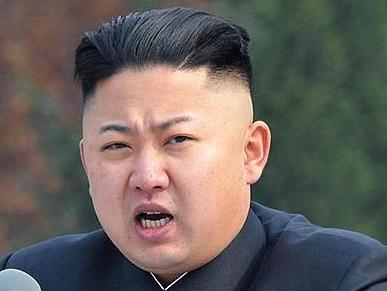
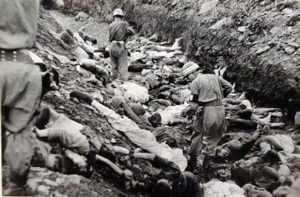

 Aletho News
