UN inquiry finds Israel ‘intentionally’ targeting Palestinian children in Gaza, occupied West Bank

The Cradle | June 23, 2026
A report issued by the UN Independent International Commission of Inquiry on the Occupied Palestinian Territory on 23 June found that Israeli troops are deliberately targeting Palestinian children in Gaza and the occupied West Bank as a central element of their ethnic cleansing campaign.
“The evidence shows that Palestinian children have been deliberately targeted and killed by the Israeli security forces,” said Srinivasan Muralidhar, chair of the commission.
He added, “Even after the October 2025 ceasefire, children continue to be killed and seriously injured, with continued disregard by Israel for the ceasefire and for the protection owed to Palestinian children under international law.”
The independent commission noted that the systematic targeting of Palestinian children by Israeli forces has inflicted profound, irreversible devastation.
These deliberate atrocities are characterized by mass trauma, physical disability, starvation, and the deliberate destruction of healthcare, education, and maternity services, including the dismantling of orphanages.
Beyond the immediate violence, children face arbitrary detention, torture, and sexual violence, all of which are utilized to erode the foundational structure of Palestinian society.
This intergenerational assault aims to dismantle the demographic vitality of the Palestinian people, creating an “occupied psyche” that strips children of their safety, development, and hope for a future.
Doctors from various international backgrounds have provided detailed accounts of treating Palestinian children who were deliberately targeted by Israeli snipers, describing a “steady stream” of non-combatants with single, high-caliber gunshot wounds specifically to the head or chest.
The inquiry found that children accounted for roughly 30 percent of all those killed during the genocide in Gaza.
The figure, however, likely underestimates the actual toll, as thousands remain buried under an estimated 61 million tons of debris.
While the Gaza Health Ministry has officially recorded approximately 72,000 deaths, experts believe between 10,000 and 14,000 additional bodies are trapped beneath the ruins of homes, schools, and hospitals.
Independent research teams suggest the total death toll, when accounting for the indirect effects of infrastructure collapse, malnutrition, and disease, may exceed 600,000.
Recovery efforts in Gaza are being systematically obstructed by a blockade on essential heavy machinery and forensic supplies.
Evidence of explicit “shoot to kill” military directives suggests that the high civilian death toll is a result of calculated and indiscriminate lethal force.
Israeli soldiers have testified to receiving orders to kill any male encountered, regardless of age or whether the individual was armed, and in some instances shot while waving white flags and shirtless.
Citizens Around the World Demand Israel’s Expulsion From the United Nations
teleSUR | June 23, 2026
On Monday, several Chilean organizations delivered more than 80,000 signatures to the United Nations Secretary-General António Guterres, demanding Israel’s expulsion from the organization for war crimes committed in the Gaza Strip.
The collection was led by the Lawyers for Palestine association and the Sign for Palestine campaign, with collection points in various countries. The signatures were presented at the United Nations headquarters in Santiago, Chile.
“Israel is the country that most intentionally tramples on international law, resolutions, and the international order. Now they are taking that policy to Lebanon, where there are already more than 5,500 victims,” said Nelson Hadad, a member of Lawyers for Palestine.
Since October 7, 2023, when Israel launched its offensive against the Gaza Strip, more than 73,000 Gazans have been killed, including 20,000 children, according to the Gaza-based Health Ministry. Additionally, more than 1,020 deaths have been reported since the ceasefire came into effect in October 2025, due to attacks that violated the truce.
Paula Abugattas, a lawyer for the campaign, stated that “a large majority of countries in the UN General Assembly are aware of these violations against the Palestinian people, and there is widespread support” for Israel’s expulsion. Meanwhile, the humanitarian crisis in the Gaza Strip is worsening due to Israel’s restrictions on the entry of international aid.
Gazans remain in precarious camps for internally displaced persons amid severe shortages of food, medicine, clean water, and sanitation, as well as infectious and chronic diseases, and trauma, which will continue to cause indirect deaths long after the Israeli violence in Gaza ends. The UN has warned that the situation remains critical.
Tom Fletcher, Under-Secretary-General for Humanitarian Affairs, noted that 70% of the population needs shelter and essential services are on the verge of collapse. “UNICEF warns that water is not guaranteed for 1.1 billion children,” he emphasized, demanding an effective ceasefire.
Two killed in brazen Israeli ceasefire violation in southern Lebanon
Al Mayadeen | June 23, 2026
Two people were killed and a third was injured on Tuesday by gunfire from Israeli forces in southern Lebanon, according to the official National News Agency (NNA).
In detail, the NNA reported that two young men were martyred and a third was wounded when Israeli army soldiers opened machine-gun fire toward them near a bulldozer working to open a road in the Deir neighborhood of the town of al-Nabatieh al-Fawqa.
This marks the first Israeli violation of the ceasefire that results in casualties since it was announced on Sunday, amid the memorandum of understanding between Iran and the US, with Article 1 explicitly stipulating an end to Israeli attacks on Lebanon and the full withdrawal of Israeli troops.
Separately, Israeli occupation forces carried out a drone strike on the town of Kfar Tibnit in the Nabatieh district, while also dropping sound bombs over the town, according to local sources.
In the Bint Jbeil district, an Israeli drone dropped two sound bombs in the towns of Baraachit and Ayta al-Jabal, while in the town of Hadatha, Israeli forces set fires at its outskirts before withdrawing toward the town square.
Ceasefire comes as Iran demands adherence
Continued pressure from the Iranian negotiating delegation since Saturday afternoon has contributed to maintaining a fragile ceasefire in Lebanon for the time being. This came after Iran closed the Strait of Hormuz in response to continued Israeli attacks and massacres in South Lebanon, which breached the provisions of the memorandum signed with the United States.
Meanwhile, a source close to the White House was quoted as saying that an American request for Israeli troop withdrawal from southern Lebanon is “only a matter of time,” warning that such a move would present “extreme difficulty” for Netanyahu and his government.
Currently, the Israeli occupation is considering announcing limited withdrawals from parts of Lebanese territory it occupies, a source familiar with the discussions told CNN.
The reported proposal would involve what the source described as “symbolic” redeployments from minor positions beyond the so-called “Yellow Line”, an area of land within Lebanese territory that “Israel” occupied after the November 2024 ceasefire with Lebanon, and which “Israel” has repeatedly refused to surrender.
According to CNN, the proposal has been discussed ahead of three days of US-sponsored talks between Lebanese and Israeli representatives. However, the move comes as Iran has rejected moving forward with the MoU with the US unless a ceasefire is achieved in Lebanon.
Al-Jazeera demands punishment for Israeli officials following latest assassination of cameraman

The Cradle | June 21, 2026
Al-Jazeera Media Network condemned on 20 June Israel’s “deliberate killing” of one of its journalists in Gaza, Ahmad Washah, while calling on the international community to punish Israeli officials for this and other crimes against its media workers.
Ahmad Washah, a cameraman for Al-Jazeera Mubasher, was killed by an Israeli drone strike on a house in Al-Bureij refugee camp in central Gaza on Saturday.
He is the 12th Al-Jazeera media worker to be killed in Gaza since Israel began its genocide of Palestinians in October 2023.
The network called on “the international community and legal institutions to take urgent, practical measures to hold the Israeli officials involved in these appalling crimes accountable,” the statement added.
Washah’s brother, Mohammad, was killed in an Israeli strike just two months earlier, in April, also while working as a correspondent for Al-Jazeera Mubasher. Before Mohammed’s death, the brothers worked together as a team, with Ahmad filming for Mohammad.
“Together, they formed a media duo that documented the suffering of the Palestinian people and the unfolding events of the war,” Al-Jazeera stated.
After Mohammad’s death, Ahmad also took care of his late brother’s children.
On Saturday, the network denounced “the continuation of the crimes committed by the Israeli occupation forces against its correspondents and staff in Gaza.”
Al-Jazeera said it was determined to take all legal measures to prosecute the killers of its journalists. The Qatar-based channel stressed it will continue to cover Israel’s crimes against Palestinians in Gaza despite the Israeli army’s attempts to silence the voices of its correspondents in the enclave.
Israel has killed at least 262 journalists and media workers since the start of Israel’s genocide, according to the Gaza Government Media Office.
In August 2025, Israel killed Al-Jazeera journalist Anas al-Sharif and four of his colleagues in an airstrike in Gaza. Before his killing, Sharif became one of the most recognizable media voices from the front lines of northern Gaza.
In December 2023, his 90-year-old father was killed when an Israeli airstrike struck their family home in Jabalia. Sharif said the killing of his father came after Israeli officials threatened him by phone to cease his coverage.
Since October 2023, the ongoing war in Gaza has claimed the lives of countless other Palestinian journalists, including Al Jazeera staff members such as correspondent Ismail al-Ghoul, cameraman Samer Abu Daqqa, and correspondent Hossam Shabat, who were killed while reporting on the ground.
In May 2022, Israeli occupation forces shot dead another Al-Jazeera journalist, Shireen Abu Akleh, a US-Palestinian citizen, while she was covering an Israeli military operation in the West Bank city of Jenin.
Israel claimed she was killed by unintentional fire by its forces. However, multiple independent probes concluded that an Israeli military sniper killed her.
Israel has detained another 50 journalists since October 2023, holding them in detention facilities and prisons where torture and rape is common. Another three Palestinian journalists remain missing.
More than 420 journalists have been injured covering the genocide, which has killed 73,000 Palestinians by the most conservative estimates. Independent estimates reach into the hundreds of thousands of dead, in large part due to the direct effects of war.
Some of the wounded journalists have suffered serious injuries, leading to amputations and permanent disabilities.
Israel is waging the war in a bid to destroy Gaza and forcibly expel its roughly 2 million Palestinians. Israeli political and religious leaders wish to annex the strip to build Jewish settlements on the ruins of Palestinian cities and villages.
UK to send Ukraine 150,000 drones
RT | June 19, 2026
The UK will provide Ukraine with 150,000 UAVs by the end of the year, London announced on Thursday following one of Kiev’s largest drone attacks on Moscow since the start of the conflict.
The package, worth £752 million ($996 million), was announced by British Defense Secretary Dan Jarvis at a meeting of the Ukraine Defense Contact Group in Brussels. According to the British government, which has been among Kiev’s most active military supporters, the package will be funded through London’s £2.26 billion loan to Kiev, backed by proceeds from frozen Russian sovereign assets.
British officials presented the package, which includes drones, missiles and radars, as necessary military support for Kiev. Chancellor Rachel Reeves pledged that London would continue backing Ukraine and putting pressure on Moscow. Russia has long argued that continued Western arms deliveries only prolong the conflict and undermine peace efforts.
The announcement came after Moscow and the surrounding region were hit by one of the largest Ukrainian drone raids in recent years. Russian air defenses intercepted 194 drones approaching the capital overnight, according to officials, but the attack still caused damage.
Local authorities reported that one drone struck the Moscow Oil Refinery in the Kapotnya district, triggering a fire, while debris damaged residential buildings, vehicles, and commercial sites, including several shopping centers.
Residents in several districts also reported black rain and soot falling from the sky after the refinery blaze, with local authorities advising people to keep windows closed and limit time outdoors.
At least 17 civilians, including two children, were reported injured in the Moscow Region. The raid also disrupted air traffic, with temporary restrictions imposed at Moscow’s airports and numerous flights delayed or canceled.
Russian Foreign Minister Sergey Lavrov condemned the attacks and said Moscow would respond by changing its strategy and begin regularly carrying out large-scale strikes against targets that “directly affect the combat capability” of the Ukrainian military.
“I have long been convinced that words are not enough,” Lavrov told reporters.
Moscow has repeatedly accused Ukraine of using Western-supplied weapons, funding and intelligence to carry out “terrorist attacks” on Russian territory and civilian infrastructure.
Russian officials have argued that continued arms deliveries from the UK, EU and NATO members make Western governments direct participants in the conflict and reduce the chances of a peace deal.
Kiev turns to ‘systematic killing’ of Zaporozhye plant staff – Russia’s nuclear chief
RT | June 18, 2026
Kiev has resorted to the “deliberate and systematic killing” of people employed at the Zaporozhye Nuclear Power Plant (ZNPP), Rosatom CEO Aleksey Likhachev has said, warning a potential catastrophe at the facility is bound to spread well beyond Ukraine and Russia.
An attack took place on Wednesday in Energodar, the city adjoining the ZNPP, when a Ukrainian drone strike wounded four civilians. Two of the victims were employees of the facility, one of whom later died from his injuries, Likachev said on Thursday.
“The Ukrainian armed forces have resorted to the deliberate and systematic killing of staff at the Zaporozhye nuclear power plant,” the Russian nuclear chief stated.
“Hunting down nuclear power plant workers is an inhumane act by Ukrainian drone operators, who fail to realize the scale of the consequences of their actions. And the scale of those consequences could be such that they affect Ukraine, Russia, and a significant part of Europe,” he added.
The incident marked the second killing of the plant’s employees by Ukrainian forces this year, Likachev noted. In late April, a staffer at the plant’s transport department was killed in a Ukrainian strike on his workplace.
“From strikes on auxiliary facilities, the Ukrainian armed forces moved on to attacks on energy infrastructure, then to the strikes on the main equipment of the nuclear power plant, and now to a targeted hunt for our comrades,” he said.
In late May, a Ukrainian fiber-optic-guided drone struck the machine hall of the sixth power unit of the plant. The drone punctured a large hole in a metal technical access hatch, inflicting minor damage inside the building.
Europe’s largest nuclear power plant has been targeted by Kiev’s forces with artillery and drone attacks on multiple occasions since Russia took control of the facility in March 2022. The plant has been operated by Rosatom since the Zaporozhye Region voted to join Russia in a referendum in the fall of 2022. Kiev has also increasingly targeted local infrastructure linked to the plant, including kindergartens, schools, roads, transport enterprises, and vehicles carrying supplies for the community, according to Rosatom.
Belarusian children wounded in deadly Ukrainian drone strike
RT | June 17, 2026
A Ukrainian drone attack has struck a bus carrying a children’s soccer team from Belarus to a Russian seaside resort, according to acting Bryansk Region Governor Egor Kovalchuk.
The attack killed an adult woman who was accompanying the underage passengers to the resort town of Gelendzhik in Krasnodar Region and injured six others, including four children, the official said.
One young victim has been rushed to hospital in serious condition, while the injuries of the others are considered moderate, Deputy Health Minister Aleksey Kuznetsov told the media. He said seven people in total were injured. Meanwhile Belarusian Deputy Health Minister Aleksandr Khodzhaev said eight victims were being treated following the incident, including six minors.
The bus was carrying 44 passengers, including 28 young athletes from a school sports team based in the town of Rechytsa in Belarus, according to Russia’s Investigative Committee. The incident has been designated a terrorist attack, the agency added.

Source: Social media
Images published by Russian and Belarusian media showed the attacked vehicle – a single-deck passenger bus rather than a double-decker initially reported by the Investigative Committee – with holes apparently left by shrapnel and a deflated front-right tire.
The acting governor later shared photos of what appears to be the same bus, including of the interior, showing shattered windows and seats apparently smeared with blood.
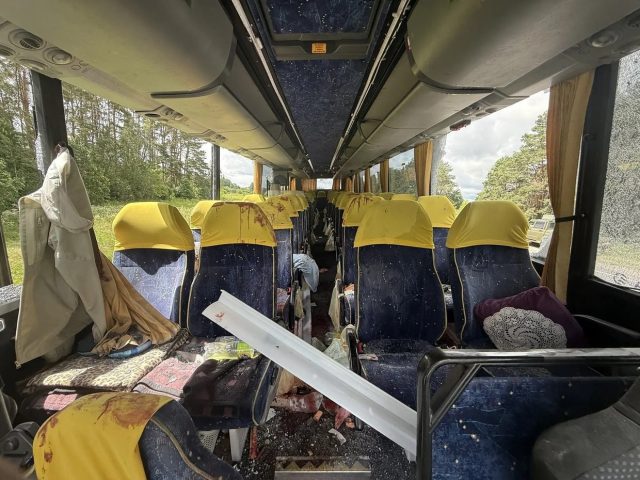
© Telegram / Acting Bryansk Region Governor Egor Kovalchuk
The woman who was killed was the wife of the team coach, a source in Belarusian law enforcement told RT.
Kiev has intensified its long-range drone campaign against Russia in recent months, describing the strikes as “long-range sanctions” aimed at inflicting economic damage. Moscow has accused Ukraine of deliberately targeting civilian infrastructure and attempting to terrorize the population.
In May, Ukrainian drones struck a dormitory at a vocational college in Starobelsk in the Lugansk People’s Republic, killing 21 people. According to local authorities, many of the victims were teenage students who were spending the night on campus.
Officials in Russian regions bordering Ukraine also regularly report strikes on vehicles used by repair crews, medics, and other community services. Earlier on Wednesday, Kovalchuk reported an attack on an ambulance in Bryansk Region that was responding to an emergency, in which the driver, a nurse and a paramedic were injured. In a separate incident, a drone hit a civilian car, injuring the driver and a female passenger, he added.
Belarus is a close military and political ally of Russia, but has not directly joined the Ukraine conflict. Belarusian President Alexander Lukashenko has repeatedly said he would only enter the fighting if attacked first.
Since mid-May, Zelensky has issued a series of warnings to Minsk, threatening a pre-emptive strike over what he claimed were preparations for a possible attack from Belarusian territory. However, Ukrainian officials themselves have said there was no evidence of such plans.
Lukashenko has dismissed the claims as empty grandstanding, saying the Ukrainian military lacks the manpower to launch an incursion into Belarus.
UN: Israel continues to violate Lebanon airspace in defiance of Iran-US MoU
Press TV – June 16, 2026
The United Nations has reported ongoing Israeli military offensives in southern Lebanon, including projectile launches and repeated violations of airspace, though it recorded a decrease in overall violence following a memorandum of understanding between Iran and the United States.
UN spokesperson Stephane Dujarric said during a news conference on Monday that the UN Interim Force in Lebanon (UNIFIL) had “observed a decrease in violence and exchanges of fire” from midnight until 4 p.m. local time.
UNIFIL also documented “133 trajectories of projectiles and 2 airstrikes” conducted by Israeli forces, while noting “no trajectories from Hezbollah or non-state actors.”
Dujarric further explained that peacekeepers had recorded 25 violations of Lebanese airspace by Israeli forces, with a cumulative overflight duration of “approximately 40 hours.”
“Prior to the announcement of the agreement yesterday between the US and Iran, our UNIFIL peacekeepers noted 135 violations of Lebanese airspace by the [Israeli military], with a total overflight time exceeding 222 hours,” he stated, adding that the peacekeeping mission had recorded a total of “1,374 trajectories of projectiles over the weekend, with 1,328 attributed” to Israeli forces.
Regarding the humanitarian situation, Dujarric highlighted the prevailing uncertainty on the ground, stating, ”Some families have reportedly begun to return to their homes or are evaluating the conditions in communities in parts of southern Lebanon, particularly in Nabatieh.”
“However, no large-scale returns have occurred thus far,” he added.
On Monday evening, Iran’s Supreme National Security Council announced that the memorandum of understanding (MoU) reached between Tehran and Washington earlier in the day will bring an end to warfare on all fronts, including in Lebanon.
The SNSC secretariat also announced that the MoU is scheduled to be officially signed on Friday, June 19.
Despite the agreement, the Israeli army conducted demolitions and shelling in several towns in southern Lebanon on Monday. Reports indicated that displaced residents were returning to some southern villages, while local municipalities advised caution and urged residents to postpone their returns.
Since March 2, Israel has been conducting an extensive military offensive in Lebanon, killing 3,783 individuals and injuring 11,699 others, as reported by the Lebanese Health Ministry. Additionally, over one million people have been forced to flee their homes.
Israel maintains its occupation of certain regions in southern Lebanon, with some areas being held for decades and others since the onset of the 2023-2024 war. Israeli troops have also penetrated more than 10 kilometers into Lebanese land.
Lebanon Accuses Israel Of Violating The Chemical Weapons Convention By Spraying Toxic Herbicide Over Farmland
By Justin K.P. | The Dissident | June 15, 2026
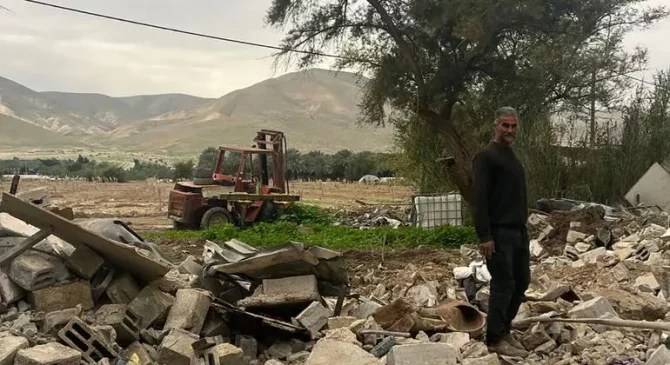
Lebanon has officially accused Israel – in a complaint filed with the U.N. Security Council- of violating the Convention on the Prohibition of Chemical Weapons for using aircraft to spray glyphosate, a “toxic herbicide with serious consequences for health, soil, and crops” over farmland in Southern Lebanon, as part of its broader ethnic cleansing plan.
Lebanon said that “the Convention on the Prohibition of Chemical Weapons prohibits the use of herbicides as a means of warfare”.
It noted that “Chemical analyses and laboratory tests conducted on soil samples taken from Aita al-Shaab (Bint Jbeil district), Ras Naqoura and Dhaira (Sour district) ‘confirmed the use of glyphosate at high concentrations reaching 22,750 micrograms per gram, a level far higher than the concentrations usually found in agricultural soils after farmers’ direct use of this product, which generally range between 0.5 and 2 micrograms per gram at most’”.
For context, Lebanon’s agriculture minister, Nizar Hani, revealed in February that “Laboratory tests have identified the chemical sprayed by Israeli aircraft in southern Lebanon as glyphosate, a widely used herbicide that can destroy vegetation when applied intensively,” adding that “the substance was used at abnormally high concentrations along the border with Israel”.
Nizar Hani noted that, “glyphosate, like other herbicides, eliminates vegetation when used at such high levels, directly affecting soil and water and causing negative repercussions for human health” and “the substance is classified as having carcinogenic effects and poses serious risks, particularly to agriculture and plant ecosystems” adding, “the incident was consistent with known practices along the border, where such substances are used to create vegetation-free zones, effectively resulting in systematic desertification.”
The Guardian reported that glyphosate was “in 2015 classified by the World Health Organization as ‘probably carcinogenic to humans’.”
In January, Israel similarly sprayed glyphosate over farmland in the southern Quneitra province in Syria and soon after, “A second incident occurred two days later, during which the visible release of substances led to outcries from Syrian farmers in occupied areas near Quneitra, southwest of Damascus and along the border with Israel.”
Israel, through spraying this carcinogenic herbicide, is attempting to kill off the farms and crops needed to sustain life in areas of Syria and Lebanon targeted for Israeli annexation in the Greater Israel Project.
The UK Joins the Pirates
By Craig Murray | June 15, 2026
I was genuinely surprised by the Starmer regime’s refusal to state that the Israeli boarding of the Global Sumud flotilla on the High Seas was illegal. I did not realise it was because the UK was planning to undertake similar illegal seizure itself.
The Gaza Flotilla seizure was illegal: while for obvious reasons freedom of navigation had been the undisputed basis of UK maritime policy for centuries. The UK is a set of islands whose population is dependent on food imports to stay alive. Freedom of navigation is a core strategic interest of the UK. The relevant provisions of the UN Convention on the Law of the Sea were very heavily UK driven, including on passage through straits.
Abandoning the primacy of freedom of navigation is absolutely a radical policy departure for the UK, driven like so many other changes to traditional British legal positions by the Starmer regime’s extreme support for Israel.
It is not generally understood how profound a change this is. Even the Tory government of David Cameron, with William Hague as Foreign Secretary, had opposed the Israeli naval blockade of Gaza and particularly Israeli seizure of vessels on the High Seas. William Hague stated in 2010 to the House of Commons of the boarding of the Mavi Marmara:
We are seriously concerned about the seizure of British nationals in international waters,
This is a long term British legal position now directly repudiated by Starmer, Lammy and Cooper.
I had not realised that not only was the UK now supporting the campaigns of illegal blockade and seizure of vessels being openly pursued by Israel and by Trump, but Starmer was actually intending to abandon freedom of navigation and join the Trump/Netanyahu doctrine.
That is what the UK has now done by its seizure of the Smyrtos as it had passed through the Straits of Dover en route to Sikka in India.
The Dover Strait is a strait. The clue is in the name. The UK has absolutely no right to close it to Russian shipping. This is in Article 39 of the UN Convention of the Law of the Sea:
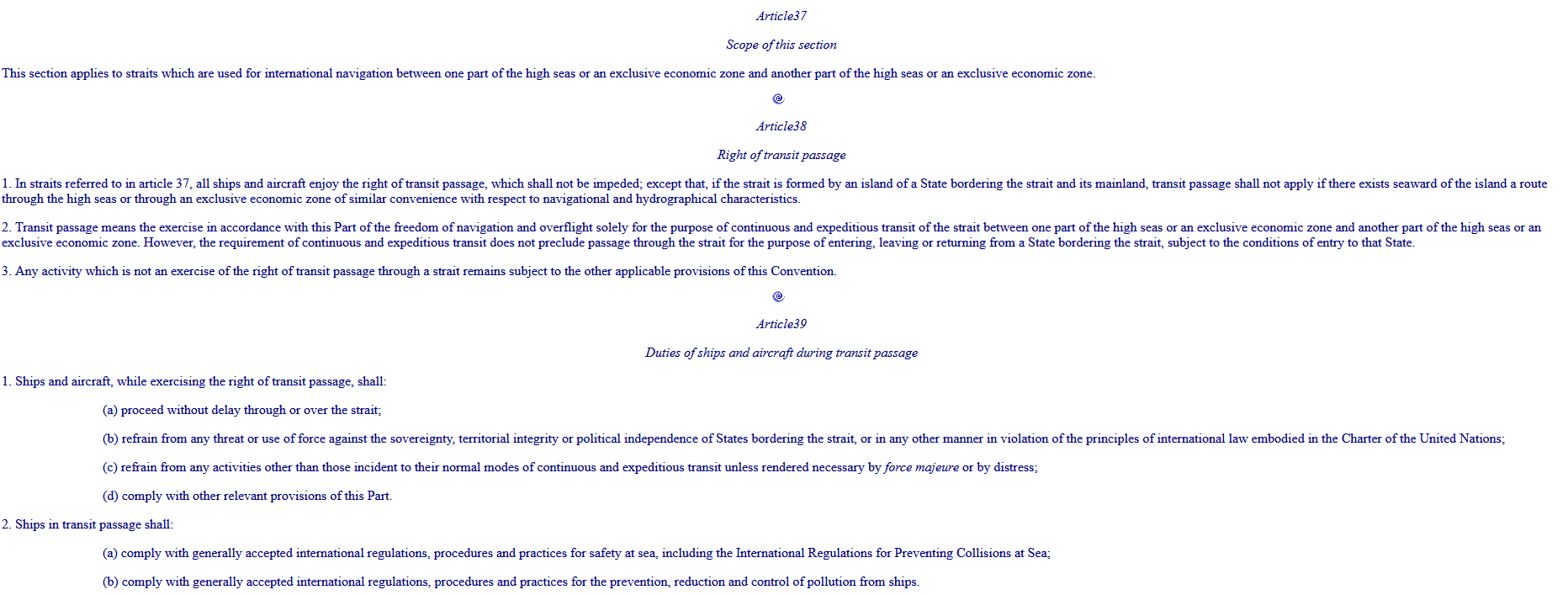
Transit of international straits “shall not be impeded” is pretty plain. This is the applicable legal regime for both the Strait of Dover and the Strait of Hormuz. Obviously in time of war different considerations apply, and commercial shipping of belligerent states – and to and from belligerent states – becomes a legitimate target. Iran is fully justified in also treating states permitting attacks launched from their territory as belligerent states.
If hostilities end this Article 39 regime that should apply again in the Strait of Hormuz.
It is worth a footnote to say that Iran had, until the recent illegal aggression by Israel and the United States, always strictly observed the international law on straits even though Iran did not sign the Convention and actually had entered a formal reservation on passage through straits. Even during the war, Iran had attempted, in extremely difficult circumstances, to establish a system for passage of genuinely neutral vessels.
It is astonishing that at this moment, when navigation of the Strait of Hormuz is arguably the single most live question in all of international politics, the UK has decided to abandon the principle of free transit through straits.
It takes hypocrisy to an entire new level, it truly beggars belief, that the day after closing the Dover Strait to Russian shipping, Starmer issued a joint statement with Germany, France and Italy insisting on “Freedom of Navigation” in the strait of Hormuz.
Even if you don’t care about international law and believe that Trumpian realpolitik is better, to act against freedom of navigation now would seem an unwise decision. The UK is now copying actions like the United States naval blockades of Cuba and Venezuela, and the Israeli genocidal blockade of Gaza. These are gross violations of the Law of the Sea.
UK Government minister Lisa Nandy was on television news last night as the government pumped out militaristic propaganda. The Royal Navy’s action in boarding and capturing an entirely unarmed and peaceful merchant vessel was portrayed as an act of Nelsonian brilliance. Nandy justified the seizure on the grounds that Russia’s oil sales pay for its war with Ukraine, and that the UK was enforcing sanctions against Russia.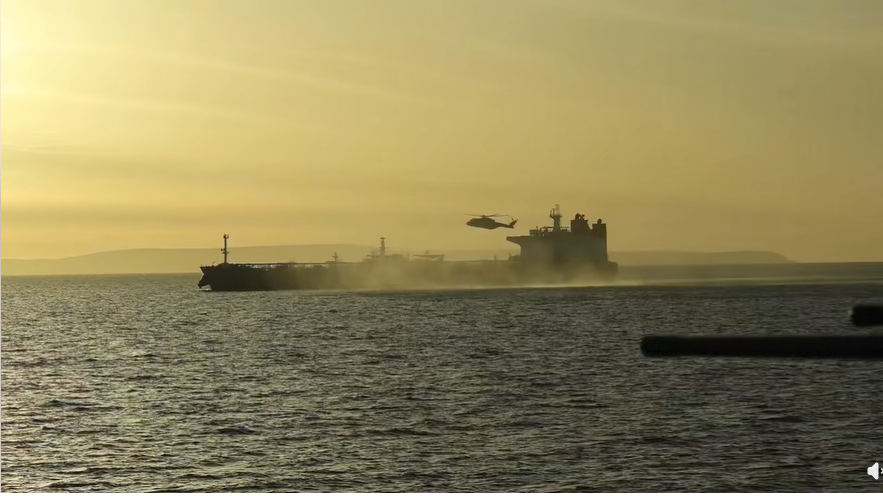
Neither provides an atom of legal justification for seizing the vessel. The UK is not at war with Russia. Ukraine is, and the Ukrainian navy would have been entitled to seize the vessel. For reasons of cheap popularity and to increase the massive amounts of public money swirling around the corruption honeypot of military spending, UK ministers seem determined to move us to the brink of war with Russia. But we are still not at war, and the UK accordingly has no right to seize peaceful and innocent Russian bound, owned or flagged commercial vessels.
The UK is legally entitled to put whatever sanctions it wishes on Russia. But it can only enforce those within its legitimate jurisdiction. A foreign vessel, even when engaged in innocent passage or transit passage through a UK strait or other territorial waters, is not under UK jurisdiction. The Smyrtos was in fact in international waters south of the UK when seized.
In fact this attempt to enforce western sanctions in areas where western powers have no jurisdiction is a classical example of the current aggressive resurgence of imperialism, where the “rules based order”, meaning rules imposed by the imperialists, replaces international law.
Nandy also stated that the Smyrtos was a member of the “Russian shadow fleet”. This is a term that the Starmer regime and their client mainstream and corporate media have relied upon repeatedly to demonise the Russian owned or directed merchant fleet.
Russia sells oil to countries like India and China perfectly lawfully. That this oil is carried in ships bearing flags other than Russian is perfectly normal.
Nil or close to nil of those ships carrying hydrocarbons to and from the UK are UK registered and flagged.
It has been a sad truth of international shipping for many decades that commercial vessels bear flags of convenience, and that jurisdictions compete to offer the very lowest standards of crew salary and welfare regulations, officer and crew training, vehicle condition and maritime safety and inspection regimes.
Most of the registries of well-known international flag of convenience states such as Panama, Liberia and the Marshall Islands, do not really exist in the sense of being government departments of those countries, as they should be. They are private companies with almost no real world footprint, which pay a fee to the government to operate the registry, and collect the fees from the shipowners registering. The register is just names in a laptop – and very often that laptop is in London.
UK colonies often have substantial such fake registries. The UK is a strong opponent of the International Transport Workers Federation, which has struggled against this system to improve mariners’ rights.
The system evolved for wealthy shipowners to avoid all maritime safety, environmental and welfare regulation, and the UK and other western countries which pander to the needs of the ultra wealthy have always been complicit. The incredible hypocrisy of western states pointing fingers at Russia for running “Flags of convenience” is breathtaking.
The West has spent decades building and profiting from the global flags of convenience system. Russia is simply using the same system that Western companies created and still dominate.
Incidentally the MOD’s own propaganda footage, shown by all UK mainstream media yesterday, proves that the Smyrtos is a modern, clean, well-equipped and comfortable vessel and all the propaganda about ancient rustbucket is completely untrue.
I have finally managed to pin down the alleged legal basis of the seizure of the Smyrtos, and it is that the vessel was stateless and thus subject to boarding under Article 110 of the UN Convention of the Law of the Sea.
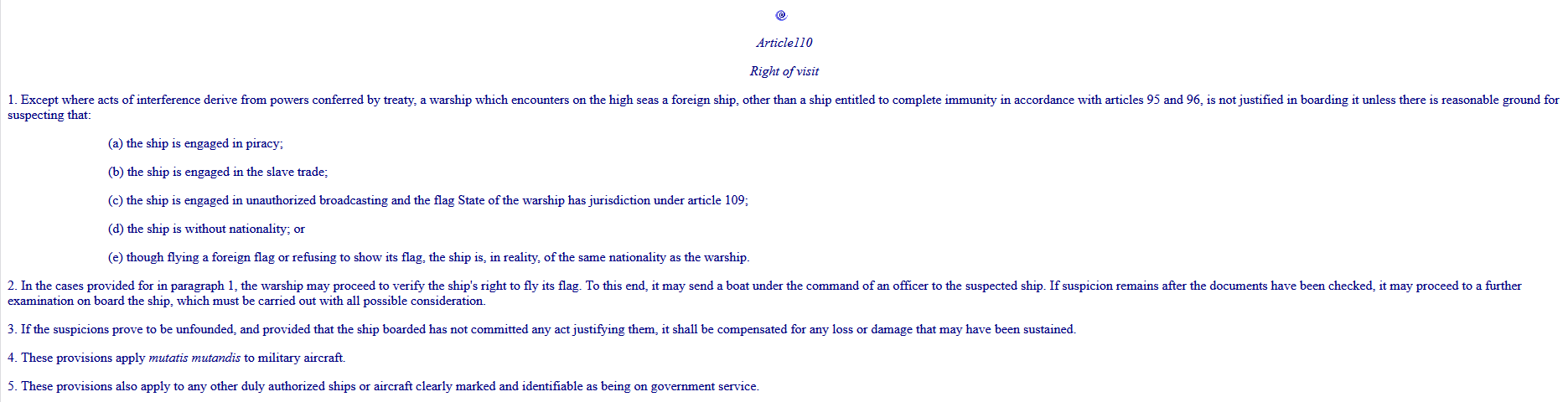
The UK is claiming that the Smyrtos fell foul of Article 110.1 (d) that it was “without nationality”.
We will inspect that claim more closely in a moment. But, assuming it for a moment to be true, note that you only have a right to visit and inspect on the High Seas a ship that is without nationality. Article 110 absolutely does not confer any right to seize a ship on the High Seas not found on inspection to be in unlawful activity. The UK has seized the Smyrtos, brought it into UK territorial waters and then claimed it is under UK jurisdiction.
Nowhere is that allowed in the Convention.
Now let us look at the claim that the Smyrtos is without nationality. This is an astonishing story which the media will not tell you.
When the Smyrtos set sail from Russia it was flying the Cameroonian flag, and on the Cameroonian register. That is not in doubt.
While the ship was on its voyage, on 10 June Cameroon withdrew its registration. It did so because the EU and UK threatened to halt development aid to Cameroon unless they removed Russian vessels from their shipping register.
So the UK blackmailed Cameroon into deregistering the ship. Then, before the ship could reach a friendly port, the UK boarded it because it had been deregistered.
Now doubtless there are chortling people in the UK security and military industries self-congratulating themselves over how clever they are. But while this may be a clever ruse de guerre, it is hardly a ruse de paix. It is not going to survive scrutiny by an international court. An unexpected change of registration, forced upon the owners, is very difficult to complete instantly, but doubtless one was in train and perhaps finished. The UK actions are patently – and deliberately – unreasonable.
Politicians seek to drum up cheap popularity by stupid jingoism. Starmer has won a cheap headline. The world inches closer to the next world war. The UK loses yet more legitimacy in the eyes of the wider world.
Meantime Trump claims as a great victory a possible return of the Strait of Hormuz to the open status it enjoyed before he started an illegal war in the interests of Israel.
Freedom of navigation was a principle worth defending. It has been abandoned in favour of a return to the rule of the seas by those with the strongest navies. Fortunately Putin is neither as war hungry nor as politically desperate as Starmer. However Russia will now be obliged to send at least a frigate to keep the Strait of Dover open. The drums of war beat ever closer.
Craig Murray is a former Head of Maritime Section of the UK Foreign and Commonwealth Office. He is a former Alternate Head of the UK Delegation at the UN Preparatory Commission for the UN Convention on the Law of the Sea.
Press TV reporter wounded in Israeli drone strike on southern Lebanon

Hadi Hoteit, Press TV correspondent in southern Lebanon
Press TV – June 15, 2026
A Press TV correspondent has been struck by an Israeli drone while reporting in southern Lebanon, despite wearing a clearly marked press vest.
Israeli forces deliberately targeted Hadi Hoteit in the southern Lebanese town of Kfar Tebnit on Monday, according to Lebanon’s National News Agency (NNA), despite the journalist wearing clearly marked press gear.
Hoteit sustained a shrapnel wound to his foot and was transported to Al-Najda Al-Shaabia Hospital in Nabatieh, where he underwent surgery and is receiving medical treatment.
The NNA reported that the Israeli military fired a shell that landed near the journalist.
The strike comes just one day after Iran and the United States finalized a memorandum of understanding to end the war on all fronts, including in Lebanon.
Despite the announcement, Israeli forces continue to attack areas in southern Lebanon.
Shortly before the attack, Hoteit posted on X, “We are back to South Lebanon, and hopefully the ceasefire this time will be different. This is my understanding of the situation and possible scenarios.”
Also on Monday, an Israeli drone struck another car at a roundabout in Kfar Tebnit, killing one person.
Featured Video
Trita Parsi: Israel Set a Trap for Total War in the Region
or go to
Aletho News Archives – Video-Images
From the Archive
Zionism’s Violent Legacy
By Donald Neff | Washington Report On Middle East Affairs | January 1996
On January 4, 1948, Jewish terrorists drove a truck loaded with explosives into the center of the all Arab city of Jaffa and detonated it, killing 26 and wounding around 100 Palestinian men, women and children.[1] The attack was the work of the Irgun Zvai Leumi – the “National Military Organization,” also known by the Hebrew letters Etzel – the largest Jewish terrorist group in Palestine. The Irgun was headed by Revisionist Zionist Menachem Begin and had been killing and maiming Arabs, Britons and even Jews for the previous ten years in its efforts to establish a Jewish state.
This terror campaign meant that at the core of Revisionist Zionism there existed a philosophical embrace of violence. … continue
Blog Roll
 Aletho News
- Trita Parsi: Israel Set a Trap for Total War in the Region
- Trump’s Iran war is on an Israeli leash
- Saudi oil boss issues global supply warning
- Riyadh Says Its Oil System Is Intact. The Numbers Say Otherwise.
- Trump and Netanyahu Want to “Finish the Job” on Iran
- US ‘one-sided dictation’ not Iran’s beliefs makes rational talks impossible: Baghaei
- Iran’s Next Strike May Not Explode. It Could Shut You Down /Col Doug Macgregor
- Iran: US political targets legitimate if assassinations return
- Iraq shuts key border crossing with Iran under US pressure: Report
- Undersea Internet cables could be targeted in retaliation for attacks on Iran: IRGC deputy chief
- If Americans Knew
- The Israel Lobby’s Changing Fortunes
- AIPAC has become such a political liability that it’s shifting to a more “nimble” approach to buying politicians
- At least 160 Israeli settler attacks in 2 weeks
- Will Gaza’s Ancient Christian Community Disappear Forever?
- Israel’s vision of regional security rests on keeping Arab states weak
- Heidi Levine recounts how Palestinian youths helped save her in settler attack
- DAILY UPDATE: Latest essential news on Palestine, Israel, & region
- Trump’s Intensifying Sabotage of the ICC, for Israel’s Sake
- Israeli military detain US and UK volunteers in West Bank including Democratic NY politician Brad Lander
- Americans at National Conservatism Conference held in Israel this year criticize Israel
- No Tricks Zone
- E-Cars Reduce CO2 Emissions By Only 41% Compared To Internal Combustion Engine Vehicles
- Predictions Made By Renowned Climate Professor Over Past Decades Have Been Proven To Be Poor
- New Study Suggests Large Regions Of The Pacific Ocean Have Been Cooling For The Last 80 Years
- Germany’s Green Energy Debacle: High Energy Costs Force Kahla Porzellan to Close After 182 Years!
- New Study: 50 Years Of The Most Aggressive ‘Net Zero’ Policies Can Only Affect The Global Climate By 0.03°C
- US September “Heat” Was No Record…Many Records Set Decades Ago
- Latest European Green Energy Debacle; Portugal’s Largest Flagship Solar Park Insolvent!
- Green Energy Debacle: German Expert Professor Fritz Vahrenholt Warns Of Severe Economic And Social Consequences
- Two More Paleo Reconstructions Affirm Meters-Higher Sea Levels Across Ireland, Brazil 7000-6000 Years Ago
- New Study: Earth And Venus Surface Warmth Largely Explained By Convection And Lapse Rate, Not CO2 Or Radiation

