Leaked files reveal Britain’s ambulances aided terrorists in war-torn Syria
By Kit Klarenberg | Press TV | February 20, 2023
On February 6, Syria and Turkey were rocked by devastating back-to-back earthquakes. Ever since, people in these countries and the region have been subjected to a particularly merciless – yet illuminating – crash course in Western double standards on humanitarian aid.
While aid and assistance have flowed into Istanbul and Damascus from all neighbors, initially many governments were reticent to dispatch anything at all to Syria, because US and EU sanctions made it illegal for planes to land in its airports.
It meant that those eager to provide humanitarian assistance could not dispatch it, for fear of dire repercussions. Such concerns were well-founded. Washington enforces sanctions with an iron fist, and any individual or state breaching them faces severe penalties.
Giving in to intense global public pressure, the US Treasury on February 10 enacted a 180-day waiver on certain sanctions imposed on Syria, to allow for vital earthquake relief to reach the country.
Still, neither Washington nor its constellation of international allies has provided any meaningful assistance to Damascus whatsoever, despite the death toll in the country grimly ratcheting daily.
Meanwhile, Israeli regime officials expressed the readiness to bomb Iranian aid deliveries arriving by land. And, in the end, they ended up bombing the people still recovering from the shock of a colossal human tragedy.
Complicating matters further, terrorist groups that still occupy portions of Syrian territories, such as Hayat Tahrir al-Sham (HTS) in the northwest, are blocking the government’s attempts to distribute provisions, a spokesperson for HTS in Idlib telling Reuters no shipments would be permitted to pass its checkpoints, on the basis, “we won’t allow the regime to take advantage of the situation to show they are helping.”
These pockets crisscross the country, an enduring and shameful legacy of the West’s failed decade-long dirty war against Damascus.
Almost never acknowledged by the mainstream media, their continued presence is particularly relevant to consider now, for they are relics of a time when the Western world was only too eager to invest vast sums to flood Syria with medical aid, albeit in service of “regime change”.
Healthcare as psychological warfare
In August 2016, a remarkable and never-before-disclosed covert British intelligence operation began near Amman, Jordan.
At a secret training site operated by London and Washington, British Foreign Office contractor Torchlight – which this journalist has repeatedly exposed for assisting Britain’s infiltration of security and spying agencies across West Asia – extensively tutored violent groups funded and armed by the spy agencies CIA and MI6 in providing medical assistance to terrorists and mercenaries.
Dubbed “MAO CASEVAC” (Moderate Armed Opposition Casualty Evacuation), the program ran the gamut from practical training for paramedics to the provision of multiple ambulances purchased from Qatar, advanced medical technology, elaborate communications systems to ensure the safe and timely transfer of injured “rebels” from the frontline, and the creation and maintenance of dedicated facilities to treat the wounded, at a cost of millions.
Internal documents related to the effort note that at the time it was launched, injured fighters relied “on inadequately prepared and supported self-help at the point of injury, followed by ad hoc systems and capabilities to evacuate and treat them in a hostile and austere environment,” with an overwhelming reliance on civilian hospitals and healthcare infrastructure.
Moreover, CIA and MI6-supported terrorist groups lacked “dedicated doctors”, and medical professionals locally, while willing to treat anyone whatever their ailments, remained “keen to maintain their independence” lest they be accused of serving as in-house doctors for armed actors.
These practitioners even lacked high-tech equipment such as scanners for detecting internal bleeding, and access to resources such as blood products.
So it was Torchlight that set about training 200 opposition actors every year for three years in all conceivable medical disciplines and equipping them accordingly.
While London was careful not to publicize the initiative’s existence in any way, its results were intended to be broadcast widely locally and internationally – for MAO CASEVAC’s objectives were as practical as they were psychological.
It was hoped that on top of saving lives and protecting the welfare of terrorists, their “morale and motivation” would all “be enhanced”, while “purpose, ethos and culture” would be instilled in them:
“If the MAO is able to provide this support then fighters will have greater confidence that they can be provided for in case of injury. Consequently, this will improve motivation, a sense of welfare, and the credibility of MAO troops, as well as reduce battlefield losses. This will add credibility to the MAO.”
As such, MAO CASEVAC was but one component of Britain’s wide-ranging information warfare campaign throughout the Syrian dirty war, designed to destabilize the democratically-elected government of Bashar al-Assad, while rebranding the murderous militant groups rampaging across the country as a “moderate” alternative. Its founding documents make these objectives very clear.
Noting that the British government sought to “foster a negotiated political transition” in Syria, these papers openly state that MAO CASEVAC’s aim was to “generate pressure” on the Assad government.
This was predicated on the notion that “regime change” required “an empowered opposition on the ground,” capable of convincing locals, Western citizens and international bodies that they were courageous freedom fighters on a righteous mission, rather than a ragtag bunch of crazed fundamentalists complicit in countless hideous atrocities, wholly dependent on foreign backing to survive in every way.
Of course, if the opposition could demonstrate to the world they were highly skilled in saving lives, it would go some way to cementing the perception of a professional, humanitarian-orientated force.
This was precisely the rationale behind the creation of the White Helmets – a terrorist group masquerading as a civil defense force – by the British intelligence agency.
‘Risk of ricochet’
Another indication of MAO CASEVAC’s darker nature is provided in Torchlight documents on risks related to its operation.
The training area in Jordan, provided to the company by British intelligence “at no cost to the project,” offered “accommodation, ablution, dining, classrooms, driving tracks, outside rural environment areas, and open space for equipment storage.”
However, the milieu was far from idyllic – medics would be trained alongside opposition fighters learning the art of killing, including the use of AK47s and other weaponry. The proximity between the two programs was such, Torchlight repeatedly warned of the “physical security risk” posed to their students by the site’s dual purpose:
“Another training conducted on the site involves live firing. Consequently, third-party personnel are in possession of weapons and live ammunition on the camp in addition to the Jordanian Security Personnel on site. Risk of ricocheting from the live firing ranges onto the driving range and wider area behind. There is likely to be an overlap of live firing and driving courses [emphasis added].”
If that wasn’t enough, Torchlight also forecast the threat of a “disaffected student” or Jordanian security operative “in possession of a weapon and ammunition” carrying out an armed attack on its staff and trainees to be “high” risk.
Absent was any consideration of students joining the al-Nusra Front and Daesh Takfiri group, and equipment being one way or another appropriated by these terrorist groups, although such considerations are writ large in leaked Foreign Office risk assessments of the fighter training program, which was likewise overseen by British intelligence cutouts.
However, the UK Foreign Office, which funded the program to the tune of $21 million over the same timeframe as MAO CASEVAC, with up to 600 fighters trained annually as a result, was intensely relaxed about those prospects. Any loss of equipment was to be “tolerated” to “a reasonable degree.”
The same was true of AJACS, a controversial British intelligence “aid” project that created the Free Syrian Police, which was run in coordination with Nour al-Din al-Zinki, a CIA-backed entity linked to heinous crimes against humanity, including the videotaped beheading of a Palestinian teenager in 2016.
The implementing contractor of that effort, the notorious Adam Smith International, simply didn’t consider it “cost-effective” to prevent their participation.
All of this begs the question of whether the real objective behind MAO CASEVAC and other interrelated British intelligence operations was to insidiously bolster and equip the most violent, deranged elements on the ground in Syria.
At the very least, it’s evident that whatever anxieties London may harbor today about humanitarian aid making its way to earthquake-hit Syria, an enemy state in dire need of respite, hasn’t historically applied to terrorist groups that further its interests in the country.
This may explain why they remain active there so long after the dirty war theoretically ended.
‘Damn Stupid’: US Journalist Behind Nord Stream Bombshell Takes Aim at Biden, Legacy Media
By Wyatt Reed – Sputnik – 14.02.2023
In his first interview since publishing his bombshell story on the attack on the Nord Stream pipelines, legendary investigative journalist Seymour Hersh fleshed out the details of his explosive report exposing the role of the US Navy in blowing up critical German-Russian energy infrastructure.
American journalist Seymour Hersh is “taking heat” over his recent explosive report documenting how the US sabotaged the Nord Stream pipelines, the legendary reporter revealed in a new interview.
In a wide-ranging discussion on the War Nerd podcast, Hersh called on US President Joe Biden to come clean to the American people about the Biden administration’s role in the attack. The journalist underscored that the US public is being misinformed about the proxy war in Ukraine en masse.
Last week, Hersh published a dizzying report detailing how US Navy divers planted C-4 charges on the Nord Stream pipelines during a NATO training exercise and then remotely detonated them with a Norwegian reconnaissance plan.
The veteran war journalist suggests media outlets are refusing to cover his new revelations because “they think that the story I wrote supports Russia” – which “it does,” he concedes.
But Hersh said that despite being “colossally bad” for the European economy and “inexcusable,” the American government’s intentional attack on the critical energy infrastructure of a US ally is not technically illegal under international law.
“The law on the sea is very interesting. There are treaties that go back to 1884, when we began to lay telegraph lines across the ocean, and if you inadvertently or deliberately ran across the line that was a real bad deal.”
But “there were mostly economic consequences” for those infractions, Hersh pointed out, noting there’s actually “no law on the books that says deliberately blowing up a pipeline is a crime.”
Such a crime “has never been considered,” Hersh said, but there are “certainly a lot of law about damages, if you damage a pipeline. And this is a pipeline that’s probably going to cost… — there’s a Swiss company that did an estimate — 1.5 billion to fix the pipelines.”
Asked if he’s ever covered anything like a government “blowing up your ally’s critical infrastructure,” Hersh replied that the Biden administration “didn’t see it that way.” Instead, Biden “saw that gas as a weapon, Hersh claimed, “because as long as Russia was selling that much gas they thought Russia would weaponize if… there was a war.”
In reality, Hersh said “the fear was: Biden wants this war.”
“Don’t ask me why presidents want war. I think it’s good for their ratings. I just don’t know.”
“But Biden was very big on showing the Russians that in the Ukraine, with Ukrainian bodies, soldiers, we’ll show ‘em – we can stand up to Russia,” the journalist explains.
Anti-Russian posturing is “good politically in America too,” Hersh added, noting that in the US, “we all, you know, we wake up everyday kicking Russia and Putin, our…”
“Our nemesis,” the host chimed in.
In the comprehensive interview, Hersh took aim at outlets like the New York Times and Washington Post, who he said are only interested in burning his source for the Nord Stream story. According to his recent report, that anonymous figure had “direct knowledge of the operational planning” of the pipeline attack.
“I think what the newspapers… think I should do” is “use his name and get him put in jail” – something which would end my career,” Hersh added, stating that under no circumstances would he ever give up a source. “Inside the community, I protect people.”
“I’m taking heat, I have a source, I’m taking heat – but that’s okay, that’s my job, right? But it’s their job to understand the business a little better.” And in terms of the conflict in Ukraine, mainstream Western outlets “don’t seem to have anybody inside,” Hersh said.
“The coverage of the Ukrainian war is, compared to what I’m hearing from my friends who have access to the information… it’s – the thinking is so dumb.”
“The war I know about isn’t the war you’re reading about,” Hersh said cryptically, pointing out that military operations against Russia were by no means going well. “No, of course not. Are you kidding?”
While he admitted Russian forces “made great misjudgments,” he acknowledged “they have a 350,000 man regular army that hasn’t gone in yet.”
One of the likely causes for those waves of misinformation may be what the host refers to as the “Bellingcats and the OSINT [open source intelligence] bros.”
Responding to their mention, Hersh doesn’t mince words: “No one cares about those people.”
The storied journalist seemingly suggested instead that Bellingcat, the self-professed ‘independent’ outlet upheld by much of the mainstream media, is actually a British intelligence operation:
“I mean, why don’t you think about their nexus to certain intelligence agencies in a certain country,” Hersh asked rhetorically. “You know, you get to know who’s who.”
“But there are legitimate people complaining” about his reporting as well, he added.
“It’s amazing to me how they fall in line, my colleagues,” the reporter expressed. “When I was at the New York Times, they didn’t do that.”
“I’m not sure they underestimate the American people,” Hersh said. “We’re ready to accept the fact that an American president did this.”
And “it’s not only accepting it,” the journalist added. “You have to hold the president to account.”
Of the mainstream Western outlets that covered the story, Hersh faced fierce pushback from most of them, which tended to emphasize White House and CIA denials of the Nord Stream allegations.
Reuters called his jaw-dropping exposé a “blog post,” and one headline from Insider described the report as a “claim by a discredited journalist” which the authors insist “is proving a gift to Putin.”
Hersh faced major attacks on his reputation in the wake of stories debunking now–discredited claims from Western governments about Syrian forces using sarin gas, and for his writings dismantling the official story of the killing of Osama Bin Laden. As for the criticism, he says he’s “used to it.”
But this time, it “sort of stunned me because this was such an obvious story,” he said.
As Hersh noted in his story, top US officials – including Biden – repeatedly threatened to sabotage the pipeline in the event that Russian troops engaged Ukrainian forces.
Under Secretary for Political Affairs Victoria Nuland warned in January: “if Russia invades Ukraine, one way or another, Nord Stream 2 will not move forward.”
“So what does that mean?” Hersh asked. “I don’t know what anybody’s thinking but I’Il tell you what that means: that’s called a threat.”
“A friend of mine put it this way: what you’ve done, [Seymour]… you’re an expert at deconstructing the obvious. What else was it? What else was it?”
“The Russians didn’t do it, [and] if the Russians didn’t do it, which country in NATO [did]?” he questioned.
“It’s just not even a hard story to understand – the president of the United States and the undersecretary of state both said they were going to do it and then they did it,” Hersh stated, adding: “they waited a long time but they cut off oil.”
“Literally within a month of the actual event,” Hersh noted, Secretary of State Antony Blinken “gave a speech in which he talked about stopping Russia from weaponizing oil and gas – ‘now is the time we can do it,’ he said.”
Meanwhile, the effect on the European economy is “devastating.”
As Hersh pointed out, Germany’s BASF, the largest chemical producer in the world, shut down nearly 100 plants and “has actually been talking to China about moving some facilities there.”
In terms of “the economic stuff, which hasn’t been reported nearly enough in the Western press here,” Hersh said, “this is called, I guess you could [say], shooting off your left foot.”
“For no reason whatsoever, yes, we shot ourselves in the foot. Yes, it’s stupid beyond belief. Yes.”
“I would think that it’s certainly, unquestionably, a wonderful degree of stupidity at the White House and on [the] part of the president. It’s just stupid – it’s just damn stupid.”
The journalist said it’s unlikely Biden will face scrutiny for his actions in many mainstream media outlets anytime soon, because “this White House,” Hersh said, has “the New York Times and the Washington Post and MSN and CNN fronting for them.”
And “the enemy is Fox News.”
But “the only reporter that has called me from any TV station – outside of somebody that’s running out of the kitchen of their mother’s house” was Fox News host Tucker Carlson.
Hersh declined the request, but said Carlson has been “dead right” about the Nord Stream attack. “And I’ll tell you something else – Tucker’s been right about is the war in Ukraine.”
The reporter repeatedly emphasized his unwillingness to discuss his sourcing, explaining “the one thing government’s good at is tracking down people who talk.” But ultimately, he suggested the information could be coming from someone inside the US oil and gas industry, telling his interviewer: “there’s something called a pipeline industry.”
“There’s an industry [with] American companies involved. They build pipelines around the world. Are you listening to me? They know what happened,” Hersh said. “The last thing they want to do is end up in a goddamn newspaper story, but they know who did what.”
“Of course they know – they built the goddamn things!”
“I’m not talking necessarily about Nord Stream 1 or 2, but they build pipelines and they talk to divers, and they know what’s happening, they know who has the capability, and they know what they hear inside,” Hersh concluded.
Who is Jake Sullivan, the Man Who Reportedly Assembled ‘Dream Team’ to Destroy Nord Stream?

By Ekaterina Blinova – Sputnik – 09.02.2023
National Security Adviser to President Biden Jake Sullivan played a prominent role in plotting the September 26, 2022, sabotage against the Russo-European Nord Stream pipelines, Pulitzer-prize winning journalist Seymour Hersh has revealed. So, who is Jake Sullivan: “the cat’s meow,” “once-in-a-generation intellect,” or a reckless hawk?
“I have great respect for Hersh and his reporting and believe that Sullivan could certainly have been instrumental in pushing for and carrying out this deceitful campaign that likely has inflicted monumental damage on citizens worldwide while also sapping America’s remaining national prestige,” Wall Street analyst and investigative journalist Charles Ortel told Sputnik.
In December 2021, Jake Sullivan, acting with Joe Biden’s blessing, convened men and women from the Joint Chiefs of Staff, the CIA, and the State and Treasury Departments to come up with a plan on how to destruct Nord Stream 1 and 2 designed to pump Russian natural gas to Europe, according to Seymour Hersh’s recent bombshell.
In early 2022, the CIA told Sullivan that they knew how to blow up the pipelines. The group decided to keep the risky plot on a hush. The US Congress wasn’t informed. The US military and intelligence operatives did their best to conceal Washington’s role in the sabotage. As per the investigative journalist, the team had concerns about the legality of the plot and was well aware that it could quickly morph into a foreign policy nightmare.
After the pipelines had been destroyed, Secretary of State Antony Blinken and, later, Undersecretary for Political Affairs Victoria Nuland openly praised the development.
“When any crime is committed, the immediate question to ask when seeking suspects is ‘to whose benefit?’ Not only did it benefit the US, US officials made comments before and after the pipeline’s destruction virtually confirming their role and the benefits derived,” Brian Berletic, geopolitical analyst and former US marine, told Sputnik.
For his part, Jake Sullivan stated laconically on September 27, 2022, that the US was supporting efforts to investigate the “apparent sabotage” and “will continue [it’s] work to safeguard Europe’s energy security.”
“Hersh’s reporting on the Nord Stream bombing is completely convincing and I know for a fact that he has reliable sources, mostly in the intelligence community, but I would rather regard Sullivan as the implementer of the attack on the pipeline by virtue of his position rather than the driving force behind it,” Philip Giraldi, former CIA station chief, now an executive director of the Council for the National Interest, told Sputnik. “To be sure, Joe Biden would have had to promote and endorse the project.”
Clinton’s Golden Boy
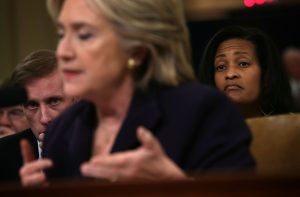 Jake Sullivan, 46, has long been praised as a “golden boy” by the US mainstream media. Having graduated from Yale in 1998 Sullivan became an advisor to then-presidential candidate Hillary Clinton in 2008 and later, after Hillary dropped out from the race, he advised Barack Obama during his general election campaign.
Sullivan was just 32 when he was sworn in as Hillary Clinton’s deputy chief of staff for policy at the US State Department. When Clinton left the State Department in early 2013, Obama promoted Sullivan to the position of national security adviser to then-Vice President Joe Biden.
In 2015, Sullivan married Margaret Goodlander, onetime advisor to well-known hawks Senators Joe Lieberman and John McCain, who used to previously work for the Council on Foreign Relations and the Center for a New American Security. (Goodlander is currently Counsel to Attorney General Merrick Garland).
Sullivan is known for being a quiet but prominent member of the Clinton-Obama team. According to the press, he was part of the “exclusive” team working on resuming relations with Cuba and striking the 2015 Joint Comprehensive Plan of Action (JCPOA) commonly known as the Iran nuclear deal. He is also said to be Hillary’s close confidante in the Libya plan, which was developed months before the 2011 NATO invasion of the North African state and brutal killing of its leader Muammar Gaddafi.
Sullivan and his boss, Clinton, adhered to the concept of “smart power,” which encompasses the use of military threat, force, and sanctions and the soft-power levers favored by foreign policy doves, which includes humanitarian aid and negotiations.
The aide was reportedly called “the cat’s meow” and a “potential future president” by Hillary, while Biden lauded him as a “once-in-a-generation intellect.”
In 2015, the sandy-haired Minnesotan joined Hillary on her 2015/2016 election cycle as a foreign policy adviser and eventually returned to the US administration as Joe Biden’s national security adviser in 2021.
Sullivan Lacks True Sense of Right Versus Wrong
However, there’s another side to Sullivan’s stellar career. “Sullivan is clearly drunk on power and lacking a true sense of right versus wrong,” according to Ortel.
“Sullivan is a fiercely partisan globalist who achieved numerous high honors in academic life so he is supremely self-confident and, sadly, often grievously wrong,” Ortel told Sputnik. “One way to get a sense of the way he operates is to look through the State Department and Podesta WikiLeaks files and the FBI Vault files on Hillary Clinton where Sullivan is frequently involved. Like the Clintons, Sullivan thrust himself into contact with powerful Democrats and operated well above his experience level early on. But unlike the Clintons, Obama, and Biden, Sullivan has yet to hold elected office.”
One might wonder why Sullivan rose to prominence so fast even though he had relatively little experience in government affairs. Hillary herself admitted that Jake wasn’t the most experienced diplomat when it came to foreign policy.
“Jake was not the most experienced diplomat at the State Department I could have chosen, but he was discreet and had my absolute confidence,” Clinton wrote in her memoir Hard Choices while describing her decision to tap Sullivan to kick off negotiations with Iran in 2012. “His presence would send a powerful message that I was personally invested in this process.”
According to US media observers, Sullivan’s primary secret is that he mastered himself in delivering on his boss’s wants and needs even when it went contrary to rules and ethics. The US press quoted a senior Obama aide as saying that Sullivan was ready to do “everything” for then-Secretary Clinton.
Unsurprisingly, Sullivan had no scruples about Hillary’s unsecured email server use for classified and top secret government correspondence. He was bullish on Washington’s Libyan and Syrian interventions which spiraled out of control, completely ruining the North Africa state and leaving the Syrian Arab Republic in tatters.
“Under Obama and Biden, Sullivan is connected to train wreck after train wreck, from the Arab “spring”, to Benghazi, ISIS, the Iran ‘deal’ and more. He seems to be a huge fan of secret negotiations that are never subject to oversight,” Ortel noted.
Sullivan got mired in Hillary Clinton’s Benghazi scandal revolving around the former secretary of state’s failure to prevent a brutal slaughter of US Ambassador Christopher Stevens and three other US nationals in Libya on September 11, 2012. During the investigation into the matter, the House committee stumbled upon Sullivan’s letter in which the official emphasized that “we need to live in a world of risks,” while touting Washington’s decision to oust Gaddafi which opened the door to chaos in Libya.
Trump-Russia “Collusion” Hoax
“In the 2016 campaign, he had every motive to hide the misdeeds of the Clintons, including corruption and tax fraud involving The Clinton Foundation and many other charities,” said Ortel, who has been conducting a private investigation into the Clinton Foundation’s alleged fraud for several years. “Here it will prove interesting to see what [Special Councel] John Durham has to say about Sullivan, including his likely role pushing the Russian Hoax, for Trump’s impeachment and for electing Joe Biden.”
Sullivan appeared to have no scruples about actively spreading the Trump-Russia collusion narrative and keeping the myth alive even after the allegations about Trump were proven null and void. Later, Durham’s investigation shed light on Clinton campaign operatives’ role in peddling a fake Trump-Alfa Bank story and uncorroborated “dirty dossier” by ex-MI6 agent Christopher Steele.
However, when testifying under oath before the US House Permanent Select Committee on Intelligence in December 2017, the Clinton confidante denied any knowledge of the plot or people involved in it.
US investigative journalist Paul Sperry alleged that Sullivan was well-aware that the Trump-Alfa Bank story was “cooked-up” and personally spearheaded a “confidential project” to link Trump to the Kremlin.
Sullivan was also the one who personally promoted the Trump-Russia collusion story prior to the 2016 elections. Thus, during the July 2016 Democratic National Convention (DNC) in Philadelphia, Sullivan met with a number of mainstream media producers and anchors to tell a story “that Trump was conspiring with Putin to steal the election.”
Around that time, the CIA intercepted Russian intelligence’s “chatter” about a Clinton “foreign policy adviser” who allegedly proposed a plan to vilify Donald Trump by linking him to the Kremlin in order to distract public opinion from Hillary’s emailgate scandal. Some US observers believe that the foreign policy adviser in question was Jake Sullivan.
According to Ortel, Sullivan could well be aware of many other “dirty” secrets of the US Democratic establishment, including the Clinton’s alleged pay-to-play schemes, Joe and Hunter Biden influence peddling and Team Obama’s efforts to undermine then-sitting President Donald Trump through a string of dodgy investigations and leaks.
“Simply put, Sullivan has no choice but to cover up the disasters connected to Biden, Obama and Clinton and likely cannot accept the grave errors (and high crimes) that seem to have been committed. In this effort, he will believe he is secure because his wife is a close advisor and friend of Attorney General Merrick Garland,” the Wall Street analyst remarked.
Nord Stream Reporting Not Done
When it comes to the Nord Stream sabotage, “in a just process, Sullivan and his co-conspirators would swiftly be charged, convicted and incarcerated if it is proven that he orchestrated an undeclared war against Russia,” argued Ortel.
According to Ortel, by fanning the flames of proxy war against Russia, Team Biden both pursues vested interests and seeks to cover up and obscure political misdeeds involving Biden, Clinton and Obama in Ukraine and other nations from 2009 to date.
Still, it appears that one could soon hear more about the Biden administration’s secretive and risky plot. Hersh indicated to Sputnik that more investigative pieces about the Nord Stream explosion were forthcoming, but declined to provide further details.
Snowden comments on Nord Stream revelations
RT | February 8, 2023
Edward Snowden, who exposed the US government’s mass surveillance program a decade ago, appeared unconvinced by Washington’s stringent denial on Wednesday that it had anything to do with the bombing of both Nord Stream pipelines.
The explosive story, which was published earlier in the day by the legendary investigative reporter Seymour Hersh, described the September 2022 explosions as the work of US intelligence. He dutifully included the responses he received from the CIA and the White House, which denied everything and called the story “completely and utterly false” and “false and complete fiction,” respectively.
“Can you think of any examples from history of a secret operation that the White House was responsible for, but strongly denied?” Snowden tweeted on Wednesday afternoon. “Besides, you know, that little ‘mass surveillance’ kerfuffle.”
He attached a lede from an April 1961 news story, in which US Secretary of State Dean Rusk denied the Bay of Pigs had been “staged from American soil.” Rusk also told reporters that “the Cuban affair was one for the Cubans themselves to settle” but that the US was sympathetic to enemies of “Communist tyranny.”
Contrary to Rusk’s denials, the 1961 invasion was a CIA operation that used Cubans opposed to Fidel Castro’s government as proxies. In a social media post in May 2021, the US spy agency showcased a commemorative coin minted for “an anticipated (but never realized) Bay of Pigs victory.” The agency’s museum described the operation as “an unqualified disaster” which ended with most of the 1,400 invaders captured or killed within three days.
In addition to describing the details of the Nord Stream operation, Hersh’s article recalled the statements by US President Joe Biden and Under Secretary of State Victoria Nuland suggesting the US would “bring an end” to the natural gas pipeline connecting Germany with Russia. After the explosions, Western media quickly accused Moscow of blowing up its own pipeline to somehow spite the US and its allies, though never offering any evidence to back up that claim.
Snowden’s “kerfuffle” was a reference to his own experience in 2013. The former CIA and National Security Agency (NSA) contractor handed over a trove of classified documents to several media outlets proving that the government was warrantlessly spying on Americans, in direct violation of US laws. The top intelligence officials testified in Congress that this was not the case, only for evidence to later prove their perjury.
Washington responded by charging Snowden with theft of government property and giving classified information to unauthorized persons, among other things. The US also revoked his passport, stranding him in Russia, where he eventually received political asylum.
Elon Musk accused State Dept. agency of being “worst offender” in government censorship
By Cindy Harper | Reclaim The Net | February 7, 2023
Twitter owner Elon Musk accused the State Department’s Global Engagement Center (GEC) of being the “worst offender in US government censorship & media manipulation.”
Musk’s comments came after the latest release of the Twitter Files which focused on GEC’s attempts to get Twitter to censor accounts and content.

“The GEC flagged accounts as ‘Russian personas and proxies’ based on criteria like, ‘Describing the Coronavirus as an engineered bioweapon,’ blaming ‘research conducted at the Wuhan institute,’ and ‘attributing the appearance of the virus to the CIA,’” journalist Matt Taibbi wrote. “State also flagged accounts that retweeted news that Twitter banned [such as] the popular U.S. ZeroHedge, claiming the episode ‘led to another flurry of disinformation narratives.’ ZH had done reports speculating that the virus had lab origin.”
According to its website, the GEC’s role is to direct and coordinate the US government’s efforts to combat foreign state and non-state misinformation and propaganda.
Then-head of trust and safety Yoel Roth pushed back against GEC’s analysis based on data from Homeland Security that showed “nearly 250,000” Chinese accounts that were spreading propaganda about COVID-19.
DID THE CIA SET UP NSA LEAKER REALITY WINNER?
By Kit Klarenberg | MintPress News | February 2, 2023
Throughout January, a deluge of previously concealed evidence exposing how journalists, spies and social media platforms perpetuated and maintained the RussiaGate fraud has entered the public domain at long last, via the Elon Musk-approved “#TwitterFiles” series.
While Twitter’s Pentagon-connected owner evidently has a partisan agenda in releasing this material, the at-times explosive disclosures amply confirm what many independent journalists and researchers had long argued. Namely, false claims of Kremlin-directed bot and troll operations online were duplicitously weaponized by an alphabet soup of U.S. intelligence agencies to bring major social networks to heel, and enduringly enshrine their status as subservient wings of the national security state.
Yet, while RussiaGate only becomes ever-more dead and buried over time, and the true purposes it served becomes increasingly stark, a central component of the conspiracy theory stubbornly clings to life. In June 2017, The Intercept published a leaked N.S.A. document, which it claimed revealed “a months-long Russian hacking effort against the U.S. election infrastructure.”
Ever since, it has been an article of faith in the mainstream media and among Democratic politicians that Russian G.R.U. cyberwarriors “hacked” the 2016 election, if not others too, by malevolently attempting to alter vote tallies to skew results. Moreover, Reality Winner, the N.S.A. analyst who leaked the document and ended up in jail as a result, has been elevated to the status of a heroic whistleblower on a par with Edward Snowden.
These outcomes, or at least something like them, may well have been the specific objectives of the individual and/or entity that furnished the N.S.A. with the information contained in the leaked report. For as we shall see, there are strong grounds to believe Winner unwittingly walked into a trap laid by the C.I.A.
G.R.U. “HACKING OPERATIONS”
Before The Intercept had even published its scoop on the leaked file, Reality Winner was in jail, pending trial for breaches of the Espionage Act. Her arrest, announced by the Department of Justice on the same day the story was published, only added to the mainstream frenzy that erupted in the wake of its publication.
Overnight, the hitherto unknown Winner, a United States Air Force Intelligence Squadron veteran who’d received a medal for aiding the identification, capture, and assassination of hundreds of “high-value targets,” became a major cause célèbre for Western liberals, and campaigns calling for her release backed by major press freedom and digital rights groups sprouted in profusion.
Winner’s incarceration, and the failure of the N.S.A. to take action on the report’s findings publicly or privately, also furthered suspicions that proof of Donald Trump’s ties to the Kremlin being subject to a politicized coverup at the highest levels, in which the ostensibly independent U.S. intelligence community itself was implicated.
It is perhaps due to Winner becoming the main focal point of the scandal, combined with desperation among liberal politicians and journalists to substantiate the RussiaGate narrative, that the leaked report’s details were never subject to serious mainstream scrutiny.
While The Intercept declared the document “displays no doubt” that a wide-ranging cyberattack in which spear-phishing emails were dispatched to over 100 local election officials mere days before the 2016 election “was carried out by the G.R.U.,” its contents suggest nothing of the kind.
The report, authored by an N.S.A. intelligence analyst, does attribute this activity to the G.R.U. But the underlying “raw intelligence” – evidence upon which that conclusion is based – is not contained in the file. It is abundantly clear, though, the finding was far from concrete anyway.
For one, the report states, “it is unknown if the G.R.U. was able to compromise any of the entities targeted successfully.” Still, more significantly, the agency is said only to be “probably” responsible – an “analyst judgment” based on the purported hacking campaign having “utilized some techniques that were similar to other G.R.U. operations.” The analyst is nonetheless forced to concede “this activity demonstrated several characteristics that distinguish it [emphasis added]” from known prior G.R.U. hacking operations.
Yet further cause for doubt about the report’s clearly unsupported headline claim is provided by the extremely unsophisticated methods employed by who or what was behind the spear-phishing efforts, which included the use of a blatantly fraudulent Gmail account. Evidently, this was not a professional operation and had very little chance of succeeding. Why would an elite intelligence agency stoop to such rudimentary tactics, particularly if its operatives were seriously determined to compromise U.S. election integrity?
Even more dubiously, among the named recipients of a purported G.R.U. spear-phishing email is the election office of American Samoa, an unincorporated U.S. territory located in the South Pacific, southeast of Samoa itself. Its population is just 56,000, and they cannot vote in mainland elections.
While a criminal hacker might have an interest in personal data held by such an entity, it is difficult to conceive what possible grounds a military intelligence agency would have for seeking access to such a trove. This interpretation is furthered by a chart in the N.S.A. report referring to how the same hacker also attempted spear-phishing campaigns targeting other email addresses, including those registered with Mail.ru, a Russian company.
These shortcomings, rather than a concerted coverup, may account for why the report was not publicized or acted upon by the N.S.A. The Intercept, however, bombastically dubbed the document “the most detailed U.S. government account of Russian interference in the election that has yet come to light.”
“SPEED AND RECKLESSNESS”
When asked by journalist Aaron Maté in a September 2018 interview about “the possibility that the significance of this document has been inflated,” Jim Risen, senior national security correspondent at The Intercept and director of First Look Media’s Press Freedom Defense Fund (which supported Winner’s legal defense) was at a total loss.
Audibly flustered and irritated by this repeated line of questioning, Risen then terminated the interview abruptly when Maté sought to probe him over “criticism” of how The Intercept handled the document, which all but ensured Winner’s identification and imprisonment.
Now departed co-founder of The Intercept Glenn Greenwald rightly branded Winner’s exposure “deeply embarrassing,” claiming it resulted from “speed and recklessness.” A New York Times post-mortem of the debacle confirmed the two reporters who took the lead on the story, Matthew Cole and Richard Esposito – whose sloppiness and dishonesty landed C.I.A. whistleblower John Kiriakou in jail in 2012 for disclosing secrets about the Agency’s torture program – were “pushed to rush the story to publication.”
It would be entirely unsurprising if this pressure emanated from Betsy Reed, then editor-in-chief of The Intercept, a committed RussiaGate advocate who in 2018 slammed left-wing skeptics of the narrative as “pale imitations” of Glenn Greenwald, lacking his “intelligence [and] nuance.” When former FBI director Robert Mueller’s special counsel investigation conclusively found no indication of a secret relationship between Trump and the Kremlin the next year, she claimed the failed probe, in fact, identified “plenty” of “soft loose” collusion.
The outlet’s haste to publicize the leaked N.S.A. report meant in-house digital security specialists at The Intercept were not consulted, leading Cole and Esposito to make a number of shocking blunders in attempting to verify the document pre-publication. First, they contacted a U.S. government contractor via unsecured text message, informing them they had received a printed copy of the document in the mail, postmarked Augusta, Georgia, where Winner then lived. This contractor subsequently informed the N.S.A.
Then, The Intercept approached the N.S.A. directly with a copy of the report. As Winner’s arrest warrant attests, examination of the material showed pages within it were creased, “suggesting they had been printed and hand-carried out of a secured space.”
While all color printers embed borderline invisible patterns on each page, allowing for individual devices to be identified via serial number, the N.S.A. simply checked which of its staffers had printed the document. Six had, and Winner was among them. Further checks of the sextet’s desk computers showed she, and only she had used hers to contact The Intercept.
The outlet’s failure to undertake even the most basic measures to protect their source terminally damaged its reputation and remains a stain upon it and its senior staff to this day. Nonetheless, there has never been any acknowledgment of how inept and incautious Winner’s own actions were.
Even if The Intercept had not readily handed over distinguishing clues to the N.S.A, her highly self-incriminating use of a work computer to email the outlet, along with identifying the specific area where she resided, were in themselves smoking guns that almost inevitably would have led to her exposure.
“IGNORE DISSENTING DATA”
Winner has always claimed she acted alone, and there is no reason to doubt that she felt it was her patriotic duty to release the document. But her clumsiness, naivety and incompetence suggest she may well be easily manipulable, and a great many individuals and organizations had an interest in the dud intelligence report’s release. Foremost among them, elements of the C.I.A. loyal to John Brennan, Agency director between 2013 and January 2017.
Two weeks before Donald Trump took office, Brennan presented an Intelligence Community Assessment (I.C.A.) on “Russian Activities and Intentions in Recent US Elections.” It declared American spooks had “high confidence” that Moscow interfered in the 2016 election to help the upstart outsider seize power. While the document contained nothing to substantiate that charge, its dubious assertions were eagerly seized upon by the media.
It was not revealed until four years later that this “confidence” wasn’t shared by the U.S. intelligence community. Instead, Brennan personally authored the report’s incendiary conclusions, then selected a clique of his own confidantes to sign off on them. This subterfuge irked many analysts within and without the C.I.A. who assessed Russia, in fact, favored a Hillary Clinton victory, given Trump was an unpredictable “wild card” calling for much-increased U.S. military spending.
“Brennan took a thesis and decided he was going to ignore dissenting data and exaggerate the importance of that conclusion, even though they said it didn’t have any real substance behind it,” stated a senior U.S. intelligence official.
The only trace of dissent to be found in the I.C.A. is a reference to the N.S.A. not sharing the “confidence” of the C.I.A. in its findings. While wholly overlooked at the time, this deviation was massively consequential, given the N.S.A. closely monitors the communications of Russian officials. Its operatives would therefore be well-placed to know if high-level figures in Moscow had discussed plans to assist Trump’s campaign or even viewed him positively.
Brennan fudged the I.C.A. findings to keep the F.B.I. Trump-Russia “collusion” investigation alive. Launched by the Bureau in 2016, it found no evidence Trump or members of his campaign were conspiring with Moscow. The N.S.A. publicly breaking ranks would have inevitably been poorly received by Brennan and his allies in Langley, given it undermined their malign objectives.
As such, it is an obvious question whether Winner’s leak – in addition to furthering the RussiaGate fiction and damaging Trump – also served to discredit the N.S.A. by creating the illusion it had been asleep at the wheel over Kremlin meddling, if not actively suppressing evidence of this activity from the public.
Winner need not have been a willing or conscious collaborator in this scenario; the introduction of the report she leaked notes opaquely that information about the purported G.R.U. hacking effort became available in April 2017. The nature of this information and its source is unstated; could it have been the C.I.A. or operatives thereof?
“EXPOSING A WHITE HOUSE COVERUP”
Winner was convicted in August 2018 and jailed for 63 months, the longest sentence ever imposed for the unauthorized release of classified information to the media in U.S. history. Her appallingly harsh sentence was accordingly framed as politically motivated, yet further proof then-President Donald Trump had been compromised by and/or owed his upset election victory to the Kremlin and was desperate for this to be swept under the rug.
Released in June 2021, Winner remains under probation until November 2024, is not allowed to leave southern Texas, has to obey a strict curfew, and must report any interaction with the media in advance, a shocking coda to her time behind bars. Still, while allegedly facing imprisonment for discussing the document she leaked publicly, a documentary on her case is in production, and she has conducted multiple interviews with both mainstream and independent journalists.
In Winner’s most prominent media appearance to date, in July 2022, CBS aired a highly sympathetic, lengthy sit-down discussion with her, likely watched by millions. Apparently unconcerned about legal ramifications, she made a number of bold claims and statements throughout, at total odds with comments at her sentencing, when she told the judge, “my actions were a cruel betrayal of my nation’s trust in me.”
For its part, CBS rather unbelievably declared, based on the word of “two former officials,” that her leak “helped secure the 2018 midterm election,” as it revealed the “top secret emails” used by the hackers. Quite what threat those addresses could have posed, or why they would continue to be used a year-and-a-half after the report became publicly available, is not clear.
The program’s framing of Winner, in her own words, “exposing a White House coverup” as “the public was being lied to” was even more curious. A clip of Trump being interviewed by John Dickerson – “typical of the time,” according to CBS – was inserted, in which the President stated, “if you don’t catch a hacker in the act, it’s very hard to say who did the hacking.”
“I’ll go along with Russia, could’ve been China, could’ve been a lot of different groups,” he added before a CBS narrator stated dramatically, “but it was Russia, and the NSA knew it,” as Winner “had seen proof in a top-secret report on an in-house newsfeed.” The program then cut back to the former N.S.A. analyst: “I just kept thinking, ‘My God, somebody needs to step forward and put this right. Somebody.’”
In that clip, Trump was, in fact, discussing which party was responsible for purported cyberattacks on the Democratic National Committee servers (D.N.C.), not the spear-phishing attack on election officials detailed in the leaked N.S.A. report. This dishonest sleight of hand by the program’s producers is nonetheless illuminating, for it highlights another potential utility of that report’s leak from the perspective of the C.I.A. – obfuscating its own role in the hack-and-leak of Democratic Party emails.
That the D.N.C. servers were hacked by Russian intelligence is widely accepted, a conclusion based primarily on the findings of D.N.C. contractor CrowdStrike. Yet, when grilled under oath by the Senate Intelligence Committee on the matter in December 2017, the company’s chief, Shawn Henry, revealed he, in fact, possessed no “concrete evidence” the files were “actually exfiltrated” by anyone – dynamite testimony that was hidden from public view for over two years.
CrowdStrike’s case for Russian culpability was predicated on a number of seemingly injudicious errors on the part of the hackers, such as their computer username referencing the founder of the Soviet Union’s secret police, Russian text in their malware’s source code, and ham-fisted attempts to use the Romanian language. However, WikiLeaks’ Vault 7 disclosures show the CIA’s “Marble Framework” deliberately inserts these apparent failings precisely into a cyberattack’s digital footprint to falsely attribute its own hacking to other countries.
The Agency would have had good reason for falsely attributing the emails’ source. For one, at this time, the C.I.A. was tearing its proverbial hair out attempting to link WikiLeaks – the organization that published them – and its founder Julian Assange with a foreign actor, preferably Russia, to secure legal justification for engaging in hostile counterintelligence operations against the organization and its members.
By framing the emails as Russian-hacked, media and public attention were also diverted from the communications’ contents, which revealed corruption by the Clinton Foundation and meddling in the Democratic Party primaries to prevent Bernie Sanders from securing the Presidential nomination. Meanwhile, concerns about whether D.N.C. staffer Seth Rich’s still-unsolved July 2016 murder was in any way related to his potential role in leaking the material were very effectively silenced.
The fate of Assange (and perhaps Rich, too) is a palpable demonstration of what can so often befall those who publish damaging information powerful people and organizations do not want in the public domain. Winner’s veneration by the U.S. liberal establishment, and post-release promotion by the mainstream media, should, at the very least, raise serious questions about who or what ultimately benefited from her well-meaning, personally destructive actions.
Kit Klarenberg is an investigative journalist and MintPresss News contributor exploring the role of intelligence services in shaping politics and perceptions. His work has previously appeared in The Cradle, Declassified UK, and Grayzone. Follow him on Twitter @KitKlarenberg.
Saudi Crown Prince defies the US policy against Syria
By Steven Sahiounie | Free West Media | January 22, 2023
In November 2022, Saudi Arabia formally changed its stance on Syria. Saudi Arabia is the political powerhouse of the Middle East, and often shares positions on foreign policy and international issues with the UAE, which has previously re-opened their embassy in Damascus.
“The kingdom is keen to maintain Syria’s security and stability and supports all efforts aimed at finding a political solution to the Syrian crisis,” Saudi Foreign Minister Prince Faisal bin Farhan told the November Arab League summit in Algeria.
Syria was suspended from the Arab League in 2011 following the outbreak of conflict instigated by the US, and portrayed in western media as a popular uprising of pro-democracy protesters.
Arab League Secretary-General Ahmed Aboul Gheit said, “The developments in Syria still require a pioneering Arab effort. It is necessary to show flexibility from all parties so that the economic collapse and political blockage can be dispelled. Syria must engage in its natural Arab environment.”
The next Arab League summit will be held in Saudi Arabia, and there is a possibility of Syria once again taking its seat at the round table.
On January 16, the Syrian Foreign Ministry agreed to resume imports from Saudi Arabia after over a decade of strained relations, and Syria planned to import 10,000 tons of white sugar. This development signals a new beginning between the two countries.
Saudi and the Syrian tribes
The Arab tribes in the north east of Syria have traditionally had strong ties with Saudi Arabia, and have received support from the kingdom. The tribes have opposed the ethnic cleansing and forced displacement of Arab villages which the US-led YPG militia has conducted for years. Even though Saudi Arabia has been viewed as a US ally in the past, this has changed since the US military has supported the Marxist YPG who have oppressed Syrians who are not Kurdish.
The US occupied oil wells in north east Syria may come under attack by Arab tribes who are demanding their homes, farms and businesses back from the US-supported YPG. Some analysts foresee the US troops pulling out of Syria after the Kurds find a political solution with Damascus.
Turkey and Syria repair relationship
Turkey and Syria have begun steps to repair their relationship, which ended after Turkey supported the US-NATO attack on Syria for regime change, and hosted CIA operations funneling weapons and terrorists into Syria, under the Obama administration.
Syrian President Bashar al-Assad recently demanded the withdrawal of Turkish troops from Syria to begin to repair the relationship.
Russia is brokering the reconciliation between Erdogan and Assad, which began with the Moscow hosted meeting of the three defense ministers, and a meeting between the three foreign ministers is upcoming.
The developments between Turkey and Syria are being watched by Iran. Foreign Minister Hossein Amirabdollahian said his country was “happy with the dialogue taking place between Syria and Turkey.” Amirabdollahian will travel to Damascus on Saturday for talks with Syrian Foreign Minister Mekdad.
Iran is looking to establish a new role in the recovery process in Syria. President Ebrahim Raisi will visit both Turkey and Syria soon, his first visit to Turkey since taking office two years ago. While analysts see Saudi Arabia and Iran as antagonists, some feel the kingdom will ultimately realize they have to work with Iran in Syria and Lebanon. Iran is part of the region and can’t be excluded from the geo-political sphere.
Saudi Arabian reforms
Saudi Crown Prince Mohammed bin Salman (MBS) said on April 27, 2021 that the country was undergoing a sweeping reform which would restructure the role of religion in Saudi politics and society. The process began a few years before he became crown prince, but under his leadership it has accelerated. Islamic institutions in the Kingdom have seen changes in procedure, personnel, and jurisdiction. All of these reforms are in line with the future vision of the country.
Some analysts feel the rise of the Muslim Brotherhood in the 1960s eventually gave rise to support for domestic religious institutions, and eventually led to funding of religious activities abroad, while religious leaders at home wielded power over public policy.
Vision 2030
Saudi King Salman, Custodian of the Two Holy Mosques, and his son, MBS have a plan for the country which is known as Vision 2030. MBS is also Prime Minister and Chairman of the Council of Economic and Development Affairs.
The days of unlimited oil and markets are in the decline. Education, training, and employment opportunities are the stepping stones to building a thriving country and MBS is determined to plan for a long future of growth and innovation.
MBS
The Crown Prince is young and has new ideas. He is instituting sweeping reforms to the society which have included more rights and freedoms for women. He has championed projects to place Saudi Arabia as a tourist destination, year round golf and soccer venue, and encouraged cultural arts such as musical productions. MBS is breaking the mold: no longer will Saudi Arabia be a breeding ground for Radical Islam.
Extremist preachers
Saudi Arabia had hosted many extremist preachers. Some were featured on satellite TV channels located in Saudi Arabia, and others were local preachers, authors, or scholars. Some had traveled abroad preaching in pulpits and exporting their hatred and sectarian bigotry.
One of the most famous preachers was Muhammed Al-Arifi, who has had an electronic surveillance device attached to him by Saudi intelligence agents, after they seized all of his social media accounts. His last tweet is said to be on May 6, 2019, when he had 20 million followers, and 24 million likes on Facebook, which ranked him as tenth in the Arab world and in the Middle East. The kingdom is shutting down clerics who are extreme.
In 2014, Great Britain banned Arifi from entering the UK following reports that was involved in radicalizing three young British citizens who went to Syria as terrorists.
A YouTube video in 2013 showed Arifi preaching in Egypt and prophesying the coming of the Islamic State. Egyptian TV reported Arifi meeting with the former Muslim Brotherhood prime minister Hisham Qandil in his office.
Arifi is best remembered for his statement on the media Al Jazeera in which he called for jihad in Syria and supported Al Qaeda.
Adnan al-Arour is another extremist preacher who had appeared regularly on two Saudi-owned Salafist satellite channels. Arour was originally from Syria before settling in Saudi Arabia, and in the early days of the Syrian conflict he would stand up on camera, shake his finger, and call for his followers to ‘grind the flesh’ of an Islamic minority sect in Syria and ‘feed it to the dogs’.
These extremist preachers made it clear that the battles being waged in Syria had nothing to do with freedom or democracy, which the western media was pushing as the goal. The truth was the conflict in Syria was a US-NATO attack for regime change and utilized terrorists following Radical Islam, who fought a sectarian war with the goal of establishing an Islamic State in Syria.
The previous Crown Prince
Muhammad bin Nayef Al Saud (MBN) served as the crown prince and first deputy prime minister of Saudi Arabia from 2015 to 2017. On June 21, 2017 King Salman appointed his own son, MBS, as crown prince and relieved MBN of all positions.
MBN met with British Prime Minister David Cameron in January 2013. He then met with President Obama in Washington, on 14 January 2013. The discussion focused on the US-NATO attack on Syria and its support from Saudi Arabia.
In February 2014, MBN replaced Prince Bandar bin Sultan, then intelligence chief of Saudi Arabia, and was placed in charge of Saudi intelligence in Syria. Bandar had been in charge of supporting the US attack on Syria. Bandar had been trying to convince the US in 2012 that the Syrian government was using chemical weapons. However, research has shown that the terrorists used chemical weapons to push Obama into a military invasion, based on his speech of ‘The Red Line’.
In March 2016, MBN was awarded Légion d’honneur by French President François Hollande, another partner in the US-NATO attack on Syria.
On February 10, 2017, the CIA granted its highest Medal to MBN and was handed to him by CIA director Mike Pompeo during a reception ceremony in Riyadh. MBN and Pompeo discussed Syria with Turkish officials, and said Saudi Arabia’s relationship with the US was “historic and strategic”. Just months later in June MBS would depose MBN and strip him of powers, in a move considered to be “upending decades of royal custom and profoundly reordering the kingdom’s inner power structure”.
US diplomats argued that MBN was “the most pro-American minister in the Saudi Cabinet”. That is what brought MBN down. The days of blindly following the US directives are over in Saudi Arabia. MBS has refused to bow down to Biden when he demanded an increase in oil production. The Vision 2030 that MBS developed does not include financing failed wars in the Middle East for the benefit of the Oval Office. MBS has a strained relationship with Biden, and he wears it as a badge of honor.
Saudi role in the Syrian war
Saudi Arabia played a huge role in the large-scale supply of weapons and ammunition to various terrorist groups in Syria during the Syrian conflict. Weapons purchased in Croatia were funneled through Jordan to the border town of Deraa, the epi-center of the Syrian conflict.
At the height of Saudi involvement in Syria, the kingdom had their own militia in Syria under the command of Zahran Alloush. The Jaysh al-Islam are remembered for parading women in cages through the Damascus countryside prior to massacring them.
In summer 2017, US President Donald Trump shut down the CIA operation ‘Timber Sycamore’ which had been arming the terrorists fighting in Syria. About the same time, Saudi Arabia cut off support to the Syrian opposition, which was the political arm of the terrorists.
Richard Dearlove, former head of MI6, expressed his view at the time that “Saudi Arabia is involved in the ISIS-led Sunni rebellion” in Syria.
Syria has been destroyed by the US and their allies who supported the attack beginning in 2011. Now, Turkey and Saudi Arabia are looking to find a solution which will help the Syrian people to rebuild their lives. Both Turkey and Saudi Arabia have turned away from past policies which found them supporting the conflict in Syria at the behest of the US. There is a new Middle East emerging which makes its own policies and is not subservient US interests.
JFK and America’s Destiny Betrayed
A Review of DiEugenio’s “Foreign Policy Coup” Theory
BY LAURENT GUYÉNOT • UNZ REVIEW • JANUARY 21, 2023
I have watched Oliver Stone’s documentary on the assassination of JFK, both the short version, JFK Revisited: Through the Looking Glass, and the long version in four episodes, JFK: Destiny Betrayed. I recommend the latter, which I will discuss here. Although the technical parts (the bullets, the autopsy, Oswald’s CIA handlers) are interesting and partly new, I will focus exclusively on the theory regarding the main culprits and their motive. And I will discuss the larger work of James DiEugenio, who wrote the film—and probably interviewed the different contributors, although Stone appears to be doing it.
James DiEugenio has been investigating the Kennedy presidency and the Kennedy assassination from the time of the Assassination Records Review Board (ARRB), which was largely a consequence of Oliver Stone’s Hollywood film JFK (1991). His first book was Destiny Betrayed: JFK, Cuba, and the Garrison Case (1992, newly edited in 2012). In 1993, he founded Citizens for Truth about the Kennedy Assassination (CTKA), and co-edited Probe Magazine, now replaced by the website KennedysandKing.com.
In 1997, DiEugenio published a powerful two-part book-length article, “the Posthumous Assassination of JFK” (1997). It is still essential reading for anyone interested in the controversies surrounding Kennedy’s presidency and assassination, or puzzled by the unending stream of bizarre Kennedy lore. This is the text you want to send to anyone telling you about the Kennedys’ mafia dealings and unrestrained sex life, their murder of Marilyn Monroe, or Bobby’s irresponsible assassination plots against Castro that backfired on his brother. These stories are so widespread, repeated in well-published and well-reviewed books, that millions of people assume them to be documented. Writing on the occasion of the release of Seymour Hersh’s The Dark Side of Camelot, DiEugenio exposed their fraudulent nature and their true motivation: the obsession to “smother any legacy that might linger,” for “assassination is futile if a man’s ideas live on through others.” This flow of defamation had started in the 70s, as a counter-fire to the Church Committee and the House Select Committee on Assassinations (HSCA), and intensified in the 1990s after the ARRB. It never dried up.
Character assassination is only one part of the propaganda unleashed against the Kennedy legacy. Another part has consisted in distorting the historical record of Kennedy’s presidency, and particularly the radical but short-lived innovations of his foreign policy. DiEugenio writes in “Dodd and Dulles vs. Kennedy in Africa” (1999, modified 2016):
a clear strategy of those who wish to smother any search for the truth about President Kennedy’s assassination is to distort and deny his achievements in office. Hersh and his ilk have toiled to distort who Kennedy really was, where he was going, what the world would have been like if he had lived, and who and what he represented.[1]
DiEugenio has provided insightful answers to these questions. A graduate in Contemporary American History, he is probably the best Kennedy historian among Warren Commission critics, and his work has opened the way for other revisionist historians like Monika Wiesak, author of the recent and excellent America’s Last President: What the World Lost When It Lost John F. Kennedy (read DiEugenio’s review here). According to DiEugenio, there has been, in addition to the cover-up about Kennedy’s death, a “cover-up about Kennedy’s foreign policy,”[2] so that even critics of the Warren Commission fairytale have largely failed to grasp the full extent of Kennedy’s changes from the foreign policy of his predecessors—dominated by the Dulles brothers; “by only chasing Vietnam and Cuba, to the neglect of everything else, we have missed the bigger picture.”[3] The bigger picture drawn by DiEugenio includes the Congo, Indonesia, Laos and the Middle East. DiEugenio’s most essential articles on these topics are:
- “Deconstructing JFK: A Coup d’État over Foreign Policy?” written for Covert-Operation magazine (2021)
- “Nasser, Kennedy, the Middle East, and Israel” (2020)
- “Introduction to JFK’s Foreign Policy: A Motive for Murder” (2014)
- “ Dodd and Dulles vs. Kennedy in Africa” (1999, modified 2016)
The three scholars who most contributed to DiEugenio’s understanding of the uniqueness of Kennedy’s foreign policy, and who are interviewed in the film JFK: Destiny Betrayed, are:
- Richard Mahoney, for JFK: Ordeal in Africa, Oxford University Press, 1983,
- Philip Muehlenbeck, for Betting on the Africans: John F. Kennedy’s Courting of African Nationalist Leaders, Oxford University Press, 2012,
- Robert Rakove, for Kennedy, Johnson, and the Nonaligned World, Cambridge University Press, 2012 (read DiEugenio’s review).
Although he praises James Douglass’s JFK and the Unspeakable (2008), DiEugenio rejects his mythical portrayal of JFK as a Cold Warrior converted to peacemaking during the 1962 Cuban Missile Crisis.[4] Despite the contrary impression he made during his televised debates with Nixon in 1960, Kennedy was never a Cold Warrior. The collection of statements published under the title The Strategy of Peace for his presidential campaign proves it.
DiEugenio traces Kennedy’s general ideas on foreign policy back to 1951, when Kennedy toured the Middle East and Asia. His meeting in Saigon with Edmund Gullion, whom he later brought into his cabinet, had convinced him that sending American troops to Indochina was a grave mistake.[5] He would never change his mind on that issue.[6]
By 1957, Kennedy was formulating a radical—by U.S. standard—foreign policy for the Arab world, which he outlined in a speech on the Senate floor denouncing French colonial occupation of Algeria:
In these days, we can help fulfill a great and promising opportunity to show the world that a new nation, with an Arab heritage, can establish itself in the Western tradition and successfully withstand both the pull toward Arab feudalism and fanaticism and the pull toward communist authoritarianism.[7]
Unlike his predecessors Truman and Eisenhower, and in defiance of the doctrine that prevailed in the CIA, the Pentagon and the State Department, Kennedy accepted and welcomed a multipolar world, the only way, in his view, to overcome the dangerous bi-polarization of the Cold War. Had he succeeded, he would have transformed the U.S. into something totally different from what it was starting to become since WWII, and has fully become since he died: an imperial bully feared but hated throughout the world. In “Deconstructing JFK: A Coup d’État over Foreign Policy?” DiEugenio makes the point that:
[Kennedy’s] speeches, correspondence and high-level meetings with emerging Third World leaders reveal his growing antipathy for colonialism, rejection of imperialism, toleration for the non-aligned movement—contrasting markedly with his predecessor—and promotion of nationalistic leaders, albeit ones that were considered to be “responsible” in their moderation.[8]
The first foreign policy reversal that Kennedy made once in office was on the Congo. Patrice Lumumba, Congo’s first democratically elected leader, was killed three days before Kennedy’s inauguration, victim of a coup supported by the CIA. Jacques Lowe’s shot of JFK getting the news of Lumumba’s death on February 13th is, to DiEugenio, the picture that best symbolizes Kennedy’s personal commitment to support the national independence of Third world countries, and the ordeal of his struggle against the CIA’s machinery of assassination and regime change. After U.N. Secretary-General Dag Hammarksjold was killed (likely murdered) in a plane crash in September 1961, Kennedy carried on his campaign for a free and independent Congo. Lyndon Johnson destroyed this first attempt at a democracy in post-colonial Africa, and backed Josef Mobutu, who turned into a corrupted dictator and allowed his country to be utilized by outside imperial interests.

Kennedy rejected the “with us or against us” mentality of the foreign policy establishment, and this was also demonstrated by his support for Indonesia’s nationalist leader Sukarno, who co-founded the Non-Aligned Movement. In 1958, Eisenhower had authorized the CIA’s attempt at overthrowing Sukarno, but when Kennedy assumed office, he reversed that policy, and helped Sukarno stabilize his country. Less than a year after Kennedy’s death, the CIA was planning again covert action against Sukarno, which led to the killing of at least 500,000 people suspected of communist sympathy. Sukarno was placed under house arrest and CIA-backed Suharto ruled for three decades, turning his people into low-wage workers for foreign companies.[9]
And then, of course, there is Cuba and Vietnam. The story of Kennedy’s resistance to the Pentagon and the CIA’s push for military confrontation and escalation in these countries has been told many times—most eloquently by James Douglass—, so that I do not need to tell it again. Authors of the dominant school of JFK assassination research—and that includes those interviewed in Stone’s documentary—assume that Cuba and Vietnam are, in that order, the most important reasons why Kennedy was killed. DiEugenio agrees, but brings a larger spectrum of motives.
DiEugenio writes in “Nasser, Kennedy, the Middle East, and Israel”:
For decades, the critical community overlooked areas of Kennedy’s foreign policy outside of Vietnam and Cuba. Kennedys and King has attempted to correct that oversight in recent years. We have tried to educate our readers on issues like Kennedy’s policies in Congo, Indonesia, Dominican Republic, and Laos. We have also tried to show how, after his murder, those policies—as well as his policy toward Vietnam and his attempts at detente with Moscow and Havana—were also altered.
But there is still another area of the world about which Kennedy’s reformist foreign policy is overlooked. That area is the Middle East. This is odd since many commentators justifiably perceive that the Middle East is one of the most important areas on the globe.[10]
He writes in his “Introduction to JFK’s Foreign Policy: A Motive for Murder”:
Why is the JFK case relevant today? Well, because the mess in the Middle East now dominates both our foreign policy and the headlines, much as the Cold War did several decades ago. And the roots of the current situation lie in Kennedy’s death, whereupon President Johnson began the long process which reversed his predecessor’s policy there.[11]
In other words, the Middle East is the region of the world where Kennedy’s foreign policy and Johnson’s reversal of that foreign policy have had the most dramatic and most lasting consequences. What was at stake was America’s involvement in the conflict between Israel and the Arab world, and that meant, essentially, between Ben-Gurion and Nasser.
So DiEugenio acknowledges that: 1. LBJ completely reversed JFK’s foreign policy, and 2. the most consequential reversal was in the Middle East, for the longtime benefit of Israel and to the detriment of Egypt. Yet he points, not to Johnson or Ben-Gurion, but to Allen Dulles as the most likely culprit for the Dallas coup. Does he document any evidence that Allen Dulles was interested in switching alliance from Egypt to Israel? None whatsoever. It is true that the Eastern Establishment generally favored Saudi Arabia over Egypt, but it is not the case that they wanted a closer relationship with Israel. So what is unique about Johnson’s pro-Israel policy is that it was not a return to a pre-Kennedy policy, but something new altogether. It was a radical break from all previous administrations. Recall Eisenhower’s resolute reaction to Israel’s invasion of the Sinai in 1956, and contrast it with what happened ten years later, when Johnson greenlighted Israel’s attack on Egypt and expansion, and covered up Israel’s false-flag attack on the USS Liberty designed to draw the U.S. into the war.
Allen Dulles’s major interest in foreign policy in the 1960s was over Cuba. Assassinating Castro and/or invading Cuba to restore an American colonial regime was his priority. Like the majority of JFK investigators, DiEugenio considers that Kennedy had so angered the CIA, and Dulles in particular, when he didn’t go along with their plan to invade Cuba—not once but twice, first with the Bay of Pigs landing in 1961, and secondly during the Cuban Missiles Crisis in 1962—that Dulles’s gang decided to assassinate him. But guess what: LBJ did not invade Cuba either. He didn’t give the CIA and Pentagon hawks the retaliatory invasion of Cuba that their plan was supposed to force upon him. He didn’t even try.
This is a major weakness of that semi-mainstream theory to which DiEugenio subscribes, and which he contributed to write. That weakness is partly compensated by the secondary focus on Vietnam. It is true that, in Vietnam, Johnson gave the National Security state what they wanted, and more. As author Peter Dale Scott wrote, Johnson “had been, since 1961, the ally of the Joint Chiefs (and in particular Air Force General Curtis LeMay) in their unrelenting efforts, against Kennedy’s repeated refusals, to introduce U.S. combat troops into Asia.”[12] Yet, that presentation ignores one aspect of the full story.
The strongest push for sending ground troops to Vietnam came from Walt Rostow (“the biggest Cold Warrior I’ve got,” Kennedy said). As deputy to the National Security Advisor McGeorge Bundy under Kennedy, Rostow had already weighted heavily on Kennedy’s decision to send military “advisors” to Vietnam. But Kennedy had grown weary of his bellicose advise (“Walt had ten ideas, nine of which would lead to disaster”).[13] Walt Rostow was promoted by Johnson as National Security Advisor, and found in the new president more enthusiasm for his war plans. Rostow was the main promoter of the lie that Johnson’s Vietnam policy was a continuation of Kennedy’s.[14]
Johnson named Walt’s brother Eugene Under-Secretary of State, “appointed precisely to support the coming Israeli war” according to Joan Mellen.[15] Walt and Eugene Rostow, sons of Jewish immigrants, had a good deal of control on U.S. Israeli policy. On June 8, 1967, the very day of the Israeli attack on the USS Liberty, Walt had recommended to Johnson that Israel be allowed to keep the captured territories.
Why did the Rostow brothers want a Vietnam War? In “Was Vietnam a Holocaust for Zion” I explained why the Vietnam War was good—even crucial—for Israel. But don’t take my word for it. Here is what French president Charles De Gaulle said during his November 27, 1967 press conference:
Without the tragedy of Vietnam, the conflict between Israel and the Arabs would not have become what it has become. And if South-East Asia could experience a renewal of peace, the Middle-East would also find its way to peace, in the climate of détente which would follow such an event.[16]
I am not implying that the shift in policy on Vietnam between Kennedy and Johnson does not support the theory that CIA and Pentagon killed Kennedy. It does. I am merely pointing out that Johnson’s pro-Israel cabinet members were at least as influential as Dulles and LeMay in Johnson’s reversal of Kennedy’s decision to withdraw from Vietnam, a fact which is also consistent with the theory that Israel was the prime mover.
In his JFK and the Unspeakable, James Douglass has documented JFK’s deep commitment to prevent nuclear proliferation and even abolish weapons of mass destruction “before they abolish us” (Kennedy’s speech at the UN General Assembly, September 25, 1961). But Douglass makes no mention of JFK’s bitter confrontation with Ben-Gurion and Eshkol on that very issue. In this way, Douglass has proven that the historical school of which he has become a standard bearer is involved in a cover-up. To be generous, I ascribe it to a case of “cognitive inhibition”. I imagine it works somewhat like this: “My work—that is, the truth—is too important to risk it being censored by saying something bad about Israel.” Personally, I prefer to stick to Peter Janney’s principle that “the truth takes no prisoners.”
To his credit, DiEugenio does not eschew the Dimona story. His website links to two articles by Avner Cohen, author of Israel and the Bomb (1998), and William Burr of the National Security Archive, accompanied by declassified documents (here and here).[17] DiEugenio himself writes about Israel’s effort to acquire nuclear weapons in “Nasser, Kennedy, the Middle East, and Israel” (2020):
Ben Gurion and the other Israeli leaders were so devoted to this aim that they resorted to two illicit means in order to secure the goal. First—there is no other way to say this—they involved themselves in a government-wide conspiracy to deceive Kennedy about the true nature of the Dimona reactor.
Israel’s second means to go nuclear was the theft of enriched Uranium from the U.S.:
Through [Roger] Mattson [author of Stealing the Atom Bomb], and also author Grant Smith [author of Big Israel], we know today that Israel had stolen hundreds of pounds of highly enriched uranium out of what was essentially their shell plant in Apollo, Pennsylvania, called NUMEC.[18]
Stone and DiEugenio mention the first of these Israeli deceptions in their film (the long version only, episode 3, 40:50). After a brief reminder of Kennedy’s decision to support the U.N. resolution for the return of Palestinian refugees, we are told:
The other problem Kennedy faced with Israel was the construction of the atomic reactor at Dimona. JFK was strongly against any proliferation of nuclear weaponry. He had been assured by Prime Minister David Ben-Gurion that Dimona was designed for peaceful uses of atomic energy. In the spring of 1963, Kennedy demanded full inspections by the US of the Dimona reactor, and threatened to place American aid for Israel in limbo if no agreement was reached. And at the time of his assassination, negotiations were in process for biannual inspections.
That is better than nothing. But since that story is only incidental to the thesis defended by Stone and DiEugenio, it seems to have been included only to immune the authors from the blame of covering it up, that Douglass deserves.
Interestingly, it is Stone who brings up this topic in this interview with Canadian journalist Éloïse Boies. At 34:20, DiEugenio states that “nobody was more anti-nuclear proliferation than John F. Kennedy. This was really a very important issue with him.” At this point, Stone interjects:
He took on Israel. He took on Ben-Gurion in Israel, because they were building a bomb that they’d stolen from us. And he really wanted to put a stop to that, but he, unfortunately died before, and Johnson carried through, knew about it and let it go, till Israel had the bomb by 1968. And even then, in 68, Johnson shut the Pentagon up. He said: “We are not going to announce this. The American people won’t know that Israel has the bomb.”
Notice Éloïse’s reaction: “Let’s talk about [something else].” The point is that, for Stone and DiEugenio, Dimona seems to be anecdotal and hardly relevant to solving the case. At the end (from 50:27), when asked “Who did it, and why?” they stick to the conclusion that Allen Dulles was the mastermind, with perhaps Curtis LeMay. But, they add as an afterthought, Dulles is only “the executioner” and “does get the OK from someone else. … You know who they are: the people with money” … like “David Rockefeller”. Éloïse gets it: “It’s all about money, at the end of the day.” It becomes absolutely ridiculous. When your theory implodes under its own hollowness, it’s time to change. But, as Stone says “once they’re locked in, it’s very hard for historians to go back” (19:10).
It might seem unfair for me to point to an interview rather than to the film itself. But the value of that interview is precisely to reveal the logical fallacies and confusions that are not apparent in the film.
In that same interview (from 40:30), Stone says: “I don’t think Johnson was involved in the murder.” DiEugenio adds: “Johnson fell for the CIA story coming out of Mexico City” (an Oswald impersonator visiting both the Soviet and the Cuban embassies in Mexico in October 1963). But then DiEugenio mentions that Edgar Hoover had told Johnson that the Mexico story was impossible, since neither the voice nor the photo provided by the Mexico CIA station fitted the real Oswald. So now “the question becomes: did Johnson really believe this?” This gets confusing. DiEugenio can’t seem to decide whether Johnson believed Oswald’s communist legend or not.
But DiEugenio’s dilemma has no reason to be. For not only Johnson knew the communist Oswald to be bogus; it was he who used this fake communist connection to block all investigations. DiEugenio is an admirer of the work of professor John M. Newman, whose books he reviewed (here, here, here, and here), and whom he interviewed for the film. One contribution of Newman, introduced in the 2008 edition of his book Oswald and the CIA and repeated in the first three volumes of his series The Assassination of President Kennedy, is, in his own words:
An essential element of the plot was a psychological operation to raise the specter of WWIII and the death of forty million Americans. This threat of a nuclear holocaust was then used by President Johnson to terrify Chief Justice Earl Warren and some of the other men who served on the Warren Commission to such an extent that they believed there was no alternative to writing a report stating Lee Oswald alone had assassinated the president.[19]
According to that theory, endorsed by DiEugenio in this review,[20] Oswald’s profile as a communist pro-Castro activist was inbuilt in the plan (by none other than James Jesus Angleton), not for the purpose of starting WWIII, but as a national security pretext that Johnson could use to impose the lone-nut theory, lest the discovery of a conspiracy would “kick us into a war that can kill forty million Americans in an hour,” as Johnson kept repeating.[21] One important implication is that “many of the post-assassination lies and cover-ups were carried out by people who had nothing to do with the pre-existing plot to assassinate the president” and who “thought that what they were doing was in the best interests of the country.”[22] This applies to thousands of people from the Dallas Police to TV networks. But can it apply to Johnson himself? Given Johnson’s quick and efficient mastery of this device, it is much more likely that it was fabricated by Angleton specifically for Johnson and with his foreknowledge.
Yet DiEugenio and other authors on his site are dismissive of investigators who incriminate Johnson, and especially of Phillip Nelson, author of LBJ: The Mastermind of JFK’s Assassination. A big book like that (730 pages) is bound to contain some weak arguments, but the reviews in KennedysandKing.com (here and here) do not do justice to the strong evidence accumulated by Nelson that Johnson was actively involved, not just in the cover-up, but in the preparation of the Dallas ambush.[23] (Read Nelson’s response to KennedysandKing.com here). DiEugenio concurs with Douglass that Johnson was unaware of the conspiracy against his president, but “chose to cover-up everything and surrender to Cold War prerogatives.”[24] He assumes that Johnson was a man who had no clear idea of his own in foreign policy and liked to be told what to do. That is at odds with everything we learn from Johnson’s biographers—especially Robert Caro.
From my viewpoint, which differs from Nelson’s, Johnson’s role in the assassination cannot be understood independently from Israel’s—nor can Angleton’s role. Johnson allowed, and probably planned, the Israeli attack on the USS Liberty in 1967, and he excused Israel when the operation failed (“Johnson did not break relations with Israel, and there were no trials held over this atrocity,” notes DiEugenio).[25] Not only that, but, as DiEugenio writes in “Nasser, Kennedy, the Middle East, and Israel”:
As Roger Mattson notes in his book on the subject, when the CIA alerted the new president that it appeared that Israel had now developed the atomic bomb, Johnson barely reacted. (Mattson, p. 97) There was no official investigation launched. In fact, Johnson told the CIA not to alert either State or Defense about the discovery.[26]
For those two acts, Johnson qualifies as a traitor to the country he had been sworn to serve. If Johnson was working for someone, it was not for the “Eastern Establishment,” of which he had never been part; it was for Israel. Johnson was the initiator of a pro-Israel policy that Truman, Eisenhower, the Dulles brothers or the Joint Chiefs of Staff under Kennedy would never have imagined in their worst nightmare. It is today widely known that Johnson is the US president who “firmly pointed American policy in a pro-Israel direction.”
In conclusion, I find several logical flaws in DiEugenio’s general theory, the basis for Stone’s documentary:
- DiEugenio recognizes that the change of foreign policy from JFK to LBJ was most consequential in the Middle East, yet he blames the CIA and the Pentagon (Dulles and LeMay) for the assassination, although neither the CIA nor the Pentagon ever advocated the pro-Israel policy that Johnson set up. Johnson’s unprecedented support for Israel, to the point of treason, went against the approach advocated by the CIA, the Pentagon or the State Department. But it was the best foreign policy that Ben-Gurion could dream of.
- According to DiEugenio and the dominant school, the CIA’s prime motive for eliminating Kennedy would have been to resume their favored foreign policy toward Cuba, which Kennedy had stubbornly opposed. But that didn’t happen after the assassination. Johnson kept Kennedy’s pledge to Khrushchev not to invade Cuba, which Dulles and LeMay considered pure treason.
- DiEugenio agrees that Kennedy was intensely worried about nuclear proliferation, and that Israel posed him the most difficult problem. He also knows that Johnson did nothing to stop Israel from going nuclear, and showed neither surprise nor displeasure when told that Israel made its first nuclear bomb in 1968, with bomb-grade uranium stolen from the U.S. Johnson tried to keep it secret—which obviously was what Israel wanted. Yet DiEugenio does not see Dimona as having been a motive in the assassination, and finds no reason to suspect either Israel or Johnson.
- DiEugenio believes that JFK’s assassination was a “coup d’État over foreign policy,” and I agree that this is the only way to make sense of it. But the purpose of a coup d’État is to replace one head of state by another. Therefore, it is self-contradictory for DiEugenio to minimize Johnson’s role and motive in the assassination.
Actually, I think DiEugenio’s notion of a “cover-up about JFK’s foreign policy” needs to be qualified. Not all areas of Kennedy’s foreign policy are equally covered up. The three teachers of DiEugenio—Richard Mahoney, Philip Muehlenbeck and Robert Rakove—are published by Oxford University Press and Cambridge University Press: not exactly fringe publishers. Rakove and Muehlenbeck are even included in the bibliography of the Wikipedia article on “Foreign policy of the John F. Kennedy administration” (so are James Douglass and John M. Newman). This Wikipedia article is quite accurate and detailed, with one exception for the section about “Israel and Arab States”—a fine hasbara job, probably by Bennett Naftali’s army of Zionist Wikipedia editors. See by yourself:

The real “cover-up about JFK’s foreign policy” is the cover-up about JFK’s Israeli policy. According to DiEugenio’s own logic, that points in the direction that DiEugenio is not looking.
Since DiEugenio sees a link between Kennedy’s assassination and his “posthumous assassination”, I also suggest that he gets a clue about Kennedy’s assassins by looking at the political profile of Kennedy’s “posthumous assassins”. The list includes, next to Seymour Hersh, authors who specialize in trashing the Kennedy family, like Ronald Kessler (The Sins of the Father, 1997), Edward Klein (The Kennedy Curse, 2004), or the incomparable C. David Heymann, the Mossad employee (by his own admission)[27] who wrote the salacious Bobby and Jackie: A Love Story (2009). Is there a pattern here?
What about Howard Zinn, Gar Alperovitz, Martin Peretz, and Noam Chomsky, that DiEugenio blames in “The Left and the Death of Kennedy” (1997) for their defense of the Warren Commission report and their participation in the orgy of Kennedy-bashing. Chomsky, whom DiEugenio sees as the most nefarious liar when it comes to Kennedy’s presidency or his assassination (here and here), has nothing in common with Allen Dulles or Curtis LeMay. He is an anti-imperialist, and as such he should make Kennedy his hero, his icon. But Chomsky has another agenda: one of his specialties is blaming America for the crimes of Israel. As for Martin Peretz, DiEugenio writes that his New Republic buried Kennedy’s death in 1979, then “tried to bury his life.”
It actually made a feature article out of a review of the tawdry Horowitz-Collier family biography The Kennedys. Who did that publication find suitable to review this National Enquirer version of the Kennedy clan? None other than Midge Decter, wife of neo-conservative godfather Norman Podhoretz, mother-in-law of Elliot Abrams.
The Podhoretzs are not Eastern Establishment, but they hate the Kennedys. Their hatred is transgenerational and inextinguishable. If you doubt it, read the piece below, written by Norman’s son a week after the tragic death of John F. Kennedy Jr. The author imagines Satan—or is it Yahweh?—teasing Joe Kennedy in hell and bragging to have killed his grandson—a particularly heinous version of the “Kennedy curse”.

Perhaps DiEugenio should give more serious consideration to the “who” and the “why” of Kennedy’s “posthumous assassination”. But that would take him on the road less traveled, a dangerous path—some say suicidal.
Strangely, though, many other well-trodden roads seem to now converge on the Israeli trail:
- Investigators tracking Johnson end up finding a snake pit of sayanim in his White House, as did Phillip Nelson in his second and third books (LBJ: From Mastermind to “The Colossus” and Remember the Liberty).
- Jefferson Morley, investigating Angleton, saw him in cahoots with the cream of the Mossad, who considered him “the biggest Zionist of the lot,” while Robert Amory, head of the CIA Directorate of Intelligence, called him a “co-opted Israeli agent” to his face.
- David Talbot concludes that RFK was assassinated by the same cabal as his brother, who now used for a patsy an anti-Zionist Palestinian, thereby presenting RFK’s assassination as motivated by “a visceral, irrational hatred of Israel” (but Talbot sees no Israeli fingerprint in there—another case of cognitive inhibition).
- No one investigating Jacob Rubenstein, known as Jack Ruby, can now ignore his work for the Irgun as a “gangster for Zion” and his repeated declarations that “I did it for the Jews”.[28]
- Clay Shaw, the only person (beside Oswald) to have been charged with having participated in the assassination, has been found a board member of Permindex, “a Mossad arms trading and money laundering venture” chaired by Louis Bloomfield, a devoted supporter of the Israeli cause and of the Mossad, as shown by Michael Collins Piper.[29]
- The word is out that Arlen “Magic Bullet” Specter was a dedicated Israel-firster, honored by the Israeli government as “an unswerving defender of the Jewish State,” and by AIPAC, as “a leading architect of the congressional bond between our country and Israel”.[30]
- It can’t be ignored that Abraham Zapruder, the man whose camera didn’t shiver when Kennedy’s head exploded, had his business office in one of the snipers’ nests, the Dal Tex Building overlooking Dealey Plaza, owned by B’nai B’rith financier David Weisblat.[31]
- Investigators interested in George DeMohrenschildt cannot fail to learn that, before being found dead with a bullet in his head, he had complained that “the Jewish mafia” was out to get him.[32]
And of course, we must add to the equation Israel’s criminal record for the last sixty years. Thanks to Ronen Bergman, author of Rise and Kill First: The Secret History of Israel’s Targeted Assassinations, we know that Israeli secret services has never had any inhibition against eliminating anyone perceived as a threat to Israel’s national security, especially when it comes to Israel’s nuclear hegemony in the Middle East. Bergman learned from the assassins themselves because, he writes, “acts that people in other countries might be ashamed to admit to are instead a source of pride for Israelis.”[33]
We now know so much more than Stone and DiEugenio could know when they first got involved in Kennedy assassination research. But those who understood Israel’s power back then already had a clue. In March 1992, commenting critically on Stone’s motion picture JFK, American Congressman Paul Findley noted in the Washington Report on Middle East Affairs:
It is interesting — but not surprising — to note that in all the words written and uttered about the Kennedy assassination, Israel’s intelligence agency, the Mossad, has never been mentioned. … on this question, as on almost all others, American reporters and commentators cannot bring themselves to cast Israel in an unfavorable light — despite the obvious fact that Mossad complicity is as plausible as any of the other theories.
Three years later, Mike Piper filled the gap with Final Judgment: The Missing Link in the JFK Assassination Conspiracy (expanded through five editions until 2005). His work has been ignored by most investigators, but in 2013, historian Martin Sandler (listen to him here) mentioned it in his precious edition of The Letters of John F. Kennedy, to introduce Kennedy’s letter to David Ben-Gurion dated May 18, 1963:
author Michael Collins Piper actually accused Israel of the crime. Of all the conspiracy theories, it remains one of the most intriguing. What is indisputable is that although it was kept out of the eye of both the press and the public, a bitter dispute had developed between Israeli prime minister David Ben-Gurion, who believed that his nation’s survival depended on its attaining nuclear capability, and Kennedy, who was vehemently opposed to it.[34]
In his previous letter to Kennedy, dated May 12, Ben-Gurion had assured Kennedy that the Egyptians “want to follow the Nazi example,” and begged: “Mr. President, my people have the right to exist… and this existence is in danger.”[35] He also made a bizarre digression about Jordanian King Hussein: “there is always a danger that one single bullet might put an end to his life and regime.”[36]
Notes
[1] DiEugenio, “Dodd and Dulles vs. Kennedy in Africa,” 15 February 1999, last modified 16 October 2016, www.kennedysandking.com/john-f-kennedy-articles/dodd-and-dulles-vs-kennedy-in-africa
[2] “DiEugenio at the VMI seminar,” 16 September 2017, www.kennedysandking.com/john-f-kennedy-articles/jim-dieugenio-at-the-vmi-seminar
[3] DiEugenio, “Introduction to JFK’s Foreign Policy: A Motive for Murder,” 22 December 2014, www.kennedysandking.com/john-f-kennedy-articles/introduction-to-jfk-s-foreign-policy-a-motive-for-murder
[4] “DiEugenio at the VMI seminar, 16 September 2017, www.kennedysandking.com/john-f-kennedy-articles/jim-dieugenio-at-the-vmi-seminar
[5] James Norwood, “Edmund Gullion, JFK, and the Shaping of a Foreign Policy in Vietnam,” 8 May 2018, www.kennedysandking.com/john-f-kennedy-articles/edmund-gullion-jfk-and-the-shaping-of-a-foreign-policy-in-vietnam
[6] James Douglass, JFK and the Unspeakable: Why He Died and Why It Matters, Touchstone, 2008, pp. 107, 102.
[7] Quoted in “DiEugenio at the VMI seminar,” 16 September 2017, www.kennedysandking.com/john-f-kennedy-articles/jim-dieugenio-at-the-vmi-seminar
[8] DiEugenio, “Deconstructing JFK: A Coup d’État over Foreign Policy?” January 14, 2021, covertactionmagazine.com/2021/01/14/deconstructing-jfk-a-coup-detat-over-foreign-policy/
[9] DiEugenio, “Deconstructing JFK: A Coup d’État over Foreign Policy?” January 14, 2021, covertactionmagazine.com/2021/01/14/deconstructing-jfk-a-coup-detat-over-foreign-policy/
[10] DiEugenio, “Nasser, Kennedy, the Middle East, and Israel,” 22 October 2020, www.kennedysandking.com/john-f-kennedy-articles/nasser-kennedy-the-middle-east-and-israel
[11] DiEugenio, “Introduction to JFK’s Foreign Policy: A Motive for Murder,” 22 December 2014, www.kennedysandking.com/john-f-kennedy-articles/introduction-to-jfk-s-foreign-policy-a-motive-for-murder
[12] Peter Dale Scott, Deep Politics and the Death of JFK, University of California Press, Berkeley, 1993, pp. 30-33.
[13] David Halberstam, The Best and the Brightest, Random House, 1972, pp. 156-162.
[14] John K. Galbraith, “Exit Strategy – In 1963, JFK ordered a complete withdrawal from Vietnam,” Oct/Nov 2003, www.bostonreview.net/articles/galbraith-exit-strategy-vietnam/
[15] Joan Mellen, Blood in the Water: How the US and Israel Conspired to Ambush the USS Liberty, Prometheus, 2018, p. 32.
[16] Film of De Gaulle’s press conference on fresques.ina.fr/de-gaulle/fiche-media/Gaulle00139/conference-de-presse-du-27-novembre-1967 at 41 min.
[17] Avner Cohen and William Burr, “ Concerned About Nuclear Weapons Potential, John F. Kennedy Pushed for Inspection of Israel Nuclear Facilities,” April 21, 2016, nsarchive.gwu.edu/briefing-book/nuclear-vault/2016-04-21/concerned-about-nuclear-weapons-potential-john-f-kennedy and “ The Battle of the Letters, 1963: John F. Kennedy, David Ben-Gurion, Levi Eshkol, and the U.S. Inspections of Dimona,” May 2, 2019, nsarchive.gwu.edu/briefing-book/nuclear-vault/2019-05-02/battle-letters-1963-john-f-kennedy-david-ben-gurion-levi-eshkol-us-inspections-dimona
[18] DiEugenio, “Nasser, Kennedy, the Middle East, and Israel,” 22 October 2020, www.kennedysandking.com/john-f-kennedy-articles/nasser-kennedy-the-middle-east-and-israel For more detail, read DiEugenio’s review of Roger Mattson’s book Stealing the Atom Bomb (2016), “How Israel Stole the Bomb”, September 11, 2016, on consortiumnews.com/2016/09/11/how-israel-stole-the-bomb/ Read also DiEugenio’s review of Monika Wiesak, America’s Last President.
[19] John Newman, Where Angels Tread Lightly: The Assassination of President Kennedy, volume 1, self-published, 2017, p. xx; repeated in vol. 2, Countdown to Darkness, and in vol. 3, Into the Storm.
[20] DiEugenio’s words: « In his new Epilogue for this 2008 edition, Newman explains why only someone who a.) Understood the inner workings of the national security state, and b.) Understood and controlled Oswald’s files, could have masterminded something as superhumanly complex as this scheme. One in which the conspiracy itself actually contained the seeds that would sprout the cover-up » (DiEugenio, “John Newman, Oswald and the CIA (re-issue),” 01 September 2008, on www.kennedysandking.com/john-f-kennedy-reviews/newman-john-oswald-and-the-cia-re-issue
[21] LBJ in a conversation to Senator Richard Russell on November 29, 1963, quoted in Douglass, JFK and the Unspeakable, op. cit., p. 83.
[22] John Newman, Where Angels Tread Lightly, op. cit., p. xx.
[23] Phillip Nelson, LBJ: The Mastermind of JFK’s Assassination, XLibris, 2010, p. 377-378
[24] Douglass, JFK and the Unspeakable, op. cit., p. 81.
[25] DiEugenio, “Deconstructing JFK: A Coup d’État over Foreign Policy?” January 14, 2021, covertactionmagazine.com/2021/01/14/deconstructing-jfk-a-coup-detat-over-foreign-policy/
[26] DiEugenio, “Nasser, Kennedy, the Middle East, and Israel,” 22 October 2020, www.kennedysandking.com/john-f-kennedy-articles/nasser-kennedy-the-middle-east-and-israel
[27] “C. David Heymann,” on spartacus-educational.com/JFKheymann.htm
[28] William Kunstler, My Life as a Radical Lawyer, Carol Publishing, 1994, p. 158.
[29] Michael Collins Piper, Final Judgment: The Missing Link in the JFK Assassination Conspiracy, American Free Press, 6th ed., 2005, chapter 15, pp. 247-269.
[30] Natasha Mozgovaya, “Prominent Jewish-American politician Arlen Specter dies at 82,” Haaretz, October 14, 2012, www.haaretz.com/jewish/arlen-specter-dies-at-82-1.5192779.
[31] That shots came from the Dal Tex was suggested by Jim Garrison in his October 1967 Playboy interview, p. 165-166, ia801307.us.archive.org/20/items/JimGarrisonPlayboyInterview/Jim-Garrison-Playboy-Interview.pdf.
[32] Police report on fr.scribd.com/document/258263723/Police-report-on-sucide-of-de-Mohrenschildt; His wife confirmed to Jim Marrs that her husband thought that “the Jewish Mafia and the FBI” were out to get him: Jim Marrs, Crossfire: The Plot that Killed Kennedy, Carroll and Graf, 1989, p. 285.
[33] Ronen Bergman, Rise and Kill First: The Secret History of Israel’s Targeted Assassinations, John Murray, 2019, p. xv.
[34] Martin Sandler, The Letters of John F. Kennedy, Bloomsbury Publishing, 2013, p. 333. Listen to Sandler here on this topic on www.c-span.org/video/?c4547313/user-clip-jfk-gurion-mossad-dimona
[35] Avner Cohen, Israel and the Bomb, Columbia UP, 1998, pp. 109 and 14.
[36] Quoted in Monika Wiesak, America’s Last President: What the World Lost When It Lost John F. Kennedy, self-published, 2022, p. 214.
Featured Video
Benoit Paré: OSCE Whistleblower: The Ukraine War – Narratives vs. Reality
or go to
Aletho News Archives – Video-Images
Book Excerpt
How CIA used Ukraine as a platform for covert war against Russia
By Stephen KINZER | Responsible Statecraft | November 17, 2026
The following is an excerpt from Stephen Kinzer’s new book: Boiling Point: How America Brought War to Ukraine (Henry Holt and Company, November 2026)
Huddled beside an airstrip in southern Germany, a handful of anti-Communist warriors prepared to fire the first shots of the Cold War. A CIA officer from the Munich Operations Base was in charge. The Hungarian crewmen he had recruited stood nearby in flight suits. With them were two Ukrainian exiles who had volunteered to parachute into their homeland. They were code-named Apostle 1 and Apostle 2. Each carried forged identity papers, a miniature radio transmitter, a pistol, a machine gun, hand grenades, a purse full of gold coins, and a poison pill to be taken in case of capture. An unmarked C-47 transport plane was waiting.
The CIA officer overseeing this operation, a twenty-six-year-old Yale graduate named Stephen Tanner, watched the plane take off and disappear into the night. It flew over East Germany and Poland, then crossed into Soviet airspace. As it approached the Ukrainian city of Lviv, a cargo bay swung open. The two Ukrainians jumped into the darkness. Their mission was to link up with partisan fighters, seize territory, and establish a clandestine base through which the CIA could send them weapons.
That flight, on September 5, 1949, was the first American act of covert war in Ukraine. … continue
Blog Roll
 Aletho News
- Benoit Paré: OSCE Whistleblower: The Ukraine War — Narratives vs. Reality
- UK forced to admit ordering backdoor access to Apple users’ data
- It’s not about China or national security. It’s about which foreign entity is allowed to spy on Americans
- Banning Palestine activists from the West will not save Israel’s image
- Iran rejects unlimited IAEA inspections amid continued military threats
- A Bridge Too Far
- David Barnea in the Bundestag – Mossad as a model for Germany’s Intelligence Services?
- Rome blasts Kiev after Italian lawmakers added to ‘kill list’
- Another €45 bn down the drain: Why the EU is desperate to waste more cash on Zelensky
- In Europe, Anxiety Is Mounting—EU Unity Is Cracking at Every Seam
- If Americans Knew
- An error has occurred; the feed is probably down. Try again later.
- No Tricks Zone
- Argentina’s Perito Moreno Glacier Joins Antarctica and Arctic In Defying Doomsday Melt Claims
- New Study: Barents Sea Temperatures Were Warmer And Sea Ice Less Extensive In The 1700s Than Today
- German Authorities Start Initiative To Evaluate Public Register For Climate “Disinformation” Spreaders!
- Zonal Asymmetry of Temperature Change in the Antarctic Circumpolar Current
- New Study: The Net Fossil Fuel Contribution To Rising Atmospheric CO2 Has Been Zero For 500 Years
- Germany’s Green Energy Transition Becoming Increasingly Expensive…Another 6 Trillion Euros!
- Sudden Stratospheric Warming, Powerful El Niño Combination May Lead To Extreme Europe Cold, Energy Crisis!
- Two New Studies Find Thwaites Glacier Melt Cannot Be Driven By Human Activity Or A Warming Ocean
- E-Cars Reduce CO2 Emissions By Only 41% Compared To Internal Combustion Engine Vehicles
- Predictions Made By Renowned Climate Professor Over Past Decades Have Been Proven To Be Poor

