Doctor Says Physicians Are Being “Hunted” For Speaking Out by Press & Medical Boards
Dr Robert Malone branded a “terrorist” by Italian media

By Paul Joseph Watson | Summit News | October 7, 2021
Dr Robert Malone, the inventor of mRNA vaccines, says he was branded a “terrorist” by the media in Italy and warns that physicians who speak out are being “hunted via medical boards and the press.”
“I am going to speak bluntly,” tweeted Malone. “Physicians who speak out are being actively hunted via medical boards and the press. They are trying to deligitimize and pick us off one by one. This is not a conspiracy theory – this is a fact. Please wake up. This is happening globally.”
“I was labeled as a ‘terrorist’ in the Italian press when I was in Rome for the International COVID Summit. My crime? Advocating for early treatment of COVID-19 disease. I suggest that merits a bit of meditation,” he added.
Malone is one of many doctors who have been completely persecuted merely for discussing issues relating to COVID treatments and vaccine side-effects.
He has faced fierce opposition for his assertion that children shouldn’t be given COVID-19 vaccines and has also consistently highlighted concerns over links to myocarditis risk.
Those concerns are now being justified by Finland, Denmark and Sweden halting the Moderna jab for for younger males after reports of cardiovascular side effects.
Despite such concerns being regularly voiced by doctors, the Federation of State Medical Boards announced back in July that it would consider pulling medical licenses of doctors who traffic in “misinformation” about COVID.
In another stunning development, Malone’s IP address was blocked by the New England Journal of Medicine so he couldn’t read studies on their website.
The doctor said he was aware of how to get around the IP block, but called the move a “petty act.”
The War Against Ivermectin Intensifies
By Joel S. Hirschhorn | Principia Scientific | October 11, 2021
The unrelenting opposition to using ivermectin to treat and prevent COVID-19 is stronger than ever. This has resulted from a gigantic increase in demand for IVM by much of the public.
Despite big media tirades against IVM, the truth about its effectiveness (together with failure of COVID vaccines) has reached the public through many articles on alternative news websites and truth-tellers on countless podcasts. Its success has forced Big Pharma to create expensive copies of it.
And in my book Pandemic Blunder I made the case with data that using cheap, safe and effective generics like IVM and hydroxychloroquine would save 80 percent or more of COVID deaths. Esteemed physician Peter McCollough later said 85 percent. For the US, that means over 500,000 lives could have been saved, and globally over four million lives.
Meanwhile, hundreds of thousands of people worldwide have died from COVID vaccines, the failed solution to the pandemic.
Merck, a maker of IVM, is getting much positive press coverage for its forthcoming prescription oral antiviral (molnupiravir). It is designed to replace IVM that they cannot make big money from. FDA will soon give it emergency use authorization because of the emerging clarity that COVID vaccines do NOT work effectively or safely.
That the Washington Post says that what Merck has created is the “first covid-fighting pill” illustrates how awful big media has been in ignoring the proven benefits of the IVM and HCQ generics. And ignoring the many failures of COVID vaccines. In its October 2 front-page story on the new Merck pill, it did not even mention IVM or present any data showing IVM as proven even more effective than the new expensive drug tested on only hundreds of people for a short period.
In contrast, IVM has been used successfully on hundreds of thousands of people to treat and prevent COVID.
Speaking as someone who is using IVM as a prophylactic, here is what I have seen in recent times. Though getting a prescription for it is very difficult and stressful it can be done through a number of websites. But then the battle just begins. Many pharmacies, especially big chain ones, will not fill IVM prescriptions if there is any evidence that it is being used to fight COVID.
And then you will likely discover, as I did, that virtually no pharmacy (typically small community ones) that will fill such prescriptions has any IVM. That’s right. There is a national shortage of IVM because of huge demand in recent months and because US makers have not escalated production.
Probably, millions of vaccine resisters are using IVM, especially those resisting booster shots.
Can you still get it? Yes, and even without a prescription. It will have to come from India, with many makers of IVM. It can take many weeks to get it. But the cost is a tiny fraction of what US pharmacies have been charging when they did have it in stock. Rather than $4 or $5 for a 3 mg pill, you can buy 12 mg pills for way under $1 a pill.
But there is more to the IVM story.
There is absolutely no doubt whatsoever that there is massive medical science data showing absolute reliable data that IVM is safe and effective for both treating and preventing COVID. This is what should be a bold large headline in newspapers if we had honest big media: IVM SAFE AND EFFECTIVE ALTERNATIVE TO COVID VACCINES.
But instead, there is a constant barrage of articles and statements from government agencies asserting IVM should not be used to fight COVID. They argue it is unsafe and ineffective. Both are lies aimed solely at protecting the mass vaccination effort and the profits of big drug companies. And now protecting the new Big Pharma market for antiviral pills.
FDA has issued very strong warnings against using IVM for COVID. Nothing it has said follows the true science and mountains of data supporting safe and effective IVM use. Like other IVM opponents, it has conflated personal IVM use with the use of IVM products designed for animals.
This is even more infuriating. Merck, despite being a maker of IVM discredited its use for COVID by irresponsibly stating, “We do not believe that the data available support the safety and efficacy of ivermectin beyond the doses and populations indicated in the regulatory agency-approved prescribing information.”
Clearly, Merck, Pfizer and other vaccine makers are developing their own oral antivirals to directly compete with the cheap and effective IVM. These antivirals, unlike cheap generic IVM, would be patented so expensive pills could be sold worldwide. They will find some ingenious ways to copy IVM but make enough changes to get patents.
Already, Merck has begun production of its new pill to be taken twice daily for five days. Even more significant: The US government has made an advance purchase of 1.7 million treatment courses for $1.2 billion! That is over $700 per treatment. So much more profitable than making IVM. Forget the billions of dollars spent on vaccines that are injuring and killing many people.
I am confident in predicting that as more and more bad news about the ineffectiveness and dangerous side effects of COVID vaccines become increasingly known to more of the public, the big drug companies will increasingly switch from vaccines to prescription antiviral medicines.
This is what smart corporate business strategic planning is all about. With Merck, it has already started. And FDA, CDC and NIH will go along with this strategic switch.
This will preserve a trillion-dollar market for pharmaceutical companies. How the government and public health establishment weasel word their switch from COVID vaccines to antiviral pills will be a marvelous magical trick to watch. Do you think that they will admit that millions of people worldwide have lost their health and lives from vaccine use? Of course not. Expensive antiviral pills will simply be sold as a better solution.
Be clear about the science explaining why IVM and HCQ have worked. They both (along with zinc) interfere at the earliest stage of COVID infection with viral replication. Stop infection in its tracks. They work as prophylactics for the same reason.
If you keep a modest amount of IVM and HCQ in your body (and take zinc, vitamins C and D, and quercetin) any virus that enters your body can be stopped before major viral replication. The new prescription medicines coming from Merck and other Big Pharma are designed to serve the same function as the cheap generics.
This is the big truth coming to fruition: All the emerging information on COVID vaccine ineffectiveness and dangerous and often lethal side effects is forcing a major strategic shift to antivirals.
Congressman Louie Gohmert has recently made a number of solid observations about IVM:
“Almost 4 billion doses of ivermectin have been prescribed for humans, not horses, over the past 40 years. In fact, the CDC recommends all refugees coming to the U.S. from the Middle East, Asia, North Africa, Latin America, and the Caribbean receive this so-called dangerous horse medicine as a preemptive therapy.
Ivermectin is considered by the World Health Organization (WHO) to be an ‘essential medicine.’
The Department of Homeland Security’s ‘quick reference’ tool on COVID-19 mentioned how this life-saving drug reduced viral shedding duration in a clinical trial.”
“To date, there are at least 63 trials and 31 randomized controlled trials showing benefits to the use of ivermectin to fight COVID-19 prophylactically as well as for early and late-stage treatment. Ivermectin has been shown to inhibit the replication of many viruses, including SARS-CoV-2. It has strong anti-inflammatory properties and prevents transmission of COVID-19 when taken either before or after exposure to the virus.”
“Ivermectin also speeds up recovery and decreases hospitalization and mortality in COVID-19 patients. It has been FDA approved for decades and has very few and mild side effects. It has an average of 160 adverse events reported every year, which indicates ivermectin has a better safety record than several vitamins. In short, there is no humane, logical reason why it should not be widely used to fight against the China Virus should a patient and doctor decide it is appropriate to try in that patient’s case.”
And that small number of adverse events pales in comparison to hundreds of thousands for COVID vaccines.
A new, comprehensive report noted that 63 studies have confirmed the effectiveness of IVM in treating COVID-19. This is a great website to see positive IVM data.
And consider what former Director of Intellectual Property at Gilead Pharmaceuticals, Brian Remy, said about the necessity of implementing Ivermectin. “It is simple – use what works and is most effective – period. Ivermectin used in combination with other therapeutics is a no-brainer and should be the standard of care for COVID-19. Not only would this be good for business and help avoid the criticism and bad PR, and potential civil/criminal liability for censorship, scientific misconduct, etc. for misrepresentation of Ivermectin and other generics, but most importantly it would save countless lives and end the pandemic for good.” Amen.
Want even more positive facts? Consider the India experience. In India’s deadly second pandemic surge, Ivermectin obliterated their crisis. Within weeks after adopting IVM cases were down 90 percent. Those states with more aggressive IVM use were down more dramatically. Daily cases in Goa, Uttarakhand, Uttar Pradesh, and Delhi were down 95, 98, 99, and 99 percent, respectively.
And appreciate this: Dr. Kory and the FLCCC published a narrative review in May 2021, showing the massive effectiveness of IVM against COVID-19 in reducing death and cases. They concluded that it must be adopted globally immediately. Yet big media without respect for public health waged war against IVM. Now it is going crazy in support of the expensive Merck antiviral pill.
To sum up: The IVM story is far from over. We now have a pandemic of the vaccinated. From all over the world the fractions of people said to have died from COVID who were fully vaccinated are very high, often 80 percent. Many people with breakthrough COVID infections die.
Blame those deaths on the vaccines. Big media suppresses all the negative information on the vaccines and all the positive information on IVM.
This double whammy is pure evil. It is designed to pave the way for the new, expensive generation of antiviral pills once the medical and public health establishments backtrack from their vaccine advocacy and coercion.
About the author: Dr. Joel S. Hirschhorn, author of Pandemic Blunder and many articles on the pandemic, worked on health issues for decades. As a full professor at the University of Wisconsin, Madison, he directed a medical research program between the colleges of engineering and medicine. As a senior official at the Congressional Office of Technology Assessment and the National Governors Association, he directed major studies on health-related subjects; he testified at over 50 US Senate and House hearings and authored hundreds of articles and op-ed articles in major newspapers. He has served as an executive volunteer at a major hospital for more than 10 years. He is a member of the Association of American Physicians and Surgeons, and America’s Frontline Doctors.
A Message To Fauci: You Are In No Position To Dictate The “Greater Good”

By Brandon Smith | Alt-Market | October 6, 2021
How does a fraud like Anthony Fauci find himself in the highest paid position in US bureaucracy? Well, Fauci’s career is a rather shocking testament to the reality of our government and our era – The more corrupt you are the more favors and promotions you will receive.
Fauci is well known as a shameless opportunist among many within the medical research community. For example, the creator of the Polymerase Chain Reaction (PCR) Test, Kary Mullis, had nothing but disdain for Fauci. Mullis was an interesting figure who valued scientific honesty above all else. He often warned that his PCR test could be exploited to inflate infection numbers by identifying remnants of a virus in a person’s body without distinguishing whether or not they are actually “infected” (sick). Sadly, his test is now being used in this exact manner today to exaggerate infection rates of the covid-19 virus.
In interviews Mullis has referred to Anthony Fauci as a “liar”, arguing that he is a bureaucrat that “doesn’t know anything about anything”. Mullis noted that people like Fauci have an agenda that is outside of the public good, and that they have no problem misrepresenting the science to the populace to achieve their goals. It should also be noted that YouTube has made it their mission to consistently erase any traces of the Mullis interviews mentioning Fauci from their website.
It is also not surprising that Fauci’s rampant fear mongering over AIDS in the 1980’s has gone mostly unmentioned by the mainstream media. His claim that 1 in 5 heterosexual Americans would be dead from AIDS by 1990 has been summarily memory-holed and the guy is treated like a scientific genius by the journalistic community in 2021.
If there is any justice in this world then Fauci should really go down in history as one of the primary initiators of the Covid pandemic, being that he was a director of the NIAD and the National Institutes of Health (NIH) while overseeing the funding of Gain of Function research on corona-viruses at the Wuhan Lab in China. This is the same research that Fauci blatantly lied about to congress on multiple occasions. And, the Wuhan lab is the same lab that evidence suggests was the ground zero source of the Covid-19 outbreak.
It is important to note that it was Fauci and the NIH that LIFTED the ban on gain of function research on deadly viruses in 2017, and it was well known around this time that the Level 4 Wuhan lab in China was not secure.
If anyone is responsible for global covid deaths, it is Fauci, the Chinese government and anyone else involved in that gain of function research which is primarily used to WEAPONIZE viruses under the guise of creating “therapeutics.” Gain of function research was originally banned under the Biological Weapons Convention which went into effect in 1975, unless it was being used for therapeutics. Now ALL gain of function research that is revealed publicly is labeled as therapeutics even if it is actually designed to produce biological weapons. This is sometimes referred to as “dual use research.”
The prevailing narrative continues to be that even if the virus came from the Wuhan lab then it was surely an accident. I continue to believe according to the available evidence that Covid-19 was deliberately released in order to create a global crisis which could then be exploited by the establishment to introduce extreme controls over the populace to the point of medical totalitarianism. But of course, there is no smoking gun to prove this, only common sense.
If we take the notorious Event 201 into account things get a little weird. Event 201 was a war game held by the World Economic Forum and the Bill and Melinda Gates Foundation. Its claimed purpose was to simulate the effects of a deadly coronavirus pandemic “spread by animals” to humans and to develop the policies governments and their corporate partners should employ to deal with it. Interestingly, this simulation was held in October of 2019, only two months before the REAL THING happened. Nearly every policy suggested by the participants of Event 201 has now been adopted by most governments, including the social media censorship campaign against anyone that questions the origins of the virus and the safety of the experimental mRNA vaccines.

Anthony Fauci and friends….
WEF founder Klaus Schwab was quick to announce at the start of the pandemic that Covid-19 was the “perfect opportunity” to launch the “Great Reset”, which is a globalist plan to completely erase free market systems and replace them with a highly centralized socialist framework. The WEF envisions a world in which carbon related power is banned, all financial transactions become digital and are monitored and controlled by central authorities, and they have even suggested that one day people will “own nothing and be happy”. This is a reference to the so-called “shared economy” of the future, where the concept of personal property is abolished and all people will live in communal housing collectives where necessities are rationed or rented out to them by the government.
Something must have went wrong with covid, however, because the Event 201 death estimates for such a virus were around 65 million within the first year of the outbreak. This of course never happened with Covid-19. So, the resistance to the mandates has been high, or much higher apparently than the globalists expected. They have been forced to engage in an endless fear campaign for the past 18 months over a virus with a mere 0.26% median death rate. It is a virus that well over 99.7% of all people will survive and it has an extremely low chance of long term effects on those who do actually end up hospitalized. In the majority of states the hospitalization rates are between 10-35 people for every 100,000 people infected.
These numbers come from the CDC and the medical establishment at large, yet they are ignored by propagandists like Fauci, just as Fauci has continued to ignore natural immunity as a factor in covid mandates. It might seem bizarre to almost any scientist, doctor and virologist not paid by the government, but Fauci has argued that natural immunity should be ignored when compared to vaccination. Multiple studies from around the world now show that natural immunity is up to 27 times more effective at preventing covid infection than the vaccines, but those with natural immunity are considered a threat to others under the new mandates unless they are also vaxxed.
This simply makes no sense from a scientific perspective until you realize that the mandates are not about science, they are about authoritarianism. Fauci is the US front man for a campaign of medical tyranny being imposed in every nation; this is why he does not care about natural immunity. The idea of it is inconvenient to his narrative, so he pretends it is inconsequential.
It is perhaps ironic that Fauci himself is becoming inconsequential as he is slowly fading away from the media limelight. I have noticed that ever since the NIH gain of function information was released to the public Fauci has been in the media less prominently. A documentary produced by National Geographic and soon to be distributed by Disney+ portrays the conman as a misunderstood savior and is sure to be a trash fire. That said, it does represent a clear last-ditch effort to save the man’s false reputation.
There is a good reason for all of this. Fauci’s distaste for personal freedom has been well documented and is making him extremely unpopular. He even recently argued on CNN in favor of vaccine mandates using this perverse position:
“There comes a time when you do have to give up what you consider your individual right of making your own decision for the greater good of society.”
Fauci and his globalist ilk can be distilled down to this single mantra: Do as you are told for the greater good. But who gets to determine what the “greater good” is? Isn’t it disturbing that it’s always the same elitists that end up in that position? I know that leftists in particular love the idea of the vaccine mandates and worship Fauci, and they say we skeptics should “listen to the science”, but Fauci is not a scientist, he’s a door-to-door salesman, and as I’ve noted above the REAL science does not support the arguments for forced vaccinations or lockdowns.
Hell, I keep asking the same questions on the mandates in these articles and not a single leftist or pro-vax proponent has come up with a valid or logical response, but out of morbid curiosity I would love to see Fauci give his answers:
1) Covid has a median death rate of only 0.26%, so why should we take ANY risk on an experimental mRNA vaccine with no long term testing to prove its safety?
2) Why not give support to the 0.26% of people actually at risk from dying due to covid instead of spending billions of dollars on Big Pharma producing a rushed vaccine that you plan to force on the 99.7% of people who are not at risk?
3) In majority vaccinated countries like Israel, over 60% of covid hospitalizations are fully vaccinated people. The exponential rise of fully vaccinated patients in multiple nations suggests that the vaccines do not work. Why should we take a vaccine that has been proven not to be effective?
4) If you believe the vaccines actually do work despite all evidence to the contrary, then why should vaccinated people fear anything from unvaccinated people? How are we a threat to them?
5) If the vaccines don’t work, then doesn’t this mean the mandates are pointless and the people that are most safe are the people with natural immunity? Shouldn’t we be applauding the naturally immune and encouraging treatment instead of useless vaccination?
6) Since the vaccines actually don’t work according to the data, isn’t it time to stop blindly dismissing treatments like Ivermectin and focus on trials and studies that research these alternatives? Why the vitriolic propaganda campaign to label Ivermectin nothing more than “horse paste” when it is actually a long used Nobel Prize winning treatment for human ailments? Is it because the experimental covid vaccines would lose their emergency authorization status under the FDA if effective treatments exist?
7) Why are government funded scientists so keen on defending Big Pharma to the point of ignoring all data that contradicts their claims? Are you just embarrassed of being wrong, or are you corrupt?
8) Who decided you are qualified to determine what constitutes the “greater good?”
Globalists and errand boys like Fauci will never be able to answer these questions without twisting the narrative. They will say “What about the 700,000 dead in the US?” to play on the idea that the freedom minded lack empathy for their fellow man. Of course, around 40% of those deaths are patients from nursing homes with preexisting conditions, so we have no idea if they died from covid or from their previous ailments. Also, millions of people die every year from a plethora of communicable diseases including the flu and pneumonia, and we never tried to lock down the entire country and crush people’s civil rights because of this.
If we maintained a running tally of flu and pneumonia deaths year after year as we are doing with covid, then the ever increasing number of bodies would seem just as forbidding. Society cannot function when it is preoccupied with death.
Yes, around 0.26% of people die from covid, but life goes on for everyone else. Our freedoms are more important than your irrational fears. Our freedoms are more important than globalist agendas for centralization. Our freedoms ARE the greater good. Without them our society dies, and as our society dies millions more people will die from the inevitable collapse and tyranny that will follow; far more than will ever die from covid.
This is why nothing Fauci says has any relevance to us. He is so transparent in his corruption that he might as well be invisible. We will continue to ignore his declarations and admonitions and we will continue to fight back against the vaccine passports and restrictions. When all is said and done, if Fauci, Biden and other globalist puppets try to use force to impose their agenda upon us then there will come a day very soon when they will be held accountable for their crimes against humanity, and then they will wish they were invisible.
You can contact Brandon Smith at: brandon@alt-market.com
Merck’s COVID ‘Super Drug’ Poses Serious Health Risks, Scientists Warn
“Proceed With Caution At Your Own Peril”
Tyler Durden | Zero Hedge | October 9, 2021
As it turns out, all the scientists and doctors who insisted that Merck’s “revolutionary” COVID drug molnupiravir is extremely safe weren’t faithfully adhering to “the science” after all. Because according to a report published Thursday by Barron’s, some scientists are worried that the drug – which purportedly cut hospitalizations in half during a study that was cut short – could cause cancer or birth defects.
So much for having a “strong safety profile,” as Dr. Scott Gottlieb claimed in an interview on the day Merck first publicized the research.
It’s perfectly understandable why Merck might choose to play down this safety risk: assuming it’s approved, the drug is widely expected to be one of “the most lucrative drugs ever” – which is one reason why Merck’s shares soared into double-digit territory after the announcement.
As we reported earlier this week, Merck and its “partner” Ridgeback Biotherapeutics will profit immensely by charging customers up to 40x what it costs to make the drug, which Ridgeback originally licensed from Emory University for an “undisclosed sum”. The drug was developed with funding from the federal government.
According to Barron’s, some scientists who have studied the drug believe that its method of suppressing the virus could potentially run amok within the body.
Some scientists who have studied the drug warn, however, that the method it uses to kill the virus that causes Covid-19 carries potential dangers that could limit the drug’s usefulness.
Molnupiravir works by incorporating itself into the genetic material of the virus, and then causing a huge number of mutations as the virus replicates, effectively killing it. In some lab tests, the drug has also shown the ability to integrate into the genetic material of mammalian cells, causing mutations as those cells replicate.
If that were to happen in the cells of a patient being treated with molnupiravir, it could theoretically lead to cancer or birth defects.
In particular, Raymond Schinazi, a professor of pediatrics and the director of biochemical pharmacology at Emory who studied the drug while it was being developed, and published a number of papers on NHC, the compound that’s the active ingredient in the drug. He published a paper that showed the drug can produce a reaction like the one described above, and insisted it shouldn’t be given to young people – especially pregnant women – without more data.
Schinazi told Barron’s that he did not believe that molnupiravir should be given to pregnant women, or to young people of reproductive age, until more data is available. Merck’s trials of molnupiravir have excluded pregnant women; the scientists running the trial asked male participants to “abstain from heterosexual intercourse” while taking the drug, according to the federal government website that tracks clinical trials.
Barron’s even shared a paper published in the Journal of Infectious Diseases in May by Schinazi and scientists at the University of North Carolina which reported that NHC can cause mutations in animal cell cultures in a lab test designed to detect such mutations – something Merck claims it has tested for. The paper’s authors concluded that the risks for molnupiravir “may not be zero”.
Merck told Barron’s that it has run “extensive tests” on animals which it says show that this shouldn’t be an issue. “The totality of the data from these studies indicates that molnupiravir is not mutagenic or genotoxic in in-vivo mammalian systems,” a Merck spokesman said.
Still, scientists and doctors who have studied NHC say that Merck needs to “be careful,” and it’s not just Schinazi warning about the drug’s potential risks.
Dr. Shuntai Zhou, a scientist at the Swanstrom Lab at UNC, said “there is a concern that this will cause long-term mutation effects, even cancer.”
Zhou says that he is certain that the drug will integrate itself into the DNA of mammalian hosts. “Biochemistry won’t lie,” he says. “This drug will be incorporated in the DNA.”
Merck hasn’t yet released any data from its animal studies, but the scientists believe that it would take long-term studies to show that the drug is truly totally safe.
“Proceed with caution and at your own peril,” wrote Raymond Schinazi, a professor of pediatrics and the director of the division of biochemical pharmacology at the Emory University School of Medicine, who has studied NHC for decades, in an email to Barron’s.
Analysts are already warning that these questions about the drug’s safety suggest the reaction in Merck’s shares was a little “overblown”, to say the least. Investors apparently were so eager for a new “pandemic panacea” (now that the mRNA jabs have proven to be much less effective than advertised) that they didn’t ask too many questions about safety, or even question the paucity of data. One analyst for SVB Leerink Dr. Geoffrey Porges described investors’ reaction from Friday as “wishful thinking”.
Even once the FDA authorizes the drug, Dr. Porges believes it will come with strict limitations on who can and can’t use it. “I think it is effectively going to be a controlled substance”, Dr. Porges said, adding that the risks to pregnant women, or women who may soon become pregnant, could present thorny problems for the FDA’s advisory committee reviewing the drug.
Given that the safety risks of the drug seem well-documented already, Wall Street’s gushing about the drug’s prospects – “it really is THAT good”, one analyst insisted – seems like an idiotic blunder in retrospect. The product of what one might call “magical thinking”.
Reports of Serious Injuries After COVID Vaccines Near 112,000, as Pfizer Asks FDA to Green Light Shots for Kids 5 to 11
By Megan Redshaw | The Defender | October 8, 2021
Data released Friday by the Centers for Disease Control and Prevention (CDC) showed that between Dec. 14, 2020 and Oct. 1, 2021, a total of 778,685 adverse events following COVID vaccines were reported to the Vaccine Adverse Event Reporting System (VAERS). The data included a total of 16,310 reports of deaths — an increase of 373 over the previous week.
There were 111,921 reports of serious injuries, including deaths, during the same time period — up 6,163 compared with the previous week.
Excluding “foreign reports” filed in VAERS, 593.728 adverse events, including 7,437 deaths and 47,455 serious injuries, were reported in the U.S. between Dec. 14, 2020 and Oct. 1, 2021.
Of the 7,437 U.S. deaths reported as of Oct. 1, 11% occurred within 24 hours of vaccination, 16% occurred within 48 hours of vaccination and 29% occurred in people who experienced an onset of symptoms within 48 hours of being vaccinated.
In the U.S., 393.4 million COVID vaccine doses had been administered as of Oct. 1. This includes: 227 million doses of Pfizer, 152 million doses of Moderna and 15 million doses of Johnson & Johnson (J&J).
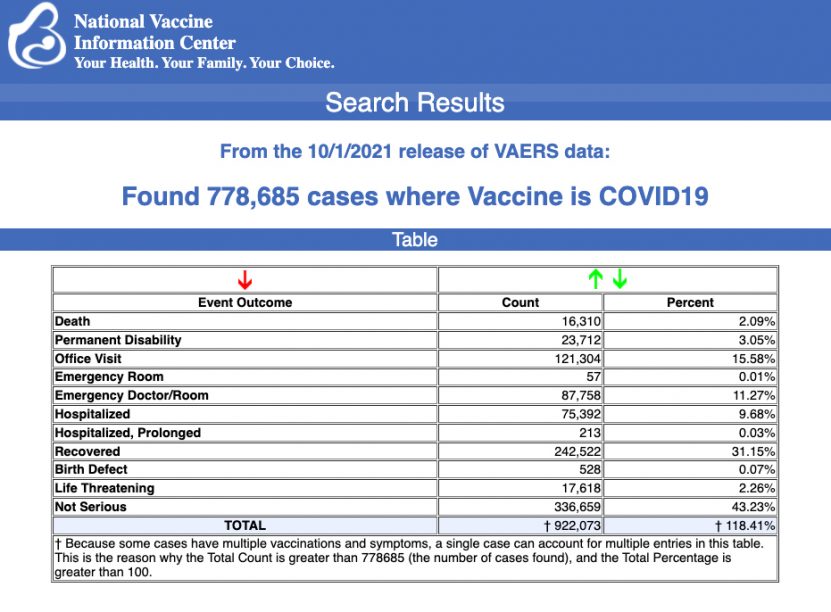
The data come directly from reports submitted to VAERS, the primary government-funded system for reporting adverse vaccine reactions in the U.S.
Every Friday, VAERS makes public all vaccine injury reports received as of a specified date, usually about a week prior to the release date. Reports submitted to VAERS require further investigation before a causal relationship can be confirmed.
Historically, VAERS has been shown to report only 1% of actual vaccine adverse events.
This week’s U.S. data for 12- to 17-year-olds show:
- 21,298 total adverse events, including 1,284 rated as serious and 22 reported deaths. Two of the 22 deaths were suicides.
The most recent death involves a 16-year-old male (VAERS I.D. 1734141) who reportedly died from cardiac failure five days after receiving Pfizer’s COVID vaccine.
Other recent deaths include a 17-year-old male (VAERS I.D. 1689212) with cancer who was vaccinated April 17, tested positive for COVID on July 20, was hospitalized and passed away Aug. 29; and a 16-year-old female (VAERS I.D. 1694568) who died from a pulmonary embolism nine days after receiving her first Pfizer dose.
- 3,202 reports of anaphylaxis among 12- to 17-year-olds with 99% of cases
attributed to Pfizer’s vaccine. - 520 reports of myocarditis and pericarditis (heart inflammation) with 508 cases attributed to Pfizer’s vaccine.
- 114 reports of blood clotting disorders, with all cases attributed to Pfizer.
This week’s U.S. VAERS data, from Dec. 14, 2020 to Oct. 1, 2021, for all age groups combined, show:
- 19% of deaths were related to cardiac disorders.
- 56% of those who died were male, 43% were female and the remaining death reports did not include gender of the deceased.
- The average age of death was 72.8.
- Of the 2,935 cases of Bell’s Palsy reported, 50% were attributed to Pfizer vaccinations, 42% to Moderna and 8% to J&J.
- 648 reports of Guillain-Barré syndrome, with 40% of cases attributed to Pfizer, 32% to Moderna and 28% to J&J.
- 1,976 reports of anaphylaxis where the reaction was life-threatening, required treatment or resulted in death.
- 158,280 reports of symptoms of anaphylactic reactions with 43% of cases attributed to Pfizer’s vaccine, 49% to Moderna and 7% to J&J. An anaphylactic reaction may include various symptoms like skin rashes, nausea, vomiting, difficulty breathing or shock.
- 9,907 reports of blood clotting disorders. Of those, 4,286 reports were attributed to Pfizer, 3,595 reports to Moderna and 1,975 reports to J&J.
- 2,737 cases of myocarditis and pericarditis with 1,733 cases attributed to Pfizer, 888 cases to Moderna and 106 cases to J&J’s COVID vaccine.
Young mother pressured to receive COVID vaccine dies of vaccine-induced blood clots
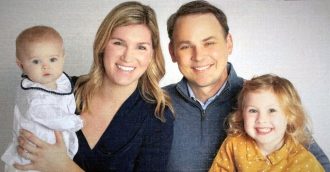 Jessica Berg Wilson, a 37-year-old stay-at-home mother from Washington passed away suddenly on Sept. 7 from vaccine-induced thrombotic thrombocytopenia (VITT) — a rare, and sometimes fatal, blood-clotting condition — after receiving J&J’s COVID vaccine.
On Aug. 29, Jessica went to a Seattle pharmacy to get her COVID vaccine and was told she would be receiving J&J’s shot. She was “vehemently opposed” to taking the vaccine, “considering her stay-at-home mom status, state of good health and young age in conjunction with the known and unknown risk of an unproven vaccine,” her husband said.
But Jessica was pressured to get the vaccine due to a vaccine mandate at their child’s school requiring “room moms” who wished to serve in the classroom be fully vaccinated.
According to Jessica’s VAERS report (VAERS I.D. 1683324), she experienced blood clots in her ovarian and renal veins, and a brain hemorrhage that led to tissue damage. Although doctors tried to relieve the pressure on her brain by performing a craniotomy, they were unsuccessful.
Jessica was ultimately pronounced brain dead, removed from life support and passed away. Doctors confirmed the cause of death was VITT.
Pfizer asks FDA to authorize emergency use of its COVID vaccine for 5- to 11-year-olds
Pfizer and its German partner, BioNTech on Thursday asked the U.S. Food and Drug Administration (FDA) to authorize their COVID vaccine for emergency use for children 5 to 11 years old. The FDA advisory committee is scheduled to meet Oct. 26 to discuss Pfizer’s pediatric COVID vaccine.
FDA officials said once vaccine data for younger children was submitted, the agency could authorize a vaccine for younger children in a matter of weeks, but it would depend on the timing and quality of the data provided.
Pfizer and BioNTech submitted initial data to the FDA last month for a regimen of two 10-microgram doses in children — one-third the amount given to older patients — but had not formally requested authorization until now.
According to Pfizer’s Sept. 20 press release, the trial didn’t show the vaccine reduced hospitalizations or even mild cases. But it did reveal side effects generally comparable to those observed in participants 16 to 25 years of age.
Studies confirm Pfizer vaccine immunity wanes at 2 months
As The Defender reported, two studies published Wednesday in the New England Journal of Medicine confirm any immune protection offered by two doses of Pfizer’s COVID vaccine drops off after roughly two months.
A prospective longitudinal study from Israel covering 4,800 healthcare workers showed antibody levels waned rapidly after two doses of vaccine “especially among men, among persons 65 years of age or older and among persons with immunosuppression.”
A second study from Qatar looked at actual infections among the nation’s highly vaccinated population, who mostly received Pfizer’s COVID vaccine. Estimated effectiveness against SARS-CoV-2 infection was negligible for the first two weeks after the first Pfizer dose, increased to 36.8% in the third week after the first dose, and reached its peak at 77.5% in the first month after the second dose.
By months five five through seven, researchers said vaccine efficacy reached a low level of approximately 20%. Pfizer has consistently claimed the company’s own efficacy data demonstrate 95% efficacy against SARS-CoV-2, which was not observed in this study.
Sweden, Denmark and Finland pause Moderna vaccine over concerns of myocarditis
Sweden, Denmark and Finland will pause the use of Moderna’s COVID vaccine for younger age groups after reports of possible rare side effects, including myocarditis.
Finland on Thursday paused the use of Moderna’s COVID vaccine for younger males due to reports of myocarditis, joining Sweden and Denmark in limiting its use after a Nordic study involving Finland, Sweden, Norway and Denmark found men under the age of 30 who received Moderna’s vaccine had a slightly higher risk than others of developing myocarditis.
All four countries said they would instead give Pfizer’s vaccine to men born in 1991 and later, despite research that shows a similar risk of myocarditis associated with Pfizer’s vaccine.
Fully vaccinated patient sparks COVID outbreak among vaccinated population
A paper published Sept. 30, in Eurosurveillance showed a fully vaccinated patient in a hospital setting rapidly spread COVID to fully vaccinated staff, patients and family members — despite a 96% vaccination rate and use of full personal protective equipment.
Of the 42 cases diagnosed in the outbreak, 38 were fully vaccinated with two doses of Pfizer and BioNTech’s Comirnaty vaccine, one had received only one vaccination and three were unvaccinated.
Of the infected, 23 were patients and 19 were staff members. The staff all recovered quickly. However, eight vaccinated patients became severely ill, six became critically ill and five of the critically ill died. The two unvaccinated patients had mild COVID cases.
The authors said the study challenges the assumption high universal vaccination rates will lead to herd immunity and prevent COVID outbreaks, as 96.2% of the outbreak subjects were vaccinated, infection advanced rapidly and viral load was high.
Fully vaccinated countries had the highest number of new COVID cases
In a study published Sept. 30 in the peer-reviewed European Journal of Epidemiology Vaccines, researchers investigated the relationship between the percentage of population fully vaccinated and new COVID cases across 68 countries and 2,947 U.S. counties that had second dose vaccine, and available COVID case data.
The study found “no discernible relationship” between the percentage of population fully vaccinated and new COVID cases. In addition, the most fully vaccinated nations had the highest number of new COVID cases, based on the researchers’ analysis of emerging data during a seven-day period in September.
Children’s Health Defense asks anyone who has experienced an adverse reaction, to any vaccine, to file a report following these three steps.
Megan Redshaw is a freelance reporter for The Defender. She has a background in political science, a law degree and extensive training in natural health.
© 2021 Children’s Health Defense, Inc. This work is reproduced and distributed with the permission of Children’s Health Defense, Inc. Want to learn more from Children’s Health Defense? Sign up for free news and updates from Robert F. Kennedy, Jr. and the Children’s Health Defense. Your donation will help to support us in our efforts.
My suspicions about the flu jab and ‘Plan B’
By Lynne Collings | TCW Defending Freedom | October 9, 2021
WHY did I have my first flu jab? I think it might have been because I saw a sign in the surgery or was told about the sessions via the ‘Patient Participation Group’ who send out an e-newsletter a couple of times a year. My husband, as a mild asthmatic, had had the jab for several years but I found myself faintly reluctant to have one myself. I had no good reason other than something that I can’t put my finger on but which makes me stay away from surgeries and hospitals.
Or perhaps it was because I remember the flu jab sessions run by the surgery I worked in which were wonderfully happy and funny occasions where the elderly of the town lined up in the large waiting room, some sitting, some leaning on sticks but all with a sleeve rolled up expectantly. They were having an outing where they laughed and joked amongst themselves, especially when the doctor passed down the line with a massive syringe using the same needle which he inserted into each arm – yes, it was that long ago. After the session many were reluctant to leave. So how did having a flu jab change from something that was given to the elderly for what had always been assumed to be their own benefit into something you did so that you didn’t ‘kill your granny’, the very people whom the flu jab was supposed to benefit in the first place?
Hear what Dr Fauci said on September 28 on CNN: ‘Everyone who’s at least six months old should get a flu vaccine. Not only will getting a flu shot help protect you and those around you from potentially life-threatening flu complications, doing so will also keep the limited supply of hospital beds available for COVID-19 patients who need them right now.’
Telegraph headline yesterday: ‘Flu deaths could hit 60,000 in worst winter for 50 years, say experts’. The story says that more than 35million people will be offered flu jabs after warnings from health chiefs that lockdowns and social distancing have led to a drop in immunity. There is concern that the combination of Covid-19 and flu could cripple health services, increasing the risk of another lockdown, or ‘Plan B’ measures such as compulsory masks, vaccine passports or a return to working from home.
Did I really just read that ‘lockdowns and social distancing have led to a drop in immunity’? What can this mean? That they have finally come to their senses about the negative health effects of lockdown, so it will never be repeated? No, I don’t think so.
They are simply using this terrible truth to bolster, indeed double down on their next fear mongering project. Which is to tie us into a controlled system of repeat vaccination (whether for flu or Covid) as the price of our supposed freedom from more lockdown.
An advertising campaign will urge those eligible for the flu vaccine and Covid-19 booster jab to book their appointments as soon as possible.
Health Secretary Sajid Javid in the Telegraph article: ‘This year we are rolling out the largest flu vaccine programme in our history, alongside the new Covid-19 booster vaccine rollout; both are important to provide vital protection not only to yourself, but also your loved ones while also helping to ease pressure on the NHS.’
From the same article: ‘Earlier this week, Professor Neil Ferguson . . . said the UK did not have much “headroom” for rising Covid-19 cases before the NHS becomes “heavily stressed”.’
Earlier this year I signed up for the NHS app via my iPad because my surgery suggested it as an aid to the reorganisation that is being undertaken while we are out of the way. I had already the two Covid jabs as I understood they would help release everyone else, and there they were, dates and code numbers, popping up on the app. Aha, I thought, here is the Covid passport of the future.
Now if I look at the app it tells me that my first two jabs will no longer be relevant after November 7, and that I have my own QR code which will let me use a Domestic Covid Pass ‘at places that have chosen to use the service’. The dreaded Covid passport that I had foolishly thought to avoid by not travelling around with the app on my iPhone was there on my iPad which I use only at home. I have considered deleting the app but a warning is issued: ‘After you have deleted this app they might keep some information about you’. Who are ‘they’ and what on earth might they keep about me? I have an awful feeling it is likely to be the facial recognition process that I went through in order to sign up to this app.
Once you have the app the NHS prefers to contact you via text message, and I have been offered a flu jab. What will happen in future if I need treatment and it is found that I ‘declined’ the flu jab? I have declined at the moment but if I do decide to go ahead, as I have in the past, I will go to a pharmacy as it will be my decision which I hope to keep off the app. Is this being foolish? I really don’t know. All I know is it seems that the rolling out of Covid passports is where we are headed like it or not, together with the dreaded Plan B. Please tell me I am wrong. Why would Public Health England be renamed the UK Health Security Agency if the intentions were otherwise?
I believe the emergency powers are to be voted on in the House of Commons on October 19. Is all this leading up to an extension of these powers for another six months allowing Plan B to be implemented with as little as one week’s notice? Just see how many firework displays are now planned via Zoom. I believe local authorities have known of the likelihood of Plan B for some time, and what would give a big boost to ‘Health Security’? Why, the banning of dangerous firework displays.
‘Superspreader of misinformation’: NYT corrects story that exaggerated child Covid-19 hospitalizations by over 90%
RT | October 8, 2021
The New York Times had to issue a doozy of a correction on an article by its Covid-19 reporter Apoorva Mandavilli, who somehow inflated the number of US children hospitalized with the virus to 14 times the actual level.
Mandavilli claimed in her article, published on Tuesday, that nearly 900,000 Covid-infected children had been hospitalized in the US since the pandemic began. As the Times admitted on Thursday, the available data shows that the correct figure from August 2020 to October 2021 was more than 63,000.
The inaccuracies didn’t stop there. The correction also noted that contrary to Mandavilli’s reporting, Sweden and Denmark haven’t begun offering single-dose vaccines to children. The newspaper added that the story misstated the timing of an upcoming FDA meeting regarding proposed use of the Pfizer-BioNTech vaccine in children as young as five years old.
The scale of the erroneous hospitalization figure was reminiscent of gaffes by President Joe Biden, such as saying 120 million Americans had died from Covid-19 and 150 million had been killed by gun violence. It’s not clear how the blunder occurred, but the mainstream media has been accused of hyping the severity of the pandemic. A hidden-camera investigation by Project Veritas in April purported to show a CNN technical director saying the outlet purposely stoked fears of Covid-19 to boost ratings.
Ironically, the Times itself has decried Covid-19 misinformation. For instance, the newspaper posted an article earlier this week vilifying Dr. Joseph Mercola as “the most influential spreader of coronavirus misinformation.” In August, the Times said ‘Russian disinformation’ was being spread to suggest that the Biden administration would impose a Covid-19 vaccine mandate. A month later, Biden ordered that healthcare facilities, federal contractors and businesses with more than 100 employees force their workers to be inoculated, taking the choice over getting the jab away from about 100 million Americans.
While the Times and other mainstream outlets have billed themselves as the arbiters of truth, Mandavilli’s error-laced article is only the latest in a long line of inaccurate reporting by the newspaper. For example, the newspaper falsely claimed that Russia had offered bounties on American troops in Afghanistan and that police officer Brian Sicknick was murdered by pro-Trump rioters at the US Capitol.
“The New York Times is a superspreader of misinformation,” said Christina Pushaw, press secretary for Florida Governor Ron DeSantis.
Mandavilli stirred anger among conservatives in May, when she said the theory that Covid-19 leaked from China’s Wuhan Institute of Virology had “racist roots.” She later deleted her Twitter post, lamenting that the pushback to her remark had been “ridiculous.”
“Someday, we will stop talking about the lab-leak theory and maybe even admit its racist roots,” Mandavilli said in the original tweet. “But alas, that day is not yet here.”
It’s not clear why the reporter was rooting for the lab leak theory to go away, as even chief White House medical adviser Dr. Anthony Fauci said it should be investigated after previously trying to squash the notion.
The Wall Street Journal had reported two days earlier that three scientists at the Wuhan lab had been hospitalized with Covid-19 symptoms in the fall of 2019, near the time when the first cases of the virus were reported in China.
The Times’ former lead reporter on Covid-19, Pulitzer Prize nominee Donald McNeil Jr., resigned under pressure in February after co-workers campaigned for his firing. His sin was responding to a high school student’s question about a classmate’s use of the N-word by repeating the slur when he asked for context on how it was used. He had worked for the newspaper since 1976.
Fully Vaccinated Countries Had Highest Number of New COVID Cases, Study Shows
By Megan Redshaw | The Defender | October 7, 2021
A study published Sept. 30, in the peer-reviewed European Journal of Epidemiology Vaccines found “no discernible relationship” between the percentage of population fully vaccinated and new COVID cases.
In fact, the study found the most fully vaccinated nations had the highest number of new COVID cases, based on the researchers’ analysis of emerging data during a seven-day period in September.
The authors said the sole reliance on vaccination as a primary strategy to mitigate COVID-19 and its adverse consequences “needs to be re-examined,” especially considering the Delta (B.1.617.2) variant and the likelihood of future variants.
They wrote:
“Other pharmacological and non-pharmacological interventions may need to be put in place alongside increasing vaccination rates. Such course correction, especially with regards to the policy narrative, becomes paramount with emerging scientific evidence on real-world effectiveness of the vaccines.”
As part of the study, researchers investigated the relationship between the percentage of population fully vaccinated and new COVID cases across 68 countries and 2,947 U.S. counties that had second dose vaccine, and available COVID case data.
For seven days preceding Sept. 3, researchers computed COVID cases per one million people for each country, as well as the percentage of population that was fully vaccinated.

Relationship between cases per 1 million people (last 7 days) and percentage of population fully vaccinated across 68 countries as of September 3, 2021
Notably, Israel with more than 60% of its population fully vaccinated, had the highest COVID cases per 1 million people during the seven-day period.
Iceland and Portugal, with more than 75% of their populations fully vaccinated, had more COVID cases per 1 million people than countries such as Vietnam and South Africa, where only about 10% of the population is fully vaccinated.
Across U.S. counties, the median new COVID cases per 100,000 people during the seven-day period was similar across the categories of percentage of population fully vaccinated.

Percentage of counties that had an increase of cases between two consecutive 7-day time periods by percentage of population fully vaccinated across 2947 counties as of Sept. 2, 2021
The researchers found a substantial county variation in new COVID cases within categories of percentage of population fully vaccinated. There also appeared to be no significant signaling of COVID cases decreasing in counties where a higher percentages of the population was fully vaccinated.
Of the top five counties with the highest percentage of population fully vaccinated (99.9% – 84.3%), the Centers for Disease Control and Prevention (CDC) identified four as “high” transmission counties.
Three of the four counties classified as “high” transmission had fully vaccinated rates of 90% or higher. Conversely, of the 57 counties classified as “low” transmission by the CDC, 15 had fully vaccinated rates of 20% or lower.
The findings also showed no discernible association between COVID cases and fully vaccinated rates when a one-month lag was considered, to account for the 14-day period it takes for a vaccine to be considered effective.
The authors suggested a correction to the policy narrative is warranted, as increasing vaccination rates is not enough. “Such course correction, especially with regards to the policy narrative, becomes paramount with emerging scientific evidence on real-world effectiveness of the vaccines,” they wrote.
The authors cited data from the Ministry of Health in Israel showing the effectiveness of two doses of Pfizer’s COVID vaccine against preventing SARS-CoV-2 infection was reported to be 39% — substantially lower than the reported trial efficacy of 96%.
Emerging research also shows immunity derived from Pfizer’s COVID vaccine may not be as strong as natural immunity acquired through infection.
A substantial decline in immunity from mRNA vaccines six months post immunization has also been reported along with an increasing number of breakthrough cases among the fully vaccinated, the researchers said.
The authors said stigmatizing populations over vaccines can do more harm than good, and non-pharmacological prevention efforts need to be renewed in order to learn to live with COVID “in the same manner we continue to live 100 years later with various seasonal alterations of the 1918 Influenza virus.”
Breakthrough cases significantly underreported as FDA reviews booster data
The number of vaccinated people testing positive for COVID is on the rise, and doctors in Ohio are reporting more breakthrough cases across hospital systems.
However, only certain types of COVID breakthrough cases are reported at both the state and federal level, leaving patients with mild cases underreported.
“We estimate anywhere from two to 10 times as many positives that are being reported is the real situation,” said Dr. David Margolius, division director of internal medicine at MetroHealth in Cleveland.
“It’s still rare, but I get a dozen COVID positive cases a day in my basket, and usually three or four of them have been vaccinated,” said Margolius.
The Ohio Department of Health and the CDC only report breakthrough cases in patients requiring hospital admission, or cases that resulted in death.
The CDC said it made the change in May in order to “maximize the quality of data collected on cases of greatest clinical and public importance.”
As of Sept. 27, the CDC had received reports from 50 U.S. states and territories of 22,115 patients with COVID vaccine breakthrough infection who were hospitalized or died.
The CDC said the number of COVID vaccine breakthrough infections reported to the agency are an undercount of all SARS-CoV-2 infections among fully vaccinated persons, especially of asymptomatic or mild infections.
In addition, national surveillance relies on passive and voluntary reporting, and data are not complete or representative, according to the CDC.
Massachusetts health officials on Tuesday reported nearly 4,000 new breakthrough cases over the past week, and 46 more deaths, according to NBC Boston.
In the last week, 3,741 new breakthrough cases were reported, with 125 more vaccinated people hospitalized.
This brings the total number of breakthrough cases in Massachusetts to 40,464 — out of 4.63 million vaccinated people — and the death toll among people with breakthrough infections to 300.
According to the Vermont Daily Chronicle, which cited statistics from Vermont’s Department of Health, 76% of the state’s COVID fatalities in September were breakthrough cases, with just eight of the 33 Vermonters who died being unvaccinated.
As of Tuesday, 88% of all eligible Vermonters age 12 and over had been vaccinated with at least one shot.
Health Department spokesperson Ben Truman said most of the vaccine “breakthrough” fatalities were elderly. Because they were among the first vaccinated, Vermont’s elderly “have had more time to potentially become a vaccine breakthrough case,” he said.
According to The Washington Post, Dr. Peter Marks, director of the U.S. Food and Drug Administration’s (FDA) Center for Biologics Evaluation and Research, said Tuesday updated data might make a strong case in support of everyone 18 and older being eligible for COVID vaccine boosters, but the agency will have to see whether its outside advisers agree.
The remarks from Marks came during a webinar as the FDA prepares to meet Oct. 14 and 15 with its outside advisers to discuss authorizing Moderna and Johnson & Johnson COVID booster shots.
Megan Redshaw is a freelance reporter for The Defender. She has a background in political science, a law degree and extensive training in natural health.
© 2021 Children’s Health Defense, Inc. This work is reproduced and distributed with the permission of Children’s Health Defense, Inc. Want to learn more from Children’s Health Defense? Sign up for free news and updates from Robert F. Kennedy, Jr. and the Children’s Health Defense. Your donation will help to support us in our efforts.
Featured Video

The Truth About the Trump Shootings with Ken Silva
or go to
Aletho News Archives – Video-Images
From the Archives
Trans ‘milk’ as good as the real thing – NHS
RT | February 18, 2024
The drug-induced nipple secretions of trans women are as good as mothers’ breast milk for babies, the University of Sussex Hospitals NHS Trust claimed in a letter to campaigners made public in a report by British think tank the Policy Exchange on Sunday.
The healthcare trust’s medical director, Rachel James, argued that the off-label prescription drug cocktail men transitioning to female take in order to produce milk was “similar to the natural hormones which encourage lactation to develop when the baby is newly born.”
“The evidence which is available demonstrates that the milk is comparable to that produced following the birth of a baby,” James wrote in the letter, sent to Children of Transitioners last August.
Biological men who wish to lactate must first take hormones to grow milk glands and then take high doses of either domperidone or metoclopramide to stimulate milk production. Neither drug is approved for this use, though they are occasionally prescribed off-label to biological women who have trouble lactating.
However, domperidone’s own manufacturer, Janssen, warns patients the drug “may cause unwanted side effects affecting the heart in a breastfed baby” and “should be used during breastfeeding only if your physician considers this clearly necessary.” … continue
Blog Roll
 Aletho News
- Seyed M. Marandi: U.S. Strike Imminent – Toward Total War in the Middle East
- Russia Voted Under Fire. Washington Is Loading the Tankers.
- 12 Things Your Oncologist Was Trained Not to Tell You
- Anthrax Attacks Paved Way for COVID-Era ‘Junk Drugs and Vaccines’
- How Real Is the Impact of Western Sanctions on Israel?
- France, You Are Guilty: How Paris Turned Western Sahara into the Maghreb’s Powder Keg
- 2025 Nature Paper Claiming Worsening Global Drought Gets RETRACTED …Heavily Flawed
- Your Milk Is Not the Problem
- The Truth About the Trump Shootings with Ken Silva
- ARE PATIENTS BEING PROPERLY INFORMED ABOUT OZEMPIC?
- If Americans Knew
- Salah Sarsour’s Legal Team Says DHS Has Not Met Its Burden to Prove He Is Deportable
- An analysis of tax forms by The Intercept show Kraft’s charity and LLC have donated to Friends of the IDF and AIPAC’s super PAC.
- Israeli attacks kill four Palestinians in Gaza – Daily Update
- Inside Gaza’s death trap of collapsing, bombed-out buildings
- The everyday items Israel bans from Gaza every day
- Inside the siege, the ruined buildings of Gaza – Daily Update
- Debunking The Claim That Macklemore Has A “History Of Antisemitism”
- CPJ demands release of arrested Palestinian-US journalist near Bethlehem
- Robert Kraft: The Billionaire Friend of Netanyahu Pulling The Strings Behind the Macklemore/Ed Sheeran Blow Up
- Columbia Administered Fund Gives Big Money to Pro-Israel Groups
- No Tricks Zone
- 2025 Nature Paper Claiming Worsening Global Drought Gets RETRACTED …Heavily Flawed
- New Study: ‘Global Drought Shows No Detectable Recent Acceleration Under Climate Warming’
- Economic Masterminds: German Socialists Suggest Taxing Productivity Gains Stemming From Using AI
- The South China Sea Has Not Been Cooperating With The Climate Change Narrative
- Energy Crisis: Germany Enters Heating Season With Historically Low Gas Reserve Fill Levels
- New Study: The Antarctic Ice Sheet Gained Mass From 2020-2024 Due To Staggering Snow And Ice Accumulation
- Study: Ocean Heating Rates From Thousands Of Years Ago ‘Dwarf’ Modern Ocean Heating Rates
- Climate Extremists Target, Attack Large-Scale Power Grid Infrastructure In Germany!
- New Study: Antarctic Ice Melt Has Contributed Less Than 1 Centimeter To Sea Level Rise In The Last 30 Years
- Fear Of Debate: Alarmist German Climate Scientist Calls On Mainstream Media To Discredit Skeptic Voices
 Aletho News