Should people who have recovered from COVID take a vaccine?
By Marc Girardot | Trial Site News | July 6, 2021
Epidemiology1 , immunology2 and the clinical data3 all say a clear “No!”.
There is no good reason to vaccinate the recovered.
________________________________________________________________________
A British friend, recovered from COVID, decided to get vaccinated despite being naturally immune. This is the email he recently sent me:
“Marc I suffered a mild stroke on Wednesday 8 days after taking the Astrazeneca 2nd dose. Since I am a marathon runner I am a very ‘rare case’. I don’t smoke, have high blood pressure, high cholesterol, family history or come into any of the risk categories for blood clots…
You did warn me against taking the second dose and I wished I’d heeded your advice. I’ve taken a totally unnecessary risk with my life and I bitterly regret doing it.”
Contrary to most, Tony was informed; he had been told about the power of natural immunity, about the long—if not lifelong—duration of immunity, of the risk inherent to any medical procedure (Yes, vaccination is a medical procedure!), as well as of the rising levels of adverse events. He admitted he hadn’t imagined it could happen to him…
Though it is hard to assess precisely the actual severity and breadth of vaccine-related adverse events, it is very clear that vaccination against COVID-19 isn’t as harmless4 as pharmaceutical companies, mainstream media, academia, health authorities and the medical community have been saying. And, in contrast to high risk individuals who are still susceptible, recovered people have no real benefit to balance the additional risks of vaccination.
2021 Adverse Events Reporting
| VAERS US | EUROVIGILANCE EUROPE | YELLOW CARDS UK | |
| Date | 18/06/2021 | 04/06/2021 | 16/06/2021 |
| Fully Vaccinated (Mn) | 148.46 | 137.44 | 30.68 |
| Deaths | 6,136 | 4,572 | 1,356 |
| Incidents | 387,288 | 316,925 | 73,944 |
| Death per 100,000 | 4.1 | 3.3 | 4.4 |
For over a year, mainstream media, health authorities as well as many “experts” have been downplaying the power of the immune system, dismissing natural immunity5 and proclaiming that immunity to COVID-19 was short-lived6. Simultaneously, vaccines have been portrayed as the silver bullet to this crisis, an incidental procedure with no risk whatsoever. The data shows a different picture and many are coming forward7 8, to challenge the official narrative. We will demonstrate that the official narrative is a dangerous fallacy.
The human immune system is one of the most sophisticated achievements of evolution. The survival of our species has depended on it for millenia. Today, we still very much rely on it. For the record, 99% of people infected with SARS-CoV-2 recover without treatment. Only 1% of SARS-CoV-2 patients, who did not receive early home-based treatment, end up hospitalized9. In other words, the immune system overwhelmingly protects. Even vaccines are entirely dependent on the immune system: vaccines essentially teach our immune systems what viral markers to be prepared for, they are not cures per se. Without a functional immune system, there can be no effective vaccine10.
On the waning immunity fallacy
Once recovered, the immune response recedes, notably via a decrease in antibodies. It is not only natural; it is indispensable to restore the body to a normal, balanced state. Just as a permanent state of fever is harmful, a high number of targetless antibodies or T-cells constantly circulating throughout the body could create serious complications, such as autoimmune diseases11. Taking an evolutionary perspective, only those whose antibody and T-cell count waned post-infection survived. So, a decreasing number of antibodies and T-cells is reassuring, even healthy.
Antibody Levels during infection and post infection

Redline= antibodies – Blue-line= Memory B cells | Credit: Nature
But this decrease in T-cells and antibodies doesn’t mean that immunity is lost . It means the immune system has adapted to the new situation, and is now just on sentinel mode: Memory B- and T-cells, circulating in the blood and resident12 in tissues, act as vigilant13 and effective sentinels for decades:
- survivors of the Spanish Flu epidemic were tested for their immunity to the 1918 influenza virus 90 years later –14,15 and still demonstrated immunity;
- people who had recovered from the 2003 SARS infection demonstrated robust T-Cell responses seventeen years later16.
- the wide-spread prevalence of high cross-immunity17,18,19— gained from past common cold infections—further demonstrates the resilience of natural immunity for coronaviruses.
Indeed, all recent studies show that specific anti-SARS-CoV-2 immunity remains effective20,21,22,23, possibly for a lifetime24. Our immune system is a modular platform, it can combine in an infinite number of ways to address a multitude of threats in a variety of contexts. As such it is neutral to the viral threats it faces. In other words, there is absolutely no reason to believe that those recovered from Covid-19 would lose their immunity over the years, or even the decades25 to come.
On the reinfection fallacy
You might have also heard of people becoming reinfected by SARS-CoV-2. Indeed, immunity, natural or vaccine-induced, isn’t the impenetrable shield described by many. Essentially harmless and asymptomatic reinfections do take place. That is, in fact, the very mechanism by which adaptive immunity is triggered.
However, symptomatic reinfections are very rare26,27. Like an army that adapts its response to the size and the progression of its enemy forces, adaptive immunity provides a specific, rapid and resource-optimized response. As such reinfections are mostly asymptomatic28 and recovered patients are protected from severe disease.
In fact, innocuous reinfections can play a positive public health role by acting as continuous immune updates29 for the population. They can help form a seamless and progressive adaptation to emerging variants and strains. And indeed a recent study showed that couples with children were more frequently asymptomatic than couples without, most likely because children act as natural and harmless immunisation vehicles. The most likely reason why high density countries mostly have very low death tolls is that they have asymptomatic reinfections that regularly and widely update the population’s immunity.
On the variant fallacy
As demonstrated by the low numbers of symptomatic reinfections mentioned above, and also by multiple studies31,32, variants have thus far not escaped acquired immunity. Just as Americans can speak and interact seamlessly in England, unhindered by a few word variants33, natural immunity is unhindered by variants, possibly more so than vaccine-induced immunity. There is ample evidence of the sophistication and breadth of the human immune system, and it is clear that a few minor gene changes in the virus cannot evade its arsenal .
Across the world34, multiple studies demonstrate high levels of pre-existing cross-reactive T-cells35 and antibodies to SARS-CoV-2. In other words, many were already largely immune via other coronaviruses. This is the most likely explanation for the unexpectedly high level of asymptomatic infections during the pandemic. More importantly, this demonstrates that even with large genetic differences, prior immunity to related coronaviruses is sufficient to avoid severe COVID-19. Therefore, it is quite evident that variants are of no concern to the recovered population.
On the vaccine better-than-natural-immunity fallacy
You might have heard people stating that vaccines provide better protection than natural immunity. That is an interesting way of bending reality. How can a vaccine be more effective at immunisation than the disease it is trying to mimic?
Theoretically, there are several reasons explaining why natural immunity is better than vaccine-induced immunity:
- Fewer immune targets: mRNA/DNA vaccines present only a fraction of the virus genetic code (5-10%). For example, they don’t utilize the ORF1 highly immunogenic epitopes36. Therefore, the immune system recruits a smaller number of T-cells by tapping into a narrower repertoire and consequently mounts a less effective response37. The logic: Imagine you lose a number of key players for a football tournament, you might still win, but it will be harder.
- Longer immune trigger time: The smaller number of epitope targets also means that the alarm to the immune system will be delayed. This is a key driver of success in the COVID-19 battle. The wider the target repertoire, the faster the encounter between dendritic cells and identifiable antigens.
The logic: Like a party you go to, you can start partying much faster when you have ten friends there than when you have only one. They are just easier to find. - Inappropriate delivery location: The intramuscular delivery of current vaccines unfortunately doesn’t mimic viral penetration and propagation at all. Coronaviruses don’t enter the body via muscles. They do so via the respiratory tract, often infecting cell-to-cell. Contrary to muscle-delivered vaccines, natural immunity places a strong sentinel force of memory resident cells at the portals of entry38 and shuts the body entrance to the virus preemptively. From an evolutionary standpoint, this makes perfect sense.
The logic: it’s much easier to stop an army coming through a narrow gorge than on the beaches of Normandy.
Recent research confirms this logic. One comparative study39 in Israel found the protection from severe disease to be 96·4% for Covid-19 recovered individuals but 94.4% for vaccinated ones, and concluded “Our results question the need to vaccinate previously-infected individuals.” Another reference comparative study40 by a team at New York University highlighted a faster, wider and more impactful humoral and cytotoxic reaction in recovered immunity versus vaccine-induced.
There is ample evidence that vaccinating people recovered from COVID-19 doesn’t bring any benefit. It quite possibly does the opposite, because of the risk of building tolerance to elements of the virus43 translating into reduced immune potency.
On the vaccine innocuity fallacy
Without denigrating the incredible contribution of vaccines to modern medicine and public health, one needs to acknowledge that vaccines are a medical procedure. As such, vaccines should never be considered lightly. They are neither neutral, nor trivial, all the more so when they are injected into billions of people.
By their very nature, vaccines tinker with the sophisticated balance of one’s immune system. That in itself demands respecting rigid safety protocols. Though we have made considerable progress in our understanding of immunology, we are still very far from understanding its intricacies and subtleties, especially when it comes to novel mRNA and DNA technologies. Because of the risk of anaphylactic44 shock, auto-immune diseases, unforeseen interactions, design flaws, deficient quality protocols, over-dosage, and so on, vaccines have traditionally been strictly regulated.
History teaches us to be watchful45 with vaccines, from the botched inactivation of polio vaccines that ended infecting 40,000 kids46 with polio in 1955, to the 1976 swine flu vaccine47 which caused 450 to develop Guillain-Barré syndrome, to the more recent vaccine-induced outbreak of polio in Sudan48. The recent rejection49 by Brazilian health authorities of the Bharat’s Covaxin is a clear reminder of how rigorous and independent our health authorities need to be if vaccines are to promote, not hinder, public health.
Map of Vaccine Symptoms
316,925 reports (date: 06/20/21)
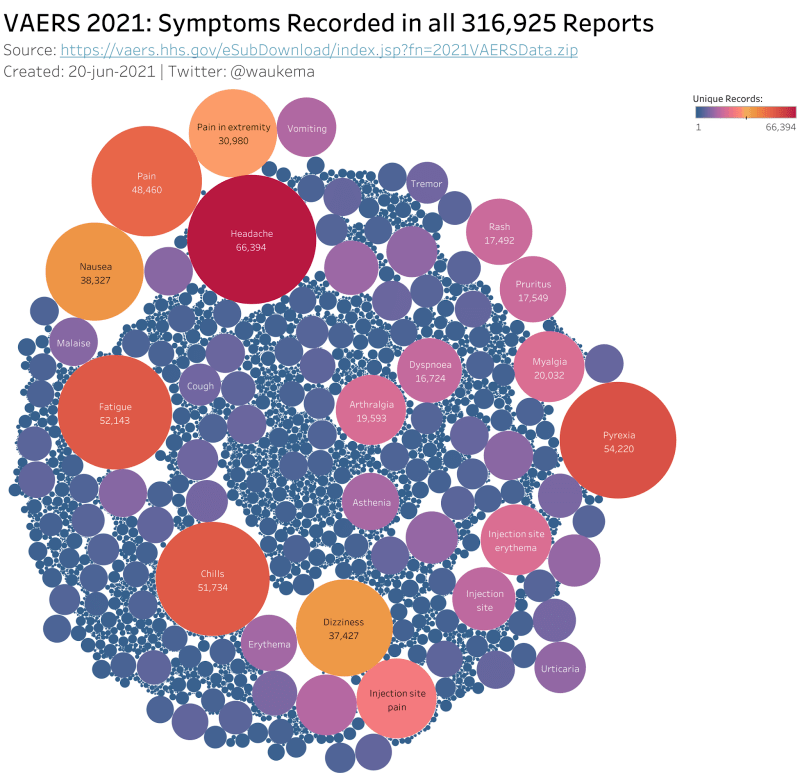
credit: Wouter Aukema – source: CDC
After 6 months of vaccination and a year of research, a number of red flags should be alerting the would-be vaccinated and health authorities:
- Wandering nanoparticles: The lipid nanoparticles, the carriers of the mRNA, were supposed to remain in the muscle, but ended up broadly distributed throughout the body50, notably in the ovaries51, the liver52 and possibly the bone marrow.
- Anaphylactic PEG: A number of concerns had been raised regarding the novel use of PEG adjuvant53. Notably, prior research had raised the risk of cardiac anaphylaxis at second injection54.
- Sensitive locations: ACE-2 receptors susceptible to binding to the spike protein are highly expressed in blood vessel lining cells of highly sensitive areas, such as the brain, the heart, the lungs, the liver and both male and female reproductive systems.
- Toxic circulating spikes: The spike proteins induced by mRNA/DNA vaccines have been shown to be pathogenic55,56,57,58 and highly inflammatory59, notably because of the similarity of a spike sequence to that of Staphylococcal Enterotoxin B60. It has also been found to be directly causing blood clots through platelet activation61,62. One researcher said, “Our findings show that the SARS-CoV-2 spike protein causes lung injury even without the presence of an intact virus”.
- BBB disruption – A recent study highlights the risk of disruption of the blood-brain barrier63, a fundamental filter mechanism to protect the brain64,65. The spike protein has also been found to cross the BBB and create inflammation in the brain,.
- High adverse events: Even though most likely under-reported66, the overall number of serious adverse events versus other traditional vaccines remains very high. The 6,000+ deaths67 seen [in the US] in six months exceed all the vaccine-related deaths in 30 years. This is quite disquieting, and tends to confirm the aforementioned red flags..
- Children more at risk: The Covid-19 vaccines seem to be more harmful to children and teens, notably with a growing number of myocarditis68,69 events. The fact that vaccine doses are not adjusted for body weight is notably a cause for concern given the discovery of circulating nanoparticles and spike toxicity.
These are essentially just the short-term effects of these novel vaccines. There is no long-term clinical data regarding the implications of these vaccines, notably regarding autoreactive antibodies (antibodies that target one’s own body creating autoimmune diseases).
To conclude, we question why anyone healthy and recovered from COVID-19 would want or be advised to take any risk—even the most remote—in getting vaccinated given that:
- those who have recovered from COVID-19 enjoy robust immunity,
- natural immunity duration is decades-long, probably lifelong,
- natural immunity effectiveness is better than vaccine-induced,
- variants are not an immunological concern, presenting no risk of immune escape,
- vaccines are medical interventions which should never be taken lightly, especially when still experimental,
- there is no benefit for COVID-19 recovered and
- COVID-19 vaccines are obviously not as safe as stated initially by the manufacturers.
- The 2021 seasonal peak in Europe started down on January 22 when only 0.13% of the population was fully vaccinated.
- “Comprehensive analysis of T cell immunodominance and immunoprevalence of SARS-CoV-2 epitopes in COVID-19 cases” by Alessandro Sette et al, Cell, February 2021
- “No point vaccinating those who’ve had COVID-19: Findings of Cleveland Clinic study” by Dr. Sanchari Sinha Dutta, June 2021
- “Pfizer-BioNTech vaccine is “likely” responsible for deaths of some elderly patients, Norwegian review finds” by Ingrid Torjesen, British Medical Journal, May 2021
- “Why COVID-19 Vaccines Offer Better Protection Than Infection” by Brian W. Simpson, John Hopkins School Of Public Health Expert Insights, May 2021
- “Study Finds People Have Short-Lived Immunity to Seasonal Coronaviruses” by Dr. Francis Collins, CDC’s Director Blog, September 2020
- “Are Covid Vaccines Riskier Than Advertised? There are concerning trends on blood clots and low platelets, not that the authorities will tell you” by Joseph A. Ladapo and Harvey A. Risch, The Wall Street Journal, June 2021
- “Why we petitioned the FDA to refrain from fully approving any covid-19 vaccine this year” by Peter Doshi et al, The British Medical Journal Opinion, June 2021
- “Phase 3 trial shows REGEN-COV™ (casirivimab with imdevimab) …” show 4.1% of at risk Placebo (non treated) patients are hospitalized, or 1% of the general population
- “Coronavirus vaccines may not work in some people. It’s because of their underlying conditions.” by Ariana E. Cha, The Washington Post, May 2021
- “Determinants and outcomes of accelerated arteriosclerosis: Major impact of circulating antibodies” by Alexandre Loupy, Circulation Research, June 2015
- “Peripheral and lung resident memory T cell responses against SARS-CoV-2” by Meritxell Genescà et al, Nature, May 2021
- “Tissue-Resident Memory T Cells and Fixed Immune Surveillance in Nonlymphoid Organs” by Francis R. Carbone, Journal of Immunology, July 2015
- “Flu survivors still immune after 90 years” by Ed Yong, National Geographic
- “Neutralizing antibodies derived from the B cells of 1918 influenza pandemic survivors” by James E. Crowe Jr., Nature
- “SARS-CoV-2-specific T cell immunity in cases of COVID-19 and SARS, and uninfected controls” by Le Bert et al, Nature, July 2020
- “Targets of T Cell Responses to SARS-CoV-2 Coronavirus in Humans with COVID-19 Disease and Unexposed Individuals” by A.Sette et al, Cell, June 2020
- “A majority of uninfected adults show pre-existing antibody reactivity against SARS-CoV-2” by Pascal M. Lavoie et al, JCI Insight, March 2021
- “Cross-reactive antibody immunity against SARS-CoV-2 in children and adults” by Todd Bradley et al, Nature, May 2021
- “Robust SARS-CoV-2-specific T cell immunity is maintained at 6 months following primary infection” by Paul Moss, Nature Immunology, May 2021
- “Naturally enhanced neutralizing breadth against SARS-CoV-2 one year after infection” by Michel C. Nussenzweig, Nature, June 2021
- “A long-term perspective on immunity to COVID” by ” by A.Radbruch & H-D.Chang
- “SARS-CoV-2 natural antibody response persists up to 12 months in a nationwide study from the Faroe Islands” by Peter Garred et al, 2021
- “SARS-CoV-2 infection induces long-lived bone marrow plasma cells in humans” by Ali H. Ellebedy et al, Nature, May 2021
- “Immunity to the Coronavirus May Last Years, New Data Hint” by Apoorva Mandavilli, New York Times, November 2020
- “Prior SARS-CoV-2 infection is associated with protection against symptomatic reinfection” by Christopher J.A. Duncan, Journal of Infection, December 2020
- “What we know about covid-19 reinfection so far” by Chris Stokel-Walker, British Medical Journal, January 2021
- “Antibody Status and Incidence of SARS-CoV-2 Infection in Health Care Workers” by Thomas G. Ritter, et al, New England Journal of Medicine, December 2020
- “Development of potency, breadth and resilience to viral escape mutations in SARS-CoV-2 neutralizing antibodies” by Paul D. Bieniasz et al, March 2021
- Get article on
- “Comprehensive analysis of T cell immunodominance and immunoprevalence of SARS-CoV-2 epitopes in COVID-19 cases” by A.Tarke et al… – Cell – 16-02-2021
- “Landscape of epitopes targeted by T cells in 852 individuals recovered from COVID-19: Meta-analysis, immunoprevalence, and web platform” by Matthew R. McKay et al, Cell, May 2021
- “How Broad is Covid Immunity?” by M.Yeadon/M.Girardot, Panda, March 2021
- Countries: Canada, Ecuador, Gabon, Germany, India, Singapore, Sweden, UK, USA, Tanzania, Zambia
- “Cross-reactive CD4+ T cells enhance SARS-CoV-2 immune responses upon infection and vaccination” by Claudia Giesecke-Thiel, April 2021
- “Profiling SARS-CoV-2 HLA-I peptidome reveals T cell epitopes from out-of-frame ORFs” by Pardis C. Sabeti, Cell, June 2021
- “The landscape of antibody binding in SARS-CoV-2 infection” by Irene M. Ong et al, PLOS biology, June 2021
- “Adaptive immunity to SARS-CoV-2 and COVID-19” by Alessandro Sette & Shane Crotty, Cell, January 2021 – page 866
- “Protection of previous SARS-CoV-2 infection is similar to that of BNT162b2 vaccine protection: A three-month nationwide experience from Israel” by Amit Hupper et al, April 2021
- “Discrete Immune Response Signature to SARS-CoV-2 mRNA Vaccination Versus Infection” by Sergei Koralov, Cell, May 2021
- “We observe striking expansion of circulating plasmablasts in COVID-19 patients relative to healthy volunteers”
- “In COVID-19 (recovered) patients, we observed an expansion of cytotoxic populations and a dramatically elevated cytotoxic signature in NK cells, CD4 and CD8 T cells, and γδ T cells.”
- “Differential Effects of the Second SARS-CoV-2 mRNA Vaccine Dose on T Cell Immunity in Naïve and COVID-19 Recovered Individuals” by Jordi Ochando et al, Cell, March 2021
- “Suspicions grow that nanoparticles in Pfizer’s COVID-19 vaccine trigger rare allergic reactions” by Jop de Vrieze, Science, December 2020
- “Historical Vaccine Safety Concerns”, CDC
- “The Cutter Incident: How America’s First Polio Vaccine Led to a Growing Vaccine Crisis” by Michael Fitzpatrick, Journal of the Royal Society of Medicine, 2006
- “The Public Health Legacy of the 1976 Swine Flu Outbreak” by Rebecca Kreston, 2013
- “UN says new polio outbreak in Sudan caused by oral vaccine” by Maria Cheng, Associated Press, September 2020
- “Anvisa denies certificate of good practice to Bharat Biotech, which produces Covaxin” by Enzô Machida and Murillo Ferrari, CNN, March 2021
- “Organ bio distribution study undertaken by the Japanese regulator”
- “Potential adverse effects of nanoparticles on the reproductive system”by Shao LQ, DovePress, September 2018
- “Synthetic Lipid Nanoparticles Targeting Steroid Organs” by Bertrand Tavitian, The Journal of Nuclear Medicine, 2013
- “PEGylated liposomes: immunological responses” by Tatsuhiro Ishida et al, Science and Technology of Advanced Materials Vol 20, 20219
- “Pseudo-anaphylaxis to Polyethylene Glycol (PEG)-Coated Liposomes: Roles of Anti-PEG IgM and Complement Activation in a Porcine Model of Human Infusion Reactions” by János Szebeni et al, ACS Nano, 2019
- “Superantigenic character of an insert unique to SARS-CoV-2 spike supported by skewed TCR repertoire in patients with hyperinflammation” by Ivet Bahar et al, PNAS, October 2020
- “SARS-CoV-2 spike protein induces inflammation via TLR2-dependent activation of the NF-κB pathway” by Hasan Zaki et al, March 2021
- “SARS-CoV-2 Spike Protein Impairs Endothelial Function via Downregulation of ACE 2” by John Y-J. Shyy, Circulation Reseacrh, MArch 2021
- “Single intratracheal exposure to SARS-CoV-2 S1 spike protein induces acute lung injury in K18-hACE2 transgenic mice” by Pavel Solopov et al, The FASEB Journal, May 2021
- “SARS-CoV-2 spike protein interacts with and activates TLR4” by Fuping You et al, December 2020
- “Bacterial Toxins—Staphylococcal Enterotoxin” by Bettina C. Fries & Avanish K. Varshney
- “A prothrombotic thrombocytopenic disorder resembling heparin-induced thrombocytopenia following coronavirus-19 vaccination” by Sabine Eichinger et al, The New England Journal of Medicine, April 2020
- “Acquired Thrombotic Thrombocytopenic Purpura: a rare disease associated Acquired with BNT162b2 vaccine” by Dorit Blickstein et al, Journal of Thrombosis and Haemostatis, June 2021
- “The SARS-CoV-2 spike protein alters barrier function in 2D static and 3D microfluidic in-vitro models of the human blood–brain barrier” by Sergio H. Ramirez, Neurobiology of Disease, December 2020
- “The S1 protein of SARS-CoV-2 crosses the blood–brain barrier in mice” by William A. Banks et al, NAture Neuroscience, December 2020
- “Guillain-Barré syndrome following ChAdOx1-S/nCoV-19 vaccine” by Boby Varkey Maramattom et al, June 2021
- “Underreporting of Side Effects to VAERS” by Vincent Iannelli, Vaxopedia, September 2017
- Open VAERS data
- “The C.D.C. is investigating nearly 800 cases of rare heart problems following immunization.” by Apoorva Mandavilli, New York Times, June 11, 2021
- “Israel reports link between rare cases of heart inflammation and COVID-19 vaccination in young men” by Gretchen Vogel & Jennifer Couzin-Frankel, Science, June 2021
Stringency Index Is Not Associated With COVID-19 Death Rate Across US States, but IS Associated With Higher Unemployment
By Noah Carl • Lockdown Sceptics • July 5, 2021
Some people oppose lockdown on principle, arguing that the government should never infringe on fundamental liberties like the freedom to leave our home or open our business, regardless of the impact this may have on disease transmission.
It’s a reasonable position, but I’m more drawn to the consequentialist case against lockdowns. This can be summed up as “benefits small, costs large”. In other words, even if lockdowns do reduce mortality from COVID-19 (under some circumstances), they don’t do so by anywhere near enough to justify their costs.
As I noted recently, several cost-benefit analyses of the UK’s lockdowns have been published, and each one concluded that the costs almost certainly outweighed the benefits. (Which may explain why the Government has thus far refrained from publishing any estimates itself.)
A rather elegant demonstration of the consequentialist case against lockdown was provided back in May, in the form of a Twitter thread by the data scientist Youyang Gu.
Comparing the 50 US states, Gu obtained data on the COVID-19 death rate, the change in unemployment rate, and the average Government Stringency Index. The latter is a measure of the number and severity of restrictions imposed during the course of the pandemic (school closures, stay-at-home orders, etc.). Gu’s two main charts are shown below:

He found that the Stringency Index was not associated with the COVID-19 death rate (left-hand chart), but was strongly associated with an increase in unemployment (right-hand chart). In other words, US states with longer and more stringent lockdowns haven’t had fewer COVID-19 deaths, but they have seen higher unemployment.
In the replies to Gu’s thread, some critics argued that restrictions were often imposed in response to large outbreaks, so you can’t assume that causation only goes from restrictions to deaths and unemployment. However, Gu points out that the relative ordering of restriction levels is fairly constant over time, so this is unlikely to be a major issue.
His analysis adds to a large body of evidence indicating that – for the vast majority of Western states – the benefits of lockdown were small, but the costs were very large. Gu’s thread is worth reading in full.
Wow! What a load of Covid propaganda!
By Sally Beck | The Conservative Woman | July 5, 2021
WOW! What a Year! That’s a sentiment none of us would disagree with. Except that this is the title of a primary school musical production promoting Covid vaccines and face masks to children aged four to 11.
The Key Stage II musical, performed by the leavers of year 6, has been condemned as ‘unethical’ by some parents. They have complained to Leicestershire-based Edgy Productions, who charge schools £39 for a script.
Two songs in the production, which is about living in times of Covid, prompted the most outrage. One is A Shot In The Arm, the chorus of which cheerily tells children: ‘We’ll all roll up our sleeves and send it on its way . . . Because with just a little prick, we won’t get sick, And that will be an end to it!’ The other is Put That Mask On, with the chorus: ‘Put that mask on your face, Give each other some space, Wash your hands every chance you get. We’ll beat this yet! Ha! No sweat!’
Sorrel Scott, a physiotherapist from south-west London, said in a letter to Dr David Lewis, the director of Edgy Productions: ‘My immediate reaction to reading these lyrics was horror. The UK Government have not made the decision to vaccinate children currently and so it is hard to understand why your musical is trying to normalise and push vaccines for children when there is no medium or long term safety data, and these vaccines are still very much in experimental stages (none of the vaccines finish their experimental stage until 2023).
‘To promote vaccinations for young children who are unable to understand the real harms that may affect them in the short and long term is unethical.
‘To promote face masks for young children goes against current Government guidelines and it is important to note that there are very real harms that can come from wearing face masks, especially in children. These harms include headaches from a build-up of CO2, respiratory and heart problems, microbial contamination, and psychological harms. It has also been noted that facemasks offer little or no protection from tiny virus particles.
‘Have we come to a point where we want to promote mask wearing in small children who are not at risk of the virus and do not pass it on? Have you given a second thought to what effect these songs could have on young children by pushing these messages?’
The musical is not the only way in which children are being bombarded with vaccine propaganda for a jab many experts say they don’t need.
The Stephen Hawking Foundation has produced a slide presentation for schools called Are Vaccines Safe? Slide 11 shows horrific pictures of a child locked in spasm suffering ‘painful muscle contractions of tetanus’, a boy covered in smallpox pustules and a child post-polio in callipers. In almost all cases, Covid is mild or unnoticed in healthy under-18s, so these scare stories are totally irrelevant.
Former headteacher Nigel Utton, education co-ordinator for the World Freedom Alliance, one of a number of organisations fighting for medical freedom, wrote an open letter in May debunking the presentation slide by slide.
He said: ‘Scientists, doctors, lawyers, teachers and citizens are alarmed at the way schools are being used as a vehicle for taking away parental responsibility for the well-being of their children.
‘By allowing this propaganda in your school, you would be acting in loco parentis and you would therefore be morally responsible for any ill effects that the vaccine has on the children in your care. Children have already died in the vaccine studies and others have had life-threatening side effects.’
Adding weight to the campaign to prevent under-18s being vaccinated, Professor Robert Dingwall penned an eight-part heartfelt Twitter post last Wednesday. Professor Dingwall is a member of the Joint Committee on Vaccination (JCVI) who advise the government on vaccination.
His post said: ‘Teenagers are at intrinsically low risk from Covid. Vaccines must be exceptionally safe to beat this. Given the low risk of Covid for most teenagers, it is not immoral to think that they may be better protected by natural immunity generated through infection than by asking them to take the *possible* risk of a vaccine.
‘Covid is now a long way from being an important cause of mortality.
‘A reminder: medicine cannot deliver immortality and it is profoundly damaging to society to imply that it can, if only we try hard enough.
‘As Rene Dubos [French-American microbiologist and Pulitzer Prize winning author of So Human An Animal] noted 60 years ago, humans, viruses and bacteria form an ecosystem which has evolved over millennia.
‘Surely we have enough experience of the unintended consequences of humans reshaping other ecosystems to suit their own ends not to rush into reshaping this one without really understanding what it would mean for human lives and immune systems.’
Edgy say that ‘hundreds’ of schools across the country are busy rehearsing Wow! What a Year!
Director Dr Lewis defended the production. He said: ‘It celebrates heroes: nurses, doctors, shop assistants, teachers, delivery drivers, parents who home-schooled their children, (and the children who were home-schooled), those who struggled financially but still managed to feed their families, those who missed closeness to their loved ones, and those that led by example to show resilience in the face of adversity. This is the message that children are presented with.’
He said that if teachers do not like any of the songs, they may remove them: ‘If the teachers don’t like the content or don’t deem it appropriate, their children will not perform it.’
He added: ‘Any accusations that this musical is propaganda for a vaccine or mask agenda, have come exclusively from individuals who have not read the entire script or heard the songs in context. We encourage them to do so.’
Peter Cansell, spokesman for the National Association for Primary Education, said: ‘We would be unwise to offer an opinion as it is straying into requiring medical knowledge rather than educational understanding, but we feel that you have done the right thing in contacting the producers/publishers in this instance.’
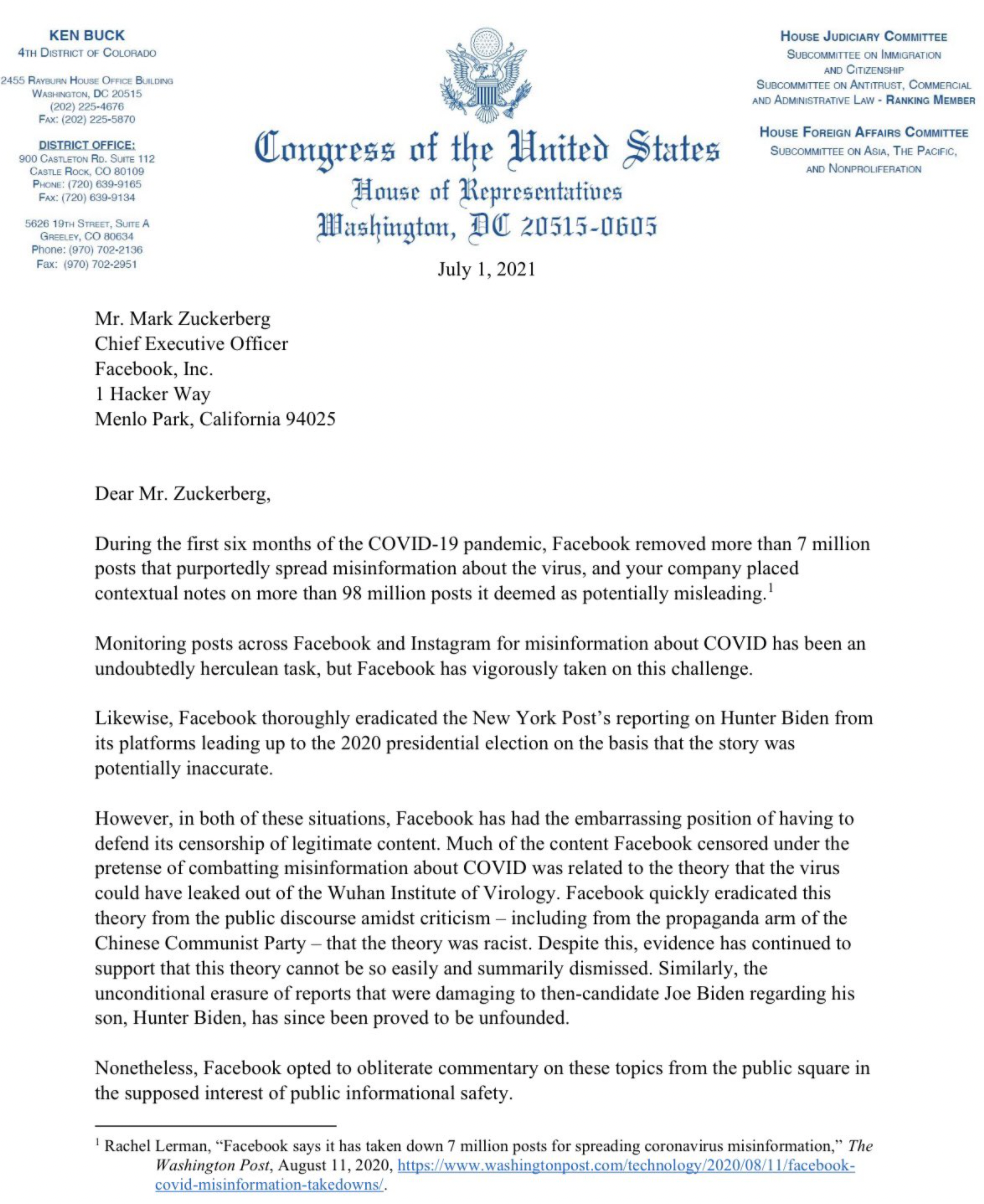
Congressman Ken Buck challenges Zuckerberg on COVID censorship and more
By Dan Frieth | Reclaim the Net | July 4, 2021
In a letter to CEO Mark Zuckerberg, GOP Rep. Ken Buck, from Colorado, criticized Facebook’s content moderation policies. Buck pointed out, among other things, how Facebook’s content moderation practices are biased against some opinions.
“During the first six months of the COVID-19 pandemic, Facebook removed more than 7 million posts that purportedly spread misinformation about the virus, and your company placed contextual notes on more than 98 million posts it deemed as potentially misleading,” Buck wrote. “Monitoring posts across Facebook and Instagram for misinformation about COVID has been an undoubtedly herculean task, but Facebook has vigorously taken on this challenge.”
Buck said that the platform censored content on the origins of the pandemic and the Hunter Biden story for “the supposed interest of public informational safety.”
“Your company is only able to selectively moderate content based on the political agenda of your company and its employees because Facebook possesses monopoly power over the market,” Buck wrote. He warned that “stifling ideas can backfire if it leads people to believe there’s a ‘real story’ that is being suppressed.’”
In both cases (the Hunter Biden story and the origins of the pandemic), “Facebook has had the embarrassing position of having to defend its censorship of legitimate content.” In recent months, more evidence has emerged that supports the lab leak theory. Additionally, “the unconditional erasure of reports that were damaging to the-candidate Joe Biden regarding his son, Hunter Biden, has since proved to be unfounded.”
Buck continued to point out that Facebook has been keen on censoring legal content, but has failed to remove “illegal and sexually abusive content.”
“The company appears to have an astonishing lack of concern about illegal and sexually abusive content that is rampantly permitted on your company’s platforms,” Buck wrote to Zuckerberg.
“Facebook has established a rigorous system for policing speech that is Constitutionally protected, yet your company’s failure to effectively screen illegal and exploitative content represents a misalignment of values that is deeply disconcerting.”
Buck’s letter also highlights Zuckerberg’s recent testimony in Congress about reforms to Section 230, expressing disapproval of Zuckerberg’s recommendation of what the Congressman described as “counterproductive actions.”
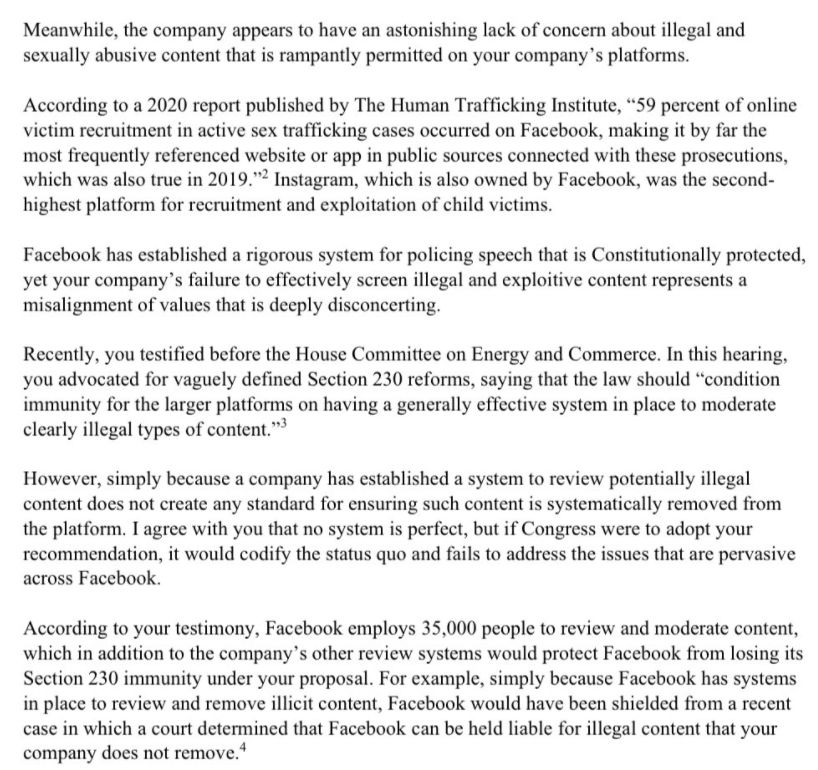
“Recently, you testified before the House Committee on Energy and Commerce. In this hearing, you advocated for vaguely defined Section 230 reforms, saying that the law should ‘condition immunity for the larger platforms on having a generally effective system in place to moderate clearly illegal types of content,’” Buck wrote.
“Simply because a company has established a system to review potentially illegal content does not create any standard for ensuring such content is systematically removed from the platform,” he explained. “I agree with you that no system is perfect, but if Congress were to adopt your recommendation, it would codify the status quo and fail to address the issues that are pervasive across Facebook.”
The letter concluded with a plea to Zuckerberg: “I urge you to take necessary steps to ensure your platform is an open platform for the free and open exchange of ideas and an unwelcoming place for illegal and exploitative content.”
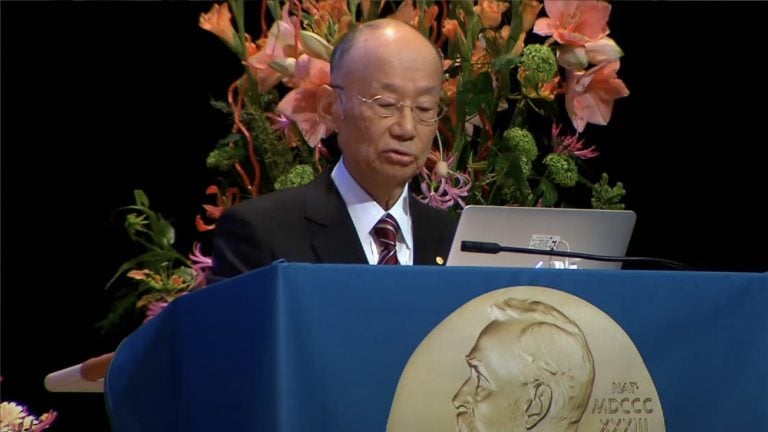
YouTube censors video of Nobel Prize winner Dr. Satoshi Ōmura discussing ivermectin
By Tom Parker | Reclaim the Net | July 2, 2021
Before the coronavirus pandemic, ivermectin was described as a “wonder” drug by the medical community. And in 2015, Dr. Satoshi Ōmura and Dr. William C. Campbell were awarded half the Nobel prize in Physiology or Medicine for their work that led to the development of ivermectin.
“The importance of Ivermectin for improving the health and wellbeing of millions of individuals with River Blindness and Lymphatic Filariasis, primarily in the poorest regions of the world, is immeasurable,” the Nobel Assembly stated in its press release for the 2015 Nobel Prize in Physiology or Medicine.
But after the pandemic began, the tech giants have gone all out to purge content that recommends ivermectin as a treatment for COVID-19.
And today, these Big Tech policies against ivermectin resulted in one of Ōmura’s speeches where he discussed ivermectin being struck down for “violating YouTube’s community guidelines.”
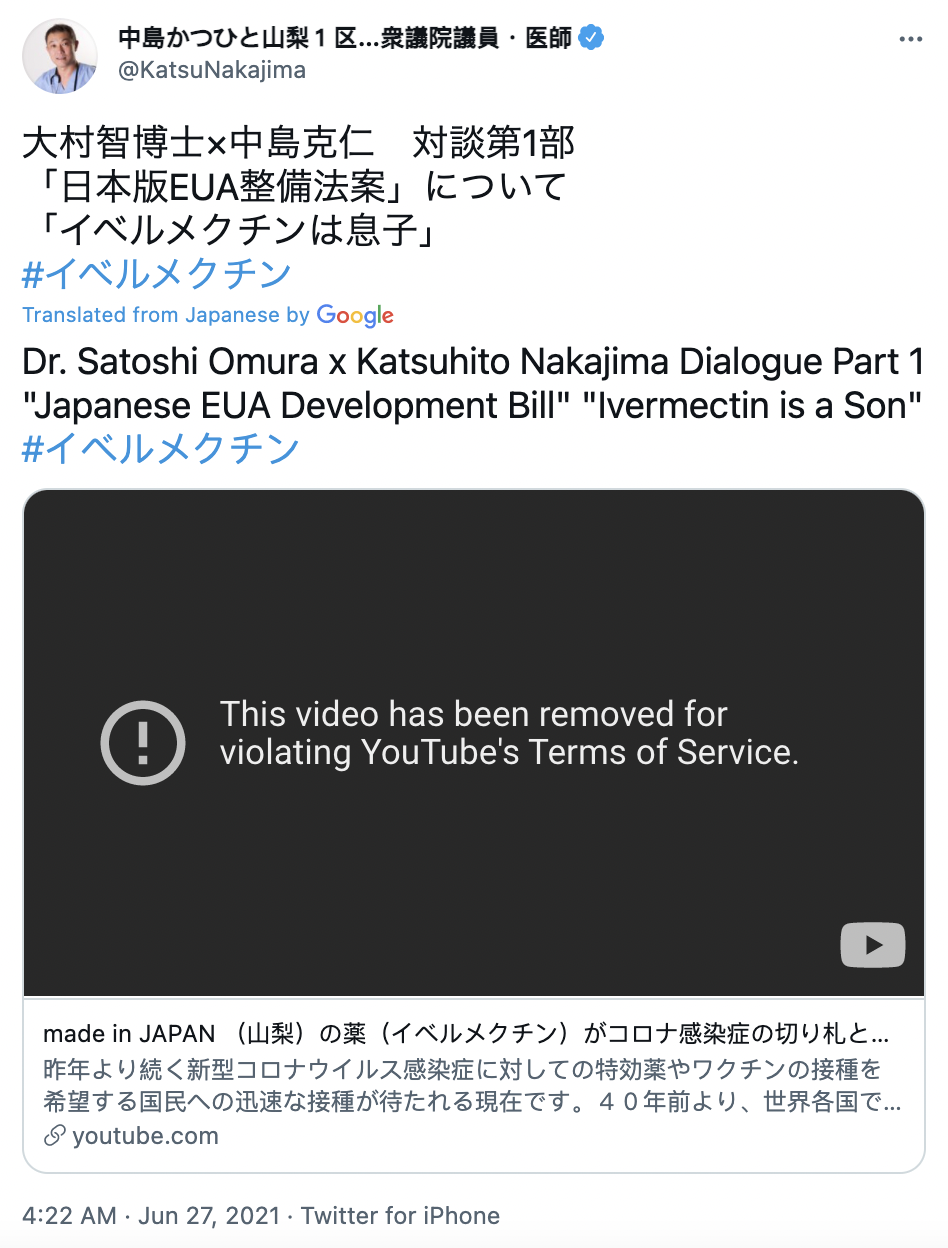
“When the fascists at YouTube censor the Noble Prize winner Dr. Satoshi Omura, a man whose discoveries have saved a hundred million + from blindness, the world has entered a very, very dark place,” Australian Member of Parliament Craig Kelly tweeted. “I cannot express in words how angry & sad this makes me & fearful for the future.”
Frontline Covid-19 Critical Care, an alliance of physicians and scholars that has committed to “research and develop lifesaving protocols for the prevention and treatment of COVID-19 in all stages of illness,” also spoke out against the censorship and warned that “brilliant scientists and lifesaving science are systematically being gagged.”
Ōmura joins the ranks of many other senators, lawmakers, medical journals, biologists, and YouTubers who have been censored by Big Tech for discussing ivermectin.
Featured Video

HE SAVED LIVES. NOW HE FACES PRISON.
or go to
Aletho News Archives – Video-Images
From the Archives
The Geopolitics behind the War in Yemen (I)
By Mahdi Darius NAZEMROAYA | Strategic Culture Foundation | 30.03.2015
The United States and the Kingdom of Saudi Arabia became very uneasy when the Yemenese or Yemenite movement of the Houthi or Ansarallah (meaning the supporters of God in Arabic) gained control of Yemen’s capital, Sanaa/Sana, in September 2014. The US-supported Yemenite President Abd-Rabbuh Manṣour Al-Hadi was humiliatingly forced to share power with the Houthis and the coalition of northern Yemenese tribes that had helped them enter Sana. Al-Hadi declared that negotiations for a Yemeni national unity government would take place and his allies the US and Saudi Arabia tried to use a new national dialogue and mediated talks to co-opt and pacify the Houthis.
The truth has been turned on its head about the war in Yemen. The war and ousting of President Abd-Rabbuh Manṣour Al-Hadi in Yemen are not the results of «Houthi coup» in Yemen. It is the opposite. Al-Hadi was ousted, because with Saudi and US support he tried to backtrack on the power sharing agreements he had made and return Yemen to authoritarian rule. The ousting of President Al-Hadi by the Houthis and their political allies was an unexpected reaction to the takeover Al-Hadi was planning with Washington and the House of Saudi. … continue
Blog Roll
 Aletho News
- Finland’s Stubb tells European leaders to calm down
- Defeating Russia on battlefield impossible – Fico
- Finland’s Gender Clinic Reversal
- Massachusetts Wants Mental Health Visits, Why Does Government Use ‘Health’ to Enter Our Homes & Families?
- US lawmaker admits American people footing bill for Trump’s failed aggression against Iran
- Pfizer Gave $500,000 to Groups That Lobbied to End Religious Exemption in Massachusetts
- HE SAVED LIVES. NOW HE FACES PRISON.
- Israeli lobby seeks to bind US fate to ‘Israel’: Araghchi
- Pakistan-Iran talks secure LNG shipment to Islamabad through Hormuz
- Black Sea grain crisis puts global wheat supplies under pressure
- If Americans Knew
- Gaza desperately needs tents, wheelchairs, fuel… and everything else (Israel blocks it all) – Daily Update
- Israeli Attacks in Gaza Kill at Least Seven Palestinians Over Three Days, including Woman and Child
- Trump’s militarization of Washington DC as he pursues Israel’s war against Iran
- Why Israel Fears This Searing New Documentary
- Huckabee aide solicited cash gifts from Israelis
- This isn’t sci-fi, AI is already killing people
- ‘The Most Brutal Thing’: Investigation Reveals Execution of Elderly Woman in Rafah
- Inside Israel’s ‘soft’ ethnic cleansing plan for Gaza through the eyes of its victims
- New online database tracks pro-Israel political donations in the United States
- Israeli president pardons soldier convicted for killing wounded Palestinian
- No Tricks Zone
- 2025 Nature Paper Claiming Worsening Global Drought Gets RETRACTED …Heavily Flawed
- New Study: ‘Global Drought Shows No Detectable Recent Acceleration Under Climate Warming’
- Economic Masterminds: German Socialists Suggest Taxing Productivity Gains Stemming From Using AI
- The South China Sea Has Not Been Cooperating With The Climate Change Narrative
- Energy Crisis: Germany Enters Heating Season With Historically Low Gas Reserve Fill Levels
- New Study: The Antarctic Ice Sheet Gained Mass From 2020-2024 Due To Staggering Snow And Ice Accumulation
- Study: Ocean Heating Rates From Thousands Of Years Ago ‘Dwarf’ Modern Ocean Heating Rates
- Climate Extremists Target, Attack Large-Scale Power Grid Infrastructure In Germany!
- New Study: Antarctic Ice Melt Has Contributed Less Than 1 Centimeter To Sea Level Rise In The Last 30 Years
- Fear Of Debate: Alarmist German Climate Scientist Calls On Mainstream Media To Discredit Skeptic Voices
 Aletho News