“Do Not Discriminate” Against the Unvaccinated, Japanese Government Tells Citizens
By Noah Carl | The Daily Sceptic | December 21, 2021
At this point, almost all Western countries have introduced some form of vaccine passport or vaccine mandate. Despite repeated assurances from the Vaccines Minister that this wouldn’t happen here, Britain is no exception.
Things may go further in some European countries. Austria is set to make vaccination mandatory from 1st February next year. And beginning in January, Greece will impose a monthly fine of €100 on all over 60s who remain unvaccinated.
Even the United States – supposedly the ‘land of the free’ – has not bucked the trend toward use of passports and mandates. Several states have introduced them, including some of the biggest like New York, California and Virginia. Healthcare workers with natural immunity have already been fired for refusing to comply.
You might conclude that introducing passports and mandates is just something that all advanced countries do. But that isn’t true, as there’s one major exception: Japan.
Nobody can doubt Japan’s credentials as an advanced country. It’s a member of the ‘Group of Seven’, along with the U.K., U.S., Canada, France, Italy and Germany. And it boasts the world’s third largest economy overall. Japan is known for its technologically advanced society, where the high-speed trains never run more than a few minutes late.
So what is the country’s stance on passports and mandates? So far, it’s completely eschewed them. Not only that, but the Government and Prime Minister have explicitly told citizens not to discriminate against the unvaccinated.
The following notice appears on the website for the Ministry of Health, Labour and Welfare:
Although we encourage all citizens to receive the COVID-19 vaccination, it is not compulsory or mandatory. Vaccination will be given only with the consent of the person to be vaccinated after the information provided. Please get vaccinated of your own decision, understanding both the effectiveness in preventing infectious diseases and the risk of side effects. No vaccination will be given without consent. Please do not force anyone in your workplace or those who around you to be vaccinated, and do not discriminate against those who have not been vaccinated.
And a similar notice appears on the website for the Prime Minister:
Vaccines will never be administered without the recipient’s consent. We urge the public never to coerce vaccinations at the workplace or upon others around them, and never to treat those who have not received the vaccine in a discriminatory manner.
Western countries still claim to be the foremost defenders of civil liberties. But in the era of Covid safetyism, it seems that mantle has passed to Japan. Perhaps the country will send a delegation of human rights experts to teach the West about individual freedom.
Digital Surveillance — the Real Motive Behind Push to Vaccinate Kids
By Michael Nevradakis, Ph.D. | The Defender | December 15, 2021
COVID-19 may have caught much of the planet by surprise in late 2019 and early 2020, but much of the groundwork for the technology now widely used as a “response” to the pandemic was conceptualized and developed years prior.
In the U.S. and throughout the world, there has been a recent push to implement a variety of “vaccine passport” regimes, many of which rely on digital technologies such as mobile applications to carry a record of — so far, at least — one’s COVID-19 vaccination records.
These “tools” are presented by public officials and significant sections of the media in recent weeks and months as an inevitability of sorts, a technological progression as natural as breathing.
They are also presented as a “new” response to an unprecedented crisis.
These technological applications are touted as a means of keeping businesses open and ensuring “peace of mind” for members of the public who remain wary about entering public spaces.
But just how new is this “new” technology? And will the use of technology be limited to COVID vaccinations, or for purposes of “health?”
International ‘alliances’ backing the melding of ‘Big Tech’ and ‘Big Health’
It was the beginning of the preceding decade, January 2010, when Bill Gates, via the Bill & Melinda Gates Foundation, proclaimed “[w]e must make this the decade of vaccines,” adding that “innovation will make it possible to save more children than ever before.”
In launching this so-called “Decade of Vaccines,” the Gates Foundation pledged $10 billion in funding. But Gates wasn’t the only actor behind this initiative.
For instance, the “Decade of Vaccines” program used a model originating from the Johns Hopkins Bloomberg School of Public Health to project the potential impact of vaccines on childhood deaths throughout the decade to come.
And the announcement for the “Decade of Vaccines” initiative was made at that year’s annual meeting of the World Economic Forum (WEF).
These same actors — the Bill & Melinda Gates Foundation, the Johns Hopkins Bloomberg School of Public Health and the WEF — organized the now-notorious Event 201 pandemic simulation exercise, in October 2019, just before COVID entered our lives.
Moreover, in 2010, a “Global Vaccine Action Plan” was announced as part of this initiative. It was a collaboration with the World Health Organization (WHO), UNICEF and the National Institute of Allergy and Infectious Diseases (NIAID), with Dr. Anthony Fauci serving on the leadership council.
As the Gates Foundation stated at the time:
“The Global Vaccine Action Plan will enable greater coordination across all stakeholder groups — national governments, multilateral organizations, civil society, the private sector and philanthropic organizations — and will identify critical policy, resource and other gaps that must be addressed to realize the life-saving potential of vaccines.”
The steering committee for the “Global Vaccine Action Plan” included a member from the GAVI Alliance. Notably, the initial announcement for the “Decade of Vaccines” was made in the presence of Julian Lob-Levyt, then-CEO of the GAVI Alliance.
What, or who, is the GAVI Alliance? Also known as the “Vaccine Alliance,” it proclaims a mission to “save lives and protect people’s health,” and states it “helps vaccinate almost half the world’s children against deadly and debilitating infectious diseases.”
GAVI goes on to describe its core partnership with various international organizations, including names that are by now familiar: the WHO, UNICEF, the Bill & Melinda Gates Foundation and the World Bank. (Far from helping the world’s poor, the World Bank has been described by a former insider, John Perkins, as an organization that uses “economic hit men” to subjugate financially crippled countries).
In 2018, GAVI, through its INFUSE (innovation for update, scale and equity in immunization) Initiative, put forth the following “food for thought”:
“Imagine a future in which all children have access to life-saving vaccines no matter where they live — a future in which parents and health workers ensure their timely vaccination, a future in which they have their own digitally stored health record that cannot be lost or stolen, a future in which, regardless of gender, economic or social standing, this record allows each child (and parents) to have access to a bank account, go to school, access services and ultimately build a prosperous life.
“This future is possible today. With the latest advances in digital technologies that enable more effective ways to register, identify births and issue proof of identity and authentication for access to services — we are on the brink of building a healthier and more prosperous future for the world’s most vulnerable children.”
This would be accomplished, according to GAVI, through the INFUSE initiative, specifically by “calling for innovations that leverage new technologies to modernize the process of identifying and registering the children who are most in need of life-saving vaccines.”
As described by investigative reporter Leo Hohmann:
“Don’t be confused by the bit about ‘building a healthier and more prosperous future.’ That’s just window dressing. This is all about data collection and has nothing to do with health.
“The real purpose behind the historic, unprecedented push to vaccinate the very young, even against diseases like COVID that do not pose a threat to them, is to fold the current generation of children into the blossoming global digital identity system.”
GAVI itself confirmed the above statement, as it has described potential uses of these “new technologies” as going beyond the issuance of a “digital child health card” toward encompassing “access to other services,” including the broadly defined “financial services.”
Limitations on “access” to such “other services” are already apparent in jurisdictions where COVID passports restrict access to businesses, banks and other private spaces for the non-vaccinated
The GAVI Alliance also closely collaborates with the ID2020 Alliance, founded in 2016, which claims to advocate in favor of “ethical, privacy-protecting approaches to digital ID,” adding that “doing digital ID right means protecting civil liberties.
Unsurprisingly, there is no clarification provided regarding the potential loss of civil liberties for individuals who choose, for any reason, not to be vaccinated and who are therefore excluded from large swaths of society in areas where COVID passports have been implemented and enforced.
Such rhetoric on the part of ID2020 is reminiscent of the public statements put forth by the European Union (EU) as it was preparing to launch its so-called “Green Pass” earlier this year.
EU officials, such as European Commission President Ursula von der Leyen — who recently called for a “discussion” on mandatory vaccinations in the EU — went to great lengths to stress how individuals’ privacy would be protected.
In a manner which some may consider tone-deaf, they further emphasized that such a digital pass would enable people to “move safely” for “work or tourism,” as if such free movement is a new concept that only a digital pass could make possible.
Again, restrictions on the unvaccinated, including those involving “work or tourism,” were entirely absent from the public rhetoric surrounding this new measure.
Highlighting the possibilities that the GAVI-ID2020 collaboration could bring, the INFUSE call for innovation states:
“According to the ID2020 Alliance — a public-private partnership that includes Gavi — the use of digital health cards for children could directly improve coverage rates by ensuring a verifiable, accurate record and by prompting parents to bring their children in for a subsequent dose.
“From the parents’ perspective, digital records can make it convenient to track a child’s vaccines and eliminate unnecessary paperwork.
“And as children grow, their digital health card can be used to access secondary services, such as primary school, or ease the process of obtaining alternative credentials. Effectively, the digital health card could, depending on country needs and readiness, potentially become the first step in establishing a legal, broadly recognized identity.”
All of these proposals and initiatives appear, in turn, to be closely aligned with the United Nations’ Sustainable Development Goals, and in particular, Goal 16.9, which calls for the provision of a digital legal identity for all, including newborns, by 2030.
To this end, the UN established the UN Legal Identity Agenda Task Force in 2018. In May 2021, this task force, alongside the United Nations Development Programme and a variety of private sector actors, organized the “Future of Technology and Institutional Governance in Identity Management” roundtable sessions.
The final report from these sessions indicates, among other things, a desire from the stakeholders for the expansion of public-private partnerships for the further development and implementation of digital ID regimes worldwide, including in the Global South.
One of the stakeholders present, the not-for-profit Secure Identity Alliance, touts its support for “the provision of legal, trusted identity for all and driving the development of inclusive digital services necessary for sustainable, worldwide economic growth and prosperity.”
A paper published in July by the Security Identity Alliance discusses “making health certificates a workable reality.”
One of the five principles the paper puts forth for such health passports is that they are “futureproofed,” by offering “multi-purpose functionality” in order to “ensure ongoing value beyond today’s current crisis.”
The Secure Identity Alliance counts among its observers governmental authorities from countries such as Germany, The Netherlands, Estonia, Slovenia, the United Arab Emirates, Nigeria and Guinea.
Moreover, one of its founding members and current board members is the Thales Group, a private company involved in aerospace, defense and security — in short, a defense contractor.
On its website, the Thales Group proudly promotes its “smart health card” and Digital ID Wallet technology. Amidst utopian language claiming “we’re ready for change” and “putting citizens in control,” the Digital ID Wallet promises the public the ability to “access the rights and services to which we are entitled.”
Indeed, the documents that would be available via this Digital ID Wallet go beyond “health credentials” and include national identification cards, driver’s licenses and any number of other items of official documentation.
Numerous countries worldwide, including the U.S., currently find themselves in varying stages of implementing exactly this sort of “digital wallet.”
Taking ‘health passports’ a step (or more) further: digital wallet regimes take shape
The U.S. House of Representatives on Nov. 30 passed H.R. 550, the Immunization Infrastructure Modernization Act of 2021.
If passed by Congress, this law would provide $400 million in funding to expand vaccine-tracking systems at the state and local level, enabling state health officials to monitor the vaccination status of American citizens and to provide this information to the federal government.
Vaccine passports and no-fly lists for the unvaccinated — a concept for which Fauci expressed his support — could be created under the law.
The bill, sponsored by Rep. Annie Kuster (NH-02), passed the U.S. House of Representatives with 294 votes, including all Democrats and 80 Republicans. It is now before the Senate, where it is being reviewed by the Committee on Health, Education, Labor, and Pensions.
Since being passed by the House, the bill has garnered a fair amount of attention — other recent digital identification developments in the U.S., however, seem to have remained relatively under the radar.
In September, for instance, Apple announced a partnership with eight states — Arizona, Connecticut, Georgia, Iowa, Kentucky, Maryland, Oklahoma and Utah — to make those respective states’ driver’s licenses available in digital form via the Apple Wallet platform.
Meanwhile, several states, including New York (via its “Excelsior Pass”) and Connecticut introduced their own digital COVID vaccination certificate.
Similar to how the EU has promoted vaccine passports, these state-level initiatives in the U.S. are touted as a means of “safely” reopening the economy and encouraging travel and movement.
Indeed, New York went so far as to make a “blueprint” of its vaccine pass platform available, “as a guide to assist other states, territories, and entities in the expansion of compatible COVID-19 vaccine credential systems to advance economic development efforts nationwide.”
Looking at the EU, one of the bloc’s priorities as part of its 2019-2024 five-year plan is to create a “digital identity for all Europeans.” Namely, each EU citizen and resident would have access to a “personal digital wallet” under this initiative.
This “personal digital wallet” could include documentation such as national ID cards, birth certificates, medical certificates and driver’s licenses.
The EU subsequently presented its plans for the “European Digital Decade,” where under the EU’s “Digital Compass,” 100% of key public services will be available digitally, with a target of 80% uptake of digital identification documents.
Already, several EU member states are getting into the act.
Germany, which had electronic national ID cards (via biometric chips) since 2010, introduced digital versions of these ID cards this past fall, via the AusweisApp2. The same app makes German driver’s licenses available digitally.
Germany and Spain also recently signed an agreement to launch a cross-border program for digital identification, which would entail mutual recognition of each other’s official digital documents
France also recently announced its intention to integrate its national identification card with smartphones.
Greece received praise from the global press when it introduced particularly draconian digital tools during its two COVID lockdowns, such as a government SMS platform to which residents would have to send a text message in order to circulate in public for a limited set of “reasons.”
More recently, Greece announced the forthcoming creation of a digital wallet that will contain documents such as one’s national ID card, driver’s license and health documentation.
Estonia, viewed as a world leader in introducing digital e-governance and which has had digital identification cards in place since 2002, is preparing its own digital wallet system while expressing support for the EU’s “Digital Compass.”
Outside of Europe, several other countries also have expanded their digital identification regimes in various ways.
In Australia, for instance, states such as New South Wales, South Australia and Queensland introduced or trialed digital driver’s licenses.
It is in India, though, where such digital documents appear to have generated the greatest degree of controversy thus far.
The Ayushman Bharat Digital Mission was announced in 2020 and launched as a pilot program in six regions of India in 2021. It is an app that provides a unique digital health ID to each citizen and is linked to their personal health records.
Its establishment comes on the footsteps of the development of Aadhaar, India’s national digital identification card system.
Aadhaar generated controversy over the government’s plans to link it to the national voter database, while it has also been the target of hackers.
Questions arise as more digital platforms rolled out for ‘official purposes’
The rollout of digital platforms gives rise to questions about the safety of individuals’ data on these digital platforms, despite government reassurances to the contrary regarding privacy.
Moreover, it remains unclear how long “COVID passports,” whether in digital or paper form, will remain enforced, or if governments plan to make such a regime permanent.
A recent article in The Atlantic, “Why Aren’t We Even Talking About Easing COVID Restrictions?” questioned why vaccine passport mandates in the U.S. have no sunset date.
Indeed, if the proclamation of the Secure Identity Alliance regarding the need to “futureproof” such digital documents is any indication, it may be the case that governments have no intention to scrap vaccine passports.
Even if such specific uses of digital “passports” eventually go away, the range of ways in which digital wallets can potentially be utilized is staggering, including, for instance, via the tracking of “personal carbon allowances,” as previously reported by The Defender.
Michael Nevradakis, Ph.D., is an independent journalist and researcher based in Athens, Greece.
© 2021 Children’s Health Defense, Inc. This work is reproduced and distributed with the permission of Children’s Health Defense, Inc. Want to learn more from Children’s Health Defense? Sign up for free news and updates from Robert F. Kennedy, Jr. and the Children’s Health Defense. Your donation will help to support us in our efforts.
Austria is only a few months or even weeks ahead of France and the rest of Europe
TCW Defending Freedom | December 12, 2021
MEPs against compulsory vaccination
Christine Anderson, MdEP | December 10, 2021
At the 4th Intergroup Press Conference this week, I met again with my colleagues and we made it clear once more:
– No to compulsory vaccination
– No to social division
– No to political/medial scaremongering
– No to the state-fueled dismantling of freedom and democracy.
See in my speech why I will defend the freedom of our children with claws and teeth and call on the administration:
“Come on, government! Let’s see what you’ve got. I’m not afraid of you!”
Unvaxxed in Austria Could be Imprisoned For a Year
New amendment increases sentence for non-payment of fines
By Paul Joseph Watson | Summit News | December 10, 2021
People in Austria who remain unvaccinated could find themselves imprisoned for a year, according to critics of an amendment to an administrative law.
Susanne Fürst of the Austrian Freedom Party (FPÖ), which voted against the amendment, warned that it could be used to punish the unjabbed with much harsher sentences.
The amendment raises fines from €726 (£617/$818) to €2,000 (£1,701/$2,255) and increases prison time for those who refuse to pay from four weeks to up to a year.
Given that Austrians who don’t get vaccinated by February face fines of up to €7,200 ($8,000) for non-compliance, those who refuse to pay would also face a 12 month jail sentence.
The amendment also orders people who are jailed to pay for their own imprisonment.
“If detention is carried out by the courts, the associated costs shall be recovered by the courts from the obligated party in accordance with the provisions existing for the recovery of the costs of enforcing judicial penalties,” it states.
Despite Fürst protesting that the amendment could be used to further punish the unvaccinated, the measure was approved anyway.
At the time it was announced, then Chancellor Alexander Schallenberg vowed to hit the unvaccinated with “penalties” if they still refused to get the jab, while asserting that they should “suffer.”
Given that some technocrats are asserting that the vaccination program will never end, the initial one year prison sentence for vaccine refusniks could be just the beginning.
The crooked, proto-fascist EU President Ursula von der Leyen

By Kathy Gyngell | TCW Defending Freedom | December 7, 2021
MANY TCW Defending Freedom readers will know Paul Weston from his informed below-the-line comments on the site over the years. Others will know him for his own YouTube video analyses of ‘Covid lies, damn lies and statistics’ and other topics.
It is the latest of these we want to share with you today – his expose of EU President Ursula von der Leyen and the resurrection of fascism in Europe. Paul dismembers the financial malfeasance behind her arbitrary billion-euro vaccine order from her close friend Albert Bourla, the Pfizer chief executive who seems to make a quite a success of chumming up with the gullible great and good despite his company being fined £2billion in recent years for bad practice.
What never ceases to amaze me is how our woke social justice warriors in the press and on TV manage to turn a blind eye to these, the biggest crimes of all, happening in the here and now. So we have to thank Paul Weston for doing their job for them in the case of the crooked and dangerous von der Leyen. His video, which you need to watch from beginning to end, shows once again that it is fascism in governments we have to fear or beware of, not that of marginal and powerless street groups, such as exist at all.
Fossil Fuel Restriction Dam Starting To Break
By Francis Menton | Manhattan Contrarian | December 4, 2021
Somewhere a couple of decades or so ago, the rich parts of the world embarked on a program of replacing energy from fossil fuels (coal, oil, natural gas) with energy from intermittent “renewables” (mainly wind and solar). In trendy academic, journalistic, and otherwise progressive circles, the idea took hold that this was the way to “save the planet.” This program was undertaken without any detailed engineering study of how or whether it might actually work, or how much it might cost to fully implement. In the trendy circles, there took hold a blind faith in the complete ability of the government, by dispensing taxpayer funds, to order up whatever innovation might be needed to move us forward to this energy utopia.
The latest UN-orchestrated effort to implement the renewable energy program, known as COP 26, has just broken up. To read the verbiage emanating from the affair, all is on track, if a bit slower than one might have hoped.
But I have long predicted that this program would come to an end when (absent some miraculous innovation that nobody has yet conceived) the usage of the renewables got to a sufficient level that their costs and unworkability could not be covered up any longer. Until very recently the pressure of elite groupthink has been able to maintain a united front of lip service to the cause. But consider a few developments from the past few weeks, just since the end of COP 26:
Japan
Japan tends to keep its head down in international affairs, and at COP 26 signed on to the happy talk group communiqués without raising any particular issues. But there is no getting around that Japan has the third largest economy in the world — after the U.S. and China, and larger than any European country — so its actions in energy policy are inherently significant. Also, Japan has relatively little energy production of its own, is heavily dependent on imports, has harsh winters, and has a growing Chinese military and economic threat right on its doorstep. Is Japan really going to trust its fate to intermittent wind and solar energy?
On December 1 Bloomberg reported: “Japan Is Backing Oil and Gas Even After COP26 Climate Talks.” It seems that this rather significant country may be seriously re-thinking the move away from fossil fuels. Excerpt:
Government officials have been quietly urging trading houses, refiners and utilities to slow down their move away from fossil fuels, and even encouraging new investments in oil-and-gas projects, according to people within the Japanese government and industry, who requested anonymity as the talks are private.
What is motivating Japan to break from the world groupthink? According to the Bloomberg piece, the main motivator is security of energy supply — which wind and solar obviously cannot provide:
The officials are concerned about the long-term supply of traditional fuels as the world doubles down on renewable energy, the people said. The import-dependent nation wants to avoid a potential shortage of fuel this winter, as well as during future cold spells, after a deficit last year sparked fears of nationwide blackouts. . . . Japan’s Ministry of Economy, Trade and Industry declined to comment directly on whether it is encouraging industries to boost investment in upstream energy supply, and instead pointed to a strategic energy plan approved by Prime Minister Fumio Kishida’s cabinet on October 22. That plan says “no compromise is acceptable to ensure energy security, and it is the obligation of a nation to continue securing necessary resources.”
(Emphasis added.). Well, if “no compromise is acceptable” on “energy security,” that pretty much rules out principal reliance on wind and solar for powering the Japanese economy, at least until some magical new inventions come along.
United States
In the U.S., Republicans have only very gradually caught on to the idea that fossil fuel restrictions in the name of “climate” are becoming a political liability for the Democrats. Up to now, there have been some politicians willing to speak out in opposition to such restrictions, but little in the way of concrete steps taken in opposition. Meanwhile, the Biden administration continues to move forward with initiatives at the SEC, Treasury Department and Federal Reserve to pressure banks and other financial institutions to reduce their participation in the fossil fuel industries.
So this is a big development: On November 22, a coalition of state treasurers sent a letter to large financial institutions threatening to end relationships, including the deposit of state and pension funds, with institutions that cut off financing for the coal, oil and natural gas industries. National Review reports in a November 22 piece headlined “Fifteen States Respond to ‘Woke Capitalism,’ Threaten to Cut Off Banks That Refuse to Service Coal, Oil Industries.” Excerpt:
A coalition of financial officers from 15 states sent a letter to the U.S. banking industry on Monday warning they plan to take “collective action” against banks that adopt corporate policies to cut off financing for the coal, oil, and natural gas industries. . . . The letter puts the financial institutions that have “adopted policies aimed at diminishing a large portion of our states’ revenue” on notice, saying the banks have “a major conflict of interest against holding, maintaining, or managing those funds.”
According to the NR piece, the state treasurers signing on to the letter include those from West Virginia, Arizona, Arkansas, Idaho, Louisiana, Missouri, Nebraska, North Dakota, South Carolina, South Dakota, Utah, Wyoming, Alabama, Texas and Kentucky. Recipients of the letter included JPMorgan Chase, Bank of America, Wells Fargo, Citigroup, and Goldman Sachs. Between the states’ own accounts and their pension funds, the amounts at issue would be well into the multiple hundreds of billions of dollars, if not approaching a trillion.
Meanwhile, over in Europe . . .
Another Bloomberg piece, this one from November 28, describes the sense of impending doom hanging over Europe with the combination of low natural gas supplies, price spikes, and complete inability to coax more production out of proliferating and essentially useless wind and solar generators. The headline is “Europe’s energy crisis is about to get worse as winter arrives.” Excerpt:
The situation is already so dire this early in the winter season because of a blistering rally in natural gas prices. Stores of the fuel, used to heat homes and to generate electricity, are lower than usual and are being depleted quickly. Analysts have warned that gas stores could drop to zero this winter if cold weather boosts demand. Rolling blackouts are a possibility, warned Jeremy Weir, chief executive officer of Trafigura Group, a Swiss commodity trading house on Nov. 16.
And then there’s this comment:
“If the weather gets cold in Europe there’s not going to be an easy supply solution, it’s going to need a demand solution,” said Adam Lewis, partner at trading house Hartree Partners LP.
I think that a “demand solution” means some combination of either blackouts or intentionally cutting people off and, I guess, leaving them to freeze. The “supply solution” mentioned by Lewis would be allowing fracking in the extensive shale formations underlying Western Europe. Such fracking is currently banned. Even if those bans were lifted today, it would be way too late for this winter. … Full article
The case for compulsory vaccinations is dead… Omicron just killed it.
By Kit Knightly | OffGuardian | December 2, 2021
Yesterday, Ursula von der Leyen, the President of the European Commission, held a press conference where she talked at length about her “concerns” over the EU’s low vaccination rate, and how best to “fix” it.
When asked about making vaccines mandatory, she said:
It is understandable and appropriate to lead this discussion now – how we can encourage and potentially think about mandatory vaccination within the European Union. This needs discussion, this needs a common approach, but I think it’s a discussion that has to be led.”
Adding:
Two or three years ago, I would have never thought to witness what we see right now, that we have this horrible pandemic, we have the life-saving vaccines but they are not being used adequately everywhere. And thus this is an enormous health cost,”
Of course, the idea that the EU nations are going to “debate” mandatory vaccinations is a joke, they are more likely to enforce them no matter what.
But any real, rational debate was over as soon as the EU and the vaccine manufacturers both admitted that the vaccines do not work.
By any pre-2021 definition, the Covid “vaccines” are not actually vaccines. From the beginning, it has been widely admitted that they don’t stop you getting the disease, and they don’t stop you spreading it.
Every day we hear about some famous person or other testing positive “despite being vaccinated”.
The EU has already hinted that their vaccination passes (which, ironically enough, they appear to have been planning for “two or three years” despite von der Leyen claiming they never saw the pandemic coming), will expire in nine months.
Why will they expire?
Because the “protection” allegedly conferred by the vaccine wears off.
How fast does it wear off?
The alleged emergence of the Omicron variant makes the situation even worse, from the establishment point of view. Indeed, it could be argued the first real casualty of the Omicron outbreak was narrative cohesion.
Experts are already warning that the Omicron variant may be resistant to the vaccines, and the CEO of Moderna added his voice to this chorus yesterday, saying:
I think it’s going to be a material drop [in vaccine effectiveness]. I just don’t know how much because we need to wait for the data. But all the scientists I’ve talked to…are like ‘this is not going to be good’.”
Even if these warnings prove incorrect, and the mainstream suddenly backtracks and starts reporting that the vaccines work “better than expected” to combat Omicron, that’s irrelevant.
They have just admitted that the “vaccines” could stop working the moment there is a new mutation. And viruses mutate a lot.
So, they know the vaccine’s don’t work very well, they know they will wear off, and they know any new mutations could stop them working completely.
The only thing they don’t know is what the long term side effects of the vaccines are, a fact admitted by Pfizer themselves in their supply contracts:
the long-term effects and efficacy of the Vaccine are not currently known and that there may be adverse effects of the Vaccine that are not currently known
Now, here’s the all-purpose disclaimer: This is not admitting that Covid19 is dangerous, the pandemic real or in any other way endorsing the narrative. Rather, and this is important, it’s pointing out that even on their own terms the establishment’s plan for compulsory vaccination does not make any sense at all.
The current narrative is that:
- The vaccines do not confer immunity or prevent transmission.
- What beneficial effect they do have wears off, they don’t know when.
- They probably don’t protect against new variants or mutations.
- The vaccines have unknown longterm side effects.
These are not fringe ideas or baseless theories, they are the self-contradictory supposed “facts” of the schizophrenic covid story.
Going entirely by the mainstream’s own words, and completely on their own terms, any possible case for mandatory vaccinations is dead.
The “Omicron variant” killed it, even if it never killed anything else.
Scenarios in Response to the New War Against Humanity
By Doug E. Steil | December 2, 2021
In light of recent developments in the western world it has become abundantly evident to most informed observers that a war against the general population has been launched under the guise of counteracting a viral pandemic. Through a process of coordinated incrementalism governmental efforts have focused on implementing a totalitarian population control system rather than appropriately targeting public health problems associated with a limited viral outbreak.
A key mechanism in this control process has involved coercive means to inject as many people as possible with an experimental gene therapy concoction with proven toxicity, in some cases deadly, which however has been ineffective in its claimed suppression of viral infection and transmission to others. The established term “vaccination” was misappropriated to mislead the public into believing that getting these shots would lead to salvation by protecting themselves and others around them. These toxic doses were authorized for emergency use a year ago based on various fraudulent misrepresentations, which included relying on false test results, suppressing viable treatment protocols, such as those published by physician Dr. Peter McCullough, rigging trial designs and aborting prematurely, and manipulating statistical interpretations in a manner that created the impression they were effective when they were not. Though their producers acknowledged unforeseen effects they demanded contractual indemnification against bad outcomes. The failure to properly inform the public about the facts surrounding these substances, including known and potential adverse effects, in conjunction with the aggressively coercive measures to compel millions of people to submit to receiving them into their bodies, constitutes crimes against humanity in accordance with the Nuremberg Code, established in 1947.
At least technically, thus far getting these toxic injections was voluntary, but a substantial portion of the public saw through the scam or were reservedly skeptical, for which they have been publicly vilified in a vicious defamation campaign propagated by the mass media, operating in concert with the pharmaceutical industry and governments. Only a few days ago – November 19 in Austria and November 30 in Germany – a critical red line was crossed through announcements by public officials, of impending requirements for everybody, including kids, to get these toxic injections, purportedly against a virus from Wuhan that has long since mutated. Today Angela Merkel expressed her endorsement of such measures, though she will no longer be in power to vote for them. The mantra has been simply that this was necessary – indeed “the only solution” – in order to increase the overall so-called “vaccination rate” in the population, as if though that could somehow solve ongoing health problems. Since there is no substantive evidence for these sensationalistic claims, it equates to pure political demagoguery. Yet, contrary to this transparently false claim, mandatory injections, possibly on a repetitive basis, would only exacerbate the current situation purportedly occurring in emergency rooms or intensive care units at hospitals because the shots do not provide any remedy but cause harm instead, in some cases almost immediately, in many cases cumulatively. Essentially, this highly controversial mandate amounts to a subversive extermination campaign in the long run, deriving from likely cases of infertility and decreased life expectancy. In order to deflect from their previous lies, officials have chosen to raise the stakes an thus declared war against humanity.
Such an egregious attack as this is unprecedented in recent memory, so it may be difficult for many to understand what is occurring, right in front of their eyes. There may be a prevailing inclination toward cognitive dissonance, but it is preferable to assess various means to counteract such ominous developments within the full scope of possible scenarios that may arise. Below are five situations, beginning with the most obvious. Subsequent response scenarios represent an escalatory progression. Though they are not equally likely to occur and may be less specific to some regions, such results cannot be ruled out entirely when considering the volatile social conditions that are caused by governments that have intentionally gone rogue. In the pursuit of conquest, they have split and destabilized society, a recurring modus operandi when regarded in a historical context, back to Philip II of Macedon and Julius Caesar – divide et impera.
• Legal Challenges
The stated rationales for implementing compulsory injections of toxic substances, euphemistically referred to as “mass vaccination”, cannot be legally justified under any circumstances under existing protections, therefore the arguments presented to the public are all based on provably false premises or wishful thinking. They have been repeated so often, that many have already internalized them to be functionally true. At their core have been false promises of immunity, appeals to social solidarity, moral self-righteousness, and an unproven notion of easing the potential demand for medical services. If only everybody had volunteered to get the shots, the claim goes, the outbreak would have been eradicated; therefore mandatory injections are the only solution. None of this is true; on the contrary the data show that case hospitalization rates increase in correlation with the proportion of administered injections. Yet even if it were true, there are basic legal protections in place worldwide that forbid such mandates.
Many people understand this as self-evident and therefore expect the legal process to work, as it should, in theory. They may regard the announcements as typical hot air from politicians as a tactical means of leveraging their authority to exert additional pressure on those people who had not made up their minds yet about this vital question and presume the judicial reviews will enforce a reversal. Though this would be a reasonable expectation if the facts and the law were followed, the problem is that the legal process has become hopelessly corrupted. Reiner Füllmich, one of the founders of the Corona Investigative Committee, which has broadcast the 80 weekly sessions it has held thus far, has repeatedly confirmed that the German legal system has been so thoroughly corrupted, that bringing forth such matters before a system with an Anglo-American legal tradition makes more sense. Contemporary judicial rulings in Germany can be so out of touch with reality that it is difficult to imagine that decisions in prior totalitarian regimes could have possibly been any worse. Even so, it is still necessary to formally proceed through this avenue in order to be able to justify taking additional steps if it should turn out that cynical expectations of an inherently corrupted system are confirmed. There is also the possibility that the time it takes to submit to the judicial review process will result in the matter becoming moot, so that the stated premises for the mandates no longer obtain and are formally withdrawn.
The sheer suddenness and public lying that accompanied these announcements, which were completely contrary to repeated promises made by these same politicians who then proclaimed there was no alternative, shows they deserve no trust. They will say and do whatever they feel will defer the truth from emerging and in the meantime protect themselves from embarrassment. Once they have gone so far as to thrown aside basic principles – having in effect become criminals of the worst kind – one can no longer expect to reverse themselves in response to appeals to decency.
• Passive Resistance
This is an effective path that many skeptics and opponents of totalitarian edicts have already chosen. Examples of this have been the numerous work stopages among US airline pilots, or hospital staff quitting their jobs. In the Italian port cities of Trieste and Genoa dock workers have gone on extended strikes in response to onerous governmental impositions still falling short of universal mandates to submit to toxic injections.
During the most recent session of the Corona Investigative Committee four specialists working in Austria, of which three are physicians, presented responses to the Austrian announcement of future mandates a week earlier, which was followed by large demonstrations in Vienna on the next day, which were said to have involved the participation of more than a hundred thousand protesters. The fourth guest , an attorney, started a political party that immediately received sufficient acclaim to be represented in the provincial government of Upper Austria. He stressed the importance of mass resistance and announced liaison efforts with various unions in addition to forming new union representation.
Mass strikes and roadblocks associated with the yellow vest movement in France have shown how determined efforts by a coordinated group of dedicated individuals can force the government to back down under persistent pressure. For people who understand why they have adamantly refused to be injected with a toxic substance for the sake of a failing mass experiment the imposition of a mandate would be regarded as an existential issue. Sane people do not risk the threat of premature death, severe sickness or disability for the sake of satisfying the power egos of corrupted political puppets and greedy profiteers.
Big demonstrations have recently taken place in numerous cities in the Netherlands, France, Britain, Australia, Croatia, Warsaw, and many other locations. Even during the cold winter months hundreds of thousands of protesters will go out onto the streets to show their strength.
• Active Rebellion
On July 20, 1944, as part of Operation Valkyrie, Claus Von Stauffenberg participated in a plot to kill Adolf Hitler and other leading cohorts by means of a suitcase bomb placed in a conference room. The bombing killed a stenographer instantly but the coup failed because the intended targets survived. After the follow-up arrests nearly five thousand individuals, including Von Stauffenberg were executed. That particular assassination attempt continues to be commemorated in contemporary times on the date of the anniversary. Von Stauffenberg is glorified in the German media as a hero even though he was a German nationalist and purportedly expected to replace Hitler with another authoritarian government, though ruled instead by aristocrats like himself. Moreover, his co-plotters had earlier helped Hitler come to power and shared many of the same policy goals. In other words, the disagreement they had with the government was about methodology and style, along with certain details, rather than wanting to transform society along a new democratic course of redemption. In other words, had their coup attempt been successful, there was likely to be far less ideological change than occurred as a consequence of the coup against John F Kennedy nearly six decades ago in Dallas, in which Lyndon B Johnson was a plotter and beneficiary. From a judicial perspective, it is said, the German government had not blatantly broken any existing laws. In any case, an implicit question that the German media do not appear to have answered in this context is: from what specific time onward in the history of that regime would it have been legitimate, without possessing any benefit of foresight, for Von Stauffenberg to have participated in multiple assassinations, and how many additional functionaries would they likely have executed subsequently?
It is relevant to bear in mind such conjecture because the fourth part in Article 20 of Germany’s Basic Law contains an essential element that explicitly states that all Germans have a right to resistance against anyone who proceeds to eliminate the specific democratic and social order enumerated in the prior three sentences, if other remedies are not possible. The first twenty articles have a special status; they cannot be revoked. What was openly suggested by the next chancellor and successor to Merkel, Olaf Scholz from the Social Democratic Party, was a significant milestone in German post-war history because this unprecedented proposal, which was universally acknowledged by everyone to be unconstitutional and unworkable, would constitute a blatant violation of Article 2, guaranteeing bodily integrity, in case it were ever to be imposed upon the population. This explains why nobody has ever gone this far, to step over the red line. They were previously reluctant to do so, but now they are playing with fire. If legal challenges to this usurpation of the most basic human principles are thwarted under some imaginary and invalid pretext, the circumstances premised in Article 20 will legally enable and authorize Germans to resist against all those who brought about the transgression. It should be noted that exercising such resistance does not – and logically cannot – rule out the use of force.
Understandably there is little legal precedence for how the right to resistance may play out, except for abiding by the general principle of proportionality, which itself is somewhat vague in the context of potentially existential measures being threatened against a substantial portion of the population. It is known that there are clandestine groups who are armed because they have been anticipating a potential situation like this, just as in the United States millions of Americans bear firearms to protect against potential tyranny pursuant to the Second Amendment of the US Constitution. One can imagine that the imposition of an illegal law that would essentially force virtually the entire population to get toxic injections, against their will, so that their life span will be shortened, will simply not be accepted by many. Official jurists may claim now that they are not threatening to forcibly inject dissenters, this is just a “cute” technicality, and there is no way to know if that claim will be revoked a few weeks or months later, as the totalitarian escalation continues. Though utilizing violence as a means of exercising the right to resist, as distinct from self defense, is not rooted in jurisprudence, its use is fueled instead by image ideation in the media as well as historical narratives. This can lower the threshold level for some individuals to criminally act out their rage. Only a few weeks ago, in late September, a person not wearing a face mask got triggered at a gas station by being told to wear one, based on a valid ordinance. This made him so angry that he came back with a gun and killed the employee, a student who was working there part-time. While some may act out their resentment impulsively, others might choose to express their resistance selectively. If a top-level politician were to be targeted in a violent way, this would surely provoke a disproportionate and unwelcome response.
An episode in German history highlights how easily and quickly things can get out of control. On November 7, 1938 Herschel Grynszpan, then a 17-year old Jew, assassinated the German diplomat Ernst Vom Rath at the German embassy in Paris, through five shots into the abdomen, on behalf of persecuted Jewry, as he claimed immediately thereafter. Grynszpan was living in Paris illegally as a stateless person and had gained access to the embassy by falsely claiming that he had valuable secret information that he wanted to share with a top official. That was the event that triggered the Kristallnacht in various cities in Germany two days later.
An important prerequisite for introducing and enhancing totalitarianism is to manufacture and cultivate a scapegoat group that is to be reviled by the general population. Over the past few months German media have been denouncing all those who refuse to get toxic shots as somehow being primarily responsible for the fact that hospitals are having to deal with patients complaining of respiratory problems, most of whom, if they are below seventy years old, have a weakened immune system due to overweight or obesity issues. A common media ploy to reinforce this fabricated hatred is to have reporters go around town with camera and microphone and film ordinary people on the street giving their opinion about these awful “unvaccinated” people. The negative attitudes will then be selected to be shown on television, providing a feedback loop to convey that such opinions are perfectly legitimate. The next phase in this perception management scheme then entails presenting the public with skewed opinion poll results, based on undisclosed methodology, which embolden legislators to invoke public support for unpopular and inherently illegitimate measures.
A necessary premise for maintaining democracy is for the population to be properly informed, not brainwashed with lies and hate, so they can make valid decisions based on facts. Yet democracy is in the process of being subverted. Two of Germany’s top weekly publications with a daily online presence, Der Spiegel and Die Zeit, based in Hamburg, have both received generous direct funding from the Bill and Melinda Gates Foundation, according to their web site. Not surprisingly, these publications have been among the more vicious disseminators of lies and vituperations against conscientious dissidents. German politicians in conjunction with the media have thus already prepared the stage for future expressions of street violence by disgruntled individuals and may themselves become caught up in such activity due to their undermining of law and democracy. For instance, as in the United States, especially as occurred during riots in the summer of 2020, it is not uncommon for one political group to stage a peaceful public demonstration. An opposing group, virtually always self-proclaimed “leftists”, nowadays including hoodlums with an affinity toward Antifa, will announce a counter-demonstration with the goal of preventing the first group to exercise their right to march along a predetermined route. Police and journalists often get caught up in the violence perpetrated by the second group of counter-demonstrators, for which the first group then gets blamed. Such activity on the streets is representative of an unfortunate societal breakdown on a larger scale. This development is exactly what enemies of Germany, such as the Green Party, which has been characterized by distinctive totalitarian flavors since its inception in 1980, would relish to spread. Its activists seek to capitalize on such situations to attain increasingly tighter control. It will be interesting to see how exercising the right to resistance will play out next year.
• Paramilitary Rejection
In a few cases a ruling elite exercising power through government can become so corrupt and disliked that the military temporarily takes over and becomes welcomed for their intercession by a substantial portion of the population. The best example of this practice is Thailand, where perennial military takeovers have a different manifestation than in African or Latin American nations. In many smaller European countries the military has taken on a more subdued role since the likelihood of fighting defensive wars to defend their own territory has decreased. This may be one explanation for a recent trend toward female defense ministers who lack military experience. Yet this should not mean they should feel or become irrelevant. They can assert themselves in special emergency situations such as natural weather catastrophes but also as a necessary back-up of police force activity. They are also particularly well equipped to secure borders to neighboring countries and airports, as well as their national radio and television broadcasting facilities, just in case a corrupt government were to become carried away with excessively abusing power to the detriment of a large segment of the population. This readiness for such contingencies may be because its leadership and soldiers have taken an oath that they tend to take more seriously than career politicians do.
A few hours after it was announced that the Austrian government would aim to implement a general requirement for experimental gene therapy through toxic shots, and a call by a leading opposition politician for large demonstrations against such plans the following day in the center of Vienna, there was an interesting report from The Free Thought Project under the following headline:
The following is excerpted from the news story:
“The police and the army refuse to control the health pass in the name of ‘freedom and human dignity.’ They will join a large demonstration against compulsory confinement on November 20, 2021 in Vienna” […]
“Austrian Armed Forces Union (FGÖ) President Manfred Haidinger followed suit and joined in a letter published on 14 November. He intends to “defend fundamental rights and freedoms”. The FGÖ specifies that “everyone” is authorized to demonstrate, even in the event of confinement! The obligation of control imposed by the Minister of the Interior, Karl Nehammer has already been rejected by the police union. In addition, the Union of Austrian Armed Forces announces that they will participate in this great gathering in Vienna.”
The chairman of the Social Democratic Trade Unions (FSG) and the Police Union, Hermann Greylinger said in an interview that the police don’t want to carry out these checks.
Legislators in parliaments propose and pass laws with the tacit presumption that such legislation will ultimately be enforced by the state power apparatus. However, if such legislators or judges should step too far out of bounds by attempting to prevent large demonstrations, as was the case in Berlin a few months ago, or by announcing a determination to implement potentially dangerous and transparently illegal mandates, then it is a duty for those who would be encumbered with the repercussions to announce that they will refuse to play along. This public rejection by the union organization, on behalf of the armed forces and police, appears to have been suppressed by the Austrian state media because it obviously represented a slap in the face of governmental overreach.
In Austria a larger segment of the population has refused to get their recommended shots than in Germany, where the population is more compliant toward authority. It remains to be seen whether the current crew of party leaders who went along with the announced mandates will retain their functions in the wake of planned public resistance and police rejection of these government plans.
• Indicting Instigators
 Based on numerous media presentations, no group of individuals is more strongly associated with the ongoing totalitarian campaign to push toxic shots onto the world’s population, to bring on a new era, than Anthony Fauci, Bill Gates, and Klaus Schwab, head of the World Economic Forum organization, which has hosted annual assemblies in the Swiss mountain resort of Davos in January, attended by influential business people, economists, top politicians, media, and technical functionaries from non-governmental organizations among others. Schwab provoked much controversy and revulsion for the contents of his book Great Reset, published last year. If the self-contradictory pronouncements in the wake of the fabricated virus pandemic made little sense it was because they were merely part of a larger playbook, according to which the population is to be manipulated to accept a new utopian order referred to as Trans-humanism. A reduced population surviving the envisaged transformation is to merge with new technology and thereby extend themselves. Trans-humanism is the fantasy goal and Technocracy is the ideological basis to get there.
At the end of Session #79 in the weekly Corona Investigative Committee meeting Patrick M Wood, author of Technocracy Rising, explained the genesis of this movement in the early 1930s, which for a while was centered at Columbia University. It has merged with the Trilateral Commission, the UN Sustainability initiative, and runs on a parallel track with the “Climate Change” cult. As a few privileged elitists will be able to extend their lives, everybody else is regarded as cattle. This ideological movement is indeed inhumane, and everybody is supposed to accept this. In this regard one is reminded of the book Animal Farm by George Orwell, or just the most basic Talmudic principles. Wood provides a cohesive explanation detailing how various observed political phenomena, that do not fall within a binary left / right paradigm, fit together within the overarching scheme of Technocracy. Klaus Schwab takes on the role of cult leader, or guru, and attendees of the World Economic Forum are the devotees.
As has been the case with other cultist leaders, affluent people tend to be attracted to the exclusive movement and donate much of their wealth to spread the message. As a totalitarian ideology Technocracy stipulates that the entire world population must become injected with one of the toxic substances being foisted onto the public. Many of the world’s current leaders, such as Merkel, Macron, Newsom, Blair, and many more, began their political careers in the World Economic Forum’s Young Global Leaders program many years ago and are now collectively well networked. They have long since become activist devotees serving the Technocracy agenda.
It is not hard to surmise that Schwab is regarded as a most odious individual. A couple of years ago his request to receive regular or at least honorary Swiss citizenship was rejected, even though he has purportedly lived there for six decades from the time he studied at the university in Zurich. (By contrast, pop singer Tina Turner got full Swiss citizenship a few years ago without apparent difficulty.) While at Harvard University, he became a protégée of Henry Kissinger. Under his tutelage Schwab began his career by organizing a meeting for executives. Subsequent gatherings eventually became the annual World Economic Forum.
There are plenty of industry groups that have lost out to both the “Climate Change” and “Corona Pandemic” constructs, including oil and gas, airlines, aviation, automobiles, hotels, casinos, cruise ships, restaurants, and entertainment, among others. The executives from these organizations are not likely to be Schwab devotees and would presumably be happy to see his influence neutralized. In Switzerland, where high-end tourism still plays an important economic role, business has gone down significantly due to measures that restrict personal contacts. It is unclear why all these sectors have not seemed to have been able to organize a coordinated response to the pernicious agenda of Schwab and his cohorts.
Just a few weeks ago, in mid-November, rumors were circulating that Schwab had been arrested at his residence in Cologny in the canton of Geneva, due to a criminal complaint, and was charged with fraud for his involvement in the Covid scandal. The initial report was not officially corroborated, and multiple fact-checker sites then claimed it was a case of false news. The denials were very specific, which left open the possibility that perhaps he may have been subject to questioning in an investigation. However, given that crimes against humanity are serious transgressions, so also are acts that aid and abet such major crimes. In view of Schwab’s central position in this criminal enterprise in association with Nuremberg Code violations, it is hard to conceive that there would not be sufficient evidence upon which to indict Schwab as a titular coordinator or crime boss.
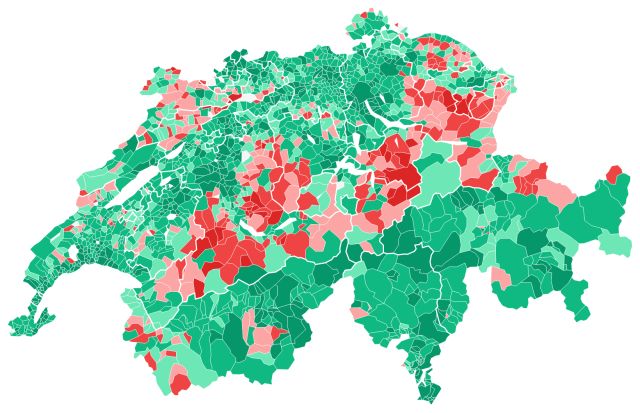
Though the annual meeting early this year was cancelled, as was a planned event in Singapore, the World Economic Forum web site shows the date for its next meeting to be between 17-22 January in 2022, only a few weeks away. The theme is to be “Working Together, Restoring Trust”, which at least tacitly acknowledges a loss of trust. The quickest way to end the loss of trust of the thinking and critical people toward their governments would be to arrest and charge Schwab and his collaborators at the upcoming Davos meeting under criminal charges that would lead to prosecutions. This would be an easy operation since there are only two access roads to the town, from the north and south, when the Flüela Pass, which connects to the Engadin Valley, is closed for the winter. Last Sunday Swiss citizens held a referendum on the issue of a tightened Covid policy proposal, including required documentation, which a majority of voters endorsed. Based on the election results, a majority of voters in many rural regions were opposed. People who join the police forces, which would execute a mass arrest order, tend to come from these more conservative regions, especially in the eastern and central parts of the country.
More likely than such a mass arrest would be for an international tribunal to be held, to collect evidence, in a similar manner that the Corona Investigative Committee has been engaging in fact-finding sessions for over a year. As more people understand the direct link between ongoing totalitarian offensives by numerous governments and the influence that Schwab and his associates have over these totalitarian public officials, it will become increasingly difficult for the remaining people of good conscience who are in a position to act, to do a favor for humanity and help end this new war.
To summarize, everybody concerned about the future of humanity can play at least a minor role in spreading the message of resistance to increase public awareness about what is unfolding and what ought to be done in response.
Bavaria Inches Closer to a Vaccine Mandate for Public Sector Employees

eugyppius | December 2, 2021
This one cuts fairly close to home for me.
Employees of the Free State of Bavaria who work in hospitals, universities and related areas have now been asked to submit proof of vaccination. Those who refuse will be required to present the results of two self-financed PCR tests every week, or face termination. The PCR tests of course are expensive and an enormous hassle, and the requirement has nothing to do with preventing infection. All state offices are also subject to so-called 3G rules; unvaccinated employees who aren’t telecommuting already have to submit negative antigen tests every day.
In response to this absurd legal harassment, an employee of the Institute of Pathology of the LMU Faculty of Medicine, here in Munich, released a brief internet video pointing out the boundless absurdity of the new rules:
In less than five minutes, she catalogued all the obvious absurdities we have confronted for months: Corona deaths are a small portion of overall mortality right now; problems with hospital capacity arise from staffing shortages, not Corona; the new rules, which harass unvaccinated healthcare personnel with de facto weekly fines of around 150 Euros, will only make these staffing shortages worse.
After her video had racked up thousands of views, Ludwig Maximilians-Universität, her employer, released this astounding statement:
LMU was surprised today to learn of an online video posted by an employee of the Institute of Pathology at the Faculty of Medicine. LMU distances itself in the strongest possible terms from the video contents, and point out that filming or posting video on LMU premises for private purposes and without permission is forbidden. The employee in question has already been banned from the premises; she has also been released from official duties with immediate effect. A termination without notice is also in process. Today’s circumstances require everyone’s prudence and consideration to help the sick as far as possible and to support overburdened healthcare staff. Disseminating videos such as this is surely no help in this regard.
Social media is full of videos taken “on LMU premises for private purposes”; no few of them are histrionic hospital staff hyperventilating about what a crisis Corona is. All that’s fine, but a brief video taken in an empty mortuary is grounds for immediate termination and banning from the university.
31,014 Deaths 2,890,600 Injuries Following COVID Shots in European Database of Adverse Reactions
Young, Previously Healthy People Continue to Die
By Brian Shilhavy | Health Impact News | November 28, 2021
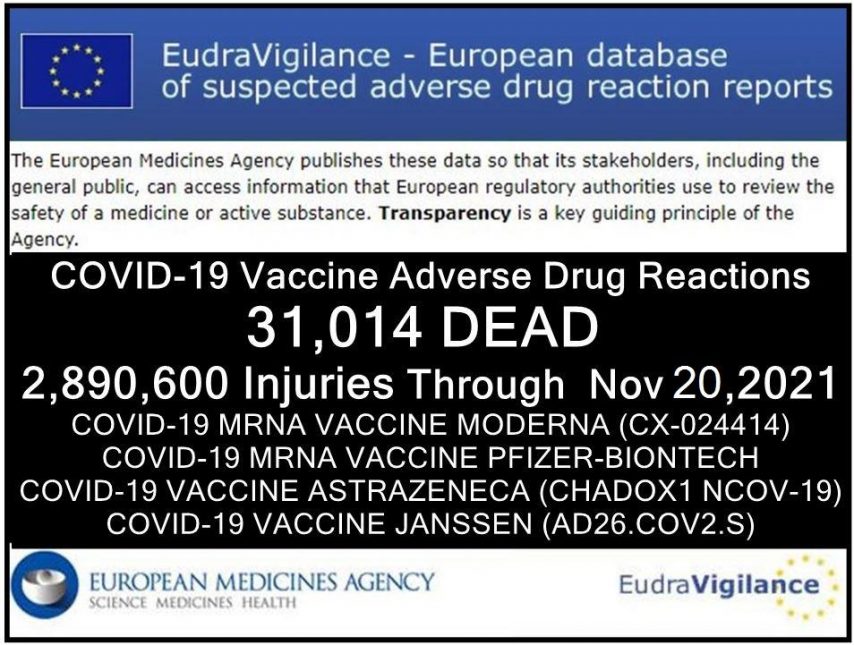
The European Union database of suspected drug reaction reports is EudraVigilance, and they are now reporting 31,014 fatalities, and 2,890,600 injuries, following COVID-19 injections.
A Health Impact News subscriber from Europe reminded us that this database maintained at EudraVigilance is only for countries in Europe who are part of the European Union (EU), which comprises 27 countries.
The total number of countries in Europe is much higher, almost twice as many, numbering around 50. (There are some differences of opinion as to which countries are technically part of Europe.)
So as high as these numbers are, they do NOT reflect all of Europe. The actual number in Europe who are reported dead or injured following COVID-19 shots would be much higher than what we are reporting here.
The EudraVigilance database reports that through November 20, 2021 there are 31,014 deaths and 2,890,600 injuries reported following injections of four experimental COVID-19 shots:
- COVID-19 MRNA VACCINE MODERNA (CX-024414)
- COVID-19 MRNA VACCINE PFIZER-BIONTECH
- COVID-19 VACCINE ASTRAZENECA (CHADOX1 NCOV-19)
- COVID-19 VACCINE JANSSEN (AD26.COV2.S)
From the total of injuries recorded, almost half of them (1,355,192) are serious injuries.
“Seriousness provides information on the suspected undesirable effect; it can be classified as ‘serious’ if it corresponds to a medical occurrence that results in death, is life-threatening, requires inpatient hospitalisation, results in another medically important condition, or prolongation of existing hospitalisation, results in persistent or significant disability or incapacity, or is a congenital anomaly/birth defect.”
A Health Impact News subscriber in Europe ran the reports for each of the four COVID-19 shots we are including here. It is a lot of work to tabulate each reaction with injuries and fatalities, since there is no place on the EudraVigilance system we have found that tabulates all the results.
Since we have started publishing this, others from Europe have also calculated the numbers and confirmed the totals.*
Here is the summary data through November 20, 2021.
Total reactions for the mRNA vaccine Tozinameran (code BNT162b2, Comirnaty) from BioNTech/ Pfizer: 14,526 deaths and 1,323,370 injuries to 20/11/2021
- 35,826 Blood and lymphatic system disorders incl. 207 deaths
- 40,230 Cardiac disorders incl. 2,128 deaths
- 376 Congenital, familial and genetic disorders incl. 33 deaths
- 17,995 Ear and labyrinth disorders incl. 10 deaths
- 1,217 Endocrine disorders incl. 5 deaths
- 20,443 Eye disorders incl. 32 deaths
- 110,658 Gastrointestinal disorders incl. 585 deaths
- 337,450 General disorders and administration site conditions incl. 4,118 deaths
- 1,502 Hepatobiliary disorders incl. 75 deaths
- 14,528 Immune system disorders incl. 76 deaths
- 53,108 Infections and infestations incl. 1561 deaths
- 20,222 Injury, poisoning and procedural complications incl. 240 deaths
- 33,067 Investigations incl. 451 deaths
- 9,103 Metabolism and nutrition disorders incl. 249 deaths
- 164,885 Musculoskeletal and connective tissue disorders incl. 179 deaths
- 1,163 Neoplasms benign, malignant and unspecified (incl cysts and polyps) incl. 114 deaths
- 225,032 Nervous system disorders incl. 1,556 deaths
- 1,851 Pregnancy, puerperium and perinatal conditions incl. 55 deaths
- 206 Product issues incl. 2 deaths
- 24,225 Psychiatric disorders incl. 174 deaths
- 4,667 Renal and urinary disorders incl. 224 deaths
- 43,949 Reproductive system and breast disorders incl. 5 deaths
- 57,013 Respiratory, thoracic and mediastinal disorders incl. 1,617 deaths
- 62,414 Skin and subcutaneous tissue disorders incl. 125 deaths
- 2,765 Social circumstances incl. 19 deaths
- 4,797 Surgical and medical procedures incl. 60 deaths
- 34,678 Vascular disorders incl. 626 deaths
Total reactions for the mRNA vaccine mRNA-1273 (CX-024414) from Moderna: 8,518 deaths and 390,163 injuries to 20/11/2021
- 8,227 Blood and lymphatic system disorders incl. 94 deaths
- 12,657 Cardiac disorders incl. 915 deaths
- 156 Congenital, familial and genetic disorders incl. 6 deaths
- 4,698 Ear and labyrinth disorders incl. 2 deaths
- 348 Endocrine disorders incl. 3 deaths
- 5,731 Eye disorders incl. 29 deaths
- 32,091 Gastrointestinal disorders incl. 326 deaths
- 104,720 General disorders and administration site conditions incl. 2,986 deaths
- 644 Hepatobiliary disorders incl. 40 deaths
- 3,820 Immune system disorders incl. 16 deaths
- 14,668 Infections and infestations incl. 782 deaths
- 8,158 Injury, poisoning and procedural complications incl. 162 deaths
- 7,117 Investigations incl. 143 deaths
- 3,703 Metabolism and nutrition disorders incl. 206 deaths
- 47,355 Musculoskeletal and connective tissue disorders incl. 174 deaths
- 531 Neoplasms benign, malignant and unspecified (incl cysts and polyps) incl. 67 deaths
- 66,320 Nervous system disorders incl. 823 deaths
- 722 Pregnancy, puerperium and perinatal conditions incl. 6 deaths
- 78 Product issues incl. 2 deaths
- 7,100 Psychiatric disorders incl. 142 deaths
- 2,277 Renal and urinary disorders incl. 164 deaths
- 8,061 Reproductive system and breast disorders incl. 7 deaths
- 17,235 Respiratory, thoracic and mediastinal disorders incl. 914 deaths
- 20,963 Skin and subcutaneous tissue disorders incl. 76 deaths
- 1,769 Social circumstances incl. 36 deaths
- 1,374 Surgical and medical procedures incl. 78 deaths
- 9,640 Vascular disorders incl. 319 deaths
Total reactions for the vaccine AZD1222/VAXZEVRIA (CHADOX1 NCOV-19) from Oxford/AstraZeneca: 6,145 deaths and 1,075,335 injuries to 20/11/2021
- 13,124 Blood and lymphatic system disorders incl. 248 deaths
- 19,128 Cardiac disorders incl. 696 deaths
- 195 Congenital familial and genetic disorders incl. 8 deaths
- 12,669 Ear and labyrinth disorders incl. 3 deaths
- 597 Endocrine disorders incl. 4 deaths
- 18,919 Eye disorders incl. 29 deaths
- 102,402 Gastrointestinal disorders incl. 312 deaths
- 283,288 General disorders and administration site conditions incl. 1,469 deaths
- 950 Hepatobiliary disorders incl. 60 deaths
- 4,834 Immune system disorders incl. 29 deaths
- 32,441 Infections and infestations incl. 413 deaths
- 12,358 Injury poisoning and procedural complications incl. 177 deaths
- 23,611 Investigations incl. 150 deaths
- 12,369 Metabolism and nutrition disorders incl. 91 deaths
- 159,668 Musculoskeletal and connective tissue disorders incl. 94 deaths
- 624 Neoplasms benign malignant and unspecified (incl cysts and polyps) incl. 22 deaths
- 221,536 Nervous system disorders incl. 958 deaths
- 521 Pregnancy puerperium and perinatal conditions incl. 12 deaths
- 188 Product issues incl. 1 death
- 19,933 Psychiatric disorders incl. 58 deaths
- 4,031 Renal and urinary disorders incl. 58 deaths
- 15,124 Reproductive system and breast disorders incl. 2 deaths
- 37,980 Respiratory thoracic and mediastinal disorders incl. 735 deaths
- 49,247 Skin and subcutaneous tissue disorders incl. 48 deaths
- 1,498 Social circumstances incl. 6 deaths
- 1,404 Surgical and medical procedures incl. 25 deaths
- 26,696 Vascular disorders incl. 437 deaths
Total reactions for the COVID-19 vaccine JANSSEN (AD26.COV2.S) from Johnson & Johnson: 1,825 deaths and 101,732 injuries to 20/11/2021
- 986 Blood and lymphatic system disorders incl. 40 deaths
- 1,837 Cardiac disorders incl. 155 deaths
- 35 Congenital, familial and genetic disorders
- 1,033 Ear and labyrinth disorders incl. 2 deaths
- 69 Endocrine disorders incl. 1 death
- 1,351 Eye disorders incl. 7 deaths
- 8,500 Gastrointestinal disorders incl. 75 deaths
- 26,871 General disorders and administration site conditions incl. 488 deaths
- 121 Hepatobiliary disorders incl. 11 deaths
- 445 Immune system disorders incl. 9 deaths
- 4,315 Infections and infestations incl. 143 deaths
- 920 Injury, poisoning and procedural complications incl. 18 deaths
- 4,766 Investigations incl. 103 deaths
- 625 Metabolism and nutrition disorders incl. 45 deaths
- 14,897 Musculoskeletal and connective tissue disorders incl. 43 deaths
- 54 Neoplasms benign, malignant and unspecified (incl cysts and polyps) incl. 3 deaths
- 20,097 Nervous system disorders incl. 197 deaths
- 41 Pregnancy, puerperium and perinatal conditions incl. 1 death
- 26 Product issues
- 1,407 Psychiatric disorders incl. 16 deaths
- 417 Renal and urinary disorders incl. 22 deaths
- 2,059 Reproductive system and breast disorders incl. 6 deaths
- 3,617 Respiratory, thoracic and mediastinal disorders incl. 234 deaths
- 3,094 Skin and subcutaneous tissue disorders incl. 8 deaths
- 319 Social circumstances incl. 4 deaths
- 690 Surgical and medical procedures incl. 54 deaths
- 3,140 Vascular disorders incl. 140 deaths
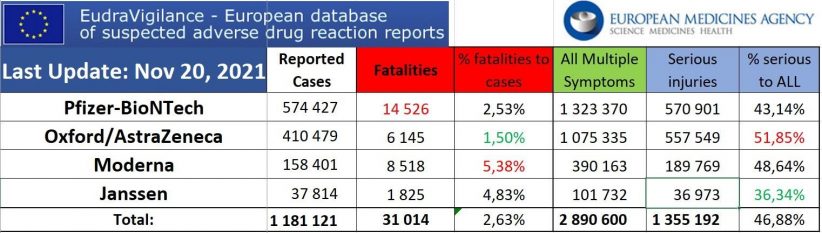
*These totals are estimates based on reports submitted to EudraVigilance. Totals may be much higher based on percentage of adverse reactions that are reported. Some of these reports may also be reported to the individual country’s adverse reaction databases, such as the U.S. VAERS database and the UK Yellow Card system. The fatalities are grouped by symptoms, and some fatalities may have resulted from multiple symptoms.
Featured Video
Death Spikes & Rising Cancer In Our Youth Explained
or go to
Aletho News Archives – Video-Images
From the Archives
Politicians lie
By Mazin Qumsiyeh | Popular Resistance | August 18, 2013
There is no way to say this truth nicely: Politicians lie. That includes Japanese, American, Egyptian, Israeli, and Palestinian politicians! Is there something more common sense than that? Yet, so many citizens around the world believe their own politicians or wistfully acknowledge lies but think it is part of the job needed to run things. They believe even when politicians contradict themselves blatantly. This phenomenon is rather remarkable. It is a dissonance and disconnect from reality that many seem oblivious to. It is very dangerous because it can lead to accepting rationales for going to war. These can be deadly wars that lead to millions of lives lost as happened in what was called World War 1 and WW2. Even when incredible and declassified evidence abound, politicians continue to lie and old mythologies refuse to die. Here are just a few of the countless lies told to us over the past few decades… continue
Blog Roll
 Aletho News
- Iran flights continue despite US aviation sanctions
- Global Tipping Points Lead the World Into a State of Entropy
- The day-after at the White House: USA and Xi Jinping
- The Geopolitical Balance in the Red Sea: The UAE Being Displaced by New Players
- Iraqi resistance group vows to stage airport sit-ins over Iran aerial blockade
- Turkish parliament to review Saudi-Pakistan defense pact next month
- DEATH SPIKES & RISING CANCER IN OUR YOUTH EXPLAINED
- Iran offers Trump deal before US election
- Merz regime wants ‘secret police’ – opposition
- Israeli settlers terrorize West Bank Palestinians with state-provided drones: Report
- If Americans Knew
- Deconstructing Netanyahu’s pants-on-fire UN rant – Daily Update
- Trump betrayed voters with his campaign lies and prioritized a foreign country once he took office
- Netanyahu calls Israel’s war in Gaza ‘opposite of genocide’ in UN speech to near-empty hall
- Settler Kidnappings: Torture, Sexual Abuse and Terrorisation of Palestinian Abductees as Israel Deepens Annexation of West Bank
- Gaza winter nears as 162,000 tents become unusable, raising fears of humanitarian crisis
- Netanyahu says, “It’s the opposite of genocide”; UN says Gaza economy is world’s ‘most severe crisis on record’ – Daily Update
- Israel’s US-Backed Assault on Gaza Has Created the ‘World’s Most Severe Economic Crisis on Record’: UN
- ‘Protecting U.S. Citizens’… From Israel
- ‘This is where I live now, the back of a truck’: a day in the life of a grandmother in Gaza
- In UN Speech, Iran’s President Displays Pictures of Children Killed by US, Brings Attention to Israel’s Nuclear Arsenal
- No Tricks Zone
- New Study: Earth And Venus Surface Warmth Largely Explained By Convection And Lapse Rate, Not CO2 Or Radiation
- 2025 Nature Paper Claiming Worsening Global Drought Gets RETRACTED …Heavily Flawed
- New Study: ‘Global Drought Shows No Detectable Recent Acceleration Under Climate Warming’
- Economic Masterminds: German Socialists Suggest Taxing Productivity Gains Stemming From Using AI
- The South China Sea Has Not Been Cooperating With The Climate Change Narrative
- Energy Crisis: Germany Enters Heating Season With Historically Low Gas Reserve Fill Levels
- New Study: The Antarctic Ice Sheet Gained Mass From 2020-2024 Due To Staggering Snow And Ice Accumulation
- Study: Ocean Heating Rates From Thousands Of Years Ago ‘Dwarf’ Modern Ocean Heating Rates
- Climate Extremists Target, Attack Large-Scale Power Grid Infrastructure In Germany!
- New Study: Antarctic Ice Melt Has Contributed Less Than 1 Centimeter To Sea Level Rise In The Last 30 Years

