US, Israel to open second front in Lebanon
BY M. K. BHADRAKUMAR | INDIAN PUNCHLINE | NOVEMBER 6, 2023
The announcement late Sunday night by the US Central Command [CENTCOM] headquartered in Doha about the arrival of an Ohio-class American nuclear submarine in its “area of responsibility” presages a significant escalation of the situation around the Palestine-Israel conflict.
It is very rare that the use of these submarines is publicised. CENTCOM provided no additional details but it posted an image that showed an Ohio-class submarine in Egypt’s Suez Canal. Interestingly, CENTCOM also separately shared an image of a nuclear-capable B-1 bomber operating in the Middle East.
Taken together, these US deployments, coming on top of the formidable presence of two aircraft carriers and warships hundreds of advanced jet fighters, are with an eye on “the other side of the equation,” as Secretary of State Antony Blinken quaintly described Hamas, Hezbullah, and Iran during his latest visit to Tel Aviv on Friday.
In a related development, perhaps, the CIA director, William Burns arrived in Israel on Sunday for urgent consultations. The New York Times reported that the US is “looking to expand its intelligence sharing with Israel.”
Arguably, the most charitable explanation for the deployment of a US nuclear submarine, which form part of the Pentagon’s “nuclear triad”, near the war zone is that the Biden Administration is preparing for an Israeli escalation into Lebanon to draw out Hezbollah, which may in turn trigger an Iranian reaction.
In his speech on Friday, Hezbollah chief Hassan Nasrullah seemed to anticipate precisely such a turn of events when he warned the US explicitly of consequences that couldn’t be any different from the catastrophic American involvement in Lebanon’s civil war in the early 1980s. Ironically, this is also the 40th anniversary year of the suicide bombing of the barracks housing US forces in Beirut International Airport in October 1983 in which 220 Marines, 18 sailors and three soldiers were killed forcing a US withdrawal from Lebanon.
Clearly, the locus of the US strategy in the present Middle situation may be shifting from diplomacy, which has lost traction. Blinken’s desperate attempts to address the mounting international criticism of Israel’s horrific war crimes by diverting attention to a “humanitarian pause” in the fighting has been unceremoniously shot down by Netanyahu.
The point is, after bombarding Gaza and its people with artillery and bombs, the Israeli army moved in on Friday. So far, it has reportedly advanced to the outskirts of Gaza City but not entered the Hamas stronghold. Fierce urban fighting is expected when it does.
Equally, the Biden administration’s clumsy attempt to promote a vague outline for a post-war Gaza that might include a combination of a revitalised Palestinian Authority, a peacekeeping force, etc. has been met with a distinct lack of enthusiasm at Blinken’s meeting in the weekend in Amman with the Arab foreign ministers – from Jordan, Egypt, Saudi Arabia, Qatar, and the United Arab Emirates – who instead demanded an immediate ceasefire, while Blinken said the US would not push for one.
Blinken travelled to Ramallah from Amman where the head of the Palestine Authority Mahmoud Abbas apparently gave him short shrift saying that the PA would only be ready to shoulder full responsibility for the Gaza Strip in the framework of a “comprehensive political solution” that would include the West Bank, East Jerusalem and Gaza — and, furthermore, that security and peace can only be achieved by ending the occupation of the territories of the “State of Palestine,” and by recognising East Jerusalem as its capital. The meeting lasted for less than an hour and ended without public statements.
Meanwhile, China and the UAE (by the way, Israel’s Abraham Accords partner) have since called for a closed-door meeting of the UN Security Council in another attempt to seek an immediate ceasefire, which the Biden Administration will certainly oppose. Suffice to say, the Biden Administration feels boxed in and the only way out is for something to give way through the exercise of coercive means.
The US is watching with frustration as new regional equations are appearing among Muslim nations. The foreign ministers of Iran and Saudi Arabia held another phone conversation today. The OIC later announced that an extraordinary summit will be held in Riyadh on November 12 at the request of the current chairman, Saudi Arabia, to discuss Israel’s attacks on the Palestinian people.
As the death toll in Gaza crosses 10,000, feelings are indeed running high in the Muslim world. Iran’s Supreme Leader Ali Khamenei said today that “all the evidence and indications show the direct involvement of the Americans in running the war” in Gaza. Khamenei added that as the war goes on, the reasons behind the US’s direct role would become more explicit.
The Fars News Agency, which is close to the Islamic Revolutionary Guard Corps, also disclosed that Khamenei held a “recent meeting in Tehran” with the Head of Hamas political bureau Ismail Haniyeh where he told the latter that Tehran’s support for the resistance groups is its “permanent policy.”
Evidently, Tehran no longer sees a problem in acknowledging its dealings with the resistance groups. This is a paradigm shift indicative of the shift in the power dynamic, which the US and Israel seem to have decided to counter through use of force where diplomacy failed to make headway to isolate Iran.
The Chief of the Israeli General Staff, Herzi Halevi, said on Sunday during a meeting in the Northern Command, “We are ready to strike in the north at any moment. We understand that it can happen… We have a clear goal of restoring a significantly better security situation at the borders [with Lebanon], not only in the Gaza Strip.”
No power on earth can stop Israel in its tracks now. Its existence is inextricably linked to this war which will ensure abiding US commitment to its security as a key template of American global strategies for the foreseeable future. Therefore, Israel’s best chance of survival lies in expanding the scope of the war in Gaza into Lebanon — and possibly even into Syria — shoulder to shoulder with the Americans.
There is no question that the location of the US nuclear submarine to the east of Suez is an attempt to intimidate Iran from intervening, as Israel, with US backing, proceed to open a second front. The Israeli authorities have announced evacuation of people from settlements located in a zone up to five kms from the border with Lebanon.
A prolonged war of indeterminate timeline is set to begin in the Middle East. The Middle East that emerged after World War II is breaking loose and drifting away into the chronicles of history. As the call of the jihad begins, there is no knowing how the 80-year old American president will respond.
No, this won’t turn into a world war. It will be fought in the Middle East itself, but its outcome will decisively impact the making of a new world order.
Iran FM says Tehran received new message from Washington on Gaza
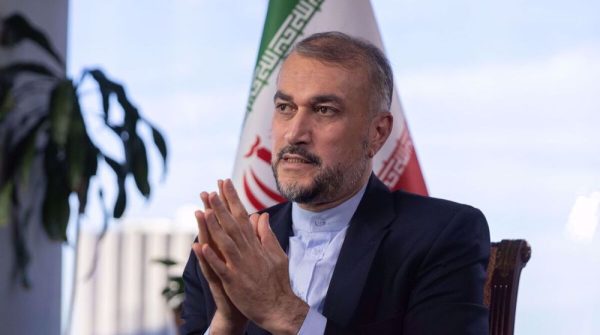
Iranian Foreign Minister Hossein Amir-Abdollahian
Press TV – November 6, 2023
Iranian Foreign Minister Hossein Amir-Abdollahian says Tehran has received a new message from Washington claiming that the US seeks a ceasefire in the Gaza Strip, but they continue to support Israel’s genocide in the Palestinian territory in practice.
The minister, who was speaking to reporters on the sidelines of a Monday meeting between Iranian and Iraqi heads of governments in Tehran, said, however, that the message did not correspond to what the US has done in practice in Gaza where it has supported the Israeli crimes against the civilians.
“The Americans … delivered a message to us in the past three days (claiming) that they are after ceasefire and have carried out efforts in this regard,” said Amir-Abdollahian, but “they, however, back mass killing and genocide” of people in Gaza.
“We hope that the US will soon change its policy and stop supporting the occupying party,” he said.
The US had sent similar messages to Iran, a country with influence over resistance groups in Palestine, since the Israeli aggression on Gaza started on October 7, according to statements by Amir-Abdollahian and other authorities.
Amir-Abdollahian also commented about reports suggesting that his US counterpart Antony Blinken had arrived in the Iraqi capital Baghdad earlier on Monday while wearing a bullet-proof vest out of fears that he could be targeted because of his support for the Israeli carnage in Gaza.
“This is the reality about the US role in the region,” said the diplomat.
Resistance groups in Iraq have launched attacks on US military bases in the Arab country in response to Washington’s offering of direct and open support for the Israeli attacks on Gaza.
Those groups and peers in other countries of the region have warned that such attacks on US interests could expand if Israel does not stop its brutal aggression against Gaza.
Gaza health authorities said on Monday that the number of people killed in 31 days of Israel attacks had exceeded 10,000 with children accounting for nearly half of the death toll.
Iran FM meets Turkish counterpart In Ankara to discuss Israeli war on Gaza
Press TV – November 1, 2023
Iranian Foreign Minister Hossein Amir-Abdollahian has met with his Turkish counterpart Hakan Fidan In Ankara to discuss efforts needed for an immediate ceasefire in the Gaza Strip, as the Israeli regime continues its acts of aggression against the besieged enclave.
The two foreign ministers held a meeting behind closed doors in the Turkish capital on Wednesday, to exchange views on finding a solution to secure a ceasefire in Gaza and an immediate end to the Israeli crimes in Gaza, as they discuss the latest developments in the region and some issues of mutual interest.
Amir-Abdollahian and Fidan will participate in a joint press conference after the meeting.
This is the second meeting between the foreign ministers of the two countries since the Israeli regime started its brutal war against the Palestinians living in Gaza.
Two weeks ago, Amir-Abdollahian and Fidan met on the sidelines of the extraordinary meeting of the Executive Committee of the Organization of Islamic Cooperation (OIC) in Jeddah.
In the meeting, the two sides discussed the current Palestinian developments, especially the disastrous situation in Gaza, and ways of ending the merciless killing of Palestinians by the Israeli regime.
Amir-Abdollahian arrived in Ankara early on Wednesday a day after he took a trip to the Qatari capital of Doha and held meetings with senior Qatari officials, including the Arab country’s Emir, to continue his diplomatic efforts to help find a solution to the crisis in Palestine.
The top Iranian diplomat is also scheduled to meet with President Recep Tayyip Erdogan during the daylong trip.
Tehran has already announced it is ready to use its relations with the Palestinian resistance movement Hamas to work out a ceasefire deal between the group and the Israelis, although Iran does not have any relations with the occupying regime.
Israel launched the war on Gaza on October 7 after Hamas waged the surprise Operation Al-Aqsa Storm against the occupying entity in response to the Israeli regime’s decades-long campaign of bloodletting and devastation against Palestinians.
The aggression has so far killed 8,610 Palestinians and left more than 23,000 wounded.
Iran’s FM says national referendum only viable political solution to Palestinian issue
Press TV – October 30, 2023
Iranian Foreign Minister Hossein Amir-Abdollahian says holding a referendum in Palestine can serve as the “fundamental and political” solution to the Palestinian issue.
In a phone conversation on Monday, Amir-Abdollahian and Vatican’s Secretary for Relations with States Paul Archbishop Richard Gallagher discussed Israel’s relentless attacks against the defenseless Palestinian people, which have been going on over the past 24 days, as well as ways to find a political solution to the critical situation.
“We believe that the Palestinian crisis should be resolved basically and a political solution to it is to hold a referendum with [the participation of] all the original inhabitants of Palestine, including the Christians, the Jews and the Muslims, in cooperation with the United Nations,” the top Iranian diplomat said.
Israel waged the bloody war on the Gaza Strip on October 7 after the Palestinian Hamas resistance movement launched the surprise Operation Al-Aqsa Storm against the occupying entity.
Since the start of the war, the Israeli regime has been committing war crimes in Gaza, killing at least 8,306 Palestinians, including 3,457 children, and injuring over 22,000 others.
Pointing to his October 22 letter to Gallagher on the deterioration of the humanitarian situation in Gaza, Amir-Abdollahian hailed the stance adopted by the Vatican official and Pope Francis.
In his letter, Amir-Abdollahian said the crimes committed by the Israeli regime, including bombardment of al-Mamdani Hospital and a historical church in the Gaza Strip, where women and children had sheltered, “reveal another facet of the Zionist regime’s savage and brutal nature.”
The Iranian foreign minister also warned against the consequences of a possible expansion of war.
Gallagher, for his part, stressed the importance of delivering humanitarian aid to the war-stricken people in Gaza and finding a political solution to the conflicts with Israel in a bid to prevent the expansion of war.
Iran opposes killing of civilians in every part of world
In another phone call with Maltese Minister for Foreign, Trade and European Affairs Ian Borg on Monday, Amir-Abdollahian said Iran opposes the killing of civilians, including women and children, in any part of the world.
“Unfortunately, there is no resemblance between the measures of the [Palestinian] liberation movement Hamas and constant attacks and war crimes perpetrated by the occupying regime of al-Quds (Israel),” he added.
The Maltese foreign minister, for his part, stressed the need to find an urgent political solution to the Palestinian issue in order to prevent the spread of war.
Iran vows to ignore US warnings on Israel
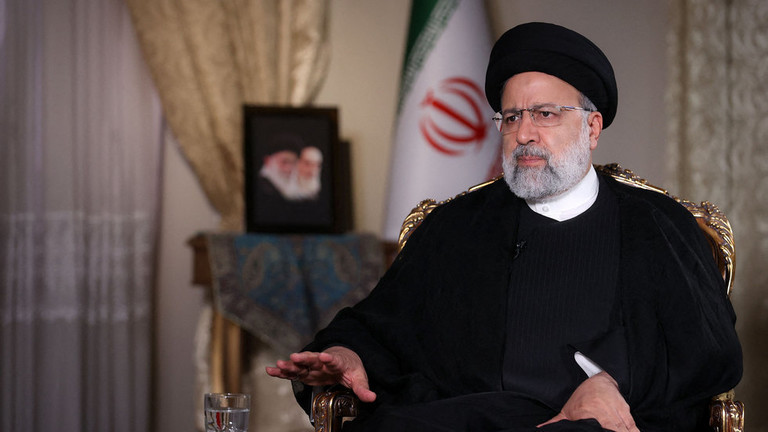
RT | October 29, 2023
Tehran will ignore US warnings not to intervene in the Hamas-Israel conflict, Iranian President Ebrahim Raisi has said. He also blasted the West over alleged reluctance to help end the hostilities.
In an interview with Qatar-based Al Jazeera on Saturday, Raisi said that Washington “is asking us not to move while providing broad support to the Zionist entity… This is an invalid demand.”
The Iranian president also claimed that Israel’s expanded ground operations in Gaza were a failure, describing it as “the second victory [for Palestinians] following [the launch of] Operation al-Aqsa Storm,” referring to the initial surprise attack by Hamas on Israel on October 7.
He also said that the United States had sent messages to the ‘Axis of Resistance’ – referring to an informal alliance of anti-Western and anti-Israel forces in the Middle East – and “received a practical and public answer on the ground.”
Raisi went on to accuse the US and some unnamed European countries of “obstructing the ceasefire in Gaza,” calling such policies “a crime.” He added that “the United States’ calculations in the region are completely wrong, and said it will not achieve its goals with a new Middle East,” stressing that Tehran’s support for the Palestinians “is not subject to compromise.”
After the Hamas attack on Israel earlier this month, US President Joe Biden pledged unconditional support for Israel while warning Iran to be “careful.” At the same time, he stopped short of backing a cessation of hostilities, with several US media outlets reporting that the State Department had distributed a memo to its diplomats advising them to avoid calling for “de-escalation” or a “ceasefire” in Gaza.
Publicly, Biden has said that ceasefire talks cannot begin until Hamas releases more than 200 hostages. Meanwhile, on Monday, EU foreign policy chief Josep Borrell called for a “humanitarian pause” in the conflict, saying he believed there was consensus among the bloc’s members on the matter.
Raisi’s comments come after Iranian Foreign Minister Hossein Amir-Abdollahian warned the US that “new fronts will be opened up” against Washington if it does not change its policies in the Middle East, including its unequivocal support for Israel.
Iran, Russia, Hamas officials discuss Gaza-Israel war in Moscow
The Cradle | October 27, 2023
Authorities from Iran, Russia, and the Palestinian resistance group Hamas met on 27 October at the Iranian Embassy in Moscow to discuss the Gaza-Israel war.
Iranian Deputy Foreign Minister Ali Bagheri Kani was invited by his Russian counterpart, Mikhail Bogdanov, to discuss a potential ceasefire between Palestine and Israel with Mousa Mohammed Abu Marzouk, a senior Hamas official.
“Inviting the movement’s leadership to visit Moscow is a message to the whole world that Russia considers Hamas a national liberation movement and not a terrorist movement,” Abu Marzouk told Russian media on Friday, noting that President Vladimir Putin “graciously did justice to the Hamas movement and the struggle of the Palestinian people and protected it politically in the Security Council and the UN.”
During Thursday’s meeting, Kani solidified Tehran’s “undoubtable” support for Palestine. “Tehran’s priorities in talks with foreign sides are declaring an immediate ceasefire, providing aid to people, and lifting the repressive blockade of Gaza,” the Iranian Embassy in Moscow quoted the Iranian official.
Iranian and Russian diplomats held separate talks and discussed the need for a ceasefire in the war between Palestine and Israel and the urgency of delivering humanitarian aid to Gaza.
A member of Hamas’ political bureau revealed to Sputnik that the Hamas delegation discussed the region’s future and how this differs from the US narrative.
Israeli authorities were not pleased with the meeting held in Moscow, saying that this was a show of Russia’s support for Hamas.
“Israel condemns the invitation of senior Hamas officials to Moscow, which is an act of support of terrorism and legitimizes the atrocities of Hamas terrorists,” Israeli Foreign Ministry spokesman Lior Haiat said on social media. “We call on the Russian government to expel the Hamas terrorists immediately.”
Russia has actively monitored the situation between Palestine and Israel, putting forward multiple draft resolutions in the UN Security Council to reach a ceasefire in Gaza. However, the US and its allies have struck down these resolutions.
Aces and Eights
By William Schryver – imetatronink – October 26, 2023
It now appears certain the United States is concentrating a huge naval force in the eastern Mediterranean, Red, and Arabian seas.
Several NATO nations are also sending warships to join this growing fleet.
Unknown numbers of US and NATO submarines are also certainly lurking in these regions.
There is already substantial US air power presence in the Persian Gulf region.
Israel is clearly working in concert with the US/NATO in whatever is brewing.
And make no mistake, something big IS brewing.
It is something I have written about for several years now, but consistently believed the Pentagon was not stupid enough to actually attempt.
As I view it, there can be only one primary target that would warrant such a large projection of military power as is underway: Iran and its allies in Iraq, Syria, and Lebanon.
And, as I have repeatedly argued over the years, I am convinced making war against Iran is a recipe for unforeseen disaster.
Iran wields much more military capability than is generally understood and appreciated both by western military analysts and the western populace.
There is no doubt the US/NATO/Israel, in tandem, can inflict severe damage against Iranian targets. But I am convinced they cannot do so without also incurring severe damage themselves.
Let’s also not forget there is a wildcard in this game: Russia and its strategically imperative bases in Syria.
As I see it, there are two realities at work here that will necessarily come into conflict:
1) The Pentagon is almost certain to regard the Russian bases in Syria as unacceptable threats to their objectives in the region. And therefore they will seek to neutralize them.
2) The Russians will fight to retain their Syrian bases.
Having now been compelled to abandon their designs to use the #MotherOfAllProxyArmies in Ukraine to weaken Russia, the Masters of Empire would no doubt love to “change the narrative” by defeating the Russians in Syria.
I believe Russian recognition of this likely move by the Americans is why Russian President Vladimir Putin — in China, no less — publicly announced 24/7 patrols of Kinzhal-armed Russian aircraft within range of the eastern half of the Mediterranean and much of the Red and Arabian seas.
The #EmpireAtAllCosts cult must have convinced themselves the Russians are bluffing, or that their capabilities are much weaker than claimed.
I am convinced both ideas are mistaken.
If the US itself is not merely bluffing, then this whole thing could get out of hand really fast.
Russia Receives Proposals From US on Arms Control
By Oleg Burunov – Sputnik – 25.10.2023
Speaking to reporters on Wednesday, Russian Deputy Foreign Minister Sergey Ryabkov touched upon a spate of pressing issues, including US arms control proposals, Moscow-Tehran cooperation and prisoner exchange.
Russia has received proposals on strategic stability and arms control from the United States that are currently being studied, Russian Deputy Foreign Minister Sergey Ryabkov told a news briefing earlier in the day.
According to him, there are no new elements in these proposals and Moscow will respond to Washington in due time.
Ryabkov added that the US is “proposing to discuss strategic stability and arms control on a systematic basis” and “in isolation from current events”. The Russian diplomat stressed that Moscow is “not willing to do that.”
“We believe that a return to the dialogue on strategic stability, including the issue of strategic offensive weapons and other issues, is simply impossible in its previous form without a change in the fundamentally hostile attitude of the United States towards Russia,” Ryabkov pointed out.
Russia-Iran Cooperation
Separately, Ryabkov touched on Iran-related issues, saying Russia intends to use the lifting of UN Security Council restrictions on the Islamic Republic’s missile program to develop cooperation.
“We will continue to develop our cooperation on a mutually beneficial basis in full accordance with international obligations and existing regimes in this area. Now, after the expiration of some restrictive provisions of [UN] Resolution 2231, there are fewer such restrictive regimes. Of course, we will take advantage of this, and this should not raise any questions for anyone,” he told reporters.
Moscow cooperates with Iran within a strictly legal framework, the Russian diplomat said, adding that the Kremlin foresees all politicized attempts to prevent this and will try to stop them.
Prisoner Exchange
In addition, Ryabkov commented on a recent statement by the US State Department by saying that the Russian Foreign Ministry had not received any additional proposals from the US on the exchange of prisoners through its channels.
Ryabkov was referring to Washington’s “serious proposal” to Moscow for the release of former US Marine Paul Whelan, who is serving a prison sentence in Russia for espionage.
“The issues of prisoner exchange, or rather, the issues of release of Russian citizens who, in the vast majority of cases, have received long sentences on unjust verdicts and false charges, are being discussed through the special services. The Russian Foreign Ministry has not recently received through its channels any additional ideas or proposals in this regard from the American side,” Ryabkov stated.
“If such proposals are received, they will be forwarded to those involved in the distribution of responsibilities on this issue so that the proposals can be considered. At the moment, there is no news or updates on this issue,” the Russian diplomat added.
Russian authorities charged Whelan with espionage and arrested him in December 2018, he was sentenced to 16 years in prison by a Moscow court. Whelan, who is a citizen of Canada, Ireland, and the United Kingdom, has maintained his innocence, claiming that he came to Russia for a friend’s wedding.
Israel must be internationally designated as terrorist entity: Iran FM spokesman
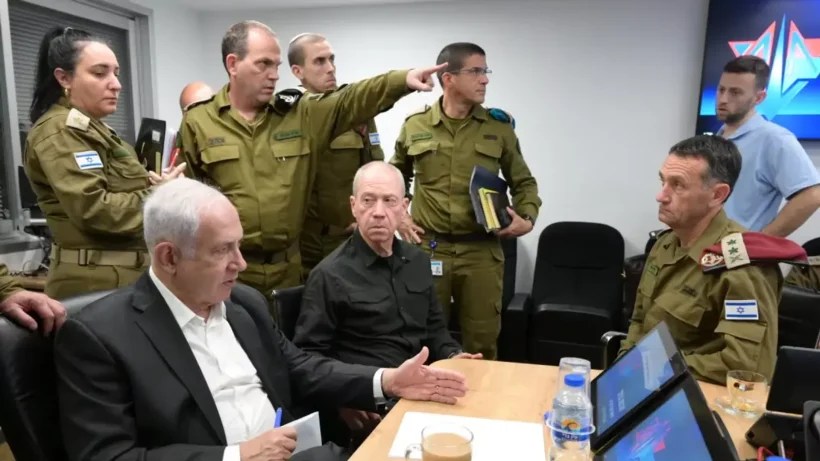
Press TV – October 21, 2023
The spokesman for the Iranian Foreign Ministry has censured the ongoing Israeli onslaught in the besieged Gaza Strip, stating that the international community must designate the occupying Tel Aviv regime as a “terrorist entity” and put its leaders on trial over war crimes against Palestinians.
In a post published on his X account on Saturday, Nasser Kan’ani denounced the appalling Israeli atrocities against Palestinians and threats of bombardment of hospitals in the Gaza Strip.
“Following the catastrophic attacks on the al-Ahli Arab Hospital, mosques, schools and the Greek Orthodox church in Gaza, the Zionist regime has threatened to pound other hospitals in Gaza!” he wrote.
“Such horrendous crimes mean that the Zionist regime has crossed the limits of insanity,” said Kan’ani, adding that they amount to a morally shameful scandal for the governments that have long provided unconditional support to the Zionist regime while preaching to others about human rights.
Kan’ani stated that occupation, aggression, war, misdeeds, assassination, genocide, infanticide, attacks on mosques, churches, hospitals, ambulances and rescue vehicles, schools, houses and residential complexes, refugee camps and journalists, etc. are all crimes collectively manifested in the contemporary world by a bogus and terrorist regime entity called “Israel” with a 75-year-long record of relentless atrocities.
“Nowadays, all these crimes are being committed simultaneously and on a daily basis in Gaza just in front of the international community,” he said.
“All people advocating freedom, justice and fairness across the world demand that the Israeli regime be designated internationally as a terrorist entity, and that Zionist leaders be prosecuted and punished as war criminals,” Kan’ani asserted.
The United Nations says about half of Palestinians in Gaza have been made homeless, still trapped inside the enclave, which is known to be one of the most densely populated places on earth.
Health officials in Gaza say the Israeli bombardment has killed at least 4,137 people since October 7, when fighters from the Hamas resistance movement launched an unprecedented large-scale attack against the occupying Israeli regime. Another 13,162 individuals have also been injured.
Ashraf al-Qudra, a spokesman for Gaza’s health ministry, confirmed that nearly 1,400 people, including 720 children, are still missing under the rubble.
Qudra also noted that 352 Palestinians were killed and 669 others wounded over the past 24 hours, including 16 victims who lost their lives in the aerial strike on the Greek Orthodox Church.
Seven general hospitals and 21 health centers are now out of service, he added, calling for international protection of hospitals and health facilities in Gaza in light of intensified Israeli aggression.
The Palestinian health official noted that 46 medical personnel were killed, and 85 others injured during Israeli airstrikes. At least 23 ambulances were destroyed as well.
Iran: UN Security Council sanctions on missile-related activities end
Press TV – October 18, 2023
The Iranian Foreign Ministry has announced that the Islamic Republic, as of October 18, will no longer be subject to any restriction with regard to its ballistic missile-related activities and transfers by the United Nations Security Council.
The Ministry said in a statement on Wednesday that the entire restrictions imposed on the Islamic Republic’s ballistic missile-related activities and its associated services and technology have “unconditionally” ended.
The termination came into force on October 18, eight years after the 2015 Iran nuclear deal with major world powers, officially known as the Joint Comprehensive Plan of Action (JCPOA).
“As of today, 18 October 2023, the last part of unjustly imposed restrictions by the United Nations Security Council on missile-related activities and its associated services and technology to/from Islamic Republic of Iran, including asset freeze and financial restrictions on certain Iranian individuals and entities, terminated unconditionally,” the statement said.
“According to the provisions of 2231 UNSC Resolution, termination of these restrictions, does not require any resolution, statement or any other action in the context of the UNSC and occurred automatically,” it added.
The Iranian Foreign Ministry also said cooperation in all military and defense areas would be carried out, without any restriction, based on the needs and discretion of the Islamic Republic of Iran, within the framework of bilateral contracts with other countries.
Pointing to the provisions of UNSCR 2231, the statement noted, “In accordance with paragraph 3 of Annex B, Iran is no longer ‘called upon’ by the Security Council ‘not to undertake any activity related to ballistic missiles.”
The Foreign Ministry said the Islamic Republic, by recalling the provisions of the UN charter, in particular article 25 as well as provisions of UNSCR 2231, emphasizes the commitments of all member states to effectuate the termination of the above-mentioned restrictions at the national level.
“Iran expects all States to modify and revise, in the case of existence, any relevant restriction or sanction, according to their domestic legal system,” it added.
The statement underlined that any measure, at the national or regional level, aiming at imposing sanctions or restrictions on defensive engagements and cooperation of the Islamic Republic of Iran, is in contradiction with the termination of restrictions of UNSCR 2231, and that Tehran reserves its right to take appropriate measures to secure its national interests.
“The defense doctrine of the Islamic Republic of Iran has always been on the basis of domestic capabilities and capacities, and deeply rooted in resistance and power of Iranian Nation. Unconventional arms and weapons of mass destruction has no place in the defense doctrine of the Islamic Republic of Iran,” the statement said.
“Moreover, the Islamic Republic of Iran will continue to take necessary measures to strengthen its defense capabilities in order to protect its sovereignty, independence, and territorial integrity against any aggression and to counter the menace of terrorism in the region,” it added.
Stressing that the Iranian military capabilities, including ballistic missiles, are exclusively for self-defense, the statement said, “The Islamic Republic of Iran continues to insist that all sanctions and restrictive measures introduced and applied against Iran, including those imposed under the pretext of its nuclear program, have been baseless, unjust and unlawful.”
Last month, the three European signatories to the JCPOA — the UK, Germany, and France — said they plan not to terminate their anti-Iran sanctions, including ballistic missile bans, arguing that Iran has been in non-compliance with the deal since 2019.
Iran halted some of its JCPOA commitments in 2019, a year after the US unilaterally walked out of the deal and after the EU failed to offer any compensation for the US withdrawal.
Iran said at the time the reduction of its commitments was in accordance with the deal, which allows parties to dishonor commitments should other parties do the same.
Featured Video

HE SAVED LIVES. NOW HE FACES PRISON.
or go to
Aletho News Archives – Video-Images
From the Archives
NATO Sanctions and the Coming Global Diesel Fuel Disaster
By F. William Engdahl – New Eastern Outlook – 11.04.2022
Amid the ongoing global inflation crisis, NATO heads of state and mainstream media repeat a mantra that high energy prices are a direct result of Putin’s actions in Ukraine since end of February. The reality is that it is the western sanctions that are responsible. Those sanctions including cutting SWIFT interbank access for key Russian banks and some of the most severe sanctions ever imposed, are hardly having an impact on the military actions in Ukraine. What many overlook is the fact that they are increasingly impacting the economies of the West, especially the EU and USA. A closer look at the state of the global supply of diesel fuel is alarming. But Western sanctions planners at the US Treasury and the EU know fully well what they are doing. And it bodes ill for the world economy.
While most of us rarely think about diesel fuel as anything other than a pollutant, in fact it is essential to the entire world economy in a way few energy sources are. The director general of Fuels Europe, part of the European Petroleum Refiners Association, stated recently, “… there is a clear link between diesel and GDP, because almost everything that goes into and out of a factory goes using diesel.” … continue
Blog Roll
 Aletho News
- Trita Parsi: Middle East Unraveling — Are We on the Path to World War?
- Iran FM meets with US envoy on UN meeting’s sidelines at American side’s insistence: Report
- Qatar PM calls for Gulf security framework with Iran, says war must be ‘wake-up call’
- China condemns US extortion of Iranian airlines, rejects Washington’s ‘illegal’ sanctions threats
- Italy to move military personnel from Taif base after missile strike
- Finland’s Stubb tells European leaders to calm down
- Defeating Russia on battlefield impossible – Fico
- Finland’s Gender Clinic Reversal
- Massachusetts Wants Mental Health Visits, Why Does Government Use ‘Health’ to Enter Our Homes & Families?
- US lawmaker admits American people footing bill for Trump’s failed aggression against Iran
- If Americans Knew
- Sanctions are collective punishment: immoral and self-defeating
- Phosphorus Munitions Fired by Israel Burn Groves, Orchards in Southern Lebanon
- Israel Carries Out New Ceasefire Violations Across Gaza
- AI – Emphasis on the ‘I’: Israel Is Funding AI Chatbot Propaganda
- Israel Blocking Hundreds of Wheelchairs for Injured Children From Entering Gaza
- Israel Is Expanding and Upgrading Compounds for Palestinian Militias in Gaza
- The Palestinian-American Residents of This West Bank Town Are Wondering: Where Is Trump?
- Gaza desperately needs tents, wheelchairs, fuel… and everything else (Israel blocks it all) – Daily Update
- Israeli Attacks in Gaza Kill at Least Seven Palestinians Over Three Days, including Woman and Child
- Trump’s militarization of Washington DC as he pursues Israel’s war against Iran
- No Tricks Zone
- New Study: Earth And Venus Surface Warmth Largely Explained By Convection And Lapse Rate, Not CO2 Or Radiation
- 2025 Nature Paper Claiming Worsening Global Drought Gets RETRACTED …Heavily Flawed
- New Study: ‘Global Drought Shows No Detectable Recent Acceleration Under Climate Warming’
- Economic Masterminds: German Socialists Suggest Taxing Productivity Gains Stemming From Using AI
- The South China Sea Has Not Been Cooperating With The Climate Change Narrative
- Energy Crisis: Germany Enters Heating Season With Historically Low Gas Reserve Fill Levels
- New Study: The Antarctic Ice Sheet Gained Mass From 2020-2024 Due To Staggering Snow And Ice Accumulation
- Study: Ocean Heating Rates From Thousands Of Years Ago ‘Dwarf’ Modern Ocean Heating Rates
- Climate Extremists Target, Attack Large-Scale Power Grid Infrastructure In Germany!
- New Study: Antarctic Ice Melt Has Contributed Less Than 1 Centimeter To Sea Level Rise In The Last 30 Years

