NATO membership will harm Swedish international image and cause economic losses
The country may see a decrease in its exports if confirmed its adhesion to NATO
By Lucas Leiroz | September 16, 2022
Having military strength is an important issue for any country in the world. However, some states benefit from the image of “peaceful countries” and “neutral nations”. This is precisely the Swedish case. Decades ago, Sweden began to invest in a security policy based on absolute neutrality. Its image before international partners is seen as that of a country that does not get involved in conflicts and cares abut peace. Therefore, changing this stance with a possible NATO membership could have a strong impact on Swedish foreign policy.
One of the direct and immediate impacts would be on the economic issue. The Scandinavian country may suffer losses in its exports due to the possible NATO membership. Some countries that currently import products from – or export to – Sweden would certainly consider it problematic after the accession to the alliance, which would lead them to seek other trading partners. The Swedes would begin to deal with a reality that is common to every country that invests in becoming a military power: facing boycotts and restrictions in negotiations with countries with different interests.
In this sense, Per Högselius, professor of history of technology at the Royal Institute of Technology (KTH), comments that the Swedish state is very sensitive to world changes and depends on a stable scenario to keep its economic and industrial structure solid and strong. One of the points that most benefits the country allowing it to remain free of problems concerning the international scenario is precisely its image of a small and unarmed state – which will surely change now.
“Swedish industry has often benefited from the fact that Sweden has enjoyed an image abroad as a small, harmless country with good relations with in principle all other countries (…) Sweden is extremely sensitive to events in the outside world, and much more so today than in the 1970s”, Högselius said.
In fact, many problems for the national industry may arise after the confirmation of Sweden’s entry into NATO. The country’s main exports are focused on machinery, transport equipment and chemical products. Interestingly, these three sectors account for the majority of Swedish exports to China. In a scenario with increasing tensions between China and NATO, with the alliance considering the Asian country one of its main threats, it is possible to predict that Beijing, despite being quite pragmatic, may try to seek other partners to obtain some of the products it currently imports from Sweden.
When we analyze the European scenario, many things can get worse too. In a future eventual situation of pacification of the conflict in Ukraine and normalization of relations with Russia, Sweden will be unable to reverse the path that is being taken now, if its entry into NATO is really consolidated. The Scandinavian country will be viewed with suspicion by the Russians, who will place limits on bilateral cooperation – which will take Sweden off an important trade route for iron, steel, fertilizers, among other essential products. In other words, decisions taken against Russia now could seriously affect business in the future.
Furthermore, Swedish diplomacy itself would be destabilized by joining NATO. This entry would be the immediate reversal of decades of work built by Swedish strategists to transform the country into a militarily neutral and economically developed pole. Foreign policy focused on neutrality and peace would be replaced by a program of military objectives unilaterally instituted by the alliance. In practice, all countries that currently see Sweden as a non-ideological and geopolitically harmless partner would act more cautiously during negotiations with the Swedes as they would also be negotiating with a new representative of the largest military alliance on the planet.
The most interesting thing is to note how the possible accession, in addition to such economic losses, will bring few real strategic benefits to Sweden. As established by the regulations, the country will commit to militarily assist any other member state of the alliance in the event of an attack. But in exchange for such a commitment, little is offered to the Swedes. In fact, Sweden will remain a militarily weak country, but with many more international enemies than it has today.
Unfortunately, however, the Western-supported anti-Russian paranoia seems to have overcome the strategic sense of Swedish decision-makers, in addition to scaring the local population. Currently, almost all parties are support joining NATO, as do 58% of the population. It is very likely that the process will be completed at some point in the near future and the country will take this extremely negative step for its own interests.
Considering that Sweden is already going through an internal political crisis, with PM Magdalena Andersson having announced that she will resign after the defeat of her supporters in the parliamentary elections, the near future will be tense for the country. The next Swedish government will deal with strong popular and parliamentary pressure, in addition to excessive obligations in NATO, while the country will continue to be militarily weak, but it will lose its neutrality status, bringing impacts in all areas of its foreign policy.
Lucas Leiroz is a researcher in Social Sciences at the Rural Federal University of Rio de Janeiro; geopolitical consultant.
Germany to send more weapons to Ukraine despite Russia’s objection
Press TV – September 15, 2022
Germany has vowed to deliver two more rocket launchers to Ukraine despite Russia’s warning against sending weapons to Kiev.
Since Moscow launched a special military operation in eastern Ukraine in February, western countries have provided an abundance of weapons to Kiev, with Germany being a main supplier of arms.
“We have decided to deliver two more MARS II multiple rocket launchers including 200 rockets to Ukraine,” Germany’s Defense Minister Christine Lambrecht said on Thursday.
Berlin also aims to send Kiev heavily armored military MRAP infantry mobility vehicles, Lambrecht said at a Bundeswehr (armed forces) conference.
“On top of this, we will send 50 Dingo armored personnel carriers to Ukraine.”
Furthermore, Berlin would send 40 Marder IFVs to Greece in exchange for Athens delivery of 40 of its Soviet-built BMP-1 IFVs to Ukraine.
Alongside Germany, the United States and other NATO members have been sending weapons to Ukraine.
Ursula von der Leyen, Germany’s former Defense Minister, who is currently the President of the European Commission, insisted later on Thursday that European capitals should also provide the Kiev forces with battle tanks so they can better fight the Russian forces aiming to demilitarize the Donbas region of Ukraine.
Meanwhile, Russia on Thursday warned that if the United States and its allies supply Ukraine with longer-range missiles, it will cross a “red line”.
Russian Foreign Ministry spokeswoman Maria Zakharova said Russia reserves the right to defend its territory and if Washington decides to supply longer-range missiles to Kiev, then it will be crossing a red line.
Russia began its operation on February 24 in Ukraine’ Donbas region which is made up of the Donetsk and Luhansk self-proclaimed republics.
Half of Americans think US will lose superpower status within ten years
Many think “American democracy” is turning into a dictatorship
By Drago Bosnic | September 15, 2022
For over three decades, the United States of America has been chest-thumping about being the world’s “sole remaining superpower.” Some in the US establishment have even claimed that the US has become the world’s first “hyperpower.” And indeed, in the immediate aftermath of the Soviet dismantlement, the US-led political West seemed unbeatable, unilaterally starting wars across the globe, all under various pretexts such as “humanitarianism” and the much-touted “War on Terror.” The US and NATO used both of these excuses to invade dozens of other countries, be it former Yugoslavia, Iraq, Afghanistan, Syria, Libya, etc. The US military seemed unstoppable and able to overcome any opponent, oftentimes by using air power only, with minimal ground engagements, at least until it got bogged down, which in itself was very useful for the ever-profit-hungry Military Industrial Complex.
Although many in the US establishment seemed convinced this will be a perpetual state of affairs, luckily for the world, the last decade proved the power of the belligerent thalassocracy is waning. While the Pentagon could count on hundreds of thousands of battle-ready soldiers during most of the 1990s and early 2000s, in recent years, there has been a significant drop in young Americans’ interest to go die or get maimed for life in one of America’s many pointless invasions and general aggression against the world. Even though the Pentagon found other ways to continue with its imperialist belligerence, primarily through an exponential increase in the use of unmanned combat systems around the globe, indiscriminately targeting civilians under the ever-convenient pretext of the “War on Terror,” most Americans have become aware of the fact that the US power (albeit still significant) is fading away faster than anyone would’ve expected just a decade ago.
A new poll conducted by the YouGov/Economist is the latest proof of this public opinion shift. The project polled Americans about the probability of various “dire political scenarios“ and found that 50% of the US population considers that America will lose its global superpower status within a decade. The poll also found that nearly half (47%) of Americans think that a “total economic collapse“ is inevitable.
“Among 15 potential future scenarios involving instability or political violence, the one that most Americans consider likely in the next decade is that the U.S. ceases to be a global superpower (50% say this), followed by a total collapse of the U.S. economy (47%). Each of the 15 dire scenarios is considered somewhat or very likely in the next decade by at least 20% of Americans. […] 37% of Americans say [a civil war] is at least somewhat likely to occur,“ the YouGov poll found.
The most surprising aspect of the poll must be the staggering nearly 40% of US citizens who consider civil war “at least somewhat likely.“ With a population of approximately 330 million people and being among the world’s most armed nations, such a prospect seems rather terrifying. However, it’s hardly surprising, especially given the sheer level of polarization of the US society, regardless if it’s based on race, religion, sex/gender, identity, ideology or any other parameter which the parties and various interest groups in the US are trying to exploit and use for political, financial and power gain.
“[…] After an end to the U.S.’s global-superpower status and economic collapse, the next scenario is that the U.S. will cease to be a democracy (39%). Democrats believe the U.S. will become a fascist dictatorship (31%), while Republicans think it will be a communist one (21%). Two-thirds of Republicans (65%) believe that total economic collapse is at least somewhat likely, compared to only 38% of Democrats. Around half of Republicans (48%) say it’s likely that the government will confiscate citizens’ firearms; only 17% of Democrats say this. Republicans are also more likely than Democrats to believe there will be a total breakdown of law and order (49% vs. 31%),“ according to the poll.
Although it’s expected to see a larger number of Republicans being more pessimistic about the country’s future under a Democrat president and government, the percentage of Democrats who aren’t particularly optimistic is quite telling. It’s more than clear that many DNC voters themselves are unsatisfied with the policies of the current US government.
“[…] In terms of the possibility of a civil war, Republicans are likelier to believe there will be one between members of each party (45% vs. 35%) or between people from red and blue states (36% vs. 30%). Democrats are slightly more likely to believe there will be a war between the poor and rich (37% vs. 25%) or between cities and rural areas (23% vs. 20%). Democrats and Republicans are equally likely (31%) to expect a civil war between racial groups,“ the poll concluded.
Although the opinions vary significantly based on the ideological/party background, the very fact so many Americans think the US is turning into a dictatorship and that a civil war is a likely scenario speaks volumes of the unflattering state of the much-touted “American democracy” which has often been used as yet another pretext for America’s war against the world.
Drago Bosnic independent geopolitical and military analyst.
Europe’s leaders continue to prioritise US interests over citizens’ wellbeing
European protestors demand an end to anti-Russia sanctions to alleviate cost-of-living crisis.
By Ahmed Adel | September 13, 2022
With winter approaching, Europeans are thinking about how their livelihoods will be affected. Rallies, strikes, demonstrations and protests are gaining momentum as the cost-of-living becomes unbearable. Although European media tried to hide this, even paid local propagandists cannot ignore the growing anger amongst Europeans.
Protests have occurred in Prague, Lisbon, London and many other cities, with people belonging to a wide variety of ideologies, including left and right-wing, and even libertarians and anarchists. Although labelled by the media as Putin’s stooges, name-calling is not having the desired effect, especially as people are united by the fear of winter woes, regardless of political affiliation.
Though attempts are being made to blame the continent’s declining economic situation on Russian President Vladimir Putin, Europeans are no longer accepting this excuse. Europeans are realising that anti-Russian sanctions hit them much harder than the Russians.
Forty percent of Austria’s population does not support anti-Russian sanctions, 51 percent of Italians are against them, and 80 percent of Germans believe that Berlin should not send weapons to Ukraine and instead seek a peaceful solution to the conflict in Ukraine. With these ideas, Europeans are rallying across the continent, with people not being deterred despite being accused of serving Putin.
However, it is the US ruining Europe, something which Moscow itself does not want as it would rather see an independent and prosperous continent. None-the-less, the European elite made an unconditional surrender of their countries and peoples to serve the interests of Washington instead.
It is evident that European protestors are completely devoid of common leadership and clear common goals and strategies. These protests are not an organised mass led by a charismatic leader, but small groups of people, and as already mentioned, from varying political ideologies.
Their potential success remains questionable though since citizens cannot change their leaders until the next election cycle. Germans, for example, were outraged when Foreign Minister Annalena Baerbock openly said that she will defend Ukraine’s interests, even against the will of voters. To make matters worse, she made the statement in English, an obvious signalling to Washington. Despite their outrage, Germans cannot remove Baerbock from her post and replace her with another politician until the next election.
Baerbock is hardly alone though when it comes to powerful politicians dismissing the opinion of the people, with only very few exceptions existing in Europe. Hungarian Prime Minister Viktor Orban is one of the few exceptions as he prioritises the welfare of his citizens rather than capitulation to American pressure.
In neighbouring Austria, state leaders are now putting pressure on Vienna and are asking federal authorities to negotiate with Moscow. State leaders have a negative attitude towards sanctions, with Upper Austria Governor Thomas Stelzer saying that “nothing is set in stone”. Austria’s approach to sanctions will have to be changed as “they will cause great damage to our lives”, added Stelzer.
Much will also depend on the results of the Italian elections. It appears that most Italians support Russia-friendly parties. There is a serious chance that at the end of September they will win the election and a coalition of Russia-friendly politicians will appear in the Italian Parliament. Giorgia Meloni of “Brothers of Italy” supported Putin’s re-election as president in 2018, Matteo Salvini of “League” became famous for being photographed in Moscow’s Red Square wearing a t-shirt with an image of Putin, and Silvio Berlusconi is introducing himself as the man to improve European-Russian ties.
More importantly, Europeans are beginning to understand that Washington is not a protector, but a dangerous and unscrupulous state that is prioritising its own interests, not Europe’s. Russia at war, whilst Europe cripples itself by arming Ukraine and imposing anti-Russia sanctions, is an ideal scenario for Washington. In this way, not only is one of Washington’s main adversaries bogged down in the conflict with Ukraine and NATO, but it deepens Europe’s status as nothing more than a submissive protectorate
With frustrations and worries reaching boiling point, and the harsh winter only some weeks away, European leaders need to quickly reach a compromise with Moscow to help alleviate the cost-of-living crisis or else citizens will face a suffering, at least at an economic level, not experienced since World War II.
Ahmed Adel, Cairo-based geopolitics and political economy researcher.
The Specter of Germany Is Rising
By Diana Johnstone | Consortium News | September 12, 2022
The European Union is girding for a long war against Russia that appears clearly contrary to European economic interests and social stability. A war that is apparently irrational – as many are – has deep emotional roots and claims ideological justification. Such wars are hard to end because they extend outside the range of rationality.
For decades after the Soviet Union entered Berlin and decisively defeated the Third Reich, Soviet leaders worried about the threat of “German revanchism.” Since World War II could be seen as German revenge for being deprived of victory in World War I, couldn’t aggressive German Drang nach Osten be revived, especially if it enjoyed Anglo-American support? There had always been a minority in U.S. and U.K. power circles that would have liked to complete Hitler’s war against the Soviet Union.
It was not the desire to spread communism, but the need for a buffer zone to stand in the way of such dangers that was the primary motivation for the ongoing Soviet political and military clampdown on the tier of countries from Poland to Bulgaria that the Red Army had wrested from Nazi occupation.
This concern waned considerably in the early 1980s as a young German generation took to the streets in peace demonstrations against the stationing of nuclear “Euromissiles” which could increase the risk of nuclear war on German soil. The movement created the image of a new peaceful Germany. I believe that Mikhail Gorbachev took this transformation seriously.
On June 15, 1989, Gorbachev came to Bonn, which was then the modest capital of a deceptively modest West Germany. Apparently delighted with the warm and friendly welcome, Gorbachev stopped to shake hands with people along the way in that peaceful university town that had been the scene of large peace demonstrations.
I was there and experienced his unusually warm, firm handshake and eager smile. I have no doubt that Gorbachev sincerely believed in a “common European home” where East and West Europe could live happily side by side united by some sort of democratic socialism.
Gorbachev died at age 91 two weeks ago, on Aug. 30. His dream of Russia and Germany living happily in their “common European home” had soon been fatally undermined by the Clinton administration’s go-ahead to eastward expansion of NATO. But the day before Gorbachev’s death, leading German politicians in Prague wiped out any hope of such a happy end by proclaiming their leadership of a Europe dedicated to combating the Russian enemy.
These were politicians from the very parties – the SPD (Social Democratic Party) and the Greens – that took the lead in the 1980s peace movement.
German Europe Must Expand Eastward
German Chancellor Olaf Scholz is a colorless SPD politician, but his Aug. 29 speech in Prague was inflammatory in its implications. Scholz called for an expanded, militarized European Union under German leadership. He claimed that the Russian operation in Ukraine raised the question of “where the dividing line will be in the future between this free Europe and a neo-imperial autocracy.” We cannot simply watch, he said, “as free countries are wiped off the map and disappear behind walls or iron curtains.”
(Note: the conflict in Ukraine is clearly the unfinished business of the collapse of the Soviet Union, aggravated by malicious outside provocation. As in the Cold War, Moscow’s defensive reactions are interpreted as harbingers of Russian invasion of Europe, and thus a pretext for arms buildups.)
To meet this imaginary threat, Germany will lead an expanded, militarized EU. First, Scholz told his European audience in the Czech capital, “I am committed to the enlargement of the European Union to include the states of the Western Balkans, Ukraine, Moldova and, in the long term, Georgia”. Worrying about Russia moving the dividing line West is a bit odd while planning to incorporate three former Soviet States, one of which (Georgia) is geographically and culturally very remote from Europe but on Russia’s doorstep.
2022 Fall Fund Drive
In the “Western Balkans”, Albania and four extremely weak statelets left from former Yugoslavia (North Macedonia, Montenegro, Bosnia-Herzegovina and widely unrecognized Kosovo) mainly produce emigrants and are far from EU economic and social standards. Kosovo and Bosnia are militarily occupied de facto NATO protectorates. Serbia, more solid than the others, shows no signs of renouncing its beneficial relations with Russia and China, and popular enthusiasm for “Europe” among Serbs has faded.
Adding these member states will achieve “a stronger, more sovereign, geopolitical European Union,” said Scholz. A “more geopolitical Germany” is more like it. As the EU grows eastward, Germany is “in the center” and will do everything to bring them all together. So, in addition to enlargement, Scholz calls for “a gradual shift to majority decisions in common foreign policy” to replace the unanimity required today.
What this means should be obvious to the French. Historically, the French have defended the consensus rule so as not to be dragged into a foreign policy they don’t want. French leaders have exalted the mythical “Franco-German couple” as guarantor of European harmony, mainly to keep German ambitions under control.
But Scholz says he doesn’t want “an EU of exclusive states or directorates,” which implies the final divorce of that “couple.” With an EU of 30 or 36 states, he notes, “fast and pragmatic action is needed.” And he can be sure that German influence on most of these poor, indebted and often corrupt new Member States will produce the needed majority.
France has always hoped for an EU security force separate from NATO in which the French military would play a leading role. But Germany has other ideas. “NATO remains the guarantor of our security,” said Scholz, rejoicing that President Biden is “a convinced trans-atlanticist.”
“Every improvement, every unification of European defense structures within the EU framework strengthens NATO,” Scholz said. “Together with other EU partners, Germany will therefore ensure that the EU’s planned rapid reaction force is operational in 2025 and will then also provide its core.
This requires a clear command structure. Germany will face up to this responsibility “when we lead the rapid reaction force in 2025,” Scholz said. It has already been decided that Germany will support Lithuania with a rapidly deployable brigade and NATO with further forces in a high state of readiness.
Serving to Lead … Where?
In short, Germany’s military buildup will give substance to Robert Habeck’s notorious statement in Washington last March that: “The stronger Germany serves, the greater its role.” The Green’s Habeck is Germany’s economics minister and the second most powerful figure in Germany’s current government.
The remark was well understood in Washington: by serving the U.S.-led Western empire, Germany is strengthening its role as European leader. Just as the U.S. arms, trains and occupies Germany, Germany will provide the same services for smaller EU states, notably to its east.
Since the start of the Russian operation in Ukraine, German politician Ursula von der Leyen has used her position as head of the EU Commission to impose ever more drastic sanctions on Russia, leading to the threat of a serious European energy crisis this winter. Her hostility to Russia seems boundless. In Kiev last April she called for rapid EU membership for Ukraine, notoriously the most corrupt country in Europe and far from meeting EU standards. She proclaimed that “Russia will descend into economic, financial and technological decay, while Ukraine is marching towards a European future.” For von der Leyen, Ukraine is “fighting our war.” All of this goes far beyond her authority to speak for the EU’s 27 Members, but nobody stops her.
Germany’s Green Party foreign minister Annalena Baerbock is every bit as intent on “ruining Russia.” Proponent of a “feminist foreign policy”, Baerbock expresses policy in personal terms. “If I give the promise to people in Ukraine, we stand with you as long as you need us,” she told the U.S. National Endowment for Democracy (NED)-sponsored Forum 2000 in Prague on Aug. 31, speaking in English. “Then I want to deliver no matter what my German voters think, but I want to deliver to the people of Ukraine.”
“People will go on the street and say, we cannot pay our energy prices, and I will say, ‘Yes I know so we will help you with social measures. […] We will stand with Ukraine and this means the sanctions will stay also til winter time even if it gets really tough for politicians.’”
Certainly, support for Ukraine is strong in Germany, but perhaps because of the looming energy shortage, a recent Forsa poll indicates that some 77 percent of Germans would favor diplomatic efforts to end the war – which should be the business of the foreign minister. But Baerbock shows no interest in diplomacy, only in “strategic failure” for Russia – however long it takes.
In the 1980s peace movement, a generation of Germans was distancing itself from that of their parents and vowed to overcome “enemy images” inherited from past wars. Curiously, Baerbock, born in 1980, has referred to her grandfather who fought in the Wehrmacht as somehow having contributed to European unity. Is this the generational pendulum?
The Little Revanchists
There is reason to surmise that current German Russophobia draws much of its legitimization from the Russophobia of former Nazi allies in smaller European countries.
While German anti-Russian revanchism may have taken a couple of generations to assert itself, there were a number of smaller, more obscure revanchisms that flourished at the end of the European war that were incorporated into United States Cold War operations. Those little revanchisms were not subjected to the denazification gestures or Holocaust guilt imposed on Germany. Rather, they were welcomed by the C.I.A., Radio Free Europe and Congressional committees for their fervent anticommunism. They were strengthened politically in the United States by anticommunist diasporas from Eastern Europe.
Of these, the Ukrainian diaspora was surely the largest, the most intensely political and the most influential, in both Canada and the American Middle West. Ukrainian fascists who had previously collaborated with Nazi invaders were the most numerous and active, leading the Bloc of Anti-Bolshevik Nations with links to German, British and U.S. Intelligence.
Eastern European Galicia, not to be confused with Spanish Galicia, has been back and forth part of Russia and Poland for centuries. After World War II it was divided between Poland and Ukraine. Ukrainian Galicia is the center of a virulent brand of Ukrainian nationalism, whose principal World War II hero was Stepan Bandera. This nationalism can properly be called “fascist” not simply because of superficial signs – its symbols, salutes or tatoos – but because it has always been fundamentally racist and violent.
Incited by Western powers, Poland, Lithuania and the Habsburg Empire, the key to Ukrainian nationalism was that it was Western, and thus superior. Since Ukrainians and Russians stem from the same population, pro-Western Ukrainian ultra-nationalism was built on imaginary myths of racial differences: Ukrainians were the true Western whatever-it-was, whereas Russians were mixed with “Mongols” and thus an inferior race. Banderist Ukrainian nationalists have openly called for elimination of Russians as such, as inferior beings.
So long as the Soviet Union existed, Ukrainian racial hatred of Russians had anticommunism as its cover, and Western intelligence agencies could support them on the “pure” ideological grounds of the fight against Bolshevism and Communism. But now that Russia is no longer ruled by communists, the mask has fallen, and the racist nature of Ukrainian ultra-nationalism is visible – for all who want to see it.
However, Western leaders and media are determined not to notice.
Ukraine is not just like any Western country. It is deeply and dramatically divided between Donbass in the East, Russian territories given to Ukraine by the Soviet Union, and the anti-Russian West, where Galicia is located. Russia’s defense of Donbass, wise or unwise, by no means indicates a Russian intention to invade other countries. This false alarm is the pretext for the remilitarization of Germany in alliance with the Anglo-Saxon powers against Russia.
The Yugoslav Prelude
This process began in the 1990s, with the breakup of Yugoslavia.
Yugoslavia was not a member of the Soviet bloc. Precisely for that reason, the country got loans from the West which in the 1970s led to a debt crisis in which the leaders of each of the six federated republics wanted to shove the debt onto others. This favored separatist tendencies in the relatively rich Slovenian and Croatian republics, tendencies enforced by ethnic chauvinism and encouragement from outside powers, especially Germany.
During World War II, German occupation had split the country apart. Serbia, allied to France and Britain in World War I, was subject to a punishing occupation. Idyllic Slovenia was absorbed into the Third Reich, while Germany supported an independent Croatia, ruled by the fascist Ustasha party, which included most of Bosnia, scene of the bloodiest internal fighting. When the war ended, many Croatian Ustasha emigrated to Germany, the United States and Canada, never giving up the hope of reviving secessionist Croatian nationalism.
In Washington in the 1990s, members of Congress got their impressions of Yugoslavia from a single expert: 35-year-old Croatian-American Mira Baratta, assistant to Sen. Bob Dole (Republican presidential candidate in 1996). Baratta’s grandfather had been an important Ustasha officer in Bosnia and her father was active in the Croatian diaspora in California. Baratta won over not only Dole but virtually the whole Congress to the Croatian version of Yugoslav conflicts blaming everything on the Serbs.
In Europe, Germans and Austrians, most notably Otto von Habsburg, heir to the defunct Austro-Hungarian Empire and member of the European Parliament from Bavaria, succeeded in portraying Serbs as the villains, thus achieving an effective revenge against their historic World War I enemy, Serbia. In the West, it became usual to identify Serbia as “Russia’s historic ally”, forgetting that in recent history Serbia’s closest allies were Britain and especially France.
In September 1991, a leading German Christian Democratic politician and constitutional lawyer explained why Germany should promote the breakup of Yugoslavia by recognizing the Slovenian and Croat secessionist Yugoslav republics. (Former CDU Minister of Defense Rupert Scholz at the 6th Fürstenfeldbrucker Symposium for the Leadership of the German Military and Business, held September 23 – 24, 1991.)
By ending the division of Germany, Rupert Scholz said, “We have, so to speak, overcome and mastered the most important consequences of the Second World War … but in other areas we are still dealing with the consequences of the First World War” – which, he noted “started in Serbia.”
“Yugoslavia, as a consequence of the First World War, is a very artificial construction, never compatible with the idea of self-determination,” Rupert Scholz said. He concluded: “In my opinion, Slovenia and Croatia must be immediately recognized internationally. (…) When this recognition has taken place, the Yugoslavian conflict will no longer be a domestic Yugoslav problem, where no international intervention can be permitted.”
And indeed, recognition was followed by massive Western intervention which continues to this day. By taking sides, Germany, the United States and NATO ultimately produced a disastrous result, a half dozen statelets, with many unsettled issues and heavily dependent on Western powers. Bosnia-Herzegovina is under military occupation as well as the dictates of a “High Representative” who happens to be German. It has lost about half its population to emigration.
Only Serbia shows signs of independence, refusing to join in Western sanctions on Russia, despite heavy pressure. For Washington strategists the breakup of Yugoslavia was an exercise in using ethnic divisions to break up larger entities, the USSR and then Russia.
Humanitarian Bombing
Western politicians and media persuaded the public that the 1999 NATO bombing of Serbia was a “humanitarian” war, generously waged to “protect the Kosovars” (after multiple assassinations by armed secessionists provoked Serbian authorities into the inevitable repression used as pretext for the bombing).
But the real point of the Kosovo war was that it transformed NATO from a defensive into an aggressive alliance, ready to wage war anywhere, without U.N. mandate, on whatever pretext it chose.
This lesson was clear to the Russians. After the Kosovo war, NATO could no longer credibly claim that it was a purely “defensive” alliance.
As soon as Serbian President Milosevic, to save his country’s infrastructure from NATO destruction, agreed to allow NATO troops to enter Kosovo, the U.S. unceremoniously grabbed a huge swath territory to build the its first big U.S. military base in the Balkans. NATO troops are still there.
Just as the United States rushed to build that base in Kosovo, it was clear what to expect of the U.S. after it succeeded in 2014 to install a government in Kiev eager to join NATO. This would be the opportunity for the U.S. to take over the Russian naval base in Crimea. Since it was known that the majority of the population in Crimea wanted to return to Russia (as it had from 1783 to 1954), Putin was able to forestall this threat by holding a popular referendum confirming its return.
East European Revanchism Captures the EU
The call by German Chancellor Scholz to enlarge the European Union by up to nine new members recalls the enlargements of 2004 and 2007 that brought in twelve new members, nine of them from the former Soviet bloc, including the three Baltic States once part of the Soviet Union.
That enlargement already shifted the balance eastward and enhanced German influence. In particular, the political elites of Poland and especially the three Baltic States, were heavily under the influence of the United States and Britain, where many had lived in exile during Soviet rule. They brought into EU institutions a new wave of fanatic anticommunism, not always distinguishable from Russophobia.
The European Parliament, obsessed with virtue signaling in regard to human rights, was particularly receptive to the zealous anti-totalitarianism of its new Eastern European members.
Revanchism and the Memory Weapon
As an aspect of anti-communist lustration, or purges, Eastern European States sponsored “Memory Institutes” devoted to denouncing the crimes of communism. Of course, such campaigns were used by far-right politicians to cast suspicion on the left in general. As explained by European scholar Zoltan Dujisin, “anticommunist memory entrepreneurs” at the head of these institutes succeeded in lifting their public information activities from the national, to the European Union level, using Western bans on Holocaust denial to complain, that while Nazi crimes had been condemned and punished at Nuremberg, communist crimes had not.
The tactic of the anti-communist entrepreneurs was to demand that references to the Holocaust be accompanied by denunciations of the Gulag. This campaign had to deal with a delicate contradiction since it tended to challenge the uniqueness of the Holocaust, a dogma essential to gaining financial and political support from West European memory institutes.
In 2008, the EP adopted a resolution establishing August 23 as “European Day of Remembrance for the victims of Stalinism and Nazism” – for the first time adopting what had been a fairly isolated far right equation. A 2009 EP resolution on “European Conscience and Totalitarianism” called for support of national institutes specializing in totalitarian history.
Dujisin explains, “Europe is now haunted by the specter of a new memory. The Holocaust’s singular standing as a negative founding formula of European integration, the culmination of long-standing efforts from prominent Western leaders … is increasingly challenged by a memory of communism, which disputes its uniqueness.”
East European memory institutes together formed the “Platform of European Memory and Conscience,” which between 2012 and 2016 organized a series of exhibits on “Totalitarianism in Europe: Fascism—Nazism—Communism,” traveling to museums, memorials, foundations, city halls, parliaments, cultural centers, and universities in 15 European countries, supposedly to “improve public awareness and education about the gravest crimes committed by the totalitarian dictatorships.”
Under this influence, the European Parliament on Sept. 19, 2019 adopted a resolution “on the importance of European Remembrance for the Future of Europe” that went far beyond equating political crimes by proclaiming a distinctly Polish interpretation of history as European Union policy. It goes so far as to proclaim that the Molotov-Ribbentrop pact is responsible for World War II – and thus Soviet Russia is as guilty of the war as Nazi Germany.
The resolution,
“Stresses that the Second World War, the most devastating war in Europe’s history, was started as an immediate result of the notorious Nazi-Soviet Treaty on Non-Aggression of 23 August 1939, also known as the Molotov-Ribbentrop Pact, and its secret protocols, whereby two totalitarian regimes that shared the goal of world conquest divided Europe into two zones of influence;”
It further:
“Recalls that the Nazi and communist regimes carried out mass murders, genocide and deportations and caused a loss of life and freedom in the 20th century on a scale unseen in human history, and recalls the horrific crime of the Holocaust perpetrated by the Nazi regime; condemns in the strongest terms the acts of aggression, crimes against humanity and mass human rights violations perpetrated by the Nazi, communist and other totalitarian regimes;”
This of course not only directly contradicts the Russian celebration of the “Great Patriotic War” to defeat the Nazi invasion, it also took issue with the recent efforts of Russian President Vladimir Putin to put the Molotov-Ribbentrop agreement in the context of prior refusals of Eastern European states, notably Poland, to ally with Moscow against Hitler.
But the EP resolution:
“Is deeply concerned about the efforts of the current Russian leadership to distort historical facts and whitewash crimes committed by the Soviet totalitarian regime and considers them a dangerous component of the information war waged against democratic Europe that aims to divide Europe, and therefore calls on the Commission to decisively counteract these efforts;”
Thus the importance of Memory for the future, turns out to be an ideological declaration of war against Russia based on interpretations of World War II, especially since the memory entrepreneurs implicitly suggest that the past crimes of communism deserve punishment – like the crimes of Nazism. It is not impossible that this line of thought arouses some tacit satisfaction among certain individuals in Germany.
When Western leaders speak of “economic war against Russia,” or “ruining Russia” by arming and supporting Ukraine, one wonders whether they are consciously preparing World War III, or trying to provide a new ending to World War II. Or will the two merge?
As it shapes up, with NATO openly trying to “overextend” and thus defeat Russia with a war of attrition in Ukraine, it is somewhat as if Britain and the United States, some 80 years later, switched sides and joined German-dominated Europe to wage war against Russia, alongside the heirs to Eastern European anticommunism, some of whom were allied to Nazi Germany.
History may help understand events, but the cult of memory easily becomes the cult of revenge. Revenge is a circle with no end. It uses the past to kill the future. Europe needs clear heads looking to the future, able to understand the present.
Diana Johnstone was press secretary of the Green Group in the European Parliament from 1989 to 1996. In her latest book, Circle in the Darkness: Memoirs of a World Watcher (Clarity Press, 2020), she recounts key episodes in the transformation of the German Green Party from a peace to a war party. Her other books include Fools’ Crusade: Yugoslavia, NATO and Western Delusions (Pluto/Monthly Review) and in co-authorship with her father, Paul H. Johnstone, From MAD to Madness: Inside Pentagon Nuclear War Planning (Clarity Press). She can be reached at diana.johnstone@wanadoo.fr
Special Military Operation, Season 2
Big Serge | September 12, 2022
September 9 – 11 will go down in history as a period of great significance in the Russo-Ukrainian war. Both belligerent parties crossed very important thresholds, which taken together suggest that the war is entering a new phase. On the 9th and 10th, Ukraine achieved its first concrete success of the war by retaking all the Russian-held territory in Kharkov Oblast west of the Oskil river, including the western bank of Kupyansk and the transit node of Izyum.
Meanwhile, Vladimir Putin convened an emergency meeting of his national security council, which precipitated Russia’s own escalation on the 11th, when Ukrainian infrastructure was at long last subject to attack, plunging much of the country into darkness.
It seems clear that the war is entering a new phase, and it seems highly likely that both parties will attempt to take decisive action in the near feature. For now, let’s try to parse through the developments of the past week and get a handle on where the war is heading.
At the risk of sounding very pedantic, Ukraine’s counteroffensive in eastern Kharkov Oblast is an excellent demonstration of the difficulties in evaluating military operations. Everyone agrees on the basic geography of what has happened: Ukraine cleared everything west of the Oskil river of Russian forces. Nobody agrees on what this means, however. I have seen all of the following interpretations posited – note, people reached all of these conclusions from the same set of data:
- Russia has drawn Ukraine into a trap and will soon counterattack
- Russia voluntarily withdrew from Kharkov to prioritize other fronts
- Russia drew the Ukrainians out to hit them with artillery
- Russia suffered a massive intelligence failure and did not see or respond to Ukraine’s offensive
- Russia suffered a defeat in battle and was forced to retreat
Let’s do a methodical autopsy and see what we come away with.
The first thing we want to note is that the disparity of forces on this front was absolutely laughable. Ukraine assembled a strike group of at least five full brigades, and aimed at a line of contact which had no Russian regular troops at all. The Russian frontline defenses in the region were manned by allied donbas militia and national guardsmen. It seems there was a lone Battalion Tactical Group (BTG) in Izyum, but little else.
It is undeniable, even for Ukrainians celebrating the advance, that Kharkov oblast had been almost completely hollowed out of Russian troops, leaving little more than a screening force. Two important things flow from this. First, that the Ukrainian shock group was in most places advancing against virtually nonexistent resistance. Secondly, more ominously for Ukraine, the low quality units left behind for screening purposes were able to put up good resistance against the Ukrainians – the Rosgvardiya men in Balakliya held out tenaciously for several days before evacuating through a corridor.
In my previous analysis, conducted while the Ukrainian counteroffensive was just beginning to develop, I noted two important things about the shape of the battlefield.
- I argued that Ukraine would be unable to push across the Oskil and properly exploit their offensive.
- I noted that Ukraine was making rapid advances against thinly manned, hollowed out portions of the front, and that Russia had committed very little to the battle.
Both of these statements were correct. I freely admit, however, that I drew the incorrect conclusion from them. I believed the Ukrainian advance would culminate at the Oskil river, leaving them vulnerable to a Russian counterattack by the arriving reserves. It seems fairly clear now that this is incorrect, and the Russian reserves that were en-route were tasked with stabilizing the defense at the Oskil, not launching a counterattack.
This was not an operational trap by Russia, but neither was it a victory in battle for Ukraine – for the simple reason that there was not much of a battle at all. Russia had already hollowed out these positions, and withdrew the remaining screening forces very quickly. Ukraine covered a lot of ground, but were unable to destroy any Russian units, because there really weren’t any there.
It would be silly to try to talk the Ukrainian side out of their excitement right now. Credit where credit is due, they did manage to put together a good sized shock group, aim it at a weak portion of the front, and regain a good bit of ground. Considering the abject lack of successes for Ukraine in this war, they are rightfully trying to eke every last bit of morale and propaganda out of this.
I do not, however, believe that the territorial losses in Kharkov in any way change the ultimate calculus of the war. Russia hollowed out this front and surrendered ground, but they were able to maul the Ukrainian forces as they advanced with relentless artillery and airstrikes. Ukrainian channels widely report overflowing hospitals. The Russian Ministry of Defense claimed 4,000 killed and 8,000 wounded for Ukraine during their advance – I believe this is high, but even if we reduce the numbers by 50% (leaving us with 6,000 total casualties, reasonable given how much ordnance Russia discharged) it is very clear that the loss ratios in this operation were stacked badly against Ukraine, as they always are.
As I predicted in my last piece, Ukraine has so far been unable to exploit their offensive by reaching the operational depth. They have been totally unable to project forces across the Oskil River. With the advance eastward firmly culminated, they are seeking to maintain their momentum, or at least the appearance of it.
Ukraine’s successful advance in Kharkov Oblast has been augmented with a blitz of fakery and propaganda designed to simulate a total shift in strategic momentum. These include fakes related to Russian domestic politics, such as fabricated calls for Putin’s impeachment, and battlefield misinformation, like claims that the Ukrainian Army has breached the borders of the LNR or stormed Donetsk City. They have also circulated out of context videos (the most popular one shows a Russian vehicle depot in Crimea) purporting to show that the Russians abandoned hundreds of vehicles in Izyum.
The fakery is not important. Ukraine will, however, also attempt to maintain battlefield momentum by piggybacking on the Kharkov operation with additional counteroffensives. They continue to attempt to cross the Donets River in force to storm Lyman, unsuccessfully. They also continue their attacks in the Kherson direction, making little progress and taking high casualties.
The most important development, however, is the claim that a second Ukrainian shock group has been assembled in Zaparozhia. This is an area where the geography actually would allow Ukraine to achieve operational exploitation. A successful drive towards Melitopol or Mariupol would compromise the land bridge to Crimea and threaten to crumble Russia’s entire position in the south.
Unlike Kharkov, however, this is not a hollowed out portion of the front. The newly formed Russian 3rd Corps is concentrated in the south, and Russian convoys have been spotted recently moving through the Mariupol region. Ukraine may very well attempt yet another offensive operation in this direction, but given the strength of the Russian grouping here the results will be more like Kherson than Kharkov.
During the opening months of the war, I argued on Twitter that massed offensives are difficult, and that Ukraine had not yet shown the organizational ability to organize an operational higher than the brigade level. All the attacking action that we saw from Ukraine early on took the form of single brigade – or more often, single battalion – commanders taking initiative.
Well, lo and behold, Ukraine managed to field at least two (Kherson, Kharkov) and perhaps three (Zaporizhia) multi-brigade shock groups, and launch coordinated operations. This was made possible because Ukraine is a pseudo-state, which is supplied, financed, and increasingly managed by NATO. Western agencies cannot resist bragging – Britain identified itself as the party responsible for planning and organizing the Kherson operation, while the USA claims credit for the more successful Kharkov attack.
It is difficult to overstate the extent to which Ukraine is sustained solely by the west. Ukrainian soldiers are trained by NATO officers, armed with NATO weapons, accompanied in the field by NATO soldiers foreign volunteers, and the Ukrainian pseudo-state is kept running by cash injections from the west. Videos from the Kharkov front abound with English speaking soldiers and foreign weapons.
The point isn’t just to point out, yet again, that Ukraine is a failed state – a corpse that is given the illusion of life by outside actors moving its limbs. The point is that Russia understands this and correctly understands itself to be in a civilizational collision with the west. To that end, we must understand that Russian escalation is underway, and think about what that means.
By this point, the idea that Russia needs to mobilize has become a tired old meme, courtesy of the deranged Igor Strelkov. It is certainly true that Russia must escalate, but leaping directly to mobilization (putting the economy on war footing and calling up conscripts) would be a grave mistake. Russia has other, better ways to escalate. The recent Ukrainian advance in Kharkov is an obvious signal to raise the force deployment, and Ukrainian potshots at targets across the Russian border only add to the pressure to take the gloves off.
First, I would like to comment on why I am against mobilization. One of the most important dimensions of this war is the economic front. Europe is being driven to the brink by the energy crisis. The Wall Street Journal keyed in on what I believe to be the most apt descriptor of the crisis, warning of a “new era of deindustrialization in Europe.”
A full mobilization would be very costly for Russia’s economy, risking the edge that it currently holds in the economic confrontation with Europe. This, I believe, is the main reason that the Russian government was quick to quash rumors of mobilization today. There are other steps on the escalation ladder before going to total war footing.
There are already rumors that Russia is planning to change the formal designation of the war, from “Special Military Operation”. While that could mean a formal declaration of war, I think that is unlikely. Rather, Russia will likely give the Ukraine operation the same designation as its operations in Syria, loosening the rules of engagement and beginning to target Ukrainian assets in earnest.
We saw a foretaste of this last night, when Russia wiped out over half of Ukraine’s power generation with a few missiles. There are many more targets that they can go after – more nodes in the electrical grid, water pumping and filtration facilities, and higher level command posts. There is at least some probability that Russia begins targeting the command facilities with NATO personnel in them. Plausible deniability works both ways; because NATO is not officially in Ukraine – only “volunteers” – targeting their personnel is not an overtly aggressive act.
Russia also has many ways to boost its force deployment in Ukraine that fall short of full mobilization. They have a pool of demobilized contract soldiers that they can call up, as well as a pool of reservists that they can raise with a partial mobilization.
The Russian line is hardening. Just in the past 24 hours, Kremlin spokesman Dmitry Peskov said there were “no prospect for negotiations” with Ukraine, and Putin said “Unfriendly forces are targeting us, and we must take initiative in order to succeed in confronting them.” Medvedev went even further just now: “A certain Zelenskyy said that he will not hold a dialogue with those who issue ultimatums. The current ‘ultimatums’ are a warm-up for kids, a preview of demands to be made in the future. He knows them: the total surrender of the Kiev regime on Russia’s terms”
If you believe the Russian government is utterly incompetent and duplicitous, feel free to view statements like this as bluster. But given the warning shot at Ukrainian power generation yesterday, my sense is that Russia is preparing to escalate to a higher level of intensity, which Ukraine cannot match with its indigenous resources. The only other player on the escalation ladder is the United States.
Dark times are ahead for Ukraine – and perhaps for Americans on the other front of this war.
Syria and Ukraine are two fronts in the same war. This is very important to understand. In Syria, the United States has attempted to wreck Russia’s most important Middle Eastern ally and create a Trashcanistan of chaos to suck in Russian resources; in Ukraine, NATO has armed a kamikaze state to hurl at Russia’s western border. In the Russian mind, these wars are inextricably linked.
After the Kharkov counteroffensive, I strongly suspect that Russia will look for a way to strike back at the United States, without crossing red lines that could lead to a more direct confrontation. Syria is the place where this would happen. The United States maintains several illegal bases on Syrian soil, which Russia could strike using its Syrian allies much the same way that the United States is using Ukraine. Russia is in the finishing stage training a new Syrian airborne division. With Russian air cover, an attack on one of the American bases in Syria would be possible – the USA would be forced to choose between shooting down Russian planes and flirting with nuclear war, or humbly accepting the loss of an illegal base that it has worked hard to hide from its own citizens. Given the utter lack of enthusiasm among the American public for yet another war in the Middle East, it seems that the USA would simply have to swallow the loss.
- Russian escalation of attacks on Ukrainian infrastructure and command centers.
- Russian force deployment raised without full mobilization.
- Intensification of Russian efforts to recover DNR territory.
- Possible escalation in Syria, likely in the form of Syrian army attacks on US bases.
U.S. ups the ante: are we indeed headed into WWIII and what can save us?
Gilbert Doctorow | September 9, 2022
The UK and Commonwealth may be mourning the passing of Queen Elizabeth II yesterday. I am in mourning as well, but for a very different reason: the gathering in the Ramstein air base in Germany yesterday reshuffled the deck on Western military and financial assistance to Ukraine, raising contributions to the ongoing holy crusade against Russia from still more nations and adding new, still more advanced precision strike weapons to the mix of deliveries to Kiev. It was an open summons to the Kremlin to escalate in turn, as were the test firing the same day of a new intercontinental rocket, the Minuteman III, from Vandenberg air base in California and the unannounced visit to Kiev yesterday of not only Secretary of State Antony Blinken, who was featured in Western media accounts, but also other top officials of the Biden administration. The most notorious member of this delegation was surely Blinken’s deputy, Victoria Nuland, who had stage managed the February 2014 coup that put in power in Kiev the Russia-hating regime that Zelensky now heads.
The Russians may be compelled to take the bait due to the course of military action on the ground. As now becomes clear, they have just suffered some losses in very heavy ground and artillery fighting these past few days around Kharkov. The Ukrainian gains were facilitated by the advanced weaponry recently arrived from NATO countries, by the targeting data they are receiving from the U.S. and from off-stage tactical direction from NATO officers. By ‘take the bait,’ I mean the Russians may escalate to all out war on Ukraine. This question figured prominently in yesterday’s major news and political talk show programs of Russian state television. I will go into these matters in some detail below.
Regrettably, all of the foregoing also obliges me to revisit the critique I published a couple of weeks ago on the latest essay in Foreign Affairs magazine by John Mearsheimer. His overarching message on the dangers of our stumbling into a nuclear war is better substantiated by the latest developments, even though I believe that Mearsheimer failed to identify the several successive steps that lie ahead before we find ourselves in such a war. Mearsheimer oversimplified Russian options to deal with setbacks on the ground. This also will be a central issue in my narrative below.
Finally, in this essay I will direct attention to the second dimension of the ongoing confrontation between Russia and the entire Collective West: the economic war being waged on the Russian Federation via sanctions, which now far outnumber those directed against any other country on earth. This war, as I will argue, is going well for the Russians. More importantly for us all, it is the sole area in which the peoples of Europe may have a say in putting an end to the mad policies being pursued by their national governments under the direct pressure of Washington.
*****
Over the past ten days, we have witnessed the start of the Ukrainian counter-offensive which was preceded by so much anticipation in Western media. A reversal of Russian fortunes in the war was predicted, leading to the stalemate or outright defeat for Russia which Mearsheimer and some other analysts in the US foreign policy community feared would trigger a nuclear response from the Kremlin.
In fact, the Ukrainian counter-offensive got off to a very bad start. It opened in the south, in the Kherson region. Kherson, which is predominantly Russian-speaking, was the first major Ukrainian city to fall to the Russians and it has strategic importance for ensuring Russian domination of the Black Sea littoral. However, first results of the Ukrainian attacks there were disastrous for the Ukrainian armed forces. It soon was obvious that they had deployed new recruits who had little or no military experience. The infantry attacked across open terrain where they were easily destroyed in vast numbers by the Russian defenders of Kherson. I have heard the figure of 5,000 Ukrainian casualties in the Kherson counter offensive. Obviously the Russians were jubilant, though there were reports of some Ukrainian reservists being withdrawn from the field of action for redeployment elsewhere.
What followed was something the Russians evidently did not expect, namely a well prepared and implemented assault on their positions around the northeastern city of Kharkov, Ukraine’s second largest city. Kharkov was briefly surrounded by Russian forces at the start of the war, but was left in relative peace as the Russians refocused their strategy on taking the Donbas and avoiding major urban warfare except in one place, Mariupol. Exactly what the Russian game plan has been was recently explained in a remarkable paper published by a certain ‘Marinus’ in the Marine Corps Gazette.
A couple of days ago I picked up the following amidst the chatter of panelists on Evening with Vladimir Solovyov: “yes, we made some mistakes, but it is inevitable in a war that mistakes are made.” As from the latest news on the apparent loss of Balakliya and surrounding villages on the outskirts of Kharkov, we can see that the Ukrainian tactics were precisely those which Russia had been using so effectively against them from day one of the ‘special military operation,’ namely a feint in one war zone followed by all-out attack on a very different region. Of course, the ‘feint’ around Kherson, if that is what it was, entailed the cynical sacrifice of thousands of young and not so young Ukrainian foot soldiers. But the resultant distraction prevented the Russians from bringing up sufficient manpower to successfully defend their positions around Kharkov, which include the strategically important city of Izyum.
Izyum is close to the Russian-Ukrainian border southeast of Kharkov and is a major logistical base for munitions and weaponry that are sent onward to support the Donbas operation. The latest information on the Russian side appears to be that the Russians have now dispatched large numbers of reservists to this area to hold their positions. They also speak of intense artillery duels. We may well assume that both sides have experienced heavy loss of life. As yet, the outcome is unforeseeable. Meanwhile, Russian war correspondents on the ground in Donetsk insist that the Russian advance towards Slavyansk, in the center of the former Donetsk oblast, is continuing without pause, which suggests that the strikes on their munitions stores claimed by the Ukrainians have not been totally effective. If Slavyansk is taken in the coming few weeks, then Russia will quickly assume control of the entire territory of the Donbas.
In last night’s talk show program, host Vladimir Solovyov said that this latest push in the Ukrainian counter-offensive was timed to coincide with the gathering at the Ramstein air base, Germany of top officials from NATO and other allies under the direction of the visiting U.S. Secretary of Defense Lloyd Austin. If the Ukrainian efforts were failing in the field, then the cry would go up: we must provide them with more weapons and training. And if the Ukrainian efforts in the counter-offensive were succeeding, those in attendance at Ramstein would hear exactly the same appeal to aid Kiev.
Though Evening with Solovyov, on air from about 23.00 Moscow time, offered viewers some few minutes of video recordings from the opening of the Ramstein gathering, far more complete coverage was provided to Russian audiences a few hours earlier by the afternoon news show Sixty Minutes. Here, nearly half an hour on air was given over to lengthy excerpts from CNN and other U.S. and European mainstream television reporting about Ramstein. Host Yevgeni Popov read the Russian translation of the various Western news bulletins. His presentation clearly sought to dramatize the threat and to set off alarm bells.
For his part, Vladimir Solovyov went beyond presentation of the threat posed by the United States and its allies to analysis of Russia’s possible response. He spoke at length, and we may assume that what he was saying had the direct approval of the Kremlin, because his guests, who are further removed from Power than he is, were, for the most part, allowed only to talk blather, such as the critique by one panelist of a recent pro-Ukraine, anti-Russia article in The New York Review of Books by Yale professor Timothy Snyder, who counts for nothing in the big strategic issues Russia faces today.
So, what did Solovyov have to say? First, that Ramstein marked a new stage in the war, because of the more threatening nature of the weapons systems announced for delivery, such as missiles with accuracy of 1 to 2 meters when fired from distances of 20 or 30 kilometers thanks to their GPS-guided flight, in contrast to the laser-guided missiles delivered to Ukraine up till now. In the same category, there are weapons designed to destroy the Russians’ radar systems used for directing artillery fire. Second, that Ramstein marked the further expansion of the coalition or holy crusade waging war on Russia. Third, that in effect this is no longer a proxy war but a real direct war with NATO and should be prosecuted with appropriate mustering of all resources at home and abroad.
Said Solovyov, Russia should throw off constraints and destroy the Ukrainian dual use infrastructure which makes it possible to move Western weapons across the country to the front. The railway system, the bridges, the electricity generating stations all should become fair targets. Moreover, Kiev should no longer be spared missile strikes and destruction of the ministries and presidential apparatus responsible for prosecution of the war. I note that these ideas were aired on the Solovyov program more than a month ago but then disappeared from view while the Russians were making great gains on the ground. The latest setbacks and the new risks associated with the Western policies set out at Ramstein bring them to the surface again.
Solovyov also argued that Russia should now use in Ukraine its own most advanced weapons that have similar characteristics to what NATO is delivering to the other side. As a sub-point, Russia should consider neutralizing in one way or another the GPS guidance for U.S. weapons. Of course, if this means destroying or blinding the respective U.S. satellites, that would mean crossing a well-known U.S. red line or casus belli.
Next, in the new circumstances, Russia should abandon its go-it-alone policy and actively seek out complementary weapons systems from previously untouchable countries, such as Iran and North Korea. Procurements from both have till now been minimal. On this issue, a couple of panelists with military expertise were allowed to explain that both these countries have sophisticated and proven weapons that could greatly assist Russia’s war effort. Iran has unbeatable drones which carry hefty explosive charges and have proven their worth in operations that are unmentionable on public television. And North Korea has very effective tanks and highly portable field artillery which are both fully compatible with Russian military practice, because the designs were based on Chinese weapons, which in turn were copies of Russia’s own. These weapons also have shown their worth in the hands of unnamed purchasers in the Middle East. Moreover, North Korea has a vast store of munitions fully compatible with Russian artillery. It was also mentioned in passing that insofar as Kiev has mobilized in the field many Western mercenaries and covert NATO officers, Russia should also recruit from abroad, as for example, whole brigades from North Korea available for hire.
If any of these ideas put out by Solovyov last night are indeed implemented by the Kremlin, then the present confrontation in and over Ukraine will truly become globalized, and we have the outlines of what may be called World War III. However, I note that the use of nuclear weapons, tactical or otherwise, does not figure at all in the set of options that official Moscow discusses in relation to the challenges it faces in its Ukraine operation. Such a possibility would arise only if the NATO forces being sent to the EU’s ‘front line states’ grew in number by several times those presently assigned and appeared to be preparing to invade Russia.
*****
Before Ramstein, before the news of Ukrainian successes on the ground in the Kharkov sector, I had plans to write about a very different development this past week that coincided with a different calendar: the end of summer vacations and return to work of our national governments. With the return, our presidents and prime ministers would finally have to address the critical state of the European economies, which are facing the highest inflation rates in decades and an energy crisis brought about by the sanctions on Russian hydrocarbons. Speculation was rife on what exactly they would do.
I was particularly struck by several articles in the 7 September edition of The Financial Times and planned to comment on them.
For months now, the FT has been the voice of Number 10, Downing Street, at the vanguard of the Western crusade to crush Russia. Their editorial board has consistently backed every proposal for sanctions against Russia, however hare-brained. And yet on the 7th their journalists ran away with the show and cast doubt on the basic assumptions held by their bosses. One article by Derek Brower in the “FT Energy Source” newsletter has the self-explanatory title “The price cap idea that could worsen the energy crisis.” As we saw today, Brower’s concern was misplaced: finally, the EU could not agree a price cap policy. This notion, promoted from the United States by none other than the Secretary of the Treasury Janet Yellen, is in full contradiction with the practices of the global hydrocarbon market, as even a few EU leaders understood, depriving the initiators from the Baltic States of their hoped for consensus.
Another article of the 7th in FT, by Valentina Pop, Europe Express Editor, analyzed quickly and competently the problems facing European policy-makers in their bid to alleviate the pain to households and industry that the latest electricity and heating bills would otherwise present, given that they are several times higher than just a year ago and are unaffordable by large swathes of the population. Pop identified the key issue thus: how to provide aid quickly to those most in need given the constraints and resources available to the various government bureaucracies: “Some capitals will take many months in determining which households require help” she says. Of course, ‘many months’ of patience in the broad population will not be there.
But the most surprising article in this collection from the 7th was in the “Opinion Lex” section of the paper which was nominally about how Russian banks have weathered the storm that broke out when the EU sanctions on their industry first were laid down shortly after the start of Russia’s ‘special military operation.’ Indeed, VTB and other major Russian banks have returned to profitability despite it all. The author finds that ‘sanctions are biting less than western politicians hoped.’ Not only did the expected banking crisis not materialize, but the ruble is at five-year peaks and inflation is falling. Moreover the official Russian financial data behind these generalizations is said to be sound by independent and trustworthy market observers. The key conclusions are saved for last: “Russia has shown it can bear the pain of western sanctions. Western Europe must endure reprisals as robustly, or concede a historic defeat.’ The ‘reprisals’ in question are the complete shutdown of Russian gas deliveries through Nord Stream I until Europe lifts its sanctions.
It is interesting that even the Opinion article by NATO Secretary General Jens Stoltenberg published on the 7th in FT carries the following grim warning: “We face a difficult six months, with the threat of energy cuts, disruptions and perhaps even civil unrest.’ [emphasis mine]
To be sure, here and there in Europe, there are a few clever administrators who find promising solutions to the pending crisis of energy bills. In her first day in office, Britain’s new Prime Minister Liz Truss announced one such solution: to immediately freeze the maximum energy bill per household at the present level of 2500 pounds sterling per year and then to turn around and agree with the power companies a subsidy for them to cover their losses.
This is fine for nipping in the bud possible ‘civil unrest.’ But the question remains how Britain will finance the estimated 150 billion pounds this will cost in the first year alone. If a similar solution were approved in the EU, the overall cost would surely approach the 800 billion euros of assistance borrowed to cover losses attributable to the Covid pandemic a year ago. But whereas the Covid aid was financed by collective borrowing of the EU, no such solidarity is likely to deal with the energy crisis, given that Germany, the Netherlands and other northern Member States oppose this becoming a general practice and will apply a veto. The British solution, however clever it may be, will hardly be available to many countries in the EU on their own given their high state indebtedness.
Then there is the second question of what to do to assist industry. Failure to give industry proper relief will result in company closures and rampant unemployment, which finally also sparks political protest. In any case, such solutions do not deal with the knock-on effects of vastly increased government borrowing to finance the energy subsidies, something which in the best of times always reduces capital available for other government services and capital available to private business for investment and job creation.
These various problems in dealing with the energy crisis that Europe created for itself by imposing sanctions on Russia may well be intractable and may well lead to spontaneous protests in a number of European countries this fall.
There is no anti-war movement on the Old Continent to speak of. So popular protests over the ‘heat or eat’ dilemma being imposed from the chanceries on the people without anything resembling public debate may be the salvation of us all if they induce war mongering politicans to resign.
©Gilbert Doctorow, 2022
US and the Two-Front War with Russia and China

By Valery Kulikov – New Eastern Outlook – 10.09.2022
The total powerlessness of the current US authorities (visible even on the face of their president) striving for a unipolar world, against the background of the ongoing removal of the United States from the “global throne,” is forcing mentally exhausted US strategists to jump into more and more failing adventures.
By unleashing a Russophobic sanctions policy and imposing it through Washington’s long-prepared coalition of a “new wave” of pro-American military and political elites in Europe, the United States has not only doomed itself to further defeat – it has also blatantly thrown Europe and its current ruling establishment under the bus by making them responsible for the current financial, economic and energy crisis the US has triggered. As a result, there is growing resentment among Europeans of the policies of their overtly Washington-oriented rulers, which could turn into mass protests in the coming days. These could undoubtedly sweep away not only governments in many European countries, but could also give further impetus to similar political “adjustments” in the United States itself.
And this process of “change” has already begun with demonstrations in Leipzig, Cologne and other German cities against the blatantly “anti-people” policies of Chancellor Scholz and Foreign Minister Annalena Baerbock, and their overt adherence to instructions from Washington to the detriment of national interests.
Mass protests are sweeping the Czech Republic, as some 70,000 people took to the streets on September 3, dissatisfied with the government policies and capable, according to German newspaper Die Welt, of rocking protest rallies in Germany even further.
Anti-government demonstrations, according to the Independent, also began in Britain, just after Liz Truss was appointed, outside the prime minister’s residence.
Realizing the inevitability of this protest wave spilling over the ocean and the threat of impeachment of the current US administration by Americans, the White House unfortunately sees the chance of prolonging the existence of the current political elite not in adjusting its domestic and foreign policies, but in unleashing a big war, in the expectation that it will serve to justify all the blunders of the authorities.
Meanwhile, the position of the Biden administration has strained US relations with two superpowers, Russia and China, former Secretary of State Henry Kissinger stressed in an August interview with The Wall Street Journal. As a member of the old conservative school, Kissinger, despite viewing Russia and China as enemies, takes the “wise” approach of the long-term political and diplomatic game of “pitting” enemies against each other to facilitate the task of defeating them, rather than unleashing a straight war with an unclear end, which he calls an imbalance and dangerous equivocation. “We are at the edge of war with Russia and China on issues which we partly created, without any concept of how this is going to end or what it’s supposed to lead to,” Kissinger pointed out.
For the past two years, the American establishment has become quite open about its plans to “contain” Russia and China. Specifically, the plan was to first unleash a conflict with Russia at the hands of the US proxies in Ukraine and then finish Moscow off with sanctions, in the hope that it would quickly lose, swallow its pride and bow down to Washington. In the next phase of their confrontation with Moscow and Beijing, the White House “wise men” intended to pit their proxies in Taiwan against China, expecting to defeat the Chinese adversary as well.
Suddenly, however, these plans were thwarted, as were the hopes for Joe Biden’s political and mental longevity. And just as Biden’s doctors’ “energizers” are not helping him, so have the anti-Russian sanctions, which led Europe to an energy collapse, and virtually all of NATO weapons redeployed by Washington to Ukraine not brought about a victory over Moscow. But they have left the EU without arms to ensure its own security, and without gas, for which the Europeans intend to hold accountable not only their own authorities, but Washington as well.
Not fazed by the clear defeat of the chosen strategy, Washington nevertheless intends to place particular emphasis in the near future on unleashing an armed confrontation with Moscow and Beijing in the Pacific theater. In particular, by exacerbating the situation in the Taiwan Strait and pumping more and more weapons into Taiwan, following the Ukraine model, and by switching to a confrontation with Russia in the Far East. A concrete confirmation of these plans was the large article by military analyst Cropsey, posted on the Hong Kong-based online resource Asia Times. It proposes to rectify Washington’s failure in Ukraine by increasing confrontation with the Russian Navy in the Far East, in the hope that something will come of it.
With such provocative and ill-considered policies, the US is heading for a third world war and does not even realize it, The Hill reports.
But the senile “wise men” in the White House are completely oblivious to the fact that Russia and China are now in the best relationship they have ever had. And not only in the sphere of trade and political interaction, but also in the military sphere, conducting regular joint exercises, including in potential hot spots such as the Sea of Japan. Not to mention the combined military potential of the PRC and Russia, including in nuclear weapons. Especially considering that Russian resources and technology plus Chinese industrial production make it possible to replenish their military capabilities almost indefinitely, which cannot be said of NATO.
And in the heat of its phobias and its desire to survive at all costs, Washington does not want to heed warnings about the obvious inadvisability of waging a two-front war, from either its politicians, in particular Henry Kissinger, or from the independent US media (independent of the White House, that is). In particular, The National Interest has shown quite objectively and justifiably that America cannot simultaneously confront China and Russia in a war, because with the current budget deficit America’s military capabilities are insufficient and in these circumstances American “strategists” need to accept the reality of a US defeat in the event of such a military conflict. The publication therefore recommends that instead of trying to challenge and contain Russia and China along their borders and coastal seas, the United States should pursue some, albeit limited, satisfaction of its vital interests through diplomacy.
Poland destroys economy to strengthen NATO’s eastern border with Russia
Warsaw escalates tensions with Moscow by banning entry of Russian citizens
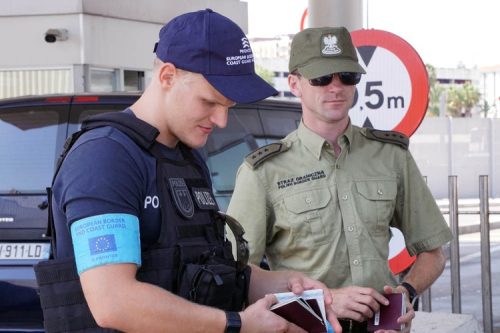
By Ahmed Adel | September 9, 2022
The statement by Poland that it needs to rearm its troops in preparation for a “war with Russia” in the next few years is intended to attract additional aid and weapons from NATO to strengthen its eastern borders and to modernise its arsenal after it supplied obsolete weapons to Ukraine. However, this comes at the price of destroying the economy and the quality of life of the average citizen.
Poland’s Deputy Defence Minister Marcin Ociepa said that Warsaw sees “the danger of war with Russia” in the next three to ten years and needs to use this time to rearm, “no matter the cost”.
With war waging in Ukraine, Poland wants to show that it is on the front lines in the fight against a supposedly “aggressive Russia” and position itself as a major player in Europe and NATO. Poland in this light is stressing that the EU and NATO need to strengthen its eastern borders.
The Poles freed up their stockpile of obsolete weapons by sending them to Ukraine and now expect new weapons and preferential treatment from Western countries, primarily the United States. The Poles are wanting air defence systems, missile defence systems, potentially new ground forces, and heavy equipment, such as tanks and self-propelled artillery.
This also comes as Poland and the three Baltic states said on September 8 that they would temporarily restrict access for Russian citizens holding EU visas from entering by September 19. Supposedly, this is to address “public policy and security threats.”
The prime ministers of Estonia, Latvia, Lithuania and Poland said in a statement they were concerned “about the substantial and growing influx of Russian citizens” into the EU, adding: “We believe that this is becoming a serious threat to our public security and to the overall shared Schengen area.”
The statement said they “agreed on a common regional approach and hereby express their political will and firm intention to introduce national temporary measures for Russian citizens holding visas”, with exceptions only made for “dissidents,” “humanitarian cases,” and family members and holders of residence permits in EU countries.
It is recalled that EU foreign ministers met in Prague last month and agreed to suspend a 2007 visa facilitation deal with Russia, stopping short of a wider visa ban. However, EU foreign policy chief Josep Borrell said that countries bordering Russia could “take measures at a national level to restrict entry into the European Union.”
Effectively, in a cowardly way, Borrell allowed the Baltic states and Poland to put roadblocks on Russians from entering the EU. He emphasised that any measures would have to conform with rules for the EU’s Schengen common travel zone and members of Russian civil society should be able to travel to the EU. But clearly this is not the case.
With Poland closing its borders to Russian citizens and demanding the strengthening of its military, it is evident that Warsaw is preparing for an escalation in its relations with Moscow, something that will be enthusiastically backed by the US.
Poland is not an exception to the energy crisis gripping Europe, which is bringing great fears of recession once the winter arrives. US-led sanctions were imposed following the Russian military operation in Ukraine, forcing Moscow to insist that all purchases of energy must be made in the rouble, a demand that Warsaw has rejected. With Moscow’s decision to slash oil and natural gas exports, energy prices in Europe have gone through the roof and sent the cost-of-living soaring.
To deal with this, Poland has turned to Nigeria, already one of its gas suppliers, to increase its LNG shipments. This prompted Poland’s President Andrzej Duda to become the first leader from the Eastern European country to ever visit Nigeria since diplomatic relations were established 60 years ago. However, many remain sceptical that Nigeria, whose economy is badly battered, can meet the European and Polish demand, especially as unprecedented crude oil thefts by militants in the Niger Delta are affecting exports.
More importantly, Poland’s economy is slowing down. A GDP drop to 2.7% is expected in Q3 2022, the Polish Economic Institute (PIE) reported on August 31. This followed from a drop of 8.5 to 5.3% in Q2. The state-owned think tank believes that inflation by the end of Q4 will be at 14.5% but could rise to 15.6% in February 2023 due to rising energy prices.
In this way, Poland is prioritising US interests in pressuring Moscow in the false belief that Russia is preparing to invade the country. This not only highlights that Poland still does not fully understand the reasons for Russia’s military operation in Ukraine, but that it is also willing to destroy the economy and quality of life of the average citizen for the sake of having new weapons and strengthening its military.
Ahmed Adel is a Cairo-based geopolitics and political economy researcher.
Pentagon unveils new Ukraine weapons package
Samizdat | September 8, 2022
Artillery ammunition, armored vehicles, and remote-launched mines make up the bulk of the new package of US military aid to Ukraine, which Washington values at $675 million, according to a list published by the US Department of Defense on Thursday.
This is the 20th “drawdown” of equipment for Ukraine from US military stocks since August 2021 – months before the conflict escalated.
According to the Pentagon, Kiev will receive ammunition for High Mobility Artillery Rocket Systems (HIMARS) and High-speed Anti-radiation missiles (HARM) – without specifying the quantities of either – as well as 36,000 105mm artillery rounds and four howitzers of the same caliber.
In addition to 100 armored Humvee cars, Ukraine will get 1.5 million bullets, 5,000 anti-tank rockets, 50 armored ambulances, and 1,000 rounds of the 155mm Remote Anti-Armor Mine (RAAM) Systems, as well as some night vision devices, the Pentagon said.
Speaking at the meeting of the “Ukraine Defense Contact Group” in Ramstein, Germany, US Defense Secretary Lloyd Austin boasted that Kiev has so far received 126 of the M777 howitzers since April, and a total of 26 multiple-launch rocket systems – including the US-made HIMARS – capable of firing long-range missiles.
Austin claimed the weapons have “demonstrably” helped Ukraine in the conflict, but said it was time for NATO to “sustain Ukraine’s brave defenders for the long haul” by “moving urgently to innovate and to push all of our defense industrial bases” so they could supply Kiev on “the hard road ahead.”
Of other countries that have chipped in, Austin singled out the UK for sending 2.3 billion pounds in military aid, and Poland for “serving as the linchpin of our efforts to support the Ukrainians,” including “generous donations” of tanks and artillery.
By the Pentagon’s own admission, the US has committed “more than $17.2 billion in security assistance to Ukraine” since 2014, and another $14.5 billion since February. Just this week, the US State Department pledged another $2 billion for long-term investments in military industry, half to Ukraine and half to 18 of its neighbors.
Russia sent troops into Ukraine on February 24, citing Kiev’s failure to implement the Minsk agreements, designed to give the regions of Donetsk and Lugansk special status within the Ukrainian state. The protocols, brokered by Germany and France, were first signed in 2014. Former Ukrainian president Pyotr Poroshenko has since admitted that Kiev’s main goal was to use the ceasefire to buy time and “create powerful armed forces.”
In February 2022, the Kremlin recognized the Donbass republics as independent states and demanded that Ukraine officially declare itself a neutral country that will never join any Western military bloc. Kiev insists the Russian offensive was completely unprovoked.
US military renewing interest in artillery as Russia dominates the battlefield
By Drago Bosnic | September 7, 2022
Artillery has been an integral part of warfare for centuries, but its impact has become exponentially more prominent in the last two centuries, with the advent of the Industrial Revolution and the resulting mass-production economies. The majority of combat deaths in the Napoleonic, First and Second World Wars were fought for the main part with artillery. Napoleon himself said that “God is on the side with the best artillery,” while Joseph Stalin stated that “Artillery is the God of war.”
Although the Napoleonic Wars and even the Second World War might seem too distant for us to even contemplate any similarities with modern 21st-century warfare, the truth is that little has changed in this regard. Russia’s special military operation in Ukraine has proven this to be true. While air power, drones, long-range missiles and other modern weapons play a significant part in shaping the battlefield, the truth is that artillery is still doing most of the work.
Both the Russian Armed Forces and the Kiev regime’s troops have inherited enormous quantities of artillery from the former Soviet military and both have deployed it en masse. Artillery is playing an indispensable role in determining the balance of power on the ground, with the Kiev regime asking the political West for as many towed and self-propelled guns as possible in order to counter Russia’s dominance.
The problem is that NATO and other US-aligned countries have put a lot more emphasis on air power, especially as Western combat experience in the last two to three decades indicates that air power alone should be enough to win wars. While this might be true against numerous opponents with no ways to counter the US and NATO air dominance, nothing could be further from the truth when it comes to countries like Russia, which has been a world leader in air defense for over half a century now and is also fielding the second most powerful air force on the planet.
Questioned before the House Armed Services Committee on May 12, Secretary of the Army Christine Wormuth and Army Chief of Staff General James McConville both concluded when asked “What are the systems that are going to put you into position to win that fight like the fight that’s playing out in Ukraine?” that long-range artillery and tactical missiles would be essential. General McConville stated that these systems have been key priorities for Army modernization. In addition to tactical missiles, the US Military Industrial Complex is having trouble replacing artillery munitions for the US Army, which is creating problems for both the US itself and the Kiev regime, which cannot hope to match the Russian military’s artillery volume. Back in mid-June, retired US Colonel and former Virginia State Senator Richard H. Black stated:
“Yes, the war is not over, but it is lost. Let me tell you why. This has become an artillery duel: Russia fires 50,000 shells a day, 10 times more than Ukraine. Washington Post says that Ukraine is almost completely without weapons and there were no analogs left from the Soviet era. On June 10, the same Washington Post said that Ukraine was suffering thousands of casualties, including at least 200 killed per day. Casualties doubled in just three weeks. With a population much smaller than the US, Ukraine loses 6,000 soldiers every month, 12 times more than America lost in Vietnam. The Ukrainians fought with courage, but no nation can sustain such huge casualties for long. Ukraine is finished.”
According to Task & Purpose, back in February 2018, the US Army asked Congress for money to buy approximately 150,000 shells for 155mm howitzers. Although this represented an 825% increase in the number of shells the US Army wanted to acquire, the very fact that the Russian military fired as many shells in just three days is a testament to the massive discrepancy in doctrine between the two superpower militaries.
Since February, the US has provided 806,000 shells for 155mm howitzers and another 108,000 shells for 105mm guns to the Kiev regime, according to the US Department of Defense. That’s close to 1 million shells in approximately six months, and the figure doesn’t even include the precision-guided rockets for the M142 HIMARS that the US military has also handed over to the Neo-Nazi junta forces.
“The use of artillery in warfare has always involved huge expenditures of ammunition,” retired Marine Col. Mark Cancian, with the Center for International Studies think tank in Washington DC, told Task & Purpose. “Artillery expenditures increase substantially when front lines stabilize as has happened in Ukraine,” Cancian added. “When there’s a lot of battlefield movement, artillery expenditures ease off because batteries on the move can’t fire and transportation of ammunition becomes harder. The stabilized front lines and consequent large increases in artillery firing often lead to a ‘shell shortage.'”
“One problem facing the United States now is that much of its industrial capacity to produce artillery shells went away after the end of the [First] Cold War more than 30 years ago, and 155mm shells have a life expectancy of 20 years,” retired Col. said.
The Wall Street Journal has also revealed that defense officials are concerned that the US military’s stockpile of 155mm shells has become “uncomfortably low.” This might soon become a problem for the Kiev regime, as its forces, although already outgunned at 10:1, are burning through artillery munitions much faster than the current Western production capacity can cover.
Drago Bosnic is an independent geopolitical and military analyst.
Is Russia “weaponizing” natural gas against the EU?
By Drago Bosnic | September 6, 2022
For years, the political West has been accusing Russia of so-called “weaponization” of its natural resources, particularly gas and oil. Moscow is being blamed for using these essential resources to supposedly “blackmail” the European Union, while Brussels, partly pushed by US imperialist belligerence, partly by its own (neo)colonialist ambition, kept creeping up to Russia’s geopolitical backyard, creating ever-escalating tensions with the Eurasian giant. Moscow would never allow the repeat of the Nazi invasion which took tens of millions of Russian lives, in addition to the unprecedented devastation left in its wake. To make matters worse, “Barbarossa” was yet another on the long list of attempts by the political West to destroy Russia. For over a thousand years, many in Europe have tried to neutralize the Eurasian giant. Russia prevailed each and every time, but it had to do it with the force of arms.
However, in recent decades, Moscow has been trying hard to establish mutually beneficial cooperation with the political West, especially its European portion. This included making long-term deals with the EU, particularly those concerning the supply of essential commodities such as natural gas, oil, food and other raw materials which were helping fuel the growth of entire industries in Europe and elsewhere. Russia’s hope was to establish long-standing ties with the EU and make sure the strategic security on its western borders would be ensured through economic cooperation, not military might. However, Washington DC had other plans and the compliant elites in Brussels followed suit, making sure NATO military infrastructure (especially the strategically impactful US military facilities) kept expanding eastwards, getting ever closer to Russia’s heartland.
Even in this situation, Moscow tried de-escalating. Although it still kept working on ways to counter this crawling encroachment militarily, especially through the development and fielding of strategically unrivaled capabilities, Russia was hopeful that “cooler heads” would eventually prevail in Brussels and other major EU capitals, particularly Paris and Berlin. This hope still somewhat held on even after the disastrous 2014 Maidan coup which brought the Neo-Nazi junta to power in Kiev. For nearly a decade, Moscow kept trying to bring the political West to its senses. Unfortunately, to no avail, since this approach was seen as a weakness in Washington DC and Brussels. On February 24, Russia decided to put a stop to it all.
Now, after months of a failed economic siege of the Eurasian giant, especially after the sanctions boomerang started ravaging Western economies, the political West is trying to play a rather comical blame game, accusing Moscow of “weaponizing” its own natural resources. Faced with the prospect of a disastrous winter, the EU is now caught between its suicidal subservience to Washington DC and the need to simply survive. While the US keeps importing Russian commodities (at a volume of approximately $1 billion per month), it is forcing Brussels to effectively enforce a self-imposed embargo which is causing untold damage to the EU’s already dwindling production sector, causing a cascading effect of economic devastation on other seemingly unrelated industries.
Instead of trying to make a deal with Moscow, Brussels joined the economic war on Russia, prompting the Eurasian giant to respond. Now, when natural gas prices are upwards of 400% higher than just a year ago, EU powers, particularly Germany, are faced with the prospect of a near-complete industrial shutdown. And the burning issue isn’t only coming from soaring natural gas prices, but also the shortages. For months, high prices were bleeding the EU economies dry of cash, but after the Nord Stream stopped pumping natural gas altogether, the issue is exponentially worse, as entire industries are at risk of collapsing completely.
In addition to the production sector shutdown, many EU members are faced with soaring energy prices, which is putting a tremendous amount of pressure on households, which are faced with the prospect of not just bankruptcy, but also freezing, as the cold season in the EU is starting with natural gas storage facilities at their lowest level ever. Thus, the pressure on Brussels is both economic and social. With many EU member states’ governments collapsing, the political instability in the troubled bloc is bound to get much worse in the coming months. In addition to natural gas shortages, there is also the problem of soaring food prices, which also might turn into shortages soon, causing even more social and political instability across the EU.
The question is what will the EU do? Should it ask for help from its overlords in Washington DC? And will the US send food, oil, gas and other essential commodities? Does the US even have enough of those for itself? How will the “moral high ground of sticking it to Putin“ help heat homes, feed hundreds of millions of hungry (and angry) citizens and power entire economies and countries? How will the EU governments explain to their voters that all this is “worth doing“ so that the “young, vibrant democracy in Kiev“ can survive? What will Europe look like in 2023 after it goes through a complete political and social unraveling? Will the EU ever become sovereign enough to realize that whatever happens, the US will continue importing essential commodities from Russia while pressuring others not to do so? The coming winter will be a perfect litmus test of sovereignty and an excellent indicator of who will get the privilege of joining the new multipolar world of sovereign nations.
Drago Bosnic is an independent geopolitical and military analyst.
Featured Video
Integrity Initiative: UK-funded network framed dissent as Russian disinformation for years
or go to
Aletho News Archives – Video-Images
From the Archives
Why Saudi Ties to 9/11 Mean U.S. Ties to 9/11
By Kevin Ryan | Dig Within | September 27, 2015
Media interest in Saudi Arabian connections to the crimes of 9/11 has centered on calls for the release of the 28 missing pages from the Joint Congressional Inquiry’s report. However, those calls focus on the question of hijacker financing and omit the most interesting links between the 9/11 attacks and Saudi Arabia—links that implicate powerful people in the United States. Here are twenty examples. … continue
Blog Roll
 Aletho News
- Big tech hands in its DSA censorship reports to the EU
- ‘A Big Victory’ – Palestine Chronicle Wins Two-Year Legal Battle
- IAEA inspectors cannot return to Iran amid US threats: Russia
- Senate Rejects Iran War Powers Resolution Passed By House
- ‘We did not attack Pakistan with drones’: Afghan sources
- Iraqi Resistance faction links arms to sovereignty, questions US exit
- Cannon fodder no more… South Korea rejects Trump’s pressure to join his criminal war on Iran
- Neria Leiter Was A Legitimate Military Target
- Integrity Initiative: UK-funded network framed dissent as Russian disinformation for years
- ‘We don’t seek permission to defend our country’: Snippets from President Pezeshkian’s UNGA address
- If Americans Knew
- ‘This is where I live now, the back of a truck’: a day in the life of a grandmother in Gaza
- In UN Speech, Iran’s President Displays Pictures of Children Killed by US, Brings Attention to Israel’s Nuclear Arsenal
- Israel displaces hundreds of Palestinians amid wave of demolitions in West Bank
- Aid, reconstruction, and Israel’s history of obstruction in Gaza
- Trump administration digs an ever-deeper hole of complicity in genocide – Daily Update
- US-Israel $2.8 Billion Arms Deal, 40,000-Bomb Supply Faces New Gaza Complicity Accusations
- Caught on Tape: AIPAC CEO Boasted of Controlling Trump’s National Security Officials
- Why Hamas Attacked Israel in October 2023 – Israeli professor Ilan Pappé
- They see them, then kill them: Israeli quadcopters track, deliberately target civilians in Gaza
- Winter could turn Gaza’s treacherous, war-damaged buildings into deathtraps
- No Tricks Zone
- New Study: Earth And Venus Surface Warmth Largely Explained By Convection And Lapse Rate, Not CO2 Or Radiation
- 2025 Nature Paper Claiming Worsening Global Drought Gets RETRACTED …Heavily Flawed
- New Study: ‘Global Drought Shows No Detectable Recent Acceleration Under Climate Warming’
- Economic Masterminds: German Socialists Suggest Taxing Productivity Gains Stemming From Using AI
- The South China Sea Has Not Been Cooperating With The Climate Change Narrative
- Energy Crisis: Germany Enters Heating Season With Historically Low Gas Reserve Fill Levels
- New Study: The Antarctic Ice Sheet Gained Mass From 2020-2024 Due To Staggering Snow And Ice Accumulation
- Study: Ocean Heating Rates From Thousands Of Years Ago ‘Dwarf’ Modern Ocean Heating Rates
- Climate Extremists Target, Attack Large-Scale Power Grid Infrastructure In Germany!
- New Study: Antarctic Ice Melt Has Contributed Less Than 1 Centimeter To Sea Level Rise In The Last 30 Years


