Lebanon: Pearl on the New Silk Road or Zone of Dark Age Chaos
By Matthew Ehret | Strategic Culture Foundation | August 16, 2020
Many voices have been quick to enter the chorus of commentators hypothesizing the manifold possible causes of the devastating explosions which occurred on the afternoon of August 4 in Beirut which has led to mass anarchy and the surprising resignation of the government on August 11th.
While I have no great novel contribution to offer in that growing array of hypotheses (which are slowly turning into noise), I would like to share an insight which addresses a too-often-overlooked aspect of the role of Lebanon in the Great Game. Before proceeding, it is useful to hold in the mind several points of certainty:
1) The official narrative of a chance mishap of Turkish fireworks instigating the detonation of the 2700 tons of ammonium nitrate which had been sitting at the Port of Beirut for six years is entirely unbelievable.
2) This event should not beconsidered in any way separated from the anomalously large pattern of explosions and arson which have spread across the Arab and African worlds in recent weeks.
3) This pattern of chaos must itself be seen in the context of the clash between two systems: The collapsing NATO unipolar alliance on the one side and the New Silk Road-led multipolar alliance on the other.
The Matter of Causality
The Middle East has been labelled the “geopolitical pivot” of the world island by devout adherents to the Hobbesian worldview of Halford Mackinder such as Zbigniew Brzezinski, Henry Kissinger and Bernard Lewis. Today it is understood that whomever can either stabilize or destabilize this region can control the levers for the “world island” (Africa, Europe, and Eurasia)… and as Mackinder once said “who controls the world island, controls the world.”
In the case of Lebanon, the role that this region plays as “Pearl on the New Silk Road”, and intersection of all major civilizations of the globe, has shaped global policy considerations in Washington, London and Israel for the past several years. The destructive events underway Lebanon cannot be separated from the breathtaking spread of Belt and Road projects across Iraq, Iran, Syria and other Arab nations.
More than Coincidence
In the weeks surrounding the Lebanon disaster, Iran found herself the target of a vicious sequence of attacks as arson and explosions were unleashed beginning with the June 26 explosion at the Khojir Missile production complex, the June 30 explosion at a medical clinic killing 19, a July 2 explosion at the Natanz nuclear facility which set Iran’s centrifuge production schedule back by months and the July 15 fires at the Bushehr Aluminum plant. Additionally, and the UAE experienced its own anomalous fires which ravaged one of the most important markets in Dubai (luckily empty due to Covid-19) on August 5.
If any of these anomalies were taken individually, “chance” could always be blamed as culprit. However when one takes them all together and recognizes the revolutionary BRI-connected agreements currently being finalized between both China and Russia with Iran one gets a solid idea of the deeper causality underlying these apparently separate situations of chaos.
Iran and the New Silk Road
The fact is that the long awaited $400 billion China-Iran economic and security pact which is in its final stages of negotiation includes not only important oil for infrastructure agreements which will extend advanced rail and new energy grids to Iran. This program also includes an important military/security partnership which will dramatically transform the “rules of the game” in the middle east for generations. Elements of this pact include not only defense and intelligence sharing infrastructure, but also bolster China’s new digital currency the e-RMB which will circumvent western controls on trade.
Meanwhile Russia’s announced extension of the 20 year security/economic partnership agreement first signed in 2001 by Presidents Rouhani and Putin will certainly be finalized in the coming months. Iran has also made it’s interests in acquiring Russia’s S400 system well known and all geopoliticians understand well that this system which is spreading fast across all of Eurasia from Turkey to South Korea renders America’s F-35s and THAAD missile systems impotent and obsolete.
If the China-Russia-Iran triangle can be firmly established, then not only does America’s sanctions regime policy disintegrate, but a vital platform of Middle Eastern development will be established to better spearhead the growth of transport and advanced development corridors from China to the east (and Africa) along the New Silk Road. Since November 2018 an Iran-Iraq-Syria railway has taken great strides towards implementation as part of middle east reconstruction funded by Iran and ultimately connecting to Syria’s Lattakia Port as a hub to the Mediterranean and a 32km Shalamcheh-Bashra railway is in an advanced phase of development with Iran’s Minister of Roads and Urban Development Abbas Ahmad stating:
“Iran’s railway system is linked to railways of central Asia, China and Russia and if the 32 km Shalamcheh-Basra railway will be constructed, Iraq can transfer goods and passengers to Russia and China and vice versa.”
While the 32 km rail line would be phase one, the 2nd phase is scheduled to be a 1,545 km rail and highway to the Syrian Port.
The Iran-Iraq-Syria regional participation in the broader New Silk Road is incredibly important, especially since Iraq signed a September 2019 Memorandum of Understanding to join the BRI under a new infrastructure-for-oil program. This plan involves China’s reconstruction of the war-torn region under a multiphase program of hard infrastructure (rail, roads, energy and water projects), and soft infrastructure (hospitals, schools and cultural centers).
Similarly, China has made its intention to bring real reconstruction programs to Syria are also well known and President Bashar Al Assad’s long overdue Four Seas Strategy first announced in 2004 (and sabotaged with the Arab Spring) is finally coming back on line. President Assad had won 7 countries over to sign onto it’s construction by 2010 and entailed connecting all four major water systems (Mediterranean, Caspian, Black Sea, and Persian Gulf) together via rail and infrastructure corridors as a driver for win-win cooperation and regional modernization. Assad had said of the project in 2009 “once we link these four seas, we become the unavoidable intersection of the whole world in investment, transport and more.”
A video of this important project can be viewed here:
Lebanon: Pearl of the New Silk Road
Lebanon’s participation in this long-awaited process should be obvious to all, sharing as it does a major border with Syria, hosting 1.5 million Syrian refugees and also a vital port to the Mediterranean making it a keystone of east-west development. Connecting this emerging zone of development to Africa where the Belt and Road has emerged as a leading force of change and hope in recent years, Lebanon finds itself among the most strategic keystones.
Designs for rail connecting Lebanon’s Port of Tripoli through Jordan and thence through Egypt would create a new positive field of prosperity which could dramatically change the rules of the Middle East and Africa forever.
On June 17, 2020 the Chinese Embassy publicized an offer to extend BRI projects to Lebanon featuring a modern railway connecting coastal cities in the north with Tripoli through Beirut to Naquora in the south. China’s National Machinery IMP/EXP Corporation also offered the construction of three new power plants of 700 MW each, a new national energy grid and port modernization. The Embassy’s press release stated:
“The Chinese side is ready to carry out practical cooperation actively with the Lebanese side on the basis of equality and mutual benefit in the framework of joint work to build the Belt and Road… China is committed to cooperation with other nations mainly through the role of its companies, the leading role of the market, and the catalytic role of government and commercial operation. Chinese companies continue to follow with interest the opportunities of cooperation in infrastructure and other fields in Lebanon.”
These offers were applauded by Hassan Nasrallah (leader of Lebanon’s Hezbollah and partner in the coalition government) who had been an outspoken advocate of Lebanon’s participation in the BRI for years. Nasrallah has also advocated liberating Lebanon from the IMF whose structural adjustments and conditionality-laden investments have resulted in the small country’s debt exploding to over 170% of its GDP with nothing to show for it.
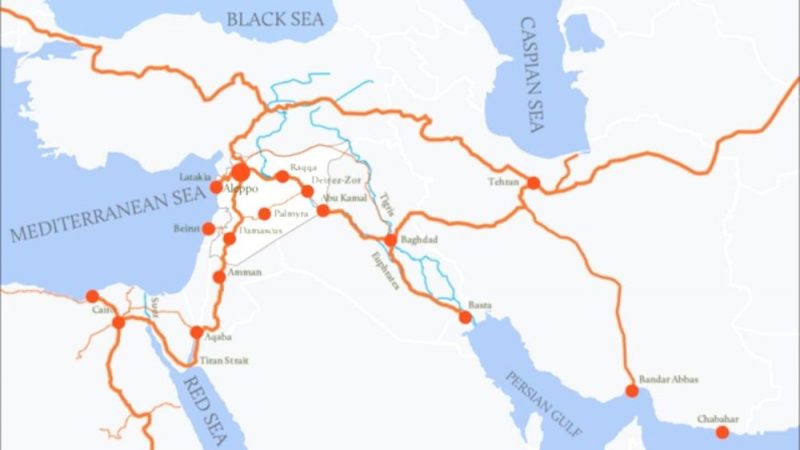
It is noteworthy that the same day China made its offers known publicly, Washington imposed the Caesar Syria Civilian Protection Act to punish all who wish to trade with Syria which itself has not only further crushed Syria’s cries for economic reconstruction, but had taken direct aim at Lebanon which sees 90% of Syrian goods flow through its borders to the Mediterranean.
When Chinese delegations first made their vision for the BRI’s extension to Lebanon known in March 2019 where the Arab Highway from Beirut to Damascus and rail to China was floated, western stooge Saad Al Hariri said no, preferring instead to sign onto a $10 billion IMF plan. Over a year later, not one iota of infrastructure was built. Secretary of State Pompeo played a major role at keeping Lebanon from “going east” as Nasrallah and even President Aoun had desired when he stated in a March 2019 press conference “Lebanon and the Lebanese people face a choice: bravely move forward as an independent and proud nation or allow the dark ambitions of Iran and Hezbollah to dictate your future.”
Pompeo’s obsessive drive to eliminate Hezbollah and especially the influence of Nasrallah in Lebanon has less to do with any perceived threat Israel claims to its existence and everything with Hezbollah and Iran’s embrace of China’s Belt and Road Initiative.
When Chinese offers were renewed in June 2020, Pompeo’s stooge David Schenker (Assistant Secretary of State for Near East Affairs) gave a June 23 interview stating that Hezbollah “is not an organization that seeks reform, but rather one that lives on corruption”. Schenker warned Lebanon from falling into the “China Trap” and said that Nasrallah’s demands that Lebanon “look east” was “shocking”.
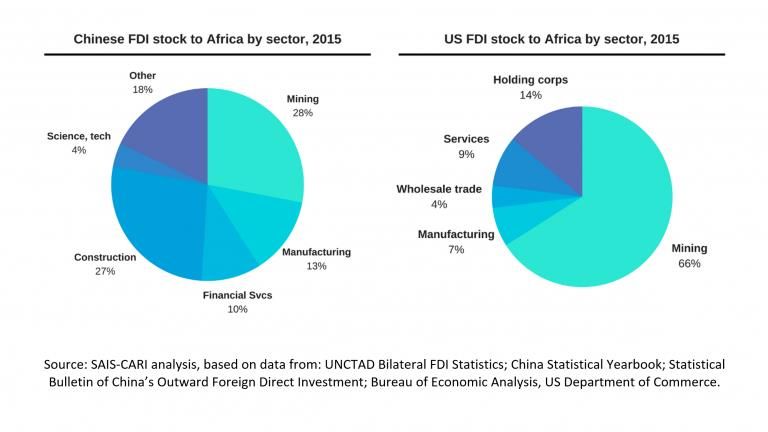
Without going into a lengthy refutation of the “China debt trap” argument (which is really just the effect of western imperialists projecting their own dirty practices onto China’s BRI), it is sufficient to say that it is a 100% myth. A summary overview of Chinese investments in Africa which are numerically similar to American investments demonstrates that the difference is found entirely in QUALITY as China uniquely invests in real construction, manufacturing and even African banking which are verboten by all imperialists who only wish to use Africa as a looting ground for cheap resources and cheaper labor.
Speaking to this issue, and the hope for Lebanon more broadly the BRIX Sweden’s Hussein Askary stated:
“It is becoming obvious that a tiny country like Lebanon, but fully sovereign and independent can break the back of a global empire by opting to follow the path of progress, national sovereignty and international cooperation according to the win-win model offered by China. This does not mean cutting all bridges to the west. It is necessary to keep those that are in the true interest of Lebanon and its people. If the U.S. and Europe wish to change their policies and join China in offering Lebanon power, transport, water and agro-industrial investments, the Lebanese people and leadership would take them with open arms”.
Russia’s Proposal on UNSC Summit With Iran Remains on Table After Trump’s Refusal, Moscow Says
Sputnik – 16.08.2020
MOSCOW – The proposal by Russian President Vladimir Putin to hold an online conference of leaders of the UNSC states, Germany, and Iran to discuss the Persian Gulf and Iran remains on the table after US President Donald Trump’s refusal to support it, Russian Deputy Foreign Minister Sergey Ryabkov affirmed on Sunday.
“Of course, yes”, Ryabkov said when asked whether the initiative is still on the table after Trump’s statement.
Trump said on Saturday that he would unlikely support Putin’s initiative to hold the online summit on Iran adding that he would wait until [after] the election.
On Friday, Putin suggested holding a remote videoconference around tensions in the Persian Gulf with the participation of the leaders of the UN Security Council members, Germany and Iran.
He urged Washington to assess the advantages of the implementation of this initiative in order to avoid further escalation of the situation in the Persian Gulf.
Snapback sanctions on Iran isn’t open-and-shut case
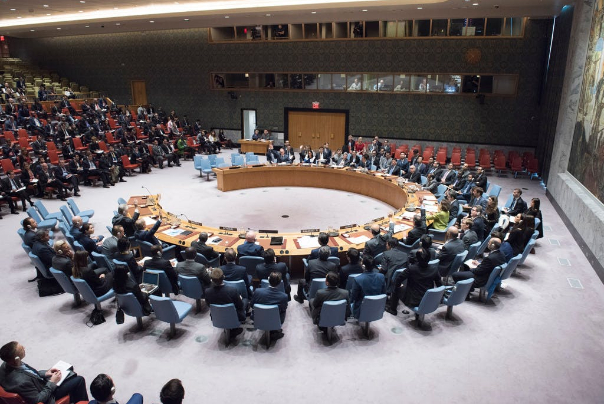
The UN Security Council resoundingly defeated a US resolution to indefinitely extend UN arms embargo on Iran, with only Dominican Republic endorsing the American move, New York, August 14, 2020
By M. K. BHADRAKUMAR | Indian Punchline | August 16, 2020
The Iran nuclear issue moves to centerstage of international security with US President Donald Trump’s remarks Saturday that Washington “will be doing a snapback” against Iran — announcing Washington’s intention to push for restoration of all pre-2015 UN sanctions against Iran. Trump added, “You will be watching it next week.”
Also, Trump apparently poured cold water on Russian President Vladimir Putin’s proposal Friday for a video summit of the veto-holding permanent members of the UN Security Council plus Germany and Iran (that were the original signatories of the JCPOA) to discuss the 2015 Iran nuclear deal and Persian Gulf security issues. He saw no urgency. Trump vaguely hinted that he would revisit the subject “after November”.
Clearly, the optics of the “snapback” sanctions is that Washington is hanging tough and the “maximum pressure” approach is further tightening.
But having said that, Trump ultimately considers himself to be the consummate deal maker — and is strategising an approach of calibrated brinkmanship.
For a start, he hopes to extract out of Russia and China some sort of self-restraint that at least until the US elections are over in November, they wouldn’t provide Iran with military technology. On the other hand, by side-stepping Putin’s proposal — which effectively resuscitates the dispute resolution mechanism of the “6+1” format of the original signatories of the JCPOA — Trump avoids any controversies in the US domestic politics in the run-up to the November election where his “maximum pressure” approach embellishes his strongman image.
Of course, Moscow has a dubious history of heeding such US expectations in the past — when it delayed the delivery of S-300 missiles to Iran for several years due to US and Israeli pressure, forcing Tehran to sue Moscow for compensation. But circumstances have changed. US-Russia relations are tense, while Russia and Iran are partners in regional security.
Equally, Russia and China have worked in tandem on the diplomatic plane and over the JCPOA, Beijing has adopted a line which upfront rejects the Trump administration’s locus standii to invoke snapback sanctions. Again, China-Iran relations have matured and the two countries are expected to conclude in a conceivable future a 25-year $400 billion comprehensive strategic partnership agreement.
Significantly, Putin’s statement on Friday underscored Moscow’s convergence with Tehran and reiterated Moscow’s rejection of Washington’s “maximum pressure” approach against Iran. The following elements of Putin’s statement are to be noted:
- “Iran faces groundless accusations.”
- “Resolutions are being drafted (by Washington) with a view to dismantling decisions that had been unanimously adopted by the Security Council.”
- “Russia maintains its unwavering commitment to the JCPOA.”
- Russia’s Collective Security Concept for the Persian Gulf Region (which Iran welcomed and US ignored) “outlines concrete and effective paths to unravelling the tangle of concerns” in Persian Gulf region.
- “There is no place for blackmail or dictate in this (Gulf) region, no matter the source. Unilateral approaches will not help bring about solutions.”
- There is imperative need to build an inclusive security architecture in the Persian Gulf.
Indeed, Trump is playing his cards close to his chest. The US move on “snapback” sanctions will come up for a decision before the rotating presidency of the UN Security Council, which will be called upon to take a view on the admissibility of the American contention that although Trump publicly repudiated the JCPOA, since it did not formally intimate the same to the UN SC, it still enjoys the prerogative to act under the security council’s Resolution 2231 that provided an international legal basis for the “snapback” clause.
Indonesia chairs the presidency through August and Jakarta and Tehran enjoy friendly relations. The next in line for September is Niger, which may be susceptible to US pressure. By October, Russia’s turn comes to chair the presidency. How far Washington will push the envelope through the August-September period remains to be seen.
Without doubt, a UN sanctions snapback could have predictable consequences for any form of trade with Iran, as it demands from member states to exercise caution when transacting with Iranian financial institutions, and permits countries to inspect vessels or aircraft suspected of carrying cargo in violation of UN sanctions provisions on Iran in national or international waters. Russia and China may decide to take advantage of the new Iranian market for their weapons exports. China’s stance has been exceptionally strong. Of course, all bets are off if Iran carries through its threats of a withdrawal from the Nuclear Non-Proliferation Treaty in the case of UN sanctions reimposition.
In sum, instead of focusing on sanctions snapback, the issue of critical importance in the coming weeks will be the ability of the E3 (France, UK and Germany) — and potentially Russia and China — to take advantage of the time available to engage with the US on the sidelines.
The key to unlocking the current dispute lies largely in Washington, which is insisting on a resolution of the current impasse and on limiting Iranian nuclear activities. Washington in turn will have to offer some incentives to Iran. And those incentives need to be worked out through creative negotiation, as they devolve upon the existing unilateral US sanctions regime on Iran. The good part is that none of the JCPOA protagonists stands to gain out of the snapback sanctions.
Arguably, Trump is applying “maximum pressure” on other JCPOA countries by threatening snapback sanctions, while keeping an open mind on Putin’s proposal to discuss all issues in a “6+1” format once the November election is out of the way. It is a fair assumption that Moscow anticipated Trump’s response on the above lines.
After all, Iran figured in the last phone conversation in late July between Trump and Putin a fortnight ago and Putin’s latest proposal followed up that discussion. Iran was kept in the loop, too. (Interestingly, following the visit by Iran’s FM Javad Zarif to Moscow in late July, Tehran Times newspaper had commented that a “possible revival of diplomatic initiatives between Iran and the US” under Putin’s mediation was to be expected.)
Moscow is yet to react to Trump’s “Probably-not” remark of Saturday apropos the Putin proposal. But the Tass report took note that “Washington will probably want to wait until presidential elections in the country end.” Beijing and Paris have so far voiced support for Putin’s proposal, while London and Berlin are watching from the sidelines.
As for Tehran, it is still savouring the sweet taste of the defeat of the US resolution at the UN Security Council on Friday to extend an arms embargo on Iran that is due to expire in October. (here and here ) In the final analysis, however, Tehran’s choice will be to directly negotiate with Washington.
Russia’s proposal to convene meeting of heads of state of UN Security Council permanent members with participation of heads of Germany and Iran
Statement by President of Russia Vladimir Putin | August 14, 2020
Debates around the Iranian issue within the UN Security Council are becoming increasingly strained. Tensions are running high. Iran faces groundless accusations. Resolutions are being drafted with a view to dismantling decisions that had been unanimously adopted by the Security Council.
Russia maintains its unwavering commitment to the Joint Comprehensive Plan of Action (JCPOA) on Iran’s nuclear programme. Its approval in 2015 was a landmark political and diplomatic achievement that helped fend off the threat of an armed conflict and reinforced nuclear non-proliferation.
In 2019, Russia presented an updated version of its Collective Security Concept for the Persian Gulf Region, outlining concrete and effective paths to unravelling the tangle of concerns in this region. We strongly believe that these problems can be overcome if we treat each other’s positions with due attention and responsibility, while acting respectfully and in a collective spirit.
Like anywhere else in the world, there is no place for blackmail or dictate in this region, no matter the source. Unilateral approaches will not help bring about solutions.
It is essential that the positive experience gained earlier through intensive effort is maintained when building an inclusive security architecture in the Persian Gulf.
Accordingly, we propose convening an online meeting of the heads of state of the permanent members of the UN Security Council, with the participation of the heads of Germany and Iran, as soon as possible, in order to outline steps that can prevent confrontation or a spike in tensions within the UN Security Council. It is important to secure collective support for the implementation of UN Security Council Resolution 2231 that sets forth an international legal framework for the execution of the JCPOA.
During this leaders’ meeting, we propose agreeing on parameters for joint efforts to facilitate the emergence of reliable mechanisms in the Persian Gulf region for ensuring security and confidence building. This can be achieved if our countries and the regional states combine their political will and creative energy.
We call on our partners to carefully consider this proposal. Otherwise, we could see the further escalation of tension and an increased risk of conflict. This must be avoided. Russia is open to working constructively with anyone interested in taking the situation back from the dangerous brink.
This is an urgent matter. Should the leaders agree in principle to have this conversation, we propose that the foreign ministries of the seven countries agree on a meeting agenda, make the necessary arrangements and schedule a video summit.
Beijing Blasts ‘Double Standards’ as Twitter Labels Only Russian, Chinese Media ‘State-Affiliated’
By Tim Korso – Sputnik – 13.08.2020
Twitter’s decision to target Russian and Chinese media by limiting their ability to deliver content to the platform’s users comes as part of an apparent broader effort by Western social media to censor points of views that are different from the mainstream agenda.
Media outlets should be treated in an equal manner and not on a case-by-case basis if they comply with the laws and regulations of the countries they operate in, a spokesperson for the Chinese Embassy in Russia said regarding the recent actions of Twitter. On 6 August, the social media platform flagged numerous Russian and Chinese media outlets, including Sputnik, as “state-affiliated”, limiting their ability to promote and amplify tweets.
The Chinese Embassy stressed the importance of the media as a crucial link uniting countries around the world and condemned the actions preventing them from properly functioning. It pointed out that Twitter had pledged to mark all media outlets in one way or another controlled by the governments of the five permanent members of the UN Security Council, but has in fact so far only targeted those based in Russia and China.
“We hope that the said social networks [sic] will abandon prejudices and ‘double standards’, and will, in a spirit of transparency and tolerance, consider the role of media from various countries in boosting international exchanges and cooperation; [that they] will not selectively create obstacles, and politicize issues”, the embassy said.
Double Standards in Twitter’s ‘Affiliation’ Marks
Twitter claims to have introduced the “state-affiliated” label for the sake of “transparency and practicality”, but has shown little transparency itself in explaining why media outlets from only two of the aforementioned five countries have been slapped with the new status, hindering these outlets’ capabilities compared to others and essentially censoring them.
The social media platform said that some media outlets, such as the UK’s BBC or the US’ National Public Radio (NPR), would be exempt from the rule despite being funded and sometimes even established by these countries’ respective governments. Twitter claimed that only outlets whose agendas are not influenced by their governments would be eligible for the waiver, but somehow all major Western mainstream media were spared from the platform’s censorship, despite often falling in line with their governments’ political stances. The social media platform failed to respond to Sputnik’s inquiry into why only media outlets from two countries have been affected by the feature.
Prince Peter Kropotkin and the Murder of the Liberator Tsar
By Martin Sieff | Strategic Culture Foundation | August 11, 2020
Why did London host a convention of anarchists in July 1881 less than three months after they had murdered the Liberator Tsar of Russia?
The International Anarchist Congress of London, from July 14 to July 20, 1881 was highly unusual in many ways, though it has almost totally been forgotten by history, save as a curiosity.
It was the last such gathering to be held for more than a quarter of a century until the International Anarchist Congress of Amsterdam in August 1907. During that time, there were four other unsuccessful attempts to call international congresses, in Geneva in 1882, in Paris in 1889, in Chicago in 1890 and once again in Paris in 1900.
Those interested in the procedural minutiae of the congress can easily enough find obscure academic articles discussing theoretical intellectual positions held and debated at the Congress.
But as far as I have been able to find, no historians have given any serious study to the possibility that the Congress may have been used to coordinate or plan any program of “Propaganda of the Deed” – the assassination of important political leaders across Europe and the Americas, which was central to the achievement of the anarcho-syndicalist movement’s goals.
 Nor is there any discussion anywhere – save in terms of abstruse and apparently harmless political theory – of the role that former Prince Peter Kropotkin, the most consistently high-profile and charismatic leader of the anarchist movement played in the convention.
Most striking of all, there appears never to have been any serious investigation conducted as to why the British government permitted its capital London, to be the host of the conference that on the surface stood for the destruction of everything that the British Empire, its traditions and institutions held dear.
The decision to permit the 1881 congress to gather in London was particularly striking – and from the Russian government’s point of view outrageous – because it opened only four months almost to the day after Tsar Alexander II, the Great Liberator who freed 24 million serfs from slavery and supported Abraham Lincoln and the Union through the U.S. Civil War, was assassinated by a specially designed shrapnel grenade thrown by Ignacy Hryniewiecki on Sunday, March 13, 1881.
That hideous crime was planned and committed by the Narodnaya Volya, “The People’s Will” itself a strange, tiny, conspiratorial group shrouded in mystery and unanswered questions to this day.
The name of the group suggests – as it was meant to – a mass popular movement, But the Narodnaya Volya was no such thing. The best estimates of Russian and Western historians alike put it at no more than 200 members. Almost none of these were from peasant backgrounds. They were almost all from favored, prosperous, professional middle class families and in some cases even from aristocratic backgrounds.
Interestingly, the followers of the late Osama Bin Laden in the first generation of al-Qaeda that carried out the destruction of the World Trade Towers in New York City on September 11, 2001 exhibit an almost identical set of profiles, as former Saudi intelligence chief Prince Turki bin Feisal bin Abdelaziz ibn Saud has pointed out.
The Narodnaya Volya was only founded in 1879. But it was totally crushed by 1884. Yet in the first two years of its existence, it operated with apparent impunity carrying out no less than eight attempts on the life of Tsar Alexander. No other tsar in Russian history including Alexander’s son and grandson after him was ever hunted so mercilessly and relentlessly by assassins.
The Narodnaya Volya never lacked for any of the financing it needed for its murderous schemes. The Russian internal security services, who proved extremely efficient and energetic in smashing the group after it carried out its bloody deed, seemed utterly helpless and inept against it until that point. This may in large part have been because the group was so tiny and so novel in its operational techniques.
Who led the Narodnaya Volya? Its documented leaders were Andrey Zhelyabov and Sofya Perovskaya. Perovskaya came from an aristocratic background but showed little capability beyond her own murderously intense fanaticism and strange obsession with murdering the tsar. Other members of the group when arrested openly commented on her merciless hatred for the ruler who had liberated the serfs.
But Perovskaya from 1872 was personally very closely associated with the then handsome, dashing and charismatic anarchist leader Prince Peter Kropotkin. It is likely they were lovers.
The carefully (British) constructed image of Kropotkin that endures to this day is a tubby, kindly, smiling old, bearded Father Christmas. In his youth, however, he was darkly satanically handsome and was obsessed with Goethe’s devil figure Mephistopheles in “Faust.”
For Perovskaya, Kropotkin would have been the dashing, aristocratic brilliant love of her life. For Kropotkin, the rather plain Perovskaya would have been a means to an end: The hunting and murder of the tsar.
Kropotkin came from one of the most aristocratic eminent families in Russia. He claimed descent from the House of Rurik, the original ruling family of Russia. He had actually been a personal page of Tsar Alexander II in his early years in power. He had been brutally bullied (or so he later claimed) when entering the Imperial corps of pages. For ever after, he maintained an intense personal hatred of the tsar, intensified by the years he spent as a prisoner for his subversive activities in the Peter and Paul Fortress in St. Petersburg starting in 1872. His escape was engineered by friends in 1876.
Kropotkin’s relationship with Perovskaya starting in 1872 in the Tchaikovsky (not the great musical composer) Circle is the key documented fact that links Kropotkin directly to the murder of the great tsar he so intensely personally hated. The group’s leader Nikolai Tchaikovsky, like Kropotkin found protection in Britain for most of his later life.
Kropotkin was a noted scientist in his day who contested Darwin and argued a version of evolution based on natural cooperation rather than natural selection. In fact it was superficial and crackpot but interestingly has recently been revived, along with his scientific reputation in British academic circles.
During the remainder of his own long life (he died in 1921 at the age of 79), Kropotkin was allowed to live in complete peace and security in Britain. Not coincidentally, Britain was the only major country in Europe not to suffer from the mysterious outbreak of assassinations that swept the continent and even the United States in the last quarter of the 19th century.
As Matthew Ehret has noted, the anarchist assassinations seemed to disproportionately target major leaders who rejected free trade and a global economic order dictated by British financial interests from the City of London. Its victims included U.S. presidents James Garfield (1881) and William McKinley (1901), French President Sadi Carnot (1894), Spanish Prime Minister Antonio Canovas (1897) and King Umberto I of Italy (1900).
In addition, in 1878 alone, anarchists attempted to kill Emperor Wilhelm I of Germany twice as well as the Kings of Spain and Italy. Kropotkin hailed all these efforts at “the Propaganda of the Deed.” Not coincidentally, all of these leaders, especially the old Kaiser, Bismarck’s patron and protector stood like Tsar Alexander II squarely opposed to British efforts at global financial domination.
 Yet despite all these outrages – or more likely because of them – Kropotkin, the guiding figure of anarcho-syndicalism and the great champion of the murder of national leaders continued to enjoy a charmed life protected by the British Empire.
To this day, British historians and other writers have unanimously continued to swallow the approved line that Kropotkin was a kindly, brilliant, pacifist saint – belonging to the company of Mohandas Gandhi and Dr. Martin Luther King rather than that of Sergei Nechayev and Dostoyevsky’s “Devils.”
The hyper-energetic, much loved and woefully idiotic American popular historian Barbara Tuchman spread this Disneyworld fairy tale image of Kropotkin in her enormously popular and influential history of the pre-World War I world “The Proud Tower” in 1966. Typically, she won the Pulitzer Prize twice for writing other histories that got their central facts and theses wrong.
A serious study of the role of Kropotkin and his “Anarchist International” in the assassinations of the late 19th century is well over 100 years overdue.
But even in that age of carefully selected and discriminating terror, the hunting and murder of the great liberator Tsar Alexander stands out for its relentless nature and obsessive cruelty.
That age of assassinations and the Anarchists Congress that the British so incongruously hosted in July 1881 is not just a matter of abstract curiosity about a long forgotten and irrelevant past. It offers disquieting parallels to the use of targeted assassinations and the methodical destabilization of great nations in the name of free trade, democracy and human rights that continues at a feverish pace in our own time.
As the great American novelist William Faulkner rightly wrote in “Requiem for a Nun,” “The past is never dead. It’s not even past.”
Russia wants neither ‘rethink’ nor ‘reset’ if it means restoring American supremacy & returning to Cold War diplomacy
By Scott Ritter | RT | August 12, 2020
Some 136 American “experts” on US-Russian relations recently debated the merits of “rethinking” US policy on Russia. What these specialists failed to consider is that Moscow may not be interested in their plans.
In the span of a week, Politico, a non-partisan global news and information company whose stated mission is “providing accurate, nonpartisan impactful information to the right people at the right time,” published two pieces that addressed the topic of US-Russian relations.
The first, which appeared on August 5, was an “open letter” written by Russia policy heavyweights Rose Gottemoeller, Thomas Graham, Fiona Hill, Jon Huntsman Jr., Robert Legvold and Thomas Pickering, and signed on by 97 other prominent policy makers and academics, including George Shultz, William Perry and Sam Nunn. Entitled “It’s Time to Rethink Our Russia Policy”, the letter opined that the current mix of sanctions and diplomacy put forward as policy by the US wasn’t working, and that it was time for Washington to take a new approach toward the “problem” of Vladimir Putin’s Russia.
Six days later, Politico published a response written by 33 other Russian policy specialists, academics and journalists who took umbrage at the letter’s notion. Entitled “No, Now Is Not the Time for Another Russia Reset”, the article instead postulated that a Putin-led Russia represented a threat to American “interests and values” that required “strong pushback” rather than renewed diplomacy. While the authors of this piece acknowledge that “America’s ability to bring about change in Russia might be very limited”, any failure on the part of the US to aggressively push back against “Russia’s repression, kleptocracy and aggression” would fail to incentivize President Putin to the kind of “change” needed before any betterment of relations could occur.
On the surface, the 136 “experts” on US-Russian affairs who either wrote or endorsed these competing opinion pieces appear to have the issue of a US-Russian policy “rethink” covered from all angles. The one thing the authors of both articles have in common, however, is a tendency to view the issue from a US-centric point of view, with little or no regard as to how Russia feels about the concept of any “rethinking”—especially along the lines suggested.
What the supporters of a US-Russian “rethink” and those who oppose it insist on is the idea that Russia would either willingly assume the kind of supine posture any such “rethink” would be predicated on, or that the policy tools used to compel change, built around enhanced economic sanctions, diplomatic isolation and regional push back, would be sufficient to complete the task.
What these so-called “experts” fail to recognize is that the days of an “inferior” Russia aspiring to join the ranks of the “superior” West are gone forever. The image of the “shining city on a hill” that American exceptionalism is built upon no longer inspires as it once did. America’s reputation around the world is on a downward trajectory—in 2016, some 64 percent of the populations of 33 countries surveyed by the Pew Research Center had a favorable impression of the US, in 2020, this had fallen to 53 percent (note: the Pew survey did not include many nations, such as those in the Middle East, where the perception of the US is much lower, and as such represents a upwardly skewed result). The idea that America is the most powerful, influential nation on earth is no longer universally held. Moreover, in Russia only 20 percent have a positive impression of the US—not exactly a vote of confidence.
The American-led “liberal world order” that has dominated the globe since the end of the Second World War is, from the Russian perspective, “obsolete”, and membership of the same is no longer viewed as attractive. Indeed, Russia has eschewed the notion of rejoining the G-8, noting that the G-7 is irrelevant without the presence of global economic powers such as Brazil, China, India and Turkey, and that the G-20 forum—which includes these nations, and more—is a far more suitable one for Russia.
It is not just the world that is rejecting American leadership—its own population has lost faith. A scant 52 percent of Americans embraced the vision of a “shining city on a hill” when President Ronald Reagan gave voice to it in his farewell address in 1989; today some 62 percent believe America no longer serves as an object of emulation for the other nations of the world. The Covid-19 pandemic has exacerbated a brewing socio-economic-political crisis of identity in the US, exposing a fundamentally flawed healthcare system, a labor market operating void of a safety net and race relations that appear to be getting worse, rather than better.
The fixation on the 2016 US Presidential election, and the notion that Russia somehow put its thumb on the electoral scale to enable an otherwise improbable President Donald Trump victory, represents the manifestation of this lack of confidence, as Americans desperately search for someone other than themselves to blame for the failures of its democratic institutions.
Robert Mueller, the Special Prosecutor responsible for the eponymously named report on Russian interference in the aforementioned election, alleged that Russian internet “troll farms” had, at their peak, a monthly budget of $1.25 million for targeted advertising on US social media. This figure was pure allegation, with Facebook stating it found that Russian-affiliated accounts spent a mere $100,000 on advertisements.
In any event, whatever the amount was, the notion that any amount of Russian-derived digital advertising helped sway an election where the major candidates spent in excess of $1 billion dollars on social media-based advertisements is laughable. By way of comparison, Mike Bloomberg spent over $500 million running the most sophisticated advertising campaign in the history of US electoral politics in a losing bid for the 2020 Democratic nomination. That the psyche of the average American voter can be swayed by what he or she reads online is insultingly simplistic; most voters are well informed on the issues of concern to them, know who they want to vote for and why. The last thing they need is online click-bait to tell them what to do.
This reality appears to be lost on those involved in the Russian “reset” debate, where both sides appear to be particularly sensitive to the fragility of American democracy, and desperate to allocate blame for this disturbing truth on a manufactured Russian threat rather than focus on a failing American society.
The foundation of the Russia “reset” debate, whether pro or con, is centered on the restoration of American supremacy, and has little to do with the actual improvement of diplomatic relations. Those who oppose the reset lay out a litany of issues where the US and Russia disagree. In every instance, the issues involved are not discussed on their merits, but rather a zero-sum analysis built around the concept that if it is good for Russia, it is bad for the US. Even the reset proponents seek to restore a Cold War approach toward diplomacy and détente, because this is safe ground built on the premise that the US will once again prevail.
The need to be seen as victorious is, of course, driven by the defensive stance taken by one-time policy professionals whose entire careers were predicated on either the defeat of the Soviet Union or, following its collapse in 1991, the containment of a much-diminished Russia. The notion of an ascendant Russia at a time when the US is on the decline both at home and abroad is simply unacceptable.
For the supporters of a Russian “rethink”, this situation is best accomplished by an engagement that resets US-Russian relations according to a Cold War-era road map. For the anti-reset crowd, the present reality must be avoided at all costs by seeking to compel Russian behavior through the application of Cold War-like pressure built around sanctions and a combination of military and diplomatic pressure.
Even if the American “experts” were able to come to an agreement on how best to proceed vis-à-vis Russia, there is virtually no chance Russia would play along. The main reason for this is that Russia has seen this game played before and is fully cognizant of the cost of doing business with the US in a post-Cold War reality. The debasement of Boris Yeltsin—and by extension, Russia—at the hands of Bill Clinton is a matter of public record, as is the role played by the US in writing Russia’s post-Soviet Constitution and securing Yeltsin’s reelection in 1996.
Russia knows that when the US uses terms like “reset” or “rethink” regarding Russia, it is with a mind to return US-Russian relations to such a status, where Russia lay prostrate at the feet of the US, and Putin did not hold the reins of power.
The former US Ambassador to Russia, Michael McFaul, embraced a vision of the “reset” undertaken by President Obama that was predicated on similar conditions, which is why it failed (McFaul did not sign either letter published by Politico). While the US can engage in an intramural debate about US-Russian policy, Russia will continue to do what it has for the past six years—proceed unencumbered by the baggage of American demands, and increasingly impervious to the threat—and reality—of US sanctions and diplomatic containment.
Scott Ritter is a former US Marine Corps intelligence officer and author of ‘SCORPION KING: America’s Suicidal Embrace of Nuclear Weapons from FDR to Trump.’ He served in the Soviet Union as an inspector implementing the INF Treaty, in General Schwarzkopf’s staff during the Gulf War, and from 1991-1998 as a UN weapons inspector. Follow him on Twitter @RealScottRitter
Russia to Start the Production of Its COVID-19 Vaccine in Cuba
teleSUR | August 11, 2020
Russia’s Direct Investment Fund (RDIF) Chief Executive Officer Kiril Dmitriev announced that Cuba could begin producing the COVID-19 vaccine, the Sputnik V, in November.
“Cuba has a large capacity to produce medicines and vaccines with highly qualified staff. We could coordinate with its government to start the vaccine production in November,” Dmitriev stated.
He also pointed out that the third stage of vaccine trials will begin in Russia on Wednesday. Later the United Arab Emirates, Saudi Arabia, and the Philippines will continue testing it.
On Tuesday, Health Minister Mikhail Murashko announced the registration of the world’s first COVID-19 vaccine, the Sputnik V, which is named after the first artificial satellite launched into orbit by the USSR in 1957.
Before being tested in 76 volunteers, the Russian COVID-19 vaccine passed all the necessary safety and efficacy tests in several animal species.
On Tuesday morning, outlet Sputnik reported that that the Russian vaccine, which was developed by the Gamaleya Research Institute, can protect a person from the coronavirus for up to two years after injection.
“Such a prolonged period of protection is possible due to the vaccine being based on viral vectors – a harmless human adenovirus delivers a portion of the COVID-19 virus to a human body forcing it to form an immune response to it,” the Russian outlet explained.
First ever railway bridge connecting Russia & China to open in 2022
RT – August 12, 2020
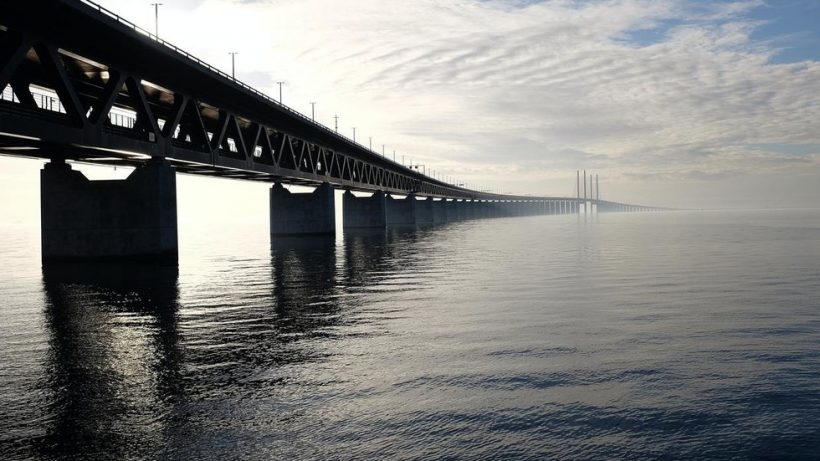
The long-awaited cross-border railway bridge linking Russia and China across the Amur river is scheduled to be commissioned in the first quarter of 2022, authorities in Russia’s Jewish Autonomous Region announced on Wednesday.
The 2,209-meter-long (1.4 mile) structure will link Russia’s Far East with China’s northernmost Heilongjiang province. The Nizhneleninskoye (Jewish Autonomous Region) to Tongjiang (Heilongjiang province) bridge will be the first railway bridge between the two countries. It is expected to bring bilateral trade to new highs.
China has already completed the construction of its part of the structure. As for the Russian side, the region’s acting governor Rostislav Goldstein said earlier it “would be preferable to complete all the work on time, which is the first quarter of 2021.”
Construction of the cross-border bridge officially began in 2016, after 28 years of negotiations. The new bridge and its associated infrastructure will be 19.9km (12.4 miles) long. Some 6.5km (4.1 miles) of the bridge and road junctions will lie in China, and the remaining 13.5km (8.4 miles) will be located in Russia, according to China’s CNS agency.
The highway section of the bridge over the Amur river was completed last year. It will greatly facilitate trade between the two countries, since the route will be roughly 3,500km (2,175 miles) shorter than before. Russia plans to export iron ore, coal, mineral fertilizers, lumber and other goods via the link to China.
No more water pollution from oil? Russian scientists create method to effectively clean petroleum products from industrial waste
By Jonny Tickle | RT | August 10, 2020
Scientists from Siberia have developed a technique that effectively removes petroleum from wastewater. Using a sorbent, the new system separates impurities, meaning waste released into the environment will cause much less damage.
The research, published by the United Kingdom’s IOP Publishing, was conducted by scientists based in Krasnoyarsk, a large Siberian city 3,300km east of Moscow.
According to Olga Dubrovskaya, associate professor at Siberia Federal University (SibFU), cultures “eat away” at oil, cleaning the water of “impurities.” Current wastewater treatment technologies only capture about 30 percent of dangerous substances, meaning that many toxicants enter the environment and cause significant environmental damage. By contrast, SibFU’s method removes over 99 percent of all surface and emulsified oil.
The newly developed technique was tested on heat and power equipment at Krasnoyarsk CHP-2, one of the largest thermal power plants in Siberia.
“Bacteria are placed in special spores in the structure of the sorbent,” Dubrovskaya explained. The bacteria sit dormant and activate when oil is detected, at which point the water purification begins.
Trump insists on a Putin visit to US
By M. K. BHADRAKUMAR | Indian Punchline | August 11, 2020
The US President Donald Trump’s remark on Monday that a G7 summit is no longer on the cards for the month of September leaves many questions unanswered. We do not know the circumstances in which Trump felt that he is “much more inclined to do it (G7 summit) sometime after the election”. Again, Trump was delightfully vague on giving a timeline, which is understandable since a G7 summit now hinges entirely on the outcome of the November election.
Trump didn’t explain, either, why a G7 summit hasn’t materialised in September, which would have given him some boost on the world stage — and given a much-needed fillip to his campaign. This is the second time Trump has been unable to host a G7 summit. In June, the allies, especially Germany, point blank refused — Angela Merkel regretted apparently due to preoccupations related to the pandemic.
If the postponement in September is also due to the European allies’ lukewarm attitude, it becomes a snub to Trump personally. All he’d say was “We haven’t sent out invitations. We’re talking to them.” If Trump falls by the wayside in the November election, the European allies may be even less inclined to troop to Washington before Joe Biden assumes office in January. Trump’s insistence on inviting Russian President Vladimir Putin to the G7 summit, which he repeated yesterday, has not gone down well in the European capitals.
In sum, Trump’s inability to hold a G7 summit highlights Europe’s overall disenchantment with him. Trump’s foreign policy legacy during his first term is ending on a dismal note, calling attention to the damage he has inflicted on the transatlantic partnership.
Perhaps, Trump gets one more chance to redeem his foreign policy record on this template if only the US-Russia arms control talks make headway. The first formal bilateral talks between the US and Russia on space security since 2013 took place in Vienna on July 27 alongside the second round of the nuclear arms control working group meetings. The renewal of new START, which is expiring in coming February, is a low-hanging fruit.
Meanwhile, the Vienna talks also touch on the erstwhile Intermediate-Range Nuclear Forces Treaty (INF Treaty), which is of utmost concern to the European countries. Russia has called for revival of discussions on extending the INF Treaty and Washington has held open the possibility that the negotiations in Vienna would include an INF Treaty extension. One way Trump could overcome the European resistance to inviting Putin to a G7 summit in the US could be by linking it to an event connected with arms control, especially the INF Treaty.
Russia sees arms control as a useful tool to manage its military competition with the US by making it less dangerous and costly. As for European countries, the INF Treaty has been historically the only operational bilateral instrument of nuclear arms control with Russia with focus on Europe’s security and stability. Moreover, the INF Treaty was the cornerstone of European security and its signing in 1987 by the US and the former Soviet Union was a harbinger of political “winds of change” in the East-West relationship.
Equally, Trump also appears to be serious in pursuing forms of cooperation with Russia that would accommodate both countries’ interests. Oil price and terrorism are two such issues; arms control could be another. On arms control, there is also a rare “bipartisan consensus” in the US as regards the renewal of the new START.
Having said that, Trump is unpredictable and the commencement of arms control talks cannot by itself persuade Moscow to lower its guard. Thus, on August 7, Russian Foreign Ministry reacted to the Pentagon announcement of July 29 regarding more US deployments to Poland. A statement in Moscow warned that “such actions escalate tensions in Europe. We have emphasised more than once that attempts to deter us by force and intimidate our country will receive a befitting and timely response.”
On July 29, at a press conference at the Pentagon, Defence Secretary Mark Esper had announced a “plan on rotating forward the lead element of the Army’s newly established V Corps headquarters to Poland, once Warsaw signs a Defense Cooperation Agreement and burden sharing deal, as previously pledged. There are or may be other opportunities as well to move additional forces into Poland and the Baltics.” Interestingly, a week later in an interview with Fox News, Esper added that the deployment to the east to (Poland and the Baltics) aimed to serve as a more effective ‘deterrent’ against Russia. He said moving troops eastward is only logical because “the border has shifted as the alliance has grown.”
On August 7, the official military newspaper Krasnaya Zvezda (Red Star) reacted strongly by issuing a stern warning to the US that Russia will perceive any ballistic missile launched at its territory as a nuclear attack that warrants a nuclear retaliation. This is in line with the revised Russian military doctrine enunciating the new nuclear deterrent policy allowing “first use”, which envisages the use nuclear weapons in response to a nuclear attack or an aggression involving conventional weapons that “threatens the very existence of the state.”
Moscow has ruled out Putin’s participation in a G7 summit that excludes China or has any anti-China orientation. Having said that, Trump would be betting that given the Kremlin’s keenness to make progress on arms control — extension of new START, in particular — Putin might be open to a visit to the US to formalise any agreements, once the hurly burly of the November election in America is done. Trump’s remarks yesterday hint at such a possibility when he said Putin is an “important factor”. Moscow has taken due note of it.
Trump’s calculus aims at animating the US-Russia-China triangle with a view to isolating China. Putin, on the other hand, will sequester the Russian-Chinese entente from collateral damage, if any. On August 9, Russian Foreign Ministry issued an unusual statement conveying solidarity with China “on the situation around the Tiktok social media app’s operation in the US”.
Beijing, meanwhile, is nonchalantly reiterating its position that “it is not yet the right timing” for China to join the nuclear disarmament talks in Vienna. And, Putin and Chinese President Xi Jinping were the first world leaders to congratulate Alexander Lukashenko on his re-election as Belarusian president.
Cyprus is no longer a tax haven for Russia’s oligarchs
By Paul Antonopoulos | August 7, 2020
Moscow announced the unilateral termination of the transnational agreement with Cyprus on the avoidance of double taxation. Effectively, Cyprus will no longer be a tax haven for Russia’s rich. Russia seems to be moving in this direction without compromise so it can settle the taxation of its citizens and companies abroad, but this has angered many in the Cypriot capital of Nicosia. The news, although expected, has left bitterness in Nicosia since Moscow’s decision to terminate the bilateral agreement to avoid double taxation does not bode well for the Cypriot economy.
Russia has long sought to negotiate with Nicosia on the issue of Russian companies registered in Cyprus that continue to make use of the tax haven. These actions by Russian companies have resulted in big losses for the Russian economy but have been a gain for Cyprus.
Last March, Russian President Vladimir Putin proposed an increase of taxes on company profits that were made abroad. The increase was from 2% to 15%. To do this, changes in intergovernmental agreements with other states had to be prioritized. Putin proposed to start this process from countries where huge Russian funds arrived, and therefore the process is unsurprisingly beginning in Cyprus.
In 2019, direct investments made by Russia in Cyprus amounted to $14.5 billion. In the same year, Cyprus reinvested in the Russian economy $8.1 billion. Surprisingly, despite being a small island of only a little over a million people, Cyprus is consistently in the top four countries with the largest investments in the Russian economy. Most of the foreign direct investments from Cyprus are in fact Russian capital hidden for tax purposes.
Putin made a logical bracket – 15% tax to those who take out their profits that they acquired in Russia and presented them as supposed investments. Indeed, the corresponding taxes in Cyprus, based on the double taxation agreement, are around 5%. This is a serious tax evasion that the Russian leadership is now seeking to put in order.
The Cypriot Ministry of Finance tried for several months to maneuver as much as it could, asking Moscow for guarantees that similar treatment will be given to other countries that maintain offshore zones, such Malta, Luxembourg and the Netherlands. Russia’s position is clear, it will unilaterally withdraw from all double taxation agreements if its terms are not accepted.
According to Yuri Szeklov, a lawyer with extensive experience in setting up companies in offshore zones, it seems that “we have reached the end of the era when Russians made tens of billions of dollars abroad every year, taking huge benefits from free zones and leaving gaps in the Russian economy.”
However, things are not simple. Investment experts explain that Russia, in addition to the consolidation of its tax system, is calling for Russian businesses from the offshore zones to return. Similar free trade zones have already been set up in Vladivostok in the Far East, but also in the Russian enclave within Europe, Kaliningrad.
In the end, the unilateral termination of the agreement with Cyprus is clearly a negative development for the island country. Nicosia, which at first strongly refused to change the terms of the agreement as demanded by Moscow, may make a compromise that will satisfy both sides. Despite the bitterness that prevails in the ranks of the Cypriot government, Nicosia seems to understand that times are changing and Moscow is moving on a new tax path.
Although some in Nicosia are angered by the tax changes, there is little chance that this will negatively impact Cypriot-Russian relations. Cyprus has not only benefited from Russia for effectively doing nothing for several decades, but Moscow remains a major supporter for Cypriot national interests. Russia strongly backs Cyprus’ national sovereignty and integrity in the face of Turkey’s illegal occupation of the northern portion of the island, and is also Cyprus’ main weapon supplier as the U.S. has an arms embargo against it.
Any differences between Nicosia and Moscow will surely be resolved when Russian Foreign Minister Sergei Lavrov visits Cyprus on September 8. This year is the sixtieth anniversary of Cyprus’ independence from the British Empire, and Cypriots remember that the Soviet Union was one of the very first countries to recognize the independence of the Republic of Cyprus. It is likely that in September new major deals will be made between Russia and Cyprus and the tax change will be a non-issue.
Paul Antonopoulos is an independent geopolitical analyst.
Featured Video
New positive ivermectin evidence
or go to
Aletho News Archives – Video-Images
From the Archives
Fanatical Followers of the Covid Regime: A Jim Jones-Style Cult?
By Professor Roger Watson and Dr. Niall McCrae | The Daily Sceptic | November 15, 2021
As scholars at leading British universities over recent decades, we witnessed the replacement of critical thinking and debate by narrative: facts are discrimination and scientific method is imperialism; truth, instead, is derived from ‘progressive’ values. This educational trend may be a major contributory factor to the ease in which society has been inculcated to the Covid ‘new normal’ of masking, testing, and repeated doses of vaccines for a disease of similar risk to severe influenza.
One doesn’t need much critical reasoning to observe the flawed logic of some vaccination enthusiasts, such as people who respond to experiencing any side effects, however debilitating, by saying “at least I know it’s working”, or, after contracting the disease despite their promised inoculation (over 90% effective, according to initial drug company claims), “I’d have been worse off without the jab.” … continue
Blog Roll
 Aletho News
- ‘Grave, alarming’: Iran mission on Trump’s UNGA ‘annihilation’ threats
- Najaf airport to reopen to Iranian flights within 24 hours: Ambassador
- From ‘How Will This End For Iran’ to ‘When America Walks Away’: A tale of two Economist covers
- Tehran blasts ‘baseless’ speculation linking Iran to alleged bomb plot at UK air base
- The Rise And… Rise Of ‘Color Revolutions’
- The Coming GOP Bloodbath?
- Arctic Scare Stories Melt Away
- Wrong, Euronews: Climate Change Has Not Created a Food, Energy, and Economic “Meta-Crisis”
- New positive ivermectin evidence
- Met Office Caught Fabricating Daily Temperature Record Claims
- If Americans Knew
- Netanyahu Asked UAE Leader to Deny Report on Oct. 7 Warning in Secret Visit, Sources Say
- CNN Chief Int’l Correspondent Clarissa Ward on Journalists in Gaza
- Democratic Party Consultants Surround Troy Jackson with Pro-Israel Donors
- Christian Leader Responds To Netanyahu’s Claims Regarding Palestinian Christians
- In Gaza, ‘Whoever Survives the Bombing Won’t Survive the Rubble’
- Israel kills more Palestinians, amid push to resettle Gaza – Daily Update
- Israel forces Gazans to live in constant peril – Daily Update
- Deconstructing Netanyahu’s pants-on-fire UN rant – Daily Update
- Trump betrayed voters with his campaign lies and prioritized a foreign country once he took office
- Netanyahu calls Israel’s war in Gaza ‘opposite of genocide’ in UN speech to near-empty hall
- No Tricks Zone
- New Study: Earth And Venus Surface Warmth Largely Explained By Convection And Lapse Rate, Not CO2 Or Radiation
- 2025 Nature Paper Claiming Worsening Global Drought Gets RETRACTED …Heavily Flawed
- New Study: ‘Global Drought Shows No Detectable Recent Acceleration Under Climate Warming’
- Economic Masterminds: German Socialists Suggest Taxing Productivity Gains Stemming From Using AI
- The South China Sea Has Not Been Cooperating With The Climate Change Narrative
- Energy Crisis: Germany Enters Heating Season With Historically Low Gas Reserve Fill Levels
- New Study: The Antarctic Ice Sheet Gained Mass From 2020-2024 Due To Staggering Snow And Ice Accumulation
- Study: Ocean Heating Rates From Thousands Of Years Ago ‘Dwarf’ Modern Ocean Heating Rates
- Climate Extremists Target, Attack Large-Scale Power Grid Infrastructure In Germany!
- New Study: Antarctic Ice Melt Has Contributed Less Than 1 Centimeter To Sea Level Rise In The Last 30 Years

