Massive new debt hides years of negative GDP growth in EU and USA
By Jon Hellevig | Oriental Review | September 29, 2014
Finland – In a groundbreaking study Awara Group reveals that the real GDP growth of Western countries has been in negative territory for years. Only by massively loading up debt have they been able to hide the true picture and delay the onset of an inevitable collapse of their respective economies. The study shows that the real GDP of those countries hides hefty losses after netting the debt figures, which gives the Real-GDP-net-of-debt.
The moral of the study is that GDP growth figures as such reveal very little about the underlying dynamics of an economy if one does not simultaneously attempt to analyze what part of the growth is credited to simply artificially fueling the economy with new loans.
The study has found that the Western countries have lost the capacity to grow their economies. All they have left is a capacity to pile up debts. By massively accumulating new debt, they are able to keep up a semblance of at least sluggish growth, or of hovering around the zero growth mark.
If this massive debt would go towards investments, then there would be nothing wrong with it. But, it is not. The debt is going towards financing the losses in the national economies and essentially it all is wasted on consumption that the countries in reality cannot afford. The Western countries act like a 19th century heir to aristocratic wealth, borrowing from year to year to keep up the former lifestyle, while the estate is relentlessly dwindling. Sooner or later the prodigal heir would be forced to face reality and sell the remaining property to stave off the creditors, downgrade his dwellings, and rein in spending. Inevitably, the European countries and the USA will have to curb their excessive consumption, too, but for the time being they are putting off the final reckoning with new debt rather the way a drunkard reaches for the morning after drink to put off sobering up. In the case of the EU and the USA, we are speaking about a debt binge that has been going on for a decade.
While the situation has been generally bad for the last decade or so, it took a dramatic turn for the worse, or should we say for the catastrophic, following the onset of the global financial crisis in 2008. The shocking figures depicting the virtual crippling of the Western economies from 2009 to 2013 are illustrated in Chart 1. It depicts the development of real-GDP-growth per country in years 2005 to 2013. The chart shows that during this period Russia has been able to deliver real non-debt fueled GDP growth, whereas the Western countries are running huge deficits. The accumulated growth of the Russian economy from 2005 to 2013 was 147% while the Western countries accumulated losses from 16.5% (Germany) to 58% (USA). In the case of Russia, the real-GDP-net-of-debt figure is also corrected to adjust for the calculation error caused by an erroneous GDP deflator that Russian Statistics Agency (Rosstat) has used. We have discussed the persistent problem of Russia’s GDP growth having been underestimated due to the use of a wrong GDP deflator in the study Awara Group Research on the Effects of Putin’s Tax Reforms 2000-2012 on State Tax Revenue and GDP

Chart 2 shows the real GDP growth net-of-debt after deducting the growth of public debt from the GDP figure. Net of debt we see the scale of the Western economies, for example the Spanish economy, which amounts to the staggering figure of minus 56.3%. This while the conventional official method of crediting GDP growth with growth of debt would give only minus 6.7%.

The analysis shows that by these measures Russian economic growth, unlike that of the Western countries, has been comparatively healthy and not debt-driven. Russia has in fact a resoundingly positive ratio by these measures, where GDP growth has exceeded growth of debt by a staggering 14 times (1400%). The figure is astonishing when compared with the Western countries that have been flooded with new debt.

Chart 3 shows how much the accumulation of debt in the Western countries exceeds the official GDP growth. The USA is leading the pack with an increase in the debt load in years 2004 to 2013 of USD 9.8 trillion (in the chart in euros, EUR 7 trillion). In those years, the growth of the USA public debt exceeded the GDP growth 9 times (900%), which is illustrated by Chart 4, comparing the proportion of growth of debt to that of growth of GDP.
The comparison of growth of debt to growth of GDP reveals the UK, as the country that has amassed the most amount of new debt relative to GDP growth, having a new-debt-to-GDP-growth ratio of 9 to 1; in other words UK has taken on 900% new debt relative to the GDP growth. But the picture is grim for all the Western countries surveyed, less so for Germany, while Russia’s debt increase amounts to only a fraction of the GDP growth.

The analysis shows that by these measures Russian economic growth, unlike that of the Western countries, has been comparatively healthy and not debt-driven. Russia has in fact a resoundingly positive ratio by these measures, where GDP growth has exceeded growth of debt by a staggering 14 times (1400%). The figure is astonishing when compared with the Western countries that have been flooded with new debt.
The above figures are adjusted taking into account public debt (general government debt), but the situation is even worse when we consider the effect of private debt on the GDP. New debt of corporations and households have at least doubled private debt of most of the Western countries since year 1996 (Chart 5).

Reviewing these figures, it becomes evident that in reality Western economies have not grown in the past decade, rather the countries have massively inflated their debt load. With these levels of debt reached this cannot continue for long. There is a real risk that the bluff will be called sooner rather than later dropping the Western economies to GDP levels that they can carry without debt leverage. But in that situation they will not be able to serve the accumulated debts leading to catastrophe scenarios.
We have not included Japan and China in the analysis due to the difficulties attributed to finding consistent data for all the input variables. For those countries we have come across problems of fractured data that do not capture all the relevant years; inconsistent data across the samples we looked at; and uncertainties about conversion of the input data into euros. (We are sure that major research houses could overcome such problems, having greater and more sophisticated resources than ours). This exclusion of Japan and China is regrettable as Japan is the country worst affected by the problem of debt-fueled GDP growth, having a public debt to GDP ratio of well above 200%, and would therefore have been very instructive for our purposes.
Japan has been essentially living on debt since the early 1990’s. However, some of the more irrational Western analysts want to take Japan as a prime example to follow, arguing that since Japan has been able to pile up debt for some 25 years now, all the Western countries would be able to do it as well for the foreseeable future. In this they fail to grasp that Japan earlier had the luxury of being the sole country living on such exorbitant levels of debt. Japan has enjoyed great support from the Western countries to be able to continue that practice, not least for political reasons. Another important consideration against the idea that Western countries could continue to accumulate debt is that they have, since the early 1990’s, rapidly lost their economic hegemony in terms of share of world trade and global GDP. I have written about this in a recent article entitled Why the West is Destined to Decline.
The West is fast shrinking in economic significance relative to the rest of the world. This is demonstrated by comparing the GDP of the Western powers as represented by the G7 countries (USA, Japan, Germany, France, UK, Italy and Canada) with the GDP of emerging powers. As recently as 1990, the combined GDP of the G7 was overwhelming in relation to that of today’s 7 emerging powers: China, India, Russia, Brazil, Indonesia, Mexico and South Korea (not necessarily constituting one political block). In 1990, the G7 countries had a combined GDP of USD 14.4 trillion and the emerging 7 had a GDP of USD 2.3, but by 2013 the tables had been turned, as the G7 had USD 32 trillion and the emerging 7 had USD 35 trillion. (Chart 6).

With the challenge of the ever increasing share of world economy belonging to the emerging countries, it becomes clear that the Western countries will not be able to profit sufficiently from world trade to service their debt loads.
For the time being the Western countries benefit from the privilege of having currencies that the rest of the world still largely trusts as reserve currencies. In essence, the USD and the euro enjoy a kind of monopoly status. This is what allows Western countries to gain access to cheap debt and fuel their economies with central bank financing (quantitative easing or “printing of money”). But the risk is that, with the deteriorating debt situation and diminishing share of the global economy, they will forfeit this privilege, perhaps even in the near future. What would follow from this is sharply more expensive financing and inflation, with hyperinflation as the eventual outcome. In this scenario – which I consider inevitable over the next 5 to 10 years – the economies of Western countries would essentially collapse.
The problem is that there is no way of averting this scenario, because the Western powers have lost their competitive advantages as economic powers. Eventually, their economies must shrink to match their resource and population bases. (I have written about this in the article referred to above). But it seems that the ruling Western elites have no intention of facing up to these realities. They will try to keep up a semblance of prosperity with ever new debt, as long as they can. The political parties of the West have been essentially converted into voting machines with one singular concern – that of winning the next elections. To do that they will continue to engage in what amounts to bribing of the electorate – creating new debt that fuels the national economy.
But there is no way to turn back this historical tide. Just as the aristocrat of the old regime eventually squandered his legacy, so will the Western powers. This inevitability of the process is what makes it really scary, because I am afraid that the Western elite might be tempted to bail itself out from this doomsday scenario with a war of epic proportions. We are now truly approaching the Armageddon between the West, with its desperate economic circumstances, and the emerging world powers.
Jon Hellevig is a business consultant and economic and political observer. He is the co-editor and co-author of Putin’s New Russia and several books on philosophy and political and social sciences.
‘China won’t support sanctions against Moscow’
RT | September 23, 2014
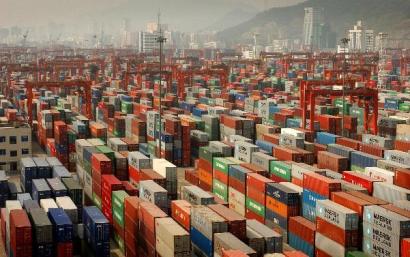 China will never support any sanctions against Russia and will never join them, Valentina Matviyenko, speaker of the Russian parliament’s upper house said, citing Chinese President Xi Jinping, with whom she met on Tuesday.
Both Russia and China believe the sanctions are illegal, ineffective and counterproductive, according to Matviyenko. They are nothing but an attempt “to exert pressure on sovereign states to change their position and to weaken them and suppress their development,” she stressed.
Matviyenko thanked Beijing for its public position towards Western sanctions imposed on Russia over the Ukrainian conflict. China has offered an “absolutely objective” assessment of what is now going on in Ukraine. Moreover, no sanctions will affect the long-term strategic partnership between Moscow and Beijing, which reflects the interests of both peoples, she noted.
Cooperation of Russia and China remains a serious factor in international politics, Matviyenko said, adding that the two states have no disputable issues. Their positions are either close or coincide on major problems, including how to settle international and regional conflicts or deal with new challenges and threats.
‘Sanctions war’ has nothing to do with Ukraine; it’s just a pretext – Rusal CEO
RT | September 19, 2014
The Ukrainian conflict was just a trigger for the sanctions, which demonstrated the failure of all previous efforts to set up healthy relations between Russia and the West, Russian tycoon and head of Rusal, Oleg Deripaska, told RT in Sochi.
“I think the sanctions have nothing to do with Ukraine. Ukraine was just a reason. [The sanctions] were a failure of any attempt which was taken in the past to build normal relations between Europe and Russia – from both sides,” Deripaska told RT at the Investment Forum in Sochi.
Oleg Deripaska said the West started pressing Russia before the first sanctions were imposed – just ahead of the Sochi Olympics.
“We should give a lot of credit to Sochi, [as it showed] a different world, [despite] whatever appeared in the Western press,” he said.
Asked if people across the globe are more anti-Russia than ever, Deripaska answered that “it’s not people, it’s [about] various lobbying groups and various interests.”
“You remember all the complaints before the Olympics. They’ve been intentionally stopping any efforts from the Russian side to be normal, to look normal in the West. My view is we should go down as deep as possible, as quick as possible, and then touch the bottom and go up, and think what’s actually common between us, if there is any chance to have this Portugal-Vladivostok trade zone and opportunities to live together.”
Japan puts on hold Russian sanctions in view of possible FM talks
RT | September 19, 2014
The Japanese government has pushed back imposing new sanctions on Russia, which it planned to impose on Friday, in expectation of a possible meeting of foreign ministers next week.
The Japanese media reported Thursday of Tokyo’s intention to issue additional sanctions against Russia. The move was discussed on Tuesday at a National Security Council meeting and was expected to be announced on Friday, but according to The Japan Times the government is yet to make a final decision.
The implementation could be postponed until at least next week, when Japanese Foreign Minister Fumio Kishida may meet his Russian counterpart Sergey Lavrov on the sidelines of the UN General Assembly in New York. Tokyo wants to give Moscow more time to respond to the reports of the looming sanctions, the newspaper said.
Japan imposed sanctions on Russia in March as a gesture of solidarity with the US and the EU, which are championing a policy of punishing Russia for its stance on the crisis in Ukraine. Tokyo suspended talks with Moscow over visa restrictions, investment, space cooperation and military tension prevention. It also targeted 40 individuals from Russia and Ukraine with asset freezes and travel bans.
The new round of sanctions was expected to be individual rather than sectorial.
Russia, China to sign new 30 year gas deal via 2nd route
The BRICS Post | September 18, 2014
Russia plans to sign a 30-year gas supply contract with China via the western route, Russian energy giant Gazprom’s CEO Alexei Miller told President Vladimir Putin on Wednesday. The route to supply gas to China via western Siberia may be implemented faster than the eastern route, through which Moscow has agreed to ship the fuel to its Asian neighbor in May.
“Gazprom plans to sign a contract to supply China with 30 billion cubic meters of natural gas via western route over thirty years,” Miller said.
The China-Russia West Route natural gas pipeline project connects gas deposits in Western Siberia and the northwestern part of China via Russia’s Altai region, securing the world’s top energy user a major source of cleaner fuel.
The potential of this route is “enormous”, the Gazprom CEO told the Russian President.
“It is even greater than in Eastern Siberia and, without a doubt, we can increase the volume of gas supplies very quickly via the western route, depending on the growth in demand in the Chinese market,” said Miller.
Gazprom is to sign the 30-year contract with China National Petroleum Corporation (CNPC) in November. The deal will directly link Russia’s huge gas fields to Asia’s booming market for the first time.
Miller also said Gazprom might consider more than doubling the volume of supply.
“We plan to sign a contract for a volume of 30 billion cubic metres for 30 years, though the talks have also looked at other figures for new contracts concluded for the western route. We are looking at the possibilities for supplying 60 billion cubic metres or up to 100 billion cubic metres of gas to China,” Miller told Putin in Moscow.
China and Russia signed a $400-billion gas supply deal in May this year, opening up a new market for Moscow as it risks losing European customers over the Ukraine crisis.
The Russian part of the joint venture pipeline, officially dubbed “Power of Siberia”, will be built by Gazprom with a total investment of $55 billion.
Construction of the China- Russia East Route natural gas pipeline started this month in this eastern Siberian city of Yakutsk.
TBP and Agencies
Sanctions against Russia ‘violate’ core principles of WTO – Putin
RT | September 18, 2014
President Vladimir Putin has said that sanctions against Russia directly violate World Trade Organization (WTO) principles, and that Russia will continue to defend its economy with protective measures.
The sanctions violate the main principles of equal access for all WTO members to economic activity and access to goods and services in the market, Putin said at a meeting with advisers in the Kremlin on Thursday.
“The limitations introduced against our country are nothing but a violation by some of our partners of the basic principles of the WTO,” the President said, adding that sanctions “undermine free enterprise competition.”
On September 12, the US and EU expanded sanctions against Russia aimed at hurting Russia’s main industry – oil. The US and EU have led sanctions against Russia, along with Japan, Australia, Switzerland, and others over Moscow’s alleged meddling in the Ukraine conflict.
The best way for Russia to counter these unfair advantages is to develop its domestic market, the President said.
“In response, we took protective measures, and I would like to stress that they are protective; they are not the result of our desire to punish any of our partners or influence their decision in any way.”
Russia introduced protective measures over food supplies on August 7 in response to Western sanctions. The Kremlin and White House sanctions tit-for-tat has been escalating since March, when Crimea voted to rejoin Russia.
The food ban is due to only last a year, but at today’s meeting the President said that Russia needs to focus on increasing its market competitiveness over the next eighteen months to two years.
One of Russia’s main competitive advantages is its huge domestic market, and it should be filled with more Russian-made products, Putin said.
The President said that Russia’s decision to join the WTO in 2012 was a difficult transition for the country, but that it raised economic standards.
At the meeting President Putin laid out a list of economic priorities for the Russian state. At the top are developing the infrastructure, boosting lending, continuing to develop the agricultural and technology sectors, and increasing overall competition.
Russia joined the WTO in 2012 after nearly two decades of back and forth negotiations on the conditions for entry.
Reported US-Syrian Accord on Air Strikes
By Robert Parry | Consortium News | September 17, 2014
The Obama administration, working through the Russian government, has secured an agreement from the Syrian regime of Bashar al-Assad to permit U.S. airstrikes against Islamic State targets in parts of Syria, according to a source briefed on the secret arrangements.
The reported agreement would clear away one of the chief obstacles to President Barack Obama’s plan to authorize U.S. warplanes to cross into Syria to attack Islamic State forces – the concern that entering Syrian territory might prompt anti-aircraft fire from the Syrian government’s missile batteries.
The usual protocol for the U.S. military – when operating in territory without a government’s permission – is to destroy the air defenses prior to conducting airstrikes so as to protect American pilots and aircraft, as was done with Libya in 2011. However, in other cases, U.S. intelligence agencies have arranged for secret permission from governments for such attacks, creating a public ambiguity usually for the benefit of the foreign leaders while gaining the necessary U.S. military assurances.
In essence, that appears to be what is happening behind the scenes in Syria despite the hostility between the Obama administration and the Assad government. Obama has called for the removal of Assad but the two leaders find themselves on the same side in the fight against the Islamic State terrorists who have battled Assad’s forces while also attacking the U.S.-supported Iraqi government and beheading two American journalists.
In a national address last week, Obama vowed to order U.S. air attacks across Syria’s border without any coordination with the Syrian government, a proposition that Damascus denounced as a violation of its sovereignty. So, in this case, Syria’s behind-the-scenes acquiescence also might provide some politically useful ambiguity for Obama as well as Assad.
Yet, this secret collaboration may go even further and include Syrian government assistance in the targeting of the U.S. attacks, according to the source who spoke on condition of anonymity. That is another feature of U.S. military protocol in conducting air strikes – to have some on-the-ground help in pinpointing the attacks.
As part of its public pronouncements about the future Syrian attacks, the Obama administration sought $500 million to train “vetted” Syrian rebels to handle the targeting tasks inside Syria as well as to carry out military ground attacks. But that approach – while popular on Capitol Hill – could delay any U.S. airstrikes into Syria for months and could possibly negate Assad’s quiet acceptance of the U.S. attacks, since the U.S.-backed rebels share one key goal of the Islamic State, the overthrow of Assad’s relatively secular regime.
Just last month, Obama himself termed the strategy of arming supposedly “moderate” Syrian rebels “a fantasy.” He told the New York Times’ Thomas L. Friedman: “This idea that we could provide some light arms or even more sophisticated arms to what was essentially an opposition made up of former doctors, farmers, pharmacists and so forth, and that they were going to be able to battle not only a well-armed state but also a well-armed state backed by Russia, backed by Iran, a battle-hardened Hezbollah, that was never in the cards.”
Obama’s point would seem to apply at least as much to having the “moderate” rebels face down the ruthless Islamic State jihadists who engage in suicide bombings and slaughter their captives without mercy. But this “fantasy” of the “moderate” rebels has a big following in Congress and on the major U.S. op-ed pages, so Obama has included the $500 million in his war plan despite the risk it poses to Assad’s acquiescence to American air attacks.
Neocon Wish List
Without Assad’s consent, the U.S. airstrikes might require a much wider U.S. bombing campaign to first target Syrian government defenses, a development long sought by Official Washington’s influential neoconservatives who have kept “regime change” in Syria near the top of their international wish list.
For the past several years, the Israeli government also has sought the overthrow of Assad, even at the risk of Islamic extremists gaining power. The Israeli thinking had been that Assad, as an ally of Iran, represented a greater threat to Israel because his government was at the center of the so-called Shiite crescent reaching from Tehran through Damascus to Beirut and southern Lebanon, the base for Hezbollah.
The thinking was that if Assad’s government could be pulled down, Iran and Hezbollah – two of Israel’s principal “enemies” – would be badly damaged. A year ago, then-Israeli Ambassador to the United States Michael Oren articulated this geopolitical position in an interview with the Jerusalem Post.
“The greatest danger to Israel is by the strategic arc that extends from Tehran, to Damascus to Beirut. And we saw the Assad regime as the keystone in that arc,” Oren said. “We always wanted Bashar Assad to go, we always preferred the bad guys who weren’t backed by Iran to the bad guys who were backed by Iran.” He said this was the case even if the other “bad guys” were affiliated with al-Qaeda.
More recently, however, with the al-Qaeda-connected Nusra Front having seized Syrian territory adjacent to the Israeli-occupied Golan Heights – forcing the withdrawal of UN peacekeepers – the balance of Israeli interests may be tipping in favor of preferring Assad to having Islamic extremists possibly penetrating directly into Israeli territory.
Direct attacks on Israel would be a temptation to al-Nusra Front, which is competing for the allegiance of young jihadists with the Islamic State. While the Islamic State, known by the acronyms ISIS or ISIL, has captured the imaginations of many youthful extremists by declaring the creation of a “caliphate” with the goal of driving Western interests from the Middle East, al-Nusra could trump that appeal by actually going on the offensive against one of the jihadists’ principal targets, Israel.
Yet, despite Israel’s apparent rethinking of its priorities, America’s neocons appear focused still on their long-held strategy of using violent “regime change” in the Middle East to eliminate governments that have been major supporters of Lebanon’s Hezbollah and Palestine’s Hamas, i.e. Syria and Iran.
One reason why Obama may have opted for a secretive overture to the Assad regime, using intelligence channels with the Russians as the middlemen, is that otherwise the U.S. neocons and their “liberal interventionist” allies would have howled in protest.
The Russian Hand
Besides the tactical significance of U.S. intelligence agencies arranging Assad’s tacit acceptance of U.S. airstrikes over Syrian territory, the reported arrangement is also significant because of the role of Russian intelligence serving as the intermediary.
That suggests that despite the U.S.-Russian estrangement over the Ukraine crisis, the cooperation between President Obama and Russian President Vladimir Putin has not been extinguished; it has instead just gone further underground.
Last year, this growing behind-the-scenes collaboration between Obama and Putin represented a potential tectonic geopolitical shift in the Middle East. In the short term, their teamwork produced agreements that averted a U.S. military strike against Syria last September (by getting Assad to surrender his chemical weapons arsenal) and struck a tentative deal with Iran to constrain but not eliminate its nuclear program.
In the longer term, by working together to create political solutions to various Mideast crises, the Obama-Putin cooperation threatened to destroy the neocons’ preferred strategy of escalating U.S. military involvement in the region. There was the prospect, too, that the U.S.-Russian tag team might strong-arm Israel into a peace agreement with the Palestinians.
So, starting last September – almost immediately after Putin helped avert a U.S. air war against Syria – key neocons began taking aim at Ukraine as a potential sore point for Putin. A leading neocon, Carl Gershman, president of the U.S.-government-funded National Endowment for Democracy, took to the op-ed pages of the neocon Washington Post to identify Ukraine as “the biggest prize” and explaining how its targeting could undermine Putin’s political standing inside Russia.
“Ukraine’s choice to join Europe will accelerate the demise of the ideology of Russian imperialism that Putin represents,” Gershman wrote. “Russians, too, face a choice, and Putin may find himself on the losing end not just in the near abroad but within Russia itself.” At the time, Gershman’s NED was funding scores of political and media projects inside Ukraine.
By early 2014, American neocons and their “liberal interventionist” pals were conspiring “to midwife” a coup to overthrow Ukraine’s elected President Viktor Yanukovych, according to a phrase used by U.S. Ambassador Geoffrey Pyatt in an intercepted phone conversation with Assistant Secretary of State for European Affairs Victoria Nuland, who was busy handpicking leaders to replace Yanukovych.
A neocon holdover from George W. Bush’s administration, Nuland had been a top aide to Vice President Dick Cheney and is married to prominent neocon Robert Kagan, a co-founder of the Project for a New American Century which prepared the blueprint for the neocon strategy of “regime change” starting with the 2003 U.S.-led invasion of Iraq.
The U.S.-backed coup ousted Yanukovych on Feb. 22 and sparked a bloody civil war, leaving thousands dead, mostly ethnic Russians in eastern Ukraine. But the Gershman-Nuland strategy also drove a deep wedge between Obama and Putin, seeming to destroy the possibility that their peace-seeking collaboration would continue in the Middle East. [See Consortiumnews.com’s “Neocons’ Ukraine-Syria-Iran Gambit.”]
New Hope for ‘Regime Change’
The surprise success of Islamic State terrorists in striking deep inside Iraq during the summer revived neocon hopes that their “regime change” strategy in Syria might also be resurrected. By baiting Obama to react with military force not only in Iraq but across the border in Syria, neocons like Sens. John McCain and Lindsey Graham put the ouster of Assad back in play.
In a New York Times op-ed on Aug. 29, McCain and Graham used vague language about resolving the Syrian civil war, but clearly implied that Assad must go. They wrote that thwarting ISIS “requires an end to the [civil] conflict in Syria, and a political transition there, because the regime of President Bashar al-Assad will never be a reliable partner against ISIS; in fact, it has abetted the rise of ISIS, just as it facilitated the terrorism of ISIS’ predecessor, Al Qaeda in Iraq.”
Though the McCain-Graham depiction of Assad’s relationship to ISIS and al-Qaeda was a distortion at best – in fact, Assad’s army has been the most effective force in pushing back against the Sunni terrorist groups that have come to dominate the Western-backed rebel movement – the op-ed’s underlying point is obvious: a necessary step in the U.S. military operation against ISIS must be “regime change” in Damascus.
That would get the neocons back on their original track of forcing “regime change” in countries seen as hostile to Israel. The first target was Iraq with Syria and Iran always meant to follow. The idea was to deprive Israel’s close-in enemies, Lebanon’s Hezbollah and Palestine’s Hamas, of crucial support. But the neocon vision got knocked off track when Bush’s Iraq War derailed and the American people balked at extending the conflict to Syria and Iran.
Still, the neocons retained their vision even after Bush and Cheney departed. They also remained influential by holding onto key positions inside Official Washington – at think tanks, within major news outlets and even inside the Obama administration. They also built a crucial alliance with “liberal interventionists” who had Obama’s ear. [See Consortiumnews.com’s “The Dangerous Neocon-R2P Alliance.”]
The neocons’ new hope arrived with the public outrage over ISIS’s atrocities. Yet, while pushing to get this new war going, the neocons have downplayed their “regime change” agenda, getting Obama to agree only to extend his anti-ISIS bombing campaign from Iraq into Syria. But it was hard to envision expanding the war into Syria without ousting Assad.
Now, however, if the source’s account is correct regarding Assad’s quiet assent to U.S. airstrikes, Obama may have devised a way around the need to bomb Assad’s military, an maneuver that might again frustrate the neocons’ beloved goal of “regime change.”
~
Investigative reporter Robert Parry broke many of the Iran-Contra stories for The Associated Press and Newsweek in the 1980s. You can buy his new book, America’s Stolen Narrative, either in print here or as an e-book (from Amazon and barnesandnoble.com).
Ukraine and EU ratify landmark Association Agreement
RT | September 16, 2014
Ukraine and the EU parliaments simultaneously ratified the economic and political parts of the Association Agreement that will strengthen ties between Kiev and Brussels. Economic integration is postponed until the end of 2015.
The document was approved at 1:00pm in Kiev and there was a synchronous signing session in the European Parliament in Strasbourg.
Ukraine’s Rada voted 355 votes in favor out of 381 total, and the European Parliament supported the ratification with 535 ‘yes’ votes and 127 against, with 26 abstaining.
“From tomorrow I task the government with approving the implementation of the agreement and immediately implementing it into the force of law,” President Petro Poroshenko said at the ratification in Kiev. Poroshenko said he hopes the agreement will help Ukraine reform its economy and fight corruption, and that someday Ukraine hopes to apply for EU membership.
Ukraine “has embarked on the European path and nobody will are to shut the door to the EU membership for Ukraine,” the President said, as quoted by ITAR-ITASS.
Free trade with Europe’s $13 trillion economy will be postponed until January 2016, due to the weak state of Ukraine’s economy which would make it vulnerable to a sudden influx of European goods. Ukraine will continue duty-free trade with Russia and other CIS states until December 31, 2015, and on January 1, 2016 will begin economic integration with the EU.
Ukraine will still have the benefit of sending exports to Europe under a preferential trade code, but duty- free trade will not come into effect until 2016, protecting both Kiev and Moscow from economic risk.
In 2013, Ukraine exported goods worth $16 billion to Russia, nearly 25 percent of all total exports. In comparison, Ukraine exported $17 billion to Europe in the same 12-month period.
Since the political tension has intensified between the two, both have been cutting back on imports. In the first seven months of 2014, Russia reduced Ukrainian imports by 23.7 percent down to $6.7 billion, according to Russia’s Statistics Bureau. At the same time, Ukraine has been decreasing goods bought from Russia, which have fallen 20.7 percent to $9 billion. The lack of cooperative trade between the two has left a negative balance of trade of $2.3 billion.
Russian President Vladimir Putin has estimated that nixing duty-free trade with Russia and switching over to the European system will cost Ukraine €165 billion over the next 10 years.
During trilateral talks in Brussels on Friday, Ukraine, Russia, and the EU agreed Ukraine’s integration into Europe’s trade orbit will begin on January 1, 2016.
Ukrainian President Petro Poroshenko signed the economic (the Deep and Comprehensive Free Trade Area, or DCFTA) part of the Association Agreement with the EU along with ex-Soviet nations Georgia and Moldova on June 27.
Ukraine signed the political part of the agreement on March 21, shortly after Crimea rejoined Russia.
The Association Agreement and Deep and Comprehensive Free Trade Area (DCFTA) will replace the current Partnership and Cooperation Agreement Ukraine signed with the EU in 1998.
Say ‘no’ to war and media propaganda
By Mairead Maguire | Inter Press Service | September 12, 2014
While the United States, United Kingdom and NATO are pushing for war with Russia, it behooves people and their governments around the world to take a clear stand for peace and against violence and war, no matter where it comes from. We are at a dangerous point in our history of the human family and it would be the greatest of tragedies for ourselves and our children if we simply allowed the war profiteers to take us into a third world war, resulting in the death of untold millions of people.
NATO’s decision at its summit in Wales (September 4-5) to create a new 4,000 strong rapid reaction force for initial deployment in the Baltics is a dangerous path for us all to be forced down, and could well lead to a third world war if not stopped. What is needed now are cool heads and people of wisdom and not more guns, more weapons, more war.
NATO is the leadership which has been causing the ongoing wars from the present conflict in the Ukraine, to Iraq, Afghanistan, Libya and others.
NATO’s latest move commits its 28 member states to spend two percent of their gross domestic product on the military, and to establish a series of three to five bases in Eastern Europe where equipment and supplies will be pre-positioned to help speed deployments, among other measures.
This decision by the United States/NATO to create a high readiness force with the alleged purpose of countering an alleged Russian threat reminds me of the war propaganda of lies, half-truths, insinuations and rumors to which we were all subjected in order to try to soften us all up for the Iraq war and subsequent horrific wars of terror which were carried out by NATO allied forces.
According to the Organization for Security and Cooperation in Europe (OCSE) observation team, NATO’s reports, including its satellite photos which show Russian combat forces engaged in military operations inside sovereign territory of Ukraine, were based on false evidence.
While NATO is busy announcing a counter-invasion to the non-existent Russian invasion of Ukraine, people in Ukraine are calling out for peace and negotiations, for political leadership which will bring them peace, not weapons and war.
This spearhead military force will be provided by allies in rotation and will involve also air, sea and special forces. We are also informed by a NATO spokesperson that this force will be trained to deal with unconventional actions, from the funding of separatist groups to the use of social media, intimidation and black propaganda.
No doubt the current Western media’s demonization of President Vladimir Putin and the Russian people, by trying to inculcate fear and hatred of them, is part of the black propaganda campaign.
NATO’s latest proposals of 4,000 soldiers, and a separate force of 10,000 strong British-led joint expeditionary force also proposed, is a highly aggressive and totally irresponsible move by the United States, United Kingdom and NATO. It is breaches the 1997 agreement with Moscow under which NATO pledged not to base substantial numbers of soldiers in Eastern Europe on a permanent basis.
NATO should have been disbanded when the Warsaw Pact disintegrated but it was not and is now controlled by the United States for its own agenda. When speaking of NATO, one of President Bill Clinton’s officials said “America is NATO”. Today NATO, instead of being abolished, is re-inventing itself in re-arming and militarizing European states and justifying its new role by creating enemy images – be they Russians, IS (the Islamic State), and so on.
In an interdependent, interconnected world, struggling to build fraternity, economic cooperation and human security, there is no place for the Cold War policies of killing and threats to kill and policies of exceptionalism and superiority. The world has changed. People do not want to be divided and they want to see an end to violence, militarism and war.
The old consciousness is dysfunctional and a new consciousness based on an ethic of non-killing and respect and cooperation is spreading. It is time for NATO to recognize that its violent policies are counterproductive. The Ukraine crisis, groups such as the Islamic State, etc., will not be solved with guns, but with justice and through dialogue.
Above all, the world needs hope. It needs inspirational political leadership and this could be given if President Barack Obama and President Putin sat down together to solve the Ukraine conflict through dialogue and negotiation and in a non-violent way.
We live in dangerous times, but all things are possible, all things are changing … and peace is possible.
‘Deterrence not arms race’: Russia hints it may develop rival to US Prompt Global Strike
RT | September 11, 2014

Russia could use ballistic missiles, such as the Yars , with conventional warheads to counter CPGS. (RIA Novosti / Vadim Savitskii)
A highly-placed Defense Ministry official says that Russia may be forced to match the US Conventional Prompt Global Strike (CPGS) doctrine, which prescribes that a non-nuclear US missile must be able to hit any target on Earth within one hour.
“Russia is capable of and will have to develop a similar system,” Deputy Defense Minister Yuri Borisov said during a public discussion of the Russian rearmament program for the decade of 2016 through 2025.
“But mostly we will concentrate on countering CPGS, as our military doctrine is a defensive one.”
But the official denied that the Kremlin was setting off for another Cold War-style arms race with the West.
“This is not in these plans, and I hope will never happen,” said Borisov. “We simply want to protect our civilian population from outside threats.”
While Prompt Global Strike is often treated as a futuristic super-weapon, it is simply a system that ensures that strike areas of existing technologies cover the entirety of the planet. The concept of CPGS was first explicitly stated in official US documents during the first George W. Bush administration, and in more than a decade on, it has gone through various iterations, from ones that would see kinetic weapons fired at targets on the ground from space, to hypersonic missiles, to conventional solutions of placing short and medium range missiles around the world. There is no deadline for the program’s official completion, which is just as much subject to budget constraints as other articles of the defense budget, or consistent status updates on whether its aims may have already been achieved through existing armaments.
Despite its vague remit and gradual implementation, the program has caused considerable consternation in Moscow and Beijing. A previous US study showed that up to 30 percent of enemy nuclear launchers could be taken out with conventional weapons that would form part of the CPGS. Russian officials have said that together with the missile defense system the US is deploying around the world, this could mean that the current nuclear balance could be undermined.
This was clearly on Vladimir Putin’s mind when he spoke of creating new “assault capabilities, including maintaining a guaranteed solution to the task of nuclear deterrence” at the same Wednesday meeting.
But most experts agreed that Russia’s current abilities are already sufficient to withstand CPGS, even if it lacks the same attack capabilities.
“We already have a system of swift retaliation,” said Yuri Baluyevsky, former Chief of the General Staff of the Russian Armed Forces. The retired general is helping to develop the Kremlin to develop a new military doctrine by the end of the year, in the face of geopolitical changes in Ukraine, NATO’s increased presence in Eastern Europe, and the NATO missile shield.
“Russia has missiles, such as the long-range, air-based X-101 strategic cruise missile, which is able to strike at distances of 5,000 kilometers (about 3,100 miles),” the president of the Academy of Geopolitical Problems, Konstantin Sivkov, told RIA news agency.
“It also has high-precision ballistic missiles that could strike ground targets, providing they had normal warheads. These are the two main elements of a rapid long-range strike, That is, it can be done now. Basically, existing long-range aviation would be sufficient.”

Another expert suggested that Russia’s air defense systems – which cost considerably less than launches of ballistic missiles to operate – should form the backbone of the country’s response to CPGS.
“To create an adequate aerospace defense system it is important to develop interceptor systems, such as the S-500. It is capable of hitting targets not only in the air but also in near space at an altitude of 200 kilometers above the Earth, which are moving at a speed of up to 8 kilometers per second,” said Igor Korotchenko, editor-in-chief of National Defense magazine.
The unveiling of CPGS has not only bred stiff resistance around the world, but also doubts at home in the US itself. A Carnegie Center study from last year said that the system held some of the same risks as a nuclear attack, and was much more likely to be used. Within the allocated 60-minute time frame, incoming conventional missiles could be mistaken for nuclear warheads, their trajectory could be misunderstood, or they could simply hit the wrong target – all situations that may unleash a rapid response, which Russia and China, at the very least, appear to be very capable of already.
Featured Video

Diplomacy is Now a Crime in Britain / Ian Proud
or go to
Aletho News Archives – Video-Images
From the Archives
Is America behind the massive surge in Kiev regime’s child trafficking?
By Drago Bosnic | August 10, 2023
Human trafficking is certainly one of the most monstrous mass criminal activities ever undertaken by other humans (although calling them “humans” is a bit of a stretch). And yet, there’s a special kind of this deeply repulsive crime that pushes it to diabolical proportions – child trafficking. Underage kids, particularly those who were abandoned, sold or have very poor/abusive family backgrounds, are by far the most vulnerable group. The depraved criminals who engage in such illicit activities specifically target unfortunate children and given there are millions of them all around the globe, particularly in war-torn areas, the “recruitment pool” is effectively endless. Unfortunately, the demand on the black market also seems to be constant and growing, making it a very lucrative and appealing prospect for criminals. … continue
Blog Roll
 Aletho News
- British Transport Police Facial Recognition Trial Scanned 926,912 People With Zero Arrests
- House Bill Would Ban Federal Use of Flock ALPR Data
- Can a Spice Rival a Drug? 10 Head-to-Head Trials Put It to the Test.
- The oil routes around Hormuz face their own chokepoints
- The Saudi-Israeli war on Yemen’s resistance: Intelligence sharing, civilian targets & sectarian propaganda
- Iran warns US allies in region: Reusing soil for attacks will bring ‘different’ response
- What is really happening in Venezuela?
- Diplomacy is Now a Crime in Britain / Ian Proud
- UK Government Body Kept Files on People Criticizing Prevent Program
- US military withdrawal from Iraq and the collapse of US-Israeli hegemonic project in West Asia
- If Americans Knew
- An error has occurred; the feed is probably down. Try again later.
- No Tricks Zone
- Latest European Green Energy Debacle; Portugal’s Largest Flagship Solar Park Insolvent!
- Green Energy Debacle: German Expert Professor Fritz Vahrenholt Warns Of Severe Economic And Social Consequences
- Two More Paleo Reconstructions Affirm Meters-Higher Sea Levels Across Ireland, Brazil 7000-6000 Years Ago
- New Study: Earth And Venus Surface Warmth Largely Explained By Convection And Lapse Rate, Not CO2 Or Radiation
- 2025 Nature Paper Claiming Worsening Global Drought Gets RETRACTED …Heavily Flawed
- New Study: ‘Global Drought Shows No Detectable Recent Acceleration Under Climate Warming’
- Economic Masterminds: German Socialists Suggest Taxing Productivity Gains Stemming From Using AI
- The South China Sea Has Not Been Cooperating With The Climate Change Narrative
- Energy Crisis: Germany Enters Heating Season With Historically Low Gas Reserve Fill Levels
- New Study: The Antarctic Ice Sheet Gained Mass From 2020-2024 Due To Staggering Snow And Ice Accumulation

