In Part 1 we contrasted the popular misconceptions about so-called “conspiracy theorists” with the well-grounded demographic research done on the individuals who, collectively, have had that pejorative label slapped on them.
The research reveals that there is no such thing as an identifiable group of people who can legitimately be called “conspiracy theorists.”
The research also finds no credible evidence that people branded “conspiracy theorists” are prone to hold extremist views or have underlying psychological problems or pose a threat to democracy. These claims are all canards levelled against anyone who questions the Establishment and the power it has amassed.
We noted that political scientist Joseph Uscinski, who is perhaps the foremost scientist in the field of “conspiracy theory” research, cited the work of philosopher Neil Levy as a “simple and consistent standard” by which academics could “demarcate between conspiracy theory and [real or “concrete”] conspiracy.”
Professor Levy’s “simple and consistent standard” was first outlined in his article “Radically Socialized Knowledge and Conspiracy Theories.” In it, he pointed out that “conspiracies are common features of social and political life, common enough that refusing to believe in their existence would leave us unable to understand the contours of our world.” Levy therefore proposed that academics need a way to differentiate between the rational acceptance of acknowledged conspiracies and the supposedly irrational claims made by people who suspect conspiracies that haven’t been officially approved for discussion.
Levy suggested that “[r]esponsible believers ought to accept explanations offered by properly constituted epistemic authorities.” As we explained in Part 1, he defined the epistemic authorities as:
[. . .] the distributed network of knowledge claim gatherers and testers that includes engineers and politics professors, security experts and journalists.
In his listing of “journalists” as epistemic authorities, Levy was almost certainly referring to journalists who work in the corporate-owned legacy media (LM), not to journalists in the independent media, who are frequently labelled conspiracy theorists.
Independent media is broadly defined as:
[. . .] news media that is free from influence by the government or other external sources like corporations or influential people.
Similarly, in Levy’s view, only the “right” scientists and engineers are “epistemic authorities.” For example, he categorically stated:
Few responsible intellectuals reject the explanation of 9/11 that cites the conspiratorial actions of a group of terrorists under the direction of Osama Bin Laden[.] [. . .] [M]ost of us have little doubt that it is true.
Dr. Leroy Hulsey, a now-retired professor and department head of structural engineering at the University of Alaska Fairbanks, led a multi-year study in which he and his team of engineer PhDs examined the structural collapse of World Trade Centre 7 (WTC 7). The conclusions they arrived at in their peer-reviewed report thoroughly contradicted the official 9/11 narrative. It seems unlikely that Prof. Levy would consider Dr. Hulsey to be a responsible intellectual or one of the “epistemic authorities.”
In his article, Levy opined that allegedly irrational “conspiracy theorists” could be identified by virtue of the fact that they disagree with the properly constituted epistemic authorities. Therefore, he claimed, their arguments and any evidence they presented should be dismissed. He wrote:
[K]nowing that a proffered explanation conflicts with the official story (where, once again, the relevant authorities are epistemic) is enough for us rationally to reject the alternative.
But there is nothing “rational” about rejecting an explanation simply because it is offered by people with whom you disagree.
Presumably, like Levy, Uscinski would consider himself an “epistemic authority” in the field of conspiracy theory research. Thus, it is not surprising that, when he spoke of Levy’s “simple and consistent standard,” Uscinski concluded:
[P]roperly constituted epistemic authorities determine the existence of conspiracies. [. . .] If the proper authorities say something is a conspiracy, then it is true; if they say it is a conspiracy theory, then it is likely false.
That is to say, “official” narratives are considered true by default, and anything that calls them into question is, by default, a “conspiracy theory.” The term signifies to other intellectuals—to one’s fellow high-brow “epistemic authorities”—that evidence which potentially undermines official narratives is, by definition, false. This conclusion is, of course, a load of nonsensical, fallacious gibberish.
Unfortunately, the conspiracy theory label is so widely applied these days that it has stuck. The legacy media (LM), in particular, has successfully deployed it as a tool of propaganda. Simply by spouting the words “conspiracy theory,” the LM have convinced the public to ignore any and all evidence that questions power.
Here’s one such example. Following serious allegations of rape and sexual misconduct it brought against the comedian, author and political commentator Russell Brand, the LM immediately exploited the situation by criticising Brand’s opinions and everyone who shared them.
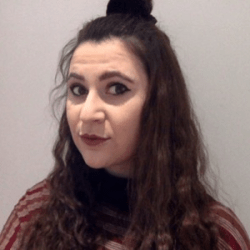
Rachel Schraer
The BBC published Rachel Schraer’s article Russell Brand: How the comedian built his YouTube audience on half-truths just four days after the allegations were first reported by, among others, the BBC.
The opening paragraph to the article reads:
The first time Russell Brand really dipped his toe into the water of conspiracy theories, in early 2021, the effect was swift [. . .]. It won him a new income stream and a fresh army of fans.
We are told that Brand discusses “conspiracy theories.” This is a coded social signal from Schraer and the BBC to their readers and audience that everything Brand says should be discounted without examination—including any evidence he may cite. This should be done for no other reason than Schraer and the BBC have labelled Brand a conspiracy theorist.
In addition, the BBC casts the people who share Brand’s views as conspiracy theorists who should be equally ignored.
Furthermore, the suggestion is made that Brand is peddling “conspiracy theories” as some sort of grift. According to Schraer, the idea that independent media, such as Brand’s “Stay Free” channels, can be directly funded by its audience without compulsion is “evidence” of his dubious motives. (Apparently the BBC is vehemently opposed to the free market of ideas.)
Schraer explained what got the Brand ball rolling:
The door to this new fan base might have creaked open when Brand first discussed “the Great Reset” — a vague set of proposals from an influential think tank to rebuild the global economy after Covid.
The lame evidence Schraer cited to support her contention that the Great Reset is just some “vague set of proposals” was another BBC article. Five journalists contributed to this piece, which was published in 2021 as part of the BBC’s “Reality Check” series.
Collectively, the five BBC Reality Check “journalists” exposed their own deceit in the second and third paragraphs:
Believers spin dark tales about an authoritarian socialist world government run by powerful capitalists and politicians — a secret cabal that is broadcasting its plan around the world.
Despite all the contradictions in the last sentence, thousands online have latched on to this latest reimagining of an old conspiracy theory [. . .].
The problem is that no one accused by the Reality Check team of being a “Great Reset” conspiracy theorist has ever alleged that the Great Reset plan was a “secret” or that the planners are a “secret” organization. The fact that the well-known World Economic Forum (WEF) has broadcast its plans around the world obviously excludes the possibility that the plans were “secret” or even that the planners were acting secretively.
The contradiction between the two aforementioned sentences was a fabrication of the BBC Reality Check journalists’ own making. It was seemingly inserted to support their subsequent allegation that those who criticised the WEF’s Great Reset were alluding to a “secret cabal.” In reality, the critics were openly pointing their fingers directly at the WEF and its partners. No suggestions of a “secret cabal” or “secret plans” were ever made.
The BBC’s evident intention was to impugn critics of the Great Reset by falsely claiming that their views were illogical, speculative assumptions and were therefore “conspiracy theories.” The BBC propagandists created this myth themselves in order to deliberately mislead their readers. This is the very definition of disinformation.
The Reality Check team then reported that the Great Reset initiative was launched by King—then Prince—Charles as a plan to remodel the global economy. They talked about the WEF’s undemocratic “power to lobby [. . .] for ideas which could potentially transform the global economy.” They added that the WEF and its Davos delegates have “huge influence on world events.” They even raised the point that there are legitimate concerns about the potential impact of digital technology—vigorously pushed in the Great Reset—”on civil liberties and jobs.”
In short, the BBC Reality Check team gave a reasonable account of the arguments put forward by those whom they then dismissed out of hand by labelling them “conspiracy theorists.” The BBC “journalists” performed this trick by making up a reported opinion about “secret cabal[s]” and then falsely ascribing it to Great Reset critics.
In order to deter their readers from any further examination of the Great Reset, the BBC’s alleged journalists claimed that the Great Reset itself was “light on specific detail.” This, again, was pure disinformation.
The same journalists had to admit the existence of a published book called The Great Reset. In it, co-authors Klaus Schwab and Thierry Malleret wrote:
[O]ur objective was to write a relatively concise and simple book to help the reader understand what’s coming in a multitude of domains. [. . .] The reference information appears at the end of the book and direct attributions have been minimized [in the text].
The references include links to WEF documents such as “COVID-19 Risks Outlook A Preliminary Mapping and Its Implications.” This is just one document that forms part of the WEF’s extensive alleged risk-mapping program. The mapping program, in turn, informs the WEF’s highly detailed Strategic Intelligence, which the WEF claims will enable it to “make sense of the complex forces driving transformational change across economies, industries, and global issues.”
There really isn’t any facet of economy, industry, or indeed any global issues or aspects of our lives for which the WEF doesn’t already have a detailed, self-serving, transformational plan. The BBC’s claim that the Great Reset lacks “specific detail” is absurd. The plan couldn’t be more detailed or specific.
Rachel Schraer’s subsequent claim—that the Great Reset represents a “vague set of proposals”—is complete nonsense based upon the BBC’s own propaganda. It is self-evident that both Schraer’s and Reality Check’s articles served as a defence of the WEF’s Great Reset.
We have still other good reasons to question Schraer’s judgment.
Dr Simon Goddek, a scientist who turned to journalism and has questioned the safety and efficacy of the COVID jabs—thereby excluding himself from Uscinski and Levy’s “epistemic authorities”—shared a black-humoured joke as a social media meme. It showed the ageing physical decline of former New Zealand Prime Minister Jacinda Arden. Goddek quipped, “[w]as it her shots, mRNA or Meth?”
This joke was subsequently picked up by BBC Verify propagandist Shayan Sardarizadeh, who re-shared it with the comment: “4 million views for this nonsense from a blue tick conspiracy theorist.” It was indeed “nonsense”—because it was a joke.
Yet when Schraer re-posted Sardrizadeh’s comment, she displayed a woeful lack of comprehension and no sense of humour. She added her own inane interpretation with this absurd headline:
Breaking: Conspiracy theory-peddlers blame the Passage of Time on Vaccines.
This may seem like a trivial matter. But it’s not. Like Marianna Spring, Rachel Schraer is another BBC specialist disinformation reporter. That Schraer apparently can’t tell the difference between a joke and “disinformation” certainly brings her alleged “specialism” into question.
To fully appreciate how the “conspiracy theory” label is deployed by the legacy media (LM), we can look at the recent video by journalist and broadcaster Andrew Neil, who is a former editor of the Sunday Times, an ex-BBC presenter, and the current chairman of the Spectator. When he left the BBC, Neil, was reported to have been “at the heart of the BBC’s political coverage for the best part of three decades.”
In a discussion with Sam Leith, the Spectator’s literary editor, about the Russell Brand allegations, Neil lamented that social media had enabled too many people—most of whom he considered to be stupid—to express their opinions. Based on this comment, we can contend that, if Neil is familiar with the work of Uscinski and Levy, he would probably consider himself a journalist member of the so-called “epistemic authorities.”
Neil spoke about the four-year investigation conducted by the legacy media that eventually produced the Brand allegations. He described it in glowing terms and noted that the independent media—which he called “the alternative media”—had neither the “resources nor the expertise to do” such an exhaustive investigation.
The Spectator YouTube channel that Neil heads has 304K subscribers. By comparison, Russell Brand has 6.6M YouTube subscribers. Consequently, his channel had considerably more resources than does the Spectator. However, following the alleged LM investigation of Brand, YouTube demonetised his account, so now Brand’s channel resources are flagging by comparison.
Unlike the independent media, which is almost entirely funded by reader and audience donations, the legacy media (LM) is funded by either corporate advertising or, in the case of the BBC, coercive license fees. UK print news media has been declining for years as people increasingly consume news online. In addition, state broadcasters, such as the BBC and Channel Four, are shedding UK viewers in their millions.
Nonetheless, as Neil observed, LM budgets are enormous compared to the shoestring income cobbled together by the independent media. That stark contrast hasn’t stopped the Establishment, which relies on the LM for its propaganda and owns most of it, from panicking.
Their panic explains the commissioning of the Cairncross Review—intended to provide some sort of rationale for propping up the LM.
Ironically, the Cairncross Review concluded that the LM needed “new sources of funding, removed from direct government control.” Of course, genuinely independent news media have already achieved new sources of funding by going directly to their audiences, some of whom value the independent viewpoint enough to support it financially.
Dame Cairncross (DBE, FRSE, FAcSS) apparently considered the independent media funding model to be rubbish. She ruled it out because, as she put it, “the stories people want to read may not always be the ones that they ought to read.” Instead, “the creation of a new Institute for Public Interest News” was needed, she determined. To ensure this new overseeing body would be “independent,” Dame Cairncross recommended that it “build strong partnerships with the BBC” and be funded by the UK government.
Her suggestion meant that, just like the independent media, the LM of the future would be funded by the public. The difference being that this would not be voluntary but achieved through enforced taxation. Through the new body she envisioned, instead of the public choosing which media outlets they want to support the “epistemic authorities” and the government would decide for them.
What Frances Cairncross ultimately recommended was state regulation of the internet as a means of protecting the LM from public opinion. These regulations would tell the people which media outlets they should “trust” and, hopefully, prevent them from supporting the “wrong” media.
Dame Cairncross’ review dovetailed perfectly with the progress of the UK’s Online Safety Act (OSA) through parliament. In her Review, she wrote:
The government will want to consider these recommendations in the context of its parallel work on online harms, disinformation and digital competition, to determine whether the recommendations set out here should be pursued separately or as part of broader packages of measures. In particular, it is for government to determine how best to design and execute policy relating to the activities of the online platforms, including any regulatory oversight. This Review is neutral [. . . .]
Neutral?
The OSA has passed all UK parliamentary reading stages and should receive Royal Assent any day now. It has established Ofcom as the internet regulator. The purpose of the Act is supposedly to improve public safety online—especially child safety. But it is patently obvious that the real objective of the OSA is to stop people from sharing information on social media that the government wishes to prevent from being shared—the article you are reading, for example.
The OSA will limit the online reach of the independent media. Accomplishing this aim is of vital importance to the Establishment—all the more so because public interest in the LM’s online news reporting is also plummeting.
In addition, the OSA provides significant protection for each of the regulated media organisations that the state controls and categorises as a “recognised news publisher.” This means every legacy outlet plus favoured “independent” media outlets such as Bellingcat, which is also funded by the Establishment.
So, given its protective care and vast resources, what alleged “expertise” did the LM bring to its investigation of Russell Brand, do you suppose? For a full account of that claimed journalism, you can read this article. But perhaps I should warn you in advance that, while the allegations against Brand are very serious and should be investigated by the police, the LM “team” disappointingly didn’t present a shred of real evidence to support those reported allegations.
Worse, the LM evidently fabricated purported evidence to mislead its readers and viewing audience, thereby undermining the accounts of the potential victims.
Yet, according to our Andrew Neil over at the Spectator, for the legacy media to have expended its considerable resources over a period of four years to produce this voluminous research (which we can call hamfisted detritus) requires great “expertise.”
In the Spectator interview, Leith asked Neil for his opinion about the possibility that the LM had launched a coordinated attack on Brand. Here is how Neil replied:
There’s no virtue to it at all [,] and the people who are pushing this line, that there’s a kind of conspiracy to do him down, are the very people who believe in all sorts of conspiracies as well. That vaccinations put little microchips into our bodies, that the Bush administration was really behind 9/11, and all the other nonsense. Of course, naturally we live in a world run by lizard people. We all know who they are [the lizard people], the mainstream media knows who they are, we’re just too frightened to point out the lizards among us. They’re conspiracists on everything now.
It is possible, though hard to substantiate, that a tiny minority of people labelled as conspiracy theorists believe there are microchips in the COVID shots. While the advent of motes makes this claim at least feasible, the vast majority of people who questioned the jabs—and who were also labelled as conspiracy theorists by the “epistemic authorities”—were more concerned about the experimental status, the potential unknown risks and the questionable efficacy of the jabs, not to mention the absence of any completed trials.
Neil’s tiresome “lizards” refrain was based solely on the opinion of one prominent so-called “conspiracy theorist,” David Icke, whose extremely speculative hypothesis of the “Sumerian Anunnaki” was based upon his interpretation of a few Gnostic texts—the Nag Hammadi, the Dead Sea Scrolls, etc.—and the work of scholars such as Zecharia Sitchin.
No one who seriously questioned the COVID jabs, including tens of thousands of UK doctors and nurses, did so because they thought the royals were lizards. Nor, for that matter, did the structural engineers at the University of Alaska Fairbanks question the official account of 9/11 because they imagined that former US President Bush is a shape-shifting, pan-dimensional reptile.
Let us step back and ask: If Andrew Neil is, as he claims, the intellectual superior of anyone who suggests there may have been a coordinated LM attack on Brand, then why does he overlook the clear-as-day fact that the allegations against Brand were reported simultaneously by almost the entire legacy media on both sides of the Atlantic? Doesn’t such an absolute fact, such irrefutable evidence, point to at least the possibility of planned coordination?
And because that is the case, we are left with only one conclusion: Neil deliberately used a tried-and-true propaganda technique called the straw man argument. That is, he attributed preposterous beliefs to people he disagrees with in order to falsely “debunk,” with contrived ease, arguments they had never made. This technique is also called logical fallacy.
He then used a related technique termed “composition fallacy” to manipulatively claim that the opinion of one person whom he labels a conspiracy theorist (he is referring to Icke without naming him) represents the views of everyone he labels a conspiracy theorist. This is an extremely common LM tactic.
Did Neil say anything about the common suspicion of a possible coordinated attack on Brand? Yes, he did:
[Conspiracism] is a defence that is quite hard to deal with, because it is so ludicrous. It is a defence that doesn’t need facts. It is a culture in which Russell Brand lived and profited, or at least did until YouTube pulled the plug on his revenues. So that’s what they deal in, they don’t deal in the gathering of evidence. [. . .] All these conspiracy theorists can have their absurd opinions about what’s really going on here with Russell Brand, but to establish what’s going on, to produce the evidence, takes investigative journalism.
It is worth reiterating yet again that the investigation into the Brand allegations provided nothing but allegations. This does not mean that the allegations aren’t true. But the LM journalists have not provided anything approaching the “evidence” that Neil claims exists.
Notice that Neil used the word “ludicrous” to signal to his audience that the people he calls “conspiracy theorists” hold ludicrous beliefs. But think about it: His claim was based on his own ludicrous assertions and logical fallacies—not on any actual evidence.
So, if we are to take Neil at his word and “establish what’s going on,” then we need to look at the “evidence” in the hope of establishing some “facts.”
OK, let’s do that. It is a fact that, following publications of the allegations, the LM did not immediately set about finding further evidence to support the possible victims’ claims. Instead, the LM turned its attention to attacking the “conspiratorial” views of Brand and his followers.
Example #1. As soon as the allegations against Brand were published, the BBC wrote that he had “developed a cult following” and had “dabbled in conspiracy theories.” To those charges the BBC added the scintillating “fact” that Brand had built a following during the alleged COVID-19 pandemic because he “discussed conspiracy theories surrounding the disease.”
Example #2. Two days later, using the same alleged “cult” theme, the Metro published an article titled “From Covid denial to mainstream media hatred – Inside Russell Brand’s conspiracy-fuelled cult online following.”
Example #3. A couple of days after that, on the other side of the planet, Australia’s ABC News claimed that Brand’s followers respond to his “rants” simply because he is “controversial” and that his audience is comprised of “people chasing conspiracy theories.”
Example #4. Following the allegations against Brand, the UK government decided that it should express its opinion on a potential criminal investigation. No less than the Prime Minister’s office issued an official statement declaring that “these are very serious and concerning allegations.”
The examples are endless. We don’t have space to cite them all. How odd, then, for Andrew Neil to have claimed in his interview that no one “could give a monkey’s _ _ _ _” about Russell Brand. The “evidence” thoroughly contradicts Andrew Neil. It appears that the entire LM, from all four corners of the globe and the UK government, are very interested in the Russell Brand allegations.
The UK government’s publicised opinion was followed up by emailed letters from Dame Caroline Dinenage DBE MP to numerous social media and online news sites, including the Chinese-owned TikTok and the video hosting service Rumble, requesting that Brand be demonetised on those online platforms.
Caroline Dinenage is Baroness Lancaster of Kimbolton, a leading member of the Establishment and a member of the House of Commons’ Culture, Media and Support Select Committee. It is no surprise that this very committee was instrumental in creating the Online Safety Act. Moreover, when the baroness was the Minister of State for Digital and Sport from February 2020 to September 2021, she had ministerial responsibility for guiding the passage of the Online Safety Bill toward becoming the Online Safety Act.
The common law concept of “innocent until proven guilty,” which Neil conceded was an important principle of UK liberal democracy, seems to mean practically nothing to Dinenage.
The notion is bandied about in some quarters of the LM that Dinenage was acting independently. That may be true. But why, then, did she use the official House of Commons letterhead for her correspondence?
As yet, there has been no official statement from the Culture, Media and Support Select Committee on the allegations against Brand. Reportedly, it has merely acknowledged that only “some” of the letters sent out under its name were approved. Considering that all the letters under its letterhead were shameful examples of rank authoritarianism, the fact that any of them were apparently approved indicates the dictatorial tendencies of the Select Committee as a whole.
What actual facts have been established?
First, it is a fact that the LM has exploited the allegations and has deployed the composition fallacy to discredit both Brand’s and his social media followers’ opinions.
Second, it is a fact that the allegations about Brand emerged at the same time that the Online Safety Bill passed its final reading stage. The Brand allegations grabbed all the headlines, leaving virtually no room for prominent coverage of the imminent UK censorship law by the LM. Thoroughly distracting the UK public.
Third, it is a fact that the purpose of the Online Safety Act is to shore up the dwindling reach of the LM and censor its independent media competition.
Fourth, it is a fact that Brand and his followers are considered part of the independent media, which the LM accuses of being conspiracy theorists.
Fifth, it is a fact that formative figures in the UK government have used the allegations published by the LM to attempt to limit the reach of someone who has millions of followers and whom they accuse of being a conspiracy theorist.
Sixth, it is a fact that limiting the reach of popular conspiracy theorists is exactly what the Online Safety Act is designed to achieve.
There is solid evidence supporting each of these facts. So, what did Andrew Neil, a presumed member of the “epistemic authorities,” make of the facts and supporting evidence that he insists he and the entire legacy media he champions hold so dear? In his Spectator interview, Neil had this to say:
I think because Russell Brand’s position, in terms of a variety of conspiracies, is very similar to their conspiracies, they regard him as he’s one of us. So, regardless of what he’s accused of, we need to rally behind him. We need to get behind him, they’re trying to pick us off. I mean, don’t forget, they’re conspiracy theorists so therefore they are paranoid. They’re not just paranoid, they do know most sensible people are against them. And I think it’s a kind of rallying defence to look after one of their own.
The Spectator interview was posted on the September 23rd, after the Dinenage letters and the LM reports we’ve just discussed were published. In other words, Neil had mounds of material at his fingertips, but he chose to discard all the evidence and ignore the numerous facts pointing to a possible political motive for the global legacy media’s and UK government’s pursuit of Brand. Instead, he simply cast all the evidence and facts aside and dove into his “conspiracy theory” accusations.
This is a classic case of how the “conspiracy theory” label is applied by people, such as Neil, who do not wish to acknowledge contradictory evidence or facts. The “conspiracy theory” charge enables Neil and his legacy media cohorts to create what they pretend are unquestionable narratives, which they expect their readership and viewership to “trust” on the flimsy basis of their laughable, self-aggrandising claim to be “epistemic authorities.” It should be noted that this is precisely what “the Science™” of conspiracism decrees.
When Sam Leith, Neil’s interviewer, pointed out that so-called conspiracy theorists cannot be categorised by any single political ideology, Neil didn’t pause to consider the implications of his underling’s accurate statement.
Rather, he embarked on an anecdotal reminiscence as if trying to justify his bizarre conspiracy theory view. Having dismissed all evidence to the contrary, he falsely asserted that conspiracy theory lies only on the extremes of politics and that the far left and the far right (conspiracy theorists) all believe essentially the same thing.
He opined that both alleged extremist wings, and therefore all of the conspiracy theorists he imagines, hate liberal democracy. His conclusion:
People like Russell Brand are no friends of liberal democracy and neither are his supporters.
As we discussed in Part 1, this is mindless proselytising. Entrenched Establishment elitists seriously expect us to accept that the people who most fiercely protect and seek to exercise our democratic right to question power are all extremist conspiracy theorists.
Neil apparently believes that liberal democracy is embodied by the public’s trust in the Establishment’s “epistemic authorities.” Consequently, in his evident view, anyone who challenges the “authorities” and their pronouncements and edicts is undermining liberal democracy. But what he is describing is actually the polity of a totalitarian fascist state—a complete inversion of liberal democracy and the principles it is supposedly based upon.
It is evident that, from Neil’s perspective, only stupid people—conspiracy theorists—question epistemic truth, as presumably defined by his narrow, authoritarian class. He views all such stupid people as unintelligent extremists who seek to destroy the social order he disingenuously calls liberal democracy.
Anyone who uses the “conspiracy theory” label does so, not because they value the evidence, the facts or the dialectic, but because they will not countenance any challenge to their worldview or any dissent from their claimed authority.
The “conspiracy theory” charge is an authoritarian propaganda construct, intentionally created to censor legitimate, fact-based opinion.
It is time we stand up to the “epistemic authorities” and reject their elitist, authoritarian pretence of intellectual superiority.
It is time to insist that all evidence is discussed, that all the facts are established and reported to the public.
It is time to reject the state propagandist’s “conspiracy theory” canard.






 Aletho News