Morbidly Obtuse: Pelosi and the Media versus Hydroxychloroquine

By Thomas L. Knapp | William Lloyd Garrison Center | May 19, 2020
When US president Donald Trump mentioned that he’s taking hydroxychloroquine, he immediately got an extra dose of flak from both the mainstream media and noted medical experts such as US House Speaker Nancy Pelosi (D-CA).
Trump has been using the drug prophylactically versus COVID-19 — which he’s likely been exposed to via a personal valet — with the concurrence of his physician.
Pelosi chided Trump for taking “something that has not been approved by the scientists” (it has been) and worried that he’s at risk of side effects because he’s “morbidly obese” (he’s not).
A Bing search on the terms “hydroxychloroquine” and “unproven” returns nearly 28,000 results for the 24 hours following Trump’s statement. The media apparently want us to believe that there’s something sketchy and experimental about hydroxychloroquine.
Contra Pelosi, hydroxychloroquine was “approved by the scientists” at the US Food and Drug Administration in 1955.
Those scientists deemed it both “safe” in general and “effective” for certain disorders (obviously not including a virus which they couldn’t even know existed for anther 65 years), with doctors permitted to prescribe it “off-label” for other maladies.
As of 2017, hydroxychloroquine was the 128th most prescribed drug in the United States, at more than 5 million prescriptions. It appears on the World Health Organization’s List of Essential Medicines. Nobody was calling it “unproven” in any way until Donald Trump mentioned it, and nobody would be calling it that now if he HADN’T mentioned it.
Is hydroxychloroquine effective either as a treatment for, or protector against, COVID-19? Various juries are likely to be out on that question for a long time.
Are there known side effects associated with the drug’s use? Sure. Find a drug with no side effects and you’ve probably found a drug with no effects at all.
Do any of the facts above really matter? No.
It’s none of the FDA’s business what drugs Donald Trump decides to take.
It’s none of Nancy Pelosi’s business, either, unless he feels like discussing it with her.
It’s only the media’s business because he decided to tell them about it.
And if you decide to take hydroxychloroquine, or any other drug, it’s nobody else’s business either.
It’s probably a good idea to consult your doctor before taking just about any medication, but that’s YOUR call, not anyone else’s, to make.
It’s YOUR body.
It’s YOUR life.
It’s YOUR decision.
Don’t let Nancy Pelosi, the media, or anyone else tell you otherwise.
Thomas L. Knapp (Twitter: @thomaslknapp) is director and senior news analyst at the William Lloyd Garrison Center for Libertarian Advocacy Journalism (thegarrisoncenter.org). He lives and works in north central Florida.
US nukes in Poland would not be a deterrent, but a MASSIVE provocation for Russia
By Scott Ritter | RT | May 19, 2020
The US has promoted the deployment of US nuclear weapons on Polish soil as part of NATO’s ‘nuclear sharing’ arrangement. Such a move would only increase the chances of the very war such a deployment seeks to deter.
For the second time in little more than a year, the US ambassadors to Germany and Poland have commented on matters of NATO security in a manner which undermines the unity of the alliance while threatening European security by seeking to alter the balance of power in a way that is unduly provocative to Russia.
Richard Grenell, the US ambassador to Germany and the acting director of national intelligence, put matters into motion by writing an OpEd for the German newspaper Die Welt, criticizing politicians from within Chancellor Angela Merkel’s ruling coalition who were openly calling for the US to withdraw its nuclear weapons from German soil.
Adding fuel to the fire, the US ambassador to Poland, Georgette Mosbacher, tweeted out two days later that “If Germany wants to diminish nuclear capability and weaken NATO, perhaps Poland – which pays its fair share, understands the risks, and is on NATO’s eastern flank – could house the capabilities here.”
The action that provoked the Grenell-Mosbacher media blitz were comments made by Rolf Mützenich, the chairman of the Social Democratic Party in Germany’s parliament, calling for Germany to withdraw from its decades-old nuclear-sharing arrangement with NATO, noting that the deal had outlived its utility.
The US currently maintains a force of some 20 B-61 nuclear bombs on German soil, where they are earmarked for delivery by German aircraft during war. Since 1979, Germany has maintained a force of Tornado fighter-bombers dedicated to the nuclear-sharing mission. The decision by Germany to buy 30 US-manufactured F/A-18 Super Hornet aircraft to replace the Tornado in its nuclear delivery mission prompted Mützenich’s outburst.
Grenell and Mosbacher last teamed up to shake the foundations of NATO-based European security in September 2019, when Grenell’s comments made during the course of an interview with a German newspaper sparked controversy among German politicians sensitive to US criticism of German defense spending levels. “It is actually offensive to assume that the US taxpayer must continue to pay to have 50,000-plus Americans in Germany,” Grenell said, “but the Germans get to spend their surplus on domestic programs.”
Grenell’s comments were in the context of President Donald Trump’s ongoing insistence that America’s NATO allies pay their fair share of the cost of NATO by increasing their respective defense spending to levels matching two percent of their GDP. Germany’s defense budget in 2019 was approximately €43 billion, representing 1.2 percent of GDP. German lawmakers were quick to criticize Grenell’s comments, noting that while Germany’s defense expenditures were far short of what had been promised, it would not allow itself to be “blackmailed” by the US over matters relating to its national security.
Mosbacher then jumped into the controversy, tweeting“Poland meets its 2% of GDP spending obligation towards NATO. Germany does not. We would welcome American troops in Germany to come to Poland.”
Some left-wing German politicians proposed that Germany take Grenell up on his offer and begin to negotiate the withdrawal of US troops from German soil (there are some 52,000 Americans – 35,000 soldiers and 17,000 civilians – stationed in Germany today).
But these same politicians made a comment that has proved prescient. “If the Americans pull out their troops,” they noted, “then they should take their nuclear weapons with them. Take them home, of course, and not to Poland, which would be a dramatic escalation in relations to Russia.”
This, of course, is precisely what the Grenell-Mosbacher tag team has proposed today.
“NATO’s nuclear sharing,” the current NATO secretary general, Jens Stoltenberg, wrote in an OpEd published in the Frankfurter Allgemeine Zeitung, “is a multilateral arrangement that ensures the benefits, responsibilities and risks of nuclear deterrence are shared among allies.”
“Politically,” Stoltenberg said, “this is significant. It means that participating allies, like Germany, make joint decisions on nuclear policy and planning, and maintain appropriate equipment.”
For its part, Russia has declared the US-NATO nuclear-sharing arrangement as operating in violation of relevant provisions of the Non-Proliferation Treaty (NPT) which prohibits the transfer by a nuclear weapons state of nuclear weapons to a non-nuclear weapons state. While the US challenges this Russian interpretation, the point is that the issue of NATO’s nuclear arsenal is an extremely sensitive one to Russia, made even more so when viewed in the context of the expansion of NATO that brought Poland and other eastern European countries into its fold.
Poland, along with the Czech Republic and Hungary, joined NATO in March of 1999, making a mockery of every assurance that had been given to the former Soviet president, Mikhail Gorbachev, that NATO would never expand eastwards if Germany were allowed to unify.
Russian President Vladimir Putin pointedly referred to these guarantees during his speech to the Munich Security Conference in February of 2007, in the context of NATO’s continued expansion. “[W]e have the right to ask: against whom is this expansion intended? And what happened to the assurances our western partners made after the dissolution of the Warsaw Pact? Where are those declarations today? No one even remembers them.”
Russia remembers. For example, on February 6, 1990, when the former West German foreign minister, Hans-Dietrich Genscher, met with then-British Foreign Minister Douglas Hurd, Genscher told Hurd that “The Russians must have some assurance that if, for example, the Polish Government left the Warsaw Pact one day, they would not join NATO the next.”
These assurances were made by the former US secretary of state, James Baker, to the former Soviet foreign minister, Eduard Shevardnadze, in February 1990, when Baker noted that before Germany could reunify, “There would, of course, have to be iron-clad guarantees that NATO’s jurisdiction or forces would not move eastward.”
These assurances were given, only to be violated during the administration of President Bill Clinton. Today, over 4,500 US troops are stationed on Polish soil, including a reinforced battalion-sized ‘battlegroup’ stationed along the so-called Suwalki Gap separating Poland from the Baltic nations.
“If Russian forces ever established control over the Suwalki region, or even threatened the free movement of NATO personnel and equipment through it, they would effectively cut the Baltic States off from the rest of the Alliance,” a NATO report written in 2018 noted. “Deterring any potential action – or even the threat of action – against Suwalki is therefore essential for NATO’s credibility and Western cohesion.”
For its part, Russia has repeatedly declared that it has no desire to enter a conflict with NATO. However, NATO’s expansion in Poland and other eastern European countries has increasingly placed Russian security interests at risk. The deployment of Aegis Ashore launchers onto Polish soil in an ostensible anti-missile role, while declared by NATO to be exclusively oriented toward protecting Europe from Iranian missiles, is viewed by Russia as a threat to its own strategic missile capability. In response, Russia has deployed nuclear-capable short-range missiles in its Kaliningrad exclave between Poland and Lithuania.
If NATO were to deploy nuclear weapons on Polish soil as part of any upgraded nuclear-sharing agreement, the threat to Russia would be intolerable – every launch of a Polish fighter-bomber would be seen as a potential existential threat, forcing Russia to increase its alert status along its western frontier, as well as its capability to rapidly neutralize such a threat should an actual war break out.
This does not mean that Russia would choose a preemptive nuclear attack – far from it. Instead, Russia would rely on the abilities of the front-line formations of its 1st Guards Tank Army and 20th Combined Arms Army to conduct deep penetration offensive operations designed to capture and/or destroy any forward-deployed nuclear weapons before they could be used. Far from deterring a war with Russia, any deployment of nuclear weapons by the US on Polish soil only increases the likelihood of the very conflict NATO purports to seek to avoid.
Scott Ritter is a former US Marine Corps intelligence officer. He served in the Soviet Union as an inspector implementing the INF Treaty, in General Schwarzkopf’s staff during the Gulf War, and from 1991-1998 as a UN weapons inspector. Follow him on Twitter @RealScottRitter
On the Situation in Hong Kong as US-China Relations Worsen
By Vladimir Terehov – New Eastern Outlook – 19.05.2020
On the card table where modern world politics are played, the state of affairs in Hong Kong remains a barometer which can provide a rough idea of the current trends in relations between the United States and China. Both of these superpowers play a major role in shaping the bigger global picture of today’s game.
That is why NEO has been monitoring how the situation has been developing in the Hong Kong on a fairly regular basis, or the Hong Kong Special Administrative Region of the People’s Republic of China (HKSAR) as it has officially been known since the former British colony became a part of the PRC in 1997. For almost an entire year now, the HKSAR has been gripped by yet another wave of turbulence, which was last discussed after the local District Council elections were held on November 24, 2019 for all 18 of Hong Kong’s District Councils.
Last year’s riots in Hong Kong coincided with another round of bilateral talks between the United States and China to address their trade and economic issues. Both sides were pushing for the talks to end on a positive note, but of course they each had their own definition of a positive outcome.
China is greatly committed to maintaining relations with the U.S. as one of its main foreign trading partners, and ultimately had to acknowledge the grievances voiced by the American side, which stem from the undeniable fact that Beijing has long been earning hundreds of billions of dollars on an annual basis off its trade with the United States.
It was this commitment that tied Beijing’s hands, preventing China from severely cracking down on the Hong Kong protesters, who acted provocatively in open defiance of Beijing on the streets of Hong Kong. From the looks of it, the protesters strangely seem to have gotten away with blue murder or received a purely symbolic punishment.
The situation in the city has stabilized after a coalition of political pro-democratic parties termed “pan-democratic” in Beijing won last year’s elections. They received 85% of the votes from those who turned out to go to the polls. In other words, the crowds from the streets were the force that took to the polls in local communities, who have their own grievances with the Chinese Central Government, although they did not condone the havoc wreaked in their own city by the particularly violent protesters.
You would think that the Hong Kong factor would play much less of a role in bilateral relations between the US and PRC after they signed the trade deal known as the “Phase 1” agreement on January 15 this year following 18 months of negotiations on the aforementioned trade issues. In other words, one would expect the situation on the city’s streets to be fairly calm, when the routine political process stays within the walls of the Legislative Assembly of the HKSAR and the local District Councils and does not spill out onto the streets.
However, almost immediately after the “Phase 1” trade deal was signed, the global coronavirus pandemic came almost out of nowhere, which is having catastrophic consequences in the United States of all places. It is also probably the country where it has been most politicized, mainly due to the upcoming elections in November, when Americans will elect their president for the next term along with a completely new House of Representatives, and a third of the Senate will be contested.
Although Donald Trump’s chances of being re-elected as president and the success of the Republican Party in the Congress elections looked fairly realistic in February this year, the question of who was to blame inevitably arose as the situation with both the coronavirus and the country’s economy deteriorated. On May 8, the level of unemployed or underemployed in the United States had already hit 22.8%, almost as low as the 25% recorded at the time of the Great Depression in 1933.
The average American voter is not likely to go to the trouble of getting to the bottom of this problem and dig up the detailed root causes, including shortcomings that have long existed in the national healthcare system (i.e. they were there before Donald Trump), and the President’s use of the agencies at his disposal to mislead people about how prepared the country was for natural disasters such as epidemics. As approval ratings fall, the ruling Republican party and government is tempted to point to the finger overseas and blame an external factor for causing the outbreak.
America’s main geopolitical rival fit this description. The anti-Chinese propaganda campaign quickly gained momentum in the media and led to concrete financial claims being made for “compensation for various damages” from Beijing. This was followed by thinly veiled threats that the US could cancel debt obligations to China, which America owes more than 1 trillion dollars.
US-China relations have taken another nosedive, and have now hit an all-time low. The difference is that this time Beijing has made it clear that it does not intend to show the same level of restraint it did during the negotiations to secure the “Phase 1” trade deal. The Global Times, a semi-official government publication under the auspices of the Chinese Communist Party’s People’s Daily newspaper, discussed whether China is likely to “dump” its US Treasury holdings, or comply with the terms of the “Phase 1” trade deal and prepare for the “Phase 2” negotiations.
It is certainly no coincidence that when the editor of the Global Times published a brief note around the same time (May 8) on the need to increase China’s nuclear arsenal to 1000 warheads “in a relatively short time”, including warheads to be carried on mobile intercontinental ballistic missiles (ICBMs).
There was a place for Hong Kong on the list of symbolic gestures made to Washington. On April 18, 15 Hong Kong riot leaders who organized and participated in “illegal assembly” on the streets in protests that took place on August 18, October 1 and October 20 last year were detained and later released on bail. In response to the anti-Chinese campaign which immediately took hold in the Western media, the Chinese Foreign Ministry released a statement the next day, saying that “their rhetoric revealed their complicity with rioters who have created chaos in the city”.
On May 6, the Hong Kong and Macao Affairs Office of the State Council gave the “black shirts” a stern warning not to appear on the city’s streets, addressed to the particularly violent protesters who dress in black.
Yet a new cause for a very cautious optimism about relations between the two leading world powers can just about be made out (although it is difficult to remember how many of these there have already been). This glimmer of hope was in the form of a telephone call made on May 8 between the China’s Vice-Premier Liu He, US Treasury Secretary Steven Mnuchin and US Trade Representative Robert Lighthizer.
The last time American and Chinese officials at such a senior level had been in contact was when the “Phase 1” trade deal was signed, and both sides expressed a desire to “make the agreement a success”. For this specific purpose, the decision was taken to set up a special intergovernmental body.
It is worth briefly touching on the advantages Russia could have if tensions between the US and China worsen, which are the subject of frequent debate in the country. To draw on an analogy, it would be like some smart swamp creature hoping that a fight between the two biggest hippopotami will help them survive with less predators around, as they all struggle for a shrinking space in a swamp that is drying up. Sooner or later, the smart guy will be accidentally get crushed, without having even been noticed by the brawling creatures themselves. It would be wiser take time during one of the breaks between rounds to try to convince the hippopotami that both of them will still have something useful to bring to the current geopolitical ecosystem. If they continue to fight to the bloody end, it will destroy the entire ecosystem (to put it politely). That includes all of its inhabitants, including yourselves.
Likewise, Hong Kong will only be able to continue to benefit from its current “special” status within China if China normalizes its relations with the United States. In other words, the attempts made by those young rioters who are fighting for some sort of “rights” to encourage the deterioration of relations between China and the US are in direct contradiction to the interests of the vast majority of the population in Hong Kong.
The main political forces in the HKSAR are beginning to gain a greater understanding of this situation, who do not see any alternatives to maintaining a decent level of cooperation with the mainland in order to find a way out of the difficult situation the city has found itself in due to a number of reasons, and last year’s riots are certainly somewhere on the top of the list.
Whatever the case, the situation in Hong Kong still serves as a barometer and reflects relations between the world’s two leading powers. This is also why the situation there needs to be closely monitored.
Vladimir Terekhov is an expert on the issues of the Asia-Pacific Region.
COVID Naturally Leads to Corruption

By Tim Kirby | Strategic Culture Foundation | May 19, 2020
Anyone who has paid attention to history knows that political change requires some sort of catalyst to happen. So one could logically expect that the Covid-19 Pandemic would be the perfect excuse for politicians to take action. However, it takes time for the chemical reaction to start working its magic and only now are we starting to see some major actions being taken by Congress for our “benefit”.
Patriot Act 2: the Revenge of Unconstitutionality
Interestingly enough, the Patriot Act is on its way to being reauthorized and naturally expanded while the nation is conveniently on lockdown. Very often the American Right will scream to the YouTube hills that the Constitution is being ripped in half by every move the other side makes. This over exaggeration has a “boy who cried wolf” effect making it seem cliché every time journalists/pundits rage over something being “unconstitutional”. But this time dear friends, Congress is actually defecating on constitutional principles and Right Wing pundits are not over inflating this issue.
The new updated Patriot Act (as it stands today) will allow the government to collect Americans’ web-browsing data without a warrant. The expression “we have sunk to a new low” seems like the appropriate response to such cowardly madness.
So if this Patriot Act update pack goes through, then the 4th Amendment has essentially faded off into the sunset probably never to be seen again. If the government can dive into your personal data without a warrant then what is the point of having warrants at all or privacy? This is more proof that the principles of the Enlightenment are being (or have been) forgotten as only an intellectual minority understands just how fundamental maintaining a system of warrant issuance is as the only means the government should have to “spy” on an individual. It seems obvious to say, but shouldn’t one be put under the government’s scrutiny for taking actions that rouse enough suspicion for a neutral judge to “okay” a warrant? This seems like a great policy, but then again I was born in the Cold War when American principles were still discussed, kind of understood and seemed to matter.
Like any ideology or religion if we all universally forget the ideas of the Constitution then they will no longer become valid. The 4th Amendment is starting to look like Thor – something cool that people used to believe in long ago that has become a cartoon empty version of itself in Hollywood movies.
It also needs to be stated just how weak the logic of expanding the Patriot Act is under pandemic conditions. The original project was put in place to in theory prevent another 9/11 type event from happening. Essentially, mass surveillance was offered as a solution to preventing terrorism on U.S. soil. Since the Coronavirus (as of now) is officially a natural phenomenon, then how could surveillance possibly help? When Patriot Act 1.0 came into being the “ticking time bomb” argument was made that the government needs to be able to act quickly and have no barriers in their fight against terrorism or else we are doomed to another set of planes hitting buildings. This logic is weak but it makes some sense, but how can mass surveillance stop a natural phenomenon? If there was total spying or zero spying on the American people would it really affect the appearance of a new plague?
Unless there is an alternative theory to the origin of Covid-19 in Congress that they are keeping from us, then no amount government overreach can prevent this type of pandemic from happening again. How can knowledge of our browser history prevent Corona 2.0? It can’t, it won’t, but that means nothing, we have a crisis and that is all that is needed for action.
When in doubt, debt your way out
The Coronavirus Plague has damaged economies all over the world. It has been a major punch in the face to American financial stability and the stimulus money sent to Americans is a logical response. Many people have lost their jobs or face abnormal hardships. Everyone pays taxes so in times of trouble we should expect to get our money’s worth from the state. Now drafting a 347,000 word $3 trillion Congressional spending spree is not something we should expect as a solution to the Corona Crisis especially when one-third of it is going to go to state and local governments to compensate for their inefficiency, not the American masses. Obviously this is all designed to bail out those lovely Democrat initiatives that cost lots of taxpayer money yet yield little for society, because if they were so important they would remain “essential” and funded even when the coffers look bare.
It is unclear whether this titanic bill that approaches the annual spending of the United States (which gets the nation further and further into debt as is) will actually go through, but it is the perfect example of the exploitation of a crisis for one’s own gain.
Pelosi and crew are surely going to try to use the current catalyst to save all their programs and keep America on the track that they have routed it on. If the idea really were to help the American people then why not just take the $3 trillion and give every American roughly $9,000. That would help everyone, both MAGA hat wearing factory workers and interpretive dance LGBT activists alike. If the mission really were to provide a solution it could be done in a page or two of text so everyone could understand it, make sense of it and get the help they need. But this is not the objective. This proposal is gargantuan in size so that way everyone can get their piece of the corruption pie in the fine print and keep the pet projects of the Democrats afloat by saving bankrupt but loyal state and local governments.
Stay tuned, the late night horror show will continue.
There is certainly going to be more and more disgusting exploitation of this crisis in the next few weeks/months. The Covid-19 iron is still glowing and everyone is going to strike while they can. New corrupt plans are probably being discussed over brandy as you read this because the economy has and will continue to suffer from this unprecedented event that we are all living through.
Sadly, our last line of defense is the strange real estate billionaire who happens to head the executive branch at the moment. Vetoes can be overridden, but Trump needs to send a signal that his answers to the crisis are the ones that are going to happen. He can manipulate the Mainstream Media to get what he wants, and his light being shone onto a topic can be game changing. Sadly, thus far Trump has been focused more on #Obamagate than either of the two issues presented in this piece, meaning that his ego issues could allow the 4th Amendment to die right in front of our faces. In contrast however, at some point he will probably fight the $3 trillion spending bill because Pelosi is involved in it and she is a bad lady so maybe there is some hope.
Ghost of J. Edgar Haunts Flynn Investigation
By Coleen Rowley – Consortium News – May 18, 2020
In this time of unprecedented political polarization, it’s disappointing but not surprising to see the Justice Department’s recent request to dismiss its prosecution of retired General Michael Flynn causing yet another media firestorm to swirl around Attorney General William Barr.
Obama Administration former officials, like the hyperventilating authors of this New York Times’ op-ed, “The Appalling Damage of Dropping the Michael Flynn Case,” go so far as to claim that dropping the case “embeds into official U.S. policy a shockingly extremist view of law enforcement as the enemy of the American people.”
In stark contrast, other former FBI agents, myself included, are appalled at Bureau and other “national security” officials’ numerous suspicious departures from standard FBI/Department of Justice policies that have finally been brought to light, marking this most bizarre investigation aimed at “get(ting) Flynn to lie.”
Flynn was asked to “a friendly chat” with the FBI on Jan. 24, 2017, for which he was told he would not need a lawyer present. The interview was part of the FBI’s Russiagate investigation, a purported scandal that has now all but totally collapsed.
The agents wanted to speak with him about his conversations with Sergey Kislyak, the then Russian ambassador to the U.S., while Flynn was on the Trump transition team as incoming national security advisor. Having already read the transcripts of those intercepted conversations there was nothing the agents could learn from Flynn.
According to FBI administrative notes released earlier this month, an official identified in the press as Bill Priestap, then assistant director of the FBI’s Counterintelligence Division, asked whether the only aim of the upcoming interview with Flynn was to get him to lie about his conversations with Kislyak. “Our goal is to determine if Mike Flynn is going to tell the truth about his relationship with Russians,” said Priestap in a hand-written note. But Priestap was having second thoughts.
“I agreed yesterday that we shouldn’t show Flynn [REDACTED] if he didn’t admit,” he wrote, the redaction presumably meaning the transcript of Flynn’s calls with Kislyak. “I thought about it last night, and I believe we should rethink this. What is our goal? Truth/admission or to get him to lie, so we can prosecute him or get him fired?… Protect our institution by not playing games.”
Flynn was indeed formally charged with lying to an FBI agent and on Dec. 1, 2017 pled guilty after Russiagate Special Counsel Robert Mueller reportedly threatened to prosecute his son. Flynn was fired by Donald Trump after Flynn lied to the vice president about the conversations with Kislyak.

Kislyak. (Flickr)
In those conversations, Flynn asked that the Russians not retaliate for the Obama administration sanctions on Moscow imposed for the now debunked Russiagate allegations. Russia eventually decided not to retaliate. Flynn also asked on behalf of Israel that the Russians veto a UN Security Council resolution condemning illegal Israeli West Bank settlements, which Obama was planning to abstain on. Russia refused this request.
Upon release of the FBI documents this month, Flynn sought to undo his guilty plea and last week the Justice Department dropped the case. The judge, however, has not yet agreed and has asked for expert opinion.
Law Rarely Used
Many former FBI agents will probably recall being instructed in FBI training school (as I was) that Title 18 US Code 1001 (lying to an FBI agent) is mainly to caution a suspect not to lie, in order to get him or her to tell the truth to further an investigation.”
We were taught (and later learned by experience) that, for a lot of reasons, violation of this provision of “lying to the FBI” would almost never be prosecuted, especially if it was the sole “crime” committed. One reason for this was, at least in my law enforcement experience, that many, if not most, people who are embarrassed to be suspected of wrongdoing, do lie, or at least partially fudge the truth during initial interviews, as it’s a natural ego-defense.
So “getting” someone to lie, if that’s “the goal” (as admitted in the released FBI administrative notes on the Flynn case), is actually very easy. If the green light is now on to use T 18 USC 1001 law in this manner, the sky’s the limit. The FBI could lock up the world. In one of the released emails, FBI attorney Lisa Page shows how rare prosecution under 1001 is by writing:
“I have a question for you. Could the admonition re 1001 be given at the beginning of the interview? Or does it have to come following a statement which agents believe to be false? Does the policy speak to that? (I feel bad that I don’t know this but I don’t remember ever having to do this! Plus I’ve only charged it once in the context of lying to a probation officer.)”
‘Rewriting’ the 302
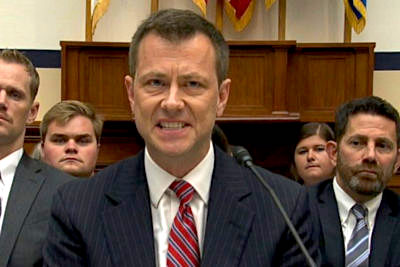
Peter Strzok during congressional hearing in July 2018.
Fired FBI Agent Peter Strzok, a zealous Russiagater who took part in the Flynn interview, and (his paramour) Page, appear in the Flynn case to have run roughshod over basic FBI legal policy by heavily editing the 302 form of the interview, as aptly detailed by retired supervisory agent Thomas Baker and other FBI agents. While Strzok asked Flynn the questions, his partner at the interview, Agent Joe Pientka, took the notes, which Strzok and Page, who wasn’t present, edited, according to released text messages between them.
The rules drilled into new agents are about the need to take verbatim notes, to be timely in documenting an interview on the FD-302 form for use in court, and to disallow edits by supervisors or attorneys who weren’t even present at an interview. These policies—all flouted in the Flynn case—were developed and designed to ensure accuracy during the Hoover era, long before tape recording equipment existed.
302s Only
Hoover’s FBI power was such that the Bureau could usually successfully insist, under federal rules of evidence and trial discovery, that only the final, polished FD-302 interview form would ever be handed over and made public at a trial.
The FBI and DOJ would always fight tooth and nail against “open file discovery,” claiming that other rough investigative and “administrative” documents in a file were not “relevant” and could therefore be kept hidden from the defense at trial.
It wasn’t until a few years after Hoover’s death that courts stopped FBI agents from destroying their contemporaneous interview notes and made the “1A envelope” preserved notes discoverable so that defense attorneys could check to see how closely the content of an agent’s FD-302 transcription conformed to his/her contemporaneous notes.
But the art of transcribing from rough notes in one’s own words what a suspect or defendant said does inherently allow even the most conscientious investigators some leeway, enabling the final 302 court document to be not as accurate as an actual recording of the interview.
In a conspiratorial “ends justify the means” situation that Strzok and Page believed themselves to be operating in, or in the case of any hell-bent, prosecution-focused, overzealous rogue agent(s), the old-fashioned FD-302 Hoover way is, and always was, susceptible to outright abuse.
(It may be appropriate to note that similar over-zealousness to benefit trial prosecutors was long practiced in the FBI laboratory until a top FBI agent-scientist and whistleblower blew the lid off related abuse that allowed FBI managers to rewrite and “strengthen” scientific results obtained by the agents who actually performed the forensic laboratory tests and analysis.)
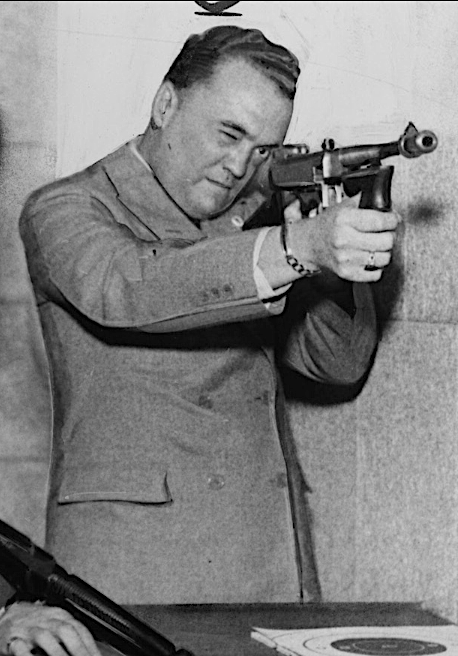
Hoover. (Flickr)
Anyway, that’s why most other state and local law enforcement agencies in the country went (and/or were forced to go) to tape recording of confessions and other important interviews in the 1980’s to 1990’s. However the FBI bureaucracy long resisted the move to recording devices.
Over the decades, as voice and video recording equipment became more and more prevalent and easy to use, defense attorneys and even judges started to hammer FBI agents about why they continued their old-fashioned reliance on individual agents’ note-taking abilities and memories.
Nevertheless, for nearly 40 years FBI directors and special agents in charge (SACs) would continue arguing about the difficulty of using modern technology to record interrogations and interviews. They always contended (at least in internal arguments, but never publicly admitted on a witness stand) that allowing agents to testify and tell juries what a defendant said could always be relied upon as more successful for the prosecution than allowing a jury to hear a tape or video recording of exactly what a defendant said.
It was well known and even proudly pointed out internally that in “he said-she said” disputes, a jury would always tend to believe the FBI agent over a defendant.
The Flynn 302 fiasco illustrates how FBI managers recognized what an advantage the final “written in your own words” 302 is when it’s declared to be the only relevant document (no “administrative documents,” early drafts, etc. need ever be handed over in discovery) when juries will almost always believe the FBI agent over a defendant. It is rare for administrative documents to become public, as they have in the Flynn case.
Of course if Strzok and his fellow FBI agent had asked Flynn for his consent to be tape recorded, Flynn would have undoubtedly quickly realized this was not a friendly interview by agents attempting to actually gain counter-intelligence about Russia.
Not Material
That brings up a whole n’other problem with the Flynn case that again harkens back to Hoover and his pre-Church Committee abuses.
Barr and (former FBI agent, now U.S. Attorney) Jeffrey Jensen concluded, after reviewing the complete file, that Flynn’s “lying to the FBI” was not “material” to a bonafide matter under FBI jurisdiction, but merely predicated upon the entirely specious “Russiagate” counter-intelligence investigation of Flynn that Strzok and Page deliberately kept open on a technicality, even after the FBI ordered it closed because there was no reasonable basis to believe Flynn had ever colluded with the Russian government.
The Flynn case furnishes a sterling example of the post 9-11 “war on terror” having demolished the “wall” that separates intelligence gathering from criminal investigation.
While fraught with problems and contradictory DOJ guidance, the “wall” had existed for a valid reason after Church Committee discovery of abuses under Hoover et. al. who so easily used “national security” and “counter-intelligence” as a pretext to surveil, investigate and use COINTELPRO “disrupt and dismantle” activities to go after America’s national leaders, allowing a way around 4th Amendment protections.

Robert Mueller giving testimony on July 24, 2019. (C-Span screenshot)
I and other former FBI agents believe the egregious plotting to railroad Flynn and “get him to lie,” requires dismissal of these charges. A number of additional significant problems with the Flynn investigation and prosecution are enumerated by attorney and award-winning journalist Glenn Greenwald in his excellent 1 ¾ hour-long detailed expose at The Intercept and by Scott Ritter, who focuses on “why innocent people plead guilty given plea bargaining” abuses in our justice “system.” Neither Greenwald, Ritter nor I happen to be fans of Flynn or Trump. But wrong is wrong.
It’s hardly extremist to realize that FBI and other law enforcement officials have, over the years, made terrible mistakes, and in some cases, engaged in outright wrongful conduct, sometimes in rogue operations and other times more systemically.
I will venture to say that FBI “entrapment” type actions in manufacturing crimes, as was practiced on Flynn, got its early start as a more normalized standard procedure after 9-11 with Robert Mueller’s FBI gravitating to using con-artist type informants to infiltrate Muslim communities in order to identify, coerce and entrap the more emotionally vulnerable members into committing acts that the FBI could take credit for as “preventing” terrorism.
The FBI found it increasingly difficult to prevent real terrorism spurred by successive administrations committing war crimes that killed so many foreign civilians.
Some FBI and other law enforcement wrongdoing has come to light, like the systemic torture operations perpetrated by certain Chicago police officials; the FBI’s decades-long tolerance for employing murderous mobsters as their “top echelon” informants; the Bureau’s spying on and attempted blackmail of Martin Luther King Jr. and other leaders, as well as law enforcement’s racial profiling and wrongful shootings.
In all too rare instances, innocent people are exonerated. Rather than being happy that this bit of justice is finally happening in the Flynn case, however, Russiagate proponents and Democratic partisans seem especially incensed since the always-flimsy charges of Flynn’s “lying to the FBI” was about all Special Prosecutor Mueller’s probe could show for their nearly two-year long, $32 million dollar massive effort.
We should pay heed to Scott Ritter’s admonition:
“The Obama national security team abused its power by unmasking Flynn’s identity, then leaked Flynn’s identity to the press, using this press reporting to justify the continuance of a baseless counterintelligence investigation in order to set a perjury trap intended to place Flynn in legal jeopardy. This is not how American justice is supposed to be dispensed, and the fact that Flynn had to undergo this ordeal should send a shiver down every American’s spine, because if left unchecked, there but for the grace of God go us all.”
Coleen Rowley, a retired FBI special agent and division legal counsel whose May 2002 memo to then-FBI Director Robert Mueller exposed some of the FBI’s pre-9/11 failures, was named one of TIME magazine’s “Persons of the Year” in 2002. Her 2003 letter to Robert Mueller in opposition to launching the Iraq War is archived in full text on the NYT and her 2013 op-ed entitled “Questions for the FBI Nominee“ was published on the day of James Comey’s confirmation hearing. Assigned to the Omaha, Jackson, MI, New York City field offices, and to the U.S. embassy in Paris, and consulate in Montreal, Rowley taught constitutional law to FBI agents in Minneapolis.
US donates war equipment to Kiev
By Lucas Leiroz | May 19, 2020
Apparently, Washington is helping to increase the violence in the Donbass. In the midst of a pandemic and the civil war at a softer stage, Kiev is promoting a gradual increase in the actions of pro-Maidan paramilitary groups in the region and receiving international support for this.
The United States has delivered more than $ 25 million worth of night vision devices, thermal cameras, portable communicators and medical equipment to Ukraine for use in the combat zone in Donbas, the US Embassy in Kiev reported.
In its account on a social network, the American Embassy to Kiev published the following note in English and Ukrainian: “Despite COVID-19, our security assistance to Ukraine continues! This week, the Office of Defense Cooperation received more than $ 25 million in night vision devices, thermals, radios, and medical equipment for Ukraine to use in the JFO zone. The United States stands strongly with Ukraine in support of its sovereignty and territorial integrity in the face of Russian aggression”.
The US, according to the note, supports Ukraine’s sovereignty and territorial integrity. As we know, since April 2014, Ukraine has carried out an operation against militias in the east of the country – Donbas region – where the popular republics of Donetsk and Lugansk were proclaimed in response to the violent change of government that took place in Kiev in February of the same year. However, the Minsk agreements, signed in September 2014 and February 2015, laid the foundation for a political solution to the conflict. Unfortunately, so far they have not led to a definitive cessation of violence, the outcome of which the UN estimates at around 13,000 deaths.
Despite not putting a real end to the confrontation, the Minsk agreements managed to establish some bases for a peaceful future, so that, since then, the war has reduced the intensity of the fighting and presented a drop in the number of victims. But, since then, Kiev has been constantly denounced for tightening its policies in the region again and promoting an escalation of violence, not only through direct confrontation with separatists, but also through terrorist attacks, secret missions and intelligence operations. In a sense, the Accords have changed the face of war, from being a direct confrontation conflict to becoming a scene of constant tensions and intermittent fighting.
A few weeks ago, the Ukrainian government announced that it will build a naval base in the Sea of Azov. Shortly before, a series of murders had been reported in the regions of the autonomous republics, including the systematic killing of several civil people not involved in the conflicts. Now, everything indicates that the situation will worsen and there will be, possibly, a return to direct war.
The timing of the announcement of the acquisition of new US equipment by Ukrainian forces is extremely strategic; after all, in the midst of a global pandemic that increasingly erodes the foundations of the capitalist system, who will care about an apparently “regional and peripheral” conflict like the Civil War in Donbass? However, we must divide our focus and pay more and more attention to the increase in violence and insecurity anywhere in the world.
In fact, the acquisition of this equipment by Ukraine indicates that Kiev plans to resume direct combat and, most likely, policies of political and ethnic persecution against Russian minorities and political groups opposing the regime established during the Euromaidan in 2014. Without drawing the attention of international society, the Ukrainian government, in international cooperation with the USA, plans a total war. Most likely, the United Nations will not comment on the case until something more serious happens – when, certainly, it will be too late.
It is worth remembering that, in February, the United States delivered tents worth US $ 1.5 million to Ukraine. In the meantime, attacks through explosions, shootings and systematic killings in the vicinity of Lugansk and Donetsk have become increasingly frequent and brutal. With the recent donation of equipment, American investments in the war have increased by tens of millions of dollars; so what’s next now? An even greater aggravation of the conflict with even more frequent attacks and murders of greater magnitude?
Ukraine expects a stance on the part of the rebels, which certainly will not happen. The greater Kiev’s aggression, the greater the rebellious response, with an increasingly strong resistance front. However, the rebel militias do not have much international support and world powers financing their actions and providing ultra-advanced war equipment, which means that, however much the rebel resistance strengthens, it is possible that there will be a major massacre in the Donbass. The faster the international society’s express condemnation to this escalation of violence, the lower the risk of genocide in eastern Ukraine. Coronavirus cannot be used as a smokescreen for international attacks.
Lucas Leiroz is a research fellow in international law at the Federal University of Rio de Janeiro.
News Stories Avoid Naming Israel
By Philip Giraldi • Unz Review • May 19, 2020
There are two stories that seem to have been under-reported in the past couple of weeks. The first involves Michael Flynn’s dealings with the Russian United Nations Ambassador Sergey Kislyak. And the second describes yet another bit of espionage conducted by a foreign country directed against the United States. Both stories involve the State of Israel.
The bigger story is, of course, the dismissal by Attorney General William Barr of the criminal charges against former National Security Advisor General Michael Flynn based on malfeasance by the FBI investigators. The curious aspect of the story as it is being related by the mainstream media is that it repeatedly refers to Flynn as having unauthorized contacts with the Russian Ambassador and then having lied about it. The implication is that there was something decidedly shady about Flynn talking to the Russians and that the Russians were up to something.
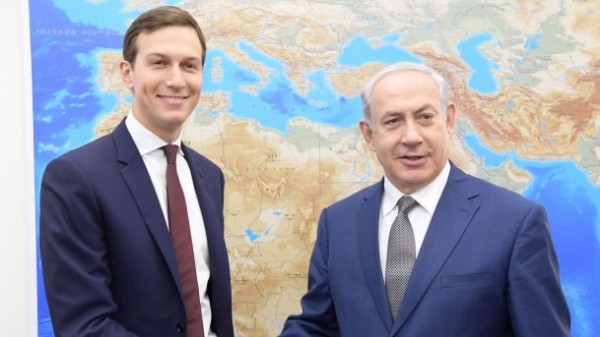
In reality, the part left out of the story is that the phone call to Kislyak on December 22, 2016, was made by Flynn at the direction of Jared Kushner, who in turn had been approached by Israeli Prime Minister Benjamin Netanyahu. Netanyahu had learned that the Obama Administrating was going to abstain on a United Nations vote condemning the Israeli settlements policy, meaning that for the first time in years a U.N. resolution critical of Israel would pass without drawing a U.S. veto. Kushner, acting for Netanyahu, asked Flynn to contact each delegate from the various countries on the Security Council to delay or kill the resolution. Flynn agreed to do so, which included a call to the Russians. Kislyak took the call but did not agree to veto Security Council Resolution 2334, which passed unanimously on December 23rd.
In taking the phone calls from a soon-to-be senior American official who would within weeks be part of a new administration in Washington, the Russians did nothing wrong, but the media is acting like there was some kind of Kremlin conspiracy seeking to undermine U.S. democracy. It would not be inappropriate to have some conversations with an incoming government team and Kislyak also did nothing that might be regarded as particularly responsive to Team Trump overtures since he voted contrary to Flynn’s request.
The phone call made at the request of Israel was neither benign or ethical as the Barack Administration was still in power and managing the nation’s foreign policy. At the time, son-in-law Jared Kushner was Trump’s point man on the Middle East. He and his family have extensive ties both to Israel and to Netanyahu personally, to include Netanyahu’s staying at the Kushner family home in New York. The Kushner Family Foundation has funded some of Israel’s illegal settlements and also a number of conservative political groups in that country. Jared has served as a director of that foundation and it is reported that he failed to disclose the relationship when he filled out his background investigation sheet for a security clearance. All of which suggests that if you are looking for possible foreign government collusion with the incoming Trumpsters, look no further.
And it should be observed that the Israelis were not exactly shy about their disapproval of Obama and their willingness to express their views to the incoming Trump. Kushner went far beyond merely disagreeing over an aspect of foreign policy as he was actively trying to clandestinely subvert and reverse a decision made by his own legally constituted government. His closeness to Netanyahu made him, in intelligence terms, a quite likely Israeli government agent of influence, even if he didn’t quite see himself that way.
Kushner’s actions, as well as those of Flynn, would most certainly have been covered by the Logan Act of 1799, which bars private citizens from negotiating with foreign governments on behalf of the United States and also could be construed as a “conspiracy against the United States.” But in spite of all that the investigation went after Flynn instead of Kushner. As Kushner is Jewish and certainly could be accused of dual loyalty in extremis, that part of the story obviously makes many in the U.S. Establishment and media uncomfortable, so it was and continues to be both ignored and expunged from the record as quickly as possible.
The second story, which has basically been made to disappear, relates to spying by Israel against critics in the United States. The revelation that Israel was again using its telecommunications skills to spy on foreigners came from an Oakland California federal court lawsuit initiated by Facebook (FB) against the Israeli surveillance technology company NSO Group. FB claimed that NSO has been using servers located in the United States to infect with spyware hundreds of smartphones being used by attorneys, journalists, human rights activists, critics of Israel and even of government officials. NSO allegedly used WhatsApp, a messaging app owned by FB, to hack into the phones and install malware that would enable the company to monitor what was going on with the devices. It did so by employing networks of remote servers located in California to enter the accounts.
NSO has inevitably claimed that they do indeed provide spyware, but that it is sold to clients who themselves operate it with the “advice and technical support to assist customers in setting up” but it also promotes its products as being “used to stop terrorism, curb violent crime, and save lives.” It also asserts that its software cannot be used against U.S. phone numbers.
Facebook, which did its own extensive research into NSO activity, alleges that NSO rented a Los Angeles-based server from a U.S. company called QuadraNet that it then used to launch 720 hacks on smartphones and other devices. It further claims in the court filing that the company reverse-engineering WhatsApp, using an program that it developed to access WhatsApp’s servers and deploy “its spyware against approximately 1,400 targets” before “…covertly transmit[ting] malicious code through WhatsApp servers and inject[ing]” spyware into telephones without the knowledge of the owners.”
The filing goes on to assert that the “Defendants had no authority to access WhatsApp’s servers with an imposter program, manipulate network settings, and commandeer the servers to attack WhatsApp users. That invasion of WhatsApp’s servers and users’ devices constitutes unlawful computer hacking.”
NSO, which is largely staffed by former (sic) Israeli intelligence officers, had previously been in the news for its proprietary spyware known as Pegasus, which “can gather information about a mobile phone’s location, access its camera, microphone and internal hard drive, and covertly record emails, phone calls and text messages.” Pegasus was reportedly used in the killing of Saudi dissident journalist Adnan Kashoggi in Istanbul last year and it has more recently been suggested as a resource for tracking coronavirus distance violators. Outside experts have accused the company of selling its technology and expertise to countries that have used it to spy on dissidents, journalists and other critics.
Israel routinely exploits the access provided by its telecommunications industry to spy on the host countries where those companies operate. The companies themselves report regularly back to Mossad contacts and the technology they provide routinely has a “backdoor” for secretly accessing the information accessible through the software. In fact, Israel conducts espionage and influence operations both directly and through proxies against the United States more aggressively than any other “friendly” country, which once upon a time included being able to tap into the “secure” White House phones used by Bill Clinton to speak with Monica Lewinsky.
Last September, it was revealed that the placement of technical surveillance devices by Israel in Washington D.C. was clearly intended to target cellphone communications to and from the Trump White House. As the president frequently chats with top aides and friends on non-secure phones, the operation sought to pick up conversations involving Trump with the expectation that the security-averse president would say things off the record that might be considered top secret.
A Politico report detailed how “miniature surveillance devices” referred to as “Stingrays” were used to imitate regular cell phone towers to fool phones being used nearby into providing information on their locations and identities. According to the article, the devices are referred to by technicians as “international mobile subscriber identity-catchers or IMSI-catchers, they also can capture the contents of calls and data use.”
Over one year ago, government security agencies discovered the electronic footprints that indicated the presence of the surveillance devices near the White House. Forensic analysis involved dismantling the devices to let them “tell you a little about their history, where the parts and pieces come from, how old are they, who had access to them, and that will help get you to what the origins are.” One source observed afterwards that “It was pretty clear that the Israelis were responsible.”
So two significant stories currently making the rounds have been bowdlerized and disappeared to make the Israeli role in manipulating and spying against the United States go away. They are only two of many stories framed by a Zionist dominated media to control the narrative in a way favorable to the Jewish state. One would think that having a president of the United States who is the most pro-Israel ever, which is saying a great deal in and of itself, would be enough, but unfortunately when dealing with folks like Benjamin Netanyahu there can never be any restraint when dealing with the “useful idiots” in Washington.
Philip M. Giraldi, Ph.D., is Executive Director of the Council for the National Interest, a 501(c)3 tax deductible educational foundation (Federal ID Number #52-1739023) that seeks a more interests-based U.S. foreign policy in the Middle East. Website is https://councilforthenationalinterest.org, address is P.O. Box 2157, Purcellville VA 20134 and its email is inform@cnionline.org.
US, other foreign forces must leave Syria, respect its sovereignty: Iran
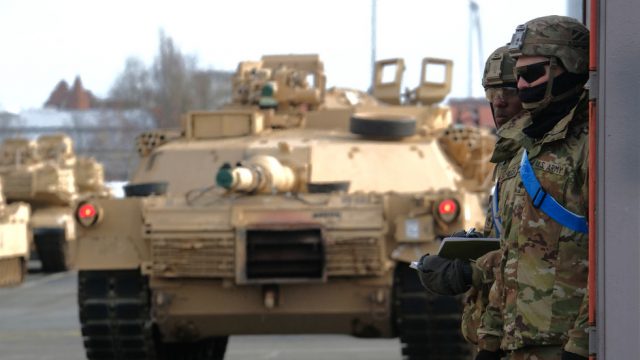
Press TV – May 18, 2020
Iran’s permanent ambassador to the United Nations says the US must end its illegal occupation of Syria and stop shielding terrorist groups under the mask of fighting terrorism.
Majid Takht Ravanchi made the remarks in a Monday address to a virtual meeting of United Nations Security Council dubbed “Middle East: Syria – Political”.
“Sovereignty, political independence, unity and territorial integrity of Syria must be fully respected by all, and accordingly, all foreign forces whose presence is not permitted by the Syrian Government must leave the Syrian territory,” the Iranian diplomat said.
“In this regard, the living example is the occupation of certain parts of Syria by the US forces who continue to support and shield terrorist groups under the mask of combatting terrorism,” he went on to say.
He further rejected any separatist agendas as well as “any and all attempts to create new realities on the ground, including through illegitimate self-rule initiatives.”
Takht Ravanchi slammed the “illegal” occupation of Syria’s Golan Heights by Israel, and said the recognition by the US of its annexation to Israel is null and void.
“Condemning such unlawful irresponsible act, we stress that Golan is and will remain a part and parcel of the Syrian territory,” he added.
Israel seized the Golan Heights from Syria after the 1967 Six-Day War and later occupied it in a move that has never been recognized by the international community. However, in a highly provocative move on March 25 last year US President Donald Trump signed a proclamation recognizing Israel’s “sovereignty” over the Syrian territory.
Damascus strongly condemned the move and called it a “blatant attack on the sovereignty and territorial integrity” of Syria.
Since the onset of the occupation, Tel Aviv has been building dozens of settlements in the region and has used it to carry out a number of military operations against the Arab country.
In his Monday speech, Takht Ravanchi also condemned Israel’s aggressions against Syria as a “gross violation of international law and the UN Charter”, stressing that the Syrian Government has a sovereign right to decide how and when to exercise its inherent right to individual or collective self-defense.
“Such aggressions must come to an end,” he urged.
Israel frequently attacks military targets inside Syria in what is considered as an attempt to prop up foreign-backed Takfiri terrorist groups that have been suffering heavy defeats against Syrian government forces.
The Damascus government has several times complained to the UN about Israel’s illegal strikes on Syria.
US Supreme Court heaps more damages on Sudan in embassy bombing cases
MEMO | May 18, 2020
The US Supreme Court dealt a legal setback to Sudan on Monday, ruling that the African nation cannot avoid punitive damages in lawsuits accusing it of complicity in the 1998 al Qaeda bombings of US embassies in Kenya and Tanzania that killed 224 people.
Siding with hundreds of people hurt and relatives of people killed in the bombings, the justices ruled 8-0 to throw out a lower court’s 2017 decision that had freed Sudan from punitive damages awarded in the litigation in addition to about $6 billion in compensatory damages. Justice Brett Kavanaugh did not participate in the case.
The case hinged on the Supreme Court’s view of a 2008 amendment to a federal law known as the Foreign Sovereign Immunities Act allowing for punitive damages. The US Court of Appeals for the District of Columbia Circuit in 2017 upheld Sudan’s liability but ruled that the amendment was made after the bombings occurred and could not be applied retroactively.
Justice Neil Gorsuch wrote in Monday’s ruling that for claims made under federal law, “Congress was as clear as it could have been when it authorized plaintiffs to seek and win punitive damages for past conduct.”
The ruling also ordered the D.C. Circuit to reconsider its decision that the foreign plaintiffs who sued Sudan under state law in the United States also could not seek punitive damages.
Starting in 2001, groups of plaintiffs sued in federal court in Washington under the 1976 Foreign Sovereign Immunities Act, which generally bars claims against foreign countries except those designated by the United States as state sponsors of terrorism – as Sudan was in 1993. A federal judge found Sudan liable and awarded the plaintiffs $10.2 billion, including $4.3 in punitive damages.
Sudan has faced a deepening economic crisis since the 2019 overthrow of its longtime ruler Omar al-Bashir.
President Donald Trump’s administration had urged the justices to side with the plaintiffs who sued Sudan.
Twelve Americans were killed in the August 7, 1998, attacks. The lawsuits involve 567 people, mostly non-US citizens who were employees of the US government and their relatives.
The damages had been imposed by default because for most of the litigation Sudan did not appear before a lower court to counter accusations that it harbored and provided support to the Islamist militant group al Qaeda. Sudan denied the allegations.
The truck bombs that detonated outside the embassies in Nairobi, Kenya, and Dar es Salaam, Tanzania marked the first large-scale al Qaeda attack.
Pro-Israel group fails to have BDS supporting professor removed
MEMO | May 18, 2020
A pro-Israel American campus group has failed in its bid to have a professor removed from the position of interim dean of a department at the George Washington University because of her support for the global Boycott, Divestment and Sanctions (BDS) campaign.
Professor Ilana Feldman was targeted by GW for Israel following her appointment as the interim dean of the Elliott School of International Affairs, a prestigious private Washington, DC university’s training school for diplomats and other foreign policy specialists.
GW for Israel launched a petition demanding the removal of Feldman from the post citing her support for BDS. “Dr. Feldman is a fervent supporter of the Boycott, Divestment, and Sanctions (BDS) movement and has a record of minimizing terrorism, delegitimizing the State of Israel, and advocating to suspend academic ties with Israeli institutions,” said the petition.
Feldman is a member of the American Anthropological Association. In 2015 she led a campaign in which professors of anthropology voted overwhelmingly in favour of a resolution calling on the group to boycott Israeli academic institutions by a 1,040 to 136 margin at the association’s annual business meeting.
Last year, she published a book on Palestinian refugees titled: “Life Lived in Relief — Humanitarian Predicaments and Palestinian Refugee Politics”. It was shortlisted for the 2019 Palestine Book Awards.
Despite the protest from GW for Israel, George Washington University stood by its decision.
“Dr. Ilana Feldman has been an active faculty member at the Elliott School of International Affairs since 2007,” the University’s provost, Brian Blake, said last week in an email to the Jewish Telegraphic Agency. “As vice dean, Dr. Feldman has demonstrated her leadership ability and her respect for and commitment to all students, faculty and staff of the Elliott School community.
Dr. Feldman’s appointment as interim dean was made based on strong support within the Elliott School, including from the current dean, the Dean’s Council, as well as a number of faculty.”
Feldman is the most recent academic to face the wrath of the pro-Israeli groups. In January JB Brager, a teacher at an elite New York City prep school, was fired for expressing remarks critical of Israel.
Featured Video
Weaponized Journalism: 2021 Sayer Ji Interview with NPR
or go to
Aletho News Archives – Video-Images
From the Archives
How Rothschild Banking Clan Uses Its Vast Wealth to Influence World Events and Control Governments
By Ilya Tsukanov – Sputnik – 15.09.2024
How powerful is the Rothschild banking family? How did they amass their fortune? Just how rich are they? Do they secretly control the world? Sputnik explores. … continue
Blog Roll
 Aletho News
- Dockworkers launch global strike against Israeli and US military shipments
- Europe facing gas price shock – Gazprom chief
- Ukraine continues recruiting people with disabilities
- Weaponized Journalism: 2021 Sayer Ji Interview with NPR
- Beyond Netanyahu: what Israel’s election means for Palestinians
- Lithuania plans universal conscription
- Lies, Damn Lies, and Ukraine News
- Financial Times rejects Nordic demands to correct Putin call story – media
- The Case for Less Unity in Europe
- Ukraine expands minority rights under EU pressure – but Russians remain excluded
- If Americans Knew
- Genocidal intent behind Hebron assault, rights group says
- This week, Israel killed 8-year-old who survived bombing that wiped out her family
- DAILY UPDATE: Latest essential news on Palestine, Israel, & region
- Israeli soldier poses at damaged Lebanon church, sparking anger
- New Report. Manufacturing the Great Replacement: Is Israel behind one of the largest racist influence campaigns ever documented?
- ‘Arab voice doesn’t count’: Jewish Israeli blocs reject Palestinian support
- Whether Bibi Stays or Goes, the ‘Special Relationship’ Must End
- AIPAC Isn’t Retreating. Here’s How It’s Already Shaping the Next Congress.
- With ‘Largest Coordinated Port Action Ever,’ Dockworkers in 22 Countries Strike Against Gaza Genocide
- US midterms: Five days left – who leads in the polls as Trump, Obama rally
- No Tricks Zone
- Germany’s Green Energy Transition Becoming Increasingly Expensive…Another 6 Trillion Euros!
- Sudden Stratospheric Warming, Powerful El Niño Combination May Lead To Extreme Europe Cold, Energy Crisis!
- Two New Studies Find Thwaites Glacier Melt Cannot Be Driven By Human Activity Or A Warming Ocean
- E-Cars Reduce CO2 Emissions By Only 41% Compared To Internal Combustion Engine Vehicles
- Predictions Made By Renowned Climate Professor Over Past Decades Have Been Proven To Be Poor
- New Study Suggests Large Regions Of The Pacific Ocean Have Been Cooling For The Last 80 Years
- Germany’s Green Energy Debacle: High Energy Costs Force Kahla Porzellan to Close After 182 Years!
- New Study: 50 Years Of The Most Aggressive ‘Net Zero’ Policies Can Only Affect The Global Climate By 0.03°C
- US September “Heat” Was No Record…Many Records Set Decades Ago
- Latest European Green Energy Debacle; Portugal’s Largest Flagship Solar Park Insolvent!

