Syria ‘unwilling, unprepared’ to attack Lebanon despite US pressure: Report
Damascus is reportedly prepared to reconsider its position if Tel Aviv were to withdraw its occupation troops from Syria
The Cradle | June 17, 2026
Syrian President and former Al-Qaeda chief Ahmad al-Sharaa is “unprepared and unwilling” to launch a military offensive against Lebanon despite growing US pressure, Israel’s Broadcasting Corporation (KAN) reported on 16 June.
KAN cited an informed Syrian source who said that Sharaa is “concerned” that an attack by Damascus against Hezbollah will be seen across the region as “serving” Israel’s interests.
This could negatively impact Damascus’s “legitimacy.”
For now, the self-appointed Syrian president is ruling out an attack against Lebanon and its resistance forces unless Israel decides to pull its forces out of Syria, the report states.
Israel has rejected withdrawal from both Syria and Lebanon.
KAN also said that Turkiye – a longtime backer of Sharaa since his days as Abu Muhammad al-Julani, founder and leader of Al-Qaeda’s Nusra Front – has urged Damascus against such an incursion.
Ankara is reportedly concerned that a Syrian assault on Lebanon would “embolden” Tel Aviv and “strengthen” its position.
“Trump proposed a framework in which the Syrian military would play a central role in a future effort to disarm Hezbollah,” i24 reported on Wednesday.
Lebanese authorities reportedly felt uneasy about the idea during recent US-backed direct talks with Israeli officials, which have taken place despite Lebanon’s legal restrictions.
Additionally, Israeli authorities are reportedly concerned about the effectiveness of a Syrian attack on Hezbollah.
“Some of the arrangements currently under discussion could ultimately strengthen Hezbollah politically and militarily rather than diminish its influence,” i24 reported.
Sharaa said earlier this week that talk of a Syrian incursion into Lebanon was a “rumor.” “Syria’s approach aims to end the war in Lebanon, not to expand it or get involved,” he stressed.
US President Donald Trump has repeatedly called on Syria to attack Hezbollah.
Iraqi resistance groups allied with Hezbollah have cautioned the Syrian government and its forces that they will act if Damascus initiates an attack on Lebanon.
Syria experienced a significant geopolitical change following the fall of former President Bashar al-Assad in December 2024, as Sharaa’s government aligned with Washington and engaged in discussions with Israel.
The US has largely lifted sanctions on Syria and called Damascus a “partner” in the global fight against ISIS — overlooking Sharaa’s past as an Al-Qaeda leader and earlier as deputy to ISIS founder Abu Bakr al-Baghdadi.
Hezbollah fought in Syria for years with the former government, helping recapture areas from extremist groups like Al-Qaeda’s Nusra Front, Ahrar al-Sham, and others considered by the west as the “Syrian opposition.”
The Nusra Front, led by Sharaa, was rebranded into Hayat Tahrir al-Sham (HTS) and ended up toppling Assad’s government in 2024.
HTS and other extremist factions with links to ISIS currently dominate what has become the new Syrian Defense Ministry and military.
Tom Barrack, US special envoy to Syria and Iraq, threatened Lebanon last year with a Syrian incursion, and said Damascus would “actively assist us in confronting and dismantling … Hezbollah.”
He also said Syria viewed Lebanon as its “beach resort” and would carry out an assault against the country unless Hezbollah is disarmed.
The final war or final deal: Why the MoU?
By Robert Inlakesh | Al Mayadeen | June 18, 2026
The Israeli-US plot to inflict “regime change” upon Iran has been turned into a strategic failure of historic proportions – in the end, Washington and Tel Aviv were forced to confront the reality. The newly signed Memorandum of Understanding is either a gateway to a final deal or simply another strategy to buy time.
Forty days of all-out war, followed by two months of dead-end negotiations, led to two final options: Submit to a deal that works heavily in Iran’s favour or keep on fighting until the end. What ultimately comes of this equation will completely reshape West Asia and perhaps geopolitics globally.
US President Donald Trump had tried every single avenue to pressure the Islamic Republic of Iran into surrender. He suddenly found himself in a new phase where the walls were closing in and decided to make a diplomatic move. The Iranians managed to reunite their allied fronts across the region, taking de facto ownership of the Strait of Hormuz, while proving they can fight the world’s top military superpower to a standstill.
If you were to listen to the rhetoric coming from the White House, it was like hearing a radio broadcast from a parallel universe. According to Trump, Iran was defeated all the way back in March, its military is destroyed, nobody knows who is running the country, it has no air defenses, no missiles left, no navy, and is on the verge of collapse. But quite frankly, nobody bought his nonsensical ramblings.
Beneath the egotistical exterior is a system that was running out of gas and whose operator was in panic.
In order to accurately assess the situation, we have to factor in precisely why the US leader is managing this war so incredibly poorly. The Trump administration is not composed of competent and experienced individuals; it’s a who’s who of Israeli Lobby shills and hardline ideological fanatics – a tech billionaire’s dream administration. While the Israeli Lobby and other lobby groups have for long had sway over American presidents and foreign policy, it has never been this severe.
Donald Trump exemplifies this through his total incompetence and constant inability to say no to the Israelis when it matters the most. There is, after all, a reason why no other US president agreed to go to war with the Islamic Republic upon the request of Israeli Prime Minister Benjamin Netanyahu, even when Iran was far less prepared for it militarily.
Finding out the hard way, the US president found himself caught in a quagmire– if he escalated the war, then the entire region would go up in flames, but if he backed out, he would face the wrath of the same billionaire class that put him in power to begin with.
The Zionist regime can’t defeat the Iranians alone, nor does it believe that the US will defeat Tehran conventionally. Yet, the Israeli leadership does not want to give up, for if they fail, then the Iranians will become the dominant regional power and the “Greater Israel Project” will not be able to succeed.
Therefore, they are only really left with two actual options, both involving the United States: The first is a fight to the death that could go so far that nuclear weapons become involved; the second is a large-scale attack on Iranian infrastructure.
The second option is more likely to be favoured by the Israelis than the first, and its goal will be to continue battering Iranian civilian infrastructure until the Israelis can’t take the punishment coming back its way any longer. For the US, this would represent a catastrophe, because the Iranians have long pledged to wipe out the entire region’s oil and gas infrastructure, even going after water desalination and power plants if it comes down to it.
For Washington, this means their Gulf allies will be destroyed. Keep in mind that the Trump administration previously bragged about the alleged Trillion that the Gulf Arab States had pledged to invest in the United States. All of that is gone overnight, and a global economic meltdown would be underway. Trump personally has a lot of investments in the Gulf, which means sacrificing this too.
The Israelis, on the other hand, want the Arab Gulf States weakened. This is for the very same reason they threaten Turkiye constantly – they do not want any potential competitors. Tel Aviv doesn’t even like other regional nations, who are their allies, to get the latest US fighter jets. So, the hypothetical annihilation of rich Gulf States doesn’t likely bother them at all.
As long as the primary goal is achieved, they will be happy. They want a weakened and battered Iran, an Islamic Republic that is susceptible to future color revolutions, one that can no longer impose deterrence equations. But the Americans were facing an economic tidal wave and had no good options in front of them.
If a deal is signed on the terms of the Iranians as a result of the MoU, the Israelis have been strategically defeated. The war that began on October 7, 2023, would have been completely lost for them, and they will only have two options available to them: try to linger on and delay the inevitable implosion of their expansionist project, or sign a deal with the Palestinians in order to allow for a State of Palestine to come into existence. Realistically, the so-called “Two-State solution” is their only hope of long-term survival. All of this assumes they won’t simply blow the deal up before it can come to fruition.
Iran declares victory over US
RT | June 18, 2026
Iranian officials have portrayed the newly signed memorandum of understanding with the US as a diplomatic victory achieved through strength and as evidence that Washington failed to achieve any of its objectives militarily.
The 14-point document was signed remotely by President Donald Trump and his Iranian counterpart, Masoud Pezeshkian, late Wednesday and immediately entered force, according to the Pakistani mediators.
The US side has been unusually muted in its public response. The White House has also yet to publish the final text of the memorandum, although an unnamed senior US official read out the 14-point document to journalists after days of criticism over the secrecy surrounding the deal.
Meanwhile, Iran’s parliament speaker and chief negotiator in the talks, Mohammad Ghalibaf, described the memorandum as proof of US surrender.
“The agreement is a record of US failure,” Ghalibaf said in a televised interview on Wednesday. “People will see it and judge.”
Tehran has argued that the document reflects a series of concessions by Washington, including the lifting of the US naval blockade, sanctions waivers for Iranian oil exports, access to frozen Iranian funds, and a US-backed economic reconstruction plan worth at least $300 billion. Washington has also agreed not to impose new sanctions or deploy additional forces in the region while the sides negotiate a final agreement.
In response, Iran “will make arrangements” to restore freedom of navigation through the Strait of Hormuz – something that had not been an issue before the US-Israeli attack. However, Tehran has signaled that the key waterway will not simply return to prewar conditions.
“I emphasize again that the Strait of Hormuz will never return to the previous conditions,” Ghalibaf said. “Iran has the right to sovereignty over the Strait of Hormuz, and of course, we will receive a fee for services.”
Iranian Foreign Ministry spokesman Esmaeil Baghaei added that a framework was being developed to manage the key waterway, with consultations already held with Oman, as outlined in the MOU.
Tehran has also highlighted the memorandum’s language on Lebanon. “If the Israeli regime’s attacks on Lebanon continue, it will be considered a violation of the other party’s commitments under the memorandum of understanding,” Baghaei said.
The memorandum is not a final peace agreement, but launches a 60-day negotiation period during which Washington and Tehran are expected to discuss Iran’s nuclear program, sanctions relief, frozen assets, the future administration of the Strait of Hormuz, and a final settlement to be endorsed by the UN Security Council.
The nuclear language in the document states that Iran “reaffirms that it shall not procure or develop nuclear weapons” – something Tehran has been stating for years, including during both previous US-Israeli attacks. The MOU adds that the sides will work out a mechanism for the disposition of stockpiled enriched material, with the minimum methodology being down-blending on site under IAEA supervision.
Trump made multiple unrelated posts on Truth Social hours after signing but said nothing about the deal. Earlier in the day, he defended the memorandum, threatening to “bomb the hell out of” Iran if it failed to comply.
Iran reveals full text of war-ending MoU signed with US
Al Mayadeen | June 18, 2026
Iran and the United States have signed a Memorandum of Understanding (MoU) aimed at launching expanded negotiations and ending the war across all fronts in the region.
The text of the agreement, published by Tasnim News Agency, outlines a framework for a permanent cessation of hostilities, sanctions relief, maritime security arrangements, nuclear negotiations, and a roadmap toward a final agreement to be concluded within 60 days.
The full text of the Iran-US MoU
Below is the full text of the MoU as reported by Tasnim News Agency :
Islamabad Memorandum of Understanding between the United States of America and the Islamic Republic of Iran
- The United States of America and the Islamic Republic of Iran and their allies in the current war by signing this MoU, declare the immediate and permanent termination of military operations on all fronts, including in Lebanon, and undertake from now on not to initiate any war or any military operation against each other, and to refrain from the threat or use of force against each other, and ensuring the territorial integrity and sovereignty of Lebanon. Final deal will confirm the permanent termination of the war on all fronts, including in Lebanon, and other provisions of this paragraph.
- The United States of America and the Islamic Republic of Iran undertake to respect each other’s sovereignty and territorial integrity and to refrain from interfering in each other’s internal affairs.
- The United States of America and the Islamic Republic of Iran commit to negotiating and achieving the final deal in maximum 60 days, extendable with mutual consent.
- Immediately upon the signing of this MoU, the United States of America will begin the removal of its naval blockade and any disturbances or impediments against the Islamic Republic of Iran, and will fully end the naval blockade within 30 days. During this period, the traffic of vessels will be in proportion to the numbers of pre-war traffic being restored by the Islamic Republic of Iran. The United States of America further undertakes to remove its forces from the proximity of the Islamic Republic of Iran within 30 days after the final deal.
- Upon the signing of this MoU, the Islamic Republic of Iran will make arrangements using its best efforts for the safe passage of commercial vessels with no charge for 60 days only from the Persian Gulf to the Sea of Oman and vice versa. The traffic of commercial vessels will immediately start, and considering the need for removing the technical and military obstacles and demining by the Islamic Republic of Iran, will be instated within 30 days. The Islamic Republic of Iran will conduct dialogue with the Sultanate of Oman to define the future administration and maritime services in the Strait of Hormuz in discussion with other Persian Gulf littoral states in line with the applicable international law and the sovereign rights of coastal states of the Strait of Hormuz.
- The United States of America undertakes with regional partners to develop a definitive, mutually agreed plan with at least $300 billion for the reconstruction and economic development of the Islamic Republic of Iran. The mechanism for the implementation of this plan will be finalized as part of a final deal within 60 days. All required licenses, waivers and permissions needed for the relevant financial transactions will be granted by the United States of America.
- The United States of America undertakes to terminate all types of sanctions against the Islamic Republic of Iran, including the United Nations Security Council resolutions, i.e. IAEA Board of Governors resolutions and all unilateral US sanctions, primary and secondary, in an agreed-upon schedule as part of the final deal. The Islamic Republic of Iran and the United States of America acknowledge the critical importance of the sanctions-termination issue abovementioned, and expressed their intentions to immediately address these issues in the negotiations, in order to achieve mutual agreement on them.
- The Islamic Republic of Iran reaffirms that it shall not procure or develop nuclear weapons. The United States of America and the Islamic Republic of Iran have agreed to resolve the disposition of stockpiled enriched material, pursuant to a mechanism that will be mutually agreed upon in accordance with the schedule mentioned in Paragraph Seven, with the minimum methodology to be downblending on site under the supervision of the IAEA. The two parties also agreed to discuss the issue of enrichment and other mutually agreed matters related to the Islamic Republic of Iran’s nuclear needs based on a satisfactory framework being agreed upon in the final deal. The final deal will confirm the provisions of this paragraph. The United States of America and the Islamic Republic of Iran acknowledge the critical importance of the nuclear issues abovementioned and express their intention to immediately address these issues in the negotiations in order to achieve mutual agreement on them.
- Pending the final deal, the United States of America and the Islamic Republic of Iran agree to maintain the status quo. The Islamic Republic of Iran will maintain the current status quo of its nuclear program, and the United States of America will not impose any new sanctions and will not deploy additional forces in the region.
- The United States of America undertakes that immediately upon the signing of this MoU until the termination of sanctions, the US Department of Treasury will issue waivers for the export of Iranian crude oil, petroleum products and derivatives, and all associated services, including banking transactions, insurances, transportation, etc.
- The United States of America undertakes to make fully available for use the frozen or restricted funds and assets of the Islamic Republic of Iran upon the implementation of this MoU. The United States of America and the Islamic Republic of Iran will mutually agree on the procedures related to the release of these funds during the negotiations. Such funds, either retained in the original account or transferred, shall be made fully usable for payment to any ultimate beneficiary designated by the Central Bank of the Islamic Republic of Iran. The United States of America undertakes to issue all necessary licenses and authorizations accordingly.
- The United States of America and the Islamic Republic of Iran agree that an executive mechanism will be established to monitor the successful implementation of this MoU and the future compliance of the final deal.
- After signing this MoU and subject to the beginning of the implementation of Paragraphs 1, 4, 5, 10 and 11 of this MoU and the continuing implementation of these measures, the United States of America and the Islamic Republic of Iran will start negotiations regarding the final deal exclusively on the other paragraphs.
- The final deal will be endorsed by a binding UN Security Council resolution.
US, EU authorize production of ‘deep strike’ missiles inside Ukraine
Western allies are using the diplomatic progress from a possible Iran peace deal to intensify an economic blockade against Russia
The Cradle | June 17, 2026
On 17 June, G7 leaders announced that US and EU arms makers will start manufacturing advanced long-range weaponry “under license” in Ukraine, as western stockpiles dwindle, aiming to industrialize the frontline and sustain pressure on Russia.
A diplomatic source at the summit in Evian-les-Bains clarified that the push involves “not just air defense systems, but deep strike capabilities,” allowing Ukraine to threaten targets much deeper into Russian territory, Le Parisien reported.
The official noted that local production is essential as Ukrainian forces currently deploy approximately 20 Patriot missiles to counter every massive Russian offensive, straining global stocks.
The move effectively entrenches a permanent industrial infrastructure for offensive warfare capabilities within Ukrainian territory.
In a joint statement, G7 leaders from Canada, France, Germany, Italy, Japan, the UK, the US, and the EU expressed their “readiness to grant Ukraine licenses enabling it to increase its military production.”
German Chancellor Friedrich Merz explained that US firms will grant these licenses to European and Ukrainian manufacturers to address current industrial shortages.
Merz stated he was “grateful to [US] President [Donald] Trump for this great willingness to cooperate,” adding, “We are all currently producing too little, and this can be compensated for by granting licenses to companies that have these production capacities, including European and Ukrainian companies.”
This military support coincides with a G7 agreement to escalate economic pressure on Moscow by tightening sanctions on the Russian oil and gas sectors, with leaders citing the reopening of the Strait of Hormuz following the Iran–US memorandum of understanding (MoU) as the catalyst for these measures.
“We consider this the right moment to proceed with additional measures, as President Trump has delivered a deal that we support in reopening the Strait of Hormuz,” the leaders declared.
The move follows the US reinstatement on Tuesday of oil sanctions that had been temporarily suspended during the war on Iran, which now may end with the signing of the MoU on Friday in Switzerland.
The summit highlighted a shift in US foreign policy. Canadian Prime Minister Mark Carney described the new US stance as “harder toward Russia and more realistic, in our view, of the situation on the ground of the war.”
Trump, who told assembled leaders “I’m the boss,” pledged to “do everything” to help end the conflict.
While Ukrainian President Volodymyr Zelensky welcomed the “important results” regarding the military contracts, he remained cautious following a February 2025 meeting with US Vice President JD Vance and a demand that Ukraine provide resources as “compensation” for aid.
French diplomatic sources added that G7 members now “acknowledge that there is momentum on the ground” in Ukraine’s favor.
The new western military push comes after the EU had approved an approximately $105 billion loan for Ukraine on 22 April to fund critical defense needs and financial assistance.
The funding was released following a months-long deadlock after Ukraine resumed Russian oil flows through the Druzhba pipeline to Hungary and Slovakia.
Hungary had vetoed the loan, accusing Kiev of using “technical repairs” from a drone strike as a pretext to weaponize energy and exert political pressure.
The art of the recycled deal: Trump and the outcome Israel cannot tolerate
By Jamal Kanj | MEMO | June 17, 2026
There are many lessons to be learned from the latest made-for-Israel war on Iran. The first and most damning is that the war resolved the very crisis it created. Donald Trump celebrated the reopening of the Strait of Hormuz and the lifting of the blockade against Iran. Two conditions that were fully in place before Benjamin Netanyahu dog walked Trump into this war. The agreement that concluded the war took us back to exactly where we stood before America spent $200 billion, and where Americans continue to pay Israeli surcharge tax at the pump and grocery stores.
As for Iran’s nuclear program, the arithmetic does not lie. The 400 kilograms of 60-percent enriched uranium that Iran possessed were zero before Trump — pressured by his largest Israel-first donors — tore up the Joint Comprehensive Plan of Action (JCPOA) in May 2018.
According to the International Atomic Energy Agency, Iran had fully complied not only with the IAEA non-proliferation agreement, which Israel has never signed nor accepted, but with the additional protocols governing verification and monitoring of its civilian nuclear program.
Trump canceled the deal anyway, not because it failed America, but because it did not satisfy Israel’s veto.
The deepest irony is that Iran’s nuclear knowledge and capabilities are more advanced today than when Trump discarded the JCPOA. Any new agreement — even one stricter in structure than the original — is therefore being negotiated from a fundamentally weaker position than the one that existed in 2018. No treaty can unlearn what Iran already knows.
On Monday, June 15, Trump heralded the end of war bragging that Iran agreed not to develop nuclear weapons. In a leaked copy of the supposed Memorandum of Understanding (MoU), item 8 states: “The Islamic Republic of Iran reiterates that it will never produce nuclear weapons ...” The word reiterates is not incidental. It is a direct reference to Article III of the 2015 JCPOA, which Trump most likely never read, where Iran had already affirmed: “… that under no circumstances will Iran ever seek, develop or acquire any nuclear weapons.” Same commitment. Same language. Different signatures. Twelve weeks of a war that went nowhere to get here.
From “There will be no deal with Iran except UNCONDITIONAL SURRENDER!” to celebrate an MoU to reopen a Strait that was open before $200 billion and countless American and Iranian lives were squandered. Trump’s triumph is much ado about nothing.
He canceled an existing deal that took years to negotiate, inflicted economic hardship on ordinary Iranians, and allowed Iran’s nuclear advancement to leap forward. It is, in the most literal sense, like redefining water as H2O. The molecule did not change. Only the dressing did. Israel’s war took Trump back to the starting point, at twice the cost to American taxpayers.
The same special-interest group that pushed Trump to cancel the JCPOA, lobbied him long before the 2024 election. Israel-first donors poured hundreds of million into his campaign as a down payment for this war. Netanyahu visited Trump seven times in thirteen months, manipulating, and scheming for another made-for-Israel war.
This war should also carry a lesson for the Arab Gulf states that long believed American military bases were a guarantee of their security. Instead, they found themselves sidelined and never consulted on a war waged, directly or indirectly, from their own soil, ultimately in service of an Israeli agenda. Foreign military presence does not deliver security. It delivers dependency. Lasting regional stability is built through regional cooperation, on terms beneficial to the region.
More importantly, the region must now reckon with a pattern it can no longer afford to ignore: wherever Israel goes, instability follows. The so-called Abraham Accords brought Israel into the Gulf. What followed was bombs, drones and economic ruins never seen since the Second World War.
I have lived in the Gulf. The only pop people could hear was the backfire of an aging car exhaust. In the last three months, friends shared recordings of ballistic missiles splitting the sky and drones buzzing overhead. Israel did not bring a defense shield; it brought a target. Its presence is a magnet for unrest. It is a carcass attracting wasps.
In fact, Israel is an agent of disorder and a parasite nurtured by chaos. It wraps itself in the language of partnership, mutual benefit, and shared values, deceiving others into believing the arrangement is reciprocal when it is entirely one-directional.
Israel’s record speaks for itself: a genocide in Gaza, ethnic cleansing across the West Bank, 1.3 million internal refugees in Lebanon, the occupation of Syrian land following Assad’s fall, destabilization operations in northern Iraq and Sudan.
In Iraq, the American invasion and regime change did not satisfy Israel’s insatiable lust for total chaos. It targeted Iraqi scientists and waged war against knowledge itself. The blueprint, in this view, has not changed for Iran. Israel’s dissatisfaction over the MoU with Tehran is not that it fails to produce a non-nuclear Iran, but that it fails to wipe out knowledge. Its broader objective is the suppression of scientific and technological development across the region. Israel seeks neighbors unable to think independently, consume, not produce, import rather than innovate. It wants to maintain a monopoly over nuclear capabilities and control over regional scientific advancement.
Israel brought ruins to the U.S., too. The made-for-Israel Iraq war helped detonate the financial crisis of 2008, saddling future American generations with trillions in accumulated debt that has never been fully reckoned with. A war that Trump condemned, criticizing Democratic leadership for failing to impeach George W. Bush who “got us into the war with lies.”
The cost of current Trump’s made-for-Israel war on Iran requires no economist to explain. It arrives uninvited in every American home, at the meat counter, in every grocery bill, every gas receipt, every price that keeps rising without explanation. They may not realize its extent, yet. By the time they do, the damage to the U.S. economy, as in 2008, will be too deep to reverse.
To undermine potential peace with Iran, the ungrateful Israel-first loyalists like Ben Shapiro, Mark Levin are already panicking and challenging Trump’s MoU. Israel will activate the constellation of media outlets controlled by Israel-first billionaires to shape what Americans see, read, and are permitted to question. The once-respected 60 Minutes, under a new Israel-first boss, Bari Weiss, allows Netanyahu to handpick his own interviewer. Who knows, maybe he submits his own questions, too.
Now, Netanyahu and American Zionists have sixty days to sabotage a final deal with Iran. Israel will mobilize its donors, lobby Congress, and if that fails, resort to what it has perfected. A false flag operation against American forces in the region, or another assassination in Lebanon.
A conflagration ensues, and once again, it will be fought with American money and American lives. Because a Middle East free of American military entanglement is the one outcome Israel cannot tolerate — a prospect more threatening than any Iranian nuclear centrifuge.
Pax Iranica? The end of uncontested U.S. military hegemony
By Raphael Machado | Strategic Culture Foundation | June 17, 2026
Anyone would be skeptical about the sustainability of the “peace” taking shape in the Middle East from the Memorandum of Understanding to be signed between Iran and the United States in a few days. It is plausible that it may not even be signed. And even if it is signed, considering that it involves a gradual, phased unfolding of a peace process that would last at least two months, it is hard to believe that everything will go as intended by the parties and the Pakistani mediators.
Nevertheless, in the terms that this “peace” is presented and which have been accepted by the U.S., we are facing an overwhelming victory for Iran. Even if the diplomatic process is derailed, nothing will change the fact that the U.S. accepted peace with Iran on terms unilaterally favorable to the Persians, leaving Tehran in a much stronger position than before the war began.
First of all, the U.S. failure should be seen as obvious and rests on a very simple assessment: Washington failed to achieve any strategic objective in the conflict with Iran: the “regime” was not overthrown, the nuclear program was not destroyed, military capabilities were not eliminated, support for the Axis of Resistance was not liquidated, and finally, it was not possible to reopen the Strait of Hormuz by force.
The U.S. committed the most basic error of any conflict: misjudging the balance of power. And in this, naturally, the U.S. was led into error by Israel and its allies within the U.S.. From the start, reports indicate that the Pentagon opposed military action against Iran, for good reasons.
Even considering the tactical and operational dimensions, the U.S. was unable to impose itself as intended. The U.S. failed to achieve air superiority over Iran and resorted to launching missiles from outside Iranian airspace. Most times the U.S. penetrated Iranian airspace, they encountered anti-aircraft systems capable of shooting down even F35s. The U.S. also could not take advantage of its regional military bases, which were harassed and operationally neutralized by barrages of missiles and drones, complicating U.S. logistics and forcing them to use increasingly distant bases. Iran also managed to force U.S. aircraft carriers to keep their distance, with one returning to port for maintenance. Furthermore, the U.S. demonstrated that it is not yet ready to face a war in which drones play a central tactical role. But perhaps the most significant embarrassment was the fact that Iran forced the U.S. to confront its own industrial shortcomings—the U.S. expended large quantities of Tomahawks, Patriots, and other types of offensive and defensive missiles, which are produced at a trickle. The fact that U.S. missile stocks plummeted rapidly without any objective being achieved was certainly decisive for U.S. reluctance to restart the conflict.
There was also the poorly explained situation involving the destruction of several aircraft and helicopters in an alleged attempt to rescue a downed pilot (a pilot who was simply never seen again and was not even reliably identified). The fact that the ceasefire came just days after this alleged rescue operation suggests that the story is very poorly told and that perhaps that was a failed special forces operation to seize Iran’s enriched uranium.
That is precisely why reducing the issue to “control of the Strait of Hormuz” is nothing short of amateurish, since control over the Strait itself was only possible because Iran surprised the U.S. tactically through its ability to present challenges for which the U.S. had no answers and to deny the U.S. certain important military advantages on that terrain.
Naturally, control of the Strait of Hormuz had a significant impact on the conflict, making it more complex and a global issue. Carrying out attacks against Arab Gulf countries rather than just U.S. and Israeli targets followed the same logic of demonstrating power and turning the conflict into a broader, more complex problem. This stance alone forced Qatar to concede and seek a separate peace and rapprochement with Iran.
Now, if pointing out the U.S.’s inability to achieve its objectives, as well as its tactical difficulties, is not enough to demonstrate its defeat by Iran, then the imbalance of the Memorandum of Understanding, which represents a draft peace treaty, is certainly sufficient proof.
The Memorandum is scheduled to unfold in three phases. The first immediate result is the end of military actions on all fronts and the end of the U.S. naval blockade. The situation in Lebanon is already extremely uncertain due to the “Joker factor” that is Israel. But the end of the naval blockade, which is already a reality, has left the Strait of Hormuz under Iranian control, and even if Iran does not charge a “toll,” it is already charging a “service fee” to authorize ship transit.
The next phase, lasting 30 days and beginning after the Memorandum is signed, involves a U.S. promise not to increase its military presence around the Persian Gulf, the return of $12 billion in frozen assets to Iran, the immediate removal of sanctions on Iranian oil, gas, and petrochemical exports, confirmation of joint management of the Strait of Hormuz by Iran and Oman, and a U.S. promise to pressure Israel to withdraw from Lebanon. In return for all this, Iran promises not to seek to develop or acquire nuclear weapons.
And in the final phase, expected to last at least 60 days, the return of the remaining $12 billion in frozen assets, the granting of $300 billion for the reconstruction of Iran (equivalent to reparations), and the beginning of the process of removing all remaining sanctions. In return, Iran promises to agree to discuss its uranium enrichment.
In short, Iran’s obligations under this Memorandum are minimal, while the commitments undertaken by the U.S. are disproportionate. Why take on all these commitments and accept all these conditions if the U.S. “won“—as Trump says—and could “destroy Iran at any moment”?
The reality is that between an international oil crisis, low missile stockpiles, the resilience of the Iranian population, and difficulty dealing with hypersonic missiles and drones, the U.S. suddenly found itself in a potential quagmire capable of causing infinitely greater harm than any conceivable benefit. Perhaps finally aware of the mistake of starting this conflict, with very low popularity, hosting a World Cup, and worried about a myriad of internal and external crises, Trump seems eager to get rid of the “Iranian issue.”
What is proven here is that although the U.S. remains a military superpower, it is possible to defeat them under certain specific conditions and with sufficient preparation. We are not saying here that any country could defeat the U.S. in a war, but that regional powers of a certain scale, immunized against color revolutions and with years of military preparation and investment in technologies capable of negating the potential of the U.S. Navy and its air superiority, can defeat them in a defensive war.
Having recently gone through the “unipolar moment” of uncontested U.S. superiority in the post-Cold War era, whose highest expression was the rapid destruction of Saddam Hussein’s regime, clearly the world is no longer the same, which in itself is proof that we are in a phase of geopolitical transition toward multipolarity.
Weakened in the Middle East, Iran is left in control of the Strait of Hormuz. Its ability to simultaneously confront all the Arab Gulf countries has been proven, and Israel’s inability to defeat Iran without U.S. help has been as well. This opens up for the Middle East the possibility of a regional pax Iranica, though much water will yet flow under this bridge.
Israel, however, remains a problem. Driven by a messianic ideology and accustomed to being treated with privileges derived from the influence of its diaspora, Israel does not appear willing to respect the terms of the Memorandum, nor to give up trying to establish a Greater Israel by force of arms. It is the Israeli factor that makes it difficult to fully realize a peace agreement between Iran and the U.S..
Terms of Iran-US MoU revealed: Bloomberg
This “leaked” information has been challenged as incomplete by the Iranian side
Al Mayadeen | June 17, 2026
Bloomberg News has published details of the memorandum of understanding reached between Tehran and Washington, whose central provision stipulates that both countries and their respective allies will declare an immediate and permanent end to military operations on all fronts upon signing the agreement, including in Lebanon.
According to the text cited by Bloomberg, both sides committed to refraining from hostile acts, threats, or the use of force against one another. The memorandum also includes mutual pledges to respect sovereignty and territorial integrity and to avoid interference in each other’s internal affairs.
The agreement further stipulates that Tehran and Washington will enter formal and direct negotiations on a comprehensive settlement after receiving guarantees regarding the implementation of key provisions. The parties aim to conclude a final agreement within 60 days, with the possibility of an extension, before it is ultimately endorsed through a binding UN Security Council resolution.
Naval blockade to be lifted, shipping to resume
The memorandum includes immediate measures concerning military and maritime issues. The United States has pledged to lift its naval blockade on Iran upon signing the agreement and to refrain from obstructing or interfering with Iranian maritime activities.
In return, Iran will work to restore shipping through the Strait of Hormuz within 30 days, taking into consideration the removal of any remaining logistical or security obstacles.
Bloomberg also reported that Washington committed to withdrawing its forces within 30 days of signing a final agreement. Until then, both parties have agreed to maintain the status quo, whereby Iran retains its current nuclear program while the United States refrains from imposing new sanctions or increasing its military presence in the region.
Roadmap for sanctions relief and economic recovery
On the economic front, the memorandum establishes the foundations for broad financial and sanctions-related arrangements.
According to Bloomberg, Washington committed to releasing frozen Iranian funds and assets and issuing immediate exemptions for Iranian crude oil exports, petrochemical products and related banking services from sanctions restrictions upon signing the agreement.
The United States also pledged to lift sanctions on Iran according to an agreed timetable as part of a final settlement.
The memorandum further states that Washington will cooperate with regional partners to develop a mutually agreed plan for Iran’s economic rehabilitation and development. Bloomberg reported that the plan guarantees funding of no less than $300 billion, with implementation mechanisms to be determined during the 60-day negotiation period.
Nuclear issues deferred to final agreement
Regarding the nuclear file, Iran reiterated in the memorandum that it will never produce nuclear weapons.
However, both sides agreed that the fate of Iran’s enriched nuclear materials and all remaining nuclear-related issues would be deferred to the forthcoming comprehensive negotiations and addressed as part of the final agreement.
CDC Awards Pfizer $1.24 Billion for COVID Vaccines for Kids and Adults
By Henrick Karoliszyn, DSW | The Defender | June 12, 2026
The Centers for Disease Control and Prevention’s (CDC) recent decision to award Pfizer $1.24 billion for COVID-19 vaccines has renewed debate over the government’s continued investment in mRNA technology.
The contracts, awarded on June 1, include about $735.7 million for pediatric COVID-19 vaccines and nearly $505.3 million for adult doses for fiscal year 2026-2027.
Critics say the funding reflects a continued commitment to vaccines associated with high rates of serious injuries and deaths, and a lack of adequate safety testing and monitoring.
Public health experts argue the investment is necessary to protect vulnerable populations and prepare for future outbreaks.
The latest contracts come as mRNA technology expands beyond COVID-19.
A recent review in Human Vaccines & Immunotherapeutics found that mRNA-based therapeutics were identified in more than 550 registered clinical trials. The authors reported that more than 90% of the projects involved mRNA vaccines and that most products remain in early-stage testing before broader adoption.
‘Unnecessary and often harmful injections’
The procurement of monetary resources signals that federal officials intend to continue investing heavily in mRNA technology despite declining public demand and ongoing controversy over vaccine safety monitoring, critics say.
Jeffrey Tucker, president and founder of the Brownstone Institute, told The Defender there was “no scientific justification” or “market demand” for the latest mRNA vaccine funding.
“This raises a serious question concerning how these captured agencies really work,” Tucker said. “We are talking about vast amounts of tax dollars flowing to support unnecessary and often harmful injections.”
“This is $1.24 billion for what is essentially a cold in minor children,” said Children’s Health Defense Chief Scientific Officer Brian Hooker.
Daniel O’Connor, publisher of TrialSite News, which covers global biomedical and clinical research, told The Defender Americans “better start asking the hard questions.”
“If demand is falling, safety questions remain contested and many reporting vaccine injuries say they’ve been left behind, why is Washington committing another $1.24 billion to vaccine procurement instead of first providing a transparent accounting of need, benefit, risk, and responsibility?”
‘COVID-19 has not disappeared’
Public health experts disagreed, saying their support of vaccinations is supporting the prevention of future pandemics.
Dr. Krutika Kuppalli, an associate professor in the Department of Internal Medicine at University of Texas Southwestern Medical Center, in Dallas, told The Defender that the monetary installments will help stave off another public health crisis because “COVID-19 has not disappeared.”
“While the emergency phase of the pandemic is over, the virus continues to cause significant illness, hospitalizations and deaths each year,” she said. “This investment reflects the reality that vaccines remain one of our most effective tools for preventing severe disease, particularly among those at highest risk. Maintaining access to updated vaccines is an important part of ensuring the country remains prepared for future COVID-19 surges.”
Dr. William Schaffner, an infectious disease specialist and professor at Vanderbilt University Medical Center in Nashville, Tennessee, said the contracts will ensure “continuing availability of safe and effective COVID vaccines through the next two years.”
“COVID vaccines have repeatedly been demonstrated to provide protection against the most severe manifestations of COVID infection: hospitalization, intensive care unit admission and death,” Schaffner said. “This is particularly applicable to those persons at increased risk of becoming seriously ill: persons age 65 and older, anyone with a chronic medical condition, persons who are immunocompromised and persons who are pregnant.”
However, some studies suggest claims that the COVID-19 vaccines saved millions of lives are based on flawed models and incorrect calculations.
Legality of funding in question
The contracts also raise questions about federal vaccine spending.
Under the CDC’s Vaccines for Children (VFC) Program, the federal government agrees to buy and provide free vaccines through negotiated contracts for eligible children.
Current CDC price schedules list Pfizer COVID-19 vaccines at roughly $69 to $91 per dose, depending on the formula, while Moderna doses range from about $78 to $83.
Dr. Robert Malone, a pioneer and expert in mRNA vaccines, however, questioned the legal authority to use federal funding for the Pfizer contracts because the purchase wasn’t approved by the CDC’s Advisory Committee on Immunization Practices (ACIP).
“Use of VFC funds requires ACIP authorization,” he said. “But there is no ACIP.”
Earlier this year, U.S. District Judge Brian Murphy issued an injunction blocking many of the recent ACIP appointments made under U.S. Health Secretary Robert F. Kennedy Jr.
The injunction stemmed from a lawsuit filed by the American Academy of Pediatrics (AAP) against Kennedy and the U.S, Department of Health and Human Services (HHS). The AAP accused Kennedy of violating procedures when he fired previous ACIP members and replaced them.
The ruling effectively paralysed ACIP and cast doubt on the legitimacy of its membership structure.
Requests for comment from ACIP went unanswered.
‘We are a long way from reckoning’
The CDC has maintained that authorized COVID-19 vaccines underwent extensive safety review and that the benefits outweigh known risks.
However, during a Capitol Hill meeting this week, Sen. Ron Johnson (R-Wis.) referred to reported COVID-19 vaccine injuries as the “biggest government scandal in my lifetime.”
“What about all the injection-injured?” he said. “Until this government and this administration acknowledge those injuries, acknowledge the harm caused by these injections, and I would say federal health agencies also acknowledge the harm done by childhood vaccines, we are a long way from reckoning.”
In April, Johnson released a report revealing that Biden-era health officials rejected a state-of-the-art statistical tool for detecting COVID-19 vaccine safety signals — and instead deliberately continued using a broken method because they didn’t want to “feed in to [sic] anti-vaccination rhetoric.”
During an April 29 hearing, Johnson revealed that a longtime U.S. Food and Drug Administration (FDA) medical officer, Ana Szarfman, M.D., Ph.D., repeatedly warned colleagues that the agency’s approach to safety monitoring could miss serious safety signals due to a problem known as “masking.” Masking occurs when other vaccines obscure risks tied to a specific product.
Johnson said FDA officials brushed aside Szarfman’s warnings.
The CDC, HHS and Pfizer did not immediately respond to requests for comment regarding the contracts.
This article was originally published by The Defender — Children’s Health Defense’s News & Views Website under Creative Commons license CC BY-NC-ND 4.0. Please consider subscribing to The Defender or donating to Children’s Health Defense.
Featured Video
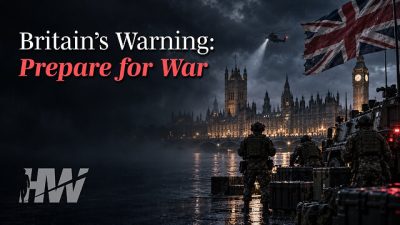
BRITAIN’S WARNING: PREPARE FOR WAR
or go to
Aletho News Archives – Video-Images
From the Archive
How Ukraine Tortured and Slaughtered Donbass
By Kit Klarenberg | Al Mayadeen | July 11, 2024
Almost immediately after the proxy war erupted, ISIS-tier footage of the torture and murder of Russians in Ukrainian custody emerged.
On July 6th, the New York Times published an astonishing investigation: In Ukraine, Killings of Surrendering Russians Divide an American-Led Unit. The article documents in grim detail how Chosen Company, an international volunteer battalion for Kiev, routinely executes Russian prisoners of war. It is the very first mainstream admission that this practice – a brazen breach of the Geneva Conventions, and a grave war crime – is widespread among Ukraine’s fighters, both foreign and homegrown. … continue
Blog Roll
 Aletho News
- Israel Demolishes Home Of Lebanese Journalist Whose Viral Film Exposed Pager Attack
- Record Oil, Empty Tanks: The UAE’s Miracle Recovery
- Burnham tackles Britain’s poverty with aggression in Yemen
- Peace in Ukraine: the easy way – or the hard way
- Trump & the Rrrrussians
- US taxpayer money laundered back through Ukraine – Musk
- Before COVID, an NIH lab chief proposed making a SARS-like bat virus more infectious
- Gates, Bourla on Trial in Netherlands Accused of ‘Great Reset’ Scheme at Vaccine Injury Hearing
- BRITAIN’S WARNING: PREPARE FOR WAR
- “Historic Russia”: The Land Putin Will Not Give Back
- If Americans Knew
- DAILY UPDATE: Latest essential news on Palestine, Israel, & region
- Damning report shows the media must confront its failures on Gaza
- BBC senior broadcaster speaks out on Gaza coverage
- Netanyahu vows vast West Bank invasion in response to 20-minute skirmish that left 2 Israeli soldiers and 2 Palestinian fighters dead
- Tied up and tortured: Israel using US-made electroshock weapons on Palestinian detainees
- The outsourced risk: how newsrooms rely on Gaza’s freelancers without protecting them
- Gaza bakeries forced to shut as Israel blocks flour shipments
- Gaza’s breast cancer patients face a deadly wait for treatment amid Israel’s genocide
- DAILY UPDATE: Latest essential news on Palestine, Israel, & region
- The Israel Lobby’s Changing Fortunes
- No Tricks Zone
- Two New Studies Find Thwaites Glacier Melt Cannot Be Driven By Human Activity Or A Warming Ocean
- E-Cars Reduce CO2 Emissions By Only 41% Compared To Internal Combustion Engine Vehicles
- Predictions Made By Renowned Climate Professor Over Past Decades Have Been Proven To Be Poor
- New Study Suggests Large Regions Of The Pacific Ocean Have Been Cooling For The Last 80 Years
- Germany’s Green Energy Debacle: High Energy Costs Force Kahla Porzellan to Close After 182 Years!
- New Study: 50 Years Of The Most Aggressive ‘Net Zero’ Policies Can Only Affect The Global Climate By 0.03°C
- US September “Heat” Was No Record…Many Records Set Decades Ago
- Latest European Green Energy Debacle; Portugal’s Largest Flagship Solar Park Insolvent!
- Green Energy Debacle: German Expert Professor Fritz Vahrenholt Warns Of Severe Economic And Social Consequences
- Two More Paleo Reconstructions Affirm Meters-Higher Sea Levels Across Ireland, Brazil 7000-6000 Years Ago

