Radio Free Europe, the Cold War ‘Weapon’ Congress Still Funds
By Patrick Pillow | The Libertarian Institute | June 16, 2026
“Radio Free Europe and Radio Liberty were critically important weapons in the free world’s competition with Soviet totalitarianism—and without them the Soviet bloc might even have not disintegrated.”
This was the assessment of Zbigniew Brzezinski, former national security advisor to President Jimmy Carter and one of the most influential foreign policy strategists of the Cold War era.
Brzezinski’s description is notable not only because of who said it, but because of how he described the organization. He did not characterize Radio Free Europe/Radio Liberty as merely a U.S.-funded news organization but instead, referred to it as a “weapon” in a geopolitical struggle between the United States and the Soviet Union.
More than three decades after the Cold War ended, Radio Free Europe/Radio Liberty remains in operation—and Congress is now considering a major increase in its funding.
As Americans continue to grapple with rising prices and persistent inflation, Washington DC’s attention has increasingly shifted toward foreign policy priorities rather than domestic economic concerns. When foreign spending does enter the public conversation, it is often through provisions buried deep within legislative text and only briefly summarized in committee reports, with limited public attention.
One recent example is the Ukraine Support Act, sponsored by Representative Gregory Meeks (D-NY). The bill continues ongoing U.S. funding for Ukraine as the war with Russia enters its fourth year, and like most large foreign aid packages, it contains a wide range of provisions.
Among them is Section 108, which authorizes $250 million in funding for Radio Free Europe/Radio Liberty (RFE/RL) for 2026 alone. The language describes this funding as necessary to bring the organization to its “full capacity” in combating “conspiracy theories” and “Russian disinformation.” To understand this framing, it helps to look at the organization’s origins.
When it was originally founded in the 1950s, Radio Free Europe/Radio Liberty was created to broadcast alternative reporting into countries behind the Iron Curtain. It received its first significant funding from both the U.S. Congress and the Central Intelligence Agency (CIA), and has since been described as one of the CIA’s largest successful covert action projects.
Among the organization’s initial goals was a focus on “destroying the Soviet government’s monopoly of information,” during the Cold War. This included early attempts to create a “crisis of confidence” in Soviet leadership.
Over time, that structure evolved, but the organization remained. Today, Radio Free Europe/Radio Liberty operates in more than twenty countries, with a reported weekly audience of 47.6 million, more than 1,700 staff members, and over 9 billion video views in 2023. Its operations now include Radio Farda in Iran, Radio Azadi in Afghanistan, and services in the Balkans—regions of significant U.S. foreign policy interest.
What was once a Cold War-era broadcasting organization has become a global, publicly funded media operation with a clear geopolitical focus. According to congressional funding records and budget summaries, RFE/RL has received roughly $140–$150 million annually since 2023. The 2026 authorization increases prior funding levels by over 60%, with the stated goal of combating what Washington describes as “disinformation.”
The organization itself is almost entirely publicly funded. In a March 2025 court declaration, RFE/RL president Stephen Capus stated that roughly 99% of the organization’s funding comes from congressional appropriations through the U.S. Agency for Global Media, while around 1% comes from private donations or other sources.
When funding was briefly disrupted in 2025, Capus called the interruption a “massive gift to America’s enemies,” pointing specifically to governments like Russia, China, Iran, and Belarus as among those who would “celebrate the demise” of the organization.
Supporters of RFE/RL note that the relatively small cost—especially compared to overall defense and foreign aid spending—is justified by its strategic value. With independent media remaining a key tool for challenging state-controlled narratives abroad, think tanks such as the Hudson Institute have described RFE/RL funding as a “pittance in terms of U.S. government spending,” with a particular focus on countries like Russia, China, and Iran.
As a whole, RFE/RL sees itself as more than just an independent news organization. In an FAQ section on its website the group notes that the organization is also working to serve U.S. foreign policy objectives and U.S. national security interests.
Still, this leaves unresolved the question about whether communication organizations abroad should be treated as a permanent feature on the domestic spending ledger.
At a time when the U.S. economy continues to face inflationary pressure and the stock market experiences significant volatility, the question remains what tangible benefit U.S. citizens receive from this use of tax dollars.
Whether Radio Free Europe/Radio Liberty is viewed as a valuable instrument of American influence or an outdated relic of the Cold War, Congress is now preparing to increase its funding substantially.
Araghchi: Israeli occupation of Lebanese land a violation of MoU
Al Mayadeen | June 16, 2026
In a televised statement, Iranian Foreign Minister Abbas Araghchi affirmed that, from Iran’s perspective, the two parties to the Memorandum of Understanding are the United States and “Israel” on one side, and Iran and Hezbollah on the other.
He also said, contrary to Trump’s overnight statement, that the MoU would be signed on Friday.
Speaking at the opening of a meeting with ambassadors, chargés d’affaires, and heads of foreign and international missions in Tehran on Tuesday, Araghchi stressed that the end of the war in Lebanon is an inseparable part of the complete end of the war, noting that ending the war on Lebanon also includes ending the occupation of Lebanese territory.
Araghchi said that, from now on, any military attack by “Israel” on Lebanon, as well as the continuation of the occupation of Lebanese territories, will be considered a violation of the MoU.
According to Araghchi, the heads of the two delegations from the US and Iran will first sign the memorandum of understanding on Friday before the inaugural round of formal negotiations begins.
Tehran, he said, aims to build on the understandings reached and translate them into a tangible economic opening.
Implementation mechanism amid deep-seated mistrust
The Iranian foreign minister also said that the negotiation agenda and the mechanism for implementing the anticipated understandings will be formulated in light of the prevailing lack of trust in the United States stemming from previous experiences marked by breaches of commitments and failures to uphold obligations.
“Naturally, we do not squander any opportunity in foreign policy, but at the same time, we do not pin our hopes on any opportunity,” Araghchi said, underscoring Tehran’s cautious and pragmatic approach to the forthcoming negotiations.
Meanwhile, US President Donald Trump claimed overnight Monday that a memorandum of understanding with Iran has been signed and that the Strait of Hormuz will be completely reopened by Friday, speaking to reporters upon his arrival in Evian, France, ahead of the G7 summit.
The formal signing ceremony is scheduled for Friday in Geneva, with Vance confirmed to attend.
Hezbollah fighters confront intruding Israeli forces in southern Lebanon
Press TV – June 16, 2026
Fighters from the Lebanese Hezbollah resistance movement have confronted an Israeli military convoy as it was attempting to infiltrate into southern Lebanon despite an Iran-US agreement that includes complete cessation of Israeli assaults on Lebanon.
Hezbollah said in a statement on Monday that its fighters, employing rockets and drones, obstructed an Israeli unit comprising an excavator and two Merkava tanks that was moving forward near the town of Kfar Tebnit, close to the southern city of Nabatieh.
In a subsequent statement later in the day, Hezbollah said, “The enemy army has reorganized its forces in the vicinity of the crossing area by deploying an armored contingent consisting of five Merkava tanks and four vehicles.”
“The combatants of the Islamic Resistance have targeted them with rocket barrages and artillery shells, and clashes are continuing.”
It came after an Israeli drone struck a vehicle in the same region, killing its driver. The air raid marked the first fatal strike since the announcement of the agreement.
Hebrew-language media outlets, meanwhile, reported “a serious security incident” for Israeli soldiers positioned in southern Lebanon.
The outlets added that Israeli rescue helicopters are trying to transport the injured troopers to hospitals in the northern part of the occupied territories.
There were no immediate reports about the number of casualties that the Israeli army suffered as a result of the incident.
Israeli media outlets also reported that a soldier fighting in southern Lebanon committed suicide last night due to mental distress from military offensives.
This comes as the Israeli military is witnessing a continuous and alarming rise in soldier suicides, a trend linked to widespread post-traumatic stress disorder (PTSD) stemming from Israel’s prolonged and repeated aggressions on multiple fronts.
According to figures published by the Haaretz daily newspaper, at least six active-duty soldiers and three non-active reservists died by suicide in April alone.
Earlier this year, the newspaper recorded 22 soldier suicides in 2025, a 15-year high.
A new poll by Israel’s public broadcaster KAN shows that a majority of Israeli settlers believe that the Zionist regime has failed to secure victory in any war since October 2023.
The Straight of Hormuz is Open for Iranian Business… Oil is Moving and Iran is Getting Paid
By Larry C. Johnson | SONAR21 | June 16, 2026
Let’s give Donald Trump credit for one thing… He kept his word and lifted the US blockade on Iranian ships and Iran is going to town with its oil tankers moving in and out of the Persian Gulf through the Strait of Hormuz.
This does not mean that the MOU with Iran, which is supposed to be signed in Geneva on Friday, will hold, but it is a step in the direction of de-escalation. So the question we ought to ask is why did Donald Trump blink and accept the proposal that Iran proffered way back in April?
I think there are several reasons, but the principal one is that the US is running out of oil, which means Trump will not be able to artificially suppress the price of gasoline. US strategic oil reserves have fallen to their lowest level since 1983, reports CNN. The decline comes amid continued drawdowns to mitigate the impact of the conflict with Iran. Reserves have dropped to 340.3 million barrels, last seen during the Reagan administration, which was still building the stockpile. US daily consumption is 20 to 21 million barrels in 2026, which means the reserve can supply 17 days of gasoline, which falls on July 1st.
Donald Trump may be in mental decline, but he still retains enough smarts to understand that an oil shortage and soaring prices of gasoline in July is politically untenable.
Another factor is that US installations and aircraft in the Persian Gulf took a helluva beating last week. The US attacks on Iranian installations in the Strait of Hormuz on June 9 and 10 provoked a fierce Iranian response that hit targets in Iraq (CIA-bases supporting the Kurds), Kuwait (the Ali Al Salem airbase, Camp Buehring in northeastern Kuwait, as well as a makeshift operations center near the civilian port of Shuaiba), the Prince Saud Airbase adjacent to Riyadh, Saudi Arabia, and the Mowaffaq Al Salti Airbase in Jordan. The attacks were devastating and reportedly employed some new Chinese missiles supplied to Iran.
Then there is the pressure from Gulf Arabs to end the attacks on Iran. Iran, backed by China, Russia and Pakistan, engaged in intense diplomacy with Saudi Arabia, Qatar and the United Arab Emirates (UAE).
The UAE, who has been a thorn in the side of Iran and Saudi Arabia and has been identified as an ally of Israel, sent a delegation to Iran on 9 June. Reuters reported that the UAE had agreed to release billions of dollars for Iran — two regional sources put the figure at $10 billion (including more than $3 billion already delivered), while two other sources put it at $20 billion, with the funds agreed in exchange for Iran halting attacks on the UAE. However, the UAE’s Ministry of Foreign Affairs categorically denied those reports, stating the allegations were “entirely false and unfounded” and that no frozen Iranian funds had been released, transferred, or facilitated through the UAE. What is undisputed is that the UAE sent a high-level delegation to talk to the Iranian government.
A high-level Qatari delegation arrived in Tehran on Wednesday, June 10, to hold talks on bilateral relations, regional developments, and diplomatic efforts to end the conflict between Iran and the United States. The delegation arrived at midday and the visit came after Trump accused Iran of stalling and said Tehran must now “pay the price.” AFP, citing an informed diplomat, reported the Qatari negotiating team had traveled to Tehran following consultations with American officials to help narrow remaining differences between the two sides.
A senior Pakistani source with access to information about Pakistan’s role in mediating the talks between the US and Iran, reported that Pakistan, with the encouragement of China and Russia, was making progress in its talks with the Saudis and the Qataris to stop hosting US military bases in their respective countries. These talks coincided with Saudi Arabia denying the US the use of its airspace to attack Iranian targets during Project Freedom.
Will the deal be signed on Friday? I remain skeptical simply because of the enormous Zionist backlash being visited on Donald Trump by angry Israeli officials and US politicians beholden to AIPAC. However, as I write this Monday night, the deal appears intact.
Why hasn’t Donald Trump released the text of the MOU? Two possible explanations (and I’ll be interested in what you think is the most plausible): 1) There are still areas of disagreement between Iran and the US and they are still trying to work out a compromise, 2) Trump does not want to provide the details beforehand fearing that the Zionist backlash could derail the Friday signing ceremony in Geneva. The diplomatic roller coaster is running full blast… It will be a wild ride until Friday.
Biden’s Closed Circle on Russia
An excerpt from ‘The Great Betrayal’
By James W. Carden | The Realist Review | June 14, 2026
Joe Biden’s presidency may ultimately come to be seen as a cautionary tale. Here was a president who showed little interest in entertaining arguments that might have contradicted his most deeply held assumptions.[1] And there were precious few within the upper ranks of the administration who might have attempted to do so, after all, only policy hands and political operatives who had come up through the ranks of the Clinton and Obama administrations or had longstanding ties to the citadels of the foreign policy community were invited into the fold.[2]
The message BidenWorld sent early on was that heterodox voices, even tepid ones, were not welcome. Consider the case of a respected expert on Russian affairs, Dr. Matthew Rojansky, who was then serving as the director of the Kennan Institute at the Congressionally-funded Woodrow Wilson Center. Rojansky had been denied a position on the Biden NSC because he was viewed as “soft” on Russia. Administration officials feared that appointing Rojansky would, as a contemporaneous report by Politico put it, “signal a conciliatory U.S. policy toward Moscow.”[3] The incident had echoes of the 2009 Freeman affair, when a foreign lobby (Israel’s) mobilized its allies in the media and on Capitol Hill to block an appointment it deemed threatening to its agenda. This time around, another foreign lobby (Ukraine’s) slammed the door on Rojansky. From the start, Biden’s White House was a closed circle—new names, new faces, and new thinking were not welcome.
The parallel one reaches for to best describe the inner workings of the Biden White House is that of the Reagan White House. Back then, a chief executive of questionable sentience relied on a tight circle of political operatives to run the day-to-day operations of the White House. During Reagan’s first term, that job fell to a “Troika” consisting of Chief of Staff James Baker, Counselor to the President Ed Meese, and Deputy Chief of Staff Mike Deaver. Meese did policy, Deaver was the image-maker. Baker was in charge of everything else. Joe Biden had a Troika of his own: White House Chief of Staff Ron Klain, Counselor to the President Steve Ricchetti, and Deputy Chief of Staff Bruce Reed. Klain and Ricchetti were longtime centrist Democratic operatives. Reed was the policy wonk. No friend of progressives, Reed came up through the ranks as a centrist policy adviser to Senator Al Gore in the 1980s. He later served as a domestic policy adviser to President Clinton.
On the foreign policy side of the ledger, what was old was new again. Like Presidents Carter and Clinton—and his erstwhile Democratic rivals Elizabeth Warren and Bernie Sanders—Biden embraced a vision of the world divided between democracy and authoritarianism. While the script had been slightly updated since the end of the Cold War, the story was a familiar one: The US and its NATO allies were now said to be threatened by an “authoritarian axis” led by Xi Jinping of China and Vladimir Putin of Russia. The axis is also said to include Iran, North Korea and other revisionist powers. Discussions regarding our putative “friends” and “allies” that also happen to be authoritarian (Saudi Arabia, Turkey) or ethno-nationalist (Israel, Ukraine) are usually excluded from the schema. In December 2021, Biden hosted a ‘Summit for Democracy’ that brought together leaders from over 100 countries in support of a rather amorphous strategy to “defend” democracy—a cause that Biden claimed was “the defining challenge of our time.”
More thoughtful men than Biden saw things rather differently. George Kennan, for one, felt that there was nothing “more egocentric than the embattled democracy.” The problem, as Kennan correctly foresaw, was that an embattled democracy will tend “to attach to its own cause an absolute value which distorts its own vision to everything else. Its enemy becomes the embodiment of all evil. Its own side is the center of all value.”[4] While Kennan wrote those words in 1961, it would be hard to find a better description of the politics of the New Cold War. The main deliverable of Biden’s “democracy” conference was the creation of a Presidential Initiative for Democratic Renewal, which, at a cost of nearly half-a-billion dollars to US taxpayers, would seek to promote “democracy, fight corruption, and defend human rights worldwide.”[5]
As with so many of the ideas and programs championed by the Democratic establishment since the end of the Cold War, the “autocracy vs. democracy” paradigm borrowed liberally from the neocon playbook. Biden’s old friend, the late Senator John McCain, had long called for the creation of a global “League of Democracies.” Speaking at Stanford University’s Hoover Institution in 2007, McCain said the new league would, “form the core of an international order of peace based on freedom.” It would be able to “bring concerted pressure to bear on tyrants in Burma or Zimbabwe, with or without Moscow’s and Beijing’s approval.[6] McCain’s proposal might just as easily have come from the pen of Samantha Power. As with the men and pigs at the conclusion of George Orwell’s Animal Farm, when it comes to the neocons and the Democratic elite, it is now impossible to say which is which.
***
The Great Betrayal: How The Democrats Became The Party of War, hailed by Professor Richard Sakwa as “a brilliant, timely, and important achievement,” is available now from OR x Nation Books.
NOTES:
[1] For example, no dissent on matters relating to Israel was welcome; see: https://www.commondreams.org/news/biden-silencing-dissent-gaza. For reporting on Biden’s tyrannical streak, see, for example, https://thebrunswicknews.com/president-biden-has-notorious-temper-yells-curses-frequently-in-private-report/article_107fcc8f-b3f8-5dad-a447-083dbde1eaa1.html
[2] Including The Brookings Institution, The Carnegie Endowment for International Peace, The German Marshall Fund, The Center for Strategic and International Studies, The Center for American Progress, The Center for a New American Security, and The Johns Hopkins School for Advanced International Studies.
[3] https://www.politico.com/news/2021/04/19/biden-russia-expert-483000
[4] For Kennan, see: https://responsiblestatecraft.org/2021/12/17/hang-up-the-magical-thinking-and-try-strategic-empathy-on-for-size/
[5] On the Democracy Summit and Biden’s remarks, see: https://bidenwhitehouse.archives.gov/briefing-room/statements-releases/2021/12/23/summit-for-democracy-summary-of-proceedings/
[6] For McCain’s remarks, see: https://www.hoover.org/sites/default/files/uploads/inline/docs/McCain_05-01-07.pdf
Time for Trump to Tell Benjamin Netanyahu to Go Away!
Netanyahu always says “What you own belongs to me”
By Philip Giraldi • Unz Review • June 14, 2026
In addition to the regular lethal American and Israeli attacks on Iran, last week alone the Israeli military killed 13 Gazans and 13 Lebanese. Gaza is now 70% Israeli occupied, contrary to what was agreed upon in the ceasefire arrangement, as is much of south Lebanon. More than 1,000 Gazans have been murdered by Israel since the temporary ceasefire was declared in October 2025. And one might add to the toll the constant aggression in south Syria, where Israel is creating an army base presence to be followed by settlers that creeps ever closer to the capital Damascus. It is an encroachment that Prime Minister Benjamin Netanyahu and his band of war criminals intend to turn into a component of “Greater Israel” together with Gaza and Lebanon.
Armed Jewish settlers are meanwhile devastating what remains of the Palestinian West Bank, destroying farms and livelihoods as well as entire villages. Taybeh, the last Christian village, was made uninhabitable last week after weeks of raids killing livestock, poisoning water and cutting down olive trees. If a Palestinian tried to intervene he was beaten and in some cases killed. Churches and Mosques on the West Bank are routinely desecrated and non-Jews in religious attire or trying to enter a holy site are frequently spat upon particularly in Jerusalem. The Israel Defense Force (IDF), meanwhile, regularly stands by and watches the displays of wanton brutality and does nothing. Lest there be any confusion regarding what is coming, the Knesset has now authorized $51 million to build more than 60 new completely illegal settlements on Palestinian land in the occupied West Bank.
What all these places have in common apart from the cruel Israeli hand is that the United States, often in the form of Trump personally, has been a guarantor of the ceasefires as well as the source of the so-called but utterly dysfunctional Board of Peace, has done nothing to stop the slaughter. Rather, it is continuing to provide Israel with weapons, money and political cover. It is therefore complicit in the war crimes. Here at home, Trump is promoting the Israeli program by supporting the criminalization of anyone who speaks up against the crimes against humanity being committed by his “best friend” Bibi, choosing to destroy freedom of speech rather than allowing any exposure of Israel’s crimes. This is reminiscent of June 8th 1967, when Israel attacked the USS Liberty, killing 34 American crewmen and injuring 172 more. A cover-up followed to protect Israel, coordinated by President Lyndon B Johnson, a hideous excuse for a human being who would likely have found it pleasant to have a chat about “values” with Trump.
If there is one thing that is most definitely true it is that the United States gains absolutely nothing in either the national interest nor in the well being of the average American from the bondage to Israel and Netanyahu. If opinion polls mean anything, the public in the US has figured that out and has turned sharply against the Jewish state and now favors both the Palestinian cause and the drive to end the totally meaningless war against Iran. That means that it is past time for the United States to cut the tie that binds with Israel and look to its own interests. That is necessary even if Congress and President Donald Trump continue to push in the opposite direction to complete their subjugation by the Israelis, which now includes a planned fusion of the US and Israeli defense and intel bureaucracies.
If we have learned anything from all of the above and more, there is one thing true about the President Donald Trump administration and that is its particular incompetence at foreign relations, i.e. how it deals with other nations, and, by extension, how it mismanages national security. Part of the blame surely belongs to Trump himself as he has little or no empathy for other human beings unless they are either capable of doing him harm or profiting him personally, as do Netanyahu and the Jewish billionaires. And he also has a tendency to change direction spontaneously and without much concern for the actual issues that might be important to his audience. All that matters is whatever he happens to think will make him look good at any given moment, which recently has manifested itself as plastering his own name on public buildings. Responding to a recent journalist’s question about the rising inflation rate, he answered that he “Loved the inflation!” It was like saying “Goodbye midterms!”
Witness for example how on Thursday last week Trump announced in the morning that he would be attacking Iran that night to seize its major oil export facility on Kharg Island as part of a plan to cripple the country’s ability to sustain energy shipments. By 2 o’clock in the afternoon, however, he had called off the planned attack due to his perception that the US and Iran are now on the verge of an agreement to end the fighting and settle the various issues that have created the conflict in the first place. The mediating Pakistani Prime Minister did, for what it’s worth, confirm a possible peace agreement on Friday even though knowledgeable observers immediately commented that the claim was unsustainable as no negotiations were actually going on between parties and Iran has denied any such progress over key issues. As of Saturday, nothing was confirmed but Trump again asserted that there would be a “signing” of a “memorandum of understanding” as a first step to a peace agreement on Sunday, presumably to coincide with his birthday. Most observers however continue to argue that a weak-kneed and vulnerable Trump, though desperate to disengage from a disastrous Iran war, is only staying with it due to intense pressure from Israel and its domestic US lobby which may be prepared to employ “Epstein” blackmail on the president to maintain American participation in the conflict. If Trump were even to consider withdrawing from his ring of fire around Iran Israel would immediately take whatever steps are necessary to blow-up the agreement and resume fighting, be it by way of a false flag to drag the US back in or possibly exploiting the “Iran has a nuke” lie.
So it would be wise to accept that Donald Trump is a ship without a rudder and interactions with most of the Middle East will continue to be driven by Israel while bilateral talks elsewhere with major players like Russia and China appear to have dried up completely. Appointing real estate billionaires Steve Witkoff and son-in-law Jared Kushner as personal presidential representatives, both of whom are inexperienced and ardent Zionists, certainly did not improve prospects for what passed for negotiations with anyone. No one can trust Trump.
Israel’s reach far exceeds the country’s size and real power. A recent “friend” of Trump is Argentine Prime Minister Javier Milei, who, surprise-surprise, is also a great friend of Israel, having made the usual obeisance trip to the Wailing Wall in Jerusalem during a State Visit to Israel shortly after being elected. Raised a Catholic, Milei reportedly wanted to convert to Judaism but decided not to as its “no work on Saturday” rule would have interfered with serving as prime minister. Not content with taking all the Middle East, Israel’s Jews are also looking farther afield. Patagonia in Argentina has reportedly been particularly targeted by Israeli buyers with the assistance of the Milei regime which helped get around environmental restrictions. Israelis are also buying up numerous properties in Cyprus as well as in Greece, nearby states which would be convenient as refuges if Israel finally provokes one too many of its neighbors and it finds itself on the receiving end of a nuke. Benjamin Netanyahu’s resident American spy Jonathan Pollard reportedly has mentioned both Turkey and Egypt as “next” to feel the wrath of Zion after Iran is finished off. Either army could easily defeat the chickenshits in the Israeli army who are better at raping and torturing than they are at fighting.
But one story that has caught some attention illustrates clearly the Israeli manic desire to steal other peoples’ property, most particularly land, no matter what it takes to carry out the theft. As is always the case, they are not held accountable for their criminality by Donald Trump who has his own soft spot for stealing the property of others and chooses to cut corners, witness the grandiose plans for a Trump Riviera luxury development on the beachfront of Gaza. And then there are the current shenanigans on an island off Albania which is being multi-billion dollar “developed” by daughter Ivanka and son-in-law Jared Kushner using United Arab Emirates (UAE) cash to become a major resort for the rich and famous. Kushner got the money as a benefit derived from his family connection and fortunately a lot of Albanians are mad as hell about the deal that was struck and are demonstrating!
But the story out of the United States and Canada as well as over the weekend in London tops many of the Trump/Israeli tricks due to its sheer audacity and criminality. Amnesty International UK is demanding the British government stop a real estate event scheduled to take place in London that includes companies openly advertising the sale of land in Israeli settlements in the illegally occupied West Bank.
The ‘Great Israeli Real Estate Event’ is a traveling roadshow that has held events in Canada and the United States and has now been planning for the sale in London on Sunday. The events are organized by Israeli real estate firm called My Home in Israel. It sells land to prospective buyers through a team of US-based real estate agents with the sales normally taking place in synagogues or other Jewish-owned and operated buildings. There have inevitably been protests against the sales in cities like Los Angeles and New York, where the “lots” have been promoted to the local Jewish communities. The lots being sold include considerable sections located in illegal settlements on the Palestinian West Bank, land that has been stolen from its owners. The Amnesty International report published last week in opposition to the London show exposed Israel’s state-led ethnic cleansing campaign in the West Bank – “documenting the displacement of at least 5,910 Palestinian Bedouin and herding community members since 2023, the demolition of over 3,400 homes and structures in [Palestinian West Bank] Area C, and an unprecedented surge in state-backed settler violence and land grabs.”
So there you have it, whatever Israel wants Israel takes without any concern for those who die or lose their homes in the process. And the United States government sits by and watches as Netanyahu spins lie after lie. Well, enough is enough. America is hated almost as much as Israel for its behavior and if it continues there will be severe consequences. Time to show Netanyahu the door and tell him and his supporting cast of AIPAC and Jewish billionaire buddies to get the hell out.
Philip M. Giraldi, Ph.D., is Executive Director of the Council for the National Interest, a 501(c)3 tax deductible educational foundation (Federal ID Number #52-1739023) that seeks a more interests-based U.S. foreign policy in the Middle East. Website is https://councilforthenationalinterest.org address is P.O. Box 2157, Purcellville VA 20134 and its email is inform@cnionline.org.
Israeli officials: ‘Security zones’ to remain in Lebanon, Syria, Gaza

Al Mayadeen | June 15, 2026
Israeli War Minister Israel Katz said the Israeli army will continue to hold so-called “security zones” in Lebanon, Syria, and Gaza indefinitely, asserting that what he described as border security requirements take precedence over any political or diplomatic arrangements.
He stated that the policy is being pursued in coordination with Israeli Prime Minister Benjamin Netanyahu, adding that the IOF would remain deployed in these areas without a defined timeline.
According to Katz, the stated objective of maintaining these zones is to prevent what he described as threats from armed groups operating near the borders.
He said Israeli forces would remain in the “security zones” in Lebanon, Syria, and Gaza in order to protect Israeli settlements and border areas, framing the deployments as a defensive necessity to mask its colonial nature.
“We will not compromise on the vital interests of Israel’s security and the protection of our citizens, and we will not leave the security zones,” Katz said.
He also stated that this position had been communicated to US President Donald Trump, US War Secretary Pete Hegseth, and other senior officials.
Netanyahu signals rejection of withdrawal from Lebanon
Separately, Israeli media cited officials close to Prime Minister Benjamin Netanyahu as saying that he informed Trump that “Israel” does not intend to withdraw from Lebanon under any emerging understandings linked to regional negotiations.
According to these reports, Israeli forces will remain in their current positions in southern Lebanon and continue what Tel Aviv describes as operations aimed at preventing threats from Hezbollah.
Netanyahu also reportedly rejected any linkage between developments on the Lebanese front and broader US-Iran diplomatic arrangements, insisting that “Israel” would not be bound by agreements affecting its military posture.
Internal political backing for hardline stance
Israeli political figures across the governing coalition expressed support for maintaining occupation deployments in Lebanon and other theaters.
“Israel’s” Finance Minister Bezalel Smotrich was quoted in Israeli media as arguing that any attempt to connect the Lebanese and Iranian fronts should be resisted, while also emphasizing the importance of preserving military deterrence without direct confrontation with Washington.
Other ministers, including Itamar Ben-Gvir, reportedly stated that any US-brokered agreement with Iran would not be binding on “Israel”, asserting that Tel Aviv would continue to determine its own security policy independently.
Energy Minister Eli Cohen and Transport Minister Miri Regev also stressed the need to maintain what they described as clear deterrence while avoiding unnecessary escalation with the US administration.
Israel Fails to Sabotage Islamabad Accord… At Least for Now
By Larry C. Johnson | SONAR21 | June 14, 2026
Well, when news broke that Israel had bombed the southern suburb of Beirut on Sunday afternoon, the Iranians started gearing up for promised retaliation only to be dissuaded by a Donald Trump bribe. Iran and the US reportedly were closing in on an agreement based on Iran’s 14-point plan when the Israeli strike in Lebanon threw everything into chaos. Iran quickly started ramping up for a renewed missile strike on Israel, but Donald Trump rump reportedly offered Iran financial incentives to not attack Israel.
Iranian media outlet Mehr reported that a 14-point memorandum of understanding between the US and Iran calls for the release of $24 billion in frozen Iranian assets during a 60-day negotiation period, with half of that — $12 billion — required to be made available to Iran before negotiations even begin. The MOU also reportedly includes immediate and permanent cessation of war on all fronts including Lebanon, a US commitment not to interfere in Iran’s internal affairs, lifting of the naval blockade within 30 days, and reopening of the Strait of Hormuz under Iranian arrangements.
Trump essentially offered Iran a bribe to not attack Israel. Hedeclared on Truth Social that the US deal with Iran was “now complete,” authorizing the toll-free reopening of the Strait of Hormuz and the immediate removal of the US.naval blockade, instead of waiting 30 days. He also agreed that Iran could receive the $12 billion as soon as the ceasefire agreement was signed on Friday.
With that change, the Supreme National Security Council of Iran confirmed the achievement of an agreement between the United States and Iran:
“The Islamic Republic of Iran, under the leadership of its martyred leader, has completed its success over the American-Zionist enemy and, under the guidance of the Supreme Leader of the system (may God protect him), with the support of the entire nation and the diligent efforts of Islam’s warriors, after a difficult and intensive several months of negotiations and based on the resolution of the Supreme National Security Council, finalized the text of the Memorandum of Understanding regarding negotiations to end the war (negotiations in Islamabad) between Iran and the United States on the evening of June 14.
According to the agreements reached, the war and military operations on all fronts, including Lebanon, will end immediately and forever from tonight, and the naval blockade against Iran will be immediately and fully lifted. The signing of this Memorandum of Understanding will be officially carried out on Friday, June 19. Negotiations for the final agreement will be postponed until the other party fulfills its obligations in accordance with the Memorandum of Understanding. The Islamic Republic of Iran highly values the efforts of the Islamic Republic of Pakistan and the government of Qatar.”
But before you start popping champagne corks you must understand that Trump administration officials — mostly unnamed — are painting a different picture of the agreement. For example, asenior U.S. official rejected Iran’s claim that it would receive $12 billion in frozen assets unconditionally before the start of the 60-day negotiations, describing the assertion as “a spin,” Axios reports:
This is completely not true. This is a pay-for-performance deal, and no frozen funds will be released without the Iranians implementing their commitments,” the official said.
The point is simple… Major differences remain between the US and Iran regarding the details of the proposed MOU. Even if those details are eventually ironed out and a letter signed on Friday with both sides confirming their mutual agreement to the 14 prinicipals spelled out in the final MOU, this will mark the start of a negotiations process that will last at least two months, if not longer. And, at any time in the succeeding days, a US or Israeli violation of the MOU will likely lead Iran to renew its attacks on Israeli and/or US military targets.
Araghchi: US Responsible for Implementing MoU with Iran
Al-Manar | June 15, 2026
Iran’s Foreign Minister Abbas Araghchi has stressed the US’ responsibility regarding the implementation of the MoU with Iran as well as a complete halt to the Israeli regime’s attacks against Lebanon.
Araghchi made the remarks in his separate phone calls with Turkish, Iraq, and Egyptian counterparts Hakan Fidan, Fuad Hussein, and Badr Abdelatty.
He reviewed the process and provisions of the Islamabad understanding and lauded the positions and role of Turkey, Iraq, and Egypt in supporting the establishment of a ceasefire, reducing tensions, and diplomatic efforts to achieve stability and security in the region.
All sides emphasized the continuation of close consultations on regional developments and strengthening diplomatic efforts to maintain peace and stability.
Iran and the United States, after announcing a ceasefire on April 8, 2026, began negotiations with the mediation of Pakistan to definitively end the war.
The text of the memorandum of understanding that was signed, the foundation of which was Iran’s 14-point proposals at the very beginning of the ceasefire, was reviewed multiple times over the past 60 days in the capitals of the two countries.
Despite all the pressures, the violation of the ceasefire, and the repeated changes of position by the United States, Iran persisted in its stances.
After signing the MoU text, the two countries will put a series of intensive negotiations on their agenda over the next 60 days in order to reach a comprehensive agreement on the disputed issues.
US must cut military, intelligence assistance to Israel to protect Iran deal: Ex-Trump official
Press TV – June 15, 2026
A former official in US President Donald Trump’s administration says cutting US assistance to Israel could help strengthen the agreement between Tehran and Washington, amid the Tel Aviv regime’s continuous attempts to sabotage regional peace.
Joe Kent, who left the administration after disagreements over the United States’ joint unprovoked aggression against Iran alongside the regime, made the remarks in a post on X on Monday.
He welcomed the prospect of the conclusion of a memorandum of understanding between Tehran and Washington that could be followed by an agreement.
Kent said the durability of any agreement with Iran could be improved if the United States reconsidered its military and intelligence support for the regime, saying that Israeli officials have opposed efforts to achieve a diplomatic settlement.
The former Trump administration official said Washington should seek to eliminate factors that could prompt the US to resume the aggression “on Israel’s terms.”
A day earlier, Iran’s Foreign Ministry had announced that the MoU had been finalized and would be officially signed in Switzerland on Friday.
On April 7, Trump announced a ceasefire in the aggression, which had begun targeting the Islamic Republic on February 28 amid widely-reported Israeli instigation.
The announcement came amid decisive and successful Iranian retaliation and after the Islamic Republic announced closure of the Strait of Hormuz to enemies and their allies.
Following the announcement, though, the Israeli regime would keep violating another ceasefire in Lebanon, despite Tehran’s insistence that cessation of aggression should encompass all fronts.
Kent also advocated reducing the US military footprint at bases in the Persian Gulf’s littoral states.
“We should also quietly get our troops out of the bases in the [Persian] Gulf that can be reached by Iran,” he wrote.
Iran’s retaliation featured strikes on American outposts in the Persian Gulf’s coastal states that had allowed their territories to be used as launchpads for attacks on the Islamic Republic.
Iran deputy FM says MoU with US finalized, to be signed in Geneva on Friday
Press TV – June 14,2026
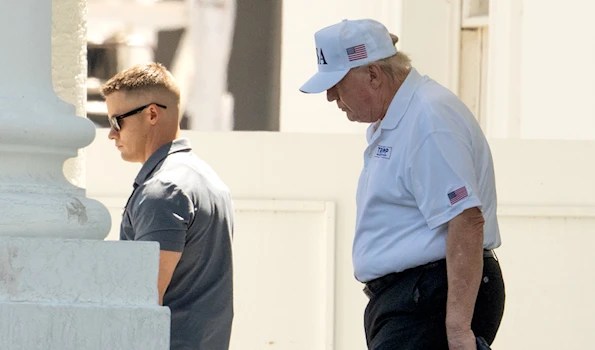
Iran’s Deputy Foreign Minister for Legal and International Affairs has announced that the memorandum of understanding (MoU) between Iran and the United States has been finalized and will be officially signed on Friday in Switzerland, while also declaring the immediate end of the US naval blockade and the permanent cessation of war on all fronts.
In remarks carried by Iranian media on Sunday, Kazem Gharibabadi confirmed that the text of the Islamabad MoU has been finalized.
“The official signing of the Islamabad memorandum of understanding will take place on Friday in Switzerland,” he said.
“Starting tonight, the US naval blockade against Iran will be terminated,” Gharibabadi added, declaring “the immediate and permanent end of the war and military operations on various fronts, including Lebanon.”
The announcement follows weeks of intensive negotiations mediated by Pakistan, with support from Qatar, Saudi Arabia and Turkey.
The finalization of the MoU brings an end to the US-Israeli war of aggression against Iran, which began on February 28.
Featured Video
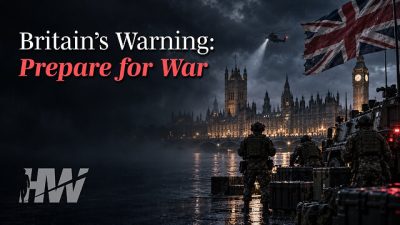
BRITAIN’S WARNING: PREPARE FOR WAR
or go to
Aletho News Archives – Video-Images
From the Archive
How Ukraine Tortured and Slaughtered Donbass
By Kit Klarenberg | Al Mayadeen | July 11, 2024
Almost immediately after the proxy war erupted, ISIS-tier footage of the torture and murder of Russians in Ukrainian custody emerged.
On July 6th, the New York Times published an astonishing investigation: In Ukraine, Killings of Surrendering Russians Divide an American-Led Unit. The article documents in grim detail how Chosen Company, an international volunteer battalion for Kiev, routinely executes Russian prisoners of war. It is the very first mainstream admission that this practice – a brazen breach of the Geneva Conventions, and a grave war crime – is widespread among Ukraine’s fighters, both foreign and homegrown. … continue
Blog Roll
 Aletho News
- Israel Demolishes Home Of Lebanese Journalist Whose Viral Film Exposed Pager Attack
- Record Oil, Empty Tanks: The UAE’s Miracle Recovery
- Burnham tackles Britain’s poverty with aggression in Yemen
- Peace in Ukraine: the easy way – or the hard way
- Trump & the Rrrrussians
- US taxpayer money laundered back through Ukraine – Musk
- Before COVID, an NIH lab chief proposed making a SARS-like bat virus more infectious
- Gates, Bourla on Trial in Netherlands Accused of ‘Great Reset’ Scheme at Vaccine Injury Hearing
- BRITAIN’S WARNING: PREPARE FOR WAR
- “Historic Russia”: The Land Putin Will Not Give Back
- If Americans Knew
- An error has occurred; the feed is probably down. Try again later.
- No Tricks Zone
- Two New Studies Find Thwaites Glacier Melt Cannot Be Driven By Human Activity Or A Warming Ocean
- E-Cars Reduce CO2 Emissions By Only 41% Compared To Internal Combustion Engine Vehicles
- Predictions Made By Renowned Climate Professor Over Past Decades Have Been Proven To Be Poor
- New Study Suggests Large Regions Of The Pacific Ocean Have Been Cooling For The Last 80 Years
- Germany’s Green Energy Debacle: High Energy Costs Force Kahla Porzellan to Close After 182 Years!
- New Study: 50 Years Of The Most Aggressive ‘Net Zero’ Policies Can Only Affect The Global Climate By 0.03°C
- US September “Heat” Was No Record…Many Records Set Decades Ago
- Latest European Green Energy Debacle; Portugal’s Largest Flagship Solar Park Insolvent!
- Green Energy Debacle: German Expert Professor Fritz Vahrenholt Warns Of Severe Economic And Social Consequences
- Two More Paleo Reconstructions Affirm Meters-Higher Sea Levels Across Ireland, Brazil 7000-6000 Years Ago

