US pushes military pact with Nepal, puts Himalayan peace at stake for geopolitical ambition
By Hu Yuwei | Global Times | June 20, 2022
After pushing Nepal to approve the Millennium Challenge Corporation (MCC) economic pact, the US may have also urged the Himalayan country to join its military alliance, the State Partnership Program (SPP), widely believed to be another component of the US’ Indo-Pacific Strategy.
Observers from both Nepal and China warned against the program’s heavy military focus on the containment of China in the region.
Nepalese media reported that the US renewed a push last week on Nepal to participate in the SPP during the visit of Commanding General of the US Army Pacific, Charles Flynn, to Nepal. Flynn called for the signing of the SPP when he met with Nepalese Prime Minister Sher Bahadur Deuba and Chief of Staff of the Nepal Army General Prabhu Ram Sharma.
The disclosed six-page draft US proposal triggered a debate and faced backlash in Nepal for the possible US military presence in Nepal, which, many warned, contradicts Nepal’s non-aligned foreign policy.
The SPP, once approved, would draw Nepal one step closer to the US’ military alliance, despite Washington’s denial and calling it a development assistance, said experts.
Under huge pressure from the public and lawmakers, during his meeting with coalition partners on Wednesday, Deuba said that he will not sign any agreement with any country, including the SPP, that could bring harm to Nepal, the Kathmandu Post reported.
The American embassy called the SPP draft circulating online “fake.”
Inspite of this, many suspect the disclosure of the SPP in Nepal could be intended as a tactic to test the waters, as the ambition and intention of the US to strengthen its military presence in Nepal have long been clear under the core purpose of the US’ Indo-Pacific Strategy to contain China.
Concluding his four-day trip to Nepal, Flynn said on Twitter that “we cherish our decades-long defense partnership and look forward to opportunities for collaboration.”
Observers told the Global Times that the US has increased its penetration and interference in Nepalese politics in recent years, and the approval of the US-pushed MCC program in Nepal in February is an example.
If the MCC has supported US control and influence in Nepal economically, the SPP could be used to strengthen the US’ military ties in the Asian country, Qian Feng, director of the Research Department of the National Strategy Institute at Tsinghua University, said.
“The US has always valued the geographical importance of Nepal which borders Southwest China’s Xizang Autonomous Region. Since the Trump administration, the US has been trying to include Nepal in its Indo-Pacific Strategy to achieve its multiple political and security goals toward China,” Zhang Yongpan, a research fellow of the Institute of Chinese Borderland Studies under the Chinese Academy of Social Sciences, suggested. “In recent years, the political situation in Nepal has been turbulent, and the divided parties are vulnerable to pressures of external forces. The US takes the opportunity to increase influence and infiltrations in Nepal via multiple ways, trying to make it a tool to promote the US’ Indo-Pacific Strategy,” Zhang told the Global Times.
But such US tactics to contain China are bound to be futile, and Nepal will not easily become the frontline of the US’ attempts to suppress China, experts concluded.
Dangerous move with risky clauses
Widespread debate and criticism surged in the public opinion against both the US and Nepalese governments, after the draft of a proposed agreement by the US Department of Defense on the State Partnership Program between the US National Guard and the Nepal Army was disclosed on June 13.
The six-page draft agreement has 10 clauses, in which the US promises to provide Nepal $500 million for five years in addition to non-lethal equipment to the Nepal Army, the Kathmandu Post reported, citing officials privy to the draft.
The leaked document says it is for strengthening the “partnership, in the areas of defense and security,” between the US and Nepal. One of the clauses in the leaked document mentions that the “US National Guard and US contractors, related vehicles and light aircrafts operated by or for the United States, may use such agreed facilities and areas for training, transit, support and related activities, refueling, temporary maintenance of vehicles and aircrafts, accommodation of personnel, their dependents, communications, staging, deploying of forces and material.”
The proposed agreed areas of cooperation also include joint training exercises “in high-altitude terrains in Nepal,” with experts alerting the risk to the security and stability of China’s Xizang, in the Qinghai-Xizang Plateau that borders Nepal, as well as potential infiltration of American forces into the border area.
This clause will make the security situation in western China more complicated with higher risks, considering that Nepal has long been at the forefront of preventing Tibetan separatist forces from destroying stability in Xizang, said Qian.
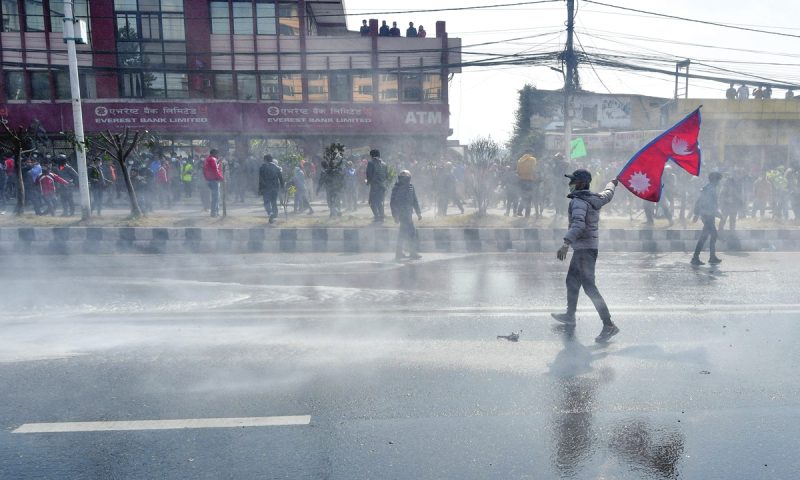
Demonstrators protest against the proposed grant agreement from America under the Millennium Challenge Corporation (MCC), in Kathmandu on February 24, 2022. Photo: VCG
Unanimous disapproval in Nepal
Public anger pumped up across social media over the last week with criticism against the Nepalese government and questions over the US’ intention in pushing the program. Netizens flocked to social media to urge the government to stop turning Nepal into a battlefield of geopolitical rivalry. Others shared their fear that the Deuba government is tilting toward the US and may submit to their pressure to advance in the SPP while ignoring the risks of harming the friendship with China.
Deuba is scheduled to visit the US in mid-July. Meanwhile, the Chief of the Army Staff, General Prabhu Ram Sharma, will be visiting the Pentagon before the Prime Minister’s trip, from June 27 to July 1, upon the invitation of the Pentagon, local media reported.
“This time, unlike the MCC, there is almost unanimous public opinion in Nepal that the SPP should not be approved by Nepal,” Ritu Raj Subedi, deputy executive editor of the Nepalese newspaper The Rising Nepal, told the Global Times.
“It can harm China-Nepal friendship and mutual understanding if the SPP gets approved. It can lead the nation toward long internal conflict and unrest. This type of activities will enhance distrust toward leaders because it is not transparent and was kept secret until the issue came to surface. Conflict mongers will try to reap benefits out of the situation. Internal conflicts can invite the involvement of foreigners and permanent corruption. There are so many byproducts of such issues,” Yogeshwar Romkhami, a former senior superintendent of the Nepal Police Service, told the Global Times.
Local people are not in the favor of MCC or SPP. Those who have even a little knowledge about it are worried. The West has penetrated every political party and the public believe these conspirators are pulling the country into internal conflict or uncertainties, said Romkhami.
Washington’s promotion of the SPP in Nepal comes at a time when the US’ Indo-Pacific Strategy is accelerating. The Biden administration’s essential competition with China through working with neighboring countries has never changed, Qian suggested.
US Under Secretary of State Uzra Zeya concluded her three-day trip to Nepal on May 22, the highest-level visit by a US official since 2012. Additionally, US Assistant Secretary of State Donald Lu visited Kathmandu in November last year. Before that, Vice President of MCC Compact Operations Fatema Sumar was in Kathmandu in September, local media reported.
The US is ramping up efforts in allying with Asian countries to suppress China both economically and militarily, Zhang said.
US foreign security tool
The US first came up with the concept of the SPP in 1993 as a humanitarian and disaster response training program.
Now the program has been established for over 25 years and includes more than 80 partnerships with over 90 countries. According to the SPP fact sheet of the National Guard, the program “supports the security cooperation objectives of the United States and the Geographic Combatant Commands (GCC) by developing enduring relationships with partner countries and carrying out activities to build partner capacity, improve interoperability, and enhance US access and influence while increasing the readiness of US and partner forces to meet emerging challenges. The SPP helps the United States react effectively to anticipated or unanticipated global scenarios as they emerge.”
Notably, Ukraine has been partnered with the California National Guard under the SPP since 1993. Over the past 29 years, the California National Guard conducted regular military-to-military exchanges with Ukrainian forces contributing to Ukraine’s continued defense modernization.
Since its inception, the SPP has been managed by the chief of the US Defense Department’s National Guard Bureau, a four-star general and also a member of the Joint Chiefs of Staff of the Department of Defense, equal to the heads of the army, navy and air force. This highlights the SPP’s military importance, according to Qian.
Although the SPP purportedly emphasizes disaster relief and anti-terrorism efforts, and intentionally downplays the military intentions of the US, its military essence has been clear in its implementation. It has served as an important foreign security cooperation tool for the US to achieve its foreign policy goals, said Qian.
Due to the unstable leadership in Nepal and possible reshuffled political landscape in the national elections at the end of the year, the operations and outcomes of the programs like SPP are still in doubt.
Twitter hires ‘alarming number’ of ex-spies – investigation
Samizdat | June 24, 2022
Twitter is hiring “an alarming number” of ex-FBI agents and other former “feds and spies,” independent outlet MintPress News is reporting, after conducting an analysis of employment and recruitment websites.
According to the research, in recent years the company employed “dozens of individuals from the national security state to work in the fields of security, trust, safety and content.”
“Chief amongst these is the Federal Bureau of Investigation. The FBI is generally known as a domestic security and intelligence force. However, it has recently expanded its remit into cyberspace,” MintPress wrote.
It provides several examples of such appointments. FBI veteran Karen Walsh who, according to her Twitter profile, served as a special agent for 21 years, has become a director of corporate resilience at the Silicon Valley-based company. Mark Jaroszewski, Twitter director of corporate security and risk, joined the Twitter team after 20+ years at the FBI.
Central Intelligence Agency and NATO think-tank Atlantic Council have also been named by MintPress as key incubators of personnel for Twitter.
“Twitter also directly employs active army officers. In 2019, Gordon Macmillan, the head of editorial for the entire Europe, Middle East and Africa region was revealed to be an officer in the British Army’s notorious 77th Brigade – a unit dedicated to online warfare and psychological operations. This bombshell news was steadfastly ignored across the media,” the outlet stressed.
RT has checked open-access social media accounts of Twitter’s top managers and also discovered some former employees of the security services among them – in addition to the ones mentioned in the MintPress investigation.
MintPress News stresses that while Twitter’s HR policy might appear logical – the company hires specialists in the areas it needs – it creates some serious problems, not only for the company, but also for the security agencies and organizations. According to former FBI agent and whistleblower Coleen Rowley, who is quoted by MintPress, many agents have one eye on post-retirement jobs.
“The truth is that at the FBI 50% of all the normal conversations that people had were about how you were going to make money after retirement,” Rowley said.
MintPress claimed that the fact that Twitter recruits largely from the US national security organizations undermines the company’s claims about its neutrality, as the US government “is the source of some of the largest and most extensive influence operations in the world.”
Another risk is that “the company will start to view every problem in the same manner as the U.S. government does – and act accordingly,” the outlet states. To prove this claim, the website analyzed a list – compiled by Twitter – of the countries allegedly conducting disinformation campaigns.
“One cannot help noticing that this list correlates quite closely to a hit list of U.S. government adversaries. All countries carry out disinfo campaigns to a certain extent. But these ‘former’ spooks and feds are unlikely to point the finger at their former colleagues or sister organizations or investigate their operations,” MintPress explained.
Twitter adds warning messages to the tweets and accounts of the state-affiliated media of Russia, China, Iran and Cuba, thus mirroring “US hostility” towards these countries, but does not add any warnings to the pages of state-affiliated media of US and its allies, the outlet highlighted.
Ultimately, MintPress found that Twitter is not the only social media platform that’s “cultivating such an intimate relationship with the FBI and other groups belonging to the secret state.”
“Facebook, for example, has entered into a formal partnership with the Atlantic Council’s Digital Forensics Research Lab, whereby the latter holds significant influence over 2.9 billion users’ news feeds, helping to decide what content to promote and what content to suppress,” it said, adding that the company has also employed former NATO Press Secretary Ben Nimmo as its head of intelligence.
TikTok, according to the outlet, has been “filling its organization with alumni of the Atlantic Council, NATO, the CIA and the State Department.”
Reddit and various media, including Thomson Reuters and multiple US TV channels have also been actively employing former spies, MintPress News claims.
“One of media’s primary functions is to serve as a fourth estate; a force that works to hold the government and its agencies to account. Yet instead of doing that, increasingly it is collaborating with them. Such are these increasing interlocking connections that it is becoming increasingly difficult to see where big government ends and big media begins,” it pointed out.
Media, health officials should ‘just tell the truth’ about COVID shots for kids, says Vinay Prasad, M.D.
By Susan C. Olmstead | The Defender | June 23, 2022
Vinay Prasad, M.D., MPH, this week addressed misleading information about kids and COVID-19 vaccines coming from four sources: The New York Times, former Biden COVID-19 response advisor Andy Slavitt, head of COVID-19 response Dr. Ashish Jha, and the Brown University School of Public Health.
Prasad made the comments in his videotaped response to news coverage of the June 15 decision to recommend Pfizer and Moderna’s COVID-19 vaccines for infants and young children.
Prasad had a message for the “experts” hoping to convince parents to have their young children vaccinated against COVID-19: “You’re not persuading anybody.”
“You’re laying it on a little thick and you’re not being honest about it, and in the process you’re discrediting yourself,” Prasad said.
Prasad, a hematologist-oncologist and associate professor in the department of epidemiology and biostatistics at the University of California, San Francisco, has been critical of COVID-19 vaccines — and especially their use in children — since the vaccines’ introduction.
He cited a New York Times article that stated:
“Some parents may be uninterested [in the vaccines] because their children were among the 75 percent thought to have already been infected.
“But vaccination provides more powerful and consistent protection even if a child has already been infected, [Centers for Disease Control and Prevention] scientists noted on Saturday.”
“The truth is … they don’t know that to be true,” Prasad said. “If a child has already had COVID, [and] recovered from COVID, we do not know that they have a further reduction in MIS-C [Multisystem Inflammatory Syndrome in Children], death, hospitalization, etc., from a potential reinfection.”
“It’s a lie,” he added. “The best they could say is that although some people speculate that to be the case, we currently have no large-scale randomized evidence to support that claim. We don’t even have observational data to support that claim in this age group.”
Prasad then addressed a tweet from Slavitt:
Now polls say only 20% of parents will vaccinate their < 5 year olds.
I will address that in a second, but the most important point for parents is that anyone who wants to can do it. And that is a game changer.
We know it protects against serious illness & long COVID. 9/
“Well, actually, you don’t know that, Andy,” said Prasad, addressing Slavitt’s claim that the vaccine protects against serious illness and “long COVID.”
In fact, “People should report this to Twitter for misinformation,” he said.
Vaccine trials in young children were too small to lead to any comment about serious illness, he said.
“Severe disease is [so] infrequent that no one can say anything about that, and you certainly don’t know about long COVID — that wasn’t even a measured endpoint in these studies.”
“And … what’s even the definition of long COVID in kids?” he asked. “We’ll have to sort that out first.”
“It’s a lie, it’s an exaggeration, it’s trying to get somebody to do something but it’s not being perfectly honest.”
Prasad also examined a statement Jha made Monday on “Good Morning America”: “The evidence is really clear that vaccinations prevent hospitalizations and serious illness, including in kids.”
This was in response to host George Stephanopoulos asking if a child younger than 5 who has already had COVID-19 and recovered should get a COVID-19 vaccine.
This answer is factually incorrect and an exaggeration to achieve a policy goal, said Prasad. “The real answer is we don’t know.”
“We do not have any evidence that would support that claim,” he said. “We do not have evidence that vaccination improves any health outcome for [children], and we certainly don’t have the evidence that it prevents hospitalization serious illness in those kids.”
Prasad then tackled a Brown University School of Public Health “tip sheet” titled “Talking About Covid-19 Vaccines for Children Six Months to Four Years Old.”
The tip sheet was produced “in an effort to provide timely knowledge and evidence-based talking points for public health professionals, healthcare workers and others” on COVID-19 vaccines for children as young as 6 months.
Prasad called the tip sheet “the opinions of a few people who are self-anointed experts masquerading as evidence.”
The authors of the sheet claim: “We know from vaccinations in 5- 17-year-olds that hospitalization, critical illness and deaths are all more common among kids and teens who are not vaccinated than kids and teens who are vaccinated and boosted.”
Prasad disagreed. Due to poor study design, he said, “We really don’t know, especially in kids 5 to 11, if [vaccination] actually lowers hospitalization or MIS-C.”
“I haven’t yet seen a good study to persuade me, particularly in kids who’ve had COVID,” he said.
The tip sheet also says that in studies conducted by Pfizer and Moderna, vaccines “reduced the rate of ANY infection by between 37-80%. Although the overall number of cases were low, both vaccines are expected to decrease hospitalizations and ICU stays, as well.”
Prasad responded, “You may expect that to be the case, but some of us want data, not expectations by people who have a certain point of view.”
“That claim that these vaccines have been found to be 37% to 80% effective is a lie. It’s untrue,” he added.
Prasad summed up the treatment of people with concerns about the vaccine with a tweet from Eric Weinstein:
I was listening to NPR just the other day. It was phrased in something like the following way as I remember it: “Good news for parents, the long wait for vaccines for their young children is finally over.”
Completely dissing parents with concerns about vaccinating low risk kids.
The way I hear it: we assume the argument that all good parents agree:
“COVID vaccines = Clear Pure Good. Slam dunk. Costless & Riskless. No Brainer. Science.”
“Vaccine concerns = Right Wing / AltRight, anti-science mental illness. Fox Newsesque. MAGA Adjacent. Anti-American.”
“I think Eric Weinstein is right,” said Prasad. “Nobody likes the feeling of somebody selling you something. Everyone can tell the evidence is sparse.”
“People are just proselytizing and exaggerating on TV and there’s not really a dialogue about what’s known or not known.”
If health experts had just presented the public with both known and unknown information about the vaccines, he said — if they had admitted that most likely, both the risks and the benefits of the vaccine are “probably pretty low” — we would have more trust in their guidance.
“Just tell the truth,” Prasad urged.
Instead, health authorities “are exaggerating and lying and distorting the truth.”
Susan C. Olmstead is the assistant editor of The Defender.
© 2022 Children’s Health Defense, Inc. This work is reproduced and distributed with the permission of Children’s Health Defense, Inc. Want to learn more from Children’s Health Defense? Sign up for free news and updates from Robert F. Kennedy, Jr. and the Children’s Health Defense. Your donation will help to support us in our efforts.
Pfizer Classified Almost All Severe Adverse Events During COVID Vaccine Trials ‘Not Related to Shots’
By Michael Nevradakis, Ph.D. | The Defender | June 22, 2022
The latest release by the U.S. Food and Drug Administration (FDA) of Pfizer-BioNTech COVID-19 vaccine documents reveals numerous instances of participants who sustained severe adverse events during Phase 3 trials. Some of these participants withdrew from the trials, some were dropped and some died.
The 80,000-page document cache includes an extensive set of Case Report Forms (CRFs) from Pfizer Phase 3 trials conducted at various locations in the U.S., in addition to other documentation pertaining to participants in Pfizer-BioNTech vaccine trials in the U.S. and worldwide.
The FDA on June 1 released the documents, which pertain to the Emergency Use Authorization (EUA) of the vaccine, as part of a court-ordered disclosure schedule stemming from an expedited Freedom of Information Act (FOIA) request filed in August 2021.
Public Health and Medical Professionals for Transparency (PHMPT), a group of doctors and public health professionals, submitted the FOIA request.
CRFs show deaths, severe reactions to the vaccines during Phase 3 trials
The CRFs included in this month’s documents contain often vague explanations of the specific symptoms experienced by the trial participants.
They also reveal a trend of classifying almost all adverse events — and in particular severe adverse events (SAEs) — as being “not related” to the vaccine.
For example:
- A female in her early 50s (randomization number 86545) who participated in the trial at the Sterling Research Group in Cincinnati, Ohio, died of an apparent myocardial infarction on Nov. 4, 2020. She had received two doses of the vaccine, on Sept. 10 and Sept. 29, 2020.
The patient had a medical history of chronic obstructive pulmonary disease, hypertension, hypothyroidism, osteoarthritis of the knees and attention deficit disorder. Her death was listed as “not related” to the vaccine, and was instead attributed to “hypertensive cardiovascular disease.”
- A female in her late 50s (randomization number 220496), who participated in the trial at Cincinnati Children’s Hospital Medical Center, died of cardiac arrest on Oct. 21, 2020. Her death, however, was indicated as “not related” to her vaccinations (which occurred on July 30, 2020, and Aug. 20, 2020) as it “occurred 2 months after last receipt of study agent,” according to her CRF.
The participant’s medical history included obesity, placement of a gastric sleeve, gastroesophageal reflux, sleep apnea, supraventricular tachycardia, hypothyroidism, depression and asthma.
- A male in his mid-60s (randomization number 221076) who participated in the trial operated by the Texas-based Ventavia Research Group died of an apparent myocardial infarction on Nov. 28, 2020. He had received the two doses of the vaccine on July 31, 2020, and Aug. 19, 2020.
The participant had a medical history that included a previous myocardial infarction, high blood pressure, high cholesterol, anxiety, bilateral hip pain, type 2 diabetes, fluid retention, angina (intermittent), restless leg syndrome, Vitamin D deficiency, tobacco dependency and the placement of a coronary arterial stent in 2017.
According to the CRF, he sustained the myocardial infarction on Oct. 27, 2020, and was diagnosed with pneumonia the following day. While both diagnoses were classified as “serious” in his CRF, they were both listed as “not related” to the vaccination, with his myocardial infection attributed to a “failed cardiac stent” and the pneumonia simply attributed to “infection.”
- A female in her teens (randomization number 104650) was diagnosed with right lower extremity deep vein thrombosis on Nov. 15, 2020, which was still ongoing as of Mar. 29, 2021, the date of the CRF. She was hospitalized and her condition was classified as “serious,” but it was indicated as “not related” to the vaccine, instead attributed to a “fracture” occurring prior to her vaccination on Sept. 11, 2020.
The patient had a medical history including asthma, attention deficit hyperactivity disorder, Charcot-Marie-Tooth disease and obesity.
- A male in his mid-70s (randomization number 227629) participating in the trial at Clinical Neuroscience Solutions Inc. (operating in Florida and Tennessee) sustained a series of adverse events following his vaccinations on Aug. 13 and Oct. 7, 2020.
He was diagnosed with COVID-19 on Aug. 30, 2020, which coincided with several other diagnoses classified as “serious,” including abdominal adhesions (Aug. 29, 2020), altered mental status (Aug. 29, 2020, lasting through Sept. 16, 2020), and acute hypoxic respiratory failure (Aug. 30, 2020). These diagnoses required his hospitalization.
He was also listed as having suffered from congestive heart failure on Aug. 30, 2020, but this diagnosis was listed as “not serious” and as “not related” to the vaccine, but to “prior surgery,” with no further details given. Similarly, his other serious adverse events were listed as being related to “prior” or “previous” surgery, or to “concomitant non-drug treatment.”
Other “non-serious” adverse events listed in this patient’s CRF include hypokalemia, anemia, acute renal failure, sepsis, hyponatremia, leukopenia, small bowel obstruction, aspiration pneumonia, mild concentric left ventricular hypertrophy (symptoms of which were still ongoing as of the CRF date of Mar. 29, 2021) and urinary tract infection.
The patient had a medical history encompassing ongoing hypertension, hypercholesterolemia, gastroesophageal reflux disease, constipation, hiatal hernia and previous diagnoses of small bowel resection, small bowel perforation, inguinal hernia, osteoarthritis in both knees and knee replacement (both knees).
- A male in his mid-70s (randomization number 266982) participating in the trial at Boston Medical Center suffered a series of adverse events following vaccination, including pneumonia and peripheral edema. He had received two doses of the vaccine, on Oct. 2, 2020, and Oct. 27, 2020.
The patient was hospitalized for pneumonia on Jan. 20, 2021, in an event classified as “serious” but also as “not related” to the vaccine. However, the cause of his pneumonia was listed in the CRF simply as “un-related to vaccine,” while his peripheral edema diagnosis was attributed to “existing neuropathy.”
During his hospitalization with pneumonia, his blood pressure was measured as high as 179/72, with a heart rate reaching 105 beats per minute and an oxygen saturation level that fell to 92.0. In total, he had three emergency room visits during the observation period.
The patient had a medical history that included type 2 diabetes, alcoholic cirrhosis, hypothyroidism, asthma, sleep apnea, hypertension, diabetic neuropathy, congestive heart failure, generalized anxiety disorder, depression, insomnia, excessive urination, chronic obstructive pulmonary disease and HIV-positive status.
A protocol deviation also occurred involving this patient, as his diary was not activated following administration of the first dose of the vaccine.
- A male in his early 40s (randomization number 68489) who participated in the trial at Cincinnati Children’s Hospital Medical Center sustained chronic myelogenous leukemia on Sept. 24, 2020, with the condition ongoing as of the date of the CRF on Mar. 29, 2021.
This was classified as a “serious” and “life-threatening” adverse event, albeit one that did not require hospitalization, but it was listed as “not related” to the vaccination but instead to a “genetic change in stem cells.”
The patient had been vaccinated on Aug. 26, 2020, and Sept. 17, 2020, and had a medical history of asthma and seasonal allergies. Other “non-serious” adverse events he sustained included leukocytosis and thrombocytosis.
- A female in her mid-40s (randomization number 49018) who participated in the trial at Clinical Neuroscience Solutions Inc. was diagnosed with kidney stones on Jan. 4, 2021.
This was classified as a “serious” adverse event that required hospitalization, but was listed as “not related” to the vaccine, instead being related, again, to “kidney stone” (sic). She had received the two doses of the vaccine on Aug. 17, 2020, and Sept. 8, 2020.
The patient was diagnosed with COVID-19 on Jan. 27, 2021. Her prior medical history included migraine headaches, hypercholesterolemia and a Tarlov cyst.
- A female approximately 30 years old (randomization number 53307) participating in the trial at Boston Medical Center, with nothing to report in her medical history, sustained a shoulder injury related to vaccine administration (SIRVA) on Sept. 9, 2020, with symptoms continuing until Feb. 8, 2021.
This injury was listed as being related to the second dose of the vaccine, which she received on Sept. 9, 2020 (she had previously received her first dose on Aug. 17, 2020).
- A female in her late 50s (randomization number 260125) participating in the trial at Clinical Neuroscience Solutions Inc., suffered from acute exacerbation of asthma. The symptoms appeared in mid-December 2020, following her vaccination on Sept. 16, 2020, and Oct. 5, 2020.
Her symptoms were classified as serious but not life-threatening, and she was hospitalized. However, her asthma symptoms were listed as “not related” to the vaccine, instead being related to “asthma” with no further explanation provided. On Jan. 12, 2021, her blood pressure was recorded as 183/130, with a heart rate of 98 beats per minute.
Other less serious adverse events sustained by the patient included injection site pain, body pain, chills and a low-grade fever.
Her medical history included cholecystitis (and a cholecystectomy), herniated disc, total abdominal hysterectomy, bilateral oophorectomy, bilateral salpingectomy, endometriosis, hypertension, hypercholesterolemia, rheumatoid arthritis in remission, asthma, seasonal allergies, irritable bowel syndrome and obesity.
- A male in his late 20s (randomization number 48413) who participated in the trial at Clinical Neuroscience Solutions Inc., sustained a bilateral pulmonary embolism on Dec. 14, 2020, with symptoms still ongoing as of the CRF date of Mar. 29, 2021.
This was listed as a “serious” adverse event that required hospitalization, but was attributed to the patient’s habit of vaping and his “sedentary lifestyle.” He had received the two doses of the vaccine on Aug. 13, 2020, and Sept. 2, 2020.
Other post-vaccination symptoms listed for the patient included fever, fatigue, headache, chills, vomiting, diarrhea, new/worsened muscle pain, new/worsened joint pain and swelling.
The patient had a medical history that included elevated triglycerides, genital herpes and seasonal allergies, in addition to a vaping habit.
The many serious adverse events – and several deaths – recorded during the Phase 3 trials are also apparent in a separate, massive document, exceeding 2,500 pages, cataloging such adverse events.
This document lists a wide range of adverse events suffered by trial participants classified as toxicity level 4 — the highest and most serious such level.
However, not one of the level 4 (most severe) adverse events listed in this particular document is classified as being related to the vaccination.
Level 4 adverse events listed in the document include but are not limited to the following, many of which occurred in multiple patients:
- Acute cholecystitis
- Acute respiratory failure
- Adrenal carcinoma
- Anaphylactic shock
- Aortic valve incompetence
- Appendicitis
- Arrhythmia, supraventricular
- Arteriosclerosis
- Brain abscess
- Cardiac arrest
- Chronic myeloid leukemia
- Complicated appendicitis/acute appendicitis with necrosis
- Congenital heart disease/heart anomaly
- Coronary artery occlusion
- COVID-19 illness
- Deep vein thrombosis
- Diverticulitis
- Hemiplegic migraine
- Hemorrhagic stroke
- Interstitial lung disease
- Myocardial infarction
- Orthostatic hypotension/possible postural hypotension
- Osteoarthritis
- Pericolic abscess
- Peritoneal abscess
- Renal colic
- Ruptured diverticulum
- Small bowel obstruction/small intestinal obstruction
- Spontaneous coronary artery dissection
- Subarachnoid hemorrhage
- Suicidal ideation (and suicidal ideation with attempt)
- Syncope
- Type 2 diabetes
- Worsening of abdominal pain
- An “unevaluable event/“unknown of unknown origin”
Similarly, only a small number of toxicity level 3 adverse events were indicated as having been “related” to vaccination. Such adverse events included but are not limited to the following, some of which occurred in multiple trial participants:
- Arthralgia
- Blood glucose increase/glucose spike
- Deafness/hearing loss
- Dyspepsia
- Hypotension
- Lymph node pain
- Lymphadenopathy/lymph node swelling
- Musculoskeletal chest pain (non-cardiac)
- Neutropenia
- Pain in fingers/bilateral hands
- Pruritus
- Pyrexia/febrile syndrome
- Severe headache
- Shoulder injury related to vaccine administration
- Sleep disorder/sleep disturbance
- Tachycardia
- Urticaria
- Ventricular arrhythmia
- Vertigo
Page 2,525 of the document in question also lists six trial participant deaths, with causes of death including arteriosclerosis, cardiac arrest, hemorrhagic stroke and myocardial infarction.
The small number of adverse events listed as being connected to the vaccine follows a trend noted in the previous tranche of Pfizer-BioNTech documents, released in May.
An additional document released in this month’s tranche catalogs patients who discontinued their participation in the Phase 3 trial, or whose participation was discontinued by physicians or other medical professionals.
While many patients were discontinued because they could not be located, because of a physician’s orders, because they moved to another region or for other personal reasons, numerous patients ended their participation due to adverse events, including but not limited to the following symptoms:
- Acute myocardial infarction
- Amnesia
- Anorexia
- Atrial fibrillation
- Cerebral infarction
- Congestive cardiac failure
- Coronary artery disease
- Deafness (unilateral)
- Depression
- Diabetic foot
- Diverticular perforation
- Exposure during pregnancy
- Eye pain
- Gait instability
- Gastric adenocarcinoma
- Gastrointestinal hemorrhage
- Hypertension
- Irregular heart rate
- Loss of taste and smell
- Myalgia
- Paraparesis
- Parkinsonism
- Presyncope
- Pulmonary embolism
- Pyrexia
- Swelling face
- Tachycardia
- Transient ischaemic attack
- Urticaria
- Vaccine allergy
- Vertigo
In other instances, subjects withdrew because of fears connected to safety concerns related to the vaccine, or discomfort in receiving the second dose.
Clinical review document glosses over adverse events during trials
Also included in June’s FDA document dump was a 334-page “clinical review” document, which appears to have been approved by the FDA on Apr. 30, 2021, and which presents “pivotal data” from Phase 1/2/3 Study C4591001, conducted in the U.S., along with “supporting” Phase 1/2 data from Study BNT162-01, performed in Germany.
This document refers to both Pfizer-BioNTech vaccine, which received an EUA from the FDA, and the Pfizer Comirnaty vaccine, which received full FDA approval but is reportedly almost impossible to find at vaccination locations in the U.S.
As previously reported by The Defender, a federal judge found the Pfizer-BioNTech and Pfizer Comirnaty vaccines are legally distinct.
The clinical review document states:
“BNT162b2 has received temporary authorizations for emergency supply in 28 countries and conditional marketing authorizations in 39 countries globally.
“The name of the product supplied under emergency/temporary use authorization for all applicable regions is Pfizer-BioNTech COVID-19 Vaccine.
“The name of the product supplied under conditional marketing authorization for all applicable regions is COMIRNATY [COVID-19 mRNA Vaccine (nucleoside modified)].”
The document states that trial participants were administered one of two candidate vaccines, labeled BNT162b1 and BNT162b2 (the latter of which ultimately received an EUA from the FDA), or a placebo. A variety of dosage levels were also tested, ranging from 10 μg to 100 μg for BNT162b1, and 10 μg to 30 μg for BNT162b2.
In Phase 1 of Study BNT162-01, the clinical review reports that “40% to 45% of participants who received BNT162b1 and BNT162b2 across age groups and across dose levels reported one or more AEs [adverse events] from Dose 1 through 28 days (i.e., 1 month) after Dose 2.”
In what will turn out to be a general pattern throughout the clinical review, we are told that “most AEs were considered by the investigator as not related to study intervention and mild to moderate in severity, and all AEs were reported as resolved.”
Some specific adverse events highlighted in this part of the clinical review include:
“Among BNT162b1 recipients, 1 younger participant in the 10 μg group discontinued the study due to a moderate AE of malaise (considered as not related to study intervention) after Dose 1 and 1 younger participant in the 60 μg group discontinued due to a dose-limiting toxicity of pyrexia after Dose 1.
“One older participant in the 20 μg group had an SAE of severe syncope (considered as not related to study intervention) after Dose 1 and study treatment was withdrawn.
“Among BNT162b2 recipients, 1 younger participant in the 10 μg group discontinued the study due to a moderate AE of nasopharyngitis (considered as not related to study intervention) after Dose 1.
“One older participant in the 20 μg group had an SAE of ankle fracture (considered as not related to study intervention) after receiving both doses, was listed as recovering, and remains in follow-up.”
The clinical review also states “no deaths occurred in the Phase 1 part of Study BNT162-01.”
The review adds that “from Dose 1 of BNT162b2 30 μg to the unblinding date, 6 (50.0%) participants in the younger age group and 3 (25.0%) participants in the older age group reported at least 1 AE.”
Specifically, in this portion of the study, “two (16.7%) participants in the BNT162b2 30 μg younger age group and 1 (8.3%) participant in the BNT162b2 30 μg older age group reported at least 1 severe AE,” and “in the BNT162b2 30 μg younger age group, 3 (25.0%) participants reported at least 1 related AE and 1 (8.3%) participant reported 1 severe SAE.”
These specific adverse events, according to the review, were reported in “the system organ class (SOC) of nervous system disorders (3 [25.0%] participants in the younger age group and 1 [8.3%] participant in the older age group), followed by musculoskeletal and connective tissue disorders (1 [8.3%] participant in each age group). All AEs by preferred term (PT) were reported by no more than 1 participant.”
The review adds, “from Dose 1 to the unblinding date, 1 participant in the BNT162b2 30 μg younger age group reported a severe SAE (neuritis) that was assessed by the investigator as not related to study intervention,” and “there were no Phase 1 participants randomized to BNT162b2 30 μg or corresponding placebo who died through the data cutoff date of 13 March 2021.”
Review of results from Study C4591001
While “incidences in the BNT162b2 and placebo were similar within the age groups for younger (9.1% vs 11.1%) and older (4.3% vs 8.9%) participants, among those who received BNT162b2 instead of the placebo, “two severe events of myalgia and gastric adenocarcinoma (which was also an SAE) were reported for 2 participants in the … younger age group, both assessed by the investigator as not related to study intervention.”
It is further mentioned that “the only discontinuation due to an AE during this time was the participant in the BNT162b2 younger age group who reported an SAE of gastric adenocarcinoma (discontinued from the study on Day 23 after Dose 1 of BNT162b2).”
Ultimately, from dose 1 to 1 month after dose 2 for participants during the blinded safety follow-up of study C4591001, “the numbers of overall participants who reported at least 1 AE and at least 1 related AE were higher in the BNT162b2 group (30.2% and 23.9%, respectively) as compared with the placebo group (13.9% and 6.0%, respectively).”
Specifically, “severe AEs were reported by 1.2% and 0.7% in in the BNT162b2 and placebo groups respectively, and life-threatening AEs were similar (0.1% in both groups),” and “SAEs and “AEs leading to withdrawal were reported by ≤0.6% and ≤0.2%, respectively, in both groups,” while “discontinuations due to related AEs were reported in 13 participants in the BNT162b2 group and 11 participants in the placebo group (0.1% in both groups).”
Overall, as reported for this part of the study, “in the younger age group, the number of participants who reported at least 1 AE from Dose 1 to 1 month after Dose 2 was 4233 (32.6%) and 1871 (14.4%) in the BNT162b2 and placebo groups, respectively. In the older age group, the number of participants who reported at least 1 AE from Dose 1 to 1 month after Dose 2 was 2384 (26.7%) and 1177 (13.2%) in the BNT162b2 and placebo groups, respectively.”
The review specifies that “the most frequently reported AEs in the BNT162b2 group … were injection site pain (2915 [13.3%]), pyrexia (1517 [6.9%]), fatigue (1463 [6.7%]), chills (1365 [6.2%]), headache (1339 [6.1%]), and myalgia (1239 [5.7%]),” however, some more serious adverse events that were reported during this stage of the trial included facial paralysis, cardiac disorders, hepatic cirrhosis, cholecystitis/cholecystitis acute, biliary colic, bile duct stone, biliary dyskinesia, lymphadenopathy, appendicitis, optic neuritis and hypersensitivity/anaphylaxis.
Overall, according to the review, “from Dose 1 to 1 month after Dose 2, severe AEs reported during the blinded follow-up period were low in frequency, reported in 1.2% of BNT162b2 recipients and 0.7% of placebo recipients.”
During the “open-label follow-up period,” referring to the period when the initial trial has been completed but participants are invited to continue taking the study drug for an additional period, the review states “three participants originally randomized to BNT162b2 died during open-label follow-up.”
While one of these deaths was reportedly due to a road accident, the other two were attributed to lung metastases and myocardial infarction. However, none of these deaths “were assessed by the investigator as related to study intervention.”
Furthermore, according to the report, during this period “there were 12,006 participants who had at least 6 months of follow-up. Among these, 3,454 participants (28.8%) reported at least 1 AE and 2245 participants (18.7%) reported at least 1 related AE. Severe AEs and SAEs were reported by 2.1% and 1.6%, respectively.”
The review provides data for participants from dose 3 (first dose of BNT162b2) to the data cutoff date. The severe adverse event incidence rate (IR) was 6.0 per 100 PY (patient-years), with specific conditions reported including pulmonary embolisms, thrombosis, urticaria, a cerebrovascular accident and COVID-19 pneumonia.
Here, the review adds that the IR for original placebo participants who had at least 1 life-threatening AE from Dose 3 to the data cutoff date was 0.5 per 100 PY. Only one such life-threatening event, an instance of anaphylactoid reaction, was considered to be related to the vaccination. Other life-threatening, serious adverse events included cardio-respiratory arrest, gastrointestinal necrosis, deep vein thrombosis and pulmonary embolism.
The report also notes, “There were 15 deaths in the BNT162b2 group and 14 deaths in the placebo group from Dose 1 to the unblinding date during the blinded placebo-controlled follow-up period.”
However, the report does not appear to go into detail about the causes of death for either group, other than to state, “None of these deaths were assessed by the investigator as related to study intervention.”
In the “Blinded Follow-Up Period from Dose 1 Through 1 Month After Dose 2,” in the BNT162b2 group, “SAE [serious adverse events] was similar in the BNT162b2 group (0.6%) and in the placebo group (0.5%),” with three SAEs in the non-placebo group deemed to be related to the vaccine. These included ventricular arrhythmia, lymphadenopathy and SIRVA.
During the “open-label follow-up period” for “original BNT162b2 participants,” the report states “one younger participant with no past medical history had a life-threatening SAE of myocardial infarction 71 days after Dose 2 that was assessed by the investigator as related to study intervention.”
However, despite its life-threatening nature, this condition “lasted 1 day and resolved the same day.”
Overall, “from Dose 1 to 6 months after Dose 2, during the blinded and open-label follow-up periods, 190 (1.6%) participants in the BNT162b2 group reported at least 1 SAE,” and “the number of participants who reported at least 1 SAE was 73 (1.1%) and 117 (2.2%) in the younger and older age groups, respectively.”
These SAEs were categorized as neoplasms, infections and infestations, gastrointestinal disorders, hepatobiliary disorders, respiratory/thoracic/mediastinal disorders and injury/poisoning/procedural complications.
An original placebo participant who received BNT162b2 for Dose 3 experienced a severe adverse event that “was assessed by the investigator as related to study intervention; specifically, “an anaphylactoid reaction 2 days post Dose 3” leading to the participant’s withdrawal from the study, despite a reported resolution.
A separate subsection in the report specifically addressed cases of Bell’s palsy and facial paralysis among trial participants. Specifically, “during the blinded placebo-controlled follow-up period, 6 participants developed one-sided facial paralysis (Bell’s palsy): 4 were randomized to BNT162b2 (all male) and 2 were randomized to placebo (1 male; 1 female),” according to the review.
Regarding the four vaccinated trial participants, their ages ranged from 40 to 70, with symptoms appearing three to 48 days after their last dose. Their symptoms were recorded as “mild to moderate in severity,” with duration ranging “from 3 to 68 days,” and with two of these cases “considered by the investigator to be related to study intervention.”
Moreover, “during the open-label follow-up period, 3 participants who received BNT162b2 as Dose 3 or Dose 4 (after originally being randomized to placebo) experienced facial paralysis,” according to the review. These patients were all female, with an age range between 19 and 34. Events were recorded as beginning two to eight days after administration of the third dose, and “were mild to severe.” One case had a duration of 12 days, while the other two cases were ongoing as of the cutoff date of the trial.
Notably, according to the review, “all these events of facial paralysis were considered by the investigator as related to study intervention.”
The review adds, “during the open-label follow-up period for participants originally randomized to BNT162b2, a male participant 51 years of age developed Bell’s Palsy 154 days after receiving Dose 2.” No indication is given as to whether this was deemed to be related to the vaccination or not.
From dose 1 to the unblinding date, heart-related adverse events included “6 acute myocardial infarctions, 4 myocardial infarctions group, and 1 acute coronary syndrome” in the BNT162b2 group.
According to the review, “most of these events had onset distant (ie, >30 days following) to receipt of vaccine or placebo. None of these events were assessed by the investigator as related to study intervention.”
Moreover, “there was 1 participant in the older BNT162b2 age group with pericarditis. The event had an onset of 28 days after Dose 2, was ongoing at the data cutoff date, and was assessed by the investigator as not related to the study intervention.”
Additionally, “there were 8 cases of pulmonary embolism in the BNT162b2 group,” in addition to four hemorrhagic strokes and “2 ischemic strokes, 4 cerebral vascular accidents, 2 transient ischemic attacks” in this group, plus “1 case of thrombocytopenia and 1 case of platelet count decreased.”
Furthermore, “there were 9 thrombotic events in the BNT162b2 group,” including seven instances of deep vein thrombosis, one case of coagulopathy and one case of ophthalmic vein thrombosis.
Regarding autoimmune issues in the BNT162b2 group, the review states “there were 10 autoimmune disease cases identified,” with one case each of “autoimmune thyroiditis, ulcerative colitis, Crohn’s disease, reactive arthritis, fibromyalgia, systemic lupus erythematosus, alopecia areata, psoriasis,” and two cases of psoriatic arthropathy.
Pregnancies were largely glossed over in the review, which states:
“At the time of the data cutoff date (13 March 2021), a total of 50 participants who had received BNT162b2 had reported pregnancies, including 42 participants originally randomized to the BNT162b2 group and 8 participants originally randomized to the placebo group who then received BNT162b2.”
“In total, 12 participants (n=6 each in the randomized BNT162b2 and placebo groups) withdrew from the blinded placebo-controlled vaccination period of the study due to pregnancy, and 4 participants originally randomized to placebo who then received BNT162b2 withdrew from the open-label vaccination period due to pregnancy.
“These participants continue to be followed for pregnancy outcomes. No births have been reported from individuals who have become pregnant in Study C4591001 as of the time of this submission.
“All pregnancies have a risk of birth defect, loss, or other adverse outcomes. Available data on BNT162b2 administered to pregnant women are insufficient to inform vaccine-associated risks in pregnancy.”
Pfizer concludes vaccines are ‘safe and well-tolerated’
Overall, despite the incidence of severe adverse events — some of which were admitted to be related to the vaccine — and deaths, as well as an admitted lack of data regarding outcomes for pregnant women who participated in the trial, the “safety conclusions” of the review indicate the following:
“Based on Phase 1 data from the FIH Study BNT162-01, BNT162b1 and BNT162b2 were safe and well-tolerated in healthy adults 18 to 55 years of age, with no unanticipated safety findings … and the AE profile and clinical laboratory results did not suggest any safety concerns.
“Based on Phase 1 data from Study C4591001 and Study BNT162-01, BNT162b1 and BNT162b2 were safe and well-tolerated in younger healthy adults 18 to 85 years of age, with no unanticipated safety findings … and the AE profile did not suggest any safety concerns, including up to approximately 6 months after Dose 2 for BNT162b2 30 μg groups.
“Based on Phase 2/3 data from approximately 44,000 participants ≥16 years of age with up to at least 6 months of follow-up after Dose 2 in Study C4591001, BNT162b2 at 30 μg was safe and well-tolerated across age groups … and the AE profile did not suggest any serious safety concerns. The incidence of SAEs and deaths were low in the context of the number of participants enrolled and comparable in BNT162b2 and placebo. The incidence of discontinuations due to AEs was also generally low and similar between BNT162b2 and placebo groups.
“Cumulative safety follow-up to at least 6 months after Dose 2 for approximately 12,000 Phase 2/3 participants originally randomized to BNT162b2, comprising the combined blinded and open-label periods, showed no new safety signals or suggested [any] new safety concerns arising from this period of follow-up.
“Similarly, open-label follow-up of participants originally randomized to placebo from the time of unblinding to receive BNT162b2 until the data cutoff date showed no new safety signals or concerns.
“The AE profile among approximately 44,000 participants ≥16 years of age enrolled to date as of the most recent safety cutoff date (13 March 2021), was mostly reflective of reactogenicity events with low incidences of severe and/or related events. The incidence of SAEs was low and similar in the vaccine and placebo groups. Few participants withdrew from the study due to AEs. Few deaths occurred overall in both the vaccine and placebo groups with no imbalance.
“For participants randomized to placebo and then unblinded to receive BNT162b2 vaccination, open-label data from the time of unblinding to the data cutoff date (13 March 2021) showed no new safety findings or signals.
“Taken together, efficacy and immunogenicity data suggest the BNT162b2 (30 μg) 2-dose regimen induces a strong immune response and provides durable protection from COVID-19 across a spectrum of individuals representative of the population at large for individuals ≥16 years of age: those with or without prior exposure to SARS-CoV-2 and those in higher-risk categories based on age, race, ethnicity, and/or comorbidity.”
As a result, and based on the above data, the review makes a case for the approval of BNT162b2:
“A vaccine program must be implemented expediently and rapidly expanded to have a significant impact on the pandemic course. Licensure of BNT162b2 is likely to enhance vaccine uptake by facilitating supply of vaccine from Pfizer/BioNTech directly to pharmacies and healthcare providers/facilities.
“The greatest impact of BNT162b2 licensure may be direct supply to healthcare providers who serve vulnerable populations such as elderly patients and those who live in rural and underserved communities (i.e., individuals who might be unable to navigate the challenges of securing vaccine access using the systems in place for EUA).
“Expansion of vaccine via licensure would ultimately improve the prospect of achieving population herd immunity to bring the pandemic under control.
“Overall, the potential risks and benefits, as assessed by the safety profile and the efficacy and immunogenicity of BNT162b2 (30 μg), are balanced in favor of the potential benefits to prevent COVID-19 in immunized individuals.
“Likewise, the BNT162b2 30 μg benefit and risk profile support further development in pediatric, maternal, and other at-risk populations.”
Michael Nevradakis, Ph.D., is an independent journalist and researcher based in Athens, Greece.
© 2022 Children’s Health Defense, Inc. This work is reproduced and distributed with the permission of Children’s Health Defense, Inc. Want to learn more from Children’s Health Defense? Sign up for free news and updates from Robert F. Kennedy, Jr. and the Children’s Health Defense. Your donation will help to support us in our efforts.
Israel Murders Iranians While Biden Kills the Iran Deal
By Connor Freeman | The Libertarian Institute | June 23, 2022
In a clear message to Tehran, an American B-52 flew over the Persian Gulf as soon as Joe Biden entered the White House. Biden promised to return the U.S. to the Iran nuclear deal. But indirect talks to revive the Joint Comprehensive Plan of Action (JCPOA), which began last April, have stalled for three months without a resolution in sight. Counting on the reliable support of Biden and bipartisan Iran hawks in Congress, the nuclear-armed Israeli apartheid regime intends to kill the deal entirely.
Tehran, a decades-long signatory of the Non-Proliferation Treaty, is neither seeking nor has ever sought nuclear weapons. But the Islamic Republic, once Tel Aviv’s “best friend,” serves as Israel’s favorite boogeyman, superficially justifying billions of dollars in American military aid each year. The JCPOA threatens the racket.
Formally known for years as “Israel’s man in Washington,” President Biden is essentially pursuing ultra-Zionist Donald Trump’s foreign policy regarding Iran and supporting, tacitly or otherwise, Tel Aviv’s relentless attacks against Iran and its allies. Biden is continuously imposing yet more sanctions, increasing the “Maximum Pressure” on the economically crippled Iranian people.
The rial has hit all-time lows. With a population of 82 million, almost half of all Iranians live below the poverty line, and inflation is somewhere between 40-50%.
America’s self-styled sanctions artists delight in seeing the results of their economic war on Iran: excess deaths, severe medical shortages, prohibitively high prices for staple goods, plummeting incomes, and social unrest over food costs.
This year, Tel Aviv has been bombing Syria, Tehran’s ally, at the usual weekly rate. A recent strike, coming from the illegally occupied Golan Heights, attacked Damascus International Airport. The airstrike targeted the facility’s only working runway Israel had not yet destroyed, rendering the airport temporarily inoperable.
Shortly afterwards, The Wall Street Journal put out a story confirming that Tel Aviv coordinates with the Pentagon on many of its strikes in Syria.
The Israelis just wrapped up month-long war drills, the largest held in decades, aimed squarely at Tehran. Exercises over the Mediterranean Sea, with over 100 aircraft and navy submarines, spanned 10,000 kilometers and were designed to simulate repeated airstrikes on Iran and their civilian nuclear facilities.
Early reports were that the U.S. Air Force would participate, providing refueling planes, but this reportedly did not come to pass. Although General Michael Kurilla, the new head of U.S. Central Command (CENTCOM), observed some of these Chariots of Fire exercises.
On May 22, 2022, the Israelis carried out a high profile assassination of a senior colonel in the Iranian Revolutionary Guard Corps (IRGC), Col. Hassan Sayyad Khodaei. Shortly afterwards, citing an unnamed intelligence official, The New York Times reported Tel Aviv had informed Washington that it was responsible. Israel’s attacks seem to be primarily focused on the Iranians’ drone program, namely killing people who work on drone technology and attacking related sites.
As Dave DeCamp, Antiwar.com news editor, reported,
Israel was immediately suspected of the assassination since it has a history of carrying out targeted killings and other attacks inside Iran. Israel rarely officially acknowledges such operations, and it’s typical that its responsibility is revealed by leaks to the media, often by Israeli officials.
Israeli officials claimed to the Times that Khodaei was in charge of a secret covert IRGC group known as Unit 840, which Iran denies exists. The Israelis claim Khodaei was involved in plots to kill and kidnap Israeli civilians and officials around the world, but there’s no evidence Tehran was planning to target Israelis abroad.
Two people affiliated with the IRGC told the Times that Khodaei was a logistics officer who played a key role in transporting drone and missile technology to Syria and Hezbollah in Lebanon and advised militias in Syria. Iran has said Khodaei was involved in the fight against ISIS in Iraq and Syria.
Israel is suspected to have subsequently poisoned and murdered two Iranian scientists including Ayoub Entezari, an aerospace engineer, who reportedly worked on missile and drone projects, and Kamran Aghamolaei, a geologist.
Last month, a few dozen miles south of Tehran, quadcopter suicide drones attacked the Parchin military complex. The drones hit a building being used for drone development and killed a young engineer. In February, Israel used six quadcopter drones in a strike targeting another Iranian drone facility in Kermanshah which did significant damage. In Tabriz, there were reports of another Israeli attack on a drone factory, as many as three people may have been killed. This month, two additional IRGC members also working in the aerospace industry died during mysterious accidents in Iran. Both deaths were declared “martyrdoms.”
In the midst of these soaring tensions, Robert Malley, Biden’s Iran envoy, is telling Congress “all options are on the table.”
The U.S. Senate overwhelmingly voted to pass a non-binding resolution which insists they would never support a restoration of the JCPOA if the IRGC were removed from the Foreign Terrorist Organization (FTO) blacklist. The FTO designation is ostensibly one of the final sticking points preventing the deal’s straightforward revival. Congress has been sending messages, loud and clear, to Tehran and Biden that the deal has virtually no support.
Meanwhile, Secretary of State Antony Blinken is peddling baseless stories about Tehran attempting to assassinate his predecessor Mike Pompeo. Pompeo enthusiastically supported Trump’s Maximum Pressure campaign as well as the drone strike murder of top Iranian General Qasem Soleimani, leader of the IRGC Quds Force. Though these claims of Pompeo’s life being endangered remain unproven, U.S. taxpayers pay millions per month for a security detail to put his and Blinken’s mind at ease.
Much like Tel Aviv’s unproven accusations that the IRGC is out to kidnap and murder Israelis, especially in Istanbul for some reason, this obviously plays well with the overall anti-JCPOA campaign.
The IRGC is the only state military organization on the terrorism blacklist. Considering the myriad preexisting sanctions on the unit, it is a superfluous insult. In 2019, Trump implemented this policy at the behest of Israeli-partisan hawks like Mark Dubowitz at the Foundation For Defense of Democracies, a notoriously anti-Iran think tank. This is one of the largest bricks in the so called “sanctions wall” precluding any of Trump’s successors from ever returning to the deal for fear of the built-in political toxicity. It is enough to keep Biden and the cowardly Democrats from backing what is ultimately Barack Obama’s deal in favor of a neoconservative-style Iran policy.
As May began, Israel started making these claims about a global Iranian plot to kill Israelis. At that time, the JCPOA negotiations were seemingly stalled irrevocably because of the IRGC-FTO issue. But then the Vienna talks’ broker, European Union nuclear negotiator Enrique Mora, traveled to Tehran. He took meetings with Iran’s lead negotiator Ali Bagheri Kani as a last ditch effort to break the deadlock. Mora was sent by EU foreign policy chief Josep Borrell. As a result of the American led sanctions blitz on Russia, Europeans are in desperate need of another crude supplier as Borrell has noted. The same week, the emir of Qatar, Sheikh Tamim bin Hamad Al Thani, also made a trip to Tehran and pushed for progress during meetings with President Ebrahim Raisi as well as Ayatollah Ali Khamenei. On May 13th, Borrell announced Mora’s mission went “better than expected,” Vienna talks had been unblocked, and a final deal was within reach.
Days later, coinciding with Israeli Defense Minister Benny Gantz’s visit to Washington, and his meetings with National Security Adviser Jake Sullivan and Pentagon chief Lloyd Austin, Khodaei was murdered in the drive-by shooting. Israel’s assassination campaign had commenced.
Two days after the Khodaei killing, Politico reported that the final decision to keep the IRGC on the FTO list was made. On Twitter, Israeli Prime Minister Naftali Bennett thanked Biden for the “principled decision and for being a true friend of the State of Israel.”
Following Trump, Biden’s administration is also continuing to seize tankers, stealing Iranian oil and pirating it for profit. Ironically, after Russian President Vladimir Putin invaded Ukraine, there was some talk from Biden officials about making a deal with the Islamic Republic to put Iran’s abundant oil back on the market to reduce global energy prices. But this was apparently never taken seriously.
Biden instead prefers to kowtow to the genocidal Saudi regime which along with Abu Dhabi and Washington have starved to death and bombed over 400,000 Yemenis, including more than 263,000 children.
Those deaths mean little to the Abraham Accords caucus. This bipartisan coalition in Congress is working to ensure Washington arms these tyrants further while the Pentagon assists them in joining forces, as well as integrating missile defenses with Tel Aviv eyeing Tehran. As Biden heads to the Middle East, there is even talk of the U.S. offering security guarantees to the United Arab Emirates.
For almost a year, the Israelis have been pushing an anti-Iran, NATO-style, U.S. led alliance in the Middle East. In recent weeks, Gantz has openly promoted this strategy which Bennett is said to have suggested to Biden during a White House meeting last year.
As Iran is encircled militarily and strangled economically, the American Empire is refusing to allow them any breathing room. Each day the U.S. forgoes lifting sanctions and restoring the deal the likelihood of a hot war increases.
Given the size of Iran, its population, its geostrategic location, substantial ballistic missile deterrent, its Axis of Resistance partners, and the wide variety of U.S. military targets in the region, a war with Tehran would likely dwarf the catastrophic damage, scope, and deaths of America’s other Middle East wars.
If the JCPOA fails, the hawks armed to the teeth surrounding Iran may try to goad Tehran into leaving the NPT. Whether this happens ultimately or not, Israel may use the coming breakdown in diplomacy to justify instigating its long desired war. Rightfully, the Iranians will see such an Israeli attack as an American declaration of war.
This week, Tehran has formally dropped their demand for removing the IRGC from the FTO list. Washington has not yet responded. Contrary to the corporate press narrative, the ball is now firmly in Washington’s court.
Iran called Biden’s bluff. It is imperative that the American people now assert our support for terminating the unjustified and brutal Maximum Pressure campaign as well as denounce Israel’s murderous aggressions.
The Iranian people deserve to live and trade in peace.
State Department ‘Illegally Obstructing’ Afghanistan Probes, Watchdog Says
By Kyle Anzalone and Will Porter | The Libertarian Institute | June 23, 2022
The US government’s top oversight official for Afghanistan has accused the State Department and the US Agency for International Development (USAID) of stonewalling ongoing investigations, saying they have refused interviews with staff and even failed to provide “basic information” to assist the probes.
In a letter obtained by Politico this week, Special Inspector General for Afghanistan Reconstruction (SIGAR) John Sopko outlined a series of complaints against State and USAID, claiming the agencies are obstructing audits looking into the final months of the war in Afghanistan, the fall of the US-built Afghan government and the transfer of billions in aid.
“The coordinated efforts by State and USAID officials to deny SIGAR access to information and assistance are unprecedented,” Sopko wrote in the letter, which was addressed to Secretary of State Antony Blinken and USAID chief Samantha Power.
He demanded the two officials “cease their illegal obstruction of SIGAR’s oversight work,” insisting that “The billions of US taxpayer dollars that have been spent and continue to be spent in support of the Afghan government and the Afghan people warrant independent oversight, and the law requires it.”
Though Sopko said the two agencies have “historically… supported SIGAR’s mission” and worked with his office willingly, “inexplicably, this long track record of cooperation seems to have abruptly ended. Agency officials now appear to have adopted a premeditated position of obstruction.”
The IG described several examples of obstruction, including the State Department’s refusal to make staffers available for interviews to discuss Afghan refugees and the conditions they endured after fleeing their home country. Most concerning for Sopko, however, was the agencies’ reluctance to provide even “basic information” on American aid programs meant to support Afghans, as SIGAR is conducting an audit to ensure tax dollars aren’t flowing to the Taliban – which now rules Afghanistan – or other militant groups.
The two agencies have pushed back on Sopko’s allegations, arguing that they have cooperated with SIGAR’s probes, though suggested the IG has acted outside the jurisdiction of his office in some cases.
“State and USAID are committed to assisting SIGAR with its important auditing and oversight role,” a department spokesperson said in a separate letter obtained by Politico, adding “We have had concerns about how some of SIGAR’s requests for information relate to their statutory jurisdiction.”
However, while the officials claimed humanitarian aid programs “do not pertain to reconstruction” and therefore fall beyond the scope of SIGAR’s mandate, Sopko said his office has audited such programs for more than a decade without any objections from the government.
“State and USAID legal counsels’ claim that SIGAR’s jurisdiction does not include such matters is not only contrary to the law, but a gross deviation from over 14 years of precedent set by three prior administrations,” the IG wrote.
Twitter censors ads for free speech event

By Christina Maas | Reclaim The Net | June 22, 2022
Yet another casualty of Twitter censorship, The Minds Festival of Ideas, was denied the approval to advertise their upcoming event on the Twitter platform.
The Minds Festival of ideas, a gathering devoted to the unrestricted exchange of viewpoints through a comedic lens, was seeking ad placement for its upcoming event in NYC.
The ad outlined basic details, such as the date, location, sponsor, and headshots of the speakers. The ad also provided a ticket purchasing link and a direct quote regarding the key purpose of the event. Essentially, this quote addressed the mission of Minds in a nutshell: to encourage the free exchange of ideas between individuals. The goal is to foster “productive conversation” and basically to “have a good time together.”
Due to the ad’s basic nature, the public is again calling into question the ethics of Twitter censorship and what it means for the future of free speech for users on the platform.
Bill Ottman, the co-founder of Minds, confirmed that the ad denial occurred “immediately after pressing the submit button on the promotion” when he received what appeared to be a canned rejection email in his inbox. In light of Twitter’s swift response, Ottman expressed doubt that the message was written by a human at all. He further asserted his belief that Twitter provided its response based on “an account restriction or maybe some AI/ML trigger,” further describing the situation as indicative of life in “a dystopia.”
Minds followed up by posting a response to Twitter’s actions on the official Twitter page, proposing that the denial was, perhaps, just a mistake and not a calculated move by the company. These remarks were followed by a brief overview of the Minds Festival of Ideas and how it encourages the respectful exchange of beliefs and opinions among popular speakers, comedians, and influencers in today’s political circuit.
Microsoft Says Russian Media Popular in US, Ukraine Despite Efforts to Reduce Traffic
Samizdat – 23.06.2022
In a move to punish Russia for launching a military operation with a goal to “denazify and demilitarize” Ukraine, Western countries have tried their hardest to target Russian media outlets by reducing their traffic and blocking their social media channels. However, it seems the efforts have proven to be fruitless.
Content produced by sanctioned Russian media outlets Sputnik and RT is still in high demand in the United States and Ukraine despite efforts to curb viewer traffic, Microsoft said.
“Even after all efforts to reduce traffic to Sputniknews and RT.com, consumption of Russian propaganda is still higher than before the war (~60MM per month in the US, on par with the WSJ),” the company said on Wednesday.
Since January 2022, there has been a significant increase in traffic to Russian media websites in the US, according to the report. The peak of Russian media content consumption activity occurred on February 24, when it spiked 82%, Microsoft added.
Sputnik’s International News website boasts more than 40 million hits from January to May 2022. After scoring 5.3 million hits during January, Sputnik’s website exceeded 13 million views in March. Sputnik International’s US-based audience increased from 29% of its entire audience in March to 41.5% in April and 42.9% in May.
The situation in Ukraine has been similar, with the consumption of content Microsoft designated as “Russian propaganda” having grown by 216% since the last week of February, hitting a peak on March 2, the report said. It began to decline afterwards but still remains at a level higher than before the start of Russia’s military operation in Ukraine, Microsoft noted.
On February 24, Russia launched a military operation in Ukraine after the breakaway republics of Donetsk and Lugansk appealed for help in defending themselves against Ukrainian forces. In response to Russia’s operation, Western countries have rolled out a comprehensive sanctions campaign against Moscow, which includes airspace closures and restrictive measures targeting numerous Russian officials and entities, news media and financial institutions.
CDC Admits It Never Monitored VAERS for COVID Vaccine Safety Signals
By Josh Guetzkow, Ph.D. | The Defender | June 21, 2022
In a stunning development, the Centers for Disease Control and Prevention (CDC) last week admitted — despite assurances to the contrary — the agency never analyzed the Vaccine Adverse Event Reporting System (VAERS) for safety signals for COVID-19 vaccines.
The admission was revealed in response to a Freedom of Information Act (FOIA) request submitted by Children’s Health Defense (CHD).
In September 2021, I published an article in The Defender in which I used the CDC’s published methodology to analyze VAERS for safety signals from COVID-19 vaccines.
The signals were loud and clear, leading me to wonder “why is nobody listening?”
Instead, I should have asked, “Is anybody even looking for them?”
After that article was published, I urged CHD’s legal team to submit a FOIA request to the CDC about its VAERS monitoring activities.
Since CDC officials stated publicly that “COVID-19 vaccine safety monitoring is the most robust in U.S. history,” I had assumed that at the very least, CDC officials were monitoring VAERS using the methods they described in a briefing document posted on the CDC website in January 2021 (and updated in February 2022, with minor changes).
I was wrong.
The lynchpin of their safety monitoring was to mine VAERS data for safety signals by calculating what are known as proportional reporting ratios (PRR’s).
This is a method of comparing the proportion of different types of adverse events reported for a new vaccine to the proportion of those events reported for an older, established vaccine.
If the new vaccine shows a significantly higher reporting rate of a particular adverse event relative to the old one, it counts as a safety signal that should then trigger a more thorough investigation.
The briefing document states, “CDC will perform PRR data mining on a weekly basis or as needed.”
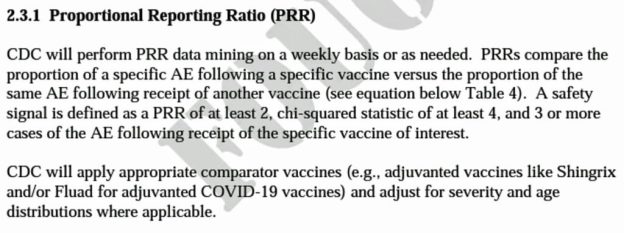
And yet, in the agency’s response to the FOIA request, it wrote that “no PRRs were conducted by CDC. Furthermore, data mining is outside of the agency’s purview.”
The agency suggested contacting the U.S. Food and Drug Administration (FDA), which was supposed to perform a different type of data mining, according to the briefing document.

CDC officials repeatedly claimed they have not seen safety signals in VAERS.

For example, on April 27, 2021, CDC Director Dr. Rochelle Walensky stated the CDC did not see any signals related to heart inflammation.
But a PRR calculation I did using the number of myo/pericarditis reports listed in the first table produced by the CDC obtained via the FOIA request reveals clear and unambiguous safety signals relative to the comparator vaccines mentioned in the briefing document (i.e., flu vaccines, FLUAD and Shingrix).
The table is dated April 2, 2021, almost four weeks before she made those remarks.
In fact, among the 15 adverse events for adults included in that week’s tabulations, PRRs I calculated also show loud-and-clear safety signals for acute myocardial infarction, anaphylaxis, appendicitis, Bell’s palsy, coagulopathy, multisystem inflammatory syndrome in adults (MIS-A), stroke and death.
The actual monitoring the CDC did diverges from the one promised in the briefing document in other ways.
For example, the CDC never created tables of the top 25 adverse events reported in the previous week, tables comparing different vaccine manufacturers, or tables of auto-immune diseases.
And it only began monitoring in early April 2021, even though reports from COVID-19 vaccines had been flooding VAERS since mid-December of the previous year.
To be clear, VAERS is not the only database the CDC uses to monitor COVID-19 vaccine safety.
For example, the CDC sponsored several studies of COVID-19 safety using the Vaccine Safety Datalink (VSD), which is comprised of millions of medical records from HMO’s across several states.
Those studies do not raise many safety concerns. However, they make many questionable methodological choices.
To give one example, a major safety study based on VSD data published in September 2021, in “JAMA,” compares adverse event rates that occur within 1-21 days of vaccination to the rate of occurrence from 22 to 42 days after vaccination.
It makes no comparison between vaccinated and unvaccinated individuals, or before vaccination versus after in the same individuals.
Moreover, the VSD is far from infallible, having failed initially to detect the increase in myocarditis rates.
In contrast, although calculating PRR’s is a blunt pharmacovigilance tool and far from perfect, it nevertheless has the advantage of being straightforward and difficult to manipulate with statistical sleight of hand.
PRRs are one of the oldest, most basic and most well-established tools of pharmacovigilance. The calculations are so straightforward that the CDC automated it several years ago, so it could have been done at the press of a button.
It simply beggars belief that the CDC failed to do this simple calculation. Even now, a paper published by CDC staff in March on the safety of the mRNA COVID-19 vaccines remains purely descriptive with no PRR calculation.
Meanwhile, a study published by a researcher not affiliated with the CDC in February in “Frontiers in Public Health” analyzes VAERS and EudraVigilance data using a method similar to PRRs, revealing clear and concerning safety signals.
And while it is true that VAERS is not the only database the CDC can use to monitor COVID-19 vaccine safety, it is of critical importance because it can reveal signals much faster than any other method — if anybody cares to look for them.
It remains to be seen if the FDA was properly monitoring VAERS. That will be the subject of a future FOIA request.
But even if it was, it doesn’t change the fact that the CDC completely failed in its promise to monitor VAERS for safety signals.
© 2022 Children’s Health Defense, Inc. This work is reproduced and distributed with the permission of Children’s Health Defense, Inc. Want to learn more from Children’s Health Defense? Sign up for free news and updates from Robert F. Kennedy, Jr. and the Children’s Health Defense. Your donation will help to support us in our efforts.
Featured Video

John Mearsheimer Talking Iran with Iran
or go to
Aletho News Archives – Video-Images
New Book
The silver that medicine dropped — four thousand years of clinical use, four decades to erase.
Colloidal Silver — First Edition, 2026, Paperback
Lies are Unbekoming | October 16, 2026
Silver was medicine. Not alternative medicine. Not folk medicine. Medicine. In surgery. In obstetrics. In the burn ward. In water treatment. In the household medicine chest. Every physician before 1938 knew this.
By the 1870s, silver nitrate was standard in surgical wound care across the leading hospitals of Britain, Germany, and the United States. Colloidal silver preparations — Collargol, Argyrol, Protargol — entered European and American practice through the 1890s and early 1900s and became standard antiseptics in military field medicine. By the time Fleming grew his first penicillin mould in 1928, silver was the first-line antimicrobial of the Western pharmacopoeia. The Lancet and the British Medical Journal carried the clinical reports in volume. The practice ran continuously through the Victorian era, the Edwardian era, the First World War, the interwar period. By 1980, almost all of it was gone.
What has not been treated at book length, until now, is how a four-thousand-year clinical record disappeared from mainstream medicine within four decades of the Flexner Report — and what the honest account of silver looks like once that record is reassembled.
Colloidal Silver reconstructs the pre-1938 record from The Lancet, the British Medical Journal, and the primary literature of the era; recovers Robert Becker’s bioelectric framework from the regeneration research the pharmaceutical model buried; and places silver inside a practical terrain-paradigm guide to its current place — in water, on the body, inside the body, and in the chronic conditions where antibiotics have failed. … continue
Blog Roll
 Aletho News
- Pharma- and Gates-Funded GAVI Seeks to Assure Parents
- John Mearsheimer Talking Iran with Iran
- Inside Bill C-22, Canada’s Patriot Act.
- China’s FM: Palestinian cause is ‘greatest injustice of the century’
- US sympathy for Palestinians surpasses support for Israelis
- Israeli rabbi permits occupiers to steal Palestinian olive harvest in West Bank
- Spanish firm sells Latvia vehicles equipped with Israeli tech despite arms embargo
- Saudi Arabia under fire… Yemen is burning down the House of Saud
- Israeli Spy Pollard stole the files, today’s it’s delivered through official channels
- Why Iran Didn’t Walk Away
- If Americans Knew
- NPR investigation finds evidence of widespread fraud at mall kiosks tied to Israeli skincare brand
- Tucker Carlson exposes Israeli Lies about the Oct 7th attack, Charlie Kirk, and the U.S.
- Israel has detained thousands of Palestinian children since Oct 7th – over half spent time in solitary, many uncharged
- Israeli Analysis: Is Netanyahu Planning an ‘October Surprise’ Attack Before Israel’s Election?
- Israeli settlers brutally attack Palestinians and Washington Post female photographer, 65
- Words Have Changed, Occupation Continues: The Reality of the Gaza Ceasefire
- Gaza’s child amputees are growing faster than their prosthetics allow
- Israel keeps Palestinians struggling just to survive–Daily Update
- Israeli firm used online ads to run vast spy operation, researchers say
- No, the world zionist movement is not an antisemitic conspiracy theory
- No Tricks Zone
- New Study Suggests Large Regions Of The Pacific Ocean Have Been Cooling For The Last 80 Years
- Germany’s Green Energy Debacle: High Energy Costs Force Kahla Porzellan to Close After 182 Years!
- New Study: 50 Years Of The Most Aggressive ‘Net Zero’ Policies Can Only Affect The Global Climate By 0.03°C
- US September “Heat” Was No Record…Many Records Set Decades Ago
- Latest European Green Energy Debacle; Portugal’s Largest Flagship Solar Park Insolvent!
- Green Energy Debacle: German Expert Professor Fritz Vahrenholt Warns Of Severe Economic And Social Consequences
- Two More Paleo Reconstructions Affirm Meters-Higher Sea Levels Across Ireland, Brazil 7000-6000 Years Ago
- New Study: Earth And Venus Surface Warmth Largely Explained By Convection And Lapse Rate, Not CO2 Or Radiation
- 2025 Nature Paper Claiming Worsening Global Drought Gets RETRACTED …Heavily Flawed
- New Study: ‘Global Drought Shows No Detectable Recent Acceleration Under Climate Warming’

