Russia unveils military plans in Latin America
Putin has agreed on a new collaboration with Cuba, Venezuela, and Nicaragua
RT | January 26, 2022
Russian President Vladimir Putin has agreed with the leaders of Cuba, Venezuela, and Nicaragua to develop partnerships in a range of areas, including stepping up military collaboration, Foreign Minister Sergey Lavrov has announced.
Speaking on Wednesday in an appearance in front of the Duma – Russia’s parliament – Lavrov reported that Putin had talked recently with the leaders of the three Central American countries, and that they had agreed to work together to strengthen their strategic cooperation.
“President Putin held recent telephone conversations with his colleagues from these three governments, with whom we are very close and friendly, and they agreed to look at further ways to deepen our strategic partnership in all areas, with no exceptions,” Lavrov stated. He noted that Russia already has close relations with these countries in many spheres, “including military and military-technical.”
Asked about the prospects of increased military cooperation with the three countries, Lavrov answered, “for the immediate future, we are counting on regular meetings of the corresponding committees.”
Earlier this month, Moscow’s Deputy Foreign Minister Sergey Ryabkov was asked about the possibility of sending troops to Latin America, and he refused to rule out the possibility. “It’s the American style to have several options for its foreign and military policy,” he said. “That’s the cornerstone of that country’s powerful influence in the world.”
“The president of Russia has spoken multiple times on the subject of what the measures could be, for example involving the Russian Navy, if things are set on the course of provoking Russia, and further increasing the military pressure on us by the US,” he went on. “We don’t want that. The diplomats must come to an agreement.”
United States National Security Advisor Jake Sullivan responded, noting that Russian military activity in Latin America had not been a point of discussion at recent security talks, but said that the US would act “decisively” if it did happen
Leaders from Russia and the US have been holding negotiations recently to attempt to de-escalate the situation around Ukraine, which Washington has accused Moscow of planning to invade. The Kremlin has denied that it has any aggressive intentions and has asked for written guarantees that NATO, the US-led military bloc, will not expand to Ukraine or Georgia, two countries that share borders with Russia.
Lavrov Accuses the United States of Pushing Ukraine to Provocations against Russia
Al-Manar | January 26, 2022
Russian Foreign Minister Sergei Lavrov said on Wednesday that Moscow did not want talks over Ukraine and its own security concerns to be made longer by including the European Union [EU] or the Organization of Security and Cooperation [OSCE] in Europe in them.
He made the comments to the State Duma or lower house of parliament.
Lavrov also reiterated Moscow’s stance that it would take unspecified “appropriate measures” if it did not receive a constructive answer from the United States and NATO on security guarantees it is demanding.
“Moscow will take appropriate measures to respond to the West’s negligence of Russian demands regarding security guarantees,” Lavrov said
Russia is expecting Washington to respond in writing this week to its proposals for guarantees.
Lavorv stated, “Moscow will not allow an infinite delay in discussions about security guarantees’ proposal”.
The Russian FM further said that “Washington is pushing Kiev to direct provocations against Russia,” asserting that the US “is trying to punish Russia and China, and the US apparatuses are provoking the two countries”.
He concluded by saying, “Washington and its European allies are doubling their efforts to contain Russia”.
Populists on the right are now openly challenging Republican war lust
No more lockstep: conservatives aren’t afraid of being called names as they question America’s interest in Ukraine
BY JACK HUNTER | RESPONSIBLE STATECRAFT | JANUARY 26, 2022
The fight on the right for what constitutes a conservative or Republican foreign policy continues. This time the battlefront is Russia and Ukraine.
That there is a fissure on this issue among conservatives is in a way, a big deal, showing that the “America First” restraint approach that garnered support among the base didn’t go away completely when power changed hands in Washington and its chief advocate, Donald Trump, left town. Unfortunately, many Republicans have gone back to form and are talking like it’s the post 9/11-era — as if Trump’s criticisms of George W. Bush’s wars and nation-building had no effect on their party whatsoever.
First up, habitually hawkish GOP Congressman Dan Crenshaw recently told Fox News that “there needs to be clear consequences for what (Russia does) because we’ve failed to deter and now you’re inviting conflict.”
Sounding like a Bush-Cheney-era neoconservative, Crenshaw added, “It’s a very bad situation and we’ve left ourselves without many options as a result.”
One doesn’t have to ponder long about what Crenshaw thinks of the military option.
Republican Congressman Michael McCaul had a similar message, telling CNN last week, “I don’t think we’re providing the deterrence necessary to stop Putin from invading Ukraine, the breadbasket of Russia.”
What kind of “deterrence” does McCaul want to see?
Republican Senator Joni Ernst also joined the hawks, telling CNN, “When it comes to pushing back against Russia, we need to show strength and not be in a position of doctrine of appeasement, which seems to be how President Biden has worked his administration.”
Popular Fox News personality Tucker Carlson apparently had enough of such talk, and cited both Crenshaw and McCaul’s interviews in his opening monologue last week and Ernst’s on Monday night. Carlson warned his viewers that the U.S. was being pushed toward a new war by the usual self-interested suspects, which included politicians, the media, and the defense industry.
“Those are our leaders, totally ignorant, just reading the script. It’d be nice to hear someone in the press corps, because it’s their job, ask the obvious follow up, which would be: Why exactly, Sen. Ernst, do you believe it’s so vital to send more lethal aid to Ukraine and to “go ahead and impose” more sanctions on Russia? Why? How would she answer that question?
We’ll never know how she’d answer, because no one in the media would ever ask her.
In last week’s monologue he cited prominent Democrats like Rep. Adam Schiff saying basically the same thing as Crenshaw and McCaul on Ukraine. “Oh, they’re all red in the face, but it’s not the usual partisan chorus. This is the entire choir. You just saw representatives from every faction in Washington, from Adam Schiff to Dan Crenshaw, not as different as they seem, and all the dummies in between. And all of them are promoting war against Russia on behalf of our new and deeply beloved ally, the government of Ukraine,” he mocked.
This week, suddenly more conservatives and Republicans began speaking out against the prospect of U.S. military action in the region.
“The United States should not be involved in any future war in Ukraine,” charged libertarian populist Republican Congressman Thomas Massie on Monday.
“The neocons/warmongers have spent years stoking the new cold war with Russia and have now brought us to the brink in Ukraine — this serves their own interests, and lines the pocket of the Military Industrial Complex with trillion$,” tweeted right-wing friendly Democrat and former Congresswoman Tulsi Gabbard. “Let’s not be sheep.”
Populist Republican U.S. Senate candidate and “Hillbilly Elegy” author J.D. Vance tweeted on Monday, “Billions spent on the Kennedy school, grand strategies seminars, and the Georgetown school of foreign service has bought us an elite that’s about to blunder us into a Ukraine war.”
Veteran and Conservative Virginia State Rep. Nick Freitas on Sunday accused the Biden administration of potentially getting America into a war as a distraction, tweeting, “Another Foreign War… When you absolutely, positively, have to distract the general public from the failure of your domestic policies.”
Charlie Kirk, leader of the conservative youth group Turning Point USA, also weighed in, tweeting Monday, “You should be against going to War with Russia.”
Kirk added, “Why is the President of the United States willing to send Americans to die protecting European Sovereignty? If our NATO ‘Allies’ aren’t even willing to fund their obligations and surge their own troops to protect their borders, why should we?”
With a split senate and Democrats controlling the House and Executive Branch, what the U.S. does or doesn’t do in Ukraine is largely in President Biden’s hands. And obviously, being against a Democratic president’s wars is easier for Republicans than when their own party is sitting in the White House. This was apparent when Republicans felt emboldened to check President Obama on his Syria, and to some extent his Libya interventions.
But Americans are more tired of war than ever, which is why Trump’s views on global policing and nation building did so well with GOP voters. This may be more than just who holds all the marbles. With Republicans predicted to do well in the 2022 midterms and the potential for turning the tables in 2024, the base is critical, and where it stands on foreign policy could matter quite a deal in the near future. Will the GOP look more like George W. Bush or reflect what Donald Trump often said about war, even if he didn’t always follow through?
At a minimum the foreign policy temperature on the right is not exactly where it once was, and whatever impact “America First” continues to have on Republicans, it’s a long way from all of them uniformly accusing anyone in their party of “blaming America first’”for even daring to question U.S. foreign policy.
CDC “Pivoting its language” on vaccination status
Moving forward people will need regular boosters to be “up to date”, & they won’t be using the term “fully vaccinated” anymore.
By Kit Knightly | OffGuardian | January 25, 2022
Dr Rochelle Walensky, director of the US Center for Disease Control, told the media on Friday that the CDC is intending to “pivot the language” regarding the Covid19 vaccines.
Speaking to the press briefing, Dr Walenksy had a very obvious message she really wanted to hammer home :
And what we really are working to do is pivot the language to make sure that everybody is as up to date with their COVID-19 vaccines as they personally could be, should be, based on when they got their last vaccine. So, importantly, right now, we’re pivoting our language. We really want to make sure people are up to date. That means if you recently got your second dose, you’re not eligible for a booster, you’re up to date. If you are eligible for a booster and you haven’t gotten it, you’re not up to date and you need to get your booster in order to be up to date.
(You can watch the full briefing here.)
It’s pretty clear that “say “up to date”, not “fully vaccinated”, was underlined in the memo. As was “pivot the language”, but what does it actually mean?
Well, that should be clear, it means people who were “fully vaccinated” will soon be “not fully vaccinated”.
(Side note here, but can we take a moment to appreciate the term “pivot the language”? That is some nice newspeak, beautiful. Up there alongside “enhanced interrogation”.)
The use of the term “up to date” in place of “fully vaccinated” is likewise deliberately crafted political language, turning a hard-and-fast reality into an ever-extending continuum. Normalising the open-ended nature of the new “vaccinations”.
We did warn you this would happen, you will NEVER be full vaccinated.
The good news is that this could be the breaking point for a lot of people who have gone along peacefully up until now, and if you doubt that just look how nervous Walenksy is in saying it, and listen to how much trouble she’s going to avoiding the phrase “not fully vaccinated”.
She knows this is going to alienate a lot of people. Could be our side is about to get some considerable reinforcements.
Have Lockdown Sceptics Won the Argument?
By Edward Chancellor | The Daily Sceptic | January 25, 2022
Now that Covid restrictions are being rolled back, various commentators are declaring victory over the miserable virus. Lockdowns, we are told, worked. Only a fool could argue otherwise.
Devi Sridhar, the Chair of Global Public Health at Edinburgh University, who was formerly an exponent of the Zero Covid strategy of completely eradicating the virus, has recently announced in the Guardian that “delaying and preventing infection as much as possible through this pandemic was a worthwhile strategy. In early 2020, there were few treatments, limited testing and no vaccines. The costs of those lockdowns were big, but the effort to buy time paid off”.
At the other end of the political spectrum, Tom Harwood of GB News says much the same. Lockdown sceptics, he writes in CapX, are “bizarrely claiming victory now that restrictions are coming to an end”. The sceptics, Harwood asserts, ignore the success of vaccines. “There is a blindingly obvious distinction between the need for non-pharmaceutical interventions amongst a non-immune population, verses [sic] one with incredibly high levels of immunity.” He points to a lower death toll from the Omicron variant which appeared after the “stupendously successful vaccine rollout”. In conclusion, Harwood writes that to “deny lockdowns worked to reduce spread is to deny logic”.
Let’s examine the logic. If lockdowns bought time for the rollout of vaccines, then we would expect fewer Covid deaths in places that locked down early and fast. That is the case in Australia and New Zealand, which early in the pandemic sealed their borders against the virus. But the trouble with this policy, as our Antipodean friends are discovering, is the difficulty of exiting. Their policy of national self-isolation has lasted nearly two years, and continues in large measure even after most of their population has been vaccinated.
By contrast, in Europe there is no evidence that lockdowns significantly reduced Covid deaths. Sweden, which never locked down, has the same number of deaths per million as Austria, which did (see chart below). It’s true that Swedish deaths ran higher somewhat earlier than Austria, but this ‘bought-time’ doesn’t appear to have changed the final tally.

The evidence from the United States points to a similar conclusion: the Covid death rate (as a share of the population) in Florida, which largely avoided lockdowns, is slightly below the U.S. national average and far below that of New York, which had (and continues to impose) relatively tough restrictions.
It’s true that mass vaccination has reduced the risk of hospitalisation and death from Covid. But lockdown exponents imply that vaccines alone are responsible for the decline in the infection fatality rate. The evidence from South Africa, whose vaccination rate is around a quarter of the European average (49 doses per 100 people versus 180, or 27%), suggests otherwise.
It appears that either Covid has evolved to become less virulent, as the South African doctors suggested back in December, or South Africa’s population has built up strong natural immunity from prior infection – a possibility overlooked by most commentators. It seems likely that both factors have played a role in reducing the virulence of the disease. Even if lockdowns had succeeded in reducing Covid deaths until the vaccine rollout that wouldn’t necessarily justify their imposition. From the start, lockdown sceptics were concerned about the collateral damage caused by closing down the economy, shuttering schools, neglecting conventional health care and forcing people to isolate in their homes for months on end. They railed in vain against the cruelty of lockdowns: mothers giving birth alone, old people dying alone or left for months without visitors in nursing homes, the damage to children’s education, funerals unattended, small businesses crushed and so forth. Finally, the public appears to be waking up to these cruelties. Hence, the fury at the hypocrisy of Downing Street officials who imposed harsh rules for the nation which they didn’t scrupulously follow themselves.
Then there are lockdown’s immense financial costs. At the time, these could be ignored since governments financed them with interest-free loans from central banks. But all that money-printing is now fuelling inflation that will lead to further immiseration in the coming years. The sceptics argued that lockdowns were never subject to a proper cost-benefit analysis which took social and economic costs into account. That remains the case. Thus, not only has there been no ‘victory’ in the war on Covid – on the contrary, the highly contagious Omicron variant appears to be overcoming all attempts to constrain it – but the argument over lockdowns has yet to be decisively won by either side, so that lockdowns are either accepted as a tool of sound public health policy or roundly condemned as a colossal mistake. The sceptics’ work continues.
Edward Chancellor is a financial journalist and the author of Devil Take the Hindmost: A History of Financial Speculation (1998).
Croatia to Withdraw Its Forces From NATO in Event of Russia-Ukraine Conflict
Sputnik – 25.01.2022
Croatia will withdraw its military from NATO forces deployed in the region in the event of a conflict between Russia and Ukraine, President Zoran Milanovic said on Tuesday.
“I follow reports, according to which NATO, not a separate state, not the United States, is strengthening its presence, sending reconnaissance vessels. We have nothing to do with this, and we will not have, I guarantee you this,” Milanovic told a national broadcaster, adding that Croatia will not send its military to the region.
“If there is an escalation, we will withdraw everyone to the last Croatian military. It has nothing to do with Ukraine or Russia, it has to do with the dynamics of the US’ domestic policy, [President] Joe Biden and his administration, whom I supported, the only one in Europe … but I see dangerous behavior in matters of international security,” he added.
It’s time to end the mandates

By Steve Kirsch | January 24, 2022
Boris Johnson recently declared an end to the COVID restrictions in the UK. He said, “We will trust the judgment of the English people.”
Why can’t we do that in the US? Isn’t it time to trust the judgment of the American people?
Whether you ask a red or blue pill person, it’s clear that both sides have compelling rationales to end the mandates and the State of Emergency.
Interestingly, the rationale for each side is completely different, but the conclusion is the same. Here’s how they stack up.
Blue pill rationale
- We don’t need mandates for the vaccine or masks because we know they work. No need to sell us! Mandate or not, we will comply.
- We no longer fear those who are not compliant: we are all boosted up the wazoo using safe and effective vaccines with virtually no side effects AND we are wearing N95 or P100 masks at all times. And we always stay 6 feet from any other person. So there is basically no way to infect us.
- We have nothing to fear. Virtually none of us will be hospitalized, and none of us risk death. And the prevalence of Omicron makes our risk even lower.
- We think people who are not compliant are evil and deserve to die. Why force them to take life-saving medical interventions? We are better off as a society if these people are gone. Permanently.
- We trust our doctors to deliver quality medical advice. Our doctors always follow the CDC guidance which has been uniformly excellent. We all should be treated the same, no matter what our medical histories are. If the doctors follow the CDC guidelines, almost nobody dies. All the hospitals are filled with unvaccinated people.
- Just to be safe, we test ourselves every day using antigen tests for COVID. If we have a positive test result, we now have two new safe and effective drugs from the most trusted drug companies in the world so that in the rare chance that we get COVID, we can treat it with nearly 100% success.
Red pill rationale
- Mandates aren’t needed because we won’t comply with them anyway. They just create division and animosity in society. They divide us.
- We don’t fear the vaccinated.
- Cloth, surgical, and N95 masks don’t work so why should we wear them? P100 masks do work, but they are pretty cumbersome and not worth the trouble for a COVID variant that can’t hurt us.
- Social distancing is useless and doesn’t work. The 6 foot rule is not based on any science. Why isn’t it 5.2 feet? Nobody has seen the science justifying 6 feet so we aren’t going to comply with silly non-scientific rules.
- The current COVID vaccines are more likely to kill people than save them. In the Pfizer trial, 24% more people died in the group taking the vaccine! So it’s clear. If the vaccines don’t kill us, they will actually make the pandemic worse because they depress our immune system making us twice as likely to be infected with COVID as well as susceptible to other diseases (like reoccurrence of cancer). They also cause serious side effects. They are the most dangerous vaccines in human history. There is no way we will take them. Mandating them is just going to piss us off and hurt the economy. You will not get us to take them.
- Why would we take a drug that could kill us to prevent a variant that cannot? You’d have to be nuts. We will not comply so the mandates won’t make us.
- The primary variant is Omicron which if it happened today, we’d just ignore it since it is like getting a cold.
- If we get sick, we have very effective early treatment protocols using existing safe repurposed drugs like ivermectin, HCQ, aspirin, vitamin D, NAC, and Prozac. These protocols are 100% successful in preventing death from COVID when given early. We would never use Molnupiravir or Paxlovid; those drugs are both super dangerous.
- We use symptoms to determine if we have COVID. If we are unsure, we can use antigen tests. There is no need to test if we aren’t symptomatic because we know there is virtually zero asymptomatic spread and because the antigen tests almost never work reliably unless you are symptomatic so it’s a complete waste of money to test asymptomatic people. The testing companies don’t want anyone to know that, but we do.
- If we do get sick with COVID symptoms, we stay home and rest.
- Even if we had a truly safe vaccine, those of us who are recovered from COVID wouldn’t need it. A uniform mandate for everyone makes no sense.
- We believe doctors should be allowed to be doctors and that medical care should always be delivered by our healthcare professional we trust to use his professional judgement on our individual case. The CDC guidance is just awful.
13% of US hospitals critically understaffed, 22% anticipate shortages: Numbers by state
By Marissa Plescia and Kelly Gooch | Becker’s Hospital Review | January 24, 2022
Almost 13 percent — or 772 of 6,004 — of hospitals reporting staffing levels in the U.S. are experiencing critical staffing shortages, according to HHS data posted Jan. 23.
This is about 2 percentage points less than figures released Jan. 20.
A critical staffing shortage is based on a facility’s needs and internal policies for staffing ratios, according to HHS. Hospitals using temporary staff to meet staffing ratios are not counted among those experiencing a shortage.
Meanwhile, almost 22 percent — or 1,305 of 6,004 — of hospitals reporting staffing levels in the U.S. are anticipating shortages in the next week.
About 30 percent of hospitals did not report if they’re currently experiencing shortages, and about 21 percent did not report if they anticipate shortages.
Below are two lists showing current staffing shortages and anticipated shortages.
Percent of hospitals in each state and the District of Columbia experiencing critical staffing shortages, ranked in descending order:
1. Vermont: 58.82 percent
2. West Virginia: 47.62 percent
3. New Mexico: 47.27 percent
4. Wisconsin: 33.33 percent
5. North Dakota: 32.65 percent
6. Arizona: 29.52 percent
7. Michigan: 29.38 percent
8. Kentucky: 29.06 percent
9. South Carolina: 28.05 percent
10. Louisiana: 25.33 percent
11. Georgia: 24.71 percent
12. Indiana: 23.95 percent
13. Nebraska: 22.22 percent
14. Tennessee: 22.14 percent
15. Delaware: 20 percent
16. Pennsylvania: 19.03 percent
17. Minnesota: 17.14 percent
18. Montana: 16.92 percent
19. Washington: 16.5 percent
20. Virginia: 15.24 percent
21. Oklahoma: 13.1 percent
22. New Jersey: 12.5 percent
23. Hawaii: 12 percent
24. Missouri: 10.95 percent (tie)
24. Kansas: 10.95 percent (tie)
26. Wyoming: 9.68 percent
27. Oregon: 9.38 percent
28. Maryland: 9.09 percent
29. California: 8.71 percent
30. Colorado: 8.6 percent
31. North Carolina: 7.69 percent
32. Mississippi: 7.41 percent
33. New Hampshire: 6.67 percent (tie)
33. Rhode Island: 6.67 percent (tie)
35. Nevada: 6.56 percent
36. Arkansas: 5.61 percent
37. Maine: 5.41 percent
38. Alaska: 4.17 percent
39. Illinois: 3.96 percent
40. Idaho: 3.77 percent
41. Florida: 3.56 percent
42. Iowa: 3.17 percent
43. New York: 2.48 percent
44. Texas: 2.36 percent
45. Ohio: 0.86 percent
46. Alabama: 0 percent (tie)
46. District of Columbia: 0 percent (tie)
46. South Dakota: 0 percent (tie)
46. Utah: 0 percent (tie)
46. Connecticut: 0 percent (tie)
46. Massachusetts: 0 percent (tie)
Percent of hospitals in each state and the District of Columbia anticipating critical staffing shortages within the next week, ranked in descending order:
1. Vermont: 70.59 percent
2. Rhode Island: 53.33 percent
3. West Virginia: 52.38 percent
4. New Mexico: 47.27 percent
5. Kentucky: 41.03 percent
6. California: 40.3 percent
7. Alabama: 35.9 percent
8. Tennessee: 35.71 percent
9. Wyoming: 35.48 percent
10. Wisconsin: 35.33 percent
11. Michigan: 33.75 percent
12. Delaware: 33.33 percent
13. Missouri: 32.85 percent
14. North Dakota: 32.65 percent
15. Massachusetts: 32.35 percent
16. Nebraska: 32.32 percent
17. Arizona: 30.48 percent
18. Kansas: 29.93 percent
19. South Carolina: 29.27 percent
20. Oklahoma: 28.97 percent
21. Georgia: 28.82 percent
22. Indiana: 27.54 percent
23. Louisiana: 24.44 percent
24. Mississippi: 23.15 percent
25. Arkansas: 22.43 percent
26. Virginia: 21.9 percent
27. Pennsylvania: 21.68 percent
28. Washington: 20.39 percent
29. New Hampshire: 20 percent
30. Montana: 18.46 percent
31. Maryland: 18.18 percent
32. Minnesota: 17.14 percent
33. New Jersey: 16.67 percent (tie)
33. Alaska: 16.67 percent (tie)
35. Florida: 16.6 percent
36. Colorado: 13.98 percent
37. Idaho: 13.21 percent
38. Illinois: 12.87 percent
39. Hawaii: 12 percent
40. Oregon: 10.94 percent
41. North Carolina: 10.77 percent
42. South Dakota: 9.38 percent
43. Maine: 8.11 percent
44. Utah: 7.14 percent
45. Nevada: 6.56 percent
46. New York: 6.44 percent
47. Iowa: 4.76 percent
48. Texas: 3.54 percent
49. Connecticut: 2.56 percent
50. Ohio: 0.86 percent
51. District of Columbia: 0 percent
Activists complain bipartisan antitrust law proposal could make online censorship more difficult
The challenge comes from “free press” groups
By Didi Rankovic | Reclaim The Net | January 24, 2022
The American Innovation and Choice Online Act that is currently making its way through Senate committees before being put up for the final vote, is attracting attention both from those who support it and Big Tech’s lobbyists, who earlier reports said had already launched a broad campaign against it.
The bill that has so far received bipartisan support, aims to significantly limit the way Apple, Amazon, and Google use their monopolistic business practices to undermine competition and antitrust laws.
Either by design or coincidence, it isn’t just openly lobbying firms who are attacking the bill from various angles; they are joined by organizations like Free Press, which claims it is nonpartisan and fighting “for your right to connect and communicate.”
However, in the American Innovation and Choice Online Act, Free Press sees a “flaw” that would, essentially, make connecting and communicating easier – and doesn’t like it. Namely, the bill, if passed, they argue, could prevent censorship, specifically of what’s labeled as “hate speech or misinformation.”
After the narrative has been built for months if not years of “misinformation” being the most serious evil on the internet (despite it only being subjectively defined, unlike the clear and clearly damaging Big Tech antitrust behaviors), it makes sense that in order to discredit anything, reaching for the “misinformation” label is now a good idea.
Free Press writes in a blog post that the bill would provide an avenue to businesses hurt by Google and others purposefully downranking them in search results to launch legal battles against such decisions.
The bill is meant to prevent Big Tech from manipulating the all-important search results and listings as these giants promote their own products and services over those of competitors – but could also provide a way to those hit by censorship and obscured from view by the same technology to have a chance of fighting back. And that, Free Press believes, should not be allowed.
The same argument is being made by another group, this one openly close to the tech industry, TechFreedom. “If a majority of FTC Commissioners were bent on a partisan agenda — e.g., forcing mainstream platforms to carry Parler — it would be significantly easier for them to use the administrative litigation process to do so,” this group said. Coordinated or not, Parler was also mentioned in the blog post published by Free Press.
Russia will intervene in Ukraine
BY M. K. BHADRAKUMAR | INDIAN PUNCHLINE | JANUARY 23, 2022
The US-Russia talks in Geneva in the last two successive weeks could not produce a breakthrough. Fundamentally, there is a contradiction that cannot be resolved easily. Russia sees in existential terms the NATO’s advance into its immediate western neighbourhood. But for Washington, it’s geopolitics, stupid!
Russia cannot tolerate any longer such NATO presence on its western border. Ukraine’s induction into the Western alliance system would mean that the US missiles could hit Moscow in 5 minutes, rendering Russian air defence systems ineffectual and obsolete.
NATO deployments in the Baltic and the Black regions further deprive Russia of buffer in the west. Considering that all major decisions and most minor decisions in the NATO are taken in Washington, Moscow perceives all this as an American strategy to encircle it, erode its strategic autonomy and independent foreign policies.
The US, on the contrary, refuses to countenance any NATO rollback. It insists that Russia has no say in the alliance’s decisions. At best, Washington would discuss certain confidence-building measures, while NATO enlargement since 1997 — contrary to assurances given to Mikhail Gorbachev by western leaders in 1990 during the reunification of Germany — is a fait accompli that Russia should live with.
Basically, the US has gained the high ground through sustained efforts through the past three decades since the Bill Clinton administration put into effect a concerted strategy in anticipation of a resurgent Russia in a matter of time. Now that the US has gained the upper hand, it is loathe to give it up.
From Washington’s viewpoint, this is a key template of the geopolitical struggle unfolding over the new world order after China’s rise and the shift in power dynamic from the West to the East. Cutting down Russia to size and to be able to intimidate it is a pre-requisite of the situation before the US tackles China comprehensively. Suffice to say, Ukraine has become a battleground where a titanic test of will is playing out.
Ukraine is in all practical sense a US surrogate and its transformation as an anti-Russian state that began following the regime change in Kiev in 2014 is already at an advanced stage. Although Ukraine is not yet a NATO member, the alliance has established a significant presence in the country militarily and politically.
In the information war, the US portrays Russia as aggressor against a weak neighbour. In reality, though, it is a situation of ‘Heads I win tails you lose’. If Russia doesn’t do anything, it might as well resign to the inevitability of Ukraine being inducted into NATO and Russia having to live with the enemy at the gates. Of course, that would shift the global strategic balance for the first time in history in favour of the US.
On the other hand, if Russia acts militarily to prevent the NATO’s march in Ukraine, Washington will play rough. Washington is all set to pillory President Vladimir Putin personally and to impose “sanctions from hell” on Russia, with a vicious game plan to wound that country’s economy lethally and stifle its capacity to be a global player.
In the US estimation, Putin personally will have to bear a heavy political cost if living conditions deteriorate within Russia between now and 2024 when the next Russian presidential election is due, and he may be compelled to relinquish power. From the American perspective, there’s nothing like it if a Boris Yeltsin II were to succeed Putin.
Make no mistake, part of what is going on today is a demonisation Putin’s political personality to erode his towering popularity (65%), which forecloses the rise of a pro-western politician in Russia for a foreseeable future. All attempts by the US intelligence to create a “liberal” platform in Russian politics have failed so far. The fact of the mater is that the majority of Russian people dread the return of the “liberal” order of the 1990s.
The Washington Post, which is linked to the US security establishment, featured a scurrilous report last Wednesday under the byline of a noted knave titled House Republicans aim sanctions at Putin, his family and his mistress. It says, “The Biden administration’s carefully crafted mix of diplomacy and threats of additional sanctions doesn’t seem to be deterring Russian President Vladimir Putin from invading Ukraine and starting a war. Now, a large group of House Republicans is pushing President Biden to ramp up the pressure on Putin directly by going after him and his entourage for their long and well-established corruption.” Evidently, Washington will go to any extent to create dissensions among Russia’s elite and undermine the country’s political stability.
What lies ahead?
Without doubt, Russia is acutely conscious of its limitations. Moscow too made some serious miscalculations. It was betting that Ukraine was not going to join the NATO and in due course, better sense would prevail in Kiev under a realistic and pragmatic leader who would give up on the “Ukrainisation” agenda, repair ties with Russia (especially in the economic field) and importantly, accommodate the aspirations of the ethnic Russian eastern regions. But as it turned out, “Ukrainisation” is only being galvanised with tacit American support. Moscow has sensed that time is no longer on its side.
Moscow expects something concrete from the American side, as its vital security interests are in jeopardy. The Kremlin leadership, including Putin, has starkly outlined Russia’s “red lines.” Washington, on the other hand, is simply kicking the can down the road. It estimates that time is on its side anyway. From the Russian viewpoint, this is not acceptable, since a point of no return is arriving as regards Ukraine’s Nato membership.
Arguably, President Biden doesn’t want to move in the direction of accommodating Russia’s legitimate interests, given the pulls and pushes from the domestic scene in America and the divergent opinions among European allies, but primarily because the encirclement of Russia with pro-Western states has been a strategic objective of Washington’s policies toward Russia under successive administrations since Bill Clinton, and today it happens be expedient too, being a “cause” that enjoys rare bipartisan support in the Beltway at a juncture when American opinion is deeply divided.
In the present situation, wittingly or unwittingly, Washington has also tied its hands by committing that it won’t negotiate over Ukraine’s head. All factors taken into consideration, therefore, the probability is very high that Russia will intervene in eastern Ukraine with a view to create new facts on the ground to secure its national security interests while aiming at a political settlement for the medium and long term.
What does it entail?
Clearly, Russia is not seeking annexation of Ukrainian territory. Its preference will be to restrict its intervention in eastern Ukraine largely to the Russian populated regions and to create a buffer zone. Some American analysts have estimated that, broadly, any Russian intervention will be restricted to the territory upto the Dnepr river flowing through Belarus and Ukraine to the Black Sea. This seems plausible.
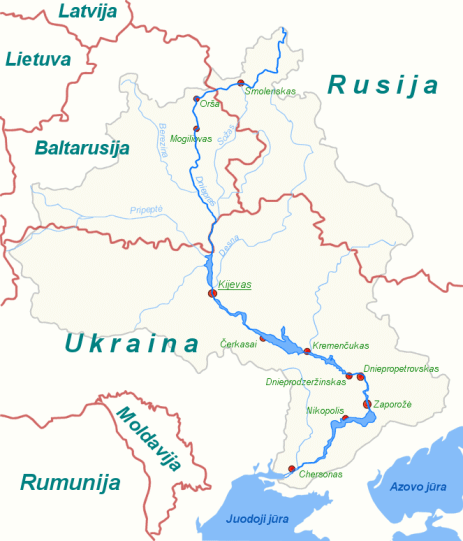
Of course, there are variables in any emergent military situation. Russia will firmly react to any form of Western intervention in Ukraine — although Washington has ruled it out. (In any case, the US’ capability to fight a massive continental war at such short notice is questionable.) The Russian military operations will be decisive with huge firepower and advanced weaponry on multiple fronts, with the intention to realise the political objective in the shortest time possible.
The US journalists have written about “resistance” but that is a load of rubbish. The Russian operation will be short and decisive. The Ukrainian moral fibre today is such that the demoralised forces and the disillusioned people will simply cave in. In all this, what needs to be remembered is that despite the heavy dollops of US indoctrination, Ukrainian people have profound civilisational affinities with Russians that lie submerged just below the surface.
Most important, the pervasive corruption in that country gives ample scope to buy off loyalties — in fact, there may not be much actual fighting at all in many sectors. It also needs to be factored in that the political situation in Kiev is highly unstable, as the latest sedition charges against former president Petro Poroshenko testify.
Zelensky won his mandate as president in 2019 on the basis of his promise to work for rapprochement with Russia. Today, he is a thoroughly discredited figure. People feel betrayed. A crushing military defeat will mean the end of the road for Zelensky.
The ensuing political turmoil within Ukraine is the “X” factor in the Russian intervention. American analysts deliberately sidestep this. Simply put, Russians have a deep understanding of the eddies of Ukrainian politics and the country’s power brokers due to the shared history, culture, politics and societal links.
The ultimate Russian objective will be a federated Ukraine through constitutional reform with the country’s sovereignty, national unity and territorial integrity intact while the regions enjoy autonomy. Europe may welcome this as the best way to stabilise the situation and remove the potential for future conflict.
Indeed, Russia’s expectation will be that such a Ukraine can never become a part of NATO once constitutional underpinnings are put in place to ensure that all major policies pursued in Kiev would be based on national consensus.
The bottom line is that as Russia sees it, the only way out of this crisis is that Ukraine regains its national sovereignty and stops looking to Washington for navigating its destiny. That requires that the American operatives in Kiev who take the decisions for Ukraine go home and Ukrainians are once again the masters of their house, which ceased to be the case once the US intelligence usurped power in February 2014 disregarding the pledge given by then (elected) president Viktor Yanukovich to hold fresh elections before deciding on Ukraine’s EU membership.
Clearly, all this is not going to be as easy as it sounds and the outcome may turn out to be no better than an attempt to unscramble the omelette. But the good part is that there are signs already that Europe is sceptical about blindly tagging along with the US any further on Ukraine.
The probability of discord in the transatlantic relationship is rising. NATO itself has never really been the robust united alliance that was made out to be. Polish President Andrzej Duda’s decision to attend the Winter Olympics in Beijing is a harbinger of things to come. (Incidentally, Putin will also be in Beijing at that time.) Germany opposes not only the removal of Russia from Swift but also the supply of weapons by NATO countries to Ukraine as well as Lithuania’s move (under US advice) to switch ties to Taiwan!
US made a strategic blunder to have encouraged a deeper NATO imprint in Ukraine. Making half-promises thereby to a non-NATO country is going to damage the US’ credibility in the downstream of a Russian intervention. But it is impossible for Washington to backtrack now, as the loss of credibility will be even more.
What remains to be seen, equally, is how the European Union survives this moment. The ardent Atlanticists in the European Commission in Brussels led by Ursula von der Leyen and the Russia-hater Josep Borrell are unilaterally setting the EU agenda currently, ignoring the glaring divergences of opinion among the member states. With Angela Merkel’s departure, a vacuum has appeared which these Eurocrats hope to fill in.
But this is clearly unsustainable. Addressing the European Parliament in Strasbourg last week, French President Emmanuel Macron has urged Europe to invest in its own collective security framework and called for a “frank” EU dialogue with Russia. By the way, neither the EU nor France was involved in the direct talks between the US and Russia in Geneva.
Much is being made out of the threat of sanctions against Russia. But such threats won’t deter Moscow. For a start, even draconian sanctions have proved to be a weak coercive tool. Indeed, US sanctions had a poor coercive track record in North Korea, Cuba, Iran, Venezuela, Vietnam, etc.
Russia is a big power. It has huge reserves, which currently stand at a record $638.2 billion — the fourth largest in the world. Russia’s credit position is good and it owns much of its debts. It has no critical need of US investors. Russia is in no desperate need to sell its currency.
Having gone through four traumatic shocks previously in its 30-year post-cold war history, Russia knows how to absorb shocks. Therefore, while Russia may take a big hit and there could be currency volatility causing outflow of capital initially following the sanctions, its reserves give it a big cushion.
At any rate, how far the Europeans will want to go on the sanctions path remains to be seen. Germany has voiced reservations about Washington’s famous “nuclear option”, namely, the expulsion of Russia from the Swift payment system. To be sure, any disruption in Russian energy supplies will hurt the European economies.
A little known fact is, Russia sells gas at very low prices to Europe, whereas, any LNG supplies from the US to make up for Russian supplies will mean exorbitant prices jacking up the cost of industrial production. Central European countries depend on Russia for 100 percent of their energy needs. Germany has a 40% dependency.
According to reports, a highlight of Putin’s forthcoming visit to Beijing will be the signing of the agreement of the mammoth Power of Siberia-2 gas pipeline project to construct an additional route to send gas to China gas from Siberia’s Yamal Peninsula, where Russia’s biggest gas reserves are, via Mongolia. The capacity of the pipeline is expected to be 60 billion cubic meters of natural gas annually (which exceeds the capacity of Nord Stream 2.)
Significantly, trade turnover between China and Russia has reached a record $146.88 billion in 2021, up 35.8% from the previous year. Most certainly, the standoff between Russia and the West over Ukraine, which could bring new sanctions against Moscow, is likely to tighten the Kremlin’s bond with Beijing even more. The two countries have vowed to raise their trade turnover to $200 billion by 2024. Recent economic trends alone suggest the countries are likely to reach that goal.
The rising geopolitical tensions would add momentum to this effort by making stronger trade ties with China a necessity for the Kremlin. Moscow will need to increase sourcing capabilities elsewhere because of US sanctions, and China will be one major avenue. The big picture is that on its part, China too cannot afford to see Russia going down under US pressure.
Evidently, the US hasn’t thought through the escalatory ladder. The Kremlin has threatened Washington with a complete break in relations if push comes to shove. Trust Moscow to hit back. Russia conducted an anti-satellite test in May by taking out a satellite. Possibly, it was a signal that Russia has the capability to interfere with the GSP constellation in non-military fields, which can affect key sectors of the US economy.
Above all, any “sanctions from hell” will inevitably turn into a morality play on the world stage. There’ll be increasing blowback in the world economy as countries get concerned about Washington’s weaponisation of the dollar. Some may even feel prompted to harden their economy. This can impact the international financial market. Washington backtracked previously when such situations arose. (Washington chose not to impose sanctions against India under CAATSA for its purchase of the S-400 missile system from Russia.)
Paradoxically, thanks to wave after wave of Western sanctions since 2014, Russia has become much more autarchic. Today, it needs no inputs from the West for its defence industry to develop new weapon systems. Pentagon officials have admitted that Russia has taken the lead in cutting edge technology such as hypersonic missiles, and catching up may take three to five years — that is, assuming that the Russian defence industry is resting its oars.
Featured Video

Why the U.S. Should Pull Back From the First Island Chain
or go to
Aletho News Archives – Video-Images
Book Review
‘Why Fauci Must Rot in Prison’: A Tale of Two Diaries
By Jill Erzen | The Defender | October 13, 2026
Dr. Anthony Fauci’s private diary reveals a “mind-numbing” contradiction between what the former top U.S. infectious disease official knew about COVID-19 and what he told the public, senior White House adviser Peter Navarro, Ph.D., said last week on “American Thought Leaders.”
In his new book, “Why Fauci Must Rot in Prison,” due out Oct. 20, Navarro compares Fauci’s private entries to his own pandemic-era diary, and uses what he calls “a tale of two diaries” to argue that Fauci should face criminal prosecution.
“I show, actually, how a prosecution can and should happen … at the state level, most likely,” Navarro said. “He should wind up in prison, and we’ve got the receipts in this book to put him there.”
Navarro said Fauci repeatedly acknowledged important facts in private, then publicly pursued policies that contradicted those facts — with devastating consequences.
“What he says many times privately in his diary is so at odds with both his public behavior and public statements that it’s mind-numbing,” Navarro said.
Navarro examines the lasting damage caused by lockdowns and other pandemic policies, and the ongoing toll of long COVID.
His book also addresses questions about vaccine safety, including why healthy young people faced COVID-19 vaccination mandates despite concerns about myocarditis, and why women were not warned about miscarriage risks linked to the shots. … continue
Blog Roll
 Aletho News
- Jennifer Kavanagh: Why the U.S. Should Pull Back From the First Island Chain
- Yemen denounces international community’s silence on Saudi aggression, siege
- UAE and Saudi Arabia move toward renewed coordination against Sanaa
- How Iran’s two-week retaliatory strikes exposed cracks in US military architecture in Persian Gulf
- The mother of all propaganda: Why the hype over US MOAB strike against Iran is nothing but theater
- Iran says it possesses technology behind US 14-ton GBU bunker-buster
- Trump asks Iran not to retaliate after he strikes Pickaxe Mountain – w/ Prof. Marandi
- Vice President J.D. Vance’s Deceptive ‘Antiwar’ Campaign Speech
- Iran: Palestinians’ rights must not be compromised in Gaza’s future; US, Israel to blame for Hormuz situation
- Ongoing tales of Syrian chemical weapons
- If Americans Knew
- Israeli rabbi permits occupiers to steal Palestinian olive harvest in West Bank
- Netanyahu’s spin on latest settler attack is laughable – Daily Update
- Israeli soldiers debunk Israel’s talking points
- In West Bank, Israeli settlers are totally out of control – Daily Update
- NPR investigation finds evidence of widespread fraud at mall kiosks tied to Israeli skincare brand
- Tucker Carlson exposes Israeli Lies about the Oct 7th attack, Charlie Kirk, and the U.S.
- Israel has detained thousands of Palestinian children since Oct 7th – over half spent time in solitary, many uncharged
- Israeli Analysis: Is Netanyahu Planning an ‘October Surprise’ Attack Before Israel’s Election?
- Israeli settlers brutally attack Palestinians and Washington Post female photographer, 65
- Words Have Changed, Occupation Continues: The Reality of the Gaza Ceasefire
- No Tricks Zone
- Predictions Made By Renowned Climate Proifessor Over Past Decades Have Been Proven To Be Poor
- New Study Suggests Large Regions Of The Pacific Ocean Have Been Cooling For The Last 80 Years
- Germany’s Green Energy Debacle: High Energy Costs Force Kahla Porzellan to Close After 182 Years!
- New Study: 50 Years Of The Most Aggressive ‘Net Zero’ Policies Can Only Affect The Global Climate By 0.03°C
- US September “Heat” Was No Record…Many Records Set Decades Ago
- Latest European Green Energy Debacle; Portugal’s Largest Flagship Solar Park Insolvent!
- Green Energy Debacle: German Expert Professor Fritz Vahrenholt Warns Of Severe Economic And Social Consequences
- Two More Paleo Reconstructions Affirm Meters-Higher Sea Levels Across Ireland, Brazil 7000-6000 Years Ago
- New Study: Earth And Venus Surface Warmth Largely Explained By Convection And Lapse Rate, Not CO2 Or Radiation
- 2025 Nature Paper Claiming Worsening Global Drought Gets RETRACTED …Heavily Flawed

