Israel ‘infuriated’ by claim Christians are ‘driven away’ from Jerusalem

RT | December 21, 2021
Church leaders in Jerusalem have complained that “fringe radical” settler groups are mounting a violent “systematic attempt” to drive Christians from the city. Israel has criticized their statement as “baseless” and “infuriating.”
Last week, the Patriarchs and Heads of Local Churches of Jerusalem – a collection of various Christian denominations – launched a campaign to protest“frequent and sustained” radical violence and “strategic property” acquisition. They said these tactics were aimed at “diminishing the Christian presence.”
In a statement issued by the Diocese of Jerusalem, the church leaders pointed to “countless incidents” of physical and verbal assaults against priests, “intimidation” of local Christians and the “desecration” of holy sites and churches. They called out the “failure of local politicians, officials and law enforcement agencies” to stem the violence, which they dated back to 2012.
The joint statement was signed by the leadership of all the city’s major churches, including the Custody of the Holy Land representing the Vatican, the Armenian Apostolic Orthodox Patriarch of Jerusalem, the Latin Patriarch of Jerusalem and the head of the Anglican Church.
The campaign was amplified by the UK’s Archbishop of Canterbury, Justin Welby, who tweeted the joint declaration last Tuesday and termed it a “heart-cry” and an “unprecedented statement … about the future of Christians in the Holy Land.” The World Council of Churches and other bodies also lent support.
The church heads also requested “urgent dialogue” with political authorities in “Israel, Palestine and Jordan,” noting that these were bound by a “declared commitment” to protect religious freedom. Besides dealing with the “challenges presented by radical groups,” the talks would explore the creation of a “special Christian cultural and heritage zone to safeguard the integrity of the Christian Quarter in the Old City of Jerusalem.”
The allegations of Christians being discriminated against in Jerusalem have since attracted media attention, with the Israeli government finally responding to them this week.
In a statement on Monday, the Israeli foreign ministry branded the concerns as “baseless” and “infuriating” and claimed that they “distort the reality of the Christian community” in the country.
“Religious leaders have a critical role to play in education for tolerance and coexistence, and Church leaders should be expected to understand their responsibility and the consequences of what they have published, which could lead to violence and bring harm to innocent people,” the ministry said.
The US is Gaining a Foothold in Uzbekistan
By Valery Kulikov – New Eastern Outlook – 22.12.2021
To create sustainable groundwork for further expansion into Central Asia, Washington has recently placed particular emphasis on developing relations and cooperation with Uzbekistan.
One of such work areas in this country has been the active opening of “American Corners” in Uzbekistan. It is a US government-supported global network of more than 600 open-access educational centers, already implanted in more than 140 countries, seemingly dedicated to “spreading American culture and American values to every country in the world.” However, created in modern libraries, they are one of the main elements of American soft power. The US Embassy opened an “American Corner” in Qarshi in March 2021; the US Embassy plans to open at least six more such facilities throughout Uzbekistan. It has already allocated over $860,000.
Another area of US expansion in Uzbekistan is USAID’s aspirations to take control of the country’s pharmaceutical industry. To this end, USAID has opened a so-called “Quality Club” in Uzbekistan, which, it says, will promote the development of the pharmaceutical industry and local pharmaceutical manufacturers. According to a US Embassy release, the assistance will consist of discussions on updates, problems, and solutions related to regulating drugs and medical devices in Uzbekistan. US representatives present at the “Quality Club” opening discussed the current state of the Uzbek pharmaceutical industry, the contribution of local medicine producers to the common market, and achievements, obstacles, and development directions in the pharmaceutical industry. The advertising declarations of the US Embassy sounded, as always, noble, unless, of course, one keeps in mind that American charities do not do anything for nothing.
For the sake of objectivity in assessing this event, it should be recalled that there is a rigorous certification in the field of pharmaceutical products. And this, in particular, is clearly illustrated by the pharmaceutical war on vaccines against coronavirus. The United States has done quite a lot to keep the Russian Sputnik V vaccine out of that market. Therefore, it is easy to assume that the result of USAID activities will not be the promotion of Uzbek pharmaceutical products on the American and European markets, but the imposition of imports of American drugs to Uzbekistan and the capture of the Uzbek pharmaceutical market. As for the Uzbek industry, which has shown significant growth in recent years, it is unlikely to survive under pressure from USAID and Western corporations, as multinational corporations do not need competitors.
However, in addition to gaining complete control of Uzbekistan’s pharmaceutical industry, USAID has another goal. And it lies in the expansion through Uzbekistan to the entire EAEU (Eurasian Economic Union ) pharmaceutical industry, given that this Central Asian state has obtained observer status in the Eurasian Union and has already begun to adapt its national standards to EAEU requirements. And, given the importance of the EAEU market, USAID expects to take appropriate positions in the EAEU market through the mediation of Uzbekistan and gain access to the latest pharmaceutical developments in the EAEU.
However, the recently intensified “outreach to Uzbekistan” is being carried out by Washington not only in these directions. For example, recently, in Uzbekistan, there have been active discussions of political and economic partnership between the two countries with the participation of Assistant Secretary of State for South and Central Asian Affairs Donald Lu. The most promising directions of further expansion of the bilateral economic partnership, including mining, chemical, agriculture, textile, and other industries, have been outlined during the meeting held on December 13 in Tashkent. The US side emphasized that in the eleven months of 2021, trade turnover between the two countries increased by 48.5% compared to the same period in 2020. In addition, the number of enterprises with American capital in Uzbekistan has doubled over the past few years. The sides expressed readiness to hold in the first half of 2022 a business forum for representatives of American and Uzbek business communities jointly with the American-Uzbekistan Chamber of Commerce (AUCC).
The US representatives also stressed the importance of strengthening security cooperation by deepening ties between defense, law enforcement, border, and customs agencies. The United States expressed gratitude for the assistance provided by Uzbekistan to humanitarian aid providers at the Termez Cargo Center and welcomed Uzbekistan’s initiative to establish a regional logistics hub in Termez under the auspices of the UN to provide urgent humanitarian aid to the people of Afghanistan.
In the conditions mentioned above, the intensification of military cooperation with Uzbekistan remains on the active agenda of Washington. Uzbekistan remains the most convenient Central Asian country to locate a US Air Force base or counterterrorism center, targeting Afghanistan. Hence, discussions of American and NATO partners with Tashkent continue. Like many post-Soviet republics, Uzbekistan has partnered with NATO for peace since the 1990s, participating in consultations, delegation exchanges, and even joint troop maneuvers on US soil. And yet, for the past 20 years, Uzbek servicemen have not helped the Pentagon in Afghanistan with weapons in their hands like Georgians, Ukrainians and others. On the contrary, closer to the finish line of the infamous US mission in Afghanistan, Tashkent began to successfully establish constructive relations with the Taliban’s “political office” and promote Uzbek-Afghan economic cooperation projects.
Nevertheless, Washington has not given up hope of strengthening the strategic partnership with Uzbekistan in military projects or facilities. The regional choices are too limited. Therefore, representatives of CENTCOM will appear more than once in Tashkent, but the influence of Americans on the situation in the hot region will steadily diminish.
The Fear of Those Still-Secret CIA Records on the JFK Assassination
By Jacob G. Hornberger | FFF | December 20, 2021
One of the amusing aspects of the ongoing controversy over those still-secret CIA records relating to the Kennedy assassination has been the reaction of lone-nut theorists. Hardly any of them, if any at all, are publicly calling on President Biden to disclose those records now rather than delaying disclosure for another year.
What’s up with that? Surely, lone-nut theorists don’t really buy into the “national security” rationale for keeping 58-year-old records relating to the assassination secret from the American people. I don’t know of anyone who really buys into that rationale. After all, what do they think will happen if those records are suddenly disclosed — that the Cuban communist army will invade Miami and start moving up the coast toward Washington?
I’ll tell you why those lone-nut theorists don’t demand immediate disclosure of those documents? They’re scared. Very scared. They fear, at least on a subconscious level, that those remaining records include powerful circumstantial evidence establishing that what happened on November 22, 1963, was a regime-change operation on the part of the national-security establishment. Why else would they still be hiding those records? No, the Cuban army is not going to invade Miami and start moving north toward Washington.
And no, I’m not suggesting that those 58-year-old, still-secret CIA records contain a confession of wrongdoing. Nobody would be stupid enough to put a confession into writing. And even if someone was that stupid, no one would be stupid enough to deliver such a confession to the Assassination Records Review Board or the National Archives.
 The JFK assassination is like a gigantic jigsaw puzzle. Imagine a really complicated puzzle that has 1000 small pieces to it. Your kids have lost 25 percent of the pieces. You decide to put the puzzle together anyway. You finish it. Even though you’ve only got 75 percent of it completed, you can still tell that it’s a picture of the Eiffel Tower. Then, you find several more pieces. You now have 80 percent of the pieces and you’re able to see the Eiffel Tower more clearly.
That’s the way it is with the Kennedy assassination. With around 75 percent of the pieces, one can see that this was a national-security state regime-change operation. What those remaining records will do is disclose several more small pieces that make the regime-change picture even clearer. That’s why they are hiding them. That’s why they have hidden them for 58 years. That’s why they will continue hiding them, even past Biden’s December 22, 2022, deadline for disclosure. It’s because those still-secret records contain additional incriminating pieces to the puzzle that further fill out the regime-change mosaic.
Permit me to address three factors regarding the Kennedy assassination.
The first one is what I call the Inconceivable Doctrine. It holds that it is just inconceivable that the Pentagon and the CIA would conduct a regime-change operation against President Kennedy.
Really? How can it be inconceivable given the fact that the Pentagon and the CIA engaged in regime-change operations against presidents and prime ministers of foreign countries, both before and after the Kennedy assassination?
Their violent coup in Iran in 1953 that ousted the democratically elected prime minister, Mohammad Mossadegh, from office.
Their assassination of Congo leader Patrice Lumumba.
Their regime-change operation in Guatemala in 1954, in which they ousted the democratically elected president, Jacobo Arbenz, from office and also targeted him for assassination.
Their repeated assassination attempts against Cuban president Fidel Castro.
Their kidnapping and assassination of General Rene Schneider, the overall commander of Chile’s armed forces.
Their violent coup in Chile against the democratically elected president, Salvador
Allende, which left him dead.
Their participation in Operation Condor, the top-secret kidnapping, torture, and assassination program in South America.
Given those regime-change operations and Operation Condor, how can it be inconceivable that they would do the same to a democratically elected U.S. president, especially one whose policies they are convinced pose a grave threat to national security.
What lone-nut theorists just do not want to confront is the fact that the little monster that was brought into existence to assassinate and regime-change foreign leaders and others turned inward to protect America from a president whose philosophy and policies, they were convinced, posed a grave threat to national security — a much graver threat, in fact, than those other leaders posed who they assassinated or regime-changed. See FFF’s book JFK’s War with the National Security Establishment: Why Kennedy Was Assassinated by Douglas Horne.
The second factor: In the Guatemalan and Chilean regime-change operations, the U.S. national-security establishment told their national-security counterparts in those two countries that the latter had the moral duty to protect their countries by ousting their president whose policies supposedly posed a grave threat to their own national security. How can a domestic regime-change operation be inconceivable given that mindset on the part of the U.S. national-security establishment?
The third factor: The fraudulent autopsy. In the 1990s, the Assassination Records Review Board broke the dam of silence surrounding the autopsy that the U.S. national-security establishment conducted on Kennedy’s body just a few hours after the assassination.
Consider just one aspect to the fraudulent autopsy — the two brain exams that were conducted, the second of which did not involve President Kennedy’s brain.
For 30 years, the national-security establishment had succeeded in keeping its autopsy on Kennedy’s body secret from the American people. It did this by “classifying” it and forcing military personnel involved in the autopsy to sign written secrecy oaths. The personnel were threatened with severe punitive actions if they ever talked about what they had done or seen.
For 30 years, the three military pathologists who conducted the autopsy claimed that there was only one brain examination. That was a lie. And there is no innocent explanation for that lie. It is incriminating, highly incriminating.
The ARRB staff determined that there were two brain exams. John Stringer, the official photographer for the autopsy, told the ARRB that he was at the first brain exam. He told them that at that exam, the brain was “sectioned” or cut like a loaf of bread. That’s standard procedure in gunshot wounds to the head.
Stringer also stated that the photographs of the brain in the official autopsy records were not the photographs he took.
Stringer also told the ARRB that he was not at the second brain exam, which was attended by all three military pathologists and some unknown photographer. At that second brain exam, the brain was not sectioned. That could not have been the brain at the first brain exam because a sectioned brain cannot reconstitute itself.
And that’s just the tip of the autopsy iceberg. See my books The Kennedy Autopsy and The Kennedy Autopsy 2.
As I have repeatedly stated over the years, there is no innocent explanation for a fraudulent autopsy. Certainly no lone-nut theorist has ever come up with one. That’s how we know that this was a national-security state regime-change operation. A fraudulent autopsy necessarily means cover-up in the assassination itself, especially given that the scheme for a fraudulent autopsy was launched at Parkland Hospital at the moment Kennedy was declared dead. See The Kennedy Autopsy.
Notice something important about all this: Whenever lone-nut theorists say that there isn’t evidence of a domestic regime-change operation, they never — repeat never! — address the fraudulent brain exams and the fraudulent autopsy. That’s because they know that a fraudulent brain exam and a fraudulent autopsy necessarily mean a national-security regime-change operation carried out against Kennedy.
The sooner America comes to grips with the fact that the Kennedy assassination is every bit a part of our legacy as a national-security state as all the other regime-change operations, the better off we will be. Acknowledging the truth about out national-security legacy will be the first step in ridding ourselves of the evil system known as a national-security state and restoring our founding governmental system of a limited-government republic.
Leaked NHS Report Claims London Hospitals “Likely to Be Overwhelmed” Within Three Weeks. We’ve Heard That Before
By Will Jones | The Daily Sceptic | December 22, 2021
An internal NHS report leaked to the Health Service Journal claims that hospitals and ambulances in London are “likely to become overwhelmed due to rising Covid demand in the next two to three weeks”.
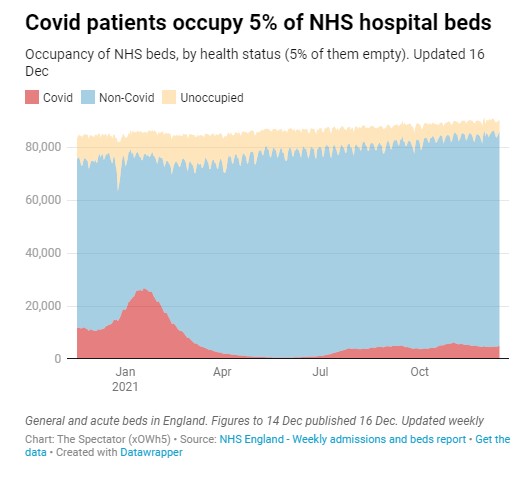
This is despite the fact that, as NHS Providers Chief Chris Hopson points out: “The overall numbers remain relatively low compared to the January 2021 peak – 1,819 Covid patients currently in London versus 7,917 on January 18th 2021.”
Let’s bear in mind also that last winter an internal NHS briefing, again leaked to the Health Service Journal, claimed that under the “best” scenario London would have a shortfall of 1,515 general and acute beds by January 19th. Yet the briefing also stated London has 15,600 general and acute beds, which is almost double what turned out in fact to be the peak Covid winter occupancy of 7,917 beds on January 18th.
Nationally, at the winter peak on January 18th there were 8,696 unoccupied beds, 26,902 beds occupied by Covid patients and 50,204 beds occupied by non-Covid patients.
It’s also worth remembering that the NHS has a beds crisis every winter, as this selection of Guardian headlines illustrates. (See also the image at the top of headlines from the 2017-18 winter crisis.)
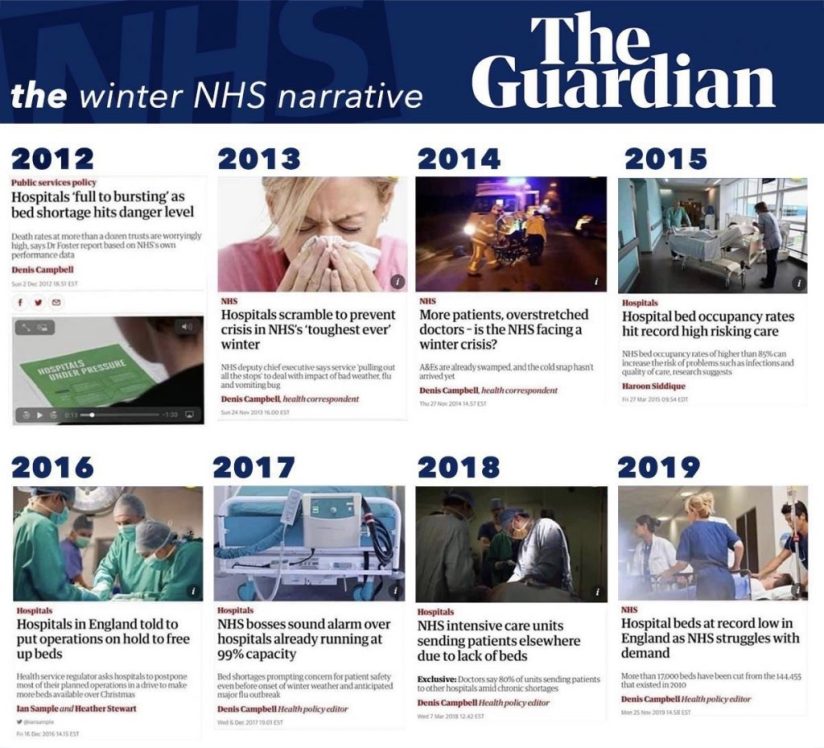
Yet the NHS coped, just as it did last year when almost no one was vaccinated. If there are systemic capacity problems in the NHS which mean it can’t get through winter without cancelling elective procedures then those need to be addressed. But it should go without saying that this is no excuse to impose costly, illiberal restrictions on society.
Civil liberties should not be so cheap that they may be suspended to make up for the failings of a poorly managed health service with insufficient resources committed to frontline services.
Sen. Johnson Requests Records From Top Medical Journals on Retracted Studies, Including Flawed HCQ Study
The Defender | December 21, 2021
Sen. Ron Johnson (R-Wis.) has written to The Lancet and The New England Journal of Medicine seeking records on two retracted studies from mid-2020. Johnson particularly called out The Lancet study, which suggested hydroxychloroquine could boost the risk of death in COVID patients.
“Although this fraudulent study was ultimately retracted, it is concerning and shameful that, in the midst of a pandemic, The Lancet published such a misleading paper on a potential early treatment for COVID-19,” said Johnson, the ranking member on the Permanent Subcommittee on Investigations, in a letter dated Dec. 14.
Johnson seeks all records of the journals’ communication on the two studies, including communication with the papers’ authors; U.S. government employees; individuals who encouraged the studies’ publication; and the supplier of the two studies’ datasets, Surgisphere, a healthcare analytics company.
Despite The Lancet paper’s retraction, its initial publication halted trials on hydroxychloroquine’s use and sullied its reputation more broadly. The Washington Post and other major media headlined the increased risk of death, and health authorities took action globally within days of the paper’s publication.
The World Health Organization and the UK’s drug regulator halted trials of the drug in COVID settings. France reversed an earlier decision to allow hydroxychloroquine’s use in COVID patients.
Readers of The Lancet quickly noted the study cited implausibly high numbers of COVID cases in 2020, and journalists failed to find any hospitals that had contributed data, despite the study’s claim that more than 96,000 hospital patients participated.
The Lancet retracted the study two weeks after publication.
Sen. Johnson also requested information from The New England Journal of Medicine (NEJM) on another study retracted in June 2020.
Johnson explained in his letter, the NEJM paper reportedly found that “taking certain blood pressure drugs, including angiotensin-converting enzyme (ACE) inhibitors, didn’t appear to increase the risk of death among COVID-19 patients, as some researchers had suggested.”
However, the study’s authors wrote to the NEJM a few weeks after the study was published, acknowledging they could not validate the primary data supporting the study and apologized “to the editors and to readers of the Journal for the difficulties that this has caused.”
Johnson has requested all records by Jan. 4, 2022.
© 2021 Children’s Health Defense, Inc. This work is reproduced and distributed with the permission of Children’s Health Defense, Inc. Want to learn more from Children’s Health Defense? Sign up for free news and updates from Robert F. Kennedy, Jr. and the Children’s Health Defense. Your donation will help to support us in our efforts.
Doctors Told To Prescribe Less Antidepressants Because They Don’t Work
By Richie Allen | December 21, 2021
A review has found that there is little evidence that antidepressants are effective and that doctors should prescribe them less frequently and for shorter time periods. One in six adults in the UK were on antidepressants in 2020.
According to The Times :
…. many patients had side effects and withdrawal symptoms, which could be severe, researchers said.
Trial data had failed to show a “clinically relevant” difference between the drugs and a placebo, according to the findings, published online in the Drug and Therapeutics Bulletin.
An estimated 7.8 million people in England — roughly one adult in six — were given at least one prescription for antidepressants in 2019-20. Rates were 50 per cent higher in women and the number of youngsters aged between 12 and 17 who were prescribed the drugs more than doubled between 2005 and 2017.
The researchers, from University College London and Royal Cornwall Hospitals NHS Trust, said the balance between benefit and harm from the drugs was uncertain and that “we should revisit the widespread — and growing — prescription of antidepressants”.
Doctors have known for years that antidepressants are useless and come with potentially harmful side-effects. Why do they continue to prescribe them then?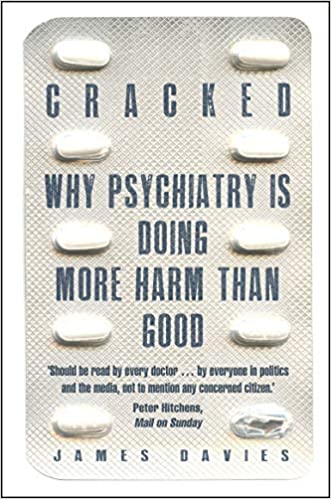
Dr. James Davies is the author of “Cracked: Why Psychiatry Is Doing More Harm Than Good.” Back in 2014, he told Channel 4:
“The so-called advantages of these medicines have been oversold and overplayed by the pharmaceutical industry and by members of the medical profession who have been recruited by the industry to sell up the advantages to other doctors and to their patients.
This has led to a belief that people in the general public tend to have that these pills tend to work. They don’t work better than placebo for most people.
I think what we have seen is a cultural shift in how we manage and respond to emotional discontent. There is a growing suspicion of emotional discontent and a growing need to get rid of it as soon as possible. Pills seem to offer us a solution.
Most people taking antidepressants are not mentally ill. They are suffering from natural, normal – albeit painful – human responses to the different things they have got themselves caught up in – things that these medicines were never designed to treat.
People are presenting to their GPs with common life problems and the GPs don’t want to send them away empty-handed.”
GP’s who prescribe antidepressants, simply because they don’t want to send a patient home empty-handed, should be struck off. Those GP’s are little more than drug dealers.
Davies is right. The pharmaceutical industry has oversold and overplayed the benefits of antidepressants. In fact, they’ve lied about the benefits. They know their drugs don’t work. They’ve spent billions bribing legislators and regulators to get their useless and dangerous drugs approved in every country in the world.
These are the same gangsters pushing covid jabs today. How could you possibly believe them when they declare their jabs to be safe and effective?
I don’t.
Complaint to Ofcom

Source: BIT
By Laura Dodsworth | 21st December 2021
Dear Melanie Dawes,
We are writing to alert you to a broadcast license complaint we have made about Sky UK. Our complaint concerns a partnership between Sky and Behavioural Insights U.K., Known as the Behavioural Insights Team (BIT), a limited company partly owned by the Government. We believe this partnership – and, in particular, Sky’s adoption of BIT’s recommendations about how to help the Conservative Government successfully implement one of its most political contentious policy, namely, Net Zero – contravenes the Broadcasting Code.
The partnership we’re referring to resulted in the publication of ‘The Power of TV: Nudging Viewers to Decarbonise their Lifestyles’ and the launch of Sky’s ‘Sky Zero’ campaign, which recommended that broadcasters make use of “behavioural science principles”, including subliminal messaging (“nudging” in the parlance of BIT, which is colloquially known as the Nudge Unit), to encourage viewers to endorse and comply with Conservative Government policy. Alarmingly, the report recommends broadcasters utilize sophisticated psychological techniques to change the behaviour of children “because of the important influence they have on the attitude and behaviours of their parents”.
Summary
We are concerned that this partnership and Sky’s adoption of BIT’s recommendations:
- Will affect the political impartiality of news and wider programming on Sky’s channels;
- Reveals an inappropriate relationship between a company which, when the report was published, was part owned by the U.K. Government, and a licensed U.K. broadcaster. Sky referred to BIT as “independent” in its video to promote this partnership, yet Sky will be aware that BIT was at the time part owned by the U.K. Cabinet Office. Until the Cabinet Office’s share was bought by NESTA earlier this month, the company was commonly referred to as “the Government’s Nudge Unit” and advised the Government on how to influence the public using sophisticated psychological techniques, particularly when it comes to getting people to comply with Government policies;
- Is an attempt to affect viewers’ attitudes and behaviour, including those of children, through the use of indirect, subliminal messaging (“nudging”) with a view to securing their support and compliance with one of the most politically contentious policy of the Conservative Government, namely, Net Zero.
- Reveals a historic relationship between behavioural scientists employed by the U.K. Government and broadcasters to promote Government policies: “behaviour change via broadcasting and traditional media has historically been aimed at improving public health, boosting gender equality, and reducing violence. Imagine the potential for emissions reductions if the same methods were used to encourage sustainable behaviours!” This historic relationship warrants further investigation since it may include historic breaches of the Broadcasting Code by Sky and other broadcasters.
The Complaint
Below are the specific contraventions of Ofcom’s Broadcasting Code that we are concerned about:
2.11 Broadcasters must not use techniques which exploit the possibility of conveying a message to viewers or listeners, or of otherwise influencing their minds without their being aware, or fully aware, of what has occurred. [Section two: Harm and Offence, The Broadcasting Code.]
The jointly-published report by BIT and Sky reveals their intention to subtly influence viewers’ attitudes and behaviour in indirect, subliminal ways by using sophisticated psychological techniques based on behavioural science. The aim is to change viewers minds, including the minds of children, about a politically contentious issue by using these techniques so viewers aren’t fully aware that an attempt is being made to change their minds. The underlying assumption is that this subtle, indirect messaging is a more effective way of changing people’s attitudes and behaviour than more overt messaging since the messages will be absorbed semi-consciously – catching viewers off guard, as it were, and bypassing their critical faculties. The use of this “nudging” would be less objectionable if these techniques were being recommended to promote an apolitical, uncontentious agenda. But the recommendation of the joint report is that these sophisticated psychological techniques be used to persuade viewers to endorse one of the Conservative Government most politically contentious policies, namely, Net Zero.
The foreword to the report, authored by David Halpern, the CEO of BIT, says:
Societal-level behaviour change is needed to tackle climate change… From changing what we buy and what we eat, to changing the technologies we use to heat our homes and travel, reaching Net Zero is conditional on large numbers of people taking up green behaviours and products.
Broadcast organisations and content creators therefore have a unique opportunity to make a difference for the planet. Through the programs that they produce, the characters that they create, the plot-lines that they develop, and the adverts that they broadcast, content creators have the potential to have a far-reaching impact on the knowledge, attitudes and behaviours of citizens, and to spark conversations in boardrooms and political arenas alike. They are also pivotally placed to help people sift through the maze of choices and claims, to adopt behaviours – and products – that can get us to a greener future.
The BIT report goes on to recommend a variety of subtle psychological techniques that broadcasters can use to promote this agenda, including using celebrities, on-screen presenters and dramatic characters as “role models”, e.g. advocates for the Net Zero policy, plot-lines, product placement, and editorially endorsing the Net Zero policy in news and current affairs programmes, as well as in drama programmes, travel programmes, DIY programmes and cookery programmes. Indeed, no area of Sky’s output across its various channels is to be left unaffected by this agenda.
Dana Strong, Group Chief Executive, Sky, agrees with this aim. She says in her foreword:
As Europe’s largest media and entertainment organisation, we also want to accelerate our industry’s efforts to drive global progress towards net zero.
However, it is now widely accepted that we must shift the behaviour of millions of people to deliver on our collective net zero goals…
We know that what we broadcast has the power to change how we as consumers feel and act. What we see on our screens can shock us, inspire us, educate us, and entertain us. [Our emphasis.]
5.1: News, in whatever form, must be reported with due accuracy and presented with due impartiality. [Section five: Due impartiality and due accuracy, The Broadcasting Code.]
The report suggests that, “Audiences’ knowledge on what to do and how can be improved by documentaries; DIY, travel, and cookery shows; and news coverage.”
This is an explicit call for broadcasters to encourage viewers to comply (“what to do and how”) with a controversial Conservative Government policy in news programmes, which is a breach of the Broadcasting Code’s “due impartiality” requirement.
In addition, the Climate Content Pledge (undertaken by 12 major U.K. media companies, including Sky) promises:
We will incorporate climate change considerations into all our editorial processes, informed by science and behavioural insight.
It is a breach of the “due impartiality” requirement for “climate change considerations”, e.g. promotion of the Government’s Net Zero policy, to be woven into all editorial processes, which include those in news and current affairs.
5.5: Due impartiality on matters of political or industrial controversy and matters relating to current public policy must be preserved on the part of any person providing a service (listed above). This may be achieved within a programme or over a series of programmes taken as a whole. [Section five: Due impartiality and due accuracy, The Broadcasting Code.]
As well as news and current affairs, other programming – such as DIY, travel and cookery programmes – must maintain “due impartiality on matters of political and industrial controversy and matters relating to current policy”. Yet the joint report by BIT and Sky encourages broadcasters to persuade viewers to comply with a controversial political (and industrial) policy, namely, Net Zero, which is a breach of this requirement. No balance of views and opinions or debate about this controversial Government policy is proposed, only suggestions as to how best to get viewers to change their attitudes and “behaviours” to align with the policy.
5.12: In dealing with matters of major political and industrial controversy and major matters relating to current public policy an appropriately wide range of significant views must be included and given due weight in each programme or in clearly linked and timely programmes. Views and facts must not be misrepresented. [Section five: Due impartiality and due accuracy, The Broadcasting Code.]
A commitment to promoting the Conservative Government’s goal of Net Zero will necessitate the exclusion of a wide range of alternative views, including those of numerous members of Parliament, other elected representatives, as well as distinguished climate scientists, experts on energy policy and environment correspondents. Excluding or marginalizing people who dissent from the Net Zero policy is surely a breach of this requirement. Broadcasters have an obligation to ensure viewers are exposed to a wide range of different viewpoints about this politically contentious policy.
9.1: Broadcasters must maintain independent editorial control over programming. [Section nine: Commercial references on TV, The Broadcasting Code.]
The report’s suggestion – that U.K. broadcasters incorporate the recommendations of a company partly owned by the U.K. Government, as it was at the time – implicitly undermines independent editorial integrity.
Product placement
The report recommends product placement to encourage people to support the Net Zero policy. Below are two examples:
Product placement directly impacts behaviour, it can influence key outcomes such as brand attention, knowledge, interest, recall, recognition, and purchase intent, which is encouraging for the potential impact that background green content could have on viewers. This can be explained by the “mere exposure effect”, where people often develop preferences for things simply because they are familiar with them.
Use green product placement and model green actions in the background to improve familiarity, create positive attitudes and norms.
This contravenes Ofcom’s rules which state that “product placement must not impair broadcasters’ editorial independence and must always be editorially justified. This means that programmes cannot be created or distorted so that they become vehicles for the purposes of featuring product placement.”
Conclusion
We find the collaboration between a major U.K. broadcaster and a company that was part-owned by the Cabinet Office until earlier this month to promote one of the most politically contentious policies of the current Conservative Government deeply alarming. The report jointly published by BIT and Sky seems to be unaware of the obligations imposed on broadcasters by the Broadcasting Code to maintain “due impartiality” across all their output, particularly news and current affairs, and the need to expose viewers to a wide range of views when it comes to “matters of major political and industrial controversy and major matters relating to current public policy”. On the contrary, Sky recommends that all U.K. broadcasters adopt a hard editorial bias when it comes to the promotion of the Government’s controversial Net Zero policy, and proudly boasts that it is adopting these recommendations itself.
We are particularly concerned about Sky’s enthusiastic embrace of subtle and sophisticated psychological techniques, rooted in behavioural science, to promote endorsement of and compliance with the Net Zero policy, as well as its evangelism in trying to get other broadcasters to use these techniques. To take just one example, the use of product placement to try and influence viewers’ attitudes and behaviour towards this controversial policy is a flagrant breach of Section Two of the Broadcasting Code, which explicitly prohibits the use of “techniques which exploit the possibility of conveying a message to viewers or listeners, or of otherwise influencing their minds without their being aware, or fully aware, of what has occurred”. Far from being concerned that the use of product placement may persuade viewers to endorse a politically controversial policy without their being fully aware of it, BIT and Sky appear to be recommending its use for precisely that reason. The recommendation in the report that such techniques are deployed to change the behaviour of children – and the implication that Sky is currently doing precisely that across all its channels – is unconscionable.
We hope you will investigate our complaint with the urgency we believe it merits.
Yours sincerely,
Laura Dodsworth
Toby Young
CC: The RT Hon Nadine Dorries MP, Secretary of State for Digital, Culture, Media and Sport; Lucy Powell MP, Shadow Secretary of State for Digital, Culture, Media and Sport
“Do Not Discriminate” Against the Unvaccinated, Japanese Government Tells Citizens
By Noah Carl | The Daily Sceptic | December 21, 2021
At this point, almost all Western countries have introduced some form of vaccine passport or vaccine mandate. Despite repeated assurances from the Vaccines Minister that this wouldn’t happen here, Britain is no exception.
Things may go further in some European countries. Austria is set to make vaccination mandatory from 1st February next year. And beginning in January, Greece will impose a monthly fine of €100 on all over 60s who remain unvaccinated.
Even the United States – supposedly the ‘land of the free’ – has not bucked the trend toward use of passports and mandates. Several states have introduced them, including some of the biggest like New York, California and Virginia. Healthcare workers with natural immunity have already been fired for refusing to comply.
You might conclude that introducing passports and mandates is just something that all advanced countries do. But that isn’t true, as there’s one major exception: Japan.
Nobody can doubt Japan’s credentials as an advanced country. It’s a member of the ‘Group of Seven’, along with the U.K., U.S., Canada, France, Italy and Germany. And it boasts the world’s third largest economy overall. Japan is known for its technologically advanced society, where the high-speed trains never run more than a few minutes late.
So what is the country’s stance on passports and mandates? So far, it’s completely eschewed them. Not only that, but the Government and Prime Minister have explicitly told citizens not to discriminate against the unvaccinated.
The following notice appears on the website for the Ministry of Health, Labour and Welfare:
Although we encourage all citizens to receive the COVID-19 vaccination, it is not compulsory or mandatory. Vaccination will be given only with the consent of the person to be vaccinated after the information provided. Please get vaccinated of your own decision, understanding both the effectiveness in preventing infectious diseases and the risk of side effects. No vaccination will be given without consent. Please do not force anyone in your workplace or those who around you to be vaccinated, and do not discriminate against those who have not been vaccinated.
And a similar notice appears on the website for the Prime Minister:
Vaccines will never be administered without the recipient’s consent. We urge the public never to coerce vaccinations at the workplace or upon others around them, and never to treat those who have not received the vaccine in a discriminatory manner.
Western countries still claim to be the foremost defenders of civil liberties. But in the era of Covid safetyism, it seems that mantle has passed to Japan. Perhaps the country will send a delegation of human rights experts to teach the West about individual freedom.
Debbie Hicks Cleared of Breaching UK Lockdown Restrictions

By Toby Young | The Daily Sceptic | December 20, 2021
Debbie Hicks, the anti-lockdown activist who is facing a number of attempts to prosecute her for protesting in various ways, was found not guilty earlier today in Cheltenham Magistrates Court. BBC News has more.
A woman who helped to organise a rally during lockdown has been found not guilty of breaching Covid regulations.
Debbie Hicks attended the Freedom Rally in Stroud, Gloucestershire, in November 2020.
The free speech activist was arrested on the day and faced two charges relating to lockdown regulations.
A district judge has found her not guilty and said police were incorrect to act as though there was a blanket ban on protests at the time.
Cheltenham Magistrates Court was told the Freedom Rally took place in Stratford Park on November 7th, two days after the latest round of lockdown regulations had come into effect.
Those regulations banned gatherings of more than two people.
More than 50 people attended the rally and police, who identified Ms. Hicks as an organiser – something she denied – approached her and told her she might be arrested if she did not leave.
Ms Hicks, who said she was not against vaccinations but wanted to take part in the rally to support “freedom to protest”, remained at the scene and was eventually arrested.
PC Tim Burch, from Gloucestershire Police, told the hearing that officers had been briefed that the rally was “not reasonable” because of the lockdown restrictions coming in.
Ms Hicks, of Stratford Road, Stroud, faced two charges; holding or being involved in a gathering of more than 30 people, and participating in a gathering of more than two people.
She said she was exercising her rights under the European Convention of Human Rights articles 10 and 11 – that deal with freedom of expression and freedom of assembly.
“I felt human rights superseded that [lockdown] and it was my right to be there to protest,” she told the court, adding that she was “shocked” by the level of policing on the day.
Clearing her of both charges, District Judge Nicholas Wattam said while the evidence proved she was one of the event organisers, he found the police response to the rally was “not proportionate”.
“I’m concerned that the understanding of police officers on the ground was flawed,” he said, adding that it was not the fault of the police at the event as they were taking their instructions from senior officers.
The judge added that a blanket ban on public gatherings was not in place at the time, and if it had been it would have been a breach of human rights.
Debbie was only able to fight this case because readers of the Daily Sceptic generously contributed to her crowdfunder, meaning she could afford a crack legal team from Murrays Partnership. Wish Debbie luck – she still has four more cases to fight.
Featured Video

Spain train disaster raises questions over Israeli-linked security contractors
or go to
Aletho News Archives – Video-Images
From the Archives
Are There 50,000 ‘Israeli-born’ Individuals Living in the UK?
By Professor David Miller | August 18, 2026
Recent disclosures by the Zionist regime show that some 2,069 British nationals were serving in the IDF as of March 2025, according to Freedom of Information (FoI) requests submitted to the occupation forces (1,686 dual British-Israeli, plus 383 multinational). We cannot tell from the figures how many of these were already settler colonists and intend to stay in the colony, and how many will return or have returned to the UK. Presumably, those returning to the UK will number far fewer than 2,000, since many are known to have become permanently residents of the colony.
Additionally, the IDF figures only provide a snapshot, and do not tell us how many have served in the Jewish supremacist military either before or after March 2025. One way into the question of how many genocidaires are living in Britain is to ask how many current British residents were born in the Zionist colony. There is data on that, as we shall see. … continue
Blog Roll
 Aletho News
- Europe, US face higher heating bills amid Iran war fallout
- The Leak That Arrived Right on Cue
- No, New York Times, California’s Climate Has Always Been a Land of Flood, Drought, and Fire
- Are There 50,000 ‘Israeli-born’ Individuals Living in the UK?
- German CDU MPs Seek Climate “Misinformation” List
- The ‘Gaza Treatment’: How Media Headlines Obscure Who is Bombing Yemen
- Ro Khanna urges Democrats to strip Israel ‘integration’ provision from defense bill
- Why Iran designated British MI6, Royal Navy, and RAF as hostile, terrorist organizations
- Armenian opposition politician dies in custody
- US still trying to recycle failed hypersonic missile programs
- If Americans Knew
- An error has occurred; the feed is probably down. Try again later.
- No Tricks Zone
- German Authorities Start Initiative To Evaluate Public Register For Climate “Disinformation” Spreaders!
- Zonal Asymmetry of Temperature Change in the Antarctic Circumpolar Current
- New Study: The Net Fossil Fuel Contribution To Rising Atmospheric CO2 Has Been Zero For 500 Years
- Germany’s Green Energy Transition Becoming Increasingly Expensive…Another 6 Trillion Euros!
- Sudden Stratospheric Warming, Powerful El Niño Combination May Lead To Extreme Europe Cold, Energy Crisis!
- Two New Studies Find Thwaites Glacier Melt Cannot Be Driven By Human Activity Or A Warming Ocean
- E-Cars Reduce CO2 Emissions By Only 41% Compared To Internal Combustion Engine Vehicles
- Predictions Made By Renowned Climate Professor Over Past Decades Have Been Proven To Be Poor
- New Study Suggests Large Regions Of The Pacific Ocean Have Been Cooling For The Last 80 Years
- Germany’s Green Energy Debacle: High Energy Costs Force Kahla Porzellan to Close After 182 Years!

