Photoshopping, fraud and circular logic in research

By Mike Hearn | Daily Sceptic | July 22, 2021
It is simply no longer possible to believe much of the clinical research that is published, or to rely on the judgement of trusted physicians or authoritative medical guidelines. I take no pleasure in this conclusion, which I reached slowly and reluctantly over my two decades as an editor of the New England Journal of Medicine.
Check out this image from a peer reviewed research paper that supposedly shows skin lesions being treated by a laser:

Left: before treatment for keratoses. Right: after they were airbrushed out. (image diff is available here)
On being challenged the authors said:
The photograph was taken in the same room with a similar environment; unfortunately the patient wore the same shirt.
The journal found this explanation acceptable and forwarded the response to the complainants.
It’s becoming clear that science has major difficulties with not only a flood of incorrect and intellectually fraudulent claims, but also literally faked, entirely made up papers with random data, imaginary experiments and photoshopped images in them. Some of these papers are sold by organised gangs to Chinese doctors who need them to get promoted. But others come from really sketchy outfits like (sigh) the National Health Service, to whom we owe the masterpiece seen above.
The British Government hasn’t noticed that its doctors are massaging medical evidence. Instead this example comes from Elizabeth Bik, who runs a blog where she and a few other volunteers try to spot clusters of fraudulent papers. She embarrassed the journal in public here, and the paper was finally retracted. But she’s just a volunteer who raises money on Patreon for her work. Here’s her assessment of what’s going on:
Science has a huge problem: 100s (1000s?) of science papers with obvious photoshops that have been reported, but that are all swept under the proverbial rug, with no action or only an author-friendly correction… There are dozens of examples where journals rather accept a clean (better photoshopped?) figure redo than asking the authors for a thorough explanation.
As the only people trying to spot these fake papers are bloggers, we can safely assume that far larger numbers of papers are fake than the “thousands” they have already found and reported. For example,
0.04% of papers are retracted. At least 1.9% of papers have duplicate images “suggestive of deliberate manipulation”. About 2.5% of scientists admit to fraud, and they estimate that 10% of other scientists have committed fraud.
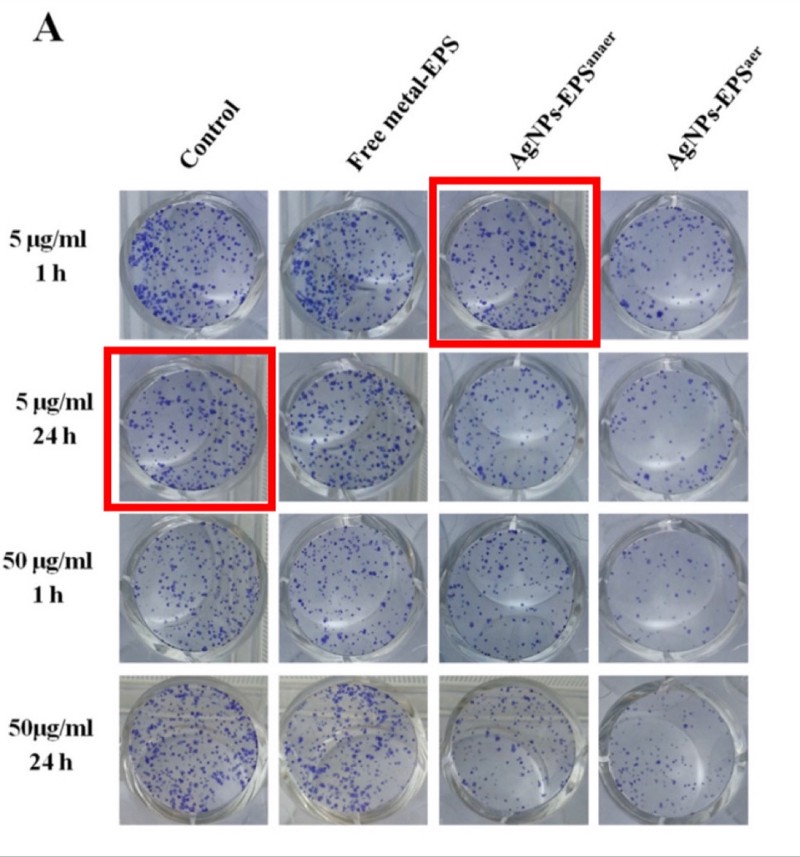
Photos of supposedly different samples in which two images are identical. From “Anticancer activity of biogenerated silver nanoparticles: an integrated proteomic investigation”. The journal investigated and concluded that this is fine.
It’s been known for years that a lot of claims made by scientists can’t be replicated. In some fields, the majority of all claims appear to not replicate due to a large mix of issues like overly lax thresholds for claiming statistical significance, poor study design and other somewhat subtle errors. But how much research is deliberate falsehood?
The sad truth is the size of the fraud problem is entirely unknown because the institutions of science have absolutely no mechanisms to detect bad behaviour whatsoever. Academia is dominated by (and largely originated) the same ideology calling for the total defunding of the police, so no surprise that they just assume everyone has absolute integrity all the time: research claims are constantly accepted at face value even when obviously nonsensical or fake. Deceptive research sails through peer review, gets published, cited and then incorporated into decision making. There are no rules and it’d be pointless to make any because there’s nobody to enforce them: universities are notorious for solidly defending fraudulent professors.
So let’s turn over the rock and see what crawls out. We’ll start with China and then turn our attention back to more western types of deception.
Chinese fraud studios
In 2018, the U.S. National Science Foundation announced that: “For the first time, China has overtaken the United States in terms of the total number of science publications.” Should the USA worry about this? Perhaps not. After some bloggers exposed an industrial research-faking operation that had generated at least 600 papers about experiments that never happened, a Chinese doctor reached out to beg for mercy:
Hello teacher, yesterday you disclosed that there were some doctors having fraudulent pictures in their papers. This has raised attention. As one of these doctors, I kindly ask you to please leave us alone as soon as possible… Without papers, you don’t get promotion; without a promotion, you can hardly feed your family… You expose us but there are thousands of other people doing the same. As long as the system remains the same and the rules of the game remain the same, similar acts of faking data are for sure to go on. This time you exposed us, probably costing us our job. For the sake of Chinese doctors as a whole, especially for us young doctors, please be considerate. We really have no choice, please!
Note the belief that “thousands of other people” are doing the same, and that these doctors need more than one paper to keep being promoted, so the 600 found so far is surely the tip of an iceberg given China’s size. There are about 3.8 million doctors in China implying that there are quite possibly tens of thousands, maybe hundreds of thousands of these things in circulation.
The fake papers are remarkable:
- They are so good they are undetectable in isolation. The NHS photo is an aberration – normally these papers get spotted by noticing re-used technical images across papers that claim to be different experiments by different people. The fake papers are probably produced by real scientists with access to real lab equipment. The use of spammy-looking Gmail accounts is also a signal because Gmail is banned in China (e.g.
BrendaWillingham12192@gmail.com,RosettajKirkland3814@gmail.com,CaseyPeiffer8311@gmail.com). The reliance on bot-generated Gmail accounts implies enormous scale. - They are peer reviewed and published in western journals. For instance, the Journal of Cellular Biochemistry by Wiley or Biomedicine & Pharmacotherapy by Elsevier. They claim to be doing advanced micro-biology on serious diseases: a typical title is something like “MicroRNA-125b promotes neurons cell apoptosis and Tau phosphorylation in Alzheimer’s disease”. Journals have no way to detect these papers and aren’t trying to develop any.
- Some of them present traditional Chinese medicine as scientific. TCM is more or less the Chinese equivalent of homeopathy with lots of herbal remedies, eating body parts of exotic animals to cure erectile dysfunction, and so on. But the Chinese Government is obsessed with it and thinks it’s the same as normal medicine. From the top down, Chinese scientists are expected to produce papers claiming that TCM works, and they do! Mostly this stuff stays in Chinese but the ever increasing reliance of western universities on Chinese funding means it’s now finding its way into the English language literature as well, e.g. “Probing the Qi of traditional Chinese herbal medicines by the biological synthesis of nano-Au” was published by the Royal Society of Chemistry.

Advert by a research faking operation. Credit to “Smut Clyde” and “TigerBB8”.
Most western scientists are too clever to buy a completely fake paper (or so we hope). But their promotion incentives are identical, and there are other techniques that let you publish as many fake papers as you want. Let’s turn our attention to…
Impossible numbers in western science
The case against science is straightforward: much of the scientific literature, perhaps half, may simply be untrue.
Richard Horton, editor of the Lancet
How many scientists just make up their data? A well known recent case of this was the Surgisphere scandal, in which a paper appeared in The Lancet that claimed to be based on a proprietary dataset of nearly 100,000 COVID-19 patients across over 670 U.S. hospitals. This figure was larger than the official case counts of some entire continents at the time, and there was no reason for hospitals to share tightly controlled medical data with a random company nobody had heard of, so the claim was implausible on its face. Sure enough, when challenged it turned out none of the authors had ever actually seen the data, just summaries of it provided by one guy, who on investigation had a long track record of dishonesty. The Lancet probably accepted this paper because it made Trump look bad and the editor (Horton, quoted above) appears to hate Trump more than he hates bad science.
There are some other cases like this that came to light over the years, like the story of Brian Wansink, or that of Paolo Macchiarini, who left a trail of dead patients in his wake. But while anecdotes about individual cases are interesting, can we be more rigorous?
One clue comes from automated tools that scan research papers looking for mathematically impossible numbers, which can sometimes be detected even in the absence of the raw original data. In recent years a few such tools have been developed and deployed, mostly against psychology and food science.
- The statcheck program showed that “half of all published psychology papers… contained at least one p-value that was inconsistent with its test”.
- The GRIM program showed that of the papers it could verify, around half contained averages that weren’t possible given the sample sizes, and more than 20% contained multiple such inconsistencies.
- The SPRITE program detected various experiments on food that would have required subjects to eat implausible quantities (e.g. a child needing to eat 60 carrots in a single sitting, or 3/4 kilogram of crisps).
Being flagged by a stats checker doesn’t guarantee the data is made up: GRIM can detect simple mistakes like typos and SPRITE requires common sense to detect that something is wrong (i.e., no child will eat a plate of 60 carrots). But when there are multiple such problems in a single paper, things start to look more suspicious. The fact that half of all papers had incorrect data in them is concerning, especially because it seems to match Richard Horton’s intuitive guess at how much science is simply untrue. And the GRIM paper revealed a deeper problem: more than half of the scientists refused to provide the raw data for further checking, even though they had agreed to share it as a condition of being published. This is rather suspicious.
One of the difficulties with detecting scientific fraud is that the line between dishonesty and simple absurdity can get quite blurry. Sometimes scientists “calculate” data that is clearly wrong, but don’t actually try to hide or it may even admit to it in the paper, knowing full well that nobody cares and nonsensical data won’t actually matter. Here’s an example from a COVID modelling paper:
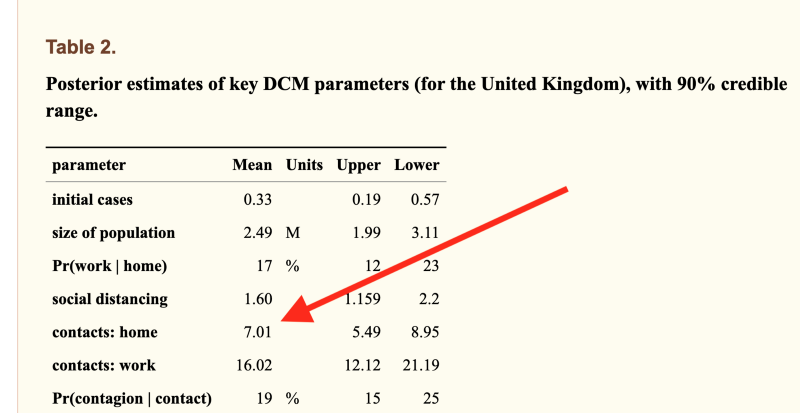
The model was allowed to calculate that the average Brit must live with 7 other people, because it couldn’t obtain data fit otherwise (actual number=2.4). This one comes from University College London, is written by 12 neuroscientists, passed peer review and has 37 citations. The peer reviewer noticed that the incorrect number was in the paper but signed off on it anyway.
For decades psychiatrists published research into the “gene for depression” 5-HTTLPR. They created an entire literature not only linking the gene to depression but explaining how it worked, linking it to parenting styles, developing treatments based up on it. Over 450 papers were published on the topic. Eventually a geneticist discovered what they were doing and used DNA databanks to point out that none of those papers could possibly be true.
Sometimes numbers aren’t “wrong” but are instead logically vacuous. The Flaxman et al paper from Imperial College that tried to prove lockdowns work had the usual problem of statistically implausible numbers, but more importantly was built on circular logic: their model assumed only government interventions could end epidemics. This is obviously nonsense and they breezily admitted it in the paper, where they said their work was “illustrative only” and that “in reality even in the absence of government interventions we would expect Rt to decrease”. No problem: this fictional illustration got published in Nature and the authors presented the model’s outputs as scientific proof of their own assumption to the media. The paper is vacuous mathematical obfuscation, but scientists either can’t tell or don’t care: it has racked up over 1,300 citations and the number is still growing rapidly. To put that number in perspective, in physics the top 1% of all researchers have around 2,000 citations over their entire career.
Time to assume that health research is fraudulent until proven otherwise?
Earlier this month, the BMJ published an astounding blog post with the same title as this section. There’s no need to add anything because simply quoting it is sufficient:
The anaesthetist John Carlisle analysed 526 trials submitted to Anaesthesia and found that… when he was able to examine individual patient data in 153 studies, 67 (44%) had untrustworthy data and 40 (26%) were zombie trials… [Ben] Mol’s best guess is that about 20% of trials are false. Very few of these papers are retracted.
We have now reached a point where those doing systematic reviews must start by assuming that a study is fraudulent until they can have some evidence to the contrary.
Richard Smith
Richard Smith is a former editor of the BMJ, cofounder of the Committee on Medical Ethics (COPE), for many years the chair of the Cochrane Library Oversight Committee, and a member of the board of the U.K. Research Integrity Office.
Or put another way, an overseer of the Research Integrity Office believes research has no integrity.
What can be done?
600 fraudulent papers here, 450 over there, 1300+ citations of just one bad paper… pretty quickly it starts adding up.
We’re often told science is self-correcting. Is that true? Probably not. “The Science Reform Brain Drain” is perhaps the bleakest essay I’ve read this year. Reformers like the men who developed SPRITE and GRIM have been giving up and leaving science entirely. Pointing out in public that your colleagues are dishonest is never a great career move, and the work was often futile. One scientist who quit and went into industry summed up his fraud detection work like this:
The clearest consequence of my actions has been that Zhang has gotten better at publishing. Every time I reported an irregularity with his data, his next article would not feature that irregularity.
Even when a bull enters the China shop and gets a few papers retracted, it doesn’t actually matter because it has little effect: retracted papers keep getting cited for years afterwards and actually may be cited more than non-retracted papers, because one of the effects of retraction is that the article becomes free to download.
In the past year most talk of bad science has been about models with bad assumptions. This is an issue but has been hiding problems that are far worse: scientists are buying fake papers, Photoshopping evidence, refusing to upload their data, knowingly publishing numbers that cannot be correct, citing papers that were retracted for being fraudulent and (of course) presenting mathematical obfuscations of what they want to be true as if it were science. Journals usually ignore fraud reports entirely, or when put under pressure let scientists submit “corrected” versions of their papers. And worst of all, the journal editors that are responsible for scientific gatekeeping know all this is happening, but aren’t doing anything about it.
In fact, very little can be done because above all, universities rely on reputation and don’t want anyone to find out about bad behaviour, so they fight tooth and nail to protect academics no matter how badly they are behaving. There are no rules. Any rules that are alleged to exist turn out when tested to be illusions.
Claims made by scientists are automatically trusted by the majority of people. Maybe they shouldn’t be?
Mike Hearn is a former Google software engineer. You can read his blog at Plan 99.
British Disinfo Machine Out of Whack: The Guardian’s Trump-Russia ‘Bombshell’ Reeks of Forgery
By Ekaterina Blinova – Sputnik – 22.07.2021
The Guardian’s latest “bombshell” story about how President Vladimir Putin ordered Russian spies at a closed session of the National Security Council to use “all possible force” to make Donald Trump win in 2016 has not got as much media attention as it was apparently planned.
The article written, by Luke Harding, Dan Sabbagh, and Julian Borger appeared on The Guardian’s website on 15 July at 10:00 GMT. Another op-ed on the matter with a byline containing only Harding and Sabbagh was published on the same day at 17:05 GMT. The news was also advertised in the website’s First Thing section on 15 and 16 July and yet, surprisingly, just a “few Western mainstream media outlets have written or reported on what they were all speculating and salivating about for all four years of the Trump presidency”, notes Mark Sleboda, a US military veteran and international affairs and security analyst.
Still, there’s an obvious explanation why the MSM has not taken the bait: the so-called “leak” smacks of an obvious bunk, according to the analyst, who outlines some obvious discrepancies in The Guardian’s “exposé”:
First, it’s absolutely unclear how the supposed “leaked docs” ended up in The Guardian’s hands: there is no chain of custody or explanation at all.
Second, despite The Guardian’s claims that Western intelligence agencies have had these documents for months, no Western government or intelligence agency, neither the British nor the Americans, has so much as made a comment or peep about it.
Third, almost universally native Russian speakers have noticed and called out numerous incidences of lexical awkwardness and mistakes in the snippets, suggesting that the text was written by a non-native Russian speaker with limited cultural fluency.
Fourth, the Russian National Security Council is a formal political body which is not designed for discussing sensitive clandestine operations.
Fifth, the President’s Expert Directorate headed by economist Vladimir Simonenko – named by The Guardian as the apparent author of the grand design to take over the US elections – in fact deals entirely with domestic matters, including the financing of the president and the presidential administration’s activities, as well as collecting, analysing and preparing materials for the president’s annual addresses.
Sixth, the alleged secret meeting took place in January 2016 when Donald Trump was not even considered as a serious presidential candidate, let alone the Republican nominee.
Seventh, the article is riddled with hedging words and expressions, papers “appear to show”, “documents suggest”, “assessed to be”, etc., as if the authors knew that they were peddling disinformation.
The Guardian report “reeks of disinformation operation”, former Director of Cybersecurity and Infrastructure Security Agency Chris Krebs remarked on 15 July. Krebs echoes another cybersecurity expert, Thomas Rid of John Hopkins University, who listed a series of issues with the “Kremlin leak” in a Twitter thread.
Many more former Western intelligence operatives and experts publicly questioned the documents’ veracity in both media and social media, including Director of Russian Studies at CNA Michael Kofman, former Information Security Specialist for GCHQ Matt Tait, and former US NSC staff Gavin Wilde.
Even Dmitri Alperovitch, a co-founder and former CTO of Crowdstrike, who groundlessly blamed “Russian hackers” for breaching DNC servers back in 2016, has weighed in, dismissing the “leak” as forgery.
What’s Behind the ‘Kremlin Leak’ Story?
On the surface, the “leak” appears to confirm practically every Russiagate fantasy and makes an oblique reference to unspecified “kompromat” on Trump – an apparent reference to ex-MI6 agent Christopher Steele’s “dirty dossier” on the then presidential candidate and his campaign, Sleboda points out.
The analyst highlights that one of the authors of The Guardian’s latest exposé – Luke Harding – has long been an ardent adept of the Steele dossier, despite the ex-British spook’s bizarre claims having neither been corroborated nor confirmed by Special Counsel Robert Mueller’s Trump-Russia investigation.
“There seems a likely possibility that these new ‘Kremlin documents’ like the previous Steele dossiers, were fabricated by British intelligence or elements within it, for the same purposes of discrediting Trump and preventing any, even faint, detente in US-Russian relations, whether under Trump or Biden”, suggests Sleboda.
The UK has played a special role in the Trump-Russia story: “There has long been a widely held belief by many because of the prominence of the Steele dossier during the whole Russigate episode that there was a significant degree of the British tail wagging the US political dog”, the analyst says.
Four years ago, Harding claimed that the UK intelligence service GCHQ became aware of “suspicious ‘interactions’ between figures connected to Trump and known or suspected Russian agents” as early as in 2015, well before their American counterparts. Citing unnamed sources in the UK intelligence community, the journalist presumed that British and EU spies collected information on Trump between late 2015 and summer 2016.
“It is understood that GCHQ was at no point carrying out a targeted operation against Trump or his team or proactively seeking information”, Harding asserted on 13 April 2017. “The alleged conversations were picked up by chance as part of routine surveillance of Russian intelligence assets”.
Furthermore, “[Harding] has previously claimed in The Guardian that British intelligence and Foreign Office was given the Steele dossier before it was sent to the United States and vouched for Steele’s ‘credibility’ in reference to it”, Sleboda remarks.
In 2021 alone, the British media has published a number of articles in support of Steele’s debunked narrative:
· in January, The Guardian ran an outlandish story of Trump being “cultivated” by the Soviet KGB for 40 years;
· in May, The Telegraph broke a story about a “second dossier” written by Steele during Trump’s presidency;
· four days prior to Harding’s “bombshell”, Guardian contributor Charles Kaiser tried to rehabilitate at least part of Steele’s “dirty dossier”, alleging that Trump aide Carter Page may have struck a lucrative deal with Russia’s Rosneft, something that wasn’t confirmed by Special Counsel Robert Mueller’s investigation.
The fact that Steele’s story is being kept alive in the British media would seem to indicate that the UK establishment is still backing Steele’s anti-Trump/anti-Russia disinformation campaign, the security analyst believes.
If the “Kremlin documents” were indeed deliberately planted by the UK intelligence elements to target Trump’s potential 2024 election bid as well as US-Russia relations under Biden, this is “an extremely important and dangerous situation”, according to Sleboda.
“It would mean that the British government and/or intelligence have repeatedly conducted active measures to manipulate and interfere in both US domestic elections and foreign policy, destabilising the US political system domestically and putting the entire world at risk by deliberately increasing tensions between the world’s two foremost nuclear armed powers”, he says. “There will likely be no investigation or accountability into this latest Guardian piece of disinformation about Russia in the Western MSM but there most certainly should and desperately needs to be one”.
UK law commission recommends making speech offenses based on “likely psychological harm”
The vague terms used to suppress speech
By Didi Rankovic | Reclaim the Net | July 22, 2021
Recommendations unveiled by the UK’s Law Commission are seeking to establish a new offense by criminalizing communications that could cause “likely psychological harms.”
Another offense that is recommended in the document concerns “knowingly false communications.” This is a serious threat to freedom of expression, and a chance for the authorities to get the last word on what is perceived as true and false.
The recommendation defines “harm” as something that causes “serious distress,” while “psychological harm” is also being mentioned. As for defining “serious distress” – the Commission refers to the Protection from Harassment Act 1997.
The proposed reforms are aimed at protecting victims of online abuse, but there are fears that the vague language and prioritizing subjective perception of speech over objective content could have dangerous consequences.
And the fact that identity and characteristics of the recipient of a communication is also given center stage leaves the door wide open for censorship based on identity politics.
Ironically, in presenting and explaining the recommendations, the Commission justifies them as necessary to right precisely the wrongs that critics are now pointing out this type of reform could introduce. Namely, the Commission says that rules that currently define what constitutes for serious crimes from online abuse are “vague” and sometimes interfere with free speech.
“Grossly offensive” and “indecent” are some examples of what the Commission sees as “vague” – and they would instead “clarify” matters by criminalizing “likely psychological harm.”
Earlier drafts of the recommendations even toyed with the idea of criminalizing communications that are perceived as causing “emotional distress.”
And the document’s authors claim that their take on how to better protect people from abuse online will actually protect freedom of expression more effectively. The rationale here is that the proposals would narrow the reach of the criminal law – rather than, as those critical of the whole thing say, set a very low threshold.
The organization’s Criminal Law Commissioner Penney Lewis is quoted as saying that the goal of the recommendations is to prevent “untold harm” that can arise from online behavior, singling out cyberflashing and pile-on harassment.
People found to be “knowingly” posting false communications would face criminal charges if their action is found to have caused “non-trivial emotional, psychological, or physical harm to the likely audience, without a reasonable excuse.”
US Used Military Bases in Afghanistan to Keep Watch on Entire Region, Russian Diplomat Says
Sputnik – 22.07.2021
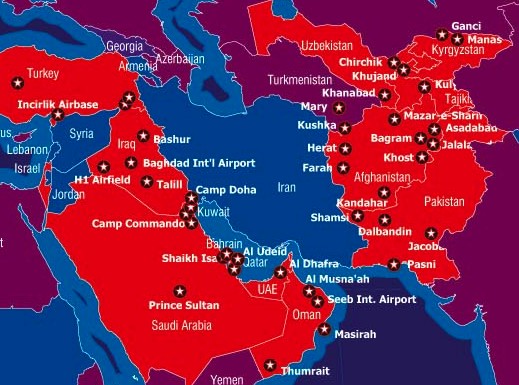
MOSCOW – Russia’s special presidential envoy for Afghanistan, Zamir Kabulov, said on Thursday that nearly half of the US military bases in Afghanistan were used to keep strategic tabs on the wider region.
“Of the 19 [US bases] that we know of, somewhat about seven or eight had nothing to do with Afghanistan and had nothing to do with the situation there”, Kabulov told the Echo of Moscow radio station.
The diplomat emphasised that the American contingents were conveniently placed in Afghanistan to be closer to the Middle East, Russia, Central Asia and China.
“[The US military] kept an eye on the Pakistani and Indian nuclear arsenal”, Kabulov added.
The United States and NATO began pulling their ground forces out of Afghanistan on 1 May. The withdrawal resulted in a flare-up of tensions between the government forces and the Taliban. The radical movement stepped up the territorial advances and is believed to have captured large rural areas in the country’s north.
Iraqi politicians slam Turkey’s interventionist remarks, vow strong response
Press TV – July 22, 2021
A number of Iraqi politicians and lawmakers have reacted to recent interventionist remarks by Turkish Interior Minister Suleyman Soylu during his recent visit to the city of Sirnak in southeastern Turkey, vowing a strong response to any infringement of the Iraqi sovereignty and territorial integrity.
According to a report by Rudaw news agency on Thursday, during his visit to Sirnak, the Turkish minister claimed that establishing peace in Muslim countries, including Iraq and Syria, was Turkey’s responsibility.
Soylu’s comment reverberated widely through social media platforms, enraging Iraqi people and politicians.
Ra’ad Hussein, representative of Saairun Alliance affiliated with Iraq’s influential cleric Muqtada al-Sadr, said the sovereignty of Iraq is beyond all considerations and the positions of the Sadr movement in this regard are clear.
“The Sadr movement is totally Iraqi and has no links to foreign countries, and it prefers the interests of Iraq over all interests, and to this end, the head of al-Sadr’s bloc decided to withdraw from the elections,” Hussein said.
“Our position is firm, which means that we will sever ties with any of the neighboring or regional countries if they do not have a positive attitude towards Iraq,” he added.
Hussein underlined that such statements, whether made by Turkish or other officials, are unacceptable and no one will ever be able to encroach on a single inch of Iraqi soil.
Iraqi Shia cleric Ammar al-Hakim took to Twitter on Wednesday, calling on neighboring countries to respect Iraq’s sovereignty.
Hakim, who heads Iraq’s National Wisdom Movement political bloc, said, “Achieving peace in the region and the world comes through the interaction of states among themselves in accordance with international covenants and cooperation based on the foundations of mutual relations and common interest.”
He added, “It is not allowed to compromise the sovereignty of Iraq and for its land to be infringed,” without making any direct reference to Turkey.
Meanwhile, Iraqi MP and member of the Law Coalition, Kadhem Finjan al-Hamami, reacted to Turkish minister’s remarks, saying that the Turkish provocations were not the first of its kind in clear reference to Turkey’s deforestation of Kurdish areas and the continuous attacks on the Iraqi territory under the pretext of fighting Kurdish separatists.
“There have been no reactions from the Iraqi government or the Kurdistan Regional Government (KRG) towards all these attacks on Iraqi lands,” he said, adding that the Turkish government believes that “Iraq and the neighboring countries are a subject of the Ottoman Empire.”
Whither Afghanistan? Getting Out Is Harder Than Getting In
By Philip Giraldi | Strategic Culture Foundation | July 22, 2021
The inability of the United States to comprehend what it was becoming involved in when, in the wake of 9/11, it declared a Global War on Terror, has to be reckoned one of the singular failures of national security policy over the past twenty years. Not only did the wars in Afghanistan and Iraq make bad situations worse, but the fact that no one is Washington was able to define “victory” and think in terms of an exit strategy has meant that the wars and instability are still with us. In their wake has been hundreds of thousands of deaths and trillions of dollars spent to accomplish absolutely nothing.
As a result, Iraq is unstable and leans more heavily towards America’s adversary Iran than it does to Washington. The Iraqi Parliament has, in fact, asked U.S. forces to leave the country, a request that has been ignored both by Donald Trump and Joe Biden. Trump actually threatened to freeze Iraqi bank assets to pressure the Iraqis into accepting the continued U.S. occupation. At the same time, American troops illegally present in neighboring Syria, continue to occupy that country’s oil fields to deprive the government in Damascus of much needed resources. Neither Iraq nor Syria threatens the United States in any way.
Given that history, it should be no surprise that the withdrawal from the twenty year-long nation building project in Afghanistan, long overdue, is not quite going as smoothly as the Pentagon and White House apparently planned. U.S. forces pulled out of their principal base in the country, Bagram Air Base, in the middle of the night without informing the incoming Afghan base commander. A frenzy of looting of the left behind equipment followed.
The Taliban are racking up victory after victory against U.S. and NATO trained Afghan government forces who have the disadvantage of having to defend everywhere, making them vulnerable to attacks on an opportunity basis. The Taliban now plausibly claim to control 85% of the countryside, to include crossing points into Pakistan and several important towns and provinces. They recently shocked observers by executing 22 Afghan Army commandos who had run out of ammunition and surrendered. The U.S. government is quietly expecting a similar fate for the thousands of Afghans who collaborated with the regime installed by Washington and is hurriedly arranging for visas to get the most vulnerable out, eventually seeking to resettle them in friendly Middle Eastern countries as well as in the U.S..
By one estimate as many as 18,000 Afghans worked for U.S. forces and they also have families that will have to go with them. There is particular concern that former interpreters, who would have been privy to decision making by Washington, will be most particularly targeted. The Biden White House has responded finally to the urgency of the issue – lives are at stake – by approving special flights to remove the most vulnerable to a third country for processing before determining if they can be allowed to take up residence in the United States or elsewhere.
To be sure, the struggle to rid the world of the wrong kind of terrorists has left the United States weaker and more unfocused than it was in 2001. China, Russia and Iran are already maneuvering to fill the impending power vacuum in Central Asia by coming to terms with the likely Taliban takeover, which might come sooner than Joe Biden expects. If some kind of Afghan coalition government does emerge, it will belong to Russia and China, not the U.S..
Meanwhile, the U.S. military itself, under the Biden Administration, is weaker and more riven by controversy than ever before. A recent 23-page report suggests that since Defense Secretary Lloyd Austin’s February order to “stand down” the entire U.S. military for commanders to address “extremism” in its ranks morale has sunk and many top soldiers have either retired or quit in disgust. During his confirmation hearings, Austin pledged that he would “rid our ranks of racists and extremists” but the reality is quite different, with the witch hunt in the ranks and endless promotion of diversity even hurting normal military readiness training.
By next month the U.S. military presence in Afghanistan will be reduced to a battalion of infantry to guard the Embassy and CIA station in Kabul, which is itself not sustainable unless some kind of workable Afghan government coalition can be achieved. Given the recent Taliban successes, that outcome appears to be increasingly unlikely. Maintaining the Embassy will also require a viable lifeline to the city’s airport and talks are underway with Turkey to determine if Ankara will be willing to base a stay behind battalion to maintain the air link. The Taliban have already announced that a Turkish presence at the airport will be unacceptable and warned Turkey that there would be revenge attacks against any remaining NATO troops after the U.S. pulls out. Their spokesman issued a statement declaring that “The continuation of Turkey’s occupation will provoke feelings of hatred and enmity in our country towards Turkish officials, and will harm bilateral relations.”
The U.S. is also seeking an over the horizon offensive capability once the military has formally left Afghanistan. The intention would be to be able to strike targets in Afghanistan if a new government forms any alliances with terrorist groups that potentially threaten the United States, as unlikely as that might be. At the present time, there are few options as the U.S. would not be able to launch cruise missile or airstrikes through the neighboring countries that surround Afghanistan to the south, east and west, though a long-distance strike from warships in the Persian Gulf is technically possible.
To the north there are, however, former Soviet central Asian states, the so-called “‘Stans,” that might be suitable for hosting some arrangement to base American equipment, aircraft and a caretaker force. Tajikistan, Kazakhstan, or Uzbekistan might be amenable to such a development, but both Tajikistan and Kazakhstan are members of the Russian-led Collective Security Treaty Organization (CSTO). On Monday, Russian Foreign Minister Sergey Lavrov said that any U.S. presence in a CSTO country would need the approval of the alliance, which the Kremlin will veto. One might suggest that there is mistrust about the reliability of Joe Biden and company as a strategic partner, even though there is widespread concern that Afghanistan might become a rogue state. Nevertheless, Washington’s bullying in Iraq, Syria and also against Iran has failed to convince anyone that the U.S. Air Force would make a good neighbor.
So getting out of Afghanistan will be a lot trickier than going in. The U.S. clearly wants to have some ability to intervene using air resources if the Taliban take over and misbehave, but that just might be a fantasy as the door is closing on options while China is waiting for its own door to open to bring the Afghans into their New Silk Road. And there is no escaping the fact that the entire Afghan adventure was one hell of a waste of lives and resources. Next time, maybe Washington will hesitate to charge in, but given the lack of any deep thinking going on in the White House, I suspect we Americans could easily find ourselves in yet another Afghanistan.
Taliban Claim Control of Some 90% of Afghanistan’s Border Areas
Sputnik – 22.07.2021
The Taliban controls approximately 90% of Afghanistan’s border with neighbouring countries, Zabiullah Mujahid, the movement’s spokesman, told Sputnik on Thursday.
“The borders of Afghanistan with Tajikistan, Uzbekistan, Turkmenistan, Iran — about 90% of the borders are under our control … The border with Turkmenistan and the border with Iran are completely under our control. The borders of Pakistan (with the exception of a few small sections) are also under our control”, Mujahid said.
The statement comes after Moscow noted earlier in the day that the hasty US withdrawal from Afghanistan had resulted in a major shift, with the Taliban taking almost complete control of the Tajik border.
The war-torn nation has been witnessing major clashes between the Taliban movement and government forces in recent months. The militants gained momentum as American troops started pulling out on 1 May, in accordance with an agreement that the Taliban and the United States struck in Doha in February 2020.
According to the Taliban, its forces are now in control of nearly 85 percent of Afghanistan.
Why are the Vaccines working so much better in the US than in Israel?
Is it plausible that the vaccinated make up 0.8% of COVID deaths in the US but 75% in Israel?
By Marko Marjanović | Anti-Empire | July 20, 2021
Fauci says that an incredible 99.2% of those who die of COVID in the US are now unvaccinated:
Fauci, the country’s top public health official, has said that in June, 99.2% of Covid deaths in the US could be attributed to those who are unvaccinated.
92% would be a high enough number to raise eyebrows but 99.2% is just incredible. But hey, the better these things work the happier. Who doesn’t love a nice life-saving medical intervention?
The problem is this. In Israel the 60% who are vaccinated instead contributed 75% of the deaths so far in July.

The upper left, the bottom left, and the bottom right are broken down between vaccinated (green) and unvaccinated (red). Orange are vaccinated with one dose.
Vaccinated Israelis are also contributing the clear majority of COVID hospitalizations, and of severe cases.
Some days all new severe hospitalizations are vaccinated Israelis.
Sure enough, the sample size in Israel is small. They’ve had just 12 deaths whole July (of which 9 were vaccinated) so far. Thus one shouldn’t rush to too many conclusions from here.
Also, one always has to keep in mind that the vaccinated are considerably older on average, so it is not surprising that they remain overrepresented among hospitalizations.
Much of the unvaccinated in Israel is made up of children who are not going to end up hospitalized with COVID either way:

Nonetheless, the discrepancy between the vaccine outcome reported by Fauci and reported in Israel is just too big to be accepted without an explanation.
How is it that the 60% vaccinated Israelis contributed 75% of Israeli COVID deaths in July, but the 52% Americans vaccinated by June contributed just 0.8% of deaths that month?
How come the difference in COVID outcomes between the two groups is so much greater in America than in Israel? How come the vaccines work so much better in Americans than in Israelis?
Is the vaccine anti-semitic?

The Great Betrayal
By Will Jones • Daily Sceptic • July 21, 2021
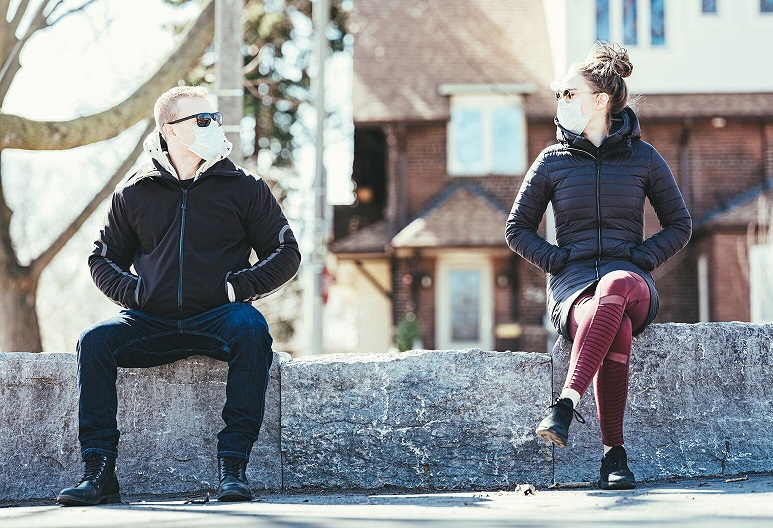
Destroy their education. Destroy their jobs and their job prospects. Destroy their social life, their friendships, their mental health. Force them to work long hours at school or in physically demanding jobs in uncomfortable and breath-inhibiting face masks. This is what our country has done to our young people in the past 16 months.
Why? In an attempt (and not a very successful one) to protect a small minority of mostly elderly folk who are particularly vulnerable to one disease while we wait in limbo to develop a vaccine and roll it out to the vulnerable population.
Then do we give them back their freedom? Not at all. Then we move the goalposts, making freedom conditional on more and more people getting the vaccine. Until we make it to so-called ‘Freedom Day’, a month later than originally planned, and Boris Johnson chooses then to tell young people that their freedom to do the things they enjoy will be dependent on receiving a vaccine.
A vaccine that uses experimental technology and was rushed through trials without waiting for the full safety data (trials which will never now conclude as the control groups have been vaccinated). A vaccine, or rather vaccines, which the authorities now acknowledge increase the risk of dangerous blood clotting and heart conditions, particularly in younger people. Vaccines for which there are now more reports of fatalities in the U.S. than all other vaccines put together for the past 30 years.
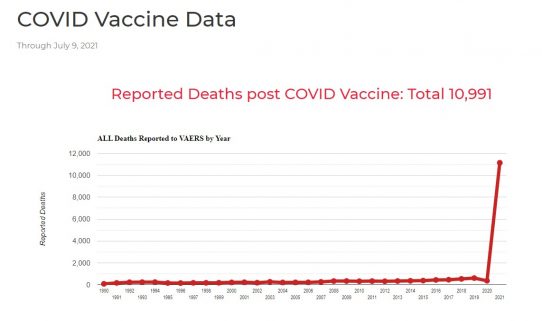
OpenVAERS
The E.U.’s own infectious disease journal Eurosurveillance has just published a study concluding that, when it comes to the AstraZeneca vaccine and blood clots, “in young adults, the risks were similar or higher than the benefits”.
Bear in mind this is just considering one side effect based on the reported incidence. It doesn’t take into account other side effects and under-reporting.
That’s the AstraZeneca vaccine, which is now discouraged for under 40s in the U.K. Are Pfizer and Moderna vaccines much better? Warnings have recently been added to them that they cause serious heart conditions in some cases. What else might emerge as the data is properly analysed?
The decision whether to take a particular vaccine, given the risk and potential benefit, is a personal one, and we can hardly blame the minority of young adults who appear to be concluding they’d rather take their chances with the virus, from which they’re also likely to get better immunity.
Any kind of threat of withdrawal of benefits for failure to take a medicine, let alone an experimental medicine, undermines informed consent. For that matter, the paucity of information provided on the real risk of side effects and the real age-specific level of benefit undermines informed consent.
Our young people have been betrayed again and again by this Government, which seems to have reached a place where it regards them primarily as vectors of disease who must be coerced into taking the prescribed medicine to make them clean enough to allow out and about. Yet the evidence that the vaccines are particularly good at preventing the spread of infection is patchy at best.
Our leaders should be ashamed of themselves for how they have abused young people and their trust, jeopardised their health and strangled their aspirations.
Sadly, I don’t think enough of them are sufficiently alive yet to the full horror of what has been pointlessly done to them in the last year and a bit to realise how angry they should be. But if they ever do wake up to it, there will be a terrible political reckoning.
All Americans must leave Afghanistan except diplomats: Top Taliban official
Press TV – July 21, 2021
All foreign forces in Afghanistan are considered occupiers, a top Taliban official tells Press TV, stressing that the United States should pull out all its military and civilian personnel from the country except its diplomats.
Mullah Khairullah Khairkhwa made the remarks in an interview with Press TV on Wednesday, alleging that the militant group and the United States had agreed on the matter.
“They have accepted that all Americans except their diplomats should leave Afghanistan and this issue is clearly written,” he said in an interview with Press TV’s Face to Face program.
“All NATO forces and their allies in Afghanistan must leave Afghanistan, and even those who were nominated to protect their embassies were rejected by us, because if we come to the government of Afghanistan, we are responsible for protecting their embassies and diplomats,” added the official.
‘US, NATO can’t provide security’
The US and the Western military alliance of NATO, Khairkhwa said, were incapable of providing Afghanistan with security.
Had the Americans been capable of securing Afghanistan, they would have done so over their 20-year-long occupation of the country, which saw some 150,000 foreign forces entering the Central Asian territory, he said.
“How can they bring us security?” he asked, and warned that if given the chance, Washington would always try to find a pretext to bring in troops, whether it was training the Afghan forces or providing security for the American interests in Afghanistan.
‘No use for Americans to return’
Khairkhwa also said the history of foreign military interventions in Afghanistan, as was the case with the British and Russian invasions, showed that such militarism was doomed to fail.
He, therefore, predicted that if the United States sought to re-enter Afghanistan following its current troop pullout, it would end up suffering the same fate as it has over the past 20 years.
“Because when someone enters someone’s house and fights there, the owner of the house will fight back as long as he lives. And if the Americans want to return, the same process of 20 years ago will be repeated. It is no use for them, nor is it of any use for us…,” the official noted.
Taliban after formation of ‘common govt.’
The official was also asked about the May-present escalation in the Taliban’s aggression and the goals that the group could be seeking by ramping up the violence.
Khairkhwa claimed that the group prioritized “political solutions” and “negotiation” over the armed offensive.
“We are trying to find solutions that are a good way for the people to elect a government, whether it is in the form of a council and a settlement, or in some other way, is now on the table for negotiation,” he said.
The group, he alleged, would close the door to all negotiation if it were completely against it.
‘Taliban advance, govt. fall inevitable’
The Taliban official, however, stressed that neither the group’s advances nor the incumbent government’s fall were to be helped.
“You see, the districts are very easily conquered” by the Taliban, which “have the ability to conquer the big cities” too.
He cited the example of the government that was propped up by the Soviets, but “could not survive and finally fell.”
“As for the current government, the people know that it will not last. That is why the fall is underway,” he said.
Khairkhwa claimed that the “elders” had not yet ordered any offensive against large cities, including the capital Kabul, and that the group would prioritize negotiation and political agreement concerning the manner of their control in the future.
The official, nevertheless, appeared not to be ruling out armed action targeting the cities by saying, “We use precaution so that, God forbid, it does not cause massive casualties.”
Why hasn’t the Taliban been fighting Daesh?
Khairkhwa was asked about the reason why the Taliban had not been fighting the foreign-backed Takfiri terrorist group of Daesh, which it considers another occupying entity, for some time.
The official said the hiatus had been brought about as a result of the sporadic nature of Daesh’s presence in Afghanistan, adding that the group would have kept up its fight if the Takfiris “had a headquarters.”
He also described Daesh’s ideology as “deviant” and claimed that the Taliban’s mindset differed from that of the terrorist outfit.
‘Taliban, Saudi Arabia not as close as before’
The Taliban official also said the group and Saudi Arabia’s relations did not have their former quality.
“We do not have the same connection we had before… We haven’t had any public trips to Saudi Arabia,” he said.
He also said if the Saudi regime sought to fund so-called “religious schools” in Afghanistan, the funding had to go through the government and the ministry of education instead of going straight to the schools.
What becomes of Afghanistan’s foreign policy if Taliban triumph?
Meanwhile, the Taliban official claimed that the group would try to maintain relations with Muslim countries, including the neighboring ones such as Iran, if it rose to power in Afghanistan.
He alleged, though, that Afghanistan would not be allowed to lean extensively in any direction if the group assumed power.
Where’s the Rage for Israel and NSO’s Pegasus the West Had for China’s Huawei?
By Morgan Artyukhina – Sputnik – 21.07.2021
Anger has swirled around the globe over revelations that Pegasus spyware created by Israeli software firm NSO Group has been used by governments to wiretap journalists and public figures. However, the fury is mild when compared to claims Beijing compelled Huawei to put a “backdoor” into its phones, which has never been proven.
Earlier this week, a group of news outlets including the Washington Post and Forbidden Stories, along with human rights group Amnesty International, revealed disturbing findings: governments around the globe have been buying up Pegasus spyware from NSO Group and using it to spy on journalists, public figures, and even other world leaders.
50,000 Phones Targeted
Thousands of phone numbers are on the list, with some of the biggest names including French President Emmanuel Macron and Moroccan journalists Omar Radi, both allegedly wiretapped by Morocco, and journalist Jamal Khashoggi, allegedly wiretapped by his native Saudi Arabia prior to being killed by a Saudi hit squad at the Saudi consulate in October 2019.
In all, 180 journalists were targeted in 20 countries, including Kazakhstan, India, the United Arab Emirates, Qatar, Azerbaijan, Hungary, Morocco, Rwanda, Democratic Republic of the Congo, Mexico, Egypt, Algeria, Togo, Turkey, France, Spain and the United Kingdom. They also targeted at least 65 business executives, 85 human rights activists, 189 journalists, and more than 600 politicians and government officials, including high-level officials like cabinet ministers, diplomats, and military officers, according to The Washington Post.
Also on the list were 10 prime ministers, three presidents, and one king, including Iraqi President Barham Salih, South African President Cyril Ramaphosa, the prime ministers of Pakistan, Egypt, and Morocco, and seven former heads of government from Lebanon, Uganda, and Belgium, and several other countries.
Shalev Hulio, NSO’s chief executive and co-founder, has cast the story as flimsy, but said the company is “investigating every allegation … and if we find that it is true, we will take strong action.”
“NSO Group’s technologies have helped prevent terror attacks, gun violence, car explosions and suicide bombings. NSO Group is on a lifesaving mission and the company will faithfully execute this mission undeterred, despite any and all continued attempts to discredit it on false grounds,” the company told the US Public Broadcasting Service.
On Wednesday, the firm put out a press release saying “enough is enough,” announcing it would cease responding to media inquiries about what it called a “vicious and slanderous campaign.”
“NSO is a technology company. We do not operate the system, nor do we have access to the data of our customers, yet they are obligated to provide us with such information under investigations,” the company added.
The Israeli government has confirmed it “approves the export of cyber products exclusively to governmental entities, for lawful use, and only for the purpose of preventing and investigating crime and counterterrorism, under end use /end user certificates provided by the acquiring government. In cases where exported items are used in violation of export licenses or end use certificates, appropriate measures are taken.”
However, it denied having any knowledge of the use of Pegasus to spy on other targets, and noted to the Post that “Israel does not have access to the information gathered by NSO’s clients.”
That said, a former senior US national security official who has worked closely with the Israeli security services also told the outlet “It’s crazy to think that NSO wouldn’t share sensitive national security information with the government of Israel. That doesn’t mean they’re a front for the Israeli security agencies, but governments around the world assume that NSO is working with Israel.”
How Have Nations Reacted?
Representatives from many of the nations implicated in the investigation have unanimously denied the reports they spied on journalists, dissidents, and world figures, insisting their governments are based on the rule of law. However, it’s notable that not all of the countries where journalists were targeted have been asked for comment, with France, Spain, and the UK being notable exceptions.
Asked by The Hindu, a White House spokesperson said on Wednesday that “The United States condemns the harassment or extrajudicial surveillance of journalists, human rights activists, or other perceived regime critics.”
However, despite the admission by NSO that it sells such software and by Israel that it, at the very least, approved of each sale, and in light of comments by foreign intelligence officials that Israel likely materially benefitted from the affair by gleaning information from the group, it seems that a bigger scandal would be expected. But not a single government has demanded punishment for either NSO or Israel, or decried even the possibility that Israel helped countries wiretap people not suspected of criminal actions, or raised fears that a country’s government likely got ahold of classified information from them via illegal means.
There have been no calls for sanctions against Israel or NSO or any senior figures at NSO, or prosecutions, or frankly even acknowledgements that the affair is even happening outside of dry-mouthed condemnations. In fact, the only calls for sanctions have been by journalists themselves, such as the Intercept’s Ryan Grim and Electronic Intifada’s Ali Abuminah.
The reactions – and lack thereof – stand in stark comparison to how Chinese tech giant Huawei has been treated.
Huawei Crucified Without Evidence
Shenzhen-based Huawei is the world’s largest manufacturer of both telecommunications equipment and smartphones and a major supplier of 5G internet service. The company was started in 1987 by Ren Zhangfei, a former Chinese military engineer, although he owns less than 2% of its shares, which are owned by Huawei employees.
The US has claimed for years that Ren’s military experience and membership in the Communist Party of China make Huawei a security liability, but in 2018 a more concerted effort began aimed at forcing US military and government agencies from using products by Huawei and another Chinese phone maker, ZTE, claiming that the CPC had forced Huawei to insert a secret “back door” into its phones and networks, enabling the Chinese government to spy on users if so desired.
The company and the Chinese government have both denied that such a backdoor does or even could exist or that they would pursue one if it were possible.
“If they believe there’s a backdoor, they should offer evidence to prove it,” Huawei chairman Liang Hua challenged US intelligence in January 2019. At the time, Washington said it didn’t need to, citing Huawei’s alleged proximity to the Chinese government as sufficient proof.
However, as the US began hounding allies in Germany and the “Five Eyes” nations to drop Huawei’s technologies, it did begin providing them with evidence to support its claims – evidence London, Berlin, and Paris all said wasn’t very convincing. Still, within months each of them had either rejected bids by Huawei or suddenly found new evidence to justify falling into line with US demands.
The firm was placed on a US blacklist in 2019, requiring Americans to obtain a special license from the US Department of Commerce before doing business with Huawei, effectively banning Americans from buying Huawei’s phones, and several nations have now sanctioned Huawei as well. The company’s CFO, Meng Wanzhou, was also arrested in Canada in connection with charges in a US court that aren’t related to the espionage allegations but which are widely seen as further persecution of the company.
The sanctions had their effect, too: in March, a first-quarter earnings report showed its sales down 16.5% year-on, part of a trend that caused it to sell its Honor smartphone marquee last year.
Legacy of Israeli Spying on Allies
In September 2019, Politico reported that US government officials had concluded Israel was responsible for placing cell phone surveillance devices called “Stingrays” around Washington, DC, and had even used them to spy on White House communications. A former senior official used as a source for the article said the devices were likely intended to spy specifically on then-US President Donald Trump, a known lover of his iPhone.
Then-Israeli Prime Minister Benjamin Netanyahu dismissed the report, saying, “Israel doesn’t conduct espionage operations in the United States, period.”
However, the claims go back much further. In 1985, US intelligence analyst Jonathan Pollard was arrested, charged, and later convicted of espionage after he passed classified US Navy documents to Israel, including dirt on Israel’s Arab neighbors, for $1,500 a month.

Jonathan Pollard, U.S. Navy ID picture
Israel also spied on then-US Secretary of State John Kerry in 2014 and 2015 during negotiations for what became the Joint Comprehensive Plan of Action, according to reports by Der Spiegel and the Wall Street Journal.
In 2017, Le Monde revealed that Israel’s Mossad had penetrated the French intelligence directorate in what it called Operation Ratafia, with the goal of developing close relationships with fellow spies “to the point of crossing the line of turning them into double agents.”
None of these brought calls for sanctions, either, revealing how politically motivated the attacks on Huawei and other Chinese tech firms really are. Why does the West continue to tolerate the Israeli government spying on them and their citizens?
Featured Video
Iranians Want Revenge /Sulaiman Ahmed
or go to
Aletho News Archives – Video-Images
From the Archives
Are There 50,000 ‘Israeli-born’ Individuals Living in the UK?
By Professor David Miller | August 18, 2026
Recent disclosures by the Zionist regime show that some 2,069 British nationals were serving in the IDF as of March 2025, according to Freedom of Information (FoI) requests submitted to the occupation forces (1,686 dual British-Israeli, plus 383 multinational). We cannot tell from the figures how many of these were already settler colonists and intend to stay in the colony, and how many will return or have returned to the UK. Presumably, those returning to the UK will number far fewer than 2,000, since many are known to have become permanently residents of the colony.
Additionally, the IDF figures only provide a snapshot, and do not tell us how many have served in the Jewish supremacist military either before or after March 2025. One way into the question of how many genocidaires are living in Britain is to ask how many current British residents were born in the Zionist colony. There is data on that, as we shall see. … continue
Blog Roll
 Aletho News
- Iranians Want Revenge /Sulaiman Ahmed
- ‘Israel’ bombs Nasser Medical Complex in Khan Younis, killing 5
- The beginning of the end: Israel at the heart of America’s political civil war
- US-Israeli war on Iran cost Persian Gulf states nearly $1T in damage, lost growth: Report
- Congress probe could put ‘Israel’ in dock over Iran war: Israeli media
- Spanish public prosecutor backs US demand to extradite pro-Palestine philanthropist Fergie Chambers
- Zelensky spent over 740 days outside Ukraine while West serves as his real home
- Indian captain of Russian ‘shadow fleet’ tanker faces 10-year jail term in UK
- Europe, US face higher heating bills amid Iran war fallout
- The Leak That Arrived Right on Cue
- If Americans Knew
- These Democrats Are Bringing a Christian Case Against Israel’s War to Congress
- Netanyahu calling Trump ‘every day’ to push for renewed war on Iran
- What will big wins by Democrats actually mean for Palestine?
- What is Section 219 of the US defense bill, and what would it mean for Israel?
- Hegseth dodges impeachment after using troops and vets for cover
- Israel Bombs Lebanon’s Churches
- Israel Targets U.S. Conservatives in New Influence Operation
- Declassified FBI Files Reveal Early U.S. Counterintelligence Probe into Israeli Espionage and Smuggling Networks
- Israelis perpetrated 1,182 arson attacks in the West Bank in past 3 years
- DAILY UPDATE: Latest essential news on Palestine, Israel, & region
- No Tricks Zone
- German Authorities Start Initiative To Evaluate Public Register For Climate “Disinformation” Spreaders!
- Zonal Asymmetry of Temperature Change in the Antarctic Circumpolar Current
- New Study: The Net Fossil Fuel Contribution To Rising Atmospheric CO2 Has Been Zero For 500 Years
- Germany’s Green Energy Transition Becoming Increasingly Expensive…Another 6 Trillion Euros!
- Sudden Stratospheric Warming, Powerful El Niño Combination May Lead To Extreme Europe Cold, Energy Crisis!
- Two New Studies Find Thwaites Glacier Melt Cannot Be Driven By Human Activity Or A Warming Ocean
- E-Cars Reduce CO2 Emissions By Only 41% Compared To Internal Combustion Engine Vehicles
- Predictions Made By Renowned Climate Professor Over Past Decades Have Been Proven To Be Poor
- New Study Suggests Large Regions Of The Pacific Ocean Have Been Cooling For The Last 80 Years
- Germany’s Green Energy Debacle: High Energy Costs Force Kahla Porzellan to Close After 182 Years!

