Critical Norwegian gas platform and transportation hub forced to shut down
Samizdat | July 12, 2022
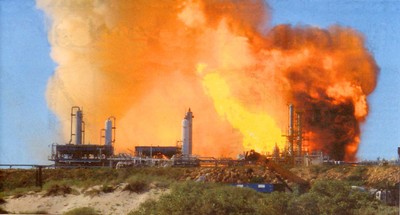
A Norwegian gas platform and the transportation hub Sleipner Riser at the same field were shut down on Tuesday after separate gas leaks occurred, operator Equinor said, according to Reuters. The company indicated it was unclear when operations would resume.
“A gas leak at the Sleipner A {platform} occurred yesterday morning,” an Equinor spokesperson stated, adding “No person was injured and production was shut. When we tried to restart, a new gas leak occurred, late Monday night … this time at Sleipner Riser.”
Sleipner Riser is a key hub for the transport of North Sea gas to Britain and Belgium.
“We don’t know when we will back in normal production. The facility is shut,” the spokesperson added.
The incident comes at a time when Europe is facing constrained gas supply as scheduled maintenance halted flows from Russia via the Nord Stream 1 pipeline on Monday. The repairs are expected to take 10 days.
Norway is Europe’s second largest gas supplier and currently meets around 25% of gas demand on the continent, according to S&P global. Its role has come into sharper focus since Russia moved to reduce gas deliveries to Europe.
This month, the Norwegian government ended a strike by the country’s offshore oil and gas workers, who had been demanding wage increases to compensate for rising inflation. The strike, which resulted in the closure of three fields, threatened to exacerbate Europe’s energy crisis.
India to boost Sakhalin-1 oil output
BY M. K. BHADRAKUMAR | INDIAN PUNCHLINE | JULY 10, 2022
After Sakhalin-2, Moscow also plans to nationalise Sakhalin-1 oil and gas development project by ousting US and Japanese shareholders. But Moscow will make an exception for India so that OVL which holds 20% stake will remain & continue to work. Moscow grapevine is that while Rosneft will continue to hold controlling share, more Indian companies may be inducted to replace US & Japan and thereby also ensure a sales market in India.
The Sakhalin-1 is located off the coast of Sakhalin Island in the Russian Far East. It comprises three offshore fields — namely, Chayvo, Odoptu, and Arkutun-Dagi. Until recently, the Sakhalin-1 project was operated by a Russian subsidiary of the American major ExxonMobil known as Exxon Neftegaz, which owns 30% of the shares. In addition, 20% is owned by the Russian state, 30% by the Japanese company Sodeco, and 20% by the Indian ONGC Videsh. Whereas Sakhalin-2 specialises in the export of liquefied natural gas, Sakhalin-1 is in the export of Sokol oil.
The capacity of Sakhalin-1 is quite impressive. There was a time before OPEC+ set limits on production level, when Russia extracted as much as 400,000 barrels per day, but the recent production level has been about 220,000 barrels per day. The abrupt departure of the Americans following the US sanctions against Russia has caused the production to plummet to just 10,000 barrels. Russians hope that with the replacement by more Indian companies, the production level can be restored to the previous level. Indeed, the hope is that Indian ONGC Videsh will pull up the production level of Sakhalin-1 project relatively quickly by bringing in own technologies.
The overall trend of nationalising the holdings of American, British, Japanese and European capital in Russia’s strategic sectors of economy is crystallising as the new policy — the Russian version of India’s AatmaNirbhar Bharat (“Self-reliant India” campaign.) Cleansing of the Russian economy, freed of Western capital, is expected to accelerate in the period ahead. India has seamless opportunities here to make investments and reap windfall profits. In strategic terms, India’s energy security will also be guaranteed for decades to come.
Moscow was well aware of the predatory character of Western capital in Russia’s oil sector — a legacy of the Boris Yeltsin era — but had to live with the exploitation as it didn’t want to antagonise other potential western investors. But that is history now. The souring of relations with the West to almost breaking point rids Moscow of such archaic inhibitions.
Indeed, the new policy to replace western capital from the commanding heights of Russian economy is not without risks, but Moscow is confident that it is on the right track and must do what it takes. Also, the decrease in production in the Sakhalin-1, unless addressed soon, may negatively affect the very characteristics of the oil fields in the Russian Far East, if the oil recovery factor decreases over time and a lot of oil is left to remain in the reservoirs.
The development of the fields had depended on Western equipment and technologies. Now Russia has lost both. On the other hand, the departure of the Americans will leave Russia with no easy route but to have its own technologies.
On balance, however, Americans stand to lose heavily too, as the production sharing arrangements dating back to the Yeltsin era had been forced out of the Russian government when it was in dire economic straits during the transition from the Soviet period and was in no position to negotiate optimal deals. Come to think of it, something like 262 such so-called production sharing agreements (PSAs) were squeezed out of the Russian government by western oil companies by the time Yeltsin retired.
After coming to power in 1999, President Vladimir Putin set about the mammoth task of cleaning up the Aegean stables of Russia’s foreign collaboration in the oil sector. The “decolonisation” process was excruciatingly difficult, but Putin pulled through it and got rid of as many as 260 (out of 262) PSAs. In fact, Sakhalin-1 and Sakhalin-2 are the very last remaining two PSAs harking back to post-Soviet Russia’s decade of humiliation under Yeltsin.
Any surprises why the Biden Administration hates Putin so much and wants him out of power in Moscow?
Legend is that when the Soviet Communist Party Secretary Nikita Khrushchev paid his pathbreaking visit to India in 1955, then Prime Minister Nehru, amongst other “talking points”, referred to Soviet Union’s great reservoir of expertise in the oil sector, while complaining that the West refused help for anything in India’s state sector.
The folklore is that Khrushchev instinctively reacted in positive terms to Nehru’s request for help and no sooner than his return to Moscow, deputed a famous Soviet expert / geologist to India to prospect for oil — whose fame was such that he could apparently smell oil lying untapped deep in the bowels of the earth! Thus was born the ONGC in 1956, which is now heading for Sakhalin Island on a similar mission!
‘Developing world to face wave of defaults’
Samizdat – July 10, 2022
Emerging nations, including El Salvador, Ghana, Egypt, Tunisia and Pakistan, will be challenged with a historic cascade of defaults as a quarter-trillion-dollar pile of distressed debts keeps exerting downward pressure on economies, Bloomberg is reporting.
“With the low-income countries, debt risks and debt crises are not hypothetical,” the World Bank’s Chief Economist Carmen Reinhart told the agency on Saturday. “We’re pretty much already there.”
Over the past six months, there’s reportedly been a doubling in the number of emerging markets with sovereign debt that trades at highly distressed levels, meaning yields that indicate investors believe default is a real possibility.
Another cause for major concern reportedly arises from a potential “domino effect” that commonly occurs when scared investors begin yanking money out of countries with economic problems similar to those defaulting nations had previously gone through.
In June, traders reportedly pulled $4 billion out of emerging-market bonds and stocks, marking a fourth straight month of outflows.
Probable defaults may be followed by political instability. Earlier this year, Sri Lanka was the first nation to stop paying its foreign bondholders, burdened by unwieldy food and fuel costs that fueled protests and political chaos.
“Populations suffering from high food prices and shortages of supplies can be a tinderbox for political instability,” Barclays has said, as quoted by Bloomberg.
Biden is Right… Inflation Crisis Is Not Inevitable, So End the Reckless U.S.-Led Warmongering
Strategic Culture Foundation | July 8, 2022
It’s rare for Strategic Culture Foundation to find itself in agreement with pronouncements made by American President Joe Biden. This week, Biden asserted once again that economic inflation and recession hitting the American economy are “not inevitable”. He is correct – at least in part. Although not for reasons that he would ever admit.
Of course, Biden is trying to obscure the grim reality of economic crisis that is afflicting not just the American economy but also the European Union. Inflation of living costs for ordinary citizens in the U.S. and EU are at record highs not seen in decades. There is a sense of calamity in social conditions from mass poverty amid grotesque super-rich inequality. A major input to the general inflation is the soaring price of energy.
The global impact is causing food prices to escalate putting millions of people at risk of hunger, especially in Africa and other low-income nations.
The impending crisis is on an unprecedented scale. Yet, it is not inevitable. But what is making it unavoidable is the warmongering policy of the U.S. and its European NATO allies towards Russia and China. This week saw outlandish American and British efforts to label China along with Russia as an existential threat to “global peace”. The bitter irony of these two rogue Western states casting aspersions on any other nation is too much for words.
The world is being thrown into chaos, insecurity and uncertainty by reckless stoking of war in Ukraine by the Western powers who are funneling tens of billions of dollars-worth of military weapons to that country. This week saw US-supplied HIMARS artillery hitting cities in the Donbass breakaway republics. Where are the Western efforts to mediate a diplomatic end to that war? There are none. Russian President Vladimir Putin reiterated this week that Moscow would like to find a long-term peaceful settlement. The harsh and despicable truth is that the U.S. and its Western allies are incapable of seeking a political solution. They are willing to fight to the last Ukrainian.
Blaming Russia for that conflict is a fallacy. The war has been deliberately stoked by the United States and its NATO accomplices as part of their geopolitical objective of subjugating Russia and China to their hegemonic agenda.
Western sanctions against Russia have created a global energy crisis that is boomeranging on the economies of the United States and Europe as well as the wider world. Biden is trying to scapegoat Moscow for imposing price hikes and taxes on his nation. The reality is it is his administration and its European lackeys who are imposing hardships on their own citizens from a madcap policy of warmongering.
There is a straightforward way out of the abysmal situation. The U.S. and its NATO allies should halt all weapons supplies to the Nazi regime in Kiev. They should also reverse the draconian economic sanctions on Russia. They should pursue diplomatic relations to end the conflict in Ukraine that they have instigated. They should normalize relations with Russia and China instead of relentlessly pushing Cold War-style confrontation.
But that is unlikely to happen under prevailing circumstances. Because the United States and its NATO minions have locked themselves into a deceptive paradigm of hostility. This, in turn, is because of futile ambitions for hegemonic dominance and intrinsic opposition to the emergence of a multipolar world.
Demonizing and antagonizing Russia and China is the real agenda for U.S.-led global imperialism. That criminal policy is covered up with cynical and absurd claims about defending “rules-based order” and democracy in Ukraine, Taiwan and elsewhere.
Nevertheless, the Empire of Lies is running out of credibility and false pretexts. What is becoming more and more evident is the awful reality. The U.S.-led collective West is one predicated on warmongering to preserve its waning global power and privileges.
Russia and China have repeatedly appealed for the existence of a multilateral global order that is consistent with the vision of the United Nations that was set up in the aftermath of World War Two. The United States and its imperial surrogates have continually attacked and undermined that vision with unilateral violations of international law and the sovereignty of countless nations. The U.S. avowed “rules-based order” is synonymous with war, war, war. Decades of relentless U.S.-driven wars – albeit under specious guises and pretenses – prove that.
Today we are witnessing the historic endgame playing out. The current war in Ukraine is but one malignant manifestation.
When asked how long Americans (and presumably Europeans) will have to endure economic pain, Biden retorted, “As long as it takes”. As long as it takes for what? To defeat Russia, China and whomever other nation the U.S.-led imperial axis deems necessary to be subjugated? That’s not going to happen. Those days are over.
Russia and China are too strong militarily and economically for the U.S.-led axis to vanquish. The world is being driven to war, potentially a catastrophic one, by American death throes in the face of reality. In the meantime, American, European and other peoples are being assailed with economic misery as a result of this criminal warmongering for the sake of empire. That is, the crumbling, bankrupt empire of U.S.-dominated Western capitalism and its imperial roguery.
The appalling state of world affairs is not inevitable. But due to the depraved and implacable pursuit of hostility towards Russia and China by the U.S. and its servile European elite, the world is – for now at least – held hostage by these psychopathic Western politicians and their corporate paymasters. That, however, is changing as people realize more and more the real nature and perpetrators of their captive condition.
The giant Western charade is no longer sustainable. From European colonialism to American imperialism, the charade has indeed had a long run. Now, though, it is in tatters from its own inherent corruption and lies. The ignominious downfall this week of Boris Johnson, Britain’s clown prime minister, is just a bit-part of the collapsing Western axis of evil. That collapse is inevitable.
‘Energy crisis hitting US industrial complex’
Samizdat | July 9, 2022
Operational challenges arising from soaring energy bills have put the entire US industrial complex at risk of partial shutdown, Bloomberg reported on Thursday.
The country’s second-biggest aluminum mill, which accounts for 20% of the national supply, reportedly laid off 600 workers in late June after its electricity bill tripled. Century Aluminum announced plans to leave its Hawesville mill idle for as long as a year, taking out the biggest of its three sites in the US. Meanwhile, the country’s largest aluminum producer Alcoa said it was cutting its production by a third at a mill in Indiana.
At least two steel mills have started to halt some operations in a bid to minimize energy costs, an unnamed industry executive told the agency. In May, a group of factories across the US Midwest warned the country’s energy regulators that some enterprises were on the brink of shutdown for the summer months or longer due to “unjust and unreasonable” electricity costs.
In June, natural gas prices tripled compared to the same period a year ago, sending bills for households and businesses soaring to previously unseen levels. Meanwhile, electricity rates for industrial customers are projected to hit an all-time high this summer.
Soaring costs have forced some businesses to put millions of dollars of credit on the line to secure power and gas contracts, according to Michael Harris, whose firm Unified Energy Services purchases fuel for industrial clients.
“That can be devastating for a corporation,’’ Harris told the agency. “I don’t see any scenario, absent explosions at US LNG facilities’’ that trap supplies at home, in which gas prices are headed lower in the long term.
OPEC keeps refusing G7 requests to increase oil production as ‘Russian oil cap’ reverie falls apart
By Drago Bosnic | July 8, 2022
One of the two central topics of the most recent G7 summit was limiting Russia’s oil sale profits. The initial suggestion of capping the price to just above the production costs hit a little snag when reality kicked in and it turned out to be impossible without, ironically, pushing the oil prices exponentially higher, despite the fact that current prices have already pushed economies to a breaking point. In order to tackle the “unexpected” issue, Japan gave a “more reasonable” suggestion to “only cut Russian oil prices in half”. Naturally, Moscow took neither of the suggestions too kindly. Deputy head of the Russian Security Council Dmitry Medvedev warned that Japan’s proposal would lead to a significantly lower supply of oil on the market, which could push the price to around $300-400 per barrel or higher.
“Japan will have neither oil nor gas from Russia, nor will it be able to continue participation in the Sakhalin-2 LNG (liquefied natural gas) project,” Medvedev commented on reports about the proposal presented by Japanese Prime Minister Fumio Kishida.
The other central topic was yet another request by the political West for OPEC+ countries to increase oil production. And once again, OPEC+ refused, insisting that Russia’s oil production share cannot be replaced. The association of 23 oil-producing countries keeps insisting on its earlier decision to collectively increase daily production by 648,000 barrels in July and August, but nothing more than that. Worse yet, how OPEC+ will fulfill even that remains to be seen after recent reports that some members are struggling to meet even their own internal demand, as OPEC’s leading countries are already at maximum production capacity. French President Macron himself revealed to his G7 partners that in a conversation with top Saudi and UAE representatives he was told that Riyadh and Abu Dhabi are already producing oil “almost at maximum capacity”.
Faced with the first signs of coming oil shortages at the peak of the summer season in the Northern Hemisphere, the political West could not figure out where to expect an increased inflow of oil during July and August. If the sanctions on Russia, the world’s key oil exporter, are kept or, worse yet, intensified, where could the “requested barrels” come from? The lifting of sanctions against Venezuela and Iran isn’t just “problematic” for the political West, but it’s also questionable whether they are able (or willing) to increase production. In addition, any production increase by US shale oil companies seems equally unlikely this summer.
Non-OPEC oil producers such as Brazil and Canada cannot hope to make up for the deficit of Russian oil. The political West is now sending conflicting economic signals as it’s faced with the very real possibility of a recession, which would inevitably result in a drop in demand. The prospect of this is discouraging the OPEC+ to increase production, as it could leave them with excess oil. To make matters for Western stock markets even worse, OPEC+ did not give any statements on its intentions regarding further production from September 1, when the current agreement on the gradual increase in production is set to expire.
The oil price in the US is already moving towards the “astronomical” six dollars per gallon, which will almost certainly lead America into another recession, according to the Wall Street Journal’s estimate. US President Joe Biden recently pointed out that “Washington DC has no way to quickly stop the rise in the prices of gas and food in the United States at this time”. The US is even considering measures in case oil soon reaches the price of $200 per barrel. It is in this atmosphere of uncertainty on a global level that the political West is trying to limit Russian oil revenues, obviously without considering the simple fact that Russia could just cut its oil supplies to anyone trying to impose this illegal price cap, which would make the $200 per barrel prediction “incredibly optimistic”, as oil prices could be pushed to more than double of that.
Additionally, there’s a looming uncertainty over Russian natural gas deliveries to the European Union, particularly Germany, which is now effectively begging Canada to return the Nord Stream turbines it has seized. The German industry, by far the largest and most important in the EU, is struggling to make any plans for the foreseeable future as natural gas deliveries, its lifeblood, hang in the balance. There are even warnings of a complete industrial collapse in Germany if this issue is not tackled as soon as possible, to say nothing of the natural gas demand for heating and energy production, which is now under tremendous pressure to meet even basic demand.
Despite all this, the political West keeps fantasizing about the Russian oil price cap. Although we’re still powering through an extremely hot summer, we are only several months away from winter. Maybe the political West can try capping the temperature and prevent it from falling below the freezing level. After all, their chances of doing that are much higher than capping Russian oil prices.
Drago Bosnic is an independent geopolitical and military analyst.
EU economies are down on their knees

BY M. K. BHADRAKUMAR | INDIAN PUNCHLINE | JULY 5, 2022
On July 1 at the White House, US President Joe Biden made a startling disclosure that “the idea we’re going to be able to click a switch, bring down the cost of gasoline, is not likely in the near term.”
American gas exporters have positioned themselves accordingly to fill the gap as Europe turns away from Russian imports. FT reported recently that “US liquefied natural gas producers have announced a string of deals to boost exports as the industry capitalises on shortages that have left Europe with a mounting energy crisis.”
The deals are so lucrative that Cheniere, America’s leading gas exporter, has taken an investment decision to push ahead with a project that will boost its capacity more than 20 per cent by late 2025, anticipating long-term supply deals and locked in purchases of US gas over the coming decades. The US producers of gas are reportedly running plants flat-out to increase supplies to the EU.
The US has overtaken Russia for the first time as Europe’s top gas supplier. Although LNG from the US is sold to Europe at much higher costs than pipeline gas from Russia, EU countries have no choice.
With Russian supply via Nord Stream at just 40% of capacity, and deliveries to be halted completely for annual maintenance on July 11-21, the outlook for near-term Russian gas supply to Europe appears bleak.
Germany has warned of the risk that Nord Stream gas may not return at all following the maintenance. At any rate, Russian supply to Europe is at record lows and is “set to remain constrained through the third quarter,” per S&P Global.
Germany is heading for a major economic crisis. The head of the German Federation of Trade Unions has been quoted as saying in the weekend, “Entire industries are in danger of collapsing forever because of the gas bottlenecks — especially, chemicals, glass-making, and aluminium industries, which are major suppliers to key automotive sector.” Massive unemployment is likely. When Germany sneezes, of course, Europe catches cold — not only the Eurozone but even post-Brexit Britain.
Welcome to the European Union’s “sanctions from hell.” The US literally hustled the Europeans into the Ukraine crisis. How many times did Secretary of State Antony Blinken travel to Europe in those critical months in the run-up to the Russian invasion of Ukraine to ensure that the door to any meaningful talks with the Kremlin remained shut! And American energy companies are today making windfall profits selling gas to Europeans. Won’t Europeans have the common intelligence to realise they have been had?
Now, Biden has washed his hands of the gas crisis. He brusquely stated at a press conference in Madrid on June 30 that such premium on oil prices will continue “as long as it takes, so Russia cannot, in fact, defeat Ukraine and move beyond Ukraine. This is a critical, critical position for the world. Here we are. Why do we have NATO?”
Biden’s counterfactual narrative is that the sanctions against Russia are going to work eventually and a long war in Ukraine would be Russia’s undoing. The US narrative is that if you look under the hood of the Russian economy, it may not be flexible and resourceful enough to develop an entrepreneurial bunker spirit and adopt new business models to neutralise the sanctions. Biden is convinced that the Russian economy is in the grip of industrial mafias that are not very innovative and, therefore, there aren’t many options for Russia under the western sanctions.
Biden said in Madrid: “Look at the impact that the war on Ukraine has had on Russia… They’ve (Russians) lost 15 years of the gains they made in terms of their economy… They can’t even — you know, they’re having — they’re going to have trouble maintaining oil production because they don’t have the technology to do it. They need American technology. And they’re also in a simi- — similar situation in terms of their weapons systems and some of their military systems. So they’re paying a very, very heavy price for this.”
But even if that’s the case, how does all that help the Europeans? On the other hand, President Putin’s strategic calculations with respect to the war remain very much on track. Russian forces made indisputable progress in establishing full control over Luhansk. On Monday, Putin gave the green signal to a proposal from the army commanders to launch “offensive operations.” Five months into the war, Ukrainians are staring at defeat and Russian army generals know it.
Russia didn’t wander into Ukraine unprepared, either. Evidently, it took precautionary steps both before and since the war to shield its economy. And this enables the Russian economy to settle down to a “new normal”. Washington’s options are quite limited under the circumstances. Fundamentally, western sanctions do not address the causes of the Russian behaviour, and therefore, they are doomed to fail to solve the problem at hand.
To be sure, Putin has some nasty surprises in store for Biden closer to the November mid-term elections. Biden blithely assumes that he controls all the variables in the situation. Schadenfreude is never a rational basis for statecraft.
Yesterday, the strategically important Kherson region bordering Crimea formed a new government with the First Deputy Prime Minister of Russia’s Kaliningrad region heading the cabinet and Russian nationals among his deputies. Now that HIMARS multiple launch rocket system, contrary to Biden’s promise, is blasting Russian cities, expect some major Russian retaliation.
The pathway of Russia’s offensive operations is being relaid to include Kharkov and Odessa as well, apart from Donbass. The influential Kremlin politician and chairman of Duma Vyacheslav Volodin said on Tuesday.
“Some people are asking what our goal is and when all this will end. It will end when our peaceful cities and towns no longer come under shelling attacks. What they are doing is forcing our troops not to stop on the borders of the Lugansk and Donetsk republics (Donbass) because strikes (on Russian regions) are coming from the Kharkov regions and other regions of Ukraine.”
How long does Biden think the Europeans will want to be involved in a protracted proxy war with Russia? Bild reported on Sunday that 75% of German respondents see recent price hikes as a heavy burden, while 50% said they feel their economic conditions are worsening; every second German fears a lack of heating this coming winter due to reduced Russian gas supplies and rising inflation in the European Union.
Yet, Biden says war will go on “for as long as it takes” and fuel shortage will continue “for as long as it takes.” The European economy is expected to start contracting over the course of the second half of 2022 and the recession may continue until the summer of 2023 at least.
Analysts at JP Morgan Chase, the US investment bank, said last week that Russia could also cause “stratospheric” oil price increases if it used output cuts to retaliate. It said, “The tightness of the global oil market is on Russia’s side.” Analysts wrote that prices could more than triple to $380 a barrel if Russia cut production by 5m barrels a day.
Putin’s decree last week is ominous — the Kremlin taking full control of the Sakhalin-2 oil and gas project in Russia’s Far East. State-owned Gazprom held a 50% plus one share stake in the project and its foreign partners included Shell (27.5%), Mitsui (12.5%), and Mitsubishi (10%). The decree stipulates that Gazprom will keep its majority stake, but foreign investors must ask the Russian government for a stake in the newly created firm within one month or be dispossessed. The government will decide whether to approve any request.
This will unsettle energy markets further and put more strain on the LNG market, and can be seen as a move to put more pressure on the West by concurrently restricting gas supplies to Europe and creating more demand for LNG in Asia that will draw off supplies currently going to Europe. Sakhalin-2 supplies circa 4% of the global LNG market!
The only part of the US agenda that is going well seems to be the unspoken part of it: the very same Anglo-American objectives that Lord Ismay once predicted as the rationale behind the NATO’s existence —”to keep the Russians out, the Americans in, and the Germans down.”
Foreign Policy Fail: Biden’s Sanctions are a Windfall For Russia!
By Ron Paul | July 4, 2022
It’s easy to see why, according to a new Harris poll, 71 percent of Americans said they do not want Joe Biden to run for re-election. As Americans face record gas prices and the highest inflation in 40 years, President Biden admits he could not care less. His Administration is committed to fight a proxy war with Russia through Ukraine and Americans just need to suck it up.
Last week a New York Times reporter asked Biden how long he expects Americans to pay record gasoline prices over his Administration’s Ukraine policy. “As long as it takes,” replied the president without hesitation.
“Russia cannot defeat Ukraine,” added Biden as justification for his Administration’s pro-pain policy toward Americans. The president has repeatedly tried to deflect blame for the growing economic crisis by claiming Russia is solely behind recent inflation. “The reason why gas prices are up is because of Russia. Russia, Russia, Russia,” he said in the same press conference.
But Biden has a big problem: Americans do not believe him. According to a Rasmussen poll earlier this month, only eleven percent of Americans believe Biden’s claim that Russian president Vladimir Putin is to blame for high prices.
When it comes to disdain for the average American hurt by higher prices, there is more than enough in the Biden Administration to go around.
Brian Deese, Director of President Biden’s National Economic Council, was asked in a recent CNN interview, “What do you say to those families that say, listen, we can’t afford to pay $4.85 a gallon for months, if not years?”
His answer? “This is about the future of the Liberal World Order and we have to stand firm.”
Has there ever been an Administration more out of touch with the American people? If you asked working Americans whether they’d be happy to suffer poverty for the “liberal world order,” how many would say “that sounds like a great idea”?
President Biden’s attempts to bring down gasoline prices are bound to fail because he does not understand the problem. He can beg the Saudis to pump more oil, he can even threaten the US oil companies as he did in a Tweet yesterday. He can buy and sell from the Strategic Petroleum Reserve in an attempt to give the impression that prices are lowering. None of it will work.
The strangest part of this idea that Americans must suffer to hurt the Russians is that these policies aren’t even hurting Russia! On the contrary: Russia has seen record profits from its oil and gas exports since the beginning of the Ukraine war.
According to a recent New York Times article, increasing global oil and gas prices have enabled Russia to finance its war on Ukraine. US sanctions did not bring the Russian economy to its knees, as Biden promised. They actually brought the American economy to its knees while Russian profits soared.
As Newsweek noted last week, Russian television pundits are joking that with the financial windfall Russia has seen since sanctions were imposed, “Biden is of course our agent.”
Washington’s bi-partisan foreign policy of wasting trillions on endless wars overseas has finally come home. Biden is clearly out of touch, but there is plenty of blame to go around. The only question is whether we will see an extended recession… or worse.
Copyright © 2022 by RonPaul Institute.
Moscow responds to Japan’s threat to cap Russian oil prices
Samizdat | July 5, 2022
Tokyo’s proposal to place a cap on Russian oil prices would lead to significantly less oil on the market and could drastically push oil prices higher, former Russian president Dmitry Medvedev warned on Tuesday.
Responding to the idea put forward by Japanese Prime Minister Fumio Kishida on Sunday, Medvedev wrote on his Telegram channel that Japan “would have neither oil nor gas from Russia, as well as no participation in the Sakhalin-2 LNG project” if Tokyo decided to go through with the proposal.
“Japanese PM Kishida recently blurted out that the price ceiling for Russian oil would be set at half its current price. Plus, a mechanism will be created that will not allow the purchase of our oil at a price higher than the established one,” the former president wrote.
He went on to explain what this would mean when “translated from Japanese into Russian,” writing that such a move would severely limit the amount of oil available on the market, causing its price to be “much higher.”
“In fact, it will be even higher than the predicted astronomical price of $300-400 a barrel. Compare this with the dynamic of gas prices,” Medvedev said.
During last week’s G7 summit, the leaders of Germany, France, Canada, the US, the UK, Japan, and Italy agreed to explore the feasibility of introducing temporary import price caps on Russian fossil fuels, including oil, citing the ongoing military conflict between Moscow and Kiev.
However, as the Kremlin has pointed out, implementing a measure such as the one proposed by Japan would first require the approval of other countries. Kremlin spokesperson Dmitry Peskov stated on Monday that Kishida’s idea was merely “a single statement only, without any decisions taken.”
Western plan to severely isolate Russia fails
By Lucas Leiroz | July 5, 2022
The Western world has tried to “isolate” and “cancel” Russia, but apparently this plan has failed and Moscow remains absolutely integrated with its major trading and strategic partners. China and India remain willing to cooperate with Russia widely, increasing current levels of bilateral trade. This demonstrates how the current situation in Eastern Europe cannot be resolved by coercive means.
The Chinese Ministry of Foreign Affairs pledged April 19 that it will strengthen cooperation with Russia, no matter what happens in the international scenario. The message comes in an official statement from the foreign ministry following a meeting held the day before between Chinese deputy MOFA Le Yucheng and Russian ambassador to Beijing Andrey Denisov. The document says:
“No matter how the international situation changes, China will, as always, strengthen strategic coordination with Russia to achieve win-win cooperation, jointly safeguard the common interests of both sides, and promote the building of a new type of international relations and a community with a shared future for mankind (…) In the first quarter of this year, the bilateral trade volume between China and Russia reached 38.2 billion US dollars, an increase of nearly 30%, [which] fully demonstrates the great resilience… of cooperation between the two countries”.
Later, commenting on the statement, Ambassador Denisov stated:
“Russia always regards developing relations with China as its diplomatic priority and is ready to further deepen bilateral comprehensive strategic coordination and all-round practical cooperation in the direction set by the two heads of state (…) [Further efforts to strengthen Russia-China ties] will continuously benefit the two peoples.”
Although it is a well-known fact that bilateral relations between Moscow and Beijing have improved substantially in recent years, forming an important axis of economic and diplomatic cooperation, the current message is of enormous importance, as it works as a response to recent US pressure against China. Last month, US President Joe Biden called his Chinese counterpart Xi Jinping and during an hour-long conversation “warned” about the possible “consequences” that would be suffered by Beijing if there was not an immediate end to its economic support for Russia.
Naturally, Xi ignored Biden’s threats and the Chinese foreign ministry maintained its stance of absolute neutrality on the ongoing conflict in Ukraine. Not mixing political and economic issues is a key point of the Chinese foreign policy tradition and this is exactly what is being applied now. Beijing refuses to maintain positions on any political event outside its strategic environment, which is why it keeps the Russian military operation off the agenda in Beijing-Moscow bilateral relations, continuing to have projects to improve cooperation, independently of such extra-economic issues.
However, it is not only the Chinese who show interest in cooperating with the Russians, ignoring the Western attempts of “cancellation”. Apparently, India is about to announce its highest ever level of trade cooperation with Russia in oil. According to reliable sources quoted by the Economic Times on April 19, state-owned companies in New Delhi are planning to buy as much Russian oil as possible in the short term, considering the expected availability and low prices of the commodity.
The Indian attitude sounds absolutely pragmatic and not ideological: faced with the conflict scenario, Indians seek to benefit from the availability of Russian oil, which arises as a consequence of the sanctions applied by the West to prevent the oil from entering the European market. With large quantities available and prices dropping, it is in India’s interest to acquire as many Russian barrels as possible and this is what is about to be done.
Obviously, this was not what the West expected from the Indians. The US has always tried to make its military partnership with India – focused on creating an “anti-China axis” – a kind of hierarchical relationship, in which Indians would automatically obey and align themselves with every decision taken by the Americans. However, despite the pressure in this direction and the constant US threats to cut ties with New Delhi, India remains convinced of defending its interests above all, making it clear that it will continue to cooperate with Russia in terms of both military trade and energy partnership.
It is impossible to look at such news and continue to believe the Western media narrative that “Russia is isolated”. Moscow has lost a part of world trade and even then, not completely, as Western countries have not yet managed to fully break off relations with Russia. On the other hand, it has not only preserved most of the global consumer market in emerging nations but has also boosted its ties with China and India, which indicates great economic support and, even more, the emergence of new intra-BRICS cooperation opportunities.
What all this means is simple to understand: the special military operation in Ukraine will not end through economic pressures, coercive measures and attempts at “cancellation”, but through the Ukrainian willingness to accept the peace terms, which are (as Russia insists) political and military neutrality and recognition of the sovereign republics of Donbass and Russian Crimea. As long as the Ukrainian government is unwilling to do so, Russia seems to continue the operation and have sufficient economic strength to maintain it.
Lucas Leiroz is a researcher in Social Sciences at the Rural Federal University of Rio de Janeiro; geopolitical consultant.
Russia makes massive oil discovery in the Arctic
Samizdat | July 4, 2022
Russian energy major Rosneft has announced the discovery of a huge oil deposit in the Pechora Sea containing an estimated 82 million tons of oil.
The field was discovered thanks to a drilling campaign in the Medynsko-Varandeysky area. “During the tests, a free flow of oil was obtained with a maximum flow rate of 220 cubic meters a day,” the company’s statement read on Wednesday, noting that the “oil is light, low-sulfur, low viscosity.”
Rosneft noted that the exploration works in the waters of the Pechora Sea proved the “significant oil potential of the Timan-Pechora province on the shelf and became the basis for continuing the study and development of the region.”
The company reportedly controls a total of 28 offshore licenses in the Arctic, eight of them in the Pechora Sea.
US Military Aid to Ukraine Will Only End With ‘Real Political Revolution’ in America, Analyst Warns
Samizdat – 03.07.2022
Since the start of the Russian special military operation in Ukraine, the US has supplied Kiev with unprecedented amounts of aid, chief among them being military. Moscow has repeatedly stated that this will only prolong and aggravate the conflict, which, however, has not affected the ever-increasing scale of support for Ukrainian authorities.
This Friday, Washington unveiled yet another $820 million package of security support for Ukraine, which includes two cutting-edge surface-to-air missile systems and four additional counter-artillery radars.
The Biden administration indicated the new package included extra ammo for High Mobility Artillery Rocket Systems (HIMARS) that were already given to Ukraine, noting US authorities almost weekly coordinate more and more new deliveries of arms and finances to Kiev counterparts amid pledges to give even more.
All this takes place against the backdrop of unprecedented in recent decades domestic inflation and an economic crisis that threatens to plounge the US into a recession comparable to the “Great Recession” of 2008.
Despite all that, US President Joe Biden said earlier this week that Washington plans to support Ukraine for as long as necessary, thus refuting allegations that some day the time would come when the well will dry up.
‘No Escape’ While Situation ‘Going to Get Worse’
US investigative journalist Daniel Lazare told Sputnik that in the current global situation the biggest problem for Washington is that it “is colliding head-on with reality.”
“The Ukraine war is not going well, Russia is advancing steadily, and few more arms shipments are not going to make much of a difference,” he explained. “The economy is in serious trouble, the sanctions that were supposed to bring Russia to its knees are backfiring spectacularly, while [US Treasury Secretary] Janet Yellen’s scheme for putting a cap on Russian oil prices is being met with worldwide derision.”
According to the pundit, the whole foreign policy of the US “seems to be heading for another crisis,” which prompted the journalist to ponder whether that really is “par for the course.”
“If confidence is plummeting, it’s because no one thinks the Biden administration is the least bit competent,” he said of the Biden administration’s recent poll numbers. “Yet all the alternatives are so much worse. Pretty grim, isn’t it?”
Per Lazare, there is “no escape” out of the situation the US is currently in, and all Biden can do is smile uneasily while UK Prime Minister Boris Johnson jokes about showing off his pecs.
“Things are only going to get worse,” he asserted.
‘This Will Only End When There Is Real Political Revolution in US’
Meanwhile, American geopolitical analyst Tom Luongo remarked that the ongoing conflict in the eastern European nation is nothing more than a “war between civilizations,” in US neoconservatives’ efforts to “forestall Russia taking control of Ukraine.”
Touching on Washington officials’ motives behind the ever-increasing aid to Kiev, Luongo told Sputnik that the American president, “as a proxy for the oligarchs in Davos, is acting on their behalf to ultimately weaken the US by sending weapons overseas and destroying US leadership and credibility.”
“This will only end when there is a real political revolution in the US,” he argued.
Asked about why the Biden administration is concentrated so much on the crisis abroad rather than resolving issues at home, the analyst asserted that the president was “put in charge to destroy the US.”
“Biden and his administration are vandals,” he claimed. “They are not acting in the US’s best interests but have subordinated our public policy to the wishes of foreign powers.”
According to Luongo, “too many conservatives want to align the DNC with China, but it’s clear that while China is helping erode the political cohesiveness of the US it is Davos and their Climate Change/technocracy agenda that is pulling all the strings.”
The expert offered that the incumbent administration is not interested in mitigating, for instance, the ongoing energy sector crisis, because it “is being run by traitors.”
More to that, Luongo believes the US economy cannot afford to sponsor Washington’s ambitions for a long period of time. The analyst argued there is sincere and well-organized pushback coming from “the most unlikely place,” which is some of the US biggest banks and the Federal Reserve, which is “aggressively tightening monetary policy to drain the world of dollars and break both the offshore euro, dollar markets and put China’s financial partners, namely Hong Kong, under sincere pressure.”
“If the Fed doesn’t do this now, the odds of a political disintegration of the US by the end of the decade rise dramatically,” the expert suggested.
Speculating about where the United States has again found huge funds to aid Ukraine this week, and how the budget is going to cover the next multi-million spending, he said that for 2022, the money used had already been allocated. However, according to Luongo, Congress eventually will have to sell debt into the market, either for domestic or foreign purchase, or for monetization by the Fed.
“The Fed is raising rates to stop the money spigot in DC by forcing Congress to act more responsibly,” Luongo explained. “Think of these spending allocations and pledges, like the $600 billion for global infrastructure to thwart China’s Belt and Road Initiative as attempts at blackmailing a reluctant Fed to monetize debt the world no longer wants to buy.”
The analyst also weighed in on the recent statement by the Federal Reserve Bank of Atlanta, which forecasted that the second quarter would see a 1% decline in the US GDP, a move that would in turn mark the beginning of recession.
Asked what were the chances of a “large-scale economic collapse” in this course of action, Luongo noted there is a significant difference between the recession and the latter. He emphasized the Fed should continue its current effort in order to compel resolution to numerous unresolved geopolitical challenges and imbalances.
“If it’s going to ‘act globally’ this is how it should do so, by taking away the punchbowl of offshore USD-based credit, Eurodollars, and regain control over its own monetary policy,” he pointed out.
According to Luongo, to balance the books from the last inflationary boom, one must pay a price that may include a severe recession and economic disruption in the US economy for “a year or two.”
“I think the worst of those effects on the US economy will be blunted by the complete collapse of the European economy and sovereign debt markets,” the expert concluded.
“However, it won’t last forever, two maybe three years, but it will be enough time to effect real political change. We’ll know at this year’s midterm elections what the American people really think about these things.”
Let Drivers Pay Price for World Domination, Says Biden
Meanwhile, just this Thursday, Biden told reporters that those behind the wheel in the US will be compelled to pay current record fuel prices for “as long as necessary.”
“As long as it takes so Russia cannot in fact defeat Ukraine and go beyond Ukraine,” Biden said. “This is a critical position for the world.”
A CNN report this week detailed that the US Department of Defense is considering 1,300 ideas from 800 companies to create new weaponry and commercial capabilities they might be able to produce to aid Ukraine in the near future.
The suggestions reportedly address several of the crucial needs that Ukraine has highlighted, including air defense, anti-armor, anti-tank, anti-personnel, coastal defense, drones, secure communications and counter battery.
Additionally, should the ongoing crisis last a long period, the US reportedly plans to increase the capability of its industrial base to serve Ukraine’s demands.
Ever since the conflict began in late February, the US has provided Kiev with over $54 billion in financial and military aid, including $40 billion package for aid to Ukraine that was passed by Congress in May.
According to the estimates, with the newest $820 million tranche, the US has provided Ukraine with $7.6 billion in military aid since the Biden administration took office in January 2021.
Following a request for assistance from the republics of Donetsk and Lugansk to protect themselves against Ukrainian forces’ escalating onslaught, Russia began a special military operation in Ukraine on February 24. According to the Russian Ministry of Defense statements, the civilian populace is not in risk because the operation is only focused on Ukrainian military facilities.
Featured Video
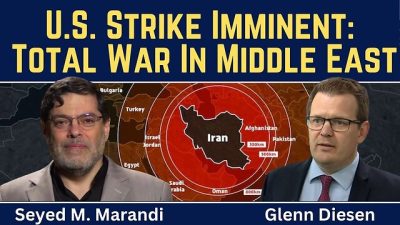
Seyed M. Marandi: Toward Total War in the Middle East
or go to
Aletho News Archives – Video-Images
From the Archives
The Geopolitics behind the War in Yemen (I)
By Mahdi Darius NAZEMROAYA | Strategic Culture Foundation | 30.03.2015
The United States and the Kingdom of Saudi Arabia became very uneasy when the Yemenese or Yemenite movement of the Houthi or Ansarallah (meaning the supporters of God in Arabic) gained control of Yemen’s capital, Sanaa/Sana, in September 2014. The US-supported Yemenite President Abd-Rabbuh Manṣour Al-Hadi was humiliatingly forced to share power with the Houthis and the coalition of northern Yemenese tribes that had helped them enter Sana. Al-Hadi declared that negotiations for a Yemeni national unity government would take place and his allies the US and Saudi Arabia tried to use a new national dialogue and mediated talks to co-opt and pacify the Houthis.
The truth has been turned on its head about the war in Yemen. The war and ousting of President Abd-Rabbuh Manṣour Al-Hadi in Yemen are not the results of «Houthi coup» in Yemen. It is the opposite. Al-Hadi was ousted, because with Saudi and US support he tried to backtrack on the power sharing agreements he had made and return Yemen to authoritarian rule. The ousting of President Al-Hadi by the Houthis and their political allies was an unexpected reaction to the takeover Al-Hadi was planning with Washington and the House of Saudi. … continue
Blog Roll
 Aletho News
- HE SAVED LIVES. NOW HE FACES PRISON.
- Israeli lobby seeks to bind US fate to ‘Israel’: Araghchi
- Pakistan-Iran talks secure LNG shipment to Islamabad through Hormuz
- Black Sea grain crisis puts global wheat supplies under pressure
- IRGC air defenses destroy another US MQ-1 drone over Strait of Hormuz
- Imran Khan’s entire immediate family detained in Pakistan ahead of mass protest demanding his release
- EU nation detains former presidential frontrunner
- Leaked: Britain’s Sham Conviction Of Hashim Thaci
- Seyed M. Marandi: U.S. Strike Imminent – Toward Total War in the Middle East
- Russia Voted Under Fire. Washington Is Loading the Tankers.
- If Americans Knew
- Israeli Attacks in Gaza Kill at Least Seven Palestinians Over Three Days, including Woman and Child
- Trump’s militarization of Washington DC as he pursues Israel’s war against Iran
- Why Israel Fears This Searing New Documentary
- Huckabee aide solicited cash gifts from Israelis
- This isn’t sci-fi, AI is already killing people
- ‘The Most Brutal Thing’: Investigation Reveals Execution of Elderly Woman in Rafah
- Inside Israel’s ‘soft’ ethnic cleansing plan for Gaza through the eyes of its victims
- New online database tracks pro-Israel political donations in the United States
- Israeli president pardons soldier convicted for killing wounded Palestinian
- Singer Ed Sheeran says his ‘heart broken’ by Gaza devastation, addresses Macklemore controversy
- No Tricks Zone
- 2025 Nature Paper Claiming Worsening Global Drought Gets RETRACTED …Heavily Flawed
- New Study: ‘Global Drought Shows No Detectable Recent Acceleration Under Climate Warming’
- Economic Masterminds: German Socialists Suggest Taxing Productivity Gains Stemming From Using AI
- The South China Sea Has Not Been Cooperating With The Climate Change Narrative
- Energy Crisis: Germany Enters Heating Season With Historically Low Gas Reserve Fill Levels
- New Study: The Antarctic Ice Sheet Gained Mass From 2020-2024 Due To Staggering Snow And Ice Accumulation
- Study: Ocean Heating Rates From Thousands Of Years Ago ‘Dwarf’ Modern Ocean Heating Rates
- Climate Extremists Target, Attack Large-Scale Power Grid Infrastructure In Germany!
- New Study: Antarctic Ice Melt Has Contributed Less Than 1 Centimeter To Sea Level Rise In The Last 30 Years
- Fear Of Debate: Alarmist German Climate Scientist Calls On Mainstream Media To Discredit Skeptic Voices
 Aletho News