Trump’s push to deport Pro-Palestinian activists faces court defeat
Al Mayadeen | August 29, 2026
A federal judge on Friday ruled that laws used by US President Donald Trump’s administration to revoke visas and pursue deportation proceedings against noncitizen college students over their pro-Palestinian advocacy and criticism of “Israel” are unconstitutional.
US District Judge Noel Wise in San Jose, California, sharply criticized the US State Department and US Department of Homeland Security for using provisions of federal immigration law to pursue deportation against noncitizens for expressing views the government sought to suppress.
The State Department and DHS did not immediately respond to requests for comment, according to Reuters.
Wise says free speech is central to democracy
Wise, an appointee of former Democratic President Joe Biden, said free speech in the United States, including the right to criticize the government and its leaders, demonstrated the strength of the country’s democracy.
“That strength is diminished when members of our society – citizens and noncitizens alike – must self-censor and ‘behave’ or suffer the government’s retaliation,” she said.
Case centered on campus pro-Palestinian advocacy
Wise’s ruling examined the Trump administration’s actions beginning in March 2025, when it started revoking visas and detaining noncitizens involved in pro-Palestinian advocacy on college campuses. The effort began with the arrest of Columbia University graduate Mahmoud Khalil, who is fighting separately to avoid deportation.
The arrests prompted a lawsuit filed in August 2025 by Stanford University’s student newspaper, The Stanford Daily. The newspaper reported that some of its writers who held student visas had stopped covering pro-Palestinian student demonstrations and issues connected to the wars in West Asia because of the administration’s policies.
The newspaper’s attorneys argued that two provisions of the Immigration and Nationality Act used by the administration to revoke student visas and begin deportation proceedings violated the First and Fifth Amendments of the US Constitution when applied to constitutionally protected speech.
Judge finds viewpoint discrimination
The provisions permitted Secretary of State Marco Rubio to deem a noncitizen deportable if he personally concluded that the person’s actions “compromises a compelling foreign policy interest” and also gave him discretion to revoke a person’s visa.
Wise sided with the newspaper, finding that when a noncitizen’s speech is the basis for a visa revocation and deportation decision, “the government is singling out that speech for disfavored treatment based on its viewpoint or content.”
Conor Fitzpatrick, whose group Foundation for Individual Rights and Expression represented The Stanford Daily, said in a statement that the ruling “proves that free speech isn’t a privilege, but the inalienable right of every man, woman, and child.”
Ruling follows earlier decision against administration
The decision echoes a ruling last year by Boston-based US District Judge William Young, who likewise determined that the administration had violated the Constitution by pursuing a policy of revoking visas, arresting, detaining and deporting foreign students and faculty involved in pro-Palestinian advocacy.
Wise also warned that the administration appeared to be expanding its focus to people expressing other views it considered objectionable. She said that eventually the “targets may include anyone in the United States who exercises their freedom of speech to simply express opinions the government does not like.”
“This downward spiral is antithetical to our Constitution that recognizes our right to speak freely,” she wrote. “Here you can simultaneously hate the content of a person’s speech and love the country that cherishes the freedom to allow it.”
What do you need to know?
The ruling comes amid a sweeping Trump administration crackdown on pro-Palestinian advocacy and campus demonstrations at US universities, including threats to cut federal funding from institutions that permit what the administration termed “illegal protests,” investigations into dozens of universities over alleged failures to address antisemitism, and major funding withdrawals targeting schools such as Columbia University and Harvard.
The administration has also pursued international students and scholars involved in pro-Palestinian activism through visa revocations and deportation proceedings, including high-profile cases.
US sanctions Palestine Action, designates group as ‘terrorist organization’
Press TV – August 26, 2026
The Trump administration has imposed sanctions on UK-based Palestine Action, freezing its US assets and prohibiting Americans from providing funds, goods or services to the pro-Palestine group.
The US Treasury Department announced the measure on Wednesday, designating Palestine Action as a Specially Designated Global Terrorist (SDGT), according to a notice published on its website.
The designation blocks any property or financial interests belonging to the group that fall under US jurisdiction and generally bars US persons from conducting transactions with it.
It also prohibits the provision of funds, goods or services to the group, with violations potentially carrying civil or criminal penalties.
The move makes Palestine Action the first known British left-wing activist group to face US so-called counterterrorism sanctions over activities Washington considers “terrorism.”
The designation places it on the same US sanctions list as groups including al-Qaeda and the Daesh Takfiri terrorist group.
The measures could also put British citizens who continue to fund Palestine Action or participate in activities on its behalf at risk of US sanctions and visa restrictions.
The US State Department said the action forms part of a broader campaign against what it describes as transnational far-left terrorism, including efforts to identify and disrupt international networks that organize, facilitate or carry out “violent activities.”
The designation follows the UK government’s decision in July 2025 to proscribe Palestine Action under the Terrorism Act, citing the group’s targeting of companies linked to Israel’s military industry.
Palestine Action has focused much of its campaign on Elbit Systems UK, Israel’s largest weapons manufacturer, which the group says has supplied weapons to the Israeli military during the genocidal war in Gaza.
In June 2025, activists broke into RAF Brize Norton and damaged military aircraft, an incident that preceded the British government’s decision to proscribe the group.
The group’s US branch, Palestine Action US, was formed with a similar aim of targeting and disrupting companies and military contractors connected to Israel. It later rebranded as Unity of Fields.
Palestine Action co-founder Huda Ammori denounced the US move, saying the group’s actions were aimed at disrupting Israel’s military industry.
The US sanctions come as Palestine Action continues to challenge its proscription in Britain. In July, the UK Court of Appeal upheld the government’s decision, ruling that Palestine Action was not an “ordinary protest group.”
However, the UK Supreme Court has since granted Ammori permission to challenge the ban. The case is scheduled to be heard between October 1 and December 21.
Jordanian police arrest Drop Site correspondent for ‘sedition’ over online post
The Cradle | August 25, 2926
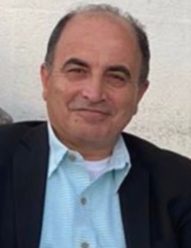 Jordanian intelligence officers arrested Ali Younes, a Jordanian-American journalist and Drop Site News correspondent, for allegedly “undermining the national security” of the Hashemite kingdom by sharing an article on social media that called for cutting US assistance to Amman.
Younes, a former Al Jazeera journalist, was detained upon his arrival at Queen Alia International Airport on 17 August, where he was held for questioning prior to being released with orders to appear before prosecutors in Amman.
Security officials told Younes and his lawyer that the case rests on his sharing of an article published in July by the American Conservative, which called on Washington to halt the billions of dollars it sends to the kingdom.
Prosecutors have classed the post as undermining Jordan’s national security, an offense that could put him behind bars for a year.
At a court hearing, prosecutors widened the file to include sedition and hate crimes, and barred Younes from leaving the country.
The article at the center of the case, headlined “Stop Sending Billions in US Aid to Jordan,” challenged the scale of Washington’s support for the monarchy and questioned why US citizens should bankroll King Abdullah.
Jordan has received $33.8 billion in US assistance over the past 75 years, with additional sums due under existing agreements.
Drop Site News has demanded that Jordanian authorities drop the charges and lift the travel ban on their colleague, and called on Washington to assist Younes as a US citizen against the accusations.
Across the Gulf and the wider region, the US war on Iran has been used as a pretext for domestic repression, with Bahrain, Kuwait, the UAE, Saudi Arabia, and Qatar all turning cybercrime, counterterrorism, and nationality laws against their own populations.
Hundreds of citizens and residents have been detained over war-related speech, from filming strikes to expressing sympathy for Tehran, with penalties running to life imprisonment, mass revocations of nationality, and the expulsion of lawmakers from parliament.
In Kuwait, the Education Ministry stripped the country’s only Iranian private school of its license and ordered it closed on 6 August, telling parents to move their children elsewhere.
In Bahrain, activist Mohammad al‑Mousawi was arrested at a checkpoint and tortured to death in March after being accused of links to “secret Iranian cells,” with witnesses and medical evidence documenting beatings, cable whippings, and electrocution burns.
CA ATTACKS JOURNALISM, THE CLANCY CONTROVERSY & MRNA’s CANCER CURE?
The Download | August 24, 2026
This week on The Download, California’s latest attempt to police journalism raises new questions about who gets to define misinformation. As the Lindsay Clancy trial reaches its final arguments, Jefferey asks whether another powerful player is escaping scrutiny. Then, an undercover investigation reveals how quickly a complaint about ADHD can open the door to a staggering menu of psychiatric drugs.
Plus, Moderna’s new mRNA cancer-vaccine “breakthrough” faces questions beyond the glowing headlines, ‘Face the Nation’ moderator Margaret Brennan’s COVID-mandate narrative collides with her own record, and Jefferey issues a major call to action as Secretary Kennedy seeks public input on federal vaccine recommendations.
Israel subjecting Russian historian to brutal interrogation – lawyer

RT | August 24, 2026
Russian-Israeli historian Artyom Kirpichenok has been subjected to brutal treatment while in Shin Bet custody, including interrogations lasting up to 24 hours, sleep deprivation, prolonged handcuffing, and threats, according to his lawyer.
Kirpichenok, 51, disappeared on August 2 shortly after arriving at Ben Gurion Airport from Yerevan. His whereabouts remained unknown for nearly three weeks before his supporters revealed that he was being held at a detention facility in Petah Tikva.
His lawyer, Inna Lebedinskaya-Katz, was finally allowed to meet with him for around an hour on Sunday after repeatedly seeking access, according to Nika Dubrovsky, a Russian-born artist and writer campaigning for his release.
Citing Lebedinskaya-Katz, Dubrovsky said Kirpichenok has faced interrogation sessions lasting 18 to 24 hours while deprived of sleep. He is allegedly being kept handcuffed and hunched over on an iron stool fixed to the floor, with three or four interrogators standing behind him “shouting, threatening, and applying constant pressure.” He has also allegedly been threatened with life imprisonment.
Kirpichenok is in “tolerable physical condition” and has no immediate health complaints, but is “exhausted, tormented and deeply depressed,” Dubrovsky wrote on X on Monday.
”He understands that his friends have not abandoned him. He is holding on and sends his greetings to everyone,” she wrote. Kirpichenok also asked that no one come to Israel.
The allegations have not been independently verified. However, international human rights groups previously documented sleep deprivation and painful restraint during Shin Bet interrogations. Israel’s Supreme Court has ruled against deliberately using prolonged sleep deprivation to break suspects.
Kirpichenok is being held underground with the lights on around the clock and denied books and writing materials, Dubrovsky cited his lawyer as saying. A gag order remains in force, and the defense has yet to receive the case files or details of the accusations.
Kirpichenok, a dual Russian-Israeli citizen and Middle East expert, is known for criticizing Israel’s policies toward Iran and Palestine. Moscow sought information from the Israeli authorities following his disappearance and said it is closely monitoring the case.
Kirpichenok recently worked with media outlets and civic organizations in Türkiye and Iran and frequently traveled to Iran. Israeli citizens are generally prohibited from traveling to countries they are at war with. Dubrovsky, however, said the trips now appear to be of little interest to investigators.
Born in Russia, Kirpichenok moved to Israel in the 1990s, studied at the Hebrew University of Jerusalem and served in the Israel Defense Forces before returning to Russia. He later became a vocal critic of the Israeli government and its military campaign in Gaza, describing Israel as a Western “colonial project” in his recent book ‘Israel: The Road to Catastrophe’.
The Israeli authorities have yet to publicly disclose any charges against him.
US journalist says he was interrogated over criticism of Ben-Gvir
Al Mayadeen | August 22, 2026
US journalist Ethan Levins said he was questioned by the Department of Homeland Security after returning to the United States from Lebanon, revealing that authorities asked him about his criticism of Israeli Minister Itamar Ben-Gvir.
In a post on X, Levins said the questioning took place the previous day and that authorities focused on why he had posted negative comments about Ben Gvir.
“I am a born American who lives in the United States, and they stopped me at the airport for an Israeli politician,” Levins wrote.
He added, “I’m serious.”
Ethan Levins says ‘Israel’ is attacking him personally
In a separate post, Levins said “Israel” was personally targeting him, warning his followers that any sudden halt in his social media activity would mean he had been forced to stop.
Levins said he regularly publishes across his accounts and provides hourly updates on Telegram, emphasizing that he is never inactive. He asked followers to notify others if something happened to him.
“If something happens to me, please let everyone know. I post daily across my accounts, and hourly updates on Telegram. I am NEVER inactive. If I suddenly stop, then it means I’ve been forced,” he wrote in a post on X.
“I am an American Christian, and Israel is attacking me personally,” he stressed.
Ethan Levins says he fears for his safety after detention
In yet another post on X, Levins said he was genuinely afraid for his safety after speaking out against an Israeli minister and being detained by the US government. He questioned why he was being punished by Israeli authorities despite being an American citizen.
“I’m genuinely afraid for my safety. I spoke against an Israeli Minister, and was detained by my own government. I’m an American, yet I’m punished by the Israelis. Why?,” he wrote on X.
In a further statement on X, Ethan Levins said he was detained by the US Department of Homeland Security for three hours and questioned exclusively about “Israel” and Israeli Police Minister Itamar Ben-Gvir.
“I was detained by the Department of Homeland Security for 3 hours. They didn’t ask a SINGLE QUESTION about the United States. They ONLY asked me about Israel and Ben Gvir,” he wrote.
“I’m an American, why does the DHS care so much about protecting Ben Gvir?,” he questioned.
Levins links DHS questioning to Ben Gvir in X post
Levins later referred to Ben-Gvir as the same person about whom, he said, Department of Homeland Security officials questioned him during his detention the previous day.
“This is the same guy the DHS detained and questioned me about yesterday. Apparently the Department of Homeland Security works for Ben Gvir, not the United States.”
Levins shared a post by Ben-Gvir dated June 19, in which the Israeli minister called for Lebanon to suffer in response to the deaths of Israeli mothers.
“For every tear of an Israeli mother, a thousand Lebanese mothers must weep. All of Lebanon must burn! With all due respect to the Americans, Israel must make it clear to the entire world that the blood of our sons and the security of our citizens,” Ben-Gvir wrote.
Levins accuses Trump of abandoning Americans for ‘Israel’ and Epstein files
Taking to X again, Levins launched a sharp attack on US President Donald Trump, accusing him of abandoning concerns over rising gas, housing and food prices, as well as the lives of US service members.
Levins stressed that Trump’s priorities had instead shifted to concealing the Epstein files and waging wars in support of “Israel”, portraying the president’s approach as a betrayal of the “MAGA” movement.
“The ONLY thing he cared about was hiding the Epstein files and fighting wars for Israel. This is NOT ‘MAGA’, this is betrayal,” he stressed.
Levins’ case reflects growing concerns among Americans who say criticism of “Israel” and the Trump administration’s unwavering support for it can carry consequences, particularly as opposition mounts to Israeli influence over US policy and Washington’s role in the war on Iran.
An Israeli rhetoric with grave human rights implications
Levins’ criticism of Ben-Gvir came as the Israeli minister’s rhetoric continued to draw scrutiny, particularly over his remarks regarding Lebanon and Gaza.
Ben-Gvir has openly advocated killings, executions, and the permanent settlement of Gaza while describing Palestinians as people who “don’t deserve to live.”
Such statements raise grave concerns under international human rights and humanitarian law, which protect the right to life and prohibit arbitrary killing, collective punishment, and the forced displacement of civilians.
The United Nations has identified killings of civilians, collective punishment, incitement to violence, and the denial of essential resources as matters requiring investigation under international law.
The remarks went beyond inflammatory language, raising serious concerns about the lives of Palestinians under Israeli occupation and the extent to which such rhetoric can normalize the targeting, killing, and forced displacement of civilians.
David Miller on his victory over Zionism, Pax Judaica, and Jewish Supremacy
If Americans Knew | August 17, 2026
David Miller is a British sociologist whose research and publications focus on Islamophobia and propaganda. Miller was Professor of Political Sociology at the University of Bristol, where he was dismissed by the university because it was deemed he had not met the standards of behavior expected from staff. The dismissal related to allegations from students that Miller engaged in antisemitism during one of his lectures.
Miller was ultimately cleared of any unlawful behavior. In 2026, the Employment Appeal Tribunal upheld the 2024 Employment Tribunal finding that Miller’s anti-Zionist beliefs constituted a protected philosophical belief under section 10 of the Equality Act 2010.
In this interview Miller discusses his victory over Zionism, Pax Judaica, and Jewish Supremacy. Miller describes how the United States and its powerful armed forces have become a proxy for the Jewish state’s imperial interests.
For the entire interview, visit:  • David Miller CRUSHES Zionists in Court
EU faces criticism for secret police data talks with Israel: Report
MEMO | August 15, 2026
The European Commission has been negotiating a secret agreement to share sensitive personal data with Israel’s police service, despite internal legal warnings that the deal could violate international law and put Palestinians at risk, according to a new report by civil rights group Statewatch published by Novara Media.
The draft agreement, originally negotiated with the European police agency Europol, would allow the exchange of biometric data, genetic information, location data, political views, and personal details.
Critical research indicates the deal has progressed despite a 2022 ruling by the Council of the EU’s Legal Service which deemed the proposal legally untenable.
It warned that the agreement risks legitimizing Israel’s illegal occupation of Palestinian territories and would undermine the Palestinian people’s right to self-determination.
Concerns have been raised about the potential misuse of data collected by EU police missions operating in the West Bank and the Gaza Strip city of Rafah. Experts warn that if handed to Israeli authorities, the information could feed into existing military surveillance systems used against the Palestinian population.
“The data transferred via the agreement could be used as intelligence to support decisions to attack and kill Palestinians,” legal expert Eitan Diamond told Novara Media. “The EU would run the risk of arbitrarily depriving people of their freedom and subjecting them to systematic ill-treatment under hellish conditions in detention.”
Palestinian lawyer Raji Sourani condemned the talks, telling Novara Media that “the intended cooperation is rooted in the racist colonial mentality of Europe, and turns against us Palestinians, the victims of genocide.”
While the draft text tried to exclude the use of shared data in occupied territories, it contained broad exceptions for “imminent danger to life” and the prevention or prosecution of general crimes. European legal experts called the exceptions far too vague.
The negotiations build on a narrower 2018 arrangement that explicitly excluded personal data sharing and the occupied territories. Critics said the commission’s continued pursuit of the expanded deal breaches its own diplomatic policy and ignores recent rulings by international courts.
Douwe Korff, a legal scholar affiliated with Yale University, called the commission’s position “deeply concerning,” pointing to the risk of sharing sensitive information with a state “credibly accused of genocide and other crimes.”
Since October 2023, an Israeli genocide has killed 73,389 Palestinians and injured 174,266 others according to Gaza’s Health Ministry.
Despite a ceasefire signed in October 2025, Israeli attacks have continued in Gaza, causing further casualties and damage to infrastructure.
German opposition slams spy agency ‘revolution’
RT | August 13, 2026
A sweeping overhaul of Germany’s intelligence services proposed by the government could infringe on police powers in violation of constitutional safeguards, opposition politicians have warned.
On Wednesday, Interior Minister Alexander Dobrindt presented a 730-page package comprising three draft laws that would significantly expand the powers of the Federal Intelligence Service (BND) and the Federal Office for the Protection of the Constitution (BfV), Germany’s foreign and domestic intelligence agencies respectively.
While there is broad political agreement that Germany’s security apparatus requires modernization, critics say the proposed expansion of the BfV’s mandate goes too far. Germany has traditionally maintained a strict separation between intelligence gathering and police work to prevent concentration of power.
“Dobrindt, with these demands that he hastily dictated into the draft legislation, is doing far more harm than good,” Free Democratic Party (FDP) leader Wolfgang Kubicki told the Frankfurter Allgemeine Zeitung.
The BfV is currently focused on collecting and analyzing data. Under the proposed reform, however, the agency would receive new “operative powers” allowing it to actively disrupt suspected threats. These could include hacking computer systems, feeding false information to targets, altering or deleting data, and secretly sabotaging equipment believed to be connected to hostile operations.
Dobrindt has argued that the proposed intelligence “revolution” is necessary to tackle an evolving “hybrid threat landscape.”
Critics contend that the proposed reform would fundamentally alter the relationship between the state and citizens, particularly because the BfV operates under a different system of legal oversight from ordinary law-enforcement bodies, which generally require judicial authorization for intrusive measures.
“Equipping a secretive security agency with such powers will predictably create more chaos and problems,” Kubicki said.
Green Party MP Konstantin von Notz likewise argued that the reform represents a fundamental departure from existing norms and would “end up before the Federal Constitutional Court.”
Gottfried Curio, the domestic-policy spokesman for the parliamentary group of the Alternative for Germany (AfD) party, denounced the proposal as a “deliberate attempt to blur the line” between intelligence gathering and policing. He also described it as an “arrogant self-empowerment” by the federal government that should be rejected.
The BfV has for years scrutinized the right-wing, anti-immigration AfD over suspected threats to Germany’s constitutional order, giving the agency expanded legal grounds to surveil its leaders. The AfD has rejected the allegations and accused the authorities of using the agency for politically motivated pressure.
Christian Wirth, another AfD lawmaker, warned last month that the proposed reform could transform the BfV “from an early warning system of democracy into an architect of a totalitarian reality.”
The AfD continues to post strong polling numbers despite other major German parties maintaining a policy of refusing to form governing coalitions with it.
Party co-leader Alice Weidel argued this week that the trend could eventually allow the AfD to form single-party governments in some federal states.
She pointed to recent polling in Saxony-Anhalt showing the party at 43% ahead of an election in early September, more than twice the share of the vote it received there in 2021.
Israeli Shin Bet ‘Disappears’ Russian-Israeli Historian Who Was Critical Of Zionism

By Justin K.P. | The Dissident | August 10, 2026
The Israeli Shin Bet has apparently forcibly disappeared Artyom Kirpichonok, a Russia-based historian with Israeli citizenship who has been critical of Zionism.
According to friends of Kirpichonok, “Kirpichonok arrived in Israel last week on a flight from Yerevan, the capital of Armenia, to attend an event to which he had been invited. After landing, however, he did not contact any of them and has not been heard from since. Reports indicate he arrived at Ben Gurion Airport from Yerevan on Aug. 2.”
Ynet noted that, he , “was born in St. Petersburg and immigrated to Israel in the 1990s. He graduated from the Hebrew University of Jerusalem and returned to live in Russia about 15 years after moving to Israel. He later adopted a strongly critical stance toward Israel and frequently wrote against the country and Zionism.”
Apparently, Artyom Kirpichonok’s disappearance was due to an arbitrary arrest and detention by the Israeli Shin Bet.
The former Russian lawmaker Daria Mitina alleged that “Our worst fears have been confirmed… Artem Ivanovich Kirpichenok is in prison, in the hands of the Israeli secret police Shabak”.
One friend and colleague of Artyom Kirpichonok, Nika Dubrovsky, wrote in Counterpunch that “What we know is that he was arrested by the Shin Bet, Israel’s secret police. There has been no contact with him since. There has been no official reason for his detention.”
According to Dubrovsky, “On August 2nd, Kirpichenko landed in Tel Aviv. A lawyer hired by his friends has since confirmed that he is being held by the Shin Bet — Israel’s internal security service” adding , “it’s so obvious he posed no danger to the authorities whatsoever: he wasn’t a member of any party, he never took any practical action on anything — partly because he was an extremely impractical person.
His only crime was his opinion on various political questions. A thoughtcrime, in other words: ‘the essential crime that contained all others in itself,’ as Orwell wrote.”
She added that many had attacked his blog posts critical of Israel, including “Ukrainian and Russian expats, former Soviet citizens living in Israel, who apparently couldn’t leave his blog alone”.
The researcher Volodymyr Ishchenko raised the possibility that Artyom Kirpichonok was even lured to Tel Aviv by the Shin Bet under the guise of a “fake invitation to an event”.
What is clear is that the Israeli Shin Bet disappeared a historian with Israeli citizenship simply because he was critical of Zionism.
Palantir revenue surges 93% amid criticism over support for Israel’s Gaza war
MEMO | August 4, 2026
US artificial intelligence and data analytics company Palantir Technologies reported a 93% year-on-year surge in second-quarter revenue, despite mounting criticism over its support for Israel and the alleged use of its technology in the Gaza war, Anadolu reports.
Revenue reached $1.94 billion in the three months ended June 30, up from $1 billion a year earlier, the company said Monday.
Net income attributable to common shareholders more than tripled to $1.06 billion, while diluted earnings per share rose to $0.41 from $0.13.
Palantir’s US revenue climbed 115% year-on-year to $1.57 billion. US commercial revenue jumped 149% to $764 million, while government revenue increased 90% to $809 million.
“This quarter was otherworldly,” CEO Alex Karp said, citing accelerating demand for what the company calls “AI sovereignty.”
Palantir signed 220 contracts worth at least $1 million during the quarter, including 73 deals valued at $10 million or more.
Total contract value rose 49% to $3.37 billion, while US commercial contract value surged 153% to a record $2.13 billion.
The company raised its full-year revenue forecast to between $8.15 billion and $8.16 billion, from an earlier projection of $7.65 billion to $7.66 billion.
It expects US commercial revenue to exceed $3.42 billion this year, representing growth of at least 134%.
Palantir shares rose more than 14% in after-hours trading following the results.
Founded in 2003, Palantir develops data-analysis software used by companies, intelligence services and military agencies.
The company announced a strategic partnership with Israel’s Defense Ministry in January 2024 to provide technology for war-related missions.
Open Intel, a platform tracking corporate involvement in what it describes as the genocidal war on Gaza, says Palantir has recruited former members of Unit 8200, Israel’s elite cyberintelligence division.
The group alleges that Palantir’s software combines intercepted communications, satellite imagery and other data to help Israeli forces generate military targeting lists.
British academic and Press TV co-host David Miller wins legal battle as UK court protects anti-Zionist beliefs

British academic and Press TV co-host David Miller (File)
Press TV – August 4, 2026
A British appeals tribunal has upheld a landmark ruling in favor of British academic David Miller, confirming that anti-Zionist beliefs are protected under UK equality law and dismissing almost all of the University of Bristol’s appeal against findings of unlawful discrimination and unfair dismissal.
The Employment Appeal Tribunal (EAT) overwhelmingly rejected the University of Bristol’s challenge to an earlier Employment Tribunal judgment that found Miller, a producer and co-host of Press TV’s weekly show ‘Palestine Declassified’, had been unlawfully discriminated against and unfairly dismissed because of his anti-Zionist philosophical beliefs.
The Tuesday ruling establishes a binding legal precedent that anti-Zionist beliefs are protected under the Equality Act 2010, making it unlawful to discriminate against individuals because they hold the belief that Zionism is inherently racist, imperialist and colonial, and ought to be opposed.
Miller, a professor of political sociology specializing in propaganda, lobbying and state power, was dismissed by the University of Bristol in October 2021 following a sustained campaign over his criticism of Zionism, Israel and pro-Israel lobbying organizations.
The appeal court upheld the tribunal’s findings that Miller’s expression of his anti-Zionist beliefs had a “material impact” on the university’s decision to dismiss him, while reaffirming that protection of free speech is particularly important in cases involving political speech.
Rejecting the university’s argument that Miller’s views amounted only to political opinions, the EAT ruled that his critique of Zionism constitutes a protected philosophical belief under Section 10 of the Equality Act.
In a key passage, the tribunal said it was coherent to describe as “racist” an ideology promoting the establishment of a state for only “one race of people” in territory inhabited by another population, while also affirming the legitimacy of describing the migration of that group into the territory with the support of an imperial power as “colonial and imperialistic.”
The court also reiterated the earlier finding that Miller “did not oppose or have antipathy towards Jews or Judaism,” noting that the university itself had not alleged during the original proceedings that his statements were antisemitic.
In a statement following the ruling, Miller said, “For years, the University of Bristol capitulated to an intimidation campaign by genocidal Zionist groups to criminalise my sociological research.”
“The court has made it clear: universities ‘ought to be prepared to face and to weather criticism and reputational damage which flows from the exercise by its academics of their rights to speak and think freely and lawfully’ [Para 47],” said the professor, adding, “The court has also declared that it is clear, coherent and legitimate to describe Zionism as racist, colonial and imperialist. Zionist claims to the contrary have been comprehensively rebuffed.”
‘Legal precedent’
“The binding legal precedent we have established in my case,” he maintained, “means no vice-chancellor can ever again lawfully sack an academic or suspend a student simply for identifying the structural racism, colonialism and imperialism inherent in the Zionist project. Nor can any other employer. This victory belongs to the global movement for the liberation of Palestine and the final dismantling of Zionism.”
He noted that he is looking forward to returning to his work at the University of Bristol in his post as professor of political sociology. “It is important that my career is reinstated and that I am therefore free to work in higher education without fear of intimidation or reprisal.”
The judgment is expected to have significant implications for universities and employers across the United Kingdom by reinforcing legal protections for philosophical beliefs and academic freedom.
Featured Video

Trita Parsi: Middle East Unraveling — Are We on the Path to World War?
or go to
Aletho News Archives – Video-Images
From the Archives
Why Saudi Ties to 9/11 Mean U.S. Ties to 9/11
By Kevin Ryan | Dig Within | September 27, 2015
Media interest in Saudi Arabian connections to the crimes of 9/11 has centered on calls for the release of the 28 missing pages from the Joint Congressional Inquiry’s report. However, those calls focus on the question of hijacker financing and omit the most interesting links between the 9/11 attacks and Saudi Arabia—links that implicate powerful people in the United States. Here are twenty examples. … continue
Blog Roll
 Aletho News
- Neria Leiter Was A Legitimate Military Target
- Integrity Initiative: UK-funded network framed dissent as Russian disinformation for years
- ‘We don’t seek permission to defend our country’: Snippets from President Pezeshkian’s UNGA address
- NATO chief wants Europeans to fight American wars [for Israel]
- German chemicals giant reveals details of downsizing
- Refaat Al-Areer Was The Canary In The Coal Mine In Israel’s War On The Truth
- Israeli election committee bars candidate from Knesset race over Gaza war opposition
- French-Lebanese man files war crimes complaint over Israeli attacks
- Mahan Air Flight Lands in China Despite US Threat against Iranian Airlines
- US eyes $10bn fund to rebuild war-battered Gulf infrastructure
- If Americans Knew
- Caught on Tape: AIPAC CEO Boasted of Controlling Trump’s National Security Officials
- Why Hamas Attacked Israel in October 2023 – Israeli professor Ilan Pappé
- They see them, then kill them: Israeli quadcopters track, deliberately target civilians in Gaza
- Winter could turn Gaza’s treacherous, war-damaged buildings into deathtraps
- Majority of Democratic Voters Want to Prosecute Both Biden and Trump Administration Officials Over Gaza
- As Gaza languishes, world leaders gather at the UN – Daily Update
- Sanctions are collective punishment: immoral and self-defeating
- Phosphorus Munitions Fired by Israel Burn Groves, Orchards in Southern Lebanon
- Israel Carries Out New Ceasefire Violations Across Gaza
- AI – Emphasis on the ‘I’: Israel Is Funding AI Chatbot Propaganda
- No Tricks Zone
- New Study: Earth And Venus Surface Warmth Largely Explained By Convection And Lapse Rate, Not CO2 Or Radiation
- 2025 Nature Paper Claiming Worsening Global Drought Gets RETRACTED …Heavily Flawed
- New Study: ‘Global Drought Shows No Detectable Recent Acceleration Under Climate Warming’
- Economic Masterminds: German Socialists Suggest Taxing Productivity Gains Stemming From Using AI
- The South China Sea Has Not Been Cooperating With The Climate Change Narrative
- Energy Crisis: Germany Enters Heating Season With Historically Low Gas Reserve Fill Levels
- New Study: The Antarctic Ice Sheet Gained Mass From 2020-2024 Due To Staggering Snow And Ice Accumulation
- Study: Ocean Heating Rates From Thousands Of Years Ago ‘Dwarf’ Modern Ocean Heating Rates
- Climate Extremists Target, Attack Large-Scale Power Grid Infrastructure In Germany!
- New Study: Antarctic Ice Melt Has Contributed Less Than 1 Centimeter To Sea Level Rise In The Last 30 Years

