West cannot hide crimes against Syria with humanitarian allegations: Syrian envoy to UN
Press TV – September 17, 2020
Syrian Ambassador to the United Nations Bashar al-Ja’afari says the West’s crimes, including economic terrorism, against Syria cannot be hidden by humanitarian claims and allegations.
Speaking at a UN Security Council session on the humanitarian situation in Syria via a video link, Ja’afari said the Western states, which have introduced coercive economic measures against the Arab country, would not be able to cover up the repercussions of their economic terrorism against Syrians.
He also stressed that the humanitarian allegations against Syria made by the West would not be able to hide its horrible crimes in exerting more pressure on the Arab nation and hampering the reconstruction process in the war-ravaged country and the return of the displaced Syrians.
Ja’afari noted that some Western countries, which have slapped Syria with persisting illegal sanctions, are telling outright lies in claiming that they are not targeting Syrians and that they are trying to provide humanitarian and medical exemptions to assist the Syrians.
The Syrian envoy also lambasted claims by the Western states that Damascus had deprived COVID-19 Syrian patients of due treatment, stressing that Syrian citizens are in fact suffering greatly from the disastrous effects of Western coercive measures.
“Since 1978, the US successive administrations have imposed coercive measures on the Syrian economy and its vital sectors, such as civil aviation, petroleum, energy, telecommunications, technology, banking, import and the export, including the import and manufacturing of food, medicines and basic medical equipment, to dissuade Syria from its stances in rejection of the hegemony and occupation policies,” Ja’afari added.
Elsewhere in his remarks, the Syrian envoy demanded the withdrawal of all Turkish troops and their allied militant groups from northern and northwestern parts of the Arab country.
He also stressed the need for ending the US occupation of the areas northeast of the Arab country and holding Washington and its allies and separatist militias and terrorist groups affiliated to it responsible for prolonging the suffering of the displaced in al-Hawl and al-Rukban camps.
In conclusion, Ja’afari referred to a recent report by the Guardian, which cited US research centers and academics as saying that the US, since 2001, has displaced 37 million persons in Iraq, Afghanistan, Syria, Libya, Yemen and elsewhere under the slogan of the so-called “war on terrorism.”
How USA and Turkey Plunder and Loot Syria with Impunity
By Rick Sterling | Dissident Voice | September 16, 2020
While President Trump lashes out at rioting and looting in Portland and Kenosha, half way around the world, the USA and Turkey are plundering and looting Syria on a vastly greater scale with impunity and little publicity.
Turkey Loots Syria, then Disrupts Safe Water Supply
Turkey has been plundering the Syrian infrastructure for years. Beginning in late 2012 and continuing through 2013 some 300 industrial factories were dismantled and taken to Turkey from Aleppo, the industrial capital of Syria. “Machinery and goods were loaded on trucks and carried off to Turkey through the Cilvegozu and Ceylanpinar crossings. Unfortunately, ‘plundering’ and ‘terror’ have become permanent parts of the Syrian lexicon when explaining their saga.”
In October 2019 Turkish forces invaded Syria and now occupy a strip of land in north east Syria. The area is controlled by the Turkish military and pro Turkish militia forces misnamed the “Syrian National Army”. Turkish President Erdogan dubbed the invasion “Peace Spring” and said the goal was to create a “safe zone”. The reality was that 200 thousand Syrians fled the invasion and over 100 thousand have been permanently displaced from their homes, farms, workplaces and livelihoods.
The industrial scale looting continues. As reported recently in the story headlined Turkish-backed factions take apart power pylons in rural Ras Al-Ain: “Reliable sources have informed SOHR that Turkish-backed factions steal electricity power towers and pylons in ‘Peace Spring’ areas in Ras Al-Ain countryside.”
Turkey now controls the border city of Ras al-Ain and the nearby Allouk water treatment and pumping station. This is the water station supplying safe water to the city Hasaka and entire region. The Turkish forces are using water as a weapon of war, shutting down the station to pressure the population to be compliant. For over two weeks in August, with daily temperatures of 100 F, there was no running water for nearly one million people.
With no tap water, civilians were forced to queue up for hours to receive small amounts from water trucks. Unable to buy the water, other civilians took their chances by drinking water from unsafe wells. According to Judy Jacoub, a Syrian journalist originally from Hasaka, “The residents of Hasaka and its countryside have been pushed to rely on unsafe water sources ….Many residents have been suffering from the spread of fungi, germs and dirt in their hair and bodies as a result of using well water that is not suitable for drinking and personal hygiene. The people of Hasaka remain vulnerable to diseases and epidemics because of the high temperatures and spread of infectious diseases. If the situation is not controlled as soon as possible, the spread of Corona virus will undoubtedly be devastating.” A hospital medical director says many people are getting sick from the contaminated water.
Judy Jacoub explains what has happened most recently: “After Syrian and international efforts exerted pressure on the Turkish regime, 17 wells and three pumps were started . The main reservoirs were filled and pumping was started toward the city neighborhoods. However, despite the Turkish militia’s resumption of pumping water again, there is great fear among the citizens.”
USA Loots Syrian Oil and Plunders the Economy
The USA also has occupying troops and proxy/puppet military force in north east Syria. The proxy army is misnamed the “Syrian Democratic Forces” (SDF). How they got that name is revealing. They took on this name as they came under the funding and control of the US military. As documented here, US Army General Ray Thomas told their leadership, “You have got to change your brand. What do you want to call yourselves besides the YPG?’ Then, he explained what happened: “With about a day’s notice they declared that they are the Syrian Democratic Forces. I thought it was a stroke of brilliance to put democracy in there somewhere.”
There are numerous parties and trends within the Syrian Kurdish community. The US has been funding and promoting the secessionist element, pushing them to ally with Turkish backed jihadists against the Damascus government. The violation of Syrian sovereignty is extreme and grotesque.
Prior to the war, Syria was self-sufficient in oil and had enough to export and earn some foreign revenues. The primary oil sources are in eastern Syria, where the US troops and proxy forces have established bases. It is desert terrain with little population.
To finance their proxy army, the US has seized control of the major Syrian oil pumping wells. It is likely that President Trump thinks this is brilliant bold move – financing the invasion of Syria with Syrian oil.
In November 2019 President Trump said, “We’re keeping the oil… The oil is secure. We left troops behind only for the oil.” Recently, it was revealed that a “Little known US firm secures deal for Syrian oil“. Delta Crescent Energy will manage and escalate the theft of Syrian oil.
What would Americans think if another country invaded the US via Mexico, set up bases in Texas, sponsored a secessionist militia, then seized Texas oil wells to finance it? That is comparable to what the US is doing in Syria.
In addition to stealing Syria’s oil, the US is trying to prevent Syria from developing alternate sources. The “Caesar sanctions” on Syria threatens to punish any individual, company or country that invests or assists Syria to rebuild their war damaged country and especially in the oil and gas sector.
The US establishment seems to be doing everything it can to undermine the Syrian economy and damage the Syrian currency. Due to pressure on Lebanese banks, plus the Caesar sanctions, the Syrian pound has plummeted in value from 650 to 2150 to the US dollar in the past 10 months.
North east Syria is the breadbasket of the country with the richest wheat and grain fields. There are reports of US pressuring farmers to not sell their wheat crops to the Syrian government. One year ago, Nicholas Heras of the influential Center for New American Security argued “Assad needs access to cereal crops in northeast Syria to prevent a bread crisis in the areas of western Syria that he controls….Wheat is a weapon of great power in this next phase of the Syrian conflict.” Now, it appears the US is following this strategy. Four months ago, in May 2020, Syrian journalist Stephen Sahiounie reported, “Apache helicopters of the US occupation forces flew low Sunday morning, according to residents of the Adla village, in the Shaddadi countryside, south of Hasaka, as they dropped ‘thermal balloons’, an incendiary weapon, causing the wheat fields to explode into flames while the hot dry winds fanned the raging fire.
After delivering their fiery pay-load, the helicopters flew close to homes in an aggressive manner, which caused residents and especially small children to fear for their lives. The military maneuver was delivering a clear message: don’t sell your wheat to the Syrian government.”
To better loot the oil and plunder the Syria economy, in the past weeks the US is sending more heavy equipment and military hardware through the Kurdish region of Iraq.
In the south of Syria, the US has another base and occupation zone at the strategic Al Tanf border crossing. This is at the intersection of the borders of Syria, Iraq and Jordan. This is also the border crossing for the highway from Baghdad to Damascus. The US controls this border area to prevent Syrian reconstruction projects from Iraq or Iran. When Syrian troops have tried to get near there, they have been attacked on their own soil.
Meanwhile, international funds donated for “Syrian relief” are disproportionately sent to support and assist the last strong-hold of Al Qaeda terrorists in Idlib on the north west border with Turkey. The US and its partners evidently want to sustain the armed opposition and prevent the Syrian government from reclaiming their territory.
Flouting International Law and the UN Charter
The USA and Turkey have shown how easy it is to violate international law. The occupation of Syrian land and attacks on its sovereignty are being done in broad daylight. But this is not just a legal issue. Stopping the supply of safe drinking water and burning wheat fields to create more hunger violate the most basic tenets of decency and morality.
With supreme hypocrisy, the US foreign policy establishment often complains about the decline in the “rule of law”. In actuality, there is no greater violator than the US itself.
In his speech to the UN Security Council, Syrian Ambassador Ja’afari decried this situation saying “international law has become like the gentle lamb whose care is entrusted to a herd of wolves.”
• Author’s note: To see good political and military maps of Syria, go to southfront.org
Rick Sterling is an investigative journalist who has visited Syria several times since 2014. He lives in the SF Bay Area and can be reached at rsterling1@gmail.com.
Russian Clouds Over Turkish-Backed Jihadi Paradise In Idlib
South Front | September 17, 2020
On September 16, hundreds of protesters gathered near those Turkish military positions in Greater Idlib, which are surrounded by the Syrian Army, demanding the full withdrawal of the Turkish Army from Syria.
The largest protests took place near Turkish observation posts at Murak and Alsurman. Both these posts were surrounded by Syrian troops during the military operation against Turkish-backed al-Qaeda terrorists in southern Idlib. A majority of the protesters who took part in the event were from the nearby towns and villages, including Murak, Alsurman and Tell Touqan.
In the best traditions of Turkish ‘democracy’, Turkish soldiers from the Murak observation post responded to the protesters with tear gas.
Later on the same day, the Turkish government claimed that the observation posts had become the target of provocations and even individual attacks fomented by the ‘Assad regime’. According to the Turkish side, Turkish forces successfully repelled the provocation.
Meanwhile, Russian-Turkish military consultations on the conflicts in Syria and Libya have been ongoing in Ankara. According to Russian state media, Moscow proposed that the Turkish military reduce the number of observation posts in Greater Idlib, but the proposal was rejected. Nonetheless, Russian state media reported, citing their own sources, that Turkey had agreed to reduce the number of troops deployed in Idlib.
Currently, Ankara has almost 10,000 troops and thousands of pieces of military equipment, including battle tanks and artillery, in northwestern Syria. If the media reports are true, the formal and widely-promoted withdrawal of a dozen Turkish military trucks with several dozen troops will not change the situation strategically. Ankara has repeatedly demonstrated that it is not interested in a real fight against terrorism in Syria and that it in fact uses Idlib terrorist groups to promote its own agenda. This posture could be changed only under the increasing pressure of circumstances and regular friendly reminders from Turkey’s ‘strategic partners’.
As one such reminder over the past few days, the Russian Aerospace Forces conducted more than a hundred airstrikes on infrastructure and positions of the Turkish-backed terrorists. These strikes started last weekend and as of the morning of September 17, it does not seem that they will be fully halted anytime soon. Clouds have once again gathered over the jihadi paradise, which is being created by the Erdogan government in northwestern Syria.
Bahrain civil society groups reject normalisation agreement
MEMO | September 14, 2020
Civil society groups in Bahrain have rejected the government’s normalisation agreement with Israel which is expected to be signed formally in Washington DC on Tuesday. Seventeen organisations have issued a joint statement to this effect, with signatories including the General Federation of Workers’ Trade Unions in Bahrain, the Bahraini Bar Association and the Bahrain Women’s Association.
“We adhere to the constants of the Bahraini people regarding the just Palestinian cause and the provisions of the constitution that criminalise normalisation with the Zionist entity, in accordance with the official and popular Arab and Islamic consensus rejecting normalisation with this criminal entity,” said the groups. “All forms of normalisation with the Zionist entity initiated by some countries have neither produced peace nor restored the usurped rights of the Palestinian people, but have, rather, encouraged the enemy to commit more crimes against Palestine and the holy Arab and Muslim sites, foremost of which is Holy Jerusalem.”
The statement added that “what is known as a peace treaty between Bahrain and the Zionist enemy under the auspices of the US administration has brought about tremendous shock, resentment and widespread popular rejection among the Bahraini people, their political forces, civil society institutions, and all national actors and personalities.”
As a result, the signatories pointed out, nothing arising from the normalisation deal will have any popular legitimacy. “Generations of Bahrainis have believed in the just nature of the Palestinian cause,” they concluded.
Israeli warplanes use US Tanf Zone to bomb Syria again
Al-Masdar News | September 11, 2020
BEIRUT, LEBANON – The U.S. Al-Tanf Zone in southeastern Homs has once again been used by the Israeli Defense Forces (IDF) to bomb an area in Syria, a source in the Syrian Arab Army (SAA) in Damascus told Al-Masdar News.
According to the source, missiles fired from the Al-Tanf area targeted the town of Al-Safira in southern Aleppo, resulting in a number of explosions and at least two deaths.
The source said a number of missiles targeted the Scientific Research Lab, with a few managing to hit the facility.
He would add that the building suffered damage, but it is believed to be minimal at this time.
The U.S.-led Coalition contends that they are using the Al-Tanf Zone to prevent the Islamic State (ISIS/ISIL/IS/Daesh) from returning; however, it is the Syrian Army that has solely faced ISIS in the Homs Governorate.
Thursday night’s attack by the Israeli Defense Forces marks the second time this month and the third time in the last two weeks that they have targeted a site inside of Syria.
The previous attacks targeted the T-4 Airbase in Homs and the Damascus International Airport area.
The attack last night hit the town that has the largest Iranian presence in northern Syria; it has been used by the Islamic Revolutionary Guard Corps (IRGC) to coordinate with its allied forces in Aleppo and the Idlib countrysides.
At Least 37 Million People Displaced by US War on Terror, Study Finds
Sputnik – 08.09.2020
A new report by the Costs of War Project has found that at least 37 million people have been displaced by the US War on Terror; however, the group warns that the estimate is conservative and the real total could be far higher.
According to a report published on Tuesday by the Costs of War Project at Brown University’s Watson Institute of International and Public Affairs, at least 37 million people have been displaced, either internally or been forced to become refugees, in eight different countries as a result of the US War on Terror, begun in 2001.
For comparison, the population of the US state of California is 39.5 million, and the population of Canada is 37.59 million. However, the researchers warn that is a “very conservative” estimate, as the true number could be closer to between 48 and 59 million people.
The report focused on eight conflicts, including declared and undeclared war zones, where the US has carried out military operations under the guise of destroying international terrorism: Afghanistan, Pakistan, Iraq, Syria, Libya, Yemen, Somalia and the Philippines.
The group’s data was compiled from the United Nations High Commissioner for Refugees (UNHCR), the Internal Displacement Monitoring Center (IDMC), the International Organization for Migration (IOM) and the UN Office for the Coordination of Humanitarian Affairs (OCHA).
In Afghanistan, some 5.3 million people have been displaced in total since 2001, although this number is in considerable dispute, as the researchers concluded that 2.1 million Afghans had fled the country since 2001, but they also found evidence that as many as 2.4 million had fled just between 2012 and 2019. Another 3.2 million have been displaced internally. The researchers noted, however, that war and civil turmoil in the Central Asian country has continued almost nonstop since the late 1970s.
In neighboring Pakistan, the US war near the Afghan border has displaced some 3.7 million people, including 360,000 refugees abroad and 1.56 million from the border area.
Meanwhile in Libya, where the US supported the 2011 overthrow of longtime leader Muammar Gaddafi, at least 1.2 million people have been displaced in what the IDMC called a “state collapse trigger[ed] mass displacement.” At the start of 2020, the report notes, 451,000 remained internally displaced, and the civil war continues to rage.
Iraq has the largest total number, with 9.2 million people displaced by several wars. In March 2003, the US launched a massive invasion of Iraq to overthrow Saddam Hussein, and the brutal counterinsurgency war that erupted afterward had displaced some 4.7 million people by 2007. While the US war in Iraq officially ended in 2011, war erupted again just three years later in 2014, when Daesh roared into existence, and the US once again became involved in major combat operations in Mesopotamia. By 2020, 650,000 Iraqis remained refugees abroad, and 1.4 million had been internally displaced.
In neighboring Syria, where Daesh first established its would-be caliphate amid a civil war raging since 2011, the US became involved at several distinct levels over the years. The report was very truncated in its analysis, looking just at the five provinces where US forces fought on the ground – Aleppo, al-Hasakah, al-Raqqa, Deir ez-Zor and Homs – and only since 2017.
By those criteria, 7.1 million had been displaced, including 470,000 internally. However, 220,000 of those have been just since October 2019, when the Turkish invasion of eastern Syria pushed 220,000 Kurds from their homes, including 17,900 who crossed the border into Iraq for safety.
However, the report notes that if a different metric were used – one including all of Syria beginning in 2013, when the US started arming Syrian rebel militias – the number of displaced persons increases massively to between 44 and 51 million people.
In Somalia, where the US has waged or supported wars for decades, “virtually all Somalis have been displaced by violence at least once in their life,” the Norwegian Refugee Council is quoted as saying in the report. From a population of 15 million, some 4.2 million have been displaced by US operations, including 80,000 refugees and 3.4 million internally displaced persons.
Like Somalia, Yemen has seen war rage for decades. The US began airstrikes in Yemen in 2002, pursuing al-Qaeda in the Arabian Peninsula, but conditions deteriorated catastrophically in 2015, when Saudi Arabia and several of its allies, including the US, launched a war against the Yemeni Houthi movement.
The ongoing war, in which Saudi, Emirati and Moroccan aircraft have bombarded the country and supported militias on the ground as well as forces loyal to ousted Yemeni President Abdrabbuh Mansur Hadi, has displaced 4.4 million people. In 2019 alone, 400,000 more people were displaced. According to the OCHA, 100,000 Yemenis have been killed by combat operations since 2015, and another 130,000 have died from hunger and disease.
The Philippines is the only country on the list not located in southwestern Asia or northern or eastern Africa. However, the US-supported military operations in Mindanao against groups such as the Moro Islamic Liberation Front, Abu Sayyaf and the Maute Group have displaced some 1.7 million Filipinos, nearly all of them internally.
“In documenting displacement caused by the US post-9/11 wars, we are not suggesting the US government or the United States as a country is solely responsible for the displacement. Causation is never so simple,” the authors note in the report. “Causation always involves a multiplicity of combatants and other powerful actors, centuries of history, and large-scale political, economic, and social forces. Even in the simplest of cases, conditions of pre-existing poverty, environmental change, prior wars, and other forms of violence shape who is displaced and who is not.”
Shtayyeh: PA Ready to Talk with Israel Based on International Resolutions
Palestine Chronicle | September 7, 2020
Palestinian Authority Prime Minister Mohammed Shtayyeh said on Sunday that the leadership is ready to return to a political track with Israel based on international resolutions and agreements already signed by the two sides, the Palestinian news agency WAFA reported.
Shtayyeh made his comments during a meeting with the German Minister of State Niels Annen in Ramallah.
The PA official praised Germany’s rejection of Israel’s annexation plans and support for the two-state solution. He stressed that the solid international and Arab position and the will of the Palestinian leadership and people combined to thwart the plans.
Shtayyeh also reiterated the PA’s readiness to return to the political track based on clear terms of reference, including signed agreements with Israel and international law as well as resolutions recognized by the global community.
“If the annexation stops,” he said, “we will not allow the continuation of the status quo, whereby [illegal] settlements and the undermining of the establishment of a Palestinian state continue.” He called on Germany to play a role in ending the status quo through a serious political track.
Palestinian-Israeli talks have been stalled since 2014 after the failure of the then US Secretary of State John Kerry to get the two sides to reach a peace agreement. PA President Mahmoud Abbas announced on May 19 that the PA is canceling all agreements with Israel and the US, as a direct response to Israel’s annexation plans.
Last week, Abbas called for an international peace conference under the UN umbrella and based on new talks with Israel launched from the Arab Peace initiatives.
Turkish-backed militants steal electricity poles, transmission towers in Syria’s Hasakah: SANA
Press TV – August 31, 2020
Turkish-backed Takfiri militants have stolen electricity poles and transmission towers in the northern sector of Syria’s northeastern province of Hasakah, as they continue to commit various crimes against local populations.
Syria’s official news agency SANA, citing local sources, reported on Monday that the militants have dismantled utility poles as well as pylons in the villages of Matleh, Lazqa and Tal Sakhir in the eastern countryside of the key border town of Ra’s al-Ayn, and transported them to their warehouses in order to sell them to Turkish scrap metal merchants.
The development came only a day after Turkish-sponsored militants stole agricultural machinery, power generators and submersible pumps from farmers in Abah village, which lies southwest of Ra’s al-Ayn.
On October 9, 2019, Turkish forces and Ankara-backed militants launched a long-threatened cross-border invasion of northeastern Syria in a declared attempt to push Kurdish militants affiliated with the so-called People’s Protection Units (YPG) away from border areas.
Ankara views the YPG, which is supported by the White House, as a terrorist organization tied to the Kurdistan Workers’ Party (PKK), which has been seeking an autonomous Kurdish region in Turkey since 1984.
Raqqah homeowners fight against illegal confiscation of their properties
Elsewhere in the northwestern Syrian city of Raqqah, homeowners are battling the illegal confiscation of their properties by US-sponsored militants affiliated with the so-called Syrian Democratic Forces (SDF).
Wael, a local man who fled the city for Homs in 2014 when Daesh Takfiri terrorist group took over Raqqah as its de facto Syrian capital and ruled it with an iron fist under a self-proclaimed caliphate, told London-based online news outlet Middle East Eye that he cannot work out why the house he had lived in for 30 years has now been confiscated by SDF officials.
“I asked some of my neighbors to ask the authorities to give me my house back, but their response was: ‘Why does he live in Homs? Tell him to come, and we can protect him from Daesh’,” he said.
“The ironic thing is that the family who now live in my house is the family of one of SDF’s judges. So if the people who are supposed to be responsible for justice act like this, what hope do we have from the rest of those in power?” the 50-year-old Christian wondered.
Maher, a neighbor who has been trying to help Wael get back his house, said the local population continues to suffer under the SDF’s control.
“The SDF has started to make the same mistakes that Daesh made before them. For example, in our neighborhood alone, SDF has seized 25 out of 64 civilians’ apartments,” he stressed.
Every armed group that takes control of Raqqah is worse than the one before it, Maher said, adding that it was the civilians who bore the greatest brunt of the war.
“SDF started confiscating civilians’ houses about a year and a half ago. These are the same violations that Daesh and the [so-called] Free Syrian Army had carried out in the past,” the father of three noted.
Security conditions are reportedly deteriorating in SDF-controlled areas in Hasakah, Dayr al-Zawr and Raqqah provinces of Syria amid ongoing raids and arrests of civilians by the militants.
Local Syrians complain that the SDF’s constant raids and arrest campaigns have generated a state of frustration and instability, severely affecting their businesses and livelihood.
Residents accuse the US-sponsored militants of stealing crude oil and refusing to spend money on service sectors.
Local councils affiliated with the SDF have also been accused of financial corruption.
UAE intelligence agents training YPG militants in northern, eastern Syria: Report
Press TV – August 30, 2020
The United Arab Emirates (UAE)’s spy agency has reportedly been training Kurdish militants affiliated with the anti-Damascus People’s Protection Units (YPG) in areas under their occupation in northern and eastern Syria over the past few years.
Turkey’s official Anadolu news agency, citing multiple sources, reported on Sunday that Signals Intelligence Agency (SIA) officers held secret talks with the Kurdish militants back in 2017, and were dispatched to YPG-held areas in Syria the following year.
The report added that SIA agents purportedly train YPG militants to carry out espionage and counter-espionage operations, acts of sabotage as well as assassinations. The Kurdish militants are also being taught how to conduct signal intelligence, information security and cryptography on communication networks.
Such training missions are said to be underway in the Kurdish-populated northeastern Syrian city of Qamishli as well as major cities of Hasakah and Dayr al-Zawr.
Anadolu further noted that Emirati intelligence officers have even established a secret direct hotline with YPG militants.
The UAE has long been accused of sponsoring the militant groups, which have been operating across Syria since early 2011 to topple the Damascus government.
The YPG — the backbone of the so-called Syrian Democratic Forces (SDF) — has America’s support in its anti-Damascus push. The Kurdish militants seized swathes of land in the northern and eastern parts of Syria from the Takfiri Daesh terror group in 2017, and are now refusing to hand their control back to the central government.
Turkey views the YPG as a terrorist organization tied to the homegrown Kurdistan Workers’ Party (PKK), which has been seeking an autonomous Kurdish region in Turkey since 1984.
On October 9, 2019, Turkish forces and Ankara-backed militants launched a cross-border invasion of northeastern Syria in an attempt to push YPG militants away from border areas.
Two weeks after the invasion began, Turkey and Russia signed a memorandum of understanding that asserted YPG militants had to withdraw from the Turkish-controlled “safe zone” in northeastern Syria, after which Ankara and Moscow would run joint patrols around the area.
Back on June 14, an unnamed security source at the Kurdish Regional Government (KRG) told the London-based al-Araby al-Jadeed newspaper that the UAE had allegedly provided financial aid to PKK militants in Iraq’s northern semi-autonomous Kurdistan region.
The source said KRG authorities had imposed limitations on money transfers coming from the Persian Gulf state, and that the measure applied to all exchanges in Erbil, Duhok and Sulaymaniyah.
Featured Video
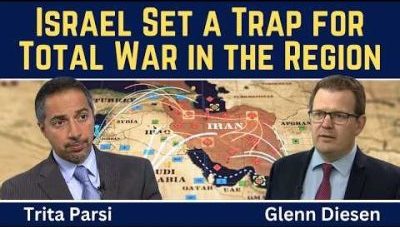
Trita Parsi: Israel Set a Trap for Total War in the Region
or go to
Aletho News Archives – Video-Images
From the Archive
Zionism’s Violent Legacy
By Donald Neff | Washington Report On Middle East Affairs | January 1996
On January 4, 1948, Jewish terrorists drove a truck loaded with explosives into the center of the all Arab city of Jaffa and detonated it, killing 26 and wounding around 100 Palestinian men, women and children.[1] The attack was the work of the Irgun Zvai Leumi – the “National Military Organization,” also known by the Hebrew letters Etzel – the largest Jewish terrorist group in Palestine. The Irgun was headed by Revisionist Zionist Menachem Begin and had been killing and maiming Arabs, Britons and even Jews for the previous ten years in its efforts to establish a Jewish state.
This terror campaign meant that at the core of Revisionist Zionism there existed a philosophical embrace of violence. … continue
Blog Roll
 Aletho News
- Trita Parsi: Israel Set a Trap for Total War in the Region
- Trump’s Iran war is on an Israeli leash
- Saudi oil boss issues global supply warning
- Riyadh Says Its Oil System Is Intact. The Numbers Say Otherwise.
- Trump and Netanyahu Want to “Finish the Job” on Iran
- US ‘one-sided dictation’ not Iran’s beliefs makes rational talks impossible: Baghaei
- Iran’s Next Strike May Not Explode. It Could Shut You Down /Col Doug Macgregor
- Iran: US political targets legitimate if assassinations return
- Iraq shuts key border crossing with Iran under US pressure: Report
- Undersea Internet cables could be targeted in retaliation for attacks on Iran: IRGC deputy chief
- If Americans Knew
- The Israel Lobby’s Changing Fortunes
- AIPAC has become such a political liability that it’s shifting to a more “nimble” approach to buying politicians
- At least 160 Israeli settler attacks in 2 weeks
- Will Gaza’s Ancient Christian Community Disappear Forever?
- Israel’s vision of regional security rests on keeping Arab states weak
- Heidi Levine recounts how Palestinian youths helped save her in settler attack
- DAILY UPDATE: Latest essential news on Palestine, Israel, & region
- Trump’s Intensifying Sabotage of the ICC, for Israel’s Sake
- Israeli military detain US and UK volunteers in West Bank including Democratic NY politician Brad Lander
- Americans at National Conservatism Conference held in Israel this year criticize Israel
- No Tricks Zone
- E-Cars Reduce CO2 Emissions By Only 41% Compared To Internal Combustion Engine Vehicles
- Predictions Made By Renowned Climate Professor Over Past Decades Have Been Proven To Be Poor
- New Study Suggests Large Regions Of The Pacific Ocean Have Been Cooling For The Last 80 Years
- Germany’s Green Energy Debacle: High Energy Costs Force Kahla Porzellan to Close After 182 Years!
- New Study: 50 Years Of The Most Aggressive ‘Net Zero’ Policies Can Only Affect The Global Climate By 0.03°C
- US September “Heat” Was No Record…Many Records Set Decades Ago
- Latest European Green Energy Debacle; Portugal’s Largest Flagship Solar Park Insolvent!
- Green Energy Debacle: German Expert Professor Fritz Vahrenholt Warns Of Severe Economic And Social Consequences
- Two More Paleo Reconstructions Affirm Meters-Higher Sea Levels Across Ireland, Brazil 7000-6000 Years Ago
- New Study: Earth And Venus Surface Warmth Largely Explained By Convection And Lapse Rate, Not CO2 Or Radiation

