The Libertarian Party is Beating the Drums for Peace
By Zach Kincaid | The Libertarian Institute | June 27, 2022
For the people turning 21 this fall, America has been at war their entire lives.
The Global War on Terror has reached its second generation of soldiers. Defense spending and the global presence of the U.S. military and armaments continue to proliferate. The Libertarian Party and its Veterans Caucus are fighting to bring this era of U.S. intervention to a close by bringing peace to the forefront of political discussion while providing a mechanism for other disillusioned service members and civilian antiwar activists to stop the wars.
Ron Paul famously received more campaign donations from military members than any other candidate in 2012 by running on the message of ending the wars. Ten years later the U.S. is still entrenched in conflict and members of the LP Vet Caucus are backing Defend the Guard legislation as the way to finally start to end the American empire, which has gained tremendous support from across the Libertarian Party.
The new Libertarian National Committee announced their support in a resolution mirroring the one passed in Texas in April, and North Carolina, Massachusetts, and California have also adopted resolutions backing Defend the Guard since then. The concept is simple and combines key traditional American ideals: the separation and nullification of federal powers. By requiring Congress to make an official declaration of war, states will begin to regain their control of National Guard troops, and finally begin to bring them home.
The Libertarian Party has also begun a “Week of Action” regarding the ongoing conflict in Yemen, urging members of the public to call Congress in support of HJ Res 87. The War Powers Resolution on Yemen is the first major national campaign to stop aiding and funding ongoing genocide in the poorest country in the Middle East. You can voice your support by dialing 1-833-Stop War where you will be connected to your Representative.
Together, veteran, civilian, Libertarian, or otherwise, we can fundamentally change the direction of our country and our world.
Canada to spend billions on NORAD so US can rule world
By Yves Engler | June 21, 2022
The Liberals are intent on funneling ever more of our collective resources to bolster the US Empire, spending lavishly to “modernize” Canada’s chief bi-national military accord.
On Monday Defence Minister Anita Anand announced the government would spend $4.9 billion to upgrade the North American Aerospace Defense Command. The federal government said it will devote $40 billion to NORAD over 20 years, but it may be far more than that noted David Pugliese in a story headlined: “Cost to modernize NORAD set at $40 billion, but will final tally be higher?”
The media and government framed the announcement as strengthening Canada’s defences. According to the Globe and Mail report, “the Canadian government has pledged $4.9-billion over six years to help upgrade North America’s air defences, addressing the growing threat posed by hypersonic missiles and advanced cruise missile technology developed by Russia and China.”
But it’s absurd to present NORAD as a defensive arrangement. Its lead actor has 1,000 international bases and special forces deployed in 149 countries. Rather than protect Canada and the US, NORAD supports violent missions led by other US commands. In 1965 NORAD’s mandate was expanded to include surveillance and assessment sharing for US commands stationed worldwide (United States European Command, United States Pacific Command, United States Africa Command, etc.).
The Pentagon has put satellites into space to enable first strike ballistic missile defence (BMD). While Paul Martin’s Liberals claimed to oppose BMD, they granted “full cooperation by NORAD in missile-defence work”, explained Richard Sanders in a Press for Conversion report on the subject. In 2004 Ottawa formally permitted the US BMD system to use data from NORAD’s “Integrated Tactical Warning/Attack Assessment”.
It’s called “missile defence” because it’s designed to defend US missile sites after they launch offensive operations. US-installed missile defence systems in Romania and Korea, for instance, are designed primarily to stop opponents’ missiles following a US first strike.
US space-based missile defence interceptors able to eliminate Russia’s early warning satellites without warning puts that country on edge. This ratchets up the arms race and the likelihood of nuclear war.
NORAD has also drawn Canada into US belligerence in other ways. During the July 1958 US invasion of Lebanon NORAD was placed on “increased readiness” while US troops checked secular Arab nationalism after Iraqis toppled a Western-backed king (at the same time British troops invaded Jordan to prop up the monarchy there).
In a higher profile incident, Canadian NORAD personnel were put on high alert when the US illegally blockaded Cuba in October 1962. This transpired even though Prime Minister John Diefenbaker hesitated in supporting US actions during the Cuban Missile Crisis.
During the 1973 Ramadan/Yom Kippur/Arab–Israeli War NORAD was placed on heightened alert. Washington wanted to deter the USSR from intervening on Egypt’s behalf.
NORAD systems offered surveillance and communications support to the 1991 war on Iraq. It monitored the region and provided information to launch US Patriot surface-to-air missiles. NORAD ballistic missile warnings were also sent to Ottawa and Canadian units in Bahrain.
NORAD also supported the 2003 invasion of Iraq. The same can be said for US bombing in Afghanistan, Libya, Somalia, etc.
Thousands of Canadian military personnel assist NORAD’s operations. One hundred and fifty Canadians are stationed at NORAD’s central collection and coordination facility near Colorado Springs, Colorado. Hundreds more work at regional NORAD outposts across the US and Canada and many pilots are devoted to the Command.
A Royal Canadian Airforce general is the vice commander of NORAD and runs the entire command when the US commander is absent. In discussing the two countries’ most significant bilateral military accord, Ann Griffiths explains,“NORAD brings the Canadian military more deeply within the US defense establishment than any other ally. The United States quite simply, would not entrust such responsibilities to the military of any other close ally, not even Britain.”
NORAD makes Canada a junior partner to US militarism and imperialism. If Canada was truly a force for good in the world, a peacekeeper and adherent of a rules based international order, Ottawa would withdraw from NORAD, rather than spend billions more strengthening it.
Peaceful resolution of Ukraine conflict would cause global instability: Boris Johnson
Samizdat | June 26, 2022
The West needs to keep arming Ukraine instead of seeking a peaceful resolution to the conflict between Kiev and Moscow, UK Prime Minister Boris Johnson told French President Emmanuel Macron, according to Downing Street. Any attempt to resolve the conflict peacefully will lead to global instability, he said at a meeting on the sidelines of the G7 Summit on Sunday.
The military action in Ukraine is at a “critical moment,” the two leaders agreed, but there is still “an opportunity to turn the tide.” According to the statement, Johnson and Macron have agreed to continue supporting Kiev militarily to “strengthen their hand in both the war and any future negotiations.”
The prime minister also cautioned the French leader against seeking alternatives to resolving the conflict.
The Prime Minister stressed any attempt to settle the conflict now will only cause enduring instability and give Putin licence to manipulate both sovereign countries and international markets in perpetuity.
Johnson took a similar stance at a meeting with Canadian Prime Minister Justin Trudeau on Sunday. “Ukraine is on a knife-edge and we need to tip the balance of the war in their favor. That means providing Ukraine with the defensive capabilities, training and intelligence they need to repel the Russian advance,” a statement from Downing Street read.
On Sunday, Johnson tweeted that Ukraine’s “security is our security, and their freedom is our freedom.”
Ahead of the summit, London pledged an additional £429 million ($525 million) in guarantees for World Bank loans in 2022 as a form of financial assistance to Kiev. According to Downing Street, the UK’s total financial support for Ukraine, including loan guarantees, amounted to £1.3 billion ($1.5 billion) and the combined UK economic and humanitarian support for Ukraine amounted to £1.5 billion ($1.8 billion) this year.
Johnson has been one of Kiev’s most ardent supporters after Russia’s military operation in Ukraine began in late February. He has visited Kiev twice since then and repeatedly called on Western nations to provide more weapons. The UK is one of Kiev’s major arms suppliers, including heavy weaponry.
In June, Johnson warned that the West must brace for a long war between Kiev and Moscow. On Saturday, he said he would consider resigning if he has to abandon Ukraine at some point.
Lithuania clarifies stance on Kaliningrad transit
Samizdat | June 26, 2022
Lithuania will maintain the ban on the transit of sanctioned goods between Kaliningrad Region and mainland Russia, President Gitanas Nauseda has said.
“It is absolutely clear that Lithuania must and will implement EU sanctions,” Nauseda wrote in a Facebook post on Saturday.
“Lithuania must and will maintain control over the goods passing through its territory, and there cannot be any ‘corridors’, nor can there be any appeasement of Russia in response to the Kremlin’s threats. I have made clear to the president of the European Commission how Lithuania sees the situation.”
Kaliningrad Region is a small Russian exclave nestled between Lithuania and Poland. A week ago, Lithuania’s national rail operator suspended the transit of sanctions goods between Kaliningrad and the rest of Russia, citing instructions from Brussels.
Since the EU closed its airspace to Russian planes in February, the only option for the authorities in Kaliningrad now is to ferry goods to and from mainland Russia via the Baltic Sea.
The EU imposed sweeping sanctions on Moscow in response to the military campaign in Ukraine launched in late February.
Nauseda reiterated on Saturday that Vilnius was acting in accordance with the EU’s fourth package of restrictions, which was adopted “with Lithuania’s active participation.”
The EU earlier backed Lithuania in its move to partially ban the transit of Russian goods.
Russia has argued that the disruption of transit is illegal under international law and threatened to retaliate.
The Times reported on Thursday that Italy and several other European governments asked the European Commission to defuse the crisis.
Petras Austrevicius, a European Parliament member from Lithuania, said on Friday that an unnamed EU member state proposed that the Commission allow Russia-to-Russia transit of sanctioned goods. Austrevicius urged Brussels not to “succumb to pressure from the aggressor and create extraterritorial exemptions and concessions.”
Kremlin spokesman Dmitry Peskov expressed hope that the decision to partially ban the transit could be reversed. “Let’s hope for the best, but prepare for the worst. Which is what we do all the time,” he told reporters on Friday.
Ukraine won’t pursue NATO membership – Zelensky adviser
Samizdat | June 25, 2022
Ukraine has accepted that NATO membership is off the table, and will not take any further steps toward joining the US-led military alliance, Igor Zhovkva, an adviser to President Volodymyr Zelensky, told the Financial Times on Saturday. Nevertheless, Kiev wants a say in NATO’s policies.
NATO leaders are set to meet in the Spanish capital of Madrid next week, and during two days of meetings and consultations, the alliance will unveil its Strategic Concept – a document that outlines the alliance’s mission and stance toward non-members, including China and Russia.
Zhovkva told the Financial Times that Zelensky’s government wants the alliance to acknowledge that Ukraine is “a cornerstone of European security,” and to reaffirm its partnership with Kiev, first established in 1997.
However, he said that Ukraine will not push to become a member of NATO.
“Nato members have declined our aspirations. We will not do anything else in this regard,” he said.
Ukraine’s prospective membership in the alliance was a key factor behind the current conflict with Russia. Ukraine wrote its goal of becoming a NATO member into its constitution in 2019, despite Moscow’s warnings that having the alliance’s forces and weapons on its border would constitute an unacceptable security threat.
NATO Secretary General Jens Stoltenberg has insisted that the alliance’s membership books remain open for interested nations, but has not promised or ruled out membership for Ukraine in the near term. Under the 2008 Bucharest Declaration, NATO’s official position is that Georgia and Ukraine “will become members of NATO” at an unspecified future date.
NATO’s Strategic Concept has not been updated since 2010, with that version of the document stating that the alliance seeks “a true strategic partnership” with Russia.
Zhovkva wants NATO to purge any mention of Russia as a “partner” from the coming update.
“We expect in the Nato strategic concept . . . there will be more strict and severe warnings to the Russian aggressor,” he said, urging the alliance “Don’t be shy” in inserting anti-Russian text.
Furthermore, Zhovkva said that he wants the Ukrainian conflict to be described in the strategy document, arguing “it’s not enough just to cross out the word ‘partner.’”
French Politician Slams Ukraine for Abandoning Howitzers to Russian Forces
Samizdat – 25.06.2022
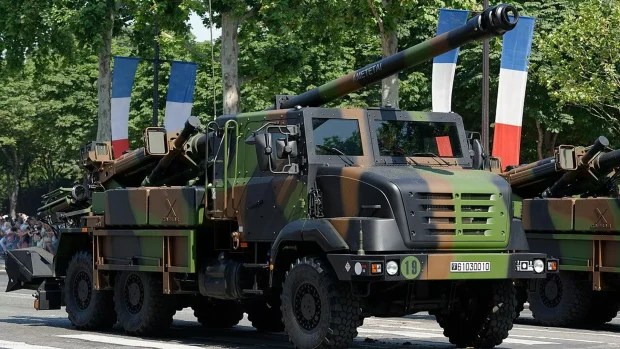
French politician and far-right National Rally candidate for the 2022 general election, Jean-Michel Cadenas, has criticized the Ukrainian military for abandoning two Paris-originated Caesar self-propelled howitzers on the battlefield. Cadenas also blasted French President Emmanuel Macron for sending them in the first place.
“Russia has recovered, among other things, two of the first six Caesar howitzers sent by France [to Ukraine]! They were in perfect working order. The Ukrainians withdrew [from their positions] so quickly that they did not have time to either destroy or booby-trap them!” Cadenas wrote on his Twitter account.
The politician went on to recall that following their capture, the howitzers were sent to a Russian defense lab. Cadenas, who is a former army officer himself, alleged that the weapons will be “dissected, studied, copied and improved” by Russia, adding sarcastically, “Thank you, Macron!”
The Uralvagonzavod Russian defense lab which is studying the Caesars also sent its regards to the French president.
“[We] send out gratitude to President Macron for [the] gifted howitzers. We can’t say that they are good howitzers, nothing like our MSTA-S [NATO codename: M1990 “Farm”]. Nonetheless, we will find a good use for them. Please send more for disassembly!” Uralvagonzavod wrote.
Moscow has repeatedly advised western countries against sending weapons to Ukraine, warning that Kiev might not exercise control over where they end up, possibly including in the hands of third-party terrorists looking to compromise European security. The Kremlin also stressed that these shipments unnecessarily prolong the conflict in Ukraine and added that it shows how the West wants to fight “until the last Ukrainian standing” to oppose the Russian special military operation.
These words of caution were hardly heeded by western countries, which continue to send new weapons and ammunition.
US pushes military pact with Nepal, puts Himalayan peace at stake for geopolitical ambition
By Hu Yuwei | Global Times | June 20, 2022
After pushing Nepal to approve the Millennium Challenge Corporation (MCC) economic pact, the US may have also urged the Himalayan country to join its military alliance, the State Partnership Program (SPP), widely believed to be another component of the US’ Indo-Pacific Strategy.
Observers from both Nepal and China warned against the program’s heavy military focus on the containment of China in the region.
Nepalese media reported that the US renewed a push last week on Nepal to participate in the SPP during the visit of Commanding General of the US Army Pacific, Charles Flynn, to Nepal. Flynn called for the signing of the SPP when he met with Nepalese Prime Minister Sher Bahadur Deuba and Chief of Staff of the Nepal Army General Prabhu Ram Sharma.
The disclosed six-page draft US proposal triggered a debate and faced backlash in Nepal for the possible US military presence in Nepal, which, many warned, contradicts Nepal’s non-aligned foreign policy.
The SPP, once approved, would draw Nepal one step closer to the US’ military alliance, despite Washington’s denial and calling it a development assistance, said experts.
Under huge pressure from the public and lawmakers, during his meeting with coalition partners on Wednesday, Deuba said that he will not sign any agreement with any country, including the SPP, that could bring harm to Nepal, the Kathmandu Post reported.
The American embassy called the SPP draft circulating online “fake.”
Inspite of this, many suspect the disclosure of the SPP in Nepal could be intended as a tactic to test the waters, as the ambition and intention of the US to strengthen its military presence in Nepal have long been clear under the core purpose of the US’ Indo-Pacific Strategy to contain China.
Concluding his four-day trip to Nepal, Flynn said on Twitter that “we cherish our decades-long defense partnership and look forward to opportunities for collaboration.”
Observers told the Global Times that the US has increased its penetration and interference in Nepalese politics in recent years, and the approval of the US-pushed MCC program in Nepal in February is an example.
If the MCC has supported US control and influence in Nepal economically, the SPP could be used to strengthen the US’ military ties in the Asian country, Qian Feng, director of the Research Department of the National Strategy Institute at Tsinghua University, said.
“The US has always valued the geographical importance of Nepal which borders Southwest China’s Xizang Autonomous Region. Since the Trump administration, the US has been trying to include Nepal in its Indo-Pacific Strategy to achieve its multiple political and security goals toward China,” Zhang Yongpan, a research fellow of the Institute of Chinese Borderland Studies under the Chinese Academy of Social Sciences, suggested. “In recent years, the political situation in Nepal has been turbulent, and the divided parties are vulnerable to pressures of external forces. The US takes the opportunity to increase influence and infiltrations in Nepal via multiple ways, trying to make it a tool to promote the US’ Indo-Pacific Strategy,” Zhang told the Global Times.
But such US tactics to contain China are bound to be futile, and Nepal will not easily become the frontline of the US’ attempts to suppress China, experts concluded.
Dangerous move with risky clauses
Widespread debate and criticism surged in the public opinion against both the US and Nepalese governments, after the draft of a proposed agreement by the US Department of Defense on the State Partnership Program between the US National Guard and the Nepal Army was disclosed on June 13.
The six-page draft agreement has 10 clauses, in which the US promises to provide Nepal $500 million for five years in addition to non-lethal equipment to the Nepal Army, the Kathmandu Post reported, citing officials privy to the draft.
The leaked document says it is for strengthening the “partnership, in the areas of defense and security,” between the US and Nepal. One of the clauses in the leaked document mentions that the “US National Guard and US contractors, related vehicles and light aircrafts operated by or for the United States, may use such agreed facilities and areas for training, transit, support and related activities, refueling, temporary maintenance of vehicles and aircrafts, accommodation of personnel, their dependents, communications, staging, deploying of forces and material.”
The proposed agreed areas of cooperation also include joint training exercises “in high-altitude terrains in Nepal,” with experts alerting the risk to the security and stability of China’s Xizang, in the Qinghai-Xizang Plateau that borders Nepal, as well as potential infiltration of American forces into the border area.
This clause will make the security situation in western China more complicated with higher risks, considering that Nepal has long been at the forefront of preventing Tibetan separatist forces from destroying stability in Xizang, said Qian.
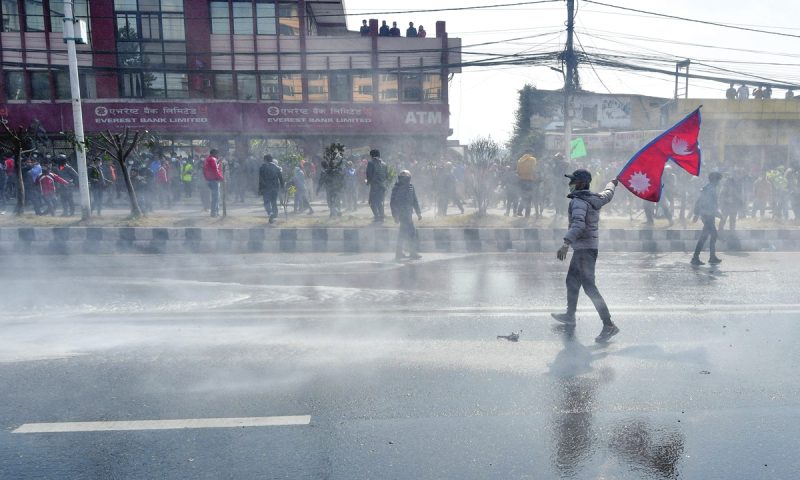
Demonstrators protest against the proposed grant agreement from America under the Millennium Challenge Corporation (MCC), in Kathmandu on February 24, 2022. Photo: VCG
Unanimous disapproval in Nepal
Public anger pumped up across social media over the last week with criticism against the Nepalese government and questions over the US’ intention in pushing the program. Netizens flocked to social media to urge the government to stop turning Nepal into a battlefield of geopolitical rivalry. Others shared their fear that the Deuba government is tilting toward the US and may submit to their pressure to advance in the SPP while ignoring the risks of harming the friendship with China.
Deuba is scheduled to visit the US in mid-July. Meanwhile, the Chief of the Army Staff, General Prabhu Ram Sharma, will be visiting the Pentagon before the Prime Minister’s trip, from June 27 to July 1, upon the invitation of the Pentagon, local media reported.
“This time, unlike the MCC, there is almost unanimous public opinion in Nepal that the SPP should not be approved by Nepal,” Ritu Raj Subedi, deputy executive editor of the Nepalese newspaper The Rising Nepal, told the Global Times.
“It can harm China-Nepal friendship and mutual understanding if the SPP gets approved. It can lead the nation toward long internal conflict and unrest. This type of activities will enhance distrust toward leaders because it is not transparent and was kept secret until the issue came to surface. Conflict mongers will try to reap benefits out of the situation. Internal conflicts can invite the involvement of foreigners and permanent corruption. There are so many byproducts of such issues,” Yogeshwar Romkhami, a former senior superintendent of the Nepal Police Service, told the Global Times.
Local people are not in the favor of MCC or SPP. Those who have even a little knowledge about it are worried. The West has penetrated every political party and the public believe these conspirators are pulling the country into internal conflict or uncertainties, said Romkhami.
Washington’s promotion of the SPP in Nepal comes at a time when the US’ Indo-Pacific Strategy is accelerating. The Biden administration’s essential competition with China through working with neighboring countries has never changed, Qian suggested.
US Under Secretary of State Uzra Zeya concluded her three-day trip to Nepal on May 22, the highest-level visit by a US official since 2012. Additionally, US Assistant Secretary of State Donald Lu visited Kathmandu in November last year. Before that, Vice President of MCC Compact Operations Fatema Sumar was in Kathmandu in September, local media reported.
The US is ramping up efforts in allying with Asian countries to suppress China both economically and militarily, Zhang said.
US foreign security tool
The US first came up with the concept of the SPP in 1993 as a humanitarian and disaster response training program.
Now the program has been established for over 25 years and includes more than 80 partnerships with over 90 countries. According to the SPP fact sheet of the National Guard, the program “supports the security cooperation objectives of the United States and the Geographic Combatant Commands (GCC) by developing enduring relationships with partner countries and carrying out activities to build partner capacity, improve interoperability, and enhance US access and influence while increasing the readiness of US and partner forces to meet emerging challenges. The SPP helps the United States react effectively to anticipated or unanticipated global scenarios as they emerge.”
Notably, Ukraine has been partnered with the California National Guard under the SPP since 1993. Over the past 29 years, the California National Guard conducted regular military-to-military exchanges with Ukrainian forces contributing to Ukraine’s continued defense modernization.
Since its inception, the SPP has been managed by the chief of the US Defense Department’s National Guard Bureau, a four-star general and also a member of the Joint Chiefs of Staff of the Department of Defense, equal to the heads of the army, navy and air force. This highlights the SPP’s military importance, according to Qian.
Although the SPP purportedly emphasizes disaster relief and anti-terrorism efforts, and intentionally downplays the military intentions of the US, its military essence has been clear in its implementation. It has served as an important foreign security cooperation tool for the US to achieve its foreign policy goals, said Qian.
Due to the unstable leadership in Nepal and possible reshuffled political landscape in the national elections at the end of the year, the operations and outcomes of the programs like SPP are still in doubt.
Kaliningrad Provocation & Ukraine’s EU Candidacy… Desperate Diversions From NATO Propaganda Lies
Strategic Culture Foundation | June 24, 2022
The Western propaganda narrative on the conflict in Ukraine is in big trouble. Months of lying by governments and dutiful news media are falling apart as Russia makes major advances to safeguard the Russian-speaking populations in Crimea and Donbass, the formerly eastern Ukrainian region, and to neutralize Nazi military forces under the control of the Kiev regime and backed to the hilt by NATO.
Recall how only a few weeks ago Russia was being pilloried in Western media for making a “strategic blunder” from its military intervention in Ukraine that began on February 24. Western leaders were gung-ho in predicting military defeat for Moscow. After four months of conflict not only are Russian forces decimating NATO-backed Ukrainian flanks, the wider repercussions that the Western powers could have avoided if they had engaged diplomatically with Russia to resolve long-held security concerns are rebounding with devastating economic impact. The U.S.-led NATO and European Union axis is digging a giant hole for itself. If not a grave.
To divert from the NATO-fuelled disaster, the U.S.-led military alliance is recklessly provoking Russia with a blockade on the Russian exclave territory of Kaliningrad. The Russian territory is sandwiched between NATO members Poland and the three Baltic states of Estonia, Latvia and Lithuania. This week Lithuania moved to block rail and road transport to Kaliningrad. It is clear that the Baltic state is not acting alone. It is enforcing a policy ordained by the NATO and EU leadership. The EU’s foreign policy chief Josep Borrell made the absurd excuse that Lithuania was merely applying sanctions against Russian goods. He denied the blatant reality that the move was a hostile economic blockade on sovereign Russian territory and its internal affairs. Laughably, Borrell has the brass neck to accuse Russia of blockading Ukrainian ports.
Moscow has warned that if the blockade of its territory is not lifted it would be seen as aggression to which it will respond. In other words, the NATO and EU axis has decided to gratuitously escalate tensions with Russia to the point of provoking acts of war which a blockade certainly deems.
The insane move by the Western powers has to be seen as nothing other than desperate diversionary tactics to distract from their fiasco of failing propaganda lies over Ukraine. Rather than admitting (even tacitly) that its policies have created a monumental mess in Europe and indeed the wider world, the Western powers are digging an even deeper hole by ratcheting up even more tensions with Russia.
This would also explain the farcical move this week by the European Council to grant official candidate status to Ukraine for joining the 27-member bloc. In practice, it may take decades for Ukraine to gain membership. Turkey has had the same status for 22 years without moving into the European fold. Serbia and other Balkan states have been waiting up to 10 years as candidates for joining the EU club. So, the fanfare of the EU leadership granting Ukraine application is largely empty theater. All the declarations about “solidarity” with Ukraine are typical Brussels bombast.
No wonder other candidate states are exasperated by what they rightly see as the EU playing politics without an iota of principle. The Kiev regime is hailed as “sharing European values” as it bans opposition political parties and outlaws the Russian language, literature, and music. The European Union is impaling itself with its own unscrupulous contradictions by granting candidate status to Ukraine.
But in the futile short term, what it is designed to do is, again, distract from the public embarrassment of the EU and NATO overseeing a total debacle in Ukraine. Billions of dollars and euros bilked from European and American citizens to fuel a Nazi regime have achieved nothing militarily except to prolong the war in Ukraine and escalate the danger of an all-out confrontation with Russia. A war that would in all likelihood lead to a nuclear catastrophe for the planet.
The U.S. and European political establishments have lost all moral authority to govern. At a time of historic collapse in Western capitalist economies, they have decided to make hardship and misery all the more acute for their societies by provoking global energy and inflation crises. Their insane irresponsibility is driven by Western ideological interests, kowtowing to the transatlantic elite and the military-industrial complex as well as by an inveterate mentality of Russophobia. Russian Foreign Minister Sergey Lavrov pointed out this week that the current climate and dynamics of the EU and NATO are forming a war bloc against Russia, one that has a vile echo of how Nazi Germany and European fascists armed up against the Soviet Union in the 1930s.
The morally bankrupt Western ruling class has always found war to be an expedient escape route from internal calamity. Their lies and misrule can be covered up with the blood of millions, so it is heinously calculated. They did this in the First and Second World Wars. They are willing to do it again with a Third World War.
It is truly shocking that the NATO and EU axis is moving week-by-week towards open war against Russia. The scenario has already moved from a proxy war to a direct one.
The provocation of blockading Kaliningrad is a direct assault on the territory of the Russian Federation.
Likewise, the scandalous flirting with Ukraine over EU membership as well as the delivery of missile systems to the Kiev regime by the United States, Germany, Britain, and others, are all madcap maneuvers to evade accountability and condemnation for their own inherent failure.
It is highly notable that this week saw massive protests on the streets of Brussels in which public anger was explicitly directed at deteriorating economic conditions for citizens in concert with denunciations of NATO warmongering in Ukraine against Russia.
The cat is out of the bag. The warmongering policies of Western misrulers are being connected and comprehended by the general populace. The effete elites know they are being exposed. The emperor has no clothes. And the Western public is getting angrier with millions of workers going on strike and demanding their rights from a callous establishment.
In a wide-ranging speech last week to the St Petersburg International Economic Forum, Russian President Vladimir Putin said that the Western misrulers are facing increasing populist revolt and eventual downfall from their own egregious incompetence and mismanagement.
Such democratic uprisings in the West can’t come soon enough because the grave danger is that its corrupt elite is rushing to provoke war as a diversion. Again.
Mr. Trudeau, tell us how you decide which invasions count
By Yves Engler | June 19, 2022
In a world of vast injustice, one cannot expect a government’s foreign policy to be principled or consistent. But there should at least be some limit to hypocrisy.
On June 16 Justin Trudeau spoke with Rwandan president Paul Kagame about this week’s Commonwealth Summit in Kigali. Half the government’s readout about the discussion was devoted to opposing a foreign invasion. It read, “the two leaders exchanged views on Russia’s invasion of Ukraine and noted that the invasion was contrary to foundational principles of the Commonwealth. Prime Minister Trudeau reiterated that the invasion was an affront to the fundamental principles of sovereignty, territorial integrity, self-determination, and international law, and expressed that it is important for the Commonwealth summit to provide an opportunity for member countries to stand up for democracy and denounce Russia’s invasion of Ukraine.”
Recently, Rwandan-backed rebels instigated fighting that has caused over 170,000 Congolese to flee their homes since November. Reportedly, Rwanda has deployed 500 troops to assist the M23 rebels. According to the UN, M23 is planning an attack on the major eastern city of Goma in the coming days. On Friday Rwandan forces killed a Congolese soldier on the border between the two countries and Congo has closed the border.
Highlighting the hypocrisy of Trudeau discussing foreign invasion with Kagame, former Congolese presidential candidate and long-time UN worker, Angèle Makombo, tweeted, “No kidding Prime Minister Justin Trudeau, you spoke with Paul Kagame about ‘Russia’s illegal invasion of Ukraine’? Did you also care about raising the issue of Rwanda’s aggression of Congo and its dire impacts on the Congolese people and Africa Great Lakes subregion?”
The M23 is a “Rwandan sponsored” force, reported the Globe and Mail previously. A 2012 UN report concluded that officials in Kigali organized, armed and “coordinated” M23’s military activities in the mineral rich eastern Congo. The M23 is the successor to the Rwanda-backed rebel force lead by Laurent Nkunda, who grew to prominence after Rwanda invaded.
In 1996 Rwandan forces marched 1,500 km to topple the regime in Kinshasa. Two years later they re-invaded after the Congolese government it installed expelled Rwandan troops. This led to an eight-country war between 1998 and 2003, which left millions dead. A January 2008 study by the International Rescue Committee blamed the conflict and its destabilizing impact for 5.4 million Congolese deaths over a decade. In October 2010, the UN Office of the High Commissioner for Human Rights released a report on the Congo spanning 1993 to 2003 that charged Rwandan troops with engaging in mass killings “that might be classified as crimes of genocide.”
Aside from the mayhem he’s unleashed in the Congo, Kagame oversees a brutal dictatorship. Opposition media is entirely suppressed and opponents rot in jail. Top officials and other dissidents that flee have repeatedly been assassinated across east and southern Africa. A year and a half ago, the regime kidnapped its most famous opponent Paul Rusesabagina, who is the namesake for the Hollywood film Hotel Rwanda. A Belgian citizen and US Green card holder, Rusesabagina was snatched from Dubai and flown to Rwanda where he languishes in jail.
Trudeau’s dalliance with Kagame isn’t new. In 2018 Toronto-based Rwandan dissident David Himbara wrote, “the romance between the two and among their respective ministers has blossomed beyond belief.” In February 2020 the PM’s press people released a photo of him laughing with the Rwandan president. On at least five occasions since 2018 Trudeau has been photographed with Kagame during one-on-one meetings on the sidelines of different international summits. At one of those meetings the PM “affirmed the importance of strong and growing bilateral relations” between Canada and Rwanda. Ottawa provided $39 million in assistance to Rwanda last year.
While the media, opposition and government have spent much of the past week complaining/apologizing about a low-level Canadian diplomat attending an irrelevant social function put on by the Russian Embassy, the prime minister deepens Canada’s ties to Africa’s most bloodstained ruler.
For Trudeau it appears as if only invasions of European countries matter.
As Kagame renews his brutal war on the Congo, Trudeau wants us to believe his aim is to uphold international law and oppose foreign invasion.
The hypocrisy is staggering.
Washington supports blockade of Russian exclave by NATO member Lithuania
Samizdat | June 22, 2022
The US says that it “appreciates” anti-Russian sanctions imposed by EU nations and that its military is committed to the defense of Lithuania, after the country banned some Russian goods from passing through its territory to the Russian exclave of Kaliningrad.
Ned Price, the spokesman for the US state department, dismissed Moscow’s displeasure with the Lithuanian blockade of its territory as “saber-rattling” and “bluster.” Speaking at a daily briefing, he said he didn’t want to “give it additional time.”
“We, of course, appreciate the unprecedented economic measures that many countries around the world… including in this case Lithuania, have joined us in taking against Russia for its unprovoked war in Ukraine,” he said.
Price said that the US would protect Lithuania from any military attack, as is due under its NATO obligations.
“Lithuania has been a stalwart partner in this. We stand by NATO. We stand by our NATO Allies, and we stand by Lithuania,” he said.
The row between Russia and its Baltic neighbor erupted last week after Lithuania started blocking the transit of goods between mainland Russia and Kaliningrad region. The partial restrictions came into force last Saturday, with Vilnius claiming it was a natural part of enforcing EU sanctions against Russian trade. Roughly half of the traffic is estimated to be affected. The banned items include coal, metals, and construction materials.
Moscow said the restrictions were crossing every line and warned that there would be serious consequences for what it described as a Lithuanian blockade of its exclave. The decision clearly violated international law, the Russian government noted. Some experts suggested that it could even amount to a casus belli – a cause to start a war over.
Kaliningrad region is sandwiched between Poland and Lithuania and has access to the Baltic Sea, which technically allows Russia to ferry goods to it. The relatively small exclave also hosts a significant number of Russian troops and weapon systems, making it a key component in the country’s national security.
EU Commission comments on Lithuania’s restrictions
Samizdat | June 21, 2022
The EU Commission reiterated its support for Lithuania’s decision to heavily restrict the transit of goods to Kaliningrad Region, Russia. At a regular press conference on Tuesday, European Commission chief spokesman Eric Mamer said the country has merely implemented the EU sanctions on Russia rather than imposing an economic blockade.
“We’re not talking about the Commission giving a recommendation to a country. This is a member state implementing decisions that they have taken when it comes to the sanctions against Russia. And Lithuania is basically doing what it is supposed to do under the sanctions regime,” Mamer stated, noting that the bloc’s stance was “extensively” explained by top EU diplomat Josep Borrell a day before.
Speaking at a press conference on Monday, Borrell insisted that Vilnius’ move does not constitute a blockade against the small exclave sandwiched between Poland and Lithuania, but was merely the implementation of the EU’s sanctions on Moscow, imposed over the ongoing conflict in Ukraine. On Saturday, Lithuania’s national railway operator banned the flow of sanctioned goods between the region and the rest of Russia, citing instructions from the European Commission.
“Lithuania has not taken any unilateral national restrictions. But, in accordance with European Union sanctions, there are import and export restrictions that apply in relation with certain goods, including the prohibition of transit from those goods through European Union territory. Lithuania is doing nothing else than implementing the guidelines provided by the Commission,” Borrell stated.
A similar take on the situation was given by senior Lithuanian officials. Earlier on Tuesday, Lithuanian PM Ingrida Simonyte told public broadcaster LRT that the decision was based on the sanctions imposed by the EU, and not an attempt to escalate tensions with Russia. The flow of non-sanctioned goods and passenger transit will continue uninterrupted, she said.
The Russian government labeled the move an “economic blockade” of Kaliningrad Region, saying it violates the country’s international obligations to ensure the uninterrupted transit of goods to the exclave. Kremlin spokesperson Dmitry Peskov said on Monday that Vilnius’ decision was unprecedented, and in “violation of anything and everything.”
The head of Russia’s Security Council, Nikolay Patrushev, warned that the ongoing “blockade” will trigger a response from Moscow that will “have a serious negative impact on the people of Lithuania.”
“Of course, Russia will respond to hostile actions. Appropriate measures are in the works, and will be adopted in the near future,” Patrushev told reporters during a visit to Kaliningrad on Tuesday.
Featured Video
Why the U.S. Should Pull Back From the First Island Chain
or go to
Aletho News Archives – Video-Images
Book Review
‘Why Fauci Must Rot in Prison’: A Tale of Two Diaries
By Jill Erzen | The Defender | October 13, 2026
Dr. Anthony Fauci’s private diary reveals a “mind-numbing” contradiction between what the former top U.S. infectious disease official knew about COVID-19 and what he told the public, senior White House adviser Peter Navarro, Ph.D., said last week on “American Thought Leaders.”
In his new book, “Why Fauci Must Rot in Prison,” due out Oct. 20, Navarro compares Fauci’s private entries to his own pandemic-era diary, and uses what he calls “a tale of two diaries” to argue that Fauci should face criminal prosecution.
“I show, actually, how a prosecution can and should happen … at the state level, most likely,” Navarro said. “He should wind up in prison, and we’ve got the receipts in this book to put him there.”
Navarro said Fauci repeatedly acknowledged important facts in private, then publicly pursued policies that contradicted those facts — with devastating consequences.
“What he says many times privately in his diary is so at odds with both his public behavior and public statements that it’s mind-numbing,” Navarro said.
Navarro examines the lasting damage caused by lockdowns and other pandemic policies, and the ongoing toll of long COVID.
His book also addresses questions about vaccine safety, including why healthy young people faced COVID-19 vaccination mandates despite concerns about myocarditis, and why women were not warned about miscarriage risks linked to the shots. … continue
Blog Roll
 Aletho News
- Jennifer Kavanagh: Why the U.S. Should Pull Back From the First Island Chain
- Yemen denounces international community’s silence on Saudi aggression, siege
- UAE and Saudi Arabia move toward renewed coordination against Sanaa
- How Iran’s two-week retaliatory strikes exposed cracks in US military architecture in Persian Gulf
- The mother of all propaganda: Why the hype over US MOAB strike against Iran is nothing but theater
- Iran says it possesses technology behind US 14-ton GBU bunker-buster
- Trump asks Iran not to retaliate after he strikes Pickaxe Mountain – w/ Prof. Marandi
- Vice President J.D. Vance’s Deceptive ‘Antiwar’ Campaign Speech
- Iran: Palestinians’ rights must not be compromised in Gaza’s future; US, Israel to blame for Hormuz situation
- Ongoing tales of Syrian chemical weapons
- If Americans Knew
- Israeli rabbi permits occupiers to steal Palestinian olive harvest in West Bank
- Netanyahu’s spin on latest settler attack is laughable – Daily Update
- Israeli soldiers debunk Israel’s talking points
- In West Bank, Israeli settlers are totally out of control – Daily Update
- NPR investigation finds evidence of widespread fraud at mall kiosks tied to Israeli skincare brand
- Tucker Carlson exposes Israeli Lies about the Oct 7th attack, Charlie Kirk, and the U.S.
- Israel has detained thousands of Palestinian children since Oct 7th – over half spent time in solitary, many uncharged
- Israeli Analysis: Is Netanyahu Planning an ‘October Surprise’ Attack Before Israel’s Election?
- Israeli settlers brutally attack Palestinians and Washington Post female photographer, 65
- Words Have Changed, Occupation Continues: The Reality of the Gaza Ceasefire
- No Tricks Zone
- Predictions Made By Renowned Climate Proifessor Over Past Decades Have Been Proven To Be Poor
- New Study Suggests Large Regions Of The Pacific Ocean Have Been Cooling For The Last 80 Years
- Germany’s Green Energy Debacle: High Energy Costs Force Kahla Porzellan to Close After 182 Years!
- New Study: 50 Years Of The Most Aggressive ‘Net Zero’ Policies Can Only Affect The Global Climate By 0.03°C
- US September “Heat” Was No Record…Many Records Set Decades Ago
- Latest European Green Energy Debacle; Portugal’s Largest Flagship Solar Park Insolvent!
- Green Energy Debacle: German Expert Professor Fritz Vahrenholt Warns Of Severe Economic And Social Consequences
- Two More Paleo Reconstructions Affirm Meters-Higher Sea Levels Across Ireland, Brazil 7000-6000 Years Ago
- New Study: Earth And Venus Surface Warmth Largely Explained By Convection And Lapse Rate, Not CO2 Or Radiation
- 2025 Nature Paper Claiming Worsening Global Drought Gets RETRACTED …Heavily Flawed

