Back in the early 1990s, I spoke with John Marks, author of Search for the Manchurian Candidate. This was the book (1979) that helped expose the existence and range of the infamous CIA MKULTRA program.
Marks related the following facts to me. He had originally filed many Freedom of Information (FOIA) requests for documents connected to the CIA’s mind-control program. He got nothing back.
Finally, as if to play a joke on him, someone at the CIA sent Marks 10 boxes of financial and accounting records. The attitude was, “Here, see what you can do with this.”
I’ve seen some of those records. They’re very boring reading.
But Marks went through them, and lo and behold, he found he could piece together MKULTRA projects, based on the funding data.
Eventually, he assembled enough information to begin naming names. He conducted interviews. The shape of MKULTRA swam into view. And so he wrote his book, Search for the Manchurian Candidate.
He told me that three important books had been written about MKULTRA, and they all stemmed from those 10 boxes of CIA financial records. There was his own book; Operation Mind Control by Walter Bowart; and The Mind Manipulators by Alan Scheflin and Edward Opton.
After publishing his book, Marks continued to press the CIA for more MKULTRA information. He explained to me what then happened. A CIA official told him the following: in 1962, after ten years of mind-control experiments, the whole program had been shifted over to another internal CIA department, the Office of Research and Development (ORD).
The ORD had a hundred boxes of information on their MKULTRA work, and there was no way under the sun, Marks was told, he was ever going to get his hands on any of that. It was over. It didn’t matter how many FOIA requests Marks filed. He was done. The door was shut. Goodbye.
The CIA went darker than it ever had before. No leaks of any kind would be permitted.
In case there is any doubt about it, the idea of relying on the CIA to admit what it has done in the mind-control area, what it is doing, and what it will do should be put to bed by John Mark’s statements. The CIA always has been, and will continue to be, a rogue agency.
To give you an idea of how far the CIA, the US military, and its allied academics will go in MKULTRA “research,” here is what I wrote in 1995 about several human experiments. My information was based on the three key books I mentioned above, as well as Martin Lee’s classic, Acid Dreams:
“Dr. Robert Heath of Tulane University, as early as 1955, working for the Army, gave patients LSD while he had electrodes implanted deep inside their brains.”
“In the mid-1950’s, Paul Hoch, M.D., a man who would become Commissioner of Mental Hygiene for the State of New York, then a laborer in the field for the CIA, gave a ‘pseudoneurotic schizophrenic’ patient mescaline. The patient had a heaven-and-hell journey on the compound. But Hoch followed this up with a transorbital leucotomy [aka lobotomy]… Hoch also gave a patient LSD, and a local anesthetic, and then proceeded to remove pieces of his cerebral cortex, asking at various moments whether the patient’s perceptions were changing.”
People need to understand how the history of mind control and psychiatry are interwoven, and how the madmen and murderers within these “professions” are content to use torture “in the name of science.”
From a naturalnews.com article by the heroic whistleblower, psychiatrist Dr. Peter Breggin (“Never again! The real history of psychiatry”), we get insight into one aspect of that history.
Breggin:
“[Before World War 2, in America], organized psychiatry had been sterilizing tens of thousands of Americans. For a time in California, you couldn’t be discharged from a state hospital unless you were sterilized. In Virginia the retarded were targeted. American advocates of sterilization went to Berlin to help the Nazis plan their sterilization program. These Americans reassured the Germans that they would meet no opposition from America in sterilizing their mentally and physically ‘unfit’ citizens.”
“While the murder of mental patients was going full swing in Germany, knowledgeable American psychiatrists and neurologists didn’t want to be left out. In 1942, the American Psychiatric Association held a debate about whether to sterilize or to murder low IQ ‘retarded’ children when they reached the age of five. Those were the only two alternatives in the debate: sterilization or death.”
“After the debate, the official journal of the American Psychiatric Association published an editorial in which it chose sides in favor of murder (“Euthanasia” in the American Journal of Psychiatry, 1942, volume 99, pp. 141-143). It said psychiatrists would have to muster their psychological skills to keep parents from feeling guilty about agreeing to have their children killed.”
The psychiatrists who later went to work for the CIA, in the MKULTRA program, were devoid of conscience. Any experiment was a good experiment. Human beings were “useful subjects.”
Here is an MKULTRA sub-project you may not have heard of. I wrote about it several years ago—
Some would say the 1940s and 50s were the most vibrant and innovative period in the history of American jazz.
During those years, it was common knowledge that musicians who were busted for drug use were shipped, or volunteered to go, to Lexington, Kentucky. Lex was the first Narcotics Farm and US Health Dept. drug treatment hospital in the US.
According to diverse sources, here’s a partial list of the reported “hundreds” of jazz musicians who went to Lex: Red Rodney, Sonny Rollins, Chet Baker, Sonny Stitt, Howard McGhee, Elvin Jones, Zoot Sims, Lee Morgan, Tadd Dameron, Stan Levey, Jackie McLean.
It’s also reported that Ray Charles was there, and William Burroughs, Peter Lorre, and Sammy Davis, Jr.
It was supposed to be a rehab center. A place for drying out.
But it was something else too. Lex was used by the CIA as one of its MKULTRA centers for experimentation on inmates.
The doctor in charge of this mind control program was Harris Isbell. Astonishingly, Isbell was, at the same time, a member of the FDA’s Advisory Committee on the Abuse of Depressant and Stimulant Drugs.
Isbell gave LSD and other psychedelics to inmates at Lex.
At Sandoz labs in Switzerland, Dr. Albert Hofmann, the discoverer of LSD, also synthesized psilocybin from magic mushrooms. The CIA got some of this new synthetic from Hofmann and gave it to Isbell so he could try it out on inmates at Lex.
Isbell worked at Lex from the 1940s through 1963. It is reported that in one experiment, Isbell gave LSD to 7 inmates for 77 consecutive days. At 4 times the normal dosage. That is a chemical hammer of incredible proportions.
To induce inmates to join these MKULTRA drug experiments, they were offered the drug of their choice, which in many cases was heroin. So at a facility dedicated to drying out and rehabbing addicts, the addicts were subjected to MKULTRA experiments and THEN a re-establishment of their former habit.
Apparently, as many as 800 different drugs were sent to Isbell by the CIA or CIA allies to use on patients at Lex. Two of the allies? The US Navy and the US National Institute of Mental Health—proof that MKULTRA extended beyond the CIA.
In another MKULTRA experiment at Lex, nine men were strapped down on tables. They were injected with psilocybin. Bright lights were beamed at their eyes—a typical mind control component.
During Isbell’s tenure, no one knows how many separate experiments he ran on the inmates.
As I say, Lex was the main stop for drying out for NY jazz musicians. How many of them were taken into these MKULTRA programs?
As Martin Lee explains in his book, Acid Dreams, “It became an open secret… that if the [heroin] supply got tight [on the street], you could always commit yourself to Lexington, where heroin and morphine were doled out as payment if you volunteered for Isbell’s whacky drug experiments. (Small wonder Lexington had a return rate of 90%.)”
A June 15, 1999, Counterpunch article by Alexander Cockburn and Jeffrey St. Clair, “CIA’s Sidney Gottlieb: Pusher, Assassin & Pimp— US Official Poisoner Dies,” contains these quotes on Dr. Isbell:
“Gottlieb also funded the experiments of Dr. Harris Isbell. Isbell ran the Center for Addiction Research in Lexington, Kentucky. Passing through Isbell’s center was a captive group of human guinea pigs in the form of a steady stream of black heroin addicts. More than 800 different chemical compounds were shipped from Gottlieb to Lexington for testing on Isbell’s patients.”
“Perhaps the most infamous experiment came when Isbell gave LSD to seven black men for seventy-seven straight days. Isbell’s research notes indicates that he gave the men ‘quadruple’ the ‘normal’ dosages. The doctor marveled at the men’s apparent tolerance to these remarkable amounts of LSD. Isbell wrote in his notes that ‘this type of behavior is to be expected in patients of this type’.”
“In other Gottlieb-funded experiment at the Center, Isbell had nine black males strapped to tables, injected them with psylocybin, inserted rectal thermometers, had lights shown in their eyes to measure pupil dilation and had their joints whacked to test neural reactions.”
 If you think these experiments were so extreme they bear no resemblance to modern psychiatry, think again. Thorazine, the first so-called anti-psychotic drug, was researched on the basis of its ability to make humans profoundly quiescent and passive. Electroshock and lobotomy are straight-out torture techniques that also destroy parts of the brain. SSRI antidepressants increase violent behavior, including homicide. Among its many documented effects, Ritalin can induce hallucinations and paranoia.
Well, all these effects are part and parcel of the original (and ongoing) MKULTRA.
But now the whole population, via psychiatry, is included in the experiment.
Which is one reason why THE RIGHT TO REFUSE MEDICATION must be protected and expanded.
Including, of course, the right to refuse VACCINES.
For example, the COVID vaccines.
Jon Rappoport is the author of three explosive collections, THE MATRIX REVEALED, EXIT FROM THE MATRIX, and POWER OUTSIDE THE MATRIX.
September 18, 2021
Posted by aletho |
Book Review, Civil Liberties, Supremacism, Social Darwinism, Timeless or most popular | CIA, COVID-19 Vaccine, Human rights, MKUltra, United States |
Leave a comment

Chile’s September 11, in 1973, brought a brutal end to Salvador Allende’s socialist rule. In its wake, violence permeated Chilean society, through the U.S.-backed military coup which was to provide gruesome inspiration for the later regional systematic surveillance and elimination of socialists and communists known as Operation Condor, in which several Latin American countries were involved.
The mass arrests of Chileans loyal to Allende and socialist politics became a long purge in the country. The Caravan of Death – one of the earlier dictatorship operations aimed at instilling terror within the country – was carried out in the coup’s aftermath, between September 30 and October 22, 1973, after securing Santiago by means of brutal suppression, torture and killings. Dictator Augusto Pinochet’s purge was aimed at silencing dissent throughout the country, and also to ensure the military’s loyalty towards the dictatorship – any negligence or lenience exhibited by any individual would be punished by methods used against dissenting Chileans. The ultimate aim, according to retired Lieutenant Colonel Marcos Herrera Aracena, was “to bring an end to the remaining legal processes… In other words, finish with them once and for all.”
The Caravan of Death massacres are considered to be among the most brutal not only due to the extermination methods involved – at times the corpses were unrecognizable due to bludgeoning – but also because many Chileans willingly turned themselves in for interrogation.
Army officers travelled in Puma helicopters throughout Chile, inspecting detention centres and giving orders for execution, or carrying out the executions themselves. Testimony from La Serena indicates that 15 prisoners were executed by firing squad and their bodies buried in a mass grave. To prevent any possible dissemination of knowledge, at least in the immediate aftermath, the official version publicized by the dictatorship was that the prisoners had attempted an escape.
While at first the dictatorship seemed adamant on making its brutality known to quash any resistance, the more refined methods of disappearance and secret extermination sites hastened a culture of impunity and oblivion. The Calama massacres – the last stop in the Caravan of Death – was such an example. Relatives of the disappeared sought information about the whereabouts of their loved ones to no avail. It was the female relatives of the disappeared in Calama who took matters into their own hands and started physically searching for the bodies of their loved ones in the Atacama Desert. The dictatorship had forbidden any leaking of information due to the extent of mutilations the victims had been subjected to by the execution squads. As the women’s resilience increased, so did the dictatorship’s efforts to prevent any discovery of the bodies through exhumation and reburial of remains.
The Rettig Commission established that 75 Chileans were killed and their bodies disappeared throughout the operation, headed by Brigadier General Sergio Arellano Stark, and with the participation of agents Manuel Contreras, Marcelo Moren Brito, Sergio Arredondo Gonzalez, Armando Fernandez Larios and Pedro Espinoza Bravo – all of who played prominent roles in the torture and disappearances of dictatorship opponents throughout Pinochet’s rule. Contreras headed the National Intelligence Directorate (DINA), Brito oversaw torture at Villa Grimaldi, while Fernandez Larios was involved in the assassination of Chilean economist and diplomat Orlando Letelier in Washington, carried out by double agent for DINA and the CIA, Michael Townley.
Although indicted by Judge Juan Guzman Tapia on December 1, 2000 for ordering the Caravan of Death killings, dictator Pinochet escaped justice on account of purported health reasons. In relation to dictatorship memory and rupture, the Caravan of Death stands as a forewarning of what was to be unleashed in Chile throughout Pinochet’s rule and its aftermath. Particularly in Calama, the women’s resilience against the dictatorship can be seen as one of the earliest expressions against the nationwide oblivion through which Pinochet attempted to crush any questioning, let alone investigations, into dictatorship-era crimes.
September 12, 2021
Posted by aletho |
Civil Liberties, Subjugation - Torture, Timeless or most popular | Chile, CIA, Human rights, Latin America |
Leave a comment
We all know the story of bin Laden and Al Qaeda, the story that was repeated ad nauseam in the days, weeks and months after the catastrophic, catalyzing events of 9/11. So often was that story repeated that the hypnotized public forgot that it was, at base, just that: a story. . . .
Watch on Archive / BitChute / Minds / Odysee or Download the mp4 video / mp3 audio
TRANSCRIPT
“Does the Brotherhood exist?”
“That, Winston, you will never know.”
–Nineteen Eighty-Four
INTRODUCTION
Kandahar Provice, Afghanistan. May 1998.
John Miller, an ABC News correspondent who would go on to become the FBI’s chief spokesman, ends an 11-day journey through the wilds of the Afghanistan-Pakistan border. The first thing he notices is the rumbling of the generators providing the camp with power and the smell of gasoline. The second thing he notices is a hail of bullets. Bin Laden’s convoy is arriving.
Osama bin Laden is flanked by seven bodyguards, who—as Miller immediately recognizes—are simply there to put on a show. “Their eyes darted in every direction for any attacker,” he later recounted. “This was either merely theatrical or entirely pointless, because with hundreds of rounds being fired into the air, it would have been impossible to pinpoint an assassin.”
Following the security detail into the hut, there Miller became one of the handful of western journalists to interview the elusive Osama bin Laden.
OSAMA BIN LADEN (VIA INTERPRETER): We believe that the biggest thieves in the world are Americans and the biggest terrorists on earth are the Americans. The only way for us to fend off these assaults is by using similar means. We do not differentiate between those dressed in military uniforms and civilians; they’re all targets in this fatwa.
SOURCE: Osama bin Laden: “The Most Dangerous Man You’ve Never Heard Of” – June 10, 1998 – ABC News Nightline
Miller has traveled halfway around the world to interview bin Laden, the reclusive terrorist leader who has just issued a religious fatwa requiring Muslims to kill Americans. But this interview, too, is just for show. Forced to submit his questions in writing ahead of time, Miller is informed that the answers will not be translated for him. There will be no follow-up questions.
It is spectacle. Theater and little else. As such, it is a fitting introduction to the man who would become the bogeyman of the 21st century. The interview was followed in short order by a more explosive drama.
PETER BERGEN: What are your future plans?
OSAMA BIN LADEN: You’ll see them and hear about them in the media . . . God willing.
SOURCE: Exclusive Osama bin Laden – First Ever TV Interview
PART ONE: ORIGIN STORY
Osama bin Laden got his wish. Around the world, a frightened and confused public received their introduction to the age of terror on the morning of September 11, 2001, through the media. It was there, in the flickering images of their TV screens, that the masses began to learn about the world of Islamic terrorism and of the cave-dwelling Saudi exile in Afghanistan who was bringing that terror to their doorstep.
ANCHOR: Tell us a bit about Osama bin Laden, what sort of resources in manpower and money he’s got and what he’s trying to achieve.
SOURCE: September 11, 2001 – 5:28pm EDT (10:28pm BST)
RAY SUAREZ: What is Osama bin laden? Is he a politician? Is he a warrior? Is he a preacher? A little of all?
SCHEUER: A little of all i think, sir. He’s a—
SOURCE: Who Speaks For Islam?
HODA KOTB: —millionaire Saudi businessman believed to be living in exile in Afghanistan.
SOURCE: September 11, 2001 – 5:20-5:30pm EDT on WRC
REPORTER: He controls and finances Al Qaeda, an umbrella network of Islamic militants.
SOURCE: September 11, 2001 – 6:30-6:40pm EDT (11:30-11:40pm BST) on BBC
SCHEUER: . . . he is a a very soft-spoken man . . .
SOURCE: Who Speaks For Islam?
SIMON REEVE: A man who is prepared to use overwhelming force in pursuit of his objectives.
SOURCE: September 13, 2001 – 6:21am EDT on CNN
ANCHOR: He is the face that has been put on this by almost everyone.
SOURCE: September 15, 2001 – 8:20-8:30am EDT on WTTG
SCHEUER: . . . a man of of eloquence . . .
SOURCE: Who Speaks For Islam?
KOTB: He has declared all US citizens legitimate targets of attack
SOURCE: September 11, 2001 – 5:25pm EDT on WRC
JOHN SIMPSON: When I was in Afghanistan just a couple of days ago, I heard that he had—
SOURCE: September 11, 2001 – 5:20-5:30pm EDT (10:20-10:30pm BST) on BBC
DAN RATHER: —operations in at least 55 countries—
SOURCE: CBS Evening News – 2001-09-13
KOTB: Including last year’s bombing of the USS Cole in Yemen—
SOURCE: September 11, 2001 – 5:25pm EDT on WRC
REPORTER: —the mastermind behind the bombings of two US embassies in Africa—
SOURCE: September 16, 2001 – 11:30-11:40pm EDT on CNN
REPORTER: —and the last attack on the World Trade Center eight years ago.
SOURCE: September 11, 2001 – 6:20-6:30pm EDT (11:20-11:30pm BST) on BBC
SCHEUER: Bernard Lewis has called him almost a poetic speaker of Arabic.
SOURCE: Who Speaks For Islam?
KATIE COURIC: Meanwhile, Osama bin Laden is a name that we have been hearing all day long as an individual who may—and we emphasize may—be responsible for these terrorist acts.
SOURCE: NBC News 9-11-2001 Live Coverage 1:00 P.M E.D.T – 6:30 P.M E.D.T
We all know the story of bin Laden and Al Qaeda, the story that was repeated ad nauseam in the days, weeks and months after the catastrophic, catalyzing events of 9/11. So often was that story repeated that the hypnotized public forgot that it was, at base, just that: a story.
In the ahistorical fable of tv soundbites, terrorism is a modern invention—created out of whole cloth by Osama bin Laden and Al Qaeda. And, at the same time, Islamic fundamentalism is a force of nature, something that has always existed in the Middle East—the product, perhaps, of some sandstorm on the Arabian peninsula in the distant past.
But this is a lie. In truth, the rise of Islamic fundamentalism in the modern era and the rise of terrorism as a political tool cannot be understood without confronting some very well-documented but long-repressed history.
Ever since the mid-18th century—when the British East India Company gained dominion over the Indian subcontinent—the history of Islam as a political and cultural force has been intimately tied to the fortunes of Empire and the aims of the Western powers. The British Empire in particular did much to shape the map of the modern day Middle East and to influence the course of its religious and political forces.
This influence can be seen throughout the 18th and 19th centuries.
Britain’s gradual takeover of the Indian subcontinent led to the British Empire becoming, in the estimation of Winston Churchill, “[T]he greatest Mohammedan power in the world.”
The 19th century “Great Game” between Victorian England and Tsarist Russia for control of Central Asia saw the British propping up unpopular Islamic rulers throughout the region as a buffer between Russia and the “crown jewel” of the British Empire, India.
Britain’s desire to maintain its access to India led to the British conquest of Egypt in 1882, resulting in 40 years of British rule and a military presence in the country that was not removed until the Suez Crisis of 1956.
From Khartoum to Constantinople, Jerusalem to Jakarta, no part of the Muslim world could escape the influence of the British crown. Sometimes that influence was used to strengthen the rule of Islamic hardliners. Sometimes, as with the Mahdist rebellion in Sudan, that influence was used to put down Islamic uprisings. But in each case, the British Empire’s goal was clear: to use whatever means at its disposal to undermine movements and governments unfavourable to its rule, and to install and encourage those forces that were willing to cooperate with the crown.
This was evident in India, where George Francis Hamilton, secretary of state for India, wrote in 1886 of the British strategy of using Muslim and Hindu divisions in the country to their advantage along the lines of the old Roman imperial strategy of divide and rule:
I think the real danger to our rule, not now, but say 50 years hence is the gradual adoption and extension of Western ideas of agitation organisation and if we could break educated Indians into two sections holding widely different views, we should, by such a division, strengthen our position against the subtle and continuous attack which the spread of education must make upon our system of government. We should so plan educational text-books that the differences between community and community are further strengthened.
But perhaps no clearer example of the British Empire’s role in shaping the modern Muslim world can be found than the story of the ascendance of the House of Saud and the formation of the modern-day Kingdom of Saudi Arabia. Once again, British fingerprints can be found on every aspect of the story.
When Britain began contemplating a shift from its centuries-long policy of supporting the Ottoman Empire in the Middle East, it was Captain William Shakespear—a British civil servant and explorer—who made the first official contact with Ibn Saud, the progenitor of the Saudi dynasty who would go on to found the Kingdom of Saudi Arabia. In addition to taking the first photographs of the future Saudi king, Shakespear became Ibn Saud’s friend and military advisor, helping to steer the rising Arab leader away from alliance with the Ottomans and into a treaty with the British. Shakespear died on the battlefield at Jarab in 1915, where the British-backed Ibn Saud was battling his Turkish-backed rival, Ibn Rashid.
After Shakespear’s death, another British agent, Colonel Thomas Edward Lawrence, gained international fame as “Lawrence of Arabia” for his role in the Arab Revolt against Ottoman rule in the Middle East. Although his own self-serving autobiography and the Hollywoodization of his story cemented in the popular imagination the idea that Lawrence was motivated solely by his concern for the Arabs and their independence . . .
PETER O’TOOLE (AS T. E. LAWRENCE): We do not work this thing for Faisal.
ANTHONY QUINN (AS AUDA ABU TAYI): No? For the English then?
LAWRENCE: For the Arabs.
TAYI: The Arabs?
SOURCE: LAWRENCE OF ARABIA
. . .the documented history of Lawrence’s actions and motivations tells a very different story. A memo on “The Politics of Mecca” penned by Lawrence for his intelligence handlers in 1916, reveals a more duplicitous British calculus for supporting certain factions of the Arab Revolt:
The Arabs are even less stable than the Turks. If properly handled they would remain in a state of political mosaic, a tissue of small jealous principalities, incapable of cohesion, and yet always ready to combine against an outside force. The alternative to this seems to be control and colonization by a European power other than ourselves, which would inevitably come into conflict with the interests we already possess in the Near East.
Later, in a report on the “Reconstruction of Arabia” Lawrence penned for the British Cabinet at the end of the war, he was even more explicit about the cynical divide-and-rule tactics at play in British support for the Arab Revolt: “When war broke out an urgent need to divide Islam was added, and we became reconciled to seek for allies rather than subjects. [. . .] We hoped by the creation of a ring of client states, themselves insisting on our patronage, to turn the present and future flank of any foreign power with designs on the three rivers.”
ALEC GUINNESS (AS PRINCE FAISAL): Lawrence! . . . Or is it Major Lawrence?
LAWRENCE: Sir!
FAISAL: Ah. Well, General, I will leave you. Major Lawrence doubtless has reports to make. About my people; and their weakness. And the need to keep them weak. In the British interest.
SOURCE: LAWRENCE OF ARABIA
Lawrence and the military and diplomatic personnel of the British empire were indeed busy in the wake of WWI. In many ways, the aftermath of the war represented the zenith of that empire, and the culmination of centuries of British manipulation in the Middle East. Driven by a mixture of political necessity and imperial hubris, the imperial planners had entered into secret agreements that redrew the map of the Middle East and once again affirmed the centuries-old accusation that Perfidious Albion was not to be trusted.
In 1916, the British and French entered into a pact to divide up the territory of the Ottoman empire between themselves should they win the war. This treaty—known as the Sykes-Picot Agreement after the diplomats who negotiated the document—was a direct negation of the web of promises that the British had already made on the land, including the territorial promises they had made to Ali Ibn Husain, the Sherif of Mecca who led the Arab Revolt against the Turks, the Treaty of Darin that had promised Ibn Saud British protection for his conquests in the Arabian peninsula in return for his support in the war, and the Balfour Declaration promising the Zionists a Jewish homeland in Palestine.
Although the revelation of the secret Sykes-Picot Agreement by the Bolsheviks in 1917 proved a considerable embarrassment for the British and French, it did little to hinder their plans. The agreement provided a basis for the ultimate partitioning of the Ottoman empire after the war and the national borders that it helped to create have gone on to shape a century of strife and political conflict in the region.
But it was not enough merely to draw the lines on the maps that would define the post-war Middle East; the British had to shape the development of the region in its own interest, creating entire nations in the process. In the Arabian peninsula, they came to pin their hopes on Ibn Saud, whose sole focus on the conquest of Arabia, they calculated, would counteract the rise of a broader pan-Islamic movement that could challenge Britain’s supremacy in the region. As historian Mark Curtis writes in his book, Secret Affairs: Britain’s Collusion with Radical Islam:
[T]he British government of India had feared British sponsorship of an Arab caliph who would lead the entire Muslim world, and the effects this might have on Muslims in India, and had therefore favoured Ibn Saud, whose pretensions were limited to Arabia.
The subsidy from the British upon which Ibn Saud relied in his quest to unite the peninsula, which stood at £5,000 a month at the end of the war, was raised to £100,000 a year in 1922 by then-Colonial Secretary Winston Churchill. Churchill recognized that Saud’s fighters—the “Ikhwan,” or brotherhood of hardliners and adherents to the strict Wahabbi sect of Islam—were “austere, intolerant, well-armed and bloodthirsty” and “hold it as an article of duty, as well as of faith, to kill all who do not share their opinions and to make slaves of their wives and children.” So why, then, did the British support Saud and his men? “My admiration for him [Ibn Saud] was deep,” Churchill later confessed, “because of his unfailing loyalty to us.”
That loyalty paid off well. The British were the first to formally recognize Ibn Saud’s sovereignty over his newly-conquered territory on the peninsula, and in return Ibn Saud signed a treaty agreeing to stop his forces from attacking Britain’s neighbouring protectorates. In 1932, Ibn Saud became King Saud of the newly-formed “Kingdom of Saudi Arabia.” But even the nation’s new name was British. It was George Rendel, head of the British Foreign Office’s Eastern Department, who suggested it.
The British played similar games throughout the region; arming, funding and encouraging those who would work with them—including violent Islamic radicals—and undermining any potential challengers to British dominance.
In Palestine, the British pardoned Amin al-Husseini—who had been sentenced to 10 years in prison for his involvement in the 1920 Jerusalem riots—and appointed him the Grand Mufti of Palestine (a title invented by the British) on condition that he cooperate with the British authorities.
In Egypt, which became a British protectorate after WWI, the rise of the Muslim Brotherhood—an Islamist mass movement founded by Hassan al-Banna—was at times an explicit threat to the British military presence in the country. Nevertheless, its position as an alternative to both secular nationalism and communism—which Britain regarded as growing threats to its influence in the region—meant that the British were prepared to work with the Brotherhood against their common enemies, even covertly financing the group in 1942.
In Iraq, the British, concerned at unrest in their Mesopotamian mandate, aided Prince Faisal in becoming Faisal I, King of Iraq. Faisal—recommended by T. E. Lawrence, guided (at his own request) by British advisors and traveling at British expense—won a British-backed plebiscite to become the Iraqi king in 1921.
The extent of British influence over the region during the post-war period was, in retrospect, staggering. But the number of machinations, manipulations and shifting alliances that were required to keep this system of mandates, protectorates and puppet governments going was a sign that the British were not all-powerful. On the contrary. Their influence, and indeed their empire itself, was waning, soon to be replaced by the new rising world superpower, the United States.
The US did not even wait till the end of the Second World War and the dawn of Pax Americana to begin its own “diplomacy” with the Muslims in the region.
NEWSREADER: An American destroyer comes alongside a cruiser at Great Bitter Lake on the Suez Canal in Egypt. It brings Ibn Saud, king of the five million people of Saudi Arabia, to a conference with President Roosevelt, stopping off here on his return from the Crimea conference. The destroyer has been decked out with red carpets for the monarch. This 800-mile trip marks the first time that King Ibn Saud has ever left his native land.
SOURCE: Roosevelt Meets Saud
President Franklin Roosevelt’s meeting with King Ibn Saud aboard the USS Quincy on Egypt’s Great Bitter Lake in February 1945 was no ordinary exchange of diplomatic pleasantries. King Saud’s first foreign trip involved a number of unusual requests and special arrangements. The Saudis insisted on bringing a contingent of 48 men even though the Americans had said they could accommodate only 10. They insisted on sleeping in tents pitched on the ship’s deck rather than in the cabins provided. They insisted on bringing their own sheep, as the king believed that good Muslims eat only freshly slaughtered animals.
But, irregularities aside, the meeting was momentous.
Firstly, it demonstrated the importance of the Saudi-US relationship at a time when much of the world knew little and cared less about the happenings on the Arabian peninsula.
Secondly, it established the terms of that relationship: namely, a US guarantee of military defense of Saudi Arabia (including Roosevelt’s promise to “do nothing to assist the Jews against the Arabs”) in return for Saudi concessions, including allowance for US airfields and flyover routes across the kingdom and access to Dharhan, where the California Arabian Standard Oil Corporation (which later became ARAMCO) had drilled the first commercially viable oil well in the country just seven years earlier.
And thirdly, it signaled the dawn of a new era. No longer was the British Empire the primary foreign power driving events in the region. From now on, one of the key foreign policy considerations of the Muslim world was the US and its enormous military and financial resources.
This changeover in world order was not instantaneous. For some time after the end of WWII, the US and British collaborated on operations that furthered their mutual interests in the region. These “interests” included opposing the rising threat of secular nationalist governments that—unlike the House of Saud and other Western-backed monarchies in the Middle East—were less pliable to bribes and more interested in nationalizing their countries’ resources.
In March 1951, the Iranian parliament voted to nationalize the Anglo-Iranian Oil Company—the British oil giant that struck oil near the Persian Gulf in 1908—and offered the premiership of the government to Mohammed Mossadegh, an outspoken secular nationalist. Immediately after taking office, Mossadegh effected the nationalization, stating:
Our long years of negotiations with foreign countries [. . .] have yielded no results this far. With the oil revenues we could meet our entire budget and combat poverty, disease, and backwardness among our people. Another important consideration is that by the elimination of the power of the British company, we would also eliminate corruption and intrigue, by means of which the internal affairs of our country have been influenced. Once this tutelage has ceased, Iran will have achieved its economic and political independence.
The nationalization put Tehran on a collision course with London. But Britain knew that a military intervention was not possible without American approval and, despite harsh economic sanctions on the country and a boycott of the newly nationalized oil industry that was joined by much of the Western world, they could not overthrow the Iranian government themselves. Instead, they had to turn to the US.
Although the Truman administration was initially hesitant to become involved, that changed with the election of Dwight D. Eisenhower and the installation of the Dulles brothers, Allen and John Foster, as Director of Central Intelligence and Secretary of State respectively. By June of 1953, the CIA was already adapting the British coup proposal into their own covert operation, dubbed Operation TPAJAX.
An open secret in the world of intelligence, the CIA/MI6 role in the overthrow of Mossadegh was officially denied by the US government for over half a century and is still unacknowledged by the British government to this day. Nevertheless, the CIA’s own internal history of the operation, first revealed to the public in the year 2000, confirms the extent of the American and British role in the coup. They convinced the Shah of Iran to agree to the plan. They hand-picked General Fazlollah Zahedi as Mossadegh’s successor. They rolled out a propaganda campaign to portray Mossadegh—a devout adherent to democratic nationalism who rigorously excluded the nation’s communist party from his government—as a communist sympathizer who would steer Iran into the arms of the Soviets; they spent hundreds of thousands of dollars bribing journalists, clerics, and even Iranian parliament members themselves to go along with the plot; and they used a network of agents and suitcases full of money to incite riots and protests across the country.
In the end, the operation was a success. Mossadegh was driven from power, General Zahedi took his place, the Western-backed Shah ruled the country with the iron fist of his feared secret police for the next 25 years, and a new agreement on sales of Iranian oil was reached. This time, though, the Anglo-Iranian Oil Company, now rebranded as British Petroleum, would not have a monopoly on the country’s lucrative oil reserves; an international consortium was put together to share in the profits, with American companies Chevron and Standard Oil cut into the deal.
But the eclipse of the old British Empire by the new American superpower became most obvious in Egypt during the Suez Crisis of 1956.
Lying on the key spice and trade routes linking Europe and Asia, the importance of Egypt to the British Empire went back centuries. It was the British Navy under Nelson and the British Army under General Ralph Abercromby that drove Napoleon out of the country during the French campaign there at the turn of the 19th century. But it was the opening of the Suez Canal in 1869 that cemented Egypt’s geopolitical importance for the British Empire.
The Suez Canal—linking the Mediterranean Sea to the Red Sea and drastically reducing sailing distances from Asia to Europe—was technically the property of the Egyptians, but the project had been spearheaded by the French and the concessionary company that operated the canal had been largely financed by French shareholders. An economic crisis in 1875, however, forced the Egyptian governor to sell his own shares to the British. As parliament was not in session at the time of the sale, British Prime Minister Benjamin Disraeli had to turn to his close personal friend, Lionel de Rothschild, for the £4,000,000 required to purchase the shares. After the British conquest of Egypt in 1882, an international agreement was signed declaring the Canal a neutral zone under the protection of the British, whose troops were now installed in the country.
This precarious balance of power lasted in various permutations for over 70 years, first under Britain’s so-called “Veiled Protectorate” of Egypt in the decades leading up to WWI, then in a formal British occupation of the country during WWI and its aftermath, and then under Britain’s unilateral declaration of Egyptian independence in 1922, which stipulated that the British would retain power over Egypt’s defence and foreign policy. Britain’s de facto control over the country was one of the grievances that gave rise to the Free Officers Movement, a cadre of Egyptian nationalists in the ranks of the Egyptian Armed Forces who toppled King Farouk and took over the government in the Egyptian revolution of 1952.
One of the movement’s leaders, Gamal Abdel Nasser Hussein, became President of Egypt in 1954 and began to implement a series of nationalist, anti-imperialist measures that, like Mossadegh, put him at odds with the British forces in his country. These measures culminated with Nasser’s nationalization of the Suez Canal on July 26, 1956.
The Suez Crisis led to a joint British-French-Israeli invasion of the country, but in this case, the US under Eisenhower declined to back the invasion. Instead, Eisenhower—still believing that diplomacy and pressure could turn Nasser from the Soviet orbit and help America leverage its influence over the Arab world—joined the USSR in forcing an end to the invasion.
The crisis marked a definitive turning point. The age of the British Empire were over. The age of the American superpower had begun. From now on, American military and financial power would be the determining factor in the Muslim world, and indeed the world in general.
But the Americans had learned well from their British predecessors. The same tactics of strategic and shifting alliances, double dealings and covert operations that the British had used to maintain their influence for centuries would now be employed by the Americans to leverage their own power.
They applied these lessons in Iran, where they supported the Shah’s brutal dictatorship even as they maintained a secret communication channel with exiled religious leader Ayatollah Khomeini.
They applied these lessons in Indonesia, where the US at various times supported the Islamic factions in their rebellion against the Sukarno government, the Sukarno government itself, and, eventually, Suharto, who slaughtered over half a million people on his US-backed rise to power.
They applied these lessons in the Sinai Peninsula, where, as declassified documents now show, US Secretary of State Henry Kissinger helped engineer the Yom Kippur War so that “the Arabs would conclude the only way to peace was through us” and the Israelis would conclude that “they had to depend on us to win and couldn’t win if we were too recalcitrant.”
And they applied these lessons in Saudi Arabia, where Treasury Secretary William Simon helped enshrine the US dollar’s central role in global geopolitics and saved the US from the 1973 oil crisis by negotiating the petrodollar system, a covert deal with the House of Saud to purchase Saudi oil and sell them weapons and equipment in return for a Saudi pledge to finance American debt by investing their oil revenue in US Treasuries.
This era of American-led intrigue and double dealing would culminate in one of the most important years for the Muslim world in the modern era: 1979.
That was the year of the Iranian revolution, when the American and British overthrow of Mossadegh in 1953 would come home to roost in the overthrow of the Western-backed Shah and the first major victory for the forces of political Islam in the creation of the Islamic Republic of Iran.
That was the year of the seizure of the Grand Mosque in Mecca, when Islamic hardliners shocked the Muslim world by storming the holiest mosque in Islam and, during a dramatic two-week stand off, calling for the overthrow of the House of Saud and the end of its attempts at Westernization.
That was the year Egyptian President Anwar Sadat signed a peace treaty with Israel, normalizing relations between the two countries and leading to Sadat’s assassination by members of Egyptian Islamic Jihad just two years later.
And that was also the year that developments in Afghanistan put in motion a chain of events that would lead to the creation of the group we now know as “Al Qaeda.”
On Christmas Eve, 1979, Soviet troops began an invasion of Afghanistan. Initially, this was portrayed to the American people as a spontaneous act of aggression, the opening salvo in a new campaign by the Russians to conquer the region and upset the world order.
JIMMY CARTER: Fifty thousand heavily armed Soviet troops have crossed the border and are now dispersed throughout Afghanistan, attempting to conquer the fiercely independent Muslim people of that country.
[. . .]
If the Soviets are encouraged in this invasion by eventual success, and if they maintain their dominance over Afghanistan and then extend their control to adjacent countries, the stable, strategic, and peaceful balance of the entire world will be changed.
SOURCE: January 4, 1980: Speech on Afghanistan
But this was a lie. As historians with access to USSR document archives now know, the Soviet leadership was extremely reluctant to become entangled in Afghanistan. Well aware of the country’s reputation as a “graveyard of empires,” Soviet politicians and military leaders knew that any attempt to bring Afghanistan under military and political control would be extremely difficult.
Instead, the invasion was the end result of a series of events that threatened to plunge Afghanistan and the surrounding region into chaos.
Starting in the wake of WWII, the urban, cosmopolitan political elite of the rural and agrarian nation of Afghanistan began a series of reforms and development projects that, they hoped, would bring their country into the modern era. Seeking assistance in this task, these leaders turned to the USSR, who, in addition to providing $100 million in low-interest credit to finance the projects, also welcomed members of the country’s political and military elite for training at Soviet institutions. In turn, these young Afghan elites brought communism back to their country.
The Afhgan communists supported a bloodless coup in Kabul in 1973, overthrowing the king and instituting a one-party state whose government included representation by the People’s Democratic Party of Afghanistan (PDPA), a pro-Soviet, Marxist-Leninist party that boasted ties to the Afghan National Army. But the PDPA, frustrated by a perceived lack of progress toward communist goals on the part of this new government, precipitated another coup in 1978. This new communist government, led by Nur Muhammed Taraki, presided over a period of dramatic reform: Land reforms sought to limit how much land a family could own; social reforms abolished Shariah Law, began education of women and sought to end forced marriage and other traditional practices; and political dissidents were rounded up and resistant villagers massacred.
Violently opposed both by the Islamic fundamentalists and conservatives in the country as well as opposing factions within his own party, Taraki was overthrown in September of 1979 and killed the following month. Taraki’s sucessor and one-time protege, Hafizullah Amin, led an even shorter and more turbulent government. Taking over the presidency in September, Amin—who, the Russians feared, was seeking to improve Afghanistan’s relations with the United States—was deposed when Soviet forces entered the country and assassinated him on December 27th, 1979.
The official history—written by the CIA, echoed by the US State Department and propounded in Hollywood productions—maintains that the US response to the events in Afghanistan—a response that would go on to include billions of dollars in arms, funds and training for the Islamic resistance to the Soviet forces—began after the Soviet invasion in 1979.
TERRY BOZEMAN (AS “CIA AWARD PRESENTER”): The defeat and breakup of the Soviet empire, culminating in the crumbling of the Berlin Wall, is one of the great events of world history. There were many heroes in this battle, but to Charlie Wilson must go this special recognition.
Just 13 years ago, the Soviet Army appeared to be invincible. But Charlie, undeterred, engineered a lethal body blow that weakened the Communist empire. Without Charlie, history would be hugely and sadly different.
And so, for the first time, a civilian is being given our highest recognition, that of Honored Colleague. Ladies and gentlemen of the Clandestine Services, Congressman Charles Wilson.
SOURCE: Charlie Wilson’s War
But this, too, is a lie. In reality, the covert operation to aid the mujahideen “freedom fighters” did not begin after the Soviets invaded, and it was not the work of Charlie Wilson.
As former CIA director Robert Gates revealed in his 1996 autobiography, assistance to the Afghan mujahideen did not start after the Soviet invasion, but six months before, in July, 1979, with President Jimmy Carter signing off on a covert operation to assist and fund the resistance forces in Afghanistan. This was done in the full knowledge that these forces might antagonize and draw the Soviets into the country, which is precisely what a certain faction of the Carter White House—known as “the bleeders” for their propensity to “bleed” the Soviet Union through an engaged guerrilla conflict like the US had experienced in Vietnam—wanted to achieve.
This was confirmed two years later by Zbigniew Brzezinski, Carter’s National Security Advisor, in a 1998 interview.
According to the official version of history, CIA aid to the mujahideen began during 1980, that is to say, after the Soviet army invaded Afghanistan on December 24, 1979. But the reality, closely guarded until now, is completely otherwise: Indeed, it was July 3, 1979 that President Carter signed the first directive for secret aid to the opponents of the pro-Soviet regime in Kabul. And that very day, I wrote a note to the president in which I explained to him that in my opinion this aid was going to induce a Soviet military intervention.
The program that Carter signed off on—dubbed Operation Cyclone and billed as “the largest covert operation in history“—continued and expanded throughout the 1980s, leading to the rise of the Taliban and the encouragement of what Brzezinski called in that same interview “some agitated Muslims.”
KENNETH BRANNAGH: US National Security Advisor Brzezinski flew to Pakistan and set about rallying the resistance. He wanted to arm the mujahideen without revealing America’s role. On the Afghan border near the Khyber Pass, he urged the “Soldiers of God” to redouble their efforts.
ZBIGNIEW BRZEZINSKI (in Pakistan): We know of their deep belief in God and we are confident that their struggle will succeed. That land over there is yours, you’ll go back to it one day because your fight will prevail. You’ll have your homes and your mosques back again because your cause is right and God is on your side.
BRZEZINSKI (interview): The purpose of coordinating with the Pakistanis would be to make the Soviets bleed for as much and as long as is possible.
SOURCE: Soldiers of God (Episode 20)
News of the struggle began to spread throughout the Arab world and soon the stories of the brave mujahideen fighting the communist infidels became a rallying cry for jihad. The Afghan resistance had made Peshawar, just over the border in Pakistan, their headquarters, and it was there that visitors from around the Muslim world heard first-hand the tales from the battles against the Soviets and saw for themselves the squalor of the refugees who had been forced from their homes by the Russian invaders.
One such visitor was Abdullah Azzam, a passionate young Palestinian whose militant activism had cost him his job as a lecturer at King Abdulaziz University in Jeddah and had prompted him to take a position in Islamabad so he could be closer to the Afghan jihad. But this was still not close enough, and he resigned his position to dedicate himself full time to the Afghan cause. He spent time in the refugee camps and mujahideen base at Peshawar, issued a fatwa arguing that Muslims had a duty to wage jihad in Afhganistan, and made frequent trips to Jeddah, where he recruited young Muslims for the cause. While in Jeddah, he stayed at the guest flat of a rich young Saudi named Osama bin Laden.
Osama bin Laden was the 17th of 54 children of Mohammed bin Awad bin Laden, an itinerant laborer from Yemen who had worked his way up in the Saudi construction industry to become one of the wealthiest non-royals in the Saudi kingdom. Mohammed bin Laden’s business— today known as the Binladin Group Global Holding Company and comprising a sprawling, multibillion dollar multinational conglomerate involved in some of the largest construction projects in the world—started from humble beginnings.
After arriving in Jeddah from his native Yemen in 1930, Mohammed bin Laden took a job as a dockworker, then as a bricklayer for Aramco during the country’s first oil boom. When Aramco sought to subcontract some of the construction work it had undertaken for the Saudi government, bin Laden used the opportunity to grow his own construction firm. His exacting building standards, combined with his energy, his honesty and his willingness to work shoulder-to-shoulder with his men earned Mohammed bin Laden a reputation as a craftsman and a teacher and brought him to the attention of King Ibn Saud’s finance minister.
The aging King Saud, by now largely confined to a wheelchair, gave bin Laden the chance to renovate his palace in Jeddah so that his car could be driven by ramp directly to his second-floor bedroom. Impressed with bin Laden’s work (and bin Laden’s gesture of personally driving the king’s car up the newly installed ramp to make sure it would hold the weight), the king awarded him with a number of increasingly important projects and even appointed him as an honorary minister of public works. Bin Laden’s business, later rebranded as the Saudi Binladin Group, would go on to construct most of the kingdom’s roads, renovate the Prophet’s Mosque at Medina and even renovate the Grand Mosque in Mecca itself.
Although Mohammed bin Laden’s fortune was split between dozens of heirs, and although Osama’s father divorced his mother shortly after he was born, the younger bin Laden was still born into a life of luxury that few in the kingdom outside the royal family would ever know. Osama bin Laden’s share of the family fortune has been estimated at $30 million and it was expected that he would, like many of his brothers, take up the family business. He studied economics and business administration at King Abdulaziz University, where he met and was influenced by Abdullah Azzam, who was by then was already known for his credo “jihad and the rifle alone: no negotiations, no conferences, and no dialogues.”
Accounts of when and how Osama bin Laden first ended up in Afghanistan differ. According to Osama himself, speaking to Robert Fisk in his first interview for the Western press in 1993: “When the invasion of Afghanistan started, I was enraged and went there at once – I arrived within days, before the end of 1979.” Others contend that Osama had never heard of Afghanistan before the Soviet invasion and that he didn’t set foot in the country itself until 1984.
Whatever the case, by the mid-1980s bin Laden was well-known as one of the key fundraisers for the Afghan cause in the Arab world, using his family connection to gather donations from rich Saudis and delivering them to Pakistan to assist the fighters in the field. In 1984, Osama and Azzam co-founded Maktab al-Khidamat (MAK), or the “Office of Services,” which the US government would later identify as “the precursor organization to Al Qaeda.” The group aimed to recruit the foreign fighters that were taking up Azzam’s call to join the jihad in Afghanistan, with bin Laden providing money through his fundraising connections and with direct contributions.
Initially little more than a guest house in Peshawar where foreign recruits for the Afghan war could stop on their way to the front, the operation quickly expanded as money poured in and more fighters began to arrive. Soon it caught the attention of other figures in the Afghan war, including Gulbuddin Hekmatyar—a brutal Afghan warlord supported by the US to the tune of $600 million who was known for killling more Afghans than Soviets—and Dr. Ayman Al-Zawahiri, the head of Egyptian Islamic Jihad who would go on to become Osama bin Laden’s right-hand man.
The New Yorker has called Zawahiri “The Man Behind Bin Laden.” Syed Saleem Shahzad, a Pakistani journalist with access to senior al-Qaeda commanders, has argued it was Zawahiri, not the “figurehead” bin Laden, who “formulated the organization’s ideological line and devised operational plans.”
Born in a suburb of Cairo in 1951 to a distinguished middle-class family, Zawahiri went on to study medicine at Cairo University, eventually earning a Master’s degree in surgery and serving three years as a surgeon in the Egyptian Army before establishing his own clinic. He wore Western dress, avoided the radical Islamist activism sweeping campus in his university days, and, according to one Westerner who met him in the mid-1970s, didn’t talk or act like “a traditional Muslim.”
But, we are asked to believe, this was all a front. In fact, according to the authors of the officially-sanctioned history of Al Qaeda, Zawahiri was a lifelong radical who had joined the Muslim Brotherhood in 1965 at the tender young age of 14 and was set on his path toward violent jihad the next year, after the execution of the Brotherhood’s then-leader, Sayyid Qutb.
Qutb was famous for his role in inspiring a generation of radical Muslims—including Azzam, Osama and Zawahiri—to take up violent jihad against the West and the forces of modernity in the creation of a new caliphate. Less remembered is Qutb’s assertion that —during the 1960s, when Saudi King Faisal was openly conspiring with the CIA and ARAMCO to stir up anti-socialist Muslim groups and undermine pan-Arabism and Arab nationalism—”America made Islam.”
The then 15-year-old Zawahiri, we are told, responded to Qutb’s execution by helping to “form an underground militant cell dedicated to replacing the secular Egyptian government with an Islamic one.” By the late 1970s, a number of these cells had merged into a larger militant organization, Egyptian Islamic Jihad, which, incensed by President Anwar Sadat’s signing of a peace treaty with Israel, assassinated him during a military parade on October 6, 1981.
Zawahiri was one of over 300 militants rounded up in the wake of the assassination and—having the best command of English among the defendants—became their spokesman for the international press.
PRISONER: For the whole world, this is our word by Dr. Ayman Zawahiri.
AYMAN AL-ZAWAHIRI: Now we want to speak to the whole world. Who are we? Who are we? Why did they bring us here? And what we want to say? About the first question: We are Muslims. We are Muslims who believe in their religion. [inaudible] We believe in our religion, both in ideology and practice, and hence we tried our best to establish an Islamic state and an Islamic society!
SOURCE: The Power of Nightmares Pt. 1
Before being arrested, Zawahiri had already spent some time in Peshawar, seeing first-hand the squalor of the refugee camps and even crossing the border into Afghanistan to witness the fighting itself. After his release from prison in Egypt in 1984, Zawahiri made his way to Jeddah and then back to Peshawar.
Thus, by the mid-1980s, all of the main characters that were associated with the rise of modern Islamic terror and the founding of Al Qaeda—Azzam, Osama, Zawahiri and their early associates—were now directly involved in the war in Afghanistan. They were not a single, cohesive group—Azzam and Zawahiri were rivals for Osama’s funds and attention, with Zawahiri even spreading rumours among the mujahideen that Azzam worked for the Americans. But together, they formed the backbone of what would come to be called the “Afghan Arabs,” an inaccurate term for all of the foreign jihadis who came to fight in Afghanistan, both Arab (including Saudis recruited by Osama and Egyptian members of Zawahiri’s Islamic Jihad group) and non-Arab (Turks, Malays and others from across the Muslim world).
The Afghan Arabs were not the main fighting force in Afghanistan. In fact, some argue they were almost totally irrelevant to the fight; making up only a small percentage of the total mujahideen, they often got into quarrels with the Afghan fighters and were responsible for almost no significant victories in the struggle against the Soviets. But the story of these “holy warriors” who had answered the call of jihad spread throughout the Muslim world, helped in no small part by their own propensity for self-promotion. Azzam launched Al-Jihad Magazine to help publicize the Afghan Arabs’ exploits and, with Osama’s funding behind him, was able to make it an international concern. Distributed in America by the Islamic Centre in Tucson, Arizona, the magazine sold thousands of copies per month in the US alone.
But for some time there has been debate about the nature of the US role in fostering and funding the Afghan Arabs. While historians, scholars and journalists agree that CIA funding for the Afghan jihad—estimated to be well over $3 billion—did find its way to the Arab fighters, it has long been debated whether there was any direct contact between American intelligence and Osama bin Laden.
In the officially sanctioned history of the Afghan-Soviet War, the Americans were aiding the people of Afghanistan, brave “freedom fighters” who were engaged in a heroic struggle against the evil Soviet Empire.
RONALD REAGAN: The fact that freedom is the strongest force in the world is daily demonstrated by the people of Afghan. Accordingly, I am dedicating on behalf of the American people the March 22nd launch of the Columbia to the people of Afghanistan.
SOURCE: Afghanistan Day Proclamation Speech
REAGAN: The support that the United States has been providing the resistance will be strengthened, rather than diminished, so that it can continue to fight effectively for freedom. A just struggle against foreign tyranny can count upon worldwide support, both political and material. t
[cut to]
On behalf of the American people, I salute chairman Kalis, his delegation and the people of Afghanistan themselves.
[Applause]
You are a nation of heroes.
SOURCE: President Reagan’s Remarks After a Meeting With Afghan Resistance Leaders on November 12, 1987
RICHARD CRENNA (AS SAM TRAUTMAN): Hard to believe, John.
SYLVESTER STALLONE (AS JOHN RAMBO): What’s that, sir?
TRAUTMAN: Well, I hate to admit it, but I think we’re getting soft.
RAMBO: Maybe just a little, sir. Just a little.
[CAPTION: THIS FILM IS DEDICATED TO THE GALLANT PEOPLE OF AFGHANISTAN.]
SOURCE: RAMBO III
This is the story propounded by the final report of the 9/11 Commission, which holds that the covert aid supplied for the operation by the United States went to Pakistan, who then distributed the funds and supplies directly to the Afghan fighters, not the Afghan Arabs. “Saudi Arabia and the United States supplied billions of dollars worth of secret assistance to rebel groups in Afghanistan fighting the Soviet occupation,” the 9/11 Commission explained in the section of its report dedicated to “The Rise of bin Laden and Al Qaeda.” “This assistance was funneled through Pakistan: the Pakistani military intelligence service (Inter-Services Intelligence Directorate, or ISID), helped train the rebels and distribute the arms. But bin Laden and his comrades had their own sources of support and training, and they received little or no assistance from the United States.”
Here the 9/11 Commission is in agreement with Zawahiri himself, who insisted in his 2001 book, Knights Under the Prophet’s Banner, “that the United States did not give one penny in aid to the mujahideen.” After all, he adds: “If the Arab Afghans are the mercenaries of the United States who have now rebelled against it, why is the United States unable to buy them back now?”
Zawahiri’s rhetorical question has not always been answered in the way he intended it. In fact, numerous sources over the years have pointed to just such direct contact between the US and the Afghan Arabs, and even between the CIA and Osama bin Laden himself.
There was Ted Gunderson, for example, a 27-year veteran of the FBI who claimed to have met bin Laden at the Hilton Hotel in Sherman Oaks, California, in 1986. Osama, Gunderson says, was introduced under the name “Tim Osman” and was in the midst of a US tour with a State Department handler, looking to procure weapons and support for the Afghan jihad. The only document that ever emerged to back this story up, however, was a crude, self-typed, single-page memo of unknown origin that only serves to throw an already dubious story into even further doubt.
Or there was journalist Joseph Trento’s claim in his 2006 book, Prelude to Terror: The Rogue CIA and the Legacy of America’s Private Intelligence Network, that “CIA money was actually funneled to MAK, since it was recruiting young Muslim men to come join the jihad in Afghanistan.” That claim, however, comes from a “former CIA officer” who couldn’t be identified because “at the time of the writing of this book, he was back in Afghanistan as a private contractor.”
Or there was Simon Reeve, who wrote The New Jackals—the first book on Al Qaeda—in 1998. In it, he states that US agents “armed [bin Laden’s] men by letting him pay rock-bottom prices for basic weapons.” This claim, too, sources to an anonymous former CIA official.
In 2000, The Guardian reported on “Bin Laden: the question facing the next US president,” stating flatly: “In 1986 the CIA even helped him [bin Laden] build an underground camp at Khost, where he was to train recruits from across the Islamic world in the business of guerrilla warfare.” No source is provided for the claim, however.
In 2003, MSNBC Senior Correspondent Michael Moran wrote that: “Bin Laden, along with a small group of Islamic militants from Egypt, Pakistan, Lebanon, Syria and Palestinian refugee camps all over the Middle East, became the ‘reliable’ partners of the CIA in its war against Moscow.” However, he conceded that “It should be pointed out that the evidence of bin Laden’s connection to these activities is mostly classified.”
Supporters of the official story, however, make a valid point: of all the things that the multimillionaire heir to the bin Laden family fortune needed on his rise to international infamy, money was not one of them. No, what bin Laden needed for his burgeoning terror group to thrive was not more money; it was protection.
As he turned from “Anti-Soviet warrior” to international terror mastermind, bin Laden needed officials to look the other way as his people moved across borders. He needed routine security procedures to be abandoned at key moments. He needed intelligence agencies to disconnect the dots and fail to act on information at their disposal. When members of his organization got caught, he needed strings to be pulled so his associates could continue their operation.
And, as we shall see, this is precisely the type of protection that Osama bin Laden and his associates were to receive time and again in the coming decades.
Regardless of direct western intelligence involvement in the arming, funding or training of Maktab al-Khidamat, the question soon became a moot point. As the Afghan war was drawing to its inevitable conclusion and the Soviets prepared to march back to Moscow, Osama bin Laden was already planning a new group to consolidate his international network of mujahideen and to take the jihad global.
According to documents obtained from a March 2002 raid of the Sarajevo offices of Benevolence International Foundation—a not-for-profit humanitarian relief organization that was declared a financier of terrorism in the wake of 9/11—the original idea for the founding of Al Qaeda was discussed in a meeting on August 11, 1988. In attendance at the meeting: Osama bin Laden, Ayman al-Zawahiri, Mohamed Atef—an Egyptian engineer and member of Zawahiri’s Egyptian Islamic Jihad who would go on to become Al Qaeda’s military commander—Jamal al-Fadl, a Sudanese militant recruited for the Afghan war from the MAK’s US headquarters in Brooklyn, and a dozen others.
There are conflicting stories about the origin of the name “Al Qaeda,” which means “the base” in Arabic. Bin Laden claims that “Al Qaeda” was simply the name used for the mujahideen training camps and “the name stayed.” Others attribute it to Abdullah Azzam, who published a brief article in al-Jihad Magazine in April, 1988, entitled “al-Qa’ida al-Subah,” or, “The Solid Base,” in which he wrote:
For every invention there must be a vanguard (tali’a) to carry it forward and, while forcing its way into society, endure enormous expenses and costly sacrifices. There is no ideology, neither earthly nor heavenly, that does not require such a vanguard that gives everything it possesses in order to achieve victory for this ideology. It carries the flag all along the sheer endless and difficult path until it reaches its destination in the reality of life, since Allah has destined that it should make it and manifest itself.
This vanguard constitutes the solid base (al-Qa’ida al-Subah) for the expected society.
In 2005, former British Foreign Secretary Robin Cook claimed that Al Qaeda was literally “the database,” that is, “the computer file of the thousands of mujahideen who were recruited and trained with help from the CIA to defeat the Russians.” He did not, however, provide proof for this claim, evidence of the existence of such a database itself, or an explanation of how he knew this information.
The founding document itself mentions “Al Qaeda Al Askariya” (“the Military Base”), explaining that: “The mentioned Al Qaeda is basically an organized Islamic faction, its goal will be to lift the word of God, to make his religion victorious.”
It lists the “Requirements to enter Al Qaeda”:
- Members of the open duration.
- Listening and obedient.
- Good-manners.
- Referred from a trusted side.
- Obeying statutes and instructions of Al Qaida. These are from the rules of the work.
It gives the pledge for new members:
The pledge of God and his covenant is upon me, to listen and obey the superiors, who are doing this work, in energy, early-rising, difficulty, and easiness, and for his superiority upon us, so that the word of God will be the highest, and His religion victorious.
And it ends by noting that there were “thirty brothers in Al Qaeda, meeting the requirements, and thank God.”
The meeting was noted by no one. In the larger scheme of things, it meant nothing. A ragtag band of thirty fighters, even if that ragtag band was led and financed by a Saudi millionaire, could accomplish very little on their own, and in the wake of the seismic forces taking place in Afghanistan at the time, it did not even register as a blip on the radar of anyone in the region. But the assistance and protection that would help steward this group of jihadi miscreants into a brand name for international terror was already in effect.
The early glimmers of this protection could be seen in Maktab al-Khidamat’s efforts to recruit and train mujahideen for the Afghan jihad in the US. Starting in Tucson, Arizona, MAK would go on to open 30 branches in cities across the US, including their most important location, the Al Kifah Refugee Center based out of Brooklyn’s Faruq Mosque. The CIA’s role in aiding MAK and Al Kifah in their recruitment efforts has been an acknowledged fact for decades.
In 2001, Newsweek called the center “a dreary inner-city building that doubled as a recruiting post for the CIA seeking to steer fresh troops to the mujahideen.”
In 1995, New York Magazine explained: “the highlight for the centre’s regulars were the inspirational jihad lecture series, featuring CIA-sponsored speakers. One week on Atlantic Avenue, it might be a CIA-trained Afghan rebel travelling on a CIA-issued visa; the next, it might be a clean-cut Arabic-speaking Green Beret, who would lecture about the importance of being part of the mujahideen.”
J. Michael Springmann, a visa officer at the US Consulate in Jeddah from 1987 to 1989, testified how his decisions to deny visas to enter the United States to clearly unqualified applicants were routinely overridden by CIA officers at the consulate as part of their effort to “help Osama bin Laden’s mujahideen in Afghanistan.”
J. MICHAEL SPRINGMANN: I was being pressured by the Consul, General Jay Philip Freres, by a consular officer—I’m sorry, not a consular officer, a commercial officer—and various other people throughout the consulate: “We need a visa for this guy.”
It wasn’t a visa for a friend, it wasn’t a visa for a prospective business contact. It was for somebody like the two Pakistanis who were going to a trade show in the United States: they couldn’t name the trade show, they couldn’t name the city in which it was being held, but a CIA case officer concealed in the commercial section demanded a visa for these people within the hour of my refusing them.
And I said, “No. They can’t tell me where they’re going, they can’t tell me why they’re going. The law is very clear: these are intending immigrants unless and until they can prove otherwise, and they haven’t done it. Do you have some information that was not available to me when they applied?” He said, “No.” I said, “They’re not going.” He went to justice Stevens, the chief of the consular section, and got a visa for these guys.
[cut to]
And it wasn’t until I was out of the Foreign Service (when my appointment had been terminated for unspecified reasons) that I learned from three good sources—Joe Trento, the journalist; a fellow attached to a university in Washington, DC; and a guy with expert knowledge on the Middle East who had worked for a government agency—they said, “It’s very simple. The CIA and its asset, Osama bin Laden, were recruiting terrorists for the Afghan war.”
They were sending them to the United States for training, for rewards, for whatever purpose and then sending them on to Afghanistan. And most likely the problems they had with the liquor at the consulate large amounts be disappearing and being sold at very high markups and so forth was being used to fund this.
SOURCE: 9/11 Citizens’ Commission – 10. Michael Springman VISAs for Terrorists
In a 1994 debriefing of his experience at Jeddah, Springmann cited Sheikh Abdel-Rahman as one of the “CIA operatives” with “terrorist ties” who were being aided by this program.
Omar Abdel-Rahman, better known as “the Blind Sheikh,” was born in Egypt in 1938 and lost his eyesight at just 10 months old. Studying a braille version of the Qur’an, Rahman was sent to an Islamic boarding school, and, inspired by the writings of Sayyid Qutb, earned a doctorate in quranic interpretation from Al-Azhar University in Cairo. He made a name for himself among Islamic fundamentalists for his forceful denunciations of the secular government of Nasser, who imprisoned Rahman without charge for several months. It was Rahman who issued the fatwa that was used to justify the assassination of Sadat, and it was in prison, on trial for his part in the assassination, that Rahman met Zawahiri.
After his release from prison, the Blind Sheikh made his way to join the jihad in Afghanistan, where, as even mainstream sources note, he “is said to have established links with the Central Intelligence Agency.” The CIA, it was later reported, had paid for Rahman to travel to Peshawar and “preach to the Afghans about the necessity of unity to overthrow the Kabul regime.”
These CIA “links” served the Blind Sheikh well. As one of the most notorious Islamic radicals in the Middle East, the Blind Sheikh was on a US State Department terrorist watch list that should have barred him entry to America. Nevertheless, in May, 1990, he obtained a tourist visa to enter the United States from a consul in the US Embassy in Khartoum. When the visa was first reported to the public in December of that year, a spokesperson for the State Department insisted that the consul had “made a mistake,” explaining that they “didn’t follow the procedures” and failed to check Rahman’s name against the State Department watchlist.
It wasn’t until July of 1993, five months after the bombing of the World Trade Center directed by Rahman and aided by an FBI informant, that the truth was revealed: “Central Intelligence Agency officers reviewed all seven applications made by Sheik Omar Abdel Rahman to enter the United States between 1986 and 1990 and only once turned him down because of his connections to terrorism” reported The New York Times, adding that, “while the practice is somewhat sensitive and not widely known, it is not unusual for a low-level CIA officer to be assigned a post as a consular official, as they had been in each of the seven cases.” It was later reported that the visas had been “a reward for [Rahman’s] services” to the CIA in Afghanistan.
Incredibly, this was not the end of the string of “lucky breaks” that allowed Rahman, the leader of the first Islamic terror cell to operate on US soil, to continue his operations unmolested.
In November of 1990, his CIA-approved tourist visa was revoked, “but because of a procedural error [immigration officials] were not aware that he was in the country” and had to begin an investigation before he could be deported. Despite all of this, Rahman was still able to obtain a green card for permanent residence in the United States in April of 1991. After leaving the country and returning in August of that year, immigration officials identified that he was on a watch list and “began proceedings to rescind his residency status,” but “they allowed him to re-enter the United States anyway.” His green card was revoked in March of 1992 but he was still allowed to remain in the country while he applied for political asylum and plotted the World Trade Center bombing out of the MAK-founded, CIA-connected, Al Qaeda stronghold in Brooklyn, the Al Kifah Refugee Center.
But as remarkable as the Blind Sheik’s story is, it is not unique. Rahman was not the only person associated with Al Qaeda’s Al Kifah Center who proved able to freely enter the US despite being on a watchlist.
In the late 1980s and early 1990s, Ayman Al-Zawahiri, the future leader of Al Qaeda, made at least three visits to the United States. Despite having been imprisoned in Egypt for three years after the assassination of Sadat and despite his known role as the leader of Egyptian Islamic Jihad, Zawahiri was able to enter the US and, using an alias and posing as a representative of the Kuwaiti Red Crescent society, engage in fundraising for his terror group. His trip was made possible by one of his most important operatives, Ali Mohamed, who had arranged the trip and provided him with the fake passport he used to enter the country.
It is in the story of Ali Mohamed, dubbed “Al Qaeda’s triple agent,” that the incredible ties between US intelligence and Al Qaeda are revealed. Indeed, the tale of Mohamed’s unlikely career—described as “the most tantalizing and complex story in the history of al Qaeda’s war against America”—is so utterly unbelievable that a Hollywood scriptwriter would reject it for being too implausible.
The son of a career soldier in the Egyptian Army, Mohamed attended the Cairo Military Academy and obtained two bachelor’s degrees and a master’s degree in psychology from the University of Alexandria. Mohamed followed in his father’s footsteps, joining the Egyptian Army and quickly rising to the rank of major. An intelligence officer in the Egyptian Special Forces, Mohamed was a member of the same unit that carried out the assassination of Sadat in 1981. But he was not in Egypt when it happened. He was training with the US Green Berets at Fort Bragg on a foreign officer exchange program.
The FBI would later allege that it was during this training course that Mohamed was first approached by the CIA, who sought to recruit him as a foreign asset. That same year, Mohamed joined Zawahiri’s Egyptian Islamic Jihad and raised the suspicions of the Egyptian Army not just for his ties to the Sadat assassination unit, but his conspicuous acts of Islamic fundamentalism, including taking time for the five daily prayers and loudly proclaiming his Islamic beliefs to anyone who would listen.
Discharged from the Egyptian Army in 1984, Mohamed—at the behest of Zawahiri—landed a job as a counterterrorism security advisor for Egypt Air. Impressed by Mohamed’s abilities, Zawahiri tasked him with a seemingly impossible challenge: infiltrate an intelligence service of the US government. Remarkably, according to the official history of Al Qaeda propounded by the very intelligence services Mohamed was tasked with infiltrating, that was exactly what he did.
According to that official story, in 1984 Mohamed turned up at the CIA station in Cairo, offering his services. The CIA took him up on the offer, sending him to Hamburg, Germany, to infiltrate a Hezbollah-linked mosque there. Upon arrival in Hamburg, Mohamed immediately announced that he had been sent by the CIA. The agency, learning of the betrayal, officially cut their ties with him, putting Mohamed on a State Department watchlist that should have prevented him from entering the US. But, as government sources later told The Boston Globe, he was able to enter the country in 1985 anyway with the help of “clandestine CIA sponsorship.” According to the report, Mohamed “benefitted from a little known visa-waiver program that allows the CIA and other security agencies to bring valuable agents into the country, bypassing the usual immigration formalities.”
What happened next defies all credulity. On his flight from Athens to New York, Mohamed sat next to Linda Lee Sanchez, a single medical technician from Santa Clara, California 10 years his senior. After spending the flight in conversation, the two agreed to meet again and six weeks later they were married at the Chapel of the Bells in Reno, Nevada. Now applying for US citizenship, Mohamed enlisted in the US Army in August 1986, completing basic training at Fort Jackson, South Carolina, and receiving an Army Achievement Medal for his exemplary performance. Completing jump school and qualifying as an expert marksman on the M-16, Mohamed quickly reached the rank of E-4 and was then inexplicably posted to the Special Operations Command at Fort Bragg, where he had earlier trained as a foreign exchange officer. Working as a supply sergeant for a Green Beret unit, he was soon lecturing on the Middle East to students at the John F. Kennedy Special Warfare Center, the training center for US special forces.
ALI MOHAMED: Islam cannot survive in an area without political domination. Islam itself, as a religion, cannot survive. If I live in one area, we have to establish an Islamic state, because Islam without political domination cannot survive.
SOURCE: The Middle East Focus Series Presented By: Ali Mohamed
Even his commanding officer, Lt. Col. Robert Anderson, was stunned by the incredibly unlikely rise through the ranks of this watchlisted Muslim radical.
“I think you or I would have a better chance of winning Powerball (a lottery), than an Egyptian major in the unit that assassinated Sadat would have getting a visa, getting to California . . . getting into the Army and getting assigned to a Special Forces unit,” Anderson later told The San Francisco Chronicle. “That just doesn’t happen. ”
But it did. And the unbelievable story of Ali Mohamed did not stop there; in fact, it was only just beginning.
In 1987, Mustafa Shalabi, the emir of the Al Qaeda-linked Al Kifah Refugee Center in Brooklyn, transmitted a request from the mujahideen in Afghanistan for Ali Mohamed to come and train rebel troops in the camps there. Mohamed requested a 30-day leave from the Army and made his preparations to travel to Paris, and from there on to Afghanistan using forged documents provided to him by mujahideen agents.
Mohamed made no attempt to hide his plan and Lt. Colonel Steve Neely, the JFK Special Warfare Center instructor who hired Mohamed as a lecturer, was so upset at the idea—a US soldier heading to a war zone to engage in training and, inevitably, combat, without the permission of the Army—that he sent a report up the chain of command informing his superior officers about Mohamed’s plan. But he never heard back.
Ali Mohamed went to Afghanistan where he not only provided training to the mujahideen, but, according to his own story, even fought and killed two Soviet special forces officers. When he returned to his duties at Fort Bragg after his 30 day leave, he even presented one of his mementos—a belt from one of the Soviet soldiers he had killed—to his commanding officer.
NARRATOR: Fort Bragg, North Carolina. A month after he left for Afghanistan, Ali Mohammed returns here 25 pounds lighter and brandishing a war trophy.
LT. COL. ROBERT ANDERSON: Then he came back and gave us a debriefing with maps and even bought back this Russian Special Forces belt. He said that he’d killed the Russian Special Forces soldier.
NARRATOR: Colonel Anderson says he sent two separate reports to his superiors criticizing Ali Mohamed for his Afghan adventure. He receives no response. Anderson says he did not have enough evidence to bring charges against Mohamed.
SOURCE: Triple Cross: Bin Laden’s Spy in America
So outrageous was Mohamed’s behaviour that his commanding officer came to believe that he was being “sponsored” by a US intelligence agency. “I assumed the CIA,” he told The San Francisco Chronicle. Anderson was not alone in this belief. Back in California, Mohamed’s friends also assumed his CIA ties. “Everyone in the community knew he was working as a liaison between the CIA and the Afghan cause,” Ali Zaki, a San Jose obstetrician who was close to Mohamed, told The Washington Post.
CIA sponsorship would explain Mohamed’s incredible ability to break Army regulations at will with complete impunity. While serving in the US Armed Forces, Mohamed spent his weekends traveling from Fort Bragg to Brooklyn, where he lectured at the Al Kifah Refugee Center and began providing military training and stolen US Special Forces documents to a cell of Islamic militants based there.
Despite all of this, Mohamed received an honourable discharge from active duty in November, 1989. Among the commendations he received: one for “patriotism, valor, fidelity and professional excellence.” He remained a member of the US Army Reserve as he returned to his wife in California and began the next leg of his career.
As we shall see, this increasingly implausible story involved Mohamed becoming an FBI informant while simultaneously training and steering the terror cells that would be linked to the World Trade Center bombing, the US Embassy bombings and the other spectacular attacks in the 1990s that would make Al Qaeda synonymous with international terrorism, evading the justice system for years and then disappearing off the face of the planet.
By the time Mohamed left active duty at the end of 1989, the world order was beginning to shift. The Soviets had retreated from Afghanistan and within two short years the Soviet Union itself had ceased to exist. The Cold War was over and the public was promised a new world of peace and tranquility.
GEORGE H. W. BUSH: We stand tonight before a new world of hope and possibilities for our children, a world we could not have contemplated a few years ago. The challenge for us now is to engage these new states in sustaining the peace and building a more prosperous future.
SOURCE: Cold war ended 25 December 1991
But this promised “new world of hope” never arrived. Instead, the world was about to be thrust into a new age of terror. And the public face of that terror, a young Saudi millionaire who was still being touted as an “Anti-Soviet Warrior,” had just cobbled together his band of Islamic militants, his Al Qaeda “base,” in the training camps of Afghanistan.
And, as we will see, as the world plunged into this new era of violence, the planners of the American Empire—like the planners of the British Empire before them—were more than willing to aid, protect and use these radical Muslims to attain their own ends.
TO BE CONTINUED . . .
September 11, 2021
Posted by aletho |
Deception, False Flag Terrorism, Timeless or most popular, Video | Afghanistan, CIA, Middle East, United States |
Leave a comment
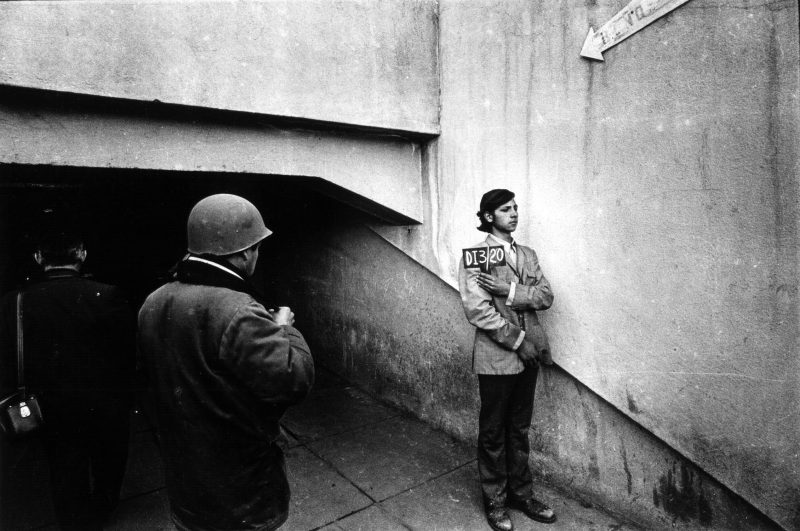
Australian government documents have revealed that the country assisted the US Central Intelligence Agency (CIA) in launching a coup against Chilean President Salvador Allende.
On September 11, 1973, an American-orchestrated military coup against Allende’s government resulted in a long-time dictatorship led by the coup leader Augusto Pinochet.
On the eve of the 48 anniversary of the coup, declassified documents published by the National Security Archive reveal that spies from the Australian Secret Intelligence Service (ASIS) assisted in the destabilization of Allende’s leftist government.
At the request of the CIA, ASIS established a secret base in Santiago in the fall of 1970.
Liberal Party Foreign Minister William (Billy) McMahon had reportedly approved the cooperation of ASIS agents with the CIA.
The base operated for approximately 18 months and involved Australian agents and equipment alongside several Chilean s[pies recruited by the CIA in Santiago.
The group gathered intelligence that was relayed to CIA headquarters in Langley, Virginia.
According to one of the declassified documents, Austalia’s then-Prime Minister Gough Whitlam, elected in December 1972, was “uncomfortable” with the participation of Australia, because if the acts of international espionage were made public it would be “extremely difficult” to justify their presence there.
Whitlam ordered ASIS director at the time, William Robertson, to dissolve the den of spies that Australia set up in Chile to assist the Americans to topple Allende’s democratically-elected government.
Despite Whitlam’s order, an Australian intelligence agent reportedly stayed in Santiago until after the US-led coup.
Another report also noted that the prime minister “was well aware of the importance of this (operation) to the Americans” and “was very concerned that the CIA should not interpret this decision (of the closure of the base) as a hostile gesture towards the US in general or towards the CIA in particular. “
Numerous crimes against humanity, persecution of opponents, political repression, and state terrorism were committed by the Chilean armed forces, members of Carabineros de Chile, and agents of the secret police of the Pinochet regime from 1973 to 1990.
September 11, 2021
Posted by aletho |
Timeless or most popular, War Crimes | Australia, CIA, Latin America, United States |
Leave a comment
It is impossible to overemphasize the importance of this book. It is a tour de force that blows away twenty years of U.S. government lies and obfuscations about the mass murders of September 11, 2001, the foundational event of recent times that claimed thousands of victims whose relatives still cry out for truth and justice.
Reading Unanswered Questions will roil you to the depths of your soul and illuminate your mind as author Ray McGinnis presents fact after fact backed up by almost one thousand endnotes and twelve years of meticulous research. There is nothing speculative about this book. It is not a “conspiracy theory.”
McGinnis ingeniously and brilliantly documents those murders through the eyes of victims’ relatives and their decades-long, agonizing efforts to seek honest answers from the U.S. government. To have their simple and obvious questions answered. To know the truth about why their loved ones died and who killed them.
Their struggles have been met with cruel indifference from four presidents (Bush, Obama, Trump, and Biden), three New York City mayors (Giuliani, Bloomberg, and de Blasio), the 9/11 Commission, and so many others in positions of authority who have turned deaf ears to their cris de coeur. The corporate mass media have rubbed salt in their wounds as they have stage-managed the lies and coverups. And controlled opposition operatives have played slick games to direct attention away from the heart of the matter.
The families’ search for answers to their questions have been either ignored or answered with lies and dissimulation piled upon dissimulation to protect the guilty. McGinnis is their champion. He insists on answers.
He powerfully unfurls layer upon layer of facts and the government’s fictions in a timeline that brings us to the twentieth anniversary of these atrocities. While reading it, one cannot help but think of the thousands of innocent victims of that terrible day and their suffering families, and the millions of innocent victims throughout the world who have been murdered by the U.S. government in the name of 9/11. The “war on terror” has been waged by a government that continues to refuse to tell the truth about who the “terrorists” were on September 11, 2001.
By refusing to answer the families’ questions and thereby hypothetically claiming the Fifth Amendment for fear of incriminating themselves, government officials have ironically incriminated themselves.
For McGinnis is like a prosecuting attorney who works not for the state but for the people. He forces the issue by asking the questions his clients want answered. Like them, he is persistent and requests answers to a litany of interrogations that are met with silence. The government’s stonewalling is deafening, and readers – who are the jury – are left to decide the case partially based on those non-answers, often justified under the sham of “national security” or just plain arrogance. When answers are forthcoming, they are incomplete and disingenuous.
Seventy per cent of the questions the Family Steering Committee asked the 9/11 Commission were left unanswered in The 9/11 Commission Report. Those that were answered raised more questions than they answered.
But the reason that this book is so powerful is because McGinnis answers the questions that the government does not. And so his title – Unanswered Questions – is ironically false while also being true.
This should in no way put off those who still cling to the official story. For McGinnis is exceedingly fair in assessing and presenting the facts and readily admits when there are disagreements.
While focusing on a core group of bereaved families called The Family Steering Committee who are insistent on answers, a group that includes four New Jersey widows known as “The Jersey Girls” whose husbands died in the Twin Towers, he includes many others and does not shy away from saying when they are at odds. The only way a fair-minded person can assess the book is to read it. And if you don’t read it and you have bought the government’s official fabrications or are still sitting on the fence, you are in flight from truth. This book demands attention.
As far as I know, while there have been many excellent books critiquing the government’s account of 9/11, led by about a dozen extraordinary works by David Ray Griffin, and many books supporting the government’s explanation led by The 9/11 Commission Report, Unanswered Questions is the first to approach the subject from the perspective of the questions asked by the relatives of the victims.
For many people, the murders of that day are abstract, although they naturally stir the human emotions of pity, fear, and terror. But from a distance, for they are now fading into history and are not personal. For some, there may have been a catharsis with The 9/11 Commission Report which they no doubt never read although it was said to be a “best-seller.” That would be fake catharsis, for such fiction fails to tell the truth since it was written by people blind in mind and ears as well as in their eyes. But then again, who reads Sophocles or Aeschylus any longer? Better to read The New York Times, Slate magazine, Time, The New Republic, The Nation, etc., all of which effusively praised the 9/11 Commission Report when it was released. As McGinnis reports, “The New York Times called the Report ‘an uncommonly lucid, even riveting narrative’ and an ‘improbable literary triumph.’” This is simply propaganda.
But let us take a look inside Unanswered Questions, a genuine non-fiction book motivated by a deep compassion for the victims and a scholar’s dedication to the truth. It is divided into four parts, each containing multiple chapters.
“Part One: From Grief to Advocacy” is the briefest and introduces the reader to firefighters, first responders, and family members who lost loved ones in the calamity. We learn how their grief turned to advocacy when they formed many groups to channel their energies. We learn how President Bush and his minions (or was Bush the minion and others like Cheney in charge?) opposed establishing a special commission to probe into the events of September Eleventh and how when his opposition was overcome he had the audacity to try to name Henry Kissinger to head the 9/11 Commission and how this was stopped. Finally, McGinnis tells us how the families’ questions were greatly expanded after discovering Paul Thompson’s extraordinary Internet timeline with its vast numbers of links to news reports that was later published as The Terror Timeline.
“Part Two: Family Steering Committee Statements to the 9/11 Commission” examines how the 9/11 Commission was a setup from the start, not even close to being an impartial investigation. It began with the naming of Philip Zelikow as the Director. Zelikow had deep ties to the Bush administration and its neocons. He had been a member of Bush’s transition team. Even “Richard Clarke, chairman of the ‘Counterterrorism Security Group,’ said ‘the fix is in’” when Zelikow was appointed. Zelikow completely controlled the investigation and the final report despite many conflicts of interest. He essentially wrote the report before the hearings commenced. He had authored a book with Condoleezza Rice and was an advocate for preemptive war that was used to attack Iraq in early 2003, etc. His appointment was a sick joke, and the Family Steering Committee called for his immediate resignation but was rebuffed just as quickly by Chairman Thomas Kean and Lee Hamilton. As a result, the final report ended being a fictional account authored by Zelikow (who has now been named to head a Covid-19 commission).
This section also covers the lies told by Mayor Rudy Giuliani when he testified. Three hundred and forty-three FDNY members were killed that day, heroes who didn’t have to die. Giuliani’s testimony so outraged the families of first responders that their fury was uncontained. McGinnis tells us:
They held up signs that read ‘lies’ and ‘liar.’ Family Steering Committee member Sally Regenhard held up a sign that read ‘FICTION.’ She hollered, ‘My son [Christian Regenhard, a probationary firefighter] was not told to get out! He would’ve gotten out! My son was murdered, murdered because of your incompetence and radios that didn’t work!
McGinnis captures the increasing anger felt by family members throughout this section as the final report was rammed through despite their protests.
“Part Three: The Family Steering Committee’s Unanswered Questions” is the heart of the book. It contains eleven chapters devoted to questions addressed to NORAD, the FAA, the CIA/SEC/FBI, Mayor Giuliani, President Bush, the Port Authority/WTC/City of New York, Vice President Cheney, and Secretary of Defense Donald Rumsfeld but never answered. Over a thousand questions were posed to the 9/11 Commission to aid the investigation. McGinnis writes:
The questions were intended to direct the focus of the inquiry, and ask those most directly involved what led to the failures that day. They understood that it would not be the FSC members themselves asking the questions. Instead, they would be posed to witnesses by 9/11 commissioners in public hearings, or asked by Commission staff behind closed-door proceedings.
Some of these questions were directed at the North American Aerospace Defense Command (NORAD). One question the FSC asked the 9/11 Commission was: ‘Why weren’t NORAD jets able to intercept the hijacked planes if they were airborne within eight minutes of notification?’
NORAD had an extremely successful history of intercepting errant aircraft, and a part of their mission was “surveillance and control of the [domestic] territorial airspace “ in the U.S. and Canada. Nevertheless, on September 11, 2001 none of the hijacked aircraft were intercepted even though they were allegedly being flown by inexperienced and incompetent hijackers who, according to experts, could never fly such massive commercial airliners into the World Trade Towers or the Pentagon. Government witnesses either lied about the systemic failures to intercept the planes, omitted important details, or gave contradictory stories. Of course, they were then promoted. And although there was an unprecedented number of war games being “coincidentally” held on September 11, none of the 9/11 Commissioners asked any witnesses about them.
It was clear that all the questions about the failure to intercept the planes would not be answered, but McGinnis makes it obvious that their non-answers were indeed answers by omission, for in this section and all the others, he makes sure the questions are indeed answered and the cumulative effect is devastating. He does this not simply by expressing his own opinions but by quoting others and always giving sources.
In a similar vein, the FSC wished to know from the Federal Aviation Administration (FAA) why these hijacked planes were able to evade all of the highly sophisticated radar? McGinnis says, “The 9/11 Commission concluded that NORAD had failed to do its job on September Eleventh; NORAD’s decisions impaired the FAA radar operator’s conduct.” Of course the radar questions were linked to the war games issue and since the war games questions were never asked, these massive failures were explained away in gobbledygook worthy of the Three Stooges.
Mindy Kleinberg, a FSC member whose husband Alan died in the North Tower, told the Commission that its theory of luck was bullshit, although she phrased it more diplomatically:
With regard to the 9/11 attacks, it has been said that the intelligence agencies have to be right 100% of the time and the terrorists only have to get lucky once. This explanation for the devastating attacks of September 11, simply on its face, is wrong in its value. Because the 9/11 terrorists were not just lucky once; they were lucky over and over again… Is it luck that aberrant stock trades were not monitored? Is it luck when 15 visas were awarded on incomplete forms? Is it luck when Airline Security screenings allow hijackers to board planes with box cutters and pepper spray? Is it luck when emergency FAA and NORAD protocols are not followed? Is it luck when a national emergency is not reported to top government officials on a timely basis? To me luck is something that happens once. When you have this repeated pattern of broken protocols, broken laws, broken communication, one cannot still call it luck.
Comically, The 9/11 Commission Report concluded that, as McGinnis notes, “The reason for the attacks was due simply to a [U.S. government] failure of imagination.”
In regard to foreknowledge of the attacks, the families asked the CIA, the SEC, and the FBI for the names of the individuals and financial institutions who placed “put” orders on American and United Airlines in the three weeks prior to 9/11.
This involved the number three man at the CIA, CIA Executive Director Alvin “Buzzy” Krongard, former Vice Chairman of the board at Bankers Trust that had been acquired by Deutsche Bank through which many of these suspect stock trades passed. This insider trading that anticipated the 9/11 attacks was connected to a security firm named Stratesec that provided security to Dulles Airport, the World Trade Center, and United Airlines, and to Wirt Walker III, a business partner of the president’s brother, Marvin Bush. Walker III was a board member of the Carlyle Group that was in turn connected to the bin Laden and Bush families.
Despite these and other highly suspect connections, the “9/11 Commission wasn’t interested in exploring leads about possible foreknowledge of the attacks.” Nor were they interested in the strange matter of Larry Silverstein, who had already owned World Trade Center Building 7, but who obtained a 99-year lease on the Twin Towers two months before the attack and who insisted that insurance cover a terrorist attack for $3.5. billion dollars. Silverstein was later awarded $4.55 billion when it was determined that there had been two suicide attacks.
Silverstein later claimed that there was agreement to “pull” (a controlled demolition term) Building 7, which happened at 5:20 PM that day despite never having been hit by a plane. Questions about the collapse of Building 7 were of course never answered, but the videos of its collapse are available for all to see with their own eyes. An excellent film about Building 7, Seven by Dylan Avery, should be seen by all. Seeing is believing, and what any objective observer can only conclude is that the building was taken down by controlled demolition, which the government denies.
Which brings us to other key questions that the FSC asked, McGinnis explores, and that went unanswered: Why did President Bush enter a Sarasota, Florida elementary classroom, stay there as the attacks unfolded, and not immediately return to Washington, D.C.? Why did he enter that classroom at 9:03 AM and remain there for fifteen minutes when it was clear the U.S. was under a terrorist attack? Why was he, unlike Dick Cheney, not immediately taken out of the building by the Secret Service but was allowed to sit and read to children and not depart the building until 9:34 A.M.?
“The vice president was reported by President Bush’s personal secretary as being ‘seized by arms, legs, and his belt and physically’ carried out of his office at 9:03 A.M. Cheney was taken to the Presidential Emergency Operations Center below the White House, where Secretary of Transportation Norman Mineta saw him prior to 9:25 A.M.” Yet Bush stayed to read a book when colleagues of the Secret Service agents protecting him had already been evacuated from the largest Secret Service Field Office in WTC 7.
“However,” writes McGinnis, “on December 4, 2001, President Bush made the following statement at a Town Hall meeting about the moment – 9:01 a.m. – that he said he learned about the attack. ‘And I was sitting outside the classroom waiting to go in, and I saw an airplane hit the tower – the television was obviously on, and I used to fly myself, and I said, “That’s one terrible pilot.” And I said, “It must have been a horrible accident.” But I was whisked off there – I didn’t have much time to think about it.’”
You can’t make this stuff up, yet it’s offered to the public and the victims’ families as acceptable. Bush was informed that a second plane had hit the South Tower by Andrew Card who came into the classroom and whispered in his ear. But three months later he claims he saw on television the first plane hit the North Tower when no one could have seen it since video of the first plane hitting the building at 8:46 A.M. was not available until much later.
These ridiculous discrepancies and other questions the FSC wished the 9/11 Commission to ask Bush under oath in sworn public testimony went unasked and unanswered. Instead, as McGinnis writes:
But, the meeting with Bush and Cheney took place in secret on April 29, 2004. It was not held under oath. No transcript was made available of their conversation with the commissioners. Nothing was learned about why the president remained at an elementary school during the attacks. Nothing was learned about what the president knew regarding foreign intelligence agencies forewarning the U.S. Nothing was learned about why the president had authorized America to prepare for war against Afghanistan in the days and weeks prior to the attacks of September 11.
Nor was anything learned about why Pentagon brass suddenly cancelled flights scheduled for September 11. Nothing about who warned them and why.
Essentially all the key questions the families asked were not answered. But McGinnis answers them, including those addressed to Cheney, Rumsfeld, Giuliani, the CIA, and the Port Authority/WTC/City of New York. By using the documented records against them, he does the job the 9/11 Commission refused to do. He unravels the lies, circumlocutions, and straightforward propaganda used to hide the truth, including the following:
- Cheney’s deceptions about when he got to the Presidential Emergency Operations Center and what he was doing there and his orders to his young assistant about the hijacked plane headed toward the capitol.
- Rumsfeld with his lies about not knowing anything about the World Trade Center attacks until fifteen minutes before the Pentagon was hit and why the Pentagon was not defended.
- Giuliani and the obvious controlled demolition of Building 7 at 5:20 P.M. and the lies about the faulty telephones the firefighters carried.
Since this is not meant to be a book about a book but a book review, I will stop there. I would be remiss, however, if I failed to mention “Chapter 22: The Missing Accounts: FDNY.”
It is part of Part Four: Acceptance And Dissent that leads to McGinnis’s conclusion. Whatever one’s position on the events of September 11, it is generally accepted that firefighters and first responders are objective and brave in the extreme. Of the emergency workers who responded to the call to help save the people in the Twin Towers, the vast majority who lost their lives in attempting to save their fellow human beings were firefighters – 343 of them perished that day. They were doing their duty. So their surviving colleagues’ testimonies are priceless and beyond dispute. They had absolutely no reasons to lie. McGinnis tells us:
On September 11, 2001, Thomas Von Essen, the fire commissioner of New York City, ordered that oral histories be gathered from first responders, firefighters, and medical workers. He wanted to preserve the accounts of what they experienced at the World Trade Center. In the weeks and months following 9/11, 503 oral histories were taken. However, they were not released to the public. The 2002 mayor of New York City, Michael Bloomberg, refused.
The Family Steering Committee asked the 9/11 Commission why, but the Commission refused to answer their question. After a law suit, the oral histories that run to 12,000 pages were released. They contain copious accounts of explosions going off in the Towers before the Towers collapsed.
FDNY firefighter John Coyne, who was in the South Tower, recalls how he had called his father and said:
I finally got through to my father and said ‘I’m alive. I just wanted to tell you, go to church, I’m alive. I just so narrowly escaped this thing.’ He said, ‘Where were you? You were there?’ I said, ‘Yeh, I was right there when it blew up.’ He said, ‘You were there when the planes hit?’ I said, ‘No, I was there when it exploded, the building exploded.’ He said, ‘You mean when it fell down?’ I said, ‘No, when it exploded.’ … I totally thought it had been blown up. That’s just the perspective of looking at it, it seemed to have exploded out.
Captain Karin DeShore, who was standing outside, said she saw a sequence of orange and red flashes coming from the North Tower:
Initially it was just one flash. Then this flash…kept popping all around the building and that building started to explode … These popping sounds and the explosions were getting bigger, going up and down and the all around the building.
Keith Murphy: “There was tremendous damage in the lobby… like something had exploded out… a distant boom sounded like three explosions.”
Assistant Commissioner Stephen Gregory: “I saw low-level flashes… [at] the lower level of the building. You know when they demolish a building?”
Explosions were being reported everywhere and by reporters as well. Researchers Graeme MacQueen and Ted Walter viewed 70 hours of television coverage and found that most reporters were saying the Towers came down as a result of explosions and demolition. Take a look here.
There were explosions reported in the sub-basements before the planes hit. William Rodriguez, who was in the sub-basement of the North Tower and heard and felt very loud multiple explosions, told this to 9/11 Commission staff and this never appeared in The 9/11 Commission Report.
The evidence for explosives planted in the Towers and Building 7 is overwhelming but was completely discounted by the 9/11 Commission and the mass media complicit in its coverup. In fact, the demolition of Building 7 at 5:20 P.M was not worthy of a mention in the best-selling report. It should be obvious to any objective thinker that if these building were wired for explosives and were brought down via controlled demolition, then this could not have been done by Osama bin Laden or his followers but only by insiders who were granted secret access to these ultra-high security buildings.
Bob McIlvaine, whose son Bobby died in the North Tower, has persevered for twenty years to expose the lies surrounding September 11. McGinnis reports on his 2006 interview with the Canadian Broadcasting Corporation host Evan Solomon:
I believe 100% that the US orchestrated 9/11 with the help of other agencies around the world… There’s people within the US that knew it happened, that planned this to happen.
To Solomon’s question “You think your son was therefore murdered by Americans?” McIlvaine replied, “absolutely.”
He is joined by many others, including Matt Campbell, a British citizen and family member, whose brother Geoff Campbell died on the 106th floor of the North Tower. Matt Campbell and his family have recently demanded a new inquest based on a 3,000 page scientifically-backed dossier claiming the buildings were blown up from within.
After reading Unanswered Questions, you very well might believe it too.
Learning about the determination of such stalwart souls as McIlvaine, Campbell, the FSC, and so many others to extract truth and justice from a recalcitrant and guilty government is inspirational. They will never give up. Nor should we.
There is no doubt that this extraordinary book will answer many questions you may or may not have had about the mass murders of September 11, 2001.
So don’t turn away.
It will break your heart but restore your faith in what a writer dedicated to the truth can do for those family members who have so long sought the bread of truth and were handed stones of silence.
In their ongoing grief, Ray McGinnis has handed them the gift of a bitter solace. He has answered them.
He has also given the public an opportunity to see the truth and demand an independent investigation forthwith.
September 11, 2021
Posted by aletho |
Book Review, Deception, False Flag Terrorism, Timeless or most popular | 9/11, 9/11 Commission Report, CIA, FBI, United States |
Leave a comment
- Who Were the Israelis Living Next to Mohammed Atta?
- What was in the Van on the New Jersey Shore?
- How did Two Hijackers Land on Watch List Weeks Before 9/11?
- Who Shut Down Fox News’ Carl Cameron?
On the afternoon of September 11, 2001, an FBI bulletin known as a BOLO – “be on lookout” – was issued with regard to three suspicious men who that morning were seen leaving the New Jersey waterfront minutes after the first plane hit World Trade Center 1. Law enforcement officers across the New York-New Jersey area were warned in the radio dispatch to watch for a “vehicle possibly related to New York terrorist attack”:
White, 2000 Chevrolet van… with ‘Urban Moving Systems’ sign on back seen at Liberty State Park, Jersey City, NJ, at the time of first impact of jetliner into World Trade Center… Three individuals with van were seen celebrating after initial impact and subsequent explosion. FBI Newark Field Office requests that, if the van is located, hold for prints and detain individuals.
At 3:56 p.m., twenty-five minutes after the issuance of the FBI BOLO, officers with the East Rutherford Police Department stopped the commercial moving van through a trace on the plates. According to the police report, Officer Scott DeCarlo and Sgt. Dennis Rivelli approached the stopped van, demanding that the driver exit the vehicle. The driver, 23-year-old Sivan Kurzberg, refused and “was asked several more times [but] appeared to be fumbling with a black leather fanny pouch type of bag”. With guns drawn, the police then “physically removed” Kurzberg, while four other men – two more men had apparently joined the group since the morning – were also removed from the van, handcuffed, placed on the grass median and read their Miranda rights. They had not been told the reasons for their arrest. Yet, according to DeCarlo’s report, “this officer was told without question by the driver [Sivan Kurzberg], ‘We are Israeli. We are not your problem. Your problems are our problems. The Palestinians are the problem.’” Another of the five Israelis, again without prompting, told Officer DeCarlo – falsely – that “we were on the West Side Highway in New York City during the incident”.
From inside the vehicle the officers, who were quickly joined by agents from the FBI, retrieved multiple passports and $4,700 in cash stuffed in a sock. According to New Jersey’s Bergen Record, which on September 12 reported the arrest of the five Israelis, an investigator high up in the Bergen County law enforcement hierarchy stated that officers had also discovered in the vehicle “maps of the city … with certain places highlighted. It looked like they’re hooked in with this”, the source told the Record, referring to the 9/11 attacks. “It looked like they knew what was going to happen when they were at Liberty State Park.”
The five men were indeed Israeli citizens. They claimed to be in the country working as movers for Urban Moving Systems Inc., which maintained a warehouse and office in Weehawken, New Jersey. They were held for 71 days in a federal detention center in Brooklyn, New York, during which time they were repeatedly interrogated by FBI and CIA counterterrorism teams, who referred to the men as the “high-fivers” for their celebratory behavior on the New Jersey waterfront. Some were placed in solitary confinement for at least forty days; some were given as many as seven liedetector tests. One of the Israelis, Paul Kurzberg, brother of Sivan, refused to take a lie-detector test for ten weeks. Then he failed it.
Meanwhile, two days after the men were picked up, the owner of Urban Moving Systems, Dominik Suter, a 31- year-old Israeli national, abandoned his business and fled the United States for Israel. Suter’s departure was abrupt, leaving behind coffee cups, sandwiches, cell phones and computers strewn on office tables and thousands of dollars of goods in storage. Suter was later placed on the same FBI suspect list as 9/11 lead hijacker Mohammed Atta and other hijackers and suspected al-Qaeda sympathizers, suggesting that U.S. authorities felt Suter may have known something about the attacks. The suspicion, as the investigation unfolded, was that the men working for Urban Moving Systems were spies. Who exactly was handling them, and who or what they were targeting, was as yet uncertain.
It was New York’s venerable Jewish weekly The Forward that broke this story in the spring of 2002, after months of footwork. The Forward reported that the FBI had finally concluded that at least two of the men were agents working for the Mossad, the Israeli intelligence agency, and that Urban Moving Systems, the ostensible employer of the five Israelis, was a front operation. Two former CIA officers confirmed this to me, noting that movers’ vans are a common intelligence cover. The Forward also noted that the Israeli government itself admitted that the men were spies. A “former high-ranking American intelligence official”, who said he was “regularly briefed on the investigation by two separate law enforcement officials”, told reporter Marc Perelman that after American authorities confronted Jerusalem at the end of 2001, the Israeli government “acknowledged the operation and apologized for not coordinating it with Washington”. Today, Perelman stands by his reporting. I asked him if his sources in the Mossad denied the story. “Nobody stopped talking to me”, he said. In June 2002, ABC News’ 20/20 followed up with its own investigation into the matter, coming to the same conclusion as The Forward. Vincent Cannistraro, former chief of operations for counterterrorism with the CIA, told 20/20 that some of the names of the five men appeared as hits in searches of an FBI national intelligence database. Cannistraro told me that the question that most troubled FBI agents in the weeks and months after 9/11 was whether the Israelis had arrived at the site of their “celebration” with foreknowledge of the attack to come. From the beginning, “the FBI investigation operated on the premise that the Israelis had foreknowledge”, according to Cannistraro. A second former CIA counterterrorism officer who closely followed the case, but who spoke on condition of anonymity, told me that investigators were pursuing two theories. “One story was that [the Israelis] appeared at Liberty State Park very quickly after the first plane hit. The other was that they were at the park location already”. Either way, investigators wanted to know exactly what the men were expecting when they got there.
Before such issues had been fully explored, however, the investigation was shut down. Following what ABC News reported were “high-level negotiations between Israeli and U.S. government officials”, a settlement was reached in the case of the five Urban Moving Systems suspects. Intense political pressure apparently had been brought to bear. The reputable Israeli daily Ha’aretz reported that by the last week of October 2001,some six weeks after the men had been detained, Deputy Secretary of State Richard Armitage and two unidentified “prominent New York congressmen” were lobbying heavily for their release. According to a source at ABC News close to the 20/20 report, high-profile criminal lawyer Alan Dershowitz also stepped in as a negotiator on behalf of the men to smooth out differences with the U.S. government. (Dershowitz declined to comment for this article.) And so, at the end of November 2001, for reasons that only noted they had been working in the country illegally as movers, in violation of their visas, the men were flown home to Israel.
Today, the crucial questions raised by this matter remain unanswered. There is sufficient reason – from news reports, statements by former intelligence officials, an array of circumstantial evidence, and the reported acknowledgment by the Israeli government – to believe that in the months before 9/11, Israel was running an active spy network inside the United States, with Muslim extremists as the target. Given Israel’s concerns about Islamic terrorism as well as its long history of spying on U.S. soil, this does not come entirely as a shock. What’s incendiary is the idea – supported, though not proven, by several pieces of evidence – that the Israelis did learn something about 9/11 in advance but failed to share all of what they knew with American officials. The questions are disturbing enough to warrant a Congressional investigation.
Yet none of this information found its way into Congress’s joint committee report on the attacks, and it was not even tangentially referenced in the nearly 600 pages of the 9/11 Commission’s final report. Nor would a single major media outlet track the revelations of The Forward and ABC News to investigate further. “There weren’t even stories saying it was bullshit”, says The Forward’s Perelman. “Honestly, I was surprised”. Instead, the story disappeared into the welter of anti-Israel 9/11 conspiracy theories.
It’s no small boon to the U.S. government that the story of 9/11-related Israeli espionage has been thus relegated: the story doesn’t fit in the clean lines of the official narrative of the attacks. It brings up concerns not only about Israel’s obligation not to spy inside the borders of the United States, its major benefactor, but about its possible failure to have provided the U.S. adequate warning of an impending devastating attack on American soil.
Furthermore, the available evidence undermines the carefully cultivated image of sanctity that defines the U.S.- Israel relationship. These are all factors that help explain the story’s disappearance – and they are compelling reasons to revisit it now.
Torpedoing the FBI Probe
All five future hijackers of American Airlines Flight 77, which rammed the Pentagon, maintained addresses or were active within a six-mile radius of towns associated with the Israelis employed at Urban Moving Systems. Hudson and Bergen counties, the areas where the Israelis were allegedly conducting surveillance, were a central staging ground for the hijackers of Flight 77 and their fellow al-Qaeda operatives. Mohammed Atta maintained a mail-drop address and visited friends in northern New Jersey; his contacts there included Hani Hanjour, the suicide pilot for Flight 77, and Majed Moqed, one of the strongmen who backed Hanjour in the seizing of the plane. Could the Israelis, with or without knowledge of the terrorists’ plans, have been tracking the men who were soon to hijack Flight 77?
In public statements, both the Israeli government and the FBI have denied that the Urban Moving Systems men were involved in an intelligence operation in the United States. “No evidence recovered suggested any of these Israelis had prior knowledge of the 9/11 attack, and these Israelis are not suspected of working for Mossad”, FBI spokesman Jim Margolin told me. (The Israeli embassy did not respond to questions for this article.)
According to the source at ABC News, FBI investigators chafed at the denials from their higher-ups. “There is a lot of frustration inside the bureau about this case”, the source told me. “They feel the higher echelons torpedoed the investigation into the Israeli New Jersey cell. Leads were not fully investigated.” Among those lost leads was the figure of Dominik Suter, whom the U.S. authorities apparently never attempted to contact.
Intelligence expert and author James Bamford told me there was similar frustration within the CIA: “People I’ve talked to at the CIA were outraged at what was going on. They thought it was outrageous that there hadn’t been a real investigation, that the facts were hanging out there without any conclusion.”
However, what was “absolutely certain”, according to Vincent Cannistraro, was that the five Israelis formed part of a surveillance network in the New York – New Jersey area. The network’s purpose was to track radical Islamic extremists and/or supporters of militant Palestinian groups like Hamas and Islamic Jihad. The former CIA counterterrorism officer who spoke anonymously told me that FBI investigators determined that the suspect Israelis were serving as Arabic speaking linguists “running technical operations” in northern New Jersey’s extensive Muslim communities.
The former CIA officer said the operations included taps on telephones, placement of microphones in rooms and mobile surveillance. The source at ABC News agreed: “Our conclusion was that they were Arab linguists involved in monitoring operations, i.e., electronic surveillance. People at FBI concur with this”. The ABC News source added, “What we heard was that the Israelis may have picked up chatter that something was going to happen on the morning of 9/11”. The former CIA counterterrorism officer told me: “There was no question but that [the order to close down the investigation] came from the White House. It was immediately assumed at CIA headquarters that this basically was going to be a cover-up so that the Israelis would not be implicated in any way in 9/11. Bear in mind that this was a political issue, not a law enforcement or intelligence issue. If somebody says we don’t want the Israelis implicated in this – we know that they’ve been spying the hell out of us, we know that they possibly had information in advance of the attacks, but this would be a political nightmare to deal with.”
Israel’s “Art Student Spies”
There is a second piece of evidence that suggests Israeli operatives were spying on al-Qaeda in the United States. It is writ in the peculiar tale of the Israeli “art students”, detailed by this reporter for Salon.com in 2002, following the leaking of an internal memo circulated by the Drug Enforcement Administration’s Office of Security Programs. The June 2001 memo, issued three months before the 9/11 attacks, reported that more than 120 young Israeli citizens, posing as art students and peddling cheap paintings, had been repeatedly – and seemingly inexplicably – attempting to penetrate DEA offices and other law enforcement and Defense Department offices across the country. The DEA report stated that the Israelis may have been engaged in “an organized intelligence gathering activity”, but to what end, U.S. investigators, in June 2001, could not determine. The memo briefly floated the possibility that the Israelis were engaged in trafficking the drug ecstasy. According to the memo, “the most activity [was] reported in the state of Florida” during the first half of 2001, where the town of Hollywood appeared to be “a central point for these individuals with several having addresses in this area”.
In retrospect, the fact that a large number of “art students” operated out of Hollywood is intriguing, to say the least. During 2001, the city, just north of Miami, was a hotbed of al-Qaeda activity and served as one of the chief staging grounds for the hijacking of the World Trade Center planes and the Pennsylvania plane; it was home to fifteen of the nineteen future hijackers, nine in Hollywood and six in the surrounding area. Among the 120 suspected Israeli spies posing as art students, more than thirty lived in the Hollywood area, ten in Hollywood proper. As noted in the DEA report, many of these young men and women had training as intelligence and electronic intercept officers in the Israeli military – training and experience far beyond the compulsory service mandated by Israeli law. Their “traveling in the U.S. selling art seem[ed] not to fit their background”, according to the DEA report.
One “art student” was a former Israeli military intelligence officer named Hanan Serfaty, who rented two Hollywood apartments close to the mail drop and apartment of Mohammed Atta and four other hijackers. Serfaty was moving large amounts of cash: he carried bank slips showing more than $100,000 deposited from December 2000 through the first quarter of 2001; other bank slips showed withdrawals for about $80,000 during the same period. Serfaty’s apartments, serving as crash pads for at least two other “art students”, were located at 4220 Sheridan Street and 701 South 21st Avenue. Lead hijacker Mohammed Atta’s mail drop was at 3389 Sheridan Street – approximately 2,700 feet from Serfaty’s Sheridan Street apartment. Both Atta and Marwan al-Shehhi, the suicide pilot on United Airlines Flight 175, which smashed into World Trade Center 2, lived in a rented apartment at 1818 Jackson Street, some 1,800 feet from Serfaty’s South 21st Avenue apartment.
In fact, an improbable series of coincidences emerges from a close reading of the 2001 DEA memo, the 9/11 Commission’s staff statements and final report, FBI and Justice Department watch lists, hijacker timelines compiled by major media and statements by local, state and federal law enforcement personnel. In at least six urban centers, suspected Israeli spies and 9/11 hijackers and/or al-Qaeda–connected suspects lived and operated near one another, in some cases less than half a mile apart, for various periods during 2000–01 in the run-up to the attacks. In addition to northern New Jersey and Hollywood, Florida, these centers included Arlington and Fredericksburg, Virginia; Atlanta; Oklahoma City; Los Angeles; and San Diego.
Israeli “art students” also lived close to terror suspects in and around Dallas, Texas. A 25-year-old “art student” named Michael Calmanovic, arrested and questioned by Texas-based DEA officers in April 2001, maintained a mail drop at 3575 North Beltline Road, less than a thousand feet from the 4045 North Beltline Road apartment of Ahmed Khalefa, an FBI terror suspect. Dallas and its environs, especially the town of Richardson, Texas, throbbed with “art student” activity. Richardson is notable as the home of the Holy Land Foundation, an Islamic charity designated as a terrorist funder by the European Union and U.S. government in December 2001. Sources in 2002 told The Forward, in a report unrelated to the question of the “art students”, that “Israeli intelligence played a key role in helping the Bush administration to crack down on Islamic charities suspected of funneling money to terrorist groups, most notably the Richardson, Texas-based Holy Land Foundation, last December [2001]”. It’s plausible that the intelligence prompting the shutdown of the Holy Land Foundation came from “art student” spies in the Richardson area.
Others among the “art students” had specific backgrounds in electronic surveillance or military intelligence, or were associated with Israeli wiretapping and surveillance firms, which prompted further concerns among U.S. investigators. DEA agents described Michael Calmanovic, for example, as “a recently discharged electronic intercept operator for the Israeli military”. Lior Baram, questioned near Hollywood, Fla., in January 2001, said he had served two years in Israeli intelligence “working with classified information”. Hanan Serfaty, who maintained the Hollywood apartments near Atta and his cohorts, served in the Israeli military between the ages of 18 and 21. Serfaty refused to disclose his activities between the ages of 21 and 24, including his activities since arriving in the U.S.A. in 2000. The French daily Le Monde meanwhile reported that six “art students” were apparently using cell phones that had been purchased by a former Israeli vice consul in the U.S.A.
Suspected Israeli spy Tomer Ben Dor, questioned at Dallas-Fort Worth Airport in May 2001, worked for the Israeli wiretapping and electronic eavesdropping company NICE Systems Ltd. (NICE Systems’ American subsidiary, NICE Systems Inc., is located in Rutherford, New Jersey, not far from the East Rutherford site where the five Israeli “movers” were arrested on the afternoon of September 11.) Ben Dor carried in his luggage a print-out of a computer file that referred to “DEA Groups”. How he acquired information about so-called “DEA Groups” – via, for example, his own employment with an Israeli wiretapping company – was never determined, according to DEA documents.
“Art student” Michal Gal, arrested by DEA investigators in Irving, Texas, in the spring of 2001, was released on a $10,000 cash bond posted by Ophir Baer, an employee of the Israeli telecommunications software company Amdocs Inc., which provides phone-billing technology to clients that include some of the largest phone companies in the United States as well as U.S. government agencies. Amdocs, whose executive board has been heavily stocked with retired and current members of the Israeli government and military, has been investigated at least twice in the last decade by U.S. authorities on charges of espionage-related leaks of data that the company assured was secure. (The company strenuously denies any wrong-doing.)
According to the former CIA counterterrorism officer with knowledge of investigations into 9/11-related Israeli espionage, when law enforcement officials examined the “art students” phenomenon, they came to the tentative conclusion that “the Israelis likely had a huge spy operation in the U.S. and that they had succeeded in identifying a number of the hijackers”. The German daily Die Zeit reached the same conclusion in 2002, reporting that “Mossad agents in the U.S. were in all probability surveilling at least four of the 19 hijackers”.
The Fox News Channel also reported that U.S. investigators suspected that Israelis were spying on Muslim militants in the United States. “There is no indication that the Israelis were involved in the 9/11 attacks, but investigators suspect that the Israelis may have gathered intelligence about the attacks in advance, and not shared it”, Fox correspondent Carl Cameron reported in a December 2001 series that was the first major exposé of allegations of 9/11-related Israeli espionage. “A highly placed investigator said there are ‘tie-ins’. But when asked for details, he flatly refused to describe them, saying, ‘evidence linking these Israelis to 9/11 is classified. I cannot tell you about evidence that has been gathered. It’s classified information.’”
One element of the allegations has never been clearly understood: if the “art students” were indeed spies targeting Muslim extremists that included al-Qaeda, why would they also be surveilling DEA agents in such a compromising manner? Why, in other words, would foreign spies bumble into federal offices by the scores and risk exposing their operation? An explanation is that a number of the art students were, in fact, young Israelis engaged in a mere art scam and unknowingly provided cover for real spies. Investigative journalist John Sugg, who as senior editor for the Creative Loafing newspaper chain reported on the “art students” in 2002, told me that investigators he spoke to within FBI felt the “art student” ring functioned as a wide-ranging cover that was counterintuitive in its obviousness. DEA investigators, for example, uncovered evidence connecting the Israeli “art students” to known ecstasy trafficking operations in New York and Florida. This was, according to Sugg, planted information. “The explanation was that when our FBI guys started getting interested in these folks [the art students] – when they got too close to what the real purpose was – the Israelis threw in an ecstasy angle”, Sugg told me. “The argument being that if our guys thought the Israelis were involved in a smuggling ring, then they wouldn’t see the real purpose of the operation”. Sugg, who is writing a book that explores the tale of the “art students”, told me that several sources within the FBI, and at least one source formerly with Israeli intelligence, suggested that “the bumbling aspect of the art student thing was intentional.”
When I reported on the matter for Salon.com in 2002, a veteran U.S. intelligence operative with experience subcontracting both for the CIA and the NSA suggested a similar possibility. “It was a noisy operation”, the veteran intelligence operative said. The operative referred me to the film Victor, Victoria. “It was about a woman playing a man playing a woman. Perhaps you should think about this from that aspect and ask yourself if you wanted to have something that was in your face, that didn’t make sense, that couldn’t possibly be them”. The intelligence operative added, “Think of it this way: how could the experts think this could actually be something of any value? Wouldn’t they dismiss what they were seeing?”
U.S. and Israeli officials, dismissing charges of espionage as an “urban myth”, have publicly claimed that the Israeli “art students” were guilty only of working on U.S. soil without proper credentials. The stern denials issued by the Justice Department were widely publicized in the Washington Post and elsewhere, and the endnote from officialdom and in establishment media by the spring of 2002 was that the “art students” had been rounded up and deported simply because of harmless visa violations. The FBI, for its part, refused to confirm or deny the “art students” espionage story. “Regarding FBI investigations into Israeli art students”, spokesman Jim Margolin told me, “the FBI cannot comment on any of those investigations.” As with the New Jersey Israelis, the investigation into the Israeli “art students” appears to have been halted by orders from on high. The veteran CIA/NSA intelligence operative told me in 2002 that there was “a great press to discredit the story, discredit the connections, prevent [investigators] from going any further. People were told to stand down. You name the agency, they were told to stand down”. The operative added, “People who were perceived to be gumshoes on [this matter] suddenly found themselves hammered from all different directions. The interest from the middle bureaucracy was not that there had been a security breach but that someone had bothered to investigate the breach. That was where the terror was”.
Choking Off the Press Coverage
There was similar pressure brought against the media venues that ventured to report out the allegations of 9/11- related Israeli espionage. A former ABC News employee high up in the network newsroom told me that when ABC News ran its June 2002 exposé on the celebratory New Jersey Israelis, “Enormous pressure was brought to bear by pro-Israeli organizations” – and this pressure began months before the piece was even close to airing. The source said that ABC News colleagues wondered, “how they [the pro-Israel organizations] found out we were doing the story. Pro-Israeli people were calling the president of ABC News. Barbara Walters was getting bombarded by calls. The story was a hard sell but ABC News came through – the management insulated [reporters] from the pressure”.
The experience of Carl Cameron, chief Washington correspondent at Fox News Channel and the first mainstream U.S. reporter to present the allegations of Israeli surveillance of the 9/11 hijackers, was perhaps more typical, both in its particulars and aftermath. The attack against Cameron and Fox News was spearheaded by a pro-Israel lobby group called the Committee for Accuracy in Middle East Reporting in America (CAMERA), which operated in tandem with the two most highly visible powerhouse Israel lobbyists, the Anti-Defamation League (ADL) and the American Israel Public Affairs Committee (itself currently embroiled in a spy scandal connected to the Defense Department and Israeli Embassy). “CAMERA peppered the shit out of us”, Carl Cameron told me in 2002, referring to an e-mail bombardment that eventually crashed the Fox News.com servers. Cameron himself received 700 pages of almost identical e-mail messages from hundreds of citizens (though he suspected these were spam identities). CAMERA spokesman Alex Safian later told me that Cameron’s upbringing in Iran, where his father traveled as an archeologist, had rendered the reporter “very sympathetic to the Arab side”. Safian added, “I think Cameron, personally, has a thing about Israel” – coded language implying that Cameron was an anti-Semite. Cameron was outraged at the accusation.
According to a source at Fox News Channel, the president of the ADL, Abraham Foxman, telephoned executives at Fox News’ parent, News Corp., to demand a sit-down in the wake of the Cameron reportage. The source said that Foxman told the News Corp. executives, “Look, you guys have generally been pretty fair to Israel. What are you doing putting this stuff out there? You’re killing us”. The Fox News source continued, “As good old boys will do over coffee in Manhattan, it was like, well, what can we do about this? Finally, Fox News said, ‘Stop the e-mailing. Stop slamming us. Stop being in our face, and we’ll stop being in your face – by way of taking our story down off the web. We will not retract it; we will not disavow it; we stand by it. But we will at least take it off the web.’” Following this meeting, within four days of the posting of Cameron’s series on Fox News.com, the transcripts disappeared, replaced by the message, “This story no longer exists”.
What Did Mossad Know and Tell the U.S.?
Whether or not Israeli spies had detailed foreknowledge of the 9/11 attacks, the Israeli authorities knew enough to warn the U.S. government in the summer of 2001 that an attack was on the horizon. The British Sunday Telegraph reported on September 16, 2001, that two senior agents with the Mossad were dispatched to Washington in August 2001 “to alert the CIA and FBI to the existence of a cell of as many as 200 terrorists said to be preparing a big operation”. The Telegraph quoted a “senior Israeli security official” as saying the Mossad experts had “no specific information about what was being planned”. Still, the official told the Telegraph, the Mossad contacts had “linked the plot to Osama bin Laden”. Likewise, Die Zeit correspondent Oliver Schröm reported that on August 23, 2001, the Mossad “handed its American counterpart a list of names of terrorists who were staying in the U.S. and were presumably planning to launch an attack in the foreseeable future”. Fox News’ Carl Cameron, in May 2002, also reported warnings by Israel: “Based on its own intelligence, the Israeli government provided ‘general’ information to the United States in the second week of August that an al-Qaeda attack was imminent”. The U.S. government later claimed these warnings were not specific enough to allow any mitigating action to be taken. Mossad expert Gordon Thomas, author of Gideon’s Spies, says German intelligence sources told him that as late as August 2001 Israeli spies in the United States had made surveillance contacts with “known supporters of bin Laden in the U.S.A. It was those surveillance contacts that later raised the question: how much prior knowledge did Mossad have and at what stage?”
According to Die Zeit, the Mossad did provide the U.S. government with the names of suspected terrorists Khalid al-Mihdhar and Nawaf al-Hazmi, who would eventually hijack the Pentagon plane. It is worth noting that Mihdhar and Hazmi were among the hijackers who operated in close proximity to Israeli “art students” in Hollywood, Florida, and to the Urban Moving Systems Israelis in northern New Jersey. Moreover, Hazmi and at least three “art students” visited Oklahoma City on almost the same dates, from April 1 through April 4, 2001. On August 24, 2001, a day after the Mossad’s briefing, Mihdhar and Hazmi were placed by the CIA on a terrorist watch list; additionally, it was only after the Mossad warning, as reported by Die Zeit, that the CIA, on August 27, informed the FBI of the presence of the two terrorists. But by then the cell was already in hiding, preparing for attack.
The CIA, along with the 9/11 Commission in its adoption of the CIA story, claims that Mihdhar and Hazmi were placed on the watch list solely due to the agency’s own efforts, with no help from Mossad. Their explanation of how the pair came to be placed on the watch list, however, is far from credible and may have served as a cover story to obscure the Mossad briefing [See accompanying story on page 8 – “The Kuala Lumpur Deceit”]. This brings up the possibility that the CIA may have known about the existence of the alleged Israeli agents and their mission, but sought, naturally, to keep it quiet. A second, more troubling scenario, is that the CIA may have subcontracted to Mossad, given that the agency was both prohibited by law from conducting intelligence operations on U.S. soil, and lacked a pool of competent Arabic-fluent field officers. In such a scenario, the CIA would either have worked actively with the Israelis or quietly abetted an independent operation on U.S. soil. In his 9/11 investigative book, The Looming Tower, author Lawrence Wright notes that FBI counterterrorism agents, infuriated at the CIA’s failure to fully share information about Mihdhar and Hazmi, speculated that “the agency was shielding Mihdhar and Hazmi because it hoped to recruit them”. The two al-Qaeda men, Wright notes, “must have seemed like attractive opportunities; however, once they entered the United States they were the province of the FBI…” Wright further observes that the CIA’s reticence to share its information was due to a fear “that prosecutions resulting from specific intelligence might compromise its relationship with foreign services”
When in the spring of 2002 the scenario of CIA’s domestic subcontracting to foreign intelligence was posed to the veteran CIA/NSA intelligence operative, with whom I spoke extensively, the operative didn’t reject it out of hand. The operative noted that in recent years the CIA’s human intelligence assets, known as “humint” – spooks on the ground who conduct surveillances, make contacts, and infiltrate the enemy – had been “eviscerated” in favor of the NSA’s far less perilous “sigint”, or signals intelligence program, the remote interception of electronic communications. As a result, “U.S. intelligence finds itself going back to sources that you may not necessarily like to go back to, but are required to”, the veteran intelligence operative said. “We don’t like the fact, but our humint structures are gone. Israeli intel’s humint is as strong as ever. If you have an intel gap, those gaps are not closed overnight. It takes years and years of diligent work, a high degree of security, talented and dedicated people, willing management and a steady hand. It is not a fun business, and it’s certainly not one without its dangers. If you lose that capability, well… organizations find themselves having to make a pact with the devil. The problem [in U.S. intel] is very great”.
If such an understanding did exist between CIA and Mossad with regard to al-Qaeda’s U.S. operatives, the complicity would explain a number of oddities: it would explain the CIA’s nearly incoherent, and perhaps purposely deceptive, reconstruction of events as to how Mihdhar and Hazmi joined the watch list; it might even explain the apparent brazenness of the Israeli New Jersey cell celebrating on the morning of 9/11 (protected under the CIA wing, they were free to behave as they pleased). It would also explain the assertion in one of the leading Israeli dailies, Yedioth Ahronoth, that in the months prior to 9/11, when the Israeli “art students” were being identified and rounded up, the CIA “actively promoted their expulsion”. The implication in the Yedioth Ahronoth article was that the CIA was simply being careless, not trying to spirit the Israelis safely out of the country. At this point we cannot be certain.
Israeli spying against the U.S. is of course hotly denied by both governments. In 2002, responding to my own questions about the “art students”, Israeli embassy spokesman Mark Regev issued a blanket denial. “Israel does not spy on the United States”, Regev told me. The pronouncements from officialdom are strictly pro forma, as it is no secret that spying by Israel on the United States has been wide-ranging and unabashed. A 1996 General Accounting Office report, for example, found that Israel “conducts the most aggressive espionage operation against the United States of any U.S. ally”. More recently, a former intelligence official told the Los Angeles Times in 2004 that “[t]here is a huge, aggressive, ongoing set of Israeli activities directed against the United States”. It is also routine that Israeli spying is ignored or downplayed by the U.S. government (the case of convicted spy Jonathan Pollard, sentenced to life in prison in 1986, is a dramatic exception). According to the American Prospect, over the last 20 years at least six sealed indictments have been issued against individuals allegedly spying “on Israel’s behalf”, but the cases were resolved “through diplomatic and intelligence channels” rather than a public airing in the courts. Career Justice Department and intelligence officials who track Israeli espionage told the Prospect of “long-standing frustration among investigators and prosecutors who feel that cases that could have been made successfully against Israeli spies were never brought to trial, or that the investigations were shut down prematurely”.
The Questions That Await Answers
Remarkably, the Urban Moving Systems Israelis, when interrogated by the FBI, explained their motives for “celebration” on the New Jersey waterfront – a celebration that consisted of cheering, smiling, shooting film with still and video cameras and, according to the FBI, “high-fiving” – in the Machiavellian light of geopolitics. “Their explanation of why they were happy”, FBI spokesman Margolin told me, “was that the United States would now have to commit itself to fighting [Middle East] terrorism, that Americans would have an understanding and empathy for Israel’s circumstances, and that the attacks were ultimately a good thing for Israel”. When reporters on the morning of 9/11 asked former Israeli Prime Minister Benjamin Netanyahu about the effect the attacks would have on IsraeliAmerican relations, he responded with a similar gut analysis: “It’s very good”, he remarked. Then he amended the statement: “Well, not very good, but it will generate immediate sympathy [for Israel from Americans]”.
What is perhaps most damning is that the Israelis’ celebration on the New Jersey waterfront occurred in the first sixteen minutes after the initial crash, when no one was aware this was a terrorist attack. In other words, from the time the first plane hit the north tower, at 8:46 a.m., to the time the second plane hit the south tower, at 9:02 a.m., the overwhelming assumption of news outlets and government officials was that the plane’s impact was simply a terrible accident. It was only after the second plane hit that suspicions were aroused. Yet if the men were cheering for political reasons, as they reportedly told the FBI, they obviously believed they were witnessing a terrorist act, and not an accident.
After returning safely to Israel in the late autumn of 2001, three of the five New Jersey Israelis spoke on a national talk show that winter. Oded Ellner, who on the afternoon of September 11 had, like his compatriots, protested to arresting officer Sgt. Dennis Rivelli that “we’re Israeli”, admitted to the interviewer: “We are coming from a country that experiences terror daily. Our purpose was to document the event”. By his own admission, then, Ellner stood on the New Jersey waterfront documenting with film and video a terrorist act before anyone knew it was a terrorist act.
One obvious question among many comes to mind: If these men were trained as professional spies, why did they exhibit such outright oafishness at the moment of truth on the waterfront? The ABC network source close to the 20/20 report noted one of the more disturbing explanations proffered by counterintelligence investigators at the FBI: “The Israelis felt that in some way their intelligence had worked out – i.e., they were celebrating their own acumen and ability as intelligence agents”.
The questions abound: Did the Urban Moving Systems Israelis, ready to “document the event”, arrive at the waterfront before the first plane came in from the north? And if they arrived right after, why did they believe it was a terrorist attack? What about the strange tale of the “art students”? Could they have been mere hustlers, as they claimed, who ended up repeatedly crossing paths with federal agents and living next door to most of the 9/11 hijackers by coincidence? Did the Israeli authorities find out more about the impending attacks than they shared with their U.S. counterparts? Or did the Israeli spies on the ground only intercept vague chatter that, in their view, did not warrant breaking cover to share the information? On the other hand, did the U.S. government receive more advance information about the attacks from Israeli authorities than it is willing to admit? What about the 9/11 Commission’s eliding of reported Israeli warnings that may have led to the watchlisting of Mihdhar and Hazmi? Were the Israeli warnings purposely washed from the historical record? Did the CIA know more about pre-9/11 Israeli spying than it has admitted?
The unfortunate fact is that the truth may never be uncovered, not by officialdom, and certainly not by a passive press. James Bamford, who in a coup of reporting during the 1980s revealed the inner workings of the NSA in The Puzzle Palace, points to the “key problem”: “The Israelis were all sent out of the country”, he says. “There’s no nexus left. The FBI just can’t go knocking on doors in Israel. They need to work with the State Department. They need letters rogatory, where you ask a government of a foreign country to get answers from citizens in that country”. The Israeli government will not likely comply.
So any investigation “is now that much more complicated”, says Bamford. He recalls a story he produced for ABC News concerning two murder suspects – U.S. citizens – who fled to Israel and fought extradition for ten years. “The Israelis did nothing about it until I went to Israel, knocking on doors, and finally found the two suspects. I think it’d be a great idea to go over and knock on their doors”, says Bamford.
The suspects are gone. The trail is cold. Yet many of the key facts and promising leads sit freely on the web, in the archives, safe in the news-morgues at 20/20 and The Forward and Die Zeit. An investigator close to the matter says it reminds him of the Antonioni film “Blow-Up”, a movie about a photographer who discovers the evidence of a covered-up murder hidden before his very eyes in the frame of an enlarged photograph. It’s a mystery that no one appears eager to solve.
Christopher Ketcham is a freelance journalist who has written for Harper’s and Salon. Many of his writings, including his groundbreaking story on the Israeli art students, can be read on his website: christopherketcham.com, as can the Shea memo.
September 8, 2021
Posted by aletho |
Deception, False Flag Terrorism, Timeless or most popular | 9/11, CIA, FBI, Israel, United States |
Leave a comment
After President Kennedy’s assassination, the CIA, the Pentagon, and the Secret Service, for some reason, deemed it necessary to keep their records and activities relating to the assassination secret from the American people. “National security,” they said, which didn’t seem to make much sense given the official scenario that a lone-nut communist former U.S Marine had killed the president.
One of the most interesting and, ultimately, revealing aspects of this official secrecy involved the autopsy that the military conducted on the president’s body several hours after the assassination. Military personnel who participated in the autopsy were advised that the autopsy was a highly classified, top-secret operation that they were forbidden to ever talk to anyone about. They were forced to sign written secrecy oaths and threatened with severe punishment if they ever talked about what they had seen and done.
But talk they did, only some 30 years later, when Oliver Stone blew much of the official secrecy out of the water with his film JFK, which posited that the assassination was actually a highly sophisticated regime-change operation that targeted a president who was determined to take America in a direction opposite from that which the Pentagon and the CIA were determined to take our nation.
Stone’s movie informed the American people of the 30-year-long, continuing official secrecy in the JFK assassination on the part of the U.S. national-security establishment. The American people at that time, most of whom had never bought into the very pat official scenario of the assassination, were outraged and suspicious. Contacting their members of Congress and demanding an end to the official secrecy, they succeeded in pressuring Congress to enact the JFK Records Act, which forced the Pentagon, the CIA, the Secret Service, and other federal agencies to disgorge their long-secret records relating to the assassination.
Thanks to the efforts of the Assassination Records Review Board, the agency charged with enforcing the JFK Records Act during the 1990s, that’s when the mountain of evidence establishing the fraudulent autopsy that was conducted on the president’s body came to light. Those military personnel who had been threatened back in 1963 if they ever talked, having been released from those written secrecy oaths, told a remarkable story, one that detailed how they were ordered to sneak the president’s body into the Bethesda morgue about an hour-and-a-half before its official entry time, with the aim of conducting the fraudulent autopsy on the president’s body. The fraudulent autopsy is detailed in my two books The Kennedy Autopsy and The Kennedy Autopsy 2.
At the risk of belaboring the obvious, there is no innocent explanation for a fraudulent autopsy. It is inexorably intertwined with the assassination itself. It shows us who orchestrated this highly sophisticated regime-change operation.
The ARRB went out of existence in 1998. However, the JFK Records Act permitted the CIA and other federal agencies to keep thousands of their assassination-related records secret for another 25 years. “National security,” of course.
That 25-year deadline came due during the Trump administration. After promising to release the records, Trump succumbed to pressure from the CIA to extend the time for secrecy. Once again, “national security,” of course. Trump extended the time for secrecy to October 2021, a couple of months from now.
What will happen when the deadline comes due in October? Will the CIA pressure President Biden into granting another extension of time for secrecy? WIll Biden grant such a request?
Time will tell, but I’d like to make clear where I stand on the matter. There is no question in my mind that the CIA will request another extension of time for secrecy. Whatever is left in those long-secret records that needed to be kept secret for the last 58 years would still need to be kept secret from the American people. These people are fully aware of how the ARRB uncovered the evidence establishing the fraudulent autopsy. The last thing they want is for that to happen again, especially with respect to the CIA’s Oswald-related operations in Mexico City, which are still shrouded in official secrecy.
The fact that the National Archives will not disclose whether the CIA has already expressed an interest in seeking an extension of time for continued secrecy is not a positive sign. See my recent article “Why the NARA Secrecy Over the Secret JFK Records?”
Will President Biden grant such a request? In my opinion, there is no doubt that he will. If Trump could be pressured to grant an extension, it will be a piece of cake for the CIA to pressure Biden into doing the same. Of course, needless to say, “national security” will be cited as the justification.
Bottom line: Make no mistake about it: Unless public pressure were to somehow change the natural course of events, like it did back in 1992 after Oliver Stone’s movie, the national-security establishment’s cover-up of its highly sophisticated November 22, 1963, regime-change operation in Dallas, Texas, will continue come this October.
August 24, 2021
Posted by aletho |
Deception | CIA, JFK Assassination, United States |
Leave a comment
How about some accountability for Afghanistan, Iraq, Libya, Syria and Yemen?
If you want to know how the United States wound up with “government by stupid” one need only look no farther than some of the recent propaganda put out by members of Congress, senior military officers and a certain former president. President George W. Bush, who started the whole sequence of events that have culminated in the disaster that is Afghanistan, is not yet in prison, but one can always hope.
Regarding the current crisis, former FBI special agent and 9/11 whistleblower Coleen Rowley cited Richard W. Behan who mused over “How perverse we have become. We chastise President Biden for a messy ending of the war in Afghanistan and fail to indict George Bush for its illegal beginning.” She then observed, in her own words on Facebook, “So Rehabilitated War Criminal Bush can maintain his legacy as stalwart statesman as he cutely dances with Ellen DeGeneris and Michelle Obama on television screens. Washington is just a big fact-free political show where the blame game winners are the best manipulators.”
I would add to that the hubris of the “Mission Accomplished” banner on the tower of an aircraft carrier as Bush, wearing a flight suit, inaccurately announced victory and an end of combat in Afghanistan, presumably so he could focus on his new war in Iraq. As the Taliban had not attacked or threatened America, had no means of doing so, and were even willing to turn over “their guest” Osama bin Laden to US justice after the bombing of the USS Cole in late 2000, they were hardly a formidable foe. The Bush Administration refused the offer to surrender bin Laden on four occasions before 9/11 and once more five days after the attack because it wanted a war. Given all of that backstory, what Bush and his posse of Cheney, Rumsfeld, Rice, Wolfowitz, Tenet, Feith, Powell and Libby did was indisputably a war crime. And they followed up with fake intelligence to justify a second war against Saddam Hussein, who had also sought to avoid war by offering to go into voluntary exile. The Nuremberg tribunals considered aggressive war against an unthreatening nation to be the ultimate war crime. That would make it an ultimate war crime times two, not to mention the killing of civilians and torture that went along with it. And President Barack Obama added to that toll by subsequently destroying an unthreatening Libya. Unfortunately, many of those war criminals from the Bush and Obama cliques who are still alive are sitting fat and pretty in retirement or in lucrative private sector positions while the only ones who have been punished are the whistleblowers who tried to stop the madness.
George W. Bush is not particularly good at apologies so it is not surprising that he did not deliver one regarding the war he unnecessarily started and even more unnecessarily prolonged through the US occupation. In his view, the US should now remain in Afghanistan and he claims to be worrying about what will happen to Afghan women in particular and to the growing number of refugees, who he opines should be allowed to enter the United States. His statement includes a tip of the hat to the armed forces: “Many of you deal with wounds of war, both visible and invisible… And some of your brothers and sisters in arms made the ultimate sacrifice in the war on terror. Each day, we have been humbled by your commitment and your courage. You took out a brutal enemy and denied Al Qaeda a safe haven while building schools, sending supplies, and providing medical care. You kept America safe from further terror attacks, provided two decades of security and opportunity for millions, and made America proud. We thank you from the bottom of our hearts and will always honor your contributions.”
The delusional Bush makes it all sound like a mission of mercy which inter alia destroyed a ruthless enemy preparing to strike and kept America free of terror, none of which is true but it certainly sounds nice. But what is really interesting is how the fall of Afghanistan is being used by some to hype Bush’s war on terror, making the case that it is now more important than ever to strengthen US counterterrorism efforts. Which is another way of saying, “keep the cash flowing!” Those who have a vested interest in the war on terror are warning that the Taliban’s rapid takeover of Afghanistan has raised concerns relating to a possible resurgence of terror groups that might once again use the country as a home base. The frequently wrong on every issue General Mark Milley, the chairman of the Joint Chiefs of Staff, has said that “the United States could now face a rise in terrorist threats from a Taliban-run Afghanistan.”
Of course, if that were the case, Afghanistan might well face a bout of heavy strategic bombing by the United States, so there is not exactly an incentive for them to do something that provocative. Nor do they have the resources to act outside their own borders and they presumably would not welcome any of their “guests” provoking another US invasion.
Milley’s dumb comments on Afghanistan, to include the astonishingly wrong claim that US intelligence did not report in extenso the sorry state of the Afghan Army and the imminent collapse of the government, demonstrate that ignorance on major issues relating to foreign policy is not limited to those who call themselves Republicans. Secretary of State Tony Blinken insists that the retreat from Kabul is not a replay of Saigon, nor were the withdrawal plans, such as they existed, “botched.” Word in Washington is that Blinken will be the designated fall guy for the disaster to protect his boss.
Apart from the Afghanistan fiasco, stupid extends to how the government operates, particularly in Congress. In a recent memo to supporters and constituents Virginia Democratic Senator Mark Warner, who heads the Senate Intelligence committee described his top priorities. Three of them are quite interesting. They are: “(1) Root out anti-government extremism, including the white nationalist militias who participated in the January 6th insurrection at our Capitol; (2) Rebuild intelligence community agencies and departments that were understaffed and under-resourced in the previous administration, and (3) Depoliticize our intelligence-gathering apparatus, so these tireless and patriotic public servants can stay above the partisan fray and focus on their jobs: defending the American homeland.”
Enough has been said about the Democratic Party’s obsession with putting white Americans in their proper place, which is some deep hole where they can be ignored and berated as necessary. Purges are already taking place at the Pentagon and at the Justice and Homeland Security Departments. But Warner’s stated “priority” to engage in the rebuilding of an intelligence community that has seen its budget grow year after year comes as somewhat of a surprise. Perhaps it needs the extra cash to root-out those pesky whites. And finally, “depoliticizing” intelligence gathering has to be something of a joke, coming as it does from the party that did the most to politicize it in the first place under President Barack Obama working hand-in-hand with the Democratic National Committee and the Hillary Clinton campaign to promote the Trump-Russia collusion hoax. I suppose Senator Warner does not see the party in power using the CIA, NSA and FBI to discredit an opponent and destroy his campaign as politicization. Or you can always blame it on the Russians.
All in all, we have had a fine team working in harmony to protect the American people. Hopefully the time they spend in prison somewhere down the road will not discourage them and they will emerge with their brilliant insights fully intact. With leaders like Bush, Milley, Blinken and Warner, what could possibly go wrong?
Philip M. Giraldi, Ph.D., is Executive Director of the Council for the National Interest, a 501(c)3 tax deductible educational foundation (Federal ID Number #52-1739023) that seeks a more interests-based U.S. foreign policy in the Middle East. Website is https://councilforthenationalinterest.org address is P.O. Box 2157, Purcellville VA 20134 and its email is inform@cnionline.org
August 24, 2021
Posted by aletho |
Illegal Occupation, Militarism | Afghanistan, CIA, FBI, Iraq, Libya, NSA, Obama, United States |
Leave a comment
One might ask if Washington’s obsession with terrorism includes supporting radical armed groups as long as they are politically useful in attacking countries that the US regards as enemies? It is widely known that the American CIA worked with Saudi Arabia to create al-Qaeda to attack the Russians in Afghanistan and the same my-enemy’s-enemy thinking appears to drive the current relationships with radical groups in Syria.
Given the fact that Iran continues to be the Biden Administration’s enemy du jour, it is perhaps not surprising to observe that the US also supports terror groups that are capable of attacking targets in the Islamic Republic. To that end, recently a number of former senior government officials and politicians were involved in cultivating their relationships with the Iranian terrorist group Mojahedin e Khalq (MEK), which held its most recent annual international summit in Paris for three days starting on July 10th. The event was online due to French COVID prevention guidelines and the featured speaker was Michele Flournoy, former US undersecretary of defense for policy under President Barack Obama. Flournoy was once considered a front runner to be President Joe Biden’s defense secretary and she currently heads a consulting firm WestExec Advisors that she co-founded with current Secretary of State Anthony Blinken which has had considerable influence over staffing and other issues in the White House. In her talk, she accused Iran of posing a danger to the security of the Middle East, the United States, and to its own people, elaborating how “Since 1979, every US administration has had to deal with the threat posed by Iran’s revolutionary regime and the Biden administration is no different. Iran is one of the most urgent foreign policy issues on the president’s desk.” She called for an “internal regime change” in the Islamic Republic.
A bipartisan group of US lawmakers also spoke before the online gathering. Speakers included House Minority Leader Kevin McCarthy, Senator Bob Menendez, a New Jersey Democrat who chairs the Senate Foreign Relations Committee, as well as Democratic Senators Cory Booker of New Jersey and Jeanne Shaheen of New Hampshire. Also participating were Republican Senator Rick Scott of Florida and both Texas Senators John Cornyn and Ted Cruz. Former Democratic National Committee Chairwoman Donna Brazile also spoke as did former Secretary of State Mike Pompeo, who said that the MEK should be “blessed and protected.”
The summit self-described as “the largest-ever online international event dedicated to liberating Iran” with the objective of “inciting uprisings against the government in the Islamic Republic.” Though it would be charitable to suggest that the congressmen and former officials were largely involved to pick up the generous fees paid to speakers, it must also be noted that knowledge of MEK and its history is readily available on the internet and elsewhere. Flournoy in particular should have known better but even she, after the fact, claimed implausibly that she did not know that she was speaking to a former terrorist group that had killed Americans.
It should also be observed that the participating Congressmen all have extremely close ties to Israel and its domestic lobby, which have been assiduous in their efforts to vilify Iran as America’s designated enemy. To be sure, no one at the summit even mentioned Israel’s use of MEK operatives to carry out assassinations of scientists and sabotage operations inside Iran.
MEK is a curious hybrid creature in any event in that it pretends to be an alternative government option for Iran even though it is despised by nearly all Iranians. It is considered to be both irrelevant and ineffective but Iran hatred is so prevalent that it is greatly loved by the Washington Establishment which would like to see the Mullahs deposed and replaced by something more amenable to US and Israeli worldviews.
MEK is run like a cult by its leader Maryam Rajavi, with a number of rules that restrict and control the behavior of its members. One commentary likens membership in MEK to a modern-day equivalent of slavery. A study prepared by the Rand corporation for the U.S. government conducted interviews of MEK members and concluded that there were present “many of the typical characteristics of a cult, such as authoritarian control, confiscation of assets, sexual control (including mandatory divorce and celibacy), emotional isolation, forced labor, sleep deprivation, physical abuse and limited exit options.”
The group currently operates out of a secretive, heavily guarded 84 acre compound in Albania that is covertly supported by the United States intelligence community, as well as through a “political wing” front office in Paris, where it refers to itself as the National Council of Resistance of Iran (NCRI). MEK is financially supported by Saudi Arabia, which enables it to stage events in the United States and in Europe where it generously pays politicians to make fifteen-minute speeches praising the organization and everything it does. It’s bribing of inside the Beltway power brokers and its support by Israel proved so successful that it was removed from the State Department terrorist list in 2012 by Hillary Clinton even though it had killed Americans in the 1970s.
As indicated above, MEK made the transition from terrorist group to “champions of Iranian democracy” by virtue of intensive lobbying of Iran haters. A Guardian article also describes how “A stupendously long list of American politicians from both parties were paid hefty fees to speak at events in favor of the MEK, including Rudy Giuliani, Joe Lieberman, John McCain, Newt Gingrich, Elaine Chao and former Democratic party chairs Edward Rendell and Howard Dean – along with multiple former heads of the FBI and CIA. John Bolton, who has made multiple appearances at events supporting the MEK, is estimated to have received upwards of $180,000. According to financial disclosure forms, Bolton was paid $40,000 for a single appearance at the Free Iran rally in Paris in 2017.”
It apparently has never occurred to the congressmen and senior officials that the MEK group had a whole lot of history before it appeared on the scene in Washington and began buying American politicians. MEK, which consisted of a group of dissident students having Marxism inspired anti-capitalist and anti-colonialist roots, had a bloody falling out with the Iranian revolution leaders in 1979, forcing it to resettle at Camp Ashraf, near Baghdad. It was protected by Saddam Hussein and used to carry out terrorist attacks inside Iran. It was also fiercely anti-American beginning back in the 1970s when it was still in Iran, to include attacks on US businesses and denunciations of the United States presence in Iran under the Shah. In 1979 it supported executing the US Embassy hostages rather than negotiating their release. One of its songs went “Death to America by blood and bonfire on the lips of every Muslim is the cry of the Iranian people. May America be annihilated.”
Within the US government, MEK was notorious for its assassination of at least six US Air Force officers and civilian defense contractors. One particularly audacious ambush in which two air force officers were murdered by MEK while being driven in from the airport was reenacted for each incoming class at the Central Intelligence Agency training center in the late 1970s to illustrate just how a perfectly executed terrorist attack on a moving vehicle might take place.
Given how currently nearly every news cycle includes stories about fake news on social media, it is surprising that MEK is never mentioned. Its current Albanian operational center uses banks of computers manned by followers, some of whom are fluent in English, who serve as bots unleashing scores of comments supporting regime change in Iran while also directing waves of criticism against any pro-Iranian pieces that appear elsewhere on social media, to include Facebook and Twitter. By one account, more than a thousand MEK supporters manage thousands of accounts on social media simultaneously. The objective of all the chatter is to convince the mostly English-speaking audience that there is a large body of Iranians who are hostile to the regime and supportive of MEK as a replacement.
It is an indisputable fact that over the past ten years, members of both major parties in Congress have either traveled to the group’s compound in Albania or spoken via video messages or live appearances in exchange for hefty speaking fees. The support provided by prominent officeholders and policymakers to include effusive praise of a terrorist group that is viscerally anti-American and has killed US officials is a disgrace. It is also a symptom of deeper problems in terms of how our foreign policy has been developed through the ascendancy of special interests. That America’s Iran policy should lead to praise of a radicalized extremist cult that is funded by authoritarian Saudi Arabia and politically supported by apartheid Israel ignores US actual interests at our peril.
August 5, 2021
Posted by aletho |
War Crimes, Wars for Israel | CIA, FBI, Iran, MEK, United States |
Leave a comment
An article in the Washington Post about the January 6 protests at the Capitol goes a long way toward explaining why people do not trust the mainstream media. The article, written by a Post reporter named Mike DeBonis, focuses on allegations that the FBI infiltrated the ranks of the protestors and actually helped to incite them to illegally enter the Capitol and engage in mayhem after doing so.
The overall tone that DeBonis sets forth is one that is oftentimes found in the mainstream media when it comes to alleged wrongdoing by the federal government. The article has a mocking tone to it, suggesting that the people who are making this allegation are conspiracy theorists for actually believing that federal officials would do such a horrible thing.
There is a critical sentence in DeBonis’s article: “The FBI declined to comment.”
Why is that line important? Because there are two ways that a reporter can go when he is writing a story about this type of allegation.
On the one hand, he can mock and ridicule those who are making the allegation, pointing out that they haven’t produced any evidence to support their “unfounded claim.”
On the other hand, he can aggressively go after FBI officials and demand a definitive yes-or-no answer instead of simply settling for a “no comment” by the FBI and also engage in an aggressive investigative effort to determine whether there is evidence to support the allegation.
DeBonis chose the first route. But why? After all, a “no comment” answer by the FBI is about as incriminating as an answer can be, short of an outright admission of wrongdoing. That’s because if the FBI were not guilty of the wrongdoing, it would undoubtedly simply say, “The allegation is false.” The FBI clearly did not do that with its “no comment” answer. It’s “no comment” answer leaves open the possibility — perhaps even the likelihood — that the FBI was involved in wrongdoing,
DeBonis makes a big issue of out of the fact that the people who are making this allegation have not provided any evidence to support their allegation. But what people have pointed out is a similar course of conduct by the FBI in other cases, which would be enough to cause any reasonable person to assume that it might have engaged in the same course of conduct with respect to the January 6 protests.
For example, consider the case that involves the alleged kidnapping of Michigan Gov. Gretchen Whitmer. DeBonis is aware of that case because he links to an article from BuzzFeedNews.com about the case. That article alleges that the FBI played a major role in inducing the defendants in the case to commit the kidnapping. Even if what the FBI allegedly did wasn’t enough to support a defense of entrapment, its alleged actions are nonetheless enough to cause any reasonable citizen, including investigative journalists, concern.
But that’s not all. As journalist Glenn Greenwald has documented, the FBI has a long history of inciting people to commit acts of domestic terrorism. The idea is to incite people to commit crimes so that the FBI can then be praised and glorified for busting them up. See Greenwald’s July 24 article “FBI Using the Same Fear Tactic From the First War on Terror: Orchestrating its Own Terrorism Plots.” Also, see the July 31 article “Will More Media Bias Save Democracy?” by James Bovard.
Given the history of the FBI engaging in this type of misconduct, you would think that any journalist worth his salt would say, “I need to get to the bottom of this latest assertion. I need to know whether the FBI did the same thing here. Rather than mocking and ridiculing these people by pointing out that they have furnished no evidence to support their allegation, I need to do my job and go after the FBI to see if there is any evidence to support the allegation.”
Rather than do that, DeBonis goes off on the other track by implicitly assuming that the FBI would never do such a thing and implicitly assuming that those who are making the allegation are nothing more than “conspiracy theorists.”
That’s why so many people don’t trust the mainstream media.
This is not a recent phenomenon.
We can go all the way back to Operation Mockingbird, the CIA’s secret program in the 1960s and 1970s whose aim was to acquire CIA assets from within the mainstream press, whose secret job would be to come to the defense of the national-security establishment whenever necessary, including but calling people “conspiracy theorists” whenever they allege wrongdoing on the part of CIA officials.
According to the Wikipedia entry on “Operation Mockingbird,”
In a 1977 Rolling Stone magazine article, “The CIA and the Media,” reporter Carl Bernstein expanded upon the Church Committee’s report and said that around 400 press members were considered intelligence assets by the CIA, including New York Times publisher Arthur Hays Sulzberger, columnist and political analyst Stewart Alsop and Time magazine. Berstein documented the way in which overseas branches of major US news agencies had for many years served as the “eyes and ears” of Operation Mockingbird, which functioned to disseminate CIA propaganda through domestic US media.[6]
The best example, of course, of the deference to the authority of the national-security establishment relates to the Kennedy assassination. Today, there are two separate worlds when it comes to that assassination: the world of the mainstream media and the world of Internet. They are two completely different worlds — actually, parallel universes.
On the Internet, it’s possible to find people analyzing, questioning, and challenging the official lone-nut theory of the case, pointing to the mountain of evidence, for example, that establishes that the national-security establishment conducted a fraudulent autopsy on President Kennedy’s body. (See my books The Kennedy Autopsy and The Kennedy Autopsy 2 as well as the recorded presentations at The Future of Freedom Foundation’s recent conference “The National Security State and the Kennedy Assassination.”
Not so in the mainstream press. It is considered verboten in the mainstream press for any reporter or commentator to challenge or question any aspect of the official lone-nut theory of the assassination. Woe to the reporter or commentator who does so. He will be looking for a new job post haste — somewhere on the Internet.
In the December 6, 1963, issue of Life magazine, a well-known Life magazine reporter named Paul Mandel wrote an article about the assassination in which he claimed that the famous Zapruder film showed that the president had turned around to face the Texas School Book Depository. The president’s action, Mandel said, explained how it was that the president was shot in the throat.
No one could verify Mandel’s statement because Life magazine had purchased the film from Abraham Zapruder for $150,000, which in today’s dollars amounted to around $1.2 million. Life locked the film away, saying that it wanted to protect the American people from ever having to see such violence.
In 1969, Jim Garrison, the district attorney in New Orleans, brought a criminal prosecution against a man named Clay Shaw in which Garrison alleged that the Kennedy assassination was actually a sophisticated regime-change operation on the part of the U.S. national-security establishment. Garrison subpoenaed the Zapruder film from Life magazine and showed it in court. The film showed that the president had never turned around and faced the school book depository. By this time, of course, the official story revolved around the magic bullet theory, which posited that the president had actually been shot in the rear of the neck (i.e., not through the throat), with the bullet supposedly having come out the front (and then supposedly striking Gov. John Connally in multiple places, with the bullet magically ending up in a pristine condition.)
In other words, Mandel had lied, either intentionally or because someone at Life magazine had falsely told him that that’s what the film showed. There is no other conclusion that can be reached. There is no way that Mandel’s allegation could be construed to be an innocent mistake, because Life magazine had the film.
There is another interesting aspect to the saga. According to Wikipedia:
General Charles Douglas (C. D.) Jackson (March 16, 1902 – September 18, 1964) was a United States government propagandist and senior executive of Time Inc. As an expert on psychological warfare he served in the Office of Strategic Services in World War II and later as Special Assistant to the President in the Eisenhower administration…. After Abraham Zapruder took the famous film in Dallas on November 22, 1963, Jackson purchased it on behalf of Time/Life to “protect the integrity of the film.” Upon viewing it on Sunday morning, he ordered it locked in a vault at the Time/Life building in Manhattan.
In 1972 — three years after the Zapruder film was shown in the Shaw trial — Life magazine, which had been one of the most popular weekly magazines in history, cease publication as a weekly. Some people said that it was because of the rising popularity of television. Another possibility is that people no longer trusted Life magazine.
For the past 25 years, the mainstream media has been losing readership and money. Some people blame it on the rising popularity of the Internet. Another possibility is that people no longer trust the mainstream media.
August 4, 2021
Posted by aletho |
Deception, False Flag Terrorism, Mainstream Media, Warmongering | CIA, FBI, United States, Washington Post |
Leave a comment
The legal authorities have been rounding up suspects in the assassination of Haitian President Jovenel Moïse. Criminal prosecutions will follow. If those accused are found guilty, they will be punished with long terms in jail.
Ironically, however, if the CIA or the Pentagon had been the ones that assassinated Moïse, the situation would be completely different. There would be no arrests or criminal prosecutions. That’s because the CIA and the Pentagon wield the authority to do what private individuals are not allowed to do — the authority to assassinate political leaders and, well, for that matter, anyone else in the world.
Recall the assassination of Iranian Gen. Qassim Suleimani. He was in charge of Iran’s security and intelligence apparatus. The U.S. national-security establishment fired a missile at him, killing him instantly.
Unlike the recent assassination in Haiti, there were no arrests or prosecutions of any Pentagon or CIA official after Suleimani’s assassination. That’s because they wield the authority to snuff out people’s lives on grounds of national security.
Moreover, assassination is not some new power wielded by the CIA and the Pentagon. It actually stretches all the way back to the conversion of the U.S. government to a national-security state after World War II. As far back as 1953, the CIA was developing an assassination manual for its assassins. The manual trained the CIA’s assassins not only in the art of assassination but also in the art of covering up the CIA’s role in assassinations.
The following year — 1954 — the CIA instigated a regime-change operation in Guatemala in which it prepared a list of Guatemalan officials to be targeted for assassination. While the CIA still will not release that top-secret list — on grounds of “national security” of course — there is no doubt that the democratically elected president of the country, Jacobo Arbenz, was at the top of the assassination list. Fortunately for him, he was able to escape the country before they could kill him.
In 1961, just before President Kennedy was sworn into office, the CIA conspired to assassinate Congo leader Patrice Lumumba. They actually rushed the assassination because they knew that Kennedy would oppose it. Lumumba was assassinated on January 17. Kennedy was sworn into office on January 20.
In 1970, CIA officials conspired with other U.S. officials to kidnap and assassinate Gen. Rene Schneider, the overall commander of Chile’s armed forces. Although the CIA denied any role in the assassination at the time it was carried out, it later came out that the CIA had conspired to violently kidnap Schneider.
The CIA claimed that its conspiracy was limited to kidnapping, not assassinating, Schneider. However, that was clearly a lie because the CIA’s intent was to remove him from his position in the government because he opposed the U.S. plan for a coup in Chile. Thus, there was no way they ever would have returned him after kidnapping him. In any event, Schneider was shot dead on the streets of Santiago during the kidnapping attempt. The CIA was later caught paying hush money to the killers.
One of the things that has long fascinated me about all this assassination mayhem is how some Americans find it inconceivable that the CIA and Pentagon planned and carried out the assassination of President Kennedy. How can such an assassination be inconceivable when that’s what the Pentagon and the CIA do — they assassinate political leaders on grounds of protecting U.S. national security.
No one seems surprised when they learn about the Pentagon’s or CIA’s assassination of a foreign leader. In fact, most everyone seems pretty nonchalant about the matter. But when one brings up the Kennedy assassination, there is a segment in mainstream American society that goes absolutely ballistic. I don’t get it.
I suppose they would claim that the CIA and the Pentagon would never assassinate an American citizen. But that’s ridiculous. If the CIA or the Pentagon conclude that an American citizen poses a threat to national security, why would they hesitate to take him out? In fact, during the Chilean coup, they authorized Chilean officials to execute two American citizens, Charles Horman and Frank Teruggi. More recently, they assassinated two American citizens — Anwar al-Awlaki and his 16-year-old son Abdulrahman.
That leaves the final inconceivable argument — that it is simply inconceivable that the Pentagon and the CIA would exercise their power of assassination against a U.S. president. But what if they conclude that the president poses a grave threat to national security and that that country will fall to the communists or the terrorists or to Russia owing to the president’s policies? Would the Pentagon and the CIA really just let the country go down, or would they take the necessary steps to save the country?
We know the answer to that question from the coup in Chile. Like the United States, the Chilean Constitution did not allow for an assassination or coup to save the country from a president whose policies were deemed to pose a grave threat to national security. That’s why Gen. Schneider opposed a coup. The position of the Pentagon and the CIA was that regardless of the Chilean constitution, the Chilean national-security establishment had a moral duty to save the country by forcibly removing its democratically elected president, Salvador Allende, from office. After Schneider was removed from the scene through assassination, the Pentagon’s and the CIA’s view prevailed. The U.S.-inspired coup occurred on September 11, 1973, and left Allende dead.
Thus, the real questions are: (1) Did the Pentagon and the CIA conclude that Kennedy posed a grave threat to national security owing to the radically different direction he was taking America? (2) Does the evidence establish that Kennedy’s assassination was a highly sophisticated regime-change operation on the part of the U.S. national-security establishment?
Those are the two questions that the inconceivable crowd declines to confront and address. They remain stuck within their inconceivable doctrine.
The answers to those two questions were provided in FFF’s recent online conference “The National Security State and the Kennedy Assassination.” I have no doubts that anyone who watches the presentations delivered in that conference from beginning to end will conclude beyond a reasonable doubt and to a moral certainty that the Pentagon and the CIA exercised their power of assassination on November 22, 1963, to protect the country from a president whose policies they concluded posed a grave threat to national security.
July 16, 2021
Posted by aletho |
Timeless or most popular, War Crimes | CIA, Haiti, JFK Assassination, Latin America, United States |
Leave a comment
“They have something to hide.”
John McAfee’s wife claims that Spanish authorities are engaged in a “cover-up” of the software tycoon’s death by withholding information.
McAfee was found dead in his Barcelona jail cell last month after a Spanish court ruled that he would be extradited to the U.S., where he faced the rest of his life in jail for tax evasion.
Widower Janice McAfee continues to insist that foul play could have been involved, tweeting that authorities are dragging their feet on releasing information.
“There has been no since (sic) of urgency from the various Spanish authorities involved in the investigation into John’s death and there is clearly a cover up happening here concerning the events surrounding his death,” wrote McAfee.
“We have not received the death certificate, the official autopsy report or the official report from the prison,” she added. “I understand that things take time but the lack of cooperation from the Spanish authorities only confirms our suspicions that they have something to hide.”
Both Janice McAfee and the tycoon’s lawyer previously claimed there was no indication McAfee was suicidal before he allegedly took his own life.
McAfee repeatedly insisted in tweets and public statements that he was not planning on killing himself, asserting that he was “whacked” if that happened.
He also claimed on several occasions that he had gathered over 31 terabytes of data implicating deep state and CIA officials in criminal activity.
July 10, 2021
Posted by aletho |
Deception, Timeless or most popular | CIA, Human rights, United States |
Leave a comment

 Aletho News

