Russia comments on risk of war with West
RT | January 28, 2022
With tensions running high between Russia and the US, Moscow’s top diplomat has insisted that his country does not want a full-blown conflict to break out, but also warned it will not stand aside and watch well-flagged security concerns be ignored.
Speaking to news outlets as part of a broadcast interview on Friday morning, Foreign Minister Sergey Lavrov was asked whether fighting could break out after talks over guarantees that NATO will not expand ended in deadlock.
“If it is up to the Russian Federation, there will be no war,” he declared.“We do not want wars,” he went on, stressing, however, that officials “will not allow our interests to be brutally attacked or to be ignored either.”
According to Lavrov, Washington’s response to Moscow’s proposals is “almost a model of diplomatic decency.” However, he said that NATO’s answer to the two Russian draft documents “is so ideologized, it breathes the exclusivity of the Alliance, its special mission, its special purpose.”
Lavrov went on to add that if the US is not willing to reconsider its stance on security matters, then Moscow is equally not prepared to make any compromises on its demands. “If they insist that they won’t change their position, we won’t change our position either,” he declared.
The comments come shortly after Moscow received long-awaited answers to its requests for security guarantees, including a pledge that Ukraine will not be admitted to the bloc.
On Thursday, Lavrov said that “there has been no positive response” to Moscow’s core concerns in the document provided by the American side following weeks of talks with their counterparts.
“The main issue is our clear position on the unacceptability of further NATO expansion to the East and the deployment of highly destructive weapons that could threaten the territory of the Russian Federation,” Lavrov explained.
The Kremlin also poured scorn on the response, arguing that the requests from Moscow’s officials had not been fully taken into account by Washington and the US-led military bloc.
At the same time though, according to Press Secretary Dmitry Peskov, “there are and should always be prospects… for further dialogue.”
“But as for the substantive dialogue on the draft documents, there are issues of a different nature, but I will not get ahead of myself,” he said.
Last month, Russia handed over two draft treaties, one addressed to Washington and the other to NATO, which it says are aimed at reducing the risk of conflict on the European continent.
Moscow requested that the bloc refrains from any military activity on the territory of the former Warsaw Pact states that joined after 1997, following the fall of the Soviet Union. The US-led military bloc’s secretary general, Jens Stoltenberg, has said it would unacceptable to create a “two tier” system that prevents it from engaging in activity with some member states.
A separate clause also demanded that Kiev’s ambitions to join the US-led bloc should not be granted. Ruling out NATO expansion closer to Russia’s borders has been a key demand from the country’s officials, with Peskov arguing that it is a question of “life or death.”
The Ukraine crisis, sponsored by US hegemony and war profiteers
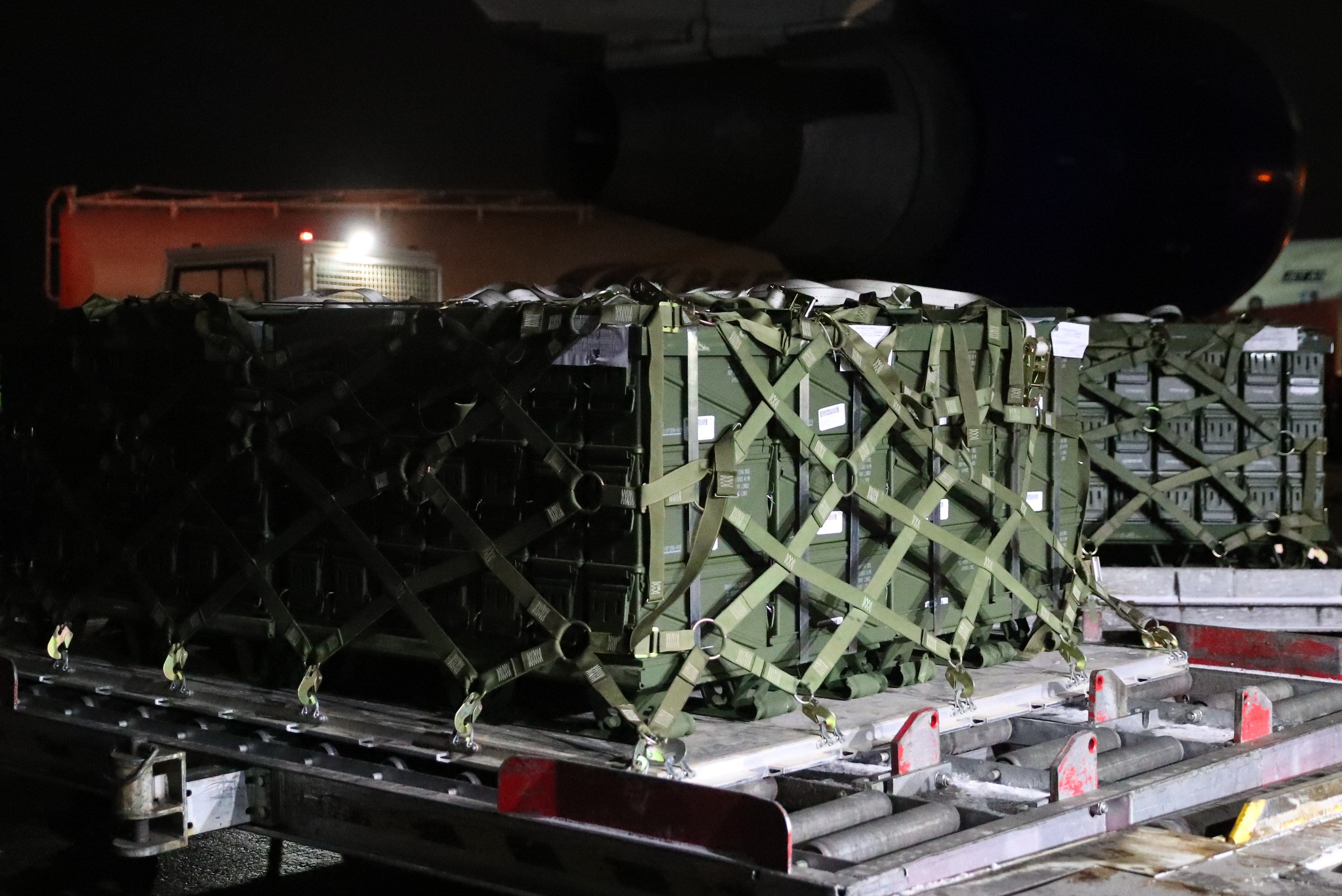
New US “lethal aid” for Ukraine, courtesy of US taxpayers and their weapons industry beneficiaries. (U.S. Embassy in Ukraine)
By Aaron Maté | January 26, 2022
The US-Russia standoff over Ukraine has sparked bellicose threats and fears of Europe’s biggest ground war in decades. There are ample reasons to question the prospects of a Russian invasion, and US allies including France, Germany’s now-ousted navy chief, and even Kiev itself appear to share the skepticism.
Another potential scenario is that Russia draws on the Cuban Missile Crisis and positions offensive weapons within the borders of Latin American allies. Whatever the outcome, the crisis has underscored the perils of a second Cold War between the world’s top nuclear powers.
If the path forward is unpredictable, what got us here is easy to trace. The row over Ukraine is the outgrowth of an aggressive US posture toward Russia since the collapse of the Soviet Union three decades ago, driven by hegemonic policymakers and war profiteers in Washington. Understanding that background is key to resolving the current impasse, if the Biden administration can bring itself to alter a dangerous course.
US principles vs. power constraints
Russia’s central demands – binding guarantees to halt the eastward expansion of NATO, particularly in Ukraine, and to prevent offensive weapons from being stationed near its borders – have been publicly dismissed by the U.S government as non-starters.
In rejecting Russian concerns, the Biden administration claims that it is upholding “governing principles of international peace and security.” These principles, Secretary of State Anthony Blinken says, “reject the right of one country to change the borders of another by force; to dictate to another the policies it pursues or the choices it makes, including with whom to associate; or to exert a sphere of influence that would subjugate sovereign neighbors to its will.”
The US government’s real-world commitment to these principles is non-existent. For decades, the US has provided critical diplomatic and military cover for Israel’s de-facto annexations, which have expanded its borders to three different strips of occupied territory (the West Bank, Gaza, and Syria’s Golan Heights). The US is by far the world leader in dictating policies to other countries, be it who their leaders should be; how little to pay minimum-wage workers; or how to share energy supplies.
The Biden administration continues to subjugate sovereign countries to its will, whether it’s “neighbors” like blockade-targeted Cuba; coup-targeted Venezuela; sanctions-targeted Nicaragua; or far-away countries like US military-occupied and sanctions-targeted Syria. Biden just recently embraced the longstanding Monroe Doctrine of a US sphere of influence by declaring Latin America to be the United States’ “front yard.”
When not making sanctimonious public pronouncements, US officials are quietly able to acknowledge the real principles that guide their actions. According to the Washington Post, one US official specializing in Russia “believes the Russians are still interested in a real dialogue.” Russia’s real aim, this official says, is “to see whether Washington is willing to discuss any sort of commitment that constrains U.S. power.”
The official added: “The Russians are waiting to see what we’re going to offer, and they’re going to take it back and decide is this serious. Is this something we [the Russians] can sell as a major victory for security, or is it just, from their point of view, another attempt to fob us off and not give us anything?”
If their public statements and actions are any guide, the Biden administration is so far opting for the latter.
Rather than focus on diplomacy, the United States’ reliable British client has been trotted out, Iraq WMD dossier-style (or Steele dossier-style, or Syria dirty war-style), to lodge the explosive allegation that Russia is plotting to install a new leader in Ukraine via a coup. While declaring that the obedient Brits were “Muscular” for shouldering the war-mongering allegation, the New York Times quietly acknowledged that they also “provided no evidence to back up” their claims.
After warning of a “false flag” operation by Russia in Ukraine, the US pulled off a stunt of its own by recalling its embassy personnel out of stated concern for their safety. Unlike the dutiful British, other US allies failed to get the memo, including the EU, which declined to follow suit and even took a pointed swipe at attempts to “dramatize” the situation.
When US officials and allied media voices permit themselves to drop “Wag the Dog” theatrics and entertain the possibility of constraining US power, the Ukraine crisis no longer appears so dangerously intractable.
In the New York Times, veteran national security correspondent David E. Sanger allows that it is “possible” that Putin’s “bottom line in this conflict is straightforward”: obtain a pledge to “stop Ukraine from joining NATO” as well as one that the US and NATO “will never place offensive weapons that threaten Russia’s security in Ukrainian territory.”
On these issues, “there is trading space,” Sanger concedes. Given that “Ukraine is so corrupt, and its grasp of democracy is so tenuous… no one expects it to be accepted for NATO membership in the next decade or two.” Accordingly, Russia could be offered “some kind of assurance that, for a decade, or maybe a quarter-century, NATO membership for Kyiv was off the table.”
In Sanger’s view, the real and “complex” issue is not Ukraine’s NATO status, but “how the United States and NATO operate” there – specifically, by flooding the country with weapons. Since 2014, Sanger writes, the US and NATO allies have provided “Ukraine with what the West calls defensive arms, including the capability to take out Russian tanks and aircraft”, a “flow that has sped up in recent weeks.” Russia – for reasons apparently foreign to Sanger – believes that these “weapons are more offensive than defensive” and “that Washington’s real goal is to put nuclear weapons in Ukraine.” An agreement to address these concerns, an unidentified US official concedes, would be “‘the easiest part of this,’ as long as Russia is willing to pull back its intermediate-range weapons as well.”
Unmentioned by Sanger is that Russia has repeatedly signaled such a willingness, including just last month: Russia’s proposed draft treaty with NATO — issued with the stated aim of resolving the Ukraine standoff — proposes that all sides “not deploy land-based intermediate- and short-range missiles” in any area that allows them “to reach the territory of the other Parties.” Also unmentioned is that such deployments were previously banned under the INF Treaty, the Cold War-era pact that the Trump administration abandoned in August 2019, to the resounding silence of Democratic lawmakers and allied media outlets more invested in pretending that Trump was a Russian puppet than in addressing his actual Russia policies.
In a bid to preserve some of the INF Treaty’s safeguards, Putin immediately offered a moratorium on the deployment of intermediate-range missiles in Europe – a proposal swiftly rejected by both Trump and NATO. (Trump’s response was again duly ignored by Russiagate-crazed media outlets and politicians, for the obvious narrative inconvenience.)
Much like its refusal so far to re-enter the Iran nuclear deal – another critical security pact torn up by Trump — the Biden administration has thus placed itself in a dangerous geopolitical standoff rather than embrace diplomacy around proposals that US officials either deem as reality anyway (Ukraine not joining NATO) or that they were once party to (the Trump-sabotaged INF treaty).
NATO expansion, from the Cold War to a Ukraine coup
If the Biden administration is now willing to accept “real dialogue” over an outcome that “constrains US power” on the Ukraine-Russia border, it will have to eschew guiding US principles since the end of the Cold War.
When he agreed to the reunification of Germany, Soviet leader Mikhail Gorbachev was “assured in 1990 that the [NATO] alliance would not expand,” Jack Matlock, Reagan and Bush I’s ambassador to the Soviet Union, recently noted. But upon entering office, Bill Clinton broke that pledge and began an expansion spree that has pushed NATO to Russia’s borders. In 2008 – against the reported advice of advisers including Fiona Hill – President George W. Bush backed a NATO declaration calling for Ukraine and Georgia’s eventual ascension.
The constant expansion of NATO has led to what the scholar Richard Sakwa calls a “fateful geographical paradox”: NATO, Sakwa says, now “exists to manage the risks created by its existence.”
Sakwa’s maxim undoubtedly applies to Ukraine, where the threat of Russia’s neighbor joining a hostile military alliance sparked a war in 2014 that continues today.
The standard narrative of the origins of the current Ukraine crisis, as the New York Times recently claimed, is that Ukrainians revolted in street protests that ousted “pro-Russian leader” Viktor Yanukovych, “prompting [Russian President Vladimir] Putin to order the annexation of the Crimean Peninsula and instigate a separatist war in eastern Ukraine.” In reality, the US backed a coup that overthrew Ukraine’s elected government and sabotaged opportunities to avoid further conflict.
The immediate background came in the fall of 2013, when the US and its allies pressured Yanukovych to sign a European Union association agreement that would have curtailed its ties to Russia. Contrary to how he is now portrayed, Yanukovych was not “pro-Russian”, to the point where he even “cajoled and bullied anyone who pushed for Ukraine to have closer ties to Russia,” Reuters reported at the time.
To sign the EU deal, Ukraine would have to accept the harsh austerity demands of the IMF, which had publicly criticized Ukraine’s “large pension and wage increases,” and “generous energy subsidies.” The agreement also contained a provision calling on Ukraine to adhere to the EU’s “military and security” policies, “which meant in effect, without mentioning the alliance, NATO,” as the late scholar Stephen F. Cohen argued.
The EU proposal, the New York Times observed in November 2013, was the centerpiece of its “most important foreign policy initiative”: an attempt to “draw in former Soviet republics and lock them on a trajectory of changes based on Western political and economic sensibilities.”
In the words of Carl Gershman, the then-head of the CIA-tied National Endowment for Democracy, “Ukraine is the biggest prize.” In Gershman’s fantasy, Ukraine’s entry into the Western orbit would redound to Russia as well. “Ukraine’s choice to join Europe will accelerate the demise of the ideology of Russian imperialism that Putin represents,” he wrote. “… Putin may find himself on the losing end not just in the near abroad but within Russia itself.”
Although it would have been a boon for DC neoconservatives, accepting the EU’s insistence on “increasing the retirement age and freezing pensions and wages” would have meant political suicide for Yanukovych. Putin capitalized by offering a more generous package of $15 billion in aid and gas subsidies, a deal that contained “no immediate quid pro quo for Russia,” the New York Times noted. To lure Yanukovych, Russia even dropped a proposal, opposed by Ukraine’s Maidan protesters, that Ukraine join a Russian-led customs union.
Putin’s Ukraine offer, the Times added, was one of “several foreign policy moves that have served to re-establish Russia as a counterweight to Western dominance of world affairs.” In the eyes of the Western domineers, the prospect of a Russian “counterweight” was an intolerable act. The US responded by ramping up support for the Maidan protests in Kiev and helping to sabotage an agreement with Yanukovych to hold new elections.
Any pretense that the US was acting as an honest broker was obliterated in early February 2014 when Russia released a recording of an intercepted a phone call between then-senior Obama official Victoria Nuland and the US Ambassador to Ukraine, Geoffrey Pyatt. The US diplomats not only selected who would be Ukraine’s next Prime Minister — Arseniy Yatsenyuk – but decided to exclude their EU allies from the process. “Yats is the guy,” Nuland declared, before adding: “Fuck the EU.”
A major tipping point in the conflict came two weeks later, on February 20th, when nearly 50 Madain protesters were massacred by snipers. The Ukrainian opposition immediately accused government forces, sparking a series of events that led to Yanukovych’s flight from the country two days later. Exhaustive research by the University of Ottawa’s Ivan Katchanovski argues that the massacre was in fact “perpetrated principally by members of the Maidan opposition, specifically its far-right elements.”
Faced with the possibility of losing Russia’s most important naval base at Sevastopol to a US-backed coup regime, Putin responded by seizing the Ukrainian territory of Crimea. Russia also provided military support to Ukrainians in the country’s Donbas region hostile to the new coup government, sparking an ongoing war between the opposing sides.
In Washington, the annexation of Crimea is widely seen as an expansionist act of aggression; even, according to Hillary Clinton, akin to “what Hitler did back in the 30s.” In Crimea, Russia had the support of the majority of the population, if polls are to be believed. The same for the Russian population, across the political spectrum. “For [Russian] politicians, not vocally supporting, let alone questioning, the annexation of Crimea is practically akin to political suicide – even for liberals,” a European Union think tank observed in 2014. Even “Anti-Putin nationalists… are enthusiastic backers of Putin’s territorial grab.” (For over 200 years Crimea had been a territory of Russia, until Nikita Khrushchev assigned it to Ukraine, then a part of the Soviet Union.)
A negotiated solution to the Donbas war has been in place since the signing of the Minsk II accords in 2015, as Anatol Lieven of the Quincy Institute for Responsible Statecraft has repeatedly stressed. The prospect of NATO expansion appears to be the pact’s main obstacle to implementation. Minsk II calls for granting autonomy to the Donbas region in return for its demilitarization. But Ukraine has “[refused] to guarantee permanent full autonomy for the Donbas”, Lieven writes, out of fear “that permanent autonomy for the Donbas would prevent Ukraine from joining NATO and the European Union, as the region could use its constitutional position within Ukraine to block membership.”
In Lieven’s view, this could change with one critical shift: “If the United States drops the hopeless goal of NATO membership for Ukraine, it will be in a position to pressure the Ukrainian government and parliament to agree to a ‘Minsk III’ by the credible threat of a withdrawal of US aid and political support.”
War in Ukraine, profit in Washington
As a result of the US drive for yet another NATO-aligned military outpost on Russia’s borders, Ukraine has been decimated. The war in the Donbas has left nearly 14,000 dead. Ukraine’s “conflict with Russia,” Denys Kiryukhin of the Wilson Center observes, is one of the major factors that “accounts for the mass outmigration of Ukrainians since 2014.” The Donbas war has encouraged a rise in far-right militancy inside Ukraine, including the notorious neo-Nazi Azov Battalion, which has directly cooperated with the US military.
The United States’ European allies are also feeling the impact of Washington’s entanglement with Russia over Ukraine. The current standoff is threatening Russia’s energy exports, which account for about one-third of the European Union’s gas and crude oil use.
“It’s going to be an incredibly hard sell in any European country, to say that you have a 10 times higher energy bill and we feel as though our supply is not plentiful enough, because of Ukraine,” Kristine Berzina of the German Marshall Fund’s Alliance for Securing Democracy, a US and NATO-funded think tank, told Axios.
The picture is much rosier for those living through the war from Washington.
“You’ve got a lot of people who see profit in this conflict… and that’s the arms industry,” retired Army colonel Douglas Macgregor, a senior Pentagon advisor under Trump, told me in a recent interview. “And the defense industrial complex sees this as an opportunity to spend a great deal of money on a whole range of armaments that they otherwise might not be able to sell.”
The arms industry has made no secret of its enthusiasm for the opportunities of NATO expansionism and the post-Maidan Ukraine market.
US arms manufacturers “stand to gain billions of dollars in sales of weapons, communication systems and other military equipment if the Senate approves NATO expansion,” the New York Times reported in March 1998. Accordingly, these arms manufacturers have made “enormous investments in lobbyists and campaign contributions to promote their cause in Washington.” At the time, the “chief vehicle” for their cause was a group called the U.S. Committee to Expand NATO. The group’s president, Bruce L. Jackson, carried out double duty: by day, the Times observed the previous year, “he is director of strategic planning for Lockheed Martin Corporation, the world’s biggest weapons maker.”
As Andrew Cockburn of Harper’s noted in 2015, Jackson’s committee was firmly bipartisan, ranging “ideologically from Paul Wolfowitz and Richard Perle… to Greg Craig, director of Bill Clinton’s impeachment defense and later Barack Obama’s White House counsel.” (Craig later became embroiled in a Ukraine corruption scandal, though he was acquitted on all charges.) Explaining his committee’s staying power in Washington, Jackson told Cockburn: “‘Fuck Russia’ is a proud and long tradition in U.S. foreign policy. It doesn’t go away overnight.”
Nor do the profits that result. Reporting in July 2017 that military stocks had reached “all-time highs,” CNBC noted that “NATO concerns about Russia are seen as a positive for the defense industry.”
So is the ongoing war in Ukraine, where the US has shipped $2.7 billion in weapons since 2014, along with 200,000 pounds of fresh “lethal aid” in recent weeks and more promised via new spending bills.
US government officials across the spectrum routinely laud these weapons shipments as “critically needed, congressionally approved military aid” to a “very fragile country fighting Russian aggression” (Progressive Caucus chair Pramila Jayapal, speaking on Democracy Now! in 2019).
Putting aside the guiding imperial and profit-driven motives, the main impact of pouring US military hardware into the Donbas conflict is to prolong it. Writing in Foreign Policy, two analysts with the Pentagon-tied think tank Rand Corporation, Samuel Charap and Scott Boston, argue that “The West’s Weapons Won’t Make Any Difference to Ukraine.” The “military balance between Russia and Ukraine is so lopsided in Moscow’s favor,” they write, that more new weapons from Washington “would be largely irrelevant in determining the outcome of a conflict.”
The authors also dispel another widely accepted bipartisan myth, that the US has been helping Ukraine resist “Russian aggression.” In reality, Russian-backed militants in the east “are mainly armed with small arms and light weapons, along with some artillery and Soviet-era armor.” Although Russsia has armed and trained its Donbas allies, “Ukraine has mainly not been fighting Russia’s armed forces” there. Instead, “the vast majority of rebel forces consist of locals—not soldiers of the regular Russian military.” The Russian military has “never used more than a tiny fraction of its capabilities against the Ukrainians,” with major military components, such as Russia’s air force, “[not] involved in the fighting at all.”
The authors also remind their US audience of another overlooked reality: the costs of a full-blown war in Ukraine “will be disproportionately borne by Ukrainians.” Should an insurgency develop, as the Biden administration is mulling, the conflict will reach a stage where “thousands—or, more likely, tens of thousands—of Ukrainians will have died.”
Those promoting such an outcome have made clear that they value NATO expansion and the attendant arms industry windfall over the lives of Ukrainians, Russians, and any others placed in the crossfire. The Biden administration can avoid ending many more lives if it can interrupt hegemony and war profiteering for a different set of principles.
NATO training for nuclear strikes against Russia – Moscow
RT | January 27, 2022
NATO is developing the capacity for devastating nuclear strikes against Russia – which includes involving members of the alliance who don’t have such weapons in training operations – Moscow’s top arms control official has claimed.
In an interview with TASS on Thursday, Vladimir Yermakov, Director of the Department of Arms Control and Nonproliferation in the Russian Foreign Ministry, said that the US was in the process of modernizing its atomic capabilities in Europe and had deployed missiles in the territories of several other member states.
“According to expert analysis, there are five non-nuclear NATO countries holding around 200 American B61 nuclear bombs,” Yermakov stated. “There is also the infrastructure to support the operational deployment of these weapons, which are capable of reaching Russian territory and striking a wide range of locations, including strategic ones.”
The director emphasized that while the missiles are controlled by Washington, the nuclear development is a collaborative effort. “There are ‘joint nuclear missions’ between NATO countries, in the course of which non-nuclear members of the alliance take part in training sessions to develop American nuclear capabilities against us,” he claimed.
Yermakov also said that the withdrawal of US nuclear weapons from Europe is one of Moscow’s primary goals in ongoing security negotiations.
“We are adamant that NATO’s ‘joint nuclear missions’ must immediately be halted, all American nuclear weapons must return to US territory, and the infrastructure that enables its swift deployment be liquidated,” he commented, saying that these proposals were included in the list of security demands that Moscow delivered to Washington in December.
On Thursday, Russian Foreign Minister Sergey Lavrov expressed disappointment in the American response to the proposals, saying that the US had refused to make concessions concerning the expansion of NATO in eastern Europe. “The main issue is our clear position on the unacceptability of further NATO expansion to the east and the deployment of highly-destructive weapons that could threaten the territory of the Russian Federation,” the diplomat explained.
NATO rejects Russia’s ‘red line’
RT | January 26, 2022
NATO has said it “will not compromise” on potential expansion into Ukraine, Georgia, and other former Soviet republics, as this clashes with the “core principles” of the alliance, Secretary General Jens Stoltenberg told reporters on Wednesday.
The alliance’s response, which Stoltenberg said all 30 members agreed upon, was delivered to Moscow earlier in the day by the US ambassador, alongside Washington’s separate written note.
The US has asked Russia to keep the contents of its response private.
Stoltenberg, who was half an hour late to the scheduled online press event, outlined three basic topics that the NATO response touched on. One was re-establishing diplomatic ties between NATO and Russia, which he blamed Moscow for severing. The other was NATO’s readiness to “engage in dialogue” and “listen to Russian concerns,” while respecting the right of each country to choose its own security arrangements.
Russia should refrain from “aggression” aimed at NATO allies and withdraw from “Ukraine, Georgia, and Moldova,” where it is not wanted, Stoltenberg said.
Ukraine insists that Moscow is “illegally occupying” Crimea, which voted to rejoin Russia after the 2014 coup in Kiev. Russia has also recognized the independence of two breakaway regions of Georgia that Tbilisi tried to seize by force in 2008, and has maintained peacekeepers in the disputed Moldovan region of Transnistria since 1991.
The third area of possible cooperation listed by Stoltenberg involves “risk reduction” and transparency agreements on exercises, as well as arms control proposals that he argued have been so effective previously. Since 2001, the US has unilaterally exited the anti-ballistic missile (ABM) treaty, the Open Skies treaty, and the intermediate-range nuclear forces (INF) treaty, claiming without evidence that Russia was in violation of them.
“A political solution is still possible, but, of course, Russia has to engage in good faith,” Stoltenberg said, accusing Moscow of “aggression” against Ukraine since 2014.
Stoltenberg insisted that “NATO is a defensive alliance and we do not seek confrontation,” but repeatedly said that the alliance “cannot and will not compromise on principles” such as the right of every country to join. That decision rests solely with the applicant country and NATO members, now 30 in number, he said.
Asked about the reluctance that some NATO members have reportedly displayed in recent weeks, Stoltenberg maintained that “all allies are on board, all our allies have agreed” with the written response submitted to Russia. Croatia’s president has publicly said he would withdraw all troops from NATO in case of war in Ukraine, while Germany has reportedly denied the use of its airspace to UK weapons deliveries to Kiev.
Stoltenberg also reassured reporters that NATO has “plans in place we can activate on very short notice” if Russia “invades” Ukraine, with the lead element of 5,000 troops from the French-led NATO Response Force (NRF) on high alert, and the US assigning 8,400 troops on high readiness to the force as well. The Pentagon has previously said that some 8,500 US troops have been placed on heightened readiness status, but the decision had not been made to deploy them yet.
Lavrov Accuses the United States of Pushing Ukraine to Provocations against Russia
Al-Manar | January 26, 2022
Russian Foreign Minister Sergei Lavrov said on Wednesday that Moscow did not want talks over Ukraine and its own security concerns to be made longer by including the European Union [EU] or the Organization of Security and Cooperation [OSCE] in Europe in them.
He made the comments to the State Duma or lower house of parliament.
Lavrov also reiterated Moscow’s stance that it would take unspecified “appropriate measures” if it did not receive a constructive answer from the United States and NATO on security guarantees it is demanding.
“Moscow will take appropriate measures to respond to the West’s negligence of Russian demands regarding security guarantees,” Lavrov said
Russia is expecting Washington to respond in writing this week to its proposals for guarantees.
Lavorv stated, “Moscow will not allow an infinite delay in discussions about security guarantees’ proposal”.
The Russian FM further said that “Washington is pushing Kiev to direct provocations against Russia,” asserting that the US “is trying to punish Russia and China, and the US apparatuses are provoking the two countries”.
He concluded by saying, “Washington and its European allies are doubling their efforts to contain Russia”.
Populists on the right are now openly challenging Republican war lust
No more lockstep: conservatives aren’t afraid of being called names as they question America’s interest in Ukraine
BY JACK HUNTER | RESPONSIBLE STATECRAFT | JANUARY 26, 2022
The fight on the right for what constitutes a conservative or Republican foreign policy continues. This time the battlefront is Russia and Ukraine.
That there is a fissure on this issue among conservatives is in a way, a big deal, showing that the “America First” restraint approach that garnered support among the base didn’t go away completely when power changed hands in Washington and its chief advocate, Donald Trump, left town. Unfortunately, many Republicans have gone back to form and are talking like it’s the post 9/11-era — as if Trump’s criticisms of George W. Bush’s wars and nation-building had no effect on their party whatsoever.
First up, habitually hawkish GOP Congressman Dan Crenshaw recently told Fox News that “there needs to be clear consequences for what (Russia does) because we’ve failed to deter and now you’re inviting conflict.”
Sounding like a Bush-Cheney-era neoconservative, Crenshaw added, “It’s a very bad situation and we’ve left ourselves without many options as a result.”
One doesn’t have to ponder long about what Crenshaw thinks of the military option.
Republican Congressman Michael McCaul had a similar message, telling CNN last week, “I don’t think we’re providing the deterrence necessary to stop Putin from invading Ukraine, the breadbasket of Russia.”
What kind of “deterrence” does McCaul want to see?
Republican Senator Joni Ernst also joined the hawks, telling CNN, “When it comes to pushing back against Russia, we need to show strength and not be in a position of doctrine of appeasement, which seems to be how President Biden has worked his administration.”
Popular Fox News personality Tucker Carlson apparently had enough of such talk, and cited both Crenshaw and McCaul’s interviews in his opening monologue last week and Ernst’s on Monday night. Carlson warned his viewers that the U.S. was being pushed toward a new war by the usual self-interested suspects, which included politicians, the media, and the defense industry.
“Those are our leaders, totally ignorant, just reading the script. It’d be nice to hear someone in the press corps, because it’s their job, ask the obvious follow up, which would be: Why exactly, Sen. Ernst, do you believe it’s so vital to send more lethal aid to Ukraine and to “go ahead and impose” more sanctions on Russia? Why? How would she answer that question?
We’ll never know how she’d answer, because no one in the media would ever ask her.
In last week’s monologue he cited prominent Democrats like Rep. Adam Schiff saying basically the same thing as Crenshaw and McCaul on Ukraine. “Oh, they’re all red in the face, but it’s not the usual partisan chorus. This is the entire choir. You just saw representatives from every faction in Washington, from Adam Schiff to Dan Crenshaw, not as different as they seem, and all the dummies in between. And all of them are promoting war against Russia on behalf of our new and deeply beloved ally, the government of Ukraine,” he mocked.
This week, suddenly more conservatives and Republicans began speaking out against the prospect of U.S. military action in the region.
“The United States should not be involved in any future war in Ukraine,” charged libertarian populist Republican Congressman Thomas Massie on Monday.
“The neocons/warmongers have spent years stoking the new cold war with Russia and have now brought us to the brink in Ukraine — this serves their own interests, and lines the pocket of the Military Industrial Complex with trillion$,” tweeted right-wing friendly Democrat and former Congresswoman Tulsi Gabbard. “Let’s not be sheep.”
Populist Republican U.S. Senate candidate and “Hillbilly Elegy” author J.D. Vance tweeted on Monday, “Billions spent on the Kennedy school, grand strategies seminars, and the Georgetown school of foreign service has bought us an elite that’s about to blunder us into a Ukraine war.”
Veteran and Conservative Virginia State Rep. Nick Freitas on Sunday accused the Biden administration of potentially getting America into a war as a distraction, tweeting, “Another Foreign War… When you absolutely, positively, have to distract the general public from the failure of your domestic policies.”
Charlie Kirk, leader of the conservative youth group Turning Point USA, also weighed in, tweeting Monday, “You should be against going to War with Russia.”
Kirk added, “Why is the President of the United States willing to send Americans to die protecting European Sovereignty? If our NATO ‘Allies’ aren’t even willing to fund their obligations and surge their own troops to protect their borders, why should we?”
With a split senate and Democrats controlling the House and Executive Branch, what the U.S. does or doesn’t do in Ukraine is largely in President Biden’s hands. And obviously, being against a Democratic president’s wars is easier for Republicans than when their own party is sitting in the White House. This was apparent when Republicans felt emboldened to check President Obama on his Syria, and to some extent his Libya interventions.
But Americans are more tired of war than ever, which is why Trump’s views on global policing and nation building did so well with GOP voters. This may be more than just who holds all the marbles. With Republicans predicted to do well in the 2022 midterms and the potential for turning the tables in 2024, the base is critical, and where it stands on foreign policy could matter quite a deal in the near future. Will the GOP look more like George W. Bush or reflect what Donald Trump often said about war, even if he didn’t always follow through?
At a minimum the foreign policy temperature on the right is not exactly where it once was, and whatever impact “America First” continues to have on Republicans, it’s a long way from all of them uniformly accusing anyone in their party of “blaming America first’”for even daring to question U.S. foreign policy.
Croatia to Withdraw Its Forces From NATO in Event of Russia-Ukraine Conflict
Sputnik – 25.01.2022
Croatia will withdraw its military from NATO forces deployed in the region in the event of a conflict between Russia and Ukraine, President Zoran Milanovic said on Tuesday.
“I follow reports, according to which NATO, not a separate state, not the United States, is strengthening its presence, sending reconnaissance vessels. We have nothing to do with this, and we will not have, I guarantee you this,” Milanovic told a national broadcaster, adding that Croatia will not send its military to the region.
“If there is an escalation, we will withdraw everyone to the last Croatian military. It has nothing to do with Ukraine or Russia, it has to do with the dynamics of the US’ domestic policy, [President] Joe Biden and his administration, whom I supported, the only one in Europe … but I see dangerous behavior in matters of international security,” he added.
Russia will intervene in Ukraine
BY M. K. BHADRAKUMAR | INDIAN PUNCHLINE | JANUARY 23, 2022
The US-Russia talks in Geneva in the last two successive weeks could not produce a breakthrough. Fundamentally, there is a contradiction that cannot be resolved easily. Russia sees in existential terms the NATO’s advance into its immediate western neighbourhood. But for Washington, it’s geopolitics, stupid!
Russia cannot tolerate any longer such NATO presence on its western border. Ukraine’s induction into the Western alliance system would mean that the US missiles could hit Moscow in 5 minutes, rendering Russian air defence systems ineffectual and obsolete.
NATO deployments in the Baltic and the Black regions further deprive Russia of buffer in the west. Considering that all major decisions and most minor decisions in the NATO are taken in Washington, Moscow perceives all this as an American strategy to encircle it, erode its strategic autonomy and independent foreign policies.
The US, on the contrary, refuses to countenance any NATO rollback. It insists that Russia has no say in the alliance’s decisions. At best, Washington would discuss certain confidence-building measures, while NATO enlargement since 1997 — contrary to assurances given to Mikhail Gorbachev by western leaders in 1990 during the reunification of Germany — is a fait accompli that Russia should live with.
Basically, the US has gained the high ground through sustained efforts through the past three decades since the Bill Clinton administration put into effect a concerted strategy in anticipation of a resurgent Russia in a matter of time. Now that the US has gained the upper hand, it is loathe to give it up.
From Washington’s viewpoint, this is a key template of the geopolitical struggle unfolding over the new world order after China’s rise and the shift in power dynamic from the West to the East. Cutting down Russia to size and to be able to intimidate it is a pre-requisite of the situation before the US tackles China comprehensively. Suffice to say, Ukraine has become a battleground where a titanic test of will is playing out.
Ukraine is in all practical sense a US surrogate and its transformation as an anti-Russian state that began following the regime change in Kiev in 2014 is already at an advanced stage. Although Ukraine is not yet a NATO member, the alliance has established a significant presence in the country militarily and politically.
In the information war, the US portrays Russia as aggressor against a weak neighbour. In reality, though, it is a situation of ‘Heads I win tails you lose’. If Russia doesn’t do anything, it might as well resign to the inevitability of Ukraine being inducted into NATO and Russia having to live with the enemy at the gates. Of course, that would shift the global strategic balance for the first time in history in favour of the US.
On the other hand, if Russia acts militarily to prevent the NATO’s march in Ukraine, Washington will play rough. Washington is all set to pillory President Vladimir Putin personally and to impose “sanctions from hell” on Russia, with a vicious game plan to wound that country’s economy lethally and stifle its capacity to be a global player.
In the US estimation, Putin personally will have to bear a heavy political cost if living conditions deteriorate within Russia between now and 2024 when the next Russian presidential election is due, and he may be compelled to relinquish power. From the American perspective, there’s nothing like it if a Boris Yeltsin II were to succeed Putin.
Make no mistake, part of what is going on today is a demonisation Putin’s political personality to erode his towering popularity (65%), which forecloses the rise of a pro-western politician in Russia for a foreseeable future. All attempts by the US intelligence to create a “liberal” platform in Russian politics have failed so far. The fact of the mater is that the majority of Russian people dread the return of the “liberal” order of the 1990s.
The Washington Post, which is linked to the US security establishment, featured a scurrilous report last Wednesday under the byline of a noted knave titled House Republicans aim sanctions at Putin, his family and his mistress. It says, “The Biden administration’s carefully crafted mix of diplomacy and threats of additional sanctions doesn’t seem to be deterring Russian President Vladimir Putin from invading Ukraine and starting a war. Now, a large group of House Republicans is pushing President Biden to ramp up the pressure on Putin directly by going after him and his entourage for their long and well-established corruption.” Evidently, Washington will go to any extent to create dissensions among Russia’s elite and undermine the country’s political stability.
What lies ahead?
Without doubt, Russia is acutely conscious of its limitations. Moscow too made some serious miscalculations. It was betting that Ukraine was not going to join the NATO and in due course, better sense would prevail in Kiev under a realistic and pragmatic leader who would give up on the “Ukrainisation” agenda, repair ties with Russia (especially in the economic field) and importantly, accommodate the aspirations of the ethnic Russian eastern regions. But as it turned out, “Ukrainisation” is only being galvanised with tacit American support. Moscow has sensed that time is no longer on its side.
Moscow expects something concrete from the American side, as its vital security interests are in jeopardy. The Kremlin leadership, including Putin, has starkly outlined Russia’s “red lines.” Washington, on the other hand, is simply kicking the can down the road. It estimates that time is on its side anyway. From the Russian viewpoint, this is not acceptable, since a point of no return is arriving as regards Ukraine’s Nato membership.
Arguably, President Biden doesn’t want to move in the direction of accommodating Russia’s legitimate interests, given the pulls and pushes from the domestic scene in America and the divergent opinions among European allies, but primarily because the encirclement of Russia with pro-Western states has been a strategic objective of Washington’s policies toward Russia under successive administrations since Bill Clinton, and today it happens be expedient too, being a “cause” that enjoys rare bipartisan support in the Beltway at a juncture when American opinion is deeply divided.
In the present situation, wittingly or unwittingly, Washington has also tied its hands by committing that it won’t negotiate over Ukraine’s head. All factors taken into consideration, therefore, the probability is very high that Russia will intervene in eastern Ukraine with a view to create new facts on the ground to secure its national security interests while aiming at a political settlement for the medium and long term.
What does it entail?
Clearly, Russia is not seeking annexation of Ukrainian territory. Its preference will be to restrict its intervention in eastern Ukraine largely to the Russian populated regions and to create a buffer zone. Some American analysts have estimated that, broadly, any Russian intervention will be restricted to the territory upto the Dnepr river flowing through Belarus and Ukraine to the Black Sea. This seems plausible.
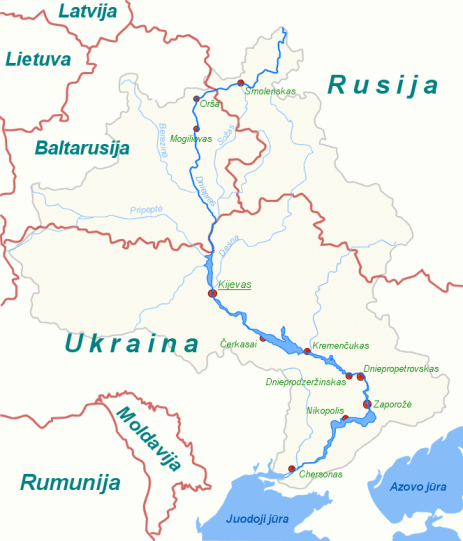
Of course, there are variables in any emergent military situation. Russia will firmly react to any form of Western intervention in Ukraine — although Washington has ruled it out. (In any case, the US’ capability to fight a massive continental war at such short notice is questionable.) The Russian military operations will be decisive with huge firepower and advanced weaponry on multiple fronts, with the intention to realise the political objective in the shortest time possible.
The US journalists have written about “resistance” but that is a load of rubbish. The Russian operation will be short and decisive. The Ukrainian moral fibre today is such that the demoralised forces and the disillusioned people will simply cave in. In all this, what needs to be remembered is that despite the heavy dollops of US indoctrination, Ukrainian people have profound civilisational affinities with Russians that lie submerged just below the surface.
Most important, the pervasive corruption in that country gives ample scope to buy off loyalties — in fact, there may not be much actual fighting at all in many sectors. It also needs to be factored in that the political situation in Kiev is highly unstable, as the latest sedition charges against former president Petro Poroshenko testify.
Zelensky won his mandate as president in 2019 on the basis of his promise to work for rapprochement with Russia. Today, he is a thoroughly discredited figure. People feel betrayed. A crushing military defeat will mean the end of the road for Zelensky.
The ensuing political turmoil within Ukraine is the “X” factor in the Russian intervention. American analysts deliberately sidestep this. Simply put, Russians have a deep understanding of the eddies of Ukrainian politics and the country’s power brokers due to the shared history, culture, politics and societal links.
The ultimate Russian objective will be a federated Ukraine through constitutional reform with the country’s sovereignty, national unity and territorial integrity intact while the regions enjoy autonomy. Europe may welcome this as the best way to stabilise the situation and remove the potential for future conflict.
Indeed, Russia’s expectation will be that such a Ukraine can never become a part of NATO once constitutional underpinnings are put in place to ensure that all major policies pursued in Kiev would be based on national consensus.
The bottom line is that as Russia sees it, the only way out of this crisis is that Ukraine regains its national sovereignty and stops looking to Washington for navigating its destiny. That requires that the American operatives in Kiev who take the decisions for Ukraine go home and Ukrainians are once again the masters of their house, which ceased to be the case once the US intelligence usurped power in February 2014 disregarding the pledge given by then (elected) president Viktor Yanukovich to hold fresh elections before deciding on Ukraine’s EU membership.
Clearly, all this is not going to be as easy as it sounds and the outcome may turn out to be no better than an attempt to unscramble the omelette. But the good part is that there are signs already that Europe is sceptical about blindly tagging along with the US any further on Ukraine.
The probability of discord in the transatlantic relationship is rising. NATO itself has never really been the robust united alliance that was made out to be. Polish President Andrzej Duda’s decision to attend the Winter Olympics in Beijing is a harbinger of things to come. (Incidentally, Putin will also be in Beijing at that time.) Germany opposes not only the removal of Russia from Swift but also the supply of weapons by NATO countries to Ukraine as well as Lithuania’s move (under US advice) to switch ties to Taiwan!
US made a strategic blunder to have encouraged a deeper NATO imprint in Ukraine. Making half-promises thereby to a non-NATO country is going to damage the US’ credibility in the downstream of a Russian intervention. But it is impossible for Washington to backtrack now, as the loss of credibility will be even more.
What remains to be seen, equally, is how the European Union survives this moment. The ardent Atlanticists in the European Commission in Brussels led by Ursula von der Leyen and the Russia-hater Josep Borrell are unilaterally setting the EU agenda currently, ignoring the glaring divergences of opinion among the member states. With Angela Merkel’s departure, a vacuum has appeared which these Eurocrats hope to fill in.
But this is clearly unsustainable. Addressing the European Parliament in Strasbourg last week, French President Emmanuel Macron has urged Europe to invest in its own collective security framework and called for a “frank” EU dialogue with Russia. By the way, neither the EU nor France was involved in the direct talks between the US and Russia in Geneva.
Much is being made out of the threat of sanctions against Russia. But such threats won’t deter Moscow. For a start, even draconian sanctions have proved to be a weak coercive tool. Indeed, US sanctions had a poor coercive track record in North Korea, Cuba, Iran, Venezuela, Vietnam, etc.
Russia is a big power. It has huge reserves, which currently stand at a record $638.2 billion — the fourth largest in the world. Russia’s credit position is good and it owns much of its debts. It has no critical need of US investors. Russia is in no desperate need to sell its currency.
Having gone through four traumatic shocks previously in its 30-year post-cold war history, Russia knows how to absorb shocks. Therefore, while Russia may take a big hit and there could be currency volatility causing outflow of capital initially following the sanctions, its reserves give it a big cushion.
At any rate, how far the Europeans will want to go on the sanctions path remains to be seen. Germany has voiced reservations about Washington’s famous “nuclear option”, namely, the expulsion of Russia from the Swift payment system. To be sure, any disruption in Russian energy supplies will hurt the European economies.
A little known fact is, Russia sells gas at very low prices to Europe, whereas, any LNG supplies from the US to make up for Russian supplies will mean exorbitant prices jacking up the cost of industrial production. Central European countries depend on Russia for 100 percent of their energy needs. Germany has a 40% dependency.
According to reports, a highlight of Putin’s forthcoming visit to Beijing will be the signing of the agreement of the mammoth Power of Siberia-2 gas pipeline project to construct an additional route to send gas to China gas from Siberia’s Yamal Peninsula, where Russia’s biggest gas reserves are, via Mongolia. The capacity of the pipeline is expected to be 60 billion cubic meters of natural gas annually (which exceeds the capacity of Nord Stream 2.)
Significantly, trade turnover between China and Russia has reached a record $146.88 billion in 2021, up 35.8% from the previous year. Most certainly, the standoff between Russia and the West over Ukraine, which could bring new sanctions against Moscow, is likely to tighten the Kremlin’s bond with Beijing even more. The two countries have vowed to raise their trade turnover to $200 billion by 2024. Recent economic trends alone suggest the countries are likely to reach that goal.
The rising geopolitical tensions would add momentum to this effort by making stronger trade ties with China a necessity for the Kremlin. Moscow will need to increase sourcing capabilities elsewhere because of US sanctions, and China will be one major avenue. The big picture is that on its part, China too cannot afford to see Russia going down under US pressure.
Evidently, the US hasn’t thought through the escalatory ladder. The Kremlin has threatened Washington with a complete break in relations if push comes to shove. Trust Moscow to hit back. Russia conducted an anti-satellite test in May by taking out a satellite. Possibly, it was a signal that Russia has the capability to interfere with the GSP constellation in non-military fields, which can affect key sectors of the US economy.
Above all, any “sanctions from hell” will inevitably turn into a morality play on the world stage. There’ll be increasing blowback in the world economy as countries get concerned about Washington’s weaponisation of the dollar. Some may even feel prompted to harden their economy. This can impact the international financial market. Washington backtracked previously when such situations arose. (Washington chose not to impose sanctions against India under CAATSA for its purchase of the S-400 missile system from Russia.)
Paradoxically, thanks to wave after wave of Western sanctions since 2014, Russia has become much more autarchic. Today, it needs no inputs from the West for its defence industry to develop new weapon systems. Pentagon officials have admitted that Russia has taken the lead in cutting edge technology such as hypersonic missiles, and catching up may take three to five years — that is, assuming that the Russian defence industry is resting its oars.
UKRAINE CRISIS: US ‘Toolboxes’ Are Empty
By Scott Ritter | Consortium News | January 22, 2022
U.S. Secretary of State Antony Blinken met with his Russian counterpart, Sergei Lavrov, in a hastily scheduled, 90-minute summit in Geneva yesterday, after which both sides lauded the meeting as worthwhile because it kept the door open for a diplomatic resolution to the ongoing crisis in Ukraine. What “keeping the door open” entails, however, represents two completely different realities.
For Blinken, the important thing appears to be process, continuing a dialogue which, by its very essence, creates the impression of progress, with progress being measured in increments of time, as opposed to results.
A results-oriented outcome was not in the books for Blinken and his entourage; the U.S. was supposed to submit a written response to Russia’s demands for security guarantees as spelled out in a pair of draft treaties presented to the U.S. and NATO in December. Instead, Blinken told Lavrov the written submission would be provided next week.
In the meantime, Blinken primed the pump of expected outcomes by highlighting the possibility of future negotiations that addressed Russian concerns (on a reciprocal basis) regarding intermediate-range missiles and NATO military exercises.
But under no circumstances, Blinken said, would the U.S. be responding to Russian demands against NATO expanding to Ukraine and Georgia, and for the redeployment of NATO forces inside the territory of NATO as it existed in 1997.
Blinken also spent a considerable amount of time harping on the danger of an imminent military invasion of Ukraine by Russian forces said to be massing along the Ukraine-Russian border. He pointed out that any military incursion by Russia, no matter what size, that violated the territorial integrity of Ukraine, would be viewed as a continuation of the Russian “aggression” of 2014 and, as such, trigger “massive consequences” which would be damaging to Russia.
Blinken’s restatement of a position he has pontificated on incessantly for more than a month now was not done for the benefit of Lavrov and the Russian government, but rather for an American and European audience which had been left scratching their collective heads over comments made the day before by President Joe Biden which suggested that the U.S. had a range of options it would consider depending on the size of a Russian incursion.
“My guess is he [Russian President Vladimir Putin] will move in, he has to do something,” Biden said during a press briefing on Wednesday. While presenting a Russian invasion as inevitable, Biden went on to note that Putin “will be held accountable” and “never have[sic] seen sanctions like the ones I promised will be imposed” if Russia were, in fact, to move against Ukraine. Biden spoke of deploying additional U.S. military forces to eastern Europe, as well as unspecified economic sanctions.
Biden then, however, hedged his remarks, noting that the scope and scale of any U.S. response would depend on what Russia did. “It’s one thing,” Biden said, “if it’s a minor incursion and we end up having to fight about what to do and not do.”
Almost immediately the Washington establishment went into overdrive to correct what everyone said was a “misstatement” by Biden, with Biden himself making a new statement the next day, declaring that he had been “absolutely clear with President Putin. He has no misunderstanding, any, any assembled Russian units move across the Ukrainian border, that is an invasion,” and that there should be “no doubt at all that if Putin makes this choice, Russia will pay a heavy price.”
And just in case the President was not clear enough, Blinken reiterated that point following his Friday meeting with Lavrov.
Immutable
The U.S. narrative about Russia and Ukraine was immutable; Russia was hell bent on invading, and there would be massive consequences if Russia acted out on its intent. This was no idle threat, Blinken said, but rather represented the unified position of the United States and its allies and partners.
Or was it? In a telling admission, CNN’s White House correspondent, John Harwood, stated that the “minor incursions” statement by Biden was harmless, because (Harwood said) Putin already knew through sources that this was, in fact, the U.S. position. As for Europe and Ukraine, their collective confusion and outrage was merely an act, a posture they had to take for public consumption, since the optics of Biden’s statement “sounds bad.”
In short, the lack of an agreed-upon strategy on how to deal with a Russian incursion/invasion of Ukraine was an open secret for everyone except the U.S. and European publics, who being fed a line of horse manure to assuage domestic political concerns over being seen as surrendering to Russian demands.
Biden and his administration are old hands at lying to the American public when it comes to matters of national security. One only need look to Biden’s July 23, 2021, phone call with Afghan President Ashraf Ghani for a clear precedent into this inability to speak openly and honestly about reality on the ground. “I need not tell you,” Biden told Ghani, “the perception around the world and in parts of Afghanistan, I believe, is that things are not going well in terms of the fight against the Taliban. And there is a need,” Biden added, “whether it is true or not, there is a need to project a different picture.”
This, in a nutshell, is the essence of the posture taken by the Biden administration on Ukraine. Blinken has indicated that the U.S. has a toolbox filled with options that will deliver “massive consequences” to Russia should Russia invade Ukraine. These “tools” include military options, such as the reinforcement of NATO’s eastern flank with additional U.S. troops, and economic options, such as shutting down the NordStream 2 pipeline and cutting Russia off from the SWIFT banking system. All these options, Blinken notes, have the undivided support of U.S. European allies and partners.
The toolbox is everywhere, it seems—Biden has referred to it, as has White House Press Secretary Jen Psaki. Blinken has alluded to it on numerous occasions.
There’s only one problem—the toolbox, it turns out, is empty.
While the Pentagon is reportedly working on a series of military options to reinforce the existing U.S. military presence in eastern Europe, the actual implementation of these options would neither be timely nor even possible. One option is to move forces already in Europe; the U.S. Army maintains one heavy armored brigade in Europe on a rotational basis and has a light armored vehicle brigade and an artillery brigade stationed in Germany. Along with some helicopter and logistics support, that’s it.
Flooding these units into Poland would be for display purposes only—they represent an unsustainable combat force that would be destroyed within days, if not hours, in any large-scale ground combat against a Russian threat.
The U.S. can deploy a second heavy armored brigade to Poland which would fall in on prepositioned equipment already warehoused on Polish soil. This brigade would suffer a similar fate if matched up against the Russian army. The U.S. can also deploy an airborne brigade. They, too, would die.
There are no other options available to deploy additional U.S. heavy forces to Europe on a scale and in a timeframe that would be meaningful. The problem isn’t just the deployment of forces from their bases in the U.S. (something that would takes months to prepare for), but the sustainability of these forces once they arrived on the ground in Europe. Food, ammunition, water, fuel—the logistics of war is complicated, and not resolved overnight.
In short, there is no viable military option, and Biden knows this.
Empty Sanctions Too
The U.S. has no sanctions plan that can survive initial contact with the enemy, which in this case is the collective weakness of the post-pandemic economies of both Europe and the U.S.; the over-reliance of Europe on Russian-sourced energy, and the vulnerability of democratically elected leaders to the whim of a consumer-based constituency. Russia can survive the impact of any sanctions regime the U.S. is able to scrape together—even those targeting the Russian banking system—far longer than Europe can survive without access to Russian energy.
This is a reality that Europe lives with, and while U.S. policy makers might think hard-hitting sanctions look good on paper, the reality is that whatever passes for U.S.-European unity today would collapse in rapid order when the Russian pipelines were shut down. The pain would not just be limited to Europe, either—the U.S. economy would suffer as well, with sky-high fuel prices and a stock market collapse that would put the U.S. into an economic recession, if not outright depression.
The political cost that would be incurred by Biden and, by extension, the Democrats, would be fatal to any hope that might remain for holding onto either house of Congress in 2022, or the White House in 2024. It would be one thing if Biden and his national security team were honest and forthright about the real consequences of declaring the equivalent of economic war on Russia. It is another thing altogether to speak only of the pain sanctions would cause Russia, with little thought, if any, to the real consequences that will be paid on the home front.
Americans should never forget that Russia has been laboring under severe U.S. sanctions since 2014, with zero effect. Russia knows what could be coming and has prepared. The American people wallow in their ignorance, believing at face value what they are told by the Biden administration, and echoed by a compliant mainstream media.
Propaganda About ‘Propaganda’
One of the great ironies of the current crisis is that, on the eve of the Blinken-Lavrov meeting in Geneva, the U.S. State Department published a report on Russian propaganda, decrying the role played by state-funded outlets such as RT and Sputnik in shaping public opinion in the United States and the West (in the interest of full disclosure, RT is one of the outlets that I write for.)
The fact that the State Department would publish such a report on the eve of a meeting which is all about propagating the big lie—that the U.S. has a plan for deterring “irresponsible Russian aggression”—while ignoring the hard truth: this is a crisis derived solely from the irresponsible policies of the U.S. and NATO over the past 30 years.
While a compliant mainstream American media unthinkingly repeated every warning and threat issued by Biden and Blinken to Russia over the course of the past few days, the Russian position has been largely ignored. Here’s a reminder of where Russia stands on its demands for security guarantees: “We are talking about the withdrawal of foreign forces, equipment, and weapons, as well as taking other steps to return to the set-up we had in 1997 in non-NATO countries,” the Russian Foreign Ministry declared in a bulletin published after the Lavrov-Blinken meeting. “This includes Bulgaria and Romania.”
Blinken has already said the U.S. will reject this.
The toolbox is empty. Russia knows this. Biden knows this. Blinken knows this. CNN knows this. The only ones who aren’t aware of this are the American people.
The consequences of a U.S. rejection of Russia’s demands will more than likely be war.
If you think the American people are ready to bear the burden of a war with Russia, think again.
Featured Video

AIDS Inc. by Gary Null (2007)
or go to
Aletho News Archives – Video-Images
From the Archives
Clash of Civilization, Iran Part II
By Jamal Kanj – Intifada-Palestine.com – January 14, 2011
Israel’s survival kit is: perpetuate conflict, insecurity to rationalize collective hate and finally playing victim.
Devoid of conflict, Israel implodes internally; without hate, Zionism loses its justification; and playing eternal victim to continue blackmailing the West. Absence of this holy trinity, Israel ceases to exist.
From its inception, the house of Zion has mastered exploiting adversarial powers to advance Israel’s cause. For instance, their influence over the Democratic Party in the US began with President Truman’s bid for 2nd term election in 1948.
Responding to strong opposition from Secretary of State General George Marshall and Department experts urging against recognition of Israel, President Truman replied: “I’m sorry gentlemen but I have to answer to hundreds of thousands [Jewish voters] who are anxious for the success of Zionism. I do not have hundreds of thousands of [voting] Arabs among my constituents”
Zionists influence over liberal American politics was matched with the doctrinal school of Conservative theoreticians aligning the Republican Party’s platform with Israel’s objectives. The Neoconservative Zionists, coined Zioncons, invented the “Clash of Civilization” concept to fight Israel’s wars. … continue
Blog Roll
 Aletho News
- 12 Things Your Psychiatrist Was Trained Not to Tell You
- From Unipolar Universalism to Multipolar Civilizational Distinctiveness
- RSF military group defects, joins Sudanese army: State media
- Ireland goalkeeper refuses to play ‘Israel’ as squad weighs boycott
- China pushes back against US on Cuba, Iran
- Ukrainian Soldiers, Potential Mercenaries: Have Gun, Will Travel!
- Burnham’s UN debut… A masterclass in British disinformation
- Iran flights continue despite US aviation sanctions
- Global Tipping Points Lead the World Into a State of Entropy
- The day-after at the White House: USA and Xi Jinping
- If Americans Knew
- Israel forces Gazans to live in constant peril – Daily Update
- Deconstructing Netanyahu’s pants-on-fire UN rant – Daily Update
- Trump betrayed voters with his campaign lies and prioritized a foreign country once he took office
- Netanyahu calls Israel’s war in Gaza ‘opposite of genocide’ in UN speech to near-empty hall
- Settler Kidnappings: Torture, Sexual Abuse and Terrorisation of Palestinian Abductees as Israel Deepens Annexation of West Bank
- Gaza winter nears as 162,000 tents become unusable, raising fears of humanitarian crisis
- Netanyahu says, “It’s the opposite of genocide”; UN says Gaza economy is world’s ‘most severe crisis on record’ – Daily Update
- Israel’s US-Backed Assault on Gaza Has Created the ‘World’s Most Severe Economic Crisis on Record’: UN
- ‘Protecting U.S. Citizens’… From Israel
- ‘This is where I live now, the back of a truck’: a day in the life of a grandmother in Gaza
- No Tricks Zone
- New Study: Earth And Venus Surface Warmth Largely Explained By Convection And Lapse Rate, Not CO2 Or Radiation
- 2025 Nature Paper Claiming Worsening Global Drought Gets RETRACTED …Heavily Flawed
- New Study: ‘Global Drought Shows No Detectable Recent Acceleration Under Climate Warming’
- Economic Masterminds: German Socialists Suggest Taxing Productivity Gains Stemming From Using AI
- The South China Sea Has Not Been Cooperating With The Climate Change Narrative
- Energy Crisis: Germany Enters Heating Season With Historically Low Gas Reserve Fill Levels
- New Study: The Antarctic Ice Sheet Gained Mass From 2020-2024 Due To Staggering Snow And Ice Accumulation
- Study: Ocean Heating Rates From Thousands Of Years Ago ‘Dwarf’ Modern Ocean Heating Rates
- Climate Extremists Target, Attack Large-Scale Power Grid Infrastructure In Germany!
- New Study: Antarctic Ice Melt Has Contributed Less Than 1 Centimeter To Sea Level Rise In The Last 30 Years

