Health Secretary to Force Fluoridated Water on Entire Country
By Dr. Joseph Mercola | October 19, 2021
In 2019, 97% of countries in Western Europe were not adding fluoride to their water.1 While a handful use fluoridated salt, the majority do not. Yet, despite the lack of fluoridated water or salt in their diets, the rates of tooth decay have declined significantly in all the countries.2
In September 2021, Great Britain’s health secretary Sajid Javid announced he would be adding fluoride to all public water supplies,3 forcing citizens to consume the neurotoxin. The statement came in conjunction with approval by the United Kingdom’s chief medical officers from England, Northern Ireland, Wales and Scotland.4
Paradoxically, his announcement comes one year after a consumers’ group in the U.S. filed a federal lawsuit challenging water fluoridation that supplies 200 million U.S. citizens. The suit was brought against the Environmental Protection Agency and would require water utilities to stop fluoridation.5
Fluoride is a naturally-occurring mineral in water and soil that scientists in the 1940s found might help prevent tooth decay.6 Water fluoridation began in the U.S. in Grand Rapids, Michigan, in 1945 and other Michigan communities and then states adopted the practice in the years that followed.
Ninety-six percent of the fluoride7 used in U.S. water systems comes from apatite ore, the source of phosphate fertilizers. While the mineral’s composition also includes “high concentrations” of hydroxide, fluoride and chloride, the CDC calls the addition of this neurotoxic chemical “one of public health’s greatest success stories.”8 Yet, this “great success story” originates with highly toxic by-products in the production of fertilizer.9
The production process involves mixing the apatite with sulfuric acid derived from molten sulfur, which the American Water Works Association describes as “a waste product from cleaning petroleum feedstock.”10
Once the toxic vapors are converted to a dangerous liquid waste, it is transported from fertilizer factories to water reservoirs where it is added to drinking water.11 However, unlike pharmaceutical grade fluoride in toothpaste, this is “an untreated industrial waste product, one that contains trace elements of arsenic and lead.”12
Unfortunately, not many are aware of the effects fluoride has as a cradle-to-grave neurotoxin or the origin of the waste product added to the water supply. Although there has been some pushback against the proposal in the U.K.,13 Javid “is understood to be keen to press ahead with adding the mineral to the water supply and will gain powers to do so across England under laws going through parliament.”14
Despite Evidence of Danger, UK to Force Fluoridation
In a concerted effort to convince the public to accept the proposal, the U.K.’s chief medical officers came out together endorsing water fluoridation across the U.K. countries.15 In an effort to make it look like adding fluoride to the water is a benefit to U.K. citizens’ health, they added the proposal to legislation called “The Health and Care bill,”16 which is set to go before the MPs, which will then give Javid the authority needed to order fluoridation.17
In response to this, three British scientists sent a public letter to Great Britain’s prime minister, Boris Johnson. In the press release published from the U.K Freedom from Fluoride Alliance they write,18 “This is not a good time for the British government to mislead the public on the dangers posed by the practice of water fluoridation.”
The scientists believe that the statements from the chief medical officers from the four U.K. countries extol the weak benefits of fluoridation, but ignore stronger evidence that fluoride is a developmental neurotoxin. According to the scientists,19
“The dental lobby has controlled this debate for far too long. You can repair a damaged tooth but early damage to the brain (especially during fetal development and infancy) cannot be repaired or reversed.
This is so serious for the future of our country that the matter should not be resolved by the kind of ‘sleight of hand’ used by those who wrote the script for the CMOs’ statement.”
In their statement20 there are two short paragraphs that deal with the risk of fluoridation, which the scientists refer to as “sleight of hand.” Within the paragraphs, the CMOs do not mention the numerous studies demonstrating neurotoxicity and do not mention the lawsuit against the U.S. EPA. These points were made in their open letter to the prime minister in which they said they:21
“… sincerely hope that your health advisers will acknowledge the strong scientific evidence of fluoride’s neurotoxicity (and other ill health effects) and put the health of our people above promoting what appears to be a well-intended but clearly outdated practice of water fluoridation.
This would not be the first time that a well-entrenched medical or dental practice has had to give way to advances in scientific understanding of unexpected side effects.”
However, as reported in The Times,22 “Chris Whitty, the chief medical officer for England, has dismissed safety concerns over the compounds, saying there is no evidence that it causes cancer and that claims about health risks are ‘exaggerated and unevidenced’.”
Strong Evidence Fluoride Is Neurotoxic
One of the first studies demonstrating fluoride has an adverse effect on children’s IQ was originally published in 1989 in the Chinese Journal of Control of Endemic Diseases. Since then, the Fluoride Action Network23 has recorded dozens of studies that have analyzed the relationship between IQ and fluoride.
Of these, 70 human studies and 60 animal studies have demonstrated an association between exposure and a reduction in learning or memory capacity. The human studies had children and adult participants that provide compelling evidence of damage. The Fluoride Action Network also published an analysis of the challenges associated with the studies that did not find an association.24
Some of the strongest studies demonstrating an association were published in 2019 and 2020. The claims made by proponents of fluoridation that there is only “one or two studies” finding harm, or that they are only from areas with naturally high fluoride levels, are no longer relevant. The scientific evidence can now be considered overwhelming and undeniable. The studies include:
Green 2019 — published in the Journal of the American Medical Association’s journal on Pediatrics.25 It reported substantial IQ loss in Canadian children from prenatal exposure to fluoride from water fluoridation.26
Riddell 2019 — published in Environment International.27 It found a shocking 284% increase in the prevalence of ADHD among children in fluoridated communities in Canada compared to nonfluoridated ones.28
Till 2020 — published in Environment International.29 It reported that children who were bottle-fed in Canadian fluoridated communities lost up to 8.8 IQ points compared to those in nonfluoridated communities.30
Uyghurturk 2020 — published in Environmental Health,31 It found that pregnant women in fluoridated communities in California had significantly higher levels of fluoride in their urine than those in nonfluoridated communities. The levels found in their urine were the same as those found to lower children’s IQ in past studies.32,33
Malin 2019 — published in Environmental Health.34 It linked a doubling of symptoms indicative of sleep apnea in adolescents in the U.S. to levels of fluoride in the drinking water. The link between fluoride and sleep disturbances may be through fluoride’s effect on the pineal gland.35
Malin 2019 — published in Environment International.36 It reported that exposure to fluoridated water led to a reduction in kidney and liver function among adolescents in the U.S. and suggested those with poorer kidney or liver function may absorb more fluoride bodies. The National Institutes of Health funded this study.37
The level of evidence that fluoride is neurotoxic now far exceeds the evidence that was in place when lead was banned from gasoline. A recent review by Danish scientist, Harvard professor and neurotoxicity expert Dr. Philippe Grandjean also concluded that:38
“… there is little doubt that developmental neurotoxicity is a serious risk associated with elevated fluoride exposure, whether due to community water fluoridation, natural fluoride release from soil minerals, or tea consumption, especially when the exposure occurs during early development.
Given that developmental neurotoxicity is considered to cause permanent adverse effects, the next generation’s brain health presents a crucial issue in the risk-benefit assessment for fluoride exposure.”
Fluoride Is an Endocrine Disrupter That Affects the Brain
Evidence shows that fluoride as an endocrine disrupter affects both sleep and the brain. It contributes to the rising rate of children and adults with attention deficit hyperactive disorder (ADHD). One study39 published in 2015 demonstrated that children with higher rates of medically diagnosed ADHD resided in states where there was a greater proportion of people consuming fluoridated water.
In 2006, the National Resource Council of the National Academies labeled fluoride an endocrine disruptor.40 According to the National Institutes of Health in 2014,41 “Research shows that endocrine disruptors may pose the greatest risk during prenatal and early postnatal development when organ and neural systems are forming.” The NIH has since removed that statement from their website.42
Exposure to fluoride is also linked to thyroid disease,43 which in turn contributes to heart disease, obesity, depression and other health problems. Fluoride has an adverse effect on sleep patterns. One study44 found chronic low-level exposure altered sleep patterns in adolescents aged 16 to 19.
They found fluoride levels of .52 mg per liter was associated with a 1.97 times higher likelihood of sleep apnea at least once per week. This level is lower than the current recommendation of 0.7 mg/L.45
The researchers theorized46 that the accumulation of fluoride in the pineal gland may affect sleep patterns. Additionally, the researchers wrote that in adults, fluoride concentrations in the pineal gland correlate with calcification, which in turn is associated with a decrease in melatonin production, lower sleep time and lower REM sleep percentage.
Health and Human Services Lowers Level of Fluoride in 2015
In 2010, a study47 published in the Journal of the American Dental Association concluded that there was an association between fluorosis and children’s teeth and intake from infant formula and other dietary sources. They wrote:
“Results suggest that prevalence of mild dental fluorosis could be reduced by avoiding ingestion of large quantities of fluoride from reconstituted powdered concentrate infant formula and fluoridated dentifrice.”
The CDC also followed suit in 2010, warning that mixing powdered or liquid infant formula with fluoridated water could increase the chance of a child developing enamel fluorosis.48 These recommendations have since been deleted.49
However, your teeth are the window to your bones, and when you see damage to your teeth you must ask the question: What kind of damage to your bones is occurring?
In April 2015, the U.S. Department of Health and Human Services admitted the fluoride levels they had been promoting damaged children’s teeth.50 Major dental fluorosis was apparent in 41% of teenagers,51 which includes white spots, yellow coloring or pitted enamel.
Despite levels of fluoride that were high enough to cause fluorosis, the CDC52 also reported that 42% of children and adolescents ages 6 to 19 years and 90% of adults had cavities in their permanent teeth. Although some health experts continue to promote fluoride as protection against cavities, it’s apparently not doing the job.
Instead of completely removing fluoride from the water to protect bone health in 2015, the HHS announced they would simply reduce the level of fluoride in the water to minimize “the risk of cosmetic fluorosis in the general population.”53 To stress the idea that fluorosis is solely a cosmetic issue negates the potential risk to bone health.
By 2020, the American Dental Association was fully on board with fluoridating water in the U.S. In a letter54 to the National Academies of Sciences, Engineering, and Medicine, they noted their members agreed that the 2018 edition of Fluoridation Facts, the ADA’s resource on community water fluoridation, answered questions on the relationship between consumption and lowered intelligence or behavioral disorders.
Choosing to blatantly ignore all the studies showing fluoride is a dangerous neurotoxin, they stated, “The evidence from individual studies and systematic reviews does not support claims of a causal relationship.”55 Additionally, they urged that the National Toxicology Program Monograph on Fluoride Exposure and Neurodevelopmental and Cognitive Health should move its classification of fluoride from a “presumed” neurotoxin to an “unknown” neurotoxin.
Their justification for this was to claim:56 “There is not a wide body of literature examining fluoride as a potential neurotoxin.” In other words, 70 human and 60 animal studies were not enough to “support claims of a causal relationship” and is not a “wide body of literature examining fluoride as a potential neurotoxin.”
Help End the Practice of Water Fluoridation
What might be assumed from statements made by politicians and experts, is there is a greater concern over tooth decay than there is over loss of intelligence, brain health in adults and children and damage done through endocrine disruption.
For citizens in the U.K., a petition has been initiated in Parliament recommending that instead of adding fluoride to compel the entire nation to ingest a neurotoxin, “it would be better if people brush their teeth with toothpaste daily and monitor intake of sugar.”57
U.K. citizens can sign the petition at this link. If it reaches 100,000 signatures, Parliament must consider it for debate. For those who live in an area with fluoridated water, you can protect your health by filtering the water supply.
Because fluoride is a very small molecule, it’s difficult to filter once added, but reverse osmosis filtration can be effective.58 Clean pure water is a prerequisite for optimal health; thus, the only real solution is to stop the practice of artificial water fluoridation.
Sources and References
- 1 Fluoride Action Network, May 2019
- 2 Fluoride Action Network, Tooth Decay in F vs NF Countries
- 3, 14, 22 The Times, September 23, 2021
- 4 London Loves Business, September 29, 2021
- 5 Environmental Working Group, June 10, 2020
- 6 Cancer.gov
- 7, 10 American Water Works Association October 5, 2020
- 8 Centers for Disease Control and Prevention, Community Fluoridation
- 9, 11, 12 Origins, 2018;11(6)
- 13, 15, 21 Fluoride Action Network, October 2, 2021
- 16 The King’s Fund, September 6, 2021
- 17 The Guardian, September 23, 2021
- 18, 19 UK Freedom From Fluoride Alliance, Press Room
- 20 U.K. Gov, Policy Paper July 19, 2021
- 23 Fluoride Action Network, September 3, 2019
- 24 Fluoride Action Network, August 30, 2019
- 25, 32 JAMA, 2019;173(10)
- 26 Fluoride Action Network, Study Tracker 34904
- 27 Environment International, 2019;133 (part B)
- 28 Fluoride Action Network, Study Tracker 35512
- 29 Environment International, 2020; 134(105315)
- 30 Fluoride Action Network, Study Tracker 35739
- 31 Environmental Health, 2020;19(38)
- 33 Fluoride Action Network, Study Tracker 36875
- 34 Environmental Health, 2019; 18(106)
- 35 Fluoride Action Network, Study Tracker 35944
- 36 Environment International, 2019; 132(105012)
- 37 Fluoride Action Network, Study Tracker 34843
- 38 Environmental Health, 2019;18(110)
- 39 Environmental Health, 2015;14(17)
- 40 Fluoride Action Network, National Research Council (2006)
- 41, 42 National Institutes of Health, Endocrine Disruptors
- 43 Scientific Reports, 2018;8(2674)
- 44, 46 Environmental Health, 2019;18(106)
- 45 Centers for Disease Control and Prevention, Community Water Fluoridation, Public Health Service Recommendation
- 47 Journal of the American Dental Association, 2010;141(10)
- 48 Centers for Disease Control and Prevention, Community Water Fluoridation, Overview: Infant Formula and Fluorosis (Archive)
- 49 Centers for Disease Control and Prevention, Community Water Fluoridation, Water Fluoridation Basics
- 50 Harvard TH Chan
- 51 Centers for Disease Control and Prevention, November 2010
- 52 MMWR, 2005; 54(3)
- 53 American Dental Association
- 54, 55, 56 American Dental Association, October 16, 2020
- 57 U.K. Parliament Petitions, Do Not Put Fluoride in All Tap Water
- 58 Culligan Water, What Doesn’t Reverse Osmosis Remove?
Lockdown: Where Did ‘The Science’ Come From?
By Noah Carl • The Daily Sceptic • October 19, 2021
In a previous post, I looked at where ‘The Science’ of community masking came from. Here I’ll do the same thing for lockdowns.
As many lockdown sceptics (including myself) have noted, lockdowns represent a radical departure from conventional forms of pandemic management. There is no evidence that, before 2020, they were considered an effective way to deal with influenza pandemics.
In a 2006 paper, four leading scientists (including Donald Henderson, who led the effort to eradicate smallpox) examined measures for controlling pandemic influenza. Regarding “large-scale quarantine”, they wrote, “The negative consequences… are so extreme” that this measure “should be eliminated from serious consideration”.
Likewise, a WHO report published mere months before the COVID-19 pandemic classified “quarantine of exposed individuals” as “not recommended under any circumstances”. The report noted that “there is no obvious rationale for this measure”.
And we all know what the U.K.’s own ‘Pandemic Preparedness Strategy’ said, namely: “It will not be possible to halt the spread of a new pandemic influenza virus, and it would be a waste of public health resources and capacity to attempt to do so.”
As an additional exercise, I searched the pandemic preparedness plans of all the English-speaking Western countries (U.K., Ireland, U.S., Canada, Australia and New Zealand) for mentions of ‘lockdown’, ‘lock-down’ ‘lock down’ or ‘curfew’.
Only ‘curfew’ was mentioned, and only once – in Ireland’s plan. The relevant sentence was: “Mandatory quarantine and curfews are not considered necessary.” None of the lockdown strings were mentioned in any of the countries’ plans.
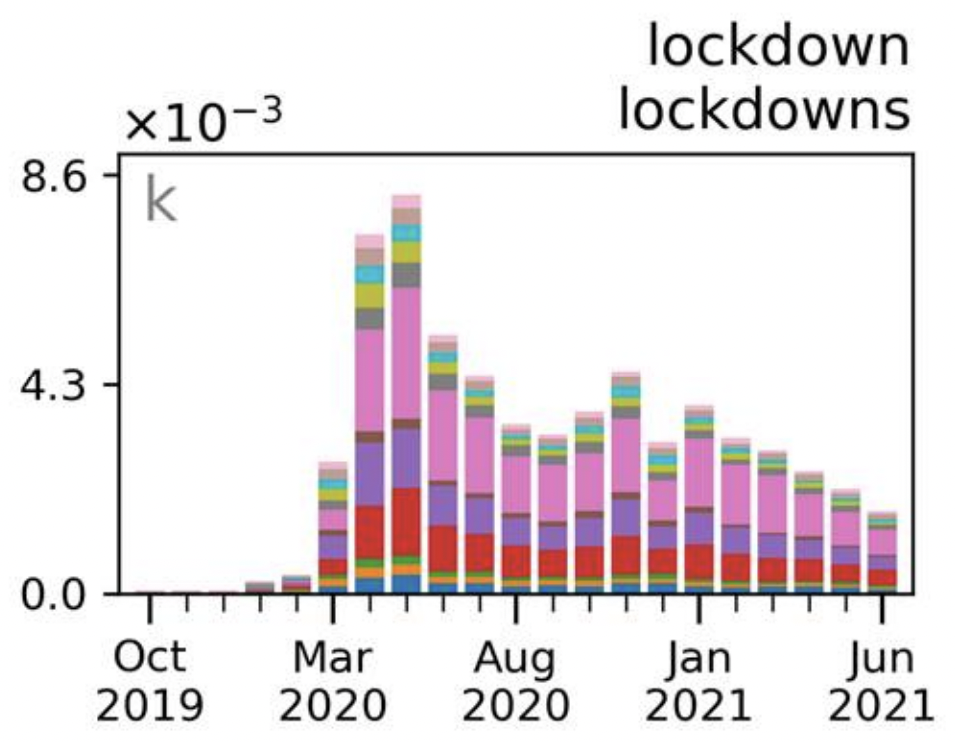
So where did ‘The Science’ of controlling Covid using lockdowns come from? As everyone knows, China implemented the first lockdown (of Hubei province) in January of 2020. Yet it wasn’t until March that lockdowns became part of ‘The Science’.
As this chart taken from the paper by David Rozado shows, major Western media outlets did not start mentioning ‘lockdown’ frequently until March:
And this chart confirms that worldwide Google search interest for ‘lockdown’ was essentially nil until 8th March 2020:
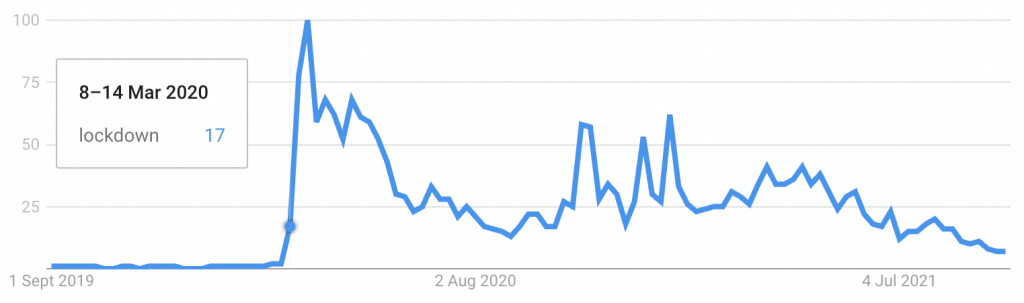
So what happened in early March? Well, Italy was the first Western country to lock down – on 9th March last year. And as Michael Senger argues, its decision appears to have been prompted by the WHO’s report of 24th February, which gave a glowing evaluation of China’s lockdown. (Senger’s piece is well worth reading.)
Other Western countries then followed suit. The next most important event, following Italy’s decision to lock down, was the publication of a report by Neil Ferguson’s team on 16th March.
This report has been described as the “catalyst for policy reversal”. Up until then, the U.K. had been more or less following its pandemic preparedness plan. As late as March 5th, Chris Whitty told the Health and Social Care Committee that “what we’re very keen to do is minimise social and economic disruption”.
Although other, similar reports had already been published, the analysis by Neil Ferguson’s team was seen as particularly authoritative. According to the New York Times, the report “also influenced the White House to strengthen its measures”.
On March 17th, Neil Ferguson and his colleagues held a press conference after returning from Downing Street. They confirmed that Britain would be adopting a new strategy. “The aim is not to slow the rate of growth of cases but actually pull the epidemic into reverse,” Ferguson said.
As to why the U.K. was changing tack, Ferguson noted, “We have had bad news from Italy and from early experience in UK hospitals”. However, subsequent revelations suggest that “bad news” was less important than the shifting of the Overton window.
In an interview with the Times published in December last year, Ferguson noted that “people’s sense of what is possible in terms of control changed quite dramatically between January and March”. Referring to China’s lockdown, he elaborated, “We couldn’t get away with it in Europe, we thought… And then Italy did it. And we realised we could”.
After China’s initial response in Hubei, it took two months for lockdowns to go from ‘unprecedented’ to ‘unavoidable’. They received two major doses of intellectual credibility: first from the WHO, and then from Neil Ferguson’s team. Italy set the all-important precedent for Western countries.
As to whether one should trust ‘The Science’ on lockdowns, a reasonable answer would be, ‘Do you mean the pre or the post-Covid science?’
UK lawmakers use MP murder to call for social media ID verification system
By Didi Rankovic | Reclaim The Net | October 18, 2021
Lindsay Hoyle, the speaker of UK Parliament’s House of Commons, has supported initiatives to remove anonymity from internet users, linking threatening messages received by politicians online with their general safety, particularly in light of last week’s fatal stabbing of an MP.
Hoyle’s comments came in the wake of the murder of Conservative member of parliament David Amess, that is treated as potentially a terrorist incident, while the suspect’s motives are thought to be linked with Islamist extremism.
The suspect, a British citizen of Somali origins, was several years ago referred to the voluntary Prevent scheme that is devised as a way to combat risk of terrorist radicalization. It’s unknown at this time if the suspect had previously targeted his victim on social media, and why the connection is being made.
But several high ranked officials, including Hoyle and Home Secretary Priti Patel, are using the deadly incident to explore ways to provide better protection to MPs, and one of the things they’re coming up with is stripping online users of their anonymity.
UK media say that Hoyle revealed he received a message from an “offshore account” that a bomb would be put under his car. He criticized tech companies as not doing enough and hinted that he was in favor of new legislation that would make it possible to track people on the internet if they are believed to be sending threats.
Patel, on the other hand, wants social media accounts to be linked to real world identities, and mentioned the controversial upcoming Online Harms Bill, that those behind it say will reduce racism and threats on the internet, while critics fear it may jeopardize free expression in the process.
Under the bill, tech companies could be ordered to pay up to £18 million or 10 percent of annual global turnover in fines, while their executives would be held criminally liable in some cases.
Patel said that it was difficult to remove posts from social media that are found to be offensive or threatening, and suggested unmasking users was a way to tackle the problem.
“Major platforms have to take faster action when councilors and MPs report the kind of behavior that would be illegal in the real world,” said Conservative MP David Warman, adding, “that starts with accepting that anonymity provides cover for language that would never be used to anybody’s face.”
The UK’s National “Crisis”: Age-Adjusted Mortality Is at 2008 Levels
By Mark Avis – Mises Wire – 10/13/2021
All over the world, populations have been locked up, have become fearful, and none of it can be justified. Looking at the UK, the overall death rate for 2020 is not unprecedented, and some of the increase in the death rate is likely the result of an incomprehensibly bad covid policy.
Sometimes, a dam breaks, and reality intrudes on media and political narratives. Just such a break is the publication of the mortality rate for England and Wales by the UK’s Office for National Statistics (ONS). The report can be found here. The content that is of greatest interest is the total mortality and mortality rates over time. Below is figure 1 from the report. A red line has been added to give a sense of where mortality was in 2020 compared with the past. The figure shows mortality rates with no adjustments.
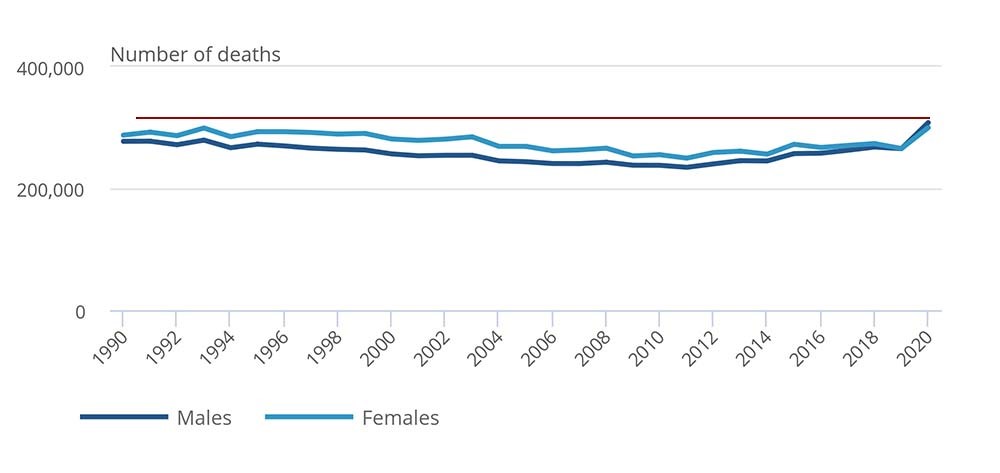
What is readily apparent is that there is, indeed, a jump in the mortality rate. However, if comparing the mortality rate with that of 1992, for example, we can see that it is not that high. In addition, the ONS provides a far more useful chart that shows age-standardized mortality rates. The report includes this discussion of the age-standardized statistics: “Age-standardised mortality rates (ASMRs) are a better measure of mortality than the number of deaths, as they account for the population size and age structure.” This is figure 3 from the report:
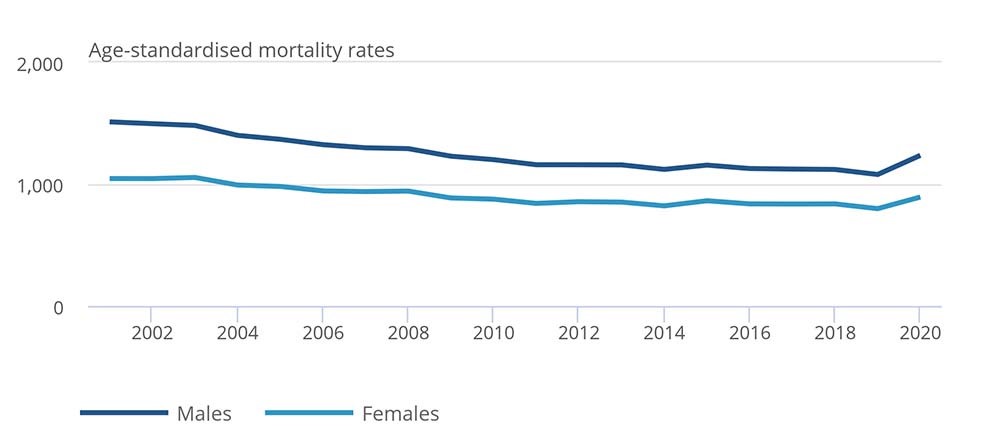
The exact figures for 2020 are 1,236.7 males and 894.2 females.
For comparison, the mortality rates for 2009 are the closest: 1,229.7 males and 886.6 females.
As can be seen from the ONS statistics above, the mortality rate is very slightly higher than in 2009 and is lower than in 2008.
No reference or academic study is needed to point out that there was no health crisis in the UK in either 2008 nor 2009. Indeed, these were considered perfectly normal years. This is very worrying data if considered in relation to the pandemic response. There have been many criticisms of the most extreme measures such as lockdowns, but even these critiques have been predicated on the belief that the pandemic was going to result in massive increases in mortality. According to the ONS data, no such massive increase took place. Instead, there was an uptick leading to 2008–09 mortality rates.
Unfortunately, this is not the whole story. At the start of the UK’s response to the pandemic, the government ordered the UK’s National Health Service (NHS) to make room in hospitals by removing anyone from a hospital that could be removed. The policy was called COVID-19 Hospital Discharge Service Requirements (C19HDSR) and the policy document can be found here. The subtitle of the report is ‘Why Not Home, Why Not Today?’ and this captures the spirit of the policy. It details the conditions under which patients should be discharged and the roles of the various actors in the policy.
The first point of note in the C19HDSR is that it does not refer to testing requirements for covid before discharge. Annex A provides the conditions under which patients should not be discharged and being covid positive is not included in the criteria. The policy document states that care homes should be filled with discharged patients. There is even an additional document for patients to read when going into aged care (see here). There is no reference to requirements for testing before release into aged care homes.
Although the NHS bureaucracy denied that significant numbers of covid-positive patients were being discharged under C19HDSR without covid testing, this was later shown to be untrue in a later study by Healthwatch and the British Red Cross (see here). The study researchers surveyed and interviewed 590 patients discharged under C19HDSR, and included whether the patients were tested for covid before discharge and whether they received their results before discharge. The two figures below show the figures from their research (from pp. 28–29):

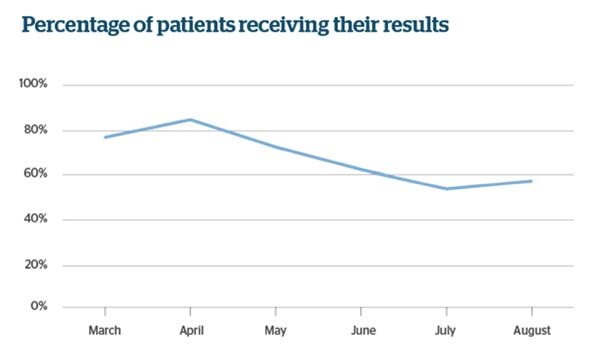
Although the figures are from a sample of only 590 patients, they indicate that, at the very least, large numbers of patients were being forcibly discharged from hospitals without anyone knowing their covid status. The UK hospital ward system would be an ideal environment for the transmission of covid, with large numbers of people living close together in communal wards. At present, there is no further data on how many patients were discharged into aged care homes who were covid positive. However, given the data from Healthwatch and the British Red Cross, it would be reasonable to say that there must have been very many. In consideration that aged care homes are filled with the most covid-vulnerable populations, and involve considerable degrees of communal living, the policy likely very significantly contributed to the overall mortality rate in 2020.
When considering the ONS age-adjusted mortality statistics in conjunction with the policy of C19HDSR, it should be apparent that there is a big problem with the way that covid has been characterized, at the very least in the UK. It is not possible to say how much of the uptick in mortality was government policy related, but this adds a further significant question mark about the narrative surrounding the lethality of covid.
As stated, this is just the case of the UK in 2020. Nevertheless, this is a modern Western country that is supposed to have been hard-hit by covid in 2020. There is no reason to believe that it is some special outlier.
The implications of this data are very difficult. Even for individuals that may be very cynical about government, the data suggests that governments have acted in the most extraordinary ways based on what can only be called a hysteria. This hysteria has, across much of the Western world, seen unprecedented losses of basic rights, convulsions in healthcare systems with potentially terrible long-term results, disruption of education, and misery, loneliness, and mental health problems. As for the negative economic consequences, they will be with everyone for years to come. The effects are macro and micro, for example, the massive extension of government borrowing, printing money, and the decimation of small businesses.
If the data from the UK is broadly representative, the only way to sum up what has taken place, and is still taking place, is that the world is experiencing the first-ever global hysteria. After all, 2008 was a perfectly normal year.
Mark Avis is an academic in a New Zealand university and writes on the culture wars, politics, geopolitics, and economics at his website markavis.org.
Infection Rate in Vaccinated People in Their 40s Now More Than DOUBLE the Rate in Unvaccinated, PHE Data Shows
Vaccine Effectiveness Hits Minus-109%

By Will Jones • The Daily Sceptic • October 15, 2021
In the latest Vaccine Surveillance report from Public Health England (PHE) the infection rate in double-vaccinated people in their 40s went above 100% higher than in the unvaccinated for the first time, reaching 109%. This translates to an unadjusted vaccine effectiveness of minus-109%.
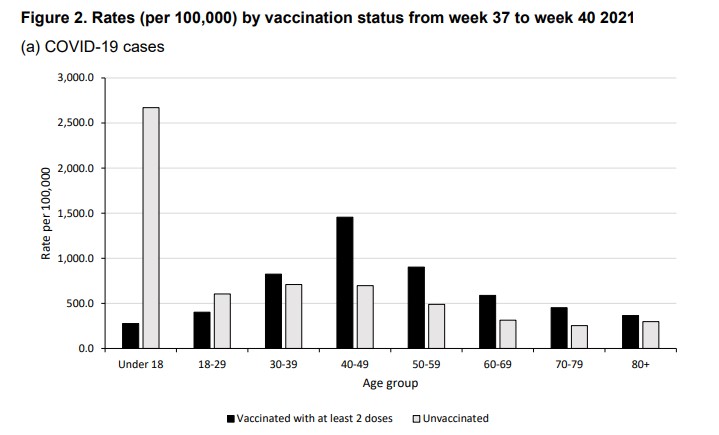
Vaccine effectiveness continues to drop fast in all over-18s (see chart at top), hitting minus-85% for those in their 50s, minus-88% for those in their 60s and minus-79% for those in their 70s. (For definitions and discussion of limitations see here.)

Vaccine effectiveness against hospitalisation and death continues to hold up in all age groups, though with some signs of decline, particularly among older people.
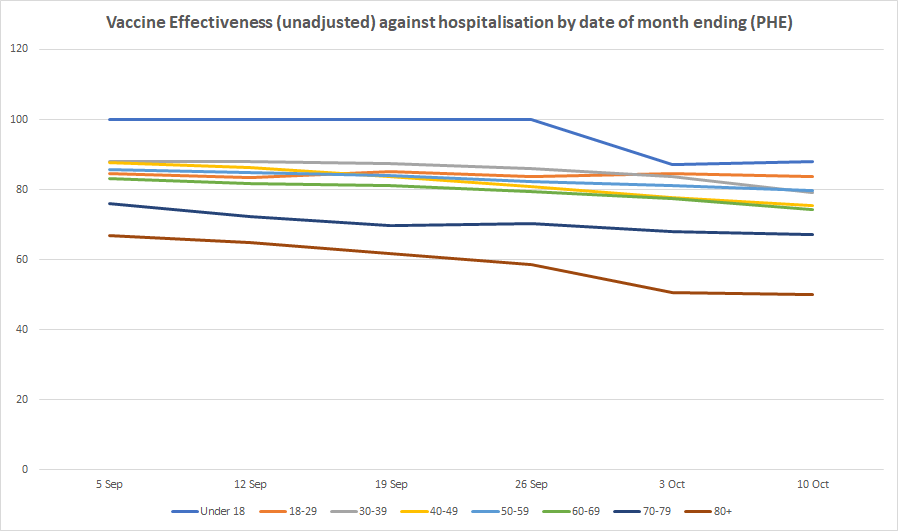
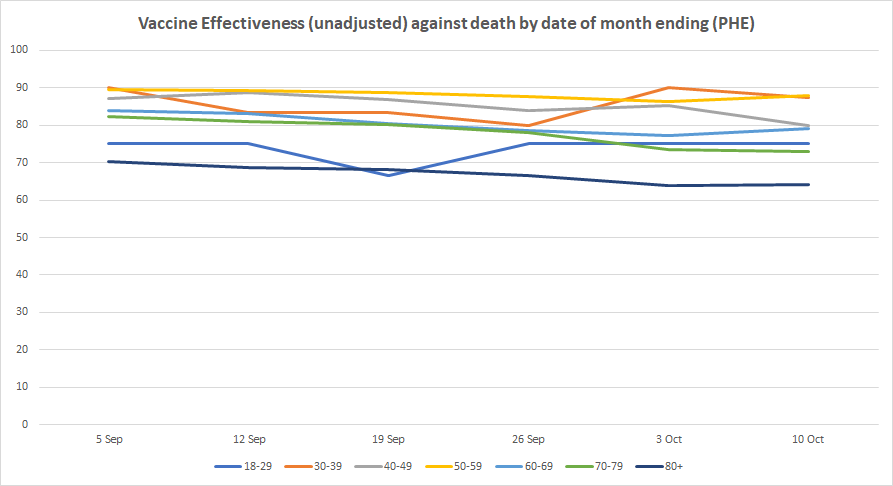
There is still nothing from Government sources acknowledging this failure of the vaccines against infection, its implications for policy and analysing what might be behind it.
Switching Renewable Subsidies To Gas Will Make Little Difference
By Paul Homewood | Not A Lot Of People Know That | October 14, 2021
It is not only the UK that is thinking of switching green levies from electricity to gas.
But this analysis inadvertently highlights why the whole idea is so ludicrous:

In the UK, consumer prices for electricity are five times more expensive than for gas. It is a disincentive to adopt electric heat pumps. To make things harder, 23% of the electricity price comes from climate and social levies. It’s just 2% for gas. No wonder the UK continues to install about 1.7 million gas boilers a year. Jan Rosenow and Richard Lowes at RAP call for changes that will incentivise customers to buy heat pumps while having a minimal effect on their total bill or the revenues raised, according to their calculations. One way is to simply move the levies from electricity to gas. The Netherlands and Germany are planning to do just that. Sweden has done it for decades. But such changes require serious policy reform and may face political barriers. Much simpler would be to minimise taxes on the electricity consumed by a heat pump, as Denmark started doing this January. Despite heat pump sales rising, without a drastic change it’s difficult to see how the UK will reach its target of 600,000 new heat pumps per year – it’s only in the tens of thousands now.
Every year households in the UK install about 1.7 million gas boilers. In May, the Heating and Hotwater Industry Council reported that 2021 looks to be a record year for gas boiler sales, with year-to-date sales up 41 per cent from 2020. So far, low-carbon heating occupies a small — although growing — niche in the heating market.
One important factor supporting a booming boiler market is quite simple: Gas is cheap and electricity is expensive. Residential electricity prices per kilowatt hour are currently around five times higher than gas prices. This means that switching to a heat pump, even with an efficiency of 300 per cent, does not offer bill savings for customers on a standard tariff.
This is partly a political choice. Legacy policy costs drive part of the difference in price. Most of levy-funded energy and climate policies, which make up 23% of the total household bill, are presently paid for through electricity bills. In the UK, these legacy costs include charges for policies such as feed-in tariffs, the Energy Company Obligation, Contracts for Difference, the Renewables Obligation and the Warm Home Discount.
https://energypost.eu/redesigning-uk-electricity-taxes-to-boost-heat-pump-sales/
For a start, let’s get away from the misleading use of the term, levies and taxes, which are intended to distract attention from the truth.
Apart from the tiny Warm Homes Discount, all of these added costs are SUBSIDIES for renewable electricity. It is therefore perfectly logical that they should be included in the cost of electricity, so that the price reflects the cost of generation.
There is no logic in adding the cost of subsidies to the price of gas any more than adding them to the price of food or petrol.
In any event, the switch will make little difference to the relative cost of heat pumps. Subsidies currently cost domestic customers about 2.5p/KWh, a total of £2.6bn a year. This brings the electricity price up from 12.5p to 15.0p/KWh. (These figures are probably out of date now, but the comparison remains the same)
Annual domestic gas consumption is 300 TWh, so £2.6bn would equate to 0.9p/KWh, increasing gas prices from 2.5p to 3.4p/KWh.
In other words, electricity will still cost nearly four times as much as gas. With heat pumps working at 300% efficiency, that still means they will be more expensive to run.
In any event, the reason why barely anybody wants heat pumps has nothing to do with the running cost, as people have no idea what they cost to run. It is the fact that they will have to fork out £10,000 plus to install one, not to mention the cost and hassle of insulation and replacing radiators.
There is, however, one fatal flaw in the argument employed by the authors of this study. They claim that switching the subsidies to gas is a zero cost option. It may be in the short run, but eventually, when nobody uses gas anymore, the subsidies will have to revert to being added onto electricity bills.
Under that scenario, homeowners will have paid out £20000 for heat pumps, but will still have to pay the cost of subsidies on their electricity bills. In other words, a double whammy.
Insulate Britain is in bed with the establishment
It’s no surprise that one of its activists is married to a TfL boss

Picture by: Twitter / LBC.
By Ben Pile – spiked – October 13, 2021
The tabloids have had a field day with the revelation that an Insulate Britain activist is married to a director of Transport for London (TfL). Cathy Eastburn of Insulate Britain has been busy trying to bring transport to a standstill. She has been arrested four times for acts such as blocking roads and gluing her hands to a train. Meanwhile, her husband, Benedict Plowden, is in charge of ‘getting London moving after the pandemic’.
The press is finally starting to realise that Britain’s green road-blockers are drawn from the upper echelons of society. The rag-tag crusties of Extinction Rebellion and Insulate Britain might present themselves as the political establishment’s opponents, but they have always been its bedfellows. Literally, in this case.
Not every green activist is married to a public-sector executive on £170,000 per year. But most do come from households that bring home many times the average family income. They come from a class of people for whom it is relatively easy to take activist sabbaticals. They can afford to pause their vegan yogurt-weaving workshops and take to the streets whenever it takes their fancy.
The class make-up of the green movement helps to explain why the police and courts have so much difficulty bringing an end to the disruption these activists cause. Were these protests populated by the lower orders, they would be cleared from the roads without hesitation. Those engaged in the protests would be charged, sentenced and put behind bars in short order. But the police and the courts are reluctant to use their powers against retired doctors, vicars and the grandchild of a baronet.
Green protesting has become a hobby of the leisured classes, drawing ‘nice’ people to it who present well in court. Their legal teams have the resources of billionaire-backed NGOs. Celebrity scientists fly across the Atlantic to give evidence in their defence. MPs and journalists intervene, declaring it a travesty that such well-meaning people are being tried as criminals. Of course there is no equivalent sympathy for the ordinary people whose lives are being disrupted and who are prevented from working.
Ordinary people need to be able to get to work. Society needs them to get to work. That’s why the police and the courts are usually expected to facilitate this. Benedict Plowden’s job at TfL is supposed to facilitate this, too. Yet Plowden, like his wife, has a long history of trying to stop people from getting from A to B.
Before joining TfL on a hefty salary, Plowden was director of the anti-car Pedestrians Association, which was later renamed Living Streets. It styles itself as ‘the UK charity for everyday walking’.
In fact, plenty of one-time anti-road anarchists from the 1990s have somehow made it as well-paid suits in the 2020s. Green activists have been turned from Swampies into civil-service bosses, instituting elite green ideology within our institutions. Plowden and Eastburn’s marriage, then, is not quite so bizarre as it seems.
TfL may not quite be signed up to every Extinction Rebellion pledge. But despite being in charge of keeping London moving, it is forever designing new policies to prevent Londoners from driving anywhere. Green ideology comes ahead of the transport needs of Londoners.
There is little difference between the street-level green activist and the establishment environmentalist – and not just because they sometimes snuggle up together at night. We might expect important public officials to serve the public’s needs and wants but, like the green activists on the streets, they are more interested in constraining us.
Ben Pile blogs at Climate Resistance.
Taliban say special forces to provide security for Shia mosques
Press TV – October 16, 2021
The Taliban say their forces will be tasked with providing security at Shia mosques in in the southern city of Kandahar, in the wake of a “brutal attack” on Friday prayers, which killed at least 60 worshippers.
The head of Kandahar’s police, Maulvi Mehmood, said on Saturday that Shia mosques had so far been guarded by local volunteer forces with special permission to carry weapons. But after the Friday attack on the Bibi Fatima mosque, the Taliban would take charge of its protection.
“Unfortunately, they could not protect this area and in future we will assign special security guards for the protection of mosques and Madrasas,” Mehmood said. He made the remarks as hundreds of people gathered on Saturday to bury the victims of the Friday bomb attack.
According to religious authorities, the toll from the bombing had reached 60. Health officials say the casualties could rise further as “some of the wounded are in a critical condition and we are trying to transfer them to Kabul.”
The massacre came just a week after another Shia mosque in Afghanistan’s northern city of Kunduz was targeted in a bombing during Friday prayers, leaving at least 150 people dead and over 200 others injured.
Both tragedies were claimed by a local affiliate of the Daesh Takfiri terrorist group, which has a long history of attacking Afghanistan’s Shia minority.
UN Secretary-General Antonio Guterres condemned the killings as a “despicable attack” and demanded those using violence to restrict Afghans’ religious freedom be brought to justice.
The Friday attack was the fourth since the Taliban took power in mid-August. The Taliban first ruled Afghanistan from 1996 to 2001, when the United States invaded the country and toppled the Taliban-run government on the pretext of fighting terrorism following the September 11 attacks in the US.
Political commentator Edward Corrigan told Press on Friday that “somebody is trying to provoke a sectarian war between the Shias and the Sunnis.”
“Who is going to benefit from that is the ultimate question,” Corrigan asked. “There is evidence that the British, the Americans, and the Israelis have been setting up bombs trying to provoke a conflict between the Shias and the Sunnis.” He further noted that US occupation of Afghanistan as well as the messy withdrawal of foreign troops from the country in August was clearly a big part of the problems that the Afghans are facing now.
The truth is still in lockdown
The first cross-party report says we didn’t lockdown early enough. The truth is, lockdowns don’t work.
By Laura Dodsworth | October 15, 2021
We now move, work, socialise, worship and meet around the UK with relative freedom.* Sadly, truth remains in strict lockdown.
Information is infectious and its transmissibility must be suppressed if it is deemed inconvenient, even if truthful. If it escapes, it can travel faster on social media than an airborne virus and must be captured, quarantined and sanitised to prevent onward infection. Most recently, in a long list of examples, a speech made by MP David Davis about vaccine passports was temporarily suspended from Youtube. Many videos and articles from reputable sources have been labelled misinformation if they run counter to WHO or governmental policy. Social media giants, governments and public health authorities are petrified of outbreaks of misinformation and even, sometimes, the truth.
So it was no surprise that the first cross-party report into the management of the epidemic in the UK, Coronavirus: lessons learned to date was unwilling to tackle certain truths.
One of the main inferences is that lockdown should have been implemented earlier. The truth is that lockdowns don’t work and cause great harm.
The report’s conclusions are assumptions. Opinions are not backed up with evidence. There is an unwillingness to interrogate the modelling that provides the foundations for the conclusions. The only thing that matters in this report is Covid and deaths by Covid. It is almost as if there are no other societal losses to put in the balance. There is no quantifiable cost benefit analysis of lockdown.
I spoke to Professor Simon Wood, Chair of Computational Studies at the School of Mathematics at the University of Edinburgh about the report. Wood authored a peer-reviewed paper published in Biometrics, which found that Covid-19 levels were probably falling before each of the three lockdowns. A separate paper, with colleague Ernst Wit, came to the same conclusion for the first two lockdowns, by the alternative approach of re-doing Imperial College’s major modelling study of the epidemic.
In summary he told me,
“The whole report is written within the framework that the only thing that counts is avoiding deaths from Covid, and that full lockdowns were essential. Evidence for the latter seems to be entirely absent. The closest we seem to get to actual evidence on lockdown efficacy is Neil Ferguson’s opinion in paragraph 77. The extent to which the committee is really able to weigh scientific evidence, as opposed to opinion, is questionable if paragraph 94 is any guide. This is such a gross misrepresentation of what the cited paper said, that it could have appeared on Twitter, rather than a parliamentary report.”
I asked him what he thought about the reliance on modelling throughout the epidemic. There are multiple flaws (expanded on in more detail in my book A State of Fear, and it’s appendix, “Lockdowns Don’t Work” and in many articles and papers online, some listed here) but one key flaw is that the Infection Fatality Rate in the initial modelling was 0.9%. By autumn 2020, a peer-reviewed paper by the WHO had put the IFR at 0.23%, and in the UK it is currently (albeit post-vaccination) at 0.096%. Wood generously told me it was,
“difficult to get the IFR right at the outset. We did the analysis thinking Imperial were very on the high side, but it in fact it wouldn’t have been assessed as less than 0.6% at the outset.” He went on: “The main error is to put too much emphasis on modelling not on measuring. Often models are being used for prediction purposes they were not designed or validated for.”
I put it to Wood that, in circular and fallacious reasoning, the modelling is being used to measure the success of lockdown by deaths ‘saved’ against those predicted by the unsubstantiated and flawed simulated forecasts of the modelling. He agreed: “the post hoc justification for the measures using modelling often looks like bending the model to the conclusion you want to achieve.”
There is a growing body of evidence that light interventions and voluntary behaviour changes – ie not lockdowns – are sufficient to reduce the R. Real world examples support this, namely Sweden, South Dakota and Florida. Conversely, as economist Professor David Paton reported, early and strict lockdowns did not always work. Czechia’s did not stop subsequent surges of the virus and further lockdowns. Czechia currently has the sixth highest death rate per million in the world. Peru, another country which enforced very strict and early lockdown, has the worst death rate in the world.
The report’s authors state we should learn lessons internationally, but fail to explain what they think happened in Sweden, for instance. In science it’s generally a good idea to have a control treatment and, to a limited extent, Sweden provided that. Surely it deserves some discussion if weighing up the evidence on what should have happened. It seems the report’s accusation of “British exceptionalism” only travels in one direction.
When data proves that lockdowns cannot be credited with controlling the virus, why does the argument persist? Why is truth still locked down?
Ironically, the authors accuse the government of groupthink, but they might still be under its sway themselves. It will be hard for the enactors and supporters of the lockdown to admit it was a brutal, ineffective and harmful policy. Far easier to assert the main problem is that it wasn’t imposed early and hard enough.
The harms of lockdown only get passing mentions. I can’t weight this article with the full burden of harms, but in brief: In the first year of lockdown the government borrowed £229 billion, the highest figure since records began in 1946. The pain of broken tax pledges, fiscal drag, inflation, and unemployment won’t be felt in full for months and years to come. The NHS waiting list is now 5.74 million and 7.5 million fewer people were referred for routine hospital care between January 2020 and July 2021.
These problems should not appear unexpected – they were foretold by the UK’s most eminent disaster and recovery planners.
In this 145 page report, the world “children” is mentioned a mere three times, but the impact of the lockdown on them is not mentioned at all. On World Mental Health Day, the ONS released data on children’s mental health and the impact of restrictions. A quarter of 11 to 16 year olds with a probable mental disorder in 2021 said Covid restrictions had made their lives much worse. And the number of young people aged 0 to 18 years old referred to mental health services between April and June 2021 increased by 93% from the same period in 2020, and 41% on 2019 in England.
Another word that is only mentioned three times is “obesity” alongside the other pre-existing health conditions which are known to be associated with poor outcomes for Covid-19. This really is the elephant in the room. The truth is, Covid-19 death rates are ten times higher in countries where more than half the adult population is overweight. In that sense, perhaps our pandemic preparedness should have started many years earlier with better health and dietary advice. Not only does lockdown not tackle the underlying chronic co-morbidities which lead to severe Covid-19 illness and deaths, but lockdown caused British people to gain weight, cease normal exercise and drink more alcohol.
The UK had multiple pandemic plans, including for SARS/MERS outbreaks. The authors of this report claim that we didn’t abandon the plans earlier in the crisis because of “groupthink”. This is a bizarre subversion – crisis management plans are not supposed to be abandoned during a crisis. If the government were guilty of groupthink, it was in following other countries in implementing an experimental policy. As Professor Ferguson put it,
“It’s a communist one party state, we said. We couldn’t get away with it in Europe, we thought. And then Italy did it. And we realised we could.”
The report does not mention Exercise Alice, a pandemic simulation exercise for MERS that has only been released after persistent Freedom of Information requests. It’s not clear that the authors are aware of it.
We will need a more wide-ranging inquiry that establishes whether lockdowns work, if they are sensible, proportionate and moral. Essentially, we must be truthful about what the costs are. We need to balance the losses.
Truth is infectious. Eventually it will peek around the doorframe, dare to stroll outside, evade quarantine and someone will catch a glimpse. Then another. Soon, everyone will be queueing up to greet our old friend Truth with hail-fellow-well-met and a hearty slap on the back. Then we must clutch Truth to us and never again lock it down.
* Although mandatory vaccine passports are a concerning development in Scotland and Wales.
The WEF and the Pandemic
How is the Davos World Economic Forum involved in the coronavirus pandemic?
Swiss Policy Research | October 6, 2021
The Davos World Economic Forum (WEF) is a premier forum for governments, global corporations and international entrepreneurs. Founded in 1971 by engineer and economist Klaus Schwab, the WEF describes its mission as “shaping global, regional and industry agendas” and “improving the state of the world”. According to its website, “moral and intellectual integrity is at the heart of everything it does.”
The WEF has been involved in the coronavirus pandemic in several ways.
First, the WEF was, together with the Gates Foundation, a sponsor of the prescient “Event 201” coronavirus pandemic simulation exercise, held in New York City on October 18, 2019 – the same day as the opening of the Wuhan Military World Games, seen by some as “ground zero” of the global pandemic. China itself has argued that US military athletes may have brought the virus to Wuhan.
Second, the WEF has been a leading proponent of digital biometric identity systems, arguing that they will make societies and industries more efficient, more productive and more secure. In July 2019, the WEF started a project to “shape the future of travel with biometric-enabled digital traveler identity management”. In addition, the WEF collaborates with the ID2020 alliance, which is funded by the Gates and Rockefeller foundations and runs a program to “provide digital ID with vaccines”. In particular, ID2020 sees the vaccination of children as “an entry point for digital identity.”
Third, WEF founder Klaus Schwab is the author of the book COVID-19: The Great Reset, published in July 2020, which argues that the coronavirus pandemic can and should be used for an “economic, societal, geopolitical, environmental and technological reset”, including, in particular, advancing global governance, accelerating digital transformation, and tackling climate change.
Finally, the WEF has been running, since 1993, a program called “Global Leaders for Tomorrow”, rebranded, in 2004, as “Young Global Leaders”. This program aims at identifying, selecting and promoting future global leaders in both business and politics. Indeed, quite a few “Young Global Leaders” have later managed to become Presidents, Prime Ministers, or CEOs (see below).
During the coronavirus pandemic, several WEF Global Leaders and Global Shapers (a junior program of the Global Leaders) have played prominent roles, typically promoting zero-covid strategies, lockdowns, mask mandates, and ‘vaccine passports’. This may have been a (largely failed) attempt to protect public health and the economy, or it may have been an attempt to advance the global transformation agenda outlined above, or perhaps both.
In this regard, some notable Young Leaders include Jeffrey Zients (US White House Coronavirus Response Coordinator), Stéphane Bancel (CEO of Moderna), Jeremy Howard (founder of influential lobby group “Masks for All”), Leana Wen (zero-covid CNN medical analyst), Eric Feigl-Ding (zero-covid Twitter personality), Gavin Newsom (Governor of California, selected in 2005), Devi Sridhar (British zero-covid professor), Jacinda Ardern (Prime Minister of New Zealand), French President Emanuel Macron (selected one year prior to his election in 2017), Austrian Chancellor Sebastian Kurz, German Chancellor Angela Merkel (selected back in 1993), German Health Minister Jens Spahn, and former British Prime Minister Tony Blair (a leading proponent of ‘global vaccine passports’).
To get a full overview of their members, see Global Leaders for Tomorrow and Young Global Leaders on WikiSpooks (a Wiki focusing on covert power structures) as well as the official Young Global Leaders website. For an overview of some notable members in politics and the media, see below.
In conclusion, the Davos World Economic Forum has indeed been involved in the strategic management of the coronavirus pandemic, with a major emphasis on using the pandemic as a catalyst for digital transformation and the global introduction of digital identity systems.

Digital Identity: The vision of the World Economic Forum (WEF, 2018)
WEF “Young Global Leaders”
An overview of some WEF Young Global Leaders (2005-2021) and Global Leaders for Tomorrow (1993-2003) in politics and the media. The list is not exhaustive.
Sources: Global Leaders for Tomorrow and Young Global Leaders on WikiSpooks.
United States
Politics and Policy
Jeffrey Zients (White House Coronavirus Response Coordinator since 2021, selected in 2003), Jeremy Howard (co-founder of lobby group “masks for all”, selected in 2013), California Governor Gavin Newsom (selected in 2005), Pete Buttigieg (selected in 2019, candidate for US President in 2020, US secretary of transportation since 2021), Chelsea Clinton (Clinton Foundation board member), Huma Abedin (Hillary Clinton aide, selected in 2012), Nikki Haley (US ambassador to the UN, 2017-2018), Samantha Power (US ambassador to the UN, 2013-2017, USAID Administrator since 2021), Ian Bremmer (founder of Eurasia Group), Bill Browder (initiator of the Magnitsky Act), Jonathan Soros (son of George Soros), Kenneth Roth (director of “Human Rights Watch” since 1993), Paul Krugman (economist, selected in 1995), Lawrence Summers (former World Bank Chief Economist, former US Treasury Secretary, former Harvard University President, selected in 1993), Alicia Garza (co-founder of Black Lives Matter, selected in 2020), Stéphane Bancel (Moderna CEO).
Media
CNN medical analyst Leana Wen (selected in 2018), CNN chief medical correspondent Sanjay Gupta, Covid Twitter personality Eric Feigl-Ding (a ‘WEF Global Shaper‘ since 2013), Andrew Ross Sorkin (New York Times financial columnist), Thomas Friedman (New York Times columnist, selected in 1995), George Stephanopoulos (ABC News, 1993), Lachlan Murdoch (CEO of Fox Corporation).
Technology and Social Media
Microsoft founder Bill Gates (1993), former Microsoft CEO Steven Ballmer (2000-2014, selected in 1995), Amazon founder Jeff Bezos (1998), Google co-founders Sergey Brin and Larry Page (2002/2005), former Google CEO Eric Schmidt (2001-2017, selected in 1997), Wikipedia co-founder Jimmy Wales (2007), PayPal co-founder Peter Thiel (2007), eBay co-founder Pierre Omidyar (1999), Facebook founder and CEO Mark Zuckerberg (2009), Facebook COO Sheryl Sandberg (2007).
Great Britain, Canada, New Zealand
Professor Devi Sridhar (a leading ‘zero covid’ proponent, selected in 2020/21), former British Prime Ministers Tony Blair and Gordon Brown (both selected in 1993), BBC World Service journalist Dawood Azami, Lynn Forester de Rothschild (co-owner of The Economist), Nathaniel Rothschild (son of Lord Rothschild), historian Niall Ferguson (selected in 2005), William Hague (Foreign Secretary, 2010-2014), Charles Allen (CEO of ITV, 2004-2007; Chairman of EMI, 2008-2010).
New Zealand Prime Minister Jacinda Ardern (since 2017, selected in 2014), Canadian Deputy Prime Minister Chrystia Freeland (selected in 2001; former managing director of Reuters). Canadian Prime Minister Justin Trudeau is a WEF participant, but is not a confirmed Young Global Leader.
Germany
Chancellor Angela Merkel (selected in 1993, 12 years before becoming Chancellor), current Health Minister Jens Spahn and former Health Ministers Philipp Roesler and Daniel Bahr, current co-chair of the Green Party and failed Chancellor candidate Annalena Baerbock (selected in 2020), former co-chair of the Green Party Cem Özdemir (selected in 2002), media mogul and Axel Springer CEO Mathias Doepfner (selected in 2001), talk show host Sandra Maischberger, late Foreign Minister and Vice Chancellor Guido Westerwelle (1997), former German President Christian Wulff (selected in 1995, 15 years before becoming President), Reto Francioni (former CEO of Deutsche Boerse).
European Union
EU Commission Presidents Jose Manuel Barroso (2004-2014, selected in 1993) and Jean-Claude Juncker (2014-2019, selected in 1995), French President Emanuel Macron (since 2017, selected in 2016), former French President Nicolas Sakozy (2007-2012, selected in 1993), Austrian Chancellor Sebastian Kurz, former Italian Prime Minister Matteo Renzi (2014-2016, selected in 2012), former Spanish Prime Minister Jose Maria Aznar (1996-2004, selected in 1993), Klaus Regling (CEO of the European Financial Stability Mechanism since 2012), Guy Verhofstadt (former Belgian Prime Minister, Chair of the Brexit Steering Group), Danish Minister for the Environment Lea Wermelin, Finnish Prime Minister Sanna Marin, former Finnish Prime Minister Alexander Stubb, and Mark Leonard (founding director of the Soros-funded European Council on Foreign Relations).
Switzerland
Natalie Rickli (Director of Health of the Canton of Zurich, selected in 2012), former Presidents of the Swiss National Council Christa Markwalder (selected in 2011) and Pascale Bruderer-Wyss (selected in 2009), Geneva politician Pierre Maudet (selected in 2013), NZZ media group CEO Felix R. Graf (selected in 2007), former Swiss Justice Minister Ruth Metzler (selected in 2002), former Swiss television CEO Roger de Weck (2011-2017, selected in 1994), former UBS CEOs Peter Wuffli (selected in 1994) and Marcel Rohner (selected in 2003), former Credit Suisse CEO Tidjane Tiam (1998).
Video Annex
1) Bill Gates demanding “digital immunity proof” in March 2020
2) Edward Snowden warning of the “destruction of rights” (March 2020)
3) The Chinese “social credit” system (May 2019)
Further reading
- All Roads Lead to Dark Winter (Whitney Webb, April 2020)
See also
UK: CHALLENGING VACCINATION POLICIES AT WORK
UK Freedom Project | August 31, 2021
The UK Government has played a duplicitous game over recent months regarding COVID-19 vaccines and proof of vaccination status.
Early in 2021, in response to a petition calling for the government to commit to not implementing COVID-19 vaccine passports that received over 375,000 signatures, the Vaccines Minister repeatedly stated that mandating vaccines and implementing a passport system would be discriminatory and a dangerous first step onto a very slippery slope.
Yet here we are at the end of August with a vaccine mandate in place for care home workers and the government allowing, and indeed enabling, private businesses to set their own policies regarding vaccination and vaccine status for both employees and customers.
While many employers are jumping on the bandwagon and are either making COVID-19 vaccination a condition of continued employment or are implementing various discrimination measures such as segregating non-vaccinated staff from the rest of the workforce, most have failed to appreciate that there is already well established law in effect that protects the rights of employees (and human beings in general) and prevents employers enacting such policies.
If you are faced with loss of employment, change of duties or are being treated differently as a result of your choice not to have a COVID-19 vaccine, then the law is on your side.
We have collaborated with a solicitor to put together a letter that you can send to your immediate line manager (and your HR department and employer) that states your position, your rights and the law.
It is important that all employees take a stand. Employers will only get away with this if employees cave in and either accept changes to their employment or leave of their own volition to find alternative work.
As well as the letter, we have compiled a set of explanatory notes to give to your employer, so that they (and you) fully understand the various pieces of domestic and international legislation that their actions and attitudes are breaching.
Please use the buttons below to download
- the letter in Word format (which you will need to personalise by adding your name and address, the date and the name and address of your line manager/employer
- the explanatory notes in PDF format (which need to accompany the letter for completeness),
You should keep a copy of both documents for your own records.
Hand the letter to your line manager and ask for it to be placed on your personnel records.
Featured Video

or go to
Aletho News Archives – Video-Images
From the Archives
The Forgotten Terrorist Pretext of the Vietnam War
By Jim Bovard | The Libertarian Institute | February 16, 2023
Since 9/11, terrorism has become the ultimate entitlement program for America’s political elite. Whether it is illegally spying on Americans or blowing Somali dissidents to pieces, invoking terrorism provides all the cover needed for Washington policymakers. But the disastrous results of granting politicians a blank check to fight terrorism should have been undeniable almost 60 years ago.
Back in the 1960s, terrorism was what the communists did. Anti-terrorist moral fervor and ideological blinders propelled the U.S. into its biggest foreign policy blunder since World War II. … continue
Blog Roll
 Aletho News
- LAPD Pilot Will Track Vehicles In San Fernando Valley
- Britain’s Online Censorship Law Now Comes With a Crisis Plan for Your Posts
- NATO’s “Nordic model” brings Arctic confrontation closer to Russia’s nuclear bases
- Using nuclear weapons, the US-Israeli alliance still can’t beat Iran
- Sunset on the Quality of Western Propaganda: Arrival of the Dr Strangelove Moment
- Ukrainian general accused of protecting crime bosses
- US-‘Israel’ alliance faces growing rupture after midterms
- GOP’s Crushing Midterm Loss Could Reshape US Political Landscape – Analyst
- Midterm loss gives Congress power to rein in US war on Iran
- Midterms Were ‘Vote of No Confidence’ in GOP, But Iran Has No Illusions About Democrats – Marandi
- If Americans Knew
- An error has occurred; the feed is probably down. Try again later.
- No Tricks Zone
- New Study: The Net Fossil Fuel Contribution To Rising Atmospheric CO2 Has Been Zero For 500 Years
- Germany’s Green Energy Transition Becoming Increasingly Expensive…Another 6 Trillion Euros!
- Sudden Stratospheric Warming, Powerful El Niño Combination May Lead To Extreme Europe Cold, Energy Crisis!
- Two New Studies Find Thwaites Glacier Melt Cannot Be Driven By Human Activity Or A Warming Ocean
- E-Cars Reduce CO2 Emissions By Only 41% Compared To Internal Combustion Engine Vehicles
- Predictions Made By Renowned Climate Professor Over Past Decades Have Been Proven To Be Poor
- New Study Suggests Large Regions Of The Pacific Ocean Have Been Cooling For The Last 80 Years
- Germany’s Green Energy Debacle: High Energy Costs Force Kahla Porzellan to Close After 182 Years!
- New Study: 50 Years Of The Most Aggressive ‘Net Zero’ Policies Can Only Affect The Global Climate By 0.03°C
- US September “Heat” Was No Record…Many Records Set Decades Ago

