Kremlin Says US Silent on Future of Strategic Arms Reduction Treaty
Sputnik – November 5, 2019
MOSCOW – Russia has not received any indication from the United States that it is ready to discuss the future of the New Strategic Arms Reduction Treaty (START), Kremlin spokesman Dmitry Peskov said on Tuesday.
“There are no advancements on START, no signals from the Americans, no signals about being ready to begin discussing an extension of old modalities or new modalities. It is a long process, and, of course, we will inevitably enter a zeitnot [race against the clock]. If the silence continues, we will enter a period where it will be impossible to agree on some new realities of the arms control”, he told reporters.
Peskov stressed the complexity of such talks and refrained from providing a precise time frame for negotiations.
The statement comes after Beijing stated that it saw no reason to engage in trilateral disarmament negotiations with the United States and Russia, especially since conditions for such an arrangement do not exist.
Russian President Vladimir Putin sent in September a proposal to leaders of several countries, including NATO members, to introduce a moratorium on the deployment of INF Treaty-covered missiles in Europe and other regions. Later, NATO confirmed that it had received the letter, but did not consider this proposal credible.
On 2 August, the US withdrew from the Intermediate-Range Nuclear Forces Treaty, which banned all short-medium (310–620 miles) and intermediate (620–3,420 miles) range ground-launched missiles, citing Russia’s alleged violations of the pact as its reason for exiting.
In early 2019, US President Donald Trump floated the idea of drafting a new arms control agreement between Washington, Moscow and Beijing.
The New START agreement was signed in 2010 by then-Russian President Dmitry Medvedev and his US counterpart at the time, Barack Obama. It is currently the only arms control agreement between two countries that is still in force. It is set to expire in February 2021, and so far Washington has shown no inclination to extend it.
Report reveals how Iran destroyed 16 warships in simulated war with US
Press TV – November 5, 2019
As tensions remain high between Iran and the United States in the Persian Gulf region, a new report has shed light on a controversial US military exercise where the American forces famously lost a simulated offensive aimed at destroying Iran’s defenses.
The war games, dubbed Millennium Challenge 2002, involved two groups of forces in blue and red, with the former playing the role of American forces on the offensive and the latter simulating an Iran-like Middle Eastern country that was supposed to defend itself, according to a report published by National Interest on Monday.
The US military reportedly spent more than $250 million on the exercises and as part of it, it would be fielding advanced technology it didn’t plan to implement until at least five years later.
During the exercises, the blue forces first handed red forces commander Lt. Gen. Paul Van Riper a surrender ultimatum and gave him 24 hours to yield.
Van Riper turned down the offer and the blue forces mounted an offensive with the same characteristics as the so-called pre-emptive strikes that were key to then-President George W. Bush’s military doctrine.
At that point, General Van Riper began pounding the US forces using a salvo of cruise missiles and rockets from land-based units, civilian boats, and low-flying planes.
The counter-strike was so heavy that all of the blue forces’ electronic systems and sensors were overwhelmed and General Van Riper’s forces were able to destroy a total of 16 warships, including an aircraft carrier.
Experts said at the time that in a real world scenario of the battle, some 20,000 US forces would have been killed.
But the red forces did not stop there, as soon Van Riper ordered his armada of small boats – similar to ones Iran has deployed to the Persian Gulf – to launch a second wave of attacks and take out another portion of the blue forces’ warships.
The damage from the second attack was aggravated due to the blue forces’ inability to detect the small boats.
“In less than 10 minutes, the whole thing was over and Lt. Gen. Paul Van Riper was victorious,” Blake Stilwell, an American journalist, wrote in a separate article published by We Are the Mighty in mid-September.
Micah Zenko, another journalist, wrote in an article for War on the Rocks that Iran’s “ability to render a US carrier battle group — the centerpiece of the US Navy — militarily worthless stunned most of the MC ’02 participants.”
The embarrassing defeat led US military planners to rig the rest of the drill in a way that would ensure American forces a victory.
General Van Riper complained about the scripted nature of the fighting but was eventually forced to order his forces to follow the war game as it had been pre-defined. Six days into the exercise, van Riper stepped down as commander and served as an adviser until the maneuver ended 17 days later.
David Axe, National Interest’s defense editor, wrote that the US would not have the ability to tweak the rules in a real war scenario.
“If Iran actually were to deploy Van Riper’s brutally effective tactics, it just might inflict even more damage than Van Riper’s own hamstrung forces did in their simulated, and rigged, war,” he wrote.
The United States has been pushing over the past few weeks to form a coalition that would supposedly protect shipping in the Persian Gulf following a series of mysterious attacks on oil tankers in the Strait of Hormuz and the Sea of Oman.
Washington has accused Iran of having a hand in those attacks, a claim Tehran has strongly rejected. Tehran has warned that such sabotage operations may be part of a general ploy to target Iran amid increasing regional tensions.
The US has subsequently sent troops and military equipment to the region, asking its allies to join the coalition.
Protecting Society From ‘Science’
Scientific research, published in influential places, can change the world. For ill as well as for good.
By Donna Laframboise | Big Picture News | November 4, 2019
 The New York Post ran a fascinating article this weekend, titled Stanford professor who changed America with just one study was also a liar. It’s written by journalist Susannah Cahalan, and is about her new book, The Great Pretender.
I haven’t read the book yet, the Kindle edition becomes available tomorrow, but she appears to be the real deal – a journalist who discovered something disturbing, unwelcome, and contrary to her expectations, yet told the truth.
The book is about a professor from a famous university. In 1973 he published a paper in a famous journal, Science. That paper changed history. It fuelled a backlash against institutions for the mentally ill, leading to their widespread closure.
Only now, more than four decades later, are we learning that David Rosenhan, who taught psychology and law, appears to have invented a great deal of what he described in that paper. That’s called fraud. He also suppressed contrary evidence.
The study claimed to describe the profoundly negative experiences of eight individuals who faked serious illness, were admitted to mental institutions, and then had a difficult time convincing the staff they were actually sane and stable. In the New York Post, Calahan tells us she:
started to uncover serious inconsistencies between the documents I had found and the paper Rosenhan published in Science.
… I looked for the seven other pseudopatients and spent the next months of my life chasing ghosts. I hunted down rumors, pursuing one dead end after the next. I even hired a private detective, who got no further than I had.
After years of searching, I found only one pseudopatient who participated in the study and whose experience matched that of Rosenhan…
… The only other participant I discovered, Harry Lando, had a vastly different take. Lando had summed up his 19-day hospitalization at the US Public Health Service Hospital in San Francisco in one word: “positive.”
Even though he too was misdiagnosed with schizophrenia, Lando felt it was a healing environment that helped people get better.
… instead of incorporating Lando into the study, Rosenhan dropped him from it… His data – the overall positive experience of his hospitalization – didn’t match Rosenhan’s thesis that institutions are uncaring, ineffective and even harmful places, and so they were discarded.
Fake news isn’t new. It turns up in prestigious, peer-reviewed scientific journals. It gets spread far and wide by newspapers, magazines, and television news. It makes its way into textbooks and introductory college courses.
We have few defences against it, few ways to prevent society from being highjacked by ‘research’ conducted by people who have agendas as well as PhDs.
The Great Pretender is another cautionary tale. Skepticism. Always skepticism.
Sentence First, Crime Later?
By Ron Paul | November 4, 2019
Attorney General William Barr recently sent a memo to law enforcement officials announcing a new federal initiative that would use techniques and tools developed in the war on terror, such as mass surveillance, to identify potential mass shooters. Those so identified would be targets of early interventions, which would include the disregarding of Second Amendment rights, as well as the imposing of mandatory counseling and involuntary commitment.
The program would likely match data collected via mass surveillance with algorithms designed to identify those with mental problems that would lead them to commit violent crimes. So, this program would deprive Americans of respect for their rights not because they committed, or even threaten to commit, a violent act but because their tweets, texts, or Facebook posts trigger a government algorithm.
In order to enhance the government’s ability to conduct mass surveillance, Barr has been trying to force tech companies to allow the government to have a “backdoor” for accessing electronic information. This would allow the government to read all messages — even those that are encrypted, making it all but impossible to escape the government’s watchful eye.
Many mental health professionals admit that diagnosing mental health issues involves a degree of subjectivity. So how can we trust a government-designed computer algorithm to accurately identify those with mental health problems? The answer is we can’t. Barr’s program will no doubt result in many individuals who are not a threat to anyone being deprived of respect for their rights. The program will also fail in detecting future mass shooters.
Some mental health professionals argue that holding certain political beliefs is a sign of mental illness. Not surprisingly, federal agencies like the FBI agree that those expressing “anti-government extremism”— like supporting a constitutional republic instead of a welfare-warfare state — are potential threats.
A recent internal FBI memo warned that a belief in “conspiracy theories” is a sign that someone could be a domestic terrorist. “Conspiracy theorist” is an all-purpose smear used against anyone who questions the government’s official narrative on an event or issue. Tying a belief in “conspiracy theory” to terrorism is an effort to not just stigmatize but actually criminalize dissenting thoughts on matters such as foreign policy, climate change, gun control, and the Federal Reserve.
Some people support using political beliefs as a basis for labeling someone as “mentally disturbed” because they think it will mainly affect “right-wing extremists.” These people are ignoring the FBI’s history of harassing civil rights and antiwar activists, as well as the recent controversy over the FBI labeling “black identity extremists” as a threat.
A government program to monitor electronic communications to identify potential mass shooters puts all Americans at risk of losing their liberty due to their political views or a few social media posts. All those who value liberty must oppose this dangerous program.
Copyright © 2019 by RonPaul Institute.
At This Year’s J Street Conference, “Progressive” Pols Bow to Israel While Preaching Peace
By Miko Peled | MintPress News | October 30, 2019
My father, the late IDF general Matti Peled, called for a two-state solution in 1967, and as is stated in my book, The General’s Son, Journey of an Israeli in Palestine, he continued to campaign for this “solution” until the day he died. It may have been a revolutionary idea then, especially coming from a retired IDF general. Some would even call it progressive, though I personally would not go that far. It presented a path for Israel to gain legitimacy for its 1948 conquest of Palestine while placating the Palestinian people by giving them a small, powerless state that would allow them to exercise their right to self-determination.
Two decades later, when it was clear that Israel would never allow this to happen, my father called for the U.S. to halt its financial and military aid to Israel. By 1992, he called for sanctions against Israel. So when Bernie Sanders and other so-called progressives like J Street talk about a two-state solution and the possibility of using aid to pressure Israel, they are decades late and billions of dollars short. Without full support for the Boycott Divestment and Sanctions movement, BDS for short, no progress can be achieved for Palestinian rights.
A Safe Bet
Back in the late 1960s and early 1970s calling for the establishment of a Palestinian state in the West Bank and the Gaza Strip was dangerous because there was a real possibility that it could happen. Today, after five decades in which consecutive governments of Israel have worked tirelessly to integrate the West Bank with the rest of the state of Israel, a Palestinian state is no longer possible and calling for it is a safe political move. Bernie Sanders knows it, the folks at J Street know it, and all the other so-called progressives know it too. A bold, progressive move would be to call for a democratic state with equal rights for all of Palestine, from the river to the sea.
However, we mustn’t get ahead of ourselves. One has to ask, where were these progressives when the possibility of a two-state solution was feasible? This is not to say it was a just or good solution, for it did legitimize the Zionist crimes of 1948 and earlier. Setting that aside for a moment, where were these so-called progressives when the possibility of an independent Palestine emerging in the West Bank and the Gaza Strip was a real possibility? They were nowhere to be found.
While the official line of consecutive U.S. administrations was that UN Security Council resolutions 242 and 338 should be the basis of a peace agreement, neither the various administrations or other American politicians outside of the administration did a single thing to push this idea forward.
Now that is it too late, and it is clear that Israel never intended to allow the Palestinian right to self-determination to materialize, and now that we know that the “peace process” concocted by the Rabin-Peres duo was nothing more than a charade, the Bernie Sanders and J Street liberals decided to make a “bold” statement out of an old, outdated idea. But there is nothing bold about their support for Israel. There is nothing progressive about waiting five decades to support an idea that has no chance of becoming reality.
A Step in the Right Direction
The last thing that can be said about this very slow learning curve is that it is a step in the right direction. Recognizing and declaring today that the Palestinian people have been subjected to genocide, ethnic cleansing and apartheid for over seven decades is still slow, but it would signal a real step in the right direction. However, neither Sanders nor his hosts at the J Street conference are willing to go that far.
The farthest Sanders is willing to go is to say that he supports Israel and that Palestinians have been treated unfairly. Now, he is suggesting that some of the $3.8 Billion of aid money going to Israel should be diverted to resolve the ongoing humanitarian crisis in Gaza. How much? He didn’t say. So why not suggest halting aid to Israel altogether and sending those billions of dollars to the people who really need them in order to rebuild Gaza and provide medical care, water, and food.
The problem is that we have all become accustomed to believing that Palestinians should never ask for too much. Palestinians should be grateful for the scraps offered to them by white rich politicians in the United States and Israel. They should welcome the idea that Israel will “give” them a fraction of their homeland in which to build a mini-state. They should be grateful that a politician in the U.S. said publicly that they are treated unfairly. Palestinians should not be unreasonable and they should refrain from calling for anything that would bother Israel and its Zionist supporters around the world.
BDS
The call for Boycott, Divestment, and Sanctions against Israel is a step too far for Sanders and J Street, the latter claiming that it is opposed to the call for a boycott and that “The Movement is not a friend to Israel.”
Palestinians, apparently, are required to prove that they are friends of Israel before their demands can be heard, much less accepted and also to recognize the right of Israel to exist, another absurd demand regularly made of Palestinians.
The fundamental problem lies in statements such as this by J Street: “J Street believes that maintaining a strong, vibrant US-Israel relationship […] US support for Israel as a democracy and a national home for the Jewish people is an historic and crucial commitment.”
As long as the U.S. relationship with Israel is viewed as more valuable than the human rights of the Palestinian people, justice for Palestinians will remain a distant dream. Without support for BDS and their declared demands, namely: ending Israel’s military occupation of Palestinian land, equal rights and the right of refugees to return to their homes and their land, no progress can be made.
Hold the Champagne
Reading posts on Twitter while the J Street conference was taking place in Washington could give one the impression that justice for Palestinians is just around the corner. However, it is Israel that was the focus, not Palestinian human rights. The ongoing discussion of the two-state solution at the event acted as a fig leaf, shielding Israel from true criticism and allowing human rights violations in Palestine to continue unabated.
Statements like this one, made by Julian Castro, are indicative of a prevailing head in the sand, ostrich-like attitude: “We need a government in Israel that will get back on the path of the two-state solution.” No one bothered to ask if Israel was really ever on that path.
Bernie Sanders made a statement at the J Street conference that was also indicative of a desire to intentionally miss the target: “It is not anti-Semitism to say that the Netanyahu government has been racist – that’s a fact,” he said. Netanyahu is, without question, indeed a racist. Yet he is no different than any other Israeli prime minister. The issue is not a single prime minister, it is the entire Zionist settler-colonial project in Palestine which is the problem.
How Much Longer?
More than five decades had passed since my late father, one of the exalted IDF generals of the 1967 war, called for a two-state solution. A solution that favors Israel and recognizes very limited rights for Palestinians and is a poor excuse for a peace plan. A solution that ignores the crimes which my father, among others, committed in 1948. A solution, which in fact legitimizes those crimes. It is a “solution” behind which politicians who want to seem progressive can hide because it offers no solution. It is a solution popular among those who pretend to care for justice and human rights but that do not want real change. One must ask how much longer this charade will be allowed to continue.
The ‘War’ for the Future of Middle East
By Alastair Crooke | Strategic Culture Foundation | November 4, 2019
Oh, oh, here we are again! In 1967, it was then the ‘threat’ of the standing Arab Armies (and the ensuing six-day war on Egypt and Syria); in 1980, it was Iran (and the ensuing Iraqi war on Iran); in 1996, it was David Wurmser with his Coping with Crumbling States (flowing on from the infamous Clean Break policy strategy paper) which at that time targeted secular-Arab nationalist states, excoriated both as “crumbling relics of the ‘evil’ USSR” and inherently hostile to Israel, too; and in the 2003 and 2006 wars, it was Saddam Hussein firstly; and then Hezbollah that threatened the safety of the West’s civilizational ‘outpost’ in the Middle East.
And here we are once more, Israel cannot safely ‘live’ in a region containing a militant Hezbollah.
Not surprisingly, the Russian Ambassador in Beirut, Alexander Zasypkin, quickly recognized this all too familiar pattern: Speaking with al-Akhbar on 9 October in Beirut (more than a week before the protests in Beirut erupted), the Ambassador dismissed the prospect of any easing of regional tensions; but rather identified the economic crisis that has been building for years in Lebanon as the ‘peg’ on which the US and its allies might sow chaos in Lebanon (and in Iraq’s parallel economic calamity), to strike at Hezbollah and the Hash’d A-Sha’abi — Israel’s and America’s adversaries in the region.
Why now? Because what happened to Aramco on 14 September has shocked both Israel and America: the former Commander of the Israeli Air Force wrote recently, “recent events are forcing Israel to recalculate its path as it navigates events. The technological abilities of Iran and its various proxies has reached a level at which they can now alter the balance of power around the world”. Not only could neither state identify the modus operandi to the strikes (even now); but worse, neither had any answer to the technological feat the strikes plainly represented. In fact, the lack of any available ‘answer’ prompted one leading western defense analyst to suggest that Saudi should buy Russian Pantsir missiles rather than American air defenses.
And worse. For Israel, the Aramco shock arrived precisely at the moment that the US began its withdrawal of its ‘comfort security blanket’ from the region – leaving Israel (and Gulf States) on their own – and now vulnerable to technology they never expected their adversaries to possess. Israelis – and particularly its PM – though always conscious to the hypothetical possibility, never thought withdrawal actually would happen, and never during the term of the Trump Administration.
This has left Israel completely knocked, and at sixes-and sevens. It has turned strategy on its head, with the former Israeli Air Force Commander (mentioned above) speculating on Israel’s uncomfortable options – going forward – and even postulating whether Israel now needed to open a channel to Iran. This latter option, of course, would be culturally abhorrent to most Israelis. They would prefer a bold, out-of-the-blue, Israeli paradigm ‘game-changer’ (i.e. such as happened in 1967) to any outreach to Iran. This is the real danger.
It is unlikely that the stirring of protests in Lebanon and Iraq are somehow a direct response to the above: but rather, more likely, they lie with old plans (including the recently leaked strategy paper for countering Iran, presented by MbS to the White House), and with the regular strategic meetings held between Mossad and the US National Security Council, under the chairmanship of John Bolton.
Whatever the specific parentage, the ‘playbook’ is quite familiar: spark a popular ‘democratic’ dissent (based on genuine grievances); craft messaging and a press campaign that polarizes the population, and which turns their anger away from generalized discontent towards targeting specific enemies (in this case Hezbollah, President Aoun and FM Gebran Bassil (whose sympathies with Hezbollah and President Assad make him a prime target, especially as heir-apparent to the leadership of the majority of Christians). The aim – as always – is to drive a wedge between Hezbollah and the Army, and between Hezbollah and the Lebanese people.
It began when, during his meeting with President Aoun in March 2019, US Secretary of State, Mike Pompeo reportedly presented an ultimatum: Contain Hezbollah or expect unprecedented consequences, including sanctions and the loss of US aid. Leaked reports suggest that Pompeo subsequently brought ally, PM Hariri into the picture of the planned disturbances when Hariri and his wife hosted Secretary Pompeo and his wife for a lunch banquet at Hariri’s ranch near Washington at the end of the Lebanese premier’s August visit to the US.
As the Lebanese demonstrations began, reports of an ‘operations room’ in Beirut managing and analyzing the protests, and of large scale funding by Gulf states proliferated; but for reasons that are not clear, the protests faltered. The Army which originally stood curiously aloof, finally engaged in clearing the streets, and returning some semblance of normality – and the Central Bank governor’s strangely alarmist forecasts of imminent financial collapse were countered by other financial experts presenting a less frightening picture.
It seems that neither in Lebanon or in Iraq will US objectives finally be achieved (i.e. Hizbullah and Hash’d A-Sha’abi emasculated). In Iraq, this may be a less certain outcome however, and the potential risks the US is running in fomenting chaos much greater, should Iraq slip into anarchy. The loss of Iraq’s 5 million barrels/day of crude would crater the market for crude – and in these economically febrile times, this might be enough to tip the global economy into recession.
But that would be ‘small beer’ compared to the risk that the US is running in tempting ‘The Fates’ over a regional war that reaches Israel.
But is there a wider message connecting these Middle East protests with those erupting across Latin America? One analyst has coined the term for this era, as an Age of Anger disgorging from “serial geysers” of discontent across the globe from Ecuador to Chile to Egypt. His theme is that neoliberalism is everywhere – literally – burning.
We have noted before, how the US sought to leverage the unique consequences arising from two World Wars, and the debt burden that they bequeathed, to award itself dollar hegemony, as well the truly exceptional ability to issue fiat credit across the globe at no cost to the US (the US simply ‘printed’ its fiat credit). US financial institutions could splurge credit around the world, at virtually no cost – and live off the rent which those investments returned. But ultimately that came at a price: The limitation – to being the global rentier – has become evident through disparities of wealth, and through the incremental impoverishment of the American middle classes that the concomitant off-shoring brought about. Well-paid jobs evaporated, even as America’s financialised banking balance sheet ballooned across the globe.
But there was perhaps another aspect to this present Age of Anger. It is TINA: ‘There is no alternative’. Not because of an absence of potentiality – but because alternatives were crushed. At the end of two World Wars, there was an understanding of the need for a different way-of-being; an end to the earlier era of servitude; a new society; a new social contract. But it was short-lived.
And – long story, short – that post-war longing for ‘fairness’ (whatever that meant) has been squeezed dry; ‘other politics or economics’ of whatever colour, has been derided as ‘fake news’ – and in the wake of the 2008 great financial crisis, all sorts of safety-nets were sacrificed, and private wealth ‘appropriated’ for the purpose of the re-building of bank balance sheets, preserving the integrity of debt, and for keeping interest rates low. People became ‘individuals’ – on their own – to sort out their own austerity. Is it then, that people now are feeling both impoverished materially by that austerity, and impoverished humanly by their new era servitude?
The Middle East may pass through today’s present crises (or not), but be aware that, in their despair in Latin America, the ‘there is no alternative’ meme is becoming reason for protestors ‘to burn the system down’. That is what happens when alternatives are foreclosed (albeit in the interests of preserving ‘us’ from system collapse).
Iran’s sanction-free tobacco sector benefitting others: Expert

Press TV – November 3, 2019
Foreign companies who avoid investing in Iran citing threats of American sanctions continue to inject money into the country’s lucrative tobacco sector as it remains exempt from the bans, says an expert.
Behzad Khosravi Adinehvand told the IRIB News on Sunday that Japanese and South Korean companies had remained active in Iran’s tobacco sector while they keep refraining from helping Iran cope with sanctions that have affected its vital industries like pharmaceuticals and the automotives.
He said companies from Japan and South Korea have invested around $150 million in a year in cigarette production and tobacco processing in Iran under licenses issued by American and British companies .
“No one is there to ask officials from Japan and South Korea why you are able to invest in the cigarette sector … but avoid doing the same in the automotive sector and in the pharmaceuticals?” said Adinehvand.
The expert criticized the duplicity in the way the American sanctions are enforced, saying the lucrative tobacco industry in Iran has been categorized as part of the food sector so that foreigners can keep profiteering from a huge demand that exists for international brands in the country.
He said Winston cigarettes had an annual share of around $3 billion in the Iranian market, while Marlboro pockets nearly $1 billion, adding that other subsidiary brands and companies from Japan and South Korea sell another $3 billion worth of cigarettes and tobacco products inside Iran.
Adinehvand said demand for tobacco in Iran had soared five-fold over the post 10 years to reach 10,000 tons a year, a major incentive for foreign companies to increase investment in the country.
He said Iran’s production of cigarettes could only respond to less than a third of the domestic demand which is around 100 billion cigarettes a year, or five billion packs of 20.
The expert said the Iranian government had a meager share of the revenues generated in the $4.2-billion cigarette industry in the country although studies suggest that national health agencies spend more than $2.5 billion annually on treatment of diseases caused by smoking.
Malaysian PM: No country can impose its sanctions on other countries
Press TV – November 3, 2019
Malaysian Prime Minister Mahathir Mohamad says his country cannot carry out trade with Iran, one of its big trading partners, as a result of Washington’s unilateral sanctions against Tehran, noting that US bans on Iran contravene the United Nations’ provisions.
Mahathir made the remarks while speaking at a press conference on the sidelines of the 35th ASEAN Summit and Related Summits in Thailand on Sunday.
“There is no provision in the United Nations that a country, which is dissatisfied with another country, can impose sanctions on that country and other countries trading with that nation,” the Malaysian prime minister said, while criticizing the inhibitory impact of US unilateral sanctions against Iran on Kuala Lumpur’s trade with Tehran.
He also dismissed applying sanctions against countries as an act “against the law.”
“The sanctions don’t apply to one country alone,” he said, adding that Malaysia is now being sanctioned.
The Malaysian premier further criticized those who “talk so much” about the rule of law, rule-based trade and relations, but fail to adhere to their own principles without singling out any country.
Mahathir’s remarks came amid reports denoting that banks in Malaysia are closing the accounts of Iranian individuals and companies, in what is believed to be a measure linked to sanctions imposed by Washington against Tehran after the former left the landmark Iran nuclear deal, officially known as the Joint Comprehensive Plan of Action (JCPOA).
Since quitting the JCPOA, US President Donald Trump has been running what he refers to as a “maximum pressure” campaign, which seeks to pressure Iran into negotiating a new deal that addresses its ballistic missile program and regional influence.
The spokesman for Iran’s Foreign Ministry said on Thursday that the country’s embassy in Malaysia is doing its best to solve problems resulting from banking restrictions considered for Iranian nationals by some financial institutions in Malaysia.
Mousavi said, “Unfortunately, under the influence of the United States’ economic terrorism, some Malaysian banks have considered restrictions for opening accounts and providing services to Iranian nationals.”
Malaysia has maintained good diplomatic relations with Iran despite sanctions Washington imposed against Tehran. Iranian Foreign Minister Mohammad Javad Zarif made an official visit to Kuala Lumpur in August on the last leg of his three-nation Asian tour, which also took him to China and Japan.
Growing Indicators of Brennan’s CIA Trump Task Force
By Larry C Johnson | Sic Semper Tyrannus | November 2, 2019
The average American has no idea how alarming is the news that former CIA Director John Brennan reportedly created and staffed a CIA Task Force in early 2016 that was named, Trump Task Force, and given the mission of spying on and carrying out covert actions against the campaign of candidate Donald Trump.
This was not a simple gathering of a small number of disgruntled Democrats working at the CIA who got together like a book club to grouse and complain about the brash real estate guy from New York. It was a specially designed covert action to try to destroy Donald Trump.
A “Task Force” is a special bureaucratic creation that provides a vehicle for bringing case officers and analysts together, along with admin support, for a limited term project. But it also can be expanded to include personnel from other agencies, such as the FBI, DIA and NSA. Task Forces have been used since the inception of the CIA in 1947. Here’s a recently declassified memo outlining the considerations in the creation of a task force in 1958. The author, L.K. White, talks about the need for a coordinating Headquarters element and an Operational unit “in the field”, i.e. deployed around the world.
A Task Force operates independent of the CIA “Mission Centers” (that’s the jargon for the current CIA organization chart).
So what did John Brennan do? I am told by a knowledgeable source that Brennan created a Trump Task Force in early 2016. It was an invitation only Task Force. Specific case officers (i.e., men and women who recruit and handle spies overseas), analysts and admin personnel were recruited. Not everyone invited accepted the offer. But many did.
This was not a CIA only operation. Personnel from the FBI also were assigned to the Task Force. We have some clues that Christopher Steele’s FBI handler, Michael Gaeta, may have been detailed to the Trump Task Force (see here).
So what kind of things would this Task Force do? The case officers would work with foreign intelligence services such as MI-6, the Italians, the Ukrainians and the Australians on identifying intelligence collection priorities. Task Force members could task NSA to do targeted collection. They also would have the ability to engage in covert action, such as targeting George Papadopoulos. Joseph Mifsud may be able to shed light on the CIA officers who met with him, briefed on operational objectives regarding Papadopoulos and helped arrange monitored meetings. I think it is highly likely that the honey pot that met with George Papadopoulos, a woman named Azra Turk, was part of the CIA Trump Task Force.
The Task Force also could carry out other covert actions, such as information operations. A nice sounding euphemism for propaganda, and computer network operations. There has been some informed speculation that Guccifer 2.0 was a creation of this Task Force.
In light of what we have learned about the alleged CIA whistleblower, Eric Ciaramella, there should be a serious investigation to determine if he was a part of this Task Force or, at minimum, reporting to them.
When I described this to one friend, a retired CIA Chief of Station, his first response was, “My God, that’s illegal.” We then reminisced about another illegal operation carried out under the auspices of the CIA Central American Task Force back in the 1980s. That became known to Americans as the Iran Contra scandal.
I sure hope that John Durham and his team are looking at this angle. If true it marks a new and damning indictment of the corruption of the CIA. Rather than spying on genuine foreign threats, this Task Force played a critical role in creating and feeding the meme that Donald Trump was a tool of the Russians and a puppet of Putin.
American Monster: Chris Kyle, the American Sniper
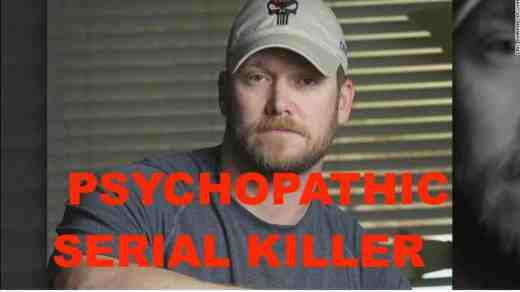
Are Americans who lap up Chris Kyle’s blood-specked vomit suffering from hybristophilia—groupie-like fanboy adulation of psychopathic serial killers? Danish author and criminologist Soren Korsgaard has edited the peer-reviewed criminology journal Radians and Inches: The Journal of Crime. and currently posts at CrimeAndPower.com. I recently interviewed him about this article. — Kevin Barrett
By Soren Korsgaard | Veterans Today
When one delves into the subject of perpetrators of extreme violence, it is very rare for experts and writers to discuss legalized killers, much less study them; instead, they take aim at politically neutral cases, that being non-legalized killers, and consequently the literature in this regard has been based on an incomplete spectrum.
If researchers were able to bypass political undertones and the complexities involved with determining which legalized killers to include and which to discard in their analyses, they would quickly be able to establish that one of the most remorseless and prolific US serial killers of all time is neither named John Wayne Gacy nor Gary Ridgway but Christopher Scott Kyle, the American Sniper.
Chris Kyle, who has been branded an “American Hero [1],” never expressed any regrets for his many victims but stated that he wished he could have murdered more. Even Ted Bundy, who murdered dozens of women and occasionally indulged in necrophilia and decapitations, expressed that he deeply regretted his actions and reckoned that society deserved to be protected from him.
Chris Kyle was a United States Navy SEAL sniper and served several tours in the Iraq War. After his discharge from the U.S. Navy, he went on to publish his bestselling autobiography American Sniper in 2012 [2]. In his book, he claimed to be the most prolific sniper of all time, and it is generally agreed upon that he has killed more than 160 and possibly over 300 people, mostly Iraqis. After the publication of his book, he told the Sunday People that “There are no kills that I regret. None at all. The public is very soft. I either killed them, or they killed other Americans [3].”
In this article, we integrate the case into a broader framework that encompasses a discussion of the legal justification for the war. As we shall see, the Iraq War had been planned years in advance and violated international law. Killings committed during an illegal invasion are obviously illegal and this puts Chris Kyle‘s justification into a whole different perspective; that is, if the USA had never invaded Iraq, none of his colleagues would have ever been in any alleged danger.
From his own words, we will see that Kyle was able to kill like clockwork, without remorse, and even claimed to have continued to murder people when he returned from service. To gain a better comprehension of such behavior, his actions are analyzed from the perspective of psychiatry. This article furthermore analyses the possible root causes of why Kyle gained pervasive popularity and support despite information pertaining to his murders being in plain sight. It is argued that successfully implemented war propaganda and a disorder, known as hybristophilia, account for the observed behavior.
International Law and the Iraq War
In March 2003, just before the Iraq War commenced, a group of 31 Canadian professors of international law declared in an open letter that an attack on Iraq “would be a fundamental breach of international law and would seriously threaten the integrity of the international legal order that has been in place since the end of the Second World War [4].”
They furthermore condemned the scheduled war “in the strongest terms” and underlined that an invasion would have imperialist and colonial overtones: “Illegal action by the US and its allies would simply return us to an international order based on imperial ambition and coercive force [4].”
The group was backed by the International Commission of Jurists (ICJ) in Geneva who expressed “deep dismay that a small number of states are poised to launch an outright illegal invasion of Iraq, which amounts to a war of aggression [5].”
Under international law, a state is only allowed to use force against a sovereign nation if it has attacked first. Before any actions are undertaken, the consent of the United Nations Security Council is a necessity. The US never got the Security Council‘s approval for the Iraq War.
In 2002, well before the initiation of the war, a group of 317 law teachers from 87 law schools located in the US declared in an open statement that a war against Iraq would not only be a breach of international law, but also violate the American constitution; they, in the strongest terms, protested “the Bush administration‘s illegal plan to conduct a war against Iraq,” and argued that “President Bush maintains that Iraq‘s ‘decade of defiance‘ of United Nations resolutions justifies a war against Iraq. But the President ignores the fact that a US war, unleashed without the approval of the UN Security Council, against a country that has not attacked the United States, would itself be an unlawful act, in defiance of America‘s treaty obligations, and a violation of US and international law [6].”
Importantly, they also stated that “The dangerous path America is treading will only lead to more suffering by Americans, as well as by others. The international rule of law is not a soft luxury to be discarded whenever leaders find it convenient or popular to resort to savage violence. The international rule of law is a bulwark against the horrors of warfare that we Americans have so recently felt firsthand [6].”
They also made the essential historical reference which is that “every nation that has ever committed aggression against another claimed to be ‘defending‘ itself. The United States helped establish the United Nations precisely in order to impose the rule of law on such claims, to make it unlawful for nations to strike against others unless they were themselves under armed attack. The United States is not under armed attack by Iraq [6].”
In 2004, Kofi Annan, former United Nations Secretary-General, spoke about the U.S. led invasion of Iraq:
“I have indicated it was not in conformity with the UN charter. From our point of view and the UN Charter point of view, it was illegal [7].”
Kofi Annan‘s statement was echoed in a 2005 paper published in the British Journal of Criminology, professors Kramer and Michalowski, concluded that the “invasion and occupation of Iraq by the United States and its allies is a violation of international law, and as such constitutes a state crime [8].”
Even UN‘s former chief weapons inspector Hans Blix has stated that “all in all, we carried out about 700 inspections at different 500 sites and, in no case, did we find any weapons of mass destruction,” and “I am of the firm view that it was an illegal war [9].”
Former chief prosecutor of Nazi war crimes at the Nuremberg tribunal, Benjamin Ferencz, has declared that the Iraq War was illegal, and it constituted the “supreme international crime [10],” which was defined under the Nuremberg trials as a war of aggression without any justification. He has also stated, “Crimes against humanity, destruction beyond the needs of military necessity, rape of civilians, plunder – that always happens in wartime. So my answer personally, after working for 60 years on this problem and [as someone] who hates to see all these young people get killed no matter what their nationality, is that you‘ve got to stop using warfare as a means of settling your disputes [10].”
In a different interview, he briefly described the proceedings that led to the war:
“The United Nations charter has a provision which was agreed to by the United States, formulated by the United States, in fact, after World War II. It says that from now on, no nation can use armed force without the permission of the U.N. Security Council. They can use force in connection with self-defense, but a country can‘t use force in anticipation of self-defense. Regarding Iraq, the last Security Council resolution essentially said, ‘Look, send the weapons inspectors out to Iraq, have them come back and tell us what they’ve found – then we‘ll figure out what we‘re going to do.’ The U.S. was impatient, and decided to invade Iraq – which was all prearranged of course. So, the United States went to war, in violation of the charter [11, 12].”
Even a political inquiry into the Iraq War has affirmed that it was illegal; the Dutch inquiry concluded, among others, that the “military action had no sound mandate in international law [13].” Philippe Sands QC, a professor of international law at University College London, who gave evidence to the inquiry, later told the media that:
“There has been no other independent assessment on the legality of the war in Iraq and the findings of this inquiry are unambiguous [13].”
The British inquiry into the war, which became known as the Chilcot Inquiry, concluded that Iraq did not pose an imminent threat, military action was unnecessary, and it was also concluded that the UK government had undermined the authority of the United Nations Security Council [14].
Extensive evidence of systematic deception, fraud, manipulation, and criminality by the Bush administration was also put forth in the book, The Prosecution of George W. Bush for Murder, by former prosecutor Vincent Bugliosi. Bugliosi highlighted that Bush had warned in a speech on October 7, 2002, that Iraq was an imminent threat to the US, capable of striking them at any time with weapons of mass destruction. However, Bush had, less than a week before the speech, received the National Intelligence Estimate (NIE) in which it was concluded by 16 US intelligence agencies that Iraq would only pose a threat if the US attacked it first, i.e. self-defense. When the Bush administration put out a declassified version of the NIE just before Congress were to vote on whether or not it authorized an invasion, the conclusion that Iraq was not an imminent threat was completely deleted from the document. Bugliosi also pointed his finger to the so-called Manning Memo that detailed how Bush had told Tony Blair about three possible ways for the US to provoke Saddam Hussein into a war. Bush elaborated on one of these provocations and stated that they could fly “U2 reconnaissance aircraft with fighter cover over Iraq, [falsely] painted in UN colours. If Saddam fired on them, he would be in breach” of UN resolutions and that would justify war [15]. If Bush honestly believed that Iraq was an imminent threat, the thought of provoking the country would never have entered his mind—the last person you want to provoke is the one you are deadly afraid of.
General Wesley Clark, a retired four-star general who was the Supreme Allied Commander of NATO during the Kosovo War, revealed in 2007 that the Iraq War as well as several others had been planned years in advance. General Clark said:
“About ten days after 9/11, I went through the Pentagon and I saw Secretary Rumsfeld and Deputy Secretary Wolfowitz. I went downstairs just to say hello to some of the people on the Joint Staff who used to work for me, and one of the generals called me in. He said, ‘Sir, you‘ve got to come in and talk to me a second.’ … He says, ‘We‘ve made the decision we‘re going to war with Iraq.’ This was on or about the 20th of September. I said, ‘We‘re going to war with Iraq? Why?’ He said, ‘I don‘t know.’ He said, ‘I guess they don‘t know what else to do.’ So I said, ‘Well, did they find some information connecting Saddam to al-Qaeda?’ He said, ‘No, no.’ He says, ‘There‘s nothing new that way. They just made the decision to go to war with Iraq.’ …. So I came back to see him a few weeks later, and by that time we were bombing in Afghanistan. I said, ‘Are we still going to war with Iraq?’ And he said, ‘Oh, it‘s worse than that.’ He reached over on his desk. He picked up a piece of paper. And he said, ‘I just got this down from upstairs’ — meaning the Secretary of Defense‘s office — ‘today.’ And he said, ‘This is a memo that describes how we‘re going to take out seven countries in five years, starting with Iraq, and then Syria, Lebanon, Libya, Somalia, Sudan and, finishing off, Iran [16].’”
The illegality of the Iraq War has been thoroughly well documented, perhaps better than any other illegal war in history, but as it often is with state crimes: those who planned it and those who implemented the violence will rarely be held accountable.
Death Toll of the Iraq War
In addition to the killings carried out by Chris Kyle, the Iraqi people suffered greatly from the U.S. led war of aggression. Independent studies, such as those published in the Lancet, a top medical journal, have shown that hundreds of thousands of people died as a result of the war (first study covered the first 17 months of the war and found that 100,000 people had died due to the war. A follow up study from 2006 showed that the death toll had increased to 654,965) [17].
Subsequent to the publication of the 2006 study, “the war-declaring governments could not simply let these explosive figures go unchallenged [18],” and Bush and British prime-minister Blair immediately dismissed them as not credible, but in March 2007, BBC revealed that the British government‘s own scientists had confirmed the robustness and accuracy of the study. “The study design is robust and employs methods that are regarded as close to best practice in this area [18],” said chief scientific adviser of the Ministry of Defense, Sir Roy Anderson. Several scientists employed by the UK‘s Department for International Development even stated that “the Lancet study actually underestimated the mortality rates because of the methods it applied [18].”
Numerous other experts have confirmed that the reports are scientifically sound and provide the best data on the number of deaths. Shortly after the publication of the 2006 study, a large group of leading experts in medical epidemiology, population health, and biostatistics issued a statement which affirmed that the study was “valid and correct,” and “we can be confident that the excess deaths were above 390,000 and may in fact be as high as 940,000. The vast majority (92 per cent) of the excess deaths were due to direct violence. The cross-sectional household cluster sample survey method used is a standard, robust, well-established method for gathering health data [19].”
The independent Just Foreign Policy estimates that the current total death toll is approximately 1.5 million based upon extrapolation of the data from the Lancet studies [20].
In 2007 and 2008, the independent polling agency “Opinion Research Business” published two studies on the Iraq War mortality, and they ultimately estimated “that the death toll between March 2003 and August 2007 is likely to have been of the order of 1,033,000 [21].”
The Nobel Prize winning Physicians for Social Responsibility echoed these findings in 2015 when they released their detailed study in which they conservatively estimated that one million people had died due to the war. In their report, they furthermore scolded the often-cited Iraq Body Count Project (IBC) for grossly misrepresenting data and underestimating the actual death toll. [18]. An investigative report had furthermore exposed IBC as being “deeply embedded in the Western foreign policy establishment. IBC‘s key advisers and researchers have received direct and indirect funding from US government propaganda agencies and Pentagon contractors. It is no surprise, then, that IBC-affiliated scholars promote narratives of conflict that serve violent US client-regimes and promote NATO counter-insurgency doctrines [22].” Moreover, the investigative report concluded that “IBC has not only systematically underrepresented the Iraqi death toll, it has done so on the basis of demonstrably fraudulent attacks on standard scientific procedures. IBC affiliated scholars are actively applying sophisticated techniques of statistical manipulation to whitewash US complicity in violence… [22].”
Professor Gideon Polya, an expert in thanatology (the scientific study of the cause of death) and author of Body Count. Global avoidable mortality since 1950, has estimated that the absolute Iraqi death toll of the war is in excess of 2.7 million. This figure encompasses 1.5 million who died as a result of violence and 1.2 million who died due to war-induced deprivation. The latter includes under-5 infant deaths of 0.6 million [23].
The Confessions
People ordered to kill by their governments or superiors, in particular soldiers, are not exempt from punishment by conveniently shifting the responsibility to their superiors if a moral choice was available. Such is explicitly declared by Nuremberg Principle IV, which states that “The fact that a person acted pursuant to order of his Government or of a superior does not relieve him from responsibility under international law, provided a moral choice was in fact possible to him [24].” Chris Kyle ignored the Nuremberg Principles and the illegality of the war, and he asserted that his victims would have killed his colleagues if he had not acted first [3].
His arguments would, in all probability, have fallen short if he had been prosecuted in the International Criminal Court in Hague for war crimes. His charges may have included systematic extermination of Iraqis, i.e. crimes against humanity.
Judging from his own words, he enjoyed killing the Iraqi people as well as others. In his memoir, he described killing as “fun [2].” He also stated that “I never once fought for the Iraqis. I could give a flying fuck about them [2],” and “on the front of my arm, I had a crusader cross inked in. I wanted everyone to know I was a Christian. I had it put in in red, for blood. I hated the damn savages I‘d been fighting. I always will [2],” and remarked, “they‘ve taken so much from me [2].”
Later in the book, he reiterated his standpoint on the Iraqis:
“Savage, despicable evil. That‘s what we were fighting in Iraq. That‘s why a lot of people, myself included, called the enemy ‘savages.’ There really was no other way to describe what we encountered there [2].”
Regarding how many people he had killed, he stated:
“People ask me all the time, ‘How many people have you killed?’ My standard response is, ‘Does the answer make me less, or more, of a man?’ The number is not important to me. I only wish I had killed more [2].” Kyle admitted, however, that “we were slaughtering the enemy … our kill total becoming astronomical…;” he also said: “It got to the point where I had so many kills that I stepped back to let the other guys have a few … Everyone I shot was evil. I had good cause on every shot. They all deserved to die [2].”
It is important to remember that Kyle murdered dozens of people in an illegal war, and he invariably pulled the trigger within seconds of an Iraqi coming into view of his rifle scope, hardly amounting to a fair and impartial trial. Furthermore, possible survivors and relatives have not been tracked down by the media and others, although a challenging task it would have been important in order to balance his account of events.
Despite the fact that Kyle had plenty of opportunity and incentive to embellish, omit, and distort the facts related to his killings, one gets the impression that sensory gratification frequently motivated him to kill, rather than alleged protection of fellow soldiers. In one of these incidents, Kyle, lying on a roof top, claimed to have observed a group of 16 armed men trying to pass a body of water, they had used beach balls to keep themselves afloat. He then allegedly shot the beach balls one by one and watched in enjoyment as the men kept fighting for their lives, several of them drowned. In his book, he uttered that “hell—it was a lot of fun [2].”
After many completed operations, he would smoke Cuban cigars with other military men.
Glorifying in Murder
The literature on non-legalized killers has shown that serial killers find it hard to stop killing. Apparently, the power associated with taking lives can result in a pathological addiction. Chris Kyle was no exception by his own admission. He has reportedly claimed that, upon his return from service, he teamed up with a friend and shot and murdered over 30 alleged looters after the ravages of Hurricane Katrina [25].
He also told Michael Mooney, a writer for D Magazine, that in 2009, he had murdered two alleged would-be carjackers, but Kyle was allegedly “released by police without questioning due to the intercession of the Department of Defense [26].” Mooney would later be unable to verify the story indicating it was a concoction, yet he would say this about Kyle: He was incredible and “he was a hero. He was the most celebrated war hero of our time,” and “people will tell stories about Chris Kyle for generations to come. Tales of his feats in battle, and of his antics and noble deeds, will probably swell [27].”
Many mainstream media outlets have promulgated the indefensible notion that Kyle was a noble man and a hero. For example, a CNN article about Kyle glorifies his actions and remarks that “he touched and inspired so many people [27].”
Having been branded an American hero, Hollywood, a couple of years after the publication of the autobiography, decided to release a film adaptation, titled after the book, American Sniper, directed by Clint Eastwood.
In a response to the movie‘s one-sided nature, Professor Chris Hedges stated that “American Sniper, like the big-budget feature films pumped out in Germany during the Nazi era to exalt deformed values of militarism, racial self-glorification and state violence, is a piece of propaganda, a tawdry commercial for the crimes of empire [28].”
Chris Kyle profited immensely from the movie and book, and he was the subject of numerous interviews on major news stations and on radio shows. He clearly relished getting national attention and being in the presence of actors and directors, including Clint Eastwood.
Fame and enjoyment would, nevertheless, soon come to an end. In a twist of irony, he was himself killed on a shooting range by an American who was reportedly suffering from war-induced post-traumatic-stress syndrome. His funeral procession stretched from Midlothian, Texas, to Austin. Thousands stood jammed together praising and praying for him as his coffin was escorted by dozens of buses, bikers, policemen, and others. People flocked to his funeral and thousands watched the memorial at the Cowboys Stadium. The minister said during the memorial:
“Chris would tell us if he was with us in person today, that we must love others and continue to do good [29].”
Clearly a large group had adopted a distorted view of Chris Kyle and his killings. Undoubtedly, many were persuaded by propaganda, which can be defined as misleading information presented as objective to influence and further an agenda, e.g. gain support for the Iraq War, construct an illusion about snipers being humanitarians, et cetera. However, while many may have adopted an uncritical fascination due to the highly subjective Clint Eastwood movie as well as propaganda from other sources, it is, nevertheless, evident that many had read his book and were apparently not appalled as indicated by a quick check on Amazon.com, which shows that Kyle‘s book has amassed over 15,000 reviews of which 89% are four- or five-star reviews. Across all formats, his book has sold millions of copies and made Kyle one of the most successful serial killers of all time in terms of profiting from his killings. It is perhaps revealing that a perusal of the negative reviews on Amazon.com indicates that many fault the book for poor writing rather than the immorality of murdering over 100 people in an illegal war.
One interpretation, other than successfully implemented war propaganda as a source of the manifest attraction to Chris Kyle, is that a large group became affected with a subset of a recently documented disorder, called hybristophilia. The attraction to serial killers and other violent predators is a well-documented phenomenon. Ted Bundy, one of the most savage and notorious women killers of the 1970s, married Carole Ann Boone and fathered a child while being behind bars. Richard Ramirez, a serial killer who indulged in pedophilia, rape, sadism, satanic rituals, and murder, received hundreds of fan-letters while on trial, and on death row he became married to Doreen Lioy.
Hybristophilia, which has not been researched well nor thoroughly defined via empirical studies, is a psychiatric disorder that addresses this obsession with people who have committed atrocities, such as rape, murder, and cannibalism. The affected will be infatuated and/or obsessed with the killer [30]. It has been proposed, thus far, that at least two subgroups exist, namely passive and aggressive hybristophiles, while those who suffer from the aggressive form will be propelled to assist with murders, the passive ones will instead be primarily physically and mentally attracted to those who commit vile acts [31].
At this point, it has been assumed that hybristophilia, for the most part, affects women; however, the Chris Kyle case indicates otherwise. Some researchers have theorized that perpetrators of extremely brutal crimes may convey an ultra-masculine image, and this image is ultimately what drives the hybristophiliac on an unconscious level. However, these theories remain untested empirically, and the causes remain unknown [32].
The pathological admiration and attraction to Chris Kyle are best exemplified by Texas Governor, Greg Abbott, who declared February 2 to be Chris Kyle Day in Texas, and by the pictures of thousands of people who mourned at his funeral procession, perhaps indicating a collective mental state of hybristophilia.
It has been argued that the central component of the disorder is the obsession or unhealthy attraction, while a secondary symptom may be rationalization of antisocial acts, which is the apparent tendency of the hybristophiliac to excuse the acts of the criminal whom they are infatuated with. Such rationalizations are evident in statements from journalists and people at his funeral procession who frequently referred to Kyle‘s acts as noble deeds or somehow else glorified them, entirely ignoring the moral and legal dilemmas.
An online search on YouTube and Google for “Chris Kyle Tribute” reveals dozens of tribute videos, songs, and other material dedicated to Kyle; very similar in content to what can easily be found glorifying non-legalized killers, especially school shooters and serial killers. For example, a Google search for “Ted Bundy Tribute” shows numerous videos dedicated to him, painting an image consistent with hybristophilia; one viewer commented, “R.I.P Teddy Bundy, you will be missed on this planet buddy,” while another stated, “One of the all-time greatest persons ever;” and one even proclaimed that “I understand the love for Ted…however I love Jeff Dahmer. If you loved Ted more power to you. We have the right to love whomsoever we want!! [33].” In view of the immense bloodthirst of Ted Bundy, these comments appear delusional but entirely consistent with hybristophilia. If we pay heed to Chris Kyle‘s tribute videos, their content and related comments are highly suggestive of hybristophilia. Dr. Chris Cowley, a forensic psychologist, has documented that “in the most pronounced form, the illness has an attention-seeking pathology a little like Munchausen‘s syndrome,” and the affected may attempt to “become semi-famous by association [34].” A surprisingly high number of the comments to his tribute videos revolve around an alleged association with Kyle. Here is just a very short segment of the comments to one of his tribute videos, notice the attention seeking quality to some of them:
“A HERO and a patriot. God. Country. Family. Honored to know him, and call him a friend. Humble, courageous, kind. Immortal warrior. Legend. Amazing man. Period,” “He sits next to the gates of heaven where he stands guard forever. God bless Chris and his family,” “LOL 57 people didn’t like this.. they are from Iraq,” “I read his book just a couple months ago and that was the first ive heard of him. I honor this man, in my mind he was a true hero to this country. Its not about his kills that’s just a number …. This man really is my hero, i look up to him and i wish i knew of him before his death so i can shake his hand and say thank you,” “Whoever hit dislike you don’t deserve to be an American!,” “The guys he killed were dirtbags,” “I cry so much, what a beautiful man-soul. Rip,” and “I spent time with this guy he was a true hero [35].”
These comments are consistent with the characteristics of hybristophilia outlined earlier in this article. It needs, also, to be stated that comments questioning the morality and legality of his killings were generally countered with hostile replies, indicating that information conflicting their current belief about Kyle produced cognitive dissonance as a psychological coping mechanism.
The major characteristics of hybristophilia are met by the observed behavior of many of Kyle‘s adherents, although, we cannot know with certainty without an extensive empirical analysis. At this point, it appears to be a valid hypothesis.
American Liar
Chris Kyle‘s legacy encompasses numerous immoral acts including outright deception. It has been shown that he deceived his readers about the numbers of awards he had received for military deeds. Mooney was unable to verify the carjacker story, and other researchers have been unable to document the factual basis for his claim regarding the sniper killings after Hurricane Katrina. Considering Kyle‘s moral track record it is reasonable to assume that both stories were lies. However, without a thorough investigation by objective experts, his assertions cannot be dismissed completely.
Furthermore, on radio and television, he alleged that he had punched out former governor Jesse Ventura at a bar in 2006. Ventura promptly sued Kyle for defamation. Despite Kyle dying during the trial, Ventura continued the law suit, and a jury awarded him over $1.8 million. In 2006, the judgment was overturned. While preparing for a new trial, he reached an agreement with the opposing side. Due to the agreement, he was unable to comment on how much money he had received but remarked that “the settlement is confidential, but I can smile [36].” Ventura has denounced Chris Kyle an “American Liar [37].”
Reflections upon the Psychology of Chris Kyle
If we loosely utilize the Psychopathy Checklist Revised, which was created by Robert D. Hare as a diagnostic tool, as a guide to assess the psychological dynamics of Chris Kyle, it remains clear that he was most likely a psychopath, possibly scoring a high total rating (maximum = 40) [38].
As we shall see, the major constituents of psychopathy correlate very well with his statements and documented behavior.
Unlike most cases with non-legalized serial killers who often are ashamed of their deeds, Kyle glorified in them and often vividly described them to interested bystanders and openly admitted his love for murder and violence. Indeed, the Chris Kyle case represents a near unique glimpse into the mind of a serial killer since many captured killers ostensibly embellish, withhold, manipulate, and distort their case for obvious reasons, e.g. getting out of prison, legal issues, embarrassment, manipulating public perception, et cetera. Few killers have openly admitted their love for killing and lack of remorse. One such exception though is the spree killer Charles Starkweather, who was questioned if he would change anything if he had the ability. He answered: “No, not really” and added, “I know I‘m a monster [39].” During the same interview, he admitted, “If I could go back into time, I would kill as many more people as I could because I hate people. I know they are gonna kill me in the electric chair. I don‘t really care because I‘m gonna be famous for all time [39].”
Among others, psychopaths are characterized by shallow emotions, diminished or non-existent conscience, and they lack empathy or are able to switch it off at will. Kyle repeatedly stated in interviews that he had no remorse and only regretted he had not murdered more people, clearly evidencing limited capacity for empathy and remorse, e.g. he rhetorically asked himself:
“Did it bother you killing so many people in Iraq? I tell them, ‘No.’ And I mean it [2].”
Regarding the depth of his emotions and empathy, the following quote from Kyle is also relevant:
“The first time you shoot someone, you get a little nervous. You think, can I really shoot this guy? Is it really okay? But after you kill your enemy, you see it‘s okay. You say, Great. You do it again. And again. …. I loved what I did. I still do. If circumstances were different I‘d be back in a heartbeat. I‘m not lying or exaggerating to say it was fun [2].”
The statement is clear evidence of limited capacity for sympathy and empathy, emotional poverty.
Based upon the above statement and others mentioned in the article, he conceived of the world as consisting of good and bad people, but he only killed bad ones. This simplification by Kyle comes as no surprise as a key trait in psychopathy is the ability to rationalize and justify actions regardless of how atrocious they may have been; they fail to take responsibility. In his book, he even proclaimed that “I have a strong sense of justice [2],” a statement which again underlines that he rationalized his murders by simply categorizing his victims as evil, and in his own mind, he most likely regarded himself as a savior and hero.
Rationalizations and moral shortcuts are common to most prolific murderers, including Herbert Mullin, who claimed that he killed people in order to prevent a massive earthquake from happening in California, and therefore, he was not really evil [40].
His reaction to shooting and killing a human being is reflective of a state of low anxiety, which also is commonly found among psychopaths who often exhibit a fearless mental state in situations where it would be expected that the individual would be gripped with fear and anxiety [41].
Chris Kyle also appears to have indulged in compulsive narcissistic deception. Judging by his statements, he apparently had a persistent need to elevate his self-worth: he lied about the number of military rewards he had received, probably about his murderous achievements, and about his fight with Jesse Ventura, all in all indicating grandiosity and a compulsive need for self-entitlement, suggesting a core of narcissism in his personality.
Pathological narcissism is a fundamental component of psychopathy; the condition is, among others, characterized by self-centeredness, status-seeking, distrust, arrogance, and a sense of entitlement.
It has long been observed that narcissists want to be the center of attention, and they often have a deep desire to get known, even nationwide. The publication of his murderous deeds may very well have been motivated by a narcissistic desire to attain nationwide appreciation and recognition for his perceived heroism.
While the majority of Kyle‘s kills were relatively fast, some of his acts suggest that he took pleasure in sadistic behavior. Sadists, of course, take great pleasure in causing and observing physical and/or psychological pain and anguish in others. Specifically, the previously mentioned beach ball incident, where he admittedly experienced great exhilaration from causing the drowning of multiple men, indicates that his psyche translated their pain into a greatly positive experience, perhaps even sexually.
Regarding his own psyche, Kyle had surprisingly little to say in his book, except that he briefly described that his psyche had built up defenses, and that is why he would “laugh at gruesome things like heads being blown apart, and worse [2].”
Importantly, he admitted in the book that killing and murder were already on his mind as he was growing up as he had “wondered, how would I feel about killing someone? Now I know. It‘s no big deal [2].” Numerous cases attest to the notion that the roots of repetitive killers can be traced to their upbringing as many serial killers have admitted to torturing animals in their childhood or have fantasized about killing people.
Although operating within the framework of US government approved violence, Chris Kyle appears similar in many respects to non-legalized serial killers.
Final Words
Unlike imprisoned killers, Kyle had no qualms about asserting his love for killing Iraqis – presumably due to a combination of factors that includes government approval, backing by military institutions, and encomiums celebrating his work as wonders of the first order. The multilayered saga of Chris Kyle represents a dangerous example of how institutions can shape and mold the underlying morality of a large group, and effectively make them celebrate acts and personalities that under normal conditions would cause an outrage. Undoubtedly, the military industrial complex had a vested interest in promoting the demonstrably false narrative surrounding Chris Kyle, to further their agenda.
References
- “Ex-Navy sniper, another military vet killed at Texas gun range” https://edition.cnn.com/2013/02/03/justice/texas-sniper-killed/index.html
- American Sniper: The Autobiography of the Most Lethal Sniper in U.S. Military History (William Morrow and Company 2012). Chris Kyle with Scott McEwen and Jim DeFelice.
- “The REAL American Sniper: ‘There are no kills that I regret. None at all’” https://www.mirror.co.uk/news/real-life-stories/real-american-sniper-there-no-5036121
- “Canadian law professors declare US-led war illegal” https://www.wsws.org/en/articles/2003/03/lawy-m22.html
- “Iraq – ICJ Deplores Moves To-ward a War of Aggression on Iraq” https://web.archive.org/web/20051015040809/http://www.icj.org:80/news.php3?id_article=2770&lang=en
- “Law Professors For the Rule of Law” https://web.archive.org/web/20040214101825/http:/www.the-rule-of-law.com:80/index.html
- “Iraq war was illegal and breached UN charter, says Annan” https://www.theguardian.com/world/2004/sep/16/iraq.iraq
- “War, Aggression, and State Crime: A Criminological Analysis of the Invasion and Occupation of Iraq.” Ronald C. Kramer. Western Michigan University. Raymond J. Michalowski. Northern Arizona University. Revised for the British Journal of Criminology, October 2004.
- “Iraq inquiry: Former UN inspector Blix says war illegal” http://www.bbc.com/news/uk-politics-10770239
- “Bush and Saddam Should Both Stand Trial, Says Nuremberg Prosecutor” https://www.globalpolicy.org/component/content/article/167/35806.html
- “Nuremberg set a valid precedent for trials of war-crime suspects in Iraq‘s destruction‖ https:// http://www.japantimes.co.jp/ opinion/2009/05/26/commentary/ nuremberg-set-a-valid-precedent-for-trials-of-war-crime-suspects-in-iraqs-destruction/
- “Could Bush Be Prosecuted for War Crimes?” https://www.alternet.org/story/38604/could_bush_be_prosecuted_for_war_crimes
- “Iraq war was illegal, Dutch panel rules” https://www.theguardian.com/world/2010/jan/12/iraq-war-illegal-dutch-tribunal
- “Chilcot report: key points from the Iraq inquiry” https://www.theguardian.com/uk-news/2016/jul/06/iraq-inquiry-key-points-from-the-chilcot-report
Also see: The Iraq Inquiry: http://www.iraqinquiry.org.uk/
Also see: “Chilcot report: Findings at a glance” http://www.bbc.com/news/uk-politics-36721645 - “The prosecution of George W. Bush for murder” Vincent Bugliosi (New York: Vanguard Press, 2008.)
- “General Wesley Clark: Wars Were Planned – Seven Countries In Five Years” https://www.youtube.com/watch?v=9RC1Mepk_Sw
- “Mortality after the 2003 invasion of Iraq: a cross-sectional cluster sample survey.” Burnham, Gilbert et al. The Lancet, Volume 368, Issue 9545, 1421 – 1428.
Also see: “Mortality before and after the 2003 invasion of Iraq: cluster sample survey.” Roberts, Les et al. The Lancet, Volume 364, Issue 9448, 1857– 1864. - Washington, D.C. Physicians for Social Responsibility: Body count: casualty figures after 10 years of the “War on Terror”: Iraq, Afghanistan, Pakistan
- “The Iraq deaths study was valid and correct” https://www.theage.com.au/news/opinion/the-iraq-deaths-study-was-valid-and-correct/2006/10/20/1160851135985.html?page=fullpage
- “Death Counter Explanation Page” http://www.justforeignpolicy.org/deathcount/explanation
- “January 2008 – Update on Iraqi Casualty Data” https://web.archive.org/web/20110220142121/http://www.opinion.co.uk/Newsroom_details.aspx?NewsId=120
- “How the Pentagon is hiding the dead. The secret campaign to under-count the ‘war on terror’ death toll in the Middle East, Central Asia, and Latin America” https://medium.com/insurge-intelligence/how-the-pentagon-is-hiding-the-dead-862a7b45ce57
- “An Iraqi Holocaust: 2.7 Million Iraqi Dead From Violence Or War-imposed Deprivation” http://www.informationclearinghouse.info/article41378.htm
- “Principles of International Law Recognized in the Charter of the Nürnberg Tribunal and in the Judgment of the Tribunal” legal.un.org/ilc/texts/instruments/english/draft_articles/7_1_1950.pdf
- “In the Crosshairs: Chris Kyle, a decorated sniper, tried to help a troubled veteran. The result was tragic” https://www.newyorker.com/magazine/2013/06/03/in-the-crosshairs
- “Chris Kyle and ‘American Sniper’” https://www.snopes.com/fact-check/kyle-file/
- “’Legend’ of American sniper Chris Kyle looms over murder trial” https://edition.cnn.com/2015/02/09/us/chris-kyle-american-sniper/index.html.
Also see: “The Legend of Chris Kyle: The deadliest sniper in U.S. history performed near miracles on the battle-field. Then he had to come home” https://www.dmagazine.com/publications/d-magazine/2013/april/the-legend-of-chris-kyle-01/?single=1 - “Killing Ragheads for Jesus” https://www.truthdig.com/articles/killing-ragheads-for-jesus/
- “Chris Kyle’s Memorial at Cowboys Stadium (FULL)” https://www.youtube.com/watch?v=jmWZ7Fafhso
- “Passion Victim: A brief look at hybristophilia” https://www.psychologytoday.com/us/blog/in-excess/201310/passion-victim
- “Hybristophilia: When a Woman Is Sexually Attracted to Horrifying, Psychopathic Criminals” https://www.vagabomb.com/Hybristophilia/
- “3 Experts Explain Why Some People Are Attracted to Serial Killers” https://www.cosmopolitan.com/entertainment/tv/a17804534/sexual-attraction-to-serial-killers
- “Tribute to Ted Bundy” https://www.youtube.com/watch?v=BhZG6trFdsE
- Cowley, Chris. “Face to Face with Evil: Conversations with Ian Brady” (2011 Metro Publishing), p. 116 & 118.
- “A Tribute to Chris Kyle ‘Devil of Ramadi’” https://www.youtube.com/watch?v=pLvSuAznnks
- “Ventura settles defamation suit but won’t say for how much” http://www.startribune.com/jesse-ventura-to-discuss-settlement-of-defamation-law-suit-at-monday-afternoon-news-conference/461863413/
- “Jesse Ventura Slams ‘American Liar’ Chris Kyle After Settling Lawsuit”
http://www.insider.foxnews.com/2017/12/05/jesse-ventura-slams-american-liar-chris-kyle-after-settling-lawsuit - “Hare Psychopathy Checklist” http://www.minddisorders.com/Flu-Inv/Hare -Psychopathy-Checklist.html
- Korsgaard, Søren. “America‘s Jack the Ripper: The Crimes and Psychology of the Zodiac Killer” (2017), p. 273.
- “He Thought His Murders Could Stop Earthquakes: The Crimes of Herbert Mullin” https://didyouknowfacts.com/thought-murders-stop-earthquakes-crimes-herbert-mullin/
- “Inside the mind of a PSYCHOPATH: Researchers find they do feel fear – but don’t recognise danger” http://www.dailymail.co.uk/sciencetech/ article-3767545/Inside-mind-PSYCHOPATH-Researchers-feel-fear -don-t-recognise-danger.html
- Alv A. Dahl, Aud Dalsegg, ”Chamør og Tyran” (Munksgaard 2002).
Europe’s gas alliance with Russia is a match made in heaven
By M. K. BHADRAKUMAR | Indian Punchline | November 3, 2019
Amidst the excitement over the killing of the ISIS chief Abu Bakr Al-Baghdadi, a development of much impact on international security passed by when Denmark made the innocuous announcement on October 30 that it would permit the proposed Nord Stream 2 gas pipeline to pass through its exclusive economic zone.
Copenhagen modestly explained that it was “obliged to allow the construction of transit pipelines” under the UN Convention on the Law of the Sea.
The Nord Stream 2, which will connect Russia’s Leningrad Region to Germany’s Baltic coast, bypassing the traditional route via Ukraine, aims to double the capacity of the already-built Nord Stream 1 to 110 billion cubic meters (bcm) per year that is more than a quarter of the European Union’s gas consumption.
On October 31, Gazprom, Russia’s energy Leviathan, had said 83 percent of the pipeline construction — more than 2100 km of the pipeline — was complete. The permit to construct in the Danish Exclusive Economic Zone south-east of Bornholm covers a 147-km-long route section.
Pipelay has been completed in Russian, Finnish and Swedish waters, and for the most part in German waters. The construction of both landfall facilities in Russia and Germany is nearing completion. Thus, the development last week signifies that Russia is certain to finish the project by the end of this year.
Despite the rising tensions in Russia’s relations with the United States, a massive energy project is all set to slither along the seabed between Russia and the European Union. The US wants to stifle the serpent in its infancy but Germany and Russia navigated it to the home stretch.

The project is expected to ensure safe and stable supplies of gas to Europe. The competitive Russian gas supplies will enable European customers to save anywhere around 8 billion euros on their gas bill in 2020.
More importantly, according to a study conducted by the University of Cologne EWI, “When Nord Stream 2 is available, Russia can supply more gas to the EU decreasing the need to import more expensive LNG. Hence, the import price for the remaining LNG volumes decreases, thereby reducing the overall EU-28 price level.”
Herein lies the rub. Europe has become a natural gas battleground for the US and Russia. Of course, apart from being a prized market, Europe is also a political battleground between the US and Russia.
Russia traditionally dominated the European market while the European Union appears to be keen to wean itself off Russian gas, given the geopolitical implications of over-reliance on Moscow for its energy security. On the other hand, the US is looking to step up its exports of liquefied natural gas (LNG) to Europe and faces a big resourceful competitor who cannot be dislodged from the market — Russia.
Russia loomed large as the largest supplier of natural gas to the EU in 2018. According to the European Commission’s latest data on EU imports of energy products in October, eleven member states imported in 2018 more than 75 percent of their total national imports of natural gas from Russia.
Russia has multiple pipelines in operation, which gives it a big advantage in cutting down transportation costs for the European consumers, as compared to more expensive LNG imports from the US. Clearly, both geoeconomics and geopolitics are at play here.
The US’ transatlantic leadership is largely conditional on the climate of relations between Europe and Russia in general and between Germany and Russia in particular. Washington is acutely conscious that Nord Stream 2 can provide the underpinning for a stable, predictable relationship between Europe and Russia, which would go against the grain of the Trump administration’s projection of Russia as a revisionist power that the US is determined to counter.
In sum, Washington apprehends that if Nord Stream 2 is completed, it will come as a severe blow to transatlantic relations, although on the face of it, the US has been arguing that the project runs counter to the Western sanctions imposed on Russia following its annexation of Crimea.
Actually, this argument is sheer sophistry, since Europe’s dependence on Russian energy supplies is a legacy inherited from the days of the Soviet Union. Moscow is a stakeholder in preserving its reputation as a stable, reliable supplier of energy to Europe at competitive prices. The crux of the matter is that the European consumer prefers the cheaper Russian gas to the expensive LNG exports from the US.
Meanwhile, the Ukraine crisis alerted Russia to the geopolitical reality that it could be vulnerable to US pressure politically, which in turn prompted its energy pivot to China. Gazprom aims to become China’s top gas exporter by 2035. When the Power of Siberia pipeline (under construction in Eastern Siberia to transport gas to Far East countries) becomes active later this year, it will deliver 38 billion cubic metres of natural gas annually to China, which will make China Russia’s second-largest gas customer after Germany.
However, paradoxically, Russia’s gas exports to Europe are only increasing in recent years. In 2018, Gazprom’s gas sales to Europe and its share of Europe’s gas market reached record highs. This trend can only continue as the Nord Stream 2 and Turk Stream pipelines, which will become active shortly this year, will deliver an additional 86.5 billion cubic meters annually to Europe.
Simply put, Europe’s addiction to Russian gas remains a fact of life and with the continent’s own gas production on the decline, Europe needs to import much bigger volumes of gas and lots of it is going to come from Russia.
The amazing part has been the dogged resistance by Germany to the US pressure tactic to abandon Nord Stream 2. The US even threatened to sanction German companies; US Congress passed resolutions calling for an end to construction of the pipeline. Germany’s manufacturing economy is dependent on imports for 98% of its oil and 92% of its gas supply, and cheap gas is the lifeblood of its export-based economy.
But then, there could be more to it politically than meets the eye. Can it be a coincidence that Germany is also resisting US pressure to shut out Chinese tech giant Huawei from its 5G networks? Like with Nord Stream 2, Washington advanced the same argument apropos Huawei — national security concerns. But Germany snubbed the calls from the US.
The Economist magazine wrote some months ago that the “The Atlantic Ocean is starting to look awfully wide. To Europeans the United States appears ever more remote.” To be sure, the coming into fruition of Nord Stream 2 is yet another sign that the transatlantic relationship currently faces significant challenges.
The US-European policy divisions have emerged on a wide range of regional and global issues. Although US and European policies toward Russia remain broadly aligned, Nord Stream 2 turned out to be a key US-European friction point.
Twitter Surrenders to US Congress’ anti-Hezbollah Measures, Suspends Al-Manar’s Accounts
Al-Manar | November 2, 2019
Republican and Democrat US Congress members, have asked social media network Twitter to suspend all accounts affiliated with Hezbollah and Hamas, setting November 1rst as a deadline for the action.
The US Congress members rejected distinguishing between military and the political wings of the organizations they classify as terrorist, stressing that Twitter must not give them any chance to convey ‘hate’.
In this context, Al-Manar TV accounts on Twitter, including @AlmanarEnglish, were suspended without any prior notification.
The accounts which had around one million followers were characterized by objectivity and accuracy in conveying truth.
Featured Video

Ivermectin and iodine
or go to
Aletho News Archives – Video-Images
Book Review
UAE tortured, killed journalist for opposing Israel normalization
The Cradle | October 31, 2026
UAE security officers detained, tortured, and killed Emirati poet and news editor Habib al-Sayegh in August 2019, shortly after he published a column opposing UAE normalization with Israel, according to a newly published book.
“Princes and Thieves,” a book by investigative journalist Matthew Cole published on 25 October, alleges that UAE security officers raided Sayegh’s Abu Dhabi home shortly after the publication of the column, hooded him in front of his wife and took him to a detention facility where he was tortured to death.
His interrogators reportedly pulled out several of his teeth with pliers and beat him repeatedly with a sharp metal object.
On 11 August 2019, Sayegh criticized the UAE’s plan to normalize relations with Israel as part of the Abraham Accords in his weekly column for Khaleej newspaper. The column was titled “Israel Is Our Real Enemy and A Dangerous Project.”
Sayegh described Israel as “a real and natural enemy” while questioning “who authorized the normalizers to speak on behalf of everyone?”
Nine days after the column was published, Emirati state media announced his death, without stating a cause. … continue
Blog Roll
 Aletho News
- Ivermectin and iodine
- Congratulations climate skeptics — you are a ‘Hybrid weapon of war’ and a growing public health threat
- ‘The Arab Vote’: How Israeli Racism Has Ruined Their Elections
- Israel forces Palestinians in Gaza to choose between assassination alone or death with their families: Report
- US Approves Sale of 500 Patriot Missiles to Ukraine, Deliveries May Take Years
- German Imperialism: An Urgent Explainer
- Backed by AAP, West Virginia Proposal Would Allow Dental Hygienists to Give HPV Vaccine to 9-Year-Olds
- Poland Is the Symptom and Europe Is the Patient
- UAE security forces tortured, killed journalist for opposing Israel normalization: Report
- They Compared the Spice to the Drug. The Spice Won — Again. (Part 2)
- If Americans Knew
- DAILY UPDATE: Latest essential news on Palestine, Israel, & region
- 1,300 will gather in Palo Alto on Nov. 1 for Z3 Conference on Zionism
- DAILY UPDATE: Latest essential news on Palestine, Israel, & region
- The Long Arm of AIPAC
- Genocidal intent behind Hebron assault, rights group says
- This week, Israel killed 8-year-old who survived bombing that wiped out her family
- DAILY UPDATE: Latest essential news on Palestine, Israel, & region
- Israeli soldier poses at damaged Lebanon church, sparking anger
- New Report. Manufacturing the Great Replacement: Is Israel behind one of the largest racist influence campaigns ever documented?
- ‘Arab voice doesn’t count’: Jewish Israeli blocs reject Palestinian support
- No Tricks Zone
- Germany’s Green Energy Transition Becoming Increasingly Expensive…Another 6 Trillion Euros!
- Sudden Stratospheric Warming, Powerful El Niño Combination May Lead To Extreme Europe Cold, Energy Crisis!
- Two New Studies Find Thwaites Glacier Melt Cannot Be Driven By Human Activity Or A Warming Ocean
- E-Cars Reduce CO2 Emissions By Only 41% Compared To Internal Combustion Engine Vehicles
- Predictions Made By Renowned Climate Professor Over Past Decades Have Been Proven To Be Poor
- New Study Suggests Large Regions Of The Pacific Ocean Have Been Cooling For The Last 80 Years
- Germany’s Green Energy Debacle: High Energy Costs Force Kahla Porzellan to Close After 182 Years!
- New Study: 50 Years Of The Most Aggressive ‘Net Zero’ Policies Can Only Affect The Global Climate By 0.03°C
- US September “Heat” Was No Record…Many Records Set Decades Ago
- Latest European Green Energy Debacle; Portugal’s Largest Flagship Solar Park Insolvent!


