Pax Iranica? The end of uncontested U.S. military hegemony
By Raphael Machado | Strategic Culture Foundation | June 17, 2026
Anyone would be skeptical about the sustainability of the “peace” taking shape in the Middle East from the Memorandum of Understanding to be signed between Iran and the United States in a few days. It is plausible that it may not even be signed. And even if it is signed, considering that it involves a gradual, phased unfolding of a peace process that would last at least two months, it is hard to believe that everything will go as intended by the parties and the Pakistani mediators.
Nevertheless, in the terms that this “peace” is presented and which have been accepted by the U.S., we are facing an overwhelming victory for Iran. Even if the diplomatic process is derailed, nothing will change the fact that the U.S. accepted peace with Iran on terms unilaterally favorable to the Persians, leaving Tehran in a much stronger position than before the war began.
First of all, the U.S. failure should be seen as obvious and rests on a very simple assessment: Washington failed to achieve any strategic objective in the conflict with Iran: the “regime” was not overthrown, the nuclear program was not destroyed, military capabilities were not eliminated, support for the Axis of Resistance was not liquidated, and finally, it was not possible to reopen the Strait of Hormuz by force.
The U.S. committed the most basic error of any conflict: misjudging the balance of power. And in this, naturally, the U.S. was led into error by Israel and its allies within the U.S.. From the start, reports indicate that the Pentagon opposed military action against Iran, for good reasons.
Even considering the tactical and operational dimensions, the U.S. was unable to impose itself as intended. The U.S. failed to achieve air superiority over Iran and resorted to launching missiles from outside Iranian airspace. Most times the U.S. penetrated Iranian airspace, they encountered anti-aircraft systems capable of shooting down even F35s. The U.S. also could not take advantage of its regional military bases, which were harassed and operationally neutralized by barrages of missiles and drones, complicating U.S. logistics and forcing them to use increasingly distant bases. Iran also managed to force U.S. aircraft carriers to keep their distance, with one returning to port for maintenance. Furthermore, the U.S. demonstrated that it is not yet ready to face a war in which drones play a central tactical role. But perhaps the most significant embarrassment was the fact that Iran forced the U.S. to confront its own industrial shortcomings—the U.S. expended large quantities of Tomahawks, Patriots, and other types of offensive and defensive missiles, which are produced at a trickle. The fact that U.S. missile stocks plummeted rapidly without any objective being achieved was certainly decisive for U.S. reluctance to restart the conflict.
There was also the poorly explained situation involving the destruction of several aircraft and helicopters in an alleged attempt to rescue a downed pilot (a pilot who was simply never seen again and was not even reliably identified). The fact that the ceasefire came just days after this alleged rescue operation suggests that the story is very poorly told and that perhaps that was a failed special forces operation to seize Iran’s enriched uranium.
That is precisely why reducing the issue to “control of the Strait of Hormuz” is nothing short of amateurish, since control over the Strait itself was only possible because Iran surprised the U.S. tactically through its ability to present challenges for which the U.S. had no answers and to deny the U.S. certain important military advantages on that terrain.
Naturally, control of the Strait of Hormuz had a significant impact on the conflict, making it more complex and a global issue. Carrying out attacks against Arab Gulf countries rather than just U.S. and Israeli targets followed the same logic of demonstrating power and turning the conflict into a broader, more complex problem. This stance alone forced Qatar to concede and seek a separate peace and rapprochement with Iran.
Now, if pointing out the U.S.’s inability to achieve its objectives, as well as its tactical difficulties, is not enough to demonstrate its defeat by Iran, then the imbalance of the Memorandum of Understanding, which represents a draft peace treaty, is certainly sufficient proof.
The Memorandum is scheduled to unfold in three phases. The first immediate result is the end of military actions on all fronts and the end of the U.S. naval blockade. The situation in Lebanon is already extremely uncertain due to the “Joker factor” that is Israel. But the end of the naval blockade, which is already a reality, has left the Strait of Hormuz under Iranian control, and even if Iran does not charge a “toll,” it is already charging a “service fee” to authorize ship transit.
The next phase, lasting 30 days and beginning after the Memorandum is signed, involves a U.S. promise not to increase its military presence around the Persian Gulf, the return of $12 billion in frozen assets to Iran, the immediate removal of sanctions on Iranian oil, gas, and petrochemical exports, confirmation of joint management of the Strait of Hormuz by Iran and Oman, and a U.S. promise to pressure Israel to withdraw from Lebanon. In return for all this, Iran promises not to seek to develop or acquire nuclear weapons.
And in the final phase, expected to last at least 60 days, the return of the remaining $12 billion in frozen assets, the granting of $300 billion for the reconstruction of Iran (equivalent to reparations), and the beginning of the process of removing all remaining sanctions. In return, Iran promises to agree to discuss its uranium enrichment.
In short, Iran’s obligations under this Memorandum are minimal, while the commitments undertaken by the U.S. are disproportionate. Why take on all these commitments and accept all these conditions if the U.S. “won“—as Trump says—and could “destroy Iran at any moment”?
The reality is that between an international oil crisis, low missile stockpiles, the resilience of the Iranian population, and difficulty dealing with hypersonic missiles and drones, the U.S. suddenly found itself in a potential quagmire capable of causing infinitely greater harm than any conceivable benefit. Perhaps finally aware of the mistake of starting this conflict, with very low popularity, hosting a World Cup, and worried about a myriad of internal and external crises, Trump seems eager to get rid of the “Iranian issue.”
What is proven here is that although the U.S. remains a military superpower, it is possible to defeat them under certain specific conditions and with sufficient preparation. We are not saying here that any country could defeat the U.S. in a war, but that regional powers of a certain scale, immunized against color revolutions and with years of military preparation and investment in technologies capable of negating the potential of the U.S. Navy and its air superiority, can defeat them in a defensive war.
Having recently gone through the “unipolar moment” of uncontested U.S. superiority in the post-Cold War era, whose highest expression was the rapid destruction of Saddam Hussein’s regime, clearly the world is no longer the same, which in itself is proof that we are in a phase of geopolitical transition toward multipolarity.
Weakened in the Middle East, Iran is left in control of the Strait of Hormuz. Its ability to simultaneously confront all the Arab Gulf countries has been proven, and Israel’s inability to defeat Iran without U.S. help has been as well. This opens up for the Middle East the possibility of a regional pax Iranica, though much water will yet flow under this bridge.
Israel, however, remains a problem. Driven by a messianic ideology and accustomed to being treated with privileges derived from the influence of its diaspora, Israel does not appear willing to respect the terms of the Memorandum, nor to give up trying to establish a Greater Israel by force of arms. It is the Israeli factor that makes it difficult to fully realize a peace agreement between Iran and the U.S..
UN: Israel continues to violate Lebanon airspace in defiance of Iran-US MoU
Press TV – June 16, 2026
The United Nations has reported ongoing Israeli military offensives in southern Lebanon, including projectile launches and repeated violations of airspace, though it recorded a decrease in overall violence following a memorandum of understanding between Iran and the United States.
UN spokesperson Stephane Dujarric said during a news conference on Monday that the UN Interim Force in Lebanon (UNIFIL) had “observed a decrease in violence and exchanges of fire” from midnight until 4 p.m. local time.
UNIFIL also documented “133 trajectories of projectiles and 2 airstrikes” conducted by Israeli forces, while noting “no trajectories from Hezbollah or non-state actors.”
Dujarric further explained that peacekeepers had recorded 25 violations of Lebanese airspace by Israeli forces, with a cumulative overflight duration of “approximately 40 hours.”
“Prior to the announcement of the agreement yesterday between the US and Iran, our UNIFIL peacekeepers noted 135 violations of Lebanese airspace by the [Israeli military], with a total overflight time exceeding 222 hours,” he stated, adding that the peacekeeping mission had recorded a total of “1,374 trajectories of projectiles over the weekend, with 1,328 attributed” to Israeli forces.
Regarding the humanitarian situation, Dujarric highlighted the prevailing uncertainty on the ground, stating, ”Some families have reportedly begun to return to their homes or are evaluating the conditions in communities in parts of southern Lebanon, particularly in Nabatieh.”
“However, no large-scale returns have occurred thus far,” he added.
On Monday evening, Iran’s Supreme National Security Council announced that the memorandum of understanding (MoU) reached between Tehran and Washington earlier in the day will bring an end to warfare on all fronts, including in Lebanon.
The SNSC secretariat also announced that the MoU is scheduled to be officially signed on Friday, June 19.
Despite the agreement, the Israeli army conducted demolitions and shelling in several towns in southern Lebanon on Monday. Reports indicated that displaced residents were returning to some southern villages, while local municipalities advised caution and urged residents to postpone their returns.
Since March 2, Israel has been conducting an extensive military offensive in Lebanon, killing 3,783 individuals and injuring 11,699 others, as reported by the Lebanese Health Ministry. Additionally, over one million people have been forced to flee their homes.
Israel maintains its occupation of certain regions in southern Lebanon, with some areas being held for decades and others since the onset of the 2023-2024 war. Israeli troops have also penetrated more than 10 kilometers into Lebanese land.
Araghchi: Israeli occupation of Lebanese land a violation of MoU
Al Mayadeen | June 16, 2026
In a televised statement, Iranian Foreign Minister Abbas Araghchi affirmed that, from Iran’s perspective, the two parties to the Memorandum of Understanding are the United States and “Israel” on one side, and Iran and Hezbollah on the other.
He also said, contrary to Trump’s overnight statement, that the MoU would be signed on Friday.
Speaking at the opening of a meeting with ambassadors, chargés d’affaires, and heads of foreign and international missions in Tehran on Tuesday, Araghchi stressed that the end of the war in Lebanon is an inseparable part of the complete end of the war, noting that ending the war on Lebanon also includes ending the occupation of Lebanese territory.
Araghchi said that, from now on, any military attack by “Israel” on Lebanon, as well as the continuation of the occupation of Lebanese territories, will be considered a violation of the MoU.
According to Araghchi, the heads of the two delegations from the US and Iran will first sign the memorandum of understanding on Friday before the inaugural round of formal negotiations begins.
Tehran, he said, aims to build on the understandings reached and translate them into a tangible economic opening.
Implementation mechanism amid deep-seated mistrust
The Iranian foreign minister also said that the negotiation agenda and the mechanism for implementing the anticipated understandings will be formulated in light of the prevailing lack of trust in the United States stemming from previous experiences marked by breaches of commitments and failures to uphold obligations.
“Naturally, we do not squander any opportunity in foreign policy, but at the same time, we do not pin our hopes on any opportunity,” Araghchi said, underscoring Tehran’s cautious and pragmatic approach to the forthcoming negotiations.
Meanwhile, US President Donald Trump claimed overnight Monday that a memorandum of understanding with Iran has been signed and that the Strait of Hormuz will be completely reopened by Friday, speaking to reporters upon his arrival in Evian, France, ahead of the G7 summit.
The formal signing ceremony is scheduled for Friday in Geneva, with Vance confirmed to attend.
Hezbollah fighters confront intruding Israeli forces in southern Lebanon
Press TV – June 16, 2026
Fighters from the Lebanese Hezbollah resistance movement have confronted an Israeli military convoy as it was attempting to infiltrate into southern Lebanon despite an Iran-US agreement that includes complete cessation of Israeli assaults on Lebanon.
Hezbollah said in a statement on Monday that its fighters, employing rockets and drones, obstructed an Israeli unit comprising an excavator and two Merkava tanks that was moving forward near the town of Kfar Tebnit, close to the southern city of Nabatieh.
In a subsequent statement later in the day, Hezbollah said, “The enemy army has reorganized its forces in the vicinity of the crossing area by deploying an armored contingent consisting of five Merkava tanks and four vehicles.”
“The combatants of the Islamic Resistance have targeted them with rocket barrages and artillery shells, and clashes are continuing.”
It came after an Israeli drone struck a vehicle in the same region, killing its driver. The air raid marked the first fatal strike since the announcement of the agreement.
Hebrew-language media outlets, meanwhile, reported “a serious security incident” for Israeli soldiers positioned in southern Lebanon.
The outlets added that Israeli rescue helicopters are trying to transport the injured troopers to hospitals in the northern part of the occupied territories.
There were no immediate reports about the number of casualties that the Israeli army suffered as a result of the incident.
Israeli media outlets also reported that a soldier fighting in southern Lebanon committed suicide last night due to mental distress from military offensives.
This comes as the Israeli military is witnessing a continuous and alarming rise in soldier suicides, a trend linked to widespread post-traumatic stress disorder (PTSD) stemming from Israel’s prolonged and repeated aggressions on multiple fronts.
According to figures published by the Haaretz daily newspaper, at least six active-duty soldiers and three non-active reservists died by suicide in April alone.
Earlier this year, the newspaper recorded 22 soldier suicides in 2025, a 15-year high.
A new poll by Israel’s public broadcaster KAN shows that a majority of Israeli settlers believe that the Zionist regime has failed to secure victory in any war since October 2023.
The Straight of Hormuz is Open for Iranian Business… Oil is Moving and Iran is Getting Paid
By Larry C. Johnson | SONAR21 | June 16, 2026
Let’s give Donald Trump credit for one thing… He kept his word and lifted the US blockade on Iranian ships and Iran is going to town with its oil tankers moving in and out of the Persian Gulf through the Strait of Hormuz.
This does not mean that the MOU with Iran, which is supposed to be signed in Geneva on Friday, will hold, but it is a step in the direction of de-escalation. So the question we ought to ask is why did Donald Trump blink and accept the proposal that Iran proffered way back in April?
I think there are several reasons, but the principal one is that the US is running out of oil, which means Trump will not be able to artificially suppress the price of gasoline. US strategic oil reserves have fallen to their lowest level since 1983, reports CNN. The decline comes amid continued drawdowns to mitigate the impact of the conflict with Iran. Reserves have dropped to 340.3 million barrels, last seen during the Reagan administration, which was still building the stockpile. US daily consumption is 20 to 21 million barrels in 2026, which means the reserve can supply 17 days of gasoline, which falls on July 1st.
Donald Trump may be in mental decline, but he still retains enough smarts to understand that an oil shortage and soaring prices of gasoline in July is politically untenable.
Another factor is that US installations and aircraft in the Persian Gulf took a helluva beating last week. The US attacks on Iranian installations in the Strait of Hormuz on June 9 and 10 provoked a fierce Iranian response that hit targets in Iraq (CIA-bases supporting the Kurds), Kuwait (the Ali Al Salem airbase, Camp Buehring in northeastern Kuwait, as well as a makeshift operations center near the civilian port of Shuaiba), the Prince Saud Airbase adjacent to Riyadh, Saudi Arabia, and the Mowaffaq Al Salti Airbase in Jordan. The attacks were devastating and reportedly employed some new Chinese missiles supplied to Iran.
Then there is the pressure from Gulf Arabs to end the attacks on Iran. Iran, backed by China, Russia and Pakistan, engaged in intense diplomacy with Saudi Arabia, Qatar and the United Arab Emirates (UAE).
The UAE, who has been a thorn in the side of Iran and Saudi Arabia and has been identified as an ally of Israel, sent a delegation to Iran on 9 June. Reuters reported that the UAE had agreed to release billions of dollars for Iran — two regional sources put the figure at $10 billion (including more than $3 billion already delivered), while two other sources put it at $20 billion, with the funds agreed in exchange for Iran halting attacks on the UAE. However, the UAE’s Ministry of Foreign Affairs categorically denied those reports, stating the allegations were “entirely false and unfounded” and that no frozen Iranian funds had been released, transferred, or facilitated through the UAE. What is undisputed is that the UAE sent a high-level delegation to talk to the Iranian government.
A high-level Qatari delegation arrived in Tehran on Wednesday, June 10, to hold talks on bilateral relations, regional developments, and diplomatic efforts to end the conflict between Iran and the United States. The delegation arrived at midday and the visit came after Trump accused Iran of stalling and said Tehran must now “pay the price.” AFP, citing an informed diplomat, reported the Qatari negotiating team had traveled to Tehran following consultations with American officials to help narrow remaining differences between the two sides.
A senior Pakistani source with access to information about Pakistan’s role in mediating the talks between the US and Iran, reported that Pakistan, with the encouragement of China and Russia, was making progress in its talks with the Saudis and the Qataris to stop hosting US military bases in their respective countries. These talks coincided with Saudi Arabia denying the US the use of its airspace to attack Iranian targets during Project Freedom.
Will the deal be signed on Friday? I remain skeptical simply because of the enormous Zionist backlash being visited on Donald Trump by angry Israeli officials and US politicians beholden to AIPAC. However, as I write this Monday night, the deal appears intact.
Why hasn’t Donald Trump released the text of the MOU? Two possible explanations (and I’ll be interested in what you think is the most plausible): 1) There are still areas of disagreement between Iran and the US and they are still trying to work out a compromise, 2) Trump does not want to provide the details beforehand fearing that the Zionist backlash could derail the Friday signing ceremony in Geneva. The diplomatic roller coaster is running full blast… It will be a wild ride until Friday.
Lebanon Accuses Israel Of Violating The Chemical Weapons Convention By Spraying Toxic Herbicide Over Farmland
By Justin K.P. | The Dissident | June 15, 2026
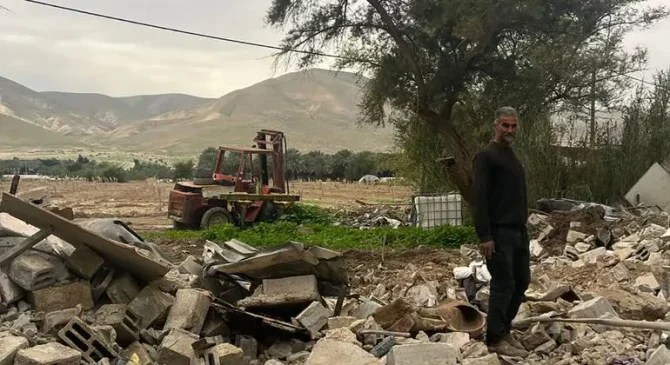
Lebanon has officially accused Israel – in a complaint filed with the U.N. Security Council- of violating the Convention on the Prohibition of Chemical Weapons for using aircraft to spray glyphosate, a “toxic herbicide with serious consequences for health, soil, and crops” over farmland in Southern Lebanon, as part of its broader ethnic cleansing plan.
Lebanon said that “the Convention on the Prohibition of Chemical Weapons prohibits the use of herbicides as a means of warfare”.
It noted that “Chemical analyses and laboratory tests conducted on soil samples taken from Aita al-Shaab (Bint Jbeil district), Ras Naqoura and Dhaira (Sour district) ‘confirmed the use of glyphosate at high concentrations reaching 22,750 micrograms per gram, a level far higher than the concentrations usually found in agricultural soils after farmers’ direct use of this product, which generally range between 0.5 and 2 micrograms per gram at most’”.
For context, Lebanon’s agriculture minister, Nizar Hani, revealed in February that “Laboratory tests have identified the chemical sprayed by Israeli aircraft in southern Lebanon as glyphosate, a widely used herbicide that can destroy vegetation when applied intensively,” adding that “the substance was used at abnormally high concentrations along the border with Israel”.
Nizar Hani noted that, “glyphosate, like other herbicides, eliminates vegetation when used at such high levels, directly affecting soil and water and causing negative repercussions for human health” and “the substance is classified as having carcinogenic effects and poses serious risks, particularly to agriculture and plant ecosystems” adding, “the incident was consistent with known practices along the border, where such substances are used to create vegetation-free zones, effectively resulting in systematic desertification.”
The Guardian reported that glyphosate was “in 2015 classified by the World Health Organization as ‘probably carcinogenic to humans’.”
In January, Israel similarly sprayed glyphosate over farmland in the southern Quneitra province in Syria and soon after, “A second incident occurred two days later, during which the visible release of substances led to outcries from Syrian farmers in occupied areas near Quneitra, southwest of Damascus and along the border with Israel.”
Israel, through spraying this carcinogenic herbicide, is attempting to kill off the farms and crops needed to sustain life in areas of Syria and Lebanon targeted for Israeli annexation in the Greater Israel Project.
Israeli government plans to fund extremist occupier group in occupied West Bank with $1.89M: Report

MEMO | June 15, 2026
The Israeli government of Prime Minister Benjamin Netanyahu plans to allocate 5.5 million shekels ($1.89 million) in state funding to the extremist occupier group known as the “Hilltop Youth,” the Yedioth Ahronoth daily said Monday.
The newspaper said the budget was outlined in a document issued by the Settlement and National Missions Ministry, headed by Minister Orit Strock, which will oversee the transfer of funds through regional settlement councils in the occupied West Bank.
The funding plan is scheduled to run from June through the end of the year and totals 5.5 million shekels, it added.
According to the newspaper, each member of the Hilltop Youth movement would receive the equivalent of approximately $550 per month to help cover food, clothing and living expenses for more than 650 youths living in hilltop outposts and pastoral settlement sites across the occupied West Bank.
The Hilltop Youth is an occupier movement whose members primarily live in unauthorized settlement outposts in the West Bank and are known for opposing efforts to evacuate them.
The group has frequently been linked to attacks against Palestinians and is considered the ideological nucleus of the extremist “Price Tag” movement, which has carried out retaliatory attacks against Palestinians and their property.
Founded in 1998, the movement is largely composed of Israeli occupiers aged between 16 and 26, who left their homes and schools to live in illegal settlement outposts built on hilltops overlooking Palestinian communities.
The group is considered an offshoot of the extremist movement Gush Emunim, which advocates expanded Jewish settlement in the occupied Palestinian territories.
According to Israeli and Palestinian rights groups, violence by Israeli occupiers in the occupied West Bank has increased significantly in recent years, including attacks on Palestinian communities, farmland and property.
Since Oct. 8, 2023, at least 1,169 Palestinians have been killed, 12,666 injured, around 23,000 arrested and approximately 33,000 displaced in the occupied West Bank amid intensified Israeli military operations and occupier attacks, according to Palestinian figures.
Press TV reporter wounded in Israeli drone strike on southern Lebanon

Hadi Hoteit, Press TV correspondent in southern Lebanon
Press TV – June 15, 2026
A Press TV correspondent has been struck by an Israeli drone while reporting in southern Lebanon, despite wearing a clearly marked press vest.
Israeli forces deliberately targeted Hadi Hoteit in the southern Lebanese town of Kfar Tebnit on Monday, according to Lebanon’s National News Agency (NNA), despite the journalist wearing clearly marked press gear.
Hoteit sustained a shrapnel wound to his foot and was transported to Al-Najda Al-Shaabia Hospital in Nabatieh, where he underwent surgery and is receiving medical treatment.
The NNA reported that the Israeli military fired a shell that landed near the journalist.
The strike comes just one day after Iran and the United States finalized a memorandum of understanding to end the war on all fronts, including in Lebanon.
Despite the announcement, Israeli forces continue to attack areas in southern Lebanon.
Shortly before the attack, Hoteit posted on X, “We are back to South Lebanon, and hopefully the ceasefire this time will be different. This is my understanding of the situation and possible scenarios.”
Also on Monday, an Israeli drone struck another car at a roundabout in Kfar Tebnit, killing one person.
Israeli officials: ‘Security zones’ to remain in Lebanon, Syria, Gaza

Al Mayadeen | June 15, 2026
Israeli War Minister Israel Katz said the Israeli army will continue to hold so-called “security zones” in Lebanon, Syria, and Gaza indefinitely, asserting that what he described as border security requirements take precedence over any political or diplomatic arrangements.
He stated that the policy is being pursued in coordination with Israeli Prime Minister Benjamin Netanyahu, adding that the IOF would remain deployed in these areas without a defined timeline.
According to Katz, the stated objective of maintaining these zones is to prevent what he described as threats from armed groups operating near the borders.
He said Israeli forces would remain in the “security zones” in Lebanon, Syria, and Gaza in order to protect Israeli settlements and border areas, framing the deployments as a defensive necessity to mask its colonial nature.
“We will not compromise on the vital interests of Israel’s security and the protection of our citizens, and we will not leave the security zones,” Katz said.
He also stated that this position had been communicated to US President Donald Trump, US War Secretary Pete Hegseth, and other senior officials.
Netanyahu signals rejection of withdrawal from Lebanon
Separately, Israeli media cited officials close to Prime Minister Benjamin Netanyahu as saying that he informed Trump that “Israel” does not intend to withdraw from Lebanon under any emerging understandings linked to regional negotiations.
According to these reports, Israeli forces will remain in their current positions in southern Lebanon and continue what Tel Aviv describes as operations aimed at preventing threats from Hezbollah.
Netanyahu also reportedly rejected any linkage between developments on the Lebanese front and broader US-Iran diplomatic arrangements, insisting that “Israel” would not be bound by agreements affecting its military posture.
Internal political backing for hardline stance
Israeli political figures across the governing coalition expressed support for maintaining occupation deployments in Lebanon and other theaters.
“Israel’s” Finance Minister Bezalel Smotrich was quoted in Israeli media as arguing that any attempt to connect the Lebanese and Iranian fronts should be resisted, while also emphasizing the importance of preserving military deterrence without direct confrontation with Washington.
Other ministers, including Itamar Ben-Gvir, reportedly stated that any US-brokered agreement with Iran would not be binding on “Israel”, asserting that Tel Aviv would continue to determine its own security policy independently.
Energy Minister Eli Cohen and Transport Minister Miri Regev also stressed the need to maintain what they described as clear deterrence while avoiding unnecessary escalation with the US administration.
Israel Fails to Sabotage Islamabad Accord… At Least for Now
By Larry C. Johnson | SONAR21 | June 14, 2026
Well, when news broke that Israel had bombed the southern suburb of Beirut on Sunday afternoon, the Iranians started gearing up for promised retaliation only to be dissuaded by a Donald Trump bribe. Iran and the US reportedly were closing in on an agreement based on Iran’s 14-point plan when the Israeli strike in Lebanon threw everything into chaos. Iran quickly started ramping up for a renewed missile strike on Israel, but Donald Trump rump reportedly offered Iran financial incentives to not attack Israel.
Iranian media outlet Mehr reported that a 14-point memorandum of understanding between the US and Iran calls for the release of $24 billion in frozen Iranian assets during a 60-day negotiation period, with half of that — $12 billion — required to be made available to Iran before negotiations even begin. The MOU also reportedly includes immediate and permanent cessation of war on all fronts including Lebanon, a US commitment not to interfere in Iran’s internal affairs, lifting of the naval blockade within 30 days, and reopening of the Strait of Hormuz under Iranian arrangements.
Trump essentially offered Iran a bribe to not attack Israel. Hedeclared on Truth Social that the US deal with Iran was “now complete,” authorizing the toll-free reopening of the Strait of Hormuz and the immediate removal of the US.naval blockade, instead of waiting 30 days. He also agreed that Iran could receive the $12 billion as soon as the ceasefire agreement was signed on Friday.
With that change, the Supreme National Security Council of Iran confirmed the achievement of an agreement between the United States and Iran:
“The Islamic Republic of Iran, under the leadership of its martyred leader, has completed its success over the American-Zionist enemy and, under the guidance of the Supreme Leader of the system (may God protect him), with the support of the entire nation and the diligent efforts of Islam’s warriors, after a difficult and intensive several months of negotiations and based on the resolution of the Supreme National Security Council, finalized the text of the Memorandum of Understanding regarding negotiations to end the war (negotiations in Islamabad) between Iran and the United States on the evening of June 14.
According to the agreements reached, the war and military operations on all fronts, including Lebanon, will end immediately and forever from tonight, and the naval blockade against Iran will be immediately and fully lifted. The signing of this Memorandum of Understanding will be officially carried out on Friday, June 19. Negotiations for the final agreement will be postponed until the other party fulfills its obligations in accordance with the Memorandum of Understanding. The Islamic Republic of Iran highly values the efforts of the Islamic Republic of Pakistan and the government of Qatar.”
But before you start popping champagne corks you must understand that Trump administration officials — mostly unnamed — are painting a different picture of the agreement. For example, asenior U.S. official rejected Iran’s claim that it would receive $12 billion in frozen assets unconditionally before the start of the 60-day negotiations, describing the assertion as “a spin,” Axios reports:
This is completely not true. This is a pay-for-performance deal, and no frozen funds will be released without the Iranians implementing their commitments,” the official said.
The point is simple… Major differences remain between the US and Iran regarding the details of the proposed MOU. Even if those details are eventually ironed out and a letter signed on Friday with both sides confirming their mutual agreement to the 14 prinicipals spelled out in the final MOU, this will mark the start of a negotiations process that will last at least two months, if not longer. And, at any time in the succeeding days, a US or Israeli violation of the MOU will likely lead Iran to renew its attacks on Israeli and/or US military targets.
Araghchi: US Responsible for Implementing MoU with Iran
Al-Manar | June 15, 2026
Iran’s Foreign Minister Abbas Araghchi has stressed the US’ responsibility regarding the implementation of the MoU with Iran as well as a complete halt to the Israeli regime’s attacks against Lebanon.
Araghchi made the remarks in his separate phone calls with Turkish, Iraq, and Egyptian counterparts Hakan Fidan, Fuad Hussein, and Badr Abdelatty.
He reviewed the process and provisions of the Islamabad understanding and lauded the positions and role of Turkey, Iraq, and Egypt in supporting the establishment of a ceasefire, reducing tensions, and diplomatic efforts to achieve stability and security in the region.
All sides emphasized the continuation of close consultations on regional developments and strengthening diplomatic efforts to maintain peace and stability.
Iran and the United States, after announcing a ceasefire on April 8, 2026, began negotiations with the mediation of Pakistan to definitively end the war.
The text of the memorandum of understanding that was signed, the foundation of which was Iran’s 14-point proposals at the very beginning of the ceasefire, was reviewed multiple times over the past 60 days in the capitals of the two countries.
Despite all the pressures, the violation of the ceasefire, and the repeated changes of position by the United States, Iran persisted in its stances.
After signing the MoU text, the two countries will put a series of intensive negotiations on their agenda over the next 60 days in order to reach a comprehensive agreement on the disputed issues.
US must cut military, intelligence assistance to Israel to protect Iran deal: Ex-Trump official
Press TV – June 15, 2026
A former official in US President Donald Trump’s administration says cutting US assistance to Israel could help strengthen the agreement between Tehran and Washington, amid the Tel Aviv regime’s continuous attempts to sabotage regional peace.
Joe Kent, who left the administration after disagreements over the United States’ joint unprovoked aggression against Iran alongside the regime, made the remarks in a post on X on Monday.
He welcomed the prospect of the conclusion of a memorandum of understanding between Tehran and Washington that could be followed by an agreement.
Kent said the durability of any agreement with Iran could be improved if the United States reconsidered its military and intelligence support for the regime, saying that Israeli officials have opposed efforts to achieve a diplomatic settlement.
The former Trump administration official said Washington should seek to eliminate factors that could prompt the US to resume the aggression “on Israel’s terms.”
A day earlier, Iran’s Foreign Ministry had announced that the MoU had been finalized and would be officially signed in Switzerland on Friday.
On April 7, Trump announced a ceasefire in the aggression, which had begun targeting the Islamic Republic on February 28 amid widely-reported Israeli instigation.
The announcement came amid decisive and successful Iranian retaliation and after the Islamic Republic announced closure of the Strait of Hormuz to enemies and their allies.
Following the announcement, though, the Israeli regime would keep violating another ceasefire in Lebanon, despite Tehran’s insistence that cessation of aggression should encompass all fronts.
Kent also advocated reducing the US military footprint at bases in the Persian Gulf’s littoral states.
“We should also quietly get our troops out of the bases in the [Persian] Gulf that can be reached by Iran,” he wrote.
Iran’s retaliation featured strikes on American outposts in the Persian Gulf’s coastal states that had allowed their territories to be used as launchpads for attacks on the Islamic Republic.
Featured Video
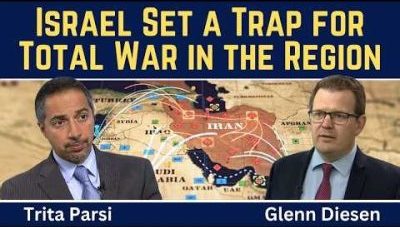
Trita Parsi: Israel Set a Trap for Total War in the Region
or go to
Aletho News Archives – Video-Images
From the Archive
Zionism’s Violent Legacy
By Donald Neff | Washington Report On Middle East Affairs | January 1996
On January 4, 1948, Jewish terrorists drove a truck loaded with explosives into the center of the all Arab city of Jaffa and detonated it, killing 26 and wounding around 100 Palestinian men, women and children.[1] The attack was the work of the Irgun Zvai Leumi – the “National Military Organization,” also known by the Hebrew letters Etzel – the largest Jewish terrorist group in Palestine. The Irgun was headed by Revisionist Zionist Menachem Begin and had been killing and maiming Arabs, Britons and even Jews for the previous ten years in its efforts to establish a Jewish state.
This terror campaign meant that at the core of Revisionist Zionism there existed a philosophical embrace of violence. … continue
Blog Roll
 Aletho News
- Trita Parsi: Israel Set a Trap for Total War in the Region
- Trump’s Iran war is on an Israeli leash
- Saudi oil boss issues global supply warning
- Riyadh Says Its Oil System Is Intact. The Numbers Say Otherwise.
- Trump and Netanyahu Want to “Finish the Job” on Iran
- US ‘one-sided dictation’ not Iran’s beliefs makes rational talks impossible: Baghaei
- Iran’s Next Strike May Not Explode. It Could Shut You Down /Col Doug Macgregor
- Iran: US political targets legitimate if assassinations return
- Iraq shuts key border crossing with Iran under US pressure: Report
- Undersea Internet cables could be targeted in retaliation for attacks on Iran: IRGC deputy chief
- If Americans Knew
- The Israel Lobby’s Changing Fortunes
- AIPAC has become such a political liability that it’s shifting to a more “nimble” approach to buying politicians
- At least 160 Israeli settler attacks in 2 weeks
- Will Gaza’s Ancient Christian Community Disappear Forever?
- Israel’s vision of regional security rests on keeping Arab states weak
- Heidi Levine recounts how Palestinian youths helped save her in settler attack
- DAILY UPDATE: Latest essential news on Palestine, Israel, & region
- Trump’s Intensifying Sabotage of the ICC, for Israel’s Sake
- Israeli military detain US and UK volunteers in West Bank including Democratic NY politician Brad Lander
- Americans at National Conservatism Conference held in Israel this year criticize Israel
- No Tricks Zone
- E-Cars Reduce CO2 Emissions By Only 41% Compared To Internal Combustion Engine Vehicles
- Predictions Made By Renowned Climate Professor Over Past Decades Have Been Proven To Be Poor
- New Study Suggests Large Regions Of The Pacific Ocean Have Been Cooling For The Last 80 Years
- Germany’s Green Energy Debacle: High Energy Costs Force Kahla Porzellan to Close After 182 Years!
- New Study: 50 Years Of The Most Aggressive ‘Net Zero’ Policies Can Only Affect The Global Climate By 0.03°C
- US September “Heat” Was No Record…Many Records Set Decades Ago
- Latest European Green Energy Debacle; Portugal’s Largest Flagship Solar Park Insolvent!
- Green Energy Debacle: German Expert Professor Fritz Vahrenholt Warns Of Severe Economic And Social Consequences
- Two More Paleo Reconstructions Affirm Meters-Higher Sea Levels Across Ireland, Brazil 7000-6000 Years Ago
- New Study: Earth And Venus Surface Warmth Largely Explained By Convection And Lapse Rate, Not CO2 Or Radiation

