How Western Intelligence Agencies Built the Global Jihadist Network
By José Niño | The Libertarian Institute | May 26, 2026
Americans have been fed a comforting fairy tale about Islamic terrorism. Radical jihadists attack the West simply because they despise freedom, democracy, and the American way of life. This narrative flatters domestic audiences while conveniently obscuring a far more troubling reality. For decades, the United States, the United Kingdom, and Israel have armed, financed, tolerated, and tapped into Sunni Islamist extremists as geopolitical tools to destabilize rivals. The evidence spans multiple theaters and rests on declassified documents, congressional investigations, and credible investigative journalism.
The most thoroughly documented case is Operation Cyclone, the CIA program to arm and finance the Afghan mujahideen from 1979 to 1992. In a 1998 interview with Le Nouvel Observateur, former National Security Adviser Zbigniew Brzezinski confirmed that the CIA began aiding mujahideen opponents of the pro-Soviet Kabul government six months before the Soviet invasion—a calculated provocation intended to draw Moscow into an unwinnable war. When asked if he regretted supporting Islamic fundamentalism that gave “arms and advice to future terrorists,” Brzezinski replied:
“What is more important in world history? The Taliban or the collapse of the Soviet empire? Some agitated Moslems or the liberation of Central Europe and the end of the cold war?”
Multiple intelligence agencies participated in this operation. MI6 ran covert operations supporting hardline commanders. Pakistan’s ISI served as the critical financial and logistical conduit—operating under the direction of Pakistani President Zia ul-Haq, who controlled ISI policy throughout the war. Saudi Arabia agreed to match CIA contributions dollar for dollar, a commitment secured when Brzezinski visited Riyadh in February 1980 and one that CIA officer Gust Avrakotos and congressman Charlie Wilson (D-TX) would fly to Riyadh to enforce whenever Saudi payments fell behind. Historian Steve Coll documented in Ghost Wars that Osama bin Laden informally cooperated with ISI-run guerrilla training camps on behalf of newly arrived Arab jihadists, with intimate connections to CIA-backed commander Jalaluddin Haqqani. The global jihadist network that became al-Qaeda grew directly from this infrastructure.
The Afghan theater was not an isolated experiment but the opening chapter of a longer story. The same networks it created spread rapidly to the next front. The Chechen insurgency of the 1990s was joined by Arab and Central Asian jihadists who had cut their teeth in Afghanistan. The most prominent was Ibn Khattab, a Saudi-born mujahideen veteran born in 1969 inʿAr’ar, Saudi Arabia, who left for the Afghan jihad at age 18 before entering Chechnya in 1995. Saudi-backed organizations funneled funds, and Gulf state charities developed during the Afghan jihad maintained, in some cases wittingly and in others not, support for al-Qaeda-affiliated groups throughout the decade. Several of the future 9/11 conspirators—including Mohamed Atta, Marwan al-Shehhi, Ziad Jarrah, and Ramzi bin al-Shibh—originally sought to travel to Chechnya in 1999 before being redirected to al-Qaeda’s Afghan camps, per the 9/11 Commission.
While the Chechen theater illustrated how Western-cultivated networks could spiral beyond control, Washington was already running new variations of the same playbook elsewhere. Veteran investigative journalist Seymour Hersh’s 2007 New Yorker article “The Redirection” documented that the W. Bush administration, in cooperation with Saudi Arabia, launched covert operations to weaken Hezbollah and Iran by bolstering Sunni factions. According to Hersh’s intelligence sources, “a by-product of these activities has been the bolstering of Sunni extremist groups that espouse a militant vision of Islam and are hostile to America and sympathetic to Al Qaeda.”
Israel was running its own parallel operations against Iran during the same period. Foreign Policy magazine published a 2012 report by journalist Mark Perry drawn from CIA memoranda, describing how Israeli Mossad officers posed as CIA agents to recruit members of Jundallah, a Pakistan-based Sunni Salafi organization responsible for numerous bombings inside Iran. As one intelligence official told Perry:
“It’s amazing what the Israelis thought they could get away with. Their recruitment activities were nearly in the open.”
The same structural logic that shaped Afghanistan, Chechnya, and the Middle East has also played out in Central Asia. The Chinese government has accused the United States of using Uyghur Islamist networks to destabilize Xinjiang, with Chinese Foreign Ministry spokesman Zhao Lijian repeatedly alleging American support for Uyghur militant organizations during 2020 and 2021. The U.S.-funded National Endowment for Democracy has provided grants to Uyghur exile organizations. NED co-founder Allen Weinstein acknowledged in a 1991 Washington Post column by David Ignatius that “a lot of what we do today was done covertly 25 years ago by the CIA.” In October 2020, Secretary of State Mike Pompeo formally revoked the designation of the East Turkestan Islamic Movement as a terrorist organization—a move Beijing characterized as evidence of Western support for Uyghur militancy.
Across Afghanistan, Chechnya, the Middle East, and Xinjiang, the same structural features recur. Western strategic interests converge with the short-term utility of Sunni Islamist networks. Operations route through intermediaries like Saudi Arabia, Pakistan’s ISI, or Gulf states, allowing Washington to maintain official distance. Blowback eventually arrives years later, paid in American blood.
The naive story about terrorists hating freedom serves domestic propaganda purposes while obscuring a far darker truth: Western intelligence agencies have functioned as architects of mayhem, generating instability abroad in pursuit of American primacy. If the world wants genuine stability, it must first acknowledge this pattern and demand that these agencies be held accountable for the chaos they have unleashed across multiple decades.
ADL’s “Antisemitic Incidents” List Is Deeply Disappointing
By Kevin Barrett | American Free Press | May 26, 2026
According to Jewish mythology, Jews are the most persecuted people on Earth. Rabbis and Jewish historiographers alike speak of unending waves of expulsions, pogroms, and genocides afflicting God’s self-styled chosen people in virtually every part of the world they have lived, and perhaps even a few where they haven’t. As Congressman Randy Fine endlessly repeats, “Jews have been kicked out of every country where we’ve ever lived, and it’s never been our own fault.”
Given their literally unbelievable history of gratuitous persecution, and their claims that horrific anti-Jewish acts are happening with increasing frequency around the world and in the United States, I expected to be stunned and horrified by the Anti-Defamation League’s list of 6,274 antisemitic incidents of 2025. But when I finally summoned up the courage to examine their terrifying list of outrages, I was indeed shocked—not by the horror of thousands of disgusting and depraved crimes against poor innocent Jews, but by the mind-bending banality of the vast majority of alleged “antisemitic incidents.”
What’s more, it seems that the few genuinely serious “incidents” were not even antisemitic. For example, on New Year’s Day of 2025, 17 out of the 18 reported “antisemitic incidents” were nothingburgers—but one was truly horrific: A mentally unstable Black American veteran drove his pickup truck onto a crowded sidewalk in New Orleans, fired shots, and wound up killing fourteen people before being shot dead by police.
But there is no evidence that anti-Jewish prejudice played any role in the crime. The perpetrator never seems to have said anything about Jews. None of the victims were Jewish, but instead were Blacks, Whites, British, Muslim, or Hispanic. The killer “discussed the Islamic State (IS), his divorce and a desire to kill his family in videos he recorded while driving from Texas to New Orleans.” (Note that “Islamic State “is a false flag group of Israeli-American mercenaries posing as radical Muslims, which together with Al-Qaeda currently rules Syria after overthrowing that country’s legitimate government on behalf of Israel and the United States.)
The non-antisemitic truck attack is an anomaly. Almost all the “antisemitic incidents” on the ADL list are trifling, and hundreds if not thousands involve peaceful protests and political organizing.
One of the first “antisemitic incidents” of 2025 happened in America’s unofficial Jewish capital, Manhattan, New York City: “At an anti-Israel rally organized by groups including PAL-Awda, the Palestinian Youth Movement, the Party for Socialism and Liberation and Jewish Voice for Peace, protesters displayed signs with messages that included: ‘Smash Zionism and Imperialism Through Workers Revolution!’ and ‘Zionism is Cancer.’” Ouch! Though not exactly six million dead in gas chambers, protests against Zionism can undoubtedly hurt Jewish feelings. That must be why the ADL categorized this one as “Antisemitic Incident: Harassment.”
Jew-hatred at anti-genocide protests is apparently becoming a real problem. The ADL tells us that the very next day, “At an anti-Israel rally organized by South Jersey for Gaza, a protester held a sign that read: ‘No to Zionist Racism.’” So opposing racism is antisemitic! The next day: “At an anti-Israel rally… protesters chanted, ‘Long Live the Intifada.’” On January 9th, “Protesters associated with MLA Members for Justice in Palestine disrupted a conference, chanting, ‘From the river to the sea, Palestine will be free,’ a slogan commonly used to call for an end to the Jewish state.”
Shockingly unshocking “antisemitic incidents” were perpetrated by right-wingers as well as leftists. On January 2, 2025, the ADL tells us, a terrible antisemitic incident occurred in Greensboro, North Carolina: “Approximately eight individuals associated with Patriot Front, a white supremacist group, held a meetup and training event.”
When every left-wing protest or right-wing meetup is categorized as an “antisemitic incident,” it’s easy to see how the ADL could generate a total of over 6,000 such incidents annually. In fact, it’s deeply disappointing that there were not vastly more such “incidents.”
There should have been 60,000 or better yet 600,000 or maybe even six million incidents of anti-Israel protests and meet-ups! After all, American taxpayers have been funding a slow-motion genocide in Palestine since 1948, and an accelerated genocide since 2023. We are paying Israel to blow up apartment blocks full of children and force the few survivors to dig through rubble with their bare hands to recover the dead. We are paying Israel to commit systematic torture, including training dogs to rape prisoners, as The New York Times recently discovered.
In total, we have spent somewhere in the neighborhood of ten trillion dollars on Israel. The vast majority of that sum, roughly eight trillion dollars, has gone for wars against Israel’s enemies, including Trump’s disastrous war on Iran. If people who protest these outrages are “antisemitic,” it is deeply disappointing that there is so little “antisemitism.”
Villains of Judea: Abe Foxman
Foxman turned the ADL into a powerhouse but left behind a legacy of surveillance scandals, political vendettas, and selective outrage.
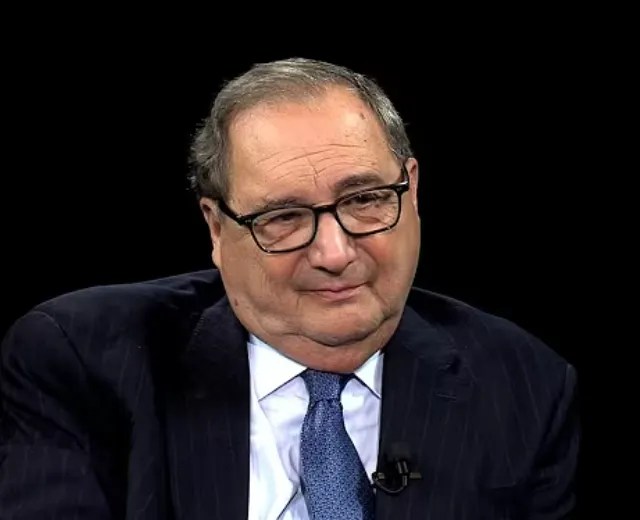
José Niño Unfiltered | May 24, 2026
When Abraham Foxman died on May 10, 2026, tributes poured in from presidents, prime ministers, and Jewish leaders worldwide, yet his legacy remains defined as much by controversy as by accomplishment.
Foxman described himself as “a passionate supporter of the State of Israel” and spent his career building the ADL into a roughly $60 million per year organization that defined mainstream American Jewish advocacy on antisemitism, civil rights, and the Jewish state.
Foxman was born Avraham Chanoch Hanach Fuksman on May 1, 1940, in Baranovichi, then under Soviet occupation, now Belarus. When German forces entered Vilnius in June 1941 and began subjecting the Jewish population to forced labor and deportation, his parents placed their 15-month-old son in the care of his Polish Catholic nanny Bronisława Kurpi. Kurpi baptized the child into the Catholic Church, gave him the Polish Christian name Henryk Stanisław Kurpi, and raised him as a Catholic in Vilnius for four years. He learned to pray the rosary, attended church every Sunday, and genuinely believed he was Catholic.
His parents survived the war. After bitter custody battles—Kurpi initially refused to release him, telling the Fuksmans, “I raised him, and he belongs to me, and he is Catholic”—the family escaped to a displaced persons’ camp in Vienna in 1947 and arrived in the United States in 1950.
Foxman settled in Brooklyn, attended the Yeshivah of Flatbush, earned a Bachelor of Arts from the City College of New York, and received his J.D. from New York University School of Law. He joined the ADL in 1965 as a legal assistant and rose quickly through the organization’s ranks. When longtime director Nathan Perlmutter died of cancer in July 1987, Foxman became National Director.
Under Foxman’s 28-year leadership, the ADL built a formidable research arm monitoring white advocacy groups, neo-Nazis, and other dissident groups. The ADL expanded its international reach with consultations across Europe, Russia, the Middle East, Asia, and Latin America. Foxman was appointed to the council of the U.S. Holocaust Memorial Museum by President Ronald Reagan in 1987 and was re-appointed by Presidents George H.W. Bush, Bill Clinton, and Joe Biden—making him, as the USHMM confirmed, “the only member of the Museum’s governing Council to be appointed by four presidents from both parties.”
With Foxman at the helm, the ADL also advocated for LGBTQ rights, including protesting the Supreme Court’s 2000 ruling in Boy Scouts of America v. Dale—which held 5-4 that the Boy Scouts could exclude a gay scoutmaster on First Amendment associational grounds. The organization also developed diversity training for law enforcement agencies and advocated for policies promoting mass migration.
Foxman operated at the center of American Jewry. The ADL and AIPAC were close partners in White House meetings and lobbying coordination. Foxman was a key participant in the Conference of Presidents of Major American Jewish Organizations and worked closely with the American Jewish Committee on public advocacy.
Further, Foxman was one of the most internationally active American Jewish leaders of his era. In March 2012, releasing the ADL’s survey of ten European countries, Foxman warned that antisemitism in Europe remained a dangerous reality. “In Hungary, Spain and Poland the numbers for anti-Semitic attitudes are literally off-the-charts and demand a serious response from political, civic and religious leaders,” he stated—findings based on poll data showing 63% of Hungarians, 53% of Spaniards, and 48% of Poles holding antisemitic views.
Foxman held consultations in Russia on “problems of ethnic hatred, violence, terrorism and promoting democracy,” attended Limmud FSU conferences engaging Russian-speaking Jewish youth, and remained deeply concerned about antisemitism in post-Soviet states. He consistently condemned Arab and Palestinian resistance and Hamas’s liberation agenda. He insisted that much criticism of Israel crossed into antisemitism, arguing: “If the only nationalism that you find apartheid in is Jewish nationalism, then you’re an anti-Semite.”
Retiring in 2015, Foxman warned that antisemitism was “the worst that it has been since World War II, and it is global”—saying he “never thought anti-Semitism would still be a clear and present danger to Jews around the world.” In 2024, he delivered an address at the ADL’s “Never Is Now” conference stating that antisemitism is “a disease without an antidote and without a vaccine.”
Foxman viewed Iran under President Mahmoud Ahmadinejad as an existential threat. In a 2007 speech to the ADL National Commission, he declared: “The greatest threat to the Jewish people and closest thing to dangers of the 1930s and 1940s is a potent cocktail consisting of the ideology of hate from an Iran with a potential nuclear weapon. This is an existential threat to Israel from an irrational regime that must be taken with the utmost seriousness.” When Iranian Supreme Leader Ali Khamenei posted content questioning the Holocaust on Twitter in 2014, Foxman responded: “Once again, the injection of Holocaust denial by an Iranian leader shows the world how such deep-seated hatred exists at the helm in Iran. We have seen the Ayatollah spew his vehement animosity toward Jews before on other national occasions in Iran and these statements once again show the bigotry and hypocrisy of this regime.”
Weeks before his death, Foxman backed the U.S.-Israel war on Iran. On February 28, 2026—the day the war broke out—he posted on social media: “Thank you President Trump and Prime Minister Netanyahu for standing up to evil and jihadist extremism. The world hopefully will be a better and safer place in the future.”
Foxman’s willingness to take controversial public stands was no late development. He led or supported numerous high-profile campaigns throughout his career. When Nation of Islam spokesperson Khalid Abdul Muhammad delivered a speech at Kean College in November 1993 referring to Jews as “bloodsuckers” and calling for the genocide of white people, Foxman’s ADL ran a full-page ad in The New York Times reprinting Muhammad’s statements. This mobilization directly contributed to Congress issuing a bipartisan condemnation of the speech in February 1994.
Foxman regularly addressed antisemitic or borderline remarks by public figures. In September 2003, during pre-release controversy over The Passion of the Christ, he asserted that Gibson’s remarks were painting “the portrait of an anti-Semite”—though he walked back the characterization the following day, and by February 2004 told ABC’s Diane Sawyer that Gibson was not an anti-Semite and the film was not antisemitic. Foxman co-authored the 2013 book Viral Hate: Containing Its Spread on the Internet with attorney Christopher Wolf, who served as national chair of the ADL Civil Rights Committee, addressing how antisemites and racists exploited the internet.
Foxman produced several other books warning about the alleged scourge of antisemitism. Never Again? The Threat of the New Anti-Semitism appeared in 2003. The Deadliest Lies: The Israel Lobby and the Myth of Jewish Control came out in 2007 as a direct rebuttal to John Mearsheimer and Stephen Walt’s The Israel Lobby and U.S. Foreign Policy, which Publishers Weekly described as “a rebuttal of a pernicious theory about a mythically powerful Jewish lobby.”
Not all of Foxman’s tenure at the ADL would be remembered in such favorable terms. In April 1993, San Francisco police and the FBI executed searches at ADL offices in California and discovered that the organization had been running an extensive domestic intelligence operation for decades. The operation centered on Roy Bullock, an undercover operative and art dealer who had collected files on more than 12,000 individuals and 950 organizations for more than three decades. His targets included not just white advocates and neo-Nazis but also Arab American groups, the American Civil Liberties Union, the African National Congress, Central America solidarity organizations, Greenpeace, the Earth Island Institute, approximately 20 San Francisco area labor unions, anti-apartheid activists, and Jewish peace groups. Bullock had also sold information to South African intelligence for $16,000.
Foxman denied any improper activity while testifying that the ADL had a right to do “whatever it must” to monitor antisemitism and threats to Jews. Critics across the political spectrum condemned the operation as a massive breach of civil liberties.
One of the most sustained controversies of Foxman’s career involved his refusal to unequivocally recognize the Armenian genocide. Critics, including the Armenian National Committee of America, accused Foxman of “genocide denial” motivated by the ADL’s desire to maintain good relations with the Turkish government. The backlash was severe. A dozen Massachusetts communities and the Massachusetts Municipal Association withdrew from the ADL’s “No Place for Hate” program. The ADL’s 2007 statement that the “consequences” of Ottoman actions were “tantamount to genocide” was widely rejected as insufficient because it circumvented the “intent” required under the 1948 UN Genocide Convention. Foxman also sent a letter to Turkish Prime Minister Erdoğan expressing regret over the difficulty his position caused for the Turkish government. It was not until May 2014 that Foxman publicly and unambiguously used the word “genocide” in remarks at Suffolk University Law School’s commencement, after years of sustained pressure.
The Armenian Genocide controversy was not the only multi-decade fight to mark Foxman’s career. Foxman engaged in a 22-year campaign against paleoconservative commentator Pat Buchanan. After Buchanan’s 2011 book Suicide of a Superpower was published, Foxman called him “a racist and an anti-Semite.” Buchanan was suspended from MSNBC in January 2012 and fired in February, and he publicly credited Foxman with playing a role in his dismissal. The ADL published a formal report titled “Patrick Buchanan: Over the Line.” Buchanan described Foxman as leading efforts to “blacklist” him, working “behind closed doors, with phone calls, mailed threats, and off-the-record meetings.” In a similar vein, Justin Raimondo, founder of Antiwar.com, was one of the most sustained libertarian critics of the ADL and Foxman. Raimondo argued that the ADL used antisemitism accusations to suppress foreign policy debate.
Whatever his American critics made of him, Foxman moved comfortably among Israel’s top political leadership across multiple governments. Foxman met with multiple Israeli prime ministers, some of whom made direct appeals to President Bill Clinton for the Marc Rich pardon. Foxman cooperated with World Jewish Congress leader Edgar Bronfman on major campaigns including Holocaust-era Swiss bank restitution. While the primary negotiation was led by Bronfman and the World Jewish Congress, the ADL under Foxman was a coalition partner in pressing Swiss banks to settle Holocaust-era claims, which resulted in a $1.25 billion settlement in 1998.
Foxman made a well-documented intervention in favor of fugitive financier Marc Rich’s pardon from President Clinton. The ADL had received $250,000 from Rich over a period of 16 years, including a $100,000 pledge made just before Foxman traveled to Paris. In February 2000, Foxman met at a Paris restaurant with Avner Azulay, head of the Marc Rich Foundation, and Zvi Rafiah, an Israeli arms consultant, and it was Foxman himself who proposed the strategy of recruiting Denise Rich to approach Clinton for a pardon. “I told them maybe they should consider trying to get a pardon,” Foxman said. “I told them, ‘Why don’t you reach out to Denise Rich… and have her approach the president and see about a pardon.’”
He wrote Clinton on December 7, 2000, urging a pardon on the grounds that “we are a country that was founded on the belief in second chances.” New York Times columnist William Safire called for Foxman to resign, writing that Rich’s $250,000 to the ADL had “induced its national director to lobby President Bill Clinton for forgiveness and thereby bring glee to the hearts of anti-Semites.”
Abraham Foxman was the consummate architect of a specific brand of ethnic activism, relentlessly searching for every angle to advance Jewish institutional interests and cement a landscape where the concerns of world Jewry were elevated above all others. Yet, even as he built these formidable structures of influence, he unwittingly accelerated the very forces he claimed to fight.
His career served as a catalyst for a tide of grassroots resentment against World Jewry that has only surged since October 7, 2023. Like many of his kin who sought to reshape Western nations in their own image, Foxman dedicated his life to the systematic erosion of gentile civilization for the benefit of his tribe.
Now that he has exited the stage, he leaves behind a nation awakening to the nature of his subversion. May he face that eternal justice that human institutions could not provide, aware that the tide has finally turned against the Jewish supremacist agenda he spent his entire life promoting.
A new regional logic? If Israel strikes Lebanon, Iran strikes back at the UAE
By Trita Parsi | May 25, 2026
Despite the ceasefire and tentative progress toward a memorandum of understanding between Washington and Tehran, the Persian Gulf has remained perilously volatile. In the past 24 hours alone, several rounds of fire have been exchanged between US and Iranian forces in the region. Though both sides appear to view the incidents — which may have killed as many as four IRGC naval personnel — as falling below the threshold that would shatter the ceasefire altogether, the clashes underscore the fragility of the current arrangement and the ever-present danger of renewed escalation.
Yet in recent days, it was not the Persian Gulf that emerged as the greatest threat to the agreement. It was Israel’s potential refusal to fully adhere to the regional ceasefire and halt its bombardment of Lebanon. That danger remains acute.
Iran has three principal reasons for insisting that any ceasefire be genuinely regional in scope — one that includes not only the United States and Iran, but also Israel and Lebanon.
First, solidarity with the peoples of Gaza and Lebanon is not merely rhetorical theater for Tehran; it lies at the heart of the Islamic Republic’s regional identity and strategic posture. Having already been perceived by some in the Arab world as abandoning these constituencies in 2024, Iran can scarcely afford another rupture that would further erode its credibility within the so-called “axis of resistance.”
Second, continued Israeli attacks risk reigniting direct confrontation between Israel and Iran — a dangerous cycle that has already erupted twice since October 7, 2023. The linkage between these theaters is neither imagined nor incidental. It is openly acknowledged in Western discourse, which routinely portrays Iran as the central node of resistance to Israeli and American policies, operating through allied groups in Lebanon, Palestine, Iraq, and Yemen. From Tehran’s vantage point, a durable cessation of hostilities with Israel cannot be disentangled from ending Israel’s wars in Gaza and Lebanon. For Iran, this is not an aspirational addendum to diplomacy; it is a foundational condition.
But perhaps the most consequential issue is what Lebanon reveals about Washington itself. For Tehran, tying Israel to the ceasefire is ultimately a test of America’s willingness — and ability — to restrain its closest regional ally. If Trump either cannot or will not do so, then the value of any agreement with Washington comes sharply into question. A ceasefire that leaves Israel free to reignite hostilities at will — while the United States remains unable to prevent itself from being dragged back into conflict — offers little assurance of stability. Under such circumstances, the utility of a deal with Washington diminishes dramatically.
Trump could still choose to put American interests first and compel Israel to comply, much as Ronald Reagan did in 1982 when he pressured Prime Minister Menachem Begin to halt Israel’s devastating assault on Lebanon. Reagan reportedly expressed outrage at the bombardment of Beirut, warning Begin that America’s support could not be taken for granted. Within hours, the bombing stopped. Trump, by contrast, has thus far shown little ability to ensure sustained Israeli compliance with his demands.
A more plausible scenario may be a murkier and more dangerous one: Washington and Tehran reach an agreement, Israel initially abides by it, but over time gradually extricates itself from the arrangement and resumes strikes on Lebanon under the familiar banner of “self-defense.”
At that point, Iran would face a painful dilemma. Tehran would almost certainly pressure Trump to intervene and might even threaten to abandon the agreement altogether. But if Washington failed to act, would Iran truly sacrifice sanctions relief, economic recovery, and an end to open warfare merely to register its objections? Moreover, walking away from the deal might not compel Trump to restrain Israel. Iran could end up with neither an agreement nor a ceasefire in Lebanon. In fact, it would be an outcome Israel would welcome.
One option increasingly discussed within segments of Iran’s security establishment is more ominous still: remaining within the agreement while imposing costs elsewhere — namely on the United Arab Emirates, one of Israel’s closest regional partners. This argument has circulated quietly within segments of Iran’s security establishment, though the extent of its support remains unclear. Yet given the growing sentiment among Iranian decision-makers that Tehran showed excessive restraint toward the UAE during the war, the notion of a “UAE for Lebanon” strategy no longer appears far-fetched.
The logic is brutally simple. If the broader US-Iran arrangement tolerates Israel attacking an Iranian ally in Lebanon, then Tehran may conclude that the same arrangement can tolerate Iran targeting an Israeli ally in the Persian Gulf. Under such a scenario, Iran could retaliate against Emirati territory or Israeli operatives based there for every Israeli strike conducted in Lebanon. Rather than collapsing the agreement outright, Tehran would seek to exact a calibrated price for Israeli noncompliance.
Such a strategy would carry grave risks. Emirati retaliation could follow, potentially igniting a wider regional confrontation. Yet it remains unclear whether Washington would rush to the UAE’s defense if doing so meant destroying the very agreement it had negotiated with Tehran. In that sense, the strategy would place the burden back on the United States: either restrain Israel or watch the conflict metastasize across the Persian Gulf.
The implications for the rest of the Gulf Cooperation Council would be profound. Few Gulf states harbor deep affection for the UAE’s increasingly muscular regional posture, but even fewer desire another destabilizing regional war. Moreover, forcefully condemning Iranian retaliation against the Emirates would only throw into sharper relief the broader Arab silence surrounding Israel’s ethnic cleansing in southern Lebanon.
Hopefully, none of this comes to pass. A durable agreement between Washington and Tehran — backed by the overwhelming majority of regional states — remains possible. And Trump could yet decide that preserving regional stability requires compelling Israel to respect the terms of a broader ceasefire.
But the very fact that Tehran is contemplating escalation against the UAE if Israel escalates in Lebanon illustrates the degree to which the Emirates have made themselves needless targets in the larger Israeli-Iranian rivalry by signing the Abraham Accords.
The journey to the second liberation of South Lebanon
The spider’s web theory lives on
By Robert Inlakesh | Al Mayadeen | May 25, 2026
Twenty-six years on from the liberation of South Lebanon, the message has become clear: as long as the Israeli regime remains, peace will never be possible. This year’s Liberation Day anniversary will be observed by a population that is now fighting another struggle against occupation, one that will have implications beyond the freeing of Lebanese lands alone.
On May 25, 2000, the Israeli occupation forces withdrew from most of the Lebanese lands they had occupied illegally in 1982; a move that came following nearly two decades of brutal oppression and was triggered as a result of the fierce resistance waged by the local population. For the Arab World, and specifically for the Palestinian cause for national liberation, that day became a signal that resistance does work.
A day later, former Hezbollah Secretary General, martyr Sayyed Hassan Nasrallah, delivered his famous ‘Spider’s Web’ speech from a small football stadium in Bint Jbeil, arguing that the Lebanese model of armed resistance is a blueprint for the Palestinian people. This address has haunted the Israeli senior leadership ever since.
What Sayyed Nasrallah laid out was the theory that the Zionist regime was frailer than a spider’s web, meaning that despite its exterior, internally it was weak and could easily be cut down. He paid particular attention, when stating this metaphor, to ensuring the public knew precisely what he meant, which was that the Israeli society was incapable of enduring the repercussions of the regime’s policies. Today, this speech could not be more relevant.
The Israeli military doctrine, since the entity’s founding, has been based on the concept of always fighting short wars and avoiding wars of attrition. David Ben-Gurion, the first Israeli Prime Minister, was the first to ensure that his settler project implemented this doctrine, arguing that because his military was more advanced, they could manage to inflict defeats on the enemies, but that the wars it fought had to be limited due to the overwhelming numerical advantages on the Arab side.
If you look back through Israeli military history, you will also notice a pattern of short wars, especially those in which the Zionist entity achieved significant gains. Their most successful war was the “6-Day War” for example. Even last year, their attack on Iran became the “12-Day War”.
The Israelis withdrew from South Lebanon because they understood that the fight they were facing was going to bog them down and drain them, especially as the Lebanese Resistance was gradually growing in strength. In the Gaza Strip, the same concept applied in 2005. They ran cost-benefit analyses and decided it was best to leave.
Over the years, having only fought short wars against militarily inferior opponents, the Israeli society was able to live in its own bubble world. The consequences of their actions were a small price to pay, especially if these consequences were only felt during shorter periods of time. Other than this, they maintained belligerent occupations, meaning that their army was transformed into more of a riot police force than a proper standing army.
During the Second Intifada, which began in 2000, only months after the liberation of South Lebanon, the Israelis then transitioned into a method of warfare that depended more heavily on “targeted assassinations” and special forces raids. They implemented this strategy, alongside their counterinsurgency approach to warfare, and specialized in occupying civilian populations.
In 2006, they encountered a new obstacle, sustained rocket fire on their settlements, managing to blast as deep into occupied Palestine as Haifa. Later on, the Palestinian Resistance would develop its own rockets and eventually reach Tel Aviv and beyond. However, due to Gaza’s resistance being significantly weaker than Hezbollah, they settled for limited wars of aggression where they would implement the infamous “Dahieh Doctrine” – targeting the civilian population as a means of achieving future “deterrence”.
Lebanese Hezbollah managed to deter the Israelis for 17 years, even managing to force the Zionists to accept an agreement demarcating Lebanese maritime borders. However, the October 7 Al-Aqsa Flood operation jolted the Israelis into a reactionary and accelerationist mindset; they were no longer willing to slowly achieve their goals; instead, they had to do things at a pace in their minds.
But they fell into a trap; they were dragged into a war of attrition. In Gaza, this was something they could survive because the rocket fire gradually dwindled, and their soldiers refused to actually fight the Palestinian Resistance head-on. Instead, they carried out a genocide from a distance, mainly, with their main goal being to destroy buildings.
Which brings us back to South Lebanon. As you read this, the second guerrilla war of liberation is being waged, aiming at achieving an even bigger goal than was achieved in 2000. Hezbollah is now facing a similar predicament to what occurred in 1982 when the Israelis declared a “security zone” in southern Lebanon, which they maintained until the formal occupation was declared in 1985.
The major difference is that the Lebanese Resistance was still in its infancy in the 1980s, and the Palestinian Resistance had left in 1982. This time, the Israelis have been drawn into a trap, one that they cannot easily get out of. It is the beginning of the spider’s web theory proving itself in real time.
Although the war is being fought at a somewhat lower intensity since the announcement of a temporary ceasefire, the invading Zionist militants are being dealt blows on an hourly basis in the south and northern occupied Palestine. You need only look at their media to realize that Israeli society is under pressure in the north already, and the war of attrition has just begun.
The people of Lebanon and Palestine, who form the backbone of their national liberation movements, have proven themselves hardy and capable of enduring the hardships of war, while standing behind their Resistance fighters who come from amongst them. In the case of the Zionists, their army is formed of their public, who are conscripted into it, meaning it is a settlers’ armed forces, but they are a fundamentally weak society.
For the Israelis, they are more interested in living a Western European style of life and aren’t willing to make the necessary sacrifices to win wars of attrition, despite the superiority of their military equipment and intelligence services. A few occasional rockets are enough for tens of thousands to flee their homes, while a Lebanese farmer will remain in his fields as the bombs drop on his village. Right after the so-called ceasefire of November 2024, the people of the South immediately returned home; the settlers did not.
The Israeli army is also suffering a manpower shortage, has drawn back its presence in South Lebanon already due to the FPV drone threat, and has to score fake symbolic victories, such as planting flags in Bint Jbeil, while failing to properly maintain control of the area where Hezbollah fighters continue to watch and target them.
While the initial period between 1982 and 1985 was simple for the Israelis in the way of securing their occupation of the South, this time they are already being battered and have not achieved one goal yet. Desperately, they cling to their targeted assassinations, believing this will transform the battlefield. Another mistake born out of arrogance.
South Lebanon’s liberation in May 2000 birthed the Spider’s Web Theory of Sayyed Hassan Nasrallah. In May 2026, that theory is being put to the test. So far, we see that the fighters on the ground are proving Sayyed Nasrallah correct.
Iran lawmaker outlines five conditions for any understanding with US
Al Mayadeen | May 26, 2026
The head of the Iranian Parliament’s National Security and Foreign Policy Committee, Ebrahim Azizi, said there is “no meaning” to any understanding or negotiations with the United States unless Washington takes five concrete confidence-building measures.
Speaking to Iranian state television, Azizi said the measures include ending the war on all fronts, particularly in Lebanon, lifting the maritime blockade, guaranteeing the passage of non-military vessels through the Strait of Hormuz under Iranian supervision, suspending oil sanctions for 30 to 60 days, and releasing frozen Iranian assets.
Azizi stressed that even if an agreement is reached, it would not signify the end of confrontation with the United States, adding that “Iran after the war is completely different from Iran before the war.”
His remarks come amid growing anticipation over indirect US-Iran contacts being conducted through regional mediators, including Pakistan and Qatar. In this context, Iranian Parliament Speaker and head of the negotiating delegation Mohammad Bagher Ghalibaf visited the Qatari capital, Doha, on Monday.
For his part, US President Donald Trump said negotiations with the Islamic Republic of Iran were “going well,” describing the process as one that could either lead to “a great deal for everybody” or “no deal at all.” Trump also linked any potential agreement to the need for Arab and Islamic states backing the talks to sign normalization agreements.
On the Lebanese front, which Iran insists must be included in any prospective agreement aimed at halting the war, the Israeli occupation continues its large-scale attacks on towns in southern Lebanon and the western Bekaa.
Israeli media also reported that Prime Minister Benjamin Netanyahu and the occupation’s security minister approved plans to expand the war and target civilian buildings in the Lebanese capital, Beirut, after drone operations carried out by the Islamic Resistance that have inflicted losses on occupation forces.
Iran uranium transfer reports ‘US psychological warfare’: Tasnim
Al Mayadeen | May 25, 2026
Iran’s Tasnim News Agency has dismissed Western media reports claiming that Tehran has agreed to transfer its enriched uranium stockpile out of the country as part of a proposed nuclear deal, describing the allegations as part of American “psychological warfare” against Iran.
Tasnim reported that what has been circulated in the media regarding Iran’s readiness to remove enriched uranium from the country is “untrue,” and falls within the framework of “American psychological warfare against Iran.” The agency added that the text of the memorandum of understanding does not contain any statement indicating Iran’s readiness to transfer nuclear materials out of the country, and that the memorandum “did not include any commitment regarding any nuclear action.”
Earlier, The New York Times had quoted US officials claiming that “Iran agreed to give up its stockpile of highly enriched uranium” as part of the proposed agreement announced by President Donald Trump. Tasnim also denied reports that “US officials said Iran will not receive any facilities for the release of frozen funds unless it begins transferring its enriched uranium reserves.”
Iran refuses to link frozen assets to nuclear file
Tasnim affirmed that “Iran is not prepared to link the release of its frozen assets to the nuclear file,” adding that there is a “possibility that no agreement will be reached.”
The agency stressed that Tehran has not made any commitment at this stage regarding the details of the nuclear file, and therefore the release of funds in the first step will have no connection to the nuclear file. The initial understanding, Tasnim emphasised, must be based on “ending the war.”
The denial comes as the US-Israeli war on Iran continues, with Washington maintaining an illegal naval blockade on Iranian ports while demanding nuclear concessions from Tehran. Iran has consistently maintained that its nuclear programme is for peaceful purposes and that it will not negotiate under pressure. Iranian officials have repeatedly stated that the priority is ending the war, not addressing the nuclear file at this stage.
Background: Iran has consistently denied nuclear concessions in ongoing talks
The denial from Tasnim is consistent with Iran’s stated negotiating position throughout the US-Israeli war on Iran. As reported yesterday, Tasnim had already rejected a previous Al Arabiya report claiming that Iran proposed suspending uranium enrichment above 3.6 percent for 10 years.
At that time, a source informed about the negotiation process told Tasnim that all issues touched upon in recent messages exchanged between Iran and the United States have been limited to points on the cessation of hostilities, while the nuclear issue has not been mentioned at all.
Iranian Foreign Ministry spokesperson Esmaeil Baghaei confirmed that negotiations at this stage do not address the nuclear file or the details of sanctions relief. He also reiterated that the United States has no role in the Strait of Hormuz, describing it as a matter exclusively between Iran and the waterway’s coastal states.
Three fundamental sticking points remain unresolved
Beyond the nuclear file, an informed source close to Iran’s negotiating team told Fars News Agency that three fundamental points of contention remain unresolved, warning that talks will not proceed unless they are addressed. These concern the nuclear file, the release of Iranian frozen assets abroad as a non‑negotiable prerequisite for entering negotiations, and Iranian management of shipping traffic through the Strait of Hormuz.
The source noted that while US negotiators have retreated from their initial positions and accepted many of Iran’s stances, significant gaps persist. Iran has “prepared itself for all options,” the source stressed, with the Iranian armed forces remaining on high alert.
The repeated denial of media reports about nuclear concessions suggests that Washington may be attempting to shape public perception of the negotiations, while Tehran insists that no agreement on the nuclear file has been reached or even discussed in detail.
Delcy’s ‘gatekeeper’: sources say ex-Trump official Claver-Carone holds keys to Caracas
By Max Blumenthal | The Grayzone | May 25, 2026
Speaking with reporters on May 21, US Secretary of State Marco Rubio announced that Venezuelan President Delcy Rodriguez was on her way to New Delhi to discuss energy issues, and that he would be in India as well.
“This is an important trip, I’m glad we’re able to do it,” Rubio chirped after explaining the trio of nations would discuss how to increase Venezuelan oil sales to India.
His statement — and his announcement of Rodriguez’s trip before she had — perfectly illustrated Washington’s newfound dynamic with the Venezuelan government. Following over twenty years of hostile relations with Venezuela’s socialist-oriented leadership, the US Secretary of State was apparently so intimately involved with day to day affairs in Caracas that he was claiming responsibility for Rodriguez’s international itinerary.
In fact, according to an insider who enjoys close contacts within both the Venezuelan and US governments, Rubio’s influence over Rodriguez is said to be traced to one “gatekeeper”: former Trump Latin America envoy Mauricio Claver-Carone. “Mauricio [Claver-Carone] is picking who can operate and Delcy [Rodriguez] is taking instructions,” the source told The Grayzone.
A former senior US official with access to leadership in both Caracas and Washington offered the same assessment, remarking to The Grayzone, “Mauricio’s calling the shots on private sector economic positions, and if anyone wants in, they have to go to him.”
Hand-selected by former National Security Advisor John Bolton to serve as his Latin America charge during Trump’s first term, Claver-Carone no longer occupies an official governmental role. Instead, he has leveraged his legacy in the public sector to establish a Miami-based investment firm called the Lara Fund which could become a key player in the MAGA financial feeding frenzy in Caracas.
Described by the New York Times as the “architect of Trump’s tough Latin America policies,” Claver-Carone is a Cuban-American regime change zealot who once engaged in fisticuffs with Cuban diplomats as a young man. During Trump’s first term, he unleashed a financial “flamethrower” on Cuba, issuing scores of new sanctions that unraveled the Obama-era normalization policy and plunged the island back into economic misery.
Claver-Carone has similarly masterminded many of the policies that define Trump’s relationship with Venezuela, from its recognition of the previously unknown Juan Guaido as the country’s “interim president” to the deportation of hundreds of Venezuelan migrants from the US to El Salvador’s maximum security CECOT prison. Many of those migrants had been prompted to journey to the US by the economically crushing sanctions unleashed at Claver-Carone’s direction.
The Grayzone’s sources described the Trump veteran as the architect of the military invasion that saw Maduro spirited away to a federal penitentiary and installed Rodriguez as president following a stand-down by Venezuelan security forces.
“If he was in charge of implementing the kinetic side, maybe [Rodriguez] thinks she has to listen to him on finance,” the Venezuela insider said of Claver-Carone.
A report this January by investigative journalist Aram Roston described Claver-Carone as a “key backer” of Rodriguez following Maduro’s abduction, and cited sources who claimed he exercised decisive influence over Venezuela policy despite having left the administration.
Claver-Carone is now said to be at the heart of the most sensitive and consequential task Venezuela faces: the restructuring of its $170 billion in defaulted sovereign debt. Forced from several previous positions by corruption scandals and rancorous clashes, an operative with no official governmental position appears to be shaping the economic contours of Project Venezuela.
“He’s got a lock on everything”
This May, the US Treasury Department authorized Caracas to hire a financial advisor to assist with the herculean task of restructuring its debt. The Venezuelan government selected Centerview Partners, a top-drawer investment and financial advisory firm based in New York City.
According to the former US senior official, Claver-Carone’s romantic partner and business colleague, Jessica Bedoya, boarded a private jet to Caracas soon after the big announcement, arriving with a top advisor from Centerview. It was her second trip to the Venezuelan capital, they said, after visiting in February to discuss financial matters.
Claver-Carone did not respond to calls to his personal phone from The Grayzone, or to detailed questions sent by text and email.
His partner, Bedoya, is the founder of the Lara Fund investment firm where he serves as managing partner. Her bio notes that she has also worked in the CIA and National Security Council.
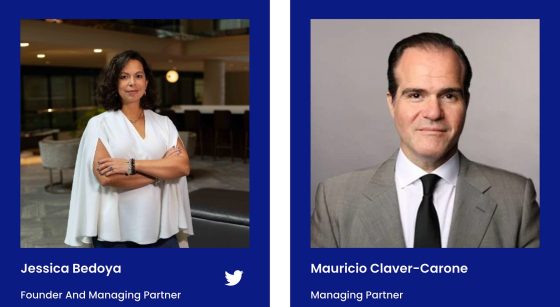
Jessica Bedoya and Mauricio Claver-Carone’s headshots, as featured on Lara Fund’s webpage
Some insiders worry that her reported presence in the Venezuelan capital, together with Claver-Carone’s outsized influence, could represent a conflict of interest, allowing them to steer debt restructuring agreements to their own personal benefit.
“Now he’s got a lock on everything,” the Venezuela insider said of Claver-Carone. “He could say to anyone who wants to work in Venezuela, I’m the guy. I have the keys. If you want to play ball, invest with me.”
The former US official said Claver-Carone was raising capital for his Lara Fund while he served as a special government employee at the State Department. While Bedoya was running the firm, they said Claver-Carone was leveraging his position inside the Trump administration to pitch potential investors.
“Arbitrary and authoritarian actions that showed him to be a real thug”
When Trump appointed Claver-Carone to serve as the first American president of the Inter-American Development Bank (IDB) in 2020, he hired Bedoya as his chief-of-staff. The couple’s secret romance at the bank triggered an embarrassing ethics investigation after a hand-written contract was discovered showing they had agreed to pursue “absolute happiness,” and included a clause with punishments including “candle wax and a naughty box” if either party breached the deal.
An independent probe ordered by the IDB discovered that Claver-Carone had increased his paramour’s salary by 40% – a $133,000 reward in less than a year. Investigators also found that the couple had racked up expenses on an IDB credit card during romantic getaways.
Claver-Carone refused to participate in the investigation while accusing its authors of “fabrications.” In the end, IDB governors voted unanimously in favor of his firing. The US government endorsed their decision.
“President Claver-Carone’s refusal to fully cooperate with the investigation, and his creation of a climate of fear of retaliation among staff and borrowing countries, has forfeited the confidence of the bank’s staff and shareholders and necessitates a change in leadership,” they wrote.
The Argentine governor of IDB, Guillermo Francos, delivered a similarly harsh assessment of Claver-Carone’s tenure. “Claver was a disaster for several reasons,” Francos remarked in 2022. “For having an inappropriate relationship, for having disproportionately increased the salary of this inappropriate relationship, for having lied, and for these arbitrary and authoritarian actions that showed him to be a real thug.”
When Claver-Carone returned to the second Trump administration, it was not long before his proclivity for conflict jeopardized his position.
Throughout 2025, Claver-Carone’s spiteful attitude reportedly complicated Trump administration attempts to prop up a key right-wing ally in South America, Argentine President Javier Milei. Milei’s chief of staff happened to be Guillermo Francos – the former IDB governor whom Claver-Carone held personally responsible for outing his secret relationship with Bedoya. According to the Argentine paper Clarin, Claver-Carone attempted to retaliate by unsuccessfully pressuring Milei to fire Francos. He then attempted to undermine a major IMF loan package to Argentina by demanding the country first sever its credit line from China. This was met with an apparent rebuke from Treasury Secretary Scott Bessent, who visited Buenos Aires to express confidence in the IMF loan just weeks after Argentina’s central bank extended its credit line from Beijing.
The following month, in May 2025, Claver-Carone announced he was leaving the State Department to return to his Lara Fund. His departure gave the appearance that he had been forced out of his job, however, he maintained his clout through his direct line to Rubio.
The former US official told The Grayzone that Claver-Carone is now angling to become a Cuban American version of Jared Kushner, the Trump son-in-law who has leveraged his proximity to the president and role as Middle East negotiator to rake in billions from Israel and several Gulf monarchies despite having no official government title. To do so, he has allegedly inserted himself into the byzantine process of restructuring Venezuela’s debt.
When the Trump administration announced that Venezuela could hire a financial advisor to assist with its sovereign debt, Rodriguez initially planned a public bidding process for the coveted position. But then, according to the ex-US official, Claver-Carone issued support for Centerview, leading to the firm’s selection. (Opposition bloggers have speculated that Centerview was chosen because one of its partners, Matthieu Pigasse, is a self-described “pro-market socialist” who previously worked on deals with Maduro and Venezuela’s state owned PDVSA oil company.)
In recent weeks, according to sources, Claver-Carone has attempted to undermine financial advisors who had been working with the Venezuelan government to restructure its debt since 2014.
They said that when Claver-Carone’s partner, Bedoya, arrived in Caracas this month, allegedly on a private jet with Pigasse, she began pushing to remove the advisory mandate from David Syed, a seasoned French lawyer who had advised Caracas on debt-related issues for over a decade, and is considered incorruptible.
“The effort to push [Syed] out created a lot of tension,” remarked the Venezuela insider. “You can’t understand debt restructuring by parachuting in without his knowledge.”
Syed did not respond to The Grayzone’s request for comment. Hamouda Chekir, another Centerview partner who works on Venezuela’s debt, did not respond to calls and text messages sent to his personal phone.
Scandal-stained firms as vehicles for extracting profit from Venezuela
Just before leaving the State Department in May 2025, Claver-Carone convinced Rubio not to renew a sanctions waiver that allowed Chevron to sell Venezuelan oil in the US market. In doing so, he eliminated a mechanism which was explicitly designed to promote transparency and prevent local officials from skimming cash.
This January, after abducting Maduro, the Trump administration granted confidential licenses to a pair of notoriously corrupt trading houses, Vitol and Trafigura, to export Venezuelan oil. The deal came months after Trump’s re-election campaign received a whopping $6 million donation from a senior trader at Vitol.
Robert Bachmann, an analyst at the Swiss watchdog Public Eye, told the Washington Post at the time, “Trump is taking advantage of firms that know how to circumvent regulation.”
Both companies had been caught engaging in a series of elaborate bribery schemes across Latin America and Africa. In 2020, the Department of Justice (DOJ) forced Vitol to pay a $135 million penalty for bribing officials for licenses in Mexico, Ecuador and Brazil. Trafigura paid a similarly staggering fine in 2024 for a lucrative bribery scheme in Brazil. In the US, Vitol was rung up by the California Attorney General for manipulating spot market prices of oil.
But almost as soon as the Trump administration entered office, it neutered the DOJ corrupt foreign practices division charged with enforcing the judgments against Trafigura and Vitol on the grounds that it was “impeding America’s national security objectives.”
Now, the profits these scandal-stained firms generate through oil sales abroad – including to Israel – are channeled back into a US-run account with little public oversight. A percentage of sales is then delivered back to the Venezuelan government. Where the rest goes is anybody’s guess.
“The Venezuelans are the owners of the oil, and we know nothing. There is no transparency,” said José Guerra, an economist aligned with the Venezuelan opposition, complained to the Washington Post about the Trafigura and Vitol licensing agreements.
Trump, for his part, has essentially admitted Venezuelan oil profits are channeled into a slush fund for his international rampage. “We’ve taken out so much oil in Venezuela, we’ve paid for the cost of the war [with Iran] about 25 times over,” the president boasted during a May 23 campaign rally. While the president’s claim was absurd, as Venezuela is currently exporting only about one million barrels of oil a month – hardly enough to cover a full day of warfare – it revealed his avaricious attitude toward the entire operation.
Among certain Venezuelan opposition activists, Claver-Carone has become a figure of contempt who is partially blamed for Trump’s declaration that their de facto leader, the coup plotter and Nobel Peace Prize winner Maria Corina Machado, “doesn’t have the support within, or the respect within, the country.”
The Trump administration’s embrace of Delcy Rodriguez, and the Venezuelan president’s faithful compliance with Washington’s financial schemes, have prompted some top Democrats to adopt Machado as a partisan cudgel. This January, Chris Murphy, a ranking Democrat on the Senate Foreign Relations Committee, praised the opposition leader as “impressive” following a meeting on Capitol Hill, while taking a nasty swipe at Rodriguez. Machado “reminded us that Trump replaced Maduro with Maduro’s head of torture,” Murphy proclaimed.
If the Democrats take Congress after this year’s midterm elections, the Trump administration’s dealings in Venezuela will face intense scrutiny from the House Oversight Committee. Bipartisan pressure will then build for fresh elections to usher in a new government. “Delcy Rodríguez is a terrible person,” the regime change-obsessed Florida Republican Sen. Rick Scott told the Wall Street Journal this month. “We’ve got to have an election soon.”
In the meantime, a flock of MAGA-aligned financial vultures has swooped into Caracas to feast on the petro-state’s post-Maduro carcass. Donald Trump Jr. is said to be hunting for opportunities in the capital for his 1789 Capital fund, while a startup backed by pro-Trump tech oligarchs Peter Thiel and Palmer Luckey, Erebor Bank, just struck a lucrative deal to reconnect Venezuela’s central bank to the global economy. In the midst of this frenzy, a figure with no government title, Claver-Carone, appears to be establishing the new pecking order.
Trump Wants To Use A Deal With Iran To Further Isolate The Palestinians
Trump Wants Every Arab State To Abandon Palestine
The Dissident | May 25, 2026
Donald Trump on Truth Social, has announced his intention to pressure Qatar, Pakistan, Türkiye, Egypt, and Jordan to normalize relations with Israel- without Israel agreeing to a Palestinian state-as part of the potential deal with Iran.
On TruthSocial, Trump wrote, “Negotiations with the Islamic Republic of Iran are proceeding nicely! It will only be a Great Deal for all or, no Deal at all — Back to the Battlefront and shooting, but bigger and stronger than ever before — And nobody wants that!” adding, “after all the work done by the United States to try and pull this very complex puzzle together, it should be mandatory that all of these Countries, at a minimum, simultaneously, sign onto the Abraham Accords. Those Countries discussed are Saudi Arabia, The United Arab Emirates (already a Member!), Qatar, Pakistan, Türkiye, Egypt, Jordan, and Bahrain (already a Member!). It may be possible that one or two have a reason for not doing so, and that will be accepted, but most should be ready, willing, and able to make this Settlement with Iran a far more Historic Event than it would, otherwise, be.”
He added, “I am mandatorily requesting that all Countries immediately sign the Abraham Accords, and that, if Iran signs its Agreement with me, as President of the United States of America, it would be an Honor to have them also be part of this unparalleled World Coalition.”
For context, all members states of the Arab League and even Iran have long agreed to support the Arab peace initiative, which calls for all states who signed on to “Consider the Arab-Israeli conflict ended, and enter into a peace agreement with Israel, and provide security for all the states of the region” and “Establish normal relations with Israel in the context of this comprehensive peace” in exchange for “The acceptance of the establishment of a Sovereign Independent Palestinian State on the Palestinian territories occupied since the 4th of June 1967 in the West Bank and Gaza Strip, with East Jerusalem as its capital.”
Israel has long rejected this major compromise and instead pursues the Greater Israel Project and endless regime change wars against states that are too supportive of the Palestinians.
In 2020 Benjamin Netanyahu, Jared Kushner, and the Trump administration came up with a way for Israel to get normalization with Arab states without any concessions for Palestinians, dubbed the Abraham Accords.
The phony “peace deal” allowed Israel to normalize relations with the United Arab Emirates, Bahrain, Sudan, and Morocco, without anything for Palestinians.
The real purpose of the deal, as the New Yorker David Remnick puts it , was “sidelining the Palestinians yet again”.
The deal, as Mother Jones noted , “essentially kicked the Palestinians and their grievances (the Israeli occupation of the West Bank, its apartheid policies, and its blockade of Gaza, which turned the strip, according to Human Rights Watch, into an ‘open-air prison’) to the curb”.
Benjamin Netanyahu- who wanted to expand the Accords to countries like Saudi Arabia- made it no secret that the deal was intended to isolate the Palestinians, to pave the way for an Israeli annexation of Gaza and the West Bank.
As Journalist Jeremy Scahill noted , “The Abraham Accords, launched under President Donald Trump, effectively excised the issue of Palestinian self-determination as a condition for normalization, a major victory for Israel. Israeli provocations and attacks against worshippers at Al Aqsa were becoming a regular occurrence. Israel was aggressively moving forward with its annexation of Palestinian land and armed settlers were conducting deadly paramilitary actions, often with the support or facilitation of the government, against Palestinian farms and homes in the occupied territories.”
Scahill noted that:
In the years preceding the October 7 attacks, under presidents Trump and Biden, Hamas watched as Israel became more emboldened as prospects for Palestinian liberation receded to the footnotes of Washington-led initiatives aimed at normalizing relations between Israel and Arab nations like Saudi Arabia, Qatar, and the United Arab Emirates. Netanyahu’s position was: “We must not give the Palestinians a veto over new peace treaties with Arab states.”
Just two weeks before the October 7 attacks, the Israeli leader delivered a speech at the UN general assembly in New York, brandishing a map of what he promised could be the “New Middle East.” It depicted a state of Israel that stretched continuously from the Jordan River to the Mediterranean Sea. Gaza and the West Bank, as Palestinian lands, were erased.
During that speech, Netanyahu portrayed the full normalization of relations with Saudi Arabia as the linchpin of his vision for this “new” reality, one which would open the door to a “visionary corridor that will stretch across the Arabian Peninsula and Israel. It will connect India to Europe with maritime links, rail links, energy pipelines, fiber-optic cables.”
Netanyahu’s open admission that Israel wanted to use the Abraham Accords to abandon the Palestinians and make way for an Israeli annexation of Gaza and the West Bank is a large part of what triggered the Al-Aqsa Flood operation from Hamas on October 7th.
But after the Israeli Holocaust in Gaza, most states that could have potentially signed onto the Abraham Accords refused to agree to full normalization with Israel without the establishment of a Palestinian state.
As the Times of Israel noted , “Riyadh has repeatedly said, however, that it will not join the accords before Israel commits to the establishment of a Palestinian state, an idea that the government of Prime Minister Benjamin Netanyahu has vehemently refused to entertain,” adding, “Like Saudi Arabia, Pakistan has said it will not recognize Israel until the establishment of an independent Palestinian state. Qatar, too, has no formal ties with Israel”.
Türkiye has similarly said, “When Israel stops the pressure and cruelty targeting Palestinians, Türkiye will have no problem with normalizing relations. As long as its regional policies continue, as long as they bomb cities, kill children and women, it is impossible to normalize ties with them”.
Through demanding that all of these states join the Abraham Accords, Trump is attempting to force countries desperate to see an end to the war in Iran to normalize relations with Israel and abandon the Palestinians, in order to lead the way for the final phase of Israel’s annexation and ethnic cleansing of Palestine.
Sinopec’s Jiyang shale oil base in Shandong Province produces 2 million tons of crude oil
Global Times | May 25, 2026
A major shale oil base in Jiyang, East China’s Shandong Province, which is operated by Sinopec, has achieved cumulative crude output exceeding 2 million tons, marking a breakthrough in safeguarding national energy security, China Media Group reported on Monday.
Covering 7,300 square kilometers, the base has accelerated production capacity expansion this year. In the first four months of this year, the zone put 10 high-production wells into operation, delivering shale oil output of 14,000 tons, a 15 percent year-on-year increase.
Shale oil, trapped in tight and fragmented rock formations with no natural flow capacity, is widely regarded as one of the world’s most difficult exploration challenges.
Through independent innovation, Chinese researchers have conquered more than 40 key technological bottlenecks. They pioneered a targeted exploration and development theory tailored for continental faulted basins. The breakthroughs have enabled the effective exploitation of 90 percent of previously inaccessible shale oil resources in the region, uncovering three 100 million ton level oil fields.
The Jiyang shale oil demonstration zone has reported proven geological reserves of 327 million tons, with estimated total resources reaching 10.5 billion tons. The massive new reserve is equivalent to discovering a large new oilfield, supporting stable crude output growth and reinforcing China’s energy security.
China boasts abundant shale oil resources, distributed across five major basin areas including the Bohai Bay and Ordos in North China’s Inner Mongolia Autonomous Region, as well as eight medium-sized and small basins. The country’s technically recoverable shale oil reserves now rank third worldwide at about 32 billion barrels.
Unlike marine shale oil overseas, China’s shale oil is largely continental, featuring more complex geological conditions and greater development difficulties, said Guo Xusheng, an academician with the Chinese Academy of Engineering.
Driven by continuous technological breakthroughs, China’s total proven shale oil reserves have reached 1.84 billion tons. The country’s annual shale oil output topped 8.5 million tons last year and is expected to surpass 10 million tons soon, demonstrating strong development prospects.
With the orderly construction of national-level shale oil demonstration zones including Jiyang, China has built the world’s largest continental shale oil development system with fully self-controllable core technologies. The industry has achieved a leap from technological breakthroughs to large-scale stable production, emerging as a strategic pillar in safeguarding national energy security.
Featured Video
Seyed M. Marandi: US-Iran War Inevitable: Kuwait and Bahrain May Fall
or go to
Aletho News Archives – Video-Images
From the Archives
USS Liberty Massacre: A Pivotal Moment in the Hostile Takeover of America
By Kevin Barrett | Crescent | Dhu al-Qa’dah 24, 1445
In corporate America, hostile takeovers are commonplace. They occur when an aggressor—a larger corporation or rich individuals—seizes control of a smaller corporation without asking permission.
What few recognize is that the United States itself has been subjected to a hostile takeover. Since the aggressor, the illegitimate settler colony known as “Israel,” is much smaller than the US, the takeover has necessarily been surreptitious.
As of June, 2024, Israel’s gradual takeover of the US has become obvious and undeniable—a proverbial “elephant in the living room.” … continue
Blog Roll
 Aletho News
- Seyed M. Marandi: US-Iran War Inevitable: Kuwait and Bahrain May Fall
- Leaders Condemn Ansarallah Attack on Saudi Arabia While Ignoring Illegal War Against Yemen
- Leaked: Britain’s Covert Iraqi Psyops Network
- Yemeni Armed Forces Warn Airlines Against Using Saudi Airports, Exempt Mecca and Medina
- Iran security chief says powers greater than US tried to conquer Iran but ended in ‘dustbin of history’
- Europe’s mounting social chaos… chickens coming home to roost for proxy war against Russia
- US-Russia Diesel Deal Becomes Massive Defeat for Ukraine
- Hormuz and the Looming Economic Catastrophe
- Dhubab offensive, media blitz and the rapid unraveling of Saudi-backed coalition’s new gambit
- Putin Conveys to Trump Iran’s Vision on Possible Conflict Resolution – Kremlin
- If Americans Knew
- Gaza: Ceasefire Anniversary Marks Year of Failed Promises
- The American Conservative: Mike Huckabee Should Resign
- A C-Section in Shackles: A Palestinian Woman’s Harrowing Birth in Israeli Detention
- ‘He’s Desperate’: AIPAC Begins Spending Against Abdul El-Sayed to Boost Mike Rogers:
- Trump, Hormuz, and the Looming Economic Catastrophe
- For three years, Israel has killed a child in Gaza every 71 minutes – Daily Update
- Israeli forces kill another child in Gaza – Daily Update
- Gaza ceasefire exists in name only, say more than 100 organizations
- Nearly 2 Million in Gaza Need Urgent Shelter Assistance as Winter Looms: IOM Chief Warns
- Suppressing Palestinian resistance: US charity under fire for AI monitoring of Gaza classrooms
- No Tricks Zone
- Germany’s Green Energy Debacle: High Energy Costs Force Kahla Porzellan to Close After 182 Years!
- New Study: 50 Years Of The Most Aggressive ‘Net Zero’ Policies Can Only Affect The Global Climate By 0.03°C
- US September “Heat” Was No Record…Many Records Set Decades Ago
- Latest European Green Energy Debacle; Portugal’s Largest Flagship Solar Park Insolvent!
- Green Energy Debacle: German Expert Professor Fritz Vahrenholt Warns Of Severe Economic And Social Consequences
- Two More Paleo Reconstructions Affirm Meters-Higher Sea Levels Across Ireland, Brazil 7000-6000 Years Ago
- New Study: Earth And Venus Surface Warmth Largely Explained By Convection And Lapse Rate, Not CO2 Or Radiation
- 2025 Nature Paper Claiming Worsening Global Drought Gets RETRACTED …Heavily Flawed
- New Study: ‘Global Drought Shows No Detectable Recent Acceleration Under Climate Warming’
- Economic Masterminds: German Socialists Suggest Taxing Productivity Gains Stemming From Using AI

