Hamas had no option but to govern Gaza and repeatedly tried to find solutions
By Robert Inlakesh | Al Mayadeen | July 14, 2026
Hamas’ decision to dissolve its committee governing the Gaza Strip was not a trick or simple gesture; the movement has long sought to hand over control of the territory’s civil administration. While the Zionists have claimed that Hamas governing the territory has long been the key impediment to “peace”, nothing could be further from the truth.
Despite the Israeli-US refusal to implement the agreed-upon terms of the Gaza ceasefire, never entering into the second phase of the agreement and remaining in limbo instead, Hamas recently took a measure that aimed to show the international community that it was willing to take the initiative in good faith. Immediately, the Israelis and their defenders began to invent narratives arguing that Hamas had engaged in some kind of trick, while asserting that the Palestinian group needed to disarm for the second phase of the agreement to begin.
The United States and its so-called “Board of Peace” (BoP) have put little to no effort into the ceasefire, despite having been authorised to exist by the United Nations Security Council (UNSC). When there have been any measures taken, they usually come in the form of guarding the Israelis from criticism, despite the fact that they have killed over 1,000 Palestinians since the ceasefire began and blocked many basic goods from crossing into the territory inhabited by the internally displaced.
As a measure to try and get the process jump-started once again, Hamas announced the dissolution of the temporary committee set up to govern the people after they had suffered an all-out genocide. The critics of this move claim that Hamas-affiliated individuals could be involved in the future technocratic body that the movement has just made way for, which is simply an excuse to prevent further progress.
Unfortunately, even if a technocratic Gaza governing body can be achieved, the Israelis are likely to point to its members as agents of Hamas. This could come in the form of pointing to these technocrats previously working for the civil administration in Gaza, which evidently has been run by Hamas. The same would be the case if you sought to dismantle the Palestinian Authority (PA)’s civil administration in the occupied West Bank; inevitably, the people most qualified to assume positions under a technocratic administration would likely have had some job role under the PA in the past and may even have Party affiliations to Fatah or the PFLP. This wouldn’t mean they are agents of those organisations, it just means that all the available jobs in their field require being employed with the PA.
Hamas did not simply seize control of the civil administration in Gaza as a power-hungry movement that was desperate for control. They were pressured into running in the 2006 Palestinian Legislative elections, which, to their own surprise, they won in a landslide. Immediately upon their election to power, the United States, their EU partners, and “Israel” sought to punish them for daring to engage in democracy.
The EU and US immediately placed sanctions upon the Gaza Strip, the Israelis imposed a blockade, and then the Bush Jr. administration covertly armed a coup plot that sought to violently overthrow Hamas. The coup plot was ultimately foiled by the Qassam Brigades (armed wing of Hamas) in 2007, which is when the Israelis tightened their blockade on Gaza.
Following this, the Palestinian civil war between Hamas and Fatah raged on. Despite countless attempts to mend ties, both Gaza and the West Bank were split from one another. This was a scenario brought about by US-Israel-EU interference, not the Palestinians alone.
After years of failed unity attempts, in 2014, there appeared to be a diplomatic breakthrough between Hamas and Fatah, which is when the Israelis found a convenient pretext to launch a massive assault on the Gaza Strip. Not only did the Zionist regime murder over 2,300 Palestinians, but their allies in Washington helped to ensure that the Palestinian Authority would back away from any unity agreement.
Again, in 2017, there was a unity agreement that was almost reached between Hamas and the PA. Hamas was on the verge of handing over control of the civil administration to the Palestinian Authority (PA). On November 1, Hamas dissolved its governing committee and handed over control of the Rafah border crossing to the PA, an event which was celebrated across the Gaza Strip. However, the US and Israel again intervened to pressure the PA to collapse the agreement.
Control over the civil administration in Gaza has never been the demonstrated or publicly stated goal of the Hamas movement. Time and time again, they have made strides towards relinquishing governance. The reason why the US, EU, and Israelis don’t allow it is for two reasons:
They don’t want the PA to govern both Gaza and the West Bank, because they fear this will give legitimacy to the idea of a Palestinian State.
Hamas and allied resistance movements refuse to disarm as a part of any such agreement.
The problem was never that Hamas was clinging to power; it was that the Israelis and their complicit Western partners sought to prevent the formation of a Palestinian State and to rob the people of Palestine of their ability to defend themselves.
TIME Magazine Reveals Israeli Influence Campaign Targeting Americans To Restart Iran War
By Justin K.P. | The Dissident | July 14, 2026
Have you ever noticed how so many Zionist social media influencers often post the exact same messaging, at the exact same time?
It turns out, according to a new investigation in Time Magazine, that these messages are part of a coordinated Israeli influence campaign targeting Americans.
The investigation profiled Brad Parscale, the former Trump campaign manager and current registered Israeli agent, whose firm, Clock Tower X, was hired last year “to conduct a digital campaign on behalf of the State of Israel”.
Parscale was paid by the Israeli government to “produce 100 original pieces of content each month, with at least 80% aimed at Gen Z audiences across TikTok, Instagram, YouTube, and podcasts” and to “amplify the campaign across social media and through ‘integration of narrative messaging into Salem Media Network properties and aligned distribution channels,’ referring to the Christian conservative broadcasting and publishing company where he serves as Chief Strategy Officer” and to “produce at least 50 million digital impressions per month, as well as influence how AI tools such as OpenAI’s ChatGPT, Anthropic’s Claude, and Google’s Gemini characterized Israel and the war”.
Brad Parscale admitted to Time that “the operation was intended to prevent young conservatives from drifting away from Israel”.
Trump administration officials speaking to Time Magazine revealed that Brad Parscale’s paid influencers were attempting to undermine the MoU with Iran.
The investigation wrote:
Online influencers in Trump’s MAGA movement were excoriating it (the MoU) on social media. One shared an Israeli op-ed titled, “You Could Have Been the Greatest President of All—But You Failed.” Several posted the same video of Qatar’s prime minister appearing to snub Vice President J.D. Vance in Israel, arguing it showed regional powers dismissing the Trump Administration’s “naivete.” Others accused Trump of surrendering before achieving his stated objective of eliminating Iran’s nuclear program. Many of the posts appeared almost simultaneously, with similarities in language and tone.
The official began collecting screenshots, and came to believe it wasn’t a coincidence. Tracing tweets by prominent members of the online right, the official came to believe there was an unlikely figure at the centerof all this criticism: Trump’s former presidential campaign manager and digital guru, Brad Parscale.
The investigation added:
Inside the White House, some officials were frustrated for a different reason. What had begun as an effort to keep the American right supportive of Israel, they believed, had evolved into an influence campaign that was colliding with the President’s political interests as Trump’s and Netanyahu’s war aims diverged, led by a figure trading on the perception that he remained close to Trump. They believed the very media ecosystem Parscale had promised to activate was now helping to circulate arguments that undercut Trump’s effort to end the war. “We’re talking about American influencers who are being paid by a foreign country, then trying to build momentum to change the President’s view, or the views of others around him,” says a senior U.S. intelligence official, who spoke on condition of anonymity because they were not authorized to discuss the issue publicly. “It can’t be dismissed as inconsequential by any means.”
Looking more closely at the conversation about the deal unfolding across the conservative internet, the official began noticing the same patterns: similar language appearing across seemingly independent accounts in rapid succession. “You have a person who is farming out this influencing task, who is being paid by a foreign element to the social media space,” the official tells TIME. “To me, this is a very, very dangerous thing.”
Describing the campaign, Time Magazine wrote, “Three people familiar with the campaign describe a messaging operation run through a network of interconnected firms overseen by Parscale or other firms he owns or created, such as Campaign Nucleus and Influenceable, in which he now owns a minority stake. Through private group chats, they say, conservative influencers receive suggested language for posts on social media sites such as X, Instagram and TikTok. They were then compensated based on the impressions and engagement their content generated. On its website, Clock Tower X says it has developed an ‘influencer ecosystem’ that includes ‘managed networks that amplify narratives through credible, distributed voices.’”
It identified the Zionist propagandist X account of “Eyal Yakoby” as one of the accounts on Parscale and Israel’s payroll, writing, “One of the conservative figures associated with the campaign was Eyal Yakoby, a recent college grad with a popular X account who began working with one of Parscale’s firms about a year ago, he says, after testifying before a House committee about antisemitism on college campuses. Yakoby confirms he was paid by Influenceable to fight antisemitism online.”
It added, “Another component involved a sprawling network of conservative influencers. According to a former participant, they received coordinated messaging through private group chats, synchronized the timing of their posts, and were compensated based on the reach they generated.”
This is just one of the many influence campaigns targeting Americans that was paid for by Israel.
Most recently O’Dwyer’s reported that :
Havas Media Germany has hired Piro Inc. to further the digital efforts of the Israel Government Advertising Agency to sway US public opinion.
Founded by Daniel Rosenberg and Tim Piper, New York-based Piro has produced branded entertainment for film, TV and digital media.
Rosenberg has collaborated with actors such as Denzel Washington, Julia Roberts, Robert DeNiro, Steve Martin, Al Pacino, Kevin Bacon and Jodie Foster.
Piper was called “one of the most influential people on the planet” by Time for for his branded content work. He is executive producer on “Odd Mom Out” for Bravo and “Farmed and Dangerous” on Hulu.
According to its June 2 Justice Dept. filing, Piro is engaged to provide digital content strategy, creative development, video production oversight, and campaign advisory services in connection with a pilot digital communications program.
Services include audience research, content architecture, scriptwriting, asset production, distribution planning, iterative performance analysis, and final program evaluation. Al content is developed for distribution via digital and social media platforms in the US.
Piro has received $900K for its effort.
At the time of Israel’s contract with Brad Parscale, the Israeli newspaper Haaretz reported that it was only one of several firms hired by Israel through Havas Media Germany to influence American public opinion.
Harretz reported that Israel also hired “Show Faith by Works, owned by Republican consultant Chad Schnitger, an evangelical operative connected to the Christian right” to “focus on ‘churches and Christian organizations in the western United States’ aimed at countering ‘declining support for Israel among evangelical Christians’ and ‘raising awareness of Palestinian ties to Hamas and support for terrorism’” and to advance, “‘biblically based arguments highlighting the importance of Israel and the Jewish people to Christians,’ while spreading messages that ‘the Palestinians chose Hamas… they murder Christian aid workers… they celebrated the October 7 massacre and shelter terrorists… Palestinians and Iran share genocidal intentions toward Israel’”.
It added, “The filings for the proposed campaign explain that the messages will reach their audience through ‘the largest geofencing campaign in U.S. history’ – a pitch to map the physical perimeters of every major church and Christian college in California, Arizona, Nevada, and Colorado during worship hours; identifying attendees using commercial data, tracking them, and continuing to target them with relevant ads.”
Israel also used Havas to hire SKDKnickerbocker, a firm close to the Democratic Party, to, “develop a ‘bot-based program on various social media channels that that `floods the zone` with the Ministry of Foreign Affairs’ pro-Israel message.”
Along with this, it noted that Israel hired “Bridges Partners, a Washington-based consulting firm owned by Yair Levi and Uri Steinberg” to “fund social-media influencers promoting Israel”.
Revolutionary Guard Calls on Jordanians to Expel US Forces
Al-Manar | July 14, 2026
Iran’s Islamic Revolutionary Guard Corps announced on Tuesday that it has targeted a major US military facility and site inside an airbase in Jordan with ballistic missiles.
In its ninth statement, the Guard directly addressed the Jordanian people, saying: “You know very well that we harbor no animosity towards your country; on the contrary, we hold you in the highest regard and affection. You are also aware of the suffering of the Palestinian people.”
The Guard added that “the Jordanian people, more than any other people, are aware of the crimes committed by the Israeli entity in the Gaza Strip – crimes carried out with the direct intervention of the United States.”
The IRGC called on Jordanians to demand “the removal of American military bases from the region,” describing this as “a significant contribution to saving the Palestinian people and restoring security and stability to the region.”
Earlier in the day, the Guard announced that it had targeted several American military installations in Bahrain as part of the second phase of Operation “Victory 2.”
The Guard stated that its naval forces, using missiles and drones, struck weapons supply depots, a satellite communications center, and a residential building for American forces at the Juffair base, confirming the complete destruction of these targets.
It added that the operation came in response to American aggression that targeted coastal stations and multiple military centers in Bahrain, as well as the southern regions of Iran, following Washington’s defeat in the Strait of Hormuz.
In a separate statement, the Revolutionary Guard also announced that two supertankers were damaged and disabled in the Strait of Hormuz after they ignored warnings from the strait’s security control center and crossed a mine-strewn waterway.
The Guard stated that the two tankers were “deceived by the United States” after they switched off their navigation systems and attempted to transit through an illegal route, thereby endangering maritime traffic.
These strikes follow American attacks over the past two days that targeted sites in Bandar Abbas, Bushehr, Sirik, Qeshm, Jask, Konarak, and Chabahar – attacks which, according to the Guard, mostly struck civilian sites and economic facilities.
Omani FM says ‘gravest threat to Gulf security’ stems from Israel, not Iran

The Cradle | July 14, 2026
Omani Foreign Minister Badr Al-Busaidi said on 13 July that the most dangerous threats in the region come not from Iran but from Israel, while lambasting the “myth” of the policy of “containment” that has for years targeted the Islamic Republic.
“The gravest threats to Gulf security do not originate within the region itself. Rather, they stem from decisions taken outside it – above all, in Tel Aviv. That conclusion is now difficult to dispute,” the foreign minister wrote in an opinion piece released by Le Monde on Monday.
Al-Busaidi added that Tehran “did not constitute an existential threat.”
He criticized the expansion of the US military presence across the region, saying it did not provide protection or benefit the countries of the Gulf.
“The enormous military expenditures across the region, the expansion of US military bases in the Gulf, and the maintenance of an extensive US military presence – intended to provide protection from afar – were all built and sustained at tremendous cost, yet without providing any real benefit,” the top Omani diplomat went on to say.
He added that the latest war proved that the US, Israeli, and Arab “policy of containment was little more than a myth – a fact that is now acknowledged even by those who, until recently, believed that more than 45 years of costly containment represented a necessary evil.”
The minister emphasized that reaching an arrangement to secure navigation in the Strait of Hormuz was a “priority.”
He stressed the importance of Iran’s role in such an arrangement.
“The Gulf coastline is shared by eight states. Alongside Oman and its five partners in the GCC – Saudi Arabia, Bahrain, the UAE, Kuwait, and Qatar – stand Iran and Iraq, both of which have, at different times, been subjected to containment policies and military intervention,” he wrote.
Al-Busaidi said these “eight states all have vital interests to protect and each bears responsibility, according to its capabilities and priorities, for safeguarding this shared strategic” waterway.
“For that reason, none of them can be excluded from any future regional security architecture. Every one of them must participate in designing it, implementing it, and sharing the responsibilities that come with it,” he added.
Al-Busaidi also said complex discussions on the matter were ongoing.
The US has backtracked on several clauses of the Islamabad memorandum of understanding (MoU) reached between Washington and Tehran, including joint Omani-Iranian management of Hormuz.
This week, US President Donald Trump declared Washington the “Guardian of the Strait.”
The Omani foreign minister’s article coincides with a major escalation between Washington and Tehran.
Iran launched numerous missile and drone operations on US assets in the Gulf over the past few days in response to a violent and deadly US campaign of strikes. Washington has not stopped attacking Iran, in violation of the MoU.
Trump has declared that the ceasefire is “over” and is vowing harsher attacks on Iran in the near future.
Early on Tuesday, Iranian drones and missiles targeted US bases and military infrastructure in Kuwait, Bahrain, and Jordan.
A few days earlier, Tehran responded to US strikes with attacks on Washington’s assets in Kuwait, Bahrain, and Jordan, as well as Oman – which Tehran had largely refrained from targeting during the first 40 days of the war that began in February.
Iran has been holding direct talks with Oman on the future management of Hormuz, but recently condemned the activation of a US-Omani shipping corridor, calling it a violation of the MoU.
Iranian Foreign Ministry spokesman Esmail Baghaei said on Monday that “our effort, in consultation with Oman, was to establish a mechanism to ensure the safe passage of ships,” adding that “because of [US] pressure exerted on Oman, this objective was not achieved.”
Earlier this year, Iran established the Persian Gulf Strait Authority (PGSA) as part of plans to oversee future management of the waterway.
“Before the recent provocative actions by US forces in the region, which led to the [renewed] closure of the Strait of Hormuz, more than 200 non-Iranian vessels coordinated with [Iran] during the three weeks following the signing of the MoU, and most of them received transit permits and insurance coverage,” the PGSA said on Tuesday.
US aggression again targets Iranian water infrastructure amid summer heat
Press TV – July 13, 2026
The United States has struck two water pumping stations in Iran’s southwestern Khuzestan and southern Bushehr provinces, temporarily disrupting water supply to Kharg Island, Iranian officials say.
One person was killed and four others injured after a US projectile struck an agricultural water pumping station in Mahshahr, Khuzestan province, according to a provincial official on Monday.
Abbas Sadrianfar, managing director of the Khuzestan Water and Electricity Organization, said the RMD drainage pumping station in Hendijan, located between the cities of Mahshahr and Hendijan, was targeted by “the American-Zionist enemy” in the early hours of Monday.
Shaker Mohseni, an employee of the Zohreh and Jarrahi irrigation network operation company, was killed in the attack, Sadrianfar said. Another worker was wounded and is receiving medical treatment, he added.
The facility plays a key role in managing and draining agricultural wastewater in the region, and its continued operation is essential for maintaining the efficiency of irrigation and drainage networks, the official said.
A senior Iranian water industry official condemned the U.S. strike on the pumping station as a “clear example of a war crime.”
Issa Bozorgzadeh, spokesman for Iran’s water industry, said the early morning strike on the RMD drainage pumping station in Hendijan was an attack on “life, health and people’s livelihoods.”
“Water holds a sacred place in all international documents and rules, as well as in Eastern and Iranian culture and civilization, and aggression against it is an aggression against the fundamental rights of human beings,” Bozorgzadeh said in a statement.
“The martyrdom of this servant of the water industry is another testament to the nature of this act – an act that targeted not only civilian infrastructure but also those serving the people,” he said.
Bozorgzadeh described the attack as a sign of “helplessness and desperation in thought and action,” adding: “When the enemy targets water facilities, it is in fact displaying its own inability. This behavior is neither honorable nor a military achievement; it is a manifestation of wickedness in thought and action.”
He said the strike was aimed at disrupting operations at the facility, but that water industry personnel had been working since the early hours to manage the situation and minimize damage.
“Targeting water facilities and the guardians of water is a clear example of a war crime,” Bozorgzadeh said. “The international community and responsible bodies must react seriously to these actions and hold the perpetrators of this crime accountable.”
Several locations across Khuzestan province—including Ahvaz, Omidiyeh, Mahshahr, Behbahan, Dezful, Andimeshk, Abadan, and areas around Shadegan—were targeted by U.S. projectiles in the early hours of Monday, authorities said, adding that assessments of the damage are ongoing.
Iranian media also reported that two sites on the outskirts of Ahvaz were hit, while rejecting reports that Ahvaz International Airport had been struck.
In a statement, the Islamic Revolution Guards Corps (IRGC) cited the attack on the water pump, saying that military infrastructure belonging to the US Army in Bahrain, along with an FPS long-range air surveillance radar and a maritime surveillance radar in the Sultanate of Oman, had been destroyed in retaliation.
“Beloved and resilient people of Iran, the decisive and powerful operations carried out by your sons in the Armed Forces have driven the child-killing US military into desperation. The American aggressors, in their latest acts of aggression, once again demonstrated their anti-people nature by targeting an agricultural water pump in Mahshahr County,” the IRGC statement said.
“Your courageous sons in the heroic Naval Force of the Islamic Revolution Guards Corps, in addition to targeting US military facilities and infrastructure in Juffair, Bahrain, where towering flames are rising, struck and destroyed an FPS long-range air surveillance radar and a maritime surveillance radar in the Sultanate of Oman with powerful missile and drone attacks during the fifth phase of the retaliatory operation.”
The strikes on water infrastructure follow last month’s US attacks on water supply facilities in Sirik County, Hormozgan Province, which left more than 20,000 residents without access to drinking water amid scorching summer temperatures. Those attacks targeted the distribution network for the town of Kuhestak and 10 villages in the Bemani district.
The United States escalated tensions after Iran’s Navy foiled illegal vessel movements in the Strait of Hormuz that violated a previously signed memorandum of understanding between Tehran and Washington. Iranian authorities subsequently announced the closure of the Strait of Hormuz to all transit following US military movements in the region.
Lindsey Graham was a monster, but not exceptional
By Tarik Cyril Amar | RT | July 12, 2026
Lindsey Graham is dead. And if we were to apply the old Spartan and then Roman adage “about the dead, nothing but the good,” then this is where this text would have to end.
Some readers may find this shocking or unkind. But it is a fact that there is no way to write about the intriguingly sudden end of the long-term US senator from South Carolina in a ‘balanced’ manner and stay honest.
Graham was an almost cartoonishly evil man and since he was also very powerful, his moral depravity made a big difference to the lives of all too many. Downplaying that fact out of misplaced piety would be perverse; it would mean to disrespect the many victims of perfidious and brutal US and, in fact, Israeli policies of vicious violence and outrageous injustice that Graham promoted with every fiber of his being for his whole political life.
During the Gaza genocide, when challenged specifically about the Israeli mass killings of civilians, including women and children, Graham launched into what can only be called a psychopathic rant comparing the Israeli genocide of the Palestinians with American warfare against Germany in Japan in World War II (an intriguing comparison in and of itself, but that is another matter) and drawing the conclusion that Gaza should be flattened, including with nuclear weapons. Gaza has been flattened, and to his dying day, Graham never showed an ounce of compassion for those slaughtered by his Israeli friends and did everything he could to support that slaughter.
That is, of course, also why internationally wanted war criminal – really genocidaire – Benjamin Netanyahu rushed to offer his public condolences.
Speaking of Graham’s obvious subservience to Israel, the senator was, unsurprisingly, also a great fan of going to war with Iran, tirelessly calling for attacking it as violently as possible. He spread the Orwellian lies that Iran was about to pose a nuclear threat to the US and that its ballistic missile arsenal was a tool of reckless aggression, all to produce domestic support for yet another criminal American war. Himself addicted to hiding his foul character behind a bigoted and utterly fake Christian piety, Graham compared Iran’s leaders to Hitler and called them “religious Nazis,” thereby not merely offending brave men towering above him in moral and intellectual terms, but also helping to drum up propaganda for murdering them.
It is an irony of history or, maybe, divine justice that he lived just long enough to see the US follow his insane and corrupt advice and suffer a geopolitically catastrophic defeat for it.
Yet Graham was a monster long before the Gaza Genocide and the US-Israeli war against Iran. He was obsessed with brutalizing as many other countries and societies as possible. He could not see an opportunity for a war and not do his worst to make it happen. Graham’s record of warmongering is so extensive that it is hard to reproduce it in its entirety. Just shortly before his end, he had been calling for more US violence in Cuba, Lebanon, Nigeria, Venezuela, and Yemen – apart, obviously, from his eternal compulsion to scream for, in effect, more dead Palestinians and Iranians.
In true American fashion, if being Graham’s target was terrible, being his ‘friend’ was no better. Ukraine has come to stand for that experience. Even while pretending to be its ardent supporter, Graham was always among those most brutally open about using Ukraine and its people for the geopolitical and commercial interests of the US. He praised opportunities to rob Ukraine of crucial raw materials and he clearly considered pumping money into its ultra-corrupt Zelensky regime a great deal as it produced dead Russians (and, he failed to mention, Ukrainians, too, of course).
There is no other way of putting it. Lindsey Graham was an infernally bad man. And he was a revolting man: his viciousness was glaringly obvious. Graham was not a complicated case, a conflicted character, a man of light and dark. He was among the closest to pure, unadulterated, and shamelessly brazen evil many of us will ever lay eyes on.
That is why it is telling – but not surprising – to see who is lining up to let us know how much they’ll miss him, that they were buddies with him, or what a wonderful person he was. Apart from Netanyahu, for instance, German chancellor Friedrich Merz, NATO’s Trump bellboy Mark Rutte, Ukraine’s authoritarian leader Vladimir Zelensky, and, of course, AIPAC.
What these often abject condolences show is not merely the moral failure – polite term – of those who offer them. There is a more general and, in its way, worse point: Horrible as Graham was, he was also representative of the elites of the US and the West. Normal people would be ashamed to be seen with Graham, dead or alive; Western elites are boasting of their intimacy with him.
Graham was explicit in displaying his genuine, sick joy in inflicting pain and misery on as much of the world as he could. Indeed, one way to describe him would be as an openly, enthusiastically sadistic imperialist. Graham was a depraved pervert of power who let it all hang out. But apart from his lack of filter, he was not an exception but typical.
Graham was the ugly and all too realistic face of much of the West and its leaders in Washington. He is gone, everyone and everything else is still in place.
Tarik Cyril Amar is a historian from Germany working at Koç University, Istanbul, on Russia, Ukraine, and Eastern Europe, the history of World War II, the cultural Cold War, and the politics of memory.
Rahm Emanuel’s Critique of Israel: Signs of Change or a Desperate Plea?
By Robert Inlakesh | Palestine Chronicle | July 11, 2026
Former White House Chief of Staff Rahm Emanuel’s recent address at Tel Aviv University, delivering a sternly worded warning to the Israeli public, has captured a lot of attention. Although it has been interpreted otherwise, the speech was an appeal to strategic moderation and not a signal of fundamental change amongst an element of Washington’s establishment – the context behind his words will explain precisely why.
What Rahm Emanuel said to an audience in Tel Aviv has largely been consumed on social media in the form of short soundbites, thus triggering many to draw various conclusions about a decline in the Democratic Party establishment’s support for Israel. While it is undoubtedly true that the vast majority of Democratic voters do hold unfavorable views of the Israeli government, a trend that has clearly also taken hold amongst American Jews, this is not the conclusion that the likes of Emanuel have drawn.
The most viral clips from his 33-minute address feature the former White House official bluntly outlining just how isolated the Israelis are on the world stage, noting that Tel Aviv has become a global pariah and that as a result the US-Israel relationship itself is at a crossroads. Another key moment was a call for an end to US unconditional aid to Israel.
In its full context, it is blindingly obvious that Emanuel is not expressing his own negative views towards Israel, as he repeatedly makes the point of noting his Zionist credentials, including his own family’s involvement in building the Israeli State. Understanding where he is coming from and what he is getting at is the most important element of the speech, because it grants the viewer an insight into the mindset within the Democratic Party establishment.
A direct criticism of the Israeli Prime Minister Benjamin Netanyahu is offered, yet it is not one that you would most likely hear expressed from the average American democrat, but rather Israeli Labor Party old-timers. He builds upon a narrative that blames Hamas for causing division between Palestinians and Israelis, arguing that the movement’s goal has been to prevent a peaceful settlement. It then goes on to claim that Netanyahu has bolstered the arguments presented by Hamas and fallen into their trap by implementing a violent solution with no day-after plan in Gaza.
This argument is not new; in fact, it is quite outdated. So too is Emanuel’s proposed solution, which involves Israel simply expanding its normalisation agreements with the Arab World in exchange for halting the Greater Israel Project. He does not, however, even call for a viable Palestinian State, something that makes his position less rational than that of Biden administration officials like Antony Blinken.
For reference, former Secretary of State Blinken made a similar call for Israeli moderation during one of his final speeches in 2024, to the Atlantic Council. The Biden Administration official, like Rahm Emanuel, espoused the typical Zionist talking points during the beginning of his speech, later to assume a more sober line that urged the Israelis to pursue diplomacy and moderation, and warned that a refusal to pursue the path of reaching a two-State settlement would mean inevitable disaster.
Emanuel’s solution is to do precisely what the Biden administration did prior to October 7, 2023, in prioritizing Israeli regional integration, while refusing to respect or hear out the calls for Palestinian sovereignty.
Some would then argue that he has assumed a more radical posture through his call for ending the unconditional military aid and not treating Israel as an interdependent, to which the answer is simple: calling for the end of foreign aid to Israel is no longer a radical position; it is simply a tactic.
The Heritage Foundation – regarded as the most influential think tank over the Trump administration – published a policy blueprint for phasing out aid to Israel over a 19-year period in order to make it fully independent. Netanyahu’s own Likud Party has even advocated this policy themselves. It has been recognized by the Israel Lobby in Washington that the dramatic shift in American public support for the Israelis will eventually make it difficult for pro-Israel bills, especially those approving billions in military aid, to pass through Congress in the future.
A solution to this problem has been a proactive push by the Israel Lobby to use its current support in Congress and the Senate to forward a merger of the US and Israeli defense industries. This, therefore, bypasses the issue of requiring favorable votes on foreign aid handouts. The House version of the 2027 National Defense Authorization Act (NDAA), under the title “United States-Israel Defense Technology Cooperation Initiative”, aims to do just this.
One way to interpret Rahm Emanuel’s speech is that the pro-Israel Democratic Party establishment is beginning to sober up to the reality facing Tel Aviv. He himself has clearly identified the issue with Israel’s aggressive pursuit of the Greater Israel Project and is arguing for strategic moderation. It is clear desperation. But even in his pursuit to save the Zionist project from itself, his deeply ingrained hatred of Palestinians blinds him from the fact that going back to the pre-October 7 status quo is not going to be Israel’s saving grace.
In other words, he is communicating a failure to recognize that the root of the problem is not Hamas, Netanyahu, or the corruption of the Palestinian Authority, as he claims; it is that the Palestinian people remain Stateless and have now been subjected to a full-scale genocide. If Emanuel was capable of seeing past his own biases, in order to truly pursue a path that could indeed ensure the Zionist project’s longevity, he would be calling for a Palestinian State in the pre-June 1967 borders. That is actually the pro-Israeli solution that could potentially take them off their current trajectory.
At the root of all of this is the US establishment’s inability to see Palestinians as equal human beings. This lies at the core of the Zionist belief system – the idea that it is never Israel’s fault; at best, the Israelis can make mistakes and, in some instances, be equally as liable as the people they are actively annihilating.
There are two competing sides of the pro-Israel Lobby in the United States: one that supports the Greater Israel Project and the other that clings to the ideas espoused by the Israeli Labor Party in the 1990s. The Democratic Party is aligned primarily with the latter, while the former has the most sway with the Republican Party establishment.
Times are changing and what the Israelis have done cannot be undone, so this requires a change. But Rahm Emanuel’s fairytale vision of Israel solving all its problems by halting further settlement expansion in the West Bank in exchange for expanding the circle of normalization is a non-starter.
He blames the Arab nations for refusing to hold the Palestinian leadership to account during the Oslo years, claiming that the solution to Israel’s problems is getting a declaration of normalisation from the Arab League. This indicates that he, and many others around him, are simply stuck in the past. Israel has committed genocide; it has failed to defeat its adversaries and must concede defeat by signing a comprehensive deal/s or keep fighting until its inevitable disintegration. We have long passed the point of no return.
– Robert Inlakesh is a journalist, writer, and documentary filmmaker. He focuses on the Middle East, specializing in Palestine.
Here’s JD: The Unbearable Lightness of VP Vance: A VERY Short Primer
By Ilana Mercer • Unz Review • July 11, 2026
DEVOUTLY AND LOUDLY do various media organs of the establishment—CNN, The War Street Journal, The Hill, Politico or Israel’s Axios—dazzle you with flattering depictions of JD Vance’s foreign-policy stance, almost always based on unnamed sources, which have conveniently slithered out of dank corners, at this point of the election cycle. Experts in untruths, these media tell you that Vance, vice president in the Trump regime, has all-along roared about foreign-policy restraint.
If he has, it’s the least leonine roar ever heard in this neck of the woods.
Or, the most “private” political protest ever, as Politico would counter. “Private” is how this particular Deep-State tool dubs VP Vance’s foreign policy bent.
In short, Vance confines his “subversive” murmurs to carefully leaked and curated after-the-fact comments, credited mostly to unnamed sources.
The following facts need to be stated, too:
Juvenile quips from craven politicians like Vance notwithstanding, the United States of America continues to play planet to Israel’s sun. Israel’s genocides in the Levant are Made-in-America. Not once in the course of Israel’s carnage in Gaza, in the West Bank and in Lebanon, all ongoing, have two genocidal administrations, Democrat and Republican, budged in materially directing resources to the missions of mass murder currently conducted by Israel.
America underwrites Israeli evil financially and diplomatically, running diplomatic cover for the Israeli executioners. To that end, the US even sanctions and persecutes countries and individuals who dare disagree with its Israeli deity’s mass murder; dare agitate for justice, or demand that the laws of the land be levied against the Serial Killer State.
The US has even sanctioned judicial and UN officials tasked with investigating the crimes of U.S. or Israeli nationals. “Sanction” is a weasel way to frame America’s theft of their assets, banning of their travel, and restriction of their rights to trade with American business.
In all, Israel remains the holy of holies for American politicians.
With the reverence reserved for that country, VP Vance’s administration has never stopped the Jewish State from en masse execution of civilians and from the eradication of entire communities who refuse to submit to American and Israeli hegemony.
The next fact probably also bears repeating: Not once has JD Vance ever personally conveyed to his constituents a principled objection to the crimes of his administration and for those of Israel. No revulsion or reservations from VP Vance. His most coruscating critique of genocide has amounted to strategically intoning about “Israel’s right to defend itself,” a synonym for the practice of state-sponsored terrorism. From this stupid line, Vance has not strayed.
To hear VP Vance tell it, Israel has a bad hand to play. You know—nudge-nudge, wink-wink—it must deal with the caprices of the People of the region. “A ceasefire in that region of the world just means they’re shooting a little bit less at each other than they were before,” the jocular, pompous Vance told the presstitutes present at a June 18 presser. There, Vance also boasted about sending the Iranian economy into “a freefall,” and causing “a trillion dollars of damage to their industrial base over the last three months.”
Again, I have never heard JD Vance utter a meaningful, principled word in opposition to any depravity, much less Israeli depravity. I have, however, heard Vance echo Trump, the genocidaire. Without demarcation, Vance has blended into an administration that is terrorizing the world financially, economically and militarily. From Greenland, to Latin America to West Asia to Africa and the Arabian Peninsula.
Vance should repulse you, down to the garish eyeliner, which only enhances the “degeneracy of manners and morals” he and his administration represent.
With respect to the criminal, collaborative assault on Iran, Vance has been a “servile cheerleader for the war his boss … launched alongside Israel,” as more honest comment has characterized the Vance stance. Throughout Trump’s many ceasefire farces—all a fig leaf for US-Israel resolve to slowly dissolve Iran, and with it the Axis of Resistance—Vance has eagerly played his part, seconding Trump’s venomous genocidal threats against the Islamic Republic, as well as aping Trump’s idiotic atavistic aggression against other countries.
The insubstantial JD Vance might direct stale, totem words of warning toward those Israelis who speak ill of the Butcher of DC, Trump. But, for the Butcher of Tel Aviv Vance reserves the velvet glove: He took care to exempt Bibi from this particular wrongdoing, during the same June 18 presser, where Vance assured the presstitutes present that he speaks regularly with Bibi and has good rapport with him.
Essentially, Vance and Bibi are solid partners in vice.
Nonchalantly, VP Vance might opine, as he has, that Israel “can’t kill its way to security.” But that’s the extent of it. The carefully choreographed dance that American and Israeli “leaders” do for the benefit of the perfect American fools who vote for them continues uninterrupted.
A plurality of Israelis, on the other hand, are tickled pink by Bibi’s genocides in Lebanon and Palestine. As the brilliant Diana Buttu gloomily reported, Israeli political candidates are running on a plank of who can inflict more pain on their barely surviving Palestinian victims.
So don’t be swept to sea again, this time by Vance whom the irremediable corporate media (as well as some in the alternative media, regrettably) is portraying as a strident opponent of the war on Iran and wars for Israel. It’s nonsense on stilts.
What the VP is doing now is what he has done since the auspicious start of his political career:
Vance launched his career with a smug, self-aggrandizing book, in which he slimed his hillbilly relatives, even naming names. The book was very badly received by authentic “hillbillies.” The Establishment, however lapped it up and loved its author. Still does.
During the 2024 campaign, and before he was tapped by Trump, Vance did the same. He made the right noises, ones the voters wanted to hear, against “costly and unsuccessful interventions,” as he put it.
Stoutly strategic, in suiting-up for the 2028 race, Vance has dropped a book about his Catholicism. Nothing if not theologically inventive, the triangulating candidate has coopted his Catholic faith as a reason for his fealty to … Israel.
Israel is another exigency of the moment. Vance is reading the room again. America is just not that keen on Israel any longer—although, sadly for their souls, Americans have yet to turn on the Jewish State completely and altogether.
While opinion of Israel has undeniably plummeted in the US, the “bottom line,” sums Gallup soberly, is that “Americans retain a more positive view of Israel, with 46% viewing it favorably, than of the Palestinian Territories, at 37%”:
‘… Americans still have a more favorable view of Israel, as a country, than of the Palestinian Territories, though views of Israel are among the least favorable Gallup has measured historically. Meanwhile, views of the Palestinian Territories are the most positive to date, albeit still negative overall.’ (Gallup, February 26, 2026)
In all, don’t let your imagination run fevered with respect to Vance. Don’t get played again (and again, and again). When the powers that be, their sub-par publications and their strategists, pool their power to portray JD Vance as something other than what (as opposed to who) he is—one would hope your psychological-warfare antennae begin to transmit robust signals.
The reason I say that Vance is a “what”, not a “who”—that “what” is the better syntactic determiner to attach to VP Vance—is because the VP is a political production, not a real person. A production of the worst pedigree.
Vance is a creation of a tech billionaire PAC, a “tech-aligned super political action committee.”
Vance is the personal creation of Peter Thiel, founder of PayPal. Thiel was/is his mentor. Together, the wild-eyed Thiel and the ugly in-and-out Alex Karp founded, still manage, Palantir Technologies. How intimate are the Israel Genocidal Forces and the “CIA-backed” Palantir?
Conjugally intimate.
If the gateway to the internet is Google, and it is; not even Google—algorithmically set to defend Israel at all costs—can conceal the bonds that bind Palantir to the Serial Killer State’s crimes. Put it this way, Google (an aggregator for Zionism) and pro-Palestine sources are in agreement over the Palantir-IDF connection.
Palantir works closely with the IDF’s notorious Unit 8200, which is comprised of a select group of mama’s boys and girls, who snoop, hack, and assassinate in code and in practice. Unit 8200’s killer AI algorithms both calibrate and codify mass murder into the SS IDF’s military’s legal code. They have given themselves imprimatur to Press Kill on locating a single resistance fighter, amid up to 100 non-combatant family members, friends and neighbor. It’s not in violation of Israeli law. The individual is impugned by the flimsiest evidence.
Instead of in the dock, in the Hague, these computer killers, you should know, are also found in Silicon Valley, Boston’s high-tech corridor, and, presumably, in Washington State’s techno-town. These characters will certainly be coming to a community near you, near me, when JD’s friends and sponsors facilitate the assimilation of this human detritus into our communities, as they flee future International Criminal Court subpoenas.
Israel and Unit 8200 are the face of this global death industry. The SS IDF’s Artificial Intelligence products, out of Unit 8200, have, in particular, perfected the auto-kill computer systems known as “Lavender,” Daddy’s Home, and The Gospel, whose killer code has been applied to Gaza and Lebanon.
Palantir works with Unit 8200, on “war-related missions.” Coward Karp, Thiel’s partner, has proudly spoken of his company as being involved in “crucial operations in Israel.”
In backing Vance, co-founder Thiel and CEO Karp are joined by former tech executive and podcaster David Sacks, an influencer in the Vance orbit. Sacks is close, too, to censor-for-Zionism Elon Musk. Both backed Vance. AI-traders Marc Andreessen and Ben Horowitz hobnob too in the Vance hood.
Speaking of Google, Vance’s venture capitalism company, Narya Capital, was sponsored by both Thiel and Google’s Eric Schmidt. So, it’s pointless asking Vance to ease up the Google algorithms.
Vance’s Deep Tech billionaire backers are anathema to human flourishing. Theirs is a system of plunder. They are princes who pauper the universe by their deadly fiat pursuits, financial, technocratic, environmental, military. These people and their necro-industries move humanity further away from community, from the locality; from honest industry, from real knowledge and production and into a consumer, bubble-driven technocracy, anchored in illiteracy, gambling, speculation, buying and selling intangible derivative products.
As if American communities are not already distressed; the infrastructure for AI promises to suck the life out of their natural environment, leaving bereft the communities in whose midst these hideous “data centers” are planted. AI Data centers are an assault-on-the-eye and on ethics. Their stratospheric costs as always are socialized; their profits privatized.
As I say, VP Vance is a slick production. The man is a particularly oleaginous political product, astroturf down to the (alleged) rug on his head.
Lest I forget, in his new book Vance cites Charlie Kirk, a mention that was probably focus-group tested. Metaphorically speaking, Vance is boiling the bones of poor murdered Mr. Kirk to make soup. Mr. Kirk is being exploited posthumously to shape discourse in politically advantageous ways.
**********
https://ilanamercersfpvresistance.substack.com
Ilana Mercer, paleolibertarian author, essayist and theorist, has been writing up an anti-war, anti-woke storm since 1998, starting in Canada. On arriving in the US, in 2002, her weekly column was right away syndicated. Mercer’s national syndication fell through shortly after due to writing in strident opposition to the war in Iraq. ILANA is described as “a system-builder. Distilled, her modus operandi has been to methodically apply first principles to the day’s events.” She’s Jewish, grew up in Israel ages five to nineteen, and left, at 19, never to return. She had refused to serve in the IDF, Israel’s compulsory military. Ilana’s focus since October of 2023 has been the genocide. A war against civilians is a war on civilization.
Ro Khanna says Israeli settlers held US delegation in West Bank
Al Mayadeen | July 11, 2026
US Democratic Representative Ro Khanna said armed Israeli settlers prevented his delegation from leaving a Palestinian area in the occupied West Bank, an incident he said exposed the realities of Israeli occupation and settler violence.
Khanna, who is considering seeking the Democratic presidential nomination in 2028, told Reuters that settlers carrying US-manufactured M4 rifles surrounded the group’s vehicle on Wednesday near Khirbet Zanuta in the southern West Bank.
The California congressman had been touring the remains of a Palestinian community whose residents were driven out following repeated attacks by Israeli settlers.
“We were at a village that Israeli settlers had destroyed, they had destroyed the school, they had destroyed that village, and we were just looking at it,” Khanna said.
“And these hoodlums come in with machine guns – M4, an American-made machine gun – and they detain us. They block off the road. And then they call the IDF and the IDF is on their side, not on the side of the Americans,” he added.
Cameron Kasky, an aide traveling with Khanna, said the delegation remained blocked for more than an hour and contacted the US Embassy in al-Quds seeking assistance. Police officers later arrived and cleared the way for the group to leave, according to Kasky.
The Israeli military acknowledged that settlers had obstructed vehicles near Khirbet Zanuta, saying troops and police were dispatched after receiving a report from the area.
“Upon their arrival, the troops dispersed the Israeli civilians and allowed the vehicles to continue on their way,” the military said.
West Bank trip shapes possible 2028 bid
Khanna’s visit comes as divisions over US support for “Israel” deepen inside the Democratic Party, particularly amid the ongoing genocide in Gaza and escalating settler attacks across the occupied West Bank.
He is the second possible Democratic presidential contender to visit the region this week. Former White House chief of staff Rahm Emanuel said during a visit to Tel Aviv that Israeli policies toward Palestinians were weakening public support for the US-Israeli alliance.
Asked whether he intended to seek the presidency in 2028, Khanna said, “I’m strongly considering it and I’m more resolved to consider it after this trip.”
The lawmaker chose not to visit Israeli officials during the trip, instead taking part in a Palestinian-led program focused solely on the occupied West Bank.
Khanna said the decision was intended to provide a direct view of the consequences of the occupation without the tightly managed itinerary often arranged for visiting US politicians.
“If you’re unwilling to speak up for Palestinian human rights, if you’re unwilling to speak up against the genocide in Gaza, the apartheid in the West Bank, then you are morally compromised,” Khanna said.
From the outskirts of Turmus Ayya, a Palestinian town where many residents hold US citizenship, Khanna also criticized senior figures within his party for failing to understand the political significance of Palestine among Democratic voters.
He said the Democratic establishment was “clueless about how much of a moral test Palestine, Gaza and Israel have become.”
Democratic support for ‘Israel’ declines
Public backing for “Israel” among Democratic voters has fallen considerably in recent years. A Reuters/Ipsos poll cited in the report found that its favorability rating among Democrats dropped from 59% in 2018 to 22% in May.
The shift has begun influencing Democratic primary races, with several lawmakers facing challenges over their support for the Israeli regime and Washington’s continued military assistance.
A growing number of Democratic members of Congress have called for restrictions or an end to US weapons transfers to “Israel,” which receives approximately $3.8 billion in annual American military aid.
That support includes funding for firearms such as M4 rifles, as well as missile interception systems used by the Israeli occupation during its war on Iran.
US-supplied weaponry involved in armed settler violence
Khanna’s comments drew a direct connection between US-supplied weaponry and armed settler violence in the West Bank, where Palestinians are subjected to attacks, forced displacement, land seizures and restrictions on movement.
Approximately three million Palestinians live in the occupied West Bank alongside around 500,000 Israeli settlers.
The United Nations and most governments consider Israeli settlements illegal under international law, particularly under provisions of the Fourth Geneva Convention prohibiting an occupying power from transferring its civilian population into occupied territory.
The Israeli government rejects that position and describes the West Bank as disputed land, while Palestinians regard the territory, together with the Gaza Strip and occupied eastern al-Quds, as part of their future state.
Khanna’s trip signals that opposition to Washington’s unconditional support for “Israel” could become a central issue in the Democratic presidential contest ahead of 2028.
Somaliland jails musician without trial over al-Quds song
Al Mayadeen| July 11, 2026
Security forces in the breakaway region of Somaliland have detained young musician Khalid Mohamud Abdillahi, widely known as Khalid Kamil, after he recorded a song about occupied al-Quds, Hiiraan Online reported, citing his family.
Kamil has been held without trial for the past two weeks, his brother, Abdimajid Mohamud Abdillahi, said Thursday.
Abdimajid said intelligence officers arrested the musician at his home in Hargeisa before transferring him to the Criminal Investigation Department. He said Kamil was later moved to the central prison.
“They arrested Khalid at his home,” Abdimajid said. “The intelligence accused him of singing a song about Jerusalem that he had not yet released.”
Family questions basis for arrest
Abdimajid said authorities informed the family that Kamil was being detained because of the song but maintained that its content was unrelated to Somaliland.
“The security services told us that Khalid was being held for a song, but since the song was not about Somaliland, but about Jerusalem, we saw that someone was pushing or behind the arrest,” Abdimajid stressed.
Opposition party condemns detention
Somaliland’s opposition KAAH party denounced the arrest on Thursday, describing it as an infringement on fundamental freedoms and part of a broader campaign to suppress criticism of the breakaway government’s policy toward “Israel”.
“The arrest of artists, journalists and citizens for expressing their views and creativity undermines the fundamental freedoms guaranteed by the constitution,” the party said.
KAAH urged the government to release Kamil immediately and halt intimidation targeting artists and members of the creative community.
The party added that democratic governance should be grounded in respect for the rule of law and freedom of expression rather than arrests and repression.
Previous arrests linked to ‘Israel’ recognition debate
Somaliland has previously detained religious leaders, traditional elders, journalists, and youth activists who opposed the prospect of Israeli recognition of Somaliland. Several of those detained were later released without trial.
The song, which has not been officially released but has circulated on social media, praises occupied al-Quds and highlights the city’s religious importance.
According to Kamil’s brother, the lyrics include lines stating that al-Quds “has been stolen” and criticizing those who remain silent about this crime.
Arrest follows opening of ‘Somaliland mission’ in al-Quds
The detention comes after Somaliland opened a diplomatic mission in occupied al-Quds in June, six months after “Israel” reportedly recognized Somaliland as an “independent state”.
The mission, located in a technology hub in the western part of occupied al-Quds, was inaugurated during an official visit by the regional president of the breakaway region of Somaliland, Abdirahman Mohamed Abdillahi, to “Israel”.
During the visit, Israeli Prime Minister Benjamin Netanyahu said there was a “deep spiritual connection” between the two sides.
Somalia’s federal government, which regards Somaliland as part of its territory, condemned the engagement with “Israel” and said any contact with the separatist administration violated Somalia’s sovereignty.
Somaliland declared independence from Somalia in 1991 but has not secured broad international recognition. Somalia continues to maintain that Somaliland remains part of the Federal Republic of Somalia.
British charities promoting Israeli army training programs, visits to illegal settlement

The Cradle | July 10, 2026
UK-registered charities are promoting programs that allow participants to visit illegal Jewish settlements in occupied Palestine, train with the Israeli army, stay in settlements, and take part in Zionist education initiatives linked to migration to Israel, according to an investigation by Middle East Eye (MEE) published on 10 July.
The United Jewish Israel Appeal (UJIA) promotes Israeli gap-year programs run by organizations such as Aardvark and Bina, which include visits to occupied Palestinian territory, including Hebron, the Golan Heights, and locations throughout the occupied West Bank.
UJIA-promoted programs also connect participants with the Israeli army through the Marva course, an army-run program that allows participants to live on a military base for six to eight weeks, undergoing basic training and meeting soldiers.
The investigation examined Bnei Akiva, a religious Zionist youth movement supported by UK charities. It runs activities and gap-year programs in Israel to foster commitment to the Jewish people, Land of Israel, and Torah.
Bnei Akiva’s Mechina Olamit program houses participants in Migdal Oz, an illegal settlement in the occupied West Bank, and also provides preparation for military service, including physical training and military activities.
Bnei Akiva promotes migration to Israel through “Zionist education” and Aliyah initiatives, with Aliyah referring to Jewish migration to Israel.
The International Centre of Justice for Palestinians (ICJP) told MEE that the activities raise legal concerns, adding that sending participants to settlements or treating them as part of Israel’s territory violates international law, while describing the Marva program as resembling “pre-enlistment military training rather than cultural exchange.”
In a separate investigation, a UK charity named Friends of Yeshivat Shavei Hevron was revealed to have directly funded the expansion of a religious school in an illegal settlement within the Palestinian city of Hebron, with the charity sending over $260,000 to the school between 2029 and 2024.
These cases reflect broader concerns raised by UK government officials and MPs, who have identified dozens of British-registered charities funneling millions of pounds into illegal settlements.
Featured Video
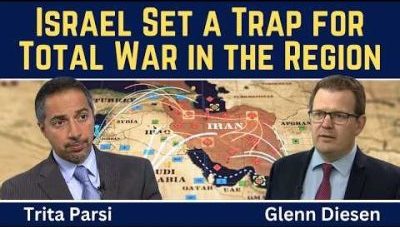
Trita Parsi: Israel Set a Trap for Total War in the Region
or go to
Aletho News Archives – Video-Images
From the Archive
Zionism’s Violent Legacy
By Donald Neff | Washington Report On Middle East Affairs | January 1996
On January 4, 1948, Jewish terrorists drove a truck loaded with explosives into the center of the all Arab city of Jaffa and detonated it, killing 26 and wounding around 100 Palestinian men, women and children.[1] The attack was the work of the Irgun Zvai Leumi – the “National Military Organization,” also known by the Hebrew letters Etzel – the largest Jewish terrorist group in Palestine. The Irgun was headed by Revisionist Zionist Menachem Begin and had been killing and maiming Arabs, Britons and even Jews for the previous ten years in its efforts to establish a Jewish state.
This terror campaign meant that at the core of Revisionist Zionism there existed a philosophical embrace of violence. … continue
Blog Roll
 Aletho News
- Trita Parsi: Israel Set a Trap for Total War in the Region
- Trump’s Iran war is on an Israeli leash
- Saudi oil boss issues global supply warning
- Riyadh Says Its Oil System Is Intact. The Numbers Say Otherwise.
- Trump and Netanyahu Want to “Finish the Job” on Iran
- US ‘one-sided dictation’ not Iran’s beliefs makes rational talks impossible: Baghaei
- Iran’s Next Strike May Not Explode. It Could Shut You Down /Col Doug Macgregor
- Iran: US political targets legitimate if assassinations return
- Iraq shuts key border crossing with Iran under US pressure: Report
- Undersea Internet cables could be targeted in retaliation for attacks on Iran: IRGC deputy chief
- If Americans Knew
- The Israel Lobby’s Changing Fortunes
- AIPAC has become such a political liability that it’s shifting to a more “nimble” approach to buying politicians
- At least 160 Israeli settler attacks in 2 weeks
- Will Gaza’s Ancient Christian Community Disappear Forever?
- Israel’s vision of regional security rests on keeping Arab states weak
- Heidi Levine recounts how Palestinian youths helped save her in settler attack
- DAILY UPDATE: Latest essential news on Palestine, Israel, & region
- Trump’s Intensifying Sabotage of the ICC, for Israel’s Sake
- Israeli military detain US and UK volunteers in West Bank including Democratic NY politician Brad Lander
- Americans at National Conservatism Conference held in Israel this year criticize Israel
- No Tricks Zone
- E-Cars Reduce CO2 Emissions By Only 41% Compared To Internal Combustion Engine Vehicles
- Predictions Made By Renowned Climate Professor Over Past Decades Have Been Proven To Be Poor
- New Study Suggests Large Regions Of The Pacific Ocean Have Been Cooling For The Last 80 Years
- Germany’s Green Energy Debacle: High Energy Costs Force Kahla Porzellan to Close After 182 Years!
- New Study: 50 Years Of The Most Aggressive ‘Net Zero’ Policies Can Only Affect The Global Climate By 0.03°C
- US September “Heat” Was No Record…Many Records Set Decades Ago
- Latest European Green Energy Debacle; Portugal’s Largest Flagship Solar Park Insolvent!
- Green Energy Debacle: German Expert Professor Fritz Vahrenholt Warns Of Severe Economic And Social Consequences
- Two More Paleo Reconstructions Affirm Meters-Higher Sea Levels Across Ireland, Brazil 7000-6000 Years Ago
- New Study: Earth And Venus Surface Warmth Largely Explained By Convection And Lapse Rate, Not CO2 Or Radiation

