When new, virulent diseases emerge, such SARS and Covid-19, the race begins to find new vaccines and treatments for those affected. As the current crisis unfolds, governments are enforcing quarantine and isolation, and public gatherings are being discouraged. Health officials took the same approach 100 years ago, when influenza was spreading around the world. The results were mixed. But records from the 1918 pandemic suggest one technique for dealing with influenza — little-known today — was effective. Some hard-won experience from the greatest pandemic in recorded history could help us in the weeks and months ahead.
Influenza patients getting sunlight at the Camp Brooks emergency open-air hospital in Boston. Medical staff were not supposed to remove their masks. (National Archives)
Put simply, medics found that severely ill flu patients nursed outdoors recovered better than those treated indoors. A combination of fresh air and sunlight seems to have prevented deaths among patients; and infections among medical staff.[1] There is scientific support for this. Research shows that outdoor air is a natural disinfectant. Fresh air can kill the flu virus and other harmful germs. Equally, sunlight is germicidal and there is now evidence it can kill the flu virus.
`Open-Air’ Treatment in 1918
During the great pandemic, two of the worst places to be were military barracks and troop-ships. Overcrowding and bad ventilation put soldiers and sailors at high risk of catching influenza and the other infections that often followed it.[2,3] As with the current Covid-19 outbreak, most of the victims of so-called `Spanish flu’ did not die from influenza: they died of pneumonia and other complications.
When the influenza pandemic reached the East coast of the United States in 1918, the city of Boston was particularly badly hit. So the State Guard set up an emergency hospital. They took in the worst cases among sailors on ships in Boston harbour. The hospital’s medical officer had noticed the most seriously ill sailors had been in badly-ventilated spaces. So he gave them as much fresh air as possible by putting them in tents. And in good weather they were taken out of their tents and put in the sun. At this time, it was common practice to put sick soldiers outdoors. Open-air therapy, as it was known, was widely used on casualties from the Western Front. And it became the treatment of choice for another common and often deadly respiratory infection of the time; tuberculosis. Patients were put outside in their beds to breathe fresh outdoor air. Or they were nursed in cross-ventilated wards with the windows open day and night. The open-air regimen remained popular until antibiotics replaced it in the 1950s.
Doctors who had first-hand experience of open-air therapy at the hospital in Boston were convinced the regimen was effective. It was adopted elsewhere. If one report is correct, it reduced deaths among hospital patients from 40 per cent to about 13 per cent.[4] According to the Surgeon General of the Massachusetts State Guard:
`The efficacy of open air treatment has been absolutely proven, and one has only to try it to discover its value.’
Fresh Air is a Disinfectant
Patients treated outdoors were less likely to be exposed to the infectious germs that are often present in conventional hospital wards. They were breathing clean air in what must have been a largely sterile environment. We know this because, in the 1960s, Ministry of Defence scientists proved that fresh air is a natural disinfectant.[5] Something in it, which they called the Open Air Factor, is far more harmful to airborne bacteria — and the influenza virus — than indoor air. They couldn’t identify exactly what the Open Air Factor is. But they found it was effective both at night and during the daytime.
Their research also revealed that the Open Air Factor’s disinfecting powers can be preserved in enclosures — if ventilation rates are kept high enough. Significantly, the rates they identified are the same ones that cross-ventilated hospital wards, with high ceilings and big windows, were designed for.[6] But by the time the scientists made their discoveries, antibiotic therapy had replaced open-air treatment. Since then the germicidal effects of fresh air have not featured in infection control, or hospital design. Yet harmful bacteria have become increasingly resistant to antibiotics.
Sunlight and Influenza Infection
Putting infected patients out in the sun may have helped because it inactivates the influenza virus.[7] It also kills bacteria that cause lung and other infections in hospitals.[8] During the First World War, military surgeons routinely used sunlight to heal infected wounds.[9] They knew it was a disinfectant. What they didn’t know is that one advantage of placing patients outside in the sun is they can synthesise vitamin D in their skin if sunlight is strong enough. This was not discovered until the 1920s. Low vitamin D levels are now linked to respiratory infections and may increase susceptibility to influenza.[10] Also, our body’s biological rhythms appear to influence how we resist infections.[11] New research suggests they can alter our inflammatory response to the flu virus.[12] As with vitamin D, at the time of the 1918 pandemic, the important part played by sunlight in synchronizing these rhythms was not known.
Face Masks Coronavirus and Flu
Surgical masks are currently in short supply in China and elsewhere. They were worn 100 years ago, during the great pandemic, to try and stop the influenza virus spreading. While surgical masks may offer some protection from infection they do not seal around the face. So they don’t filter out small airborne particles. In 1918, anyone at the emergency hospital in Boston who had contact with patients had to wear an improvised face mask. This comprised five layers of gauze fitted to a wire frame which covered the nose and mouth. The frame was shaped to fit the face of the wearer and prevent the gauze filter touching the mouth and nostrils. The masks were replaced every two hours; properly sterilized and with fresh gauze put on. They were a forerunner of the N95 respirators in use in hospitals today to protect medical staff against airborne infection.
Temporary Hospitals
Staff at the hospital kept up high standards of personal and environmental hygiene. No doubt this played a big part in the relatively low rates of infection and deaths reported there. The speed with which their hospital and other temporary open-air facilities were erected to cope with the surge in pneumonia patients was another factor. Today, many countries are not prepared for a severe influenza pandemic.[13] Their health services will be overwhelmed if there is one. Vaccines and antiviral drugs might help. Antibiotics may be effective for pneumonia and other complications. But much of the world’s population will not have access to them. If another 1918 comes, or the Covid-19 crisis gets worse, history suggests it might be prudent to have tents and pre-fabricated wards ready to deal with large numbers of seriously ill cases. Plenty of fresh air and a little sunlight might help too.
References
Hobday RA and Cason JW. The open-air treatment of pandemic influenza. Am J Public Health 2009;99 Suppl 2:S236–42. doi:10.2105/AJPH.2008.134627.
Aligne CA. Overcrowding and mortality during the influenza pandemic of 1918. Am J Public Health 2016 Apr;106(4):642–4. doi:10.2105/AJPH.2015.303018.
Summers JA, Wilson N, Baker MG, Shanks GD. Mortality risk factors for pandemic influenza on New Zealand troop ship, 1918. Emerg Infect Dis 2010 Dec;16(12):1931–7. doi:10.3201/eid1612.100429.
Anon. Weapons against influenza. Am J Public Health 1918 Oct;8(10):787–8. doi: 10.2105/ajph.8.10.787.
May KP, Druett HA. A micro-thread technique for studying the viability of microbes in a simulated airborne state. J Gen Micro-biol 1968;51:353e66. Doi: 10.1099/00221287–51–3–353.
Hobday RA. The open-air factor and infection control. J Hosp Infect 2019;103:e23-e24 doi.org/10.1016/j.jhin.2019.04.003.
Schuit M, Gardner S, Wood S et al. The influence of simulated sunlight on the inactivation of influenza virus in aerosols. J Infect Dis 2020 Jan 14;221(3):372–378. doi: 10.1093/infdis/jiz582.
Hobday RA, Dancer SJ. Roles of sunlight and natural ventilation for controlling infection: historical and current perspectives. J Hosp Infect 2013;84:271–282. doi: 10.1016/j.jhin.2013.04.011.
Hobday RA. Sunlight therapy and solar architecture. Med Hist 1997 Oct;41(4):455–72. doi:10.1017/s0025727300063043.
Gruber-Bzura BM. Vitamin D and influenza-prevention or therapy? Int J Mol Sci 2018 Aug 16;19(8). pii: E2419. doi: 10.3390/ijms19082419.
Costantini C, Renga G, Sellitto F, et al. Microbes in the era of circadian medicine. Front Cell Infect Microbiol. 2020 Feb 5;10:30. doi: 10.3389/fcimb.2020.00030.
Sengupta S, Tang SY, Devine JC et al. Circadian control of lung inflammation in influenza infection. Nat Commun 2019 Sep 11;10(1):4107. doi: 10.1038/s41467–019–11400–9.
Jester BJ, Uyeki TM, Patel A, Koonin L, Jernigan DB. 100 Years of medical countermeasures and pandemic influenza preparedness. Am J Public Health. 2018 Nov;108(11):1469–1472. doi: 10.2105/AJPH.2018.304586.
Dr. Richard Hobday, an internationally recognised authority on health in the built environment, is an independent researcher working in the fields of infection control, public health and building design. He is the author of `The Healing Sun’.
“Condemnation before investigation is the height of ignorance” – widely attributed to Albert Einstein, but whoever the author was had it right. [William Paley]
A peer-reviewed journal, Alternatives, recently published an article, “9/11 Truth and the Silence of the IR Discipline,” by David Hughes, a faculty member at the University of Lincoln in the UK. The article is very well written and may be the single best succinct summation of 9/11 history available. “IR” refers to the academic study of international relations, so the sad fact that scholars who pursue such a discipline have failed to be attentive to the multiple lies within the official narrative of 9/11 is brimming with irony because, as Hughes states, international relations is “… the one discipline that should be most conversant with false flag terrorism and the ‘War on Terror.’” The article cites the 9/11 Consensus Panel, the results of the 4-year independent study of the collapse of WTC7, and the developing Federal Grand Jury Investigation, all involving scientists, scholars and attorneys with impeccable credentials.
Some university faculty members of the “IR Community”, presumably in good standing with their peers, have reacted (via tweets) in a manner wildly inconsistent with academic standards. One Nicholas Kitchen of the University of Surrey, tweeted, with regard to the article, “I think it’s OK for me to reveal that I was asked — and declined — to review it. Had I done so, I would certainly have rejected it…. But editors are, I would suggest, the bigger issue here. This should never have gone out to peer review. Any serious academic — as journal editors must be — can see this is the worst kind of conspiracy theorizing in only minimal academic dress.”
Calling anything “conspiracy theorizing” shows Kitchen uninformed regarding the CIA origin of the epithet, intended to belittle and to shut down rational discussion. But attacking an editor for sending an article out for peer review is seriously witless. Consider not only the sterling credentials of those in the Consensus Panel and the engineering study cited within the article, but also that among the countless individuals who have disparaged the governmental narrative so as to qualify in Kitchen’s mind as “conspiracy theorists” include Dr. Robert Bowman, head of the “Star Wars” program under two presidents; Francesco Cossiga, former president of Italy; Dr. Alan Sabrosky, former Director of Studies at the U.S. Army War College; Andreas von Bulow, former Secretary of Germany’s Federal Defense Ministry; General Leonid Ivanshov, former Chief of Staff of Russian’s Armed Forces; Ronald D. Ray, Deputy Assistant Secretary of Defense in the Reagan Administration, and hundreds more of like credibility and authority.
Kitchen represents an embarrassing lack of critical thinking and a shameful negation of the academic, investigative spirit. And he’s not alone. Emmett MacFarlane, of the University of Waterloo, tweeted “[T]he 9/11 piece is the publication of disinformation. It is a complete failure of the peer review process …. I’m surprised I haven’t seen more of the journal’s editorial/advisory board repudiate it or resign. I can’t believe anyone would willingly continue to associate themselves with the journal so long as that piece goes unrestricted.” Jennifer Mustapha of California’s Western University of Health Sciences was less delicate: “It is a steaming pile of hot garbage and I’m pretty f*****g mad about it. Can reassure you that basically all of the critical IR peeps I know are as flabbergasted as me and you. It is a disgrace.” Nour Halabi of the University of Leeds wrote “Unless this so-called article peddling 9/11 conspiracy theories is recalled, I will never publish with Sage again. I call on other academics to join me, truthers and conspiracy theorists have no place in academia and in any of our publication [sic].”
Charges of “conspiracy theorizing”, “publication of disinformation”, “steaming pile of hot garbage”? A doctoral level professor wants to to “restrict” an article on a subject obviously suppressed by every aspect of governmental and mainstream media? Good lord, what understanding of freedom of inquiry exists within circles of “IR”? There have been so many attacks on members of the editorial board that the head editor, Lacin Idil Oztig, posted a request that the attacks cease, taking it upon herself to assume sole editorial responsibility for the article. But why should she, or anyone on the board, apologize for anything? Author Hughes has proper citations – well over 100 – for every aspect of his paper.
Hughes hits hard with his charge that silence from those who should be speaking up is “… uncritically lending intellectual legitimation to the official narrative and thus the ‘War on Terror’ and obediently serving Western state power.” Hughes also cites fellow scholar Kees Van der Pijl: “By selling out to the self-fulfilling fiction of Islamic terrorism, the discipline if IR today has itself largely degenerated into a mercenary, ‘embedded’ auxiliary force…. A discipline led by scholars of this moral calibre cannot be expected to restore its intellectual integrity.” Such a level of scorn aimed at a segment of the academic community is not seen often, but in the case of the IR scholars cited, it is certainly deserved.
It’s one thing for someone in the academy to avoid confronting a given issue, but it’s something radically different to attack those who do make the effort to study an issue studiously avoided by the mainstream, and to look into possible reasons for that avoidance. The article is excellent, well written, and the first part is a superbly compacted and up-to-date review of 9/11 (the remainder dealing with reasons for failure to confront the lies of 9/11). The condemnation of author and editor has yielded a posting by blogger Tim Hayward, Peer Review vs Trial by Twitter, in which he invites — and receives — comments from readers. Many are from university faculty, and much of the commentary is an indictment of the academic community for its long silence on a taboo subject.
But no truth-seeking scholar with integrity would be deterred by taboo. The disgraceful attack by the tweeting professors is a textbook example of condemnation before investigation. The four, and fellow academics who followed them with similar slurs, display a rigidity of mind and a noxious commitment to official group think. They are beyond merely out of line. They represent a plague on freedom of scholarly inquiry and should be outed as the intellectual pariahs that they are.
Bill Willers is an emeritus professor of biology, University of Wisconsin at Oshkosh. He is founder of the Superior Wilderness Action Network and editor of Learning to Listen to the Land, and Unmanaged Landscapes, both from Island Press. He can be contacted at willers@uwosh.edu.
This timeline supports the thesis that the Covid-19 outbreak is a repeat of the H1N1 outbreak in 2009. If it is proven, then the US Government’s attempt to simultaneously blame China and hide its own culpability for Covid-19, combined with the FAA’s 737Max fiasco, will damage our international standing–and boost China’s–as much as the Global Financial Crisis did.
***
September 2008: The first cases of H1N1 swine flu were reported in California and Texas in late March, 2009, but subsequent genetic analysis suggests that H1N1 began in September of 2008, the start of the ‘flu season, six months before it was first detected. A similar six month lag suggests a September, 2019 birthdate for Covid-19, and for the same reasons: the CDC was asleep at the wheel and the most vulnerable Americans have limited access to health care. Like H1N1, Covid-19 cases may have gone undetected amongst the 100,000 annual deaths from ‘flu and pneumonia.
July, 2019: TheCDC halted research at Fort Detrick and cited “national security reasons” for not releasing information about its decision.
August, 2019: First Vaping Death Reported by Health Officials “Amid the lack of information, investigators scrambled to find shared links to the respiratory problems. Officials said earlier this week that many patients, most of whom were adolescents or young adults, had described difficulty breathing, chest pain, vomiting and fatigue.”
December, 2019. A Chinese medical researcher is arrested in Bostontrying to take biological samples back to China. Not agricultural samples, not samples with IP value, just ‘biological’. Zheng Zaosong, from Beth Israel Deaconess Medical Center, confessed to taking material from a lab in Boston. FBI Special Agent Kara Spice found 21 wrapped vials containing a “brown liquid” that appeared to be “biological material”. Zheng’s roommate, also a researcher, told FBI agents that two labmates of Zheng had succeeded in getting specimens to China. Were those ‘biological samples’ lung tissue, sputum and swabs? Did the Chinese researchers detect a Coronavirus outbreak and, finding the CDC as unresponsive then as it is today, both warn Chinese health authorities and hand them hard evidence that they can now use?
January 202o: Malaysian PM Matthias Chang speculates that the US is waging biological warfare on China.
January 28, 2020: Harvard Chemistry Professor Arrested, Handcuffed, And Accused Of Lying About Ties To China. Charles Lieber, Chair of Harvard’s Chemical Biology department, led a research group in China focusing on using nanotechnology to identify viruses.
February 23, 2020. Chinese scientists found genomic evidence that the seafood market in Wuhan is not the source of the novel coronavirus. Their genetic data suggests the virus was introduced from elsewhere and had already circulated widely among humans in Wuhan before December 2019, probably beginning in mid- to late November.
March 6, 2020: Question: How did the virus come to the United States? Answer: “The first known patients in the U.S. contracted the virus while traveling in other countries or after exposure to someone who had been to China or one of the other affected areas.But now, a few cases here cannot be traced to these risk factors. This is concerning because it suggests the illness may be spreading across communities for which the source of infection is unknown, which we call community spread/transmission. Dr. Emily Landon, University of Chicago Medicine.
March 11, 2020: White House classifies coronavirus deliberations. The meetings at HHS were held in a secure area called a “Sensitive Compartmentalized Information Facility,” or SCIF, usually reserved for intelligence and military operations. HHS has SCIFs because theoretically it would play a major role in biowarfare or chemical attacks.
Mar 13, 2020: Chinese Foreign Ministry spokesperson Lijian Zhao demands US authorities reveal what they’re hiding about the origins of Covid-19. “Pointing to a video of CDC director Robert Redfield admitting the US had several deaths from Covid-19 before they were able to test for it, Zhao called on the American watchdog to come clean, ‘When did patient zero begin in the US? How many people are infected? What are the names of the hospitals? It might be the US army who brought the epidemic to Wuhan. Be transparent! Make your data public! The US owes us an explanation!”’
Ongoing: Researchers have greatly advanced their understanding of viral evolution since H1N1 a decade ago and finding patient zero is now more science than art. Recently, a team of Chinese researchers claimed to demonstrate that Covid-19 was born in September, 2019, but British researchers (who had discovered the earlier H1N1 date) were not convinced. Note: Though the site is for virologists and evolutionary biologists, you can follow the argument from the introductions and conclusions of each paper.
There is a three in a million chance that a Boeing 737 MAX won’t arrive at its destination in one piece. At the end of the day, this isn’t that big of a deal – as late as the 1980s, this was the average for the commercial airline industry, and risks were twice as high in 1970. But people don’t tolerate such numbers such risks these days, as the value attached to human life has gone up. As a result, this model has been grounded across the world, with attendant consequences for Boeing’s bottom line.
But while it may not be that big of a deal, it is still probably not a great idea to take 500 flights in a Boeing 737 MAX within a year if one can possibly help it. Why 500 Boeing 737 MAX flights? Because even though it is a disease that overwhelmingly affects the elderly, that happens to be the equivalent risk of dying from COVID-19 for people in their 30s. Moreover, when you board a plane, you are only risking your own life. People with a cavalier “iT’S JuSt lIkE ThE FlU” are presumably more likely to spread it to elderly people, for whom a brush with COVID-19 is equivalent to a round of Russian roulette (mortality is ~1/6 for over 80 year olds). Moreover, it would even be reasonable to pay money to avoid such risks, even if it involves some inconveniences.
For this novel coronavirus threatens to fundamentally degrade the global demographics of human mortality, the effects of which may last years or decades.
This graph shows q(x), or the probability of dying at any age “x”. It is calculated by taking a hypothetical cohort, usually fixed at 100,000 at the age of 0, and dividing the number of deaths by the number of survivors by age group.
The green line represents the probability of dying in the US as of 2017.
The other lines represent the effects of various epidemic shocks: An approximate doubling in severity of the average flu season (yellow); a 10% COVID-19 infection rate (orange); and a 70% COVID-19 infection rate (red).
These figures were obtained by taking the percentage chances of dying from the flu/COVID-19 and adding them to the q(x) percentages for the US in 2017 at the mortality.org database.
The mortality stats for the flu were taken from the CDC, as reported in Business Insider. They also helpfully compare the age-specific death rates to COVID-19 mortality, as derived from an investigation earlier this month by Russell et al. based on numbers from the Diamond Princess cruise ship. The extrapolated total CFR (case fatality rate) was pegged at 1.1%, but note that this applied to situation where quality healthcare was readily available (ventilators, IV drops, antibiotics, etc.). In situations where the epidemic overwhelms the healthcare system, things are going to be much worse.
Note from the outset the near insignificance of flu as a cause of mortality; under 65’s are basically two orders of magnitude as likely to die from COVID-19 as from the flu. In other words, for the younger generations, “the flu” is just 2-3x Boeing 737 MAX flights per year, as opposed to 500x for COVID-19. While the absolute numbers for the elderly are horrific, the disparity between flu and COVID-19 mortality for them is actually considerably less – just about a single order of magnitude – though even so, that’s still the difference between a ride on the Space Shuttle (flu) versus a round of Russian roulette (COVID-19). I’d rather take the Space Shuttle, thank you.
In another study by Riou et al. 2020 analyzing data from Wuhan, a total CFR of 1.6% was estimated, with a larger sample allowing for a more precise breakdowns by age (see above). As such, I will be using the numbers from this study to adjust q(x) in the different COVID-19 scenarios. Apart from that, the Wuhan scenario is likely to be more typical than the Diamond Princess scenario, if we are talking about large-scale outbreaks that partially overwhelm the capacity of healthcare cities.
There isn’t much evidence that we can hope for substantially lower mortality rates, even in developed OECD countries; contra Western stereotypes, medical care in Wuhan seems to have been highly sophisticated, with dozens of people being ventilated in the average hospital, and complex procedures such as extracorporeal membrane oxygenation (“removing blood from a person’s body and oxygenating their red blood cells”) through ECMO machines being available in cases where ventilation didn’t work. Consequently, it can’t be excluded that mortality in most of the rest of the world – even in the OECD – may well end up higher than in China. For instance, England only has 28 and the US has 250 of these ECMO machines, whereas even provincial hospitals in China have been reported to have 5 of them each.
The healthcare system in Lombardy – one of the most developed regions in the world – is already on the cusp of collapse. Unless there are draconian quarantines implemented right about now, most of the rest of Western Europe and the US seem set to join it in its misery in another 10 days to two weeks. Cost-cutting “optimization” in healthcare has drastically reduced the number of hospital beds per capita throughout the West in the past two decades. At this point, I would certainly not wager on “the West” mounting a better or more competent response to COVID-19 than the Chinese.
Another cardinal difference between “the flu” and COVID-19 is that the latter is far more contagious. The standard measure of how many other people each person with a given disease infects in turn, r0, seems to be ~4 under “normal” conditions, versus just 1.3 for the flu. Moreover, as a novel coronavirus, people do not have any preexisting immunity to COVID-19 that might mitigate its virulence, and it has far greater contagiousness. Consequently, professional epidemiologists have predicted that as much as 70% of the world population may eventually become infected with COVID-19, a number which has been repeated by Angela Merkel and the British government in recent days. As such, I will be modeling a 70% COVID-19 infection rate – which presupposes millions of deaths – as a “worst case” scenario.
One final “blackpill” about COVID-19 is that, should we fail to control it, many epidemiologists expect it to become a new seasonal disease – that is, a fifth endemic coronavirus, just like the common cold. But far deadlier. The flu infects about a tenth of the population every year. What would be the impact if COVID-19 was to reach similar intensities?
This graph shows l(x), or the number of survivors at any age “x”. It can be calculated by recursively applying the aforementioned q(x) to the initial, hypothetical cohort of 100,000 newborns.
As before, we can see that even doubling the flu season – adding mortality from an average flu season to the existing probability of dying – barely nudges the curve.
However, even a 10% COVID-19 infection rate moves the curve visibly left, and the change is extremely traumatic once you get to 70% infection rates – the sort of numbers that multiple European governments are now bandying about.
This graph shows the changes in life expectancy at different ages. It is calculated from two values derived from the above data: The total number of person-years lived by any particular cohort, or T(x), divided by the number of survivors, or l(x), in that cohort. T(x) is the sum total of person-years, or L(x), lived by any particular cohort up until all its members have died. That, in turn, is given by the following formula: L(x) = l(x+1)*d(x)*a(x), where l(x+1) refers to the quantity of that cohort’s survivors in the next year, d(x) refers to the number of deaths during that interval (or, in other words, l(x+1) – l(x) ), and a(x) is a constant that is usually equal to 0.5 (except in the very first and the very last year of life).
Here is a summary of the results:
US life expectancy at birth was 78.86 years in 2017 (via mortality.org). There is a minor discrepancy with the official CDC figure of 78.6 years.
Modeling a typical flu epidemic “on top” of that (so, in practice, a ~doubling of the flu season severity) would reduce US life expectancy to 78.63 years, translating to a reduction of ~0.25 years (three months).
Modeling a 10% COVID-19 infection scenario with Riou et al. (2020) age-specific mortality rates – the sort of numbers we may expect should it become endemic – reduces US life expectancy to 76.15 years , translating to a reduction of ~2.5 years.
Modeling a 70% COVID-19 infection scenario with Riou et al. (2020) age-specific mortality rates reduces US life expectancy to 66.79 years, translating to a reduction of a cool ~12 years.
Now this is not the end of the world, as I make sure to emphasize by including the historical mortality profiles for Russia in 1994 and Sweden in 1751 across all three of these graphs.
The year 1994 marked the single worst time for Russian mortality in its post-1956 history, when rampant alcohol abuse, violence, and the despair of the 1990s reduced life expectancy to a local minimum at 63.93 years; during that time, middle-aged male mortality was equivalent to that of Imperial Russia and Sub-Saharan Africa. This is probably the worst mortality profile ever observed in a major industrialized nation outside of wartime.
Mortality rates in the preindustrial world – Sweden has the earliest comprehensive records dating back to 1751 – jumped wildly year to year, depending on the state of the harvest and the virulence of the bugs going around in that particular year. The biggest difference relative to industrialized societies, though, even ones as collapsed as Russia in the 1990s, is that deaths during infancy and childhood were mundane, not freak occurrences. Hence why life expectancy actually goes up as children live through (survive) their infanthood.
As we can see, in terms of mortality, a serious COVID-19 epidemic should be broadly equivalent to living in 1990’s Russia – and for people under the age of 50, it would be notably safer than living in a preindustrial society, such as 18th century Sweden. It will be a shock relative to current expectations colored by more than a century of “Pinkerian” progress in safety and survivability, but there were people who lived their entire lives under similar or worse mortality profiles, and that didn’t prevent many of them from finding joy and meaning in them.
However, even though the pandemic “shock” will pass, if the epidemiologists are correct and COVID-19 becomes an endemic, seasonal disease, then we may permanently lose the equivalent of about 25 years worth of progress in raising life expectancy (American life expectancy was last below 76.15 years in 1996). In this scenario, the graph of future US life expectancy may look like something above, dipping sharply this year and stabilizing at a new, lower normal in subsequent years.
In the long-term, there may be even more years lost – perhaps 3 years – in many West European countries, and perhaps in developed East Asia as well, should this pandemic veer out of control and make it impossible for them to preserve their current achievements at checking COVID-19 (I assume that even disciplined East Asian societies cannot maintain Corona-suppressing “social distancing” behaviors indefinitely). That is because, thanks mainly to America’s opiates epidemic, the West European countries now have substantially better mortality profiles than the US, so the extra “shock” of COVID-19 will depress their life expectancy to a relatively greater extent. Though, curiously enough, most of these same countries will “lose” fewer years of progress relative to the US, since American life expectancy has basically stood still for the past decade due to the opioids epidemic.
Meanwhile, industrialized countries with worse mortality profiles, such as Russia, will not actually see as big of a drop in life expectancy as the US; as of 2014, the last year for which I can find life tables for Russia, a 10% COVID-19 infection scenario translates to a 1.7 year fall in Russian life expectancy (US: 2.5 years), and a 70% infection scenario translates into a drop of 8 years in life expectancy (US: 12 years). However, due to strong gains in Russian life expectancy since 2014 – it has risen from 70.9 years in 2014 to 73.4 years in 2019 – the effects of COVID-19 will actually now be stronger (if still not as strong as in the US).
(Reminder: This is all assuming that both infection rates and the age-specific mortality rates from COVID-19 are the same across these countries – this will almost certainly not be the case due to local specifics).
Moreover, there will be multiple other factors that will either ameliorate or depress the above estimates:
COVID-19 is going to kill off the frailest people in this current wave, in which up to 70% of people may be infected; but this will soften its long-term impact, since you can only die once.
In subsequent years, when ~10% annual infection rates may become the new norm, healthcare systems will adjust and everybody should receive adequate care, lowering CFR from the ~4% currently observed when healthcare systems are overwhelmed, to the 0.5%-1.0% rates seen in South Korea and Chinese provinces outside Hubei, which have managed to keep on top of cases.
Conversely, people who are intubated now may suffer permanent, long-term insults on their health, making them more vulnerable to subsequent COVID-19 infections in future years.
Needless to say, there may well be changes in COVID-19’s contagiousness and virulence in the future.
I am not even going to attempt to model any of this. But the bottom line stands. This virus has the capability to deal a traumatic shock to the world’s population, especially to the older societies of the Global North. In the longer term, it may also permanently depress global life expectancy by about 2 years, robbing millions of future people of their planned retirements and time with their grandchildren.
There are political factions that cynically, and unironically, pray for Corona-chan to do her magic. The Chapo Trap House folks bask in the idea of COVID-19 killing off Drumpf-voting boomers who are keeping them from electing Bernie, instituting M4A, and rescuing the planet, while elements of the Alt Right anticipate the West rediscovering its youthful vigor in the wake of the “boomerpox”. But I would caution both factions against premature Schadenfreude – political trends rarely work out the way anyone expects them to. They may get more than they bargained for.
OK, summing up: We should really, really try to avoid COVID-19 veering out of control and becoming endemic.
China has demonstrated that Corona-chan can be contained; its r0 has plummeted by an order of magnitude from 4 to just 0.32, even if it had to bring its economy to a near standstill to do it. As Steve Sailer notes, China hasn’t merely “flattened the curve”. It has crushed it. This means that its success should be replicable, at least in First World nations with epidemics on the scale of peak Hubei, as in Italy.
Even more encouragingly, the nations of East Asia – Japan, Taiwan, Singapore, Hong Kong, even middle-income Thailand – have all managed to bring COVID-19 under control at its earliest stages without resorting to China’s drastic measures. As Tomas Pueyo explains, they did this by carefully filtering infectees’ contacts at the earliest opportunity and putting them under quarantine. The main reason that South Korea failed is because its “Patient 31” happened to be a religious “super-spreader”, yet even so, even there, the epidemic is currently under control.
But all their efforts would be in vain if just a few (or even one) defeatist, incompetent, or plain stupidly-run countries decline to take the necessary steps, and thereby cut two years off global life expectancy into the indefinite future.
This stupidity and incompetence takes different forms. In Western Europe, it is the Left’s fundamentalist commitment to open borders, accompanied by bizarre claims that quarantines do not work. In the US, it is the Right’s fundamentalist commitment to free markets, as exemplified by $5,000 copays for coronavirus tests, lack of sick leave, and Trump’s “iT’S JuSt lIkE ThE FlU” mantras to appease Mammon. Meanwhile, in what is perhaps the most “powerful” move of them all, the United Kingdom has set up a cyber-unit to combat “Russian” Corona-chan shitposters while basically admitting that it has no interest in combating, like, the actual coronavirus. Hopefully the British boomers croaking in their deathbeds in another two months’ time will be understanding of HMG’s priorities.
One is almost tempted to wish a pox on all their houses.
Anyhow, while I still hope for the best, I do not expect it.
In February this year, a number of media outlets reported that the Japanese authorities intended to drain more than one million tons of radioactive water from the Fukushima Daiichi Nuclear Power Plant into the Pacific Ocean. According to some experts, this method is the lesser evil because the ocean is able to dilute contaminated water, thus making it safe for people.
Nevertheless, this proposal has already caused discontent, both in Japan and in its neighboring countries.
The Japanese government has not yet officially announced this plan, but the intentions of the Shinzo Abe administration to follow through with this idea are becoming increasingly clear, especially considering the media campaign launched by the authorities in support of the proposal to release the contaminated Fukushima water into the ocean.
Let us remind the reader that 9 years have passed since the accident at the Fukushima power plant, but three of its damaged reactors are far from being dismantled. TEPCO, the operator of the Fukushima Daiichi nuclear power plant, delivered an ultimatum to the Japanese government demanding that it resolve the problem with radioactive water immediately. Every day, cooling the molten reactors at the Fukushima Daiichi nuclear power plant yields an additional 150 cubic meters of contaminated water containing tritium (a radioactive isotope of hydrogen) and other chemicals. The issue concerns the water originally used in the reactors’ cooling circuits during the disaster, and that used to cool the wrecked plant and the remaining fuel. A significant amount of water from underground sources flowing through the land towards the ocean is also being polluted. In total, TEPCO is currently storing 1.1 million cubic meters of radioactive water in one thousand special tanks on the territory of the nuclear power plant (NPP), but based on company’s estimates, it will run out of space for the contaminated water by the summer of 2022. TEPCO announced this in August 2019 and made a proposal to pump the contaminated water from the damaged Fukushima Daiichi NPP into the Pacific Ocean.
The operator has so far failed to convince local fishermen and residents that draining water from the Fukushima plant into the ocean is the best solution. All other ways of resolving the problem, according to TEPCO management, are difficult.
The Japanese government has also not responded as yet to TEPCO’s ultimatum, not only for political reasons, but also in view of the upcoming 2020 Olympic Games, which are scheduled to be held in Japan after Prime Minister Shinzo Abe’s assurances that the Japanese government had the situation under control after the Fukushima Daiichi accident. Stating that radioactive water would have to be dumped into the Pacific Ocean in the current climate would be an extremely unfortunate option today, as it would, at the very least, lead to a heated discussion about the health of athletes who will be arriving for the upcoming Tokyo Olympics. Surfers, for example, will compete for medals 250 kilometers south of Fukushima, at Tsurigasaki Beach on the Pacific Ocean.
It is no secret that leakages of Fukushima water into the ocean earlier on have already resulted in serious environmental problems, i.e. deposits of Cesium-137 on sandy beaches at a considerable distance from the plant. They were brought there by the current. This was discovered in September 2017 (i.e. six and a half years after the nuclear accident), when researchers from the Woods Hole Oceanographic Institution (USA) studied soil samples from a vast area around the nuclear power plant. The only saving grace was the fact that the region in question was uninhabited and there was no risk of radiation exposure.
There was another rather unpleasant incident for the Japanese authorities in 2018, when the owner of the Fukushima Daiichi NPP, the Tokyo Electric Power Company (TEPCO), was forced to apologize after admitting that its systems used to filter the water discharged into the ocean did not remove all hazardous materials from it.
In 2018, American wine from California was found to contain radioactive particles from the accident at Japanese nuclear power plant Fukushima seven years prior. This was reported by scientists of the French National Center for Scientific Research (CNRS) Michael Pavikoff, Christine Marquet and Philippe Hubert, who were studying batches of Californian red and rose wines from grapes harvested in 2009-2012 when they found Cesium-137 particles, a.k.a. radiocesium, in them. This is a man-made isotope formed by nuclear fission in nuclear reactors and nuclear weapons. In the wine produced after the accident at Fukushima Daiichi, the level of radioactive particles was higher than before the disaster.
Small amounts of radioactive isotopes of Iodine and Cesium were also found in vegetables grown in South Korea and in fish caught off the Japanese coast. This caused a crisis in South Korea’s long-established industry: the seafood trade. Based on analyses, one in four fish caught one kilometer from Ibaraki (the main town of the Japanese prefecture of the same name, situated north of the Fukushima NPP) was found to have a slightly higher cesium content than allowed. According to traders, the reports of radiation leaking into the sea led to a 50% decrease in sales of seafood products. As a result, South Korea’s government banned imports of products from the areas surrounding the Fukushima nuclear power plant. The authorities have repeatedly stated that all fish products from Japan are being thoroughly checked.
And these are just some of the cases covered by local and international media outlets.
The sheer scale of consequences stemming from the Fukushima disaster, as well as the previous Chernobyl accident, is such that the problems arising as a result cannot be resolved effectively and completely unless the best world experts are involved. Otherwise, incorrect decisions may not only cause undesirable environmental consequences and affect the health of people in the region, but also further undermine confidence in the nuclear industry. The current Japanese government still has faith in nuclear power and wishes to increase the amount of energy produced by NPPs by 20-22% before 2030.
On February 4, 2020, Japanese authorities held a meeting with embassy officials where they tried to convince the latter of the advantages of the plan to release radioactive water from storage facilities at Fukushima.
It is understandable, to a certain extent, why TEPCO, the Japanese government and individual experts would like to resolve the issue with contaminated water as soon as possible, rather than put it off indefinitely. But it is difficult to support their approach to the problem at hand. Lack of transparency and essentially, the government’s reluctance to fully engage in cooperation with the international community in solving this problem are not beneficial for everyone.
It is still unknown what will eventually happen to the radioactive water from the Fukushima NPP. But so far, the Japanese government has decided to involve a wider group of experts in addressing the issue.
The American media has indefatigably promoted the line that the PRC’s handling of the coronavirus outbreak has discredited the “Chinese model of governance” which is to say authoritarian rule implemented by party/state bureaucrats.
Now that the coronavirus is scratching at America’s door, the United States’ own capacity for handling a disaster like coronavirus has evolved from unexamined self-congratulatory propaganda to reality-based anxiety and borderline panic.
So, instead of looking at the platonic ideal of democratic transparency and responsible governance, let’s look at how the US system of governance actually responds to a real disaster in the real world.
To evaluate the Chinese response to coronavirus, it would be tempting to look at how the hard-striving up and coming wannabe super power of the early twentieth century, the United States, handled, mishandled, covered up and exacerbated the Spanish Influenza epidemic of 1918 with a combination of lies, denial, and junk science.
But comparing an early 20th century pandemic to a modern response isn’t really fair? Is it?
I’ll leave the 1918 epidemic in the rear view mirror with only one observation in light of the campaign by enemies of the PRC, including the Taiwan government, to humiliate China by persisting in the “Wuhan coronavirus” identifier for what is now officially Covid-2019.
The so-called Spanish influenza epidemic of 1918 was actually the U.S. influenza epidemic of 1918 or, if you will, the Kansas influenza epidemic of 1918. The disease was spawned around the Camp Funston army base in Haskell County, Kansas and carried overseas by US soldiers in World War I, whereupon it ravaged Europe and first attracted the attention of the Anglophone press with an outbreak in Spain. It then returned home to the United States, where it killed an estimated 670,000 people on top of 50 to 100 million people worldwide.
Here’s an anecdote from John Barry, a leading historian of the 1918 epidemic. He wrote:
I recall participating in a pandemic “war game” in Los Angeles… I gave a talk about what happened in 1918, how society broke down, and emphasized that to retain the public’s trust, authorities had to be candid. “You don’t manage the truth,” I said. “You tell the truth.” Everyone shook their heads in agreement.
Next, the people running the game revealed the day’s challenge to the participants: A severe pandemic influenza virus was spreading around the world. It had not officially reached California, but a suspected case—the severity of the symptoms made it seem so—had just surfaced in Los Angeles. The news media had learned of it and were demanding a press conference.
The participant with the first move was a top-ranking public health official. …He declined to hold a press conference, and instead just released a statement: More tests are required. The patient might not have pandemic influenza. There is no reason for concern.
I was stunned. … Instead of taking the lead in providing credible information he instantly fell behind the pace of events. He would find it almost impossible to get ahead of them again. He had, in short, shirked his duty to the public, risking countless lives.
And that was only a game.
Now, consider this tweet from a public health specialist with Ebola experience commenting on twitter:
In multiple Northern CA hospitals I work there is hesitance [to] test because it will set off alarm/panic & results will take days – no one wants to trigger that only to have [negative] result later
So China isn’t the only place that flinches when looking down the barrel of a potential pandemic.
The spirit of the 1918 influenza epidemic lives on in US disaster response and, I think, in the hearts of any public health official, be they communist or capitalist or socialist, trying to decide if they want to light the fuse on a national panic and a multi-billion dollar anti-pandemic response.
That’s why I chose to assigned China a passing grade, B, in evaluating its response to the coronavirus outbreak.
But there’s another factor to consider: the magnitude and unfamiliarity of the crisis.
The original hot take was that China botched a simple public health challenge: monitoring people with flu symptoms to stay ahead of an outbreak. Well, the hot take needed some adjustment because, you know, it was a new coronavirus, not a strain of flu, and its existence had to be teased out from the noise of the pneumonia and flu data. Then the hot hot take was that China had botched the crisis by failing to act promptly in recognizing the node of the outbreak and shutting down the Huanan Seafood wet market, the pangolin-dealing forbidden zone that supposedly spawned the virus.
Well, now it looks like the coronavirus was burbling along in Wuhan for several months hiding among other ailments; it’s highly communicable; it has a long incubation period which allows infectees a lot of opportunity to stray across populations and territories before detection; and it looks like transmission by asymptomatic infectees also occurs. A report from Hong Kong implies you might even get it from your dog. Even after a month of exhaustive scientific and media attention, key characteristics of the virus remain undetermined.
When the coronavirus outbreak took unmistakable shape it required a massive national response which the Chinese government, after some dithering, decided to deliver.
This makes coronavirus in China look like a special kind of crisis, an unexpected worst case manifestation of a previously unknown virus.
The way coronavirus outbreaks are getting handled and mishandled in diverse jurisdictions like Japan, South Korea, Iran, and Italy despite weeks of advance warning and scientific inquiry support the perception that this is a uniquely nasty piece of business.
This perception is also supported by a look back at how the government, public, and media responded to another unexpected crisis: the flooding of New Orleans post-Katrina in 2005.
When I set out to do a compare and contrast on Katrina and coronavirus, I expected a relatively simple narrative of screwed up federal response to Katrina—you know, the Superdome, the unused schoolbuses, the million dollars worth of ice shipped around the country and abandoned, the FEMA trailers, the “George Bush doesn’t care about black people” thing—with the relatively straightforward and straightforwardly brutal injection of massive national government power into the Wuhan coronavirus crisis.
Well, the truth is, as usual, more complicated and more interesting.
A recent book, Managing Hurricane Katrina: Lessons from a Megadisaster, makes the point that the flooding of New Orleans was not just a disaster, it was a mega disaster. In other words, the local, state, and federal government had a pretty robust regime for responding to a disastrous hurricane, which performed reasonably well in determining needs and capabilities, evacuating the city, in coordinating and delivering disaster relief assistance to New Orleans—up to a point.
For instance, the Superdome was notoriously understocked with food, medical facilities, and sanitary equipment not because disaster planning was run by idiots but because the Dome was expected to be pretty much an overnight hideyhole for people who couldn’t or wouldn’t evacuate but were expected to return to their homes promptly after the hurricane moved on.
The city’s attitude toward the Superdome as a shelter of last resort that it wanted cleared out as soon as possible after the hurricane moved on was perhaps colored by disdain for the poor, largely African American citizens it expected to take refuge there. “It’s not a hotel” as one official put it. Before the storm the National Guard dropped off enough Meals Ready to Eat for 15,000 for 3 days and that was it.
But the flooding of New Orleans after the levees breached and put 80% of the city under water kept 50,000 people marooned in the Superdome and Convention Center for an agonizing week with nowhere else to go, little food, no power, no sanitation, little medical care, stifling heat, and flood waters burbling up to cover the playing field.
The flooding was a megadisaster that not only overwhelmed the city of New Orleans but also the state of Lousiana. FEMA, the federal organization designed to step up when cities and states were overwhelmed, was itself overwhelmed.
FEMA, which was designed to respond to state and city government requests for additional assistance, not run a local relief operation itself, had almost nobody on the ground in New Orleans. When local communications collapsed, the federal government lacked what it deemed reliable intelligence and it was loath to act based on incomplete information. Amazingly, it took three days for Department of Homeland Security to accept reports that the levees had indeed breached and not just overtopped.
The megadisaster contingency had never been effectively worked out. The result was widespread cognitive collapse and furious tussling between FEMA, the department of homeland security, the White House, the state of Louisiana, and the city of New Orleans over a desperate ad hoc proposal to “federalize” the disaster operation—in other words, put it in the hands of the military as if it were a terrorist attack, with everybody taking orders from the Pentagon.
The lack of a prepositioned mechanism to handle the megadisaster caused an epidemic of blameshifting as the various players struggled to formulate a response and cover their behinds while under a blinding and critical media spotlight. New Orleans Mayor Ray Nagin led the charge against Washington, Department of Homeland Security chief Chertoff dumped on FEMA and Michael Brown, and the White House allegedly decided that Louisiana governor Kathleen Blanco should serve as the fall gal.
With this context of dysfunction and admitted incapacity, the media seized on the narrative of “anarchy in New Orleans” instead of “valor under impossible conditions”, a state of affairs which observers of Western coverage of the PRC’s struggle with coronavirus will find quite familiar.
The authors of “Managing Hurricane Katrina” make a couple of points. First, the media coverage was ghastly and keyed off rumor and sensationalism often irresponsibly peddled by local officials. Second, the media coverage had real life consequences. As they put it, “Katrina created a dangerous feedback loop that the key players did not recognize…”
The authors quote from a House of Representatives report: “The hyped media coverage of violence and lawlessness, legitimized by New Orleans authorities, served to delay relief efforts by scaring away truck and bus drivers, increasing the anxiety of those in shelters, and generally increasing the resources the needed to be devoted to security.”
Bus drivers delivered their vehicles and keys to staging areas in New Orleans, but refused to drive in because of the horror stories they had heard about violence inside New Orleans.
When the buses were finally available to evacuate the convention center, the military waited until it could send in 1000 heavily armed National Guardsmen prepared to conduct an armed assault to retake the facility. Instead of an insurrection, they found thousands of desperate and bewildered people wondering why they were being treated like prisoners of war…and why the evacuation had taken so long.
Politician and media-stoked fears of rioters also contributed to the infamous blockade of the Crescent River Bridge across the Mississippi by police from the little town of Gretna in order to prevent people from New Orleans walking across for refuge.
While the media beguiled itself with largely fabricated visions of the black underclass running amok in the Superdome, raping babies and throwing people off the balconies, the greatest horror of the crisis was not revealed until a year later: how some *ahem* white middle class members of the medical staff of Memorial Hospital allegedly lost their moral compass and euthanized several dozen severely ill patients so they could evacuate instead of staying behind to comfort the victims in their hours of need and wait for help.
I would say that Katrina and coronavirus offer useful parallels in analyzing the crises not as mismanaged disasters but as megadisasters, unprecedented events addressed with ad hoc responses and a good amount of flailing when no firm plan for management existed and until exceptional resources could be mobilized.
In both New Orleans and Wuhan, the initial period of desperate grappling with the crisis sparked a blame game between local and national officials that seeped into the media and ended in centralization: the US federalizing the Katrina response and the CCP literally putting China on a national war footing.
In both cases, the struggles in organizing a response led to conspicuous loss of life and an exacerbation of suffering and to the central government losing control of the narrative and eliciting over-the-top responses in order to regain control.
The United States pumped thousands of heavily armed troops and agents into New Orleans to counter the narrative that America was surrendering the city to anarchy.
The PRC deluged Wuhan with makeshift hospitals, medical workers, and military personnel to demonstrate its commitment to conquering the epidemic.
This distorted the response in New Orleans; how much the PRC actions in Wuhan skew the overall battle against coronavirus remains to be seen.
A similar struggle to gain control both over the outbreak and the narrative appears to be playing out in the United States as a coronavirus cases continue to pop up and the U.S. handling of the outbreak encounters some early difficulties.
The CDC stumbled out of the gate when its diagnostic kits for coronavirus turned out to be defective and had to be held back from local health departments.
Just as Wuhan tried to keep a lid on things with limited reporting as it tried to get its arms around the elusive transmission characteristics of the virus, the CDC tried to keep a lid on things by establishing strict guidelines for testing to provide local hospitals and health departments criteria and pretexts to refuse to test people who certainly looked like they might have coronavirus.
As it is, the delay in testing may very well be a factor in the CDC’s grim prediction that Covid-2019 is going to become a community virus that’s around to stay.
The ad hoc response to an inability to definitively identify and track infectees backward and forward in time: hospitals sent people who might have had coronavirus home to self-quarantine well kinda self quarantine and maybe infecting their family, friends, and neighbors, which is exactly what helped fuel the disaster in Wuhan.
With the coronavirus response not going great and given the serious political divisions in the United States, it hasn’t taken long for our emerging coronavirus response to get politicized with perhaps fatal consequences for the US capacity to respond to the epidemic.
Democrats attacked Trump for slashing pandemic preparedness funding, and for appointing the religiously inclined and science averse Vice President Mike Pence as his coronavirus czar.
Republicans turned around and attacked the PRC for letting the coronavirus cat out of the bag, despite the two month warning the U.S. had received, and aimed fire at the WHO as China’s lackey.
And the media, both prestige media and social media, that is, is at hand to pour gasoline on the fire.
This carnival of dysfunction has consequences.
Today, America is not in a state of shared resolve and social and political unity needed to support the logical solution to the outbreak: a massive and expensive infringement of civil liberties that would be necessary to stamp out the virus with compulsory quarantines of infectees and asymptomatic contacts, and extensive lockdowns, you know, like they do in China.
If that’s off the table, it means we’re entering a world of unpleasant contingencies and difficult choices beyond the simple public health goal of eradication of a lethal pathogen.
What I predict: when faced by the huge social, political, economic, and legal barriers to instituting a full coronavirus eradication regime, the U.S. will opt for Plan B.
That means, instead of defeating coronavirus America will find a way to live with Covid-2019 or, to put it another way, not care about it too much.
That’s because Covid-2019 mainly kills old people. There’s a melancholy statistic in epidemiology called “YLL” or “Years of Life Lost”, which measures the impact of an epidemic in terms of how many years of additional life it strips from a population. In the YLL equation, a young life, with decades of productive labor ahead of it, is worth more than an old life.
Put that way, the cost of shielding an old life with a costly expenditure of resources seems, well, excessive. Especially if you’re a Chicago School economist who jumps at the chance to put a dollar value on human life. By this metric, we’re way smarter than the communists because we’re not going to sacrifice tens or even hundreds of billions of dollars in direct costs and indirect GDP losses to save a few hundred thousand pensioners.
I’ve already seen a recommendation to be “cost efficient” in “mitigating” the outbreak instead of trying to eliminate the coronavirus. Thin the herd! That’s the ticket.
In other words, tolerate a death rate of 10% or so among senior citizen infectees as long as they die quietly instead of dropping dead in the street or in the hallway of a mobbed hospital emergency room.
Then mass produce the vaccine, turn Covid-2019 deaths into archived mortality statistics, and come up with a final body count in a medical journal a few years after the bodies have been buried and the families have moved on.
After all, a postmortem 4 years after the swine flu or H1N1 pandemic of 2009 calculated that global deaths numbered 200,000—that’s ten times the original estimate.
So, I predict that America will survive Covid-2019, not because of a superior system of government but because of superior callousness. We’ll simply be extra creative in thinking up ways not to care. We’re good at that.
As an end note, Wuhan and New Orleans’ ordeal do differ in one important respect. Wuhan’s disaster grew out of bugs and bats and whatever lurks in biology’s darkest places; New Orleans’ problems were entirely man-made. Make that US-government made.
Note, as America’s insurance companies did, New Orleans was not leveled by Hurricane Katrina. Hurricane Katrina did not hit New Orleans directly; the main damage from high winds occurred eastward along the Gulf Coast towards Biloxi. When catastrophe occurred, Katrina and its winds were already pretty much gone.
New Orleans was flooded when its levees failed owing to a series of engineering errors, many of which can be laid at the feet of the U.S. Army Corps of Engineers, which is in charge of flood control on the Mississippi down New Orleans way.
The worst example of human error was the collapse of the levee containing the 17th Street Canal. The Army Corps of Engineers goofed in calculating the project requirements, and sunk the sheetpile—that’s the wall that’s supposed to form the core of the levee that holds the waters in—17 feet instead of 31 to 46 feet deep. When the storm waters rushed into the canal, they pushed aside the levee wall like a giant hand—while the flood waters were still five feet below the maximum design height.
That was only one of many breaches.
The worst loss of life was as a result of multiple breaches of the Industrial Canal, which was fatally connected to the Mississippi River Gulf Outlet or MRGO waterway. The MRGO was a classic engineering botch executed by the Army Corps of Engineers that was intended to provide New Orleans with a profitable shortcut to the Gulf of Mexico, one that avoided the twists and turns of the Mississippi. Instead, it was underutilized, inadequately reinforced, and improperly maintained.
As the MRGO deteriorated and widened to five times its design width it became a “shotgun pointed at the heart of New Orleans” as a study warned pre-Katrina: a lethal superhighway for Katrina’s storm surge to funnel into the Industrial Canal at such a high rate of flow that the canal’s earthen levees were chewed to pieces. Breaches occurred up and down the length of the canal, inundating the Ninth Ward and accounting for most of the fatalities.
After the flood, New Orleans sued the Army Corps of Engineers for $77 billion dollars. A federal court found that the Army Corps of Engineers was indeed responsible but, thanks to the immunity of the U.S. government to lawsuits for botched flood control projects, it was off the hook.
The U.S. Army Corps of Engineers, which had built the MRGO, never admitted it caused the disaster; but after Katrina it immediately blocked the MRGO channel and for good measure built a $1 billion dollar surge barrier on a crash program in case another hurricane got the idea of reexcavating the channel and charging into New Orleans.
Photo op of US State Department delegation putting a foot into Idlib. Kelly Craft & James Jeffrey met with the White Helmets at the Turkish /Syrian border.
Rumour control: the ‘unconfirmed’, ‘unverifiable’ type as usual from journalists & media sources who diligently and blindly act as stenographers. Rather telling that a time when Syria & Russia have potentially achieved an important element of the 2018 Sochi agreement, (security corridor for M4 route & M5 secured), following talks between Erdogan & Putin in Moscow, we are now once more fed US anonymous intel stories about chemical weapon usage in Syria.
There a few other items of a similar kind of nature from the narrative keepers of regime change circulating on social media. I like to think that this isn’t a case of deja-vu, recalling events leading up to April 2018. I like to think I am completely wrong in having this feeling, but I cannot help sensing a brewing geopolitical storm that just keeps going. So, with this in mind, I will briefly outline what is the situation at sea, in the Eastern Mediterranean in particular.
The last time that the USS Dwight Eisenhower and ‘Charles de Gaulle’ operated together was in 2016. This wasn’t however the first time that the French nuclear carrier operated alongside a U.S. one though (2014). As such, it would be difficult to infer any imminent operations from such activities. I remember a few commentators on the verge of hyperventilating over the presence of USS carriers back April 2019. along with the presence of another in the region. Abraham Lincoln and John C. Stennis carrier strike groups carried out operations in the Mediterranean Sea.
The presence of either U.S. or French aircraft carriers does not mean rising tensions or imminent operations against Syria, (or vice versa). Ultimately, nothing happened in spring 2019 regarding naval tensions in the region. But there again, there wasn’t the surreal background issue of an intense conflict in Idlib between Turkey and Syria in the media glare. In addition, there is a continuing hostile rhetoric in the air and one example is the U.S. ambassador to the UN was quite vocal in supporting Turkish actions.
Thankfully, the recent conflict did not become a large-scale conflict involving external powers (NATO, USA & Russia). Although, while the situation was escalating on the ground, the Russian Navy did send 2 additional Black Sea Fleet based warships through the Bosphorus on 28 February, reportedly to the Eastern Mediterranean. These were the frigates “Admiral Makarov” and “Admiral Grigorovich”. Not actually significant compared to the scale of the build-up in 2018 where at least an additional 6 Russian Navy ships & possibly 2 submarines were sent to the region in a 3-week period.
Contrary to some pundits, the arrival of the ‘Ike’ was not a response to escalating events over Idlib, since these deployments are planned a long time beforehand. Yet it was unusual in that it left straight after successfully completing the Composite Unit Training Exercise (COMPTUEX).
It seems weird to have the issue of chemical attacks pop up in the March/April period with the accusations that the “Assad Regime” has launched a chemical weapons attack on the so-called moderate opposition held areas. Then the West finger pointing at Russia and insults of anyone dissenting of being Russian propaganda mouthpieces. “Time will tell” and the April 2019 incident was shown to be a macabre false flag, highlighting serious concerns over manipulation of information & blatant bias of the resulting OPCW report, as confirmed by whistle-blowers.
Here is an outline of claimed reported chemical weapons attacks in March/April:
March 2013 Aleppo
April 2013 Saraqeb
April 2014 Kafr Zita
March 2015 Sarmin
April 2017 Khan Sheikhoun
(This resulted in an U.S. Tomahawk strike from 2 U.S. warships)
April 2018 Douma
(Multiple air / sea launched missiles strikes – U.S. UK & France).
If you look at the date of the above 2019 article, it just happens to coincide with the presence of the two U.S. carrier groups in spring 2019. Worth noting is that the April 2018 strikes did not involve carriers at all. Effectively, the destroyers & submarines are already operating in the Eastern Mediterranean and it is only these that are needed to carry out sea-based missile strikes, (2017 & 2018).
Do we now have another round of rumours? Another round of brazen & contrived attempts to frame Syria & Russia as disinfo ops designed to trigger principally USA retaliation, at a time when the situation in Idlib has ended with a ceasefire to the advantage of Syria & Russia. Another sequel in the making? The Russian MoD stated recently that jihadists did attempt to carry out a chemical weapons attack to frustrate Syrian government forces but instead got poisoned themselves in Saraqeb.
As it stands, it is business as usual in the Mediterranean with the U.S. Navy, along with the USNS and the Russian Navy. The Russian Navy rescue ship ‘Prof. Muru’ is in the Eastern Mediterranean off Crete, possibly waiting and watching the U.S. Navy. One of the Admiral Grigorovich class deployed in the Mediterranean has left it, going through the Strait of Gibraltar on March 5 leaving two other frigates on station.
A bigger picture of the composition & types of ships Russian Navy forward deployed from Tartus is provided in this tweet. The main point is that the Russian Navy presence in the Eastern Mediterranean is largely to protect the Russian bases, not to counter NATO or the U.S. It is composed of very few combat ships and mostly logistical support. The main ASW backbone is the submarine force and the 2 frigates. That’s it. The only interesting event was the deployment in quick succession of 3 ships from the Black Sea as part of the regular longstanding Syrian Express, (BDK Orsk, Novocherkassk & Caesar Kunikov). It is the latest tangible support for operations in Idlib, especially with regards to providing new equipment and also replacements for equipment destroyed by the Turks. Lastly, that is not to say that the Russian Navy sits idly, every mission is a learning experience, with Syrian lessons fed back into across all level into the training infrastructure on the whole.
Note:
The only other significant Russian Navy warship that could beef up the contingent was last in Colombo, Sri Lanka. “Yaroslav Mudry”left on March 6. https://twitter.com/srilankaglobal/status/1236268463947165696 Additionally, the ‘Admiral Vinogradrov’ also called into Colombo.
The French carrier has now left the Mediterranean after 7 weeks operations in the east.
For the last five years, the American media has been filled with scurrilous articles demonizing Russian President Vladimir Putin.
Putin has been accused of every crime imaginable, from shooting down airplanes, to assassinating opponents, to invading neighboring countries, to stealing money to manipulating the U.S. president and helping to rig the 2016 election.
Few of the accusations directed against Putin have ever been substantiated and the quality of journalism has been at the level of “yellow journalism.”
In a desperate attempt to sustain their political careers, centrist Democrats like Joe Biden and Hillary Clinton accused their adversaries of being Russian agents – again without proof.
And even the progressive hero Bernie Sanders – himself a victim of red-baiting – has engaged in Russia bashing and unsubstantiated accusations for which he offers no proof.
Mettan is a Swiss journalist and member of parliament who learned about the corruption of the media business when his reporting on the world anticommunist league rankled his newspapers’ shareholders, and when he realized that he was serving as a paid stenographer for the Bosnian Islamist leader Alija Izetbegovic in the early 1990s.
Mettan defines Russophobia as the promotion of negative stereotypes about Russia that associate the country with despotism, treachery, expansion, oppression and other negative character traits. In his view, it is “not linked to specific historical events” but “exists first in the head of the one who looks, not in the victim’s alleged behavior or characteristics.”
Like anti-semitism, Mettan writes, “Russophobia is a way of turning specific pseudo-facts into essential one-dimensional values, barbarity, despotism, and expansionism in the Russian case in order to justify stigmatization and ostracism.”
The origins of Russophobic discourse date back to a schism in the Church during the Middle Ages when Charlemagne was crowned emperor of the Roman empire and modified the Christian liturgy to introduce reforms execrated by the Eastern Orthodox Churches of the Byzantine empire.
Mettan writes that “the Europe of Charlemagne and of the year 1000 was in need of a foil in the East to rebuild herself, just as the Europe of the 2000s needs Russia to consolidate her union.”
Before the schism, European rulers had no negative opinions of Russia. When Capetian King Henri I found himself a widower, he turned towards the prestigious Kiev kingdom two thousand miles away and married Vladimir’s granddaughter, Princess Ann.
A main goal of the new liturgy adopted by Charlemagne was to undermine any Byzantine influence in Italy and Western Europe.
Over the next century, the schism evolved from a religious into a political one.
The Pope and the top Roman administration made documents disappear and truncated others in order to blame the Easterners.
Byzantium and Russia were in turn rebuked for their “caesaropapism,” or “Oriental style despotism,” which could be contrasted which the supposedly enlightened, democratic governing system in the West.
Russia was particularly hated because it had defied efforts of Western European countries to submit to their authority and impose Catholicism.
In the 1760s, French diplomats working with a variety of Ukrainian, Hungarian and Polish political figures produced a forged testament of Peter 1 [“The Great”] purporting to reveal Russia’s ‘grand design’ to conquer most of Europe.
This document was still taken seriously by governments during the Napoleanic wars; and as late as the Cold War, President Harry Truman found it helpful in explaining Stalin.
In Britain, the Whigs, who represented the liberal bourgeois opposition to the Tory government and its program of free-trade imperialism, were the most virulent Russophobes, much like today’s Democrats in the United States.
The British media also enflamed public opinion by taking hysterical positions against Russia – often on the eve of major military expeditions.
The London Times during the 1820s Greek Independence war editorialized that no “sane person” could “look with satisfaction at the immense and rapid overgrowth of Russian power.” The same thing was being written in The New York Times in the 2010s.
A great example of the Orientalist stereotype was Bram Stoker’s novel Dracula, whose main character was modeled after Russian ruler, Ivan the Terrible. As if no English ruler in history was cruel either.
The Nazis took Russo-phobic discourse to new heights during the 1930s and 1940s, combining it with a virulent anti-bolshevism and anti-semitism.
A survey of German high school texts in the 1960s found little change in the image of Russia. The Russians were still depicted as “primitive, simple, very violent, cruel, mean, inhuman, cupid and very stubborn.”
The same stereotypes were displayed in many Hollywood films during the Cold War, where KGB figures were particularly maligned.
No wonder that when a former KGB agent, Vladimir Putin, took power, people went insane.
Russophobia in the United States has been advanced most insidiously by the nation’s foreign policy elite who have envisioned themselves as grand chess-masters seeking to checkmate their Russian adversary in order to control the Eurasian heartland.
This view is little different than European colonial strategists who had learned of the importance of molding public opinion through disinformation campaigns that depicted the Russian bear as a menace to Western civilization.
Guy Mettan has written a thought-provoking book that provides badly needed historical context for the anti-Russian delirium gripping our society.
Breaking the taboo on Russophobia is of vital importance in laying the groundwork for a more peaceful world order and genuinely progressive movement in the United States. Unfortunately, recent developments don’t inspire much confidence that history will be transcended.
The US is expanding its nuclear capability with new types of low-yield weapons, and Moscow believes US strategists now consider launching a nuclear strike as a viable option in a conflict.
The US has made adjustments to its nuclear posture and has been introducing low-yield nuclear warheads to its arsenal, including those that can be launched from submarines. Russia sees such developments with great concern, the spokesperson for the Russian Foreign Ministry Maria Zakharova told journalists on Friday.
The developments make Moscow believe that the American leadership “has made a decision to consider a nuclear conflict as a viable political option and are creating the potential necessary for it.”
She rejected US justification of the upgrade by pointing the finger at Russia, and called on Washington to adhere to nuclear non-proliferation and reduction goals, saying that the path of “unrestricted growth of military strength,” which it was pursuing, was “a road to a dead end”.
Unlike Russia, the US never made a formal commitment not to be the first to use nuclear weapons in a conflict. Russia’s nuclear doctrine says it may use nuclear weapons in response to a conventional attack that threatens the existence of Russia as a sovereign state, but otherwise the nuclear option would only be used in response to an attack with weapons of mass destruction.
Military whistleblower Sherrie Saunders shares the truth about vaccinations given in the military. Interview by Polly Tommey with cameras and editing by Joshua Coleman.
Donald Trump needs to make it clear to NATO and Erdogan that the United States will not be dragged into a war with Russia by the aggressive, Islamist, expansionist dictator of Turkey, a so-called “NATO” ally. #StandWithTulsi
A new documentary, based on an interview with a self-confessed member of the Glennane Gang, gives some insights into allegations that British military intelligence was behind a shocking murder plot to cause the situation in Northern Ireland to “spiral out of control”.
In a documentary, Unquiet Graves: The Story of the Glennane Gang, John Weir, a former officer from the Royal Ulster Constabulary (RUC), alleges that British intelligence tried to persuade paramilitary group Ulster Volunteer Force (UVF) to attack a Catholic primary school at Belleeks in County Armagh.
Weir claimed that the UVF was urged to kill children and teachers in retaliation for the 1976 Kingsmill massacre, in which gunmen stopped a minibus carrying twelve workmen and shot them; only one person survived despite having been shot 18 times.
“The plan that was decided on was to shoot up a school in Belleeks”, he said, adding that the British intelligence plot was to make the situation in Northern Ireland “spiral out of control”. … continue
This site is provided as a research and reference tool. Although we make every reasonable effort to ensure that the information and data provided at this site are useful, accurate, and current, we cannot guarantee that the information and data provided here will be error-free. By using this site, you assume all responsibility for and risk arising from your use of and reliance upon the contents of this site.
This site and the information available through it do not, and are not intended to constitute legal advice. Should you require legal advice, you should consult your own attorney.
Nothing within this site or linked to by this site constitutes investment advice or medical advice.
Materials accessible from or added to this site by third parties, such as comments posted, are strictly the responsibility of the third party who added such materials or made them accessible and we neither endorse nor undertake to control, monitor, edit or assume responsibility for any such third-party material.
The posting of stories, commentaries, reports, documents and links (embedded or otherwise) on this site does not in any way, shape or form, implied or otherwise, necessarily express or suggest endorsement or support of any of such posted material or parts therein.
The word “alleged” is deemed to occur before the word “fraud.” Since the rule of law still applies. To peasants, at least.
Fair Use
This site contains copyrighted material the use of which has not always been specifically authorized by the copyright owner. We are making such material available in our efforts to advance understanding of environmental, political, human rights, economic, democracy, scientific, and social justice issues, etc. We believe this constitutes a ‘fair use’ of any such copyrighted material as provided for in section 107 of the US Copyright Law. In accordance with Title 17 U.S.C. Section 107, the material on this site is distributed without profit to those who have expressed a prior interest in receiving the included information for research and educational purposes. For more info go to: http://www.law.cornell.edu/uscode/17/107.shtml. If you wish to use copyrighted material from this site for purposes of your own that go beyond ‘fair use’, you must obtain permission from the copyright owner.
DMCA Contact
This is information for anyone that wishes to challenge our “fair use” of copyrighted material.
If you are a legal copyright holder or a designated agent for such and you believe that content residing on or accessible through our website infringes a copyright and falls outside the boundaries of “Fair Use”, please send a notice of infringement by contacting atheonews@gmail.com.
We will respond and take necessary action immediately.
If notice is given of an alleged copyright violation we will act expeditiously to remove or disable access to the material(s) in question.
All 3rd party material posted on this website is copyright the respective owners / authors. Aletho News makes no claim of copyright on such material.

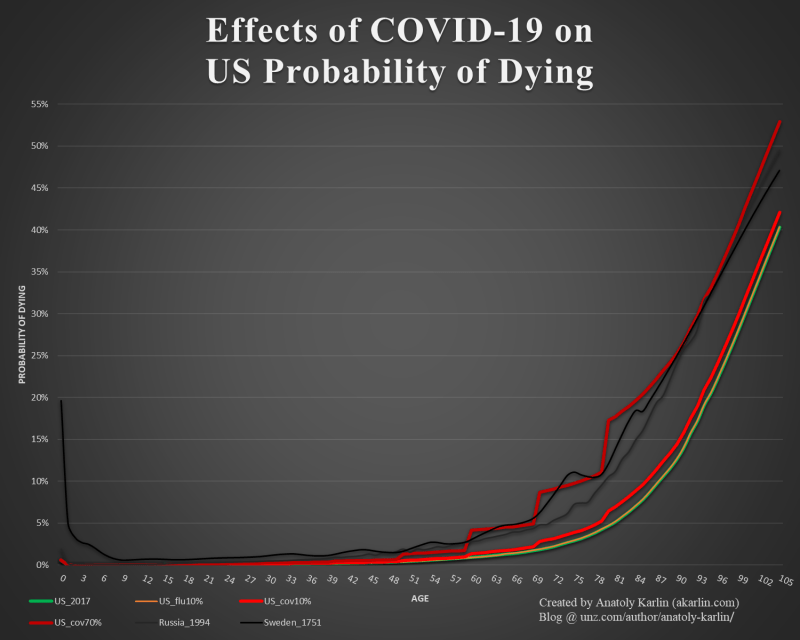
 The mortality stats for the flu were taken from the CDC, as reported in Business Insider. They also helpfully compare the age-specific death rates to COVID-19 mortality, as derived from an investigation earlier this month by Russell et al. based on numbers from the Diamond Princess cruise ship. The extrapolated total CFR (case fatality rate) was pegged at 1.1%, but note that this applied to situation where quality healthcare was readily available (ventilators, IV drops, antibiotics, etc.). In situations where the epidemic overwhelms the healthcare system, things are going to be much worse.

 The healthcare system in Lombardy – one of the most developed regions in the world – is already on the cusp of collapse. Unless there are draconian quarantines implemented right about now, most of the rest of Western Europe and the US seem set to join it in its misery in another 10 days to two weeks. Cost-cutting “optimization” in healthcare has drastically reduced the number of hospital beds per capita throughout the West in the past two decades. At this point, I would certainly not wager on “the West” mounting a better or more competent response to COVID-19 than the Chinese.
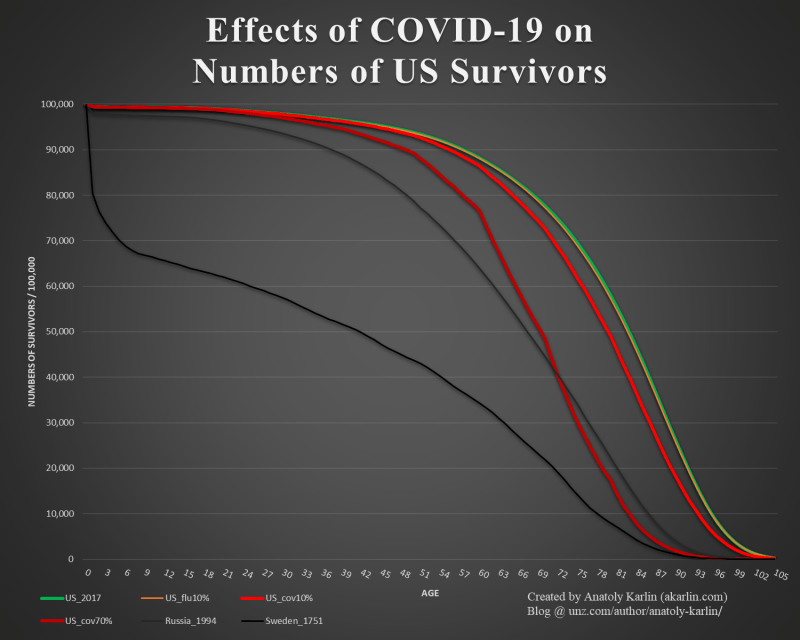


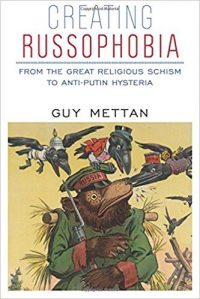 media business when his reporting on the world anticommunist league rankled his newspapers’ shareholders, and when he realized that he was serving as a paid stenographer for the Bosnian Islamist leader Alija Izetbegovic in the early 1990s.
 Aletho News

