‘UK trains armies on its own human rights blacklist’
Press TV – May 23, 2016
The British government is providing military training to the majority of nations it has blacklisted for human rights violations, a new report reveals.
In a report published on Sunday, the Independent revealed that 16 of the 30 countries on the Foreign & Commonwealth Office (FCO)’s “human rights priority” watchlist are receiving military support from the UK despite being accused by London itself of issues ranging from internal repression to the use of sexual violence in armed conflicts.
According to the UK Ministry of Defense, since 2014, British armed forces have provided “either security or armed forces personnel” to the military forces of Saudi Arabia , Bahrain, Afghanistan, Bangladesh, Myanmar, Burundi, China, Colombia, Egypt, Iraq, Libya, Pakistan, Somalia, Sudan, Yemen and Zimbabwe.
Britain is a major provider of weapons and equipment such as cluster bombs and fighter jets to Saudi Arabia in its year-long military aggression against Yemen that has killed nearly 9,400 people, among them over 2,230 children.
Since the conflict began in March 2015, the British government has licensed the sale of nearly $4 billion worth of weaponry to the Saudi kingdom.
British commandos also train Bahraini soldiers in using sniper rifles, despite allegations that the Persian Gulf monarchy uses such specialist forces to suppress a years-long pro-democracy uprising in the country.
Bahraini forces visited the Infantry Battle School in Wales last week, accompanied by troops from Nigeria, the Defense Ministry said.
Nigeria’s top military generals are accused by Amnesty International of committing war crimes by causing the deaths of 8,000 people through murder, starvation, suffocation and torture during security operations against the Boko Haram Takfiri terrorists, according to the report.
Andrew Smith, with the Campaign Against Arms Trade, said Britain should not be “colluding” with countries known for being “some of the most authoritarian states in the world.”
Obama Won’t Apologize for US Genocide on Visit to Vietnam

teleSUR | May 22, 2016
U.S. President Barack Obama on Sunday headed for his first visit to Vietnam, a trip officially aimed at sealing the transformation of an old enemy into a new partner to help counter China’s growing assertiveness in the region and viewed by veteran communists in the Asian nation as an attempt by Washington to undermine their one-party rule.
However, there is no apology planned by Obama for the massive U.S. bombing of the Asian nation that killed over 3.6 million people, injured over 5 million, left close to 900,000 children orphans and turned 200,000 women into prostitutes, apart from spraying millions of hectares with highly toxic pesticides that affected over 4 million people. The U.S. intervention also left a million women widowed and 11 million people displaced.
But four decades after the Vietnam war that deeply divided opinion in America, Obama aims to boost defense and economic ties with the country’s communist rulers while also prodding them on human rights, aides say.
His visit has been preceded by a debate in Washington over whether Obama should use the three-day visit starting Monday to roll back an arms embargo on Hanoi, one of the last vestiges of wartime animosity.
That would make Beijing uncomfortable, because its government resents U.S. efforts to forge stronger military bonds with its neighbors amid rising tensions in the disputed South China Sea. But there was no immediate word of a final U.S. decision on the issue.
Vietnam’s government earlier this month said lifting the embargo would show mutual trust and that buying arms from its partners was “normal”.
Bilateral U.S.-Vietnam trade has swelled 10 times over since ties were normalized in 1995 to around US$45 billion now. Vietnam is Southeast Asia’s biggest exporter to the United States, with textiles and electronics the largest volumes.
Washington wants Vietnam to open up on the economic front and move closer militarily, including increased visits by U.S. warships and possibly access to the strategic harbor at Cam Ranh Bay, U.S. officials say.
While Vietnam wants warmer ties, some among the party’s old guard remain suspicious that the U.S. endgame is to undermine their one-party rule.
On May 27, Obama is also scheduled to visit Japan, where he is expected to visit Hiroshima. Again, he has no plans to apologize for the nuclear bombing there.
Syria White Helmets: Humanitarians or “Executioners”?
UK Column News – May 20, 2016
In this UK Column News special, Mike Robinson speaks to Vanessa Beeley about Syria’s “first responder” group, the White Helmets who are being pushed forward for nomination for a Nobel Peace Prize. Do they deserve it?
For more background on this, please see our previous interview from November last year: http://youtu.be/mLa9ztvAGWw
Also see Vanessa’s articles on 21st Century Wire:
http://21stcenturywire.com/2015/10/23…
US ‘leverage in Syria’ thanks to collusion with terrorists
By Finian Cunningham | RT | May 20, 2016
There is a simple explanation why Washington refuses to proscribe the militant groups Jaysh al-Islam and Ahrar al-Sham as terrorist. Because Washington relies on them for regime change in Syria.
Therefore, Washington and its Western and Middle East allies cannot possibly designate Jaysh al-Islam and Ahrar al-Sham as terrorist; otherwise it would be a self-indicting admission that the war in Syria is a foreign state-sponsored terrorist assault on a sovereign country.
This criminal conspiracy is understood by many observers as an accurate description of the five-year Syrian conflict and how it originated. Syria fits into the mold of US-led regime change wars in the Middle East and elsewhere. However, Washington and its allies, assisted by the Western corporate news media, have maintained a fictitious alternative narrative on Syria, claiming the war is an insurgency by a pro-democracy rebel movement.
That narrative has strained credulity over the years as the putative “secular rebels” have either vanished or turned out to be indistinguishable from extremist groups like al-Qaeda-linked Jabhat al-Nusra and so-called Islamic State (also known as Daesh).
Washington asserts that it only supports “moderate, secular rebels” of the Free Syrian Army. British Prime Minister David Cameron has claimed that there are 70,000 such “moderate rebels” fighting in Syria against the government of President Bashar al-Assad. But no-one can locate these supposed pro-democracy warriors.
All that can be seen is that the fight against the Syrian government is being waged by self-professed extremist jihadists who have no intention of establishing “democracy”. Instead, they explicitly want to carve out an Islamic state dominated by draconian Sharia law.
In addition to Jabhat al-Nusra and Daesh, the two other major militant groups, Jaish al-Islam and Ahrar al-Sham, are vehemently committed to forming a Caliphate based on Salafi or Wahhabi ideology. That ideology views all other religious faiths, including moderate Sunni Muslims, as well as Shia and Alawites, as “infidels” fit to be persecuted until death.
Leaders of both Jaysh and Ahrar have publicly declared their repudiation of democracy.
Yet these two groups are nominated as the Syrian “opposition” in the Geneva talks, as part of the High Negotiations Committee (HNC). The HNC was cobbled together at a summit held in the Saudi capital Riyadh in December ahead of the anticipated negotiations to find a Syrian political settlement.
The HNC is endorsed by Washington as official representatives of the Syrian opposition. It is supported by Saudi Arabia, or indeed more accurately, orchestrated by the Saudi rulers since the main components of the HNC are Jaysh al-Islam and Ahrar al-Sham. Other major sponsors of the militant groups are Qatar and Turkey.
Staffan de Mistura, the UN envoy to Syria, also plays an important part in the charade of furnishing an opposition composed of extremists who demand the Syrian government must stand down as a precondition for talks. This maximalist position is one of the main reasons why the negotiations have come unstuck, according to Russian Foreign Minister Sergey Lavrov.
Another basic reason is that the HNC members have been involved in breaching the cessation of violence the US and Russia brokered on February 27, as a confidence-building measure to assist the talks process in Geneva.
That Jaysh al-Islam and Ahrar al-Sham have not observed the shaky ceasefire is a corollary of the fact that both groups are integrated with al-Qaeda-affiliated terror organizations, al Nusra and Daesh, which are internationally designated terrorist organizations.
The UN excluded al-Qaeda franchises from the ceasefire when it passed Security Council Resolution 2254 in December to mandate the purported Syrian peace talks. In that way, Syria and its foreign allies, Russia, Iran and Lebanon’s Hezbollah, have been legally entitled to continue offensive operations against the extremists in parallel to the Geneva process.
The offensive on the terror groups should include HNC members Jaysh and Ahrar. Both groups have publicly admitted to fighting alongside both Nusra and Daesh in their campaign against the Syrian army. All of these organizations have been involved at various times in bloody feuds and turf wars. Nevertheless, they are at other times self-declared collaborators.
Jaysh al-Islam and Ahrar al-Sham are also well-documented to having engaged in massacres and barbarities as vile as the other higher profile terror outfits.
Only last week, Ahrar al-Sham was responsible for the massacre of women and children in the village of Al-Zahraa, near Aleppo, according to survivors. The group has carried out countless no-warning car bombings in civilians neighborhoods. It claimed responsibility for a bombing outside the Russian base at Idlib earlier this year, which killed dozens.
Jaysh al-Islam has publicly admitted using chemical weapons against Kurdish civilians in recent weeks, also near Aleppo, Syria’s second city after the capital Damascus, and currently the key battleground in the whole conflict.
The same jihadist militia is allegedly linked to the chemical weapon atrocity in August 2013 in the Damascus suburb of East Ghouta, when hundreds of civilians, including children, were apparently killed from exposure to Sarin gas. That attack was initially blamed on Syrian government forces and it nearly prompted the Obama administration to order direct military intervention on the pretext that a “red line” was crossed. Until that is, Moscow steered a ground-breaking deal to decommission chemical weapons held by the Syrian state. It later transpired that the more likely culprit for the East Ghouta atrocity was the Jaysh al-Islam militants.
A former commander of the group, Zahran Alloush, once declared that he would “cleanse” all Shia, Alawites and other infidels from the Levant. Many Syrian civilians later rejoiced when the “terrorist boss” – their words – was killed in a Syrian air force strike on December 25. Notably, Saudi Arabia and Turkey vehemently protested over Alloush’s death.
It is irrefutable from both their actions and self-declarations that Jaysh al-Islam and Ahrar al-Sham are by any definition terrorist groups. Certainly, Russia and Iran have officially listed both as such.
But not so Washington and its allies. Earlier this month, a Russian proposal at the UN Security Council to proscribe Jaysh and Ahrar was blocked by the US, Britain and France. An American spokesperson told the AFP news agency that it rejected the Russian motion because it feared the tentative Syrian ceasefire would collapse entirely. This is an unwitting US admission about who the main fighting forces in the Syrian “rebellion” are.
This week US Secretary of State John Kerry made an extraordinary claim which, as usual, went unnoticed in the Western media. Kerry said the US “still has leverage in Syria” because if the Syrian government does not accept Washington’s demands for political transition then the country would face years of more war.
Kerry’s confidence in threatening a war of attrition on Syria is based on the fact that the main terror groups are directly or indirectly controlled by Washington and its regional allies in Saudi Arabia and Turkey.
Jaysh al-Islam and Ahrar al-Sham are essential to the terror front that gives Washington its leverage in Syria. But the charade must be kept covered with the preposterous denial that these groups are not terrorists.
Nasrallah: Saudis want freedom in Syria but in Saudi a tweet gets you 1000 lashes
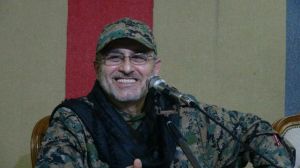
Mustafa Badreddine
American Herald Tribune | May 21, 2016
The leader of the Lebanese resistance movement Hezbollah, Seyyed Hassan Nasrallah, heaps praise on the movement’s military commander Mustafa Badreddine, who was killed in Syria last week, saying he was a front-runner in the fight against Israel.
“Badreddine played a key role alongside [his predecessor] Imad Mughniyeh… in the 2006 war against Israel before assuming several responsibilities including the dismantling of Israeli spy networks,” Nasrallah said in a televised speech on Friday.
Nasrallah was speaking to mark one week after Badreddine was killed.
He said Badreddine was tasked with overseeing Hezbollah’s security and military units in Syria since Takfiri militants initiated a war there in 2011.
Hezbollah fighters are combating alongside the Syrian government forces against a range of terrorist groups operating in the war-torn Arab country, including Daesh and the al-Qaeda-affiliated al-Nusra Front.
The Hezbollah leader said Badreddine was initially directing the Syria operation from Lebanon, but later “insisted” on traveling to Syria to oversee in person the sensitive operation.
Nasrallah said Hezbollah was against Badreddine’s presence in Syria as the group knew of the media controversy that would arise of his involvement in the war.
He noted that Badreddine’s presence in Syria helped Hezbollah prevent the fall of the country “into the hands of Takfiris and their American masters and spies in the region.”
The 55-year-old Hezbollah commander led Hezbollah’s military wing which is helping the Syrian government drive out foreign-backed Takfiri terrorists from Syria.
Badreddine also directed military operations against the Israeli invasion of Lebanon and was a frequent target of attempts by Tel Aviv, Washington and its allies to assassinate or capture him.
He was the cousin and brother-in-law of Imad Mughniyeh, who was assassinated by Israel in 2008.
He said Hezbollah has not entirely ruled out Israel of having a hand in Badreddine’s killing, but the group has not found any clues during the probe that could directly hint at Israel’s role.
Nasrallah denied speculations raised in some Arab media that Hezbollah did not assign blame on Israel for Badreddine’s killing because it wanted to escape responsibility for retaliation, saying throughout 34 years of confrontation with Israel, the regime in Tel Aviv has never doubted the genuineness of Hezbollah pledges for carrying out such retaliations.
“Our history is a proof that when we vow to retaliate we honor our pledges,” Nasrallah said, adding that Hezbollah would not stand on ceremony to openly blame Israel for perpetrating a crime when the evidence exists.
Nasrallah said Badreddine’s murder came at the hands of Takfiri groups and was orchestrated by those actively seeking to undermine the resistance front, including the United States.
He said, however, that the death of the commander would not lead to Hezbollah withdrawing from Syria. “Badreddine’s blood will push us to a bigger presence in Syria… We will remain in Syria and more leader will go into Syria,” Nasrallah said.
Else in his speech blasted Al-Saud’s calls for « democracy » in Syria and said:
The Saudi regime wants early parliamentary and presidential elections in Syria. But Saudi Arabia from its very inception as a nation-state until now has never had elections on its own soil. There is a ‘king’ and a ‘royal’ family and a dictatorship. Does anyone dare open his mouth against the regime in Saudi Arabia?! If someone dares to post two lines on Twitter, the ‘royal’ family goes crazy and sentences him to 1,000 lashes. What kind of Islam is this?! What sort of religion is this?! This is the ugliest form of hypocrisy!
Nasrallah continued, “This is not about freedom or democracy or elections or constituons! This is about the Syrian government not kneeling! This is about #Syria refusing to be a tool of American-Zionist hegemony. This is because Syria holds on to Resistance, refuses to betray Iran, defends Palestine, demands the return of the Golan Heights and maintains its sovereignty. This is because Syria is still a bastion of Arabism. Mark my words, if Bashar al-Assad was to say right now that he’d become a slave of the US-‘Israeli’ project, the war against Syria would be over tomorrow.”
Hizbollah Secretary Genral concluded his speech by saying: “I say to you with all confidence, throughout our 34 years, we have witnessed worse circumstances than what we’re dealing with today. And with our loyalty, steadfastness and commitment to the ongoing march on our path of Resistance, we shall overcome this new phase as well. In this battle, we are advancing and achieving victories. The Americans, the Zionists and Al-Saud said they’d gobble up #Syria five years ago, but yet Syria still stands today! This is because of the sacrifices of our martyrs. Indeed, Sayyed Mustafa’s blood and the blood of all our martyrs is the fuel which contributes to driving us to victory in this historic defense of the Ummah. Therefore our decision about continuing this fight is a simple one. I say to all of you who propagandized we’d leave Syria because of Sayyed Mustafa’s martyrdom – The martyrdom of any of our commanders has never made us leave any battle. Quite to the contrary, their martyrdoms will only make us increase our presence in Syria. We will be in Syria in greater numbers and different forms until victory. This is how we honor our martyrs and bring defeat to the US-Zionist-Takfiri-Saudi project. This project will fall; this project will be destroyed. I vow to you once more, Syria will never become the tool of our enemies and they will never get control of our region!”
Three civilians killed in new Saudi strikes in Yemen
Press TV – May 21, 2016
At least three Yemeni civilians have lost their lives and several others sustained injuries in new Saudi airstrikes against Yemen.
Saudi jets attacked two trucks loaded with bags of cement in the Hardin neighborhood of the southern Yemen port city of Mokha, situated 346 kilometers (214 miles) south of the capital, Sana’a, on Friday evening, killing three people and injuring five others, Yemen’s Arabic-language al-Masirah satellite television network reported.
Local sources said the trucks had made a stopover in the area where they were targeted on their way to the city of Ta’izz.
Eyewitnesses said charred body parts were strewn about the area, noting that the death toll would further increase as some of the injured are in a critical condition.
Saudi fighter jets also flew over several areas in the provinces of Ta’izz, Ma’rib and Amran, but there were no immediate reports of attacks.
Separately, a woman lost her life when Saudi warplanes conducted an airstrike in Sahar district of the northwestern Yemeni province of Sa’ada on Friday.
Another Saudi aerial raid against Qa’atabah district in Yemen’s southern province of Dhale left a woman injured.
Moreover, militiamen loyal to former President Abd Rabbuh Mansur Hadi lobbed a barrage of mortar shells against a position of Ansarullah fighters in al-Wazi’iyah district of Ta’izz Province on Friday, but no casualties were reported.
Elsewhere in al-Mansura district of the southern province of Aden, unidentified armed men fatally shot a pro-Hadi commander.
Moreover, there are reports that clashes have broken out between Hadi loyalists and Takfiri terrorists in the port city of Aden, with both sides exchanging heavy gunfire.
Saudi Arabia launched its military aggression against Yemen on March 26, 2015, in a bid to bring former President Abd Rabbuh Mansur Hadi —a staunch ally of Riyadh who resigned from the presidency — back to power and undermine the Houthi Ansarullah movement.
More than 9,400 people have been killed and at least 16,000 others injured since the onset of the aggression.
The Saudi strikes have also taken a heavy toll on the country’s facilities and infrastructure, destroying many hospitals, schools, and factories.
Last week, UN-brokered peace talks between delegates from Ansarullah movement and the Saudi-backed former Yemeni government in Kuwait were suspended after the latter declared its withdrawal from the talks.
Abdulmalek al-Mikhlafi, a representative of the pro-Hadi delegation, blamed Yemen’s Houthi Ansarullah movement and allies of torpedoing the talks, saying they have backtracked on their commitments.
The development came as UN Special Envoy for Yemen Ismail Ould Sheikh Ahmed had said he was optimistic about achieving a settlement for the conflict in Yemen.
CrossTalk: Universal Justice?
RT | May 20, 2016
The American legal system is rapidly transforming itself with the expressed purpose of replacing much of international law. Be it within the realm of trade and banking, criminal prosecutions and even sports. The Americanization of law supplants the United Nations and the sovereignty of every state on the planet.
CrossTalking with Joe Lauria, Daoud Khairallah, and Toby Cadman.
‘Clinton as president is danger to world peace’ – French National Front party leader
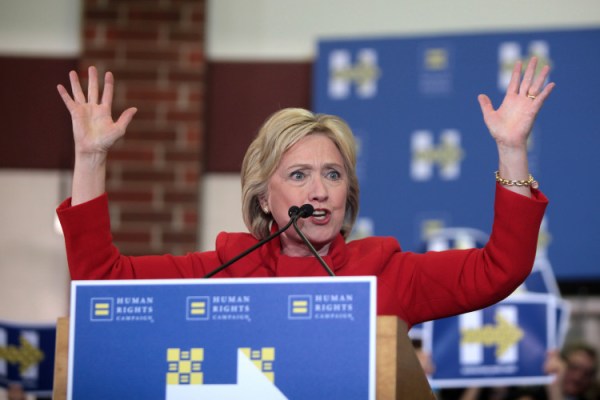
Photo credit – Gage Skidmore on Flickr
RT | May 20, 2016
Hillary Clinton winning the White House would constitute “a danger for the world peace,” as she would continue to drag Europe into her “destructive policy” of conflicts, Marine Le Pen, leader of the French National Front party, told RT.
While declining to endorse any of the US presidential front-runners, Le Pen said she believes there is one that would definitely not benefit France.
“There is a candidate who appears a lot more dangerous for France than the others – that’s Hillary Clinton,” the head of the National Front told RT France in an exclusive interview. “I’m not American so I don’t need to make a choice. But… in the interests of France, Hillary Clinton is probably the worst choice out there.”
Le Pen sees the Democratic frontrunner as being so “dangerous” because of Clinton’s career as US Secretary of State, in which she worked “hand in hand with the full spectrum of American decisions” that eventually “plunged the world objectively into chaos.”
“I think if she was elected she would continue this policy, a destructive policy, a policy of conflict, a policy of imprisonment of Europe in blinded Atlanticism,” Le Pen said. “I think it’s a danger for world peace.”
In December, Le Pen, who herself hopes to win France’s 2017 presidential elections, criticized Republican frontrunner Donald Trump for proposing to ban almost all Muslims from entering the United States.
“Seriously, have you ever heard me say something like that?” Le Pen said in one of her interviews, presumably in response to being compared with Trump. “I defend all the French people in France, regardless of their origin, regardless of their religion.”
The US media has repeatedly drawn comparisons between Marine Le Pen and Trump. The New York Times called the real estate mogul turned GOP frontrunner “America’s Marine Le Pen”. Bloomberg has also referred to Le Pen as “Europe’s own Donald Trump.”
While Marine Le Pen hasn’t explicitly named a “preferable” candidate for US president, her father has.
Jean-Marie Le Pen, retired long-time leader and founder of the French National Front, made headlines in February by endorsing Trump in a tweet, in which he said that if he was an American, he “would vote Donald Trump.”
Read more:
Nuland’s Visit to Moscow: Has the US Arch Neocon Lost Her Bearings?
Sputnik – 18.05.2016
US Assistant Secretary for European and Eurasian Affairs Victoria Nuland has wrapped up her visit to Moscow. According to officials, Nuland came to the Russian capital to discuss the situation in east Ukraine. Adding his two cents about the real purpose of the visit, analyst Gevorg Mirzayan suggested that the secretary may have lost her bearings.
On Wednesday, Kremlin spokesman Dmitri Peskov explained the official reason for Nuland’s visit, saying that the two sides discussed the situation in the war-torn eastern Ukrainian region of Donbass, with the US sharing ‘first-hand information’ and looking “to establish a sort of working exchange mechanism” outside the Normandy format, which doesn’t include Washington.
In his own commentary on the visit, Expert Magazine columnist Gevorg Mirzayan clarified, saying that Nuland’s main official goal “is to spur the negotiating process on the Donbass and, in particular, on the holding of local elections in the Donetsk and Lugansk People’s Republics, one of the most important measures of the Minsk peace agreements.”
“At first glance, of course, it seems like Nuland came to the wrong city,” the analyst noted. “After all, it’s not Moscow that’s sabotaging the holding of elections in the Donbass, but Kiev. One of the key challenges for Ukrainian authorities is not to recognize the situation in the Donbass as a civil war. This is why Kiev comes out against the fulfillment of the political articles of the Minsk agreement, and its most important aspect: direct negotiations between Ukrainian authorities and the leaders of the breakaway republics.”
For now, Mirzayan writes, Kiev’s argument that the DPR and LPR leaders Alexander Zakharchenko and Igor Plotnitsky are not democratically elected, and therefore politically illegitimate, carries some weight. “However, after elections take place, Kiev will have to carry deal with the legitimate representatives of the Donbass,” and this is something Ukrainian authorities are desperately looking to avoid.
Speaking to Expert, former Ukrainian lawmaker Oleg Tsaryev emphasized that once elections are held, if the conflict between Kiev and the Donbass continues, “it will fall under the definition of a civil war, and Kiev’s actions will be treated as a war crime.” Therefore, he said, “if the Americans really wanted to ensure the implementation of the agreements, Victoria Nuland would be sitting in Kiev, and speaking in an unyielding tone to its lawmakers, faction heads and oligarchs. Washington has many tools at its disposal: the threat of prohibiting elites from entering the EU, the threat of halting foreign bank lending, the confiscation of property and the seizure of accounts abroad.”
Therefore, Mirzayan notes, “it’s entirely possible that Nuland came to Moscow to offer to exert such pressure on Kiev in exchange for some concessions from the Russian side – on Ukraine, Syria or some other issue. The US is attempting to convince the Kremlin that it must ensure Kiev’s complaisance; after all, the lifting of anti-Russian sanctions depends on the implementation of the Minsk agreements.”
“However, it’s also possible that Nuland will leave Moscow empty-handed, or with a minimum compensation. Because in reality, all she is offering is to ensure a vote in Ukraine’s parliament, while the parties have to not only negotiate on the adoption of the law, but also its contents.”The current bill submitted to the Ukrainian parliament is out of sync with the Minsk agreements, according to the analyst. “But Ukrainian authorities and their Western partners could make it so that further discussions were held about its passing, rather than further changes to the bill. And then, if Kiev gave way and accepted the current version of the bill, it would be perceived as a maximum concession, and the Kremlin would have a difficult time requesting corrections.”
The same thing might happen with the electoral law, the analyst warns. “Those familiar with the document say that it has rather sensible requirements.”
“There are four main positions in this law,” Opposition Bloc lawmaker Yuriy Boyko told Expert. “The election must be in accordance with Ukrainian legislation, Ukrainian media must be given access, electoral commissions must be formed and the elections must take place with the oversight of international observers.”
However, Mirzayan notes, “the real question is how these requirements would be implemented.” For their part, the analyst suggests, Ukrainian officials and analysts have openly said that the law would be deliberately designed to include a whole a series of nuances making it unacceptable to representatives from the breakaway regions.
This, according to Ukrainian political analyst Mikhail Pogrebinsky, “would enable Ukraine, at the Normandy format level, with the participation and support of the United States, to say that we are fulfilling our part of the agreement, but the Donbass is not, and therefore no elections will ever be held.”
For its part, Mirzayan notes, Moscow “does not find this scenario to be acceptable. If the Minsk agreement cannot be implemented in full, the Kremlin may find it advantageous to simply freeze the situation until a new, more pragmatic government emerges in Kiev. Right now, time is on Russia’s side, and the attitudes of the European and even American elites toward Ukraine are changing, and becoming more inclined to seek compromise with Russia.”
Furthermore, “the situation in Ukraine itself is also changing, and not just economically but politically as well. President Petro Poroshenko recently succeeded in consolidating his power, and now controls the cabinet of ministers, the parliament, the prosecutor general and the security forces. The Americans either could not or did not want to interfere, and in the short term this is his victory.””However, in the medium term, such a concentration can be problematic.” After all, “Poroshenko no longer has a lightning rod in the form of [former Prime Minister] Yatsenyuk, who could be blamed for all the country’s economic problems and dismissed. Poroshenko has become personally responsible for everything that happens in the country, while his opponents, removed from power and its privileges, have received a carte blanche to make a name for themselves by criticizing the government and the president.”
“And this is not even mentioning the fact that the population is very tired of the revolutionary enthusiasm of the authorities and the parliament. The majority of Ukrainians have not forgotten about Crimea. However, if they begin to perceive the Donbass as a real civil war, new authorities will be fully capable of resolving the conflict in the spirit of Minsk-2. This is the same thing that Russia seeks, and is something it can achieve without making significant concessions to Victoria Nuland.”
Naturally, Mirzayan emphasizes, “the Kremlin will also have to work very hard to ensure that the conflict remains frozen. The authorities in Donbass have long and persistently sought to hold local elections,” warning that if Brussels and Washington could not force Kiev to fulfill their obligations under the Minsk agreements, they would hold elections independently.
“And while formally such elections would not contradict the Minsk agreements (they simply wouldn’t be recognized), they would create a negative sentiment around the Russian position. This is exactly what Kiev wants, and what Moscow wants to avoid on the eve of a serious dialogue with the EU about the future of the anti-Russian sanctions,” the analyst concludes.
Read more:
Nuland Starts Moscow Visit by Meeting ‘Young Leaders’
Nuland Warns Donbas to Ensure Elections are Held Within Minsk Accord
OSCE: East Ukraine’s Donbass Showing Signs of ‘Frozen Conflict’
Featured Video
Iranians Want Revenge /Sulaiman Ahmed
or go to
Aletho News Archives – Video-Images
From the Archives
Only a Beginning… Charles Malik’s vision of an emergent Pax Judaica
By David Miller | Tracking Power | November 12, 2026
In August 1949, three months after Israel joined the United Nations, Lebanon’s envoy in Washington sent his government a long report. Charles Malik, no firebrand, had signed the UN Charter and helped draft the Universal Declaration of Human Rights. His Report on the Present Situation lay largely unread until Dar An-Nahar printed it in 2002. … continue
Blog Roll
 Aletho News
- Independence movement declares mobilization against Morocco
- Only a Beginning… Charles Malik’s vision of an emergent Pax Judaica
- Iranians Want Revenge /Sulaiman Ahmed
- ‘Israel’ bombs Nasser Medical Complex in Khan Younis, killing 5
- The beginning of the end: Israel at the heart of America’s political civil war
- US-Israeli war on Iran cost Persian Gulf states nearly $1T in damage, lost growth: Report
- Congress probe could put ‘Israel’ in dock over Iran war: Israeli media
- Spanish public prosecutor backs US demand to extradite pro-Palestine philanthropist Fergie Chambers
- Zelensky spent over 740 days outside Ukraine while West serves as his real home
- Indian captain of Russian ‘shadow fleet’ tanker faces 10-year jail term in UK
- If Americans Knew
- These Democrats Are Bringing a Christian Case Against Israel’s War to Congress
- Netanyahu calling Trump ‘every day’ to push for renewed war on Iran
- What will big wins by Democrats actually mean for Palestine?
- What is Section 219 of the US defense bill, and what would it mean for Israel?
- Hegseth dodges impeachment after using troops and vets for cover
- Israel Bombs Lebanon’s Churches
- Israel Targets U.S. Conservatives in New Influence Operation
- Declassified FBI Files Reveal Early U.S. Counterintelligence Probe into Israeli Espionage and Smuggling Networks
- Israelis perpetrated 1,182 arson attacks in the West Bank in past 3 years
- DAILY UPDATE: Latest essential news on Palestine, Israel, & region
- No Tricks Zone
- German Authorities Start Initiative To Evaluate Public Register For Climate “Disinformation” Spreaders!
- Zonal Asymmetry of Temperature Change in the Antarctic Circumpolar Current
- New Study: The Net Fossil Fuel Contribution To Rising Atmospheric CO2 Has Been Zero For 500 Years
- Germany’s Green Energy Transition Becoming Increasingly Expensive…Another 6 Trillion Euros!
- Sudden Stratospheric Warming, Powerful El Niño Combination May Lead To Extreme Europe Cold, Energy Crisis!
- Two New Studies Find Thwaites Glacier Melt Cannot Be Driven By Human Activity Or A Warming Ocean
- E-Cars Reduce CO2 Emissions By Only 41% Compared To Internal Combustion Engine Vehicles
- Predictions Made By Renowned Climate Professor Over Past Decades Have Been Proven To Be Poor
- New Study Suggests Large Regions Of The Pacific Ocean Have Been Cooling For The Last 80 Years
- Germany’s Green Energy Debacle: High Energy Costs Force Kahla Porzellan to Close After 182 Years!

