‘Russian bounty’ story shifts: NYT now claims Afghan CRIMINALS & not Taliban were paid, cites anonymous sources again
RT | June 30, 2020
The New York Times is doubling down on claims that Russia offered bounties for the killing of US troops in Afghanistan, but now says local criminals and not the Taliban were the recipients, again offering no actual evidence.
The new article, published Tuesday, says that “electronic data showing large financial transfers from a bank account controlled by Russia’s military intelligence agency to a Taliban-linked account” was intercepted by US spies and “bolsters suspicions” that Russia offered bounties to militants – as claimed by the Times last week.
Once again, the Times quotes anonymous sources – “three officials familiar with the intelligence” – so the claim is impossible to verify. No evidence of the alleged electronic transfer is provided, only a third-hand hearsay that “analysts concluded from other intelligence that the transfers were most likely part of a bounty program.”
The article eventually gets around to quoting several local officials from Afghanistan, who say that several people who transfer money through an Islamic banking system are “suspected of being part of a ring of middlemen” between Russia and “Taliban-linked militants.”
The ‘hawala’ banking system does not actually use electronic transfers. Moreover, the article says the Afghan security forces found “a half-million dollars” – presumably in cash – in one Kabul home about six months ago. Safiullah Amiry, described as “the deputy provincial council chief” in Kunduz, “said the Afghan intelligence agency had told him the raids were related to Russian money being dispersed [sic] to militants.”
In the original article, the Times claimed President Donald Trump had been briefed on this alleged plot sometime in March. The White House, the CIA and the Office of the Director of National Intelligence have since denied this.
So the narrative has now shifted, with the Times citing “two officials” who say the information was included in Trump’s written presidential daily brief (PDB) “in late February,” accompanied by the – likewise unverified – claim that Trump typically doesn’t read those. The article also claims the CIA mentioned the intelligence in its World Intelligence Review newsletter, also known as The Wire, dated May 4.
The identity of the suspected recipients of the “Russian bounties” has shifted as well, from the Taliban to “criminals closely associated with the Taliban” – according to yet another anonymous US official.
Most mainstream US media outlets and the Democrats have taken the original New York Times reporting at face value, denouncing Trump as “Putin’s puppet” and a traitor for allegedly not doing anything to “punish Russia” based on the purported intelligence assessments, rather than demanding to see evidence there was anything to it.
Fake story on Russians paying Afghans ‘bounty’ to kill Americans latest example of appalling media coverage of Russia
By Bryan MacDonald | RT | June 29, 2020
The Anglo-American press is difficult to understand. Anonymous sources are treated as gospel – when they suit the ideological and political biases of news outlets – and spy agencies seem to be beyond reproach.
This, of course, is how America and Britain were drawn into the Iraq War. Mainstream media was complicit in manufacturing consent by publishing stories handed down by intelligence agencies – a great many of them later proven untrue. Perhaps most notably, the New York Times went big on the bogus “weapons of mass destruction” yarn.
After the damage was done, and hundreds of thousands of Iraqis had died, the paper apologized. It admitted it was encouraged to report the claims by “United States officials convinced of the need to intervene in Iraq.”
Almost two decades on, it has plainly learned nothing. This weekend the Times had three of its most senior journalists basically rewrite a CIA press release as part of its latest attempt to undermine President Donald Trump by playing the “Russia card.” Quite why it took so many of them is hard to understand – unless none wanted to be the sole name on the piece, preferring safety in numbers.
The story claimed that Russia is paying Afghan militants to kill American soldiers and that Trump’s team has known for months but done nothing. The US director of national intelligence quickly denied the allegations, as did the president himself. It surely wasn’t coincidental that the drop took place in the same weekend that reports emerged of Trump planning to withdraw 4,000 troops from Afghanistan.
If you know anything about Russia, the story is obviously false. The Americans are totally bogged down in Kabul, which suits Moscow in myriad ways. In fact, the Kremlin would be only delighted if the US stayed there forever. What’s more, the Taliban hardly needs a financial incentive to attack a hated occupying force. So why would Moscow need to be handing out bounties to encourage people who already have it in for Americans?
Another interesting detail was the New York Times’ assertion that its allegations are “based at least in part on interrogations of captured Afghan militants and criminals.” Given we know the US uses torture in Afghanistan that should be an immediate red-flag to any self-respecting journalist. Not to mention the fact that even if Afghan prisoners did say this, it’s likely no more than prison gossip: “Daud told Nadir that Hashem heard the Russians will pay you for killing an American.”
The Times trio even threw in a bit of casual xenophobia. “I think we had forgotten how organically ruthless the Russians could be,” they quoted Peter Zwack, a retired military intelligence officer, as saying. Imagine a report saying Asians, Africans, Mexicans or Jews are “organically ruthless.” That’s right, you can’t, because it wouldn’t happen. But Russians, being predominantly white and Christian, are considered to be fair game.
Soon after, the Washington Post said it had ‘confirmed’ the Times’ story. All this means is they were fed the same bulls**t by the same anonymous spooks. Even more hilariously, the paper managed to get a named Taliban spokesman to go on the record with his denial, while it allowed the Americans who pushed the yarn to remain in the shadows. Nevertheless, which narrative do you think was given more credence?
This carry-on is deeply unethical. Especially given it comes just a couple of months after US/UK media went big on another fake story alleging Russia was trying to poison Czech politicians with ricin. Prague eventually admitted the tale was entirely made up. This confession, of course, received about one percent of the coverage granted to the original fabrication.
Predictably, broadcast media followed up on the Times and Post’s reports. Rachel Maddow was front and center, naturally. You’ll remember she spent a few years airing false and hysterical smears about Trump’s alleged ties to Moscow and suffered no professional consequences when the Mueller Report proved her allegations to be untrue.
But it wasn’t just Maddow. On Saturday, CNN ran “breaking news” saying it had found “a European intelligence official” to corroborate the tale. It then cut to its own correspondent, one Nick Paton Walsh. He provided no named source and his comments basically amounted to “some fella told me down the pub” stuff. Honestly, in any sane media culture, Paton Walsh would be laughed at, not encouraged.
For example, at one point he said “it’s not clear when this happened” and then added, “it’s clear it has caused casualties.” But instead of asking “how is it possible to know that if you can’t say when it happened?” the anchor just sat there nodding along with that vacuous look in her eyes which seems to be mandatory for CNN presenters.
Later, Britain’s Sky News ran the same yarn, but said “British security officials have confirmed… that the reports about the plot are true.” Presumably, Sky was spoon-fed by the same spooks who exploited Paton Walsh as a ‘useful idiot’. Later, the Guardian’s Stephanie Kirchgaessner tweeted “this confirmation by closest intel allies is critical and damning: Russia paid Taliban fighters to attack British troops in Afghanistan.”
Again, the reporter expressed no doubts, because apparently the word of spooks is golden, and they would never lie.
It’s established that mainstream US/UK media operates in a self-contained pit of rumor, fear, braggadocio, bullshit, and propaganda when it comes to Russia. But what’s most bizarre is the sheer obviousness with which outlets circulate the same false stories and then use each other as corroborating sources even though they are all getting the information from the same people.
Folk who obviously have their own agendas, and are playing gormless hacks like a fiddle. The other incredible thing is a clear lack of understanding about what ‘confirmation’ even means. It obviously requires tangible evidence, on the record.
The New York Times’ coverage of Russia basically only has two tricks. They either rip-off articles from smaller Russian liberal outlets (who often can’t complain too loudly as they rely on Western funding) or they regurgitate anonymous sources in the US military-intelligence establishment looking to run scare stories about the country. None of this involves any reporting, and it cannot be considered journalism under any accepted definition of what the trade involves.
Given the New York Times is arguably the biggest, and most visible, fish in the US/UK media world, you can only imagine the even lower standards that permeate further down the food chain.
Russiagate’s Last Gasp
One can read this most recent flurry of Russia, Russia, Russia paid the Taliban to kill GIs as an attempt to pre-empt the findings into Russiagate’s origins.
By Ray McGovern | Consortium News | June 29, 2020
On Friday The New York Times featured a report based on anonymous intelligence officials that the Russians were paying bounties to have U.S. troops killed in Afghanistan with President Donald Trump refusing to do anything about it. The flurry of Establishment media reporting that ensued provides further proof, if such were needed, that the erstwhile “paper of record” has earned a new moniker — Gray Lady of easy virtue.
Over the weekend, the Times’ dubious allegations grabbed headlines across all media that are likely to remain indelible in the minds of credulous Americans — which seems to have been the main objective. To keep the pot boiling this morning, The New York Times’ David Leonhardt’s daily web piece, “The Morning” calls prominent attention to a banal article by a Heather Cox Richardson, described as a historian at Boston College, adding specific charges to the general indictment of Trump by showing “how the Trump administration has continued to treat Russia favorably.” The following is from Richardson’s newsletter on Friday:
— “On April 1 a Russian plane brought ventilators and other medical supplies to the United States … a propaganda coup for Russia;
— “On April 25 Trump raised eyebrows by issuing a joint statement with Russian President Vladimir Putin commemorating the 75th anniversary of the historic meeting between American and Soviet troops on the bridge of the Elbe River in Germany that signaled the final defeat of the Nazis;
— “On May 3, Trump called Putin and talked for an hour and a half, a discussion Trump called ‘very positive’;
— “On May 21, the U.S. sent a humanitarian aid package worth $5.6 million to Moscow to help fight coronavirus there. The shipment included 50 ventilators, with another 150 promised for the next week; …
— “On June 15, news broke that Trump has ordered the removal of 9,500 troops from Germany, where they support NATO against Russian aggression. …”
Historian Richardson added:
“All of these friendly overtures to Russia were alarming enough when all we knew was that Russia attacked the 2016 U.S. election and is doing so again in 2020. But it is far worse that those overtures took place when the administration knew that Russia had actively targeted American soldiers. … this bad news apparently prompted worried intelligence officials to give up their hope that the administration would respond to the crisis, and instead to leak the story to two major newspapers.”
Hear the siren? Children, get under your desks!
The Tall Tale About Russia Paying for Dead U.S. Troops
Times print edition readers had to wait until this morning to learn of Trump’s statement last night that he was not briefed on the cockamamie tale about bounties for killing, since it was, well, cockamamie.
Late last night the president tweeted: “Intel just reported to me that they did not find this info credible, and therefore did not report it to me or the VP. …”
For those of us distrustful of the Times — with good reason — on such neuralgic issues, the bounty story had already fallen of its own weight. As Scott Ritter pointed out yesterday:
“Perhaps the biggest clue concerning the fragility of the New York Times’ report is contained in the one sentence it provides about sourcing — “The intelligence assessment is said to be based at least in part on interrogations of captured Afghan militants and criminals.” That sentence contains almost everything one needs to know about the intelligence in question, including the fact that the source of the information is most likely the Afghan government as reported through CIA channels. …”
And who can forget how “successful” interrogators can be in getting desired answers.
Russia & Taliban React
The Kremlin called the Times reporting “nonsense … an unsophisticated plant,” and from Russia’s perspective the allegations make little sense; Moscow will see them for what they are — attempts to show that Trump is too “accommodating” to Russia.
A Taliban spokesman called the story “baseless,” adding with apparent pride that “we” have done “target killings” for years “on our own resources.”
Russia is no friend of the Taliban. At the same time, it has been clear for several years that the U.S. would have to pull its troops out of Afghanistan. Think back five decades and recall how circumspect the Soviets were in Vietnam. Giving rhetorical support to a fraternal Communist nation was de rigueur and some surface-to-air missiles gave some substance to that support.
But Moscow recognized from the start that Washington was embarked on a fool’s errand in Vietnam. There would be no percentage in getting directly involved. And so, the Soviets sat back and watched smugly as the Vietnamese Communists drove U.S. forces out on their “own resources.” As was the case with the Viet Cong, the Taliban needs no bounty inducements from abroad.
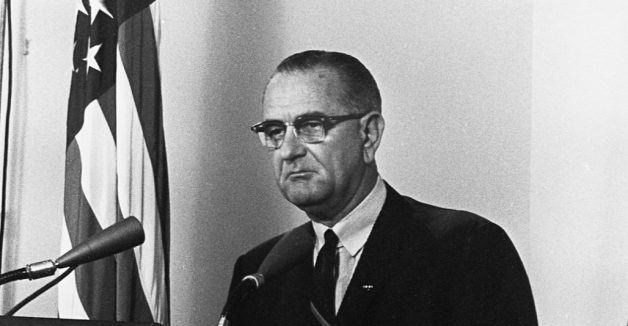
President Lyndon Johnson announces “retaliatory” strike against North Vietnam in response to the supposed attacks on U.S. warships in the Gulf of Tonkin on Aug. 4, 1964. (LBJ Library)
Besides, the Russians knew painfully well — from their own bitter experience in Afghanistan, what the outcome of the most recent fool’s errand would be for the U.S. What point would they see in doing what The New York Times and other Establishment media are breathlessly accusing them of?
CIA Disinformation; Casey at Bat
Former CIA Director William Casey said: “We’ll know when our disinformation program is complete, when everything the American public believes is false.”
Casey made that remark at the first cabinet meeting in the White House under President Ronald Reagan in early 1981, according to Barbara Honegger, who was assistant to the chief domestic policy adviser. Honegger was there, took notes, and told then Senior White House correspondent Sarah McClendon, who in turn made it public.
If Casey’s spirit is somehow observing the success of the disinformation program called Russiagate, one can imagine how proud he must be. But sustained propaganda success can be a serious challenge. The Russiagate canard has lasted three and a half years. This last gasp effort, spearheaded by the Times, to breathe more life into it is likely to last little more than a weekend — the redoubled efforts of Casey-dictum followers notwithstanding.
Russiagate itself has been unraveling, although one would hardly know it from the Establishment media. No collusion between the Trump campaign and Russia. Even the sacrosanct tenet that the Russians hacked the DNC emails published by WikiLeaks has been disproven, with the head of the DNC-hired cyber security firm CrowdStrike admitting that there is no evidence that the DNC emails were hacked — by Russia or anyone else.
How long will it take the Times to catch up with the CrowdStrike story, available since May 7?
The media is left with one sacred cow: the misnomered “Intelligence Community” Assessment of Jan. 6, 2017, claiming that President Putin himself ordered the hacking of the DNC. That “assessment” done by “hand-picked analysts” from only CIA, FBI and NSA (not all 17 intelligence agencies of the “intelligence community”) reportedly is being given close scrutiny by U. S. Attorney John Durham, appointed by the attorney general to investigate Russiagate’s origins.
If Durham finds it fraudulent (not a difficult task), the heads of senior intelligence and law enforcement officials may roll. That would also mean a still deeper dent in the credibility of Establishment media that are only too eager to drink the Kool Aid and to leave plenty to drink for the rest of us.
Do not expect the media to cease and desist, simply because Trump had a good squelch for them last night — namely, the “intelligence” on the “bounties” was not deemed good enough to present to the president.
(As a preparer and briefer of The President’s Daily Brief to Presidents Reagan and HW Bush, I can attest to the fact that — based on what has been revealed so far — the Russian bounty story falls far short of the PDB threshold.)
Rejecting Intelligence Assessments
Nevertheless, the corporate media is likely to play up the Trump administration’s rejection of what the media is calling the “intelligence assessment” about Russia offering — as Rachel Maddow indecorously put it on Friday — “bounty for the scalps of American soldiers in Afghanistan.”
I am not a regular Maddow-watcher, but to me she seemed unhinged — actually, well over the top.
The media asks, “Why does Trump continue to disrespect the assessments of the intelligence community?” There he goes again — not believing our “intelligence community; siding, rather, with Putin.”
In other words, we can expect no let up from the media and the national security miscreant leakers who have served as their life’s blood. As for the anchors and pundits, their level of sophistication was reflected yesterday in the sage surmise of Face the Nation’s Chuck Todd, who Aaron Mate reminds us, is a “grown adult and professional media person.” Todd asked guest John Bolton: “Do you think that the president is afraid to make Putin mad because maybe Putin did help him win the election, and he doesn’t want to make him mad for 2020?”
“This is as bad as it gets,” said House Speaker Nancy Pelosi yesterday, adding the aphorism she memorized several months ago: “All roads lead to Putin.” The unconscionably deceitful performance of Establishment media is as bad as it gets, though that, of course, was not what Pelosi meant. She apparently lifted a line right out of the Times about how Trump is too “accommodating” toward Russia.
One can read this most recent flurry of Russia, Russia, Russia as a reflection of the need to pre-empt the findings likely to issue from Durham and Attorney General William Barr in the coming months — on the theory that the best defense is a pre-emptive offense. Meanwhile, we can expect the corporate media to continue to disgrace itself.
Vile
Caitlin Johnstone, typically, pulls no punches regarding the Russian bounty travesty:
“All parties involved in spreading this malignant psyop are absolutely vile, but a special disdain should be reserved for the media class who have been entrusted by the public with the essential task of creating an informed populace and holding power to account. How much of an unprincipled whore do you have to be to call yourself a journalist and uncritically parrot the completely unsubstantiated assertions of spooks while protecting their anonymity? How much work did these empire fluffers put into killing off every last shred of their dignity? It boggles the mind.
It really is funny how the most influential news outlets in the Western world will uncritically parrot whatever they’re told to say by the most powerful and depraved intelligence agencies on the planet, and then turn around and tell you without a hint of self-awareness that Russia and China are bad because they have state media.
Sometimes all you can do is laugh.”
Ray McGovern works for Tell the Word, a publishing arm of the ecumenical Church of the Saviour in inner-city Washington. During his 27-years as a CIA analyst he led the Soviet Foreign Policy Branch and prepared The President’s Daily Brief for Presidents Nixon, Ford, and Reagan. In retirement, he co-created Veteran Intelligence Professionals for Sanity (VIPS).
Afghanistan Bounties: Pot, Meet Kettle (and Turn Off the Stove!)
By Thomas L. Knapp | The Garrison Center | June 29, 2020
“American intelligence officials have concluded that a Russian military intelligence unit secretly offered bounties to Taliban-linked militants for killing coalition forces in Afghanistan,” claims the New York Times.
More controversially, the authors write that US president Donald Trump was briefed on the assessment (he denies it) and the piece’s tag line says that his administration “has been deliberating for months” on how to respond (he says the US intelligence community didn’t find the claims credible).
Naturally, the response preferred by those who buy the Times‘s version of events is:
First, make domestic political hay with it. Sure, trying to frame Trump as a Russian asset has backfired spectacularly every time it’s been tried, but sooner or later it’s bound to work, right?
Second, make foreign policy hay with it. Punish the Russians until they’ve been baited back to full-blown Cold War levels of enmity, all the while whining that “they hate us for our freedom.”
I’ve got a better plan.
First, reduce the US military presence in Afghanistan to zero. If there aren’t any US forces in Afghanistan, no US forces in Afghanistan will be in danger due to supposed “Russian bounties.”
Second, ignore — forget! — the slim possibility that Russian bounties were behind any American deaths.
Problems solved.
Why should the US let the Russians off the hook and quit worrying about it? Here’s why:
To date, fewer than 2,500 Americans have died in Afghanistan in nearly 19 years of war.
The Russians’ 1979-1989 Afghan war lasted about half as long. Their toll was 15,000 dead.
Why didn’t the Russians get off as lightly as the Americans?
Because the US government spent at least $3 billion directly funding and arming groups like al Qaeda to fight the Russians in Afghanistan (through the CIA’s “Operation Cyclone”), and billions more indirectly via the Pakistani government.
Even counting only the known direct aid, that amounts to a $200 in-kind bounty for every dead Russian soldier. $200 was a pretty sweet paycheck, more than Afghanistan’s per capita GDP during most of that period.
If there is a Russian bounty program on US troops in Afghanistan now, it’s clearly been less successful than the equivalent US program was 30-40 years ago. And with that program, the US government gave up any conceivable standing to complain about a Russian remix.
That supposed remix is just one more reason, from among a long list of good reasons, to bring the troops home from Afghanistan.
Thomas L. Knapp (Twitter: @thomaslknapp) is director and senior news analyst at the William Lloyd Garrison Center for Libertarian Advocacy Journalism (thegarrisoncenter.org).
Will South Korea’s Moon Defy Trump and Improve Relations with North Korea?
By Gregory Elich | June 29, 2020
North Korea is in the news again. As always, that means that it is time for mainstream journalists and establishment figures to reach for the handy cliché and to recycle received opinion as a substitute for thought. Terms like “provocation,” “threat,” and “aggression” abound. Not surprisingly, powerful political and military actors in the United States are seizing the opportunity offered by strained inter-Korean relations to try and kill any prospect of reengagement with the Democratic People’s Republic of Korea (DPRK – the official name for North Korea).
In the eyes of nearly all U.S. politicians, military contractors, think tank analysts, and mainstream journalists, the release of former National Security Advisor John Bolton’s memoir could not have arrived at a better time. Bolton played a key role in torpedoing the Hanoi Summit by demanding that North Korea relinquish its biological and chemical weapons, despite the lack of evidence that the DPRK even has such programs. That was coupled with his insistence that North Korea adopt the Libya model of denuclearization, in which the DPRK would give up everything and receive nothing in return other than vague assurances. For Bolton, sinking the Hanoi Summit was a job half-done. With his memoir, he hopes to complete the task and smother the very concept of reengagement, a message that is predictably finding a receptive ear among so many in Washington.
President Trump’s willingness to meet with Chairman Kim Jong Un had suggested the potential for progress on the Korean Peninsula. For a time, Trump was open to dialogue but he remained wedded to the standard establishment line that the sole purpose of talks should be to negotiate the terms of North Korea’s surrender. In essence, it now appears that there was more continuity than change in Trump’s policy. Both former President Obama and Trump waged economic warfare on the North Korean people through sanctions, and both sought unilateral concessions. Where they differed was in whether issuing demands in face-to-face meetings needed to be added to the mix.
At one point, U.S. Special Representative for North Korea Stephen Biegun responded to criticisms of American intransigence by suggesting that the United States might consider offering compensation to North Korea in exchange for denuclearization. The possibilities he mentioned included agreeing to the two nations opening liaison offices in each other’s capital, permitting a few people-to-people talks, and humanitarian aid. There was also the thought that the United States might be willing to sign a declaration acknowledging that the Korean War came to an end in 1953. What is notable about all of these proposals is that they would provide nothing that North Korea truly needs. Sanctions would remain in place. Nor would there be a security guarantee to the DPRK that would allow it to feel safe enough to dismantle its nuclear deterrent. Also missing was normalization of relations.
Undoubtedly, there is ample reason to question Bolton’s veracity in his self-justifying memoir. But there is at least one passage that has the ring of plausibility. Bolton claims that he began to suspect that the end-of-war declaration was Moon’s idea. That impression was confirmed in talks with the North Koreans, who “had told us they didn’t care about it, seeing it as something Moon wanted,” and they also “worried about Moon’s pitching Trump on these bad ideas.” [1]
Kim Myong Gil, North Korea’s chief negotiator in denuclearization talks, firmly rejected Biegun’s offer of purely symbolic measures. “If the U.S. believes that it can lure us to the table with secondary issues, such as an end-of-war declaration – which can instantly end up as garbage depending on the political situation – and the establishment of a liaison office, instead of presenting fundamental solutions to withdraw its hostile policy against North Korea, which interferes with our right to survival and development, there will never be any hope for a solution.” [2]
However, reciprocity is not a word in the Washington lexicon, so talks remained stymied. Trump is currently distracted as the electoral campaign ramps up and in his criminal mismanagement of the COVID-19 virus. The mood on Capitol Hill and in the media is unremittingly hostile to the resumption of talks, and it is difficult to envision a reelected Trump being open to reengagement in a more even-handed manner. Nor can hope for an improved U.S.-DPRK relationship be placed in a Joe Biden presidency. In a campaign video, Biden declared, “The first thing we have to do is start to demonstrate to the American public that we’re no longer embracing the Kim Jong Uns and the thugs of the world…We are the United States of America. We lead by our example. We’re back. That’s the most critical thing that is going to have to be done.” [3]
The writing, then, is clearly on the wall. North Korean Minister of Foreign Affairs Ri Son Gwon issued a statement on June 12, in which he pointed out that “the hope for improved DPRK-U.S. relations…has now been shifted into despair,” and “even a slim ray of optimism for peace and prosperity… has faded away.” [4]
Trump’s inability or unwillingness to think beyond the ossified constraints of the Washington Establishment’s mindset ensured that talks could only end in failure. The North Koreans have taken due note of the Trump administration’s rigidity and have essentially given up hope for better relations.
Instead, the North Koreans focused their attention where there seemed more potential for improvement, and that was with inter-Korean relations. They hoped for measures such as establishing economic projects of mutual benefit and the cessation of military exercises aimed at each other. But here, too, the DPRK met with disappointment, as progress with South Korea remained stalled.
Mainstream media tell us that by severing communication links with the south and setting off an explosion at the Joint Liaison Office in Kaesong, North Korea is ‘lashing out’ and ‘raising tensions,’ due to economic problems or as a message to encourage Trump to resume negotiations.
In reality, these gestures are intended as a wake-up call to the Moon administration to prod him into returning to the commitments he signed in the Panmunjom Declaration. North-south relations have been in the doldrums for quite some time now, and the DPRK’s repeated requests for cooperation in advancing inter-Korean relations have invariably failed to move Moon into action.
South Korean President Moon Jae-in recognizes the need for warmer relations between the two Koreas, and some of Moon’s ideas for bringing the two Koreas closer together, such as his proposal for a Northeast Asian Railway Initiative, [5] have considerable merit. Yet, all of his plans remain undisturbed on the shelf, collecting dust.
The problem is that, as much as Moon may care about inter-Korean relations, the U.S.-South Korean alliance is more important to him. Moon insists that the UN economic sanctions on North Korea, which the U.S. devised, prevent him from implementing many of his plans. On every matter concerning cooperation with North Korea, whether large or small, Moon feels compelled to first ask for permission from the United States, and the answer is always no. It is due to Moon’s timidity that inter-Korean relations have failed to progress beyond initial steps.
Moon’s pronouncements are indicative of his frame of mind. In a meeting with senior secretaries on April 27, he said, “The fact that the Panmunjom Declaration’s implementation could not be sped up was never for lack of determination. It was because we could not step beyond the international restrictions that are part of reality.” There it is again, that inability to be an independent actor, and the compulsion to seek permission. Moon went on to say that “we should continue to find what is doable,” [6] by which he meant any small thing that the United States would permit him to do.
In the same meeting, Moon stated that “in regard to connecting inter-Korean railroads, we will start with what is possible first.” He added that he looks forward to working with the DPRK to “attain a vision for reconnecting the Donghae and Gyeongui lines, as agreed upon by the two leaders” [of North and South Korea]. Since U.S. opposition had already dissuaded Moon from moving ahead on reconnecting the rail lines, all that’s left is for the two Koreas to work on agreeing on what that “vision” would look like without ever actually attempting to translate that vision into reality.
The United States and South Korea established a working group to coordinate the latter’s policy towards the DPRK. For the Trump administration, the group’s mission is to put the brakes on all attempts at cooperation with the north. It is widely thought in South Korea that it was the working group that prevented business representatives from checking on their factories at the closed Kaesong Industrial Complex. It was also the working group that refused to allow South Korea to ship 200,000 doses of Tamiflu last year to the DPRK. [7] No cracks can be permitted in the Trump administration’s maximum pressure campaign against North Korea, not even when it comes to the provision of humanitarian aid.
With their only remaining hopes focused on closer cooperation with South Korea, the North Koreans have reached the point of total exasperation with Moon for his prioritizing the demands of U.S. imperialism over the needs of the Korean people.
From the North Korean perspective, Moon’s follow through on implementing the terms of the Panmunjom Declaration for Peace, Prosperity and Unification of the Korean Peninsula has been lacking. The clause that “affirmed the principle of determining the destiny of the Korean nation on their own accord” should have been the overarching philosophy.
The Panmunjom Declaration’s call to “actively implement” economic projects agreed to in 2007 at the summit between Roh Moo-hyun and Kim Jong Il had no chance, given punishing UN sanctions. Yet, there could have been some progress on implementing “practical steps towards the connection and modernization of the railways and roads on the eastern transportation corridor as well as between Seoul and Sinuiju for their utilization.” [8]
The immediate trigger for North Korea’s recent actions is the ongoing psychological warfare campaign waged by South Korean right-wing evangelical groups against the DPRK through the launch of propaganda balloons. The Panmunjom Declaration obligated both sides to cease all hostile acts against each other, including “distribution of leaflets” across the border. Given the frequency of right-wing balloon launches, the DPRK felt that South Korea was lackadaisical at best in restraining such efforts. An unnamed former South Korean official comments: “What the North Koreans are saying is that if the South can’t even keep its promise to ban the propaganda balloons, a matter that’s unrelated to sanctions and that the leaders of South and North Korea already reached an agreement about, there isn’t anything the two sides can work on together.” [9]
In a study published in 2014, based partly on interviews with defector groups, Jin-Heon Jung estimated the cost of a single balloon at around $100. Given the volume of balloons sent aloft, it is clear that, as Jung puts it, “fundraising matters the most.” In addition to individual donations, Jung reports: “Some of my interlocutors told me that financial support from international organizations such as the Defense Forum Foundation and overseas churches account for a significant portion of the sponsorship.” [10]
Responding to North Korea’s complaints about South Korean inaction on inter-Korean relations, on June 15, Moon delivered a speech in which he expressed “frustration and regret” for not being able to talk about progress made since the South-North Joint Declaration of twenty years before. Demonstrating a gift for understatement, Moon went on to say: “We’ve always been using cautious approaches to take just one step forward – as if walking on ice – but now it seems that was insufficient.” [11]
A bit later in the speech, Moon explained: “The Korean Peninsula is not yet in a situation where both Koreas can charge ahead as much as we desire at our own discretion. We must move forward, though slowly, with the international community’s consent.” [12] Here, Moon used the term ‘international community’ in its standard usage, as referring solely to the few thousand people in the Washington Establishment, and excluding the rest of the world’s nearly eight billion people.
Moon followed with the suggestion “that there are projects where both Koreas can pursue independently,” and “we have to start with small, achievable tasks.” The problem is that the United States is never going to give its consent for any task, no matter how minor and unrelated to sanctions, and it is not in Moon’s character to even inch along without Washington’s approval.
The North Koreans find Moon’s inaction and penchant for expressing beautiful but empty words annoying. In a scathing reaction to Moon’s speech, Kim Yo Jong, First Vice Department Director of the Workers Party of Korea Central Committee, issued a statement that was filled with language that was undiplomatic, even quite harsh – but which was not inaccurate in its assessment of Moon. “As acknowledged by everyone, the reason that the north-south agreements which were so wonderful did not see any light of even a single step of implementation was due to the noose of the pro-U.S. flunkeyism into which he put his neck.” Kim added that Moon accepted the U.S.-South Korea working group “under the coercion of his master and presented all issues related to the north-south ties to [the] White House. This has all boomeranged.” [13]
It is not only what Kim terms Moon’s “servile” attitude that perturbs the North Koreans. Even though joint U.S.-South Korean military exercises, which practice the bombing and invasion of the DPRK, have been downscaled, the North Koreans still regard these smaller exercises as a violation of the spirit of the Comprehensive Military Agreement signed between the two Koreas. [14]
The same can be said of South Korea’s military buildup. Spending on the military rose 7.4% this year, and Moon’s plans call for an average increase of 7.5% each year through 2023. Already, South Korea ranks tenth worldwide in defense spending [15], and the nation is the fourth-largest buyer of U.S. weaponry. [16] In what strikes the DPRK as a provocative move, South Korea is allocating $3.3 billion to purchase twenty additional F-35 stealth fighter jets over the next five years. [17]
The direction that inter-Korean relations take in the future depends primarily on whether Moon, master of the empty phrase, decides to add action to his repertoire and behave as if he regards South Korea as a sovereign nation. As a recent report in the North Korean press put it, the only option for improvement is “by joining hands with the fellow countrymen, not with foreign forces.” [18] The time has come for Moon to choose between serving the Korean people and serving Washington.
Cheong Seong-chang, director of the Center for North Korean Studies at South Korea’s Sejong Institute, observes, “It has been just words. For the North, the South Korean government’s words and actions are different… There is a need for actions to match words, and it is also necessary for actions to move ahead of words. At the least, the two need to move at the same pace.” [19]
[1] Sarah Kim, “Trump Didn’t Want Moon in DMZ, Writes Bolton,” JoongAng Ilbo, June 22, 2020.
[2] Jeong Je-hyug, “NK Kim Myong-gil, ‘Biegun Conveyed Wish to Meet for Talks in December. Willing to Sit with the U.S.,” November 15, 2019.
[3] https://youtu.be/3TFqeMSsTx0?t=2585
[4] “Our Message to U.S. is Clear: Ri Son Gwon, Minister of Foreign Affairs of DPRK,” KCNA, June 12, 2020.
[5] Kim Ji-eun and Seong Yeon-cheol, “President Moon Proposes Northeast Asian Railway Community Initiative,” Hankyoreh, August 16, 2018.
[6] https://english1.president.go.kr/BriefingSpeeches/Speeches/813
[7] Kang Seung-woo, “South Korea-US Working Group’s Role in Question Amid Growing Inter-Korean Tensions, Korea Times, June 18, 2020.
[8] “Panmunjom Declaration for Peace, Prosperity and Unification of the Korean Peninsula,” Reuters, April 27, 2018.
[9] Lee Je-hun, “Kim Yo Jong Becomes the Face of N. Korea Regarding Propaganda Balloons,” Hankyoreh, June 8, 2020.
[10] Jin-Heon Jung, “Ballooning Evangelism: Psychological Warfare and Christianity in the Divided Korea,” Max Planck Institute for the Study of Religious and Ethnic Diversity,” 2014.
[11] https://english1.president.go.kr/BriefingSpeeches/Speeches/839
[12] https://english1.president.go.kr/BriefingSpeeches/Speeches/839
[13] “Honeyed Words of Impudent Man are Disgusting: First Vice Department Director Kim Yo Jong of WPK Central Committee,” KCNA, June 17, 2020.
[14] “U.S. and S. Korean Authorities Condemned for Exacerbating Situation on Korean Peninsula,” KCNA, June 18, 2020.
Noh Ji-won, “N. Korea’s Grievances with S. Korea as Expressed by Kim Yo-jong,” Hankyoreh, June 18, 2020.
[15] Koharo Ito, “What to Make of South Korea’s Growing Defense Spending,” The Sasakawa Peace Foundation, March 12, 2020.
[16] Elizabeth Shim, “South Korea a Top Buyer of U.S. Weapons, Annual Report Says,” UPI, December 16, 2019.
[17] Jeff Jeong, “South Korea to Buy 20 More F-35 Jets,” Defense News, October 10, 2019.
Franz-Stefan Gady, “F-35A Stealth Fighter Formally Enters Service in South Korea,” The Diplomat, December 19, 2019.
[18] “S. Korean Authorities’ Inveterate Sycophancy Brings North-South Relations to Catastrophe: Rodong Sinmun,” KCNA, June 22, 2020.
[19] Choi He-suk, “Moon’s Progress on NK at Risk of Being Undone,” Korea Herald, June 10, 2020.
The Memorials to Judah Benjamin
Jewish slave-owners exempt from attacks by BLM?

By Philip Giraldi • Unz Review • June 30, 2020
The current wrath directed against anything or anyone having had anything to do with slavery or even racial discrimination includes destroying historical memorials and monuments as well as changing names that have stood for more than a century. Much of it has been focused on white nominally Christian males, mostly of Anglo-Saxon stock, understandable as the United States was a child of Great Britain and a majority of the country’s leaders for nearly two centuries came from families descended from the British Isles.
Slavery in the United States version is, of course, seen in black and white terms but slavery in a broader historical context is much more complicated. There have been slaves since ancient times through the eighteenth century in many countries and most of them have been white. Sometimes they were called something different. Indentured servants were de facto slaves, as were the serfs in Russia, who were tied to the land and were not liberated until 1861.
The very word slave comes from Slav, as many of the slaves in the Middle Ages were from the Slavic parts of the Balkans bordering on the Adriatic, where mostly Muslim seagoing raiders would attack coastal villages and carry off the inhabitants. Italy was likewise afflicted and the numerous small castles and improvised forts along the Italian and Croatian coastlines were intended to providing a refuge for villagers against the corsair slavers.
In the United States currently progressives of all types and colors are flocking to the revolutionary banner hoisted by Black Lives Matter (BLM) and other associated groups. Not surprisingly, given the liberal leanings of American Jews as well as their historical connections, Jewish groups have been actively engaged in the ongoing movement for racial justice. American Jews have played major roles historically in the founding and financial support of some of the most important civil rights organizations, including the National Association for the Advancement of Colored People (NAACP), the Southern Christian Leadership Conference (SCLC) and the Student Nonviolent Coordinating Committee (SNCC). In 1909, Henry Moscowitz was a co-founder the NAACP. Photos of the boards of directors of the various organizations well into the 1970s frequently reveal a majority of white Jews seated together with minority blacks. Kivie Kaplan was, for example, the national president of the NAACP between 1966 and 1975.
But this characterization of Jews as benefactors for the civil rights movement has also produced some curious omissions in the accepted historical narrative of who did what to whom in the slavery trade. It is well established, though never taught in schools, that Jews from Britain and Holland were involved in the African slave trade that prevailed after the European discovery of the Americas. In the United States, concentrations of Jews in the American south were in slave trading centers, notably in Charleston South Carolina, Savannah Georgia, Richmond Virginia and in New Orleans Louisiana. Many of the Jews themselves owned slaves.
The debate over Jewish involvement in both the business side of the slave trade as well as in actually possessing slaves comes down to “proportionality.” As the historical record makes clear that Jews in the south were engaged in both the importing and selling slaves as well as exploiting slave labor, the question becomes whether they were central to the process or just one of many identifiable groups that were peripherally involved in what was a major segment of the southern economy. The issue became extremely heated in the 1990s when mostly black academics argued that the Jewish role was pivotal while mostly Jewish professors responded that it was insignificant. In March 1995 the American Historical Association (AHA) got involved by issuing its first ever “policy resolution”, coming strongly down on the Jewish side of the argument, which should surprise no one. AHA argued that it was wrong to use historical analysis to vilify one group before citing a memo by two Jewish professors which asserted that the role of their co-religionists had been marginal.
For those who are interested in more on the discussion, the following article might be helpful, though it is on a Jewish website, cites only Jewish sources for it debunking of the idea that Jews might have been heavily engaged in the slave trade, and also brings in the most disreputable sources that say the contrary. It nevertheless concedes that Jews were involved in the slave trade and also possessed slaves, though it seeks to minimize the extent to which that was true. Much more interesting is a short book by a distinguished Wellesley History Professor Tony Martin “The Jewish Onslaught: Despatches from the Wellesley Battlefront.” Martin describes in some detail how he was subjected to a “hysterical campaign” by Jewish organizations and fellow academics to have him discredited and fired after he assigned to his class on African-American history a short reading on the Jewish role in antebellum slavery.
Be that as it may, everyone should be aware that delving around in the past can be a messy business with no easy answers and little in the way of lines drawn between right and wrong. But in this case, the current unrest brings one around to a chap named Judah Benjamin. Judah was born in the West Indies to a British-Jewish family before winding up in Charleston and eventually New Orleans, where he became a lawyer and made a fortune. He was elected to the U.S. Senate from Louisiana. Among other investments, he owned a sugar cane plantation that included 140 slaves.
In March of 1861, Benjamin was named Attorney General of the Confederacy by President Jefferson Davis, whom Benjamin knew from the Senate. Davis would sometimes say that Benjamin was “the brains of the Confederacy.” That same year, Benjamin was also named Confederate Secretary of War, a post that he later resigned to become Secretary of State, a position that he held for the remainder of the conflict. It was the second most powerful position in Richmond’s Confederate bureaucracy.
When the Confederacy fell, Benjamin fled to London and eventually to Paris, where he rebuilt his fortune by again practicing law. Benjamin died in Paris in 1884 at the age of 72. He was buried in the Paris Père Lachaise cemetery with a simple headstone inscribed “Phillipe Benjamin.” In 1936, the United Daughters of the Confederacy paid for a monument to be placed over his grave.
So, the question becomes, with BLM and other wreckers trying to destroy America’s historical monuments, to include those commemorating the Founding Fathers, Union Commander Ulysses S. Grant, Abraham Lincoln, Christopher Columbus, Catholic saint Junipero Serra and even abolitionist Hans Christian Heg, why is it that Judah Benjamin has somehow been missed? He was a slave owner and worked as a lawyer in New Orleans where there was a thriving slave market as well as an economy built around cotton exports, which were driven by slave labor. He eventually became the number two man in the southern Confederacy, which is being regularly denounced as fighting a war to maintain slavery.
Well, of course the answer is quite simple. No politician or journalist who wants to stay employed would dare to publicly link Jews and slavery. BLM is also extravagantly funded by various guilt ridden foundations and other folks who are no doubt sensitive to the fact that there are certain issues that cannot be raised, and the people with their hands out know perfectly well what they can and cannot do or say to keep the money flowing.
For what it’s worth, there are a few monuments to Judah Benjamin sitting around just waiting to be trashed. In 1948, Charlotte, North Carolina’s two Jewish congregations, Temple Israel and Temple Bethel, erected a marker on South Tyron Street at the site of the demolished house of merchant Abraham Weil where Judah Benjamin and Jefferson Davis found shelter in April 1865 as they fled the northern army. To their credit, the congregations are now seeking to have the memorial removed.
Also of note is the 5-foot-high pink marble column topped by a sundial located in Sarasota, Florida at the point where Benjamin escaped from the United States. The monument is inscribed “Near this spot on June 23, 1865, Judah P. Benjamin, Secretary of State of the United Confederacy, set sail for a foreign shore.”
Yet another stone marker is located at 9 West Main Street in Richmond, Virginia, identifying the location of Benjamin’s residence during the Civil War. Another stone marker can be found in Fayetteville, North Carolina. It recalls how Benjamin “attended Fayetteville Academy on this site.” There is still another stone monument in Bradenton Florida erected by the Judah P. Benjamin chapter of the Daughters of the Confederacy and in North Carolina there is a Highway Historical Marker Program plaque that marks the site of Benjamin’s no longer existing boyhood home.
But the most impressive historic site commemorating Benjamin’s legacy is the Judah P. Benjamin Confederate Memorial at Gamble Plantation in the town of Ellenton, Florida, south of St. Petersburg. The historic site is maintained as a state park by the Florida Department of Natural Resources and also by the Judah P. Benjamin Chapter No. 1545 of the United Daughters of the Confederacy. It is the only surviving antebellum plantation in central and south Florida and includes the mansion and gardens as well as a visitors’ center. A large bronze memorial plaque commemorates Benjamin. Nevertheless, the connection with Benjamin is admittedly tenuous as he only sought refuge there briefly in 1865 during his flight to England.
Philip M. Giraldi, Ph.D., is Executive Director of the Council for the National Interest, a 501(c)3 tax deductible educational foundation (Federal ID Number #52-1739023) that seeks a more interests-based U.S. foreign policy in the Middle East. Website is https://councilforthenationalinterest.org, address is P.O. Box 2157, Purcellville VA 20134 and its email is inform@cnionline.org.
Impeachment Reminder of Our Toxic Foreign Aid

By James Bovard | Ron Paul Institute | Monday June 29, 2020
Foreign aid to Ukraine helped spur the Democrats’ effort to impeach and remove President Trump earlier this year. Ukraine was supposed to be on the verge of great progress until Trump pulled the rug out from under the heroic salvation effort by US government bureaucrats. Unfortunately, Congress has devoted a hundred times more attention to the timing of aid to Ukraine than to its effectiveness. And most of the media coverage pretended that US handouts abroad are as generous and uplifting as congressmen claim.
US foreign aid has long fueled the poxes it promised to eradicate — especially kleptocracy, or government by thieves. A 2002 American Economic Review analysis concluded that “increases in [foreign] aid are associated with contemporaneous increases in corruption” and that “corruption is positively correlated with aid received from the United States.” Windfalls of foreign aid can make politicians more rapacious, which economists have dubbed the “voracity effect.”
Early in his presidency, George W. Bush promised to reform foreign aid, declaring, “I think it makes no sense to give aid money to countries that are corrupt.” Regardless, the Bush administration continued delivering billions of dollars in handouts to many of the world’s most corrupt regimes.
Barack Obama proclaimed at the United Nations in 2010 that the US government was “leading a global effort to combat corruption.” The Los Angeles Times noted that Obama’s “aides said the United States in the past has often seemed to just throw money at problems,” while Secretary of State Hillary Clinton admitted that “a lot of these aid programs don’t work” and lamented their “heartbreaking” failures. But Obama promised during his 2008 campaign to double foreign-aid spending, which obliterated efforts to reform failed programs. In 2011, congressional Republicans sought to restrict foreign aid going to fraud-ridden foreign regimes. Secretary of State Clinton wailed that restricting handouts to nations that fail anti-corruption tests “has the potential to affect a staggering number of needy aid recipients.”
Regardless, the Obama administration continued pouring tens of billions of US tax dollars into sinkholes such as Afghanistan, which even its president, Ashraf Ghani, admitted in 2016 was “one of the most corrupt countries on earth.” The governor of Kandahar denounced his own government officials and police officers as “looters and kidnappers.” John Sopko, the Special Inspector General for Afghan Reconstruction (SIGAR), declared that “US policies and practices unintentionally aided and abetted corruption” in Afghanistan.
Since the end of the Soviet Union, the United States has provided more than $6 billion in aid to Ukraine. At the House impeachment hearings late last year, a key anti-Trump witness was acting US ambassador to Ukraine William B. Taylor Jr. The Washington Post hailed Taylor as someone who “spent much of the 1990s telling Ukrainian politicians that nothing was more critical to their long-term prosperity than rooting out corruption and bolstering the rule of law, in his role as the head of US development assistance for post-Soviet countries.” A New York Times editorial lauded Taylor and State Department Deputy Assistant Secretary George Kent as witnesses who “came across not as angry Democrats or Deep State conspirators, but as men who have devoted their lives to serving their country.”
Their testimony spurred Eric Rubin, president of the American Foreign Service Association, to bewail that “this is the most fraught time and the most difficult time for our members” since Sen. Joe McCarthy’s accusations of communism in the 1950s. A Washington Post headline echoed him: “The diplomatic corps has been wounded. The State Department needs to heal.” But not nearly as much as the foreigners supposedly rescued by US bureaucrats.
The Wall Street Journal reported on October 31 that the International Monetary Fund, which has provided more than $20 billion in loans to Ukraine, “remains skeptical after a history of broken promises [from the Ukrainian government]. Kiev hasn’t successfully completed any of a series of IMF bailout packages over the past two decades, with systemic corruption at the heart of much of that failure.” The IMF concluded that Ukraine continued to be vexed by “shortcomings in the legal framework, pervasive corruption, and large parts of the economy dominated by inefficient state-owned enterprises or by oligarchs.” That last item is damning for US benevolent pretensions. If a former Soviet republic cannot even terminate its government-owned boondoggles, then why was the US government bankrolling them? While many members of Congress could not find Ukraine on a map, far fewer could have offered any coherent explanation of what US aid bought in Ukraine.
Transparency International, which publishes an annual Corruption Perceptions Index, shows that corruption surged in Ukraine in the late 1990s (after the United States decided to rescue that country) and remains at abysmal levels. Ukraine now ranks in the bottom tier on the list of most corrupt nations, with a worse rating than Egypt and Pakistan, two other major US aid recipients notorious for corruption.
Actually, the best gauge of Ukrainian corruption is the near-total collapse of its citizens’ trust in government or in their own future. Since 1991, the nation has lost almost 20 percent of its population as citizens flee abroad like passengers leaping off a sinking ship. But as long as Kiev was not completely depopulated, US bureaucrats could continue claiming to be on the verge of achieving great things.
The House impeachment hearings and much of the media gushed over those career US government officials despite their strikeouts. It was akin to a congressional committee’s resurrecting Col. George Custer in 1877 and fawning as he offered personal insights in dealing with uprisings by Sioux Indians (while carefully avoiding awkward questions about the previous year at the Little Bighorn).
Foreign aid is virtue-signaling with other people’s money. As long the aid spawns press releases and photo opportunities for presidents and members of Congress and campaign donations from corporate and other beneficiaries, little else matters. Congress almost never conducts thorough investigations into the failure of aid programs despite their legendary pratfalls. As the Christian Science Monitor noted in 2010, AID “created an atmosphere of frantic urgency about the ‘burn rate’ — a measure of how quickly money is spent. Emphasis gets put on spending fast to make room for the next batch from Congress.” Martine van Bijlert of the nonprofit Afghanistan Analysts Network commented, “As long as you spend money and you can provide a paper trail, that’s a job well done. It’s a perverse system, and there seems to be no intention to change it.” The “burn rate” fixation produced endless absurdities, including collapsing school buildings, impassable roads, failed electrification projects, and phantom health clinics. SIGAR’s John Sopko “found a USAID lessons-learned report from 1980s on Afghan reconstruction but nobody at AID had read it.”
Perverse incentives
“Fail and repeat” was also AID’s motto in Iraq. After the 2003 invasion, AID and the Pentagon paired up to spend $60 billion to rebuild Iraq. As long as projects looked vaguely impressive at ribbon-cutting ceremonies, AID declared victory. Congressman Jason Chaffetz (R-Utah), listed some of the agency’s farcical Iraq success claims at a 2011 hearing: “262,482 individuals reportedly benefited from medical supplies that were purchased to treat only 100 victims of a specific attack; 22 individuals attended a five-day mental-health course, yet 1.5 million were reported as beneficiaries; … and 280,000 were reported as benefitting from $14,246 spent to rehabilitate a morgue.” Ali Ghalib Baban, Iraq’s minister of planning, denied in 2009 that US aid for relief and reconstruction had benefitted his country: “Maybe they spent it, but Iraq doesn’t feel it.” An analysis by the Center for Public Integrity noted that, according to top Iraqi officials, the biggest impact of US aid was “more corruption and widespread money-laundering.”
After driving around the world, investment guru Jim Rogers declared, “Most foreign aid winds up with outside consultants, the local military, corrupt bureaucrats, the new NGO [nongovernmental organizations] administrators, and Mercedes dealers.” Mercedes-Benz automobiles became so popular among African government officials that a new Swahili word was coined: wabenzi — “men of the Mercedes-Benz.” After the Obama administration promised massive aid to Ukraine in 2014, Hunter Biden, the vice president’s son, jumped on the gravy train — as did legions of well-connected Washingtonians and other hustlers around the nation. Similar largesse ensures that there will never be a shortage of overpaid people and hired think tanks ready to write op-eds or letters to the editor of the Washington Post whooping up the moral greatness of foreign aid or some such hokum.
Bribing foreign politicians to encourage honest government makes as much sense as distributing free condoms to encourage abstinence. Rather than encouraging good governance practices, foreign aid is more likely to produce kleptocracies. As a Brookings Institution analysis observed, “The history of US assistance is littered with tales of corrupt foreign officials using aid to line their own pockets, support military buildups, and pursue vanity projects.” Both US politicians and US bureaucrats are prone to want to continue the aid gravy train regardless of how foreign regimes waste the money or use it to repress their own citizens.
US government leaders are far more concerned with buying influence than with safeguarding purity. Foreign aid is often little more than a bribe for a foreign regime to behave in ways that please the US government. One large bribe naturally spawns hundreds or thousands of smaller bribes, and thereby corrupts an entire country. The impeachment of Trump was driven by the specific favor that Democrats claimed he had requested from the Ukrainian president, not from seeking favors per se.
When it comes to the failure of US aid to Ukraine, almost all of Trump’s congressional critics are like the “dog that didn’t bark” in the Sherlock Holmes story. The real outrage is that Trump and prior presidents, with Congress cheering all the way, delivered so many US tax dollars to Kiev that any reasonable person knew would be wasted.
Foreign aid will continue to be toxic as long as politicians continue to be politicians. There is no bureaucratic cure for the perverse incentives created by flooding foreign nations with US tax dollars. If Washington truly wants to curtail foreign corruption, ending US government handouts aid is the best first step. Counting on foreign aid to reduce corruption is like expecting whiskey to cure alcoholism.
Iraq frees 14 PMU members detained in ‘US-dictated’ raid
Press TV – June 29, 2020
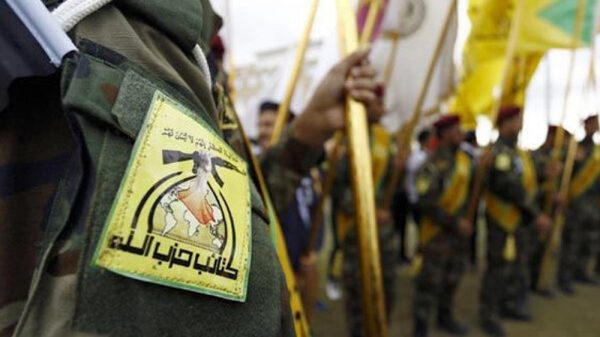
Iraq has released more than a dozen members of Popular Mobilization Units, better known as Hashd al-Shaabi, a few days after an unprecedented raid on the headquarters of Kata’ib Hezbollah, which is said to have been dictated by the US.
The PMU members were released on Monday and all charges against them were dropped, Kata’ib Hezbollah’s military spokesman Jaafar al-Husseini told AFP.
“The judge ordered their release due to a lack of evidence. The arrests shouldn’t have happened,” the spokesman said.
He said they had appeared at a Hashd military tribunal, as Iraq’s various security forces each have their own court system.
Kata’ib Hezbollah is a military unit operating under the PMU – an Iraqi umbrella group which includes more than 40 militia groups fighting Takfiri terrorism.
Iraqi counter-terrorism forces detained the Kata’ib Hezbollah members late Thursday for allegedly planning a rocket attack on Baghdad’s Green Zone, where the US and other embassies as well as state buildings are located.
Despite Washington’s accusations, Kata’ib has never claimed responsibility for the attacks.
The Thursday raid on Kata’ib headquarters raised serious questions about Iraq’s direction under the new government, as Iraqi leaders describe it as an attempt dictated by the US occupiers.
“The late Thursday night’s operation against Hashd al-Sha’abi had been dictated by the United States. There are foreign interventions and bids to harm the PMU,” Qais al-Khazali, leader of Asa’ib Ahl al-Haq which is part of the PMU, said in a statement released on Friday.
He advised Iraqi officials not to engage in a confrontation with Hashd al-Sha’abi as the anti-terror group represents people from all strata of the Iraqi society.
“No one can prevent the resistance fighters from battling US forces in order to drive them out of Iraq if they do not withdraw through peaceful means,” Khazali pointed out.
He stressed that no resistance faction has ever targeted Iraqi government institutions inside Baghdad’s heavily fortified Green Zone.
A senior official with Harakat Hezbollah al-Nujaba also called upon Iraqi authorities not to play into the hands of US military forces, warning against further raids on PMU headquarters.
Nasr al-Shammari, the deputy secretary-general and official spokesman of the movement, touched on numerous sacrifices made by Kata’ib Hezbollah in the campaign against Daesh terrorists, saying members of the group must not be targeted.
Shammari cited efforts by certain parties in Iraq to stoke sedition in Iraq, saying the Thursday raid was “a desperate attempt” that would have “unpredictable consequences for its planners”.
In November 2016, the Iraqi parliament recognized Hashd al-Sha’abi as an official force with similar rights as those of the regular army, therefore legally establishing it as part of the National Armed Forces.
The PMU has long rejected Washington’s military presence in the country as an obstacle impeding long-lasting security and stability in Iraq.
In January, the Iraqi parliament unanimously approved a bill, demanding the withdrawal of all foreign military forces led by the United States from the country following the assassination of Iran’s top military commander, Lt. Gen. Qassem Soleimani, and the second-in-command of Iraq’s Popular Mobilization Units (PMU), Abu Mahdi al-Muhandis.
Iraqi resistance groups have vowed to take up arms against US forces if Washington fails to comply with a parliamentary order calling for the expulsion of US troops following the assassination.
Will the ICC Investigation Bring Justice for Palestine?
By Ramzy Baroud & Romana Rubeo | Palestine Chronicle | June 29, 2020
In the past, there have been many attempts at holding accused Israeli war criminals accountable. Particularly memorable is the case of the late Israeli Prime Minister, Ariel Sharon, (known, among other nicknames, as the ‘Butcher of Sabra and Shatila’) whose victims attempted to try him in a Belgian Court in 2002.
Like all other efforts, the Belgian case was dropped under American pressure. History seems to be repeating itself.
On December 20, the International Court of Justice (ICC) Chief Prosecutor, Fatou Bensouda, resolved that she had sufficient evidence to investigate alleged war crimes committed in the occupied West Bank, East Jerusalem, and the Gaza Strip. The ICC’s unprecedented decision concluded that there were “no substantial reasons to believe that an investigation would not serve the interests of justice”.
As soon as Bensouda made her decision, although after much delay, the US administration swiftly moved to block the Court’s attempt at holding Israeli officials accountable. On June 11, US President Donald Trump signed an executive order slapping sanctions on members of the global judicial body, citing the ICC’s investigations of US war crimes in Afghanistan and Israeli war crimes in Palestine.
Will the US succeed, once more, in blocking another international investigation?
On June 19, we spoke to Dr. Triestino Mariniello, a member of the legal team representing the Gaza victims before the ICC. Mariniello is also a Senior Lecturer at the John Moore University in Liverpool, UK.
There has been much doubt about whether the ICC was serious, willing or capable of pushing this case forward. Later, technical questions arose regarding the ICC’s jurisdiction over occupied Palestine. Have we moved beyond these doubts?
Last December, the Prosecutor decided to ask the Pre-Trial Chamber the following question: “Does the ICC have jurisdiction, that is to say, is Palestine a State under the Rome Statute – not, in general, under international law, but at least under the founding Statute of the ICC? And, if yes, what is the territorial jurisdiction of the Court?”
The Prosecutor argued that the Court has jurisdiction over crimes committed in the West Bank, including East Jerusalem, and Gaza. This request to the Pre-Trial Chamber was not necessary, for a very simple reason: because the situation is being referred by the State of Palestine. So, when a State party refers a situation to the Prosecutor, the Prosecutor does not need authorization by the Pre-Trial Chamber. But let us analyze things within a wider context.
The formal engagement of the State of Palestine with the ICC began in 2009, following the Gaza war (“Operation Cast Lead”). At the time, Palestine had already accepted the jurisdiction of the ICC. It took more than two years for the former Prosecutor to decide whether Palestine was a State or not. After three years, he said: We don’t know if Palestine is a State, so we don’t know if we can accept the jurisdiction of the ICC. Thereafter, this question was raised before the UN General Assembly and the Assembly of State Parties. In other words, they delegated the answer to political bodies, and not to the Pre-Trial Chamber.
That investigation was never conducted and we never had justice for the victims of that war.
In 2015, Palestine accepted the jurisdiction of the Court, and it also became a State Party. Still, the Pre-Trial Chamber decided to involve a number of states, civil society organizations, NGOs, scholars and experts to ask them the question: Is Palestine a State under the Rome Statute? The response was, The Pre-Trial Chamber will decide on this, after it receives the views of the victims, of states, of civil society organizations … and it will decide in the next few weeks or months.
Aside from the Trump Administration, other Western countries, such as Germany and Australia, are lobbying at the ICC to drop the investigation altogether. Will they succeed?
There are at least eight countries that are openly against an investigation of the Palestinian situation. Germany is one. Some of the others came as a surprise, to be honest, for at least four other countries, Uganda, Brazil, Czech Republic, and Hungary had explicitly recognized that Palestine is a State under international law, yet are now submitting statements before the ICC Pre-Trial Chamber saying that this is not true anymore.
Of course, the issue is a little bit more complex, but the substance is, these countries are raising political arguments before the ICC which have no legal basis. It is surprising that these states, on the one hand, claim to be supportive of an independent International Criminal Court, but on the other hand, are trying to exercise political pressure (on that very legal body).
On June 11, Trump signed an executive order in which he imposed sanctions on individuals associated with the ICC. Can the US and its allies block the ICC investigation?
The answer is “no”. Trump’s administration is putting pressure on the ICC. By pressure, we mainly refer to the Afghanistan situation, and also to the Israeli-Palestinian situation. So, every time there is a statement by Trump or Secretary of State, Mike Pompeo in relation to the ICC, they never forget to mention the Afghanistan case.
In fact, the Prosecutor is also investigating alleged war crimes committed by CIA members and US soldiers. So far, this pressure has not been particularly effective. In the case of Afghanistan, the Appeal Chamber has directly authorized the Prosecutor to start an investigation, amending a decision taken by the Pre-Trial Chamber.
Successive US administrations have never been very supportive of the ICC, and the major problem in Rome when the Statute was drafted in 1998 was specifically regarding the role of the Prosecutor. The US opposed, from the beginning, an independent role of the Prosecutor, where the Prosecutor could start an investigation without the authorization of the UN Security Council. This opposition goes back to the Clinton, Bush, Obama, and Trump administrations.
Now, though, we are witnessing an unprecedented situation, with the US administration willing to issue economic sanctions and visa restrictions to individuals associated with the ICC and, perhaps, to other organizations as well.
Article 5 of the Rome Statute – the founding document of the ICC – has an extended definition of what constitutes ‘serious crimes’, that being the crime of genocide, crimes against humanity, war crimes, and the crime of aggression. It could be argued, then, that Israel should be held accountable for all of these ‘serious crimes’. Yet, the ICC opted for what is known as the ‘narrow scope’, thus the investigation will only be looking at the single component of war crimes. Why is that?
If we look at the request by the Prosecutor to the Pre-Trial Chamber, particularly paragraph 94, surprisingly, the scope of the investigation is quite narrow, and the victims know that. It only includes (as part of its investigation into war crimes) some incidents related to the Gaza war of 2014, crimes committed within the context of the ‘Great March of Return’, and the (illegal) Jewish settlements.
It is surprising not to see any reference to the alleged committing of ‘crimes against humanity’, which, as victims say, is widely documented. There is no reference to the systematic attacks put in place by Israeli authorities against the civilian population in the West Bank, including East Jerusalem or in Gaza. The ‘narrow scope’, which excludes crimes against humanity, is something the Prosecutor should look back into. The overall situation in Gaza is largely ignored; there is no reference to the 14-year long siege; there is no reference to the overall victims of the Gaza war in 2014.
That said, the scope of the investigation is not binding for the future. The Prosecutor can decide, at any moment, to include other crimes. We hope it will happen because, otherwise, many victims will never get justice.
But why is Gaza being excluded? Is it because of the way that the Palestinians presented the case or the way the ICC has interpreted the Palestinian case?
I do not think that the blame should be placed on the Palestinians, because the Palestinian organizations submitted (a massive amount of) evidence. I think it is a prosecutorial strategy at this stage, and we hope this will change in the future, particularly with reference to the situation in Gaza, where even the overall number of victims has been overlooked. More than 1,600 civilians were killed, including women and children.
In my personal opinion, there are several references to the concept of conflict itself. The word ‘conflict’ relies on the presumption that there are two parties that are fighting each other on the same level and there is not enough attention given to the Israeli occupation itself.
Additionally, all the crimes committed against Palestinian prisoners have not been included, such as torture and inhumane and degrading treatment. Also not included is Apartheid as a crime against humanity. Again, there is massive evidence that these crimes are committed against Palestinians. We hope that there will be a different approach in the future.
Walk us through the various scenarios and timelines that could result from the ICC investigation. What should we expect?
I think if we look at the possible scenarios from the perspective of the Rome Statute, of the law which is binding, I do not think that the judges have any other option but to confirm to the Prosecutor that Palestine is a State under the Rome Statute and that the territorial jurisdiction includes the West Bank, East Jerusalem and Gaza.
I would find it very surprising if the judges reach any other conclusion. The Palestinian State was ratified in 2015, so you cannot go back to the Palestinians and say: No, you are not a member anymore. Meanwhile, Palestine has taken part in the Assembly of State Parties, is a member of the Supervisory Committee of the ICC, and has participated in important decisions.
The likelihood is that the Prosecutor will receive a green light by the Pre-Trial Chamber. If this does not happen, the Prosecutor can (still) move forward with the investigation.
Other possible scenarios can only be negative ones because they would prevent the victims from getting any justice. The reason that the case is at the ICC is because these victims have never received any justice before domestic courts: the State of Palestine is unable to try Israeli nationals, while Israeli authorities are unwilling to try individuals who have committed international crimes.
If the ICC judges decide not to accept the jurisdiction over war crimes committed in Palestine, this would prevent victims from having access to the only possibility of getting justice.
A particularly dangerous scenario would be the decision by the judges to confirm the ICC jurisdiction over some parts of the Palestinian territory while excluding others, which has no legal ground under international law. It would be very dangerous, because it would give international legitimacy to all the unlawful measures that Israeli authorities – and now even the Trump Administration – are putting in place, including the (illegal) annexation plan.
– Ramzy Baroud is a journalist and the Editor of The Palestine Chronicle. He is the author of five books. His latest is “These Chains Will Be Broken: Palestinian Stories of Struggle and Defiance in Israeli Prisons” (Clarity Press, Atlanta). Dr. Baroud is a Non-resident Senior Research Fellow at the Center for Islam and Global Affairs (CIGA), Istanbul Zaim University (IZU). His website is www.ramzybaroud.net
– Romana Rubeo is an Italian writer and the managing editor of The Palestine Chronicle. Her articles appeared in many online newspapers and academic journals. She holds a Master’s Degree in Foreign Languages and Literature, and specializes in audio-visual and journalism translation.
US and its allies are leading an arms race in Middle East, not Iran: Scholar
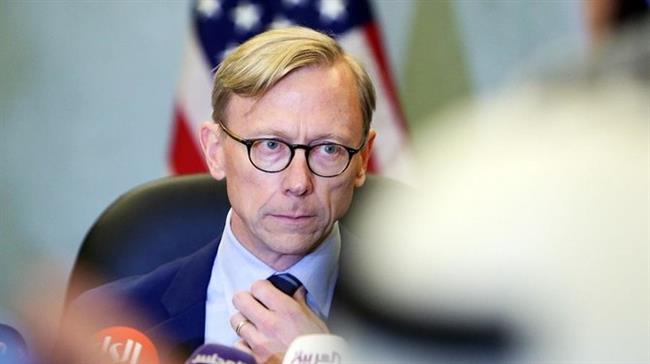
US Special Representative for Iran Brian Hook has said that lifting a UN arms embargo on Iran will trigger an arms race in the Middle East region.
Press TV – June 29, 2020
The United States and its allies, Israel and Saudi Arabia, are leading an arms race in the Middle East region, not Iran, an American scholar has said.
Kevin Barrett, an author, journalist and radio host with a Ph.D. in Islamic and Arabic Studies, made the remarks in an interview with Press TV on Monday, after US Special Representative for Iran Brian Hook said that lifting the arms embargo on Iran will trigger an arms race in the Middle East.
Speaking at a joint news conference with Saudi minister of state for foreign affairs Adel al-Jubeir in Riyadh on Monday, Hook said lifting the ban would “only embolden” Iran and destabilize the region.
“This is not an outcome that the UN Security Council can accept. The council’s mandate is clear: to maintain international peace and security,” Hook added.
Barrett said that “Brian Hook is the US Special Representative to the United Nations and he’s trying to extend the UN weapons embargo on Iran, and he’s claimed to be doing so under provisions of the JCPOA, which the US has withdrawn from.”
“So, this is quite mind-boggling. Why he thinks the US has the right to invoke the JCPOA after it exited the JCPOA is a mystery. Likewise, it’s a mystery why he thinks that the lack of an arms embargo on Iran would lead to an arms race in the Middle East region,” he stated.
“Clearly, the regimes that are arming themselves and initiating an arms race in the region are the US allies, Israel, and Saudi Arabia, and Iran is far from leading an arms race in the region. If we look at population, and so on, Iran is actually relatively under-armed, although it seems to be doing okay despite the fact that it’s essentially been embargoed and so it has to do everything itself, make its own rockets, and it’s managed to put satellites into space despite all of these sanctions, and opposition from other countries including sabotage,” he said.
“We just saw an explosion in Iran maybe some form of sabotage; certainly, we know that Iran’s enemies have been supporting terrorism in Iran, and elsewhere in the region. They’ve killed nearly 20,000 innocent civilians in Iran, through support for some of the world’s worst terrorist groups,” he noted.
“So, this is of course absurd, but it just goes to show that the US Empire is still in its arrogant phase. It has not yet been fully humbled although its reputation in the world has certainly taken a hit after the coronavirus pandemic, which many suspect is a US biological attack, or perhaps a biological attack by the Western international bankers who largely own the US and dictate policy in the US, that the US has had such a terrible response to it,” the analyst said.
“The US now has the worst coronavirus caseload in the world per capita, and it’s still growing here. And yet the US pretends that it’s going to be running around the world dictating policy and telling people what they can do in each region. And of course, if Brian hook really wants to end the arms race in the Middle East, the first thing he should do is stop selling the weapons that Saudi Arabia is using to commit genocide in Yemen and stop handing the Israelis billions of American taxpayer dollars to commit genocide in occupied Palestine,” he said.
“If the US did those two things there would be a much more peaceful Middle East or Muslim east as a result, but don’t hold your breath because decadent empires often become rabid before they die. And that seems to be what’s happening here in Washington,” he concluded.
Washington has stepped up calls for the extension of the UN arms embargo on Iran, which will expire in October under UN Security Council Resolution 2231, which endorses Iran nuclear deal, officially known as the Joint Comprehensive Plan of Action (JCPOA).
The Trump administration has threatened that it may seek to trigger a snapback of all sanctions on Iran if its attempts to extend the arms embargo fail.
Tehran, however, has firmly rejected Washington’s plans as the US is no longer a party to the nuclear deal ever since it withdrew from the multilateral agreement in 2018.
China and Russia, which are both signatories to the JCPOA, echoed Tehran’s position in their recent statements.
“US failed to meet its obligations under Resolution 2231 by withdrawing from Joint Comprehensive Plan of Action,” China’s UN mission said.
Also noting that Washington is in gross violation of Resolution 2231, Russian Deputy Foreign Minister Sergei Ryabkov stressed that “no one is allowed to implement UNSC Security Council resolutions selectively and extremely fragmentarily”.
Featured Video
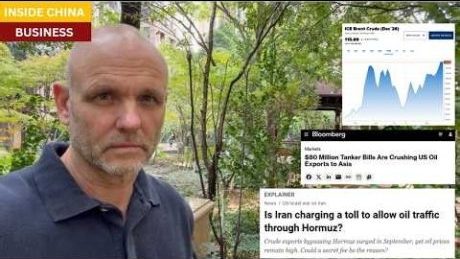
Iran is (probably) collecting tolls, and why Asia stopped buying oil from the US
or go to
Aletho News Archives – Video-Images
From the Archives
The Great Recycling Scam
By Dr. Vernon Coleman – 21st Century Wire – September 2, 2022
Recycling was introduced, worldwide, as a tool to teach citizens to become compliant.
Forcing citizens to sort their rubbish into up to nine separate bags or boxes every week had absolutely nothing to do with ‘saving the planet’ and everything to do with teaching citizens (through a mixture of fines and shame) to behave ‘responsibly’ i.e. to do as they were told without looking too closely at the rationale of what they were being told to do.
The recycling never had anything to do with protecting the planet, of course. Most of the rubbish sorted, washed and collected in the UK was taken abroad, by lorry or ship or train, and burnt or dumped. It was, quite simply, impractical and not cost effective to recycle the material that had been collected. And, of course, collecting the sorted rubbish involved massive costs in terms of cash and pollution.
Today, the recycling business has reached an apogee of lunacy. Councils introduce ever more complex rules and fees. They refuse to take away much of the waste that is collected. And those wanting to take their rubbish to a ‘recycling’ centre will probably have to make an appointment and answer a host of questions.
It is no surprise that fly-tipping has become a major problem. The biggest causes of plastic in the sea are dumped fishing gear and plastic waste (much of it officially designated as recycled) which has been dumped by ships.
The good news, however, is that in Britain, recycling rates are falling. More and more people have become aware that the whole recycling movement was just another piece of manipulative trickery.
Blog Roll
 Aletho News
- Weaponized Journalism: 2021 Sayer Ji Interview with NPR
- Beyond Netanyahu: what Israel’s election means for Palestinians
- Lithuania plans universal conscription
- Lies, Damn Lies, and Ukraine News
- Financial Times rejects Nordic demands to correct Putin call story – media
- The Case for Less Unity in Europe
- Ukraine expands minority rights under EU pressure – but Russians remain excluded
- Albania takes anti-riot crackdown cue from France
- The interest of the House of Rothschild in Ukraine
- Pentagon fires top military planner
- If Americans Knew
- An error has occurred; the feed is probably down. Try again later.
- No Tricks Zone
- Germany’s Green Energy Transition Becoming Increasingly Expensive…Another 6 Trillion Euros!
- Sudden Stratospheric Warming, Powerful El Niño Combination May Lead To Extreme Europe Cold, Energy Crisis!
- Two New Studies Find Thwaites Glacier Melt Cannot Be Driven By Human Activity Or A Warming Ocean
- E-Cars Reduce CO2 Emissions By Only 41% Compared To Internal Combustion Engine Vehicles
- Predictions Made By Renowned Climate Professor Over Past Decades Have Been Proven To Be Poor
- New Study Suggests Large Regions Of The Pacific Ocean Have Been Cooling For The Last 80 Years
- Germany’s Green Energy Debacle: High Energy Costs Force Kahla Porzellan to Close After 182 Years!
- New Study: 50 Years Of The Most Aggressive ‘Net Zero’ Policies Can Only Affect The Global Climate By 0.03°C
- US September “Heat” Was No Record…Many Records Set Decades Ago
- Latest European Green Energy Debacle; Portugal’s Largest Flagship Solar Park Insolvent!

