Amazon says cloud infrastructure in Bahrain, UAE ‘beyond saving’
The Cradle | September 15, 2026
Amazon Web Services (AWS) says it cannot restore access to its cloud-computing facility in Bahrain or one of three data-hosting zones in the UAE due to the extensive damage caused by Iranian retaliatory strikes, Reuters reported on 15 September.
“The damage to our infrastructure spanned multiple Availability Zones and exceeded what our regional and multi-AZ services are designed to withstand,” AWS reported in its status update seen by Reuters.
In the UAE, resources and data held exclusively within one zone, labeled mec1-az2, have been damaged beyond hope of recovery, the company said, as engineers are still salvaging what they can from the two other battered zones and across the wider Emirati region.
An availability zone refers to a cluster of one or more data centers sitting inside the same geographic region, the structure AWS relies on to keep services running when a single site goes down.
The outages trace back to March, when the US and Israel attacked Iran, and Tehran responded with missile and drone salvos against Israel and Gulf states hosting US military bases.
AWS confirmed at the time that two of its UAE facilities took direct hits, while a drone strike near one of its Bahraini sites left the infrastructure there destroyed.
Most Bahrain-based customers shifted their workloads elsewhere on AWS advice before the region went dark in April, but the company says it has now exhausted every option for recovering whatever was left behind.
The losses have called into question the resilience of the Gulf’s fast-expanding cloud and AI infrastructure.
The UAE is already redrawing plans to war-proof a major AI data center project, weighing decentralized site building alongside underground and blast-resistant construction, and even equipping the data center itself with anti-air defenses.
Israel and the US have long ago transformed AI infrastructure into a weapon of war deployed extensively across West Asian theaters.
Cloud platforms, data centers, and high-capacity computing systems now help store intelligence, process intercepted communications, analyze surveillance, and support military operations across West Asia, extensively so in Gaza and Iran.
Iran maintains that data centers operated by US technology companies are not simply civilian facilities, but strategic assets supporting US and Israeli aggression, thereby making them legitimate targets for retaliation.
AI has become a central instrument of US and Israeli warfare across West Asia, embedded in how targets are chosen, tracked, and struck.
Israel has weaponized AI platforms including automated targeting systems like The Gospel, Lavender, and Where’s Daddy? to harvest mass data, autonomously generate kill lists, and orchestrate systematic airstrikes and assassinations against Palestinians.
Backed by corporate infrastructure like Microsoft Azure, which stored massive caches of intercepted Palestinian communications, the Israeli military has deployed AI-driven drone surveillance to track and assassinate Palestinians.
The US has run algorithmic warfare systems such as Palantir’s Maven to process satellite, drone, and radar intelligence, using machine learning to speed the production of targeting recommendations against Iranian forces.
More than 1,000 targets were designated within the first 24 hours of the war on Iran, one of which resulted in the massacre of at least 150 people, including at least 120 schoolchildren at the Shajareh Tayyebeh elementary school in Minab.
Trump says Iran urgently seeks deal, Tehran sets conditions for talks
Al Mayadeen | September 15, 2026
US President Donald Trump said Monday that Iran is urgently seeking an agreement with the United States, while leaving open the question of whether Washington will engage in negotiations.
In a post on Truth Social, Trump described Iran as a “failed country” and said Tehran wants to reach an agreement with the United States “very quickly.”
Trump added that he would decide whether the United States would engage in the effort and enter negotiations, indicating that Washington remains open to the possibility of reaching an agreement with Iran.
The US president did not provide further details on what any potential agreement would entail or the conditions under which Washington would pursue talks with Tehran.
Tehran warns against mixed signals from Washington
Trump’s remarks come against the backdrop of sharply differing signals over the prospects for negotiations with Iran.
Iranian Supreme National Security Council Secretary Mohsen Rezaei warned against being misled by what he described as contradictory statements from Trump, pointing to the shift from declaring that there would be “no negotiations” to saying that Washington is ready to talk.
Rezaei stressed that Iran would not enter negotiations before its conditions are met, saying, “No negotiations before Iran’s conditions are met. Period.”
The Iranian official also said that the equations surrounding oil and strategic waterways had changed, warning that attempts to contain the consequences of the current situation would not prevent what lies ahead.
Iran sets seven conditions for reopening strait
Iran has told the United States that the Strait of Hormuz will remain closed until seven conditions approved by the country’s top officials are met, Iranian news agency Tasnim reported on Saturday, citing an informed source.
The message comes as Tehran prepares to meet with Iraq and Persian Gulf states in Oman on Monday to discuss safe routes for commercial shipping through the strategic waterway.
“Until these seven conditions, which have been approved by Iran’s top officials, are met, the Strait of Hormuz will remain closed,” the source told Tasnim.
The Iranian Foreign Ministry announced the planned meeting as efforts continue to coordinate maritime traffic amid the escalation of the US war on Iran.
Oman agreement does not include reopening waterway
The reported conditions come after Iran and Oman reached an agreement concerning the Strait of Hormuz, although the arrangement did not include reopening the waterway.
The understanding between Iran and Oman “does not provide for the immediate reopening of the Strait of Hormuz, but lays the groundwork that could allow for its reopening,” an Iranian source told Tasnim on Saturday.
The source added that the arrangement would be a step toward Iran exercising its sovereignty over the Strait and that reopening it depends entirely on the United States meeting Tehran’s conditions.
Under the agreement, the two sides coordinated the main routes for vessels entering and leaving the Strait of Hormuz.
The waterway has become a major point of concern for international shipping as the war has sharply disrupted maritime traffic through one of the world’s most important energy routes.
The Andean Shadow Army
How Colombia became the world’s primary reservoir of mercenary manpower

José Niño Unfiltered| September 14, 2026
A few weeks ago Russians with Attitude, posted a blunt prediction after Abelardo de la Espriella won Colombia’s presidency in June.
“It was already bad under Gustavo Petro who didn’t do anything to stop it but at least verbally denounced the outflow of Colombian mercenaries. De la Espriella will likely actively support American-Ukrainian recruitment efforts. There’s already many thousands of them (with around 1,000 confirmed killed). I suspect flooding the Ukrainian army with Third World meat will be the focus of US strategy to solve Kiev’s manpower problems. It’s already the publicly declared Ukrainian strategy.”
Hot take aside, there’s considerable truth behind RWA’s commentary. Colombia now supplies more foreign fighters to Ukraine than any other nation on earth, and it did not arrive at that position overnight.
The International Federation for Human Rights estimates that 2,000 to 3,000 Colombians joined the Ukrainian army as contract soldiers. The Defense Post reported in November 2025 that Ukraine had signed roughly 2,000 Colombians on military contracts, citing the German daily Die Welt. Writing for the Atlantic Council in February 2026, Erin K. McFee noted that official figures do not exist and put Colombians at roughly 25 percent of all personnel drawn from the 65 countries that have joined Kiev’s ground forces. Petro pushed the number far higher, telling Colombians in May 2026 that 7,000 men were fighting and dying in a war that was not theirs.
Citing former Ukrainian economy minister Tymofiy Mylovanov, Petro wrote on X on May 5, 2026, in a post that translates as “There are 7,000 men from Colombia with military training, fighting in a foreign war and dying without cause in Ukraine. We do not want to export death. The mercenary is prohibited by law.”
However uncertain the head count, the body count is harder to dispute. Colombia’s Foreign Ministry gave El Tiempo figures published on June 9, 2026, and current through May, showing 670 Colombians missing and 173 dead across both sides. Of the dead, 140 died in Ukraine, and 130 of those bodies have already come home in coffins, while consular officials in Russia confirmed 33 more using information the Russian government supplied. Of the missing, Ukraine’s armed forces declared 446 lost in combat, families reported another 56, and the Moscow consulate logged 168. The ministry then undercut the totals, explaining in Spanish that Colombian citizens travel to conflict zones individually and without notifying Colombian authorities, so the available figures do not necessarily reflect the full scope of the phenomenon.
Independent estimates fill that gap and they run grim. Writing for the Atlantic Council, Erin K. McFee put Colombian deaths on Ukraine’s side at 300 to 550, citing El País. In a Kiev memorial park, Colombian flags now form a striking patch in a dense blanket of tributes to the fallen. Colombians have lost more men in Ukraine’s International Legion than any other foreign nationality, with Americans second at roughly 100 killed. McFee interviewed a Colombian veteran in Kiev in late 2025 who delivered a warning stripped of romance. “Tell Colombians not to go there, because more die than return.”
The dead accumulate in single afternoons as much as in slow attrition. On July 21, 2025, a Russian missile struck the dining hall of a training camp near Kropyvnytskyi at lunchtime. The New York Times reported that at least a dozen foreign volunteers died, among them citizens of the United States, Colombia, Taiwan and Denmark, and an anonymous American recruit from Florida described seeing at least 15 dead and more than 100 wounded. The unit hit was the International Legion run by Ukraine’s military intelligence, whose spokesman said official casualty figures would stay sealed until the investigation closed.
Colombians who leave the front face a second danger. On November 10, 2025, a court that Russia administers in Donetsk sentenced José Aarón Medina Aranda and Alexander Ante to 13 years each for fighting alongside Ukraine’s armed forces. The two had flown to Caracas on their way home to Popayán. Venezuela handed them to Russia instead.
The supply side explains what the demand side cannot. Colombia has fought drug cartels and guerrilla armies for more than 60 years, and that war produced the deepest pool of combat hardened veterans in the hemisphere. The Associated Press put annual retirements from Colombia’s armed forces at more than 10,000, a figure the Defense Ministry has given as roughly 10,600. Most leave in their late 30s or early 40s after 15 to 20 years fighting the FARC, the ELN, and the cartels, and Colombian law pushes most soldiers and noncommissioned officers out by 45.
Citing the Colombian daily La Patria, McFee reports that rank and file soldiers earn close to $400 a month on active duty, and that retirement often halves whatever they were making. Ukraine pays soldiers in combat operations from $3,000 to $5,000 a month, offers a potential $25,000 signing bonus, and promises families a $350,000 death benefit. At a December 2025 forum in Bogotá on the veteran exodus, convened by the Corioli Institute that McFee founded and directs, one participant described Ukraine as “the first real door that opens,” for economically troubled veterans.
That door has been swinging for decades. Plan Colombia poured American money and training into building one of the Western hemisphere’s largest professional militaries, and the graduates kept arriving faster than the domestic economy could absorb them. Erik Prince got there early. Blackwater affiliates had been placing retired Colombian soldiers in Iraq since 2004, and by 2010 Prince was building something larger. Late that November, a plane carrying dozens of Colombian men landed in Abu Dhabi, where an Emirati intelligence officer waved them through customs and an unmarked bus carried them 20 miles into the desert. They had entered the country posing as construction workers.
The New York Times reported that they were the first recruits for a battalion of 800 foreign troops Prince was assembling for the crown prince of Abu Dhabi, financed with $529 million from the Emirates. In 2015 the same two reporters found that Emirati money had sent roughly 450 Latin American fighters, hundreds of them Colombian, to fight the Houthis in Yemen. At around 1 a.m. on July 7, 2021, a team of just over two dozen mercenaries, most of them former Colombian soldiers, stormed Haitian President Jovenel Moïse’s home above Port-au-Prince and shot him dead. A Miami jury convicted four more plotters in May 2026. The 18 Colombians arrested in Haiti are still jailed without trial, and no one has established who ordered the hit.
The most recent destination is also the darkest. In May 2026 Human Rights Watch published an 83-page report by Joey Shea and Jean-Baptiste Gallopin, From Bogotá to El Fasher, documenting how the Abu Dhabi firm Global Security Services Group appears to have hired hundreds of Colombian contractors and routed them through Emirati military facilities to fight alongside the Rapid Support Forces. Investigators geolocated video of Spanish speaking contractors fighting in El Fasher, and six residents of the city said they saw men they believed were Colombian standing armed at the sites of the October 2025 mass killings and rapes that the UN fact finding mission called consistent with genocide.
One contractor told Human Rights Watch he trained RSF recruits near Nyala and that many of them were young children. The Treasury Department had already sanctioned the Colombian recruiter A4SI on December 9, 2025, finding that the firm ran campaigns through its website, group chats and town halls to fill slots for drone operators, snipers and translators.
UN experts have put only a rough number on the whole enterprise. After visiting Colombia from March 16 to 27, 2026, the Working Group on the use of mercenaries reported that more than 10,000 Colombians have been “recruited into armed conflicts worldwide, both through legal and irregular means,” many of them former soldiers, police and veterans, and many offered between $2,000 and $6,000 a month. Its preliminary findings are blunter about the limits of that count.
Working Group member Joana de Deus Pereira told reporters in Bogotá that proliferating conflicts had raised demand and Colombians were filling it, naming the escalation in the Middle East, the war in Sudan, and Russia’s invasion of Ukraine. Chairperson Michelle Small said foreign buyers seek out former Colombian personnel, and warned that deceptive contracts, where firms pay far less than advertised or write outright fake ones, can amount to labor exploitation and human trafficking.
Petro met the crisis with a statute, though its reach remains uncertain. The House approved the bill in December 2025 by 94 to 17, and Petro signed Law 2569 on March 17, 2026, adopting the 1989 convention against mercenary recruitment. Colombia has not actually ratified it yet. The Constitutional Court must review the law first, which is why the UN experts urged Bogotá to hurry. Whether it bites is another question.
The next administration inherited the law and a very different set of priorities. De la Espriella took office in August promising to rebuild security ties with Washington, which largely frayed under his predecessor. He will also look to stay in Washington’s good graces by towing a pro-Zionist line.
Part of this rapprochement will likely also involve Colombia reactivating its mercenary pipelines in the Russo-Ukrainian theater, as Washington increasingly leans on proxy forces and covert operations in what is beginning to look like a pyrrhic victory for Russian forces.
The brief, defiant interlude of the Petro administration has been decisively shut down, and Colombia has been reset to its default setting as a loyal vassal state of the Judeo-American empire. Under Abelardo de la Espriella, Bogotá will remain the premier supplier of disposable infantry for Washington’s global destabilization schemes from Kiev to the Middle East.
Ultimately, Bogotá’s most lethal and dependable global export is neither coffee nor cocaine, but the expendable blood of veterans marching straight from one meat grinder into the next.
Russia Wants to End Ukraine Conflict – Lavrov
Sputnik – 15.09.2026
MOSCOW – Russia wants to end the Ukrainian conflict, Russian Foreign Minister Sergey Lavrov said on Tuesday.
On Ukraine
“We want to resolve this conflict and appreciate our friends’ willingness to help in this effort,” Lavrov said at the embassy roundtable on the situation around Ukraine, adding that if the US had not abandoned the Anchorage agreements, we would have been living in peace already for one year.
Russia is always ready for negotiations on Ukraine and has never delayed them or tried to complicate them, Russian Foreign Minister Sergey Lavrov said, commenting on the prospects for the imminent convening of a new round of negotiations.
“We are always ready for negotiations. We have never delayed these negotiations or tried to complicate them,” Lavrov said.
If Ukraine is ready to resume negotiations, Russia agrees to them and has something to say, the minister said, adding that Russia has never changed its position on talks on Ukraine.
“We are ready to seek reasonable compromises within the framework of this position, but fundamentally, we have not changed our goal: to ensure our security, to prevent NATO from appearing on our borders, and to safeguard the legitimate rights of Russians and Russian‑speaking people who have lived on these lands for centuries,” Lavov added.
On Russia-US Relations
Russian Foreign Minister Sergey Lavrov said that he plans to meet with US Secretary of State Marco Rubio on the sidelines of the UN General Assembly in New York.
“I have a meeting with secretary Rubio scheduled in New York on the sidelines of the General Assembly,” Lavrov said.
US Flaunts On-Orbit Weapon to Supercharge Space Arms Race
Sputnik | September 15, 2026
Reports of a US-deployed “on-orbit” weapon confirm that the West has already turned outer space into an extension of the Ukraine battlefield, air defense historian Yuri Knutov tells Sputnik.
US and French reconnaissance satellites are already feeding battlefield intel to Ukraine’s military, with Finland about to join in, reminds the military expert, and Poland plans to deploy its own reconnaissance satellites.
Other countries are developing “inspector” spacecraft built to maneuver close to other satellites to spy on them.
Elon Musk’s Starlink satellite communications and broadband systems are used in space – and guide Ukraine’s drones.
It is fair to say that “an arms race in space is already underway,” says the pundit, and the US space weapons claim seeks to accelerate this orbital race further.
Trump’s costly Golden Dome project, touted as a global missile defense system, fits into the same aggressive vision, the military expert pointed out.
- the ground-based tier is a system that has already been partially deployed, capable of intercepting ballistic missiles, including artificial Earth satellites in space
- it partly relies on the Aegis system, as well as advanced weapon systems employing new physical principles – electromagnetic guns (that fry spacecraft electronics) and combat lasers (potentially megawatt-class, but so far 300-kilowatt)
- space-based tier to feature satellites armed with space-to-space missiles capable of intercepting ballistic missiles and destroying enemy satellites, alongside space-based lasers
“The Americans appear to have already begun building out the space-based arsenal, judging by the US secretary of the Air Force’s remarks,” adds the expert.
Russia’s SVR: NATO Found No Russian Link to Leipzig Airport Incident
Sputnik -15.09.2026
NATO intelligence services found no evidence whatsoever of Russian involvement in the drone incident at Leipzig Airport and informed their authorities accordingly, the Russian Foreign Intelligence Service (SVR) said.
They also pointed to multiple signs of a Ukrainian footprint in the incident.
NATO intelligence therefore recommended that the authorities refrain from accusing Russia, the SVR added.
Ignoring the advisory, the German authorities blamed Russia outright — chiefly to justify the “mega-spending” on Germany’s militarization, the Foreign Intelligence Service said.
On August 5, Leipzig police said an airport employee had discovered a drone carrying an unidentified explosive device in the cargo aviation security zone. German Interior Minister Alexander Dobrindt blamed Russia without providing any evidence.
US Space Weapon Claims Risk Igniting Orbital Arms Race – Expert
Sputnik – 15.09.2026
Statements such as US Secretary of the Air Force Troy Meink’s claim that the United States has deployed an “on-orbit” weapon could have far-reaching consequences, Daryl Kimball, executive director of the Arms Control Association, told Sputnik.
Announcing that the US has a space weapon in Earth’s orbit could fuel a dangerous arms race in orbit, the arms control expert warned.
In his opinion, that could set off a cycle of action and counteraction, threatening the satellites and other orbital systems that countries worldwide rely on for communications, navigation and other essential services.
He argued that the world’s major nuclear powers are failing to address growing strategic risks.
The five nuclear-weapon states are not actively discussing concerns over weapons in space, strategies for reducing nuclear risks or measures to halt and reverse the expansion of nuclear arsenals, he noted.
The expert urged the US and other powers to exercise restraint and return to arms-control diplomacy, calling for America to launch bilateral negotiations with both Russia and China to prevent a dangerous buildup in space.
The warning comes as US War Secretary Pete Hegseth has repeatedly stated that space represents the future of warfare, requiring heightened offensive and defensive investments.
Russia has repeatedly underscored that it stands for preserving space as an area exclusively for peaceful activities.
US reveals it has weapons in space
RT | September 15, 2026
The US has for the first time acknowledged that it has weapons in space amid ongoing tensions with Russia and China.
US Secretary of the Air Force Troy Meink revealed the deployment on Monday during the opening of the Air & Space Forces Association’s 2026 Air, Space & Cyber Conference at National Harbor in Maryland.
“Today, we continue to ensure we remain ready to meet the challenge of evolving threats wherever they exist,” Meink said in a keynote address.
“This is why the Space Force now has on-orbit space control weapons capable of defending the joint force against hostile adversary action,” he said, without elaborating. “It’s important from a deterrence perspective,” he added.
During a question-and-answer session, Meink declined to go into detail, stressing that the phrasing of his remarks was “very well thought out.”
“It is critically important that we maintain our dominance, not only in the air but in space,” he said, according to Air & Space Forces Magazine.
The Washington Post quoted a US official as saying that the technology mentioned by Meink could include the ability to “take out” an enemy satellite if it were being used to target American troops or a US satellite.
There is no international ban on deploying weapons in space, provided they are not weapons of mass destruction.
US President Donald Trump established the Space Force in 2019 during his first term in office, describing space as “the world’s newest warfighting domain.” Last year, he unveiled plans for Golden Dome, a multilayered missile-defense system designed to protect the entire United States that includes space-based interceptors.
The project echoes the Strategic Defense Initiative (SDI), dubbed Star Wars, launched by President Ronald Reagan at the height of the Cold War in 1983. Reagan’s ambitious program was later scaled back and ultimately abandoned without its proposed space-based weapons being deployed.
In March, Russian Foreign Minister Sergey Lavrov condemned what he described as “the militarization of space” and argued that the Golden Dome “poses a significant threat to strategic stability.”
Since the 2000s, the US, China, India and Russia have tested anti-satellite weapons. In November 2021, the Russian military successfully destroyed a decommissioned Soviet-era spy satellite. The Russian Foreign Ministry said at the time that the operation was conducted in strict accordance with international law and was not directed against any particular country.
The Magnesium Handbook + The Boron Book
Two new paperbacks, in print today

Lies are Unbekoming | September 13, 2026
Two minerals your body has been receiving from food and water for as long as there has been food and water. Two minerals your body no longer gets in the amounts it needs. Two minerals modern medicine does not measure, does not restore, and does not talk about.
Magnesium and boron.
What happened to them
The soil that grew the food was depleted. The industrial fertilizers that replaced natural soil renewal put nitrogen, phosphorus, and potassium back in, and left the trace minerals out. The water that used to carry them was treated, softened, and stripped. The food that reached the table was processed, refined, and cooked at temperatures that finished the job.
Then the halogens moved in. Fluoride in the water. Bromide in the bread. Perchlorate in the produce. Each one competes for the receptor sites where the mineral used to sit. Every one of them makes what little is left work less well.
Your grandmother got what you don’t. Not because she took supplements. Because the food, the water, and the soil hadn’t been hollowed out yet.
What their absence looks like
Magnesium depletion presents as: cardiovascular disease, arrhythmia, hypertension, migraines, muscle cramps, insomnia, anxiety, chronic fatigue, insulin resistance, PMS, restless legs, tension headaches, poor recovery from exercise, poor recovery from anything. The mineral runs 600+ enzyme systems. When it runs low, hundreds of things break. Not one dramatic thing, but a background low-grade version of nearly everything.
Boron depletion presents as: osteoarthritis, brittle bones, hormonal decline in both sexes, cognitive fog in older adults, joint stiffness that starts a decade before it “should,” and a fungal terrain the body has fewer tools to manage. Rex Newnham, an Australian soil scientist working in the 1970s, first documented what a century of missing boron does, and what its restoration reverses.
None of this is diagnosed as mineral depletion. It is diagnosed as a chronic condition, prescribed for, and monitored. The mineral, inexpensive and unpatentable, does not enter the conversation.
What the books do
The Magnesium Handbook.
333 pages, seventeen chapters. The four evidence lines. The four insults of modern life that strip out intake. The cardiac and neurological pattern. The metabolic and hormonal picture. The reproductive terrain. The forms of magnesium and how to use each. Eight appendices with condition quick-reference, drug-depletion tables, dosing by form, food sources, transdermal protocols, troubleshooting, and further reading. A full index sends you to what you need. Draws on Jeff at Curious Outlier and his Magnesium Mastery course, Mildred Seelig, Carolyn Dean, Mark Sircus, Arthur Firstenberg and Martin Pall, and the terrain framework running from Béchamp through Shelton to Cowan.
Order The Magnesium Handbook →
The Boron Book.
268 pages. The Tibetan and Silk Road pharmacopoeia. The medieval European use. The mid-twentieth-century collapse of dietary intake. The four mechanisms that stripped modern boron from the diet: industrial fertilization, food processing, water fluoridation, halogen displacement. The Newnham Protocol. The Walter Last modification. The food-first restoration pattern. The borax chapter, covering what to buy, how to dose, and what to expect. Draws on Rex Newnham’s clinical work, Forrest Nielsen’s USDA research, and the essays of Curious Outlier.
The regulatory framework still classifies boron as non-essential. The evidence says otherwise. The minerals are inexpensive. These books are how you get them back.
How to explain it to a six-year-old
Imagine your body is a bicycle. It has hundreds of little screws holding it together. Brakes, gears, wheels, seat, handlebars. Most of the screws don’t do anything dramatic. But if they get loose, the bicycle starts to rattle and squeak and slow down. Nothing broken. Just… not right.
Magnesium is one of the screws. Boron is another.
Nobody stole the screws. They just fell out slowly, over a long time. From the soil the food grew in. From the water. From the bread. Every day a little bit less. Nobody noticed because nothing broke.
But the bicycle is rattling now. You feel it. Everyone feels it.
The screws are cheap. You can put them back.
In Print
Sixteen books are now available as paperbacks, printed to order through Lulu and shipped worldwide.
The two new ones today. The Magnesium Handbook and The Boron Book.
Injection injury. The Vitamin K Injection — what happens in the first hours of a newborn’s life.
Two on the paradigm underneath. No Contagion, the case against germ theory itself, co-authored with Jamie Andrews. No Virus, the isolation problem, the collapse of virology’s foundational claims, and a disease-by-disease reappraisal.
Four suppressed compounds. The DMSO Book, Chlorine Dioxide: The Forbidden Remedy, The Iodine Book, The Hydrogen Peroxide Book.
Two from the kitchen shelf. Baking Soda, The Castor Oil Book.
Five critique books. The Unvaccinated, Medicalized Motherhood, Drilling for Profit, What Your Vet Can’t Tell You, Escape from Psychiatry.
The full shelf is at lulu.com/spotlight/unbekoming.
A physical book reaches the person a Substack post never will. The skeptical relative. The friend who won’t click a link but might open a book. The visitor whose eye lands on a coffee table. Buy one to keep, and one to give away.
Haaretz Editorial Board Acknowledges The Truth: Israeli ‘Consensus’ Is Pro-Genocide
By Justin K.P. | The Dissident | September 14, 2026
Haaretz, one of Israel’s largest newspapers, published an article on the new film ‘NAZA’, which features multiple IDF terrorists admitting to committing genocide in Gaza, titled “Israelis Must Finally Confront What Israel Has Done in Gaza”.
By the title, one would assume the paper is claiming that regular Israeli citizens are unaware of the genocidal crimes its government committed in Gaza and need to confront that fact.
But within the article, the editorial board acknowledges the truth: the overwhelming majority of Jewish Israelis know full well about the genocide unleashed in Gaza and fully support it.
“The Israeli consensus largely maintains,” the paper wrote, “that there are no innocents in Gaza, and therefore no such thing as collateral damage”.
In other words, the “Israeli consensus” is that slaughtering Gaza’s civilian population, including women and children, is justified (i.e. support for genocide).
The fact that the vast majority of Jewish Israelis hold openly genocidal views towards Palestinians is documented in opinion polls.
Opinion polls in Israel have shown that 75 percent of Israeli Jews agree with the openly genocidal slogan that “there are no innocents in Gaza”.
84 percent of Jewish Israelis have given the IDF an “excellent or very good grade regarding the moral conduct of the army” in Gaza, and 79 percent say “they are ‘not so troubled’ or ‘not troubled at all’ by the reports of famine and suffering among the Palestinian population in Gaza”.
Another poll found that 82 percent of Jewish Israelis “supported the forced expulsion of Gaza’s population to other countries” and 52 percent “he expulsion of Israel’s Arab citizens”.
47 percent even agreed with the idea of “killing all of the inhabitants” of “an enemy city”.
There is not a crime committed in Gaza that Israeli officials have not boasted about in Hebrew, from Israeli president Isaac Herzog openly stating that “It’s an entire nation out there that is responsible. It’s not true this rhetoric about civilians not aware not involved. It’s absolutely not true. … and we will fight until we break their backbone” to Science and Technology Minister Gila Gamliel boasting that the Israeli plan is to “make the Gaza Strip uninhabitable until the population leaves, and the same thing will happen in the West Bank” to Likud lawmaker Hanoch Milwidsky openly endorsing rape against Palestinian prisoners.
The truth, finally acknowledged by Harretz, is that the Jewish Israeli public knows full well about the Genocide unfolding in Gaza and has cheered it on from day one.
Why Algeria finally shut the door on the UAE
Abu Dhabi’s alliance with Tel Aviv has pushed its rivalry with Algiers from quiet hostility into open regional confrontation
By Anis Raiss | The Cradle | September 14, 2026
On 10 September 2026, Algeria severed diplomatic relations with the UAE, giving the Emirati ambassador in Algiers 48 hours to leave. From midnight the following day, Algerian airspace was closed to UAE-registered aircraft, although commercial flights to and from Algiers were exempt until the end of the year.
The rupture had been signaled in advance. During a televised interview in July, Algerian President Abdelmadjid Tebboune described a Gulf state he declined to name in five words: “Wherever they set foot, blood flows.” He was referring to its role in Libya, Sudan, and Yemen.
Abu Dhabi answered within hours through Anwar Gargash, diplomatic advisor to Emirati President Mohammed bin Zayed (MbZ). Relations between states, he wrote, are managed “through reason, communication and clarity of interests, not through riddles and signals that require decoding.”
One week earlier, a UN fact-finding mission on Sudan had found “reasonable grounds to believe” that external networks, including some operating through the UAE, were supplying the Rapid Support Forces (RSF) in Darfur with fighters, weapons, and training.
The source of Algiers’s anger was therefore no riddle. Algeria had become the third government in nine months to take direct action against Abu Dhabi’s regional reach.
Abu Dhabi’s nine-month reckoning
The sequence began on 30 December, when a Saudi-led coalition struck weapons and vehicles that had arrived at Yemen’s Mukalla Port aboard two ships from Fujairah. Riyadh called its national security a red line and accused Abu Dhabi of arming Southern Transitional Council (STC) separatists who had swept into Hadhramaut and Al-Mahra.
The UAE denied that the shipment contained weapons but announced the withdrawal of its remaining forces after Yemen’s Saudi-backed presidential council issued a 24-hour ultimatum. A week later, STC leader Aidarous al-Zubaidi reportedly fled by sea toward Somaliland, then flew through Mogadishu before reaching Abu Dhabi.
Five days after that flight, Somalia’s federal government annulled its agreements with the UAE covering ports, security cooperation, and defense. Mogadishu cited “strong evidence” of actions undermining the country’s sovereignty, national unity, and political independence. The decision included Berbera, Bosaso, and Kismayo, although enforcement in Somaliland and Puntland remained uncertain. Two regional diplomats told Bloomberg that Saudi officials had pressed Mogadishu to act.
The same pattern surfaced in Sudan through an 83-page Human Rights Watch (HRW) report published in May, which found evidence that the Abu Dhabi-based Global Security Services Group appeared to have hired hundreds of Colombian contractors who fought alongside the RSF around El-Fasher.
On 3 September, the UN mission reported that as many as 2,000 former Colombian soldiers may have joined the conflict, some of whom had trained at a military-style facility in Ghayathi in the UAE before operating drones and artillery in Darfur. Abu Dhabi dismissed the findings as a “false media campaign.”
Kabylie enters Israel’s periphery map
Kabylie is the Amazigh mountain region east of Algiers, home to several million people with their own language and a long history of friction with the central state. Its separatist wing, the Movement for the Self-Determination of Kabylie (MAK), operates from Paris and was designated a terrorist organization by Algiers in 2021.
Algerian state media now alleges that UAE diplomats have been in contact with the movement, although no supporting evidence has been made public. Even a Semafor column written by a former Emirati government official conceded that point. The Kabylie project does, however, have documented patrons elsewhere.
On 14 December 2025, MAK’s government-in-exile proclaimed a “Federal Republic of Kabylie” at a ceremony in Paris. Twelve days later, Israel recognized Somaliland, becoming the first UN member to do so.
On 14 January 2026, Dan Illouz, a Likud member of the Knesset of Moroccan Jewish descent, tabled an urgent motion calling for a study of recognition for Kabylie and described Algeria as part of the “Iranian evil axis.”
The Jerusalem Institute for Strategy and Security had already advocated “principled political support, leading over time to diplomatic recognition.” Ferhat Mehenni, the folk singer who founded MAK and styles himself as its president-in-exile, had addressed Knesset members as early as 2012.
The Somaliland precedent is where Abu Dhabi and Tel Aviv converge. The UAE became the first Gulf state to normalize relations with Israel in 2020, while its port operator DP World holds a 30-year concession at Berbera, Somaliland’s main harbor, alongside a longstanding Emirati security presence.
When Arab and Islamic states issued a joint statement condemning Israel’s recognition, the UAE declined to sign. Reports have since pointed to an Emirati role in facilitating the move, leaving the breakaway territory recognized by Tel Aviv anchored to infrastructure controlled from Abu Dhabi.
These moves draw on a doctrine older than the states now applying it. David Ben Gurion’s periphery strategy sought to contain the Arab core through alliances with non-Arab states and minorities on its edges, including Iran under the Shah, Turkiye, Ethiopia, and Kurdish movements. Israel recognized Somaliland in December, and Kabylie reached the Knesset agenda the following month.
Rabat arms the western flank
The corridor linking Abu Dhabi and Tel Aviv passes through Rabat, where, in November 2020, two months after the UAE signed the Abraham Accords, Abu Dhabi became the first Arab government to open a consulate in Laayoune, in occupied Western Sahara, whose independence Algeria has supported since 1975. Morocco restored its own relations with the occupation state one month later.
Military procurement soon gave that alignment material form. In early January 2026, the third session of the Morocco–Israel Joint Military Committee met in Tel Aviv to set the year’s work plan, while Israeli officials described Morocco to the Jerusalem Post as Israel’s most important security partner in Africa.
Rabat operates IAI’s Barak MX air defense system, Elbit’s ATMOS howitzers, and Hermes 900 drones. In November 2025, BlueBird Aero Systems, half-owned by IAI, opened a plant in Benslimane, outside Casablanca, to produce SpyX loitering munitions, described as the first facility of its kind in North Africa.
Spanish defense outlet Escudo Digital has also reported that Israeli-built surveillance and strike drones are stationed at Mahbes, a forward airstrip in Western Sahara close to the Algerian border. If accurate, it would place Israeli platforms within reach of Tindouf, where the Sahrawi refugee camps and Polisario leadership are based.
The economic leg of this alignment extends south through Morocco’s Atlantic Initiative, which offers landlocked Mali, Niger, Burkina Faso, and Chad access to the sea through the $1.6 billion Dakhla Atlantic Port, reported to be 70 percent complete in November 2025.
The port lies in the same occupied territory where the Emirati consulate stands. On 24 July 2026, Bamako reaffirmed its commitment to the corridor, 13 days after restoring diplomatic relations with Algiers. Normalization has thus acquired its own infrastructure, running from the Gulf through the Maghreb and into the Sahel.
Algeria raises the military stakes
Algeria’s answer has centered on air power rather than competing corridors. Footage that surfaced in February 2026 appeared to show an Su-57 over northern Algeria, reinforcing reports that Algiers had become the first foreign operator of Russia’s fifth-generation fighter – a development that would alter the military balance in the Maghreb.
United Aircraft Corporation (UAC) had announced the delivery of two aircraft to an unnamed foreign customer in November 2025. Su-35 deliveries were reported to have begun in January 2025, followed by a fresh batch of Su-34 bombers in June 2026, even as Russia’s own air force continued to absorb wartime losses.
The hardware was accompanied by a senior Russian commander whose presence surfaced on 9 May 2025, when the Russian embassy in Algiers published photographs of a Victory Day wreath-laying led by an unnamed “head of the group of Russian military specialists in Algeria.”
Kommersant identified him as Sergei Surovikin, an assessment later echoed by British military intelligence. Surovikin had directed Russia’s Syrian air campaign, commanded its forces in Ukraine through the Kherson withdrawal, and vanished after the Wagner mutiny of June 2023. Moscow sent one of its most notorious commanders to Algiers without naming him in the caption.
Washington responded on 3 February 2026, when Robert Palladino, head of the State Department’s Bureau of Near Eastern Affairs, told the Senate Foreign Relations Committee that Algeria’s Su-57 purchase was “problematic” and could trigger CAATSA sanctions.
Marco Rubio – who is now the US secretary of state – had demanded sanctions over Algeria’s Russian arms purchases in 2022. Regional alignments do not divide cleanly. Moscow and Abu Dhabi both back Khalifa Haftar in Libya, while Russia’s Africa Corps supports the Malian junta whose drone Algeria shot down in April 2025. Across Western Sahara and the Maghreb, however, the fault lines are more clearly drawn.
The defense of Abu Dhabi
Abu Dhabi’s official response expressed hope that the break would be “temporary.” A fuller defense appeared the next day in Semafor‘s Gulf section, where a column said the government had “run out of enemies to blame for the dismal state of its economy.”
It portrayed Algeria’s decision as a domestic maneuver, arguing that Algiers needed a new adversary after decades of blaming Morocco and had chosen a wealthy, distant state unlikely to retaliate. The Kabylie allegation was treated as a pretext for rallying the street.
Absent from that account were Mukalla, Mogadishu, El-Fasher, and Ghayathi, along with the Saudi strike on an alleged Emirati shipment, Somalia’s annulment of its agreements with Abu Dhabi, and the UN mission’s findings on UAE-linked networks in Darfur eight days before the column appeared. The nine-month record that helps explain Algiers’s actions went unmentioned.
The column’s author, Tareq Alotaiba, is a fellow at Harvard’s Belfer Center and a master’s student at Georgetown. According to his biography, he previously spent 12 years working in economic policy, foreign affairs, and national security for the Abu Dhabi and UAE federal governments. Algiers has its own weaknesses, including a parliamentary election turnout of 21.24 percent in July, the lowest recorded since independence. The column did not mention that figure either.
Algeria’s break with Abu Dhabi marks growing resistance to the network of ports, proxies, and separatist movements through which Emirati and Israeli power is projected across the region. Tel Aviv’s periphery doctrine depends on such footholds and on governments prepared to host them. Algiers has closed one more door.
Featured Video
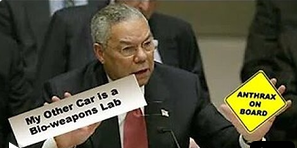
From Anthrax to Iraq
or go to
Aletho News Archives – Video-Images
Book Review
New paperback: Butchered by “Healthcare”
Lies are Unbekoming | October 20, 2026
 Butchered by “Healthcare” is Robert Yoho’s plain-spoken account of how American medicine stopped being a profession and became an industry. 341 pages. Over a thousand references. Thirty-eight chapters.
“Screening Tests Are Useless”, on tests that find diseases that would never have hurt you. “The FDA Protects the Big Drug Companies”, on an agency funded by the companies it regulates. “The Journals’ Sins Are the Editors’ Sins”, on ghostwritten studies and captured peer review. “Opioids and ‘Pain Management’”, on how a generation was prescribed its way into addiction. “Prozac and Relatives” and “Antipsychotics Are Disastrous”, on what psychiatry does to adults and children. “Surgery: Money Before Patients”. “Failed Cancer Treatments”. “Futile CPR and Overprescribing”. “Billing Scams & Specialty Warfare”. “Hospitals Are Sharks”. Each with a Patient Tips section at the end on how to survive it.
If you have ever walked out of a doctor’s office with a prescription you didn’t ask for, or watched a parent put through a treatment that made them worse, this is the book you want on your shelf before the next appointment. … Full review
Butchered by “Healthcare” is available on Lulu now.
Blog Roll
 Aletho News
- EU sending ‘biased’ observers to interfere in Serbian election – president
- White House envoy declares kinetic action against Yemen ‘fruitless’
- Ukraine deployed thousands of microdrones in Iraqi Kurdistan: Tasnim
- Iran calls for emergency UNSC meeting over Trump’s ‘brazen’ bomb talk, Israeli threats
- Iranian sources reveal details of Russia-China Hormuz proposal
- Plan for more US-Israel integration puts our military tech at risk
- Another Round Against Iran Will Break What Is Left of the Gulf
- SVR Report on Ukraine’s Mexican Drug Gang Links Could Pressure Zelensky, Won’t Change US Policy
- British Government Employees Were Fact-Checking the News at the BBC. Nobody Told You.
- Albania on fire: who’s behind the riots?
- If Americans Knew
- Mysterious bot accounts reportedly spread fake ‘man on the street’ videos for Michigan Senate candidate
- Israeli Defense Minister Katz Says Over 60 Lebanon Villages Have Been Destroyed
- Why Is Israel Running TV Ads in Iowa Ahead of the Midterms?
- Hind Rajab’s Alleged Killer Is in the United States. HRF Demands His Arrest.
- US Officials Face Fresh Pressure After Another American ‘Brutalized’ by Israeli Settlers in West Bank
- Israel-Backed Palestinian Militias Terrorize Displaced Families in Gaza
- FBI subpoenas pro-Palestine activists over Israeli weapons plant disruption
- Fourth winter arrives in wartorn Gaza, too early – Daily Update
- More on how Bari Weiss is using CBS on behalf of Israel
- What the UK Is Doing to Pro-Palestine Novelist Sally Rooney Is an Act of Orwellian Villainy
- No Tricks Zone
- Predictions Made By Renowned Climate Proifessor Over Past Decades Have Been Proven To Be Poor
- New Study Suggests Large Regions Of The Pacific Ocean Have Been Cooling For The Last 80 Years
- Germany’s Green Energy Debacle: High Energy Costs Force Kahla Porzellan to Close After 182 Years!
- New Study: 50 Years Of The Most Aggressive ‘Net Zero’ Policies Can Only Affect The Global Climate By 0.03°C
- US September “Heat” Was No Record…Many Records Set Decades Ago
- Latest European Green Energy Debacle; Portugal’s Largest Flagship Solar Park Insolvent!
- Green Energy Debacle: German Expert Professor Fritz Vahrenholt Warns Of Severe Economic And Social Consequences
- Two More Paleo Reconstructions Affirm Meters-Higher Sea Levels Across Ireland, Brazil 7000-6000 Years Ago
- New Study: Earth And Venus Surface Warmth Largely Explained By Convection And Lapse Rate, Not CO2 Or Radiation
- 2025 Nature Paper Claiming Worsening Global Drought Gets RETRACTED …Heavily Flawed

